


Safe Hair Transplant Travel to Turkey Needs a Medical Plan
To get a hair transplant in Turkey safely, start with the medical plan, not the flight. Confirm the medical responsibility before you confirm the travel plan. You need to know who assesses your donor area, who designs the hairline, who performs the critical surgical steps, how the graft number is chosen, how many patients are treated that day, and how follow up works after you return home.
Travel to Turkey can be simple when the clinic is organized. The difficult part is not the airport, hotel, or transfer. The difficult part is making sure the surgery is medically responsible and still makes sense years later.
Do not make the arrival day too tight. A remote plan still needs room for an in person donor check, medical questions, and a changed recommendation if the photos were incomplete. Entry rules belong beside the flight and hotel plan, not after it. I want you to check the official Turkish electronic visa or consular route for your own passport before booking, because the answer can change by nationality and date. Clinic messages can organize the appointment, but they do not replace the official entry check.
Practical guide
Plan the trip around
the medical decision
International patients need more than a surgery date. A package can organize flights, hotel, and transfers, but it cannot decide donor limits, hairline design, or aftercare responsibility.
A package can organize flights, hotel, and transfers, but it cannot replace medical judgment. If a patient treats the trip like a holiday with surgery attached, the most important questions can be missed. A hair transplant is elective surgery. It deserves the same seriousness before travel that it deserves on the operating day.
The decision before you contact clinics
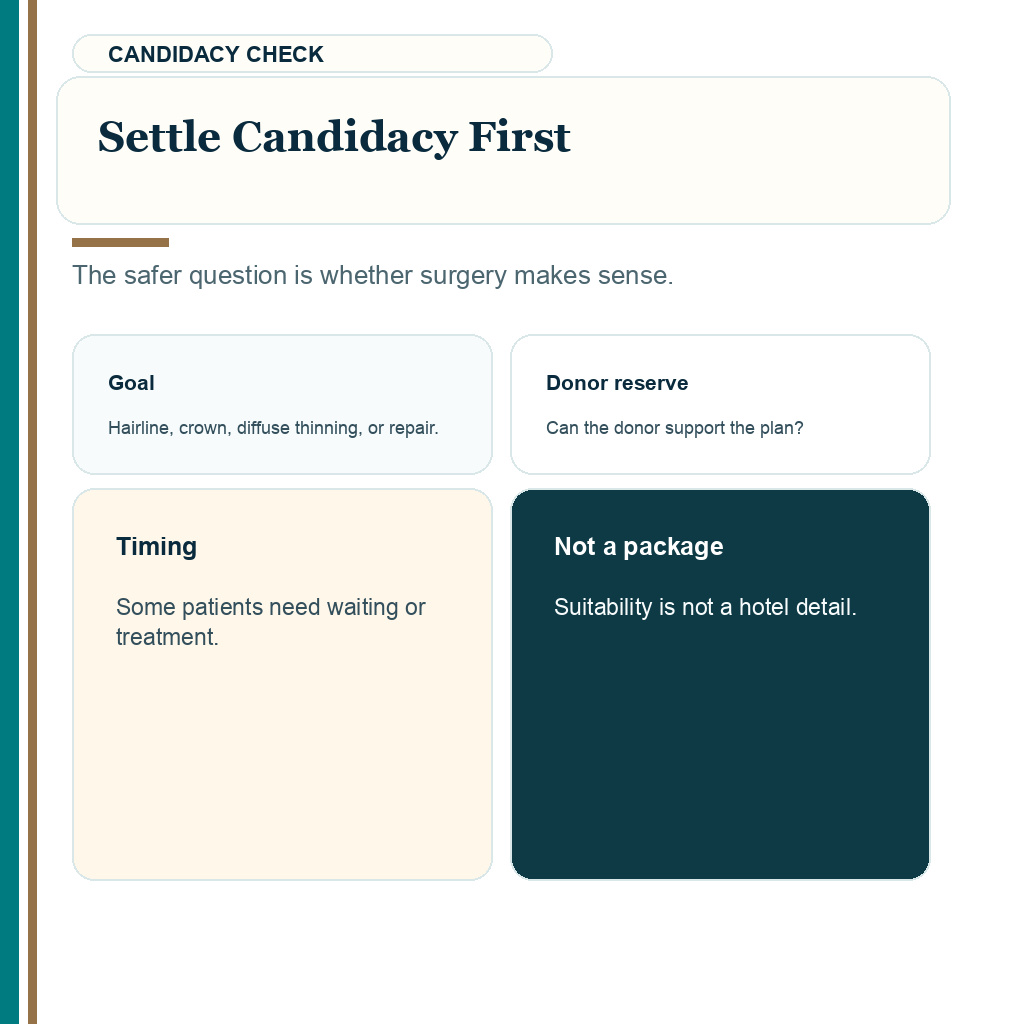
Before contacting clinics, decide what problem you are trying to solve. Is it a receding hairline, crown thinning, diffuse thinning, a failed previous surgery, or anxiety about future hair loss? A clear goal helps the clinic give a more useful answer.
Do not start by asking only for the maximum graft number. The safer first question is whether you are a good candidate and whether the donor area can support the plan. Hair transplant candidacy explains why some patients need to wait, use medical treatment first, or avoid surgery.
Before booking flights, confirm which problem is being treated, which parts of the online plan are provisional, and who will review the case again in person.
Photos and medical details for assessment
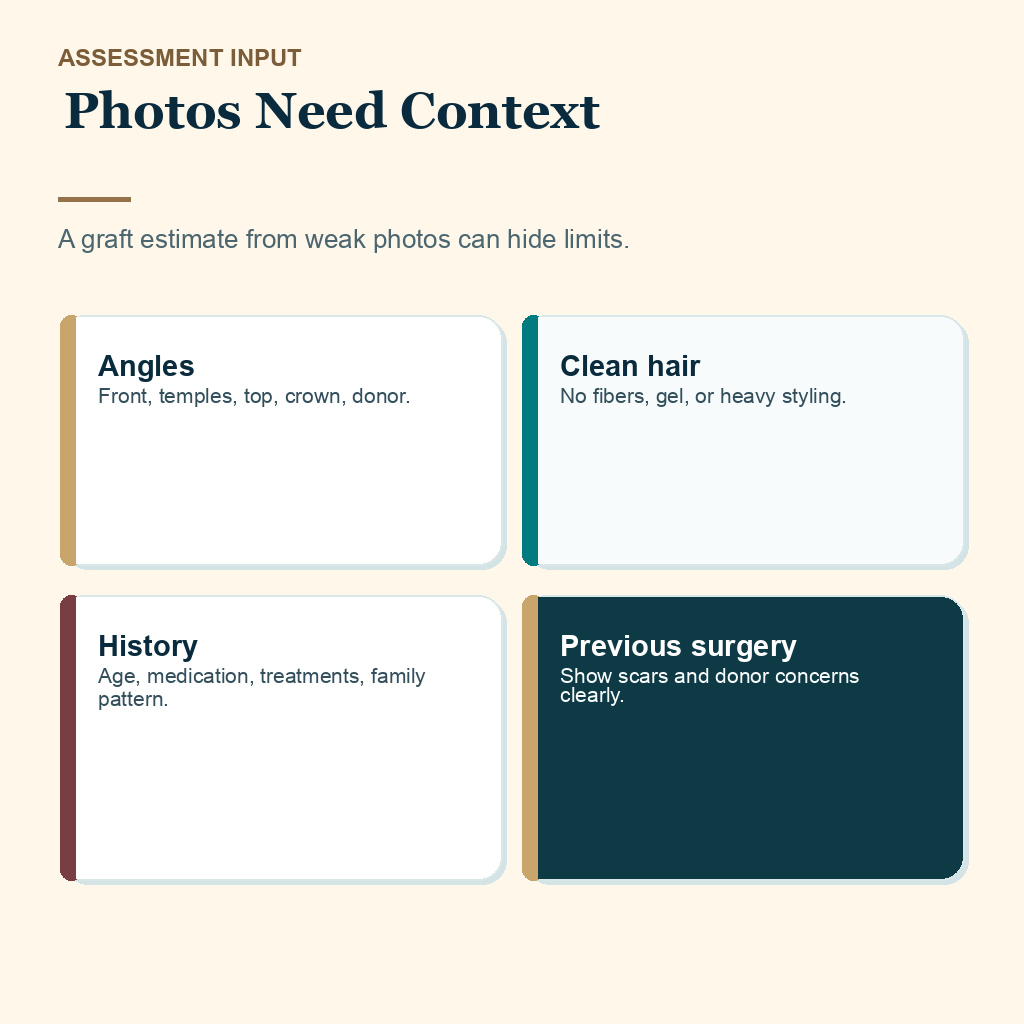
Start with clear photos from the front, both temples, top, crown, and donor area. The hair should be dry and free from fibers, concealer, gel, or heavy styling products. If you had previous surgery, scars, scalp disease, or donor concerns, show them clearly.
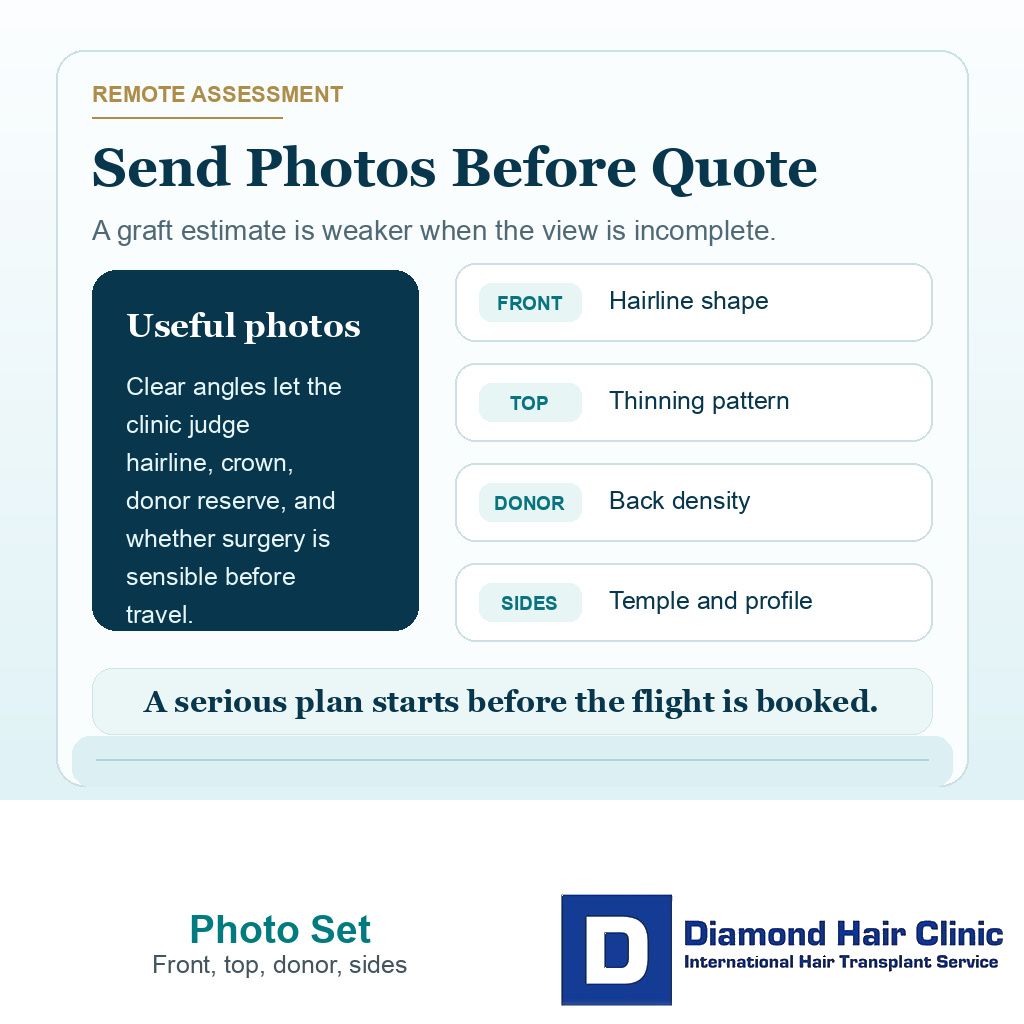
I also need age, medical history, medication use, family hair loss pattern, previous treatments, and what you expect from surgery. Photos without context can be misleading.
If the clinic gives a confident graft number from poor photos and asks for a deposit before proper assessment, be careful. A proper assessment should make the limits clearer, not make the decision feel too easy.
Choosing the clinic by responsibility
Choose the clinic by medical responsibility. Ask who examines you, who designs the hairline, who performs the critical surgical steps, how donor reserve is protected, and how many patients are treated on the same day.
Choosing a hair transplant clinic in Turkey goes deeper into this decision. The country is not the safety feature. The clinic model is.
Be careful with clinics that discuss only graft number, hotel, transfer, and price. Those details matter, but they do not prove surgical quality. If the clinic cannot explain the surgeon’s role or who is medically accountable for complications, the package is not ready to book.
Price only makes sense beside the medical plan
Look at price beside the medical plan. A lower fee may be possible because of Turkey’s cost structure, but it can also reflect a large volume model where the patient has little doctor involvement. A high price does not prove safety, and a low price does not prove danger. What matters is what the fee actually supports.
When reviewing hair transplant cost in Turkey, separate the travel package from the medical responsibility. You are paying not only for grafts, but also for assessment, design, graft handling, recipient area planning, aftercare, and responsibility.
If a cheaper quote risks donor damage or an unnatural hairline, it may become more expensive later.
Warning signs before paying a deposit
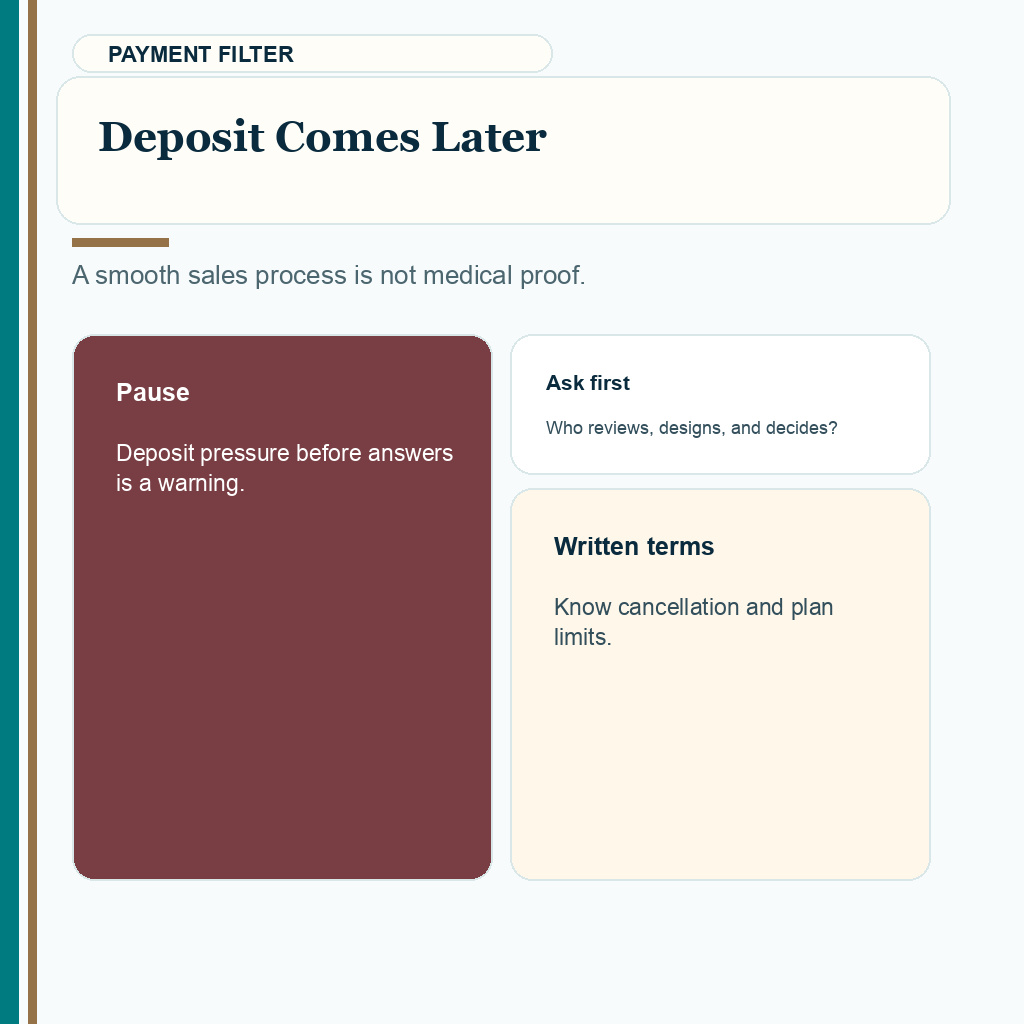
Pause if the clinic promises a very high graft number before proper assessment, refuses to say who performs the surgery, cannot explain doctor involvement, pushes a deposit before answering medical questions, or presents every patient as suitable for surgery.
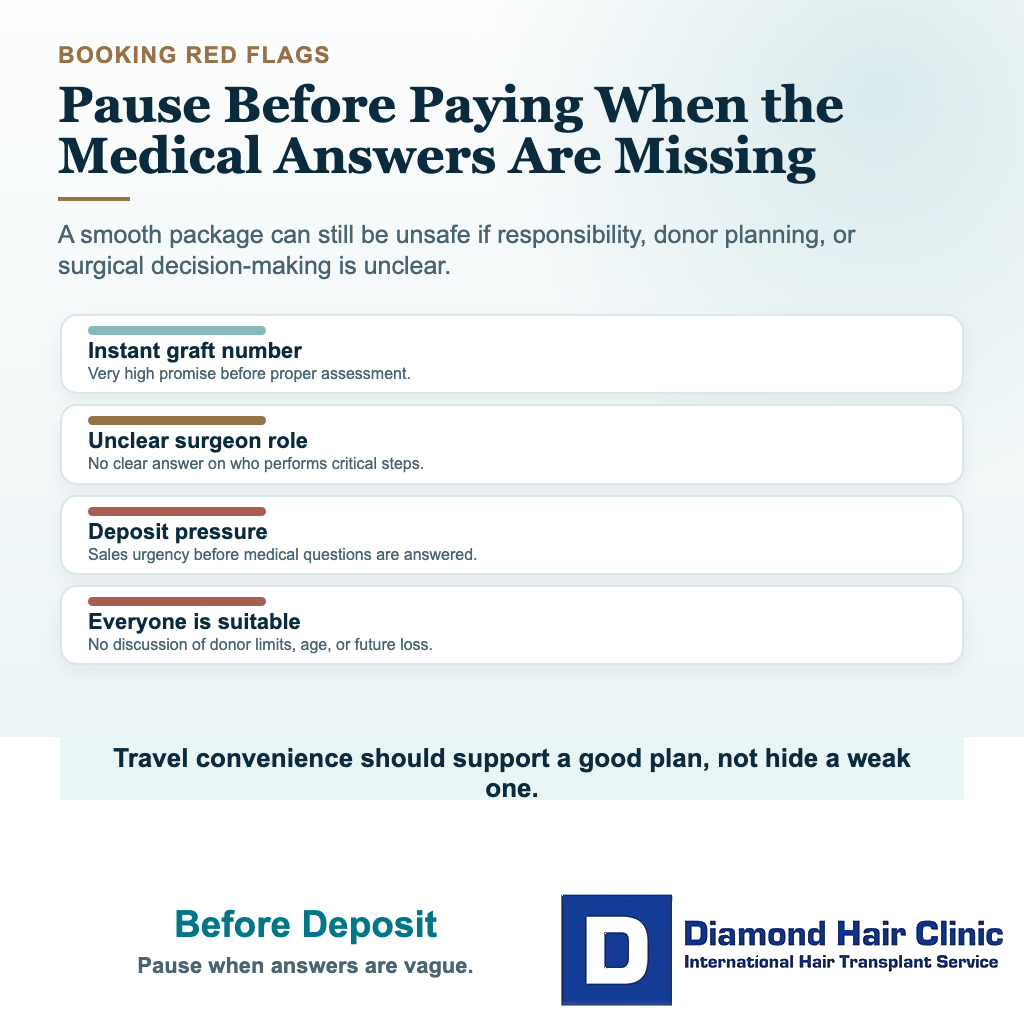
Pause when the clinic presents the trip mainly as a hotel package. Travel support can help after the medical plan is strong. When convenience hides unclear responsibility, the package becomes part of the risk. Hair transplant packages in Turkey shows this difference clearly.
Red flags of Turkish hair transplant clinics are worth reviewing before paying a deposit. They help patients recognize when the sales process feels smoother than the medical planning.
Confirm the plan before booking flights
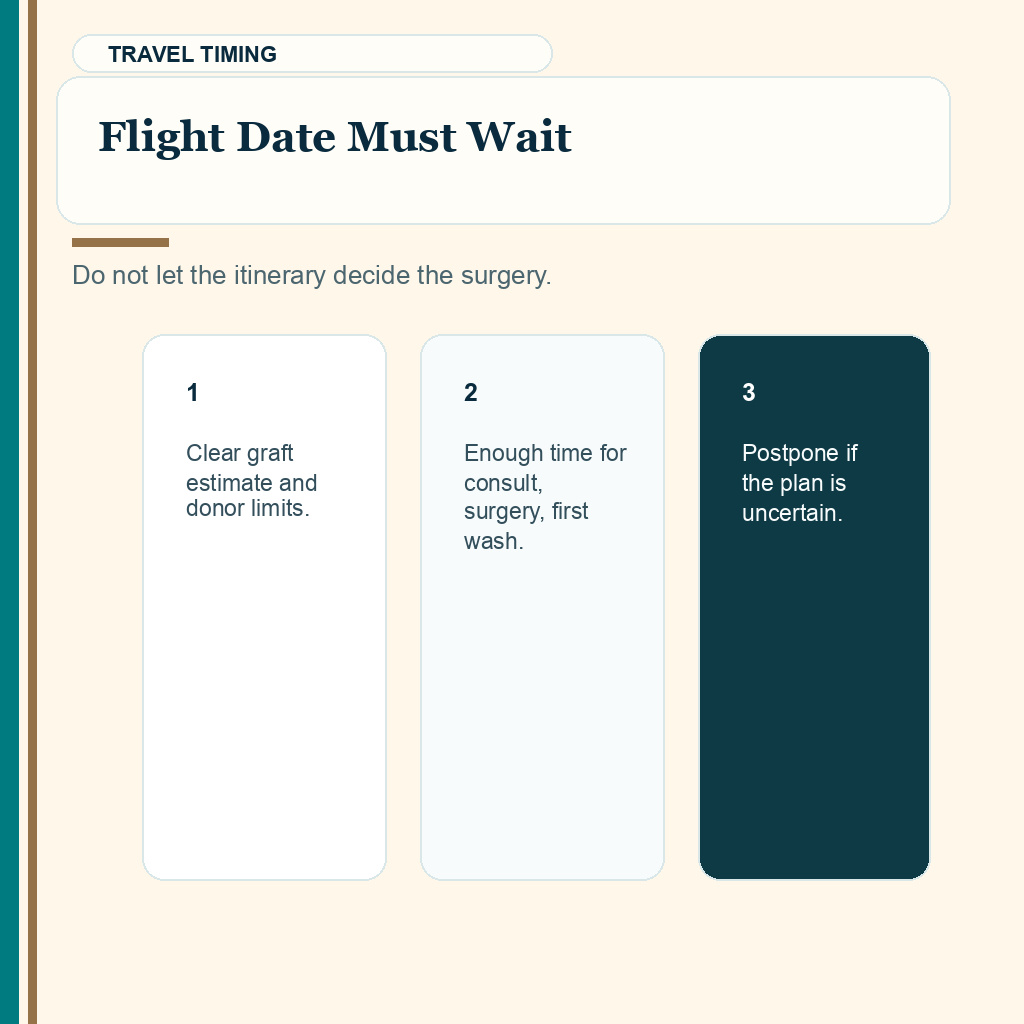
Before committing the flight, you need a realistic graft estimate, a clear explanation of donor limits, written preparation instructions, and a basic travel plan that allows enough time for consultation, surgery, first wash, and early recovery.
Do not let flight dates become the reason missing photos or medical details are ignored. If the assessment is incomplete, the travel plan should wait for the surgical plan, not the other way around.


The order matters here. Use the route map to check the medical plan first, then use the card to keep flight decisions behind that review. When the estimate, donor limit, or surgery day responsibility is still unclear, booking can wait.
The image makes the booking decision less abstract. It belongs after the route map because travel only becomes sensible when the medical facts have already been checked.
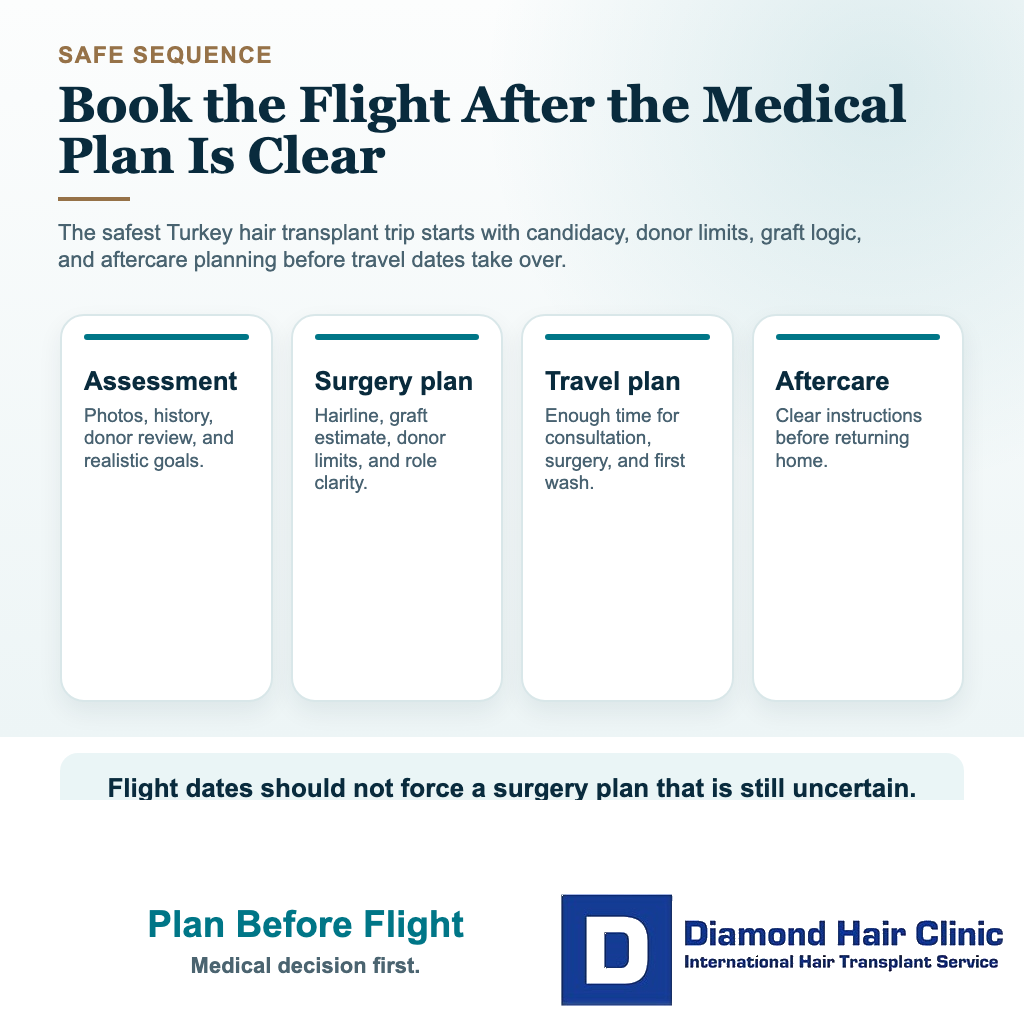
Do not let flight dates force the medical decision. If the plan is uncertain, postpone the flight rather than forcing surgery into a travel date. A rushed schedule can make the patient ignore concerns that need an answer before travel.
When patients ask how many days to stay in Turkey for a hair transplant, I focus on the first wash and early review before returning home.
Preparation before surgery
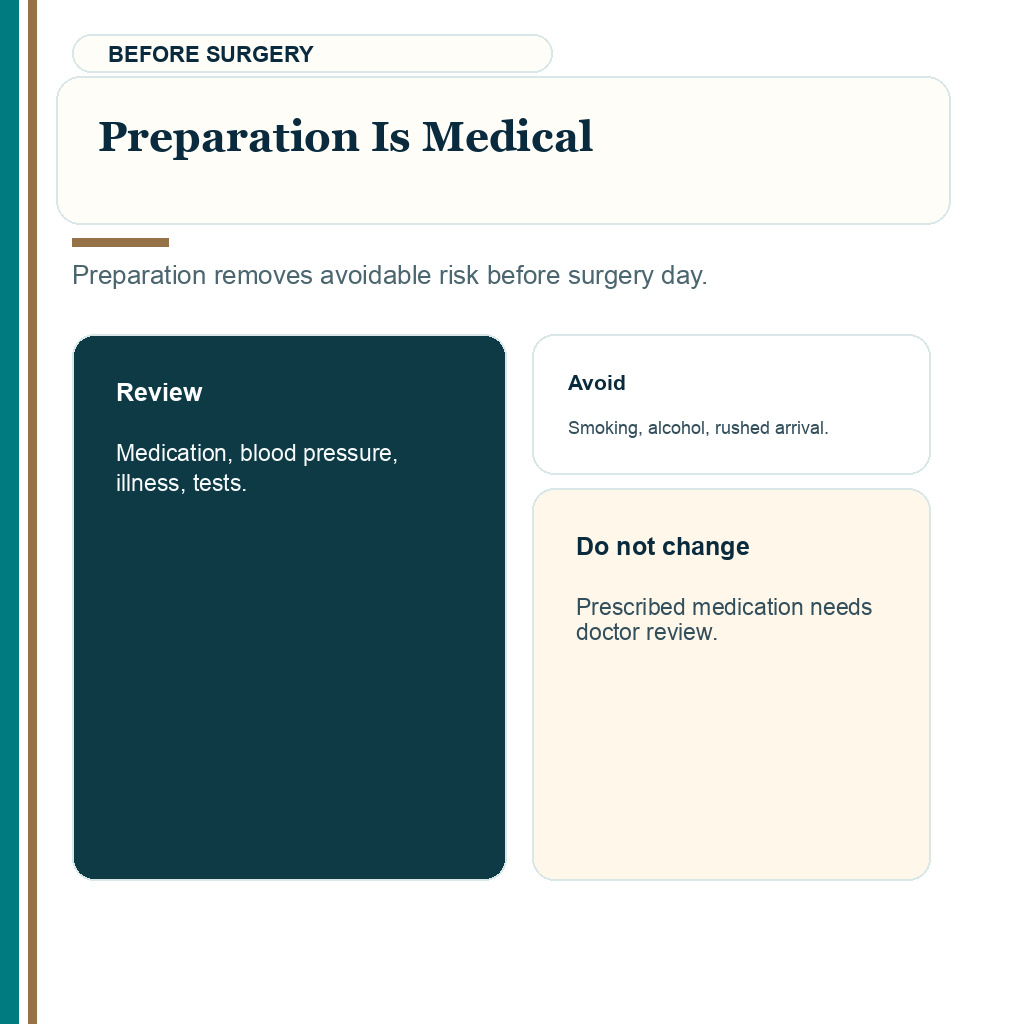
Follow the clinic’s written preparation instructions. This may include medication review, blood tests, stopping smoking, avoiding alcohol, discussing blood thinners, and arriving with clean hair and an unrushed schedule.
Instructions before a hair transplant cover this preparation in more detail. Do not change prescribed medication on your own. If a medication matters, the treating doctor should be involved.
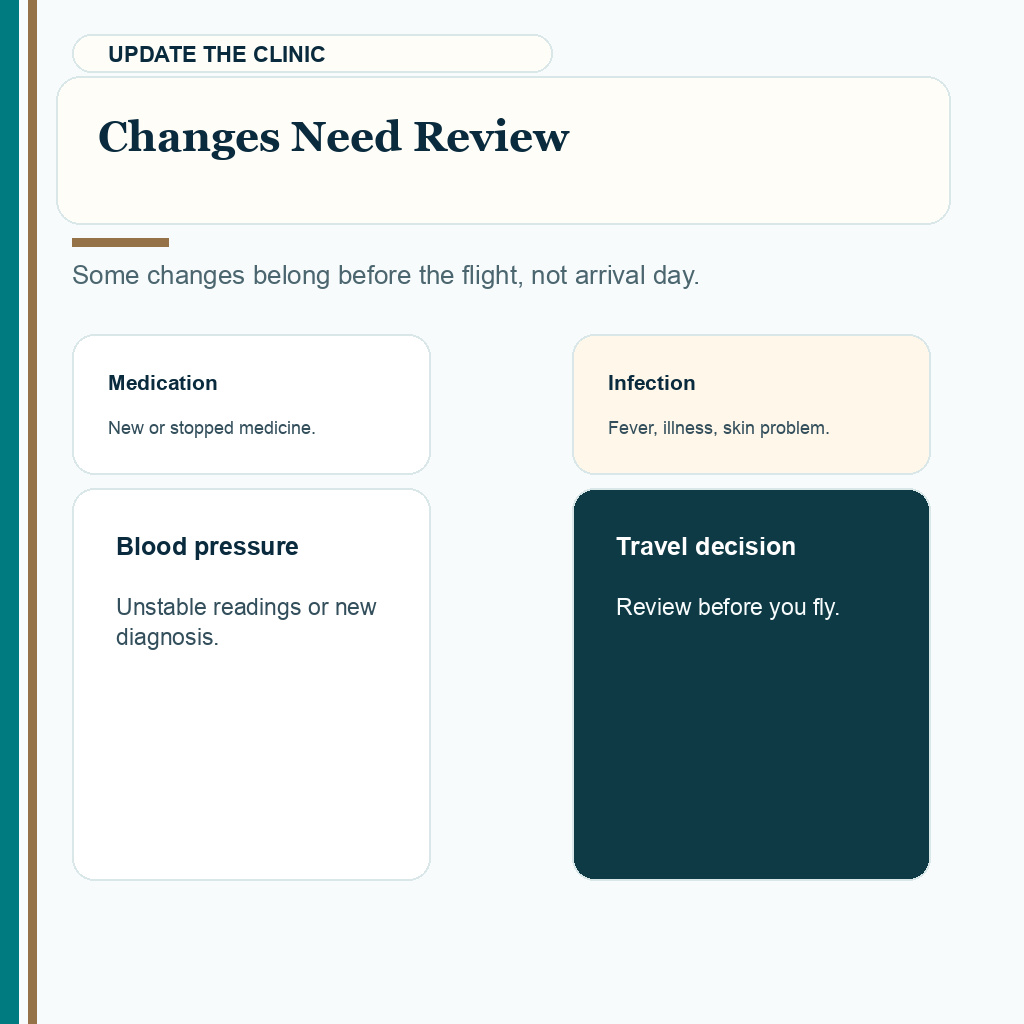
If your medication, infection status, blood pressure, recent illness, or diagnosis changes after booking, tell the clinic before you travel. Some medical changes after booking need review before the flight, not a discussion for arrival day.
Preparation is not perfection. It removes avoidable risk before surgery day.
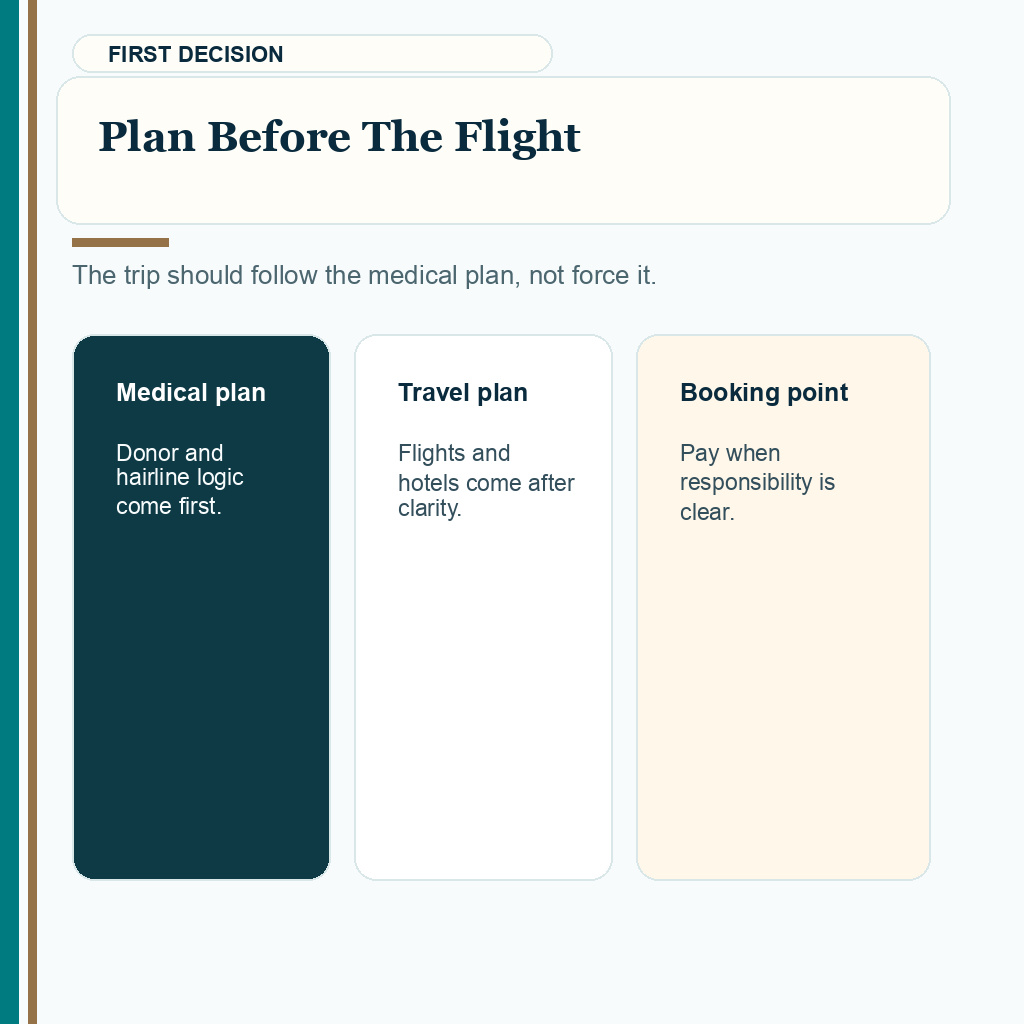
The 10 travel readiness slides below keep booking, photos, payment, flight timing, preparation, changed medical status, surgery day review, donor reserve, early recovery, and follow up tied to the medical plan. Swipe sideways, use the arrows one slide at a time, or choose a number below the image.
Surgery day is still a medical decision day
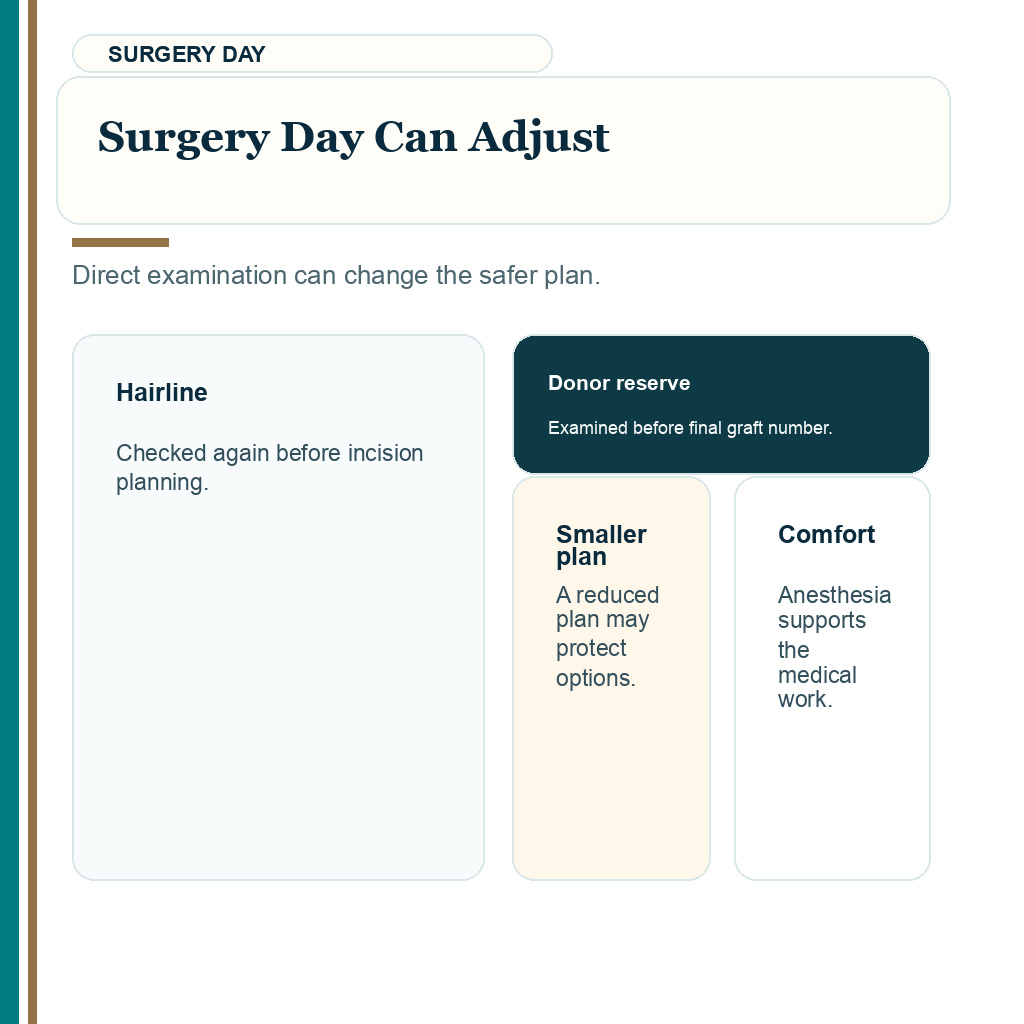
On surgery day, the plan needs another review. The hairline is checked, donor reserve is examined, the graft number is confirmed or adjusted, and local anesthesia is given. The extraction, graft handling, recipient area incisions, and placement then follow the clinic’s surgical protocol.
Patients often worry about pain. Local anesthesia can be uncomfortable at the start, but once the scalp is numb, most patients feel pressure and movement rather than sharp pain. The same comfort principle applies to anesthetic injections during a hair transplant.
The most important issue on surgery day is not only comfort. It is whether the medical decisions are being made carefully. A safer surgery day plan may be smaller than the plan discussed online. The hairline, graft number, and coverage target can change after the direct examination if a smaller plan protects the donor area better.
Donor management during the trip
Donor hair is limited. A clinic can remove grafts from it, but it cannot create an unlimited reserve. If too many grafts are taken or extraction is poorly distributed, the patient may face visible thinning or limited repair options later.
I connect travel planning with donor area planning. A trip that feels convenient is not successful if the donor reserve is damaged.
A responsible plan protects future options, especially in younger patients or patients with continuing hair loss.
The first days after surgery
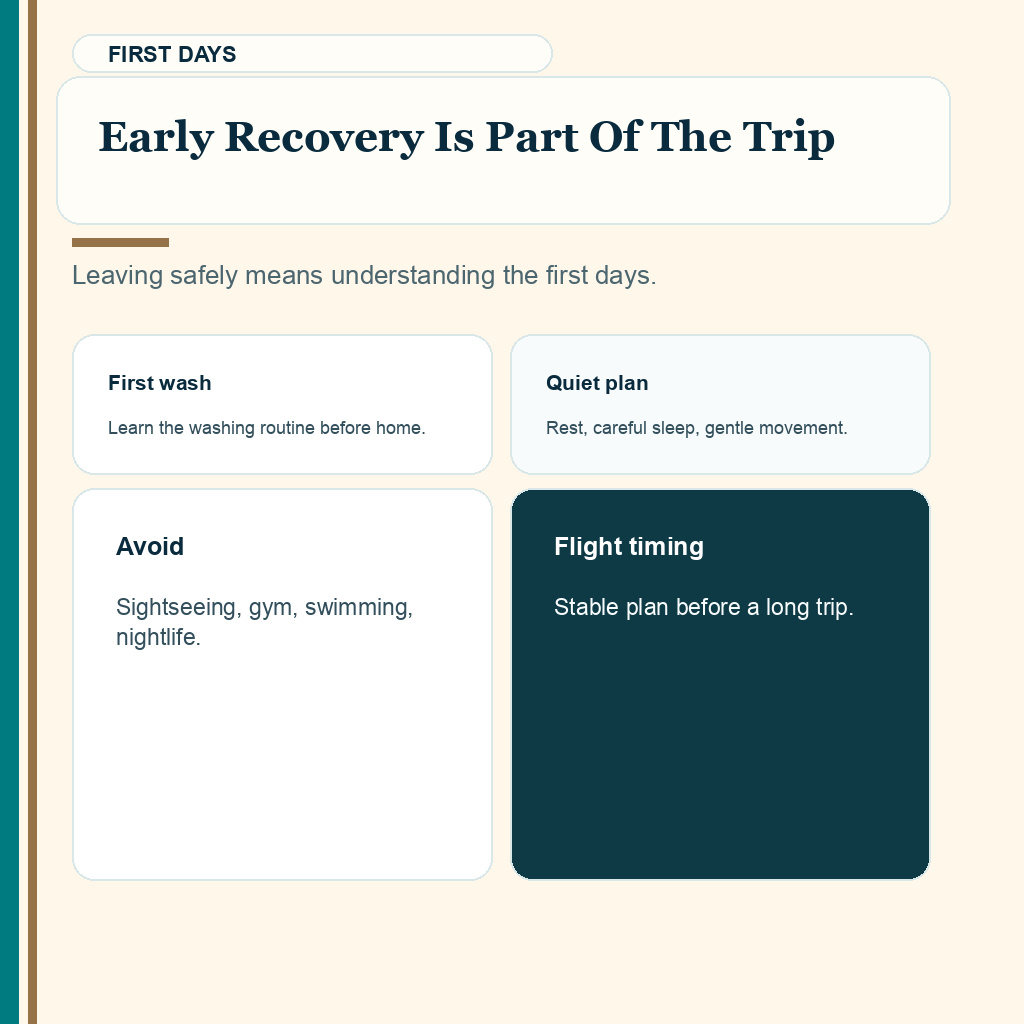
Keep the first days quiet and predictable. You need rest, careful sleeping position, correct washing instructions, and protection from rubbing, sweating, sun, alcohol, smoking, and unnecessary activity. A short gentle walk is different from sightseeing, nightlife, gym training, swimming, or trying to use the trip as a holiday.
Good hair transplant aftercare is part of the surgery. It is not an optional extra after the clinic visit ends. If you are traveling, make sure you understand the washing routine before you leave Turkey.
The first wash teaches the patient how gentle to be. A patient who leaves without understanding aftercare may become anxious or careless at home.
Flying home after the early recovery plan is stable
Many patients can fly after the early clinic checks, but the right timing depends on the clinic protocol, swelling, comfort, travel distance, medical history, and whether the first wash has been explained. Long flights after surgery also mean sitting still while the body is in early healing, so patients with clotting history or other medical risks need a more careful travel review.
Flying after a hair transplant helps show what to consider during travel. The plan must do more than get home quickly. The aim is to leave with a stable plan and clear instructions.
If there is unusual pain, bleeding, swelling, dizziness, or a medical concern, travel timing may need to change.
Read this review excerpt
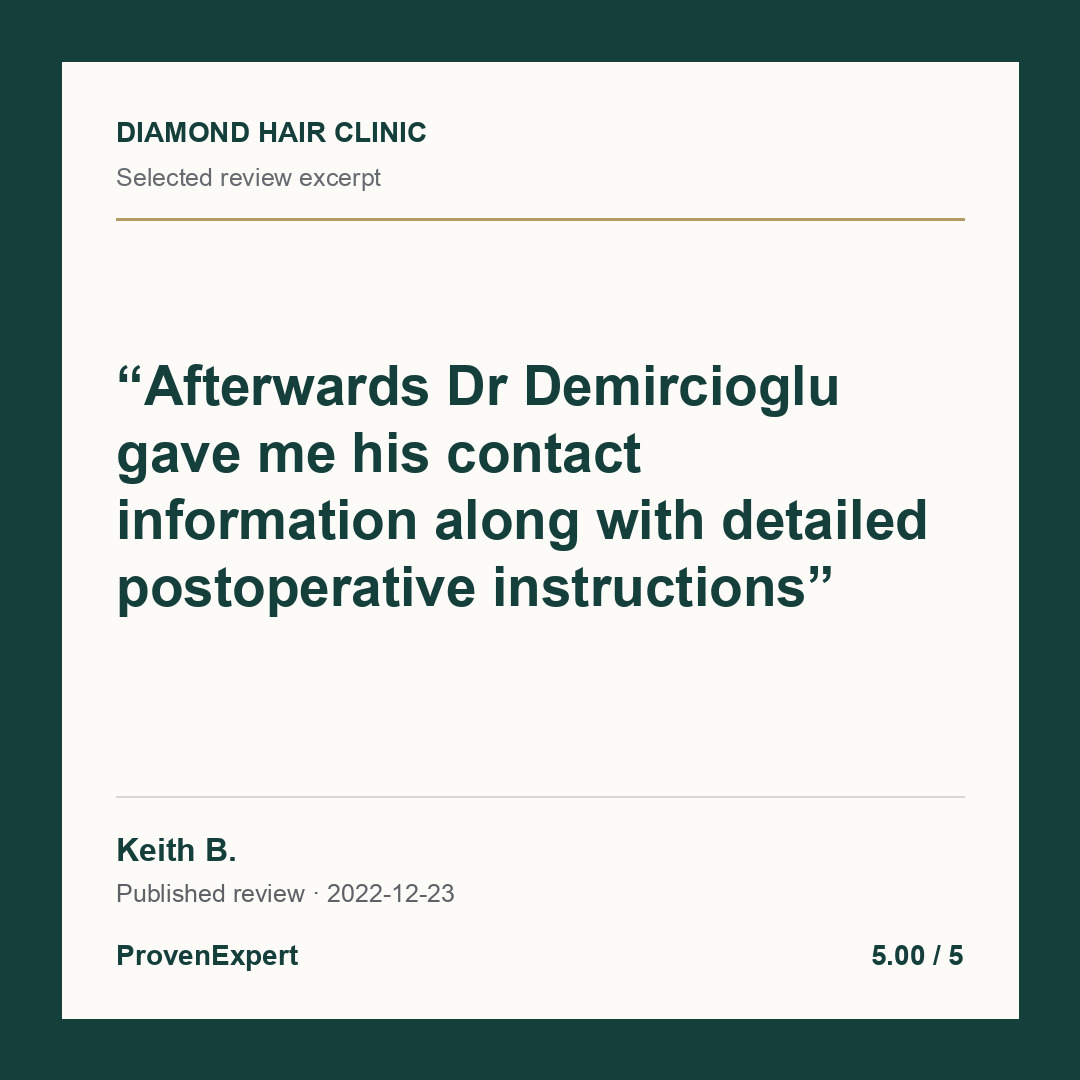
Afterwards Dr Demircioglu gave me his contact information along with detailed postoperative instructions
Read this review excerpt
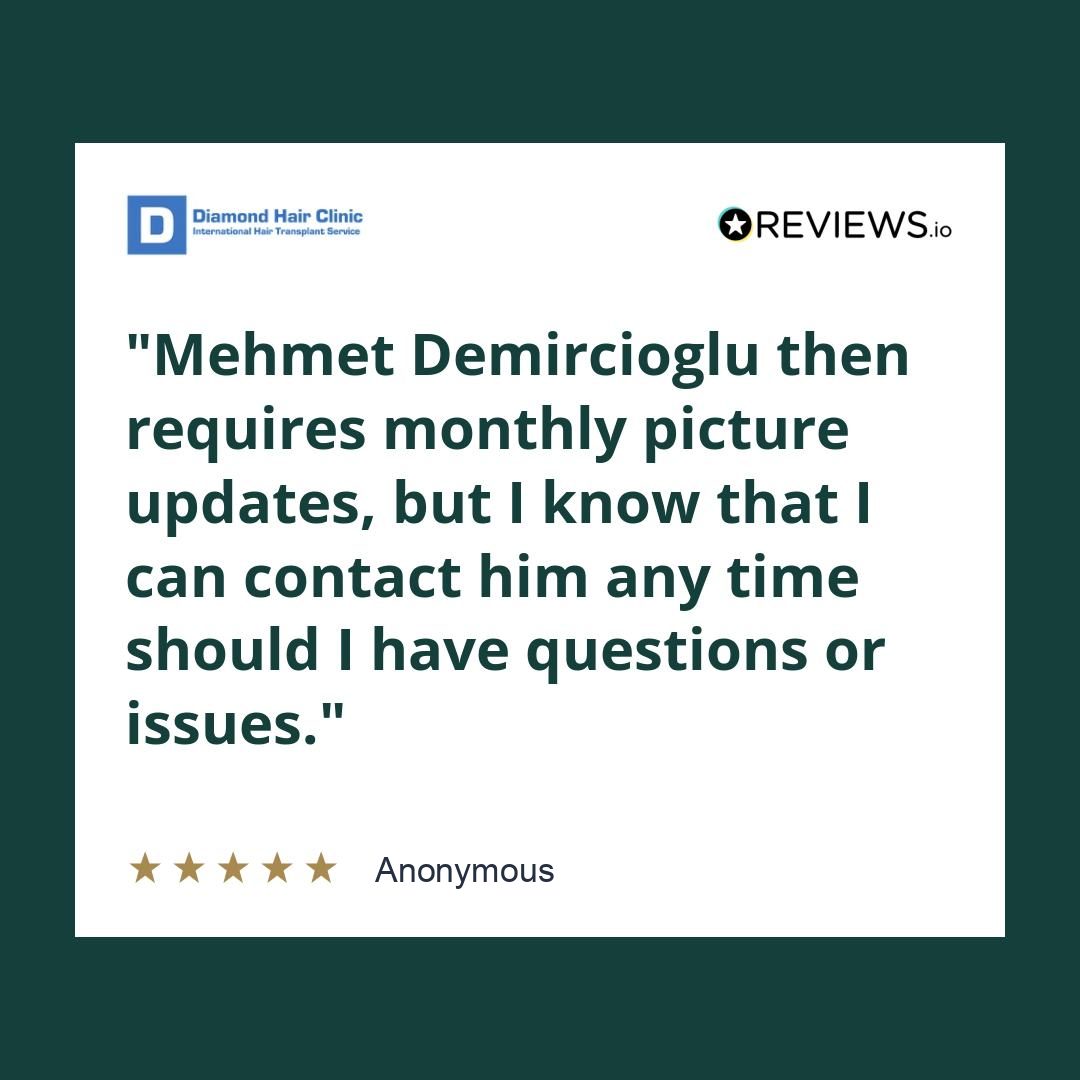
Mehmet Demircioglu then requires monthly picture updates, but I know that I can contact him any time should I have questions or issues.
Follow up and records after returning home
Returning home is not the end of the process. Scabs, redness, shedding, shock loss, early thinness, and months of waiting are all part of the normal growth timeline. New growth usually becomes more visible later, not immediately.
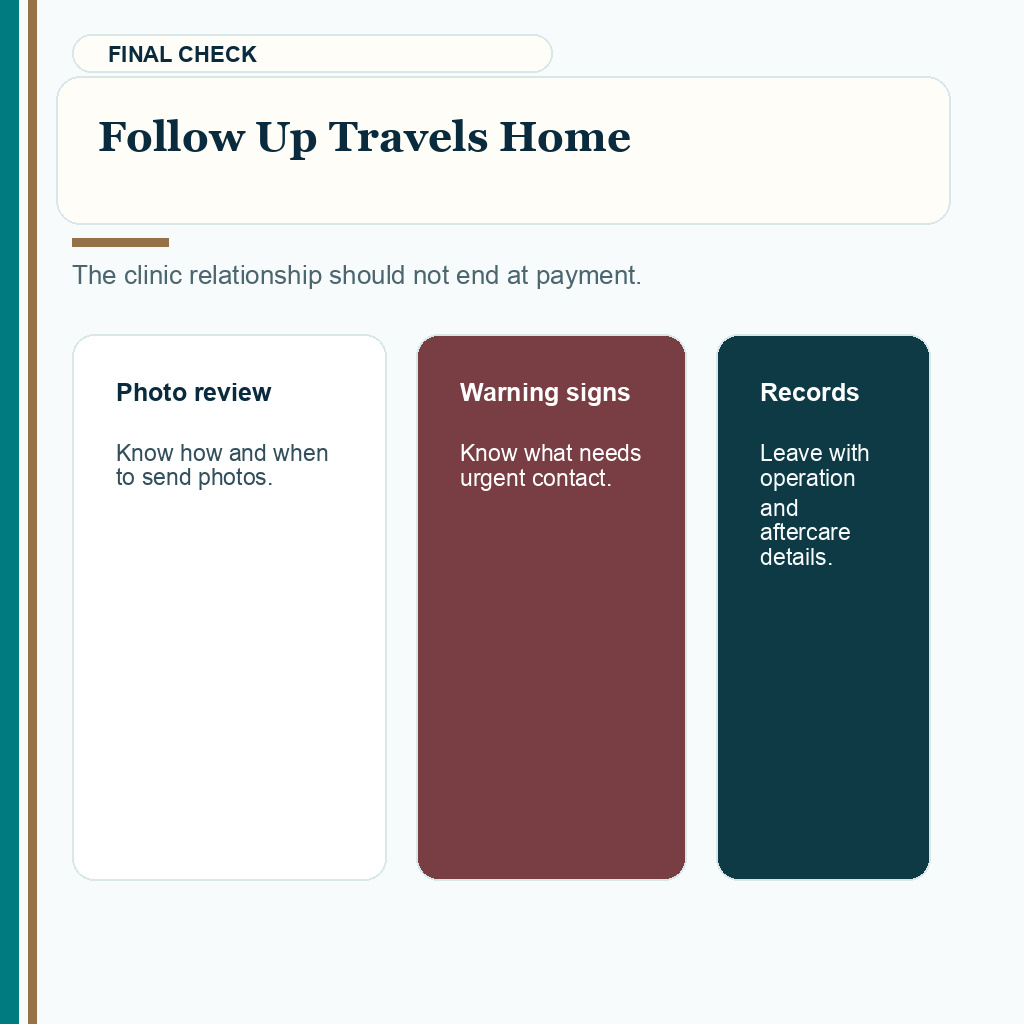
Before you leave Turkey, know how photo review works, which warning signs need urgent contact, and what written information you have about the operation and aftercare. Clear records matter if another doctor needs to understand what was done.
Follow up matters. The clinic should be able to review photos, answer recovery questions, and explain when something is normal or when it needs medical review.
If the clinic disappears after payment, the patient is left alone during the most anxious part of recovery. That is not acceptable medical responsibility.
A safe Turkey trip is planned around the surgery
Choose a medical plan first, then organize the travel around it. Turkey can be a good choice when the clinic is serious, the surgeon is meaningfully involved, donor reserve is protected, and the patient understands the recovery.
I slow the decision down when rushing would weaken the plan. A safe hair transplant trip should make the patient clearer before surgery, not only excited to travel.
Getting a hair transplant in Turkey is only part of the decision. You also need to return home without sacrificing naturalness, donor reserve, or planning for the years ahead.