Surgery Morning Consultation Should Confirm, Not Replace, the Plan
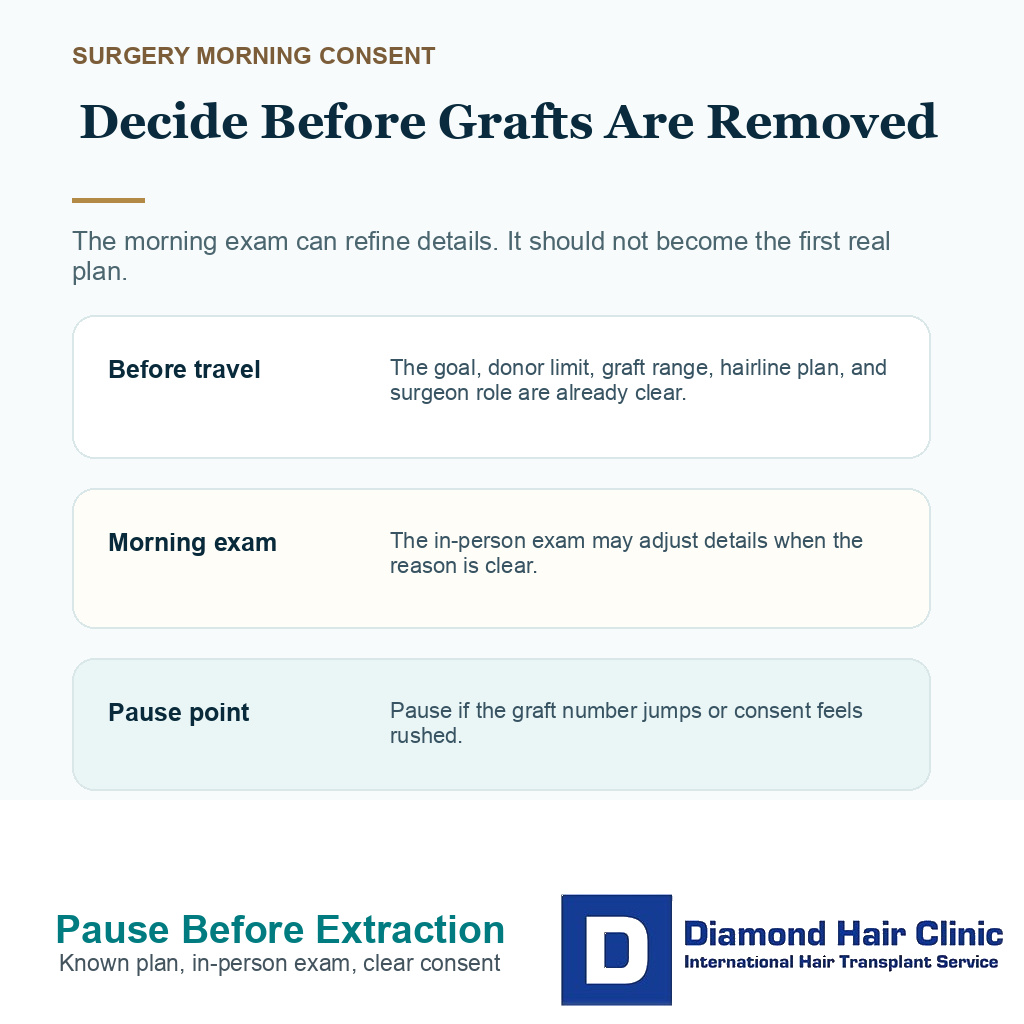
If your donor area, hairline, graft number, and surgeon role are being explained for the first time on surgery morning, the decision has arrived too late. The morning review can confirm and refine a plan. It should not be where you first learn what operation you are being asked to accept.
Before a hair transplant, you should already know what problem we are treating, why the graft number fits the donor supply, who is making the surgical decisions, and what would make us pause before any grafts are removed. The morning consultation should protect the plan, not replace it after travel pressure has built. Hemophilia is one of those pause points. The hemophilia hair transplant planning guide explains why factor status and hematology instructions must be known before the morning review. If medication has improved the scalp since booking, raise the medication response question before surgery morning, while there is still time to review the plan calmly.
This matters even more when you have travelled internationally. A tired patient who has paid, booked a hotel, and arrived in the clinic may feel pressure to continue even when the plan has changed. The in room explanation should be clear enough that the patient can repeat the new graft range, hairline, and treated area before signing. Consent should follow understanding, not travel momentum.
For a patient traveling a long distance, the calmer plan is to arrive rested enough to review the hairline in a mirror, ask questions, and still say no if the plan has changed. After long travel, poor sleep, or a rushed schedule, fatigue can make it harder to judge the plan clearly, even when the drawing itself looks acceptable.
What can surgery morning safely refine?
A direct examination on the morning of surgery is still useful. Photos cannot show everything. Hair direction, skin laxity, donor feel, scar quality, miniaturization, and the way the hairline sits on the face are easier to judge in the room.
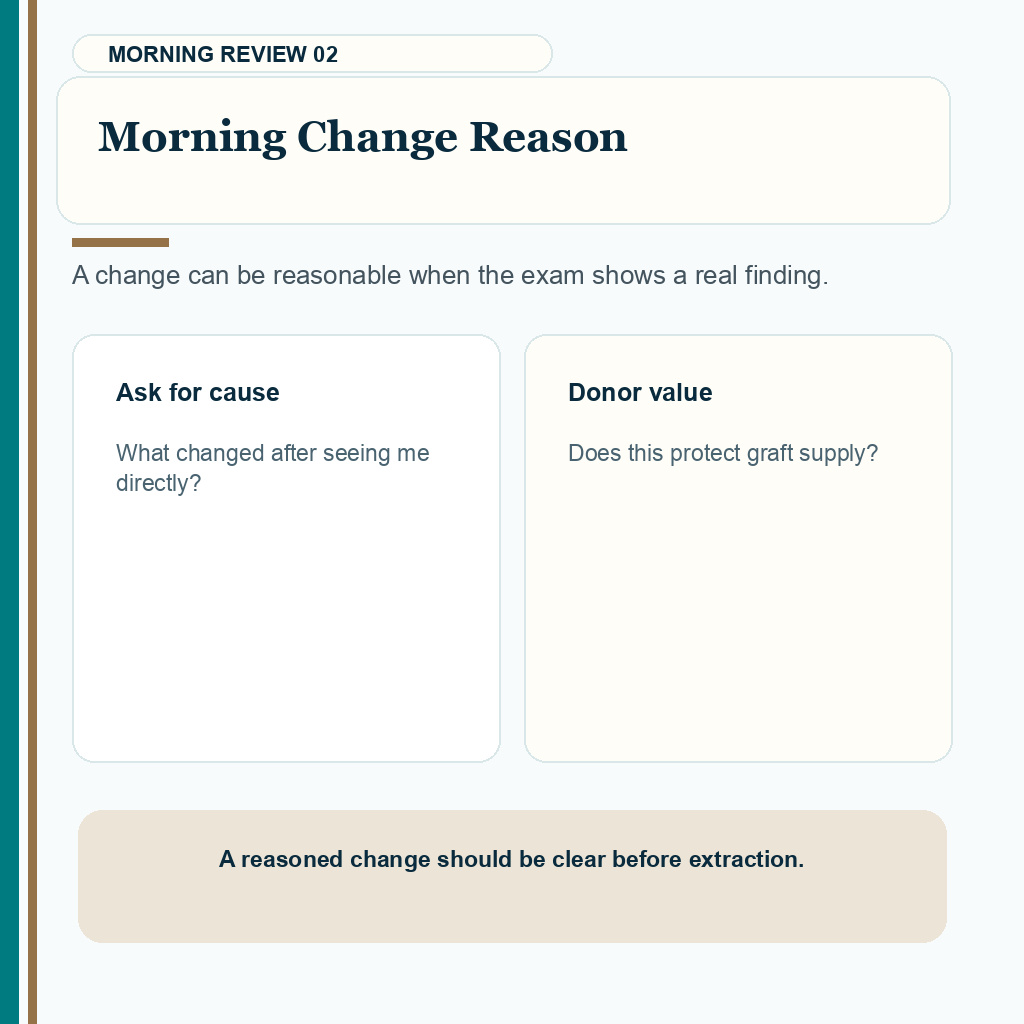
So I do not treat the morning review as meaningless. It is the last clinical check before extraction starts. A few millimeters of hairline refinement, a modest distribution change, or a lower graft number can be reasonable when the direct exam explains why. Moving the front edge lower is different. If the morning change lowers the design, the same low straight hairline planning and forehead movement checks should still be clear before extraction starts.
That is different from a new hairline, a large graft jump, or a different surgical responsibility structure being introduced after travel pressure has built. A change should clarify the plan, not turn the morning into the first real negotiation.
A morning change needs breathing room. If the line, graft range, or surgeon role changes, there must be time to stop, look again, and understand the reason before the first extraction. I want any changed plan written or repeated in plain language before the first graft is removed.
The problem starts when the morning consultation is asked to carry everything. If a patient hears the real graft number, the real hairline reasoning, the real donor limitation, and the real surgical team structure for the first time after arrival, the patient is not making a free decision with enough time.
The main plan belongs before travel
Before you book a hair transplant, you need a clear basic surgical aim. Are we rebuilding a frontal hairline, improving density behind an existing hairline, softening temples, or deciding that the crown can wait? Those choices change donor spending and expectations over many years. Styling expectations, density limits, and the way you normally part or wear your hair should be clear before the marker is in hand.
A useful case review before travel should make the boundary clear. It should not promise perfect certainty from photos, but it should explain the likely route and the reasons behind it.
A hair transplant plan from photos can start the planning conversation, but remote planning should also explain uncertainty before the patient commits to travel.
If the only message before travel is a price and a high graft number, the surgery morning conversation becomes overloaded. The patient may be hearing important surgical information at the exact moment when saying no feels hardest.

Read this review excerpt
“I was very pleased with the consultation I had with Dr. Demircioglu before the surgery. He explained the stages of the surgery to me, and we discussed my hairline.”
Which plan details should already be clear?
Before the operation day, you should know who is responsible for the surgical plan, what area is being treated first, why the planned graft range fits your donor area, and what result should not be expected from one session. You should also know whether medication, future loss, or donor protection changes the strategy.
A review of your medical history, allergies, and any blood tests needed for the procedure addresses safety around the operation. A reassuring screening review does not, by itself, settle whether transplantation is suitable now. Hair loss progression, the donor reserve, the proposed hairline, and the timing of surgery still need their own assessment. These are different parts of the same consultation.
This does not mean every hairline point is locked before the surgeon examines you. It means the decision framework is not a surprise. If you are told 2,500 to 3,000 grafts before travel, then 4,500 grafts on the morning of surgery, you deserve a careful explanation before any extraction begins. The same explanation should include whether the treated area, fee, or consent wording has changed, because practical pressure can weaken a medical decision.
Graft number planning matters here because grafts are not just a number on a quote. They are limited donor resources. Once removed, they cannot be put back into the donor area. I explain how surgeons calculate graft numbers before a patient treats the quote as the plan.
Photos help, but they do not replace examination
Good photos can protect a patient from weak planning. They show the hairline, temples, crown, donor area, beard supply if relevant, and previous scars. They also help the surgeon decide whether the patient is even a reasonable candidate before travel.
But photos have limits. They can miss miniaturized hair. They can hide poor donor density. Wet hair, dry hair, lighting, angle, and styling can change what the clinic sees. The final direct exam still matters for exactly that reason.
The boundary is simple. Photos should prepare the patient for the likely plan. The morning exam should test that plan against reality. It should not be used to introduce a completely new plan without enough time for the patient to think.
Which changes are reasonable after the direct exam?
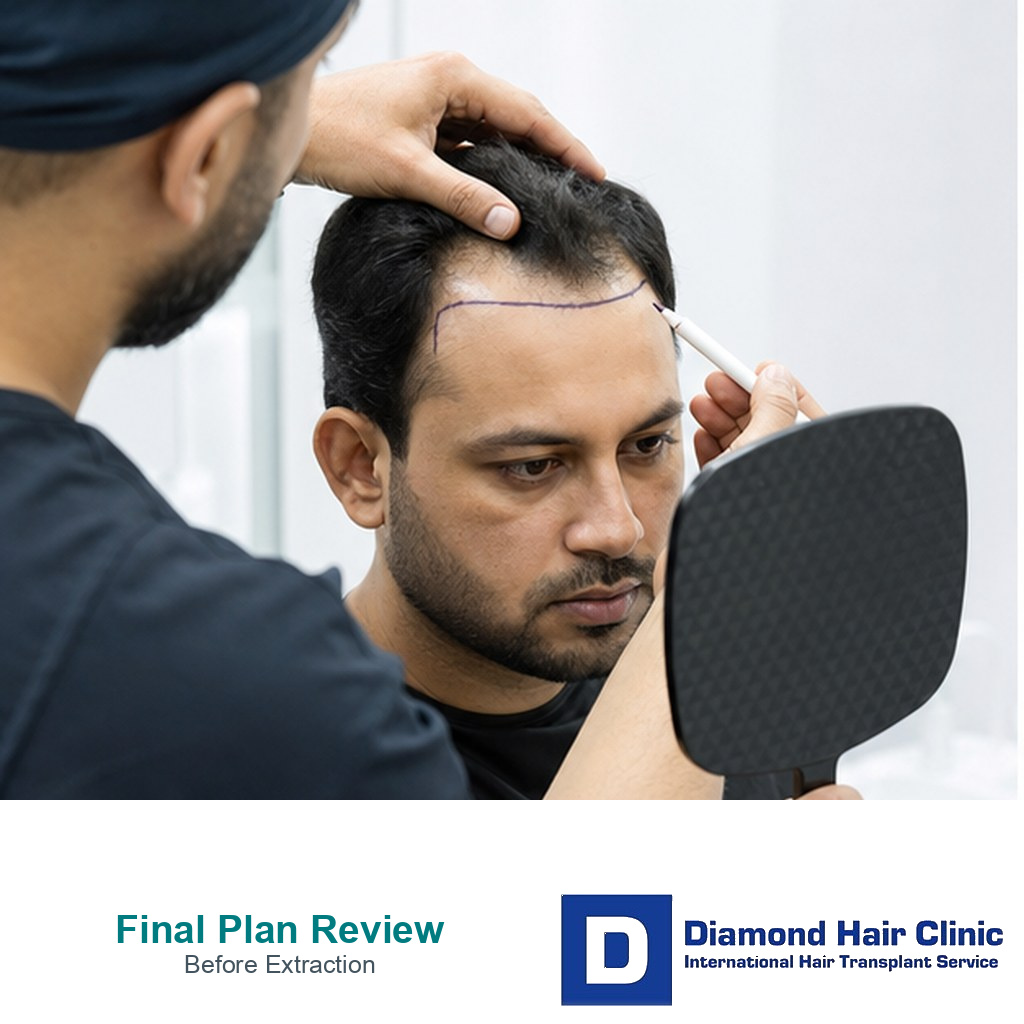
The hairline can be adjusted after facial proportions are checked directly. The surgeon may mark the line, ask the patient to look in a mirror, and then soften or raise the design. A small change can make the result more natural and preserve grafts.
Graft distribution can also change. If the donor area is weaker than expected, I may put more priority on the frontal frame and less on the crown. If the crown is larger than expected, it may be better to stage treatment rather than dilute every zone.
A real change should have a reason you can understand. The reason might be donor protection, hairline naturalness, visible miniaturization, scarring, a scalp condition, or a mismatch between expectations and what surgery can safely achieve. If the only explanation is that more grafts are now available, slow the decision down.
A few millimeters in hairline position or a lower graft count after donor review is different from being offered a new hairline, a much larger number, or an unclear team structure when you are already dressed for surgery.
When should you pause before grafts are removed?
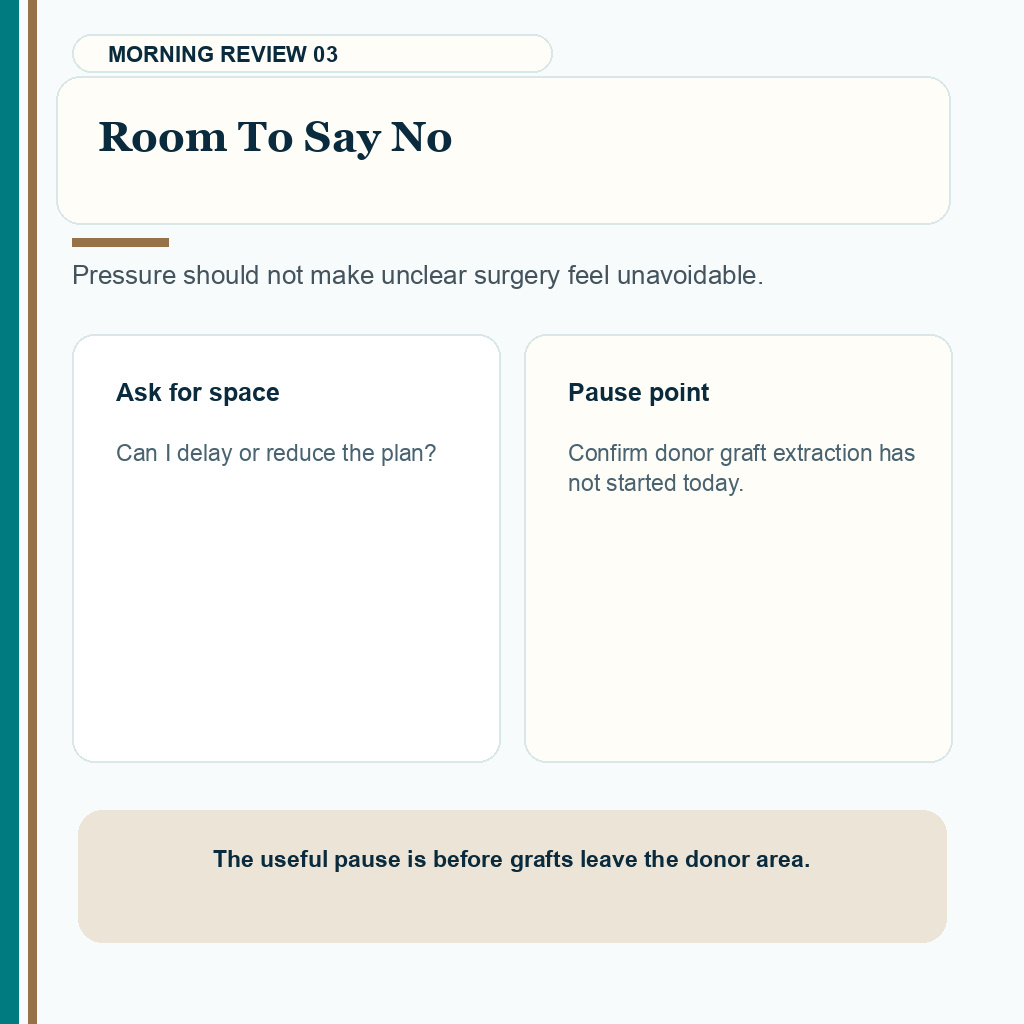
Pause if the final graft number is much higher than expected and the reason is not clear. Pause if the hairline is lower than you discussed before travel. Pause if you thought a surgeon would make the plan but the person explaining it has no clear surgical responsibility.
Also pause if the marked hairline, temple points, or treated zones no longer match what you accepted before travel. If markings are changed, rubbed off, redrawn, or explained by someone without surgical responsibility, ask the surgeon to repeat the plan in front of a mirror before anesthesia, extraction, or recipient openings begin. A final photo of the marking helps only after you understand why that line is the one being used.
Pause if you feel pushed to sign quickly because the room is ready. Consent is not only a signature. A proper hair transplant consent and final plan review gives you room to understand the decision before surgery starts.
Also pause if you are being told that refusing is impossible because you travelled, paid a deposit, or took time off work. Booking pressure before a hair transplant is not a surgical indication.
Separate morning refinements from pressure
Use this splitter to sort what belongs before travel, what belongs in the morning examination, and what should stop the day from moving forward. A strong plan can survive a morning review because the important decisions were already explained.
The splitter separates five outcomes, from clear before travel to walking away from pressure.
Surgery morning plan splitter
Use this splitter to separate decisions that belong before travel from details that can be confirmed in person. The pause point matters before any grafts are removed.
Clear before travel
You already know the surgical aim, donor limits, approximate graft range, who leads the surgery, and what result is realistic.
The direct exam confirms whether the written plan still fits your scalp and donor supply.
There is no clear reason to pause if the morning exam matches the plan and your questions are answered.
Consent should feel slower than the pressure around it
A patient who has travelled may feel that the decision has already been made. The flight is finished. The hotel is booked. The clinic has scheduled a room. That pressure is real, but it is not the same as consent.
Good consent gives you space to ask what is changing, why it is changing, and what happens if you say no. You need to be able to explain the plan back in simple words. If that is not possible, the morning consultation has not done its job.

Read this review excerpt
Dr Mehmet greeted me and we spent a good hour discussing the procedure and drawing my new hairline. Nothing that I asked for was too much and I never felt rushed or pressured.
Booking messages can help with logistics, but they are not surgical agreement. I make that distinction in booking messages and the surgical plan, because a WhatsApp estimate or coordinator message is not the same as a surgeon-led plan.