Hair Transplant Booking Messages Must Match the Surgical Plan
A hair transplant booking can move forward only when the messages, the official contact channel, and the surgical plan point to the same reality. Before a patient sends private documents, pays a deposit, books flights, or accepts a surgery date, the clinic should make clear who is speaking, who is responsible for the medical plan, and who will perform the key surgical steps. If those answers keep changing from one message to the next, the safe response is to pause before commitment.
My practical rule is direct. The official channel, the role map, and the written plan need to line up. A WhatsApp or sales reply can arrange timing, but it is not the surgical plan unless it matches a named medical review, a clear role map, and the written scope.
An important promise belongs in the written plan, not only in a voice note, disappearing message, or quick call. A surgery date should not depend on a claim that cannot be checked later when the hairline, graft range, or surgeon role is reviewed.
Read this review excerpt
As many other reviewers have mentioned, DHC offers an individualized consultation process, providing a personalized PDF document tailored to the patient’s specific needs.
Save the version of the plan that names the graft range, who examines you, and what might still change in person. When messages change over time, the latest written version should be easy to identify. A revised cost, treated zone, or graft number should also say which earlier message it replaces, so the patient can decide before the operation day instead of discovering the change under pressure. Keep screenshots in date order. A later change should not sit beside an older promise as if both were still active without saying which one controls the plan.
The official channel and the surgical plan should agree
Many patients first speak with a clinic through WhatsApp, email, Instagram, a website form, or a phone number sent by someone else. That is normal. The risk starts when the patient is not sure whether the person replying belongs to the clinic, whether the channel is official, or whether the person can speak for the surgical team.
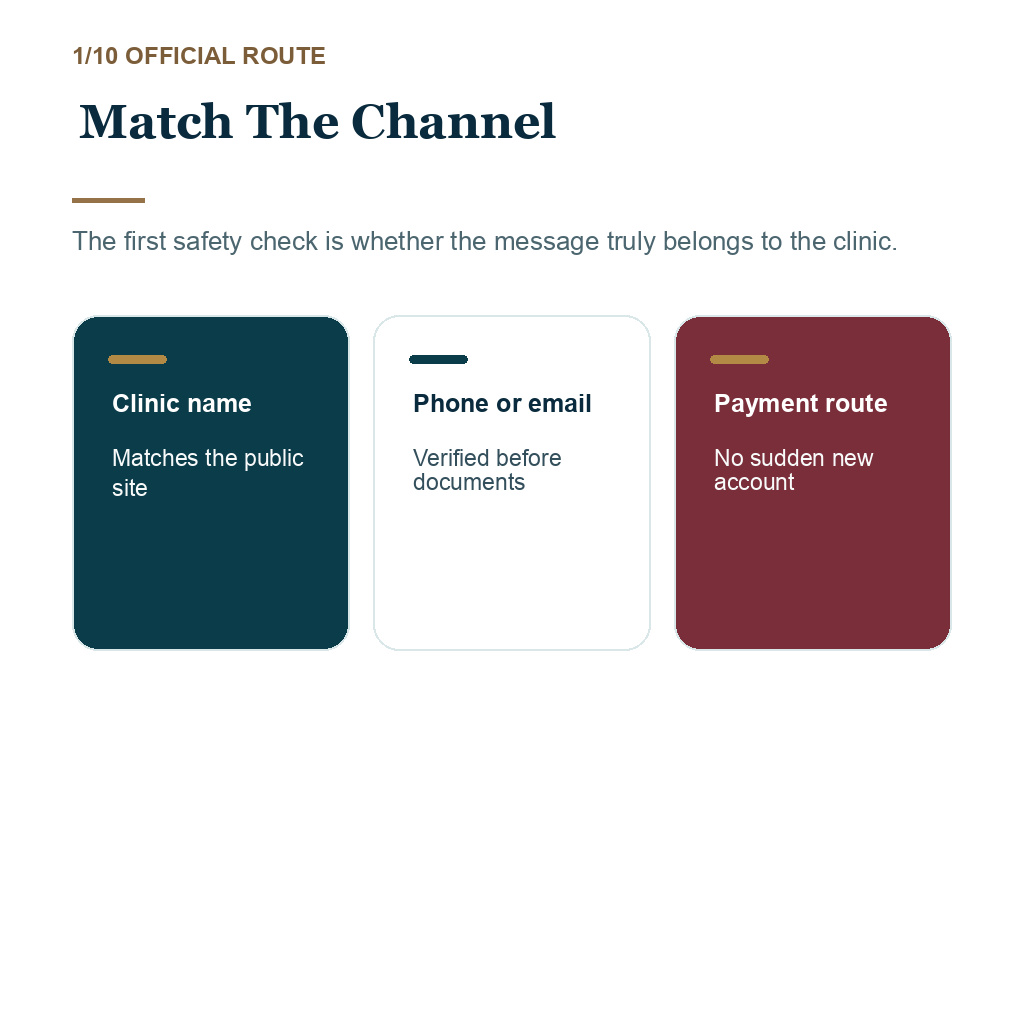
A booking channel should not feel mysterious. The clinic name, website, phone number, email address, doctor identity, and booking instructions should fit together. If a message comes from an unverified account, a personal number, or a profile that does not match the clinic’s official information, slow the conversation before sending passport details, medical history, photographs, or payment information.
Treatment abroad makes written clarity more valuable. Language barriers during hair transplant abroad can make small misunderstandings feel larger, so the written channel should reduce confusion rather than create it.
The message should say who is responsible for each surgical step
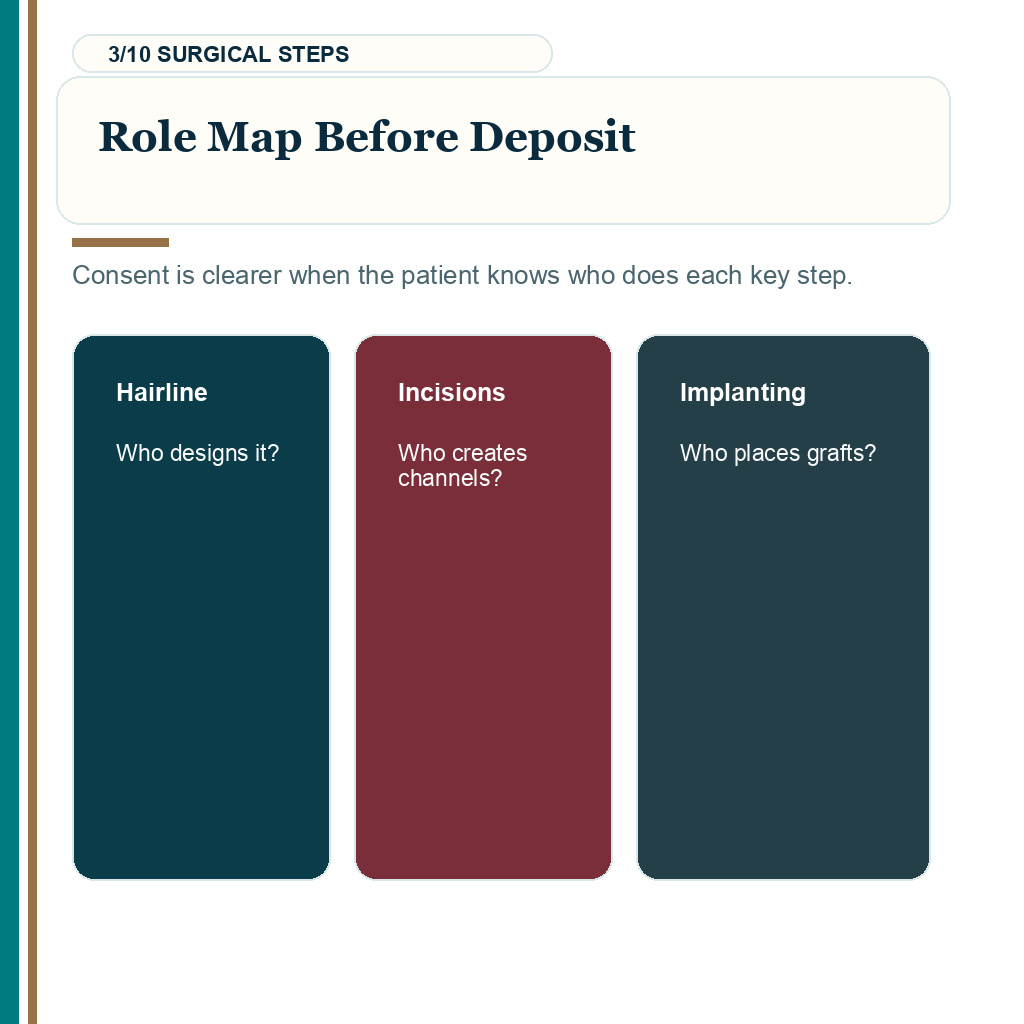
The division of surgical responsibility should be clear before booking. The doctor, nurses, technicians, or assistants may perform different parts of the procedure, and the answer matters. Extraction, incision or channel opening, implantation, anesthesia monitoring, hairline design, graft counting, and donor management are not all the same responsibility.
A clear booking conversation should not hide this behind vague words like team, expert, medical staff, or doctor supervised. Those words may be true, but they are not enough by themselves. The answer needs to show which parts of the operation are planned by the surgeon, which parts are performed by the surgeon, and which parts are delegated to trained team members.
The broader page on surgeon involvement in hair transplant explains why this is not a cosmetic detail. Role clarity protects consent. A patient cannot agree to a plan they do not understand.
What should match before you send documents?
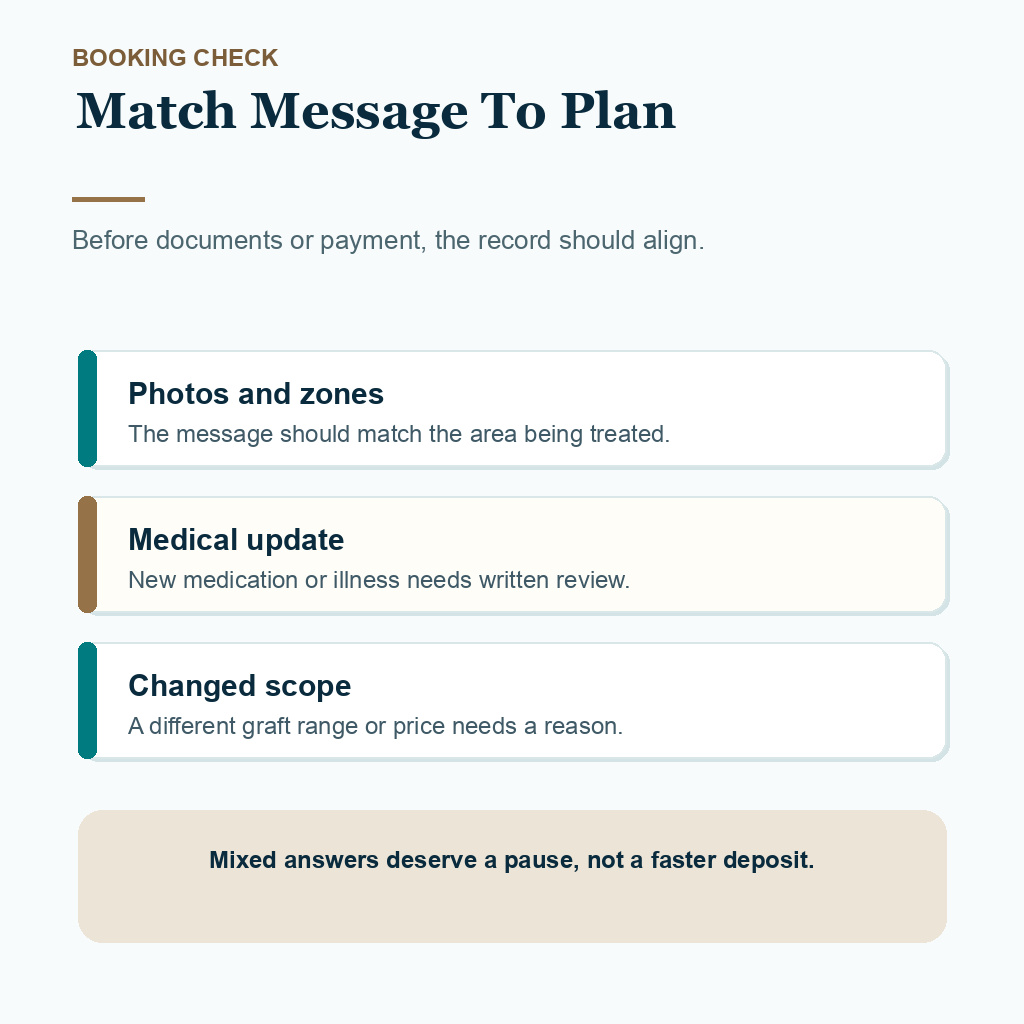
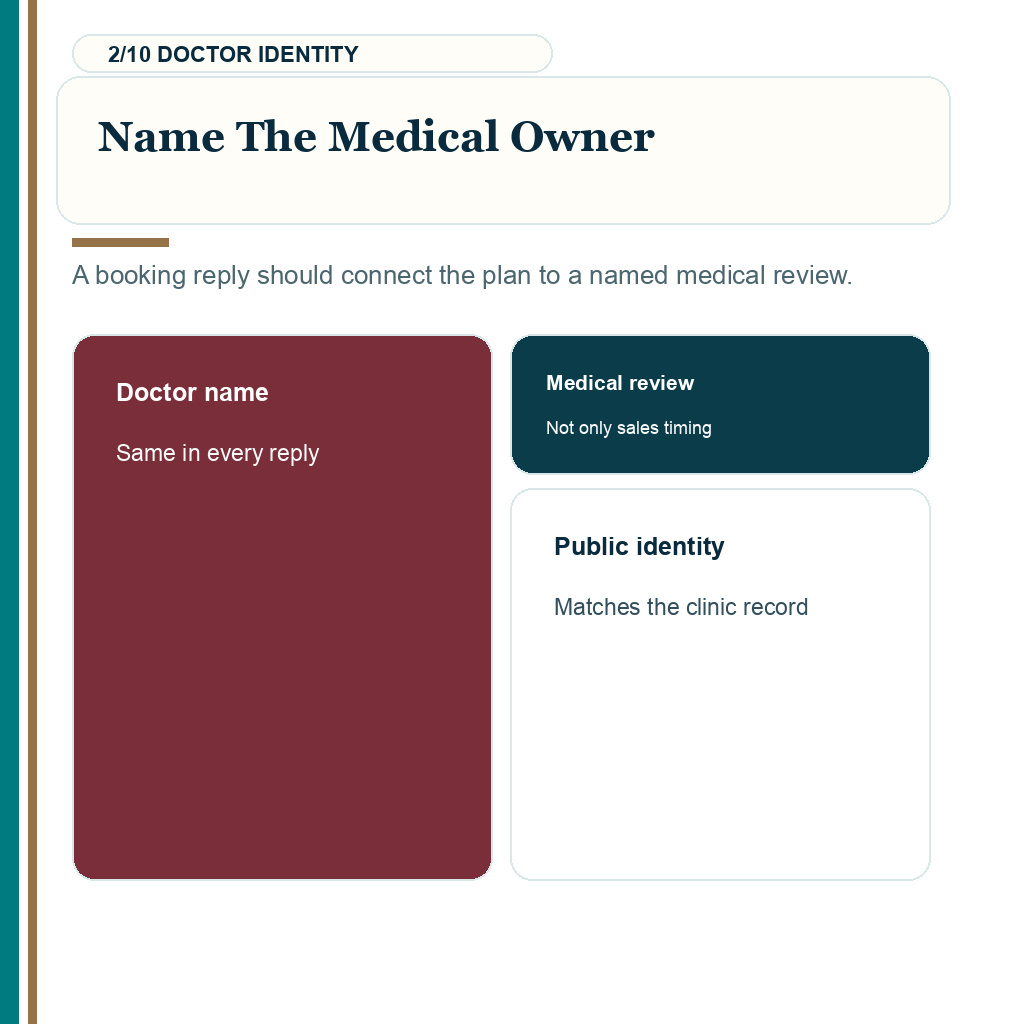
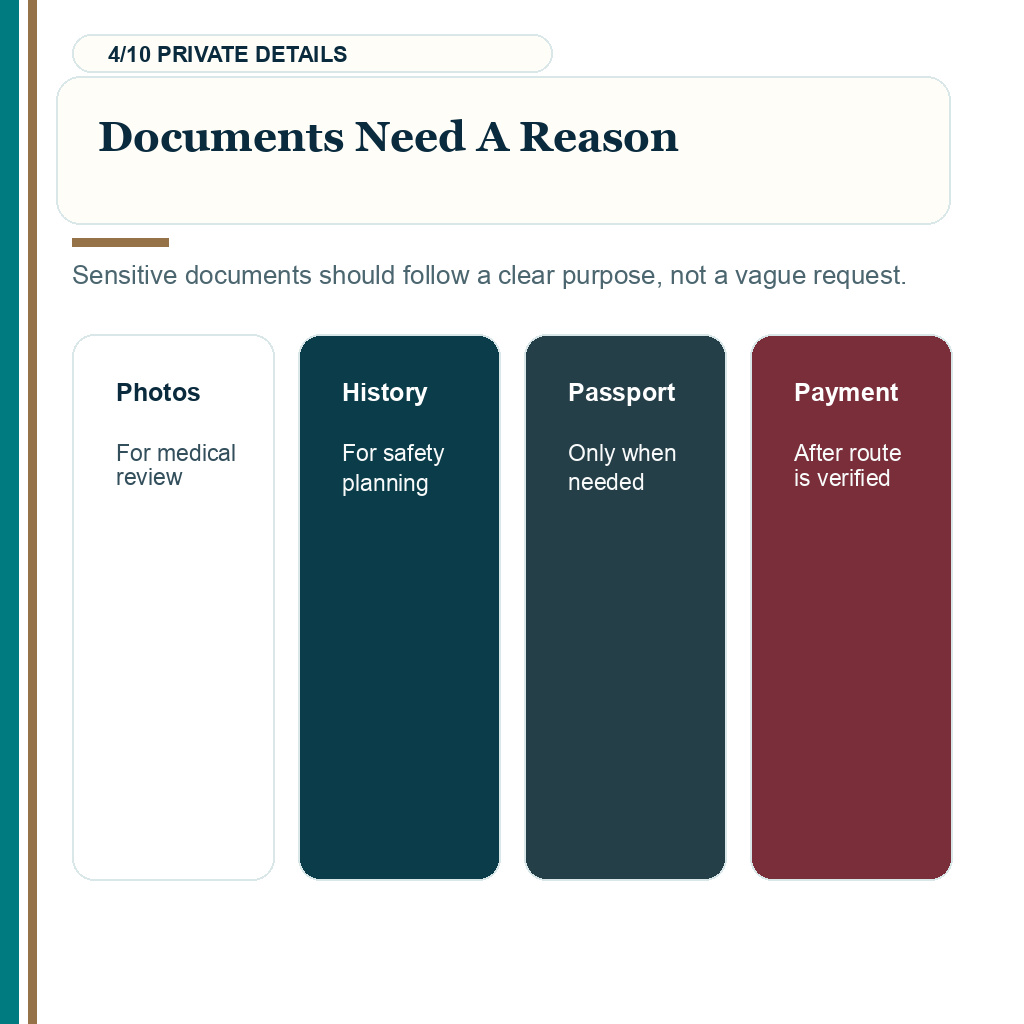
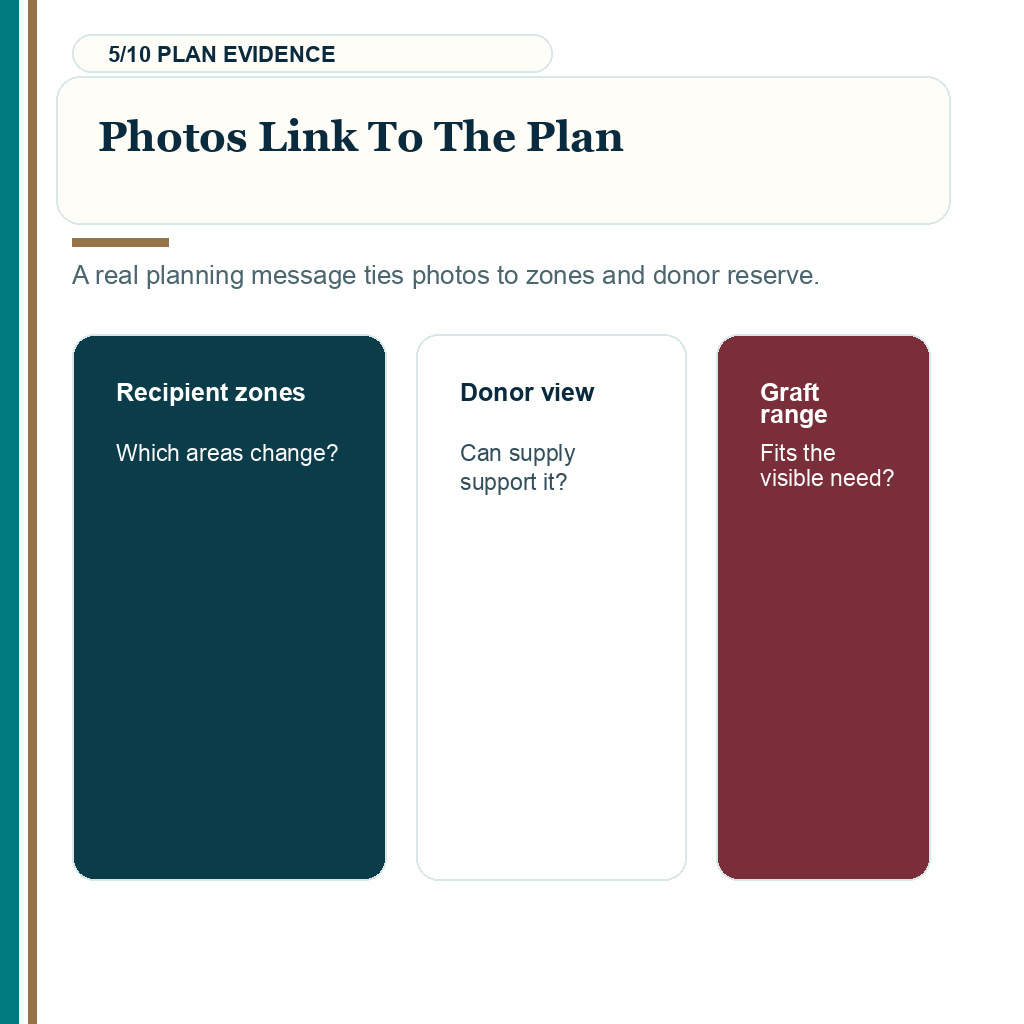
Before sending anything sensitive, match five things first. The official contact route should match the clinic. The doctor name should match the clinic’s public identity. The proposed treatment should match the reason for contacting the clinic. The person asking for documents should explain why they are needed. The medical plan should be connected to photos, donor quality, hairline design, or health history, not only to a booking date. For the document side of that check, hair transplant documents should have a clear purpose before private details are sent.
The patient does not need to become suspicious of every message. The point is simpler. If the channel and plan are legitimate, the clinic can repeat the same core facts in writing. If each reply gives a different doctor role, a different graft promise, a different payment route, or a different explanation of who will do the work, the mismatch is the signal.
At this stage, separate assessment material from commitment material. Scalp photos and relevant medical history may be needed for a serious review. Passport details, full travel documents, and payment links belong later, after the official route and reason are clear. If a different number or account appears at the payment stage, verify it through the clinic’s official channel before sending anything.
Online booking also does not prove final medical suitability. A proper review can still reduce the graft range, stage the case, change the hairline plan, postpone surgery, or decline surgery if donor safety, medical history, or expectations do not fit.
Coordinator messages are not a substitute for consent
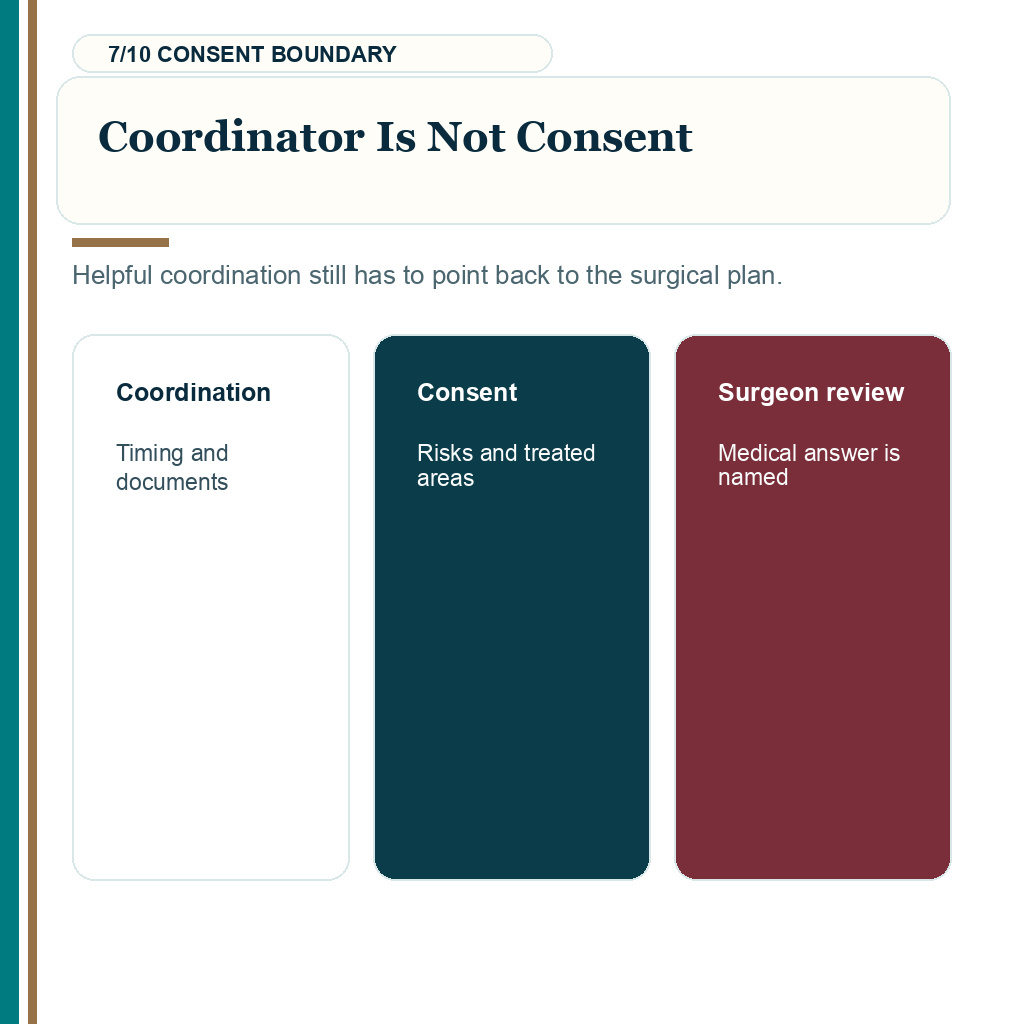
A coordinator can be helpful. Good coordinators make the appointment process smoother, collect the right questions, arrange travel timing, and keep the patient informed. But a coordinator message is not the same as surgical consent.
Consent has to connect to the actual operation. It should cover the treated areas, expected graft range, hairline design, donor limitations, possible staged planning, risks, alternatives, aftercare, and the role of the surgical team. For the consent step on the day of surgery, hair transplant consent before surgery explains this in more detail.
If a patient has only received cheerful booking replies, that is not enough. Consent should be anchored to the surgical plan. A useful coordinator reply says the medical point will be confirmed with the surgeon, or that the surgeon has reviewed it and this is the answer. It should also be understandable in the patient’s language. Consent should not appear for the first time when the patient is tired, already in the clinic, and emotionally committed to going ahead.
Mixed answers deserve a pause, not a faster deposit
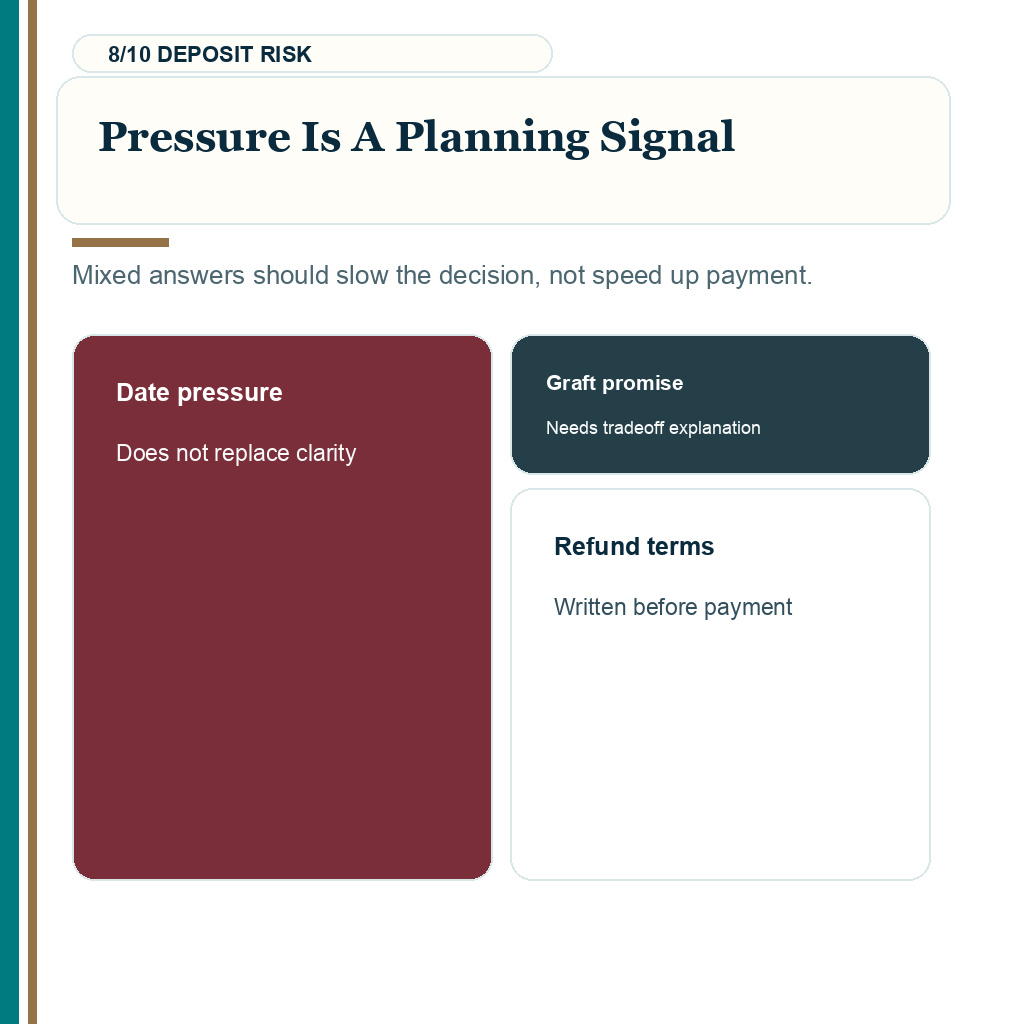
The most common mistake is to answer confusion with speed. A patient sees mixed messages, then sends a deposit quickly because the clinic says the date may disappear. That is backwards. If money or flights are already paid, the answer is still not to rush the surgery. Ask for the written plan, role map, and options before adding more commitment.
The pages on hair transplant deposits before booking and hair transplant booking pressure are relevant here. If another clinic asks for money before travel, its refund and rescheduling terms should also be written before payment, including what happens if health changes, the examination in the clinic changes the graft plan, surgery is postponed, or the patient declines a revised scope. Payment should not be used to force clarity later.
If the patient asks who will do the incisions and receives a different answer every time, that is not a small wording issue. If the website says surgeon-led but the message says the doctor only checks the result, clarify it before payment. If the channel changes to a different number at the payment stage, verify it through the official route first.
A role map is more useful than a promise
A role map does not need to be complicated. It can be a short written explanation of who evaluates the photos, who designs the hairline, who performs extraction, who creates recipient area incisions, who implants grafts, who supervises the room, and who reviews the patient after surgery.
This is more useful than a large promise. A promise says the result will be natural. A role map shows how responsibility is handled. When patients compare clinics, how to choose a hair transplant clinic in Turkey and red flags of Turkish hair mills can help them separate structure from marketing language.
A team is not the problem in hair transplant surgery. Hair transplant surgery uses a team in real life. The patient needs to be told the truth about the team, the surgeon’s role, and the limits of the plan.
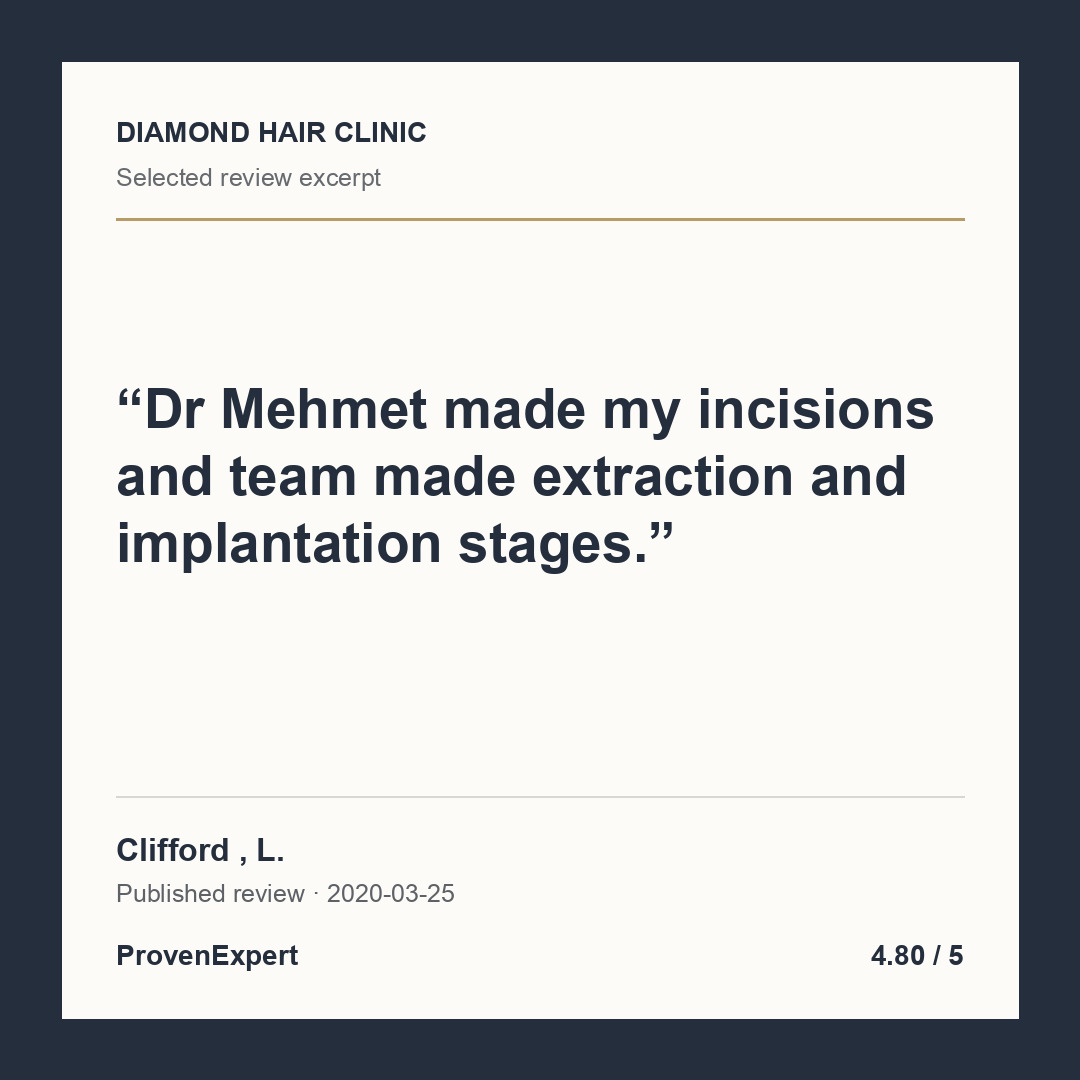
Read this review excerpt
Dr Mehmet made my incisions and team made extraction and implantation stages.
Changes after booking need a written update
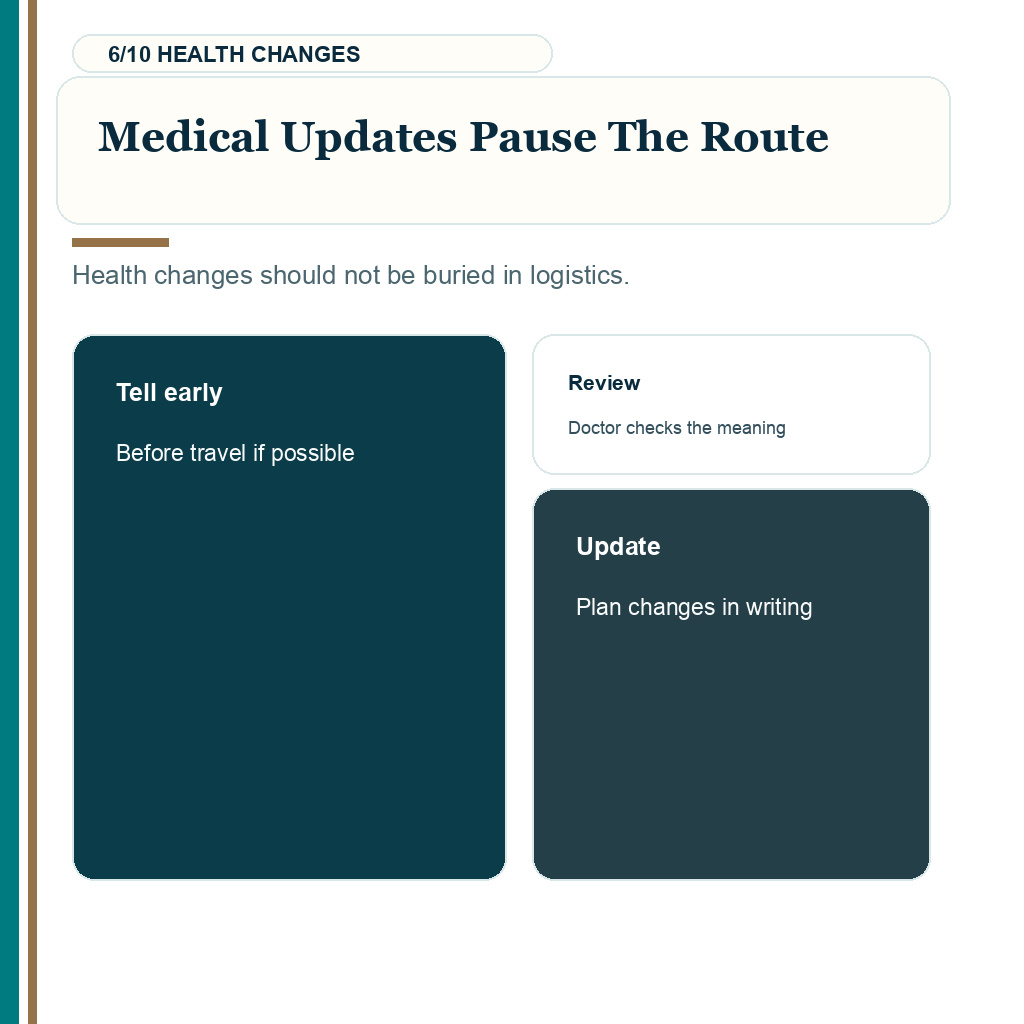
A plan can change after booking. A patient may disclose a fever, infection, new medicine, allergy, abnormal test result, doctor’s advice, better photos, a different hairline request, changed travel dates, or donor findings that were not obvious online. Send medical changes before travel when possible, not only on surgery day. A real change should be explained in writing.
A graft range that changes because the donor is weaker, the recipient area is larger, or the hairline needs to be safer is different from a change explained only by package rules, availability, or a fast upgrade. One is medical planning. The other needs a pause and written clarification.
New medical changes after booking a hair transplant can change readiness, and a hair transplant quote change before surgery should come with a reason tied to the plan. The update should name what changed, why it matters, and whether the surgical responsibility changed with it.
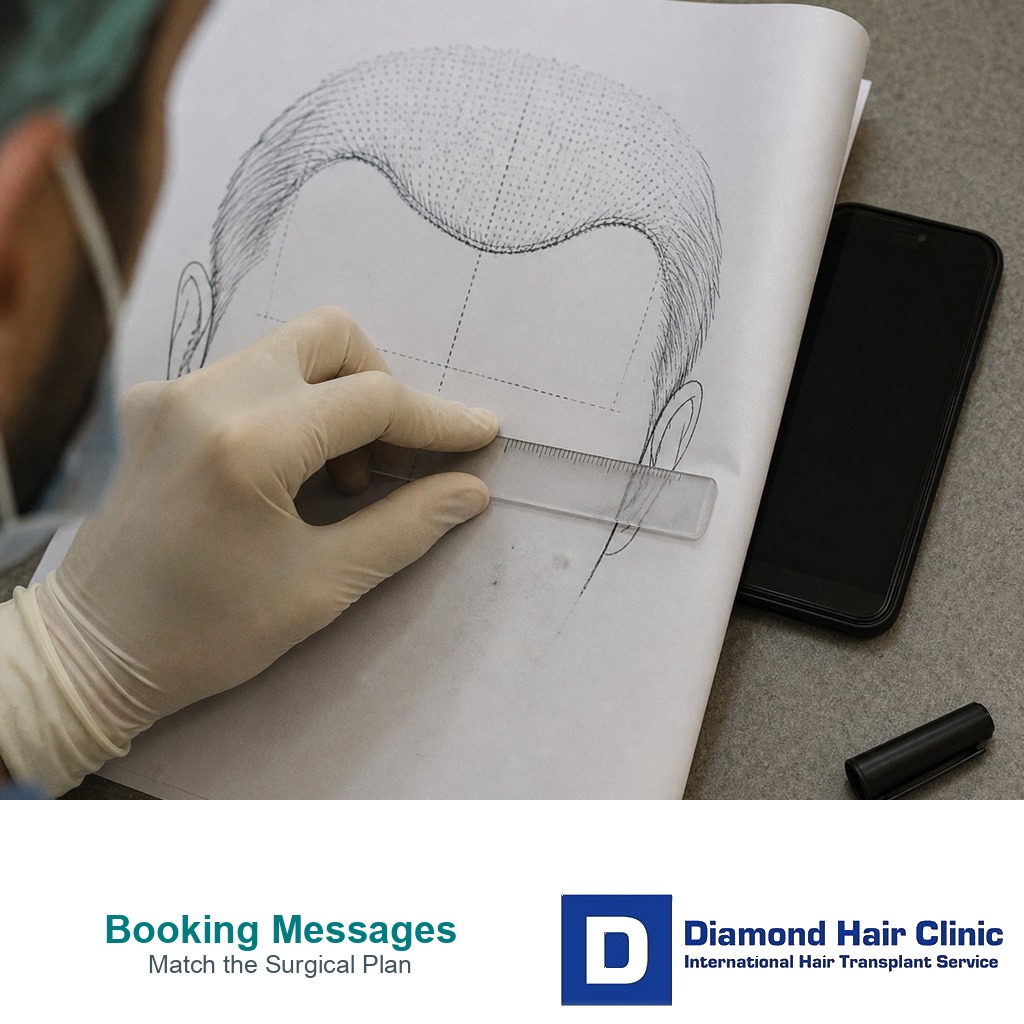
If the marked zones, temple points, or graft distribution change after shaving or direct examination, the written update should say that clearly. A photo of a drawn line is helpful only when it matches the surgeon’s explanation, the donor limit, and the areas the patient has actually accepted.
Do not accept a new plan only because the travel date is close. A changed plan should leave a written trail. That protects both the patient and the clinic.
Booking clarity checks
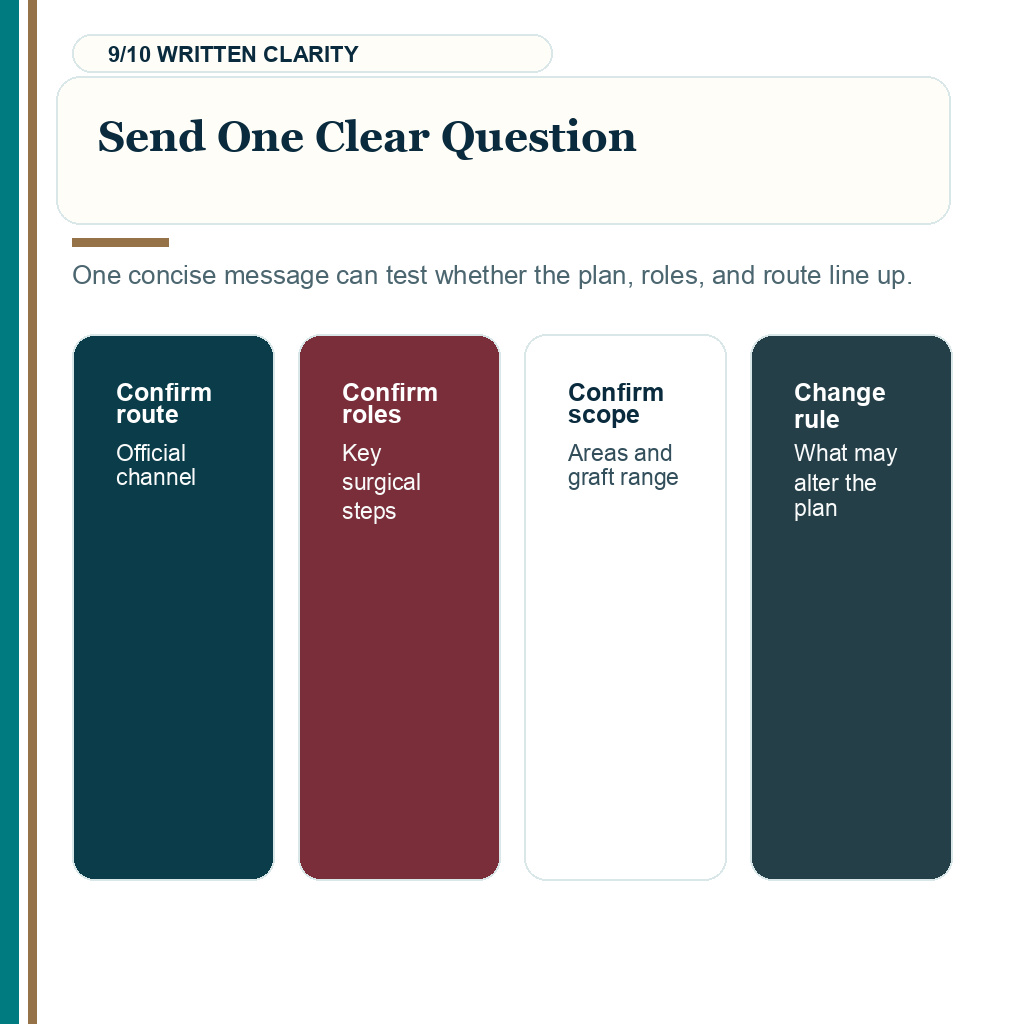
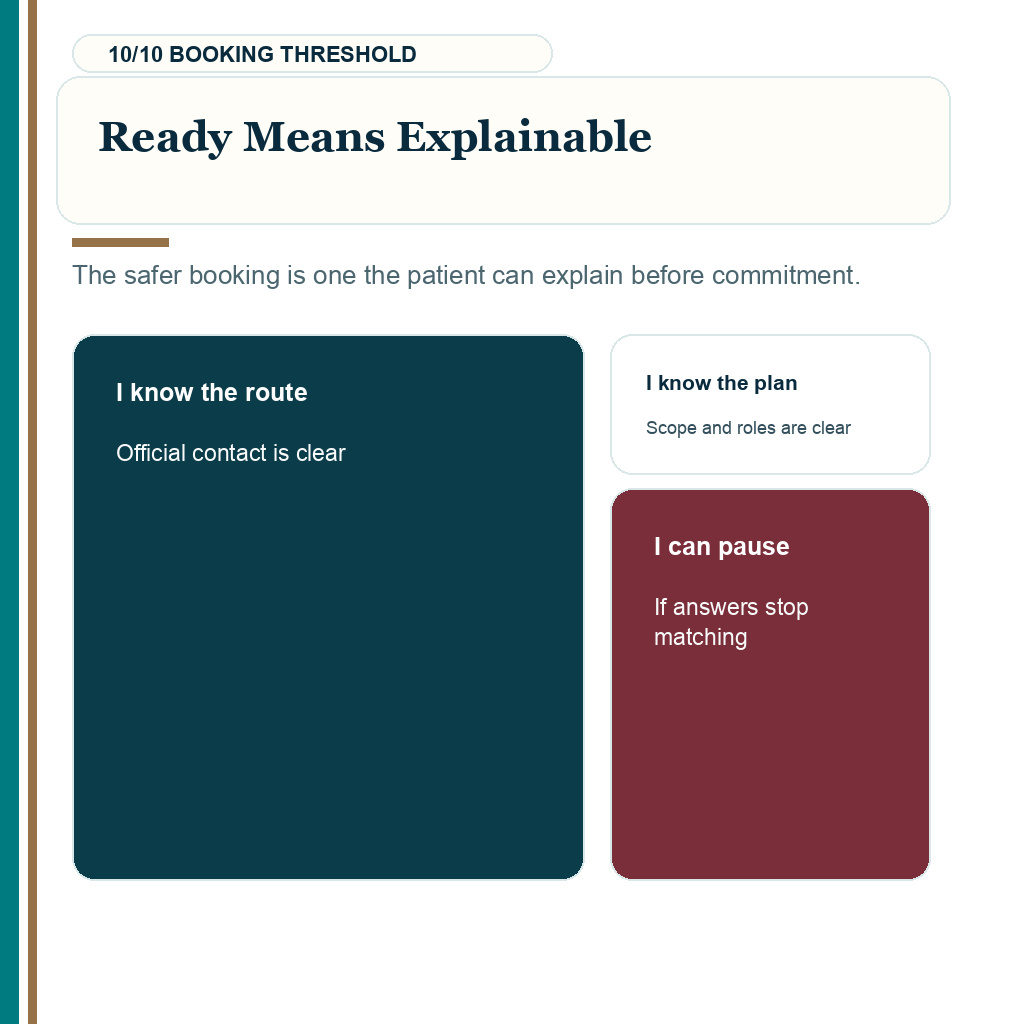
These 10 booking message slides separate official channel checks, doctor and team role clarity, document timing, photo based planning, medical updates, consent boundaries, deposit pressure, changed plan documentation, one clear clarification message, and the point where booking is ready. Swipe sideways, use the arrows one slide at a time, or choose a number below the image.