



Medical Changes After Booking Your Hair Transplant
If your health changes after booking a hair transplant, the surgery date should be reviewed before you travel or pay more money. Fever, an active infection, abnormal blood tests, new medication, or advice from your own doctor to wait can all change the timing. A sudden stomach illness such as food poisoning before hair transplant surgery belongs in the same timing review. Recent vaccination with fever or strong side effects, active cold sore symptoms, a disease flare, a new blood thinner, steroid, or biologic medicine also belongs in that review. Recent drinking before a hair transplant can also change the plan if it leaves you hungover, dehydrated, or medically unstable. When these changes appear in the final days, second thoughts before hair transplant surgery should be reviewed as a medical timing question, not brushed aside as ordinary nerves.
A small change does not always cancel surgery. What matters is whether the new information affects bleeding, infection risk, blood pressure, anesthesia, healing, fasting before hair transplant surgery, travel safety, or your ability to follow aftercare. A deposit, flight, hotel, or package date should never become stronger than that medical question. If the new information is another hospital operation near the transplant date, review it as major surgery around a hair transplant, not as a small calendar problem. This is the same judgment behind pausing before hair transplant surgery when health or planning details change late. New prescriptions matter even when the condition feels unrelated to hair, because the medicine can change the anesthesia, bleeding, infection, or healing conversation. Surgery morning vital signs belong in the same review, even when travel has already been arranged.
Some issues are temporary and the operation can be rescheduled safely. Others need a clearer medical plan first. Do not panic, but do not stay silent. Send the clinic the new information and wait until the surgeon’s timing decision is clear before treating the booking date as fixed.
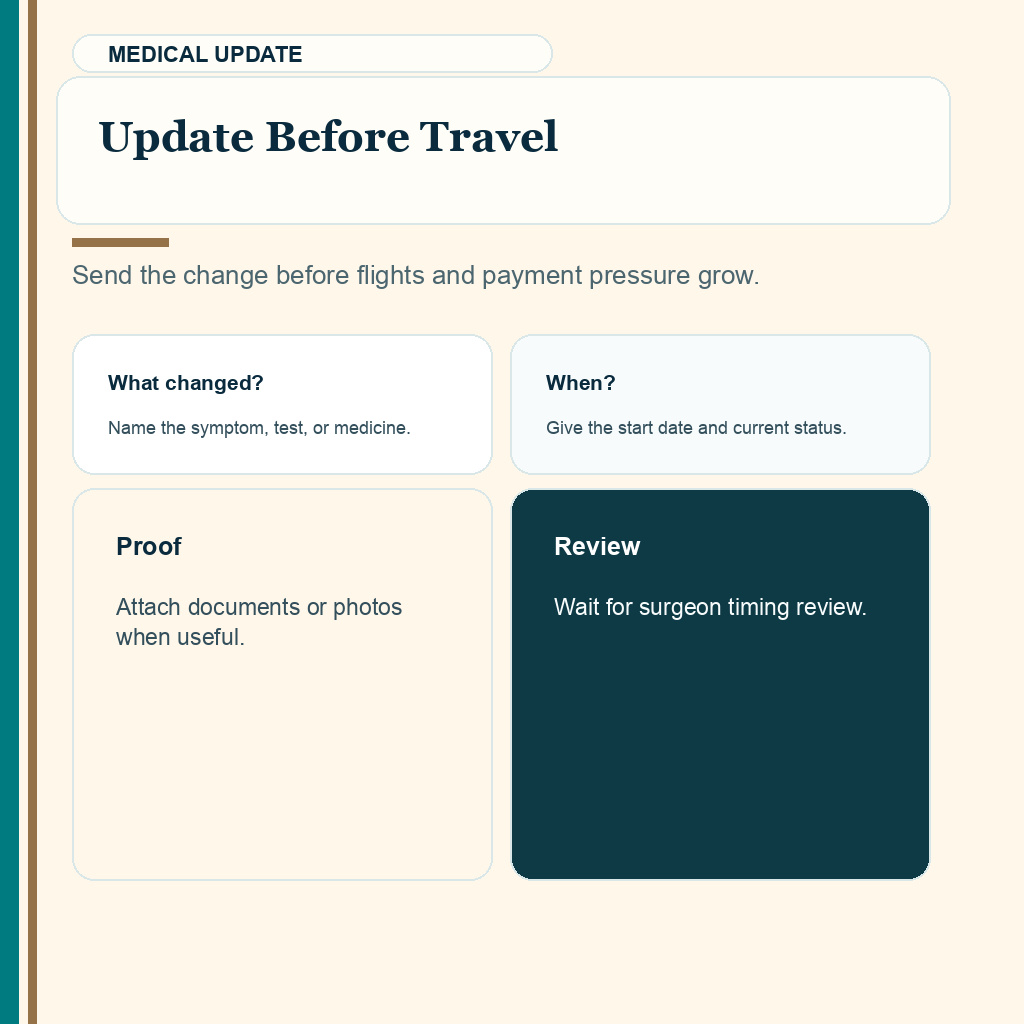
Send the update before travel
Update the clinic early and give the details plainly. A vague message such as “I feel a bit unwell” is less useful than a short explanation of what changed, when it started, what medicine was prescribed, which test result changed, and whether another doctor advised you to wait. Include photos of skin or scalp problems, a copy of abnormal blood results, your temperature if there is fever, and the exact names and doses of new medicines. That includes a strong hair loss treatment response, since medication improvement before surgery can change the graft plan.
The update should be reviewed before you fly, not discovered on surgery day. It is much safer to make the timing decision before travel, before shaving, before preoperative medicine, and before you feel committed because you are already inside the clinic.
New tests after booking should have a clear travel decision rule. The clinic should explain which result lets the date proceed, which result needs another review, and which result should move the surgery.
Plans made from photos or messages should stay provisional. An online plan can be useful, but it remains provisional. Final clearance still needs medical review, donor examination, and case specific judgment. Planning from photos alone cannot replace that step.
Medical changes that can make timing unsafe
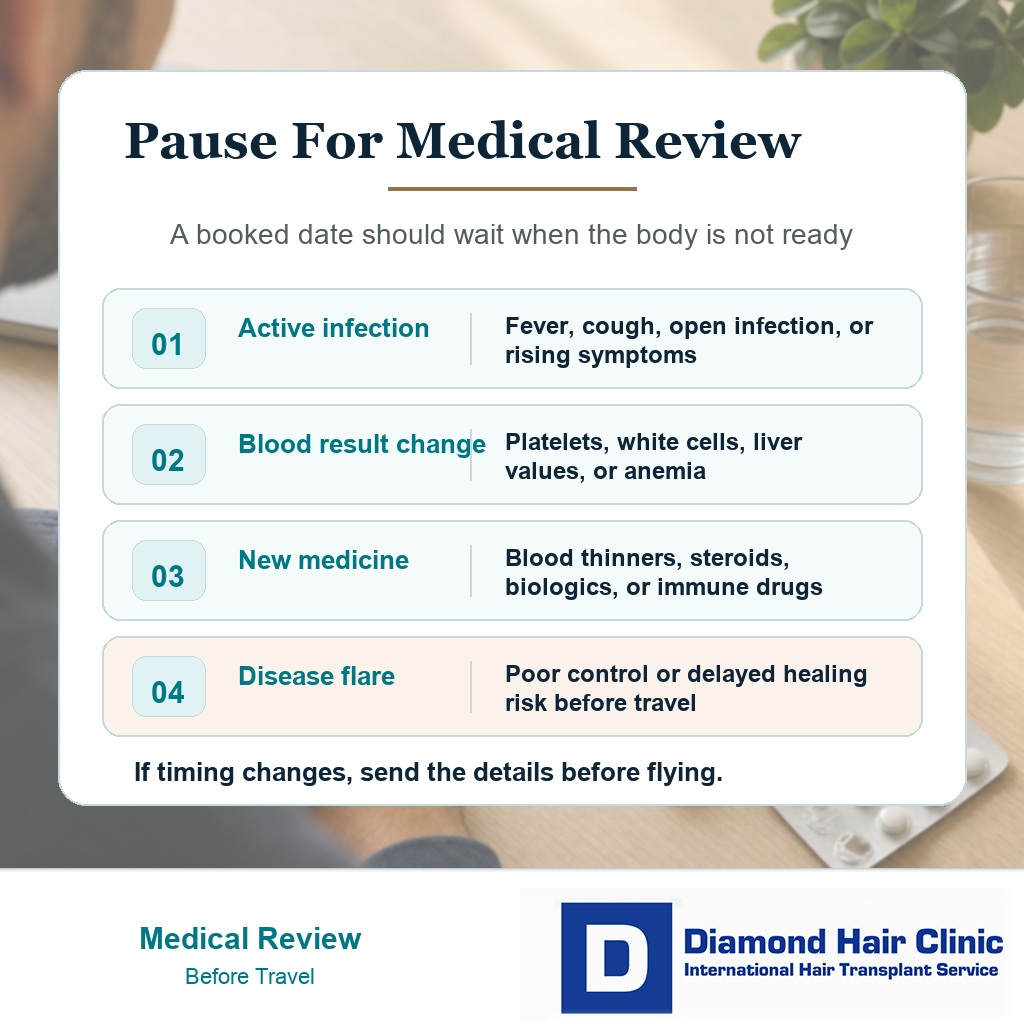
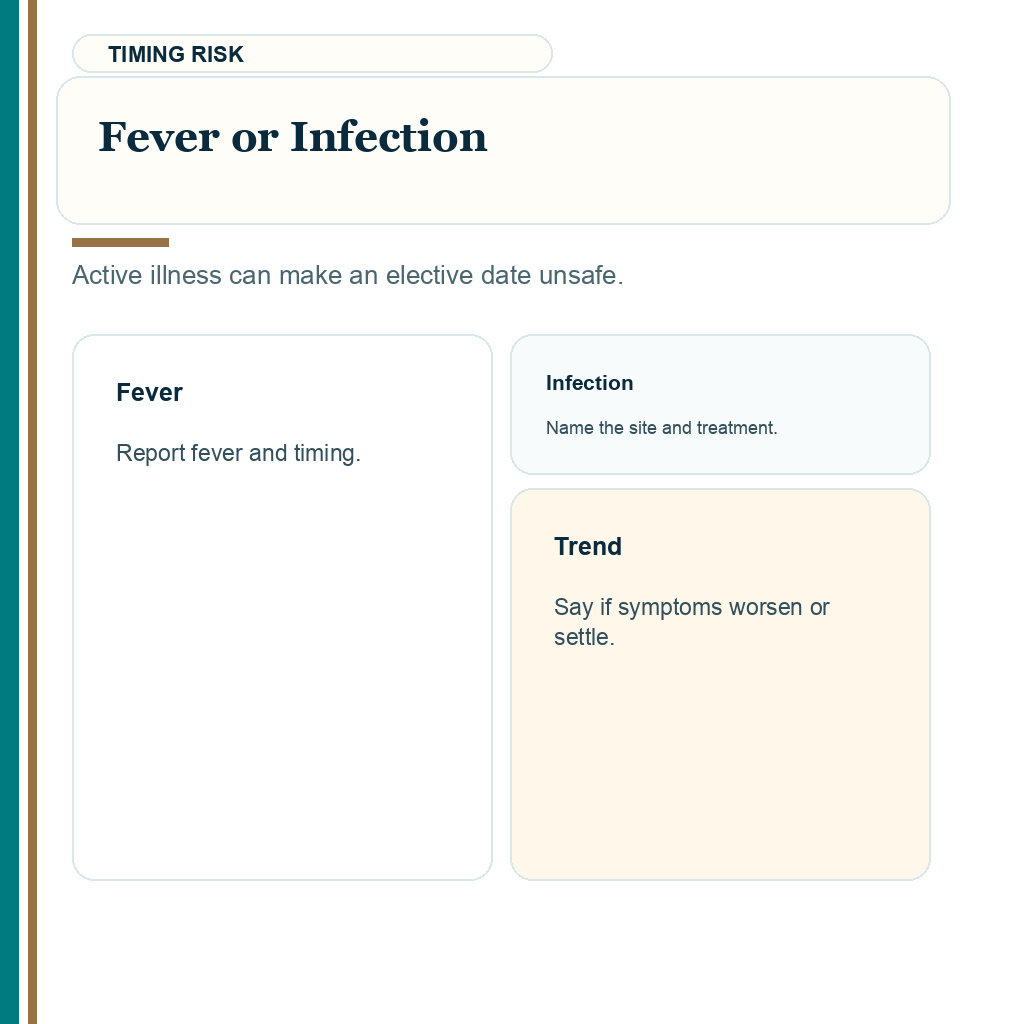
The clearest reason to wait is an active illness or infection. Fever, a worsening cough, open skin infection, dental infection, urinary infection, uncontrolled inflammation, a sunburned scalp before surgery, a recent tattoo that is red, painful, or draining, or a recent systemic infection can make an elective procedure the wrong decision for that day. If you have a cold or flu before hair transplant surgery, judge timing by symptoms and stability, not by how much money has already been spent.
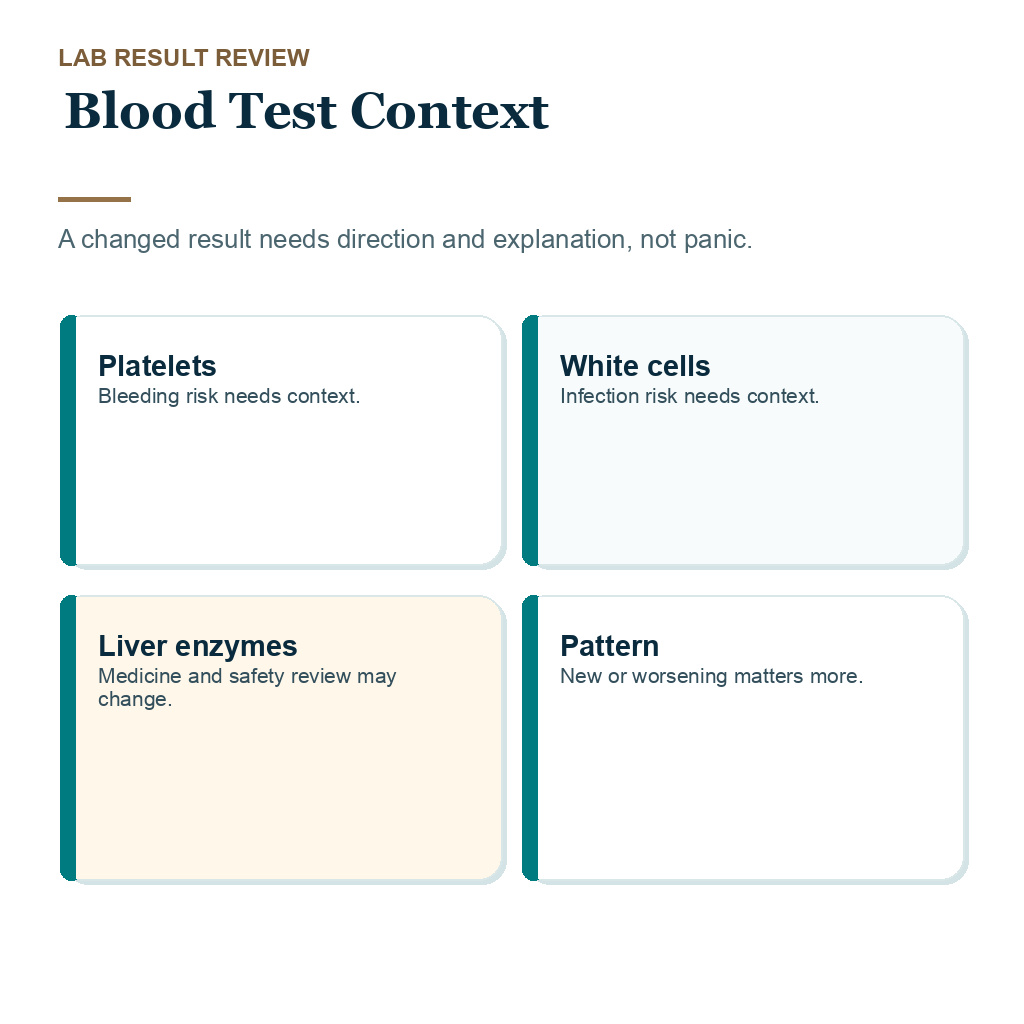
Blood results also matter. Low platelets, low white blood cells, anemia, high liver enzymes, or another unexpected finding may not cancel surgery permanently, but they can change the risk review. A mild, old, explained result is different from a new or worsening result. I separate low platelets before hair transplant, low white blood cells before surgery, and high liver enzymes before hair transplant because each result changes the risk review in a different way.
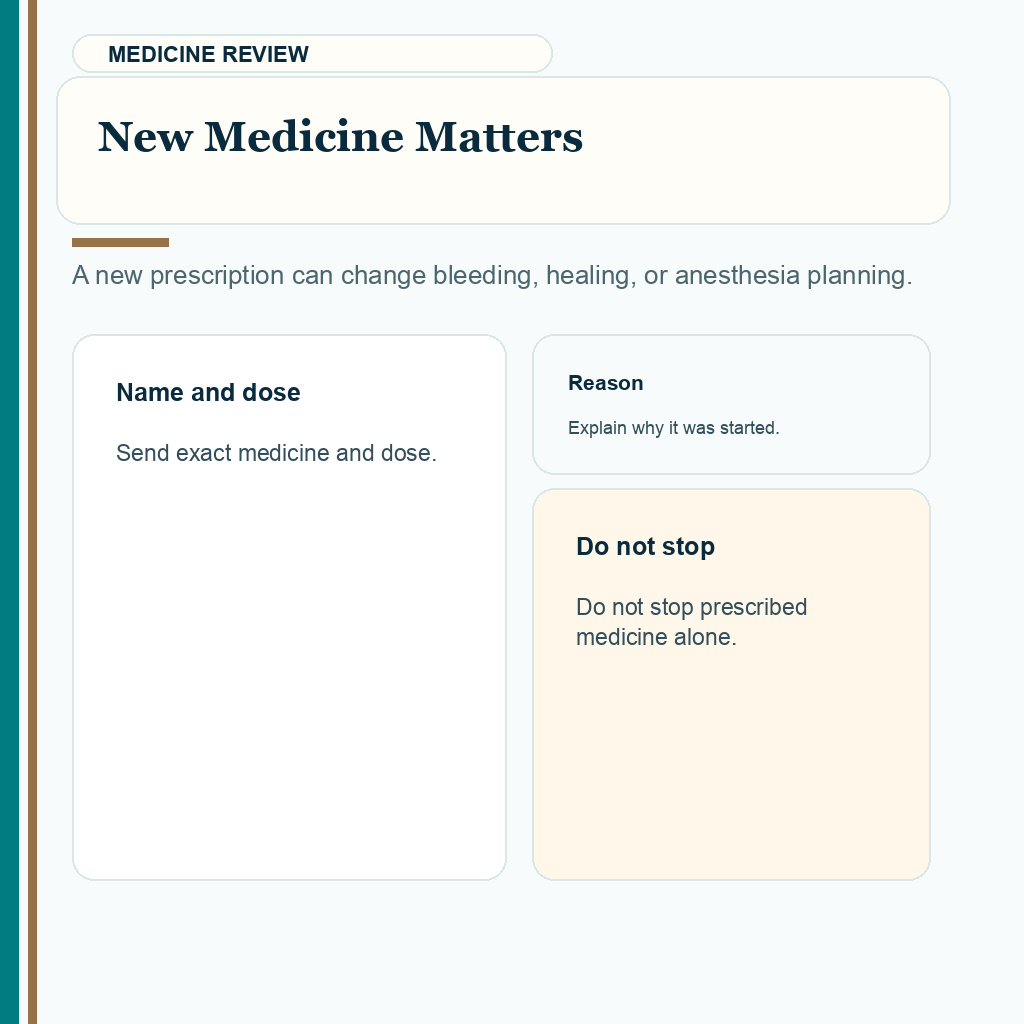
A new medication can also change the plan. Blood thinners can affect bleeding risk. Steroids can affect healing and infection risk depending on dose and duration. Biologic medicines and other immune treatments require timing discussion with the doctor who manages the underlying disease. New antibiotics, diabetes or weight loss injections, sleep medicines, supplements, herbal products, or strong medicines for pain or inflammation should also be reported because they can affect timing, anesthesia planning, or aftercare. If you are using Humira or other biologics before hair transplant or prednisone before hair transplant surgery, the important detail is not only the medicine name. I need to understand the reason, dose, timing, and whether the underlying condition is stable. That includes private ED tablets, so Viagra or Cialis before a hair transplant should be reported before travel or surgery day. A new DVT, pulmonary embolism, or anticoagulant change should be handled through blood clot history and hair transplant planning before the booking date is treated as fixed. Starting, stopping, or switching PrEP or Truvada after booking should be sent as a medication update before travel.
Protecting the surgery date by stopping a prescribed medicine alone can be more dangerous than postponing the transplant. If the medicine affects bleeding, blood pressure, blood sugar, immune control, infection treatment, or a heart or clotting condition, the timing decision should involve the doctor who prescribed it.
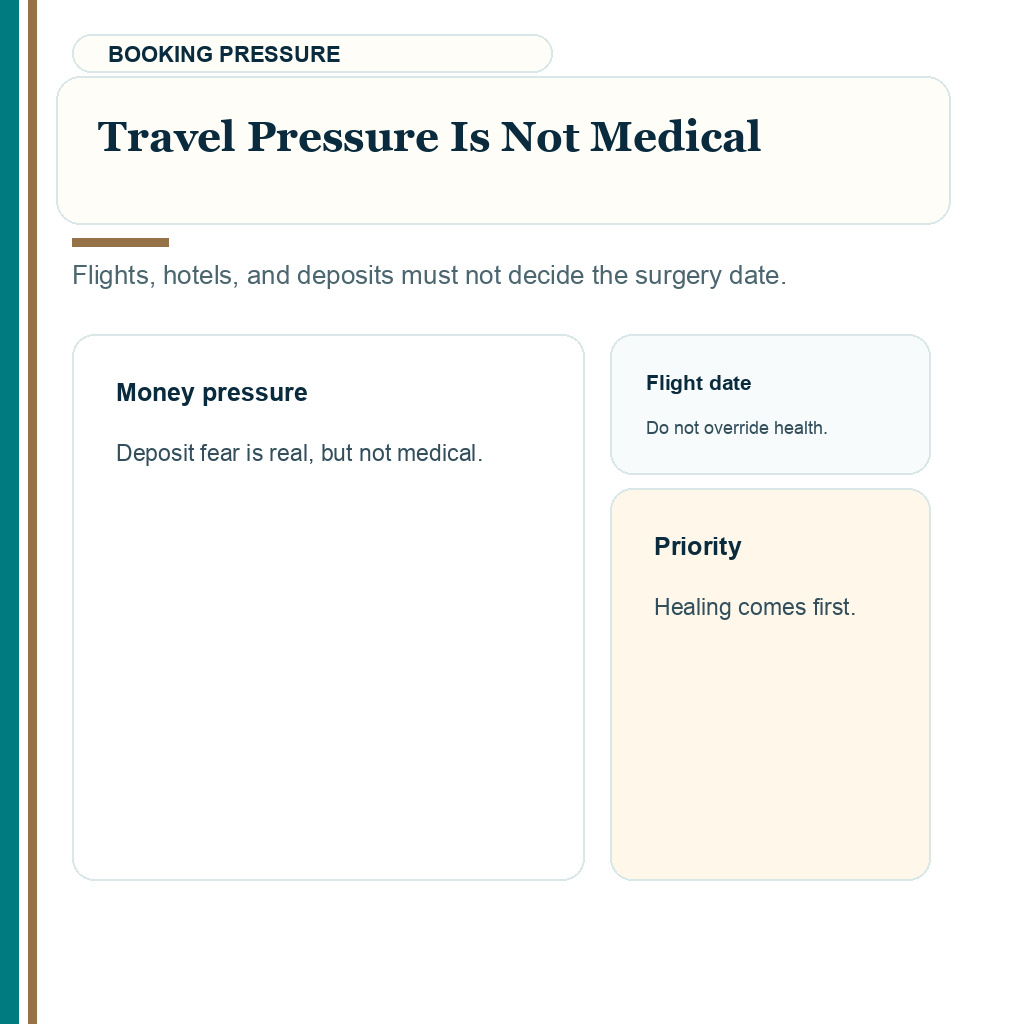
Payment pressure cannot decide the surgery date
A deposit, advance payment, flight, hotel, or fixed package date can make you feel trapped when a clinic uses it as pressure. I understand that feeling. It is still not a medical reason to proceed.
The same is true when the reason for surgery changes in a good direction. If medication, a new diagnosis, or a calmer shedding phase makes the scalp look stronger after booking, the operation should be reassessed before travel pressure decides for you. A smaller plan, a delayed plan, or no surgery may be better than completing the old plan just because flights and hotel dates are already fixed.
A hair transplant is elective surgery. If the body is not ready, the inconvenience of delay is often safer than a forced operation. A poor timing decision can create bleeding problems, healing problems, infection risk, unclear aftercare, or a result that becomes harder to judge later because the surgery began from an unstable situation.
The clinic’s priorities become visible at this point. If the clinic only protects the booking date, you can start to feel like a slot. Proper review means looking at the medical change, offering realistic options, and postponing when postponement protects healing. Before money changes hands, medical readiness must be clear, not only travel and payment details.
Checks before I keep the surgery date
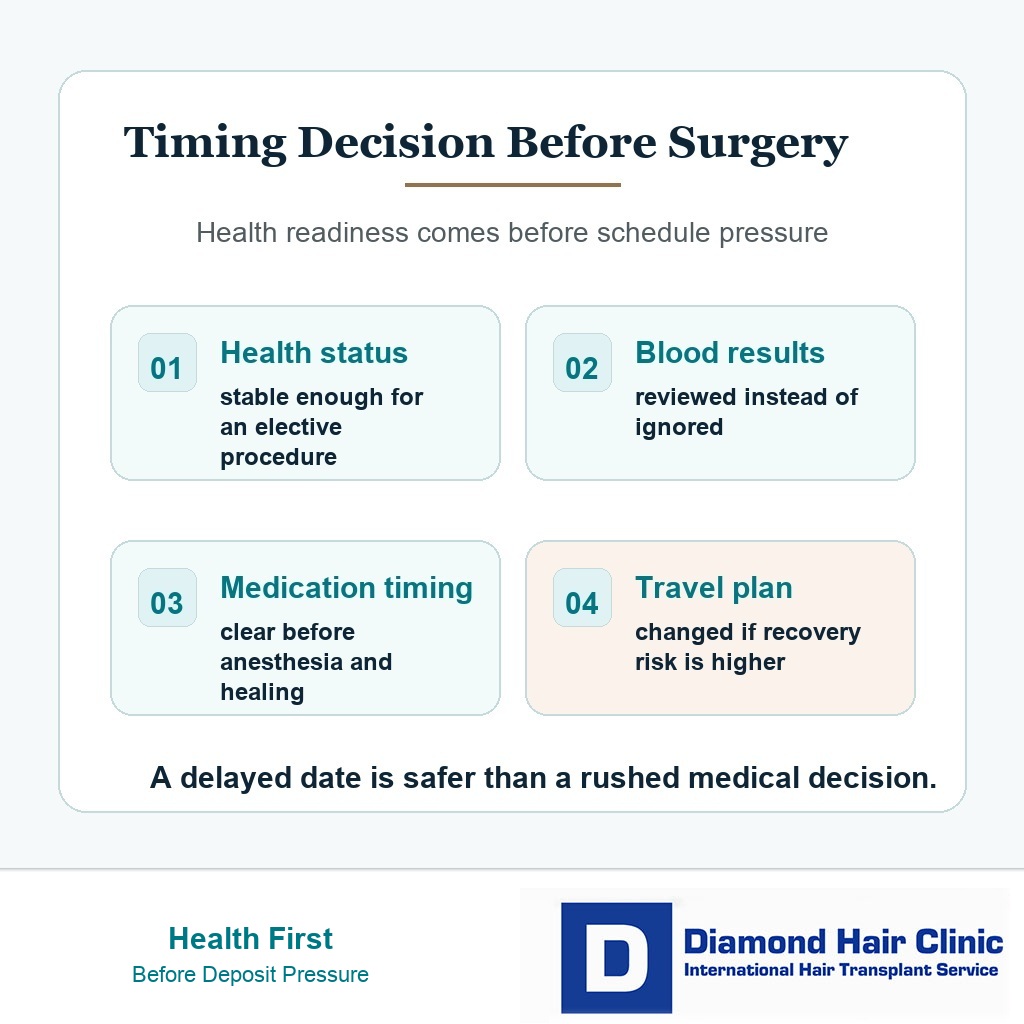
For a new diagnosis, new medicine, abnormal blood test, fever, infection, skin flare, or unstable chronic disease, I do not start with the calendar. I first need the change itself, the timing, the doctor treating the condition, and whether any medicine affects bleeding, anesthesia, immunity, or healing.
The answer can be proceed, repeat a test, ask the treating doctor, change preparation, reduce the plan, or postpone. The original booking date has no medical value if the body is not ready for surgery.
This is also where written communication protects the patient. A calm written answer gives the patient something to compare against travel pressure, deposit fear, and another clinic’s faster yes.
New diagnosis, flare, or medication review
The clinic needs the change itself, the timing, who made the diagnosis, which medicine was started or stopped, and whether the doctor managing that condition has given clearance. The written answer should say whether to proceed, postpone, repeat a test, involve the treating doctor, or change preparation instructions. A coordinator can collect information, but the medical timing decision should not be reduced to a sales reply.
Rapid weight loss after booking is also a medical change, especially if it follows a new or increasing weight loss injection. Send the dose dates, weight trend, appetite or nausea symptoms, hydration problems, nutrition changes, any recent blood tests, and any shedding change before you travel. I need the current health picture before I confirm the surgery date, not only the information we had when the date was chosen.
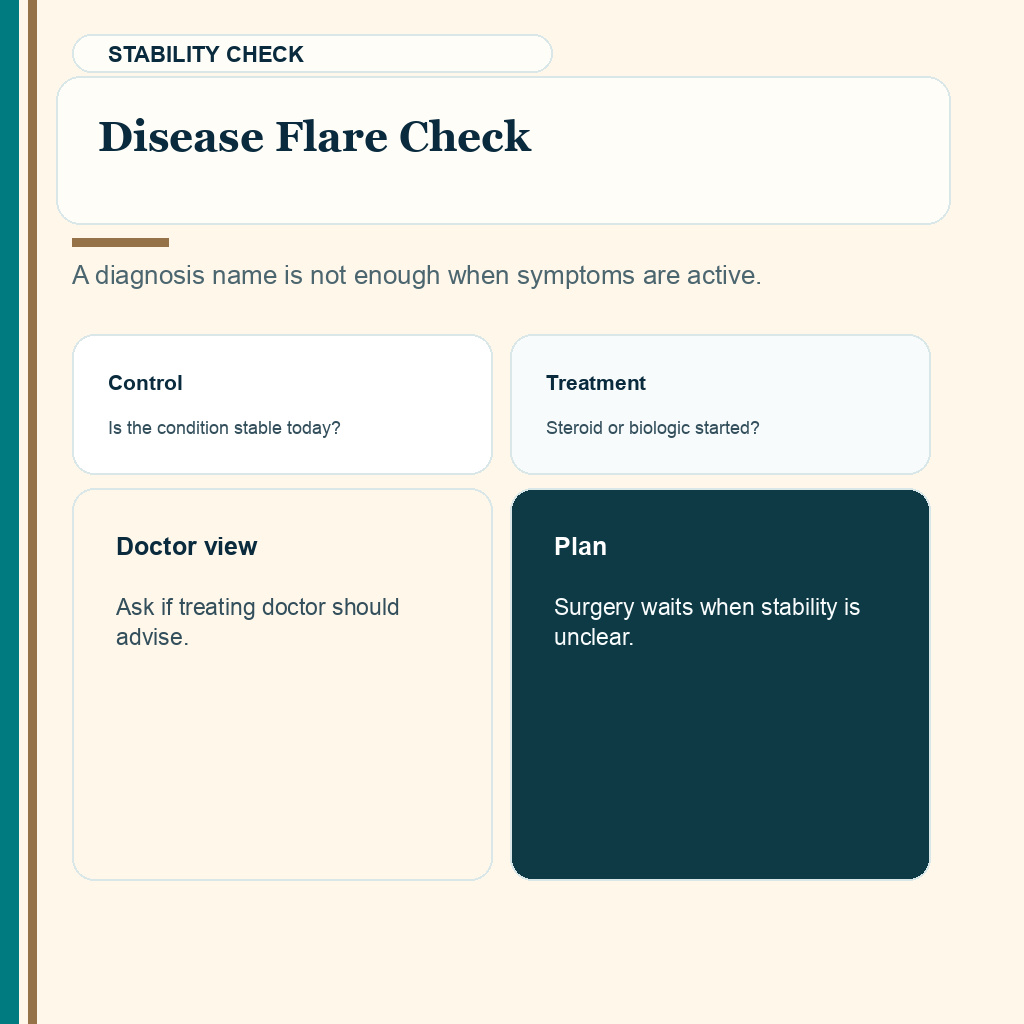
For Crohn’s disease, ulcerative colitis, autoimmune disease, heart disease, clotting problems, active infection, or any condition that recently became unstable, the hair transplant surgeon may need the treating physician’s view. The diagnosis name alone is not enough. I need to know whether the condition is controlled today. A new pacemaker check, ICD shock, device alert, or cardiologist warning after booking belongs in the surgeon’s review while the pacemaker or ICD FUE plan is still adjustable.
A stable inflammatory bowel disease history is very different from an active flare with new medicine that suppresses the immune system. For Crohn’s, ulcerative colitis, and hair transplant timing, stability is the deciding detail before surgery is planned.
Changed blood tests need context
An abnormal result should be shared even if you are afraid the clinic will delay you. An abnormal blood test is not always dangerous, but it is information the medical team needs. If the result is mild, stable, and already explained, surgery may still be possible. If the result is new, worsening, or unexplained, waiting can be the more sensible plan.
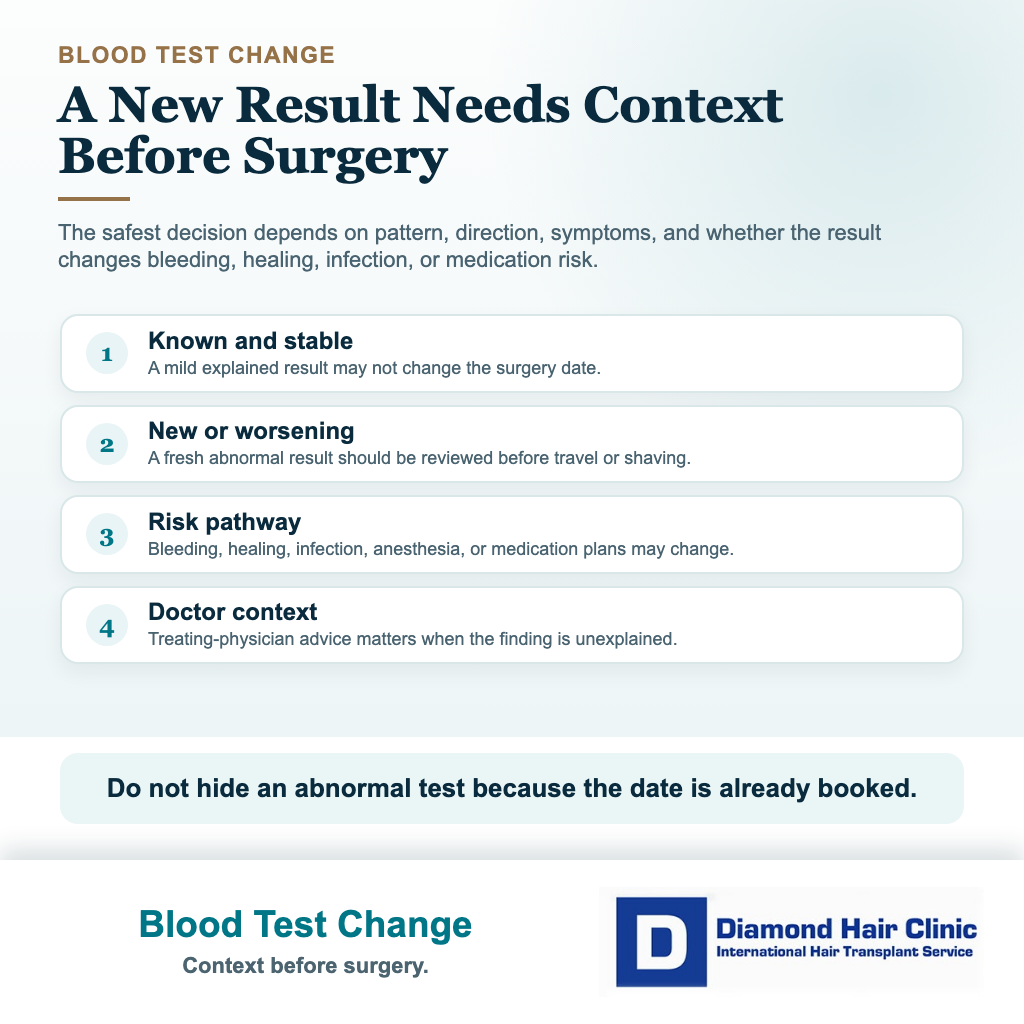
Direction matters more than one isolated number. A single result can be less meaningful than whether the condition is improving, worsening, or part of a known pattern. Platelets, white blood cells, hemoglobin, liver enzymes, kidney function, and bleeding history all deserve context.
I do not compare only the calendar and the cost. I compare the procedure to the body in front of me now. If the blood result changes the bleeding, healing, infection, anesthesia, or medication plan, the surgery date needs to move until the medical risk is clear.
A changed plan can also change graft safety
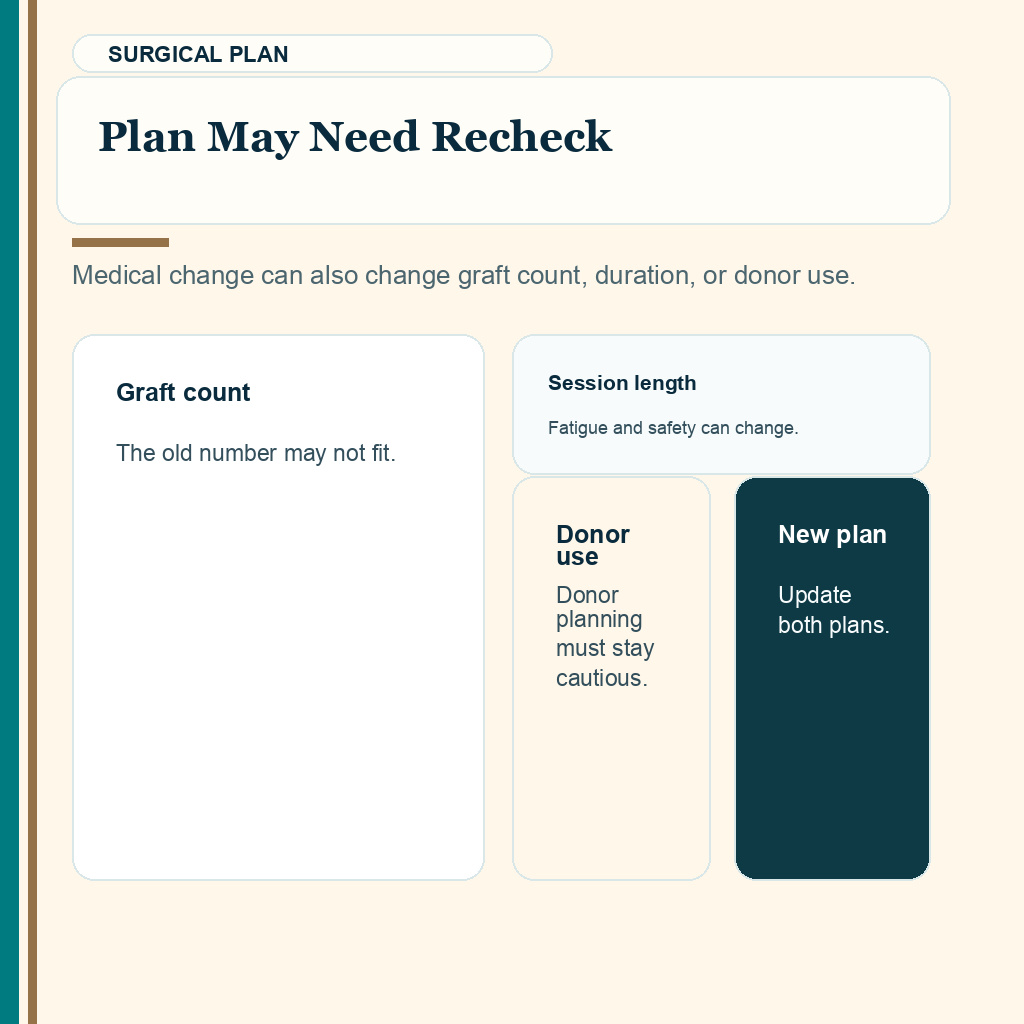
A new diagnosis, medication, blood result, or scalp flare can change more than the surgery date. It can also change how many grafts are safe to move, how long the operation should be, whether the donor can be used as planned, and whether the recipient skin is ready.
In a recheck after a medical change, travel is only one part of the decision. I also need to know whether the original graft plan still makes sense. Sometimes the answer is to keep the date, sometimes to reduce the plan, and sometimes to wait until the medical picture is stable.
Travel plans should follow the medical decision
But travel plans should support the medical decision, not force it. International travel can add fatigue, time pressure, dehydration, poor sleep, stress, and limited follow up access. Those factors may still allow surgery, but they reduce the margin for guessing when someone is already unwell or medically unsettled.
If you are flying internationally, the clinic should know whether there is fever, active symptoms, medication change, abnormal blood test, or a doctor’s restriction on travel. A safe surgery date should give the medical and surgical plan enough time to catch up with the new information. Timing should support healing, not only logistics.
Package details also matter. If the hotel, transfer, and surgery are sold together, you may feel that everything must happen as one fixed event. A safe hair transplant package in Turkey still needs a clear way to postpone when the body is not ready.
New symptoms after arriving in Turkey
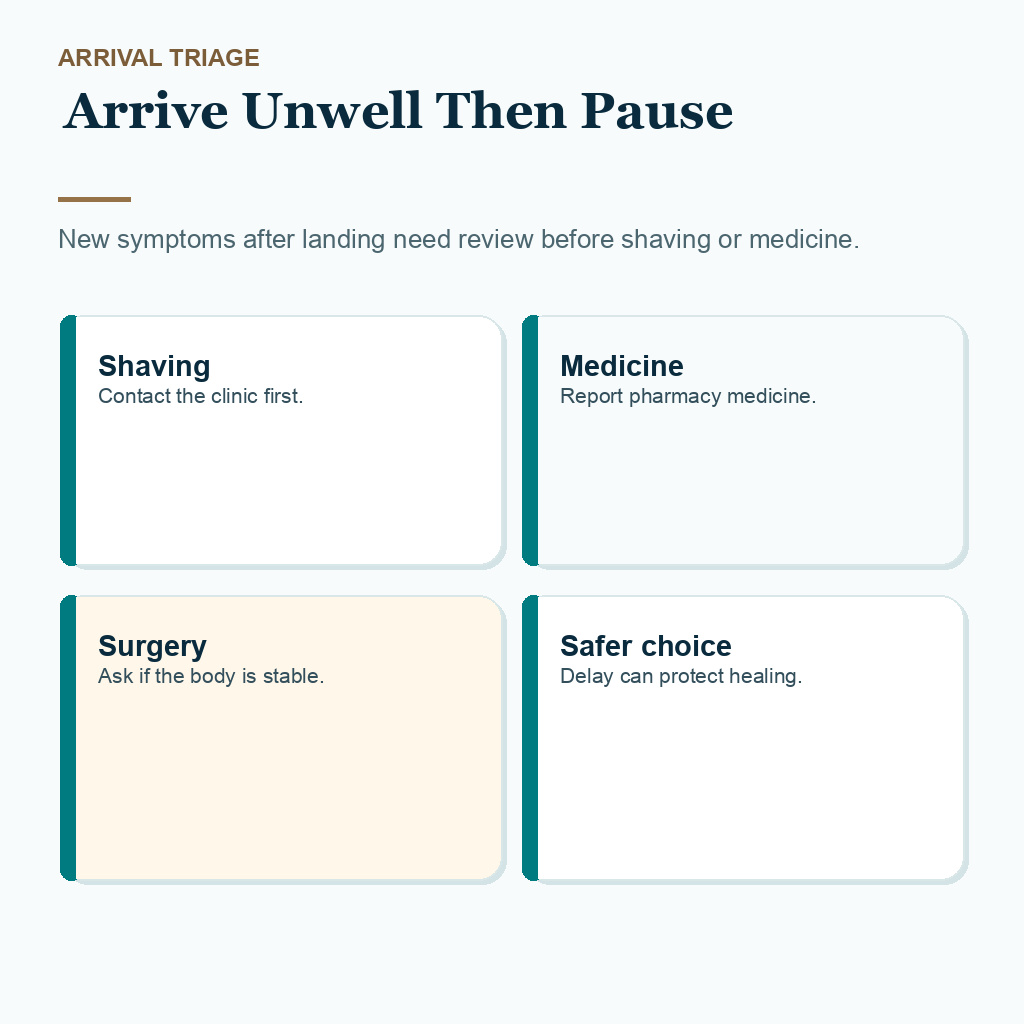
If fever, vomiting, chest symptoms, a skin infection, a new prescription, uncontrolled blood pressure, or a worrying blood test appears after you land, do not treat the trip as a reason to continue. Contact the clinic before shaving or any preoperative medicine. Do not treat yourself with antibiotics from a pharmacy near the hotel, painkillers, decongestants, or strong inflammation tablets without telling the clinic, because the new medicine can create a second planning issue. The question becomes whether the body is stable enough for an elective procedure today, not whether the travel has already happened.
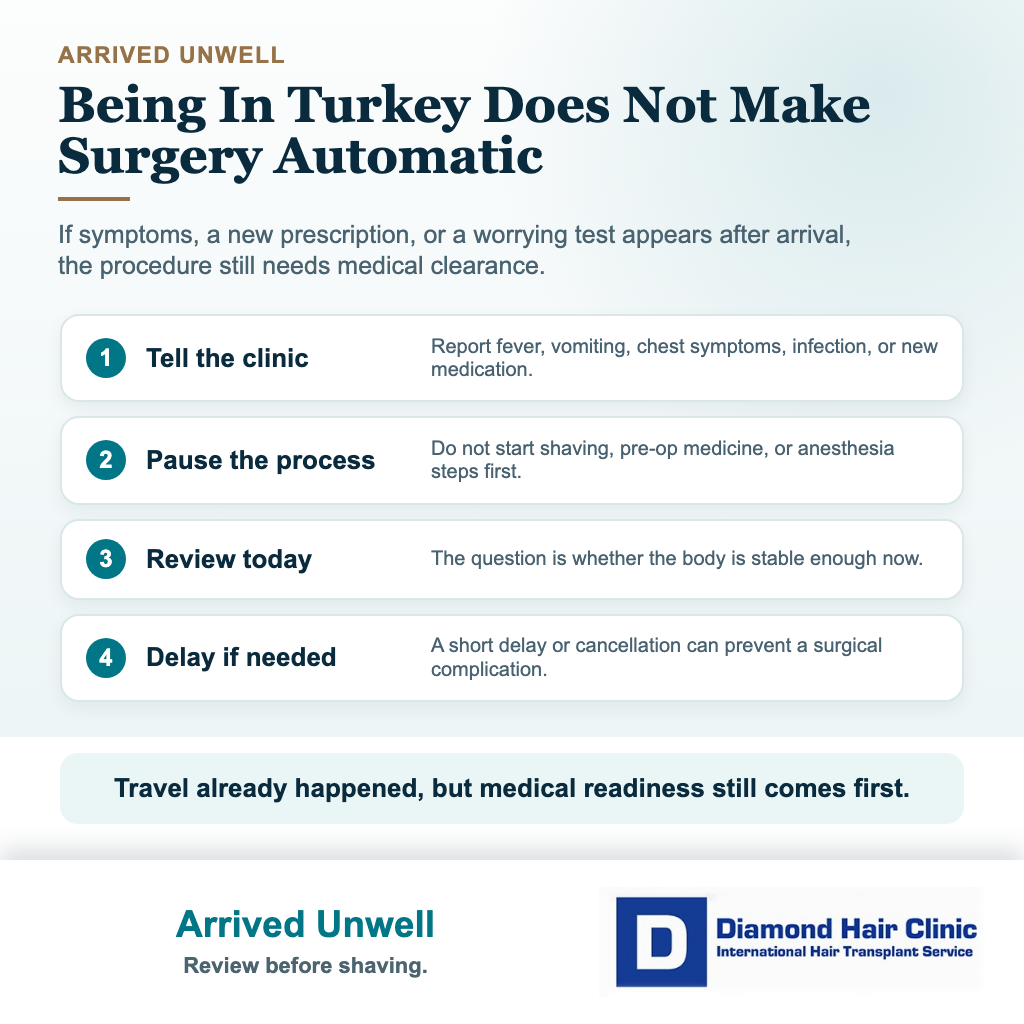
Sometimes the answer is a short delay, rest, repeat measurement, or updated review. Sometimes it is cancellation until your own doctor or treating specialist gives clear advice. If you arrive with unstable blood pressure before hair transplant surgery, active infection, strong antibiotics, blood thinners, steroid changes, or new shortness of breath, you should not be pushed through surgery because the room is ready. The better decision is the one that protects healing and avoids turning a manageable medical problem into a surgical complication.
Put the rescheduling decision in writing
Get clarity in writing, but keep the tone factual. Tell the clinic what changed, attach the relevant document if there is one, and make sure the surgeon or medical doctor reviews the timing. If the issue is a medication, include the dose, start date, and why it was prescribed. If the issue is an infection or flare, include the current symptoms and treatment plan.
Refund terms should not lead the medical decision. First decide whether surgery is sensible on the planned date. Rescheduling and payment terms matter, but they should not come before safety.
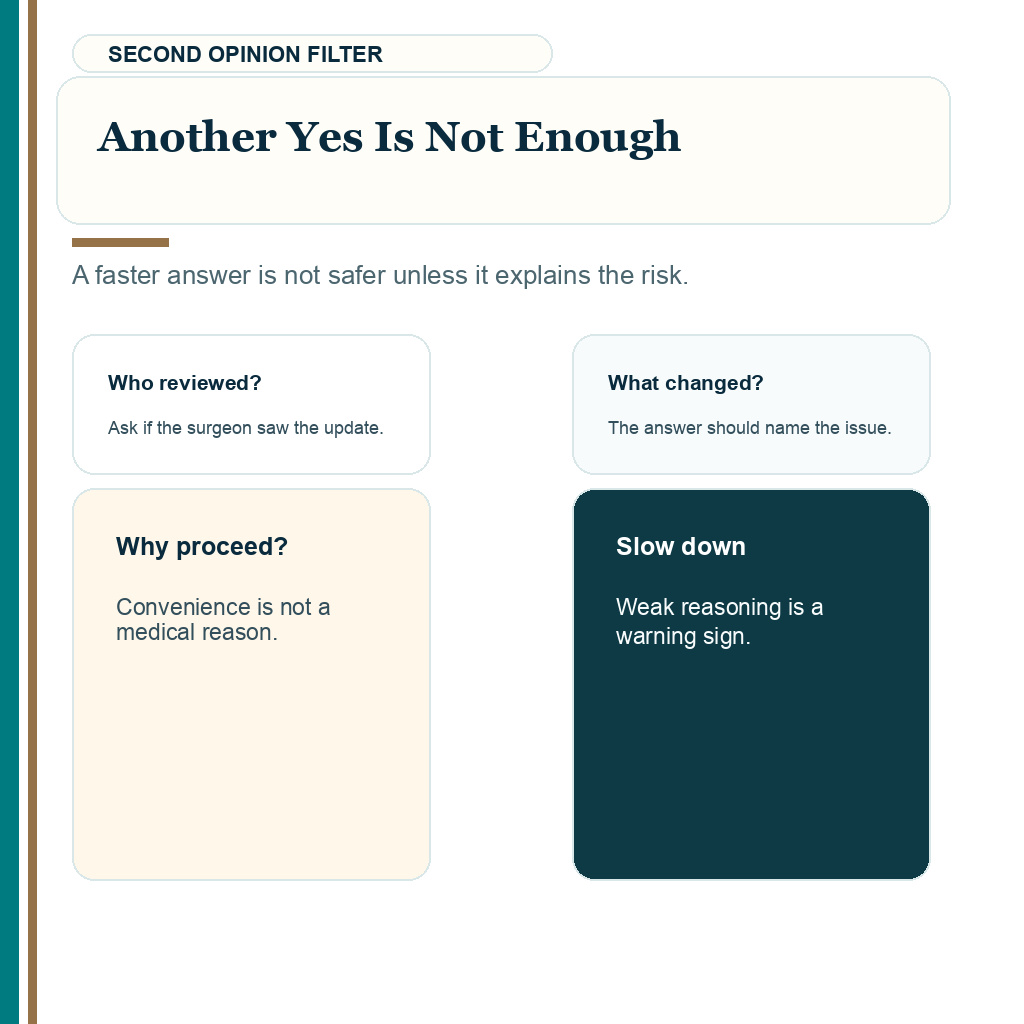
If you are comparing clinics or feel unsure about the answer, a second opinion before hair transplant surgery can help you separate a real medical delay from vague sales resistance. Different answers are common, but the stronger answer gives the reasoning, not only the availability of a date.
Another clinic saying yes does not remove the medical risk
A different clinic may have a different threshold, but convenience should not be confused with safety. If one clinic says to delay because of a medical change and another says to come immediately without asking details, that second answer is not better by itself.
The medical decision should have a named owner. The surgeon should review the new diagnosis, medicine, blood result, or treating doctor’s advice. The question of who performs your hair transplant surgery begins before the operation. It includes who carries medical responsibility when the plan changes.
Be cautious with any answer that treats the problem as only a scheduling issue. Bleeding risk, infection risk, anesthesia tolerance, wound healing, and medication timing are not solved by optimism.
Rebook when the medical picture is stable
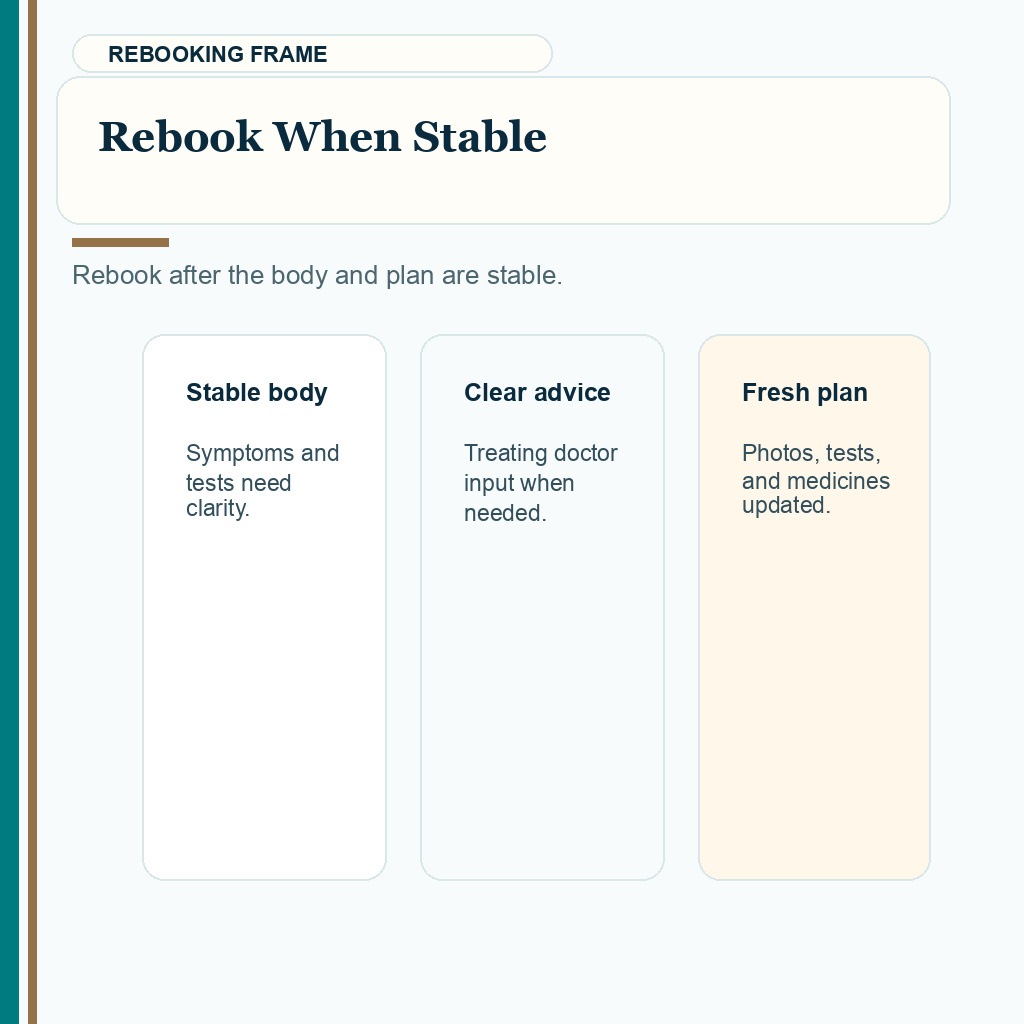
Rebooking is reasonable when the medical issue is stable, the treating doctor’s advice is clear when needed, the surgeon has reviewed the relevant information, and you can travel without adding avoidable risk. Sometimes that means waiting a few days. Sometimes it means several weeks or longer. If the original blood tests, photos, or medication history are now outdated, the rebooking plan should request fresh information instead of reusing the old clearance automatically.
I am looking for stability, not a magic number of days. Fever needs to be gone without hiding it with medicine that lowers temperature. An infection needs treatment or clear improvement. A new medicine needs to be understood, not guessed. A blood result needs explanation if it affects bleeding, healing, infection risk, anesthesia, or medication timing. The safer date is the one where both the medical condition and the surgical plan are updated together.
With medication changes, the key details are why the medicine was started, whether the dose is temporary or long term, and whether stopping it would be more dangerous than the hair transplant itself. If you take blood thinners before hair transplant or medicine such as ibuprofen before hair transplant surgery, exact timing matters more than casual advice.
Rebooking should also leave enough time for a fresh plan. If the donor area, hairline, graft number, or medical status needs reassessment, do not fly into a decision on the same day. A safe date is one where the medical and surgical plan has caught up with your current condition.
The 10 medical change slides below separate travel updates, fever or infection, new medicines, blood test changes, disease flares, travel pressure, arrival symptoms, plan changes, weak second opinions, and safer rebooking. Swipe sideways, use the arrows one slide at a time, or choose a number below the image.
The booking date should not become the surgeon
If you feel trapped because you already paid or arranged travel, I separate that fear from the medical decision. Money pressure is real, but it cannot become the surgeon. Your health, anesthesia safety, graft handling, donor area, and healing conditions must come first.
I also separate delay from failure. Postponing surgery because the body is not ready is not weakness. It is often the decision that protects the result. A hair transplant can often be rescheduled. Donor capacity, healing quality, and trust are harder to restore after a rushed procedure.
A booked date should not become stronger than the medical facts. New illness, abnormal tests, disease flare, or medication change deserves review before you move forward.
Read this review excerpt
I asked two questions at all the clinics: how many patients will you take in a day and how much of the work will be done by the doctor.