



Ibuprofen Timing and Hair Transplant Medication Safety
Avoid ibuprofen, Advil, Motrin, naproxen, diclofenac, and similar NSAID painkillers before a hair transplant unless your clinic and your prescribing doctor have agreed on a different plan. At Diamond Hair Clinic, the usual rule is to pause them for 7 days before surgery. The reason is practical. These medicines can blur the picture on the day of the procedure, especially around bleeding, bruising, swelling, stomach irritation, blood pressure, kidney strain, and medication interactions. Alcohol is a separate issue before surgery, so drinking before a hair transplant should also be disclosed because it can affect bleeding control, hydration, and medication judgment. Patients taking stomach protection or reflux medicine should also review heartburn medicine before hair transplant before combining tablets on their own.
If you already took one dose, do not hide it and do not try to correct it with another tablet. Write down the exact medicine, dose, time, and reason, then send those details before the operation. Patients using fish oil, herbs, or gym products need the same kind of vitamins and supplements list before hair transplant surgery. One accidental tablet is different from repeated high dose use close to surgery. Timing, bleeding, and the medicine list still need review after one dose instead of guessing.
Do not swap the mistake for aspirin, naproxen, diclofenac, herbal bleeding products, or a larger painkiller dose without medical review.
Before surgery, painkiller decisions are about arriving with controlled bleeding and a clear medication history. The question of painkillers after a hair transplant is related, but it is a different decision because the operation has already happened and the early healing priorities have changed.
Why does ibuprofen matter before surgery?
Ibuprofen belongs to a group of medicines often called NSAIDs. People take them for headache, tooth pain, muscle pain, back pain, fever, period pain, joint pain, or inflammation. Because these tablets are common and often bought without a prescription, they can feel too ordinary to mention before surgery.
During a hair transplant, I need controlled bleeding, clear visibility, stable blood pressure, and predictable healing. The operation creates many small openings in the donor and recipient areas. A medicine that feels routine in daily life can become relevant when thousands of tiny surgical points are being made in one day. Black eye bruising in hair transplant recovery is also interpreted differently when an NSAID, alcohol, aspirin, or a bleeding tendency is part of the story.
The risk is not that one tablet magically destroys grafts. The concern is indirect. Medication timing, bleeding tendency, swelling, stomach history, kidney function, blood pressure, and other prescriptions may combine in a way that makes the day less controlled.
The reason you needed the medicine matters too. Ibuprofen taken for a mild headache is not the same as ibuprofen taken every few hours for dental pain, fever, injury, worsening back pain, or an inflammatory flare. The tablet matters, but the reason for taking it often tells me more.
Replacing ibuprofen with a familiar tablet is still a medical choice. The next medicine has to fit your medical history, stomach risk, bleeding risk, and other prescriptions. Two different stop dates should not be averaged. The clinic needs the exact tablet history and the medical reason behind it before surgery stays on schedule.
The 7 day pause before hair transplant
At Diamond Hair Clinic, patients usually avoid ibuprofen and similar NSAID painkillers for 7 days before the procedure unless a physician and the clinic have made a specific individualized plan. This includes common brand names such as Advil and Motrin. It also includes related medicines such as naproxen and diclofenac.
Some cold, flu, migraine, period pain, and muscle pain products contain ibuprofen or another NSAID even when the front of the box uses a brand name you recognize for something else. I treat those products as the same medication category. The active ingredient matters more than the marketing name on the package.
Brand names also change between countries. If you are travelling to Turkey, take a photo of the front and back of the box, the active ingredient panel, and the dose strength. A message that says “a painkiller” is not enough when the decision depends on whether the product is ibuprofen, naproxen, diclofenac, aspirin, paracetamol, or a combination medicine.
Use the broader preoperative instructions for hair transplant as the frame for timing. Some medical fields use different stop windows for different NSAIDs, but you should not choose a shorter window from a general internet answer when your own operation, medical history, and travel plan have not been reviewed.
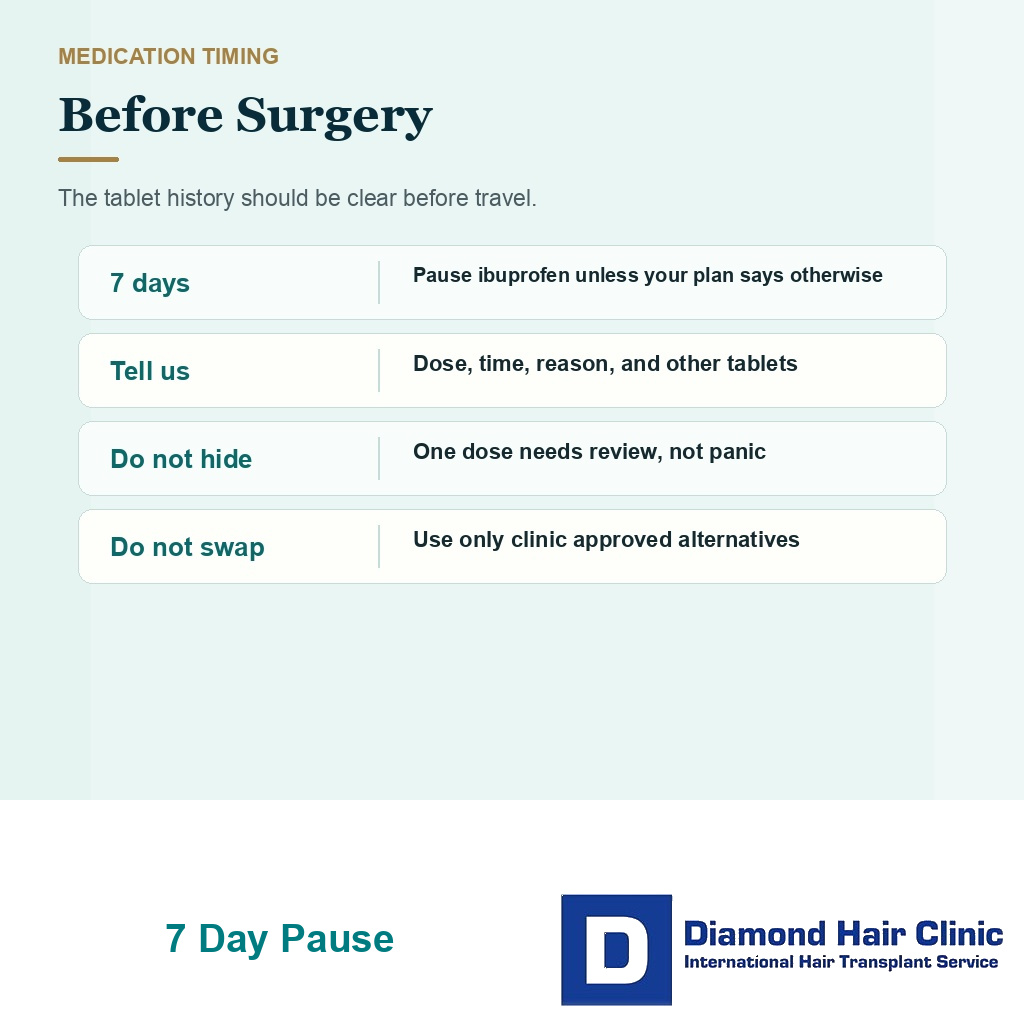
Diamond Hair Clinic uses a seven day pause before surgery for ibuprofen and similar NSAID painkillers unless an individual medical plan says otherwise.
If another doctor prescribed an NSAID for a real medical problem, do not stop it quietly. Share why it was prescribed, who prescribed it, and whether there is a safer temporary plan. Medicine used once for occasional back pain is not judged the same way as medicine needed for an active inflammatory condition.
If you took ibuprofen by mistake
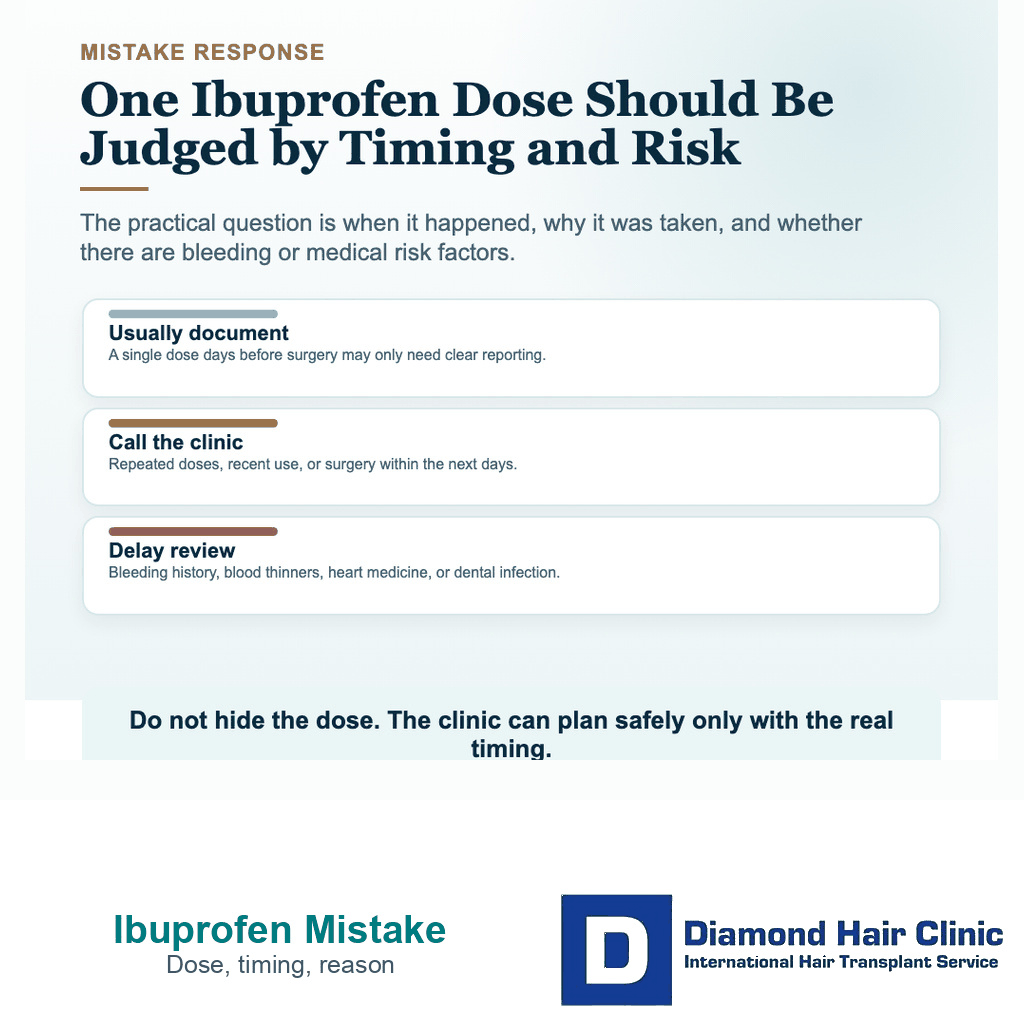
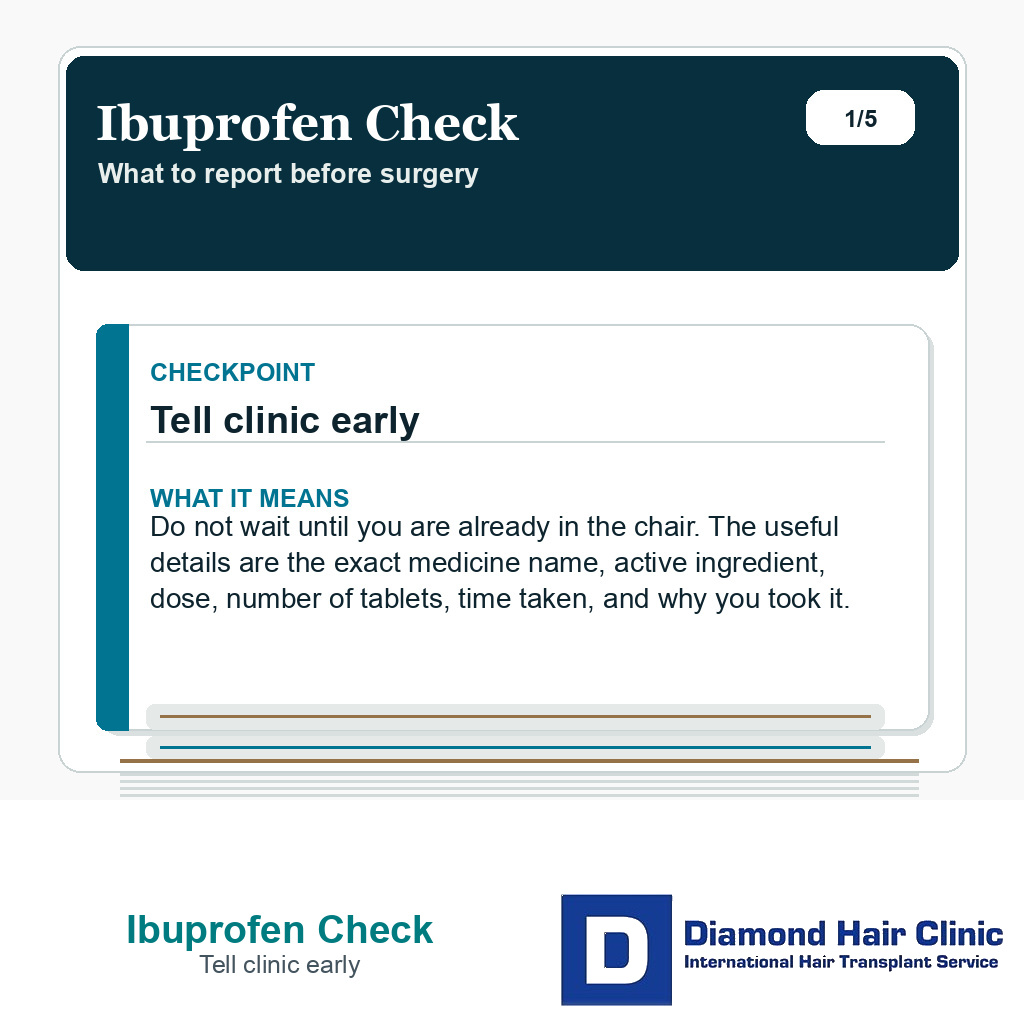
Tell the clinic before the surgery day if possible. Do not wait until you are already in the chair. The useful details are the exact medicine name, active ingredient, dose, number of tablets, time taken, and why you took it. One ordinary dose two days before surgery is different from high doses taken several times a day.
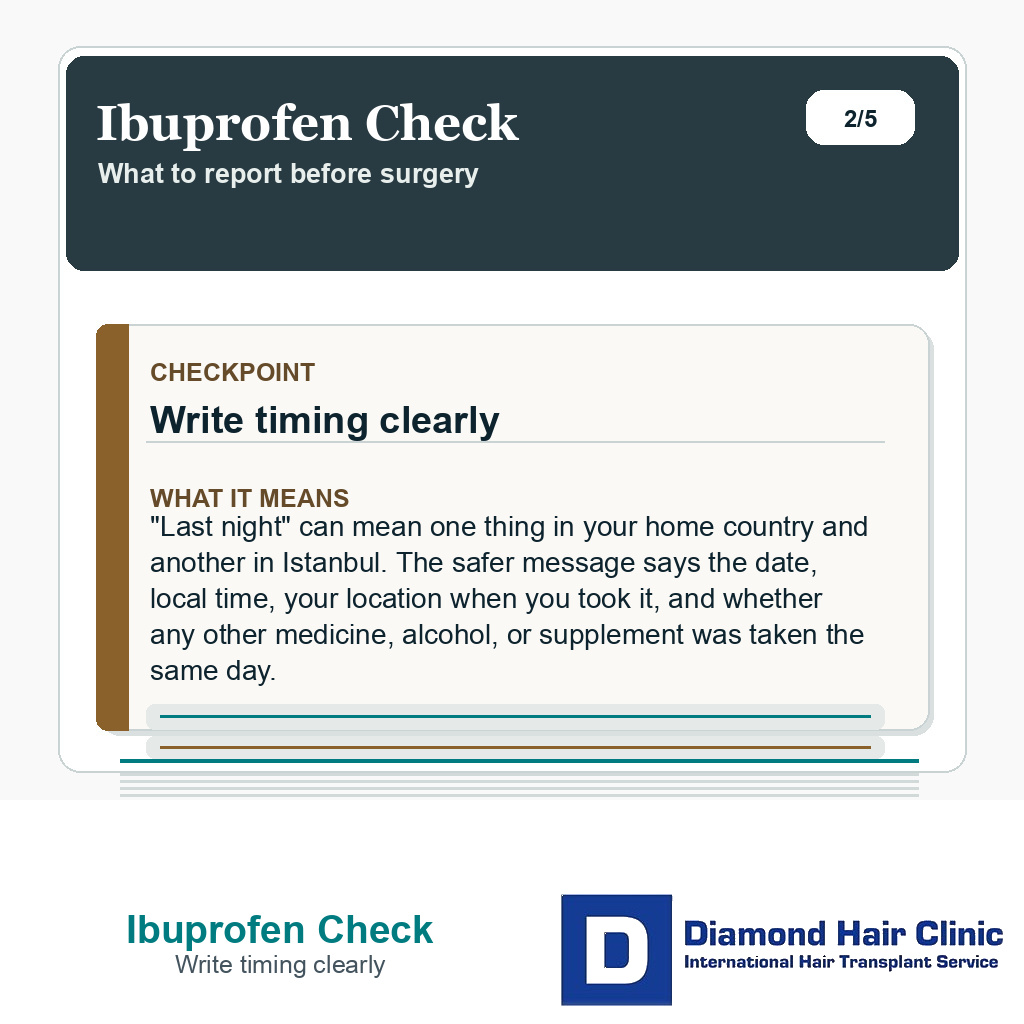
Write the timing clearly, especially if you crossed time zones. “Last night” can mean one thing in your home country and another in Istanbul. The safer message says the date, local time, your location when you took it, and whether any other medicine, alcohol, or supplement was taken the same day.
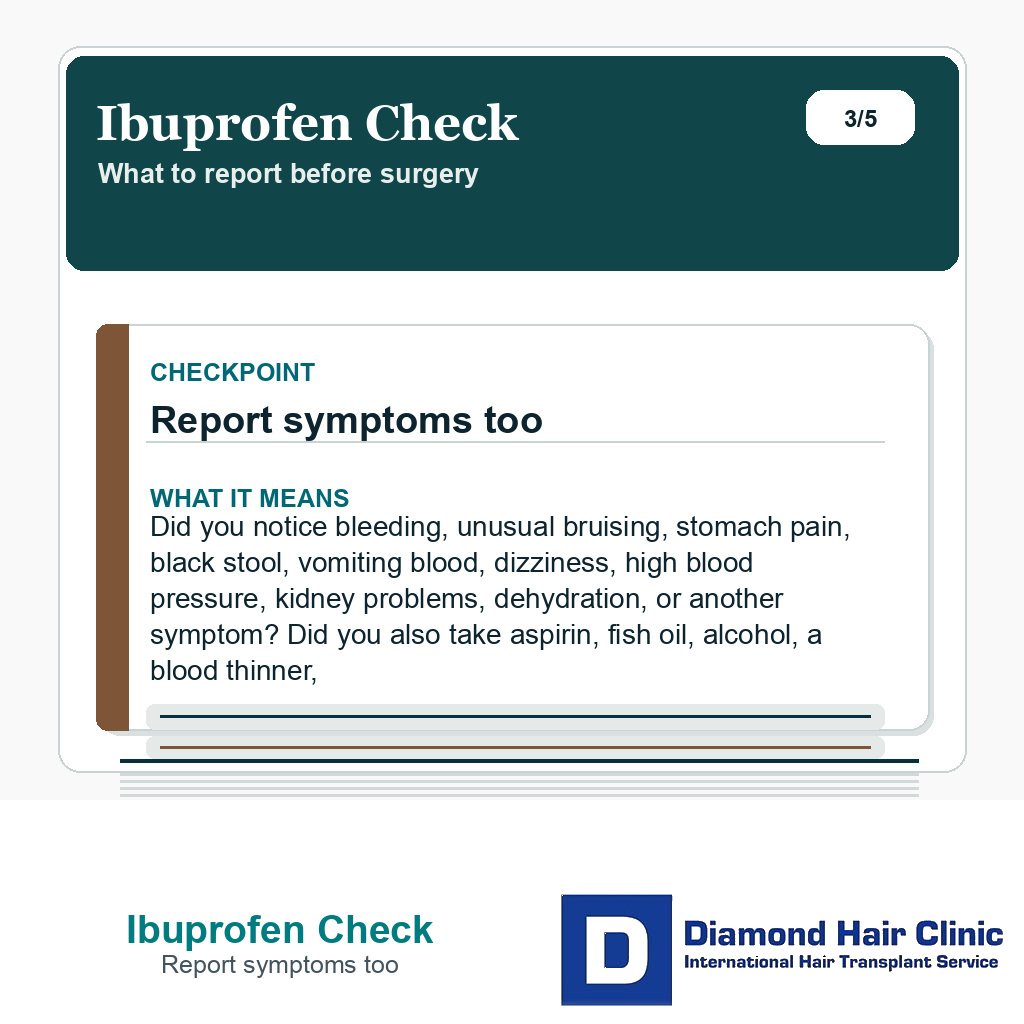
I also ask what happened afterward. Did you notice bleeding, unusual bruising, stomach pain, black stool, vomiting blood, dizziness, high blood pressure, kidney problems, dehydration, or another symptom? Did you also take aspirin, fish oil, alcohol, a blood thinner, a steroid tablet, or a cold medicine with another painkiller inside it? Those details change the interpretation.
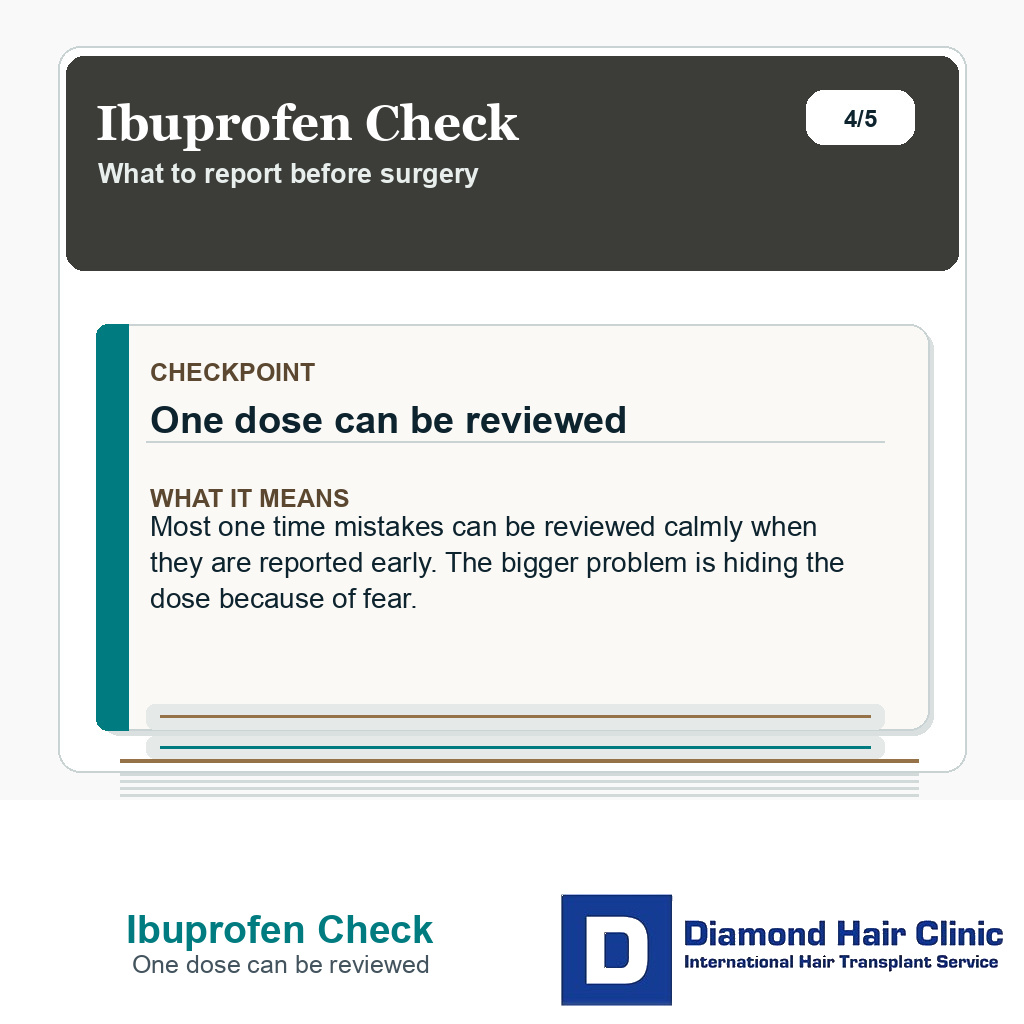
Most one time mistakes can be reviewed calmly when they are reported early. The bigger problem is hiding the dose because of fear. If the team does not know, it cannot connect unexpected bleeding, bruising, stomach symptoms, or blood pressure changes with the medication history. If the mistake involved aspirin before hair transplant rather than ibuprofen, I judge it through a different risk discussion.
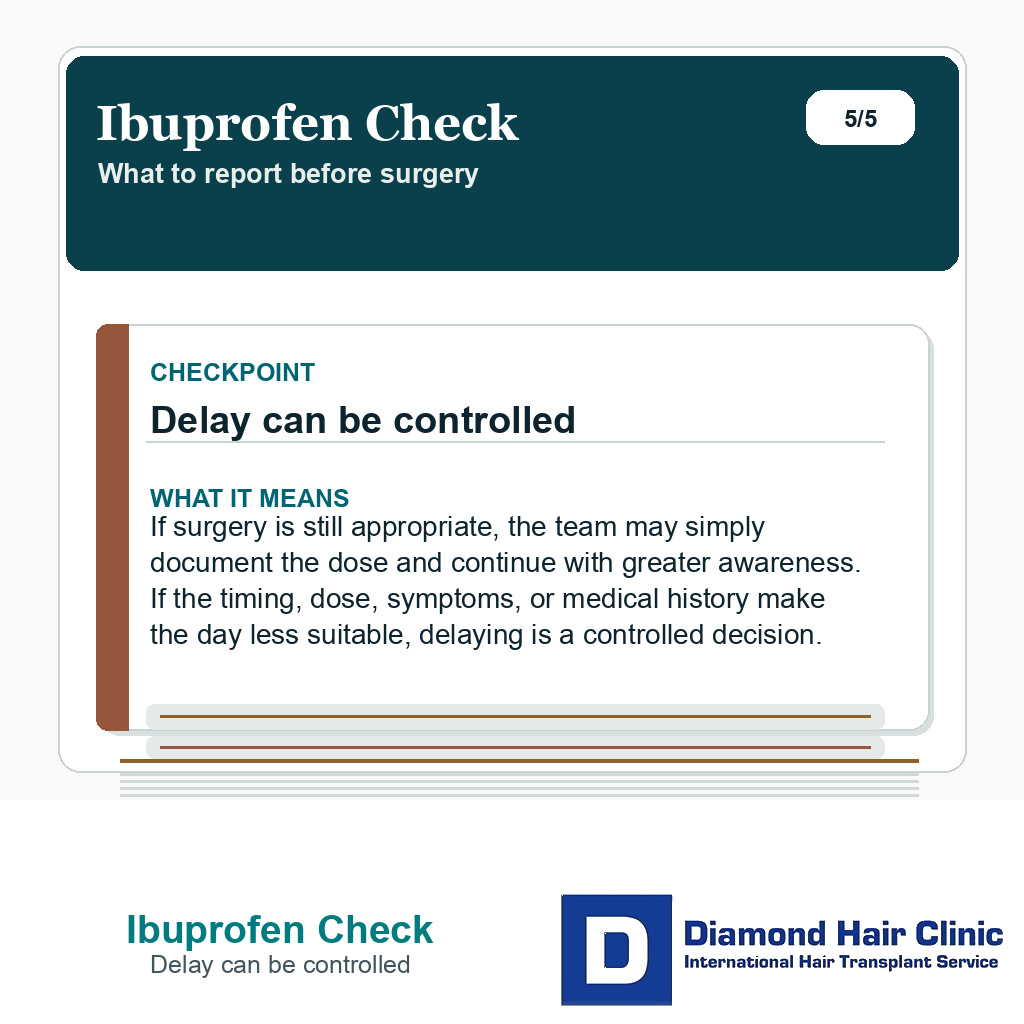
If surgery is still appropriate, the team may simply document the dose and continue with greater awareness. If the timing, dose, symptoms, or medical history make the day less suitable, delaying is a controlled decision. It is not a punishment. It is a way to move from uncertainty to a cleaner surgical plan.
The next 5 slides keep ibuprofen timing tied to bleeding risk, pain control, and the medicine list your surgeon needs to see. Swipe sideways, use the arrows, or choose a number below the image.
Repeated ibuprofen in the week before surgery
Repeated use matters more than one forgotten tablet. The useful details are the dose, how many times it was taken, the last dose time, and the reason you needed it. A single tablet for a mild headache is one situation. Daily ibuprofen for tooth pain, fever, injury, joint inflammation, or severe back pain is another.
If the doses were close to surgery, the operation may need to wait until the medication timing and the reason for the pain are clear. Do not try to balance ibuprofen with extra paracetamol, supplements, herbal products, or another painkiller. Send the exact details and let the clinic decide whether the date still makes sense.
Repeated use can also point to the real problem behind the tablet. Fever, dental infection, urinary symptoms, migraine flare, injury, or inflammatory joint pain may affect readiness even if the medication timing can be explained. The operation is easier to judge when the pain source is stable, treated, or clearly settling.
Ibuprofen, aspirin, and blood thinners are different
Ibuprofen, aspirin, anticoagulants, antiplatelet medicines, supplements, and ordinary painkillers are often mixed together in conversation, but they are not the same. Occasional ibuprofen for pain is different from aspirin for heart protection, clopidogrel after a stent, apixaban for atrial fibrillation, or warfarin for a clotting condition.
Blood thinners before a hair transplant need stricter review because stopping prescribed clot protection can create danger outside the scalp. A hair transplant date should never become the reason to stop heart or clot medicine without the prescribing doctor.
This distinction protects both sides of the decision. One mistake is taking an avoidable NSAID tablet too close to surgery. Another mistake is stopping a necessary heart or clot medicine because a general instruction was misunderstood. Both are preventable when the medicine list is reviewed early.
Paracetamol or acetaminophen as an alternative
For many people, paracetamol or acetaminophen is easier to review than ibuprofen because it is not in the same NSAID group. That does not make it automatically right for everyone. Liver disease, heavy alcohol intake, combination cold medicines, allergy, dosing mistakes, and other prescriptions can still matter.
If you need pain relief before surgery because of headache, dental pain, fever, injury, or another problem, ask before taking anything. The reason for the pain can matter more than the painkiller. Fever or an active dental infection should not be hidden behind tablets just to protect the surgery date. Also avoid stacking a cold or flu product with a separate painkiller unless the active ingredients have been checked, because the same ingredient can be repeated without you noticing.
After surgery, follow the medication plan given by the clinic. Broader guidance on medications after a hair transplant should be read as part of your own protocol, not as permission to mix tablets from different sources. Hair growth treatment decisions, including minoxidil after a hair transplant, should stay separate from NSAID painkiller timing.
If your own clinic prescribed ibuprofen after the operation, treat that as part of your surgical plan, not as permission to borrow someone else’s medicine schedule. Preoperative NSAID rules and postoperative pain control are different decisions. Use the written plan you were given, and report any extra tablets you took outside that plan.
Tooth pain and dental work
Tooth pain is one of the common reasons people reach for ibuprofen before surgery. The medication question then becomes a dental timing question as well. Mild temporary discomfort is not the same as an abscess, facial swelling, fever, planned extraction, implant surgery, or an antibiotic course.
If dental treatment is close to the hair transplant date, coordinate both sides. The dentist should know that you are planning surgery, and the hair transplant clinic should know the diagnosis, procedure, pain medicine, antibiotics, and timing. With dental work before or after a hair transplant, two separate medical plans can become one shared risk if they are not discussed.
If the tooth problem is active or worsening, treating the dental issue first may be better than forcing the hair transplant date. A delayed operation is not a failed plan when the reason is medical readiness.
Patients who need extra caution
NSAID use needs closer review when there is kidney disease, high blood pressure, stomach ulcer history, previous stomach bleeding, low platelets, easy bruising, liver disease, heart disease, a stent, blood thinner use, aspirin use, diabetes, older age, heavy alcohol use, or several medicines that interact with each other.
Kidney disease before a hair transplant is one reason not to treat NSAID painkillers as harmless. High blood pressure before a hair transplant also changes the review, because pain, anxiety, NSAIDs, alcohol, caffeine, and skipped medication can all make the day harder to interpret.
NSAID use becomes more concerning when it is combined with dehydration, vomiting, diarrhea, fasting, heavy exercise, diuretics, kidney disease, or uncontrolled blood pressure. In that setting, the concern is not only bleeding. It is whether the whole medical picture is stable enough for travel, local anesthesia, and a long surgical day.
If your blood count is abnormal, medication review becomes even more important. Low platelets before a hair transplant are mainly a bleeding and clotting question, and NSAID painkillers can make that discussion more serious.
Prescribed aspirin or heart medicine needs medical clearance
Not by yourself. If aspirin, clopidogrel, ticagrelor, warfarin, apixaban, rivaroxaban, dabigatran, or another medicine was prescribed for a heart, stent, stroke, clot, rhythm, or valve reason, the decision must involve the doctor responsible for that medicine.
Someone with heart disease or a stent before a hair transplant is not making a simple painkiller choice. The scalp surgery is elective, but the heart or clot history may be serious. In those cases, stopping medicine without medical approval can be more dangerous than postponing the transplant.
Bring the exact names and doses. If the prescribing doctor has an opinion about elective surgery under local anesthesia, share it early. A vague message that says everything is fine is less useful than a clear medication plan.
The clearest plan says whether the medicine should continue, pause, restart, or be replaced temporarily, and who is responsible for that instruction. If the answer is uncertain, postponing the hair transplant is safer than improvising with heart, clot, stomach, kidney, or blood pressure medication.
Give the clinic the full medicine picture
Send a full medication list, not only the drugs you think are important. Include prescription tablets, painkillers bought without a prescription, cold medicines, vitamins, herbal products, gym supplements, fish oil, aspirin, blood thinners, alcohol use, and any recent medicine changes.
If you took ibuprofen or another NSAID, send the active ingredient, brand name, dose, number of tablets, date, time, and reason. If you were treating tooth pain, fever, infection, back pain, migraine, joint pain, or injury, say that plainly. If you already completed blood tests before a hair transplant, send the full report rather than only a screenshot of one value.
Photos of the medicine box can prevent translation and brand name mistakes. Include the front label, active ingredient list, dose strength, and any combination ingredients. If the medicine came from a dentist, emergency doctor, pharmacy, or another country, say that too.
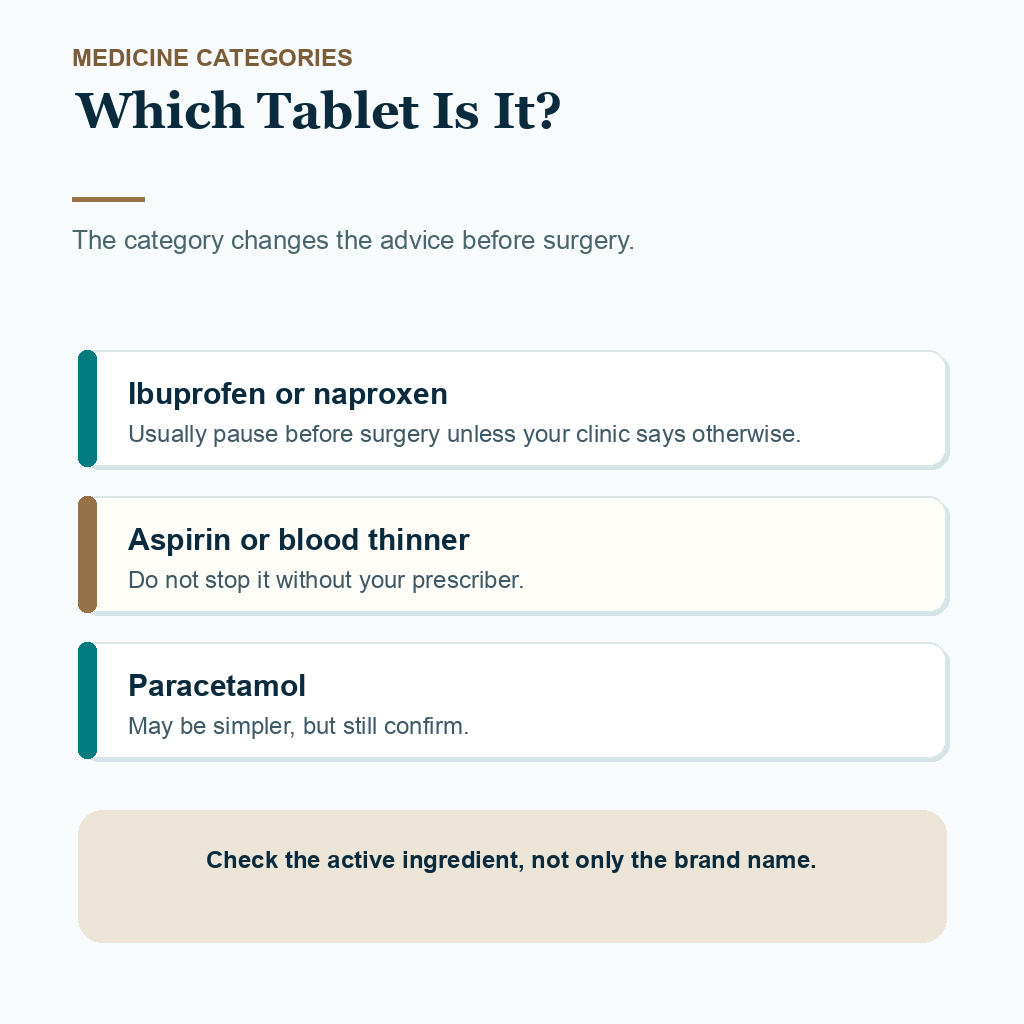
The key distinction is whether the medicine is an occasional painkiller, a prescribed heart or clot medicine, or an alternative approved by the clinic.
Clear details are more useful than a polished message. The brand name on the box matters less than the active ingredient, dose, timing, and reason you took it. Hiding a tablet creates uncertainty at the worst possible moment.
How can ibuprofen affect the result?
Ibuprofen does not directly decide whether a transplanted graft can ever grow. The concern is indirect. Too much bleeding, bruising, swelling, poor visibility, unstable blood pressure, stomach upset, kidney stress, or medication confusion can make the surgery day and early recovery less predictable.
Good hair transplant planning protects the donor area, recipient area, graft handling, and your general health at the same time. One tablet is usually easier to review than a hidden pattern. The unsafe situation is one where medication instructions are treated as decoration and the team discovers the real history only after a problem appears.
The result depends on surgical planning, graft survival, donor management, aftercare, and continued native hair behavior over time. Medication safety is one part of that larger discipline.
When should surgery be delayed?
Surgery should be delayed when the medication history is unclear, frequent NSAID use continued close to the date, bleeding symptoms are present, blood pressure is unstable, kidney function is a concern, prescribed clot or heart medicine has no clear plan, or pain is coming from an untreated infection.
It should also wait when someone is trying to solve a medical problem alone with tablets. Tooth abscess, fever, chest symptoms, severe headache, urinary symptoms with fever, black stool, vomiting blood, dehydration, or unexplained bruising deserve medical attention before cosmetic timing.
A hair transplant is elective. That gives us the advantage of choosing a cleaner date when the medication picture is not ready. Waiting for a safer day is often the decision that protects the final result.
The tablet history matters more than the flight date
Before travel, treat ibuprofen as something to disclose, not as a small private choice. If you have not taken it, avoid it during the window before surgery unless you have written medical approval. If you have taken it, share the timing, dose, and reason before travel. If another doctor prescribed an NSAID, share the reason instead of stopping or continuing secretly.
Arrive with a clean medication history, a stable medical condition, no hidden pain problem, and no avoidable bleeding uncertainty. That gives the operation a better environment and gives you a clearer decision before you fly.
One tablet is usually easier to review than hidden pain, fever, dental infection, stomach bleeding symptoms, or mixed medicines. Tell the truth about the tablet, explain why you needed it, and let the surgical plan match the whole medical picture rather than only the hairline.

Read this review excerpt
Diamond Hair was the only clinic asking for medications, treatments I've done before, and other type of questions that make me feel confident on the professionalism that they practice with their clients.