



Alcohol Timing Before FUE Surgery
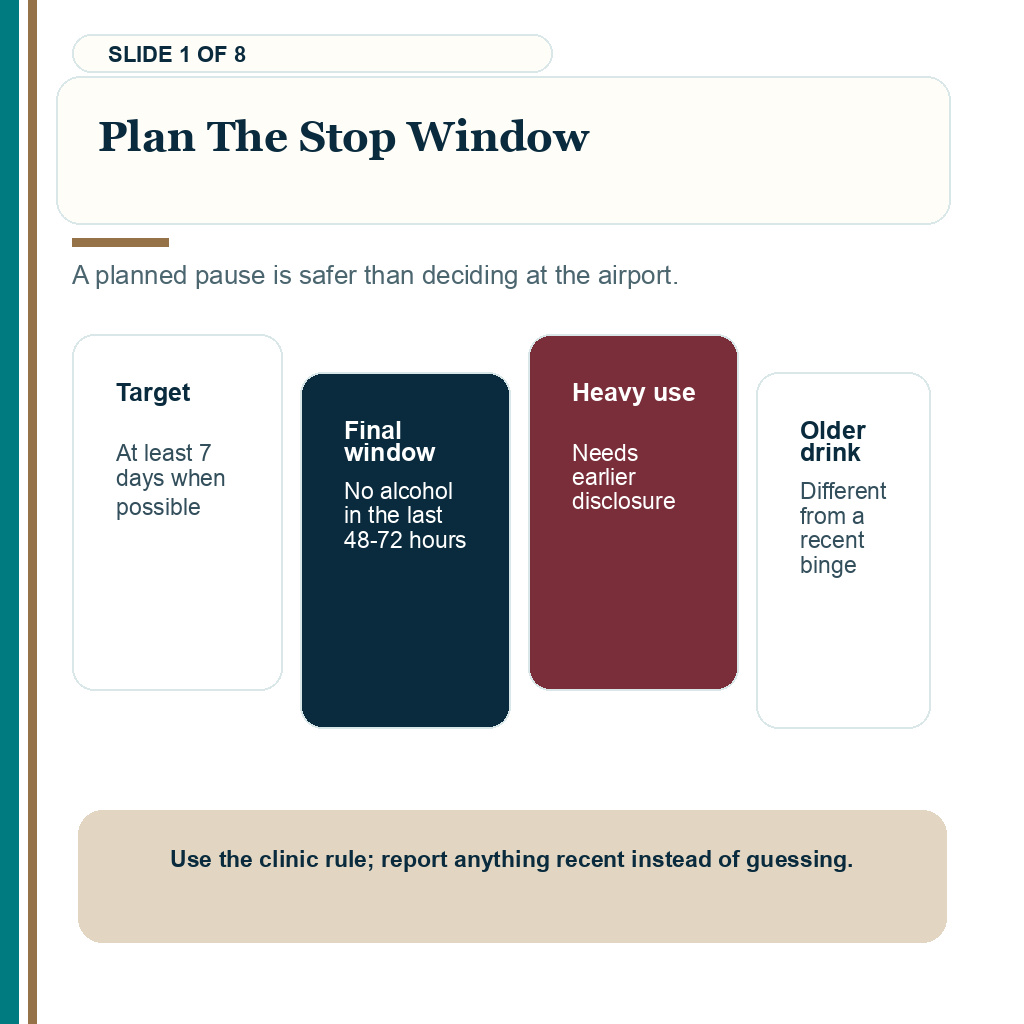
If you are scheduled for a hair transplant, my threshold is clear. Stop alcohol at least seven days before surgery when possible, and have no alcohol in the final 48 to 72 hours. One small drink a week before surgery is not the same risk as binge drinking two days before surgery or arriving hungover. If you drank recently, report it before anesthesia, extraction, or graft placement begins. If you are unsure whether the amount matters, report the exact drink type, approximate number, last drink time, and symptoms instead of deciding alone that it was minor. The concern is not that alcohol magically kills grafts. The concern is bleeding control, dehydration, medication interaction, sleep, judgment, and whether your body is ready for a long surgical day.
Drinking extra water does not make recent alcohol use medically irrelevant. Feeling better after rehydrating is not a reason to leave the drink out of the preoperative history.
If you arrive shaky, vomiting, dehydrated, dizzy, sleep deprived, or clearly hungover, the safer medical decision may be to delay the procedure. A hair transplant is planned work on a limited donor supply. It should not begin with hidden risk.
Alcohol stop timing before surgery
At Diamond Hair Clinic, one week without alcohol before surgery is the safer standard when possible. That gives the body time to settle, protects sleep, reduces dehydration risk, and keeps surgery day more controlled. The same morning discipline applies to coffee or other caffeine before a hair transplant and nicotine timing before a hair transplant, because stimulant timing and hydration can affect how settled the day feels. If your written instructions before hair transplant surgery give a stricter rule, follow the stricter rule.
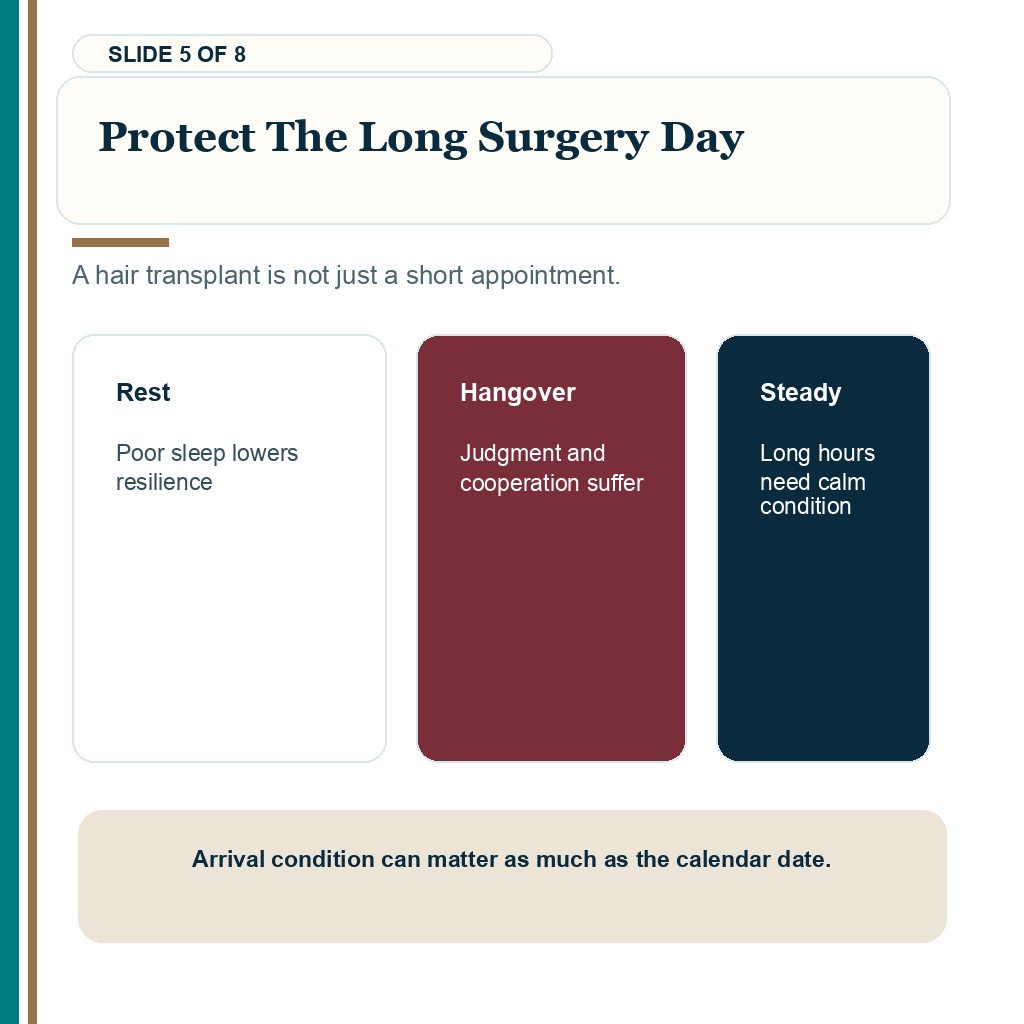
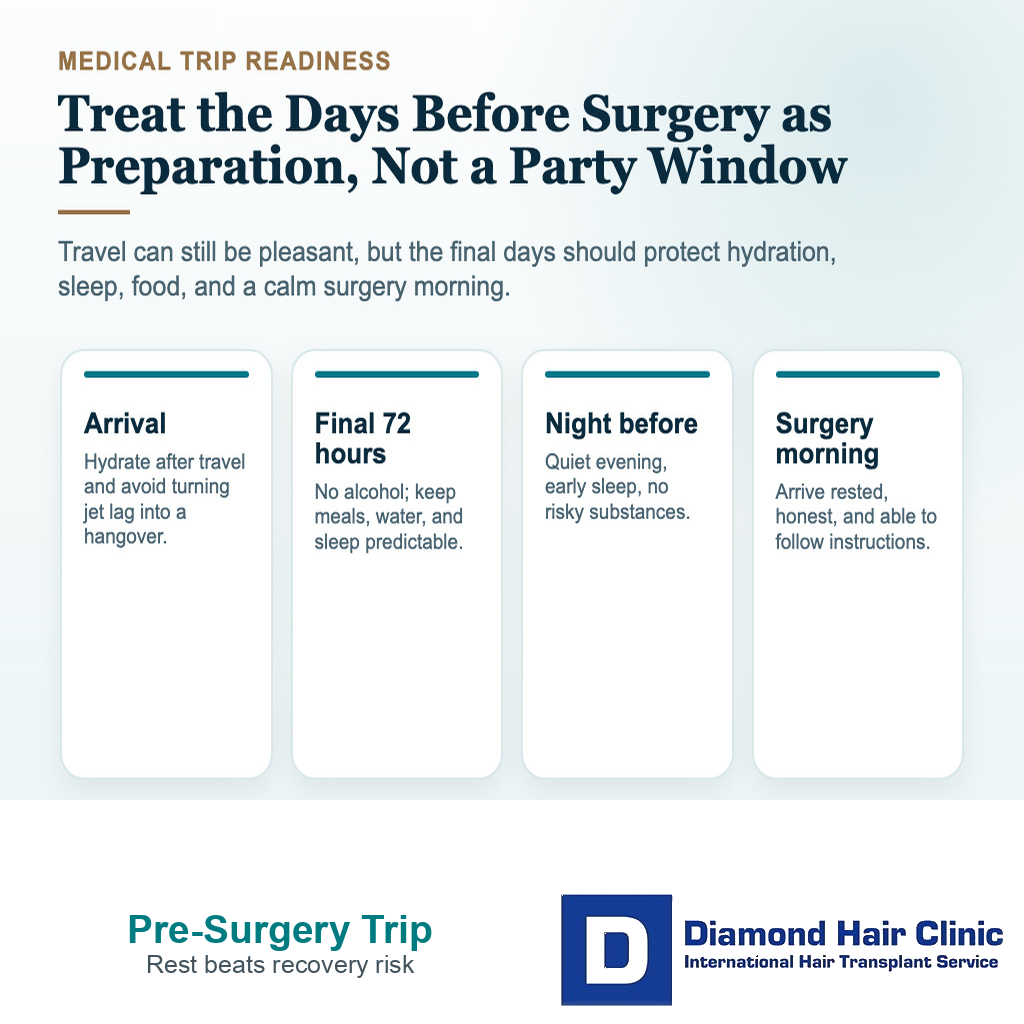
The final two or three days matter most. Do not treat the night before surgery as a normal social evening. Even if the alcohol has mostly cleared from the bloodstream by morning, the after effects can still matter through poor sleep, dehydration, stomach upset, facial flushing, higher blood pressure, dizziness, and weaker judgment with aftercare instructions. A sauna or steam room in that same window can add dehydration and poor sleep, so sauna before hair transplant is worth checking before travel.
There is one important exception. The one week rule is a practical threshold for ordinary social drinking. It is not a way to make heavy daily alcohol use medically safe. If stopping alcohol gives you shaking, sweating, anxiety, confusion, or seizures, do not hide that history and do not suddenly stop without medical review. Daily alcohol use needs full disclosure, because withdrawal can be more dangerous than the alcohol itself. If recent drinking is also linked with high liver enzymes before surgery, send the full blood report before travel instead of treating the alcohol rule as the only issue.
Withdrawal symptoms need medical review
If stopping alcohol causes shaking, sweating, a fast heartbeat, confusion, vomiting, severe anxiety, or a history of seizures, the issue is not only the transplant date. Alcohol withdrawal can be medically dangerous, and the procedure should not begin until the surgeon understands the risk and you have proper medical review.
Do not hide daily drinking because you are afraid the operation will be delayed. A delay is safer than starting a long procedure with withdrawal risk, unstable blood pressure, dehydration, or undisclosed sedative use. Raise it early, before travel if possible, so the plan can be adjusted instead of discovered on surgery day.
Alcohol can affect delicate graft work
Hair transplant surgery depends on control. The surgeon and team need stable physiology, predictable local anesthesia, and a clean surgical field. Alcohol can work against that control in several ways.
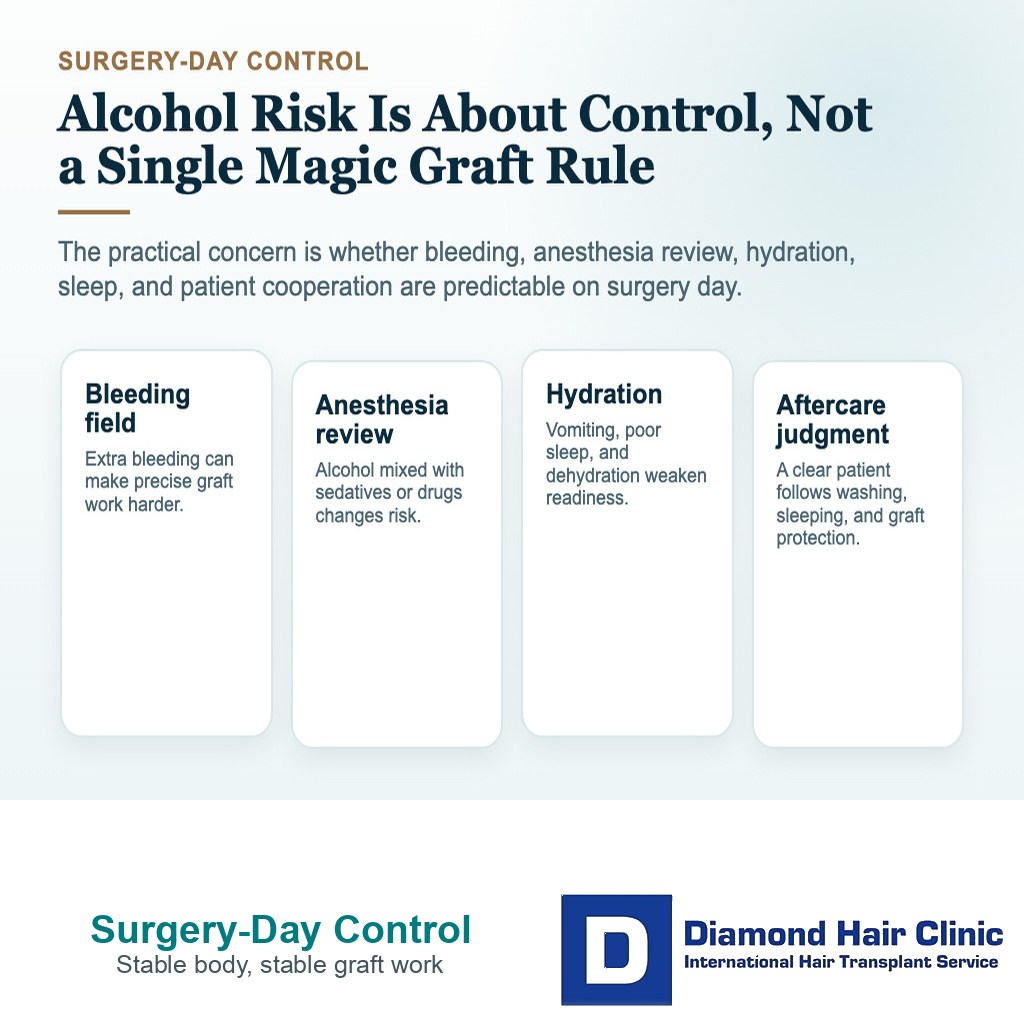
First, bleeding matters. FUE extraction, channel opening, and graft placement are delicate steps. Extra bleeding can make the field harder to see and can slow accurate work. It is not the same topic as prescribed blood thinners before hair transplant surgery, but the surgical concern is related, because anything that increases bleeding tendency must be known before the plan begins.
Second, alcohol can overlap badly with other substances. If you have taken sedatives before a hair transplant, recreational drugs, strong painkillers, or certain medications, the anesthesia review changes. The same review applies to adrenaline in hair transplant anesthesia, because the anesthetic plan should match your real condition. Alcohol history belongs in that safety conversation, especially when someone is anxious and may have taken something else to sleep. That same safety review applies when alcohol overlaps with Viagra or Cialis before a hair transplant, sedatives, stimulants, or unknown performance products.
Third, alcohol can weaken your condition on the day. A long hair transplant is not a quick injection. You need to lie still, eat appropriately, follow instructions, and remain stable. Bleeding control matters during graft work, but hydration and cooperation matter too.
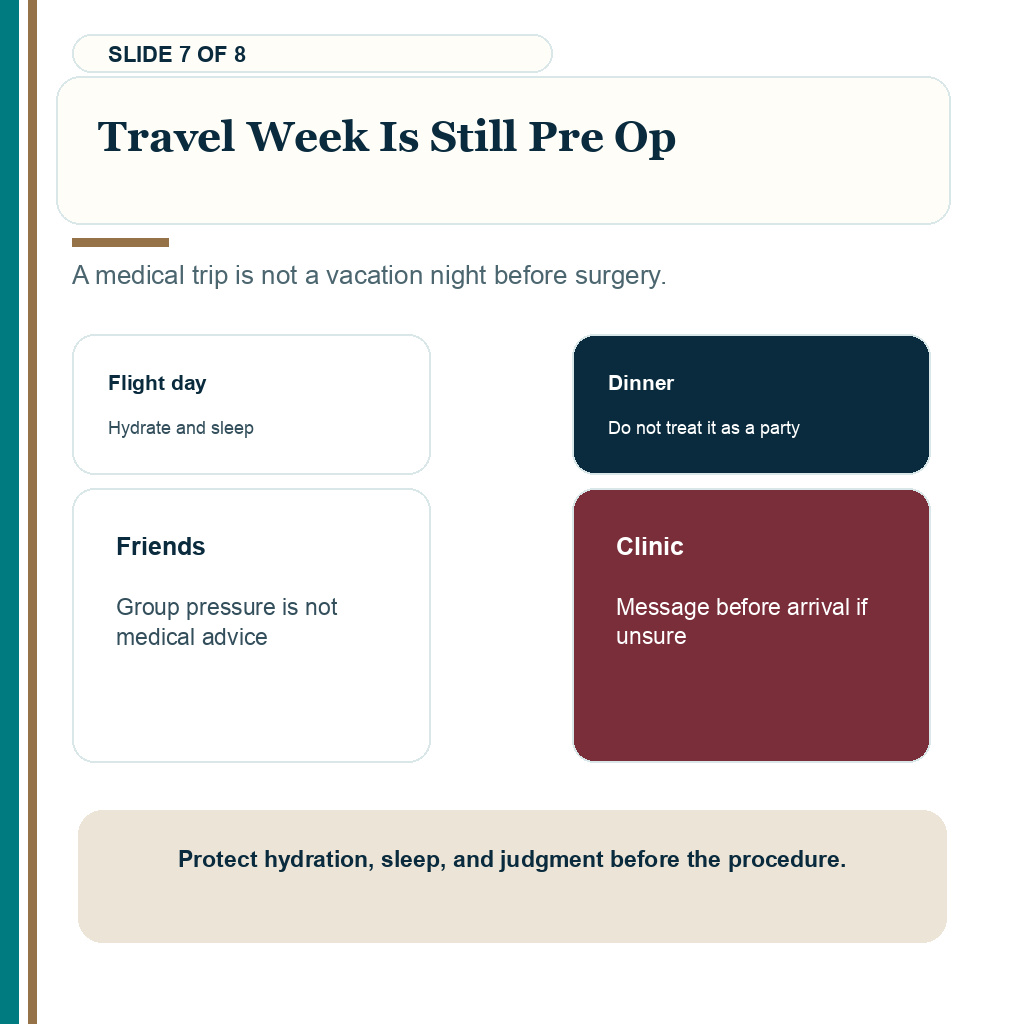
Use these 8 slides to keep alcohol timing focused on stop windows, exact disclosure, withdrawal symptoms, bleeding control, sleep, medicines, travel behavior, and surgery day safety. Swipe sideways or use the arrows one slide at a time.




A single drink is usually a different risk
One older small drink is very unlikely to define the final result. Do not panic because of one glass of wine several days before surgery. The timing, amount, pattern of drinking, and how you feel on surgery day are what matter.
That sentence becomes unsafe when it turns into permission to gamble. Four or five beers two nights before surgery, a heavy party during the travel trip, drinking to sleep because of anxiety, or arriving with a hangover is a different situation. A good result should not depend on luck. It should depend on planning, execution, and follow up.
If you drank once and you feel well, report it without panic. If you drank heavily or recently, contact the clinic urgently. Report it before the procedure starts, not after graft work is already underway.
Recent drinking needs clear reporting
Call or message the clinic and say exactly what happened, including the last drink time, drink type, approximate number and size, whether you ate, whether you also smoked, whether you used any recreational drugs, and how you feel now. Do not reduce the amount to make the answer more comfortable. Surgeons can work with complete information. They cannot protect against information they never receive.
Recent drinking should be reported while there is still time to review the plan before travel. Include how you feel now, because a calm message is more useful than a last minute apology on surgery morning.
If it was one small drink three days before surgery and you are now well hydrated, eating normally, sleeping normally, and not taking risky medications, the plan may still be reasonable. If it was binge drinking, vomiting, poor sleep, a hangover, dizziness, or alcohol mixed with sedatives or drugs, the calculation changes.
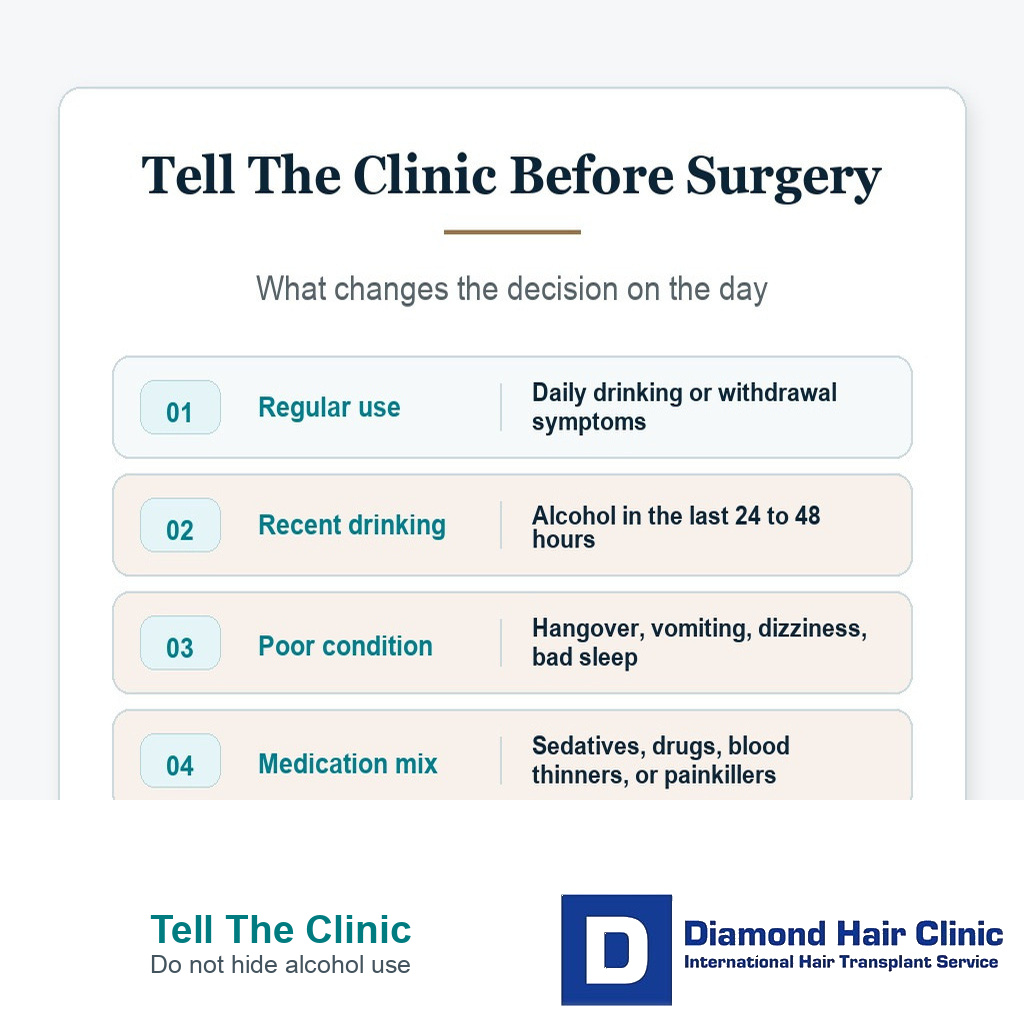
Recent alcohol use becomes more important when it comes with dehydration, hangover symptoms, daily use, withdrawal risk, or medication mixing.
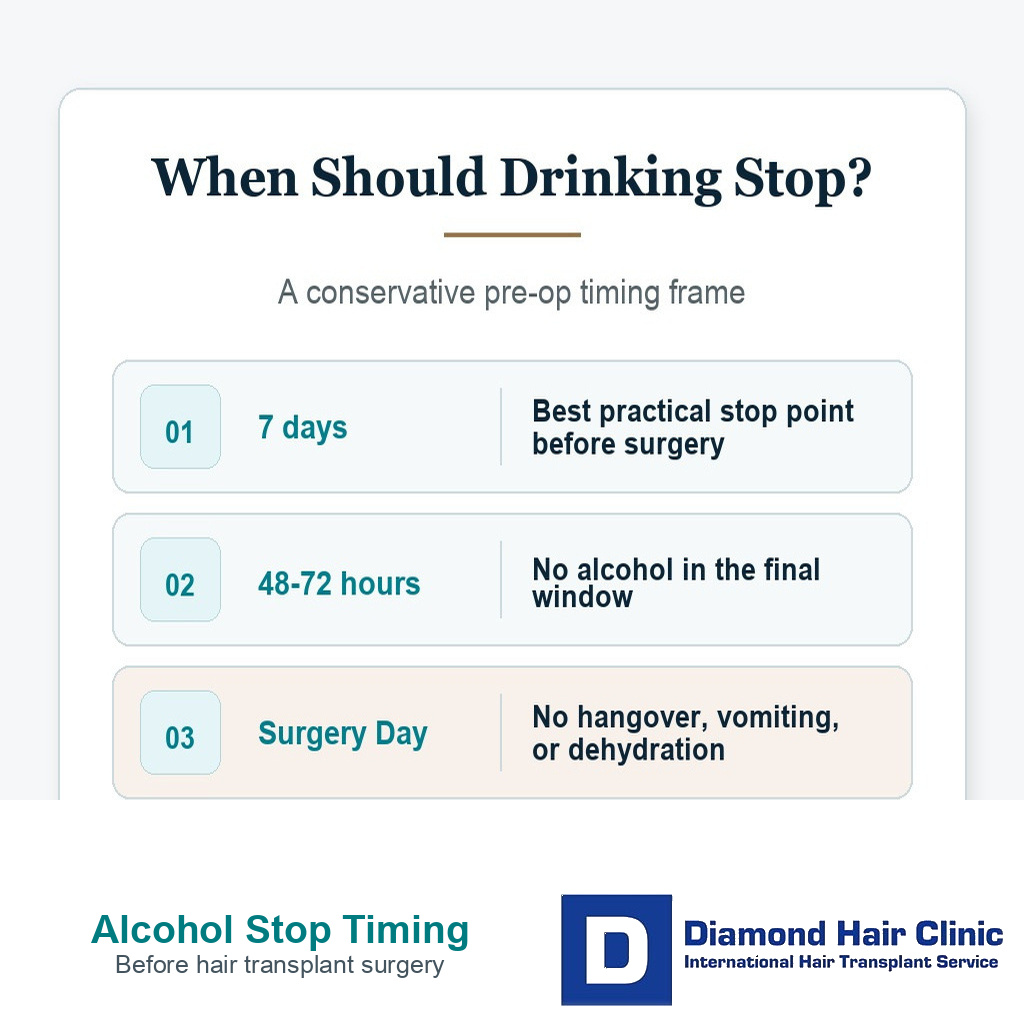
A conservative timing frame separates the week before surgery, the final 48 to 72 hours, and surgery day readiness.
In borderline situations, embarrassment should not guide the decision. Surgery should proceed only when bleeding control, anesthesia review, hydration, and graft handling can be managed safely.
Delay becomes safer in higher risk situations
Delay is often the lower risk choice when the alcohol issue is not only historical. Arriving hungover, nauseated, dehydrated, shaky, confused, or visibly unwell is not a safe way to start surgery just because travel has already happened. Do not try to mask a hangover with extra coffee, energy drinks, nausea tablets, or painkillers without telling the clinic. Heavy drinking the night before with poor sleep is not the same situation as a single drink several days earlier.
Delay should also be considered when alcohol is mixed with other risk factors, including blood thinning medication, recent ibuprofen before hair transplant surgery, sedatives, strong pain medication, high blood pressure, recreational drugs, or a medical change after booking a hair transplant. A plan can be adjusted when the body is no longer in the condition expected at booking.
Some people worry that postponement means the clinic is being dramatic. In reality, delay can be the most conservative way to protect the donor area, the grafts, and your safety.
Clinics may set different alcohol instructions
You may notice that one clinic says 48 hours, another says one week, another says two weeks, and another gives vague advice. This difference does not mean alcohol is harmless. It means clinics use different levels of caution, different anesthesia protocols, different patient populations, and different tolerance for risk.
Your decision should not be based on finding the most permissive instruction online. The operating surgeon’s instruction should control your plan. If sedation is planned, the session is long, medical conditions are present, or alcohol has been daily rather than occasional, stricter timing may be safer. If you are traveling abroad, the conservative approach is usually easier than trying to negotiate with your body after a party.
There is also a difference between general population advice and a patient specific plan. Normal blood pressure, no medications, no heavy drinking pattern, and a small older exposure are different from daily drinking, sedative use, heavy nicotine use, or arriving dehydrated after a long flight.
Drinking before and after surgery creates different risks
Before surgery, alcohol can affect the procedure itself, including bleeding, anesthesia review, blood pressure, hydration, and whether the patient is fit to proceed. After surgery, the concern shifts toward swelling, bleeding from the recipient area, accidental graft contact, sleep quality, wound healing, medication safety, and judgment during aftercare.
Before and after surgery are related, but the risk changes after graft placement. If you are already after surgery, the timing rules for alcohol after hair transplant surgery are different. If you are still before surgery, keep the focus on arriving ready for the procedure rather than trying to prove that grafts can survive a social weekend.
Medication timing also matters after surgery. Alcohol should not be casually mixed with prescribed medication or painkillers after hair transplant surgery. Even when graft security improves, your judgment still matters during washing, sleeping, sun avoidance, and swelling management.
Alcohol mixed with nicotine or drugs needs disclosure
Alcohol is often not the only issue in the week before surgery. Some patients drink, smoke, vape, use nicotine pouches, take stimulants, or use recreational drugs during the same social event. That combination is more concerning than alcohol alone.
Smoking and nicotine deserve their own caution because they can affect oxygen delivery and healing. Smoking after hair transplant surgery and nicotine pouches after hair transplant surgery need separate timing discussions. Cannabis or other substances should also be disclosed because route, dose, smoking, and judgment all matter before and after surgery.
Before surgery, disclosure matters more than embarrassment. Do not arrive with a hidden mix of alcohol, nicotine, drugs, sedatives, anxiety medication, and poor sleep. The surgical team needs the real picture.
Medical tourism parties need extra caution
Many patients travel to Istanbul or another city and see the trip as both a medical trip and a short holiday. I understand the temptation. You arrive early, friends invite you out, the procedure is still two days away, and it feels wasteful to sit quietly in a hotel.
But the days before surgery should prepare the body for surgery. Eat normally, drink water, sleep well, avoid alcohol, avoid smoking, and keep the schedule simple. Plan dinners, tours, and companion expectations around the medical appointment, not the other way around. If you are flying shortly before the operation, hydration and rest matter even more. The travel rules for flying after hair transplant surgery apply after the procedure, but the same common sense applies before surgery because arriving tired and dehydrated makes the surgical day harder to manage.
The trip can still be pleasant. It should not become a test of whether your grafts can survive poor preparation.
Information the clinic needs on surgery day
Be direct with the clinic in plain terms. The useful information includes when you last drank alcohol, what and how much you drank, whether you feel hungover, whether you vomited, whether you slept, whether you drink daily, and whether you took sedatives, recreational drugs, blood thinners, anti inflammatory medication, or strong painkillers. If your real fear is cancellation or losing travel time, say that directly. It is easier to solve a scheduling problem than to manage hidden medical risk.
Do not wait for the clinic to guess. Do not answer only the narrow question asked if there is a bigger safety issue behind it. An uncomfortable truth before surgery is easier to manage than a preventable problem discovered after the procedure has started.
Arriving hungover is different from one older drink. That distinction is exactly why the clinic needs details, not a quick answer.
Alcohol makes surgery day less predictable
My threshold is conservative because the donor area is finite and surgery day should be controlled. Stop alcohol one week before the procedure when possible. Do not drink in the final 48 to 72 hours. Arrive hydrated, rested, and able to follow instructions. If you drank recently, say so. If you drink heavily, say so. If you arrive unwell, allow the surgeon to decide whether postponement is safer.
A hair transplant is not only a cosmetic appointment. It is surgery on a finite donor supply that must serve you for many years. Alcohol is a small sacrifice compared with the cost of a poorly controlled surgical day.
When you give complete information, you are easier to protect. When recent alcohol use is hidden, the surgical team has to work with an incomplete picture, and that is not how I like to plan a hair transplant.
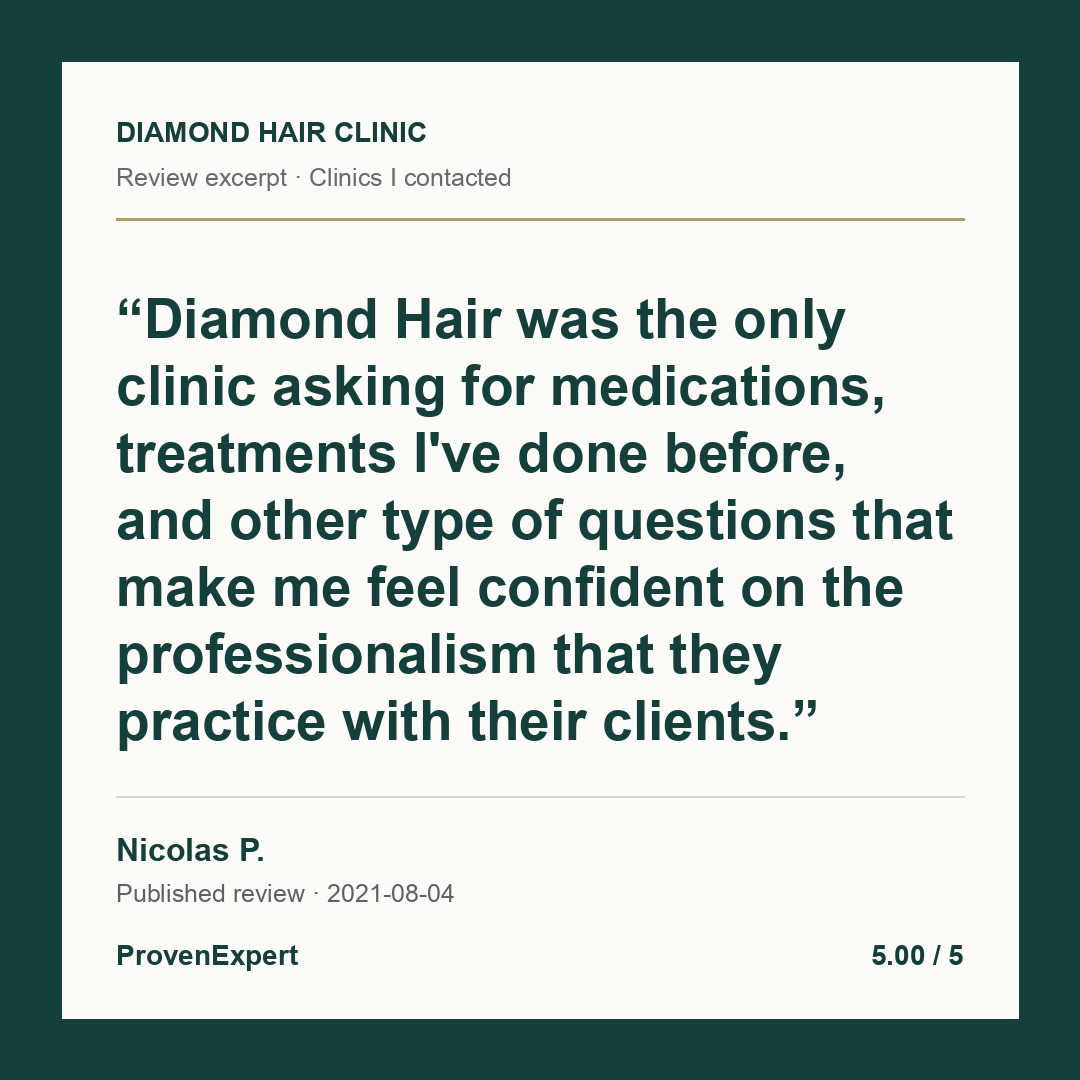
Read this review excerpt
Diamond Hair was the only clinic asking for medications, treatments I've done before, and other type of questions that make me feel confident on the professionalism that they practice with their clients.