


Cannabis Before FUE Needs Disclosure and Timing
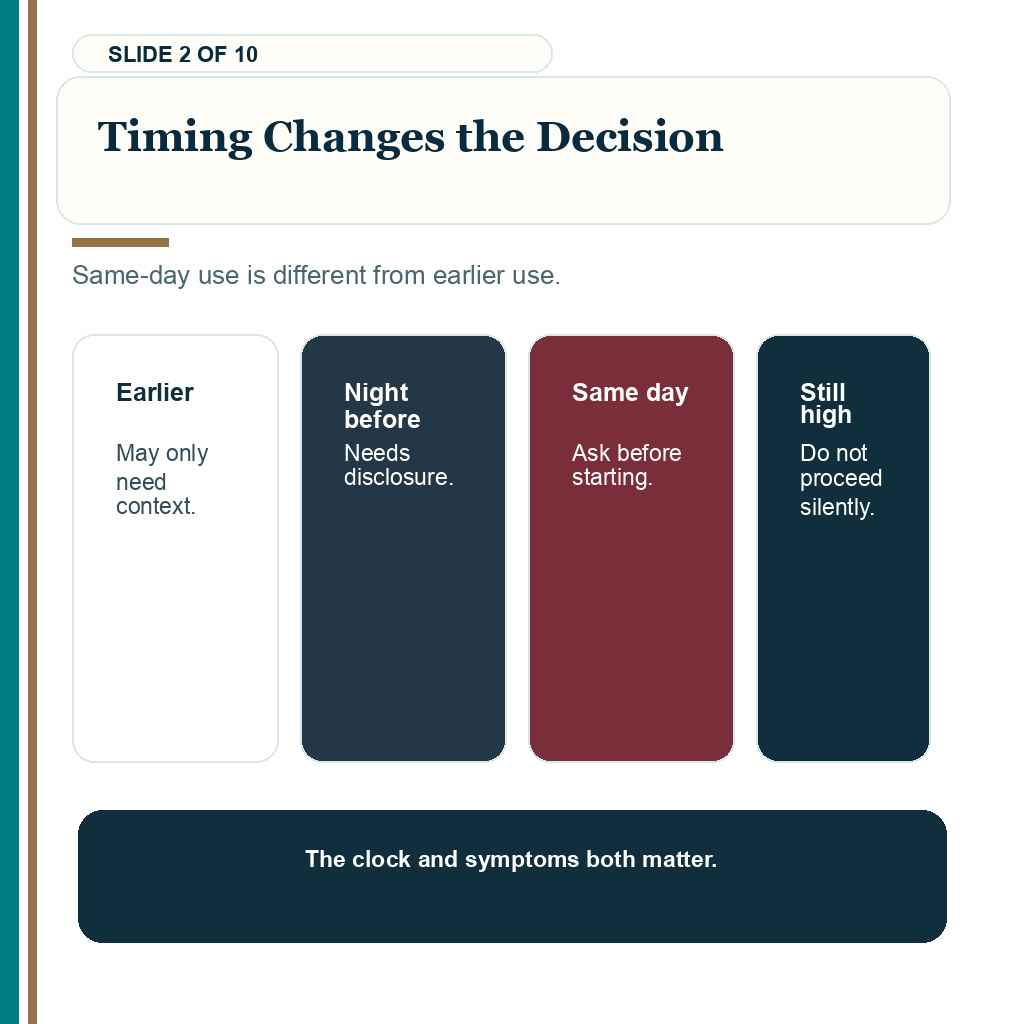
Do not use cannabis on the day of your hair transplant, and share that with the clinic if you use weed, marijuana, THC, CBD oil, edibles, vapes, or cannabis mixed with tobacco. For planning, the safer target is to stop cannabis during the final week when possible. Any use in the final 24 to 48 hours needs to be disclosed before the procedure starts.
The disclosure is medical, not moral. Cannabis can affect heart rate, blood pressure, coughing, anxiety, nausea, pain response, sedation planning, and whether consent is reliable. Same day cannabis use must be disclosed before the procedure starts. If you hide it, the surgical team has less information when deciding whether it is sensible to proceed, delay, monitor more carefully, or adjust medication. Recent cocaine, MDMA, speed, or other party drug use around FUE needs the same clear disclosure, especially when heart symptoms or mixed substances are involved.
Changing from smoking to an edible still belongs in the same disclosure. Timing, dose, and the way you react can change the surgery day plan.
Cannabis stop timing before surgery
There is no single rule that fits every situation because cannabis use varies widely. One low dose edible two weeks before surgery is different from daily smoking or strong THC several times a day. The route, dose, frequency, last use timing, and current symptoms all matter.
For a planned hair transplant, stopping at least one week before surgery is the conservative target when possible. Heavy or daily users may need a more individual plan, especially if cannabis is used for sleep, chronic pain, appetite, anxiety, or nausea. The aim is a predictable surgical day without a sudden change that creates withdrawal, insomnia, panic, or poor intake.
If you used cannabis the night before or the morning of surgery, do not try to solve it by silence. Say this before local anesthesia, oral medication, or any surgical step begins. Last use timing matters more than the label weed or edible.
Cannabis use method changes risk
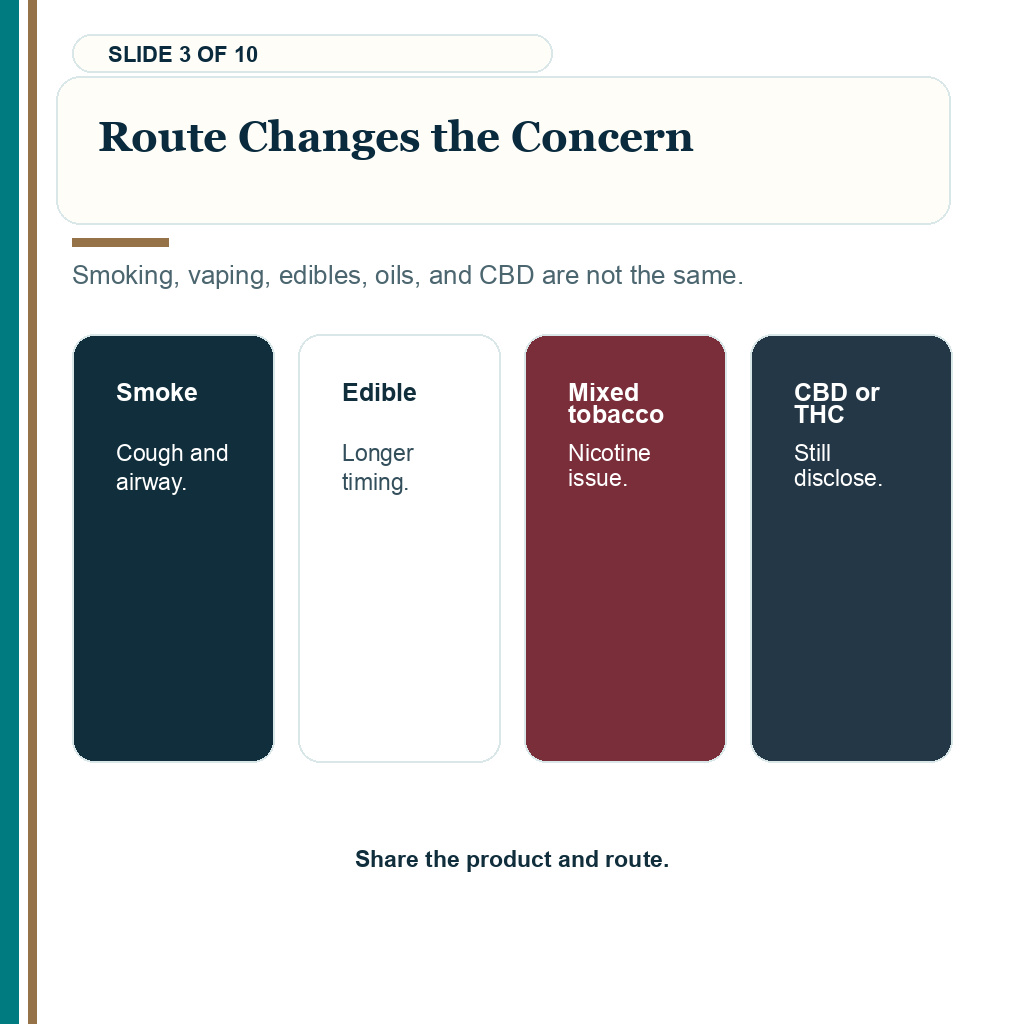
Smoking, vaping, edibles, oils, and drinks do not create the same surgical concerns. Smoking and vaping can irritate the airway, increase coughing, dry the mouth, and make a long procedure less comfortable. Edibles may have a slower onset, last longer than expected, and make timing less clear. Oils and tinctures can vary in strength. Products mixed with tobacco introduce a nicotine issue as well.
That difference is why I ask for the exact form, not only the word cannabis. Someone may say, “I do not smoke, I only take edibles,” but an edible taken late at night can still affect alertness, fasting, nausea, anxiety, or the decision to proceed the next morning.
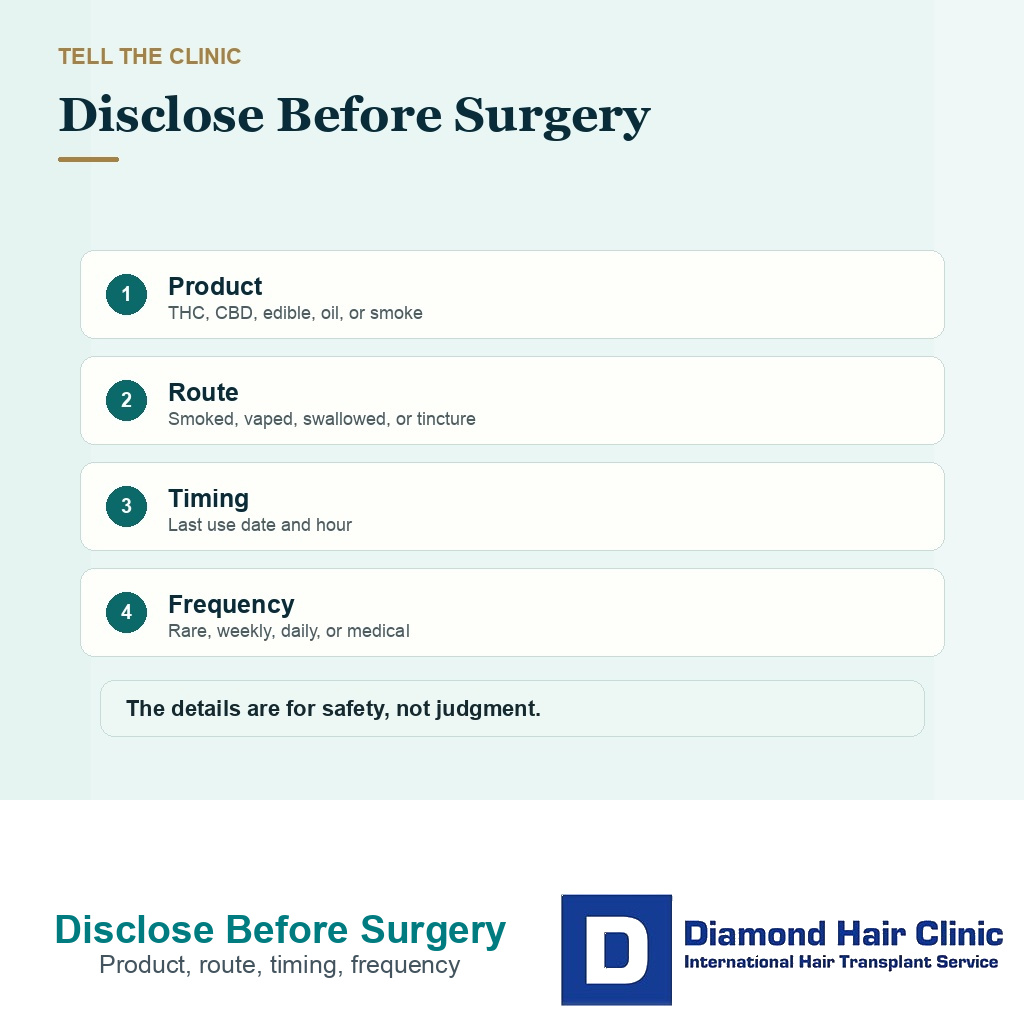
Disclose product, route, amount, timing, frequency, and mixed substance details before surgery.
The aftercare question is different from the preoperative question. After surgery, smoking weed after a hair transplant becomes a recovery control issue. Before surgery, I am mainly thinking about disclosure, safety, anesthesia planning, and whether you arrive clear enough for a careful procedure. If the aftercare question is nicotine vaping rather than cannabis, vaping after FUE is the more specific recovery page.
Last use timing matters for the clinic
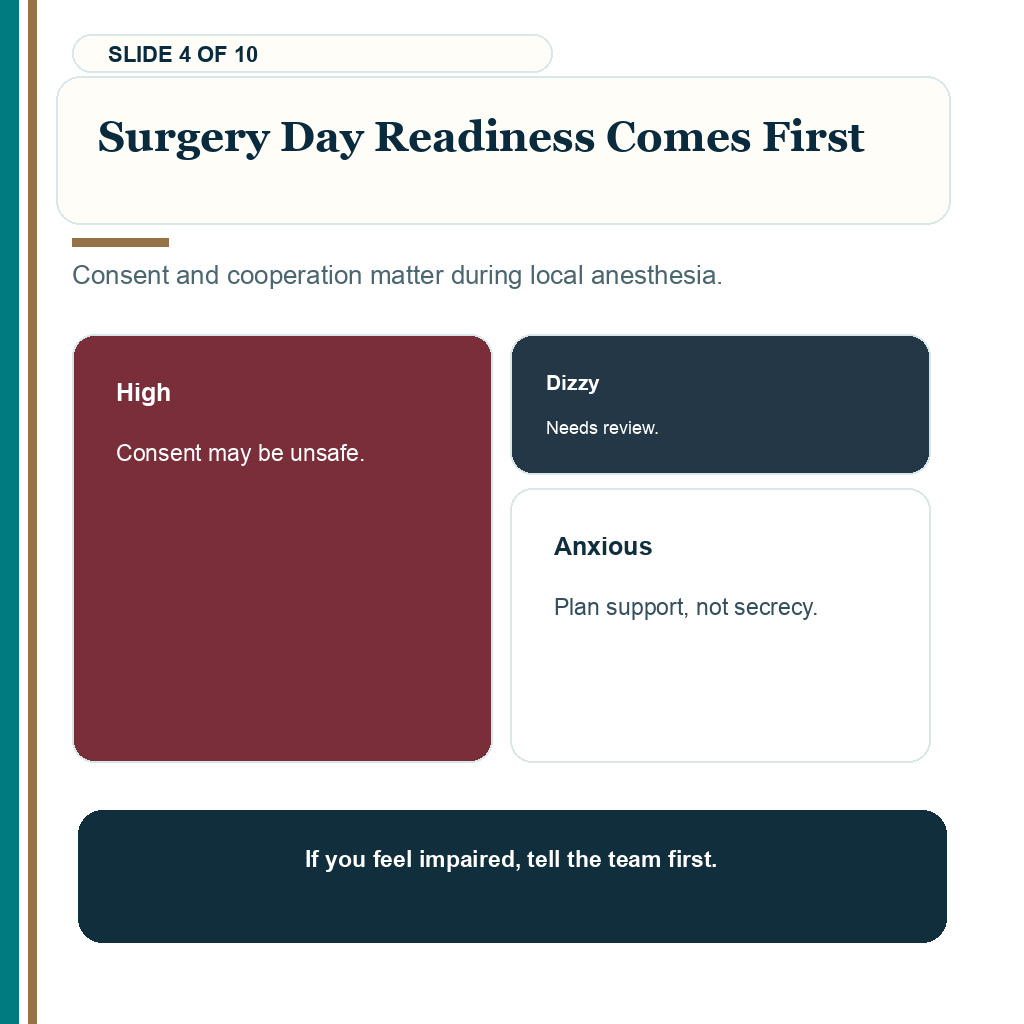
The last use timing helps the surgical team judge current effects. Cannabis can raise heart rate, lower blood pressure, increase anxiety, or make someone feel sleepy, detached, nauseated, or less able to communicate clearly. Those effects matter during a procedure that requires stillness, cooperation, and long hours under local anesthesia.
Hair transplant surgery is performed with local anesthesia, but that does not make cannabis irrelevant. Local anesthesia, solutions that contain adrenaline, oral calming medication, sleep deprivation, fasting, coffee, travel fatigue, and anxiety can all meet in the same body on surgery day. I need the full details, not a simplified answer.
Concern about heart rate, palpitations, or blood pressure should make the decision more cautious. Known cardiovascular issues make high blood pressure and hair transplant surgery and hair transplant anesthesia with adrenaline part of the same safety discussion.
Medical or daily cannabis use
Medical or daily cannabis use needs planning, not hiding. A daily user may feel worse after sudden stopping. Sleep may deteriorate, appetite may drop, anxiety may rise, or pain may become harder to manage. Continuing close to surgery can also create risk, so the answer should be planned rather than guessed.
If cannabis is prescribed, recommended, or used daily for a medical reason, send that information early. Include the product name if known, THC and CBD strength if available, dose, route, timing, and the condition being treated. If another doctor supervises that treatment, ask that doctor before stopping abruptly.
Medical cannabis needs planning, not sudden hiding or sudden stopping. This is especially important for international travel because the surgery date, flight, hotel stay, sleep pattern, and recovery period all sit close together.
For cannabis used to manage sleep, nausea, pain, or anxiety, explain that reason before planning the stop. Stopping suddenly and continuing close to surgery both need a safer plan than guessing.
One cannabis use before surgery is not always a cancellation
One past use is not the same as arriving impaired. The decision depends on how much was used, when it was used, whether symptoms are still present, whether other substances were involved, and whether the surgical team can proceed safely. A small exposure several days earlier has a different meaning from smoking or taking an edible on the morning of surgery.
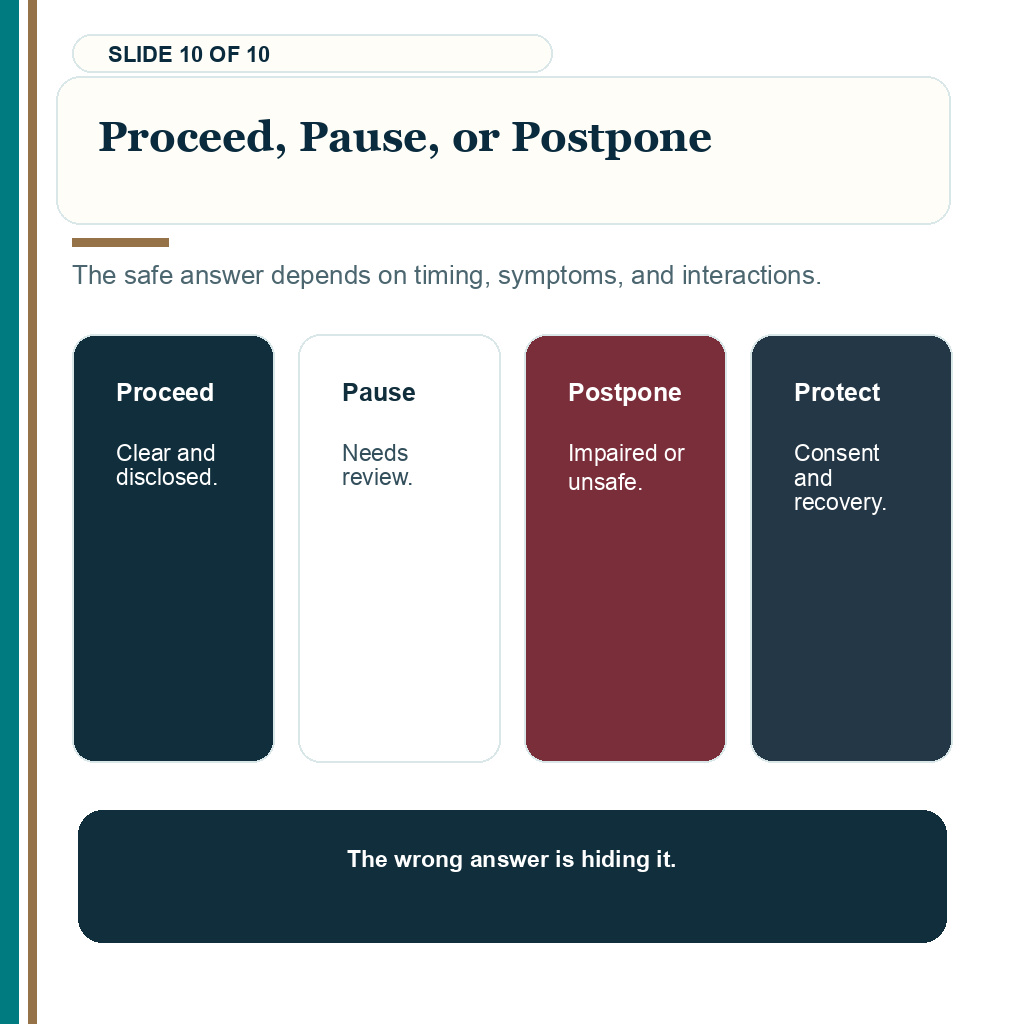
Cancellation is not the only possible response. The clinic may proceed, delay the start, monitor more carefully, avoid optional sedating medication, or postpone if you are not safe for consent and surgery. The wrong response is pretending nothing happened.
Cannabis becomes more concerning when it is combined with Xanax, Valium, sleeping pills, painkillers, alcohol, or other sedating substances. Before taking any calming medication the surgical team has not approved, treat Xanax or Valium before hair transplant surgery as a medical disclosure issue.
Cannabis use the night before or morning of surgery
ask for clinic review immediately and be specific. Say what you used, how much, when you used it, and whether you still feel high, sleepy, anxious, dizzy, nauseated, or unusually fast in the heart rate. If you mixed it with alcohol, nicotine, sedatives, painkillers, or other drugs, say that too.
Current symptoms matter as much as the clock. Using cannabis many hours earlier but still feeling detached, panicky, dizzy, nauseated, or unable to focus is not the same as using earlier and being fully clear. Consent, cooperation, and safe monitoring come first.
Do not drive yourself to the clinic after cannabis use. Do not sign documents while impaired. Do not take extra caffeine to “balance it out.” Coffee can increase palpitations and anxiety in some people, and the clinic may already have instructions about the morning of the procedure. Coffee on the morning of hair transplant surgery needs review on the morning of surgery as well.
If you feel faint, dizzy, panicky, or unstable, the team needs to know before surgery begins. Fainting and dizziness around hair transplant surgery must be reviewed before the procedure, especially when cannabis, fasting, anxiety, or medication may be involved.
Cannabis does not directly kill transplanted grafts
After one cannabis episode, the fear is often “Did I ruin my grafts?” A single cannabis exposure does not prove that transplanted grafts will fail. Graft survival depends on surgical handling, implantation quality, blood supply, aftercare, trauma, infection, smoking exposure, and individual healing.
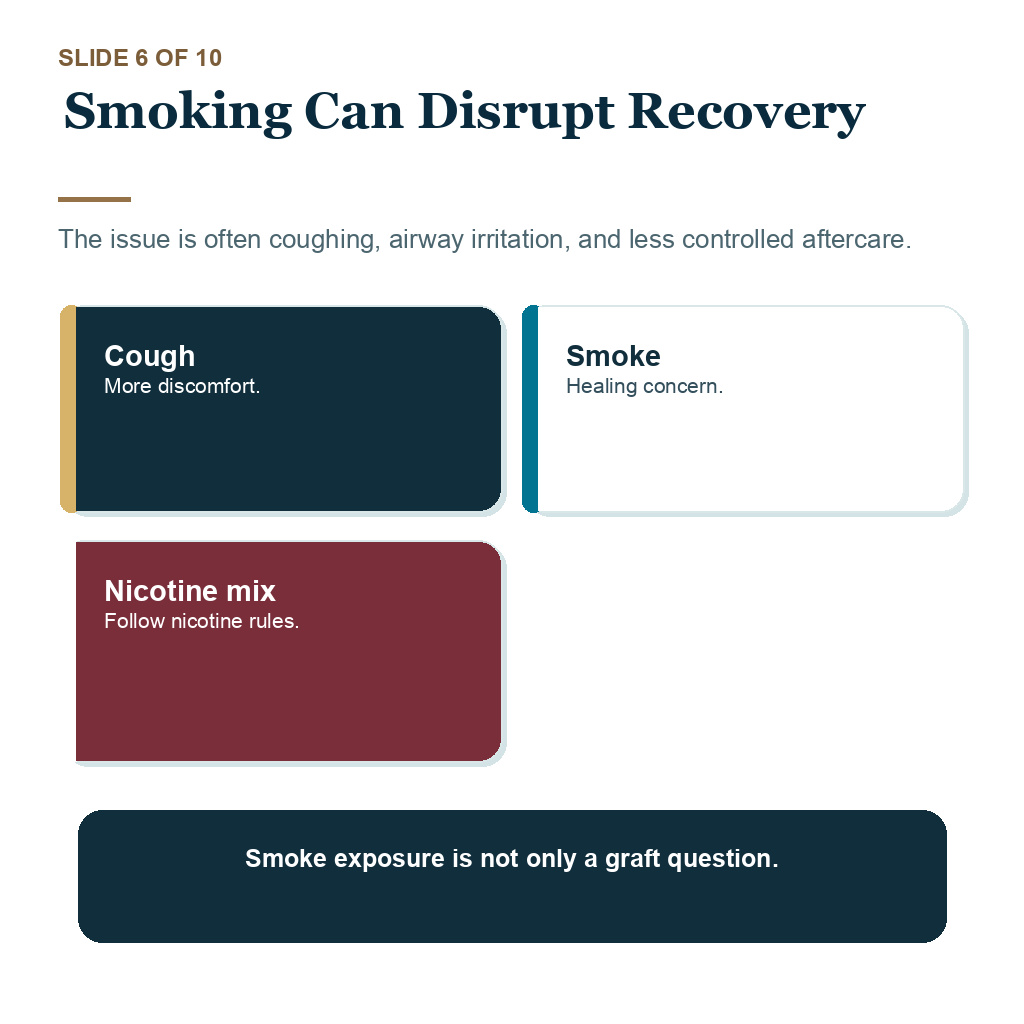
However, cannabis can create indirect risks. Smoking can trigger coughing. Coughing can increase pressure and discomfort. Impairment can make someone less careful with sleeping position, washing, touching, or scratching. Strong THC can increase anxiety and make normal swelling or redness feel frightening. Those indirect risks are the reason for caution.
Cannabis is rarely a direct graft failure question. The more useful question is whether it makes the surgical day or early healing period less controlled.
Cannabis differs from nicotine and alcohol
Cannabis, nicotine, and alcohol create different problems, even when people group them together as lifestyle substances. Nicotine can narrow blood vessels and is a major concern for healing and donor area recovery. Alcohol can affect hydration, bleeding tendency, sleep, and judgment. Cannabis can affect airway irritation, heart rate, blood pressure, sedation planning, alertness, nausea, anxiety, and coughing.
Many cannabis products are also mixed with tobacco. If you smoke joints, spliffs, blunts, or any product containing tobacco or nicotine, follow the timing guidance in nicotine before hair transplant surgery, even if you think of the product mainly as cannabis.
Alcohol has its own timing rules and should not be used as a substitute for cannabis withdrawal or anxiety control. Review alcohol before hair transplant surgery if you are planning travel, a hotel stay, or a preoperative evening in Istanbul.
Edibles, oils, and infused drinks
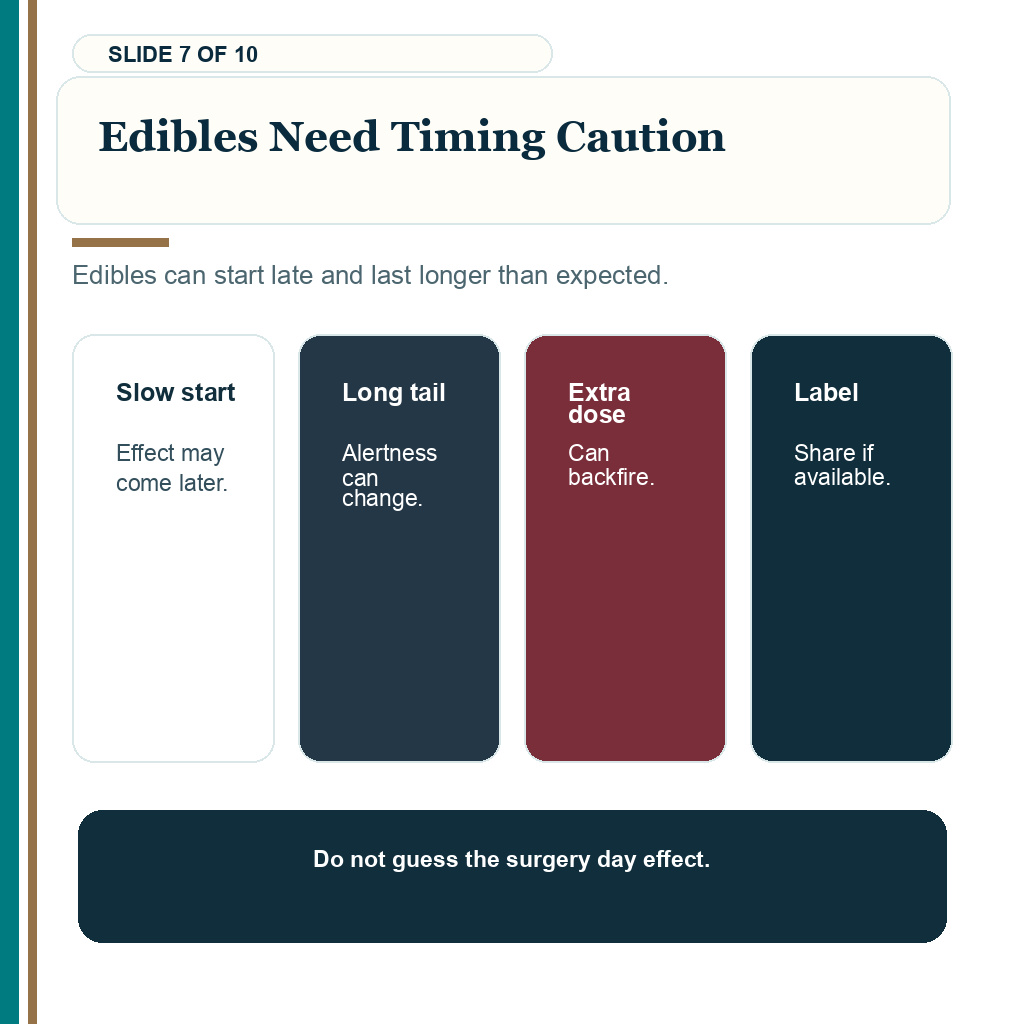
Edibles can be more difficult to time because the effect may start late, peak unpredictably, and last longer than expected. You may feel normal when swallowing the edible and impaired several hours later. That uncertainty is a problem before surgery because fasting, consent, transportation, and medication timing matter.
Oils, tinctures, gummies, capsules, and infused drinks also vary in dose. Some contain mostly CBD. Others contain significant THC. A CBD only product is not the same as a strong THC edible, but it still belongs on the disclosure list because labels, additives, and actual strength are not always clear. Taking more because the first dose feels slow can lead to sedation or anxiety later.
Do not use edibles or THC drinks on the day of surgery. If you used them close to surgery, disclose the amount and timing. If the product label is available, send a photo to the clinic before travel rather than waiting until the morning of the procedure.
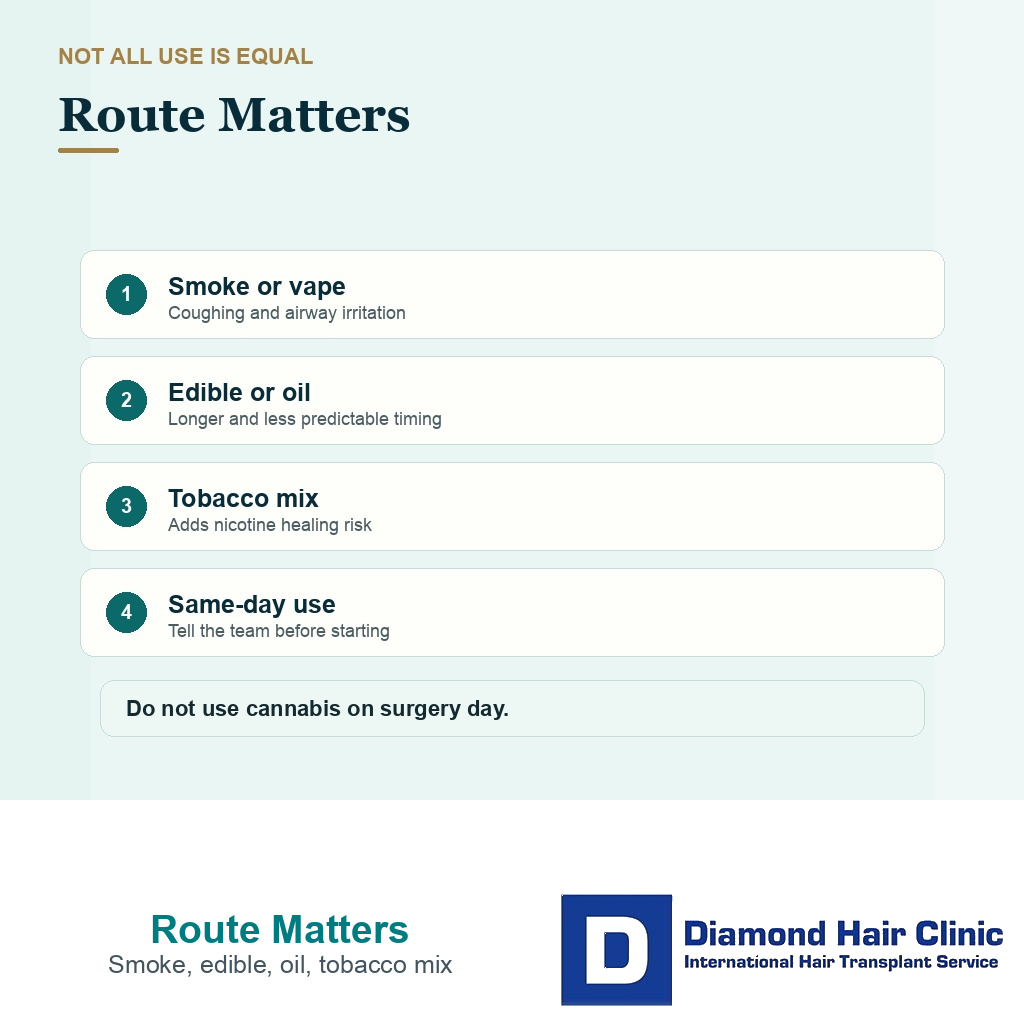
Route matters. Smoking, edibles, oils, CBD, THC, and products mixed with tobacco do not carry the same concerns.
Cannabis details to share before travel
Before traveling for hair transplant surgery, share whether you use cannabis medically, recreationally, occasionally, or daily. Include smoked, vaped, edible, oil, tincture, capsule, CBD, THC, and products mixed with tobacco. Send the last use timing and whether you have ever had palpitations, panic, fainting, nausea, breathing issues, or unusual reactions after using it.
Also list all medications and supplements. Cannabis matters more when it is combined with sleep medication, anxiety medication, painkillers, alcohol, stimulants, or blood pressure medication. Medication before hair transplant surgery has to include everything you actually use, not only prescription tablets.
For travel to Turkey, there is another point. Do not bring cannabis products, THC products, or recreational drug products with you. Travel law and medical planning are separate issues, and drug rules can carry severe penalties. If a medication is controlled or uncertain, check official travel and medical import rules before travel instead of relying on online comments.
Cannabis cannot replace sedation planning
Cannabis should not be used as a private sedation plan. If you have needle fear, panic, or a history of fainting during medical procedures, raise it early. The team can plan positioning, breaks, communication, local anesthesia pace, and whether any approved medication is appropriate.
Some people try to manage anxiety by taking something before arrival. That can create more risk than it solves because the clinic does not know the dose, timing, interaction, or current mental state. I treat sedation during hair transplant surgery as a decision planned by the clinic, not something to improvise before arrival.
If your main issue is fear of injections rather than cannabis itself, needle phobia and hair transplant surgery deserves its own planning before booking.
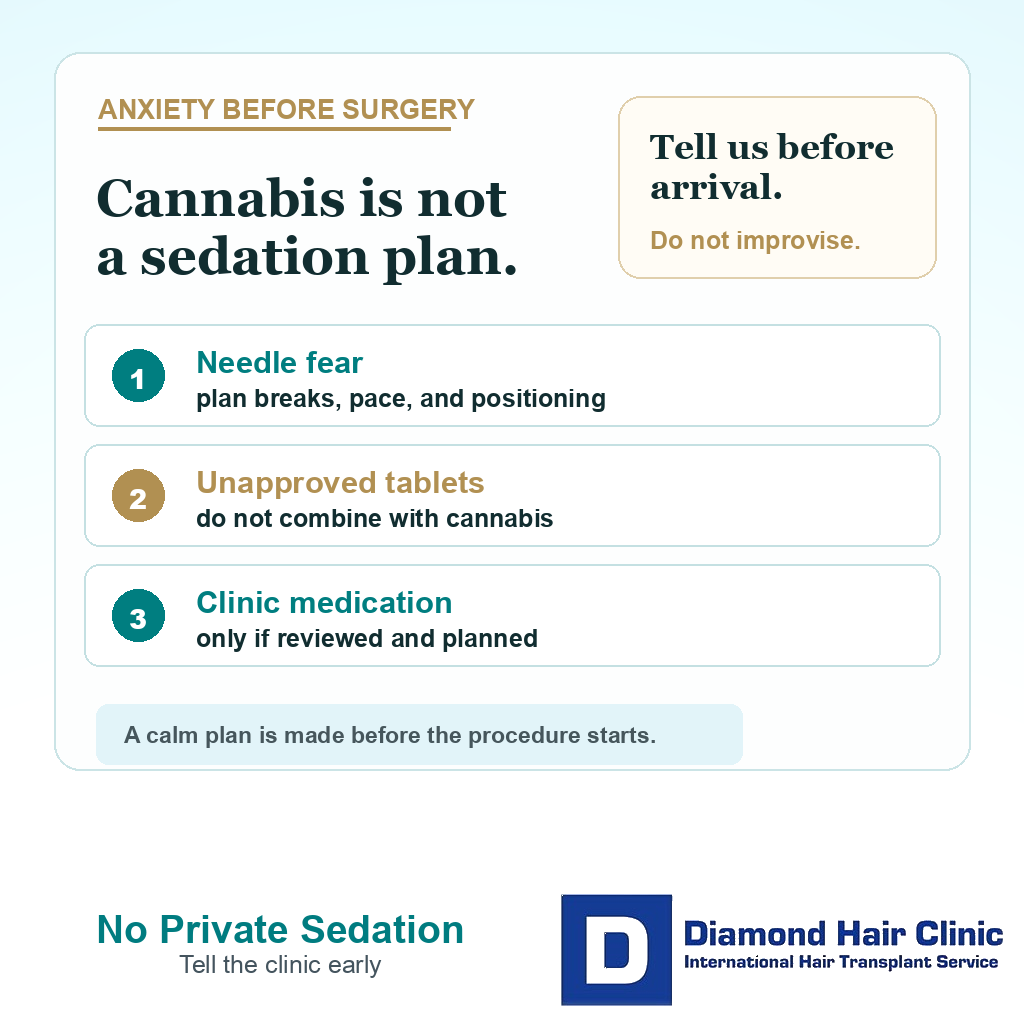
Cannabis should not replace an anxiety or sedation discussion before hair transplant surgery.
Cannabis return timing after surgery
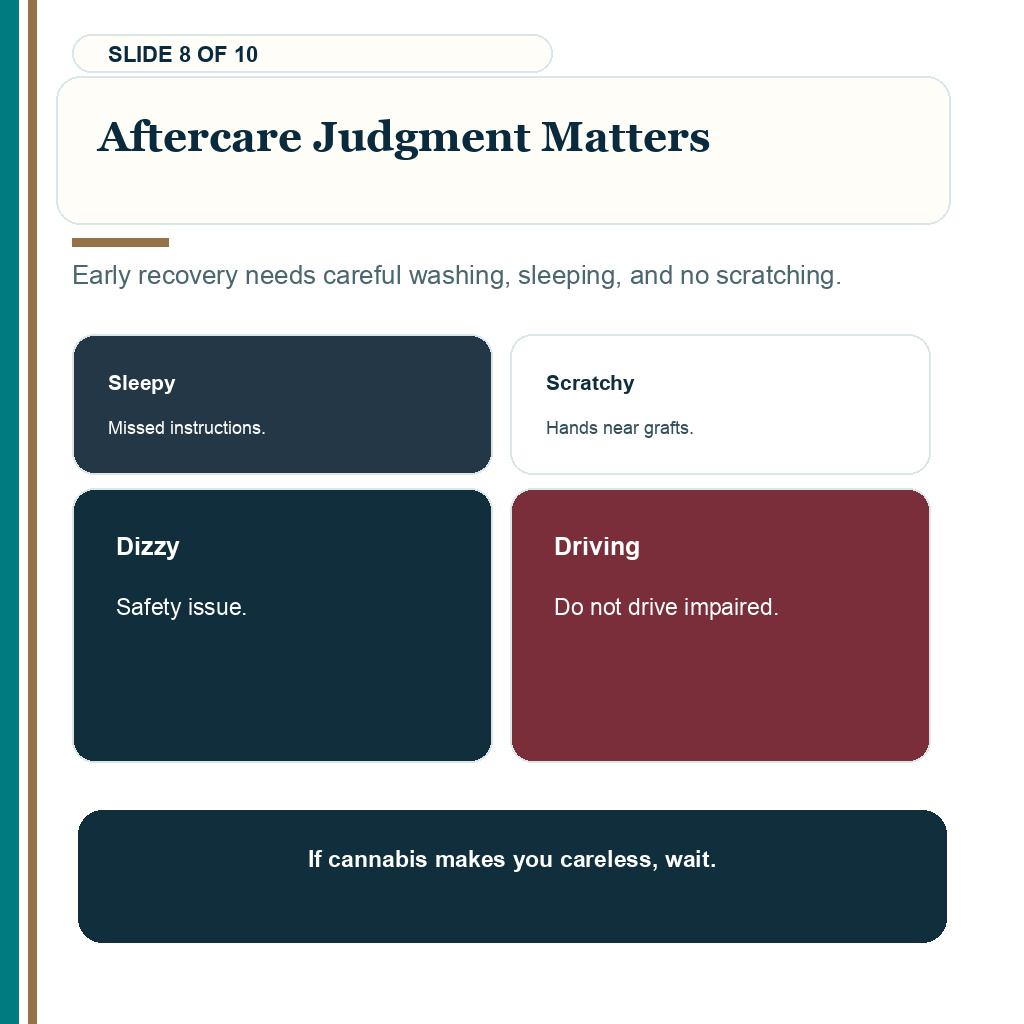
Return timing depends on the route and healing. Smoking is the bigger early concern because coughing, airway irritation, and smoke exposure can make recovery less controlled. Edibles avoid smoke but can still affect judgment, sleep position, anxiety, and aftercare discipline.
During the first days after surgery, the priority is protecting the grafts, washing correctly, sleeping carefully, avoiding trauma, and contacting the clinic if something looks wrong. If cannabis makes you careless, dizzy, anxious, sleepy, or more likely to scratch, it is not helping recovery.
If you are prescribed pain medicine, sleep medicine, or nausea medicine after surgery, ask before combining it with cannabis. The concern is not only graft survival. It is sleepiness, dizziness, missed instructions, and poorer judgment during the first days of aftercare. Plan the first sleep nights before surgery when cannabis is already part of your routine, instead of testing a stronger dose while grafts need protection.
Driving is another practical issue. Do not drive after cannabis use, and do not drive while taking any sedating medication. Driving after a hair transplant needs sober planning too.
The cannabis timing slides below review disclosure, last use timing, smoking or edibles, medication mixing, surgery day readiness, driving, aftercare judgment, and when pausing or messaging the clinic is needed. Swipe sideways, use the arrows one slide at a time, or choose a number below the image.



My clinical position on cannabis before FUE
My clinical position is clear. Cannabis use should be disclosed early, avoided on surgery day, and treated as a planning detail rather than a shameful secret. Do not arrive impaired, do not mix cannabis with alcohol or unapproved sedatives, and do not hide a recent use from the surgical team.
Do not mix cannabis with alcohol, sedatives, or unapproved tablets before surgery. If you use cannabis often, plan the stop or reduction with medical context, not guesswork. If you used it close to surgery, say so before the procedure begins.
A successful hair transplant depends on clear planning, precise surgery, and careful recovery. Cannabis does not make someone a bad candidate by itself, but poor disclosure can turn a manageable detail into an unnecessary risk.
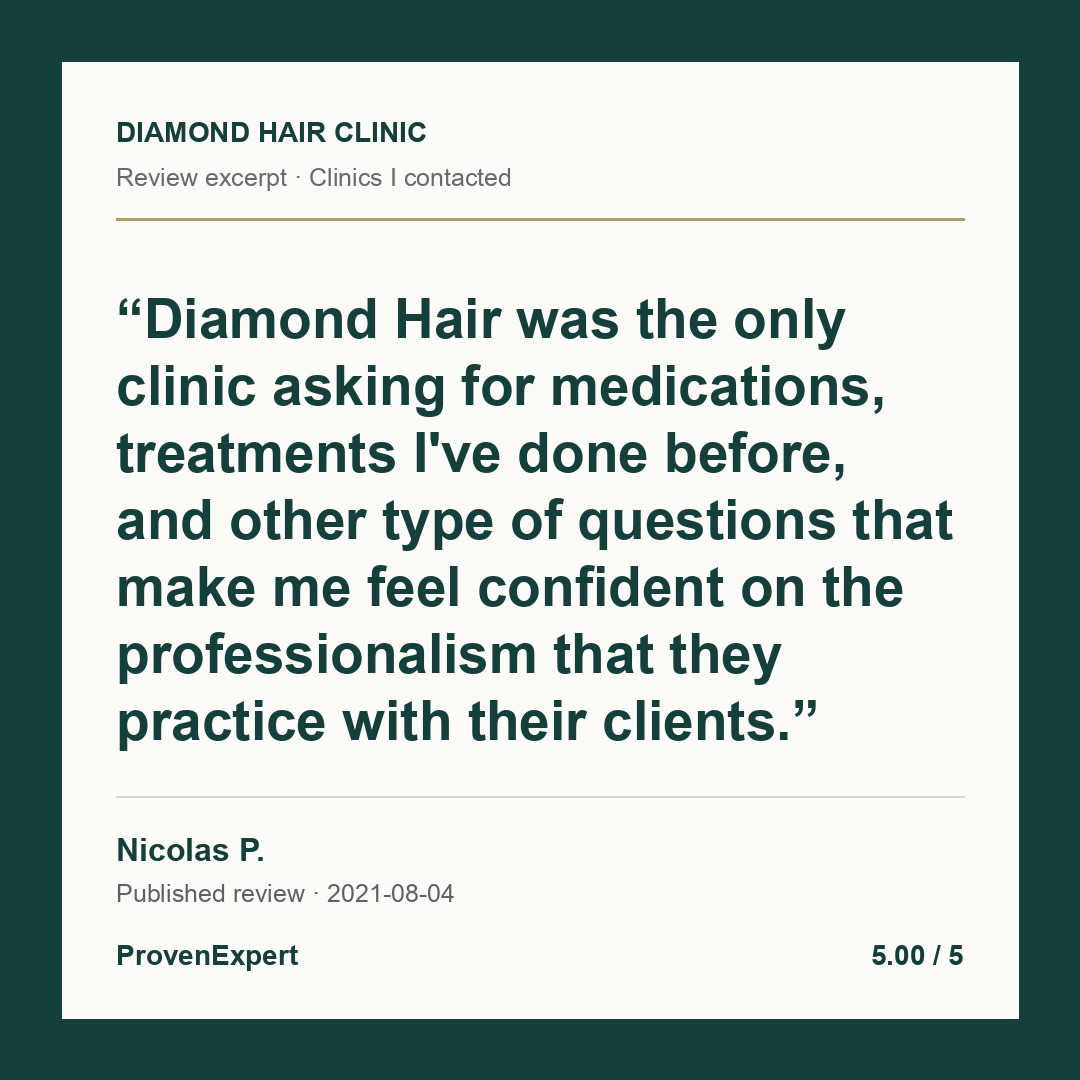
Read this review excerpt
Diamond Hair was the only clinic asking for medications, treatments I've done before, and other type of questions that make me feel confident on the professionalism that they practice with their clients.