



Vaping Can Affect Healing Without Automatic Graft Loss
If your vape contains nicotine, I treat it as a healing risk after FUE, not as a harmless substitute for smoking. Nicotine can tighten small blood vessels, raise heart rate and blood pressure, and make the early healing window less forgiving. One isolated slip does not prove your grafts are lost. Repeated nicotine use in the first days is a different situation.
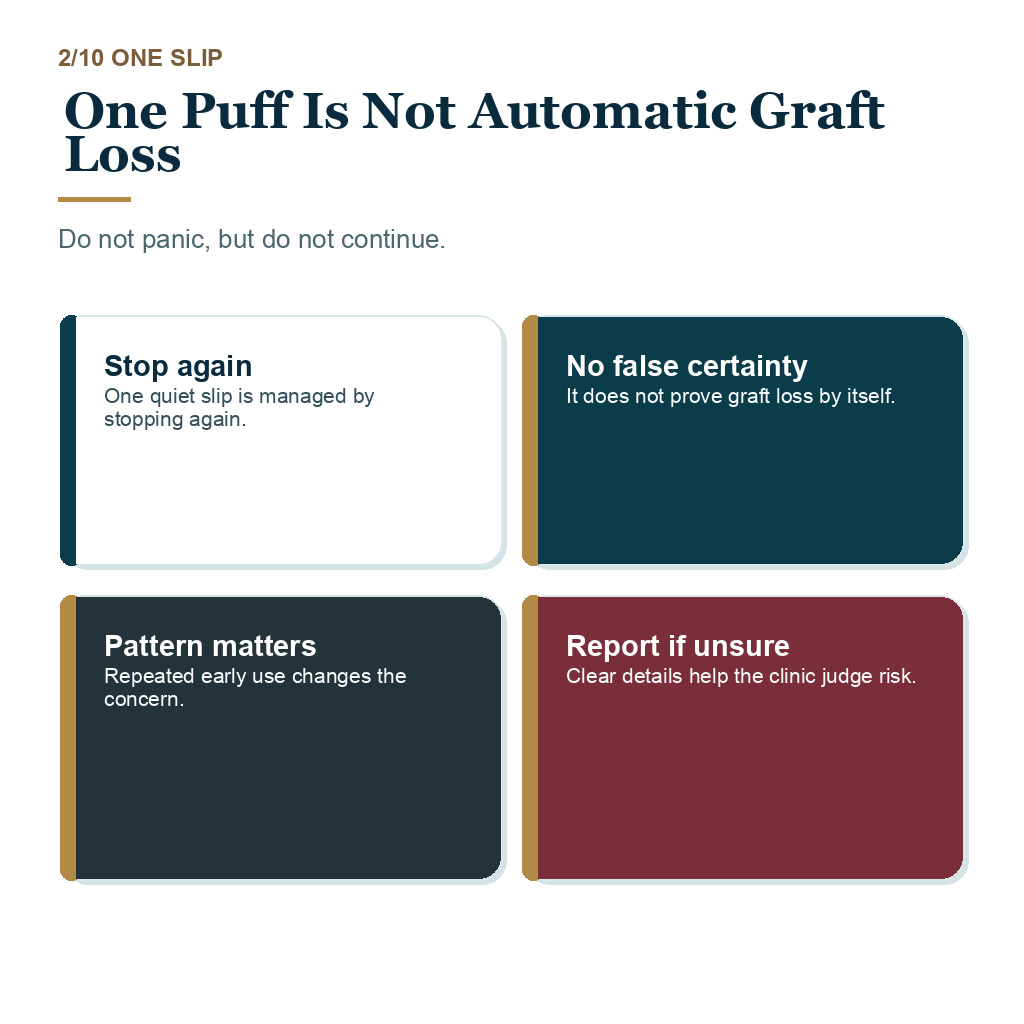
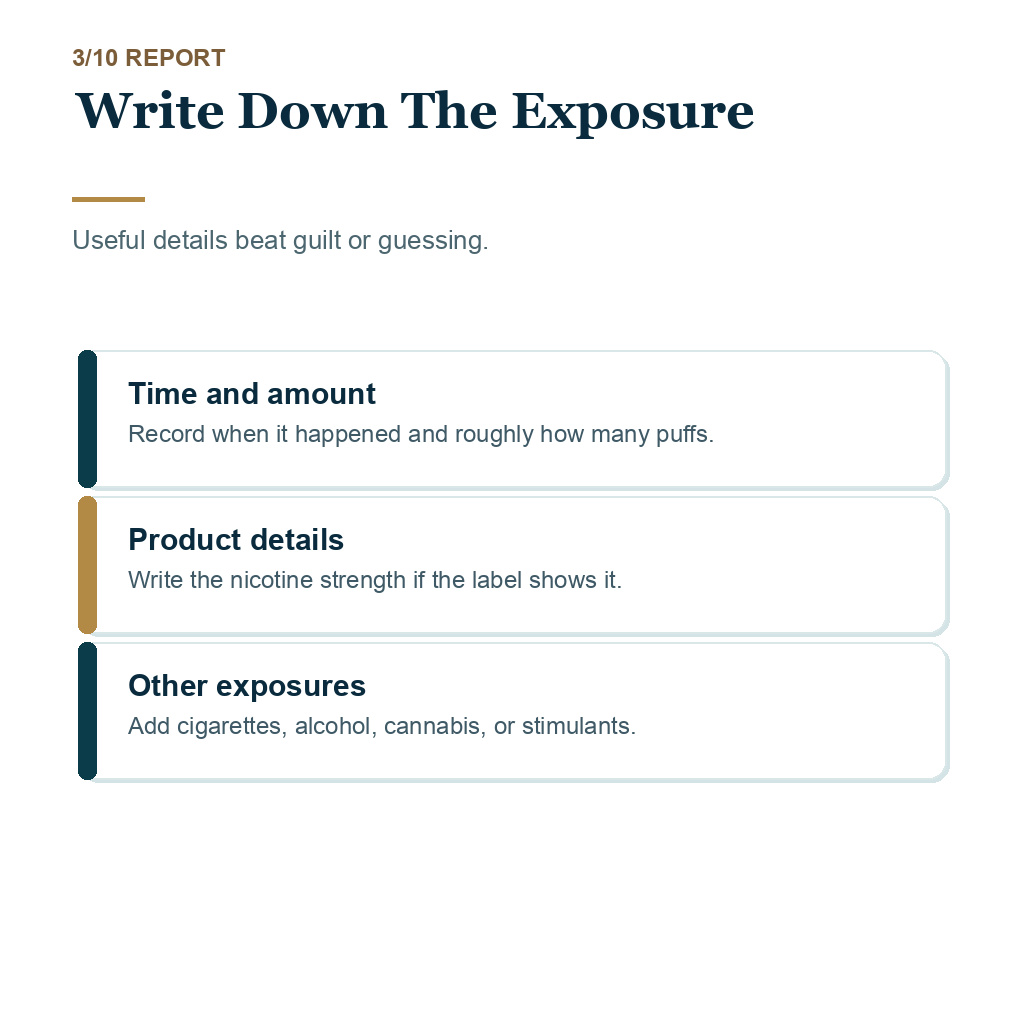
This is different from panic. If you vaped once after surgery, stop again, return to the early hair transplant aftercare routine, write down the time, nicotine strength, and number of puffs, and watch the scalp for bleeding, spreading redness, discharge, fever, stronger pain, or swelling that gets worse. Vaping after FUE is not automatic graft loss, but nicotine is still an avoidable healing variable. A good update from someone else does not make nicotine safe for your own recovery.
Do not reduce the report to the word vaping. The useful detail is whether nicotine, cannabis, flavor only, or repeated coughing was involved, because each changes what the clinic needs to check. Coughing after a puff matters because it can lead to sudden movement, forehead pressure, or repeated checking while the scalp is still settling.
Vaping slip review
Which detail changes recovery planning?
Use this when a puff, cartridge, or nicotine craving makes you unsure what to report after FUE.
Keep the break. This is not a willpower test. Keeping the break helps early healing stay more predictable while the donor area and recipient area are settling.
Nicotine makes early healing less predictable
When I discuss vaping after FUE, I first ask what is inside the device. Many vapes contain nicotine. Some deliver a small amount. Others deliver a strong dose very quickly. The label, cartridge strength, number of puffs, and how often you use it all matter.
Nicotine is not only a habit issue. It affects blood vessels and the cardiovascular system. After hair transplant surgery, the recipient area and donor area are healing through small vessels, local inflammation, oxygen delivery, and careful wound closure. I do not want that early healing period competing with avoidable vasoconstriction, dehydration, poor sleep, coughing, or repeated stimulant exposure.
A nicotine vape belongs in the same clinical conversation as vapes and pouches before hair transplant surgery, not in a separate category because it is vapor. Cigarettes add combustion products and carbon monoxide. Vapes do not create the same smoke exposure, but a nicotine vape still delivers nicotine, and nicotine still matters.
One good result does not remove the risk
It is tempting to search for someone who vaped and still had good growth. I understand why that feels comforting, but it is not a surgical test. That recovery only shows one scalp healing despite exposure, not that nicotine is safe for every case. It does not prove the same exposure is safe for every patient.
A normal fingertip oxygen reading after vaping is not clearance either. It does not show how the scalp microcirculation, blood vessel response, coughing, sleep, blood pressure, or wound surface are handling the exposure. Use it as a reason to stop again and write down exactly what product was used, not as a reason to override the clinic’s restriction.
One patient may have strong donor hair, a smaller session, stable blood pressure, careful graft handling, no infection, and a clinic protocol that protected the early wound. Another may have a larger session, fragile skin, diabetes, blood pressure swings, heavy nicotine use, bleeding, or weak follow up. Both may say they vaped, but they are not medically the same case.
Hair transplant results also take months to judge. Early shedding, baby hairs, temporary patchiness, and delayed thickening can confuse the picture. If you are already worried about growth, use structured hair transplant growth tracking rather than guessing from one week of harsh close ups.
The first two weeks are not the time to test nicotine
The early recovery period is when I am most conservative. For smoking, Diamond Hair Clinic’s clinical instruction is to stop at least 7 days before surgery and at least 7 days after surgery. For nicotine vaping, I ask you to keep the break through the early skin healing window as well, and longer when the scalp is still irritated, bleeding, crusted, infected, or inflamed.
The right restart point depends on the operation, your health, and the surgeon’s protocol. A small hairline session with clean healing is not the same as a large recipient area, donor tenderness, high blood pressure, and heavy nicotine dependence. The principle is the same in both cases. Do not test nicotine while the scalp is still trying to seal and calm down.
This also protects you from confusing signals. If the scalp bleeds after a puff, if swelling feels worse, or if sleep collapses because cravings and vaping are alternating all night, the recovery becomes harder to read. A stable routine gives the clinic cleaner information.
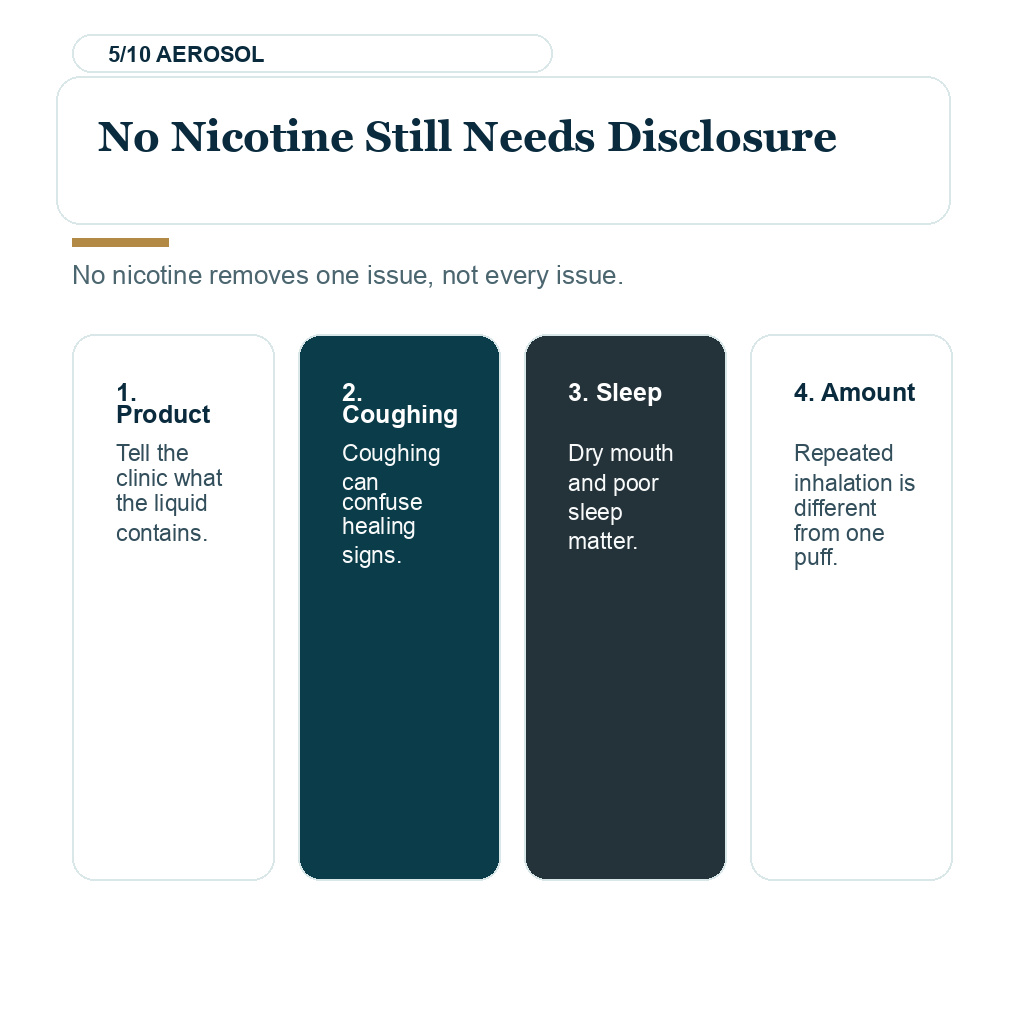
Vaping without nicotine still needs disclosure
A vape that lists no nicotine removes the nicotine part of the problem, but it does not turn inhaled aerosol into a medical recovery tool. Flavorings, propylene glycol or vegetable glycerin, heat, throat irritation, coughing, and unknown product quality can still matter, especially if the device makes you cough hard, sleep poorly, or combine it with smoking.
If the liquid has no nicotine and is being used only to avoid nicotine, I still want to know. The exact product, timing, and amount tell me more than a vague answer that you do not smoke. In hair transplant planning, incomplete disclosure creates more risk than an uncomfortable conversation.
Nicotine replacement also needs a separate decision. Patches, gum, lozenges, pouches, and vapes are not identical, but they can all expose the body to nicotine. Severe withdrawal should involve a surgeon or prescribing doctor before one nicotine product is substituted for another. I explain nicotine pouches after hair transplant explains why smokeless nicotine is still not a free pass.
After a vaping slip, report details instead of hiding it
If you already vaped, do not hide it. Send the timing, whether it contained nicotine, the strength if you know it, roughly how many puffs you took, and whether you also smoked cigarettes, drank alcohol, used cannabis, took a stimulant, or had bleeding.
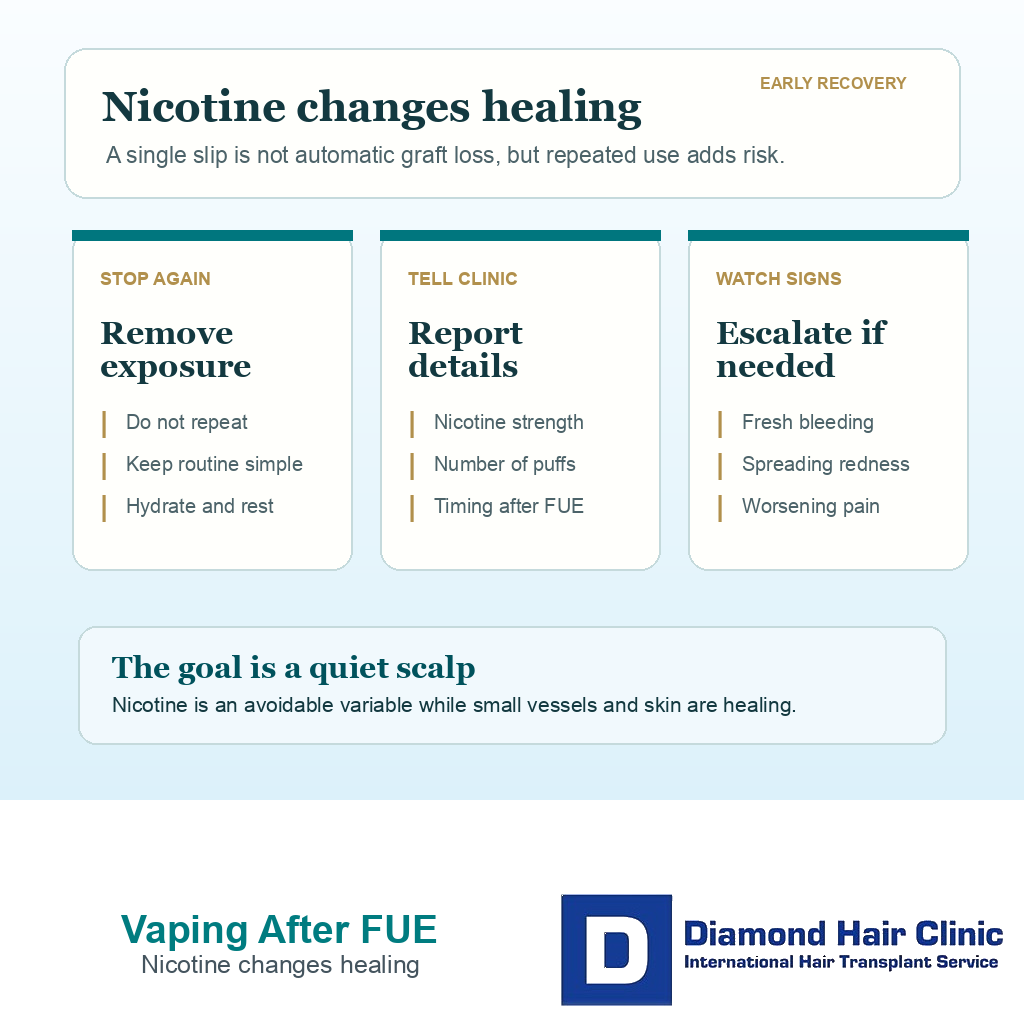
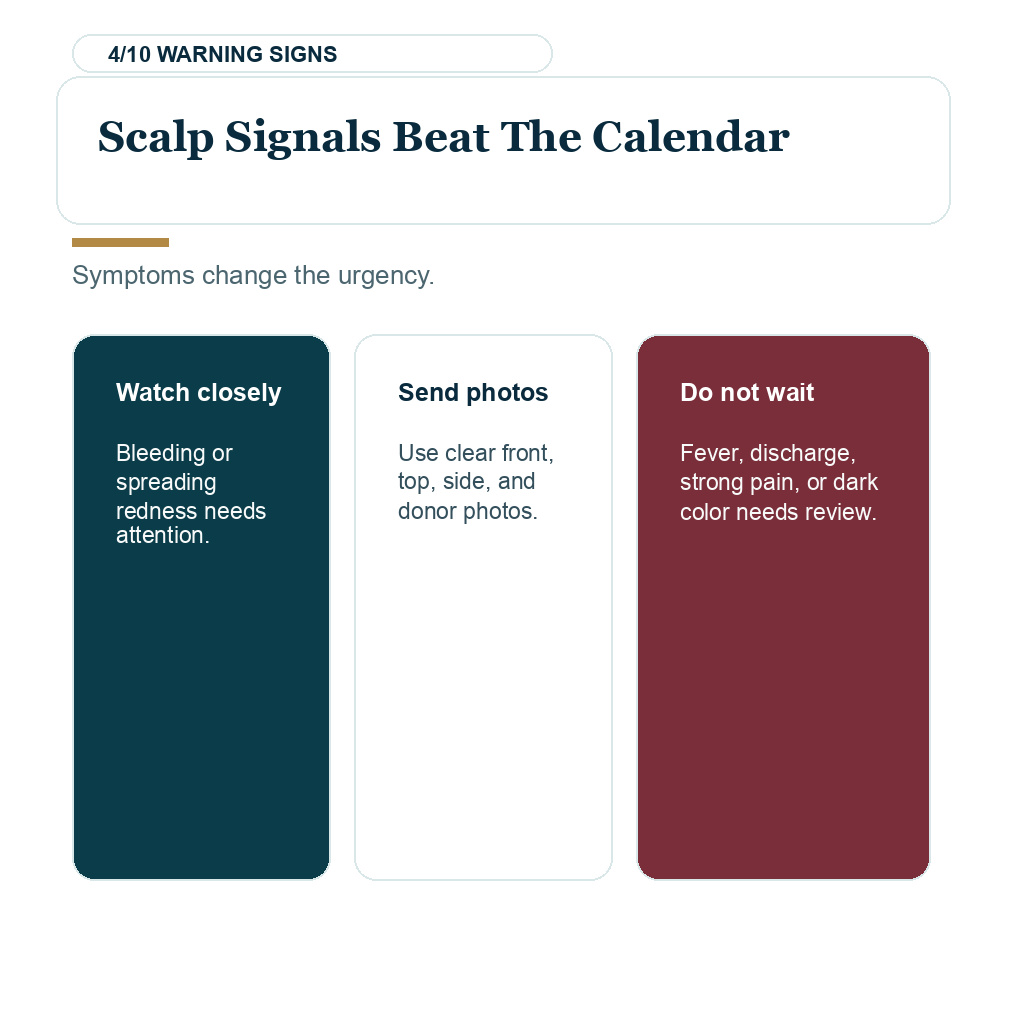
Then send useful photos instead of dramatic close ups only. I need clear front, top, left, right, and donor area photos under normal light. If there is bleeding, discharge, spreading redness, strong pain, fever, or swelling that is getting worse instead of settling, that changes the urgency. Those signs matter more than guilt about the vape itself.
A single slip with no bleeding and no skin change is usually managed by stopping again and watching the scalp carefully. Repeated heavy use during the first days is different. The heavier and earlier the nicotine exposure, the less comfortable I am with it.
Warning signs after vaping make the case more serious
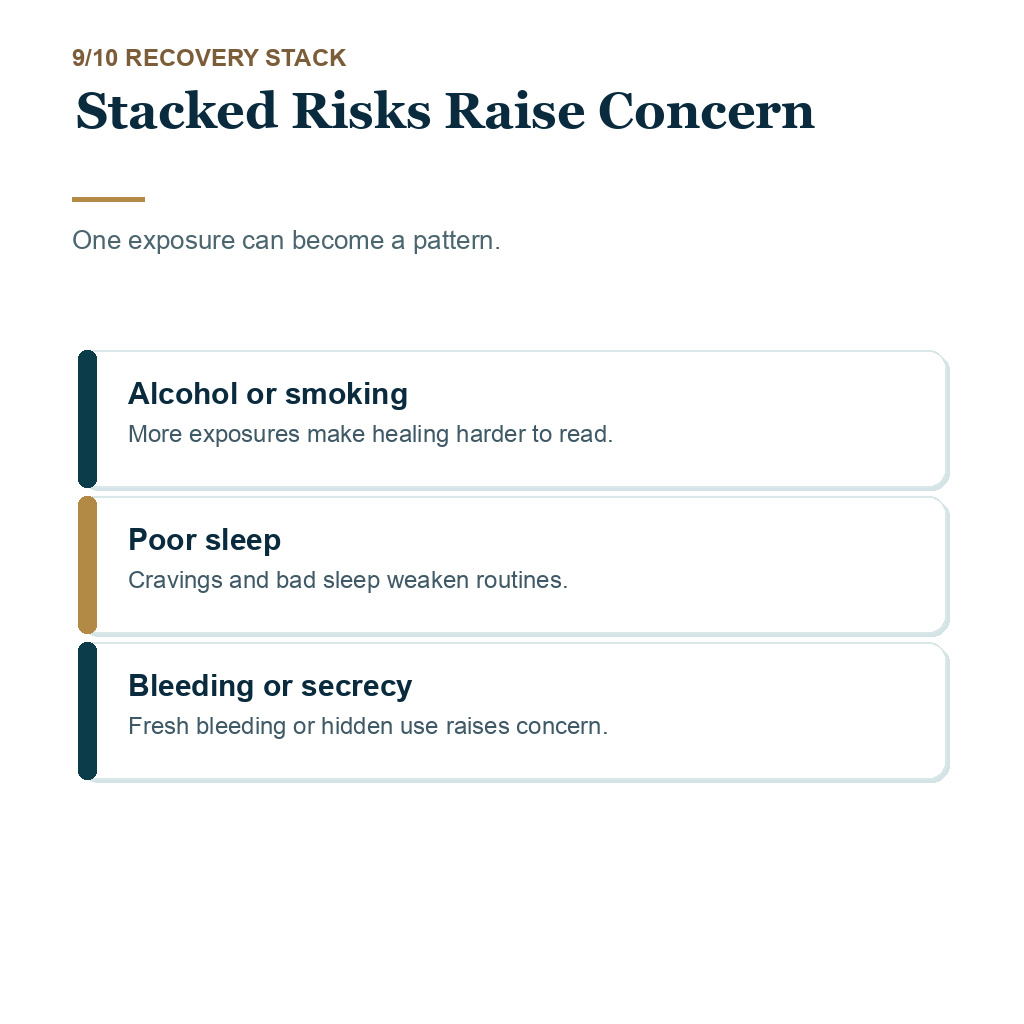
Vaping worries me more when it is part of a wider risk pattern. If you vape nicotine, smoke cigarettes, drink alcohol, sleep badly, skip hydration, and ignore bleeding instructions, we are no longer judging one isolated exposure. The recovery environment is becoming unstable.
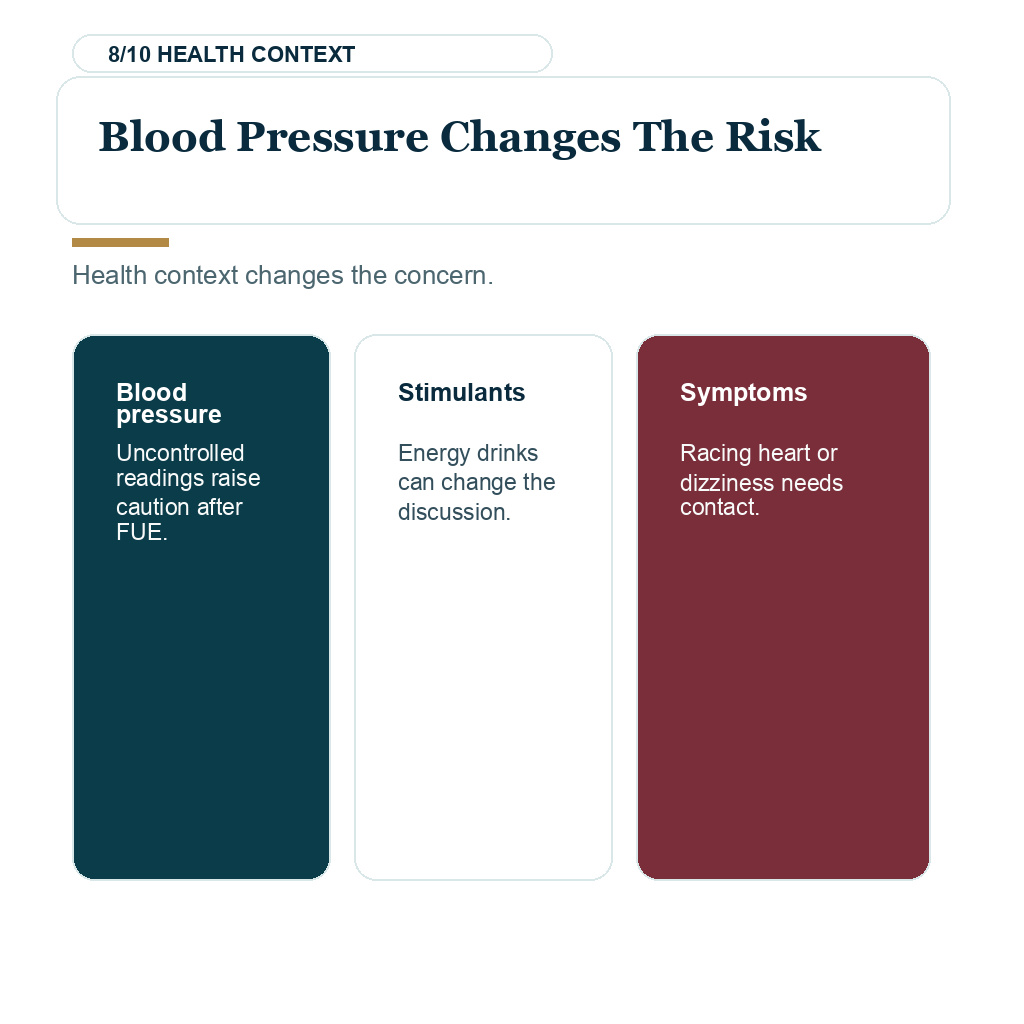
I pay closer attention when there is fresh bleeding, increasing pain, spreading redness, warmth, discharge that looks like pus, fever, dizziness, palpitations, uncontrolled blood pressure, diabetes, blood thinner use, or a large session with a tight donor plan. For bleeding after surgery, I separate a small spot from a sign that needs stronger review.
Nicotine can also interact with your general risk profile. If you already have blood pressure concerns, the conversation belongs next to high blood pressure and hair transplant surgery, not only next to cosmetic recovery. If your heart is racing, if you feel faint, or if you are using stimulants, contact the clinic before making your own plan.
Vapes, cigarettes, pouches, and cannabis are different exposures
One word, vaping, should not hide four different exposures. A nicotine vape, a cigarette, a nicotine pouch, and a cannabis vape can create different problems. They may affect blood flow, coughing, bleeding, anxiety, blood pressure, anesthesia planning, judgment, or sleep in different ways.
If you smoke cigarettes after surgery, the hair transplant question becomes part of the broader smoking after hair transplant discussion. If you use cannabis, timing and disclosure connect with both cannabis use before hair transplant surgery and weed after hair transplant. If you combine nicotine with workout stimulants, energy drinks, or ADHD medication, blood pressure and heart rate review become more important.
Patients sometimes say “I do not smoke” because they worry the real answer will delay surgery. If they use a vape, the answer is still incomplete. Before travel, I need the real exposure, including nicotine strength, cannabis, frequency, coughing, dry mouth, sleep changes, and any products mixed into the device. I can plan more safely from those details than from the words “vape” or “I do not smoke.”
Plan the nicotine break before travel
The right time to solve vaping after FUE is before the operation, not after cravings start in the hotel room. If nicotine is part of your daily routine, share that before booking. That allows a realistic plan for stopping, withdrawal symptoms, sleep, anxiety, travel stress, and medication review.
Do not arrive pretending you can stop easily if you already know you cannot. Hair transplant surgery is not only the day in the chair. It includes the first night, washing, swelling, photos, donor area healing, and several days of avoiding preventable problems. If you are clear about nicotine dependence, the recovery plan can be clearer.
If withdrawal is the real problem, say that plainly before travel. The answer may be an earlier stop date, help from the prescribing doctor, delaying surgery, or a controlled plan that avoids secretly replacing a vape with pouches, gum, patches, or a stronger device in the hotel room. If you use stimulants, put those into the same disclosure list. The pages on coffee on surgery morning and workout stimulants after hair transplant show why stimulant timing can matter around surgery and early recovery.
Use the 10 vaping after FUE slides below to separate nicotine exposure, one quiet slip, what to report, scalp warning signs, no nicotine aerosol, withdrawal planning, hidden product swaps, blood pressure risk, stacked recovery risks, and restart timing. Swipe the carousel, use the arrows one step at a time, or choose a number below the image to jump to that point.




Restart only after the scalp is quiet
I avoid giving a universal restart day for every case because the scalp, session size, and healing signs differ. A cautious restart waits until the clinic’s minimum restriction has passed and the scalp is quiet. That means no fresh bleeding, no worsening redness, no discharge, no fever, no increasing pain, and no unstable swelling.
By that stage, graft security can also be judged more calmly. The early graft security question is explained separately in when hair transplant grafts become more secure. Even then, secure grafts do not mean every recovery habit becomes irrelevant. Healing skin still deserves a cleaner environment than nicotine cravings and repeated coughing.

If you restart, restart only after the clinic has no concern about your current photos. If you are still sending urgent messages about redness, pain, bleeding, crusting, or donor tenderness, that is not the right moment to add nicotine back into the picture.
If you vape, stop again and report the details
Vaping after FUE is not a guaranteed disaster, and it is not harmless. I do not tell you that one puff has destroyed the transplant, but I also do not use other people’s lucky recoveries to approve a habit that can make healing less predictable.
Stop nicotine before surgery and keep it out of the early healing period. If you slip, stop again and share when it happened, how much you used, and whether the scalp changed. If stopping is difficult, say that before the operation so the plan can include withdrawal support. Clear timing and useful photos make early recovery easier to review.
A hair transplant uses limited donor hair. Your habits after surgery cannot fix poor surgical planning, but they can make a responsible plan easier or harder to protect. Around FUE recovery, fewer avoidable variables give the scalp and the clinic a cleaner picture.

Read this review excerpt
Upon arriving home, I sent 4 photos (of each side of head) after every washing process to doctor for checking where I was given personal advice for how to take care of my healing head.