


Pre Workout Needs a Staged Restart
I usually ask people to avoid pre workout during the first 10 to 14 days after a hair transplant. If the product is stimulant heavy, pushes you toward hard training, or has a label you cannot clearly explain, it should wait longer. Early recovery needs clean healing, careful washing, steady sleep, and avoiding heat, sweat, pressure, and scalp rubbing. A strong pre workout often pushes the body in the opposite direction.
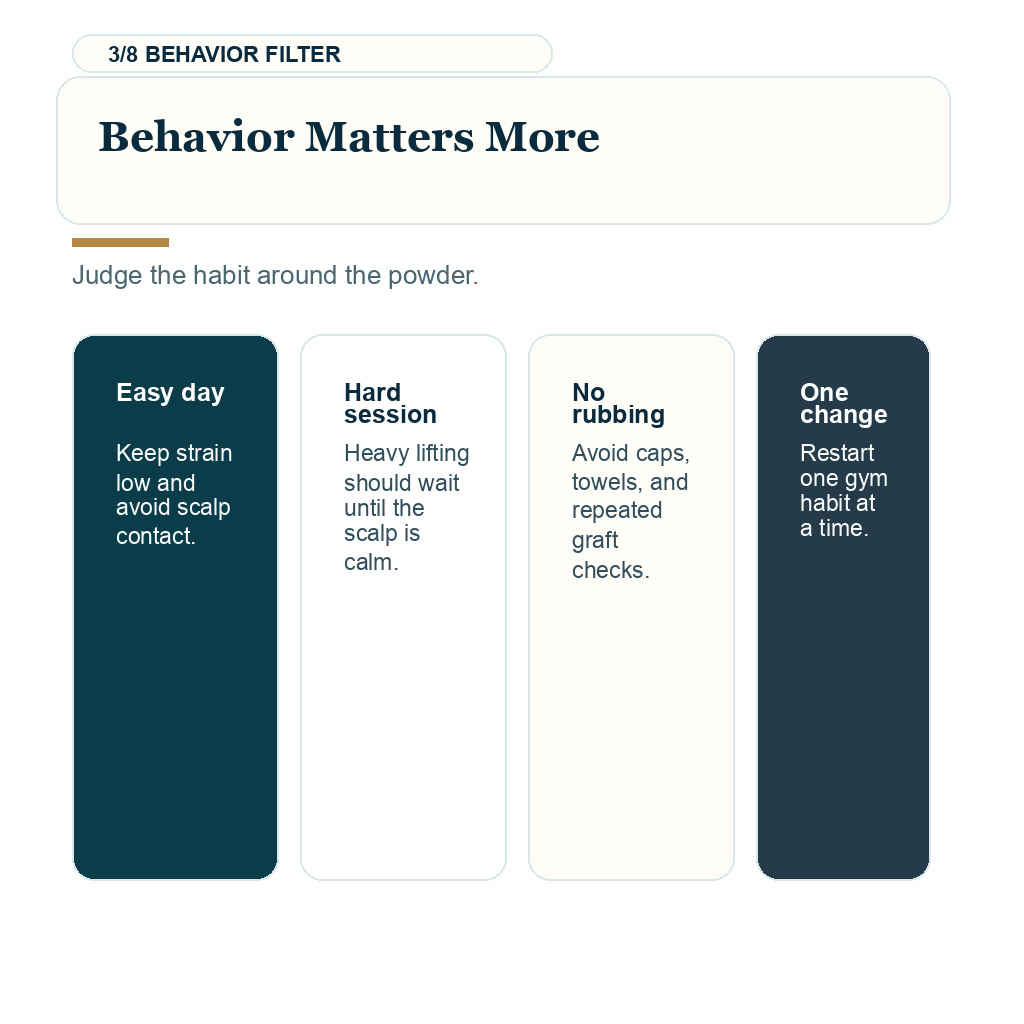
A small coffee, plain creatine, and a high stimulant pre workout blend are not the same decision. The product matters, but the training behavior around it matters even more. If pre workout means heavy lifting, sweating, face flushing, poor sleep, or checking the scalp every hour, it is too early. I separate that from protein powder during hair transplant recovery, where the label and the reason for the shake usually decide the answer.
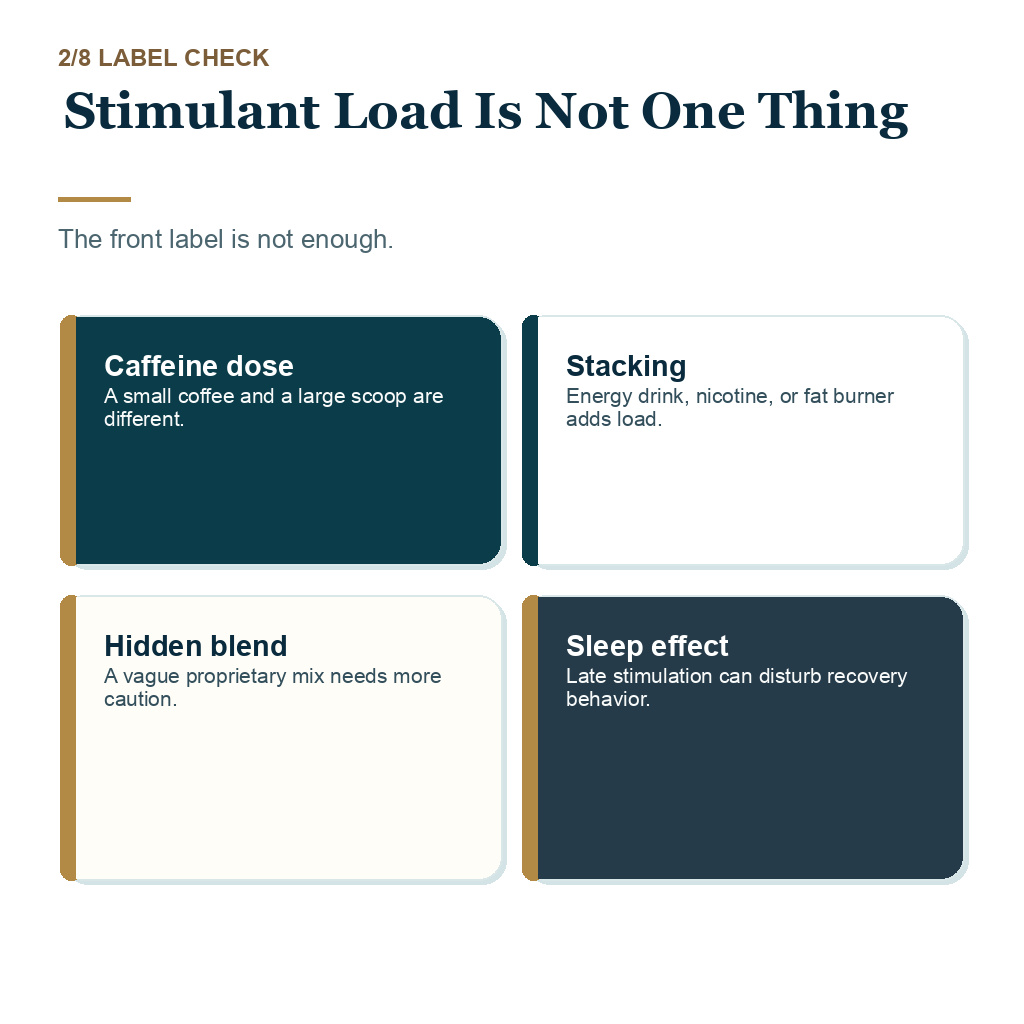
When you restart, read the label before the scoop. Caffeine, niacin, yohimbine, synephrine, pump blends, or hidden proprietary mixes can change sleep, flushing, heart rate, and the urge to train harder than the scalp is ready for.
After the clinic clears training, the first pre workout day should stay easy. A product that causes flushing, restlessness, or harder training than planned should be stopped for that session and held back until the next instruction is clear.
Pre workout differs from plain creatine in stimulant and ingredient risk
Pre workout is not one medical product. One brand may be mostly caffeine and flavoring. Another may contain several stimulants, niacin, amino acids, herbal extracts, pump ingredients, sweeteners, and a proprietary blend where the real dose of each ingredient is not obvious.
A stimulant product can push the session too hard before the scalp is ready, so I keep it separate from the basic question of weight training and hair loss around a hair transplant.
I separate it from plain creatine after a hair transplant because creatine monohydrate is a more specific discussion. A mixed pre workout powder is often a behavior signal. It usually means the person wants to train harder, sweat more, feel stimulated, and return to the gym before the scalp has fully settled.
A hair transplant recovery period is a poor time to test a new supplement. If a product causes flushing, itching, stomach upset, palpitations, anxiety, poor sleep, or a blood pressure reaction, you may confuse that reaction with a scalp problem. Keeping the routine simple makes recovery easier to judge.
The first 10 to 14 days should stay quiet
During the 10 to 14 day protection window, the priority is graft protection and skin settling. At this stage, I focus more on low friction, careful washing, clean healing, and stable behavior than on gym performance.
This is the same protected period I discuss in hair transplant aftercare. The scalp is not ready for unnecessary experiments. Even when a person feels physically strong, the recipient area can still be vulnerable to rubbing, scratching, heat, sweat, and accidental contact.
Pre workout is rarely necessary in this phase because proper training should not be happening yet. If the reason is only energy, I still ask why that energy is needed. Recovery is not a time to force the body into a performance state. It is a short period where clean healing has more value than intensity.
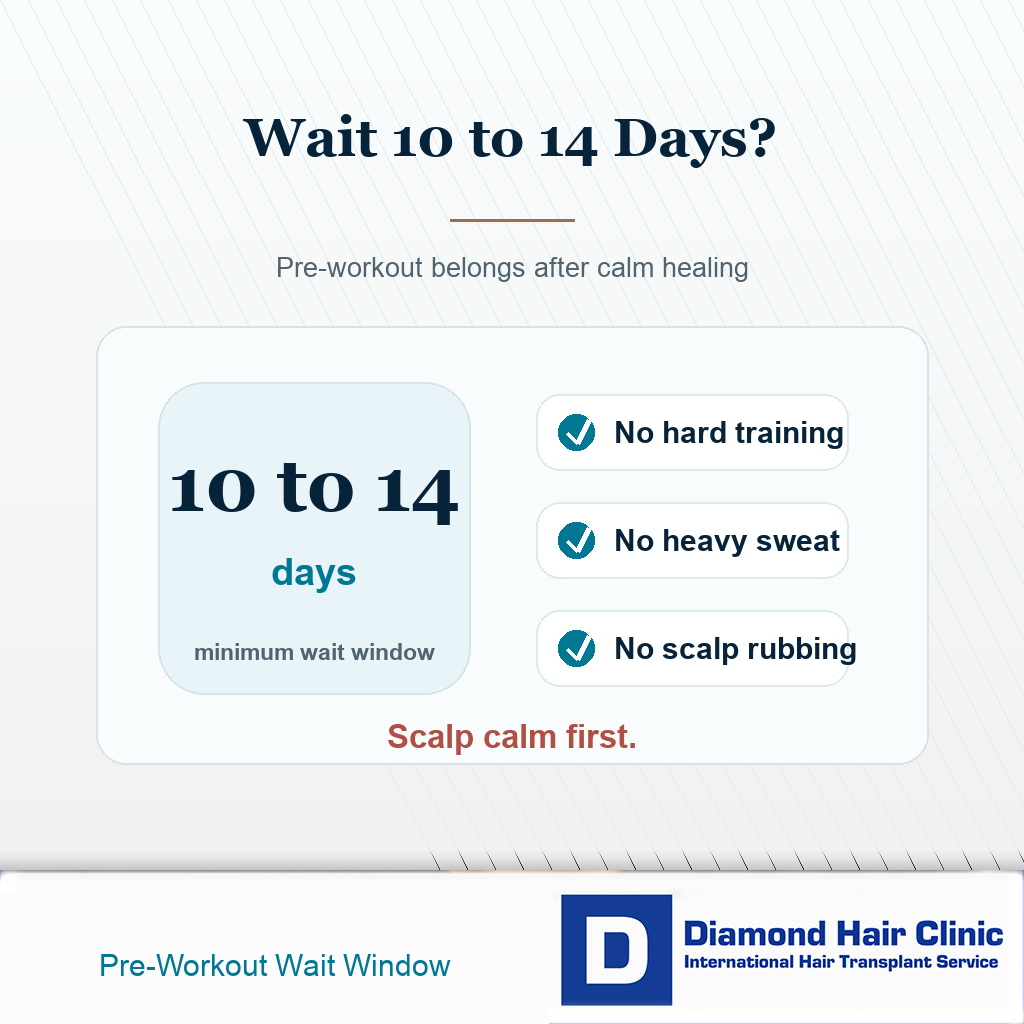
Safe timing for bringing back a stimulant product
The earliest discussion is usually after the first 10 to 14 days, only if the scabs are gone, swelling has settled, washing is normal, and the scalp looks settled. Even then, a strong stimulant blend should not restart just because the calendar reached day 15.
The timing should follow the return of exercise after a hair transplant. Light walking is different from weight training. Controlled low intensity activity around 3 to 4 weeks is different from heavy lifting, intense cardio, sauna, swimming, or contact sport. If the pre workout is mainly used for hard sessions, it belongs later, not during early scalp healing. If the supplement is used before rides or hard cardio, cycling after hair transplant also has to be safe before the stimulant routine makes sense.
I stage the return in a simple order. Settled scalp first, ordinary movement second, low intensity gym work third. Only after that do I consider a stimulant product, and even then I start with less than the usual amount.
Caffeine dose matters after surgery
Caffeine does not simply ruin a hair transplant. I look at dose, timing, sensitivity, sleep, blood pressure, anxiety, and whether caffeine pushes the patient toward sweating or hard training. For coffee on surgery morning before a hair transplant, the source and dose matter more than the word coffee itself.
A small coffee and a large scoop of pre workout are not equivalent. I have a separate page on coffee after a hair transplant because caffeine can be handled more simply when the dose is clear. With pre workout, the caffeine amount can be higher, and the product may include other stimulants that make the effect stronger.
I also count the total stimulant load, not only the scoop. Pre workout plus an energy drink, fat burner, late coffee, nicotine, or prescribed stimulant medication is a different recovery decision from one ordinary coffee earlier in the day.
Sleep is also part of the surgical plan. A person who takes a late stimulant, sleeps poorly, wakes up restless, touches the scalp, and trains too soon has created a recovery pattern that does not help the grafts. The powder is not the only problem. The whole chain of behavior matters.
Pre workout can affect swelling or bleeding risk
I do not say every pre workout product causes bleeding or swelling. That would be too broad. But stimulant products can raise heart rate, increase restlessness, worsen sleep, and make the person more likely to train, bend, strain, sweat, and wipe the scalp.
Those behaviors matter after surgery. Early recovery is already a period where swelling can move into the forehead or around the eyes. Heavy exertion, heat, and repeated bending can make the face and scalp feel more reactive. If you are already dealing with sweating after a hair transplant, adding a stimulant product often makes the situation harder to control.
Bleeding risk also needs case by case judgment. If a person has oozing, strong redness, active scabs, tenderness, or a recent bleeding episode, I do not add a product that encourages pressure and training. The scalp should first become quiet enough for a calm decision about exercise and supplements.
An early dose needs calm review rather than panic
Do not panic, but do not use that as proof that the product is safe to continue. One dose usually becomes a monitoring question. Stop the product for now, avoid training that day, drink water, follow the washing and medication plan, and watch whether the scalp becomes more swollen, starts bleeding, throbs, or feels unusually hot.
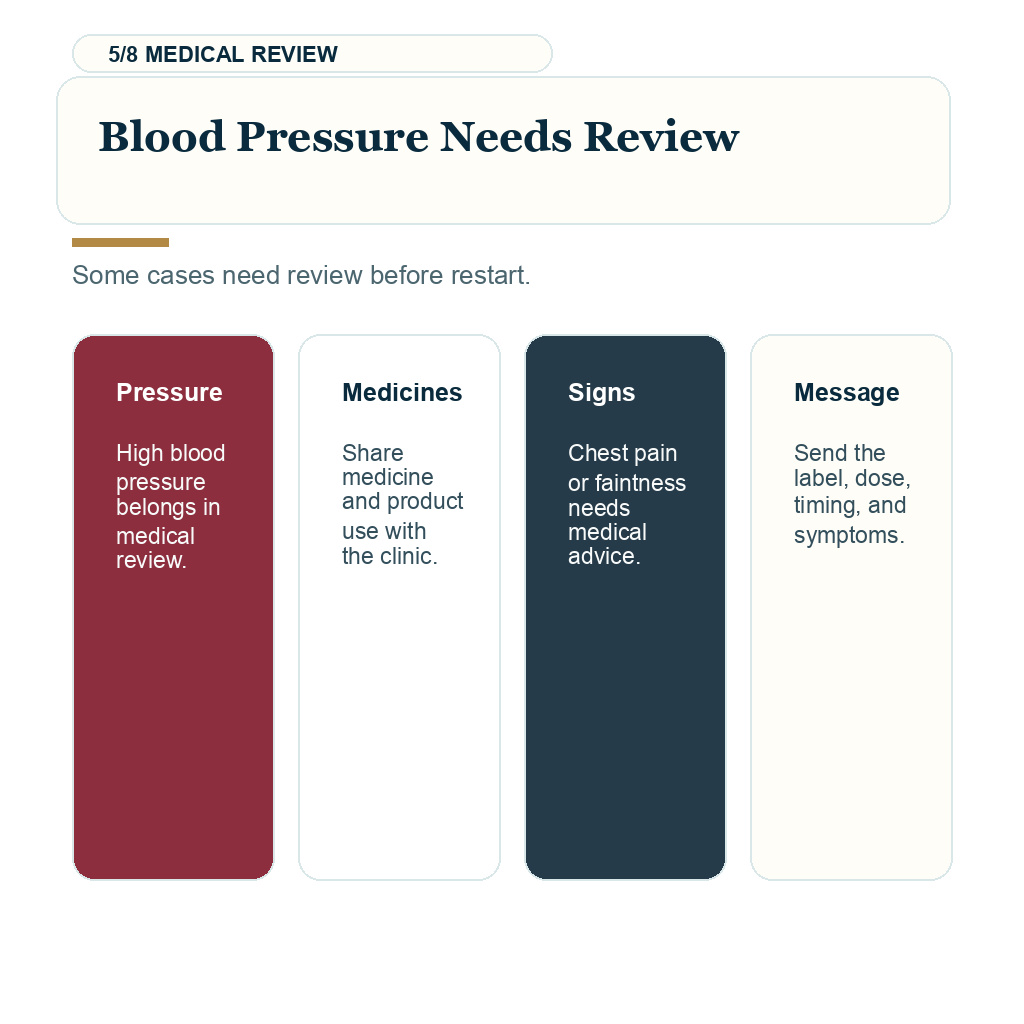
If there is chest pain, strong palpitations, faintness, severe headache, very high blood pressure, active bleeding, or swelling that is clearly worsening, the answer is not another scoop or another workout. The person needs medical advice. swelling after a hair transplant is useful for understanding normal swelling, but stimulant symptoms and bleeding need direct review.
The bigger lesson is to keep recovery readable. When a person adds pre workout, hard training, poor sleep, and several supplements at once, it becomes harder to know what caused a problem. One change at a time after the scalp is settled keeps the recovery easier to understand.
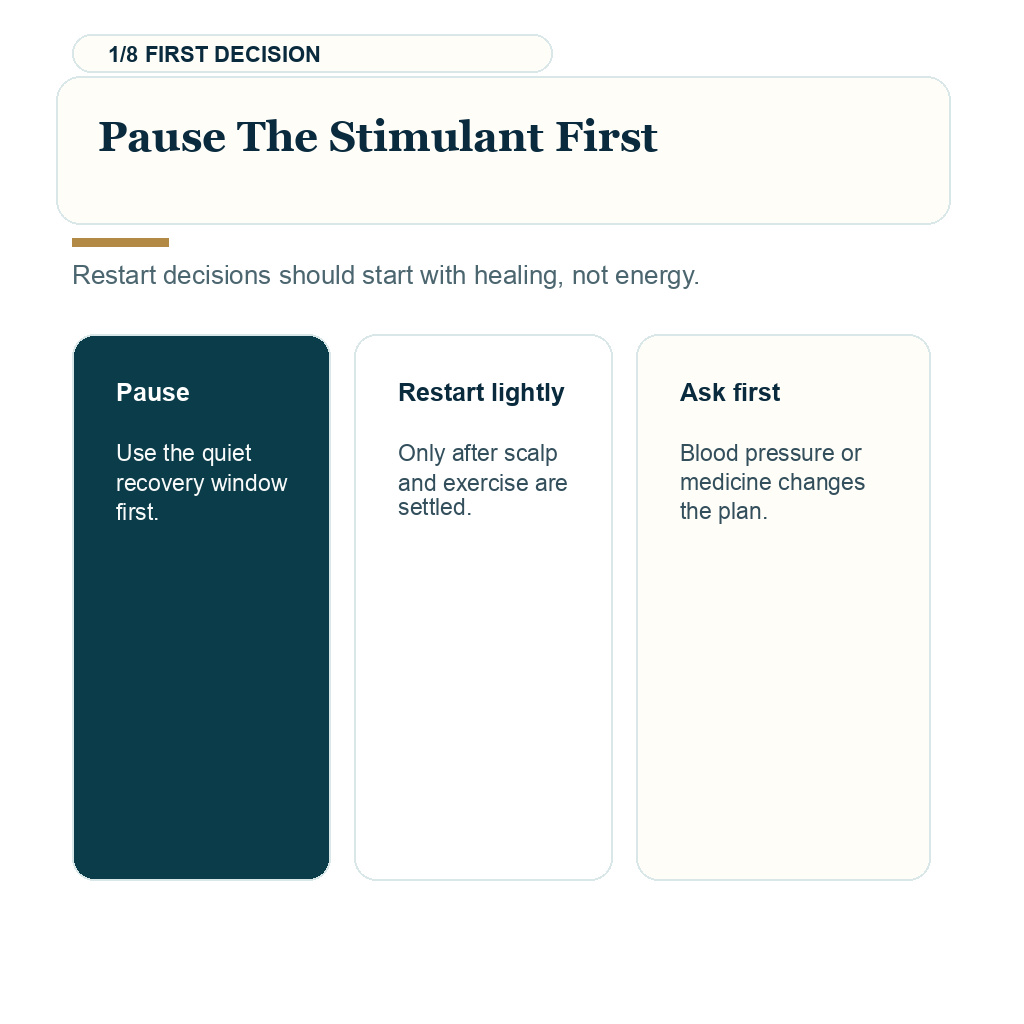
Use the 8 pre workout restart slides below to separate stimulant load, training intensity, early healing, blood pressure or medication review, restart order, and clinic contact signals. Swipe the carousel, use the arrows one step at a time, or choose a number below the image to jump to that point.


Creatine and pump ingredients need separate judgment
Many pre workout products contain creatine, beta alanine, citrulline, arginine, niacin, electrolytes, herbal extracts, or other ingredients marketed for pump, endurance, or focus. Some of these may be harmless for many healthy adults in ordinary life, but the early transplant period is not ordinary life.
Beta alanine tingling, niacin flushing, stimulant warmth, or a pump sensation can make an anxious person think something is wrong with the scalp. It can also make redness or heat feel more dramatic. Even if the product does not damage grafts directly, it can make recovery harder to read.
The person’s intention matters as much as the ingredient list. If the product is only a flavored creatine mix, that is one conversation. If it is a strong stimulant stack designed for heavy lifting, it is another. The ingredients need to be separated instead of treating every tub with the same answer.

Blood pressure or medication can change the decision
People with heart concerns, uncontrolled blood pressure, anxiety symptoms, palpitations, kidney disease, liver disease, migraine medication, ADHD medication, antidepressants, blood pressure medication, or complicated supplement routines need more careful review. A pre workout can interact with the body in ways that are not obvious from the front label.
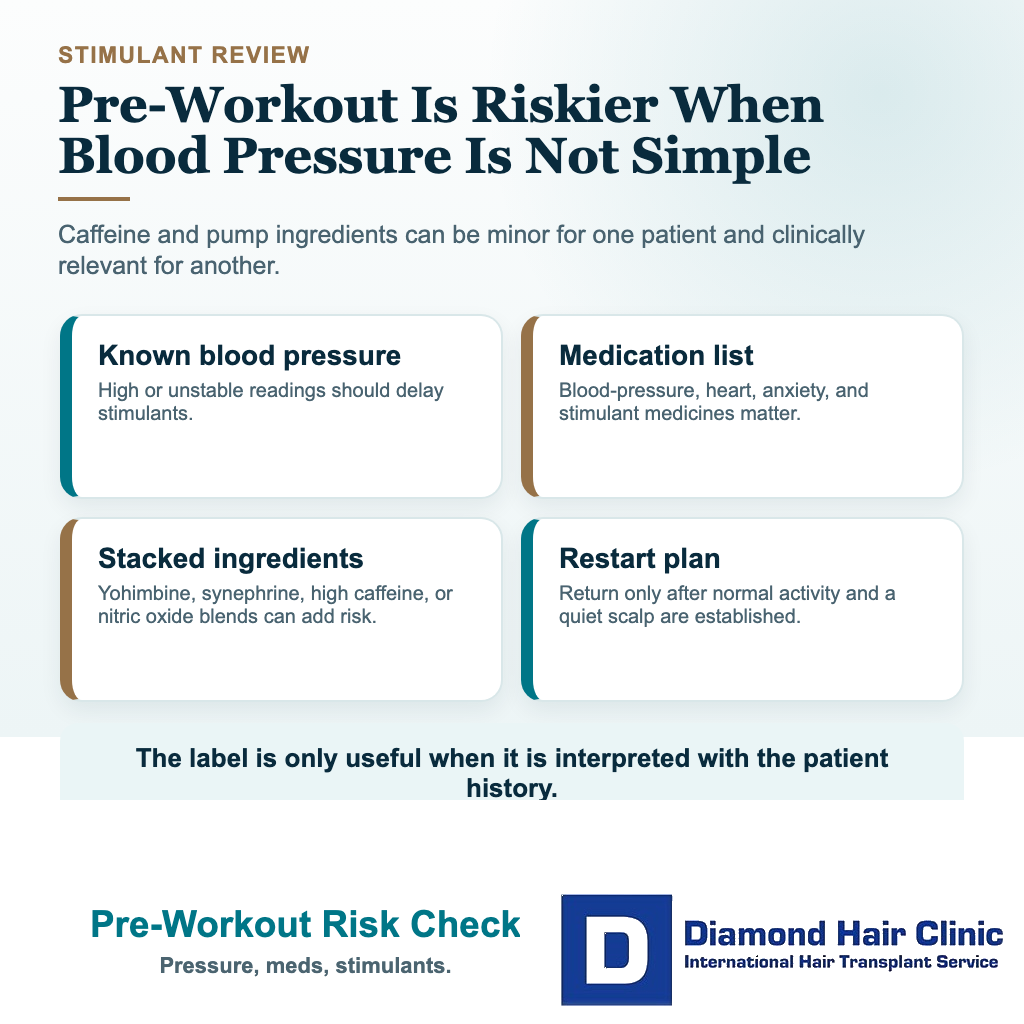
A blood pressure history puts the supplement question inside high blood pressure and hair transplant safety, not inside gym advice. If you take prescribed medicine, the timing should also be checked against medications after a hair transplant.
Combining several stimulant or herbal products needs careful review before training returns. A stimulant pre workout, fat burner, nicotine, caffeine, painkiller, sleep aid, alcohol, or blood pressure medication can create a confusing picture. The scalp is not the only part of the person I am responsible for. The whole person must be medically stable.
Stimulant free or natural pre workout still needs caution
Stimulant free can be safer than a high caffeine product, but the word natural does not make a supplement automatically safe after surgery. A natural extract can still affect sleep, stomach comfort, blood pressure, bleeding tendency, or medication tolerance.
I ask people to read the full supplement facts label, not just the front marketing name. If the label is vague, if doses are hidden in a blend, if the product promises extreme energy or pump, or if the person has never used it before, postponing it is the cleaner decision.
This is also relevant for people on blood thinners and hair transplant planning. Some supplements can matter around bleeding risk, bruising, or medical stability. If the product has multiple herbal or stimulant ingredients, it should be reviewed before surgery and before restarting.
Gym return should come before supplement restart
Gym return needs judgment by the scalp, the type of training, the environment, and the person’s self control. A cool room, light machines, no head contact, no tight cap, and short low intensity work are very different from heavy squats, deadlifts, intense cardio, sauna, or training to failure.
A person who cannot train lightly should wait longer. That may sound strict, but it is practical. Many active people say they will take it easy, then the old habit appears in the second set. Pre workout makes that more likely because it is designed to make pushing harder feel easy.
Good training discipline after surgery means knowing when intensity helps and when it is simply impatience. The grafts do not benefit from a personal record in the first weeks. The donor and recipient areas benefit from a settled, clean, gradual return.
Clinic promises about stimulants deserve caution
I am concerned if a clinic treats all supplements as irrelevant, gives the same answer to every person, or says the person can restart everything immediately without asking what the product contains. That kind of answer is too casual for elective surgery.
I also question advice that separates the supplement from the workout. A clinic may say a powder is fine, but if that powder sends the person into hard training too early, the answer was incomplete. The better assessment looks at the product, dose, timing, exercise level, scalp condition, blood pressure, medications, and the person’s tendency to push limits.
In this part of the decision, direct surgeon involvement matters. A transplant is not only about placing grafts. The recovery period also has to fit the person. I use that review when I decide whether someone is a good candidate for hair transplant in the first place. The plan must fit the person, not only the procedure.
The safer restart sequence
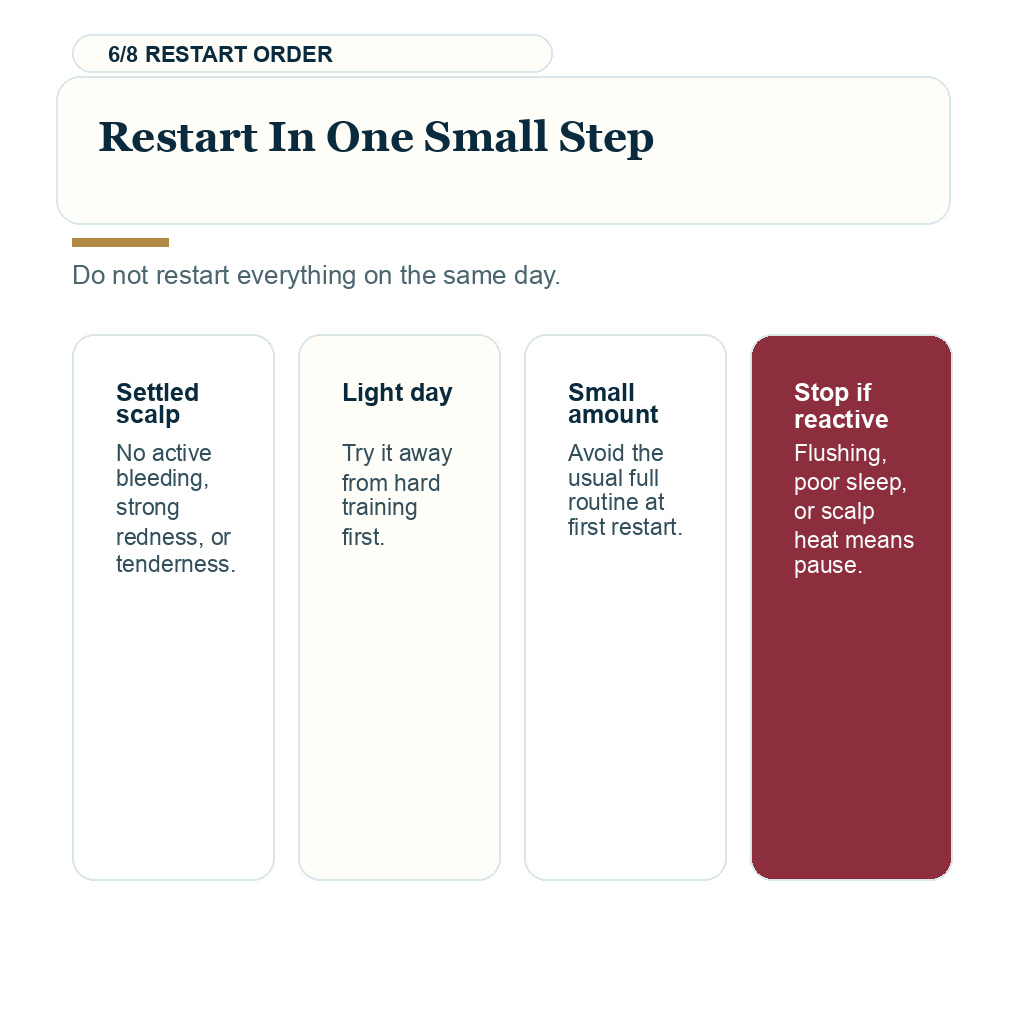
I first make sure the scalp is clean, free of scabs, settled, and no longer swollen or tender. Washing should already feel normal. There should be no active bleeding, discharge, strong redness, painful pimples, or unusual sensitivity. If those are present, the supplement can wait.
Then I separate the first supplement restart from the first hard workout. Do not restart pre workout and heavy training on the same day. Do not restart pre workout, energy drinks, fat burners, and a new gym program together either. Try a smaller amount on a low intensity day, earlier in the day, with good hydration and no other new supplement added at the same time.

If there is flushing, palpitations, anxiety, stomach upset, poor sleep, scalp heat, or more redness the next day, stop and review the plan. Do not push through symptoms just because the product has already been bought. Recovery is easier when changes are introduced one at a time.
Situations to discuss with the clinic before taking it
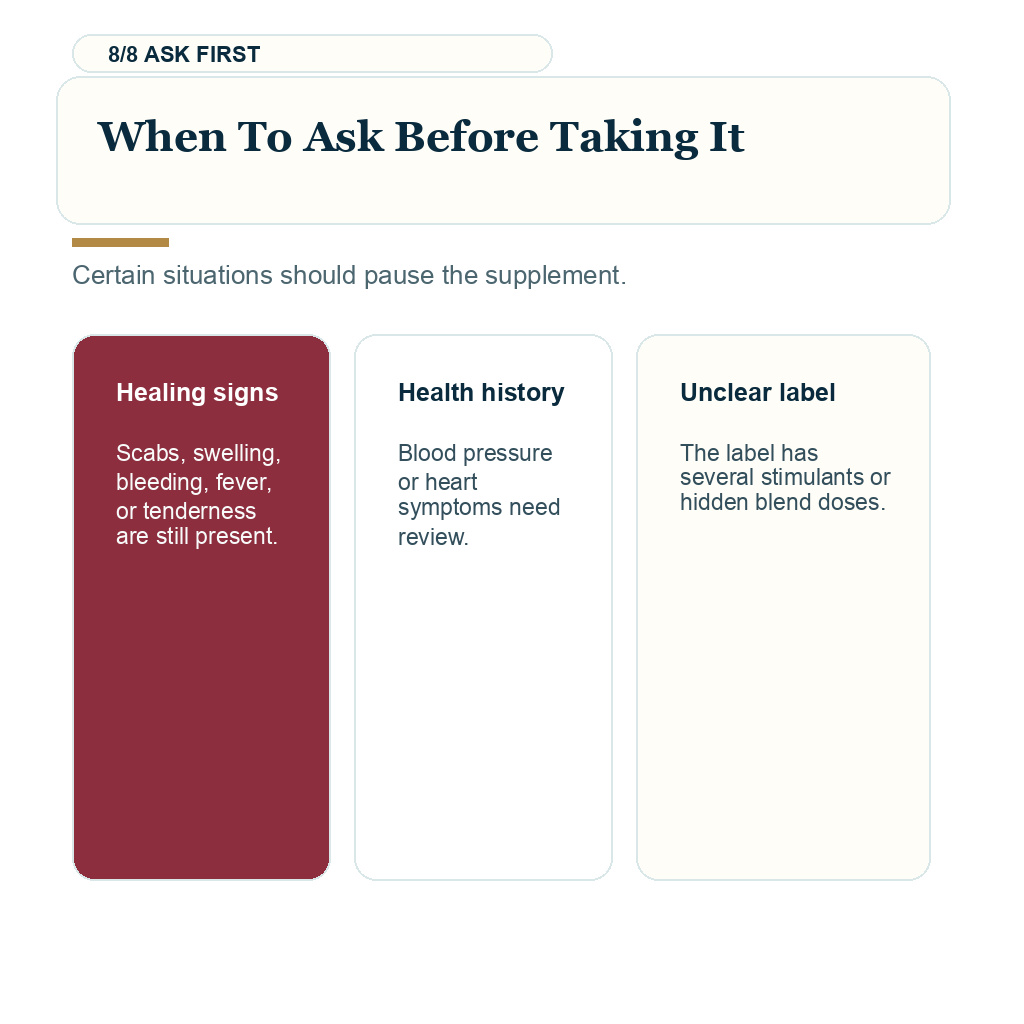
Ask before taking pre workout if you are still inside the first 10 to 14 days, if you have swelling, redness, scabs, bleeding, pimples, tenderness, fever, infection concern, high blood pressure, heart symptoms, kidney concerns, or medication questions. Ask if the product has several stimulants or a proprietary blend. Ask if you are planning to restart hard training at the same time.
Also ask if you use nicotine, anabolic substances, testosterone, or hormone related products. I discuss this separately in the context of anabolic steroids after a hair transplant, because hormones, training, native hair loss, and surgery planning can overlap in ways people sometimes underestimate.
My advice is simple. Pre workout is not essential for healing, and stimulant formulas belong in supplement disclosure before hair transplant surgery. If the product is plain, familiar, low stimulant, and used after the scalp is settled, it may be reasonable for some medically healthy people. If it is strong, unclear, new, stimulant heavy, or tied to hard training, waiting is the cleaner decision. A few quiet weeks protect a result that should matter for years.
Read this review excerpt
He was very thorough in every little detail and I never felt pressure to do anything I wasn’t sure of.