


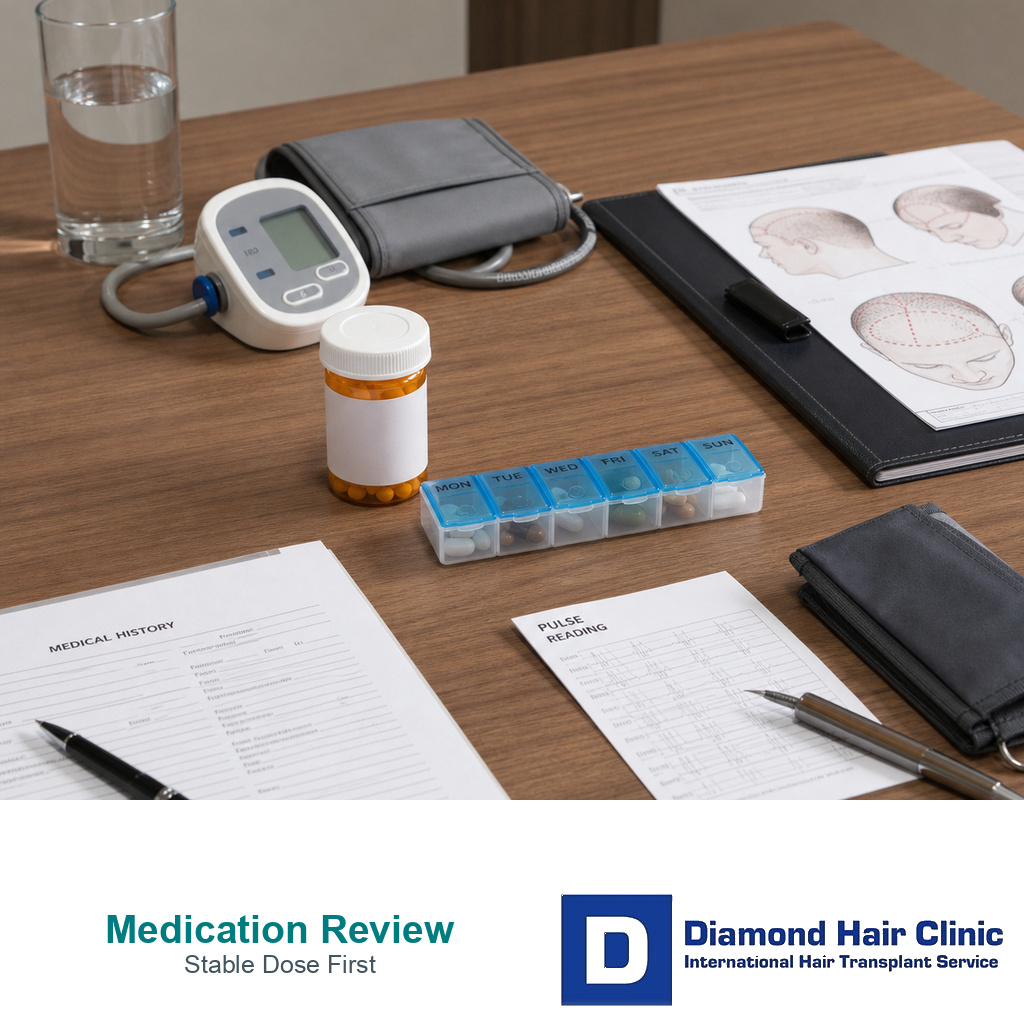
ADHD Medication Needs Medical Review Before Surgery
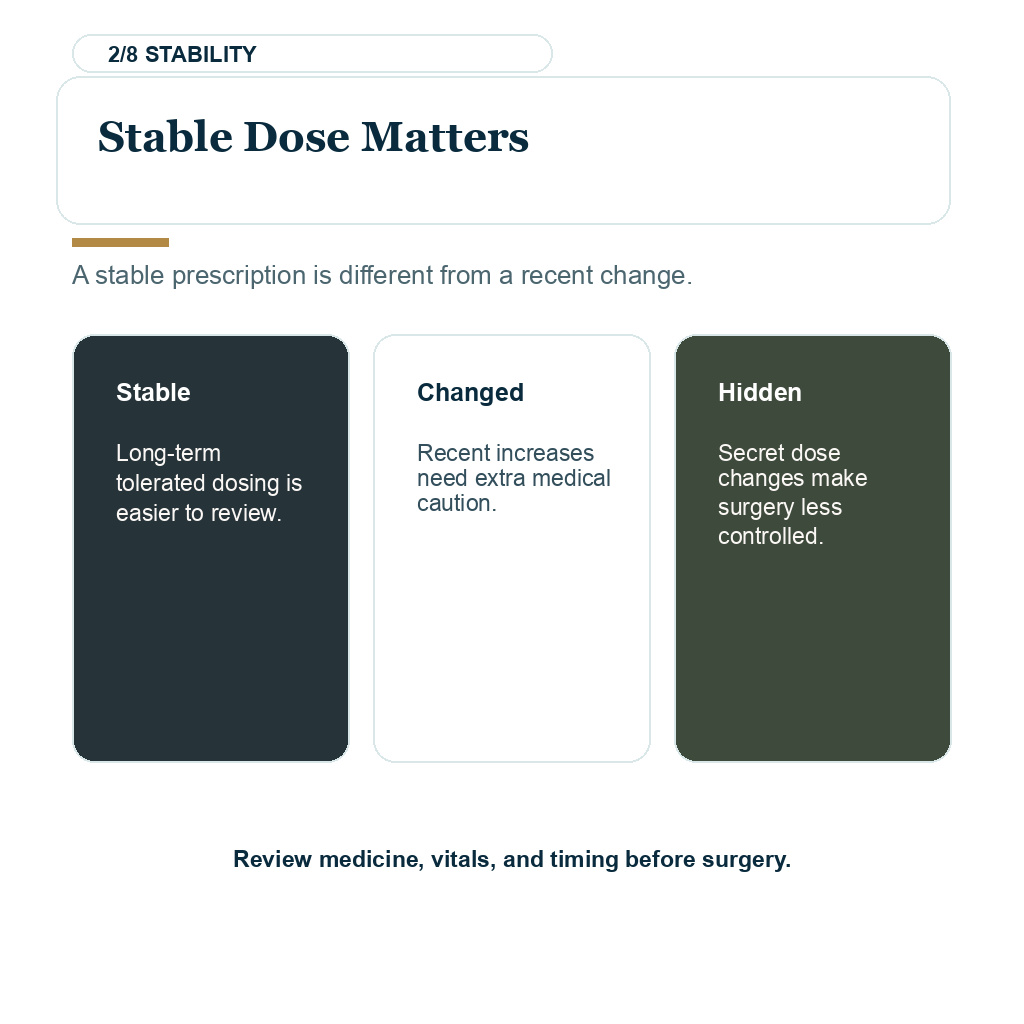
Many patients can have a hair transplant while taking ADHD medication, but the medicine must be disclosed and reviewed before surgery. A stable prescribed dose is very different from a recent increase, skipped meals, poor sleep, extra caffeine, gym stimulants, or non prescribed stimulant use.
The medicine name alone is not usually the reason grafts fail. The details I watch are blood pressure, pulse, heart history, anxiety, sleep, appetite, other medications, and whether the ADHD dose is stable enough for a long procedure under local anesthesia.
Do not stop methylphenidate, amphetamine, lisdexamfetamine, atomoxetine, guanfacine, clonidine, or any prescribed ADHD medicine on your own. Tell the surgeon and the prescribing doctor early, then decide whether the medicine should be continued, adjusted, paused, or timed differently around the operation. Surgery is easier to plan when the prescriber and surgical team agree on the dose timing in advance.
There is no single fixed answer because the risk depends on the whole medication picture, not just the label on the box. Stimulant medication can make pulse, blood pressure, anxiety, sleep, appetite, and surgery day comfort more important. Many patients can still proceed after review, but the review may reveal problems that should be controlled before donor grafts are used.
Medication details to share before surgery
Tell the surgeon the exact medication name, dose, timing, how long you have used it, and whether the dose has changed recently. Also mention appetite loss, sleep problems, palpitations or heart racing, anxiety, panic symptoms, high blood pressure, fainting, chest pain, or any heart diagnosis.
This is part of proper medication before a hair transplant. A clinic should not discover a stimulant prescription on the operation morning. The decision is safer when it is made before travel, blood tests, consent, and anesthesia planning.
Tell me about every other medicine you take. ADHD medication may be only one part of the picture. Antidepressants, blood pressure tablets, sleep medication, blood thinners, supplements, and recreational stimulants can change the risk discussion. Undisclosed cocaine, MDMA, or speed around FUE changes medical planning and should not be hidden as a private detail.
If the prescribing doctor is managing the dose closely, say that clearly. A stable, well supervised prescription is different from changing the dose yourself before surgery because you are nervous, trying to stay awake, or trying to work through the recovery period.
Travel supply should be settled before the operation. Bring enough medicine in original packaging, and tell the clinic if you skipped, doubled, or rationed a dose during the trip.
Prescribing doctor details that make the plan safer
The useful information is specific. I want to know the exact ADHD medicine, dose, timing, how long the dose has been stable, usual blood pressure and pulse, any palpitations or chest symptoms, sleep pattern, appetite, anxiety level, and whether any other stimulant, antidepressant, decongestant, or recreational drug is being used. If a cold product is added near surgery, decongestants before FUE matter because stimulant stacking can be missed.
If the prescribing doctor has already measured blood pressure and pulse on the current dose, that helps the surgical plan more than a general statement that the medicine is tolerated. A stable prescribed dose is different from a recent increase, a skipped meal, poor sleep, and a fast pulse on surgery morning. The purpose is not to punish ADHD patients. It is to avoid guessing during a long procedure that also involves local anesthesia, adrenaline, stress, and recovery instructions. Home blood pressure or pulse readings can travel with the medication list.
Stimulant ADHD medicines can change surgery planning
Stimulant ADHD medicines can raise pulse or blood pressure in some patients. They can also affect appetite, sleep, anxiety, sweating, and how restless someone feels during a long procedure. These details do not decide the transplant alone, but they influence surgical safety and comfort.
A hair transplant is usually done under local anesthesia, and you are awake for many hours. If you arrive sleep deprived, full of caffeine, hungry, anxious, and with a fast pulse, the operation becomes less controlled than it should be.
I connect stimulant medication with the broader discussion about high blood pressure before a hair transplant. A number that looks only mildly high at home may become more relevant when surgery, travel, caffeine, anxiety, and local anesthesia are added together.
The medication is not the blame target. I am checking whether you are medically steady enough for surgery and whether the operation day plan needs adjustment.
ADHD medicine and graft growth concerns
The medication name alone is rarely enough to explain poor graft growth. Growth depends much more on donor quality, graft handling, recipient area planning, surgical trauma, blood supply, aftercare, and the patient’s underlying hair loss pattern.
That said, I do not ignore anything that affects circulation, healing behavior, sleep, nutrition, or anxiety. If appetite suppression causes poor eating for weeks, sleep is poor, and heavy training restarts too early, the recovery environment may be weaker than the medication name alone suggests.
The mistake is trying to make one medicine responsible for every future change. If density looks weak at month 5, the answer may involve normal growth timing, shock loss, miniaturized native hair, surgical quality, or ongoing androgenetic hair loss. If we discuss growth support after surgery, I separate ADHD medication safety from minoxidil after a hair transplant or other hair loss treatment decisions. A result that looks thin at month 5 should not be diagnosed from the medication label alone.
The useful review puts the scalp, timeline, donor area, recipient area, and medication history together. That is more useful than stopping a needed medicine suddenly because a frightening story made you anxious.
Medication changes in appetite and body weight matter before surgery. If you have been eating poorly, sleeping badly, or losing weight quickly, the timing discussion may change. The scalp is not separate from the rest of the body, and recovery is easier when you arrive medically steady.
Stopping ADHD medication needs prescribing doctor review
Any pause or dose change needs medical guidance. Depending on the medicine and your health, the plan may be to continue as usual, skip a dose, or adjust its timing around the operation. The prescribing doctor should be involved when a sudden change could affect focus, mood, driving safety, sleep, appetite, blood pressure, or anxiety.
The right answer depends on the medication, dose, blood pressure, pulse, heart history, mental health history, and the type of anesthesia plan. It also depends on whether you are traveling alone, returning to work quickly, or trying to manage recovery instructions without support. Non stimulant ADHD medicines still matter. Atomoxetine can affect pulse or blood pressure in some patients, while guanfacine or clonidine can affect blood pressure, pulse, sedation, and withdrawal planning if stopped suddenly.
Changes to medication after a hair transplant need a clear medical reason. Do not copy another patient’s timing or change your medicine at the last minute.
A blanket answer is not enough without your dose, blood pressure, pulse, and medical history. I would pause until those details are reviewed because medicine planning has to be patient specific.
This is also why I dislike secret medication pauses. If the team thinks you are taking the medicine and you arrive without it, your focus, mood, appetite, and anxiety may not match the plan. If the team thinks you paused it and you took an extra dose, the vital sign discussion changes. Clear communication is safer than trying to manage the decision alone.
High blood pressure or pulse changes the plan
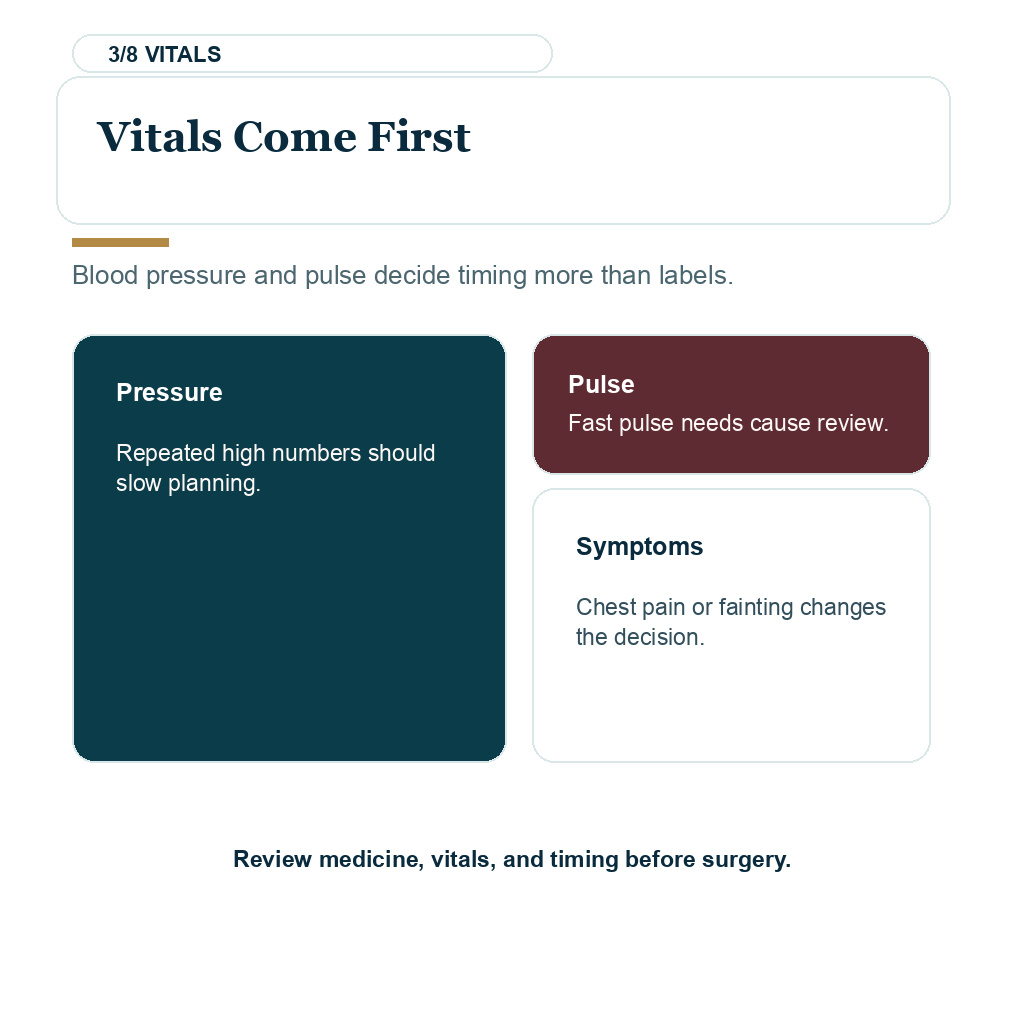
If your blood pressure or pulse is high before surgery, the first step is not to rush the transplant. The first step is to understand why. It may be stimulant medication, caffeine, anxiety, poor sleep, travel stress, untreated hypertension, pain, dehydration, or a heart rhythm issue.
A mildly raised reading may not rule out surgery after repeat measurement and medical review. Repeatedly high or unstable readings, especially with chest pain, shortness of breath, fainting, severe anxiety, or a known heart condition, need further assessment before the transplant goes ahead.
This overlaps with heart disease and hair transplant planning. A transplant is elective surgery. If the medical situation is not controlled, the safer decision may be to delay rather than force the date.
Patients sometimes feel embarrassed because they already booked flights. I understand the pressure, but donor grafts should not be used on a day when the body is medically unsettled. A postponed operation is better than a poorly controlled one.
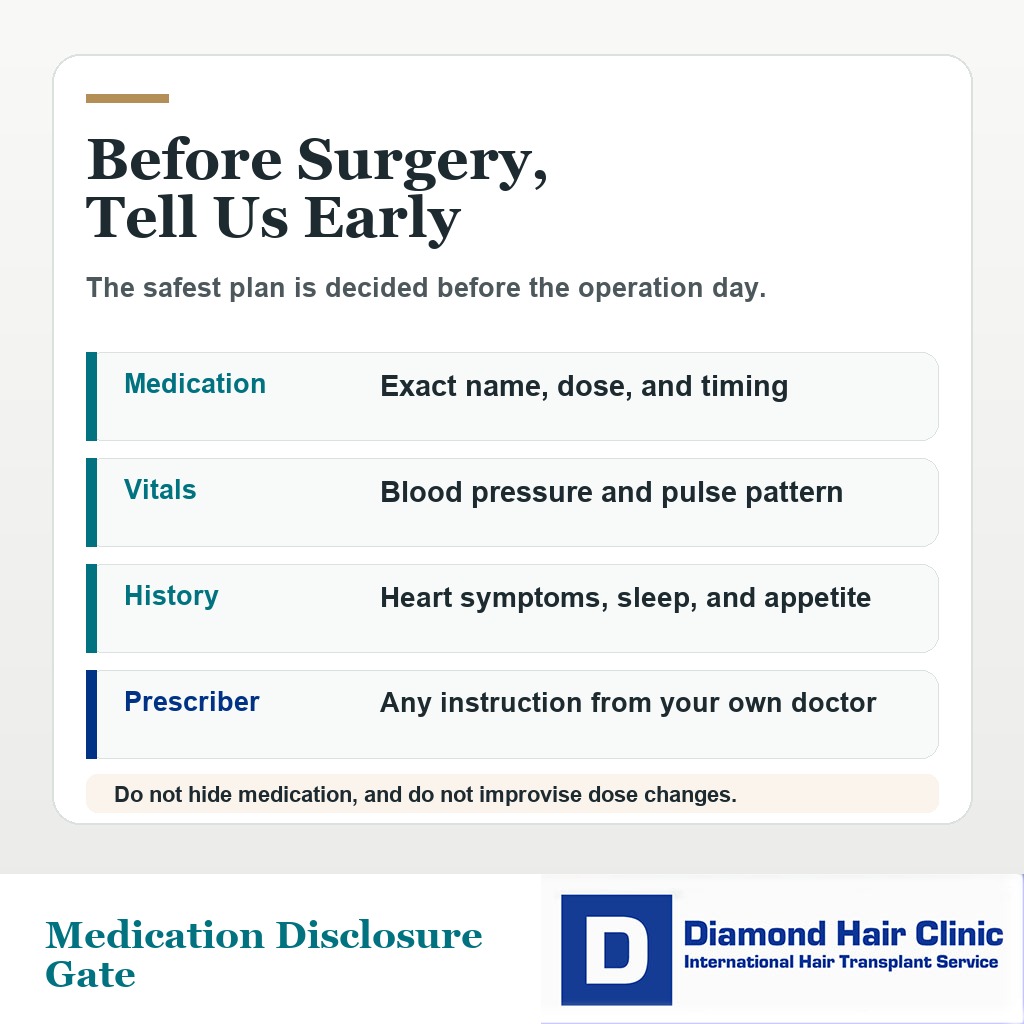
A safe plan starts before the surgery day. The medication name, dose, timing, blood pressure, pulse, and medical history should be clear early.
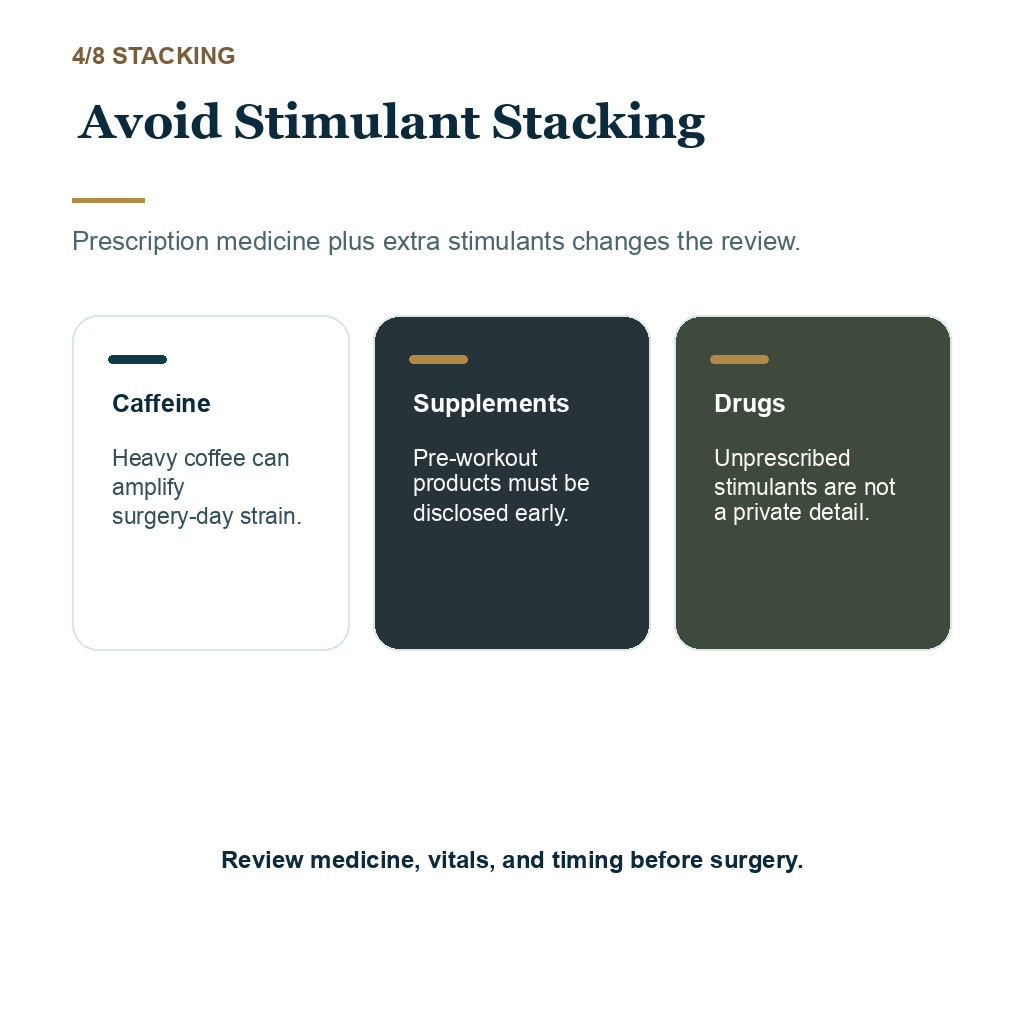
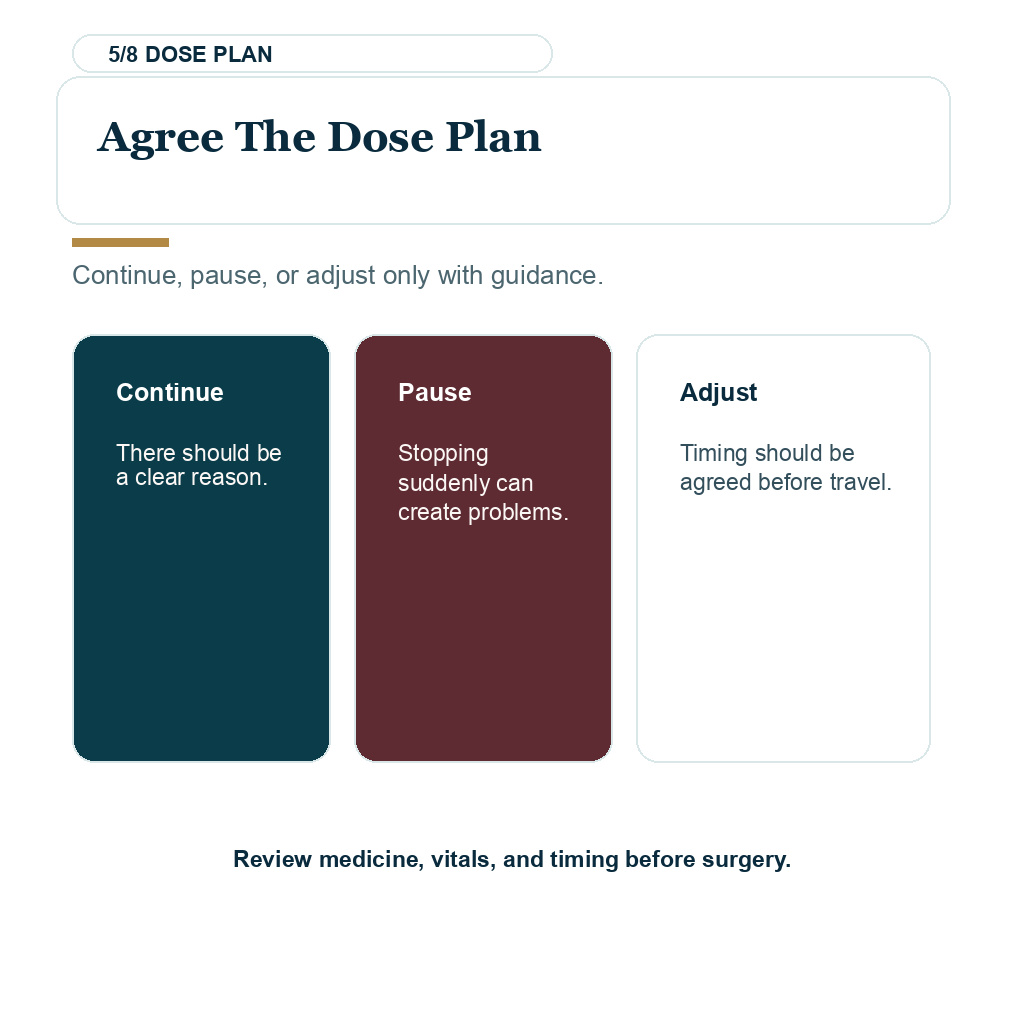
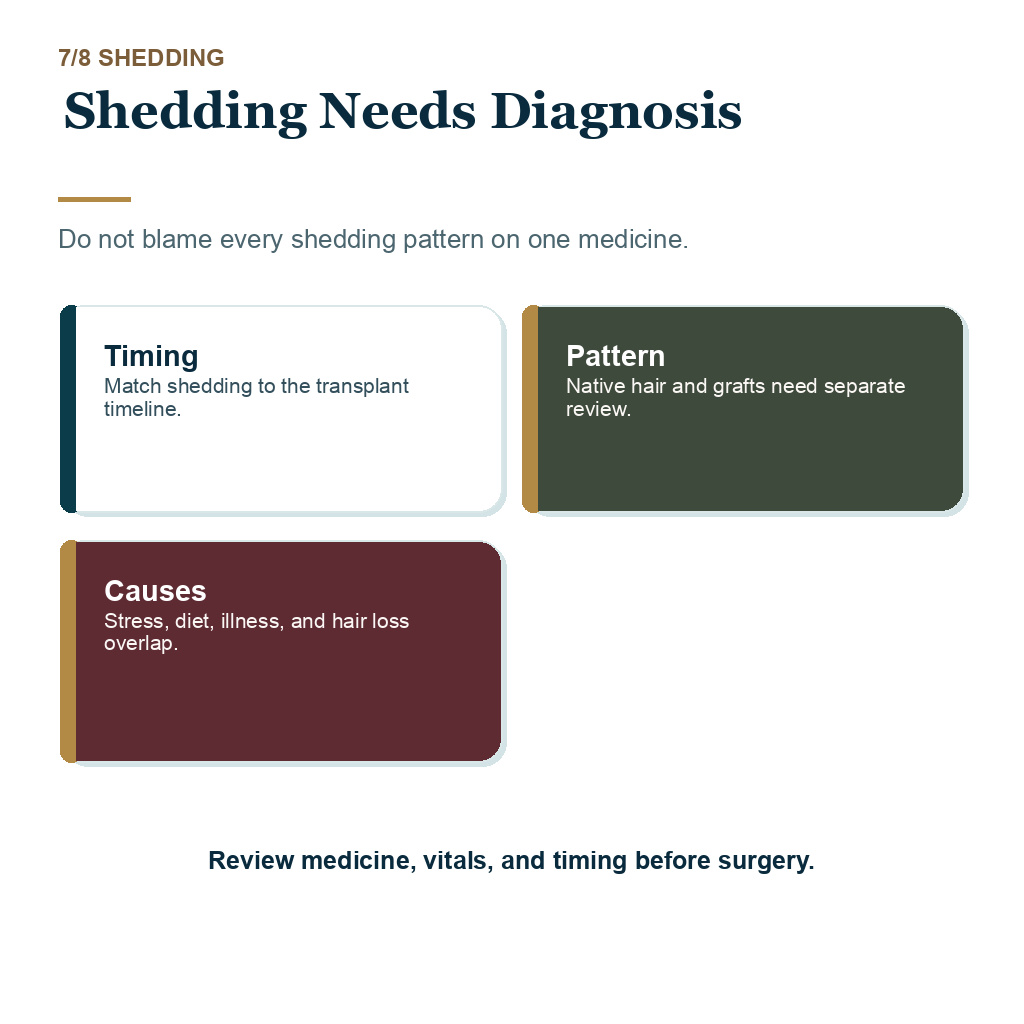
These 8 ADHD medication safety slides separate exact medication details, dose stability, vital signs, stimulant stacking, dose planning, recovery behavior, shedding diagnosis, and delay conditions. Swipe sideways, use the arrows one slide at a time, or choose a number below the image.



ADHD medication and hair shedding after surgery
Hair shedding has been reported with some ADHD medications, but it is not the most common explanation for a weak hair transplant result. If shedding starts after a new medicine or a recent dose change, it deserves a proper medical review, not panic or a sudden medication stop.
After a transplant, shedding can come from normal transplanted hair cycling, native hair shock loss, ongoing androgenetic hair loss, illness, stress, poor diet, low iron, thyroid issues, medication changes, or surgical factors. More than one cause can exist at the same time.
Quick statements such as the medicine ruined the transplant need careful timing review. The timing matters. The pattern matters. The difference between transplanted hair and native hair matters. The scalp examination matters.
If appetite suppression has reduced protein intake, if sleep has collapsed, or if the dose was recently increased, those details should be shared with both doctors. A good plan protects both mental function and hair recovery instead of sacrificing one without a reason.
If the shedding is diffuse across the scalp, the evaluation is different from a small patch in the recipient area. If the native hair is miniaturized, the concern is different again. Separating these patterns carefully is better than telling every patient to stop a useful medication and hope the hair improves.
Sleep, appetite, anxiety, and aftercare behavior
ADHD medication can matter even when the grafts themselves are not directly harmed. If you cannot sleep, forget aftercare steps, check the grafts repeatedly, skip food, drink too much coffee, or feel restless during recovery, avoidable problems become more likely.
I keep the aftercare plan in one written schedule when remembering several steps is difficult. Reminders for the agreed washing and photo routine can help, with each step marked after it is done. A support person can use the same instructions if you want help, rather than leaving you to piece together different messages while tired.
I pay attention to the behavior around the medicine. If ADHD treatment makes you calmer, more organized, and better able to follow instructions, that may help recovery. If the dose creates palpitations, insomnia, appetite loss, or anxiety, the plan needs review.
Patients already worried about the operation may benefit from reading about being anxious before a hair transplant. Anxiety is not a weakness, but it changes how carefully the clinic should explain recovery and follow up.
Avoid stacking stimulants. Prescription medication, strong coffee or energy drinks on surgery morning, and gym stimulants are not the same as a normal recovery routine. One familiar small coffee is different from repeated coffees, energy drinks, pre workout products, or extra stimulant doses after poor sleep. My advice about coffee after a hair transplant and pre workout after a hair transplant becomes more relevant when you already take stimulant medicine.
ADHD medication on surgery day
Follow the medication plan agreed before surgery. Do not decide on your own to double the dose because the day is long. Do not skip the medicine secretly if the team expects you to have taken it. Do not add extra caffeine or a stimulant supplement to compensate for poor sleep.
Bring the medication list and be clear about the timing of the last dose. I want the anesthesia team and surgeon to know what is already active in the body before local anesthesia is used.
The operation is not only about the scalp. That same judgment applies to local anesthesia and adrenaline in hair transplant surgery. Pulse, blood pressure, anxiety, and comfort all influence how safely the day is managed.
If there is any uncertainty, pause and ask. The worst approach is pretending everything is simple because you do not want the date delayed. A clinic with proper medical standards would rather adjust the plan than discover a preventable issue during the procedure.
Bring food and fluids within the clinic’s instructions, and tell the team if you feel shaky, unusually anxious, faint, or overstimulated. These symptoms may be simple, but they still matter during a long procedure. The operation day should feel controlled, not improvised.
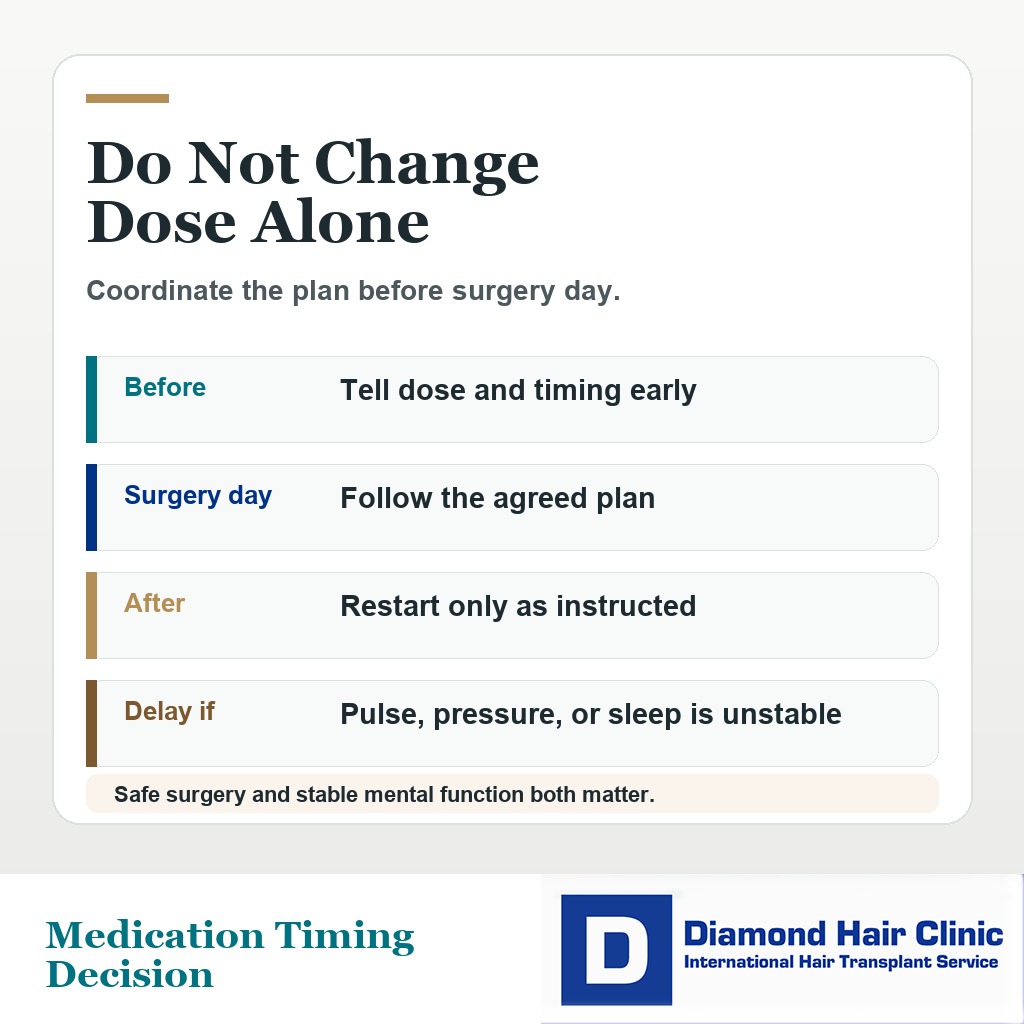
Stopping, restarting, or changing ADHD medication should be coordinated with the clinic and prescribing doctor, not improvised around surgery.
Safe clinic judgment for ADHD medication
A clinic should ask for the medication name, dose, timing, indication, prescribing doctor, blood pressure history, pulse history, heart history, sleep pattern, and other medicines. It should also ask whether you recently changed the dose, started a new drug, stopped a medicine, or added caffeine, decongestants, nicotine, or gym stimulants.

Good screening is not only paperwork. Blood tests before a hair transplant, blood pressure measurement, pulse review, and a clear medical history help decide whether surgery can proceed safely.
Your ability to cooperate during a long day matters too. Hair transplantation requires stillness, patience, and communication. If medication withdrawal would make you restless, unfocused, or emotionally unstable, that becomes part of the safety decision.
The clinic should not sell certainty. It should explain what can be done, what needs medical clearance, what may need timing changes, and what would make surgery unsafe that day.
It helps to understand the reason behind the decision. If we continue the medication, there should be a reason. If we pause it, there should be a reason. If we ask for medical clearance, that is not bureaucracy. It is a way to protect you before donor grafts are used.
Reasons to delay surgery because of ADHD medication
Surgery should be delayed if blood pressure or pulse is uncontrolled, if there are heart symptoms, if you recently had a major dose change, if there is severe insomnia, if appetite and nutrition are poor, or if the prescribing doctor says the medication situation is unstable.
The same delay applies when someone is using stimulants that were not prescribed, hiding substances, combining ADHD medication with heavy caffeine or pre workout products, or arriving too anxious to follow instructions. A stable prescribed ADHD medicine is one situation. Extra stimulant stacking, secret dose changes, or unprescribed stimulant use is another situation completely. That distinction matters before donor grafts are used.
This is close to the way I discuss antidepressants and hair transplant surgery. The presence of a psychiatric or neurological medicine does not simply exclude surgery. The question is whether you are stable, informed, and medically safe.
The practical message is straightforward. ADHD medication needs to be disclosed, not hidden and not stopped suddenly. If the medicine is stable and the medical checks are acceptable, a hair transplant may be reasonable. If the medicine, pulse, blood pressure, sleep, anxiety, or heart history is unstable, waiting is the safer decision.

Read this review excerpt
Diamond Hair was the only clinic asking for medications, treatments I've done before, and other type of questions that make me feel confident on the professionalism that they practice with their clients.