



Antidepressants and Medication Review Before FUE
Many patients can have a hair transplant while taking antidepressants, but the medication and the reason for taking it must be reviewed before surgery. You should not stop antidepressants on your own to make surgery easier. The safe plan depends on the medicine, your mental health stability, other medications such as ADHD medication, blood pressure, sleep, anxiety level, and whether your prescribing doctor has any concerns.
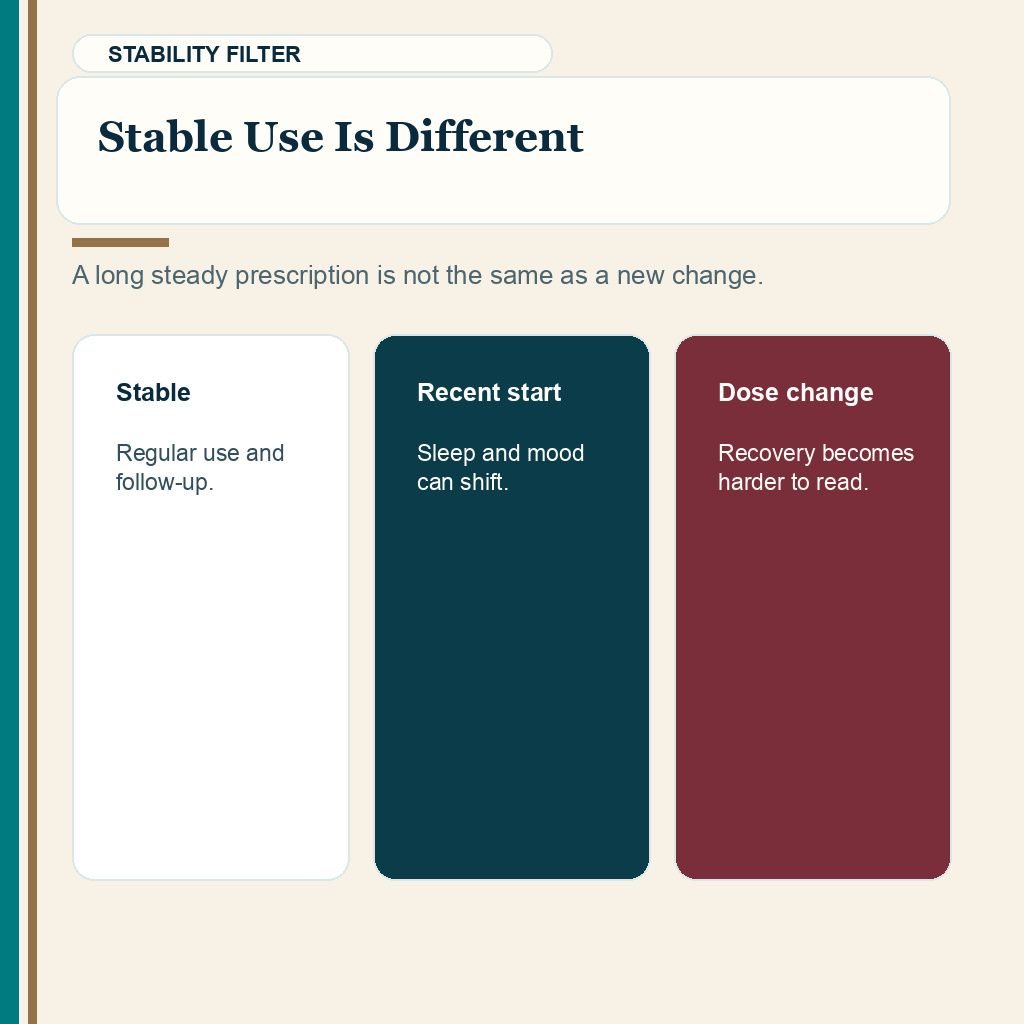
The key distinction is stability. Stable, prescribed antidepressant use is very different from a recent dose change, uncontrolled anxiety, poor sleep, heavy sedation, or combining medication with painkillers, blood thinners, or supplements without review. The medication name matters, but the patient’s stability matters just as much.
If a dose change, taper, or new anxiety medicine is planned near travel, settle the timing with the prescribing doctor before choosing surgery dates.
A stable prescription is easier to plan around when the whole situation is visible. Sleep, panic symptoms, recent calming medicine, alcohol use, and previous reactions to dental or local anesthesia can all affect how a long awake procedure feels. The medication list alone does not show whether the patient is sleeping, having panic symptoms, tapering, or newly adjusting to a dose. I also need to know whether the current dose is new, stable, or part of a recent taper, because the same tablet can mean different surgery day planning.
Antidepressant use is not embarrassing. I see it as part of the medical history, the same way I look at blood pressure medication, sleep problems, or previous panic attacks. Hair loss can weigh heavily on self image, and many patients who consider surgery are already carrying stress, anxiety, or low mood. I treat that information with respect because emotional readiness before surgery helps me choose safer timing, clearer support, and a recovery plan the patient can actually handle.
A hair transplant should not require a patient to hide mental health medication or suddenly stop treatment. If a clinic makes you feel that you must choose between your mental health and your hairline, the consultation is already going in the wrong direction.
Mental health stability matters after surgery. Hair transplant recovery involves waiting, shedding, redness, uncertainty, and months of judging progress slowly. A patient who is stable before surgery usually handles this period much better than a patient who is already overwhelmed.
Antidepressants matter before surgery
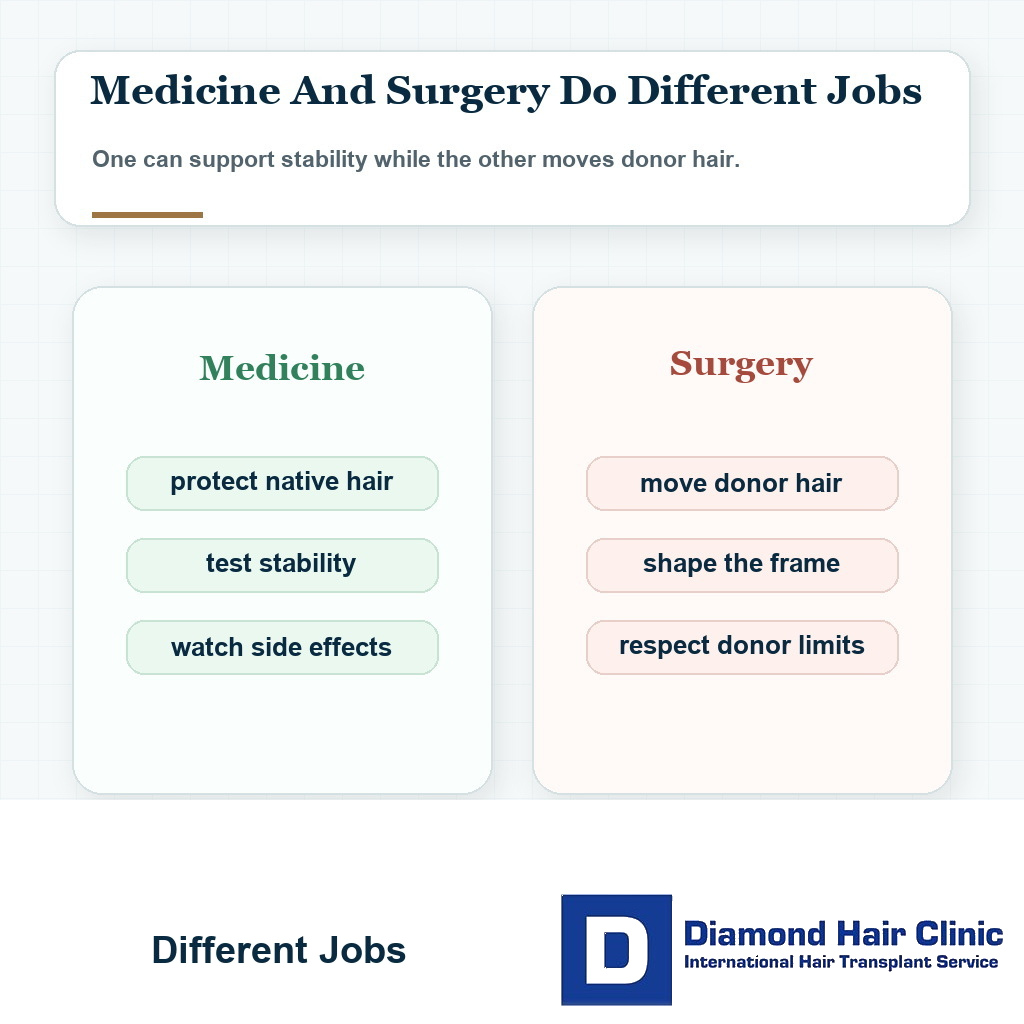
Antidepressants matter because they are part of the whole patient, not because they automatically prevent surgery. Some patients take SSRIs. Others take SNRIs, tricyclic medication, mood stabilizers, sleep medication, or anxiety medication before a hair transplant. The name, dose, duration, side effects, and reason for use all matter.
I check whether the patient is stable, sleeping well, taking the medicine regularly, and following a doctor. I also ask about panic attacks, severe health anxiety, obsessive checking, or a recent mental health crisis. These details affect the surgery day and the recovery experience.
For that reason, a general discussion about medication before a hair transplant should include mental health medication too. Patients often remember to mention blood pressure tablets but forget antidepressants because they feel it is personal. It is personal, but it is also medically relevant.
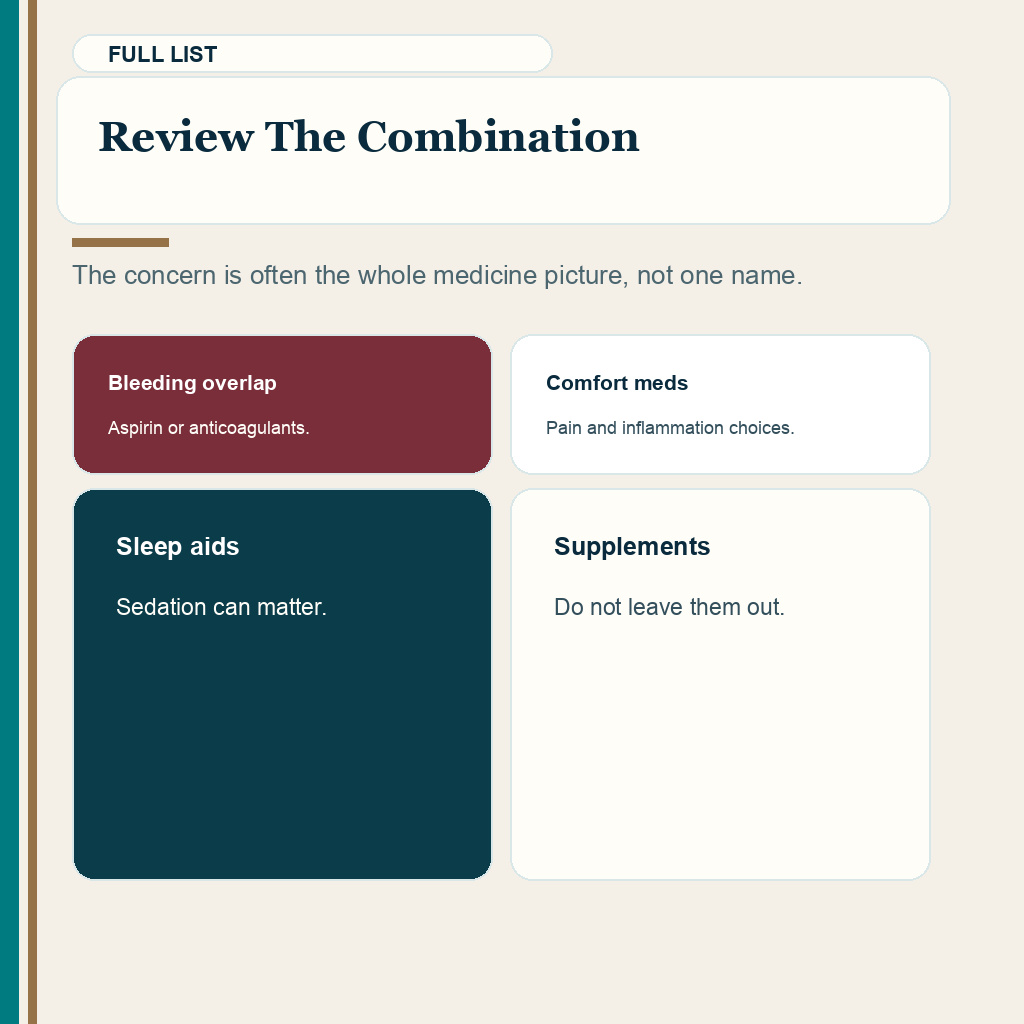
Medication can also interact with other parts of the plan. Some patients take sleep aids, pain medication, supplements, or blood thinning medicine. A partial list is not enough. The surgical team needs the complete list to make safe decisions. If seizure medication is also part of the history, the same complete list is needed before a hair transplant with epilepsy is planned.
I ask about side effects. Some antidepressants may affect sleep, appetite, sweating, sexual function, dizziness, or anxiety in the early adjustment period. These side effects may not stop surgery, but they can influence the comfort of the operation day and the first week after surgery.
When the patient has recently started medication, a stable period before surgery is usually cleaner. Starting a new antidepressant and scheduling hair transplant surgery in the same emotional window can make it difficult to know what is causing fatigue, sleep change, anxiety, or shedding. It is cleaner to separate these events when possible.
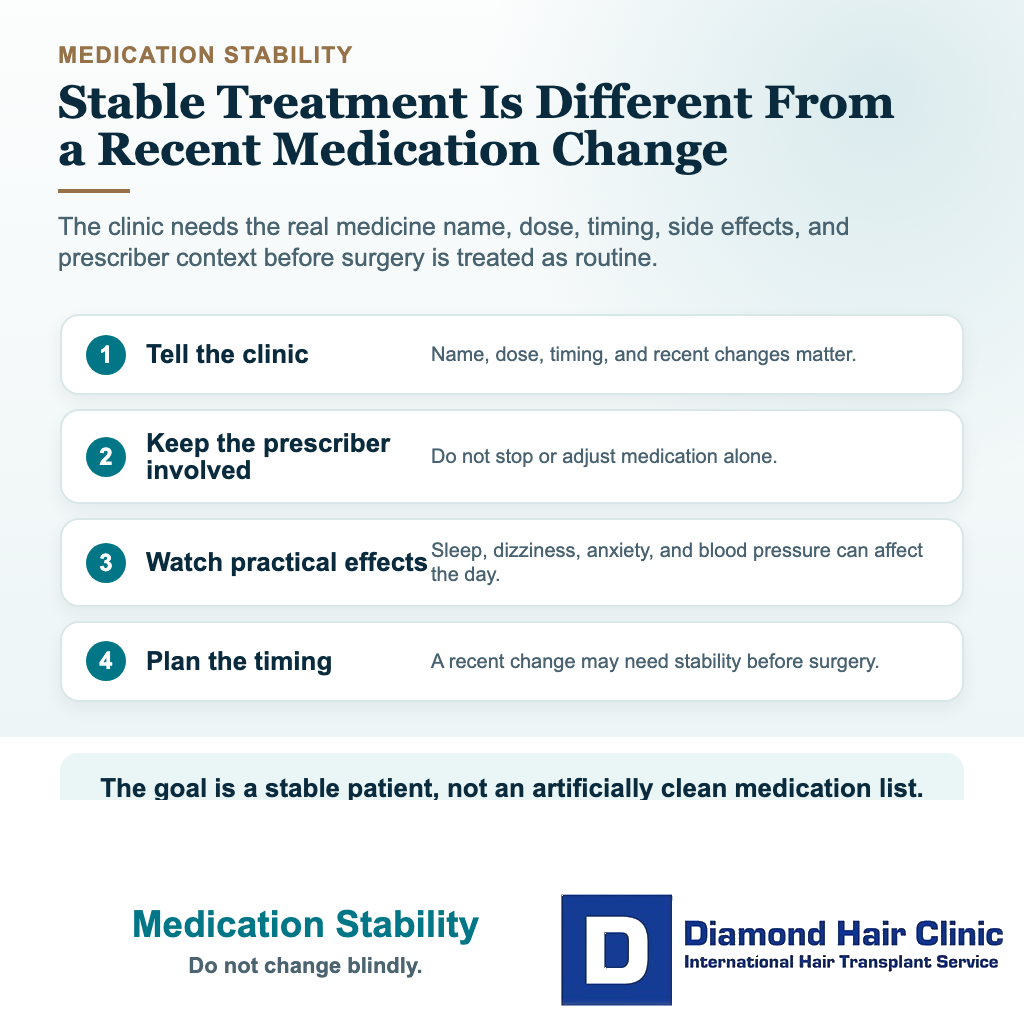
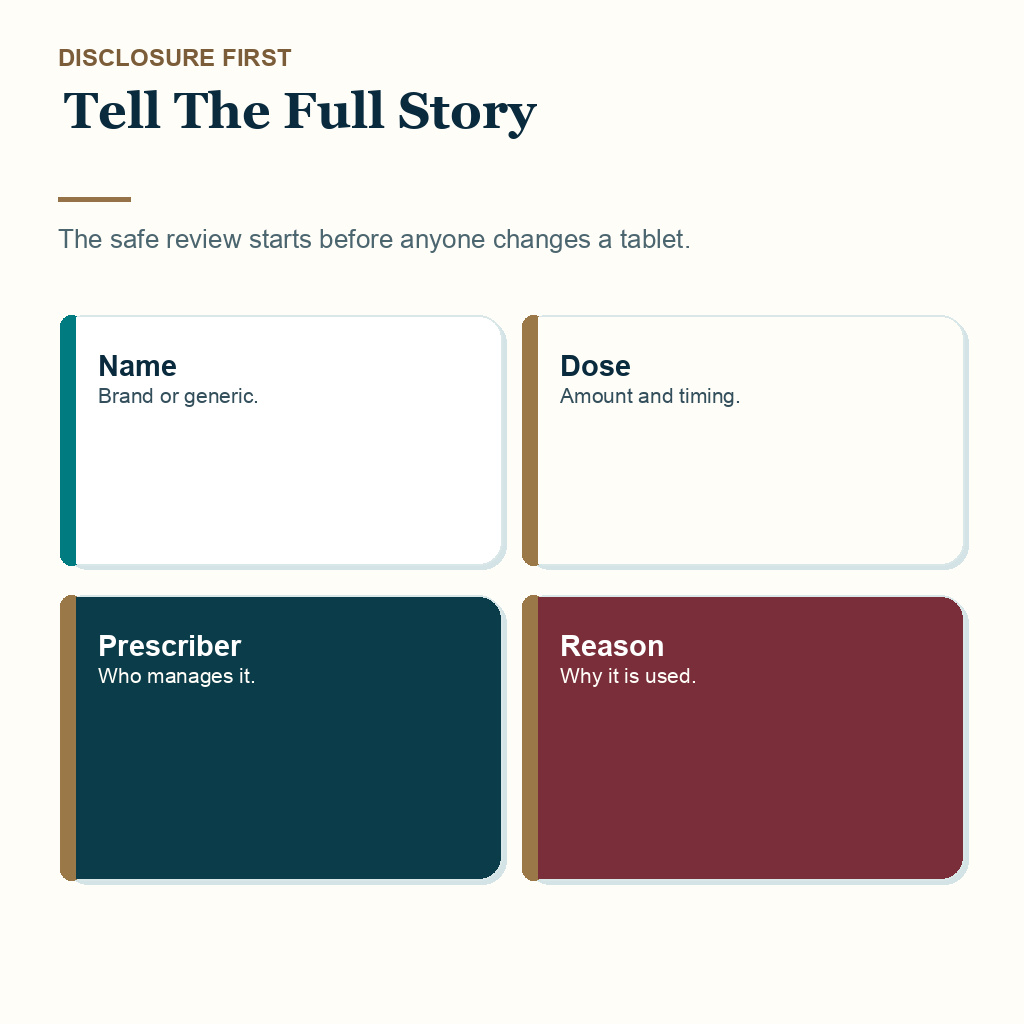
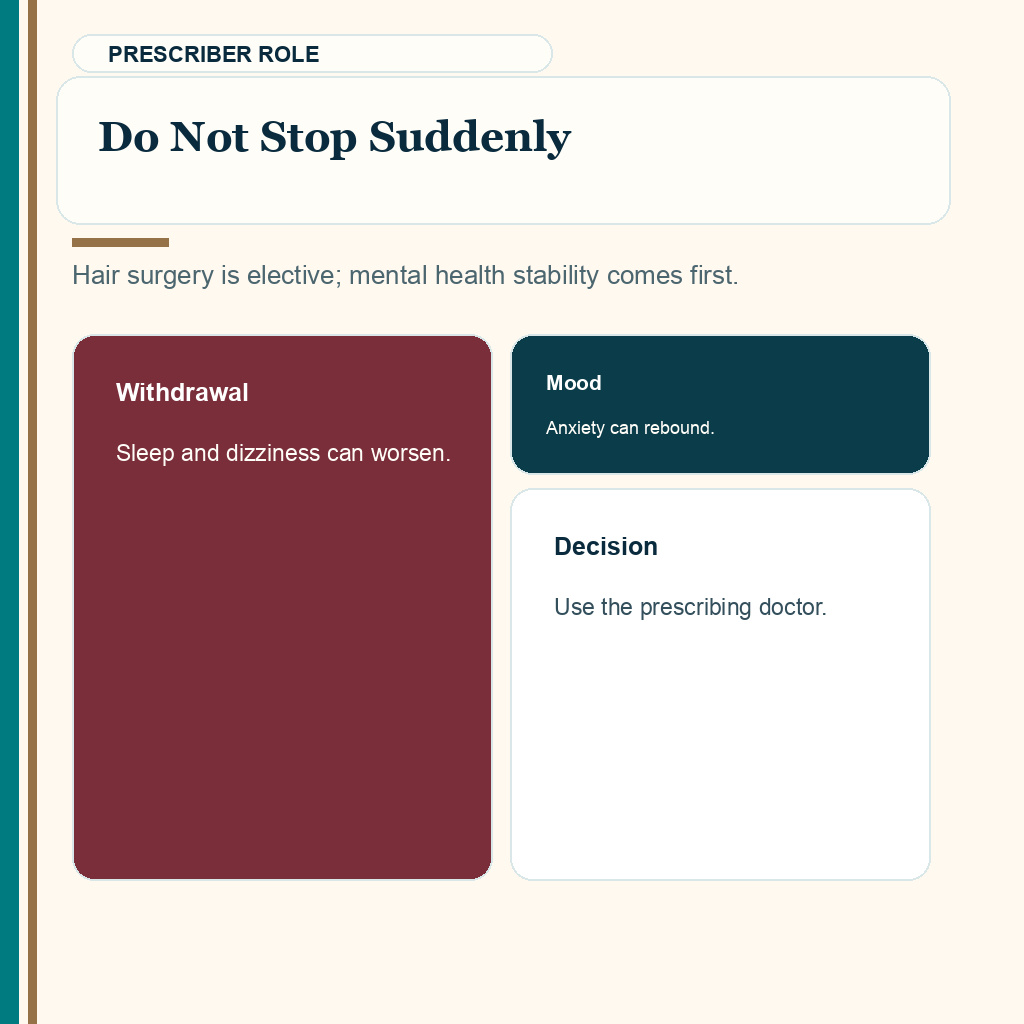
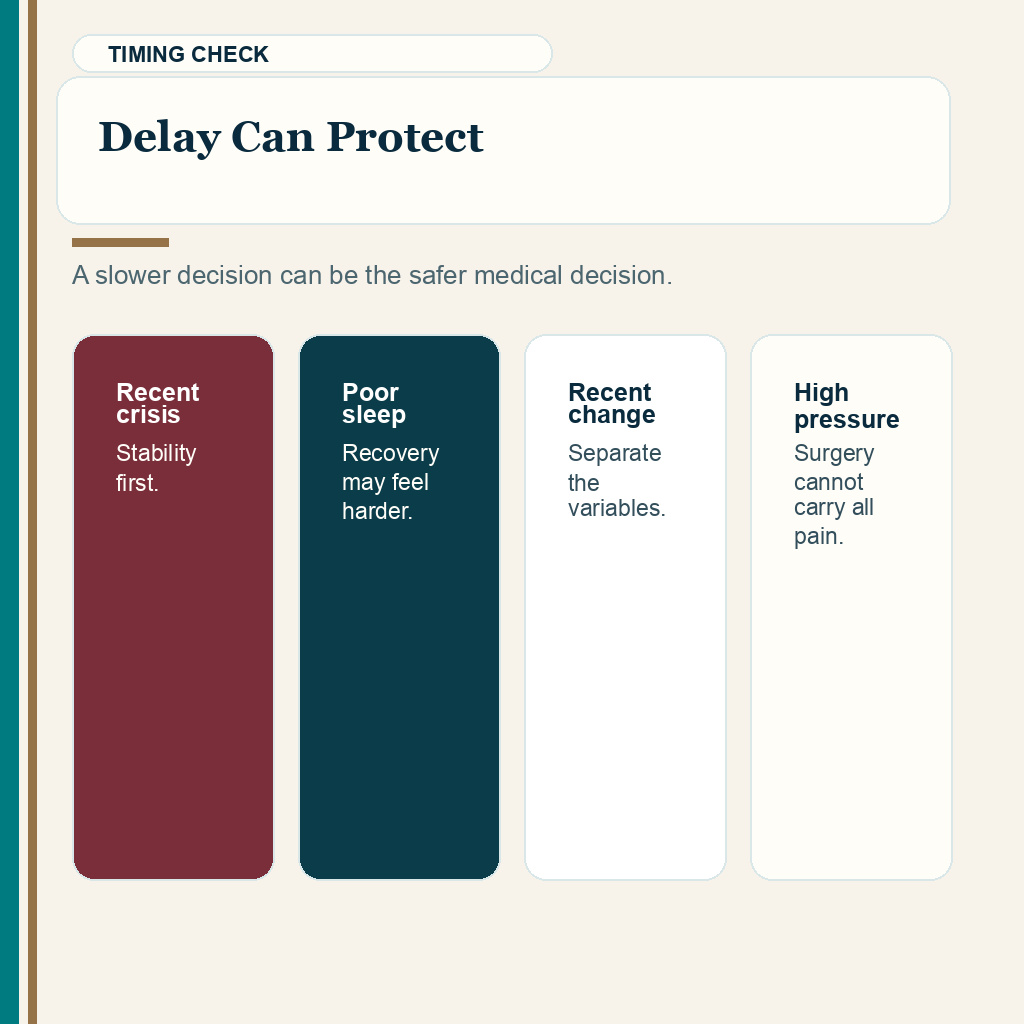
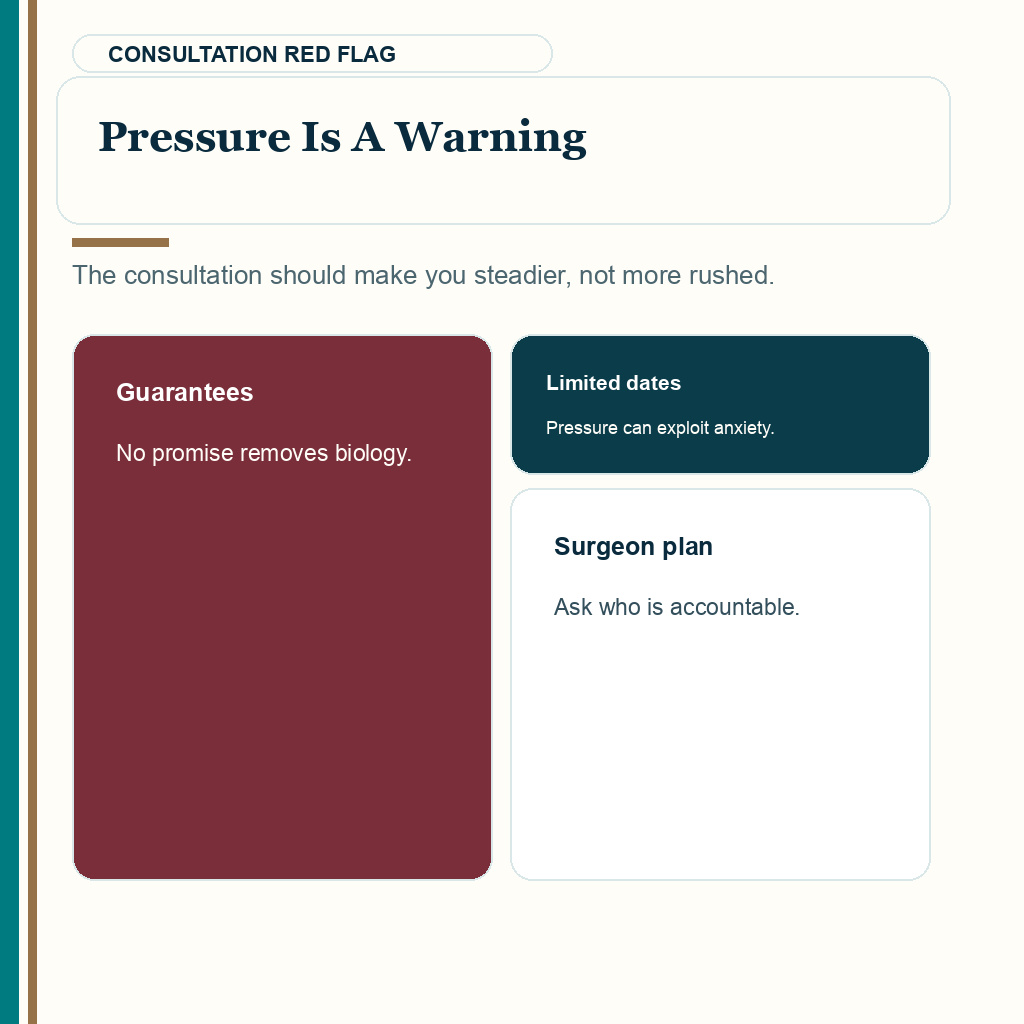
These 10 antidepressant review slides separate stable prescriptions, recent changes, prescriber coordination, medicine combinations, operation day comfort, shedding interpretation, anxiety planning, delay signals, and clinic pressure warnings before surgery. Swipe sideways, use the arrows, or choose a number below the image.

Antidepressant details that need extra caution
The name of the medication matters, but the full situation matters more. A steady SSRI taken for a long time is not the same as a recent medication switch, a sedating combination, an MAOI, lithium, a mood stabilizer, or more than one psychiatric medicine. The dose, timing, recent changes, side effects, and prescribing doctor all change the review.
Some antidepressants, especially serotonergic medicines such as SSRIs and SNRIs, can influence bleeding tendency, especially when combined with aspirin, medicine used for inflammation, anticoagulants, or supplements that also affect bleeding. That rarely cancels hair transplant surgery by itself, but it is one reason a partial medication list is unsafe. A stable antidepressant on its own is different from an antidepressant combined with several products that can also affect bleeding or sedation. This is a review point, not a reason to stop treatment on your own. If there is a blood thinner or clotting concern, the medication discussion should become more specific.
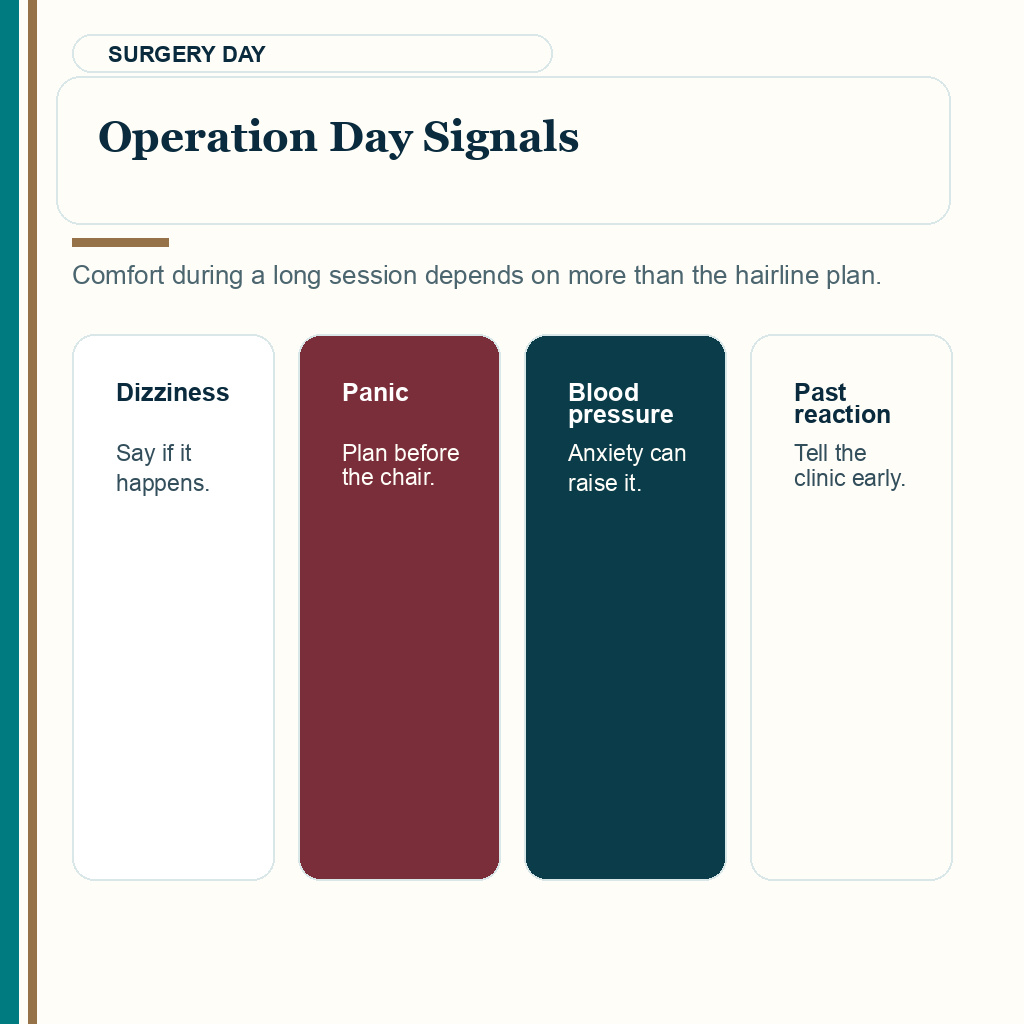
Some medications can also affect sleep, sedation, blood pressure, heart rhythm, or the way a patient feels during a long procedure. During consultation, I ask about dizziness, panic attacks, fainting history, palpitations, and previous reactions to dental anesthesia or local anesthesia. Previous reactions to anesthesia and adrenaline during hair transplant should be part of the consultation, not a surprise on operation day.
The most useful medication history is complete and boring. Name, dose, timing, recent changes, side effects, and the prescribing doctor. That gives the surgical team enough context to make safe decisions.
Recent dose changes need stable timing
If your antidepressant was started, stopped, increased, or changed recently, I usually prefer a more stable interval before surgery. This is not because the medication itself is forbidden. It is because the adjustment period can bring sleep changes, appetite changes, anxiety changes, dizziness, nausea, sweating, or mood fluctuation.
Those symptoms can overlap with the stress of travel and surgery. If they happen immediately before or after the operation, the patient may not know whether the difficulty is the medication, the transplant, lack of sleep, anxiety, or normal recovery. Separating major medication changes from surgery makes recovery easier to interpret when possible.
If the prescribing doctor believes the medication change is urgent, mental health comes first. Hair transplant surgery is elective. It can wait until the patient is medically and emotionally steadier.
Transplanted grafts and antidepressants
I do not tell a patient that antidepressants automatically damage transplanted grafts. Graft survival depends much more on surgical planning, graft handling, recipient area creation, blood supply, aftercare, and healing. A stable patient taking prescribed medication is not the same as a patient making uncontrolled changes before surgery.
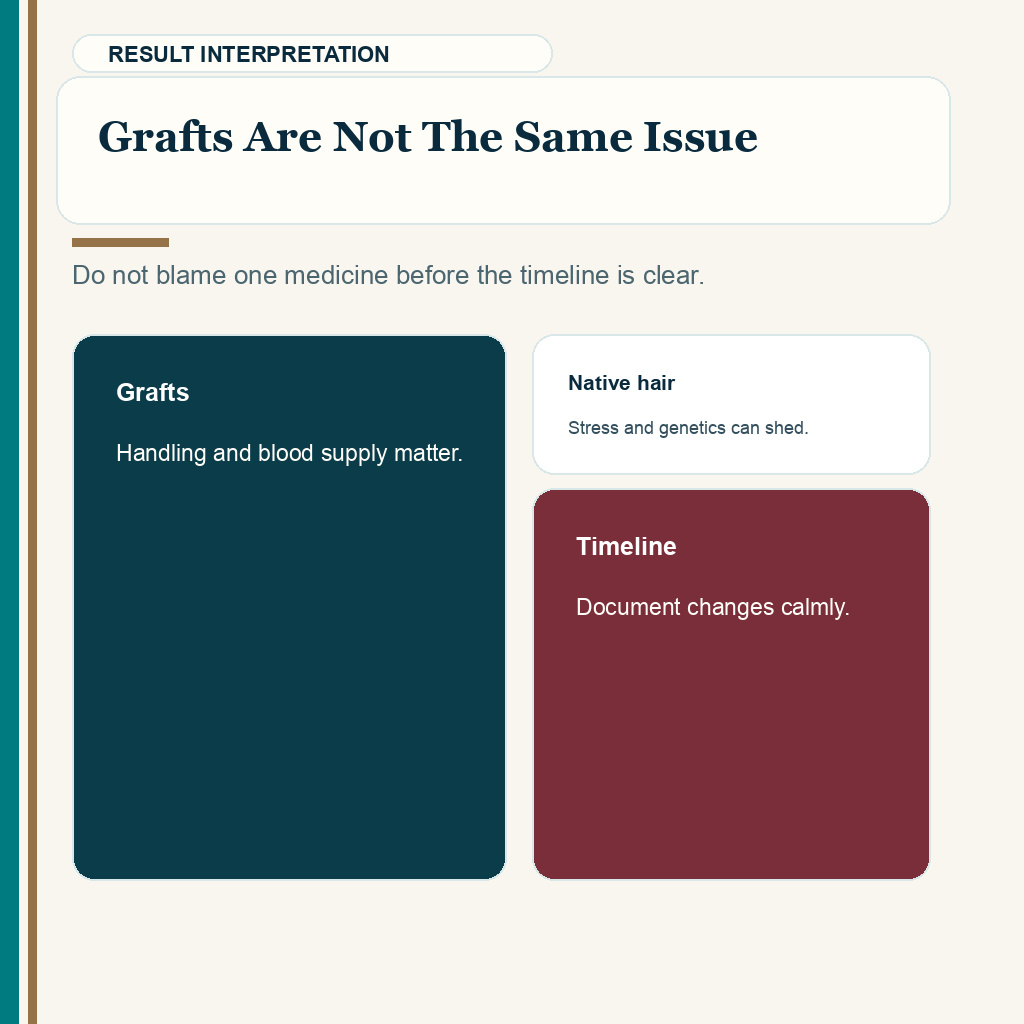
The bigger issue is confusion. Some patients start antidepressants, change dose, experience shedding from stress, or notice hair changes and then blame the transplant before the timeline is fair. Hair can shed for many reasons. The surgeon needs to separate medication timing, stress, native hair loss, and normal transplant shedding.
In practice, I avoid simple promises. A clinic should not say antidepressants have nothing to do with anything. It should also not frighten patients by saying the medication ruins the transplant. The correct approach is to review the medicine, understand the patient, and plan the surgery responsibly.
When I evaluate a result later, I look at growth timeline, donor quality, recipient area design, native hair changes, and whether the patient has been through major stress or medication changes. Blaming one factor too early can lead to the wrong conclusion.
I also explain that transplanted grafts and native hair are not the same conversation. The transplanted grafts come from the donor area and are placed surgically. The native hair around them may still respond to stress, hormones, medication changes, illness, or ongoing genetic hair loss. A patient can see shedding in that surrounding hair and still be on track surgically.
If a patient is worried that antidepressants caused hair loss, I do not dismiss the concern. I ask when the shedding started, whether the dose changed, whether the patient had illness or stress, and whether the pattern looks like genetic thinning or diffuse shedding. The surgical plan should not be built on fear or guesswork. Decisions about minoxidil after a hair transplant should be reviewed separately from antidepressant stability, not used as a way to explain every shedding episode.
Shedding can be confused by medication and stress
stress after a hair transplant, illness, medication changes, sleep disruption, and the emotional burden around surgery can all make hair shedding feel confusing. This is not the same as transplant failure. It means the patient needs a structured way to interpret the timeline.
After a hair transplant, transplanted hairs often shed before they grow again. Native hairs can also shed temporarily. Patients who already have anxiety may interpret every hair in the sink as proof that something went wrong. Explaining native hair shock loss after hair transplant before surgery gives that patient a steadier reference point.
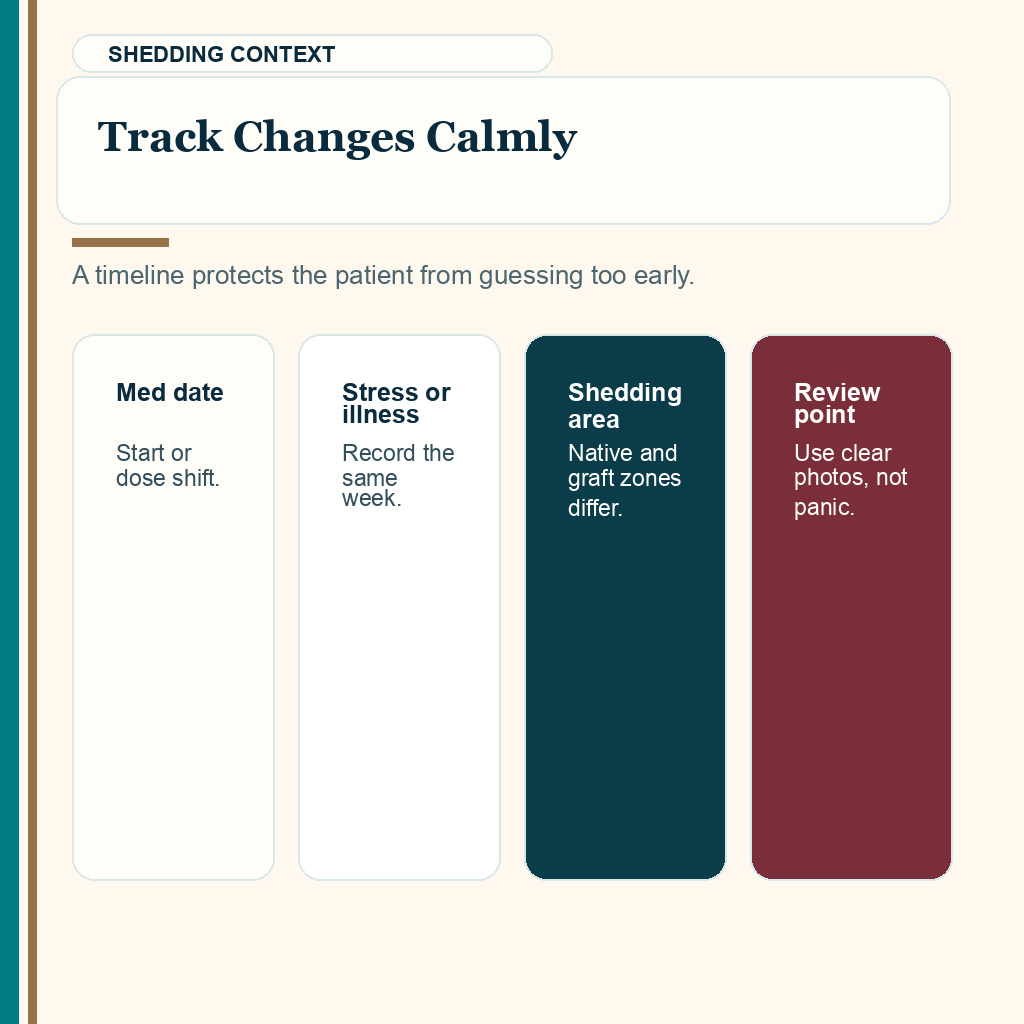
If a medication was recently started, stopped, or changed, that timeline should be documented. It may not be the cause of shedding, but it is part of the picture. Changing mental health medication just to test whether the hair improves can create more distress and still not answer the hair question.
The right approach is to separate normal recovery from warning signs. Early shedding, uneven growth, and slow months can be normal. Sudden severe shedding in areas that were not transplanted, major stress, illness, or medication changes may need a broader review.
A patient who already has anxiety may also interpret normal shedding as proof that every decision was wrong. I try to prepare that patient before surgery. If they know shedding can happen, they are less likely to spiral when it begins. Education is part of aftercare.
Documentation also helps. If we have clear preoperative photos, medication history, and a timeline, we can review the situation with more distance. Without that, the patient may feel trapped between possibilities. Was it shock loss, medication, stress, poor growth, or ongoing native loss? Good records reduce confusion.
Anxiety or OCD can make recovery harder
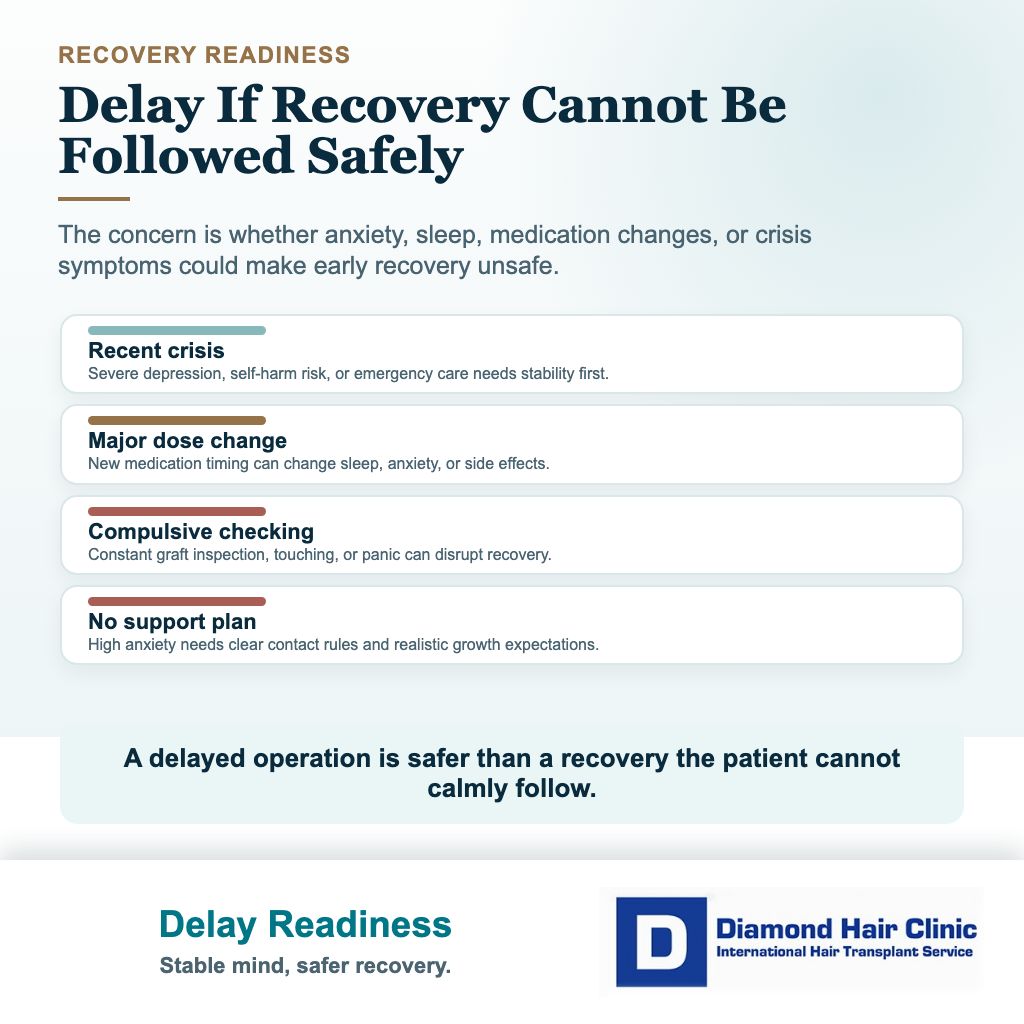
Anxiety or obsessive checking can make recovery harder even when the surgery itself is going well. Some patients check the mirror many times a day, compare photos from different lighting, zoom into every graft, and search for problems before the scalp has had time to heal. This can become exhausting.
I assess this. Hair loss can create a very intense relationship with the mirror. But after surgery, constant checking can turn normal healing into daily fear. A small scab becomes a lost graft. A temporary gap becomes failure. One angle of lighting becomes a crisis.
A clear recovery plan helps before surgery begins. If the patient understands the first two weeks, the shedding phase, the slow return of visible growth, and the patience needed for final judgment, the recovery becomes less frightening. How to track hair transplant growth can give anxious patients a steadier reference point.
If a patient has severe OCD, body image distress, or panic attacks, I may ask whether their mental health is stable enough for surgery. I do not take this to mean that they can never have a transplant. It means the timing should protect them, not push them into months of fear.
Some patients also struggle with checking behavior. They do not only look at the hair. They touch the grafts, inspect scabs, count hairs, compare each temple, and ask several people for reassurance. This can become a problem because the healing scalp needs gentle handling. The mind may want certainty, but the scalp needs time.
If this pattern is strong before surgery, I discuss it openly. A patient who knows they will check constantly can still do well if they accept structure. Planned photo dates, clear contact rules, and clear recovery expectations can reduce the emotional burden.
Agree on a recovery contact plan before surgery if anxiety makes you check repeatedly. Knowing which changes need a message, and which changes only need dated photos, keeps medication stability and aftercare from becoming confused.
Stopping antidepressants before surgery
You should not stop antidepressants on your own before a hair transplant. Stopping suddenly can cause withdrawal symptoms, sleep disturbance, mood changes, anxiety, dizziness, and a worse recovery experience. If a medication needs adjustment, that decision should come from the prescribing doctor.
Some medications need special attention because of bleeding, blood pressure, sedation, or interactions with other drugs. I ask for a complete medication list, and blood tests before hair transplant can be part of the safety process. Tests do not replace medical history, but they help us avoid blind spots.
If the patient also takes aspirin, anticoagulants, or supplements, the discussion becomes more specific. I would handle that as a separate safety issue, which is why I wrote about hair transplant and blood thinners. Mental health medication may not be the only medication that matters.
The safer instruction is to tell the full truth, coordinate with the right doctor, and avoid sudden changes. A patient who stays on a reviewed, stable medication plan is usually easier to manage than a patient who has disrupted treatment before surgery.
I also check practical safety on the surgery day. Anxiety can raise blood pressure during a hair transplant, and poor sleep before travel can make this worse. If the patient is already prone to panic, the clinic should know that before the procedure begins.
Anxious patients can still have surgery. The team just needs to plan clearly. It helps when the patient arrives rested, fed according to instructions, medically reviewed, and clear about which medications they are taking. Surprises on the surgery day are what I avoid.
Clinic should ask before accepting surgery
A clinic should ask about diagnosis, medication name, dose, duration, prescribing doctor, recent changes, sleep, panic attacks, previous surgery experience, and whether the patient feels emotionally ready for the recovery period. These questions should be asked respectfully.
The clinic also has to listen for unrealistic expectations. Some patients do not only want improvement. They want surgery to erase years of emotional pain. I understand that feeling, but surgery cannot carry the whole burden. It can improve hair. It cannot guarantee relationships, inner peace, or a completely different relationship with the mirror.
The broader question is whether the person is a good candidate for hair transplant. Candidacy is not only donor density. It also includes expectations, stability, medical history, and whether the patient can tolerate the slow recovery timeline.
Responsibility for the surgical plan should be clear before treatment. A patient with anxiety should not feel abandoned to a coordinator after surgery. Understanding who performs hair transplant surgery can help patients choose a medically accountable clinic.
The patient’s support system matters too. Travelling alone, managing the first days without help, and misunderstanding aftercare can make normal symptoms feel like emergencies. Good preparation reduces that risk.
I look at whether the patient has realistic social timing. If they are trying to return to a major event in a few days and are already anxious about appearance, the stress may be unnecessary. Sometimes choosing a quieter month for surgery is better than forcing it into a crowded schedule.
Mental health timing can delay surgery
I delay surgery if the patient is in an acute mental health crisis, recently changed medication and is unstable, has uncontrolled panic attacks, is unable to sleep, or is making the decision from a place of desperation. Surgery should be chosen steadily, not as an emergency response to distress.
I also delay if the patient cannot accept uncertainty. Hair transplantation is precise surgery, but recovery is not a daily straight line. There can be redness, swelling, shedding, uneven growth, and long months where the result is not ready to judge. A patient who cannot tolerate that uncertainty may suffer more than necessary.
Another reason to delay is body dysmorphic concern. If the hair loss is mild but the distress is extreme, the case needs careful timing. A technically successful transplant may not satisfy a patient whose perception of the difficulty is much larger than the surgical problem itself.
Delaying in these situations is not rejection. It can be protection. Sometimes the best plan is to stabilize anxiety, speak with the prescribing doctor or therapist, and return to the surgery decision when the patient can evaluate risks and benefits more clearly.
I also delay if the patient keeps changing their mind every few days about hairline height, graft number, or whether they want surgery at all. Indecision can be normal, but extreme swings may mean the patient is not ready. A hair transplant changes appearance and uses donor grafts. It deserves a steady decision.
Another concern is when the patient says they will be ruined if the result is not perfect. No ethical surgeon should accept that emotional contract. Surgery can improve hair. It cannot promise emotional rescue. That distinction protects both the patient and the surgical plan.
Recovery planning for anxious patients
If you know you are anxious, plan recovery before surgery. Decide who you will contact if you worry. Decide how often you will take photos. Decide which symptoms are normal and which symptoms require contact with the clinic. Do not leave these decisions to midnight fear.
I recommend consistent photos under the same light rather than random daily comparisons. I also recommend avoiding aggressive online comparison in the early months. Another patient’s month four photo does not decide your month four future. Hair caliber, donor quality, surgical plan, and healing vary.
Aftercare instructions should be written clearly. Patients should know how to wash, sleep, protect the scalp, and use prescribed medication. The wider hair transplant aftercare guide is useful, but an anxious patient may also need the clinic to repeat what is urgent and what is not.
For anxious patients, I separate warning signs from normal visual variation. If a concern is visible, worsening, painful, hot, producing discharge, or associated with fever, ask for clinic review. If it is only a small visual difference in lighting or angle, take a clear photo and wait for the correct review point. This reduces unnecessary fear.
I also advise patients to avoid changing the aftercare routine because of fear. More washing, extra creams, constant touching, or random supplements can create irritation. The anxious patient often wants to do more, but after surgery the safest path is usually to do the right things consistently and avoid improvising.
Recovery needs to work like a structured process, not a daily search for proof that the result has failed. The patient needs to protect the grafts, follow instructions, send photos when requested, and let time do its work. That is difficult, but it is part of choosing surgery wisely.
Clinic promises can make anxious patients more vulnerable
An anxious patient can be easier to sell to because they want certainty. A weak clinic may promise guaranteed density, instant certainty, a perfect hairline, or a fixed graft number without explaining limits. These promises feel comforting at first, but they can create deeper disappointment later.
Urgency deserves special attention here. Limited dates, discounts, and pressure can push a vulnerable patient into surgery before they have understood the plan. A proper consultation should make the patient clearer, not more pressured.
Before and after photos can also become a trap. A patient may compare himself to the strongest result on the website and expect the same density, hairline, and growth speed. A more useful approach is learning how to judge whether hair transplant before and after photos can be trusted.
A clinic that respects the patient will explain uncertainty. It will talk about donor limits, native hair loss, medication, recovery, and the possibility that a smaller or later procedure is safer. That kind of truth may feel less exciting, but it protects the patient.
Anxious patients should be especially careful with guarantees. A guarantee can sound like emotional safety, but no guarantee removes biology, healing variation, donor limits, or future native hair loss. What protects the patient is a realistic plan and real aftercare support, not a sentence designed to close a sale.
The best consultation leaves the patient steadier because they understand the limits. The worst consultation leaves the patient excited for one day and anxious for the next eighteen months. A slower decision built on truth is better than a fast decision built on pressure.
Medication history belongs in the open
Antidepressant use is not something to hide before FUE. The surgeon needs the real medication list, the prescribing doctor context, sleep pattern, anxiety level, blood pressure history, and any recent dose changes.
Many stable patients can move toward surgery without stopping medication suddenly. The timing becomes different when mood is unstable, medicines are changing, sleep is poor, or the patient expects surgery to fix emotional distress.
Surgery becomes more reasonable when mental health support, expectations, and medical review are steady. When they are not steady, time and support come first.

Read this review excerpt
Every single one of my questions was answered and they made sure I had all the details I needed to make an informed decision.