


Stress, Shedding, and Recovery Anxiety
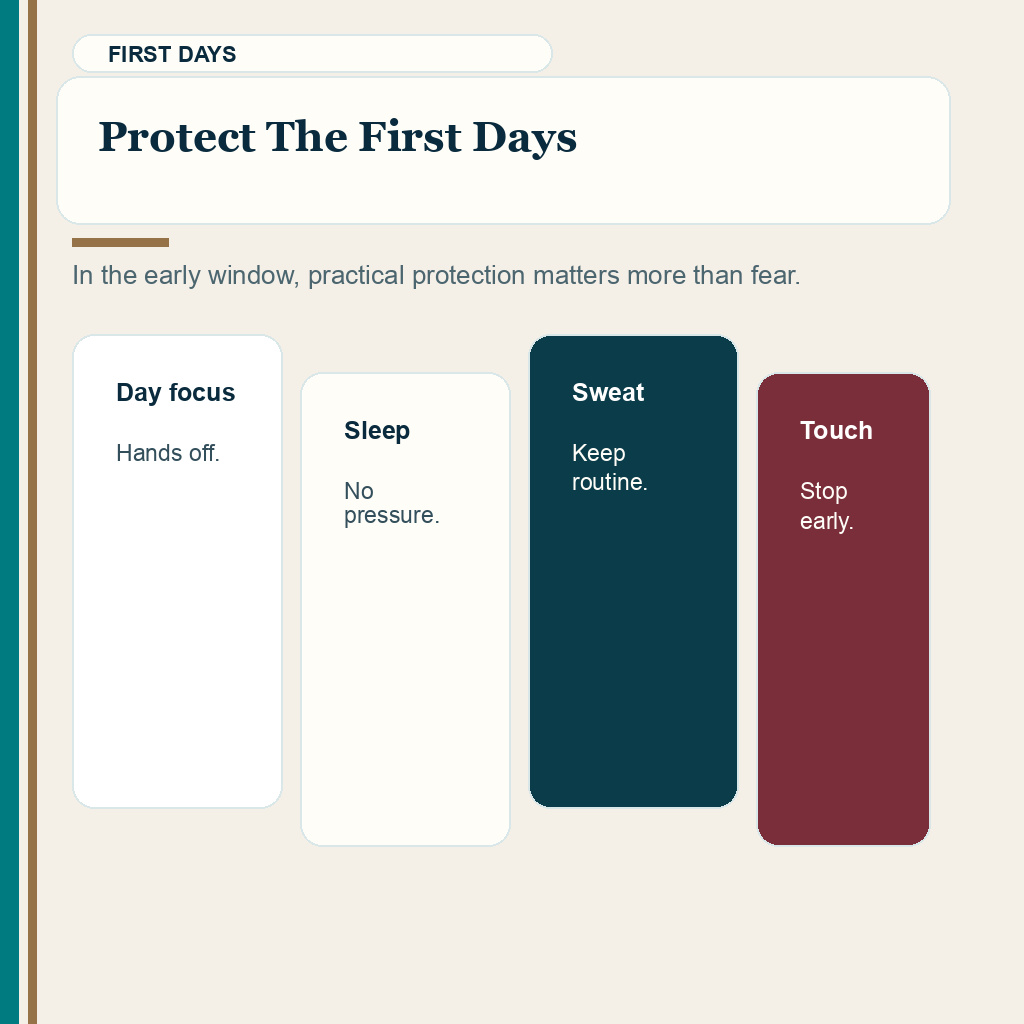
One stressful day, one crying episode, or a few anxious weeks after a hair transplant does not usually destroy transplanted grafts. During the first 10 to 14 days, direct physical protection matters more than emotion itself. Avoid rubbing, scratching, pressing, sweating heavily, bending repeatedly, or touching the recipient area.
After that early protected period, stress is more often an indirect problem. It can disturb sleep, increase smoking or alcohol use, make you overcheck the scalp, or contribute to shedding in vulnerable native hairs. I do not tell patients to fear every emotion, but I do want them to notice what the stress changed. The useful response is to protect the scalp, follow aftercare, and judge the result with time.
The practical stress question is what changed because of it. Poor sleep, missed medicine, smoking, scratching, or constant photos matter more than the emotion alone. Choose one planned check time instead of letting worry send your hand or camera back to the scalp all day.
A short note with two lines can make review clearer. Record the stressful event in one line, then record the physical scalp facts in another. Include any direct contact, fresh bleeding, missed washing, missed medicine, smoking, alcohol, poor intake, or loss of sleep. This keeps a frightening emotion from hiding the detail that actually changes aftercare.
Stress rarely damages secure grafts by itself
Stress by itself is not the same as physical trauma to the grafts. A patient who feels anxious, cries, argues, or has a difficult night has not by itself harmed the transplant. The grafts are not removed by emotion. They are placed into small incisions in the recipient area, and the early risk is mainly mechanical.
In the first days, I focus on whether the grafts are rubbed, scratched, hit, pressed, dragged by clothing, exposed to unnecessary heat, or disturbed by careless washing. These are practical risks. A worried mind does not pull a graft out of the skin, but a worried hand can keep touching the scalp again and again.
Many patients become afraid of their own emotional state after surgery. They think that if they were anxious, angry, sad, or unable to sleep perfectly, they have damaged the result. That belief can create a second layer of anxiety that is worse than the original event.
My surgical view is practical. The transplant needs physical protection, not constant checking. Good hair transplant aftercare is calm and consistent. It should not become a daily panic ritual.
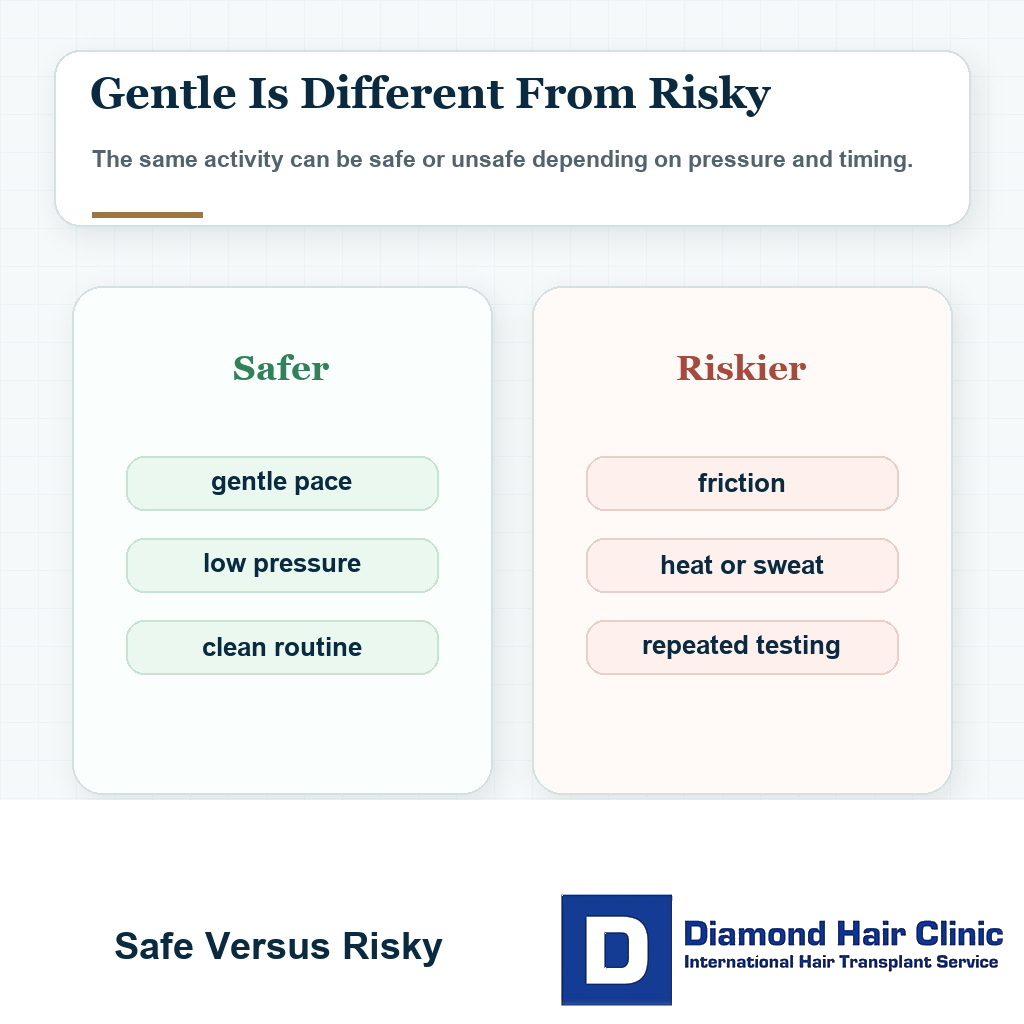 When worry rises, write down what actually happened to the scalp before judging the emotion itself. Stress becomes more relevant when it changes behavior, such as sleep, washing, smoking, scratching, or constant checking.
First 10 to 14 days need practical protection
I use the 10 to 14 day range as a protected period because the scalp is still settling, the grafts are gaining stability, and the skin is still fresh from surgery. Stress alone is usually not the danger, but anxious checking, rubbing, poor sleep, or careless behavior during that window can create avoidable problems.
The rule I focus on most is to avoid unnecessary contact with the recipient area. No scratching. No rubbing. No pressing. No inspecting the grafts with your fingers. No aggressive washing. No tight hat, helmet, or anything that drags across the transplanted area.
In the first 24 to 48 hours, avoid repeated bending, strong exertion, heavy sweating, and careless movement through crowded places. This is not because every small movement ruins a transplant. It is because the scalp does not need extra irritation while it is fresh.
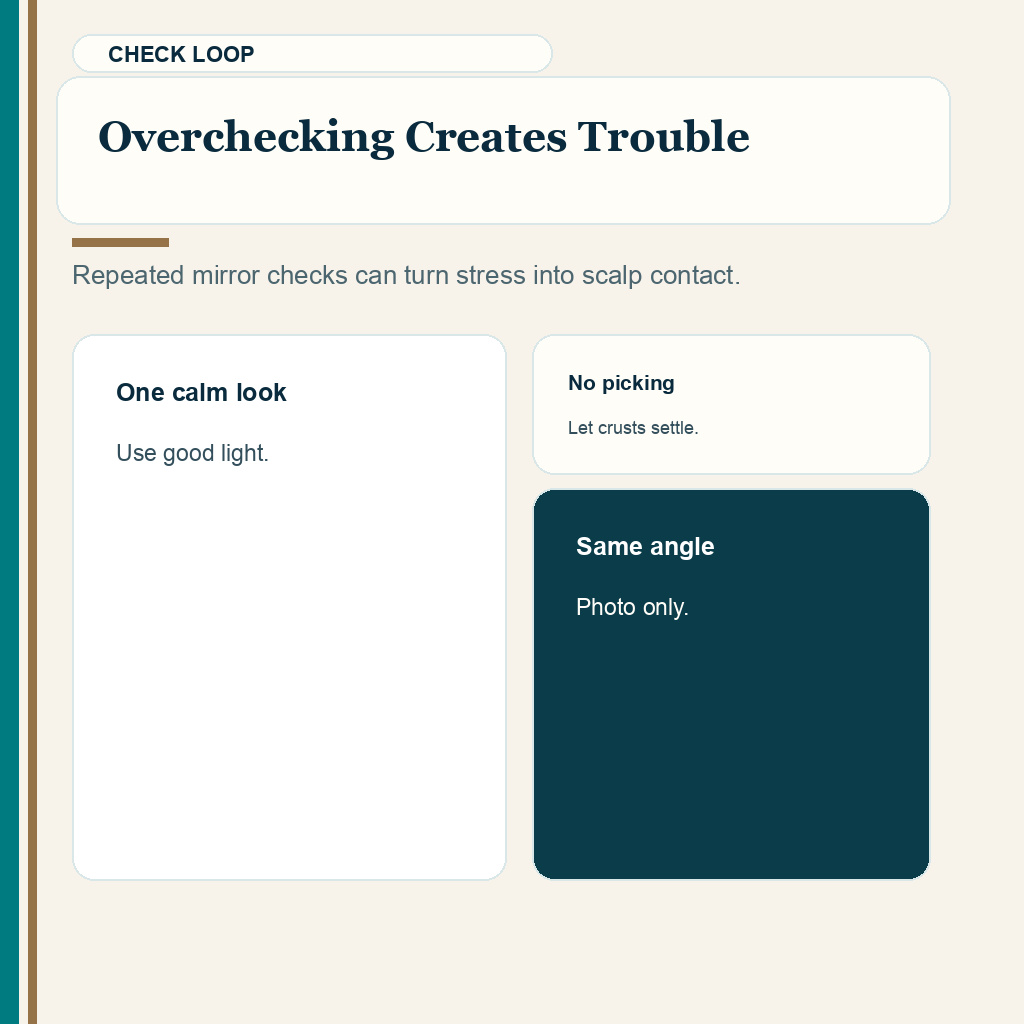
A stressed patient often wants to check whether everything is still in place. That can lead to touching grafts, lifting scabs, taking extreme close up photos, or comparing one side with the other every few hours. That behavior is more dangerous than the emotion itself.
If the worry is about accidental contact, I usually separate a light brush from a real injury. A minor touch without bleeding, without obvious graft loss, and without a visible wound is usually not a reason for panic. A meaningful hit, fresh bleeding, or a visible missing graft should be reviewed by the operating surgeon. That is the useful distinction behind touching grafts after a hair transplant.
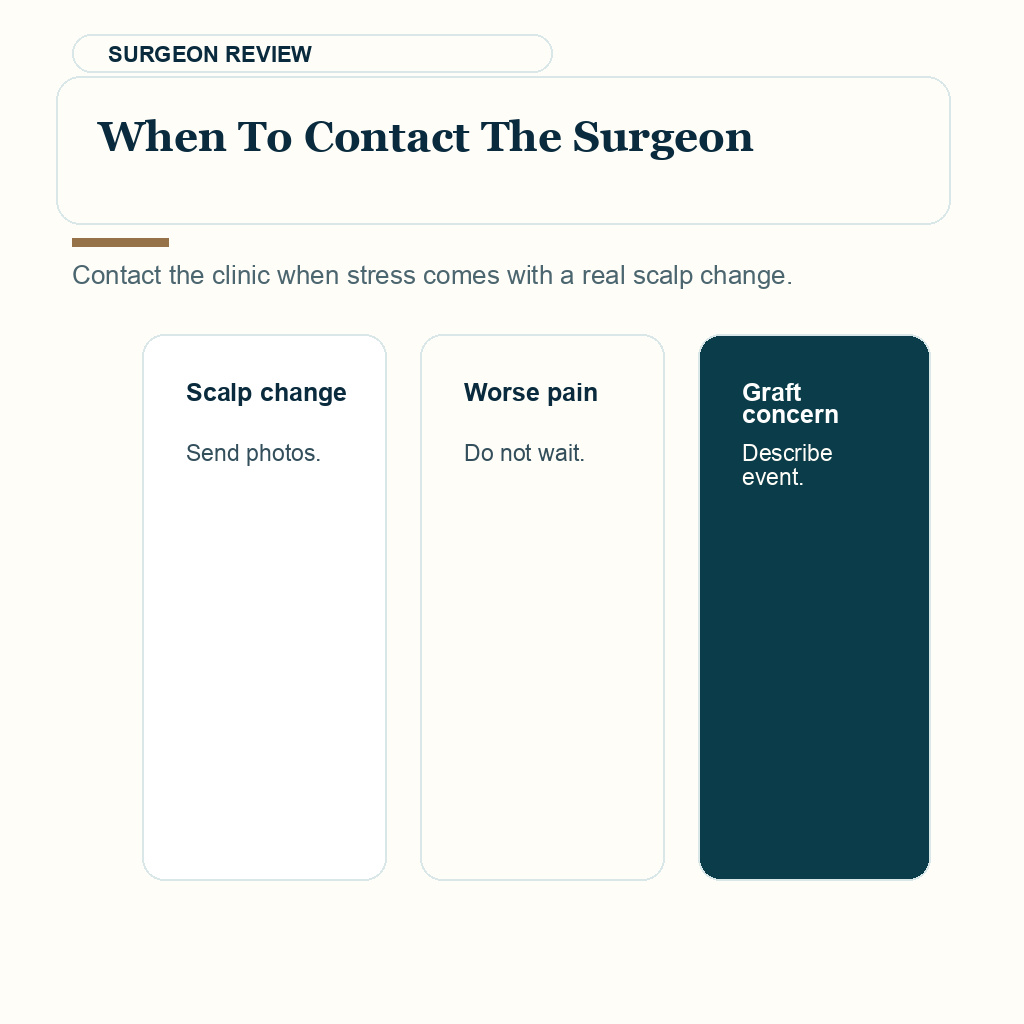
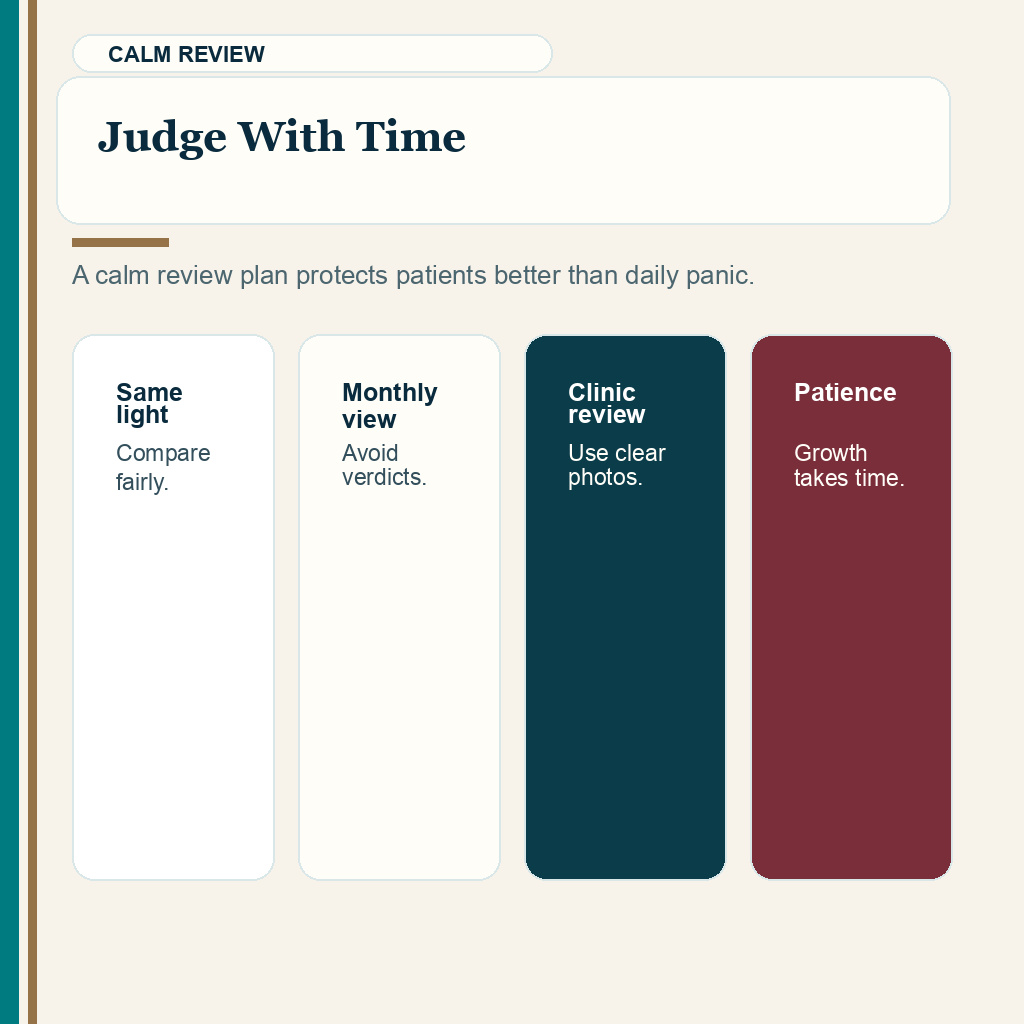
These 10 stress and recovery slides separate emotion, early graft protection, crying, overchecking, sleep, shedding timing, severe stress, recovery habits, when surgeon review is needed, and calm photo review. Swipe sideways, use the arrows one slide at a time, or choose a number below the image.
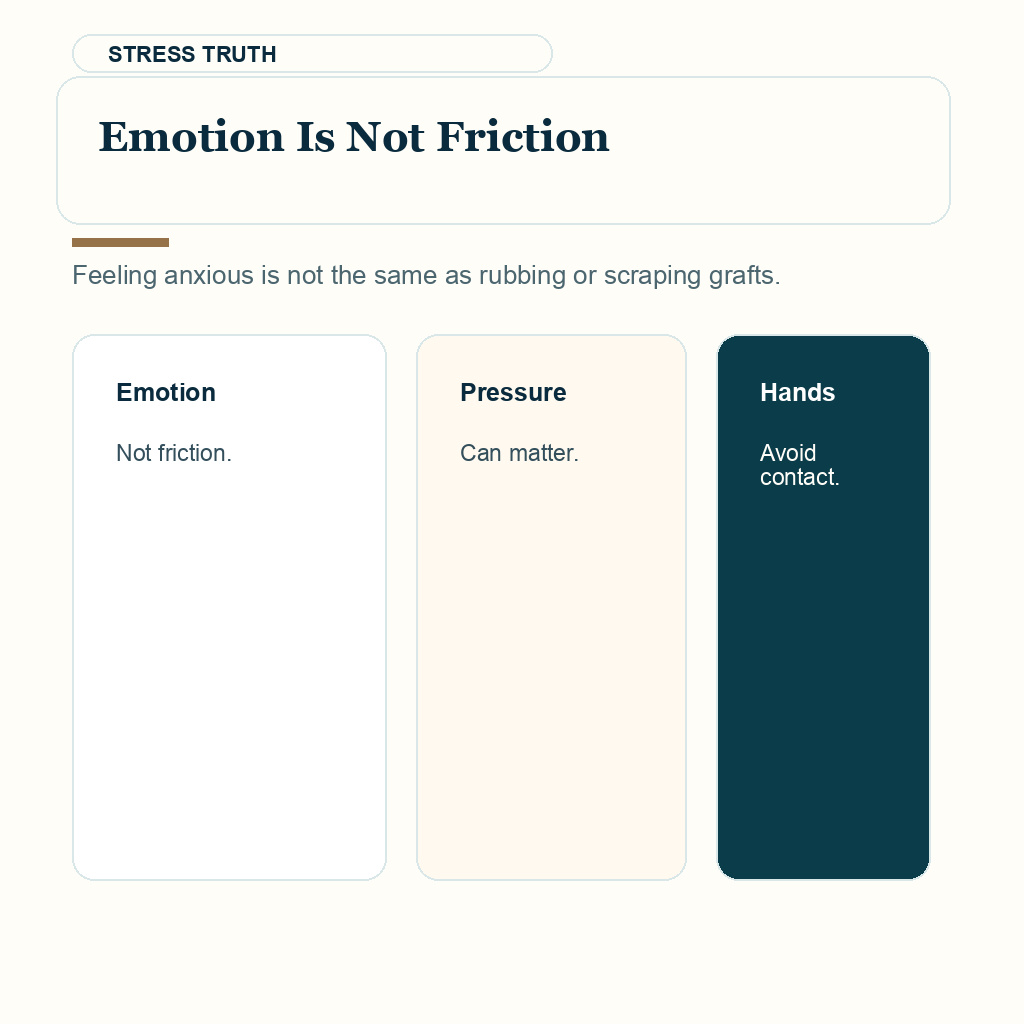



Crying, anger, and anxiety do not dislodge grafts
Crying, anger, or anxiety does not normally dislodge grafts by itself. The facial muscles may move. Blood pressure may rise temporarily. The patient may feel warmth in the face or scalp. But these reactions are not the same as pulling, rubbing, or scraping the recipient area.
You should avoid unnecessary physical agitation after surgery, especially in the first days. But I also do not want you to believe that normal human emotion is a surgical complication. A hair transplant patient is still a person. You may feel nervous, sleep poorly, regret the decision for one night, or cry because the early appearance feels shocking.
The clinical question is not whether the patient felt emotional. I look at whether the emotion led to behavior that physically disturbed the scalp, such as scratching during sleep, rubbing the forehead repeatedly, pressing a pillow into the recipient area, or picking during scab removal. Those are the details I watch.
During stressful moments, patients should keep their hands away from the scalp. If they need reassurance, they should take a clear photo and ask for clinic review, not examine the grafts with their fingertips.
Scab shedding creates a different fear. Many patients see hairs inside crusts and become terrified that they lost grafts. In most cases, a hair shaft inside a crust is not the same as a living graft coming out. The more useful question is whether there was fresh bleeding, forced removal, or unhealthy skin underneath. My separate explanation about lost grafts when scabs come off is written exactly for that fear.
Stress can make recovery look worse
Stress can still matter, but usually in an indirect way. It can disturb sleep, appetite, hydration, patience, and judgment. It can make a patient smoke more, drink too early, exercise too soon, or inspect the scalp obsessively. It can also make normal shedding feel like failure.
There is another layer. Significant physical or emotional stress can contribute to temporary shedding in susceptible hairs. This is more relevant to native hair than to the transplanted graft being mechanically lost. If native hair around the transplanted zone was already miniaturized, fragile, or unstable, it may react more strongly after surgery.
A patient can feel that the transplant made everything worse, even when the grafts themselves are not the main problem. The transplanted hairs may shed as expected. Native hair may also thin temporarily. The scalp may be red. The patient looks in the mirror and sees less coverage than before.
At that point, stress does not only affect biology. It affects interpretation. A patient begins reading every hair in the sink as evidence, compares day 20 or month 3 appearance with someone else’s month 12 result, and decides the transplant has failed before the result has even started to grow.
I separate native hair shock loss from true graft failure. Shock loss, shedding, and a thin early appearance can be emotionally difficult, but they are not all the same diagnosis.
Severe stress can cause shedding away from grafts
Severe stress can contribute to wider shedding in some patients, but I separate a short emotional spike from sustained stress on the body. One bad evening is different from weeks of poor sleep, poor eating, illness after a hair transplant, fast weight loss, medication changes, or another physical strain on the body. This type of shedding is usually different from losing grafts. It often appears as more general hair fall rather than one obvious missing graft area.
The timing also matters. Stress related shedding may not appear the next morning. It can become noticeable weeks or months after the stressful period, which is why patients sometimes connect it to the transplant incorrectly. The operation may have been only one part of a larger body stress picture.
Diffuse shedding needs a wider review than the transplant alone. I consider iron status, thyroid function, recent illness, diet, medication changes, and the native hair pattern. Here, proper blood tests before a hair transplant and clear medical history can help us avoid blaming the grafts for a problem that belongs to the whole hair cycle.
Stress and shedding can arrive at the same time, but that pairing is not a diagnosis. I first look for a physical trigger, a missed recovery step, a new illness or medicine, and the visible shedding pattern before I call it a graft problem.
Months 2 to 4 are mentally difficult
The period between month 2 and month 4 is often more difficult than patients expect. The first 10 to 14 days are protective. After that, the scalp gradually looks less surgical. The patient may begin to relax. Then shedding becomes visible, and the transplanted area can look thinner than it did immediately after surgery.
This can feel cruel. The patient has already spent money, traveled, gone through surgery, followed washing instructions, and waited. Then the mirror seems to show the new hair disappearing. If the patient was not properly prepared for this phase, anxiety can become very strong. The patient may avoid work, friends, dates, or simple errands because every cap, mirror, or comparison feels like proof that the result has failed. That avoidance deserves calm attention during recovery, but it is not evidence that the grafts were lost.
I explain that visible growth usually starts around month 4. Improvement becomes more noticeable around months 6 to 9. A mature result is usually judged around 12 to 18 months, sometimes a little later, especially when the crown is involved.
These numbers matter because they protect judgment. If a patient expects density at month 2, panic is more likely. If the patient understands that month 2 and month 3 can look thin, the appearance may still be unpleasant, but fear is less likely to drive a bad decision.
Caring about the result is normal. Judging it too early is the part that creates trouble. Use consistent monthly photos to track hair transplant growth without panic, not daily emotional close ups.
Poor sleep and habits become the real problem
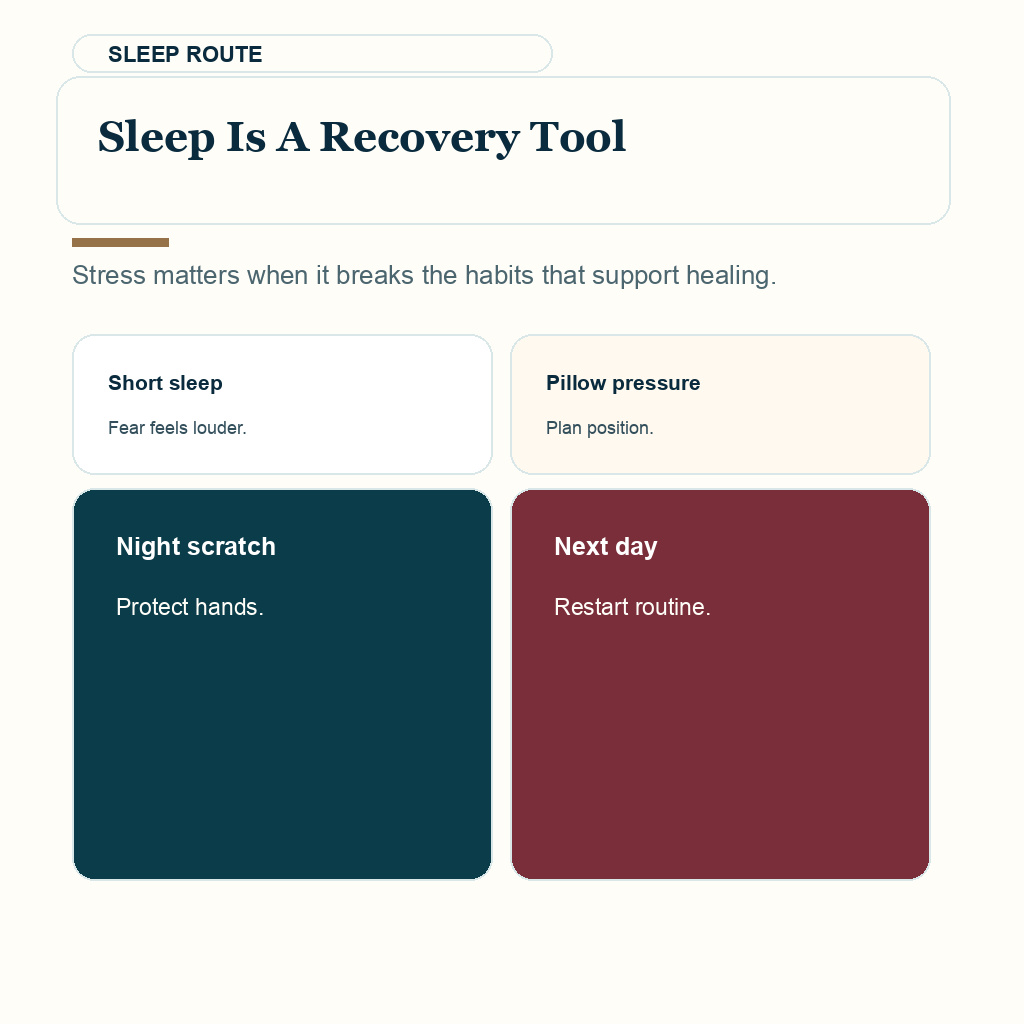
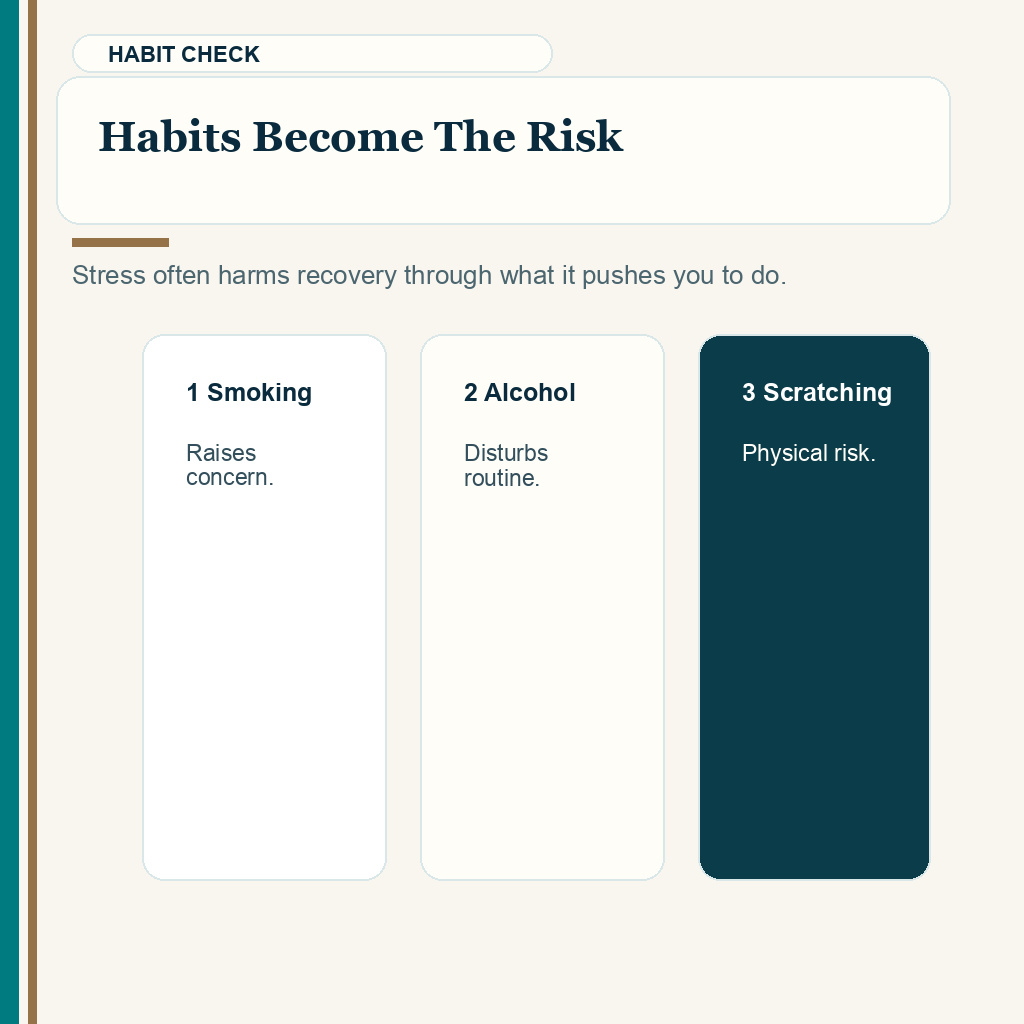
Stress becomes more practical here. A patient who sleeps badly for one anxious night has not usually ruined the surgery. But if anxiety turns into weeks of poor sleep, smoking, alcohol, irregular eating, and constant scalp manipulation, then the recovery environment becomes weaker.
I am not saying the patient must live perfectly after surgery. That is not realistic. I am saying that recovery benefits from stable behavior. Eat properly. Sleep as well as possible. Avoid smoking if possible. Avoid alcohol during the early period. Do not return to heavy exercise too early. Do not let fear become a reason to break the aftercare rules.
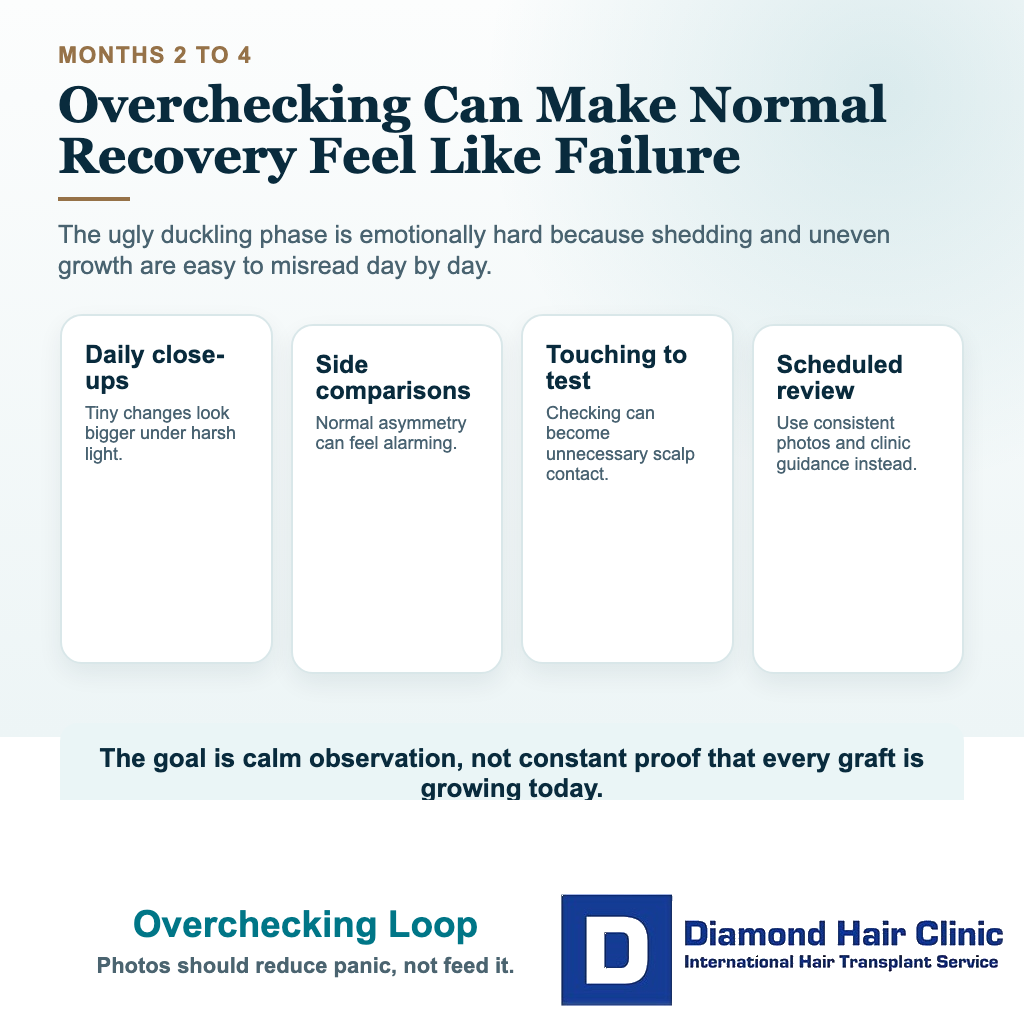
Overchecking is one of the most underestimated problems. A patient may think this is careful monitoring, but it often trains the mind to panic. The transplant is checked under bathroom light, sunlight, flash, wet hair, dry hair, and every possible angle. Each version looks slightly different, and every difference becomes a new worry.
Checking every hour is not medical monitoring. It usually feeds the fear.
For sleep, practical protection matters in the early period. Head elevation and avoiding pressure on the recipient area matter more than chasing a perfect night. Patients who struggle can review my guide about sleep after a hair transplant, because sleeping carefully is a physical instruction, not a test of emotional strength.
Exercise should also return with timing, not impatience. If stress makes a patient rush to the gym just to feel normal again, that can create unnecessary sweating, pressure, and friction. Feeling physically ready should not be confused with healed tissue, especially when judging exercise after a hair transplant.
Stress that needs surgeon review
Stress itself is not usually the reason to contact the surgeon urgently. The reason to contact the surgeon is a specific medical or mechanical concern. Increasing pain, spreading redness, pus, fever, black skin, worsening swelling, strong bleeding, meaningful trauma, or a clear event where grafts may have been pulled should be reviewed.
Uncertainty during washing, crust removal, or accidental contact in the first 10 days also deserves proper guidance. Do not improvise because of embarrassment. One clear question early can prevent a careless action.
I also try to move patients away from sending ten anxious messages every day because the scalp looks different in a new light. That is not because their feelings are irrelevant. It is because the surgeon needs clear information to help.
The best message is structured. Send the date of surgery, the day or month after surgery, the treated areas, the graft number if you know it, current medications, and clear photos in the same lighting. Explain exactly what changed and when. This gives the surgeon a real clinical picture.
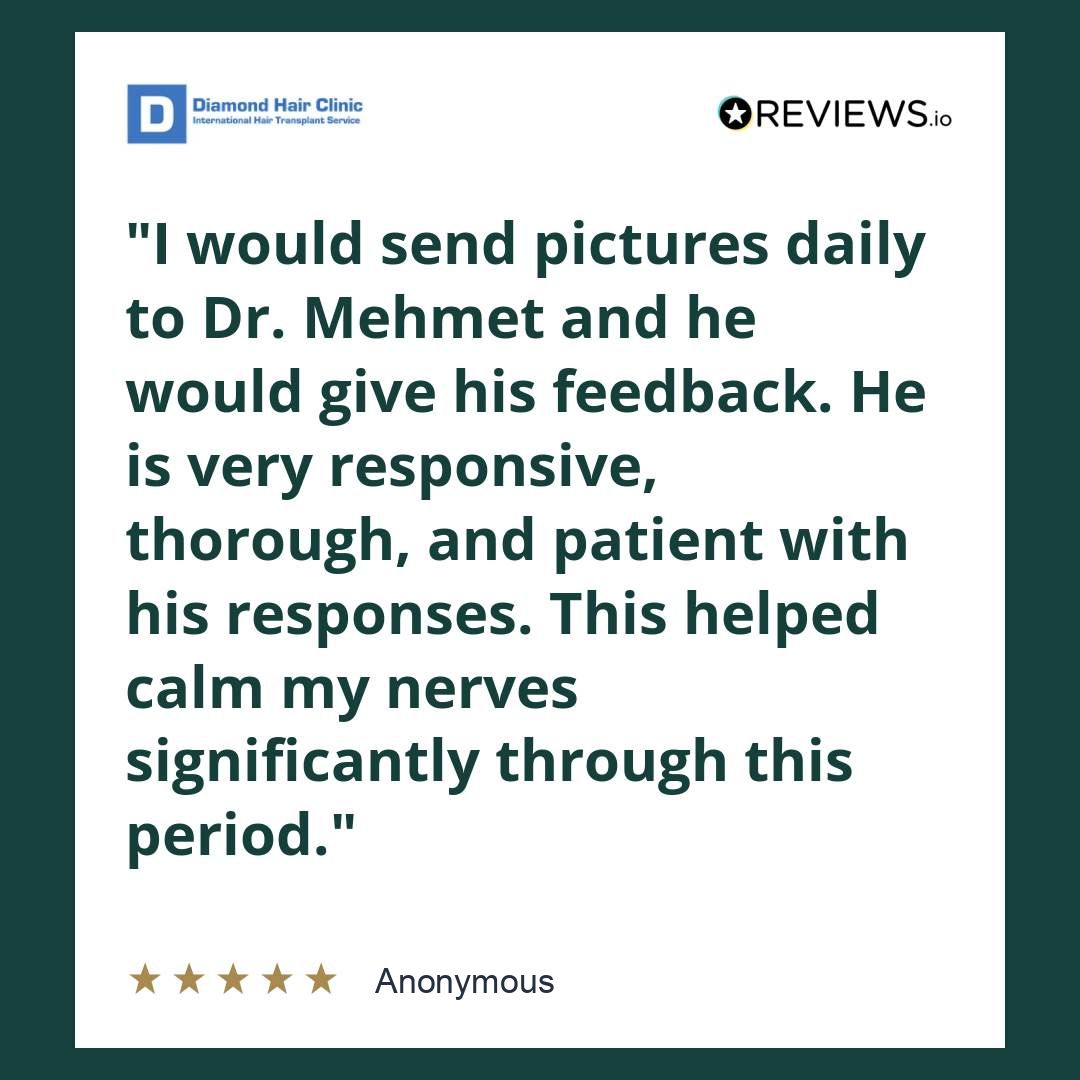
Read this review excerpt
I would send pictures daily to Dr. Mehmet and he would give his feedback. He is very responsive, thorough, and patient with his responses. This helped calm my nerves significantly through this period.
Fear that the transplant has failed at month 3 or month 4 needs a different conversation. That stage often needs perspective, not emergency action. If the concern continues later, careful comparison and follow up matter before deciding whether it is a failed hair transplant or too early.
Helping the result without obsessing
The best way to help the result is not to control every hair. It is to control the things that are actually under your control. Follow the washing routine. Avoid physical trauma. Sleep carefully in the early period. Avoid smoking and alcohol around surgery as much as possible. Do not scratch. Do not pick. Do not rush back into heat, sweat, swimming, sauna, or aggressive grooming.
After the first protected phase, shift from protection to patience. Here, many patients struggle. They keep trying to find one more action that will speed up growth, whether that means extra products, more photos, supplements, treatments, searching, or comparing.
Sometimes the most intelligent action is to stop disturbing the process.
A hair transplant result grows slowly because hair grows slowly. The follicle does not become stronger because the patient checks it every morning. The graft does not mature faster because the patient worries at night. The result becomes clearer over months, not hours.
Use one consistent monthly photo set after the early washing period. Same room. Same light. Same hair condition. Same angles. This gives useful information without feeding obsession.
If anxiety is becoming severe, treat it as its own recovery issue, not only as a graft question. I do not mean that every anxious moment needs medical treatment. I mean that emotional overload can damage judgment. The emotional crash in hair transplant recovery can push someone to chase unnecessary treatments, keep touching the scalp for reassurance, or request early repair surgery before the first result is ready to judge.
I discuss hair transplant regret after surgery openly because regret can be a temporary emotional phase, or it can be a sign that the original decision was rushed or poorly explained. The difference matters.
Before choosing a clinic
Stress after surgery is often reduced before surgery. A patient who receives a clear explanation, a realistic plan, and direct medical accountability usually has less panic later. A patient who is sold a package, a graft number, and a few dramatic photos may feel abandoned when the early recovery becomes uncomfortable.
I do not separate emotional recovery from clinic selection. If a clinic cannot explain who will design the hairline, who will create the recipient area incisions, who will manage the donor area, and who will answer aftercare concerns, the patient may feel lost after surgery.
A superficial clinic may oversimplify everything. It may promise fast healing, full coverage, high graft numbers, and easy density. It may make the patient believe that the surgery is almost casual. Then, when shedding begins or the scalp looks strange, reality feels like a betrayal.
A useful consultation lowers anxiety by explaining limits. The donor area is a lifetime budget. Dense looking photos can be misleading. The crown may need a different strategy. Future hair loss can change the appearance even when the transplant grows.
The patient also needs to know who is medically responsible. Who performs hair transplant surgery matters because many patients discover too late that the person selling the surgery and the person controlling the surgery were not the same.
Reading the result by timing and pattern
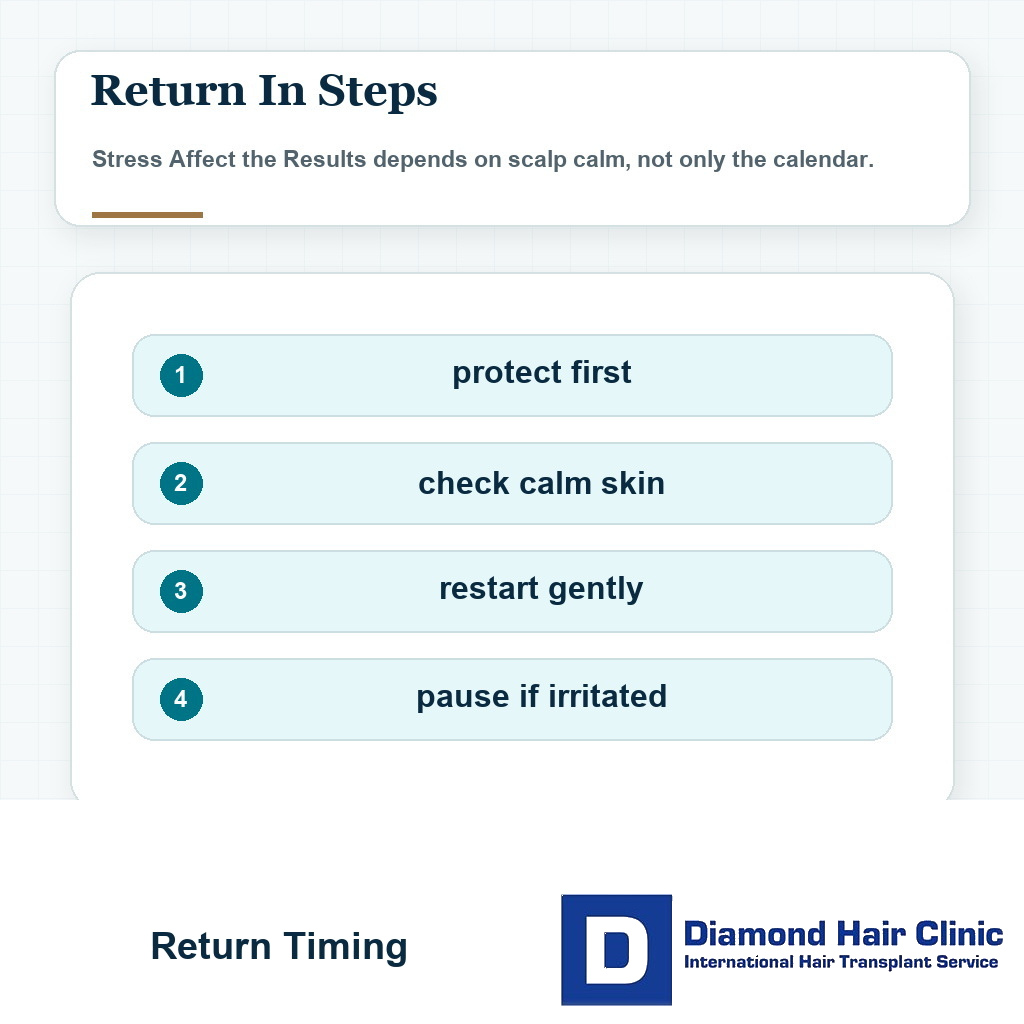
Read the result by time, pattern, and evidence, not by fear. In the first 10 to 14 days, your job is protection. In the first months, your job is patience. Around month 4, early growth may begin to show. Around months 6 to 9, the picture usually becomes more meaningful. Around 12 to 18 months, the result is much easier to assess properly.
Even then, the judgment should be precise. Is the problem poor growth, poor distribution, wrong hair direction, continued native hair loss, limited donor planning, unrealistic density expectations, or an unnatural design? These are different problems, and they need different answers.
Stress can make all of them feel the same. It turns every concern into failure. Surgical judgment does the opposite. It separates temporary shedding from poor planning, normal redness from infection, slow growth from failure, and emotional regret from a real technical problem.
So my answer to the original question is calm but firm. Stress after a hair transplant does not usually destroy transplanted grafts by itself. The bigger risk is what stress makes the patient do, how it affects sleep and habits, and whether it pushes the patient to judge the result too early.
Protect the scalp in the first 10 to 14 days. Respect the recovery timeline. Do not let anxiety make surgical decisions for you.
A well planned transplant deserves careful aftercare and patient follow up. A poorly planned transplant deserves balanced review, not endless reassurance. In both situations, panic is not the tool that helps you see clearly.