


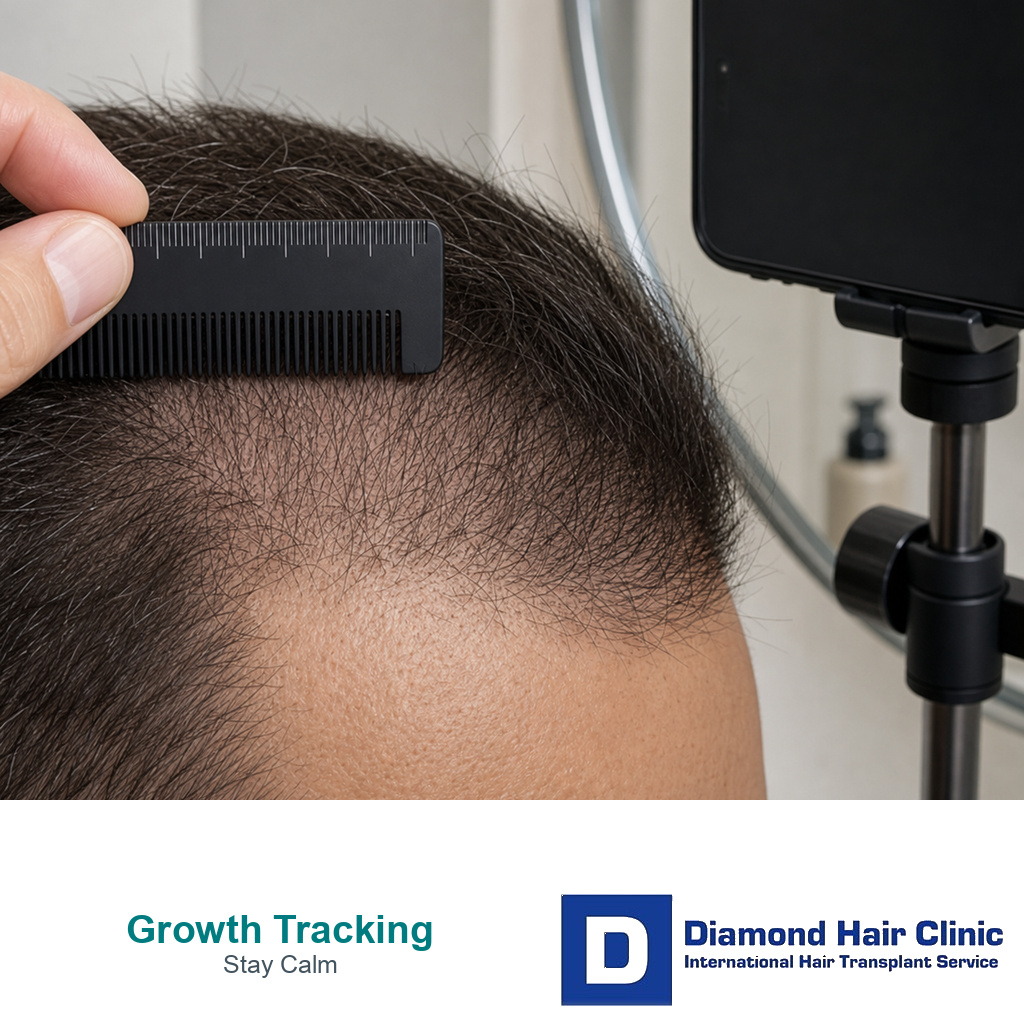
Tracking Hair Transplant Growth Without Panicking
The best way to track hair transplant growth is to take clear photos once a month, under the same light, from the same angles, with the same hair length when possible. Do not judge the result every day, and do not use a laser cap after a hair transplant as a daily test of growth. Daily checking after a hair transplant can turn normal recovery into anxiety. Month 3 or month 4 is usually too early to judge density, month 6 is still a developing stage, the front is usually easier to assess around 12 months, and the crown or slower cases may need 15 to 18 months.
In the first year, your job is not to prove that the transplant succeeded or failed every morning. Your job is to document changes clearly, follow the aftercare plan, protect your native hair, and know when a real warning sign deserves medical review. One anxious photo can show lighting, hair length, a bad morning, or a styling change. A repeated monthly set can show a trend. That simple routine gives you better evidence and much less fear during recovery. At month seven, another patient’s best photo can mislead you. Your own treated zone, same light, same hair length, same angle, and the operation notes give a cleaner comparison.
Record a change in the question when slow growth turns into new hair fall after visible growth. A density review, a shedding review, and a diffuse health related shed are different routes, even when the mirror shows the same scalp.
When a large shed has already happened, make the next calm photo your new recovery baseline. Do not keep trying to count every fallen short hair. Save the date, note whether the scalp was calm or symptomatic, and compare the next monthly photos from the same angles. If you are unsure whether the shed is harmless, separate hair shedding from graft loss before changing the photo routine.
Give each photo a reason before you take it. One set can track growth, another can show a symptom, but a random zoom usually only feeds the worry.
Patients check often because a hair transplant is visible, emotional, and slow. You may feel fine one day, then see your scalp under a bathroom light and worry again.
But photographs can mislead you if they are taken randomly. A wet hair photo, a flash photo, a short haircut, or a harsh ceiling light can make a normal stage look like a poor result. This matters even more when a patient is judging progress before a wedding or formal photo event. The record should make the picture clearer and more accurate, not more obsessive.
Progress photo frequency
For most patients, once a month is enough. I know this sounds too little when you are worried, but the scalp does not change meaningfully every day. Hair growth is slow, and tiny weekly differences are very easy to misread.
If you take photos every day, you will start judging shadows, redness, hair angle, oiliness, and camera distance instead of real growth. This can make a normal recovery feel unstable. The patient begins to look for proof instead of observing progress. A more focused way to read very small sprouts is to compare them with fine new hairs after FUE over several photo checks.
Monthly documentation works best after the first washing period. The early days are for healing and graft protection, not judging final density. Patients with little or no shedding after a hair transplant still need the same monthly photo rhythm. During the first 10 days, the priority is careful washing, crust removal at the right time, and avoiding trauma to the recipient area.
After the first 10 to 14 days, photos can become part of your record, but they should still be simple. Front view, both temples, top, crown, and donor area are usually enough. If the concern is one side, include both sides so they can be compared fairly.
Patients should not ignore their transplant. The aim is to observe it intelligently. There is a large difference between documenting once a month and interrogating your scalp five times a day.
For a very anxious patient, one fixed photo day each month can help. Put it in the calendar, take the same set, save it, and then stop. This creates a boundary around the worry.
That boundary matters because recovery can easily take over the mind. If every mirror becomes an examination, the patient stops living normally and starts treating normal life as a threat to the transplant.
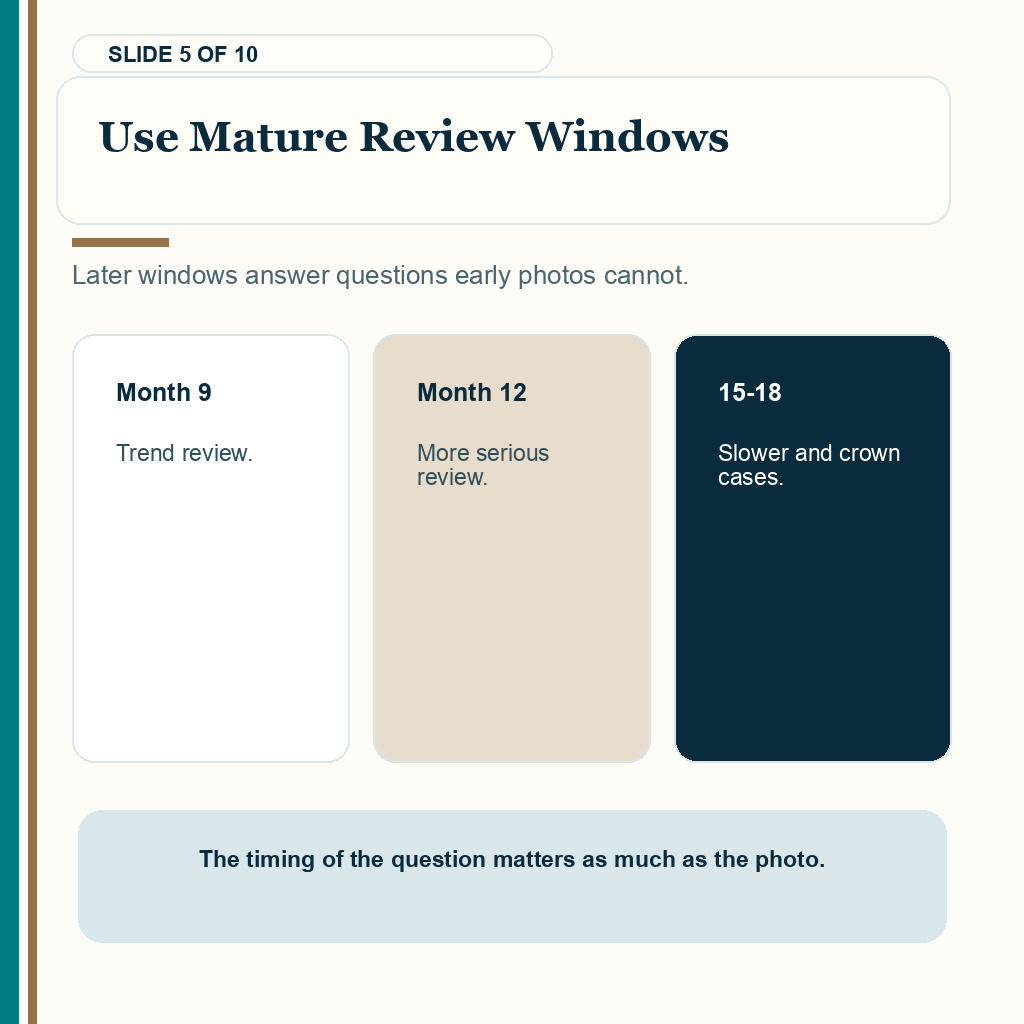
If you are trying to decide whether the result is a failed hair transplant or too early, the timing of your photos matters as much as the photos themselves. A month 3 image and a month 12 image are not answering the same question.
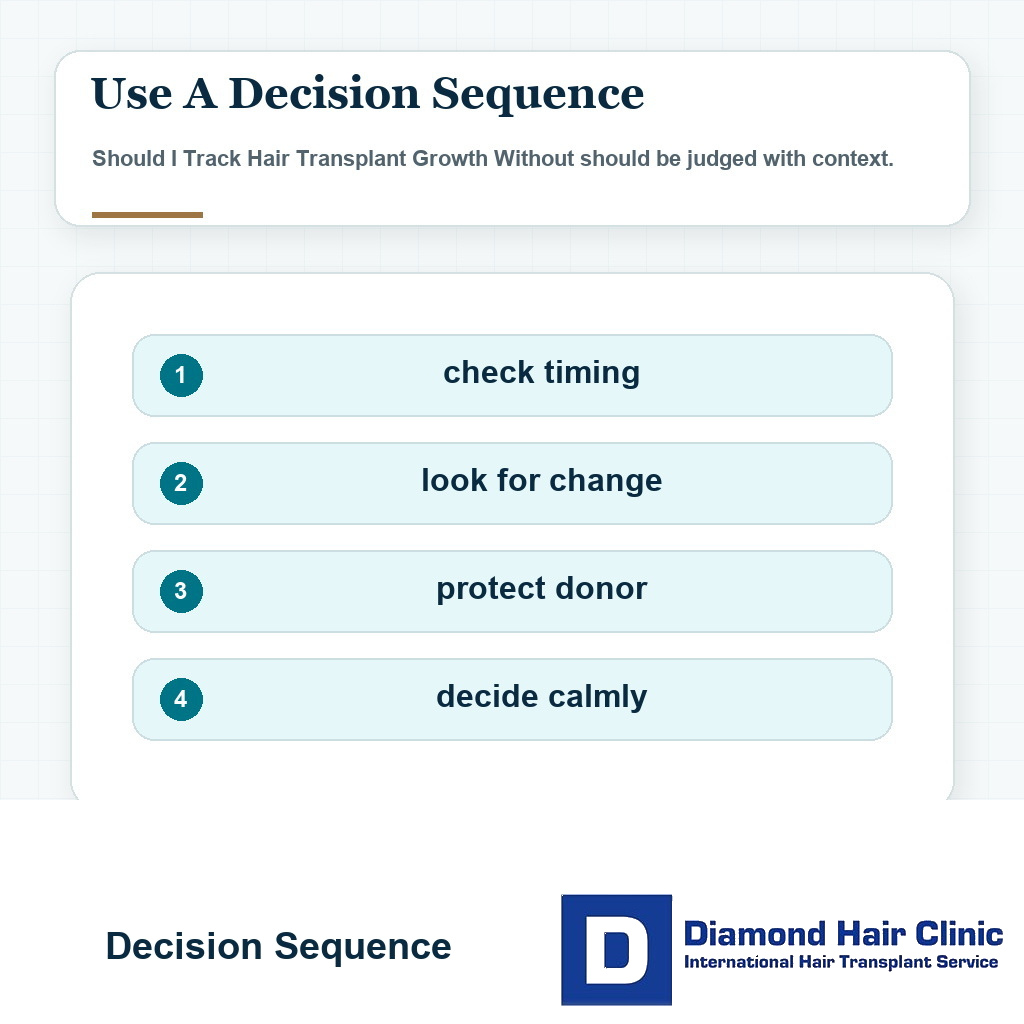
Lighting and angles for useful photos
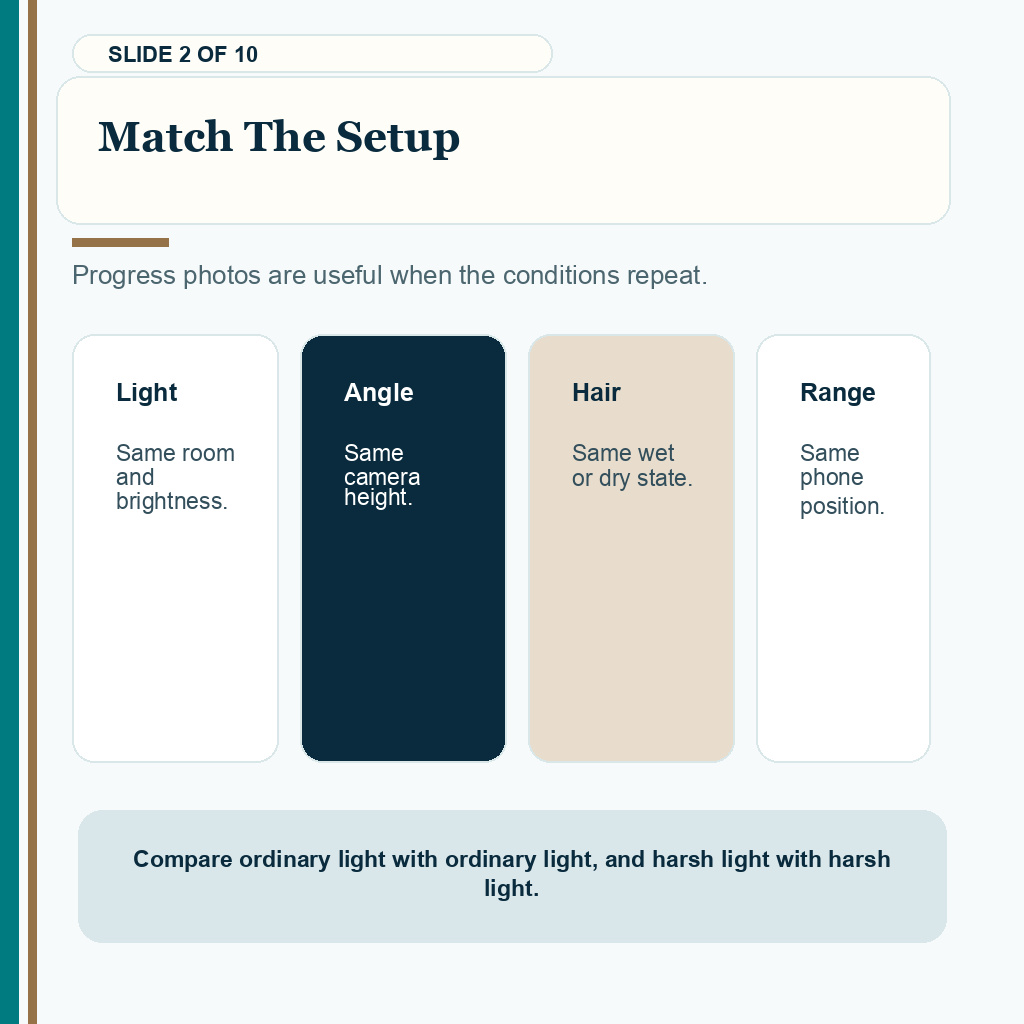
Useful progress photos are boring in the best way. Same room. Same light. Same distance. Same camera height. Same hair direction. Same dry or wet condition. This is how you create a record that a surgeon can actually interpret.
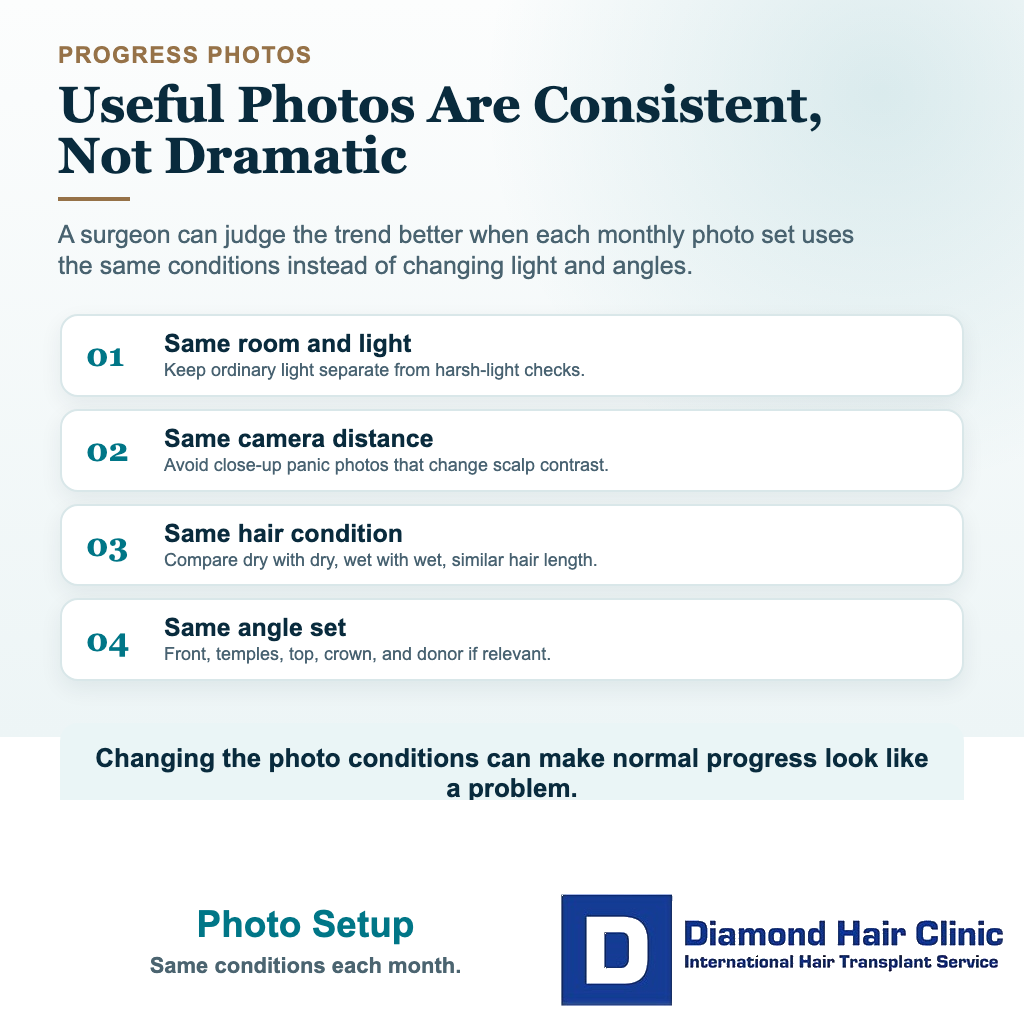
The worst comparison is a flattering photo from one month against a harsh photo from another month. A soft window light photo can make the hair look stronger. A direct bathroom light can expose scalp contrast. A flash photo can make the same area look dramatically thinner. If another person’s online progress photo is what started the worry, first read why online hair transplant photos can mislead recovery judgment before treating that comparison as evidence. Keep the flattering photo and the harsh one, but label them so they do not argue with each other later.
If you are worried, both ordinary light and harsher light can be useful, but those two categories should not be mixed randomly. Compare ordinary light with ordinary light. Compare harsh light with harsh light. Otherwise, you are comparing the lighting, not the transplant.
From month 4 through month 6, keep ordinary light and direct light in separate records. The harsher set can help the clinic understand the concern, but it should not be compared with a softer photo and treated as final evidence.
Hair condition also matters. Wet hair separates and shows the scalp. Oily hair clumps. Very short hair removes styling coverage. Longer hair can hide thin areas. None of these views is automatically false, but each view answers a different question.
Hair transplant results in harsh light and wet hair can reveal weaknesses, but those conditions can also exaggerate concerns if the patient treats them as the only truth.
A useful photo set should show the result as you live with it, not only as you fear it. Normal social light matters, and stronger light can be added if the patient is concerned.
Keep the camera consistent too. Do not push the phone very close to the scalp one month and hold it far away the next month. A close lens can distort the forehead, exaggerate scalp shine, and make the hairline look harsher than it appears in real conversation.
If someone helps you take photos, ask the same person to repeat the same views. If you take them alone, use a mirror or tripod position that can be repeated. Consistency is not perfection. It is a way to reduce the number of variables that can fool you.
Timeline before judging growth
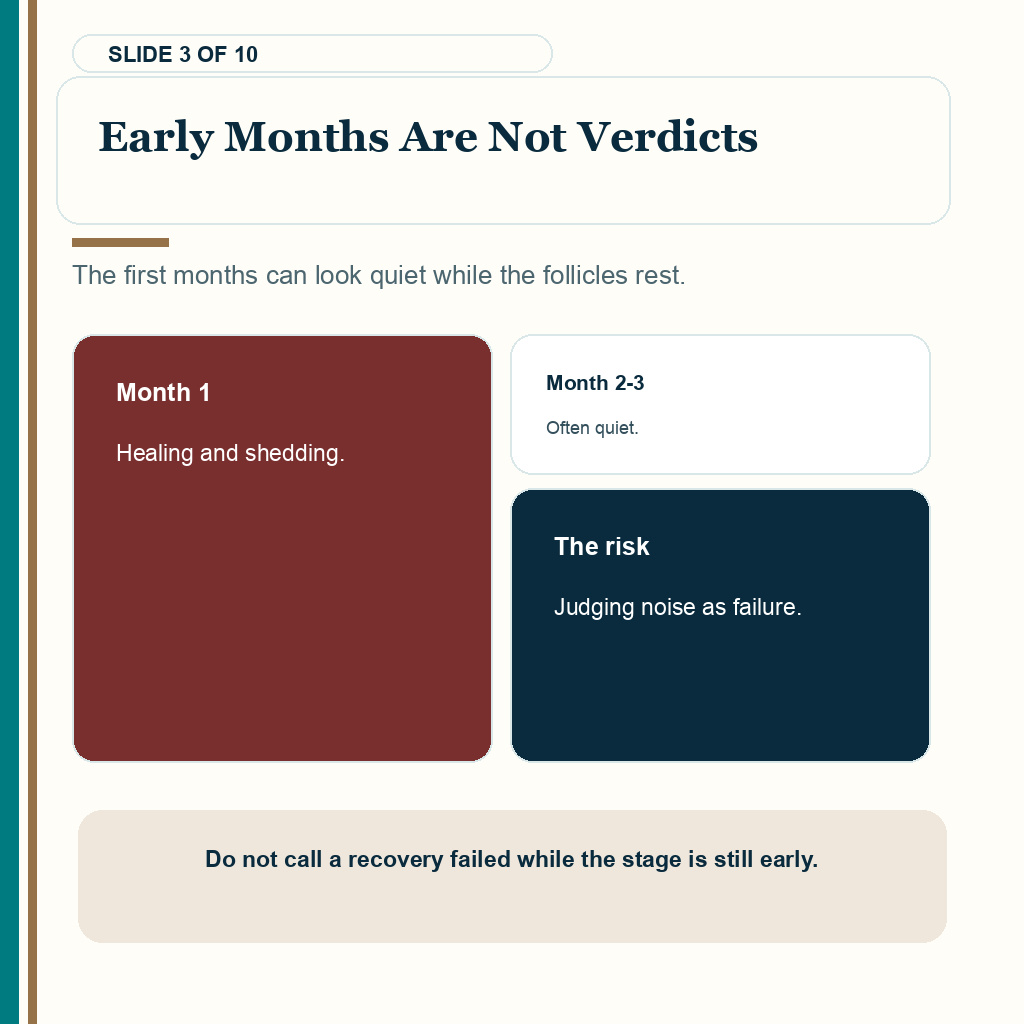
Think in stages, not in daily verdicts. The first month is mainly a healing and shedding period. It is not a density result. Month 2 and month 3 can feel quiet because the follicles are resting while the scalp continues to settle. At the 10 to 16 week point, month three can still look empty, so I judge the trend by comparable photos instead of one harsh view.
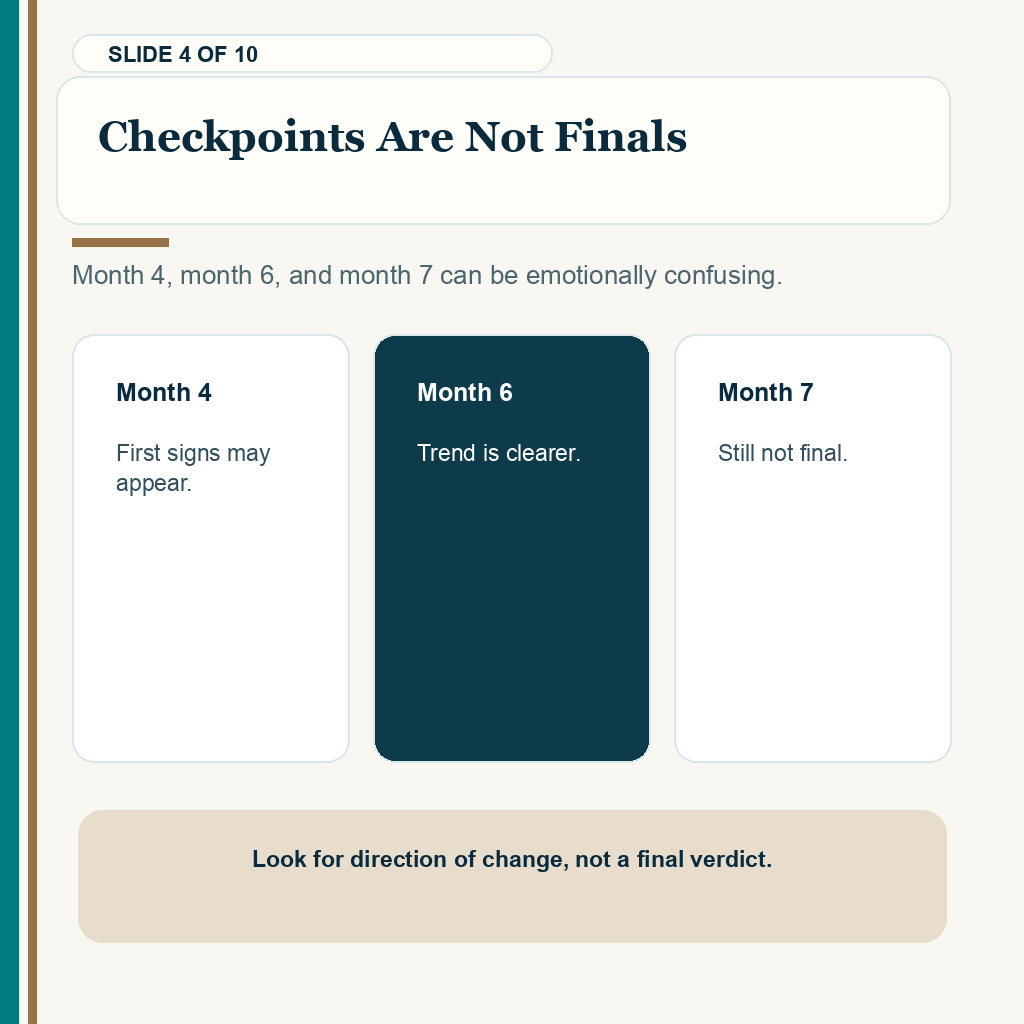
Month 4 can show the first visible change, but it can also still look disappointing. A month five hair growth check is useful for seeing whether the trend is moving, and a six month density check is more meaningful again. Neither point is the final answer. At this stage, look for direction by checking whether the area is beginning to fill, whether new hairs are becoming longer, and whether the outline is becoming softer and more useful. Online comparison posts can give rough context, but they should not become the verdict on your own timeline.
By month 9, the review usually becomes more serious because enough growth has appeared to judge the trend more fairly. Around 12 months, the one year FUE result review becomes more useful for the frontal hairline and middle scalp. Crown work, slow growers, and some texture changes can continue improving closer to 15 to 18 months.
This timeline matters because it protects patients from two mistakes. The first mistake is calling a transplant a failure too early. The second mistake is ignoring a real problem after the result has had enough time to mature. Tracking should help you avoid both.
When months 9 to 12 still look thin
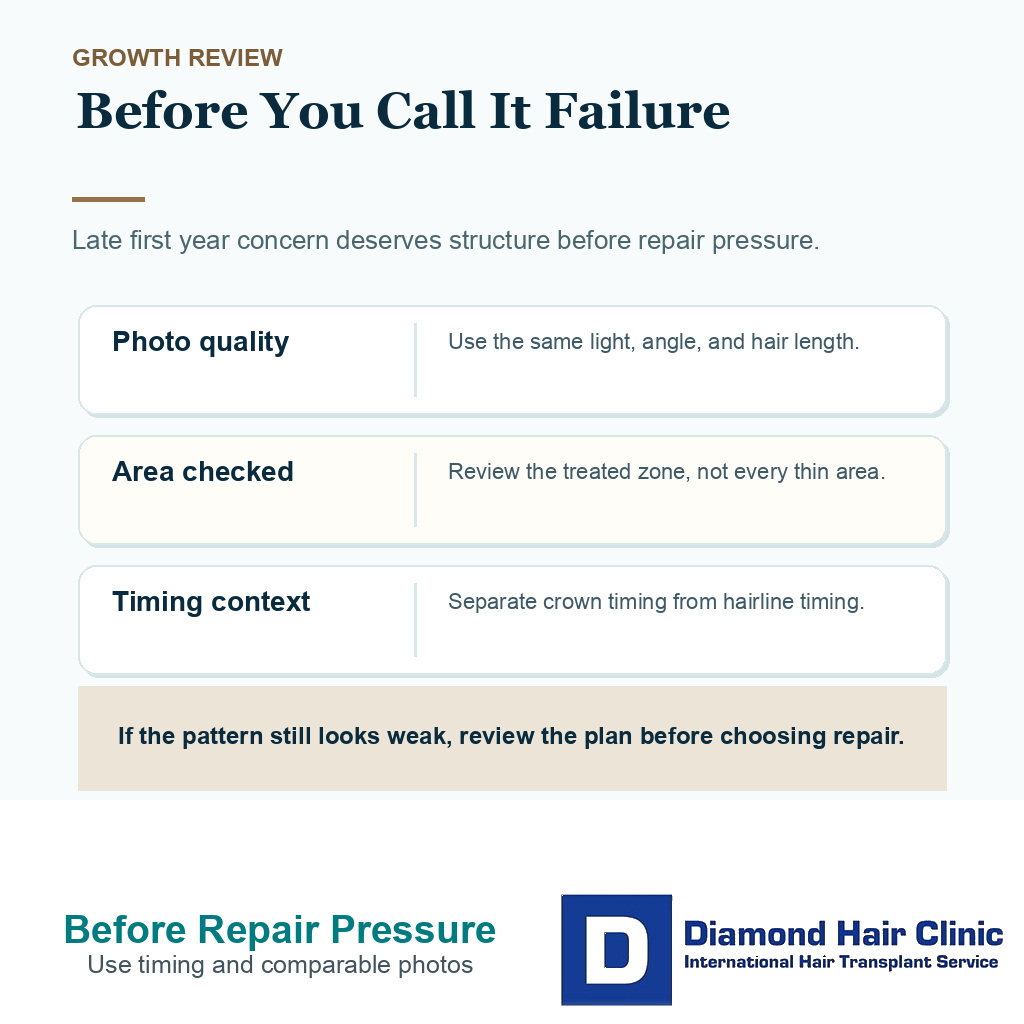
From months 9 to 12, I take the concern more seriously, but I still do not judge from one mirror check. The review needs photos in the same light, treated zones, current hair length, native hair changes, medication changes, and whether the crown or frontal hairline is being judged.
If the trend is flat across comparable photos, the next step is a proper review of growth, design, donor reserve, and native hair, not a rushed repair date. Slow growers and crown work can still change after 12 months, but a careful record prevents late worry from becoming guesswork.
If the worry is starting to feel like failure, compare the record with failed hair transplant or too early before deciding that repair is the only route.
Slow growth can still be normal
Slow growth can still be normal for many months. The early shedding phase can make the transplant look worse before it looks better. Some patients see early signs around month 3 or month 4. Others grow more slowly and feel disappointed until month 6 or later.
The first months are not a straight line. You may see redness improve, then shedding begins. You may see small hairs appear, then feel that nothing changes for weeks. This does not always mean failure.
By month 4, some patients have visible improvement, while others still look thin. A worried patient at month 4 needs context, not panic. Month 4 is a growth checkpoint, not a final verdict.
If you are worried about low density 4 months after hair transplant, the answer depends on pattern, graft placement, hair caliber, redness, shedding, and whether the area is beginning to wake up. One photo alone is rarely enough.
When growth is reviewed, the trend matters more than one isolated day. Gradual filling, thicker hair shafts, softer texture, and better blending with native hair all tell me more than a single anxious photo.
Some patients compare themselves with people who grow quickly. That comparison is emotionally dangerous. A fast grower is not the standard for everyone. The useful detail is whether your own recovery is moving in a reasonable direction.
Months 4 to 8 can feel confusing
These months are confusing because there is enough growth to raise expectations, but not always enough maturity to judge the final result. The patient can see something happening, but also sees gaps, texture changes, uneven sides, or weak density in certain light.
Month 4 can feel exciting for an early grower and disappointing for a slow grower. Month 6 may show real change, but the hair can still be thin, wiry, or difficult to style. Around months 6 to 8 can be especially frustrating because the patient feels close to an answer, while the result may still be developing or still too uneven to judge from one photo.
If the worry is thin coverage during that rounded window, the thin growth around seven months review keeps the density question tied to matched photos, symptoms, and the original graft plan.
One side can seem slower and create worry. Sometimes this reflects real uneven growth. Sometimes it is lighting, sleeping side, hair angle, shaving pattern, or the original distribution of grafts.
If one area worries you more than the rest, label the zones before comparing. The front, midscalp, crown, temples, donor, and native hair behind the transplant answer different questions. A thin patch in one planned zone during the early growth period should be compared with the original graft map and monthly photos, not used as the verdict on the whole surgery.
If you are comparing sides, remember that asymmetry during recovery is not always a failure. One side growing slower after hair transplant has to be judged with timing, pattern, lighting, and the original graft plan.
Texture needs the same timing. New transplanted hair can appear coarse, wiry, or directionally awkward at first. With many patients, it improves as the hair cycles mature. If this is your main concern, treat wiry or coarse transplanted hair after hair transplant as a timing question first. Not every texture problem is normal, but early texture should not be judged like final texture.
Around months 6 to 8, the result is still not final. The direction of change matters. A result that is clearly improving deserves patience. A result that shows no meaningful growth, poor design, or wrong angles deserves a more careful review.
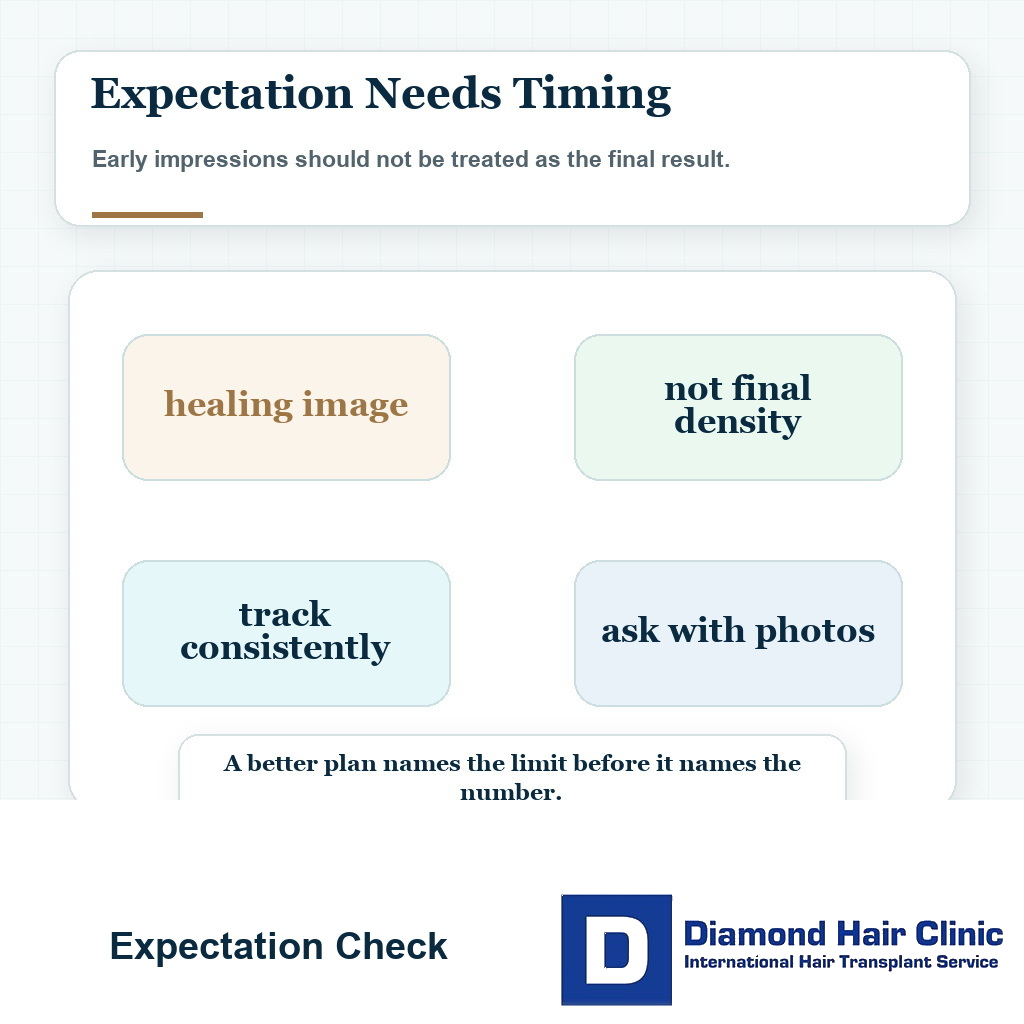
Density needs a trend, not one harsh photo
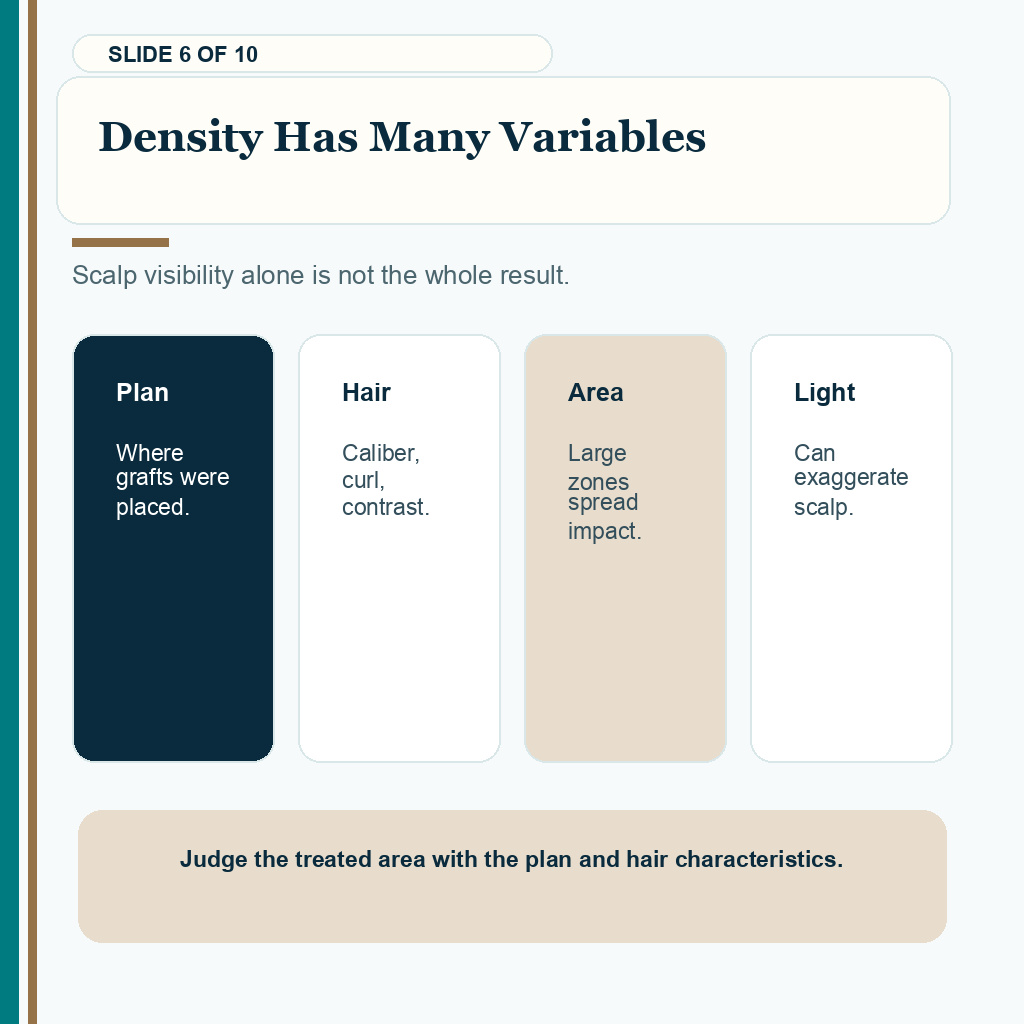
Judge density by looking at the treated area, the graft plan, the hair caliber, the surface area, and the lighting. Do not judge density only by asking whether the scalp is visible. Scalp visibility can happen even in good results under strong light or wet hair.
A hair transplant does not recreate original teenage density across a large area. It creates a visual improvement with a limited donor supply. The same number of grafts can look strong in one patient and modest in another.
If the hair shafts are thick, wavy, and low contrast against the scalp, coverage can look stronger. If the hair is fine, straight, dark against pale skin, or placed across a broad area, the result can look thinner even when the grafts grow.
Density disappointment is not always about failed growth. The reasons why some hair transplant results look thin often include surface area, graft number, hair quality, native hair loss, and unrealistic expectations.
When you evaluate density, look at whether the transplant improves normal life rather than only close up photographs. Better styling, better facial framing, and less scalp contrast usually matter more than a harsh inspection under bathroom light.
First confirm whether the weak area was actually transplanted. Patients sometimes worry about a gap or a thin zone that was not part of the surgical plan. In that case, the issue is not failed growth. It is a planning issue or a future session issue.
Density needs judgment as a clinical and visual result, not as a daily mirror argument. The mirror is useful, but it is not always fair.
Patients should separate density from styling. A young transplant may not style the way you want yet. Short new hairs may stand differently, bend differently, or catch light differently. That styling problem can improve as the hair grows longer and matures.
When the hair becomes long enough to style, the cosmetic meaning of the transplant often changes. A small increase in length can make the same density look more useful. Very short early hair should not carry the whole judgment unless there is a clear design problem.
Once the early shedding and regrowth have settled, transplanted scalp hairs can lengthen at a similar rate to hair in the donor area. I would not promise that they will match every native hair beside them. Follicles have their own growth and resting phases, and native hair affected by pattern hair loss may become finer and shorter. A difference in length alone does not tell me whether the transplanted hairs are actually growing more slowly.

Donor area changes to watch
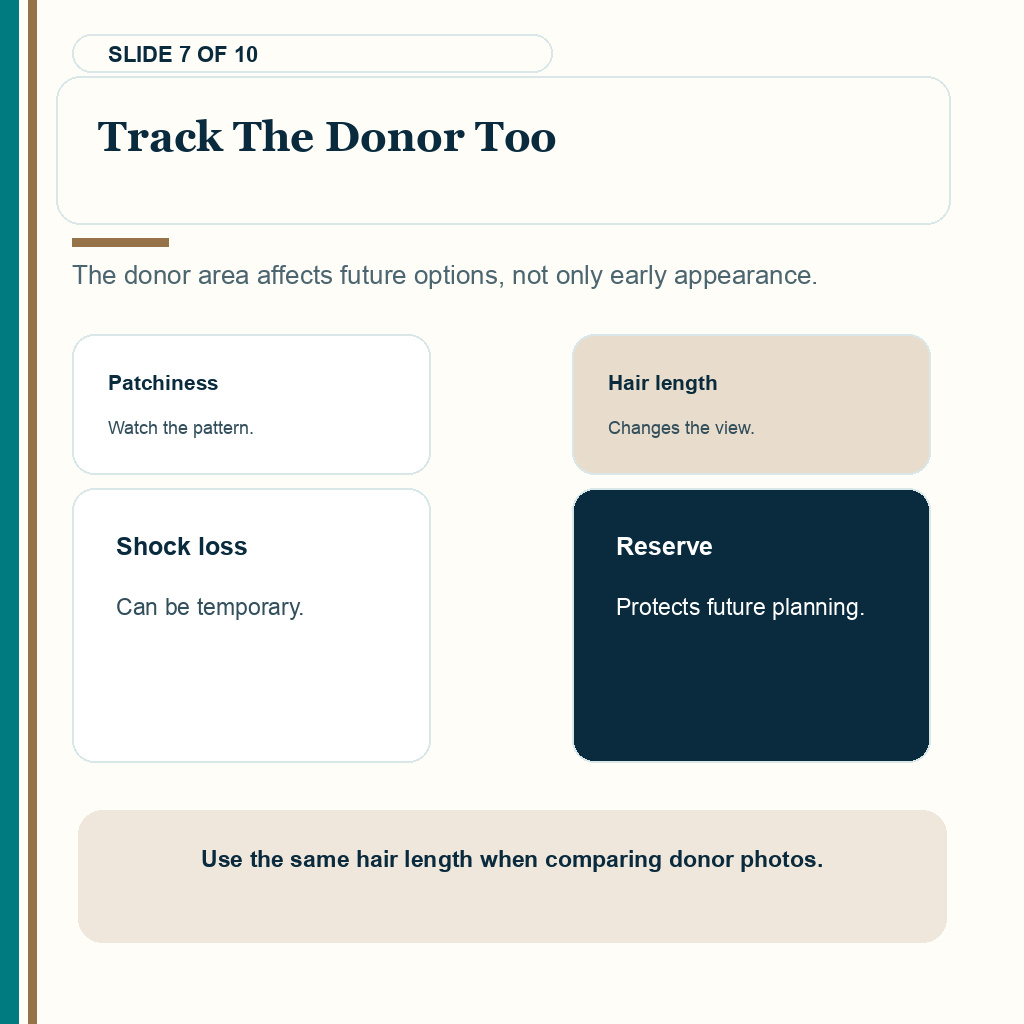
The donor area should be photographed during recovery too, especially after larger FUE sessions. Patients often focus on the recipient area first, then later notice patchiness or see through areas in the back and sides.
In the early weeks, the donor area can look red, dotted, uneven, or thinner because of haircut length, healing, and shock loss. This can be temporary. Do not panic from one short haircut under harsh light.
Still, not every donor concern should be dismissed. If the extraction pattern looks patchy, if one zone was harvested too heavily, if the donor looks worse month after month, or if short hair exposes clear depletion, the case deserves review.
When tracking the donor, use the same hair length if possible. A donor photo at 1 millimeter cannot be compared fairly with a donor photo at 2 centimeters. Hair length changes the whole impression.
Native shock loss can also affect the appearance after surgery. Temporary shedding around operated areas can make both the recipient and surrounding hair look weaker for a period. Native hair shock loss after hair transplant should be separated from failed graft growth before the result is judged.
The donor area is limited and has to be protected for future planning. Tracking it is not vanity. If a patient later wants touch up grafts or refinement, crown work, or repair, the remaining donor condition will decide how much is still possible.
Crown growth needs different timing
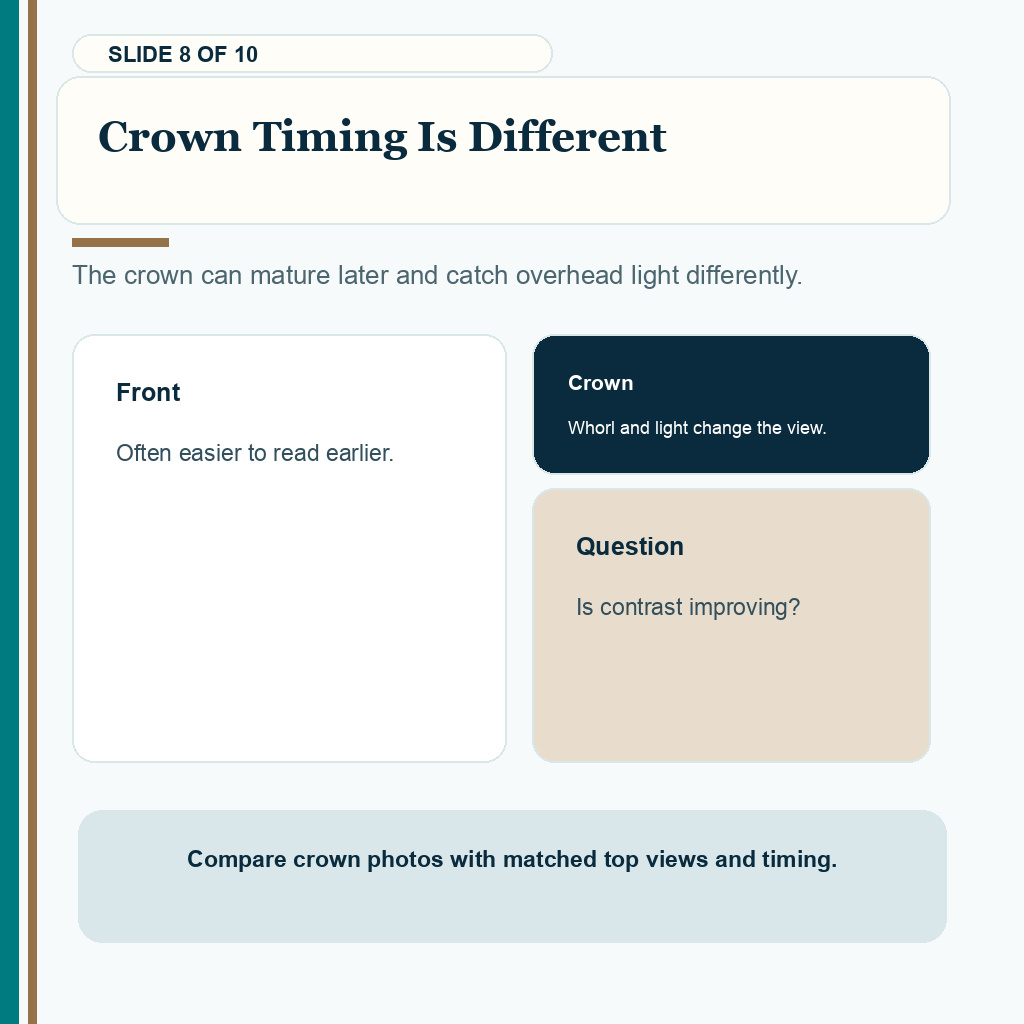
Crown growth should usually be judged with more patience than frontal hairline growth. The crown is a difficult area because the hair changes direction around a whorl, the surface area can be large, and light reflects strongly from above.
A crown can look thin even while it is improving. This is frustrating for patients because the crown is often seen in mirrors, elevator lights, photographs, and overhead light. It can feel more exposed than the front.
When crown progress is reviewed, the useful questions are whether the contrast is decreasing, whether the whorl is being respected, and whether the grafts are improving coverage in the planned zone. Not every crown will look dense under every light.
Crown hair transplant planning must be realistic from the beginning. The crown can consume many grafts while still giving a moderate visual improvement.
If you had crown work, your monthly photos should include a top view from the same height and the same light. Do not compare a dry crown in soft light with a wet crown under flash. That comparison will almost always punish the result.
Many crown cases continue to mature later than the patient expects. If the front looks better earlier, the crown may feel behind. That does not always mean the crown failed, but it does mean the patient needs careful and consistent documentation.
Things not to change while tracking growth
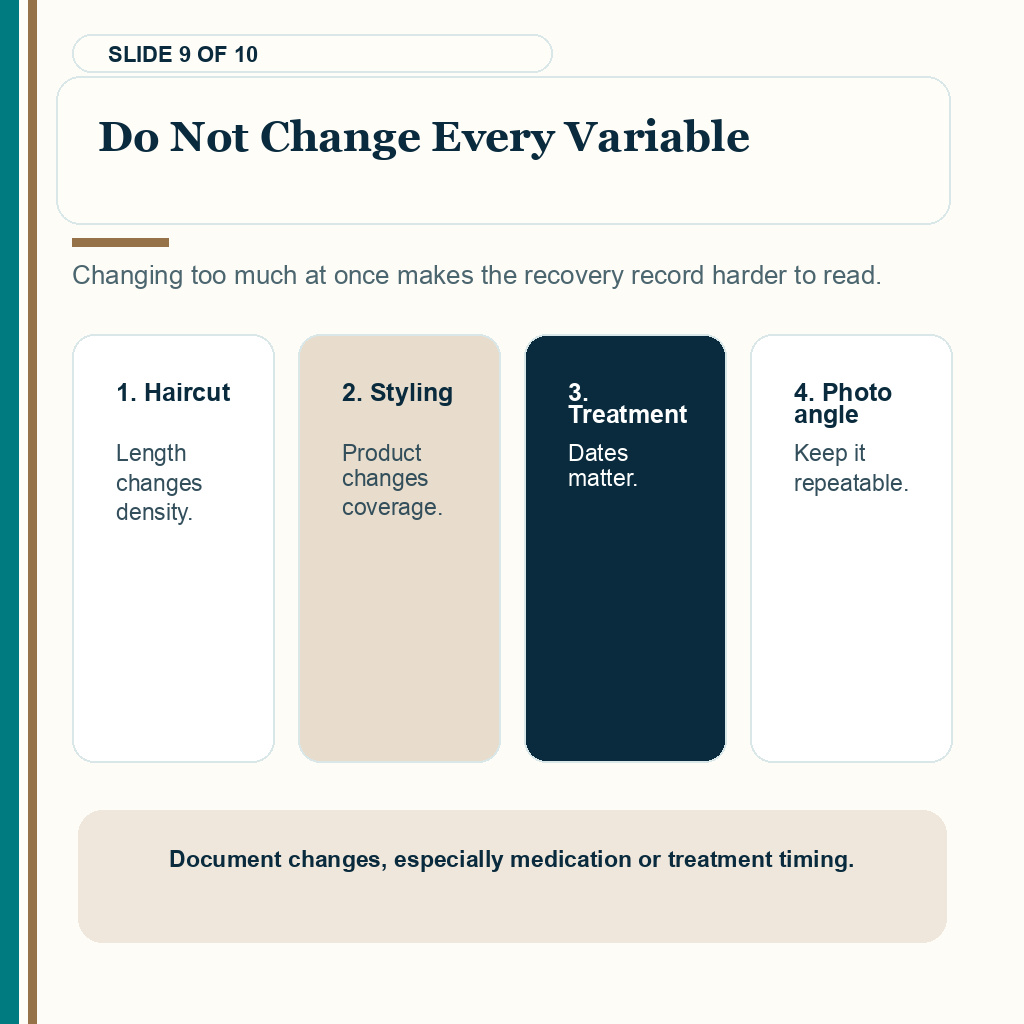
Try not to change too many things at once while you are judging progress. If you change haircut length, lighting, styling products, medication, PRP, supplements, and photo angle all at once, the record becomes difficult to interpret.
Appropriate treatment can still be helpful. The timing just needs to be documented. If you start or stop finasteride, dutasteride, minoxidil, or another treatment, write down the date. If you add PRP or exosomes after hair transplant, red light therapy after a hair transplant, or another treatment, record when it was done and why it was recommended.
Be careful when another treatment is being considered only because a month 4 photo looks weak. Sometimes extra treatment is reasonable. Sometimes the best treatment is time, stable documentation, and a proper review later. If medication is part of your plan, the guide to finasteride before or after hair transplant may help you separate routine support from panic decisions.
Native hair loss can change the picture
Native hair loss can change the appearance of a transplant even when the transplanted grafts are growing. That is one reason I track more than the transplanted area.
If the hair behind the transplanted zone becomes thinner, the result can look weaker. The patient may think the transplanted hair failed, when the real change is ongoing miniaturization around it.
This matters especially in diffuse thinning patients, younger patients, and patients who cannot or do not want to use medication. The surgical plan must respect the fact that native hair may continue to change.
Look at the zones next to the transplanted area as well. A middle scalp becoming more see through, a crown opening, or hair behind the hairline becoming finer can change the visual blend even when the transplanted grafts are growing normally.
Useful tracking includes medication history too. If you started, stopped, or changed finasteride, dutasteride, minoxidil, PRP, or another treatment, record the date. A shedding episode after changing treatment can confuse the recovery picture. Stopping finasteride after surgery should be a deliberate decision, not a reaction to one anxious photo.
The transplant should not be judged in isolation. It belongs to a living scalp with native hair, transplanted hair, donor supply, medication decisions, and future hair loss risk. Long term planning matters because all of these parts change the same visual result.
Contacting the clinic instead of waiting
Get immediate clinic review if there is increasing pain, spreading redness, pus, fever, black skin, strong swelling that worsens, or a sudden event where grafts may have been rubbed or pulled. Those are not progress tracking questions. They are medical review questions.
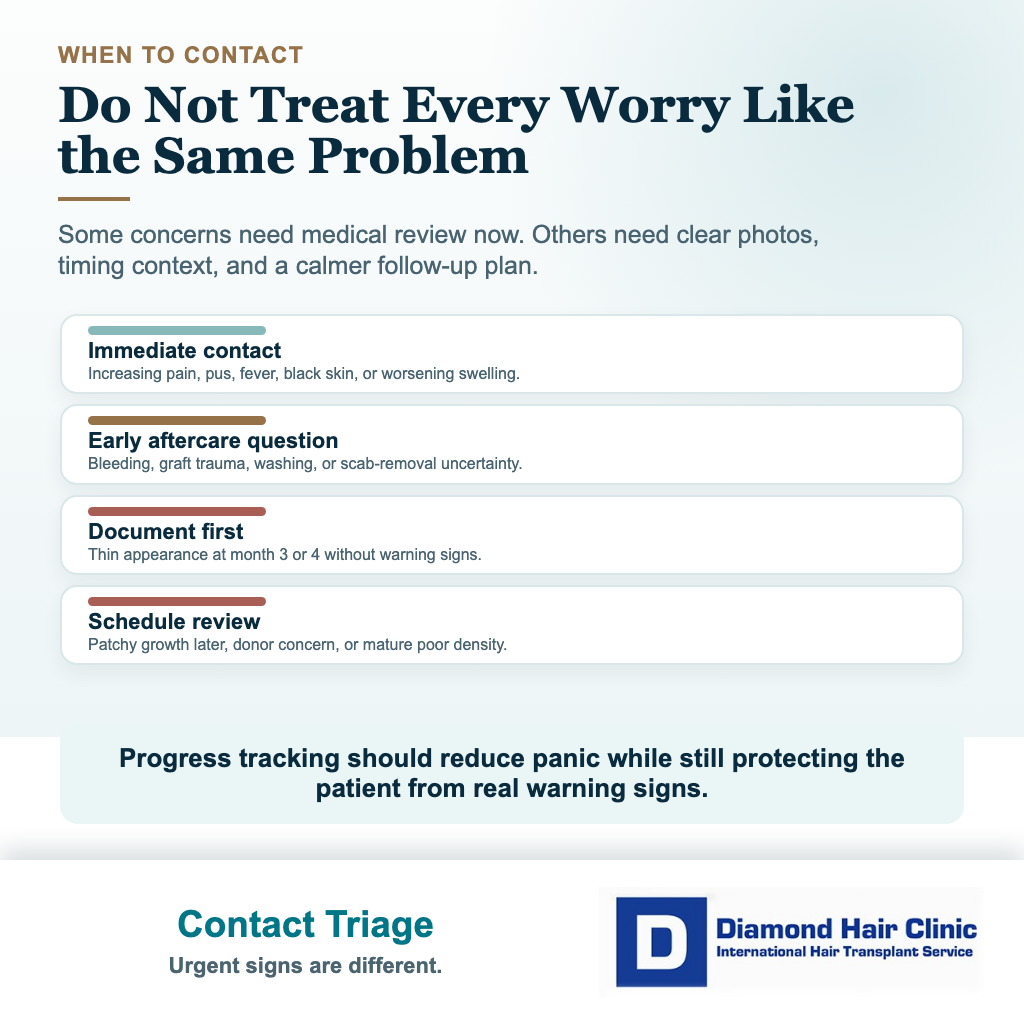
Ask the clinic as well if you are unsure about washing, scab removal, bleeding, or trauma in the first 10 days. Early aftercare should not be improvised from fear.
For routine recovery concerns, the timing is different. A thin look at month 3 or month 4 may not require urgent action. A patchy area at month 6 may deserve documentation and follow up. A mature result at 12 to 18 months with poor density, wrong direction, or unnatural design deserves a proper assessment.
If you are still in the early healing period, follow the clinic’s instructions and use the guide to hair transplant aftercare to understand the principles, not to improvise from fear. Confusion during washing can create unnecessary worry, especially when scabs begin to loosen.
Clinic contact is useful when something is medically uncertain, but anxious daily messages based only on new lighting or a different mirror often increase stress without improving the plan.
Good follow up explains what is normal, what should be watched, and what needs immediate attention. Follow up is part of surgery, not an extra courtesy.
Progress photo proof filter
Four checks before judging growth photos
Progress photos should reduce confusion, not create a daily trial against the scalp. A useful set compares the same conditions and asks a clear question.
Same setup
Do the photos match each other?
Changed lighting, camera distance, wet hair, or styling can create a false problem.
Use a planned interval rather than daily mirror checking, unless the clinic asks for closer follow-up.
Use this as a planning frame, not a diagnosis or approval for surgery. The final plan still depends on donor reserve, recipient area anatomy, hair type, medical history, and future hair loss risk.
Photos to send when you are worried
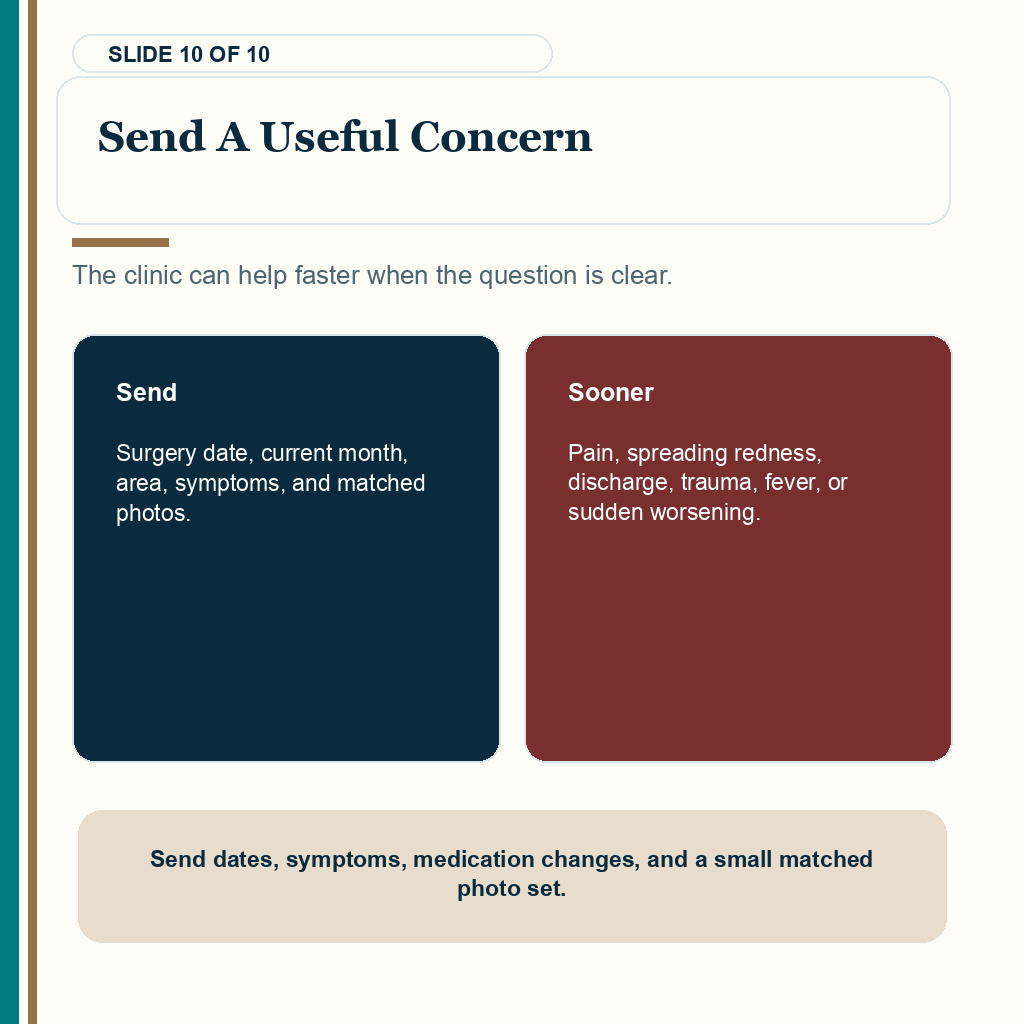
Send fewer photos, but make them more useful. A small set of five or six clear images usually helps more than twenty emotional close up photos taken under different lights. Include the front, both temples, the top, the crown if it was treated, and the donor area if that is part of your concern.
Also include the date of surgery, the area treated, the graft number if you know it, your current medications, any treatment changes, and the exact symptom or worry. If there is pain, spreading redness, pus, fever, black skin, trauma, or worsening swelling, say that clearly and seek immediate clinic review.
This helps the surgeon separate a normal stage from a warning sign. It also reduces back and forth messages that create more anxiety without giving better medical information.
Staying accurate without panicking
Being clear does not mean pretending every photo is perfect. In a growth log, it means comparing the same zone, light, hair length, and angle before deciding whether the sequence really shows a problem.
I have seen patients create unnecessary suffering by checking every angle every day. I have also seen patients ignore real concerns because they were afraid to hear the truth. Neither approach is helpful.
The middle path is simple and practical. Take one clear photo set each month under the same light. Keep hair length, camera distance, and angles as consistent as possible. Record medication changes, shedding periods, and any treatment changes. Compare progress with the original graft placement, not only with your wish.
Ask for medical review when pain, spreading redness, pus, fever, black skin, worsening swelling, trauma, or a fixed lack of growth appears. That is different from checking the same normal recovery stage every morning and asking it to give you certainty.
If early regret appears, do not let regret become the surgeon. The emotional stage described in hair transplant regret after surgery can feel intense before the final result is even visible.
Keep your day one hair transplant photos. They help show where grafts were actually placed. Later, if you worry about a thin zone, those early photos can clarify whether the area was treated, lightly treated, or intentionally left for the future.
At 12 months, the conversation becomes more serious. At 18 months, especially for slower cases and crown work, the result is usually easier to judge. If there is still a problem, then the discussion should be focused and diagnostic. Is it growth, design, native loss, donor limitation, or expectation?
Do not stop watching. Watch in a way that protects your judgment. A well documented recovery gives you power. An obsessively checked recovery usually gives you fear.
Hair transplantation asks for patience because the result grows slowly. If the plan was sound, your best ally is time. If the plan was weak, your best ally is clear evidence and careful next decisions. Either way, panic is not a treatment plan.

Read this review excerpt
Overall, I underestimated how unpleasant the transplant would feel. But I am so grateful I chose Diamond and Dr. Mehmet and his team to guide me through the process.