



First Wash Can Make Hair Look Less Dense
If your hair transplant looks less dense after the first wash, it usually does not mean the grafts have failed. The first wash often changes what you can see, not how many grafts were placed.
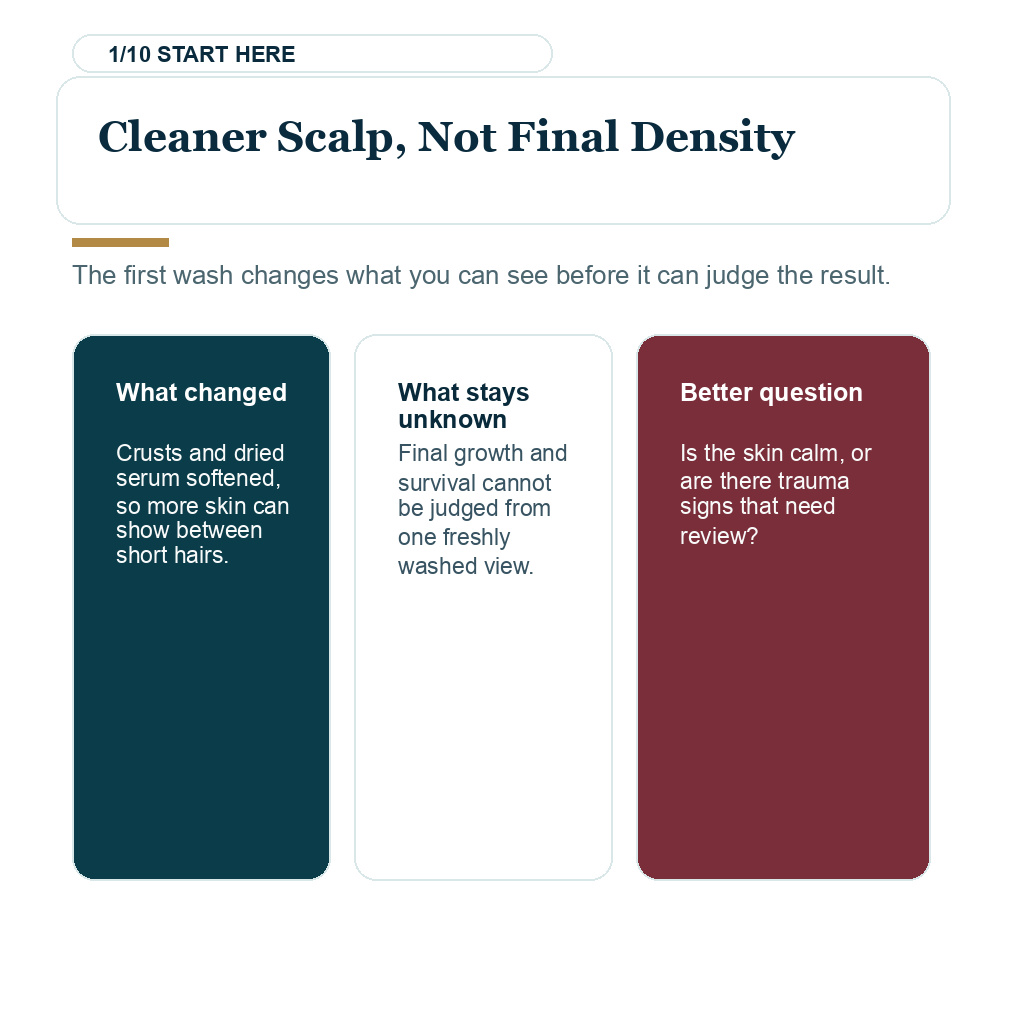
In the first 7 to 14 days, scabs, dried serum, swelling, and short hair shafts can make the recipient area look fuller than it really is. Once washing softens the crusts, the true spacing between the hairs becomes easier to see, and the area can suddenly look thinner.
I separate a cleaner scalp from an injured scalp. I check for fresh bleeding, forceful rubbing, increasing pain, an open spot, spreading redness, or discharge. A cleaner but thinner looking scalp after washing is often normal. Fresh bleeding or a clear wound is different and should be reviewed. Before blaming the wash, check whether towel pressure or rubbing happened. The no rub drying routine after FUE keeps that part of recovery separate.
Take the next comparison after the scalp is dry and calm. Wet hair, lifted crusts, and changed redness can make spacing look worse for a moment than it looks in a standardized photo.
A spaced out recipient area after washing can be normal
It can be normal. Right after surgery, the recipient area often looks dark and full because each graft has a small crust around it. Those crusts sit close together and create a temporary shadow on the skin. It is easy to see that early darkness and mistake it for final density.
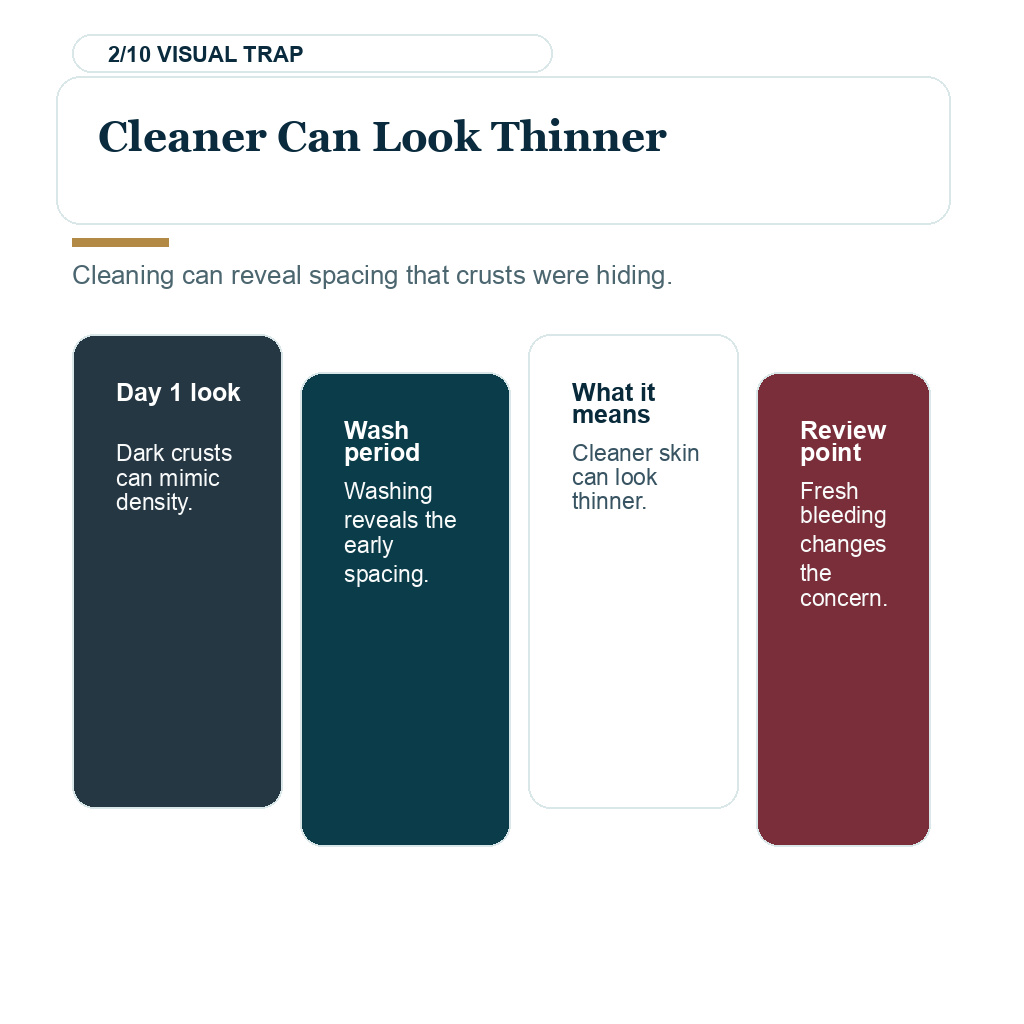
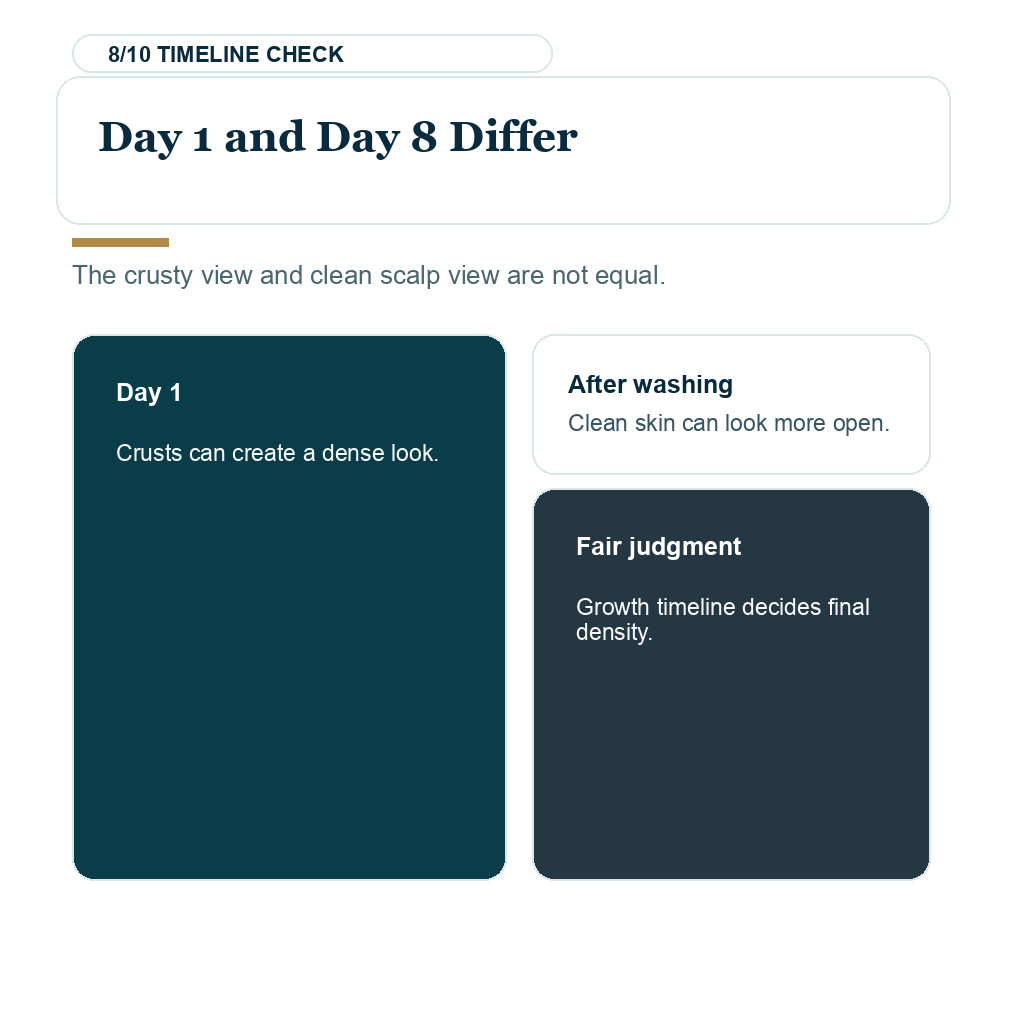
After the first proper washes, the crusts begin to loosen. The scalp becomes cleaner, the redness may be more visible, and the short transplanted hairs may separate from each other. The same operation can look more impressive on day 1 and more exposed on day 8.
The mirror can mislead you at this stage. A darker recipient area does not prove a stronger result, and a lighter looking recipient area does not prove a weaker result. It may only mean the healing layer has changed.
That visual change is unsettling, but it is not a reliable verdict on growth. The early recipient area is a healing surface, not a final density preview. At this point, protect the grafts and follow the hair transplant aftercare plan instead of judging the final result from a freshly washed scalp.
Scabs can make the transplant look denser than it is
Scabs are not hair density. They are healing material around the graft openings. When many small crusts sit close together, they create the appearance of a darker and more filled area. Once those crusts start to come away, the eye sees more skin between the hair shafts.
That visual pattern can make day 2 feel encouraging and day 10 feel worrying. Nothing dramatic may have happened to the grafts. The visual layer covering the scalp has changed.
Good early washing is meant to clean the scalp without scraping the recipient area. The pressure, timing, and type of contact all matter, because the technique used for washing after a hair transplant should change as the grafts become more stable and the scabs soften. Too little cleaning can leave thick crusts. Too much force can irritate the skin.

Hair in the sink does not always mean graft loss
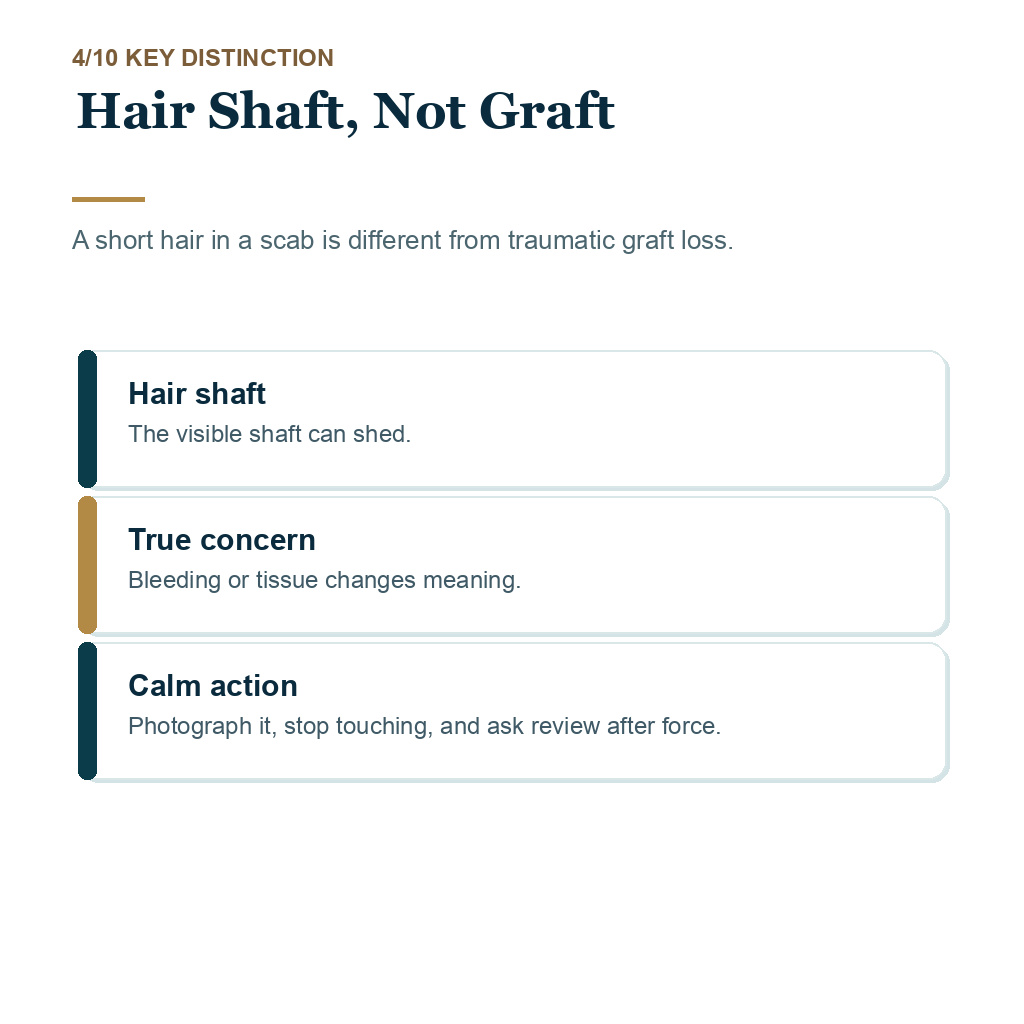
A short hair trapped in a scab is usually a hair shaft, not proof that the living follicle has been pulled out. The shaft is the visible part. The graft sits deeper in the skin.
Tiny hairs on your fingertips, towel, pillow, or sink can be alarming. The clinical question is whether the event came with bleeding, pain, or a clear injury to the recipient area. Dry scabs with short hairs and no fresh bleeding are usually less concerning than they look.
If you are worried that a scab pulled out the graft itself, scabs coming off after a hair transplant explains that narrower distinction. The distinction matters here too. A hair shaft can shed while the follicle remains under the skin and later enters its normal growth cycle.
Bleeding or an open spot needs clinic review
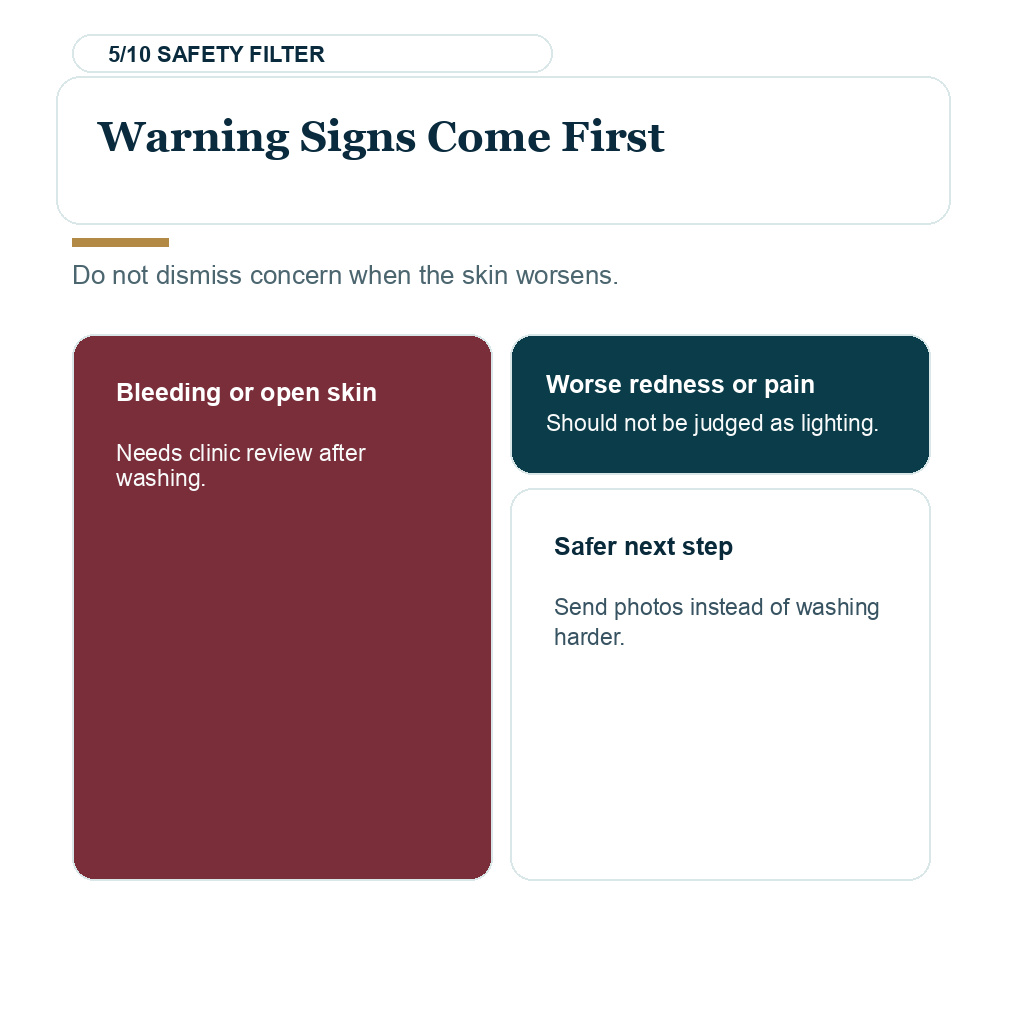
Ask the clinic to review photos if washing caused fresh pinpoint bleeding, a visible open spot, increasing pain, swelling that is getting worse, discharge, bad smell, or redness that is spreading instead of settling. Those signs do not always mean the result is ruined, but they deserve proper review.
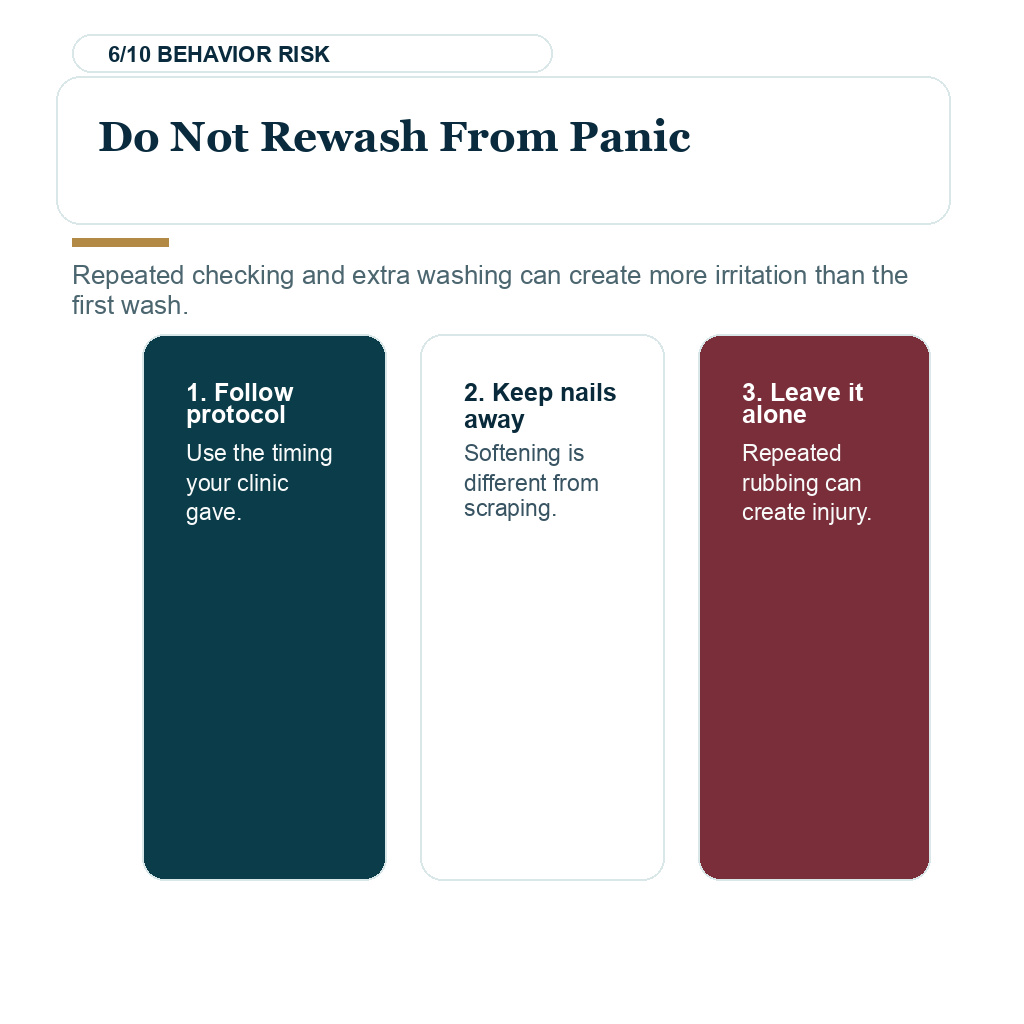
Repeated trauma deserves more concern than one light accidental touch. Brushing the area once is not the same as scratching, picking, or rubbing the same point again and again. If anxiety makes you keep checking the grafts, you can create more irritation than the first wash created.
Repeated handling creates many early problems, so touching grafts after a hair transplant needs strict timing. If the scalp is clean and quiet, leave it alone between instructed washes. If it is painful, wet, bleeding, or unusually inflamed, share clear photos with the clinic and ask for medical guidance.
Density cannot be judged at day 7, day 10, or day 15
Not in the way most people want to judge it. Day 7, day 10, and day 15 can show healing, scab clearance, redness, spacing, and the general pattern of placement. They cannot show final growth or final density.
At this stage, I can sometimes judge whether the design looks sensible, whether the hairline shape is too low or too sharp, whether the distribution seems very uneven, or whether the skin looks unhealthy. I cannot judge how many follicles will grow from a mirror photo after the first wash.
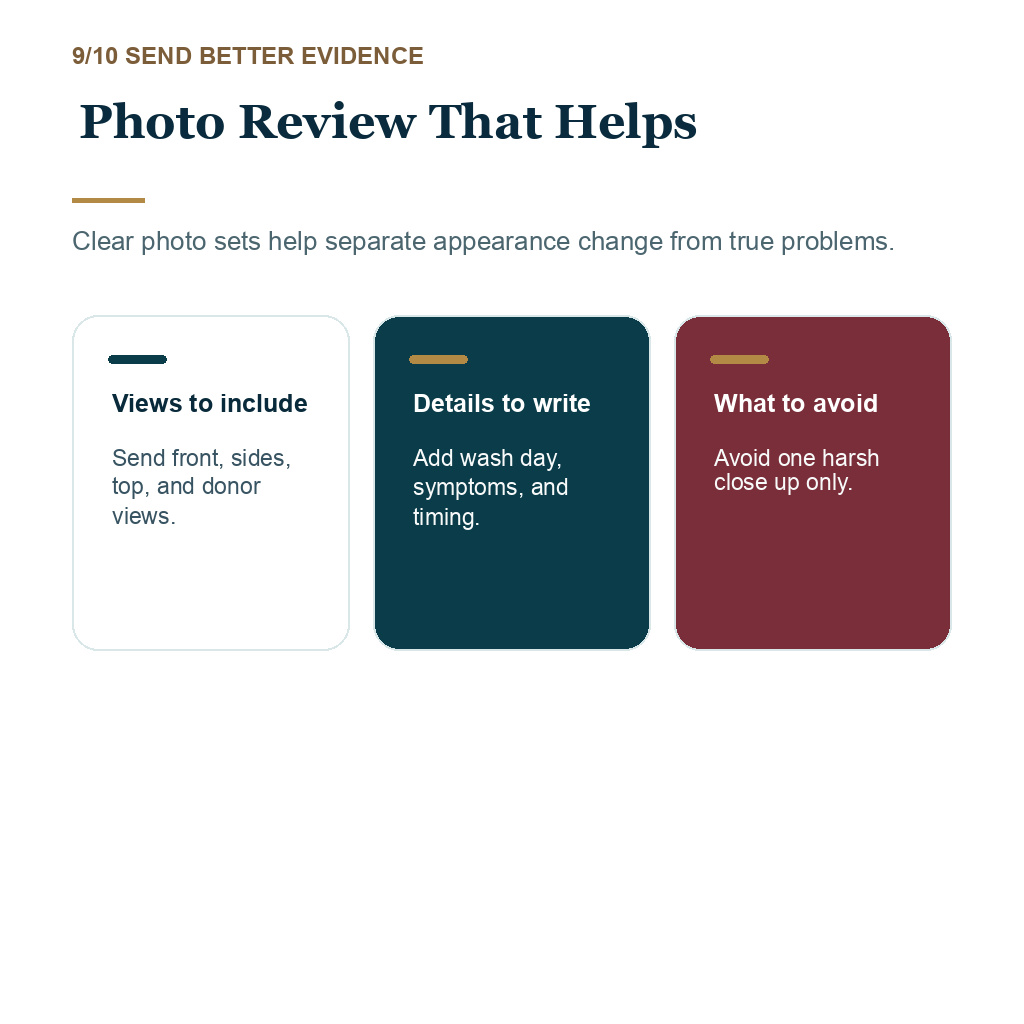
When photos are needed at this stage, clear distance photos and a few close photos are more useful than ten anxious angles under different lights. Harsh light can make every gap look larger. Wet skin can make the scalp shine and exaggerate spacing. A clinical review separates these optical effects from real warning signs. If you are unsure which photos help, use the early hair transplant review photos guide before treating one close photo as a density verdict.
Early photos have value, but only when they are interpreted carefully. A day 1 photo may help assess design and placement pattern. It still cannot answer final growth, which is why judging a hair transplant from day one photos needs strict limits. An after wash photo needs careful limits too, because wet hair, lifted crust, and lighting can make density look worse than it is.
Wet skin or bright light can make it look thinner
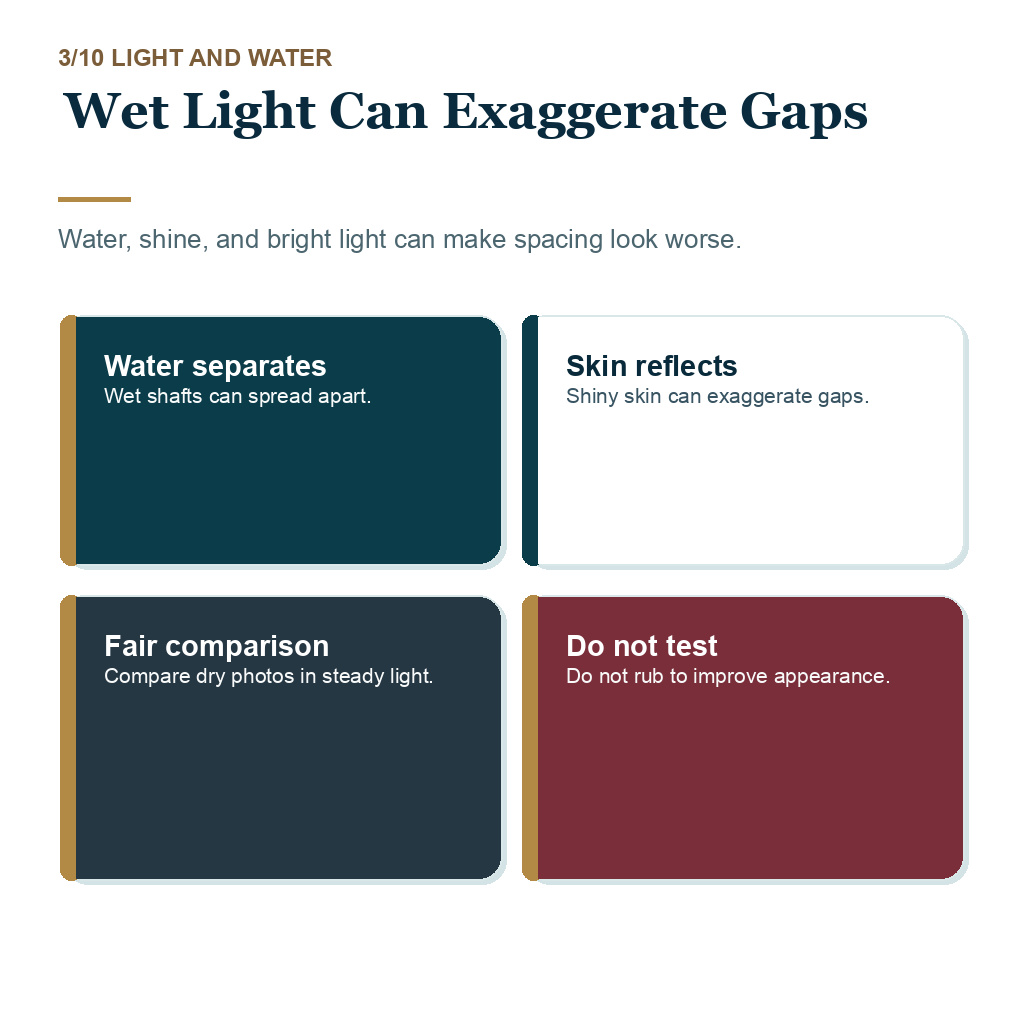
Wet skin and bright bathroom light can make the recipient area look more open than it really is. Water separates short hairs, makes the scalp shine, and removes the darker crust layer that was hiding some of the skin between grafts.
Density is better judged after the scalp has dried and the light is steady. The scalp may look healthier, but visually thinner. That is not a contradiction. Cleaner skin often reflects more light, and the eye reads that reflection as empty space.
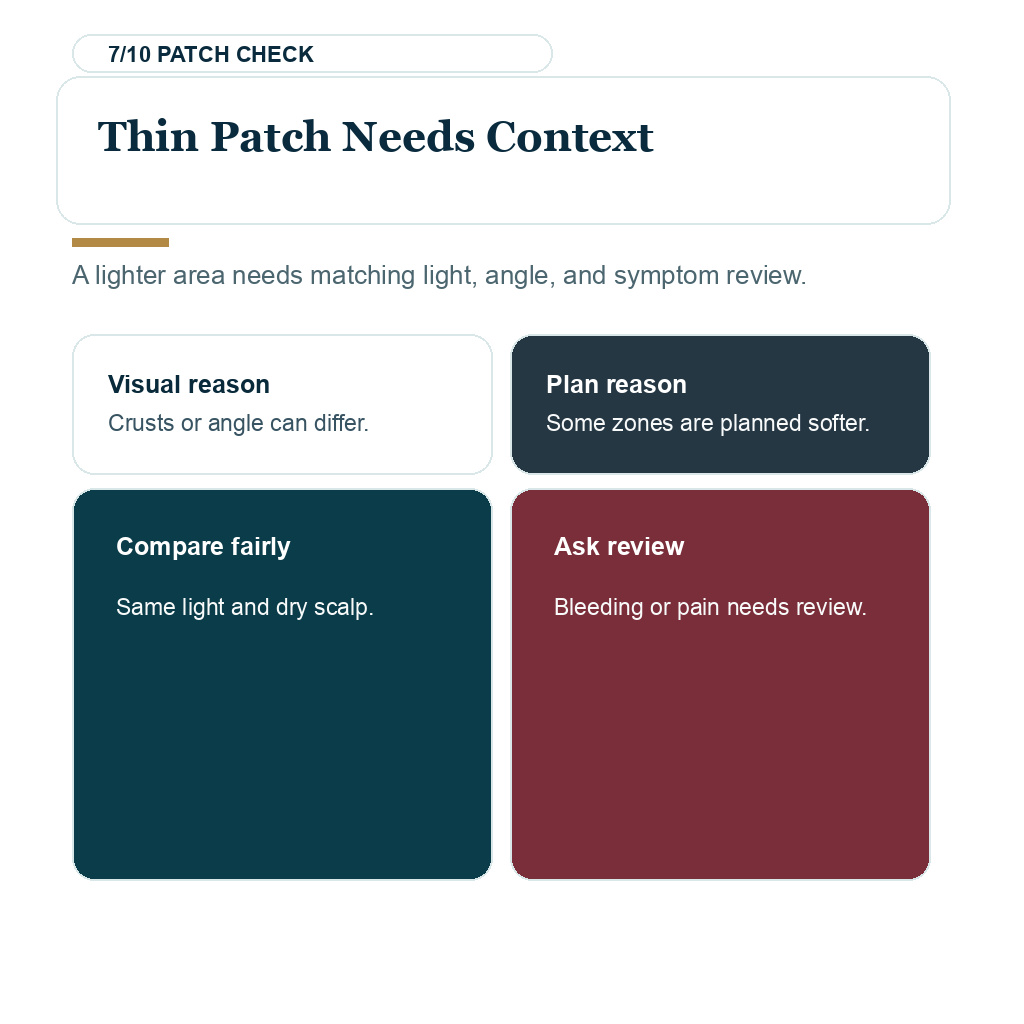
For photo review, take one close view and one normal distance view in steady room light after the scalp has dried. Do not compare a wet flash photo with a dry photo in steady room light and call the difference lost density. Harsh light, wind, and wet hair after a hair transplant can create a related lighting problem later. Lighting can expose spacing without proving poor growth.
One area looking much less dense than the rest
Uneven early appearance can happen because scabs detach at different speeds. One side may look cleaner sooner. One temple may hold crusting longer. Light, angle, wet hair, and swelling can also make one area look weaker than it is.
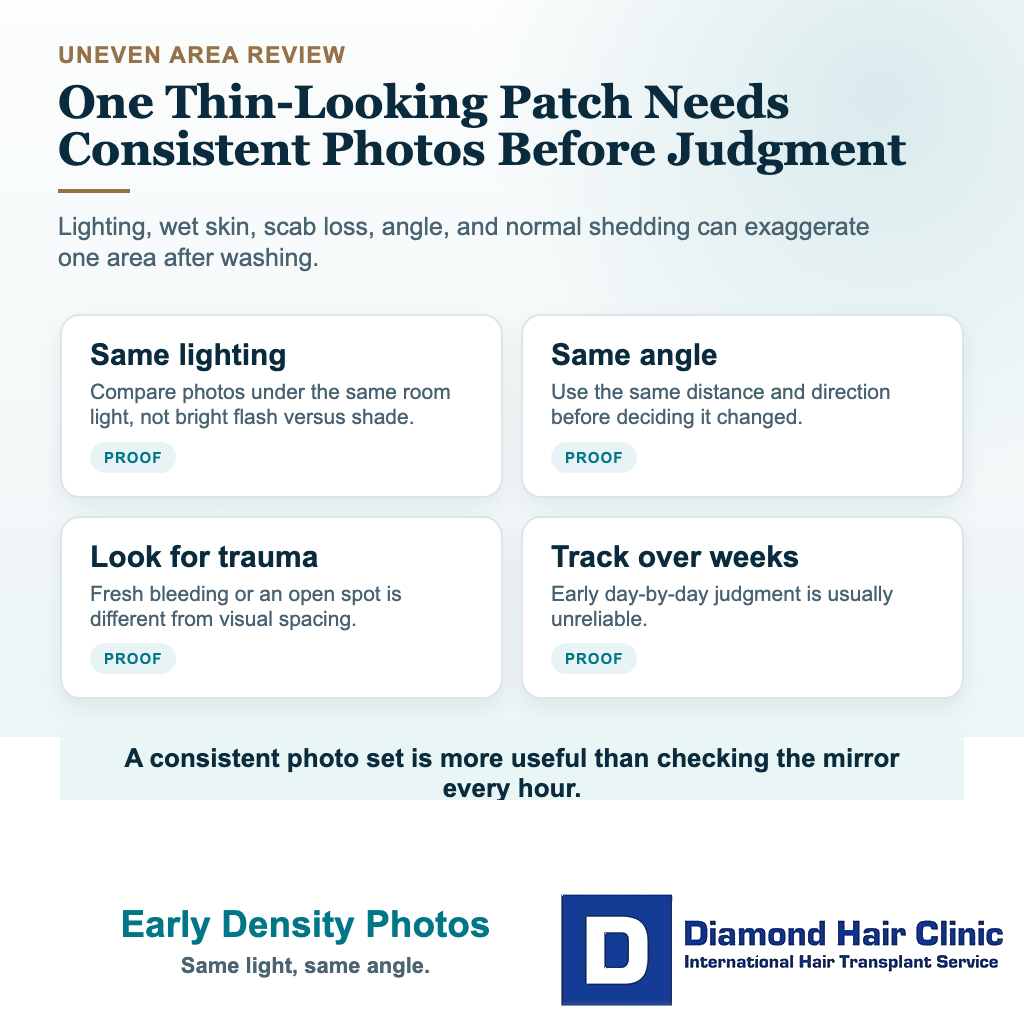
Still, I do not dismiss every asymmetry as normal. If one area has fresh bleeding, missing skin, deep redness, heavy crusting, or a clear gap that followed a traumatic event, it should be checked. A thinner looking area with settled skin is different from an injured area.
There is also a planning layer. Some zones are intentionally transplanted at different densities. The hairline transition zone may be softer. The temples may be more conservative. A clinic that promised one impressive graft number without explaining distribution may leave the patient confused after scabs clear. Numbers only matter when the surgical plan behind them is clear, including why the hair transplant graft number can change on surgery day.
Normal shedding can begin as scabs clear
Some visible hair shafts may come away early, especially while crusts are loosening. Some people shed a little sooner. Some keep the short shafts longer. Neither pattern alone proves success or failure.
Patients often expect one exact sequence. First scabs, then no shedding, then growth. Real recovery is less neat. Hair shafts can fall, scabs can hold hairs, and the scalp can look temporarily emptier before the growth phase begins later.
For the same reason, no shedding after a hair transplant can be normal in one case while early visible hair loss can be normal in another. The deeper question is whether the scalp is healing quietly and whether progress is being tracked over months, not hours.

Washing without making the anxiety worse
Use the technique your clinic gave you, and do not improvise because a scab looks stubborn. In the early period, washing should be controlled. Fingertips are different from nails. Softening is different from scraping. Cleaning is different from testing whether the grafts are secure.
If you feel panic during washing, slow down. Rinse gently, do not keep rubbing the same point, and do not inspect every short hair under harsh bathroom light. One careful wash is different from repeated attempts to make the scalp look dense again. Aim for a clean healing scalp, not a perfect looking scalp after one wash.
A thinner look after washing is not a reason to repeat the wash just to make it look better. The next useful step is a calm dry photo and the routine your clinic gave you, not another attempt to move every crust.
Good aftercare also means knowing when irritation is no longer just normal healing. The difference between common recovery signs and warning signs that need review is explained in redness, scabs, or pimples after a hair transplant.
Checks that matter when early density worries you
A serious review does not only say everything is fine from one blurry photo. It looks at bleeding, trauma, crust thickness, redness, infection signs, and whether the wash timing matches the clinic’s protocol. The placement pattern and the planned density also matter.
A proper review also asks whether you are comparing the after wash scalp to the wrong reference. Day 1 darkness is not final density. A wet scalp is not the same as dry hair. A close flash photo is not the same as normal room light. A result cannot be judged as failed before the biology has had time to work.
At the same time, the clinic should not use normal recovery as an excuse to ignore a poor plan. If the hairline was planted in visible rows, if the density plan was unrealistic for the donor area, or if the recipient area looks unhealthy, the concern deserves more than reassurance.
Clinic promises matter here. If a clinic sold the operation only through a graft number, you may have no real explanation for why one zone looks lighter after washing. A stronger consultation explains distribution, donor limits, hair caliber, future loss, and why the first clean scalp is not a final density test.
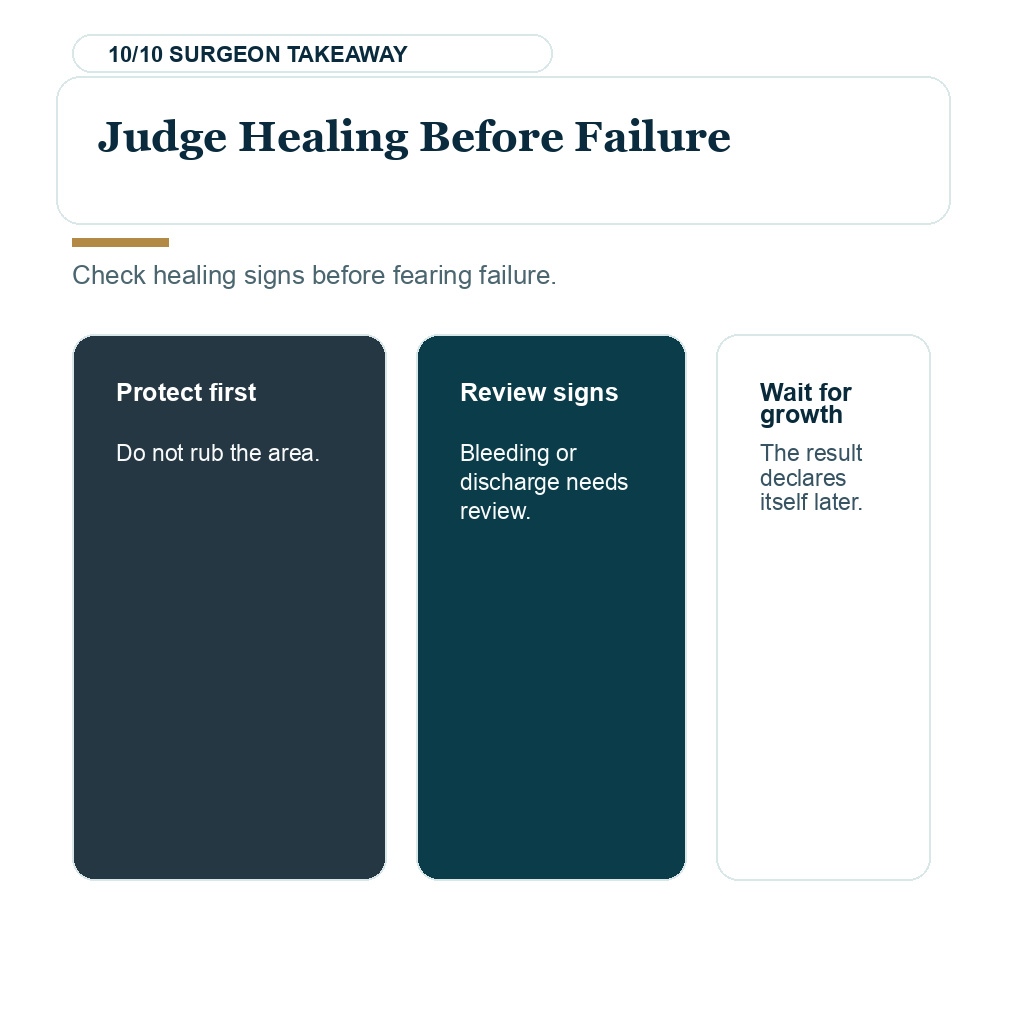
Use the 10 first wash density check slides below to separate temporary visual changes, crust shadow, wet hair, hair shafts, warning signs, washing anxiety, patchy areas, photo timing, clinic review evidence, and the safer decision frame. Swipe the carousel, use the arrows one step at a time, or choose a number below the image to jump to that point.
Tracking the next weeks without obsessing
Take photos under consistent light and then stop checking every few hours. Daily inspection makes every scab, hair shaft, and shadow feel like a new diagnosis. It also encourages touching and rubbing, which the scalp does not need.
A useful pattern is to document the scalp when the clinic asks, then compare at sensible intervals. Early recovery photos help if they are clear and consistent, but they can harm your judgment if every bathroom mirror moment becomes evidence.
Compare like with like. Use similar lighting, similar distance, dry hair when possible, and the same camera position. If every photo is taken differently, you end up tracking shadows, not healing.
Once the early wash period has passed, tracking hair transplant growth without panicking gives a steadier way to follow recovery. Density concerns at day 10 and density concerns at month 4 are not the same question. Low density at 4 months after a hair transplant belongs to a later checkpoint, not the first wash period.
First wash is only an early checkpoint
After the first wash, the scalp may look less dense because scabs and shadow are gone. That can reveal the early spacing between short hairs without meaning the grafts have been lost.
Look at healing signs before judging density. No fresh bleeding, no open wound, no worsening pain, and calmer skin usually point toward observation and proper aftercare. Bleeding, discharge, spreading redness, a clear wound, or forceful trauma should be reviewed.
Use the photo after the first wash to guide aftercare, not to decide the final result. Protect the recipient area, follow the washing protocol, and give the grafts time to move through the normal recovery phases.
Read this review excerpt
First wash completed and visual instructions given to my daughter.