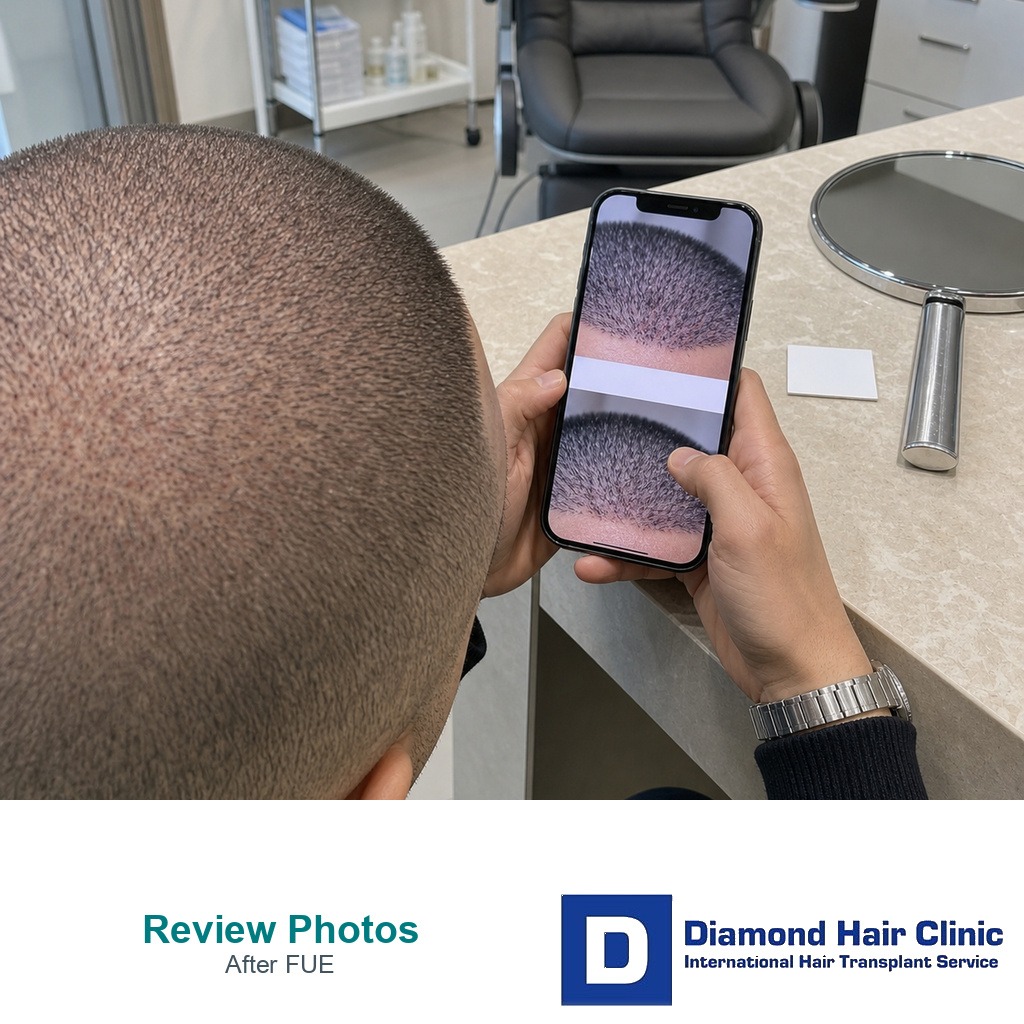
Early Hair Transplant Review Photos Need More Than Close-Ups
When a patient sends me one tight early photo and says the grafts look sparse or angled the wrong way, I take the concern seriously, but I do not treat that single image as a verdict. I need a cleaner photo set with timing, lighting, graft count, treated zones, and symptoms. Some things can be reviewed early. Final density cannot be judged from one close photo after the first wash.
The stakes are practical because early photos can create two opposite mistakes. A patient may panic over normal spacing, scab removal, swelling, wet skin, or harsh light. Another patient may ignore a real placement concern because everyone says, “just wait.” The better approach is not blind reassurance. It is evidence. If the evidence is weak, improve the evidence first.
In the first weeks, I separate the review into skin safety, early placement clues, and final density timing. An open or draining area is not the same question as a tight photo that looks sparse after scabs come off. That distinction decides whether I should review the skin today, compare a better photo set, or simply track the pattern.
One close-up can show worry but not proof
A close-up photo is useful because it tells me what made the patient worried. It can show rows, gaps, crusting, redness, a sharp hairline edge, or hairs that seem to point in an unexpected direction. It is not useless. But it is usually incomplete.
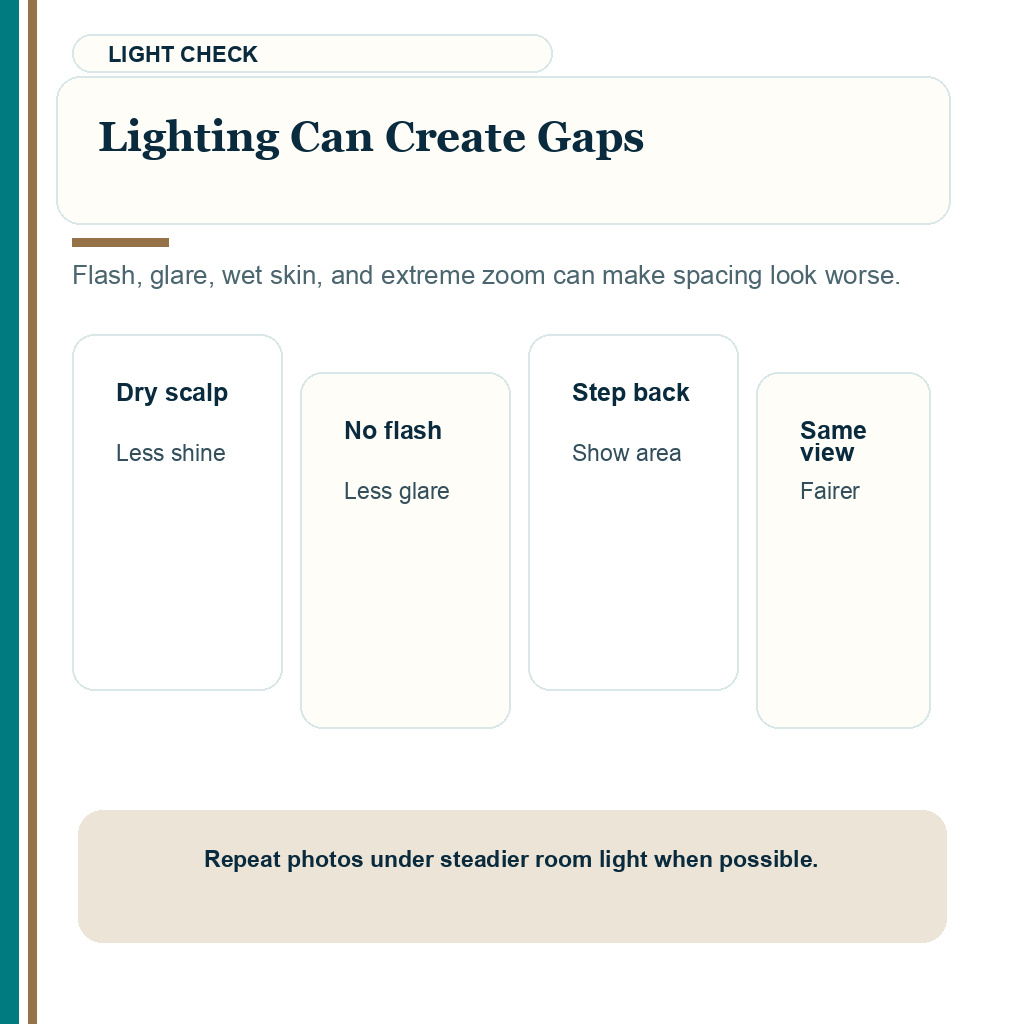
The same recipient area can look dense in one angle and thin in another. Wet skin reflects light. Short hair stubble casts tiny shadows. The camera may exaggerate spacing because it is too close. A phone lens can also stretch the hairline if it is held at an angle. One zoomed crop can show why you are worried, but it should not decide the case without timing, wider views, and symptoms. During early review, a hairline can look different from the front and top view because angle, length, and light do not judge the same thing.
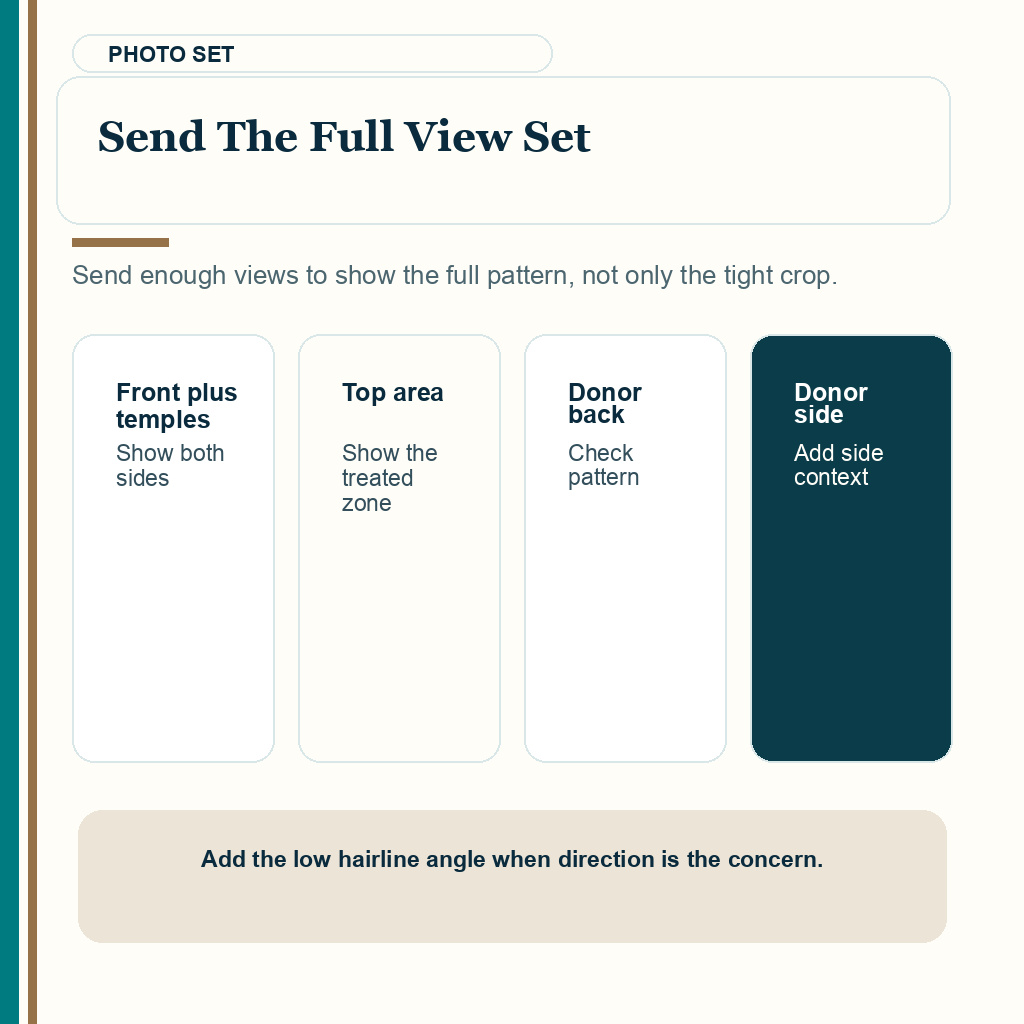
Take the photo set in the same room, from the same distance, with dry hair. Include the front, both sides, the top, the crown, and one view from normal distance so one bright close photograph does not carry the whole judgment.
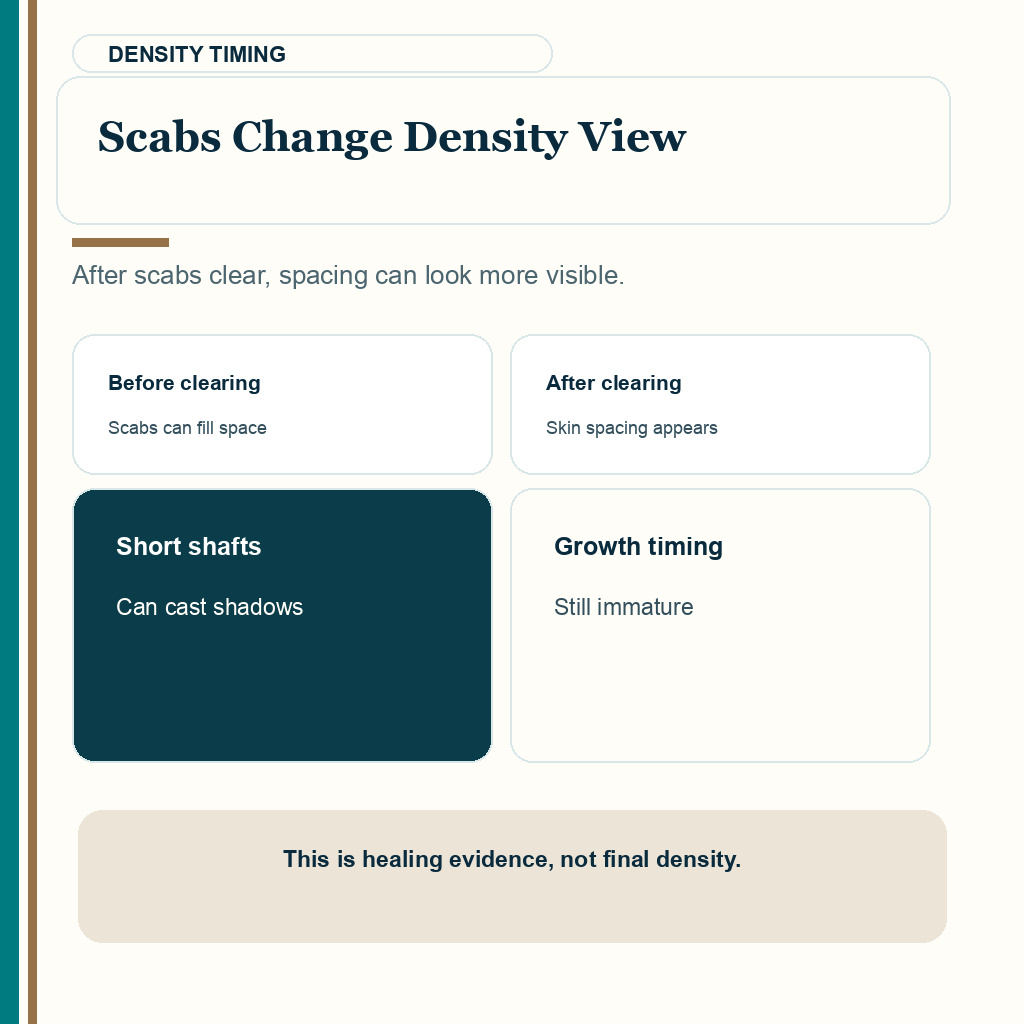
If the worry started after washing, a hair transplant can look less dense after the first wash without meaning the grafts have failed. Scabs can make the area look fuller before they clear. Once they are gone, the real skin spacing becomes more visible, and that visibility is not the same as a failed result.
Early density changes after scabs come off
Day 7, day 10, and day 15 photographs are healing photographs. They show how the skin looks while crusts, redness, swelling, short shafts, and washing changes are all still part of the picture. They do not show the final cosmetic density.
I can sometimes judge whether the plan seems very sparse for the size of the treated area, especially if the photo set is clear and the graft count is known. But that is still a planning review, not a growth review. Growth has not had time to happen. Shedding may not have started, or it may begin soon. The area can look worse before it looks better.
Visible spacing also needs context. A lower hairline, a wide frontal zone, fine hair, high contrast between scalp and hair, or a large area covered with a limited graft number can all make early spacing look more dramatic. Graft rows after FUE matter here because row visibility and density anxiety often overlap in early photographs.
Graft direction can be reviewed, but with limits
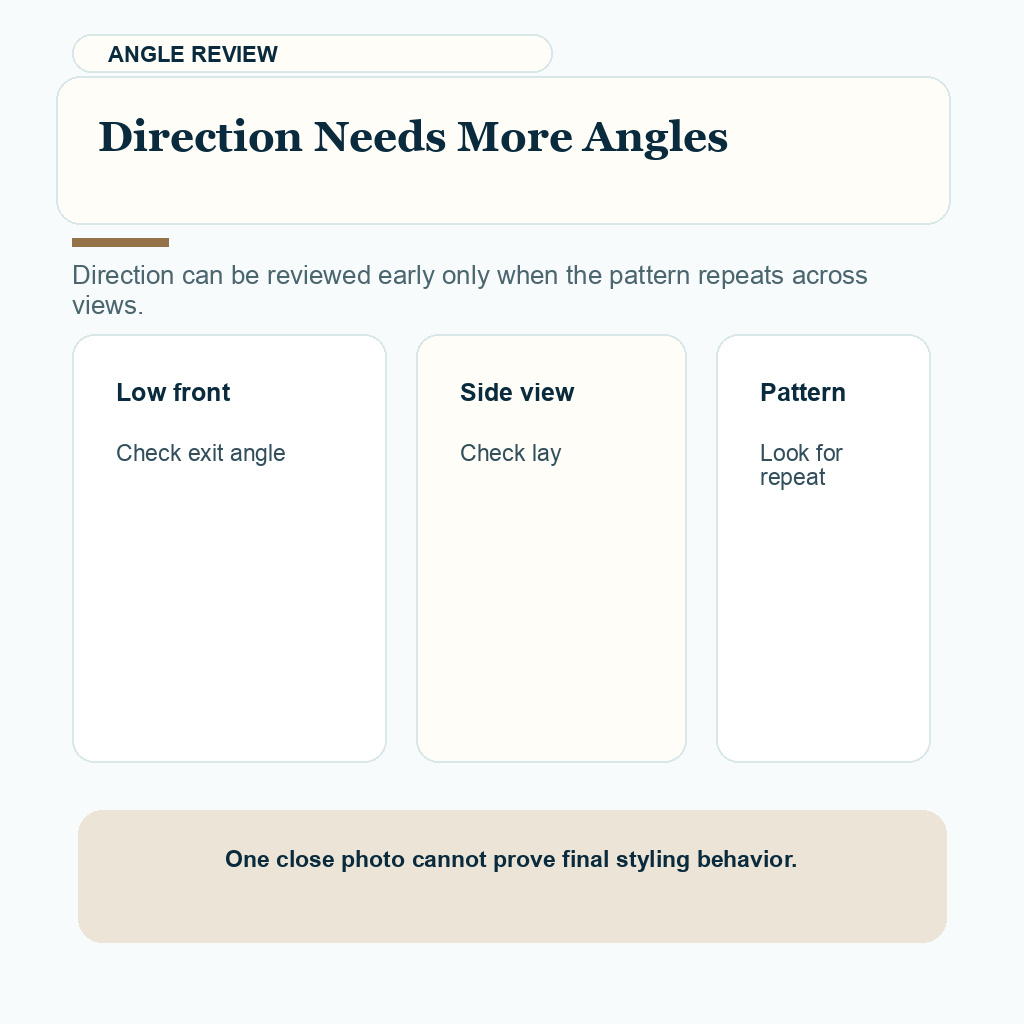
Direction and angle are different from density. A clinic can sometimes review direction earlier than growth because the short shafts show how some hairs leave the skin. If many grafts in the frontal hairline stand straight up, point forward, or sit in repeated rows, the concern deserves a careful look.
The limit is that short early shafts are not the final styling behavior. Hair length, texture, wave, shedding, crusts, and skin swelling can all change how the area appears. A photo taken from above may make hairs look more vertical than they are. A side photo may show the opposite. For a direction review, wrong hair direction after hair transplant focuses on careful review and repair planning, not fast internet verdicts.
What I look for is pattern. Is the direction issue isolated to a few hairs, or does it repeat across the whole hairline? Does it match the natural exit angle nearby? Does the crown have a swirl that was ignored? Are larger grafts sitting at the front where single hair grafts would look softer? Those questions need more than one close-up.
A useful photo set includes six views
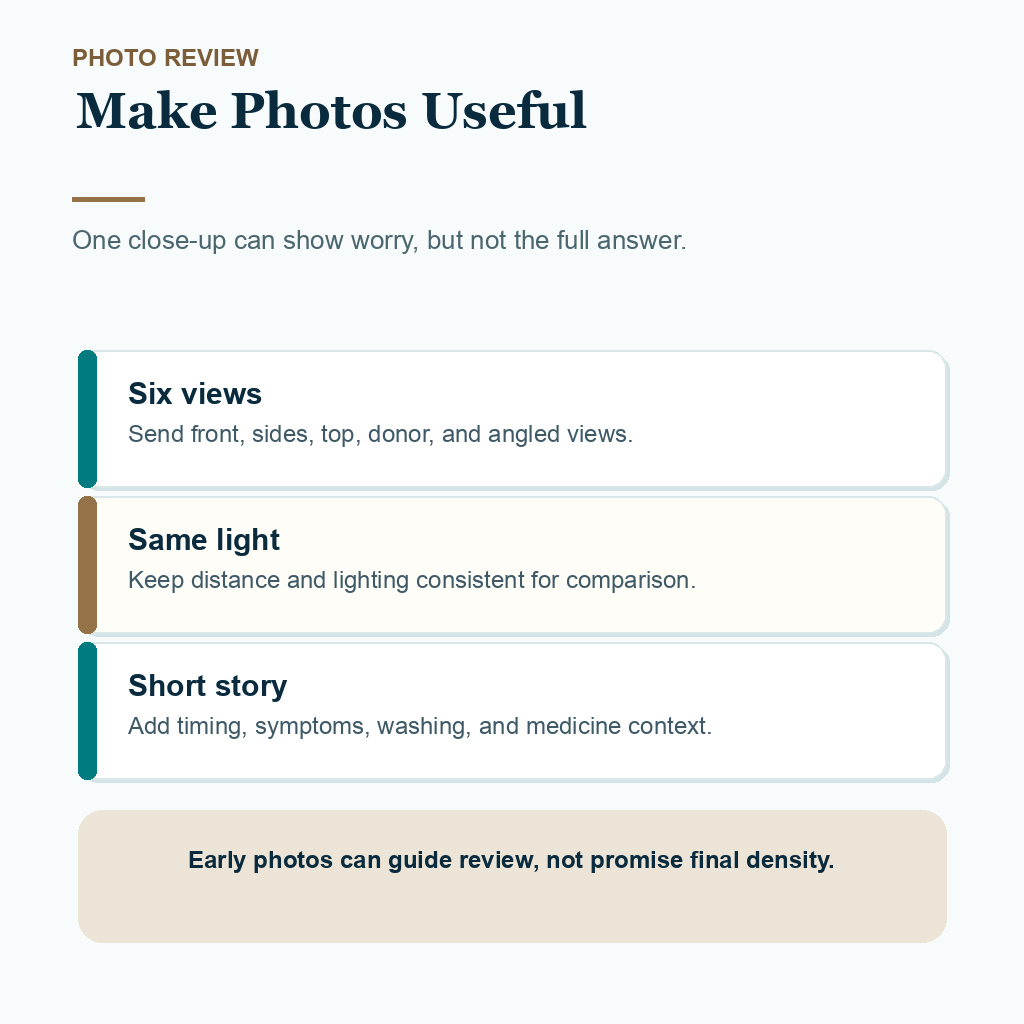
For an early review, send a full front photo, both temple angles, a photo from above of the treated area, one donor photo from the back, and one donor photo from the side. If the concern is the hairline, add a low front angle at the level of the eyebrows so the exit direction is easier to see.
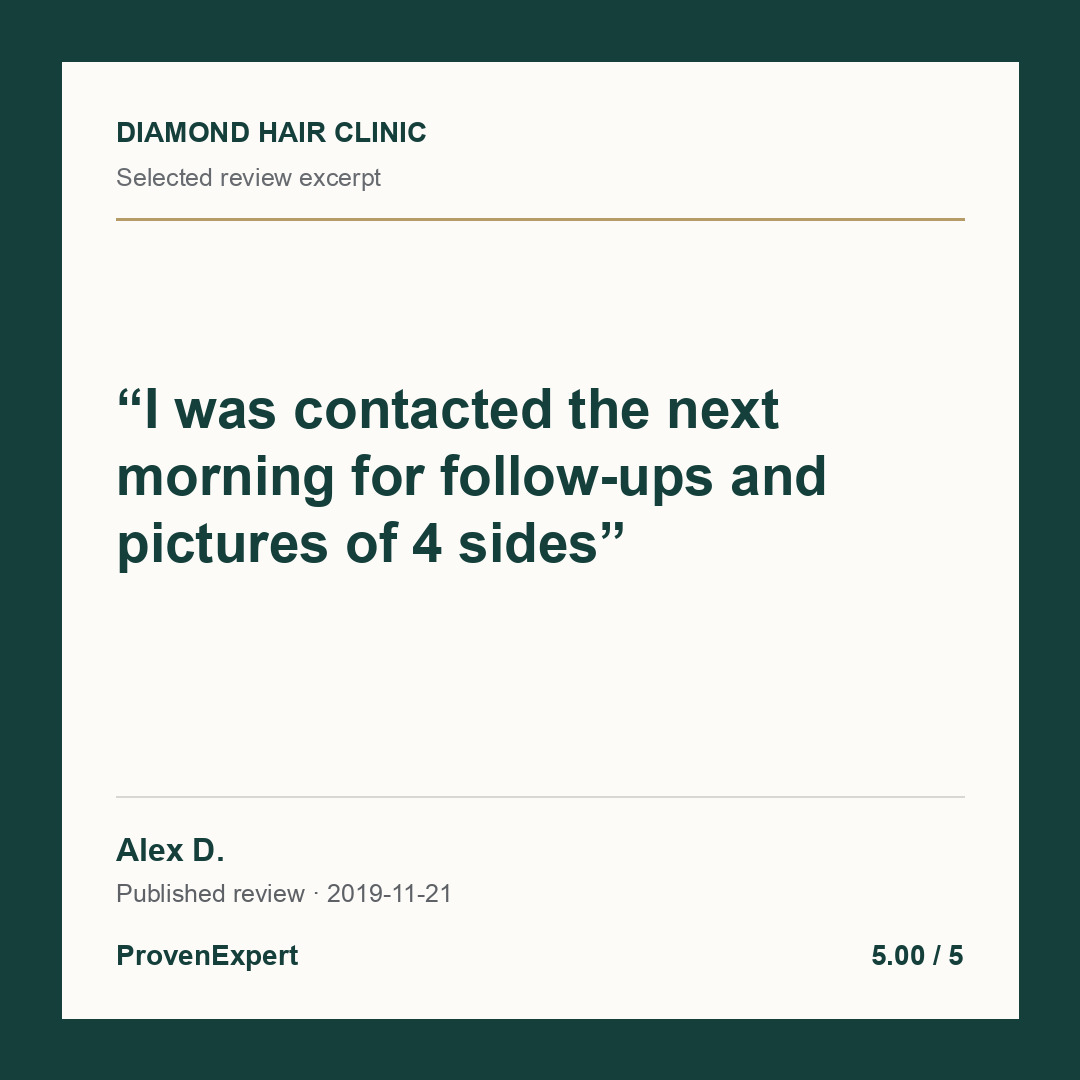
Read this review excerpt
Selected review excerpt
This reviewer described four photo angles. Follow the photo set requested for your own review.
I was contacted the next morning for follow-ups and pictures of 4 sides
Label each photo by angle before sending it. A neat set is easier to compare than ten similar closeups where nobody knows which side or light changed.
Use normal room light. Avoid flash if it creates glare. Take one set with the scalp dry if possible. Step back for context before you zoom in. A close-up without the full treated area can make a small zone look like the whole result. A full area photo lets the clinic compare density, spacing, and distribution across the plan.
Day one photos need careful interpretation too. Some placement clues are visible early, but early photographs are most useful when they are organized and comparable. Random close-ups create more anxiety than clarity.
Early hair transplant review photo proof check
Before sending photos, use the checks below. They do not diagnose the final result. They make the review fairer, because the clinic can see what changed, what is urgent, and what still needs time.
Early photo review route map
Which photo gap changes the review route?
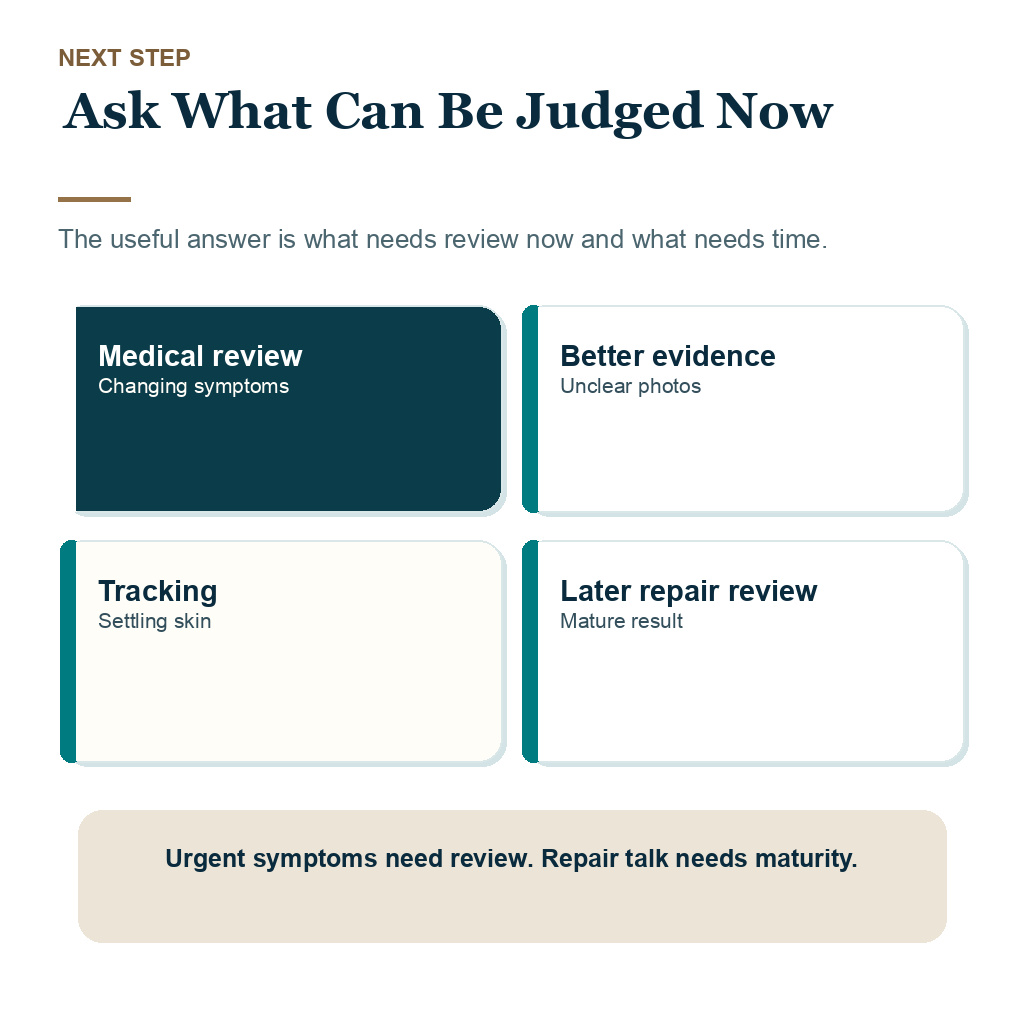
Choose what is missing from the photo set before deciding whether the concern needs urgent review, better evidence, tracking, or later repair planning.
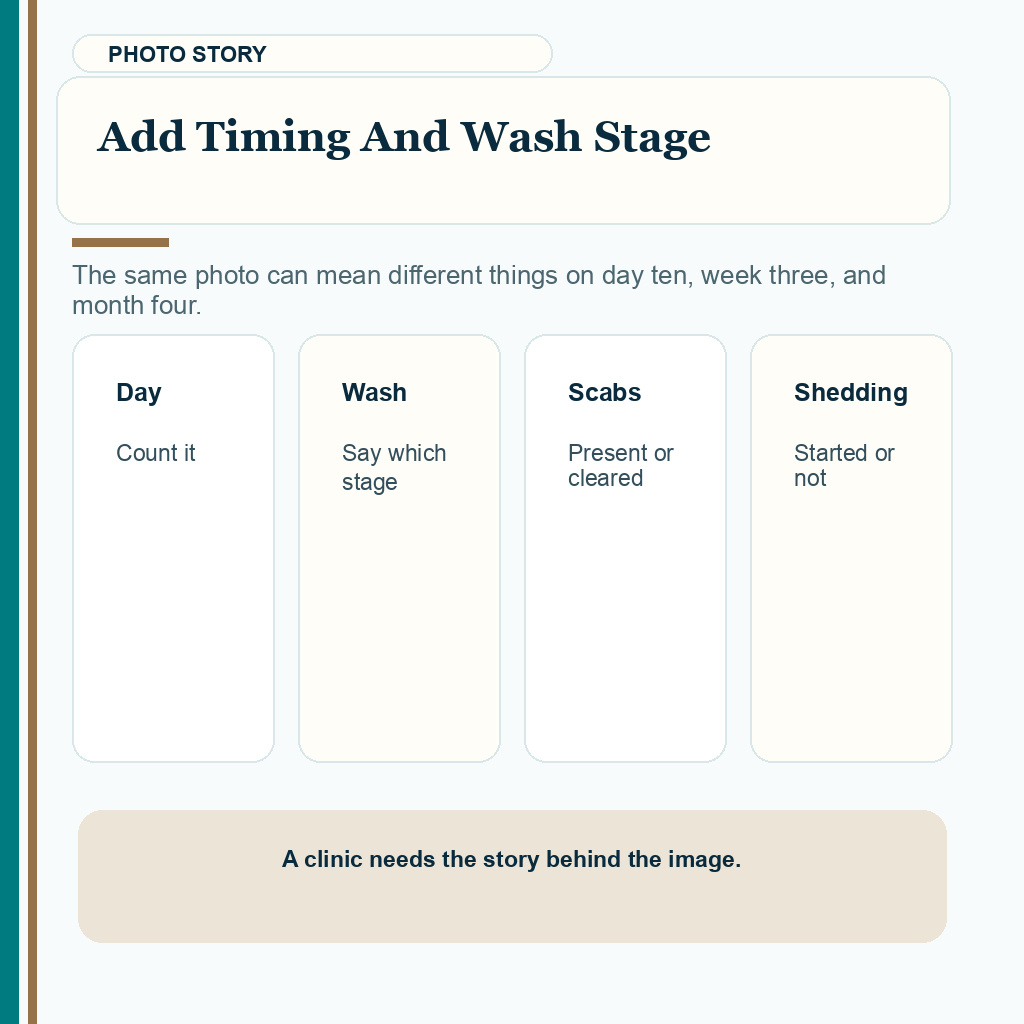
The same image means different things on day ten, week three, and month four. Add timing before asking for a verdict.
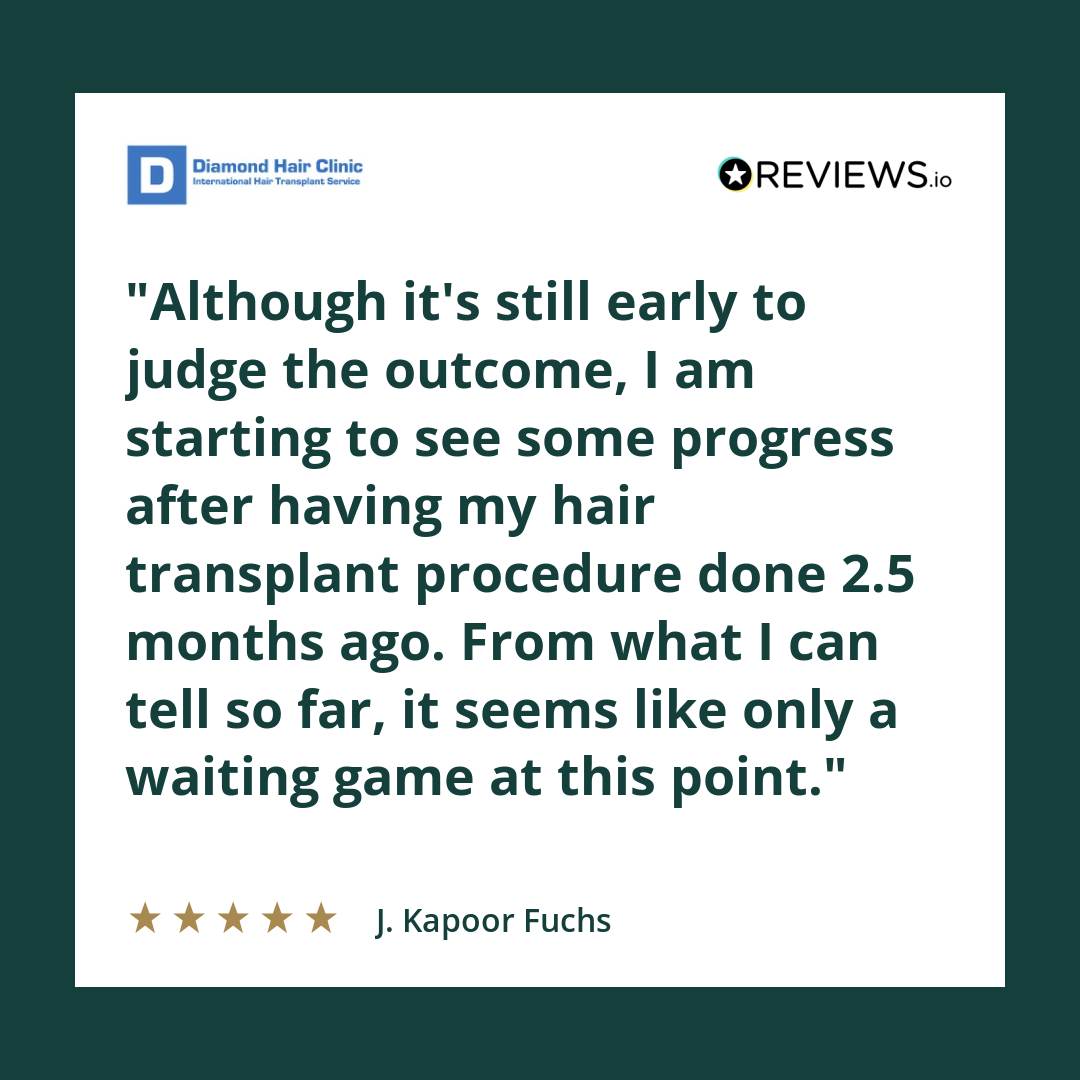
Read this review excerpt
Although it's still early to judge the outcome, I am starting to see some progress after having my hair transplant procedure done 2.5 months ago. From what I can tell so far, it seems like only a waiting game at this point.
The close-up shows the worry. Wider views show whether it is a small local issue or a pattern across the plan.
Retake the set in steadier light with dry hair when possible. Bad photo conditions can create false density anxiety.
This is no longer only a density photo question. Send the clearest photo set you can and seek medical review when symptoms are changing or the clinic cannot respond quickly.
Track comparable photos instead of deciding repair from early close-ups. Repair planning needs maturity, donor review, and a defined problem.
Surgeon checkpoint The useful question is not whether the worry is real. It is whether the evidence is strong enough to guide the next medical or surgical decision.
Add the story behind the photo
A photo without a short history is often misleading. Include the date of surgery, graft count, treated zones, whether the work was hairline only, hairline plus midscalp, or included a small crown pass, and whether the photo was taken before or after washing. If you know the planned density or the approximate grafts per square centimeter, include it, but do not turn that number into the whole judgment.
If the procedure took place over more than one day, record each operative date and the photo date. Note which areas were extracted or implanted on each day. A label such as “day one” is too vague when different areas were treated on different dates. Keep that chronology with the written operative record so later reviews start from the relevant session.
Hair transplant graft count verification explains why numbers need context. Three thousand grafts can be a strong plan in one patient and a stretched plan in another. The size of the recipient area, hair shaft thickness, donor limits, hairline height, and future loss risk all matter.
Also say whether the clinic gave you a special instruction, whether you had a bump, whether scabs were removed aggressively, or whether you saw hairs come away during washing. If the worry is graft loss, lost grafts after scabs is a better reference than trying to judge from the hair shaft alone.
Early photos that need quick review
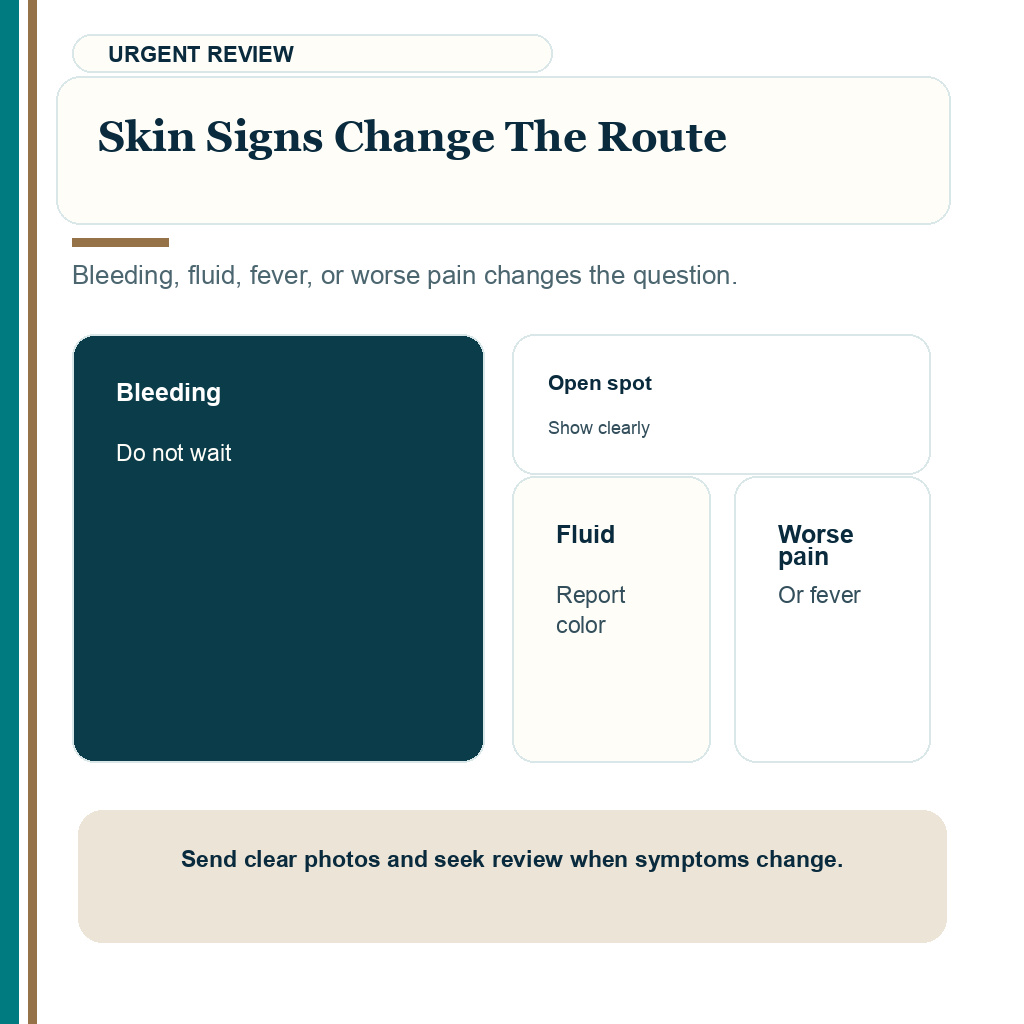
Some early photos should be sent the same day, not saved for a later progress update. Fresh bleeding that continues, a new open spot, yellow discharge, spreading warmth, worsening pain, fever, strong swelling that is not settling, or clear trauma to the grafted area should be reviewed by the clinic. If you feel unwell, the swelling or bleeding is rapidly changing, or the clinic cannot respond, seek local medical care rather than waiting.
This does not mean every red area is an emergency. It means the photo question has changed. You are no longer asking whether density will mature. You are asking whether the skin and grafted area need medical assessment. A clear photo set helps the clinic decide whether reassurance, cleaning advice, medicine review, or direct medical evaluation is needed.
If your concern is whether grafts are secure after touching, washing, sleeping pressure, or a small bump, start with the timing guidance on when hair transplant grafts become secure. The day after surgery is different from day 10, and both are different from week three.
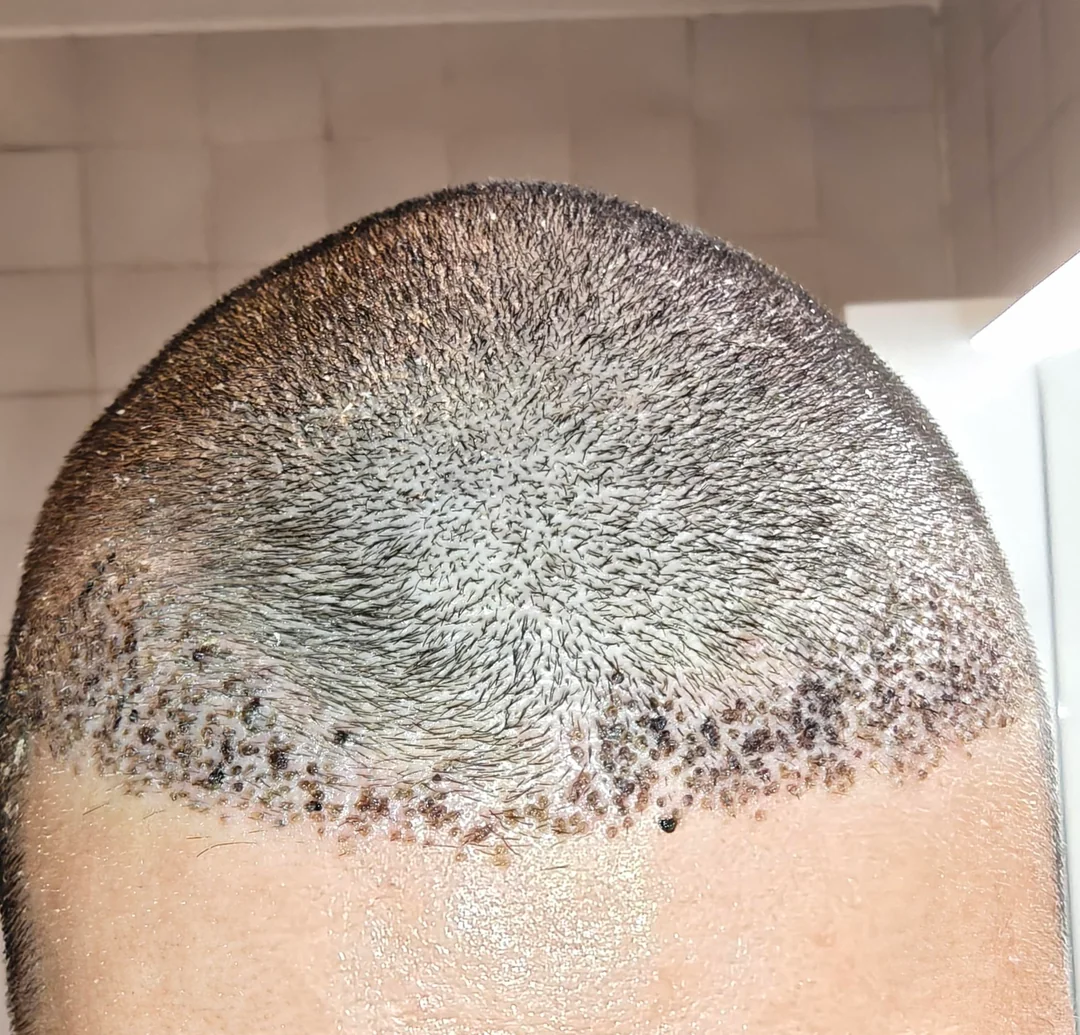
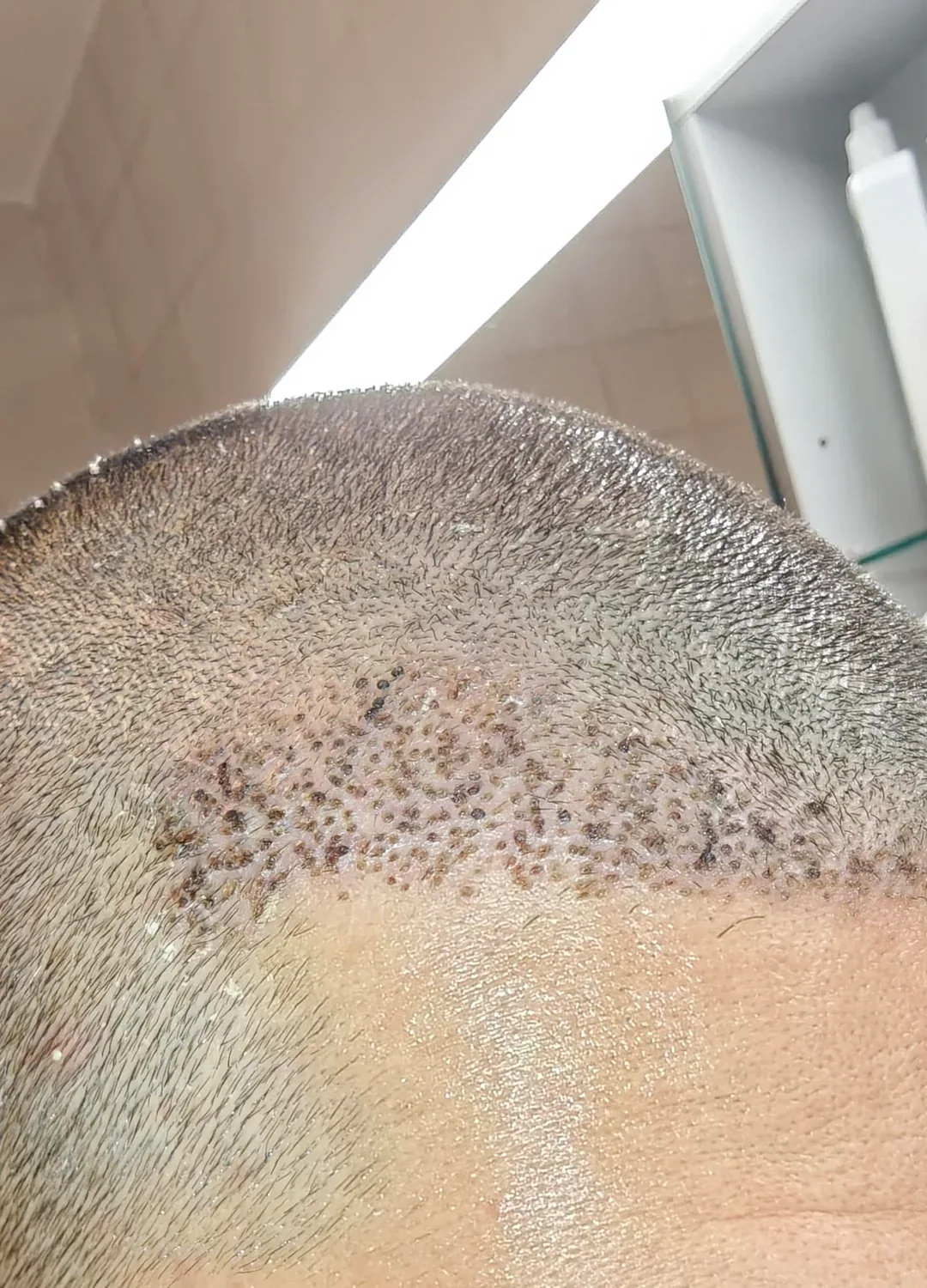
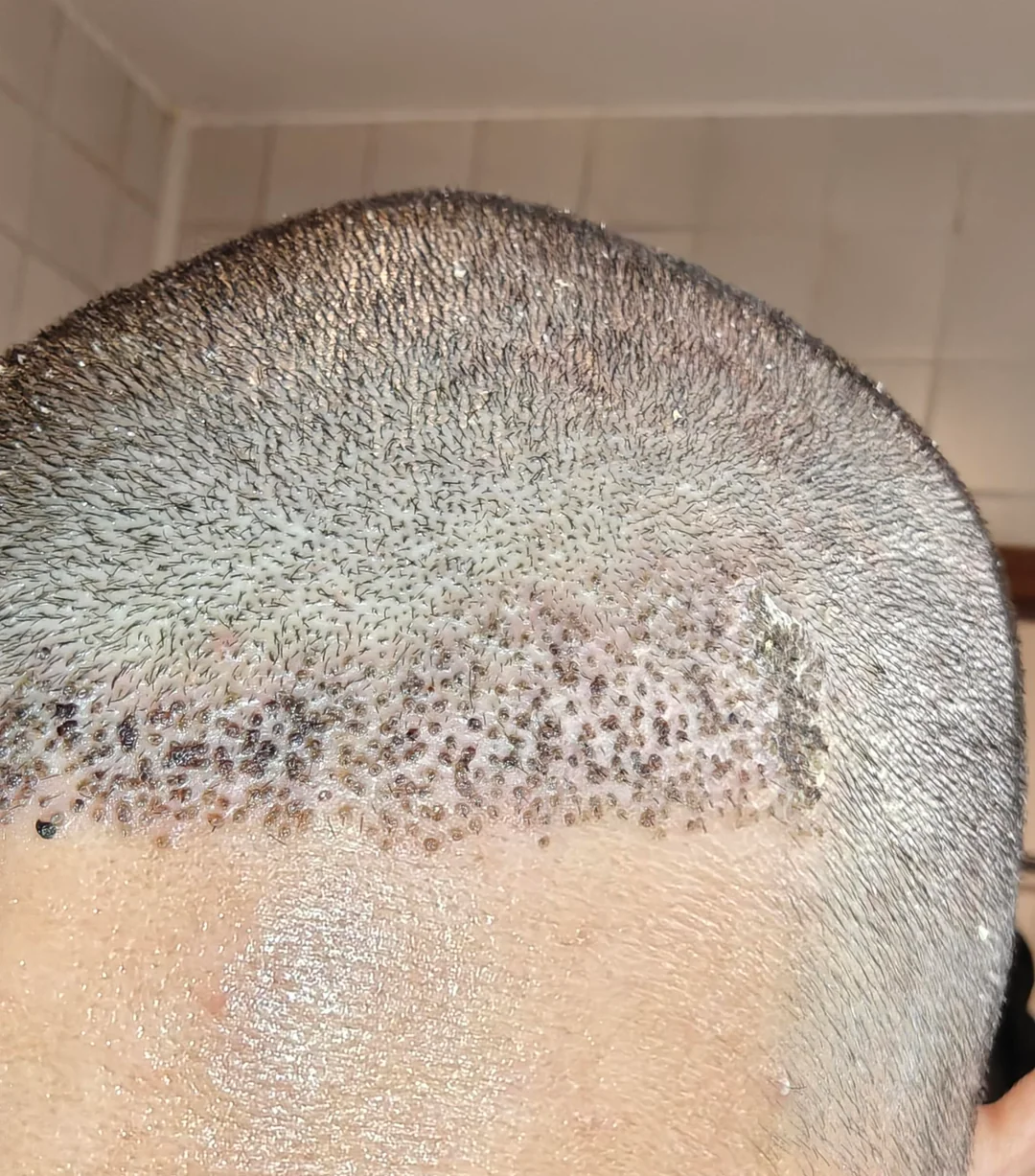
Early photos can only answer part of the question
I do not use a day 7, day 10, or month 1 photo to promise failure or success. At that stage I can review skin condition, wash stage, obvious trauma, and some placement clues. Final density needs time because shedding, short shaft length, redness, swelling, and lighting can change the picture.
The same photo can still be clinically important. If AI cannot judge recovery from one close-up, the clinic still needs the day, symptoms, washing history, and wider pattern. If pain is worsening, the skin is open, discharge appears, redness is spreading, or bleeding is active, the question is medical review, not final density. If the skin is closed, symptoms are settling, and the worry is spacing, the better decision is a documented photo sequence before repair talk starts.
Donor review belongs in early photo judgment
Early recipient photos do not tell the whole story if donor capacity has not been reviewed. When I read a worried photo set, I also want to know how the donor healed, whether safe extraction looked even, whether there is shock loss, whether there are early overharvesting signs, and whether the graft number used future reserve responsibly.
This matters before any repair discussion. A front that looks weak may still be early healing, but a visibly damaged donor can change what is safe later. Early review should protect the next decision, not only judge the first cosmetic impression.
A quick repair answer can be unsafe
Repair is not something I offer from early photos alone. If the patient is still in the swelling, crusting, shedding, or early growth window, the first job is to protect healing and collect comparable photos, not to sell another operation.
A quick repair answer becomes unsafe when the donor reserve has not been reviewed, the first graft number is unclear, the result is not mature, or the concern may still be normal timing. Repair planning should wait until the concern is clear enough to define.
Tracking before repair planning
If the skin is closed, symptoms are settling, and the issue is mostly that the area looks spaced out after scabs cleared, tracking is often more useful than repair planning. Take comparable photos every few weeks, not every few hours. Obsessive close photos can make normal recovery feel like a new problem each day.
Repair conversations need maturity. In the first two weeks, I mostly judge skin safety, scab clearing, and obvious placement clues. Weeks two to eight can bring shedding and strange looking short hairs, so density photos can mislead. True direction problems can still require careful planning, but the timing decides how much certainty the photo can carry. By the 10 to 16 week point, month three can still look empty, so the photo set should show trend and symptoms rather than ask for a repair plan. Month four can show early growth, and month eight gives more useful texture and direction information. The month eight hairline check after FUE page explains why later review can change the discussion.
If a real refinement is needed after growth matures, it should be planned against the donor reserve, existing graft angles, hairline design, and the reason the first result looks weak. A hair transplant touch up grafts plan is not simply “add more hair.” Bad angles, heavy grafts at the front, and poor distribution can require a different repair strategy.
Photo comparison can also mislead
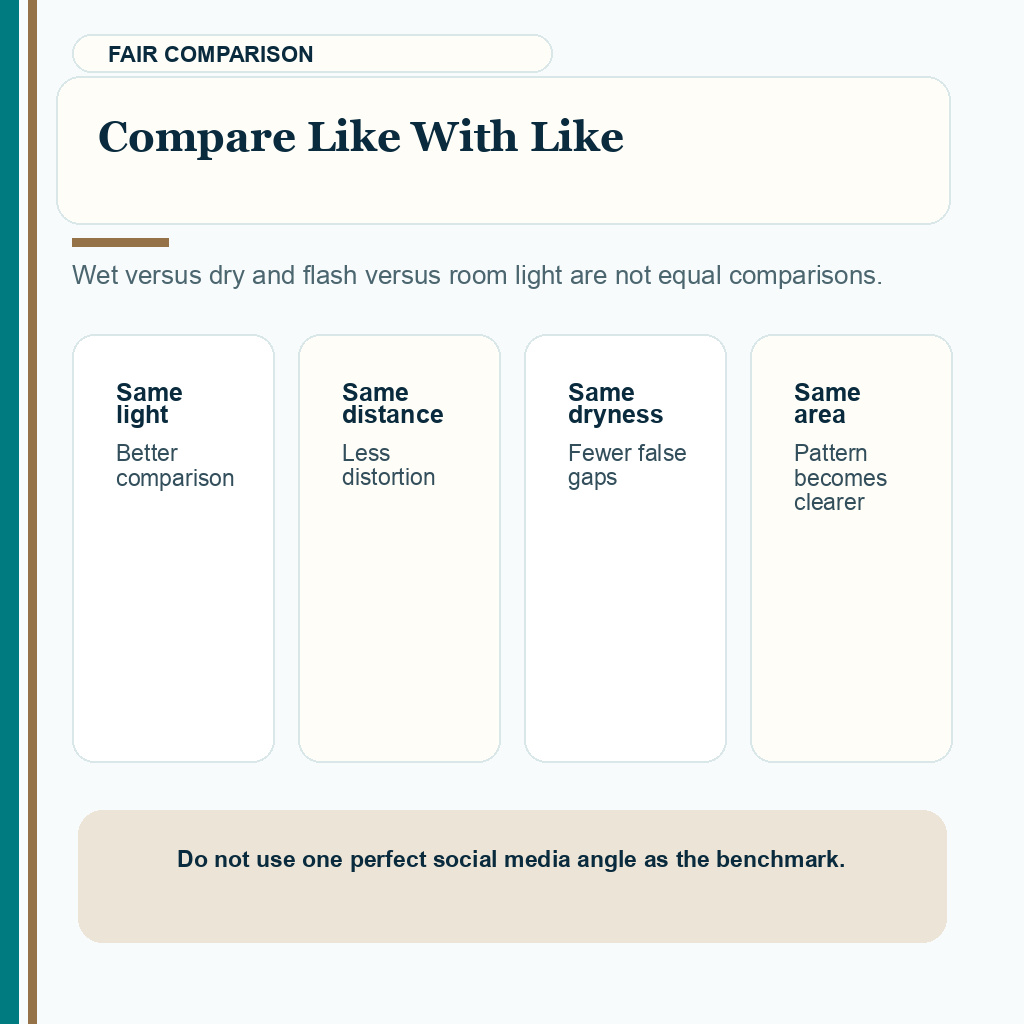
Patients often compare their day 10 photos with someone else’s clinic result, before and after gallery, or one perfect social media angle. That comparison is rarely fair. The other person may have thicker hair, lower contrast, fewer treated zones, different lighting, a different number of grafts, or simply a more flattering photo. For a broader recovery frame, read why online hair transplant photos can mislead recovery judgment before using someone else’s image as your benchmark.
Photo comparison needs discipline when you review your own updates. If one photo is wet and one is dry, if one is under bathroom lighting and one is near a window, or if one is zoomed and one is full face, you are not comparing the same evidence. Use a fair comparison standard when you read hair transplant photos carefully.
The 10 early photo review slides below separate useful photo details, misleading angles, symptoms that need quick review, and concerns that need time. Swipe sideways, use the arrows one slide at a time, or choose a number below the image.