


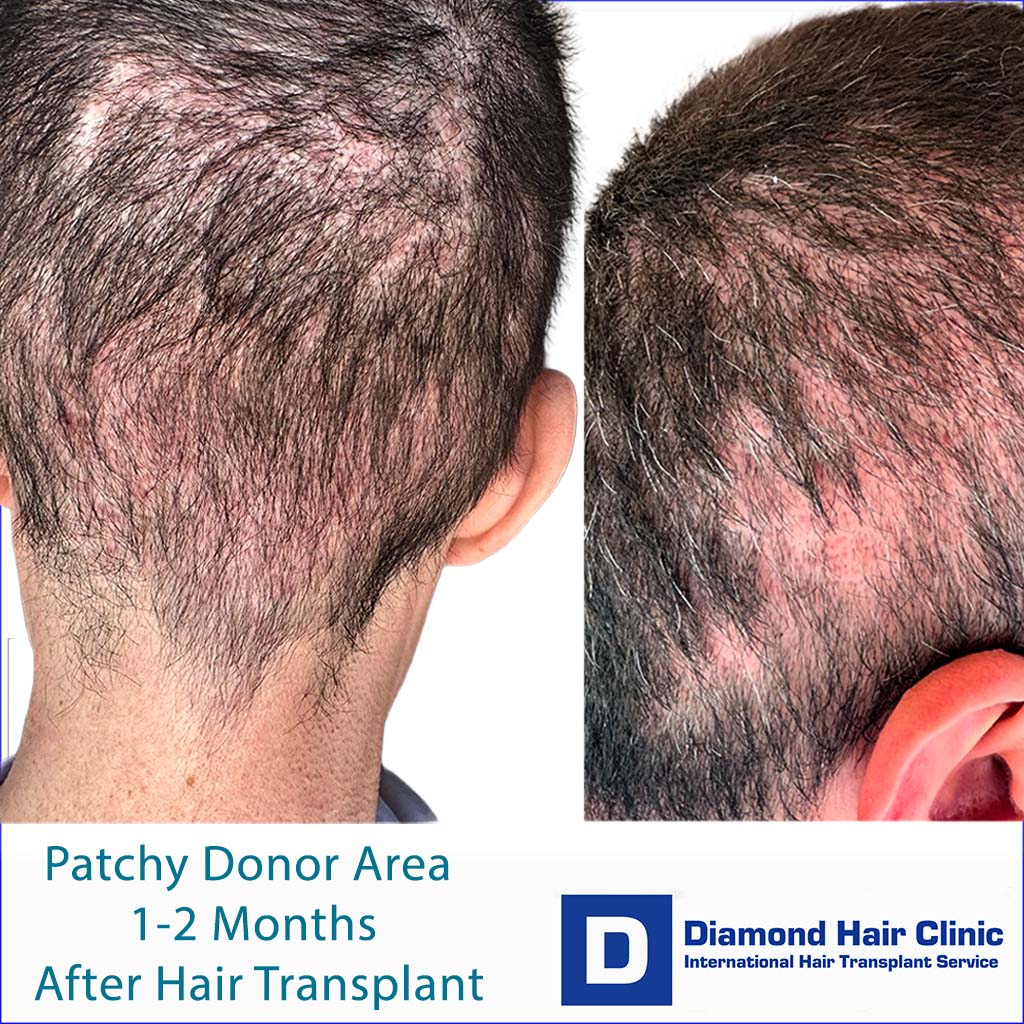
Donor Area Healing Needs Time and Review
A donor area can look patchy, red, uneven, or thinner at one or two months after FUE hair transplant and still be healing. I become more concerned when the pattern is sharply depleted, symptoms are getting worse, or one zone looks emptied compared with the rest. Even after the hair has grown, I take the same concern seriously if the area still looks see through. Very short hair can exaggerate every gap, so the review is stronger when the same donor zones are photographed again after a little growth.
When I review anxious donor photos, I first separate normal healing, temporary shock loss, and a harvesting pattern that may have spent too much donor reserve. One close bathroom photo cannot answer all of that by itself. It can show whether we need better standardized photos, symptom review, or faster medical assessment. For an early puffy donor area, I use a focused donor swelling after FUE review before discussing final donor density or overharvesting.
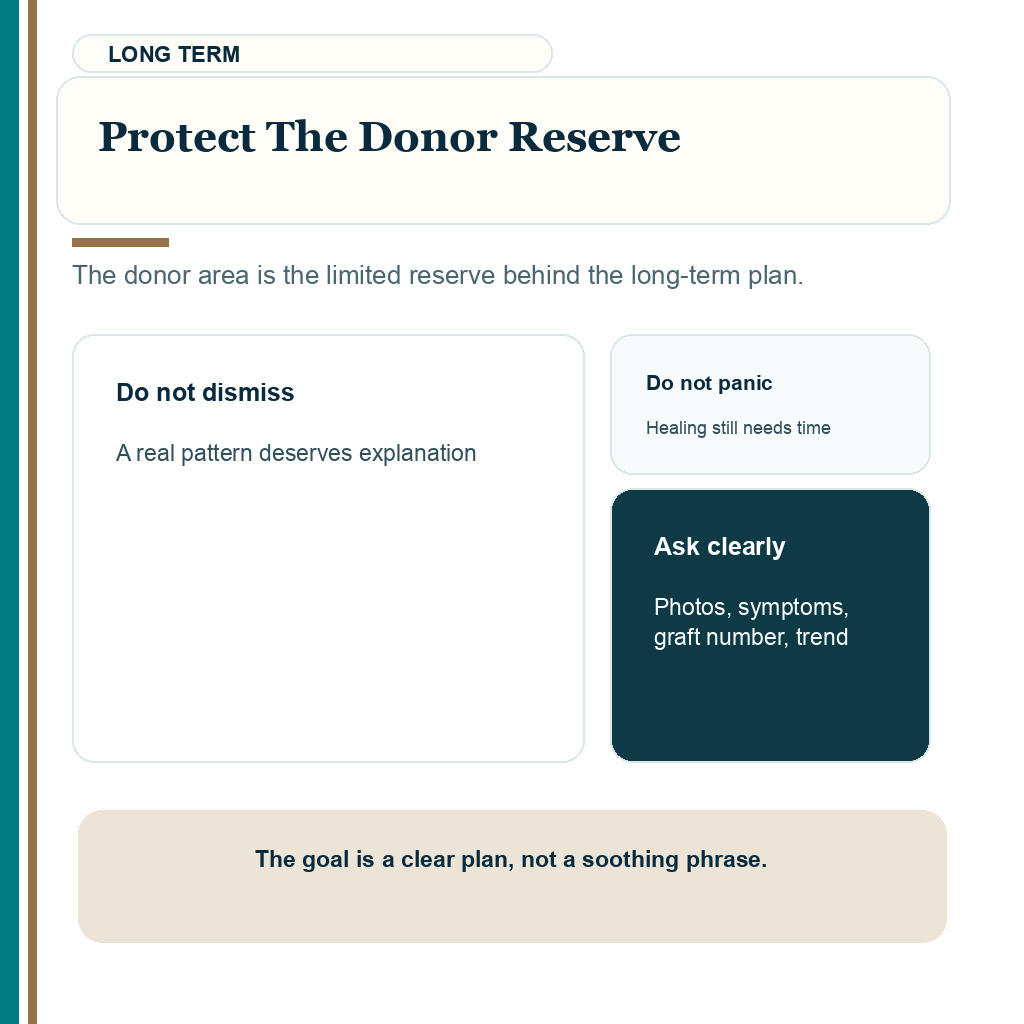
The donor area is not a background detail, because it is the reserve that makes future options possible. It is the limited reserve that makes the whole surgery possible. A natural hairline only has real value if the donor area was used with judgment.
Normal changes can still appear at one or two months
At one or two months, the donor area may still show mild redness, tenderness, small dot marks, uneven density, temporary thinning, or a patchy look when the hair is very short. This can feel alarming because most people inspect the donor area much more closely after surgery than they ever did before.
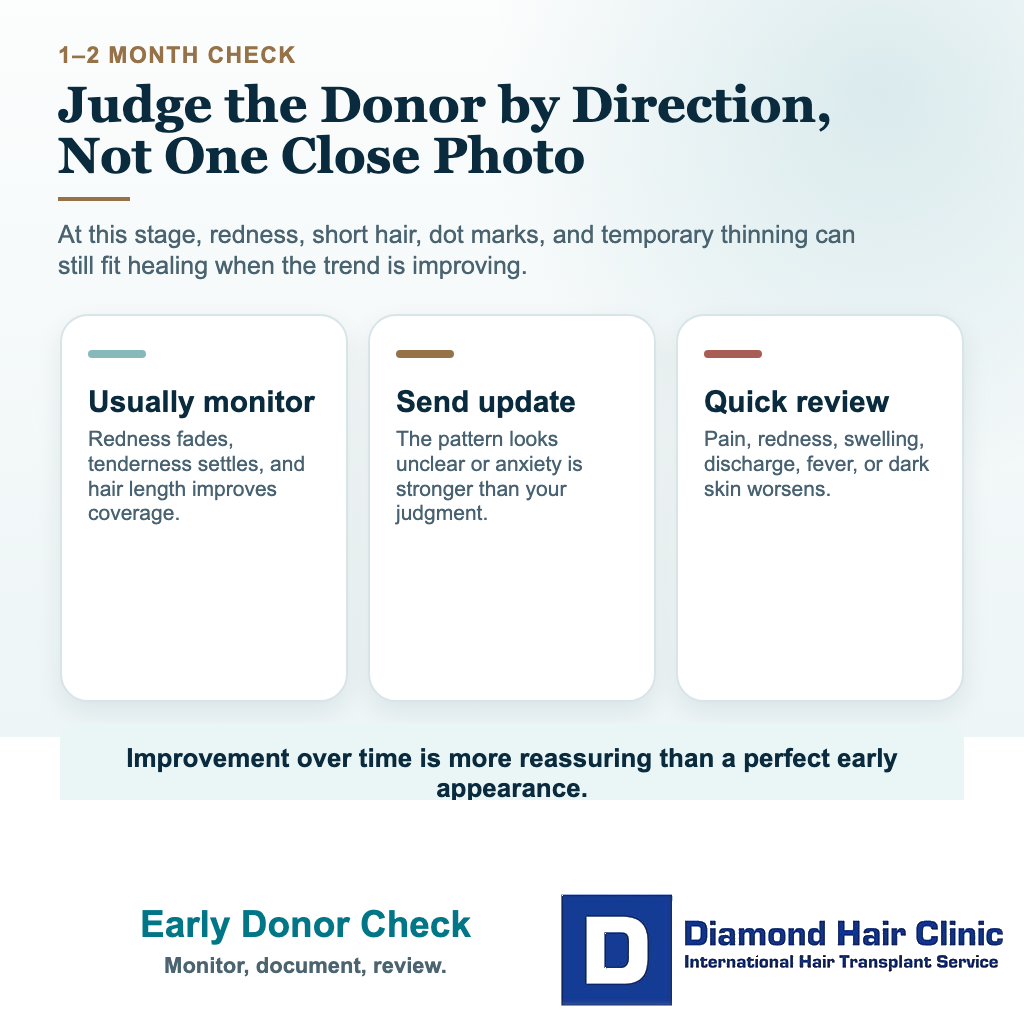
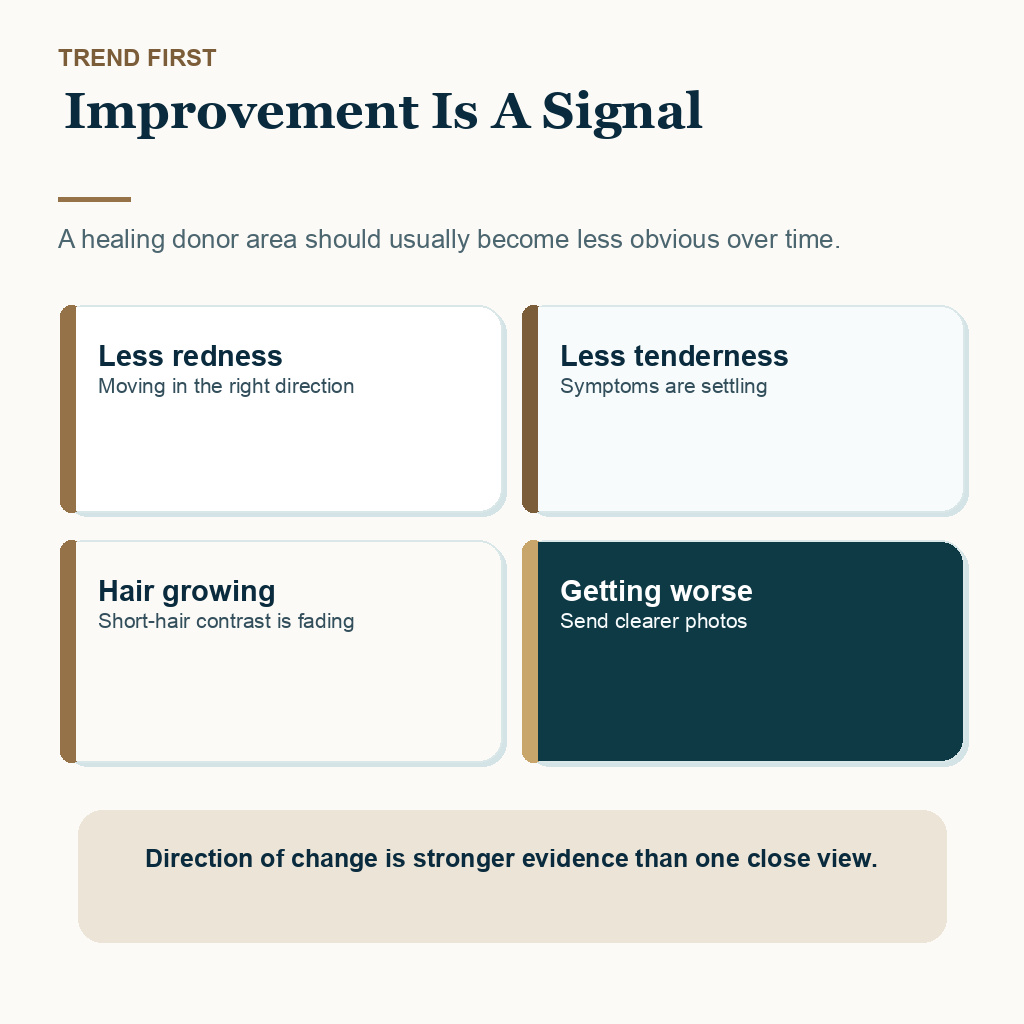
The more reassuring sign is improvement. If redness is fading, tenderness is settling, surrounding hair is growing, and the area looks less obvious month by month, I am less worried. If a donor area dressing irritation has a clean tape edge, the border and symptoms matter more than one close photo. Healing is judged by direction, not only by one day.
A donor area can also look worse than it really is when the hair is cut very short. The contrast between skin, scar dots, redness, and short dark hair can exaggerate every small difference. The timing of your first haircut after a hair transplant matters.
Normal healing does not mean the donor area already looks untouched. It means the appearance fits the time point and keeps moving in the right direction.
Patchiness during donor healing
Patchy is not a diagnosis by itself. Short hair length can create it. Redness can create it. Temporary shock loss around the extraction points can also make the donor look thinner than it will later look.
A close fade can make a patchy donor area look more dramatic or hide the pattern the clinic needs to compare. Keep the haircut conservative while the area is settling, and ask the barber not to irritate tender donor skin.
There is also a natural difference in density between the back and the sides of the scalp. When grafts are taken, those differences become easier to see, especially in harsh light. A patient with pale skin and dark hair may see more contrast than a patient whose hair and skin color are closer together.
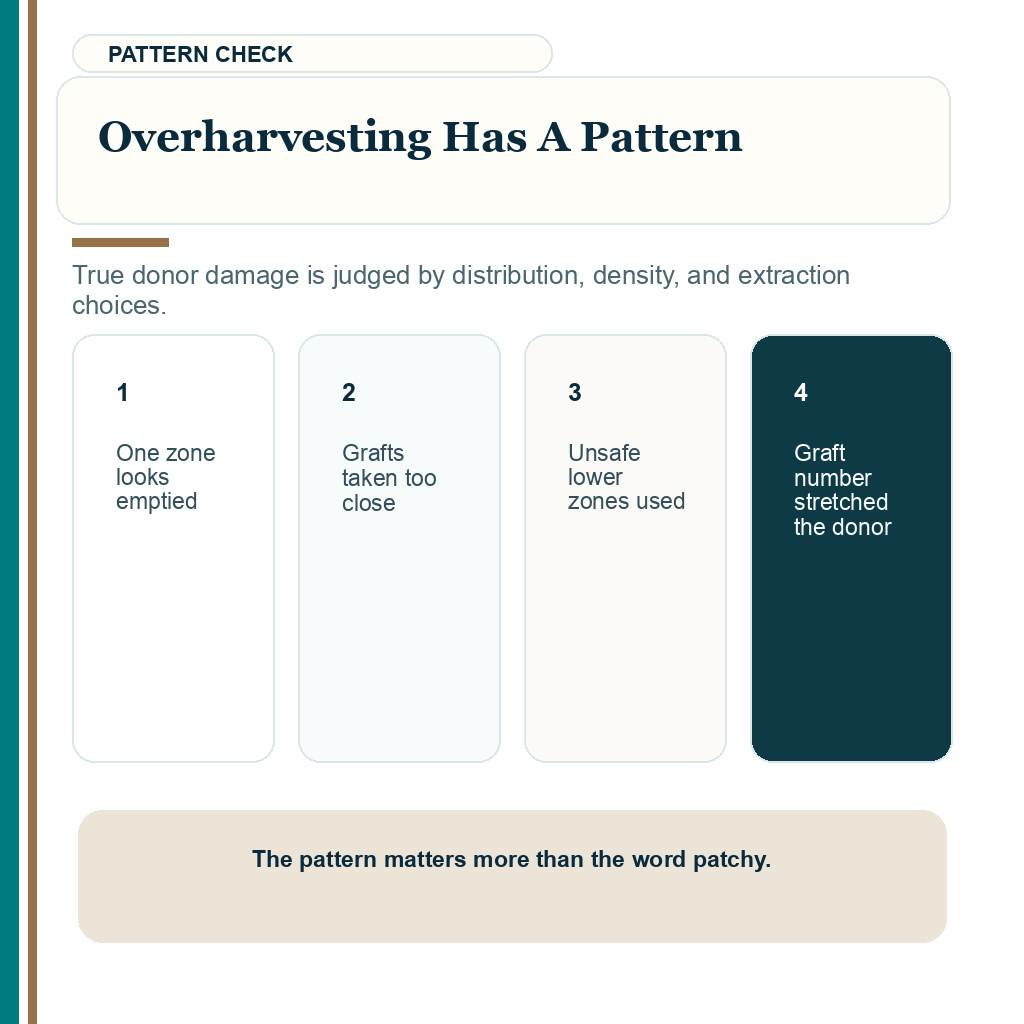
Patchiness becomes more concerning when it follows the extraction map. If grafts were taken too close together, if one zone looks emptied while other areas were barely touched, or if extraction moved outside the reliable safe donor area, the problem may be more than temporary healing. I do not judge only the word patchy. I judge the pattern.
Shock loss versus overharvesting
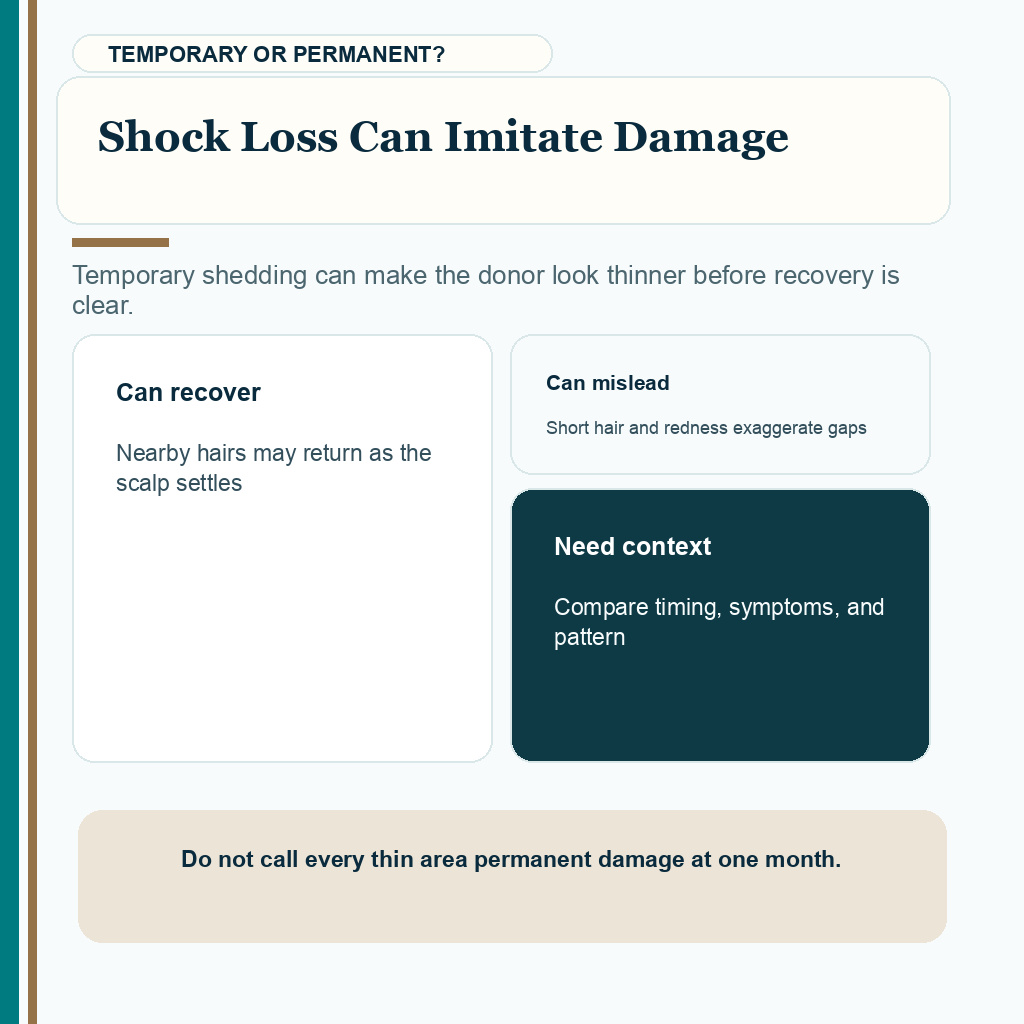
Shock loss after a hair transplant means nearby hairs can weaken or shed temporarily after surgical stress. It can happen around the recipient area, and it can also affect the donor region. If the follicles are not permanently damaged, the area may improve as the scalp settles and the hair cycle recovers.
Overharvesting is different. In true donor area overharvesting, too much hair has been removed from the donor reserve or extracted in a poor pattern. Removed follicular units do not return to that donor spot. Longer surrounding hair may camouflage the area later, but the donor budget has still been spent.
The distinction is not always obvious at one month. Shock loss can mimic damage. Short hair can exaggerate extraction marks. Redness can make the scalp look more exposed. I compare standardized photos over time before calling a donor area permanently damaged unless the medical signs or extraction pattern are already clearly abnormal.
Before and after photos from the clinic can help, but only when they show the donor from comparable angles and hair length. A harsh close-up after shaving should not be labelled shock loss or overharvesting by itself. I want the original extraction plan, the graft number, the donor pattern, symptoms, and a matched photo set before making that call.
Later in the first year, the donor review should become more practical. Match the donor at the same haircut length, with dry hair and ordinary light, then place it beside photos from before surgery. A donor that was naturally fine or sparse can look exposed without true overharvesting, but a new uneven extraction pattern that stays visible after growth belongs in a patchy donor area review.
Still, a clinic should not hide every concern behind the word shock loss. If the extraction map looks obviously concentrated, if the donor looks carved out, or if the graft number was pushed beyond what the donor could safely support, the patient deserves a clearer explanation.
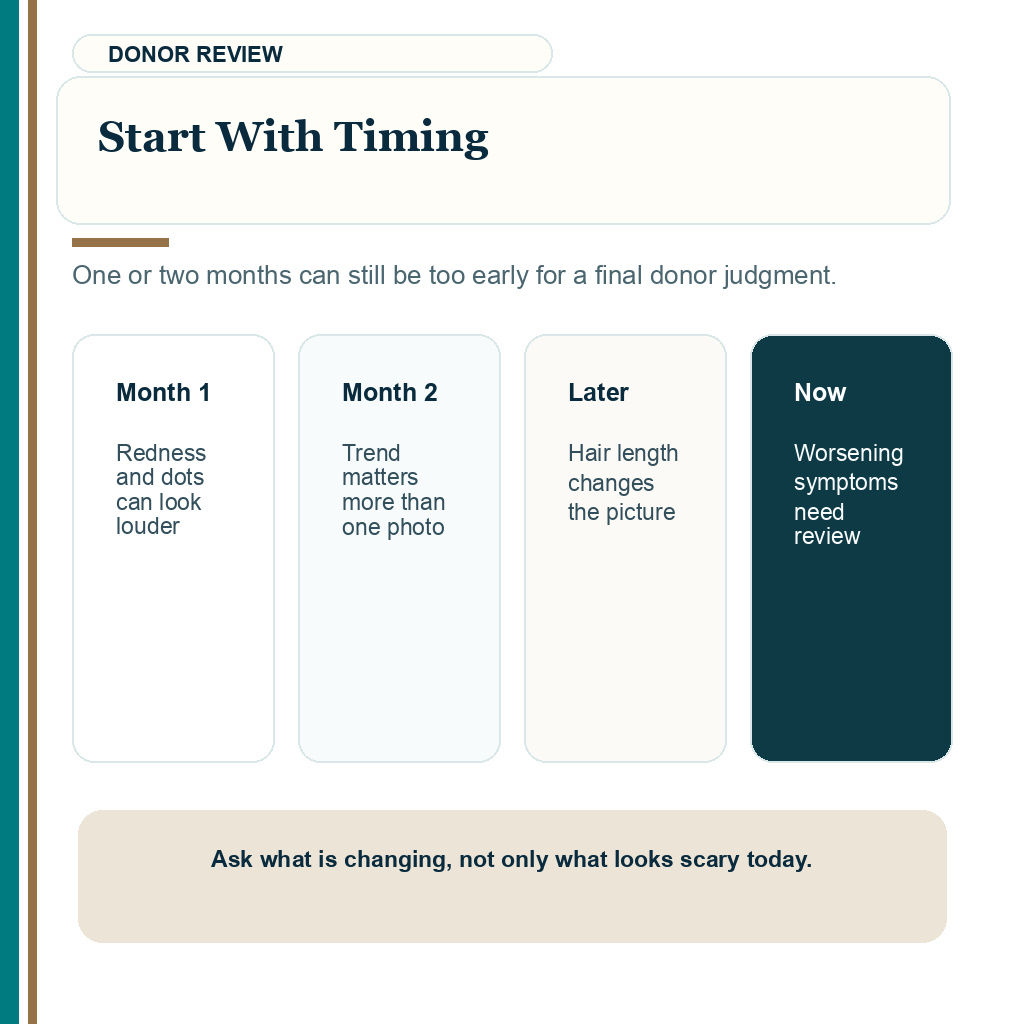
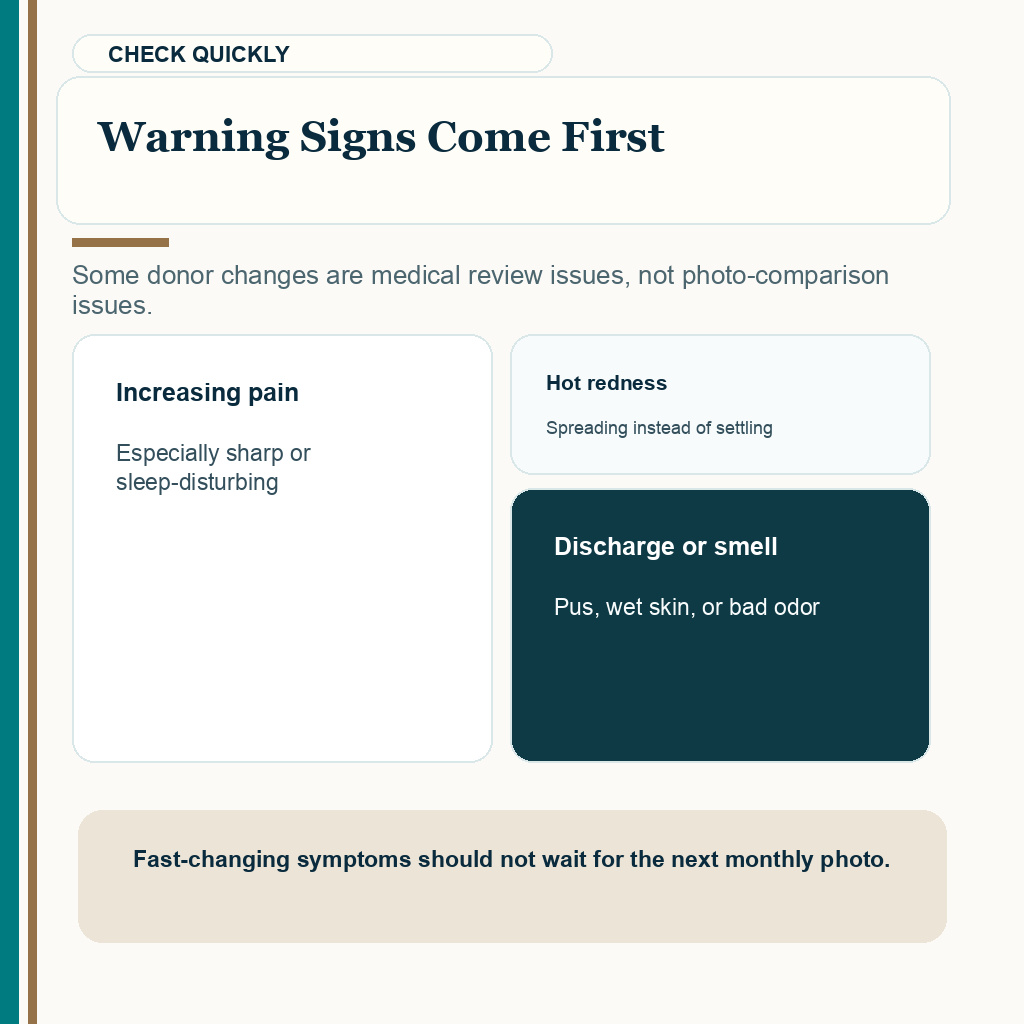
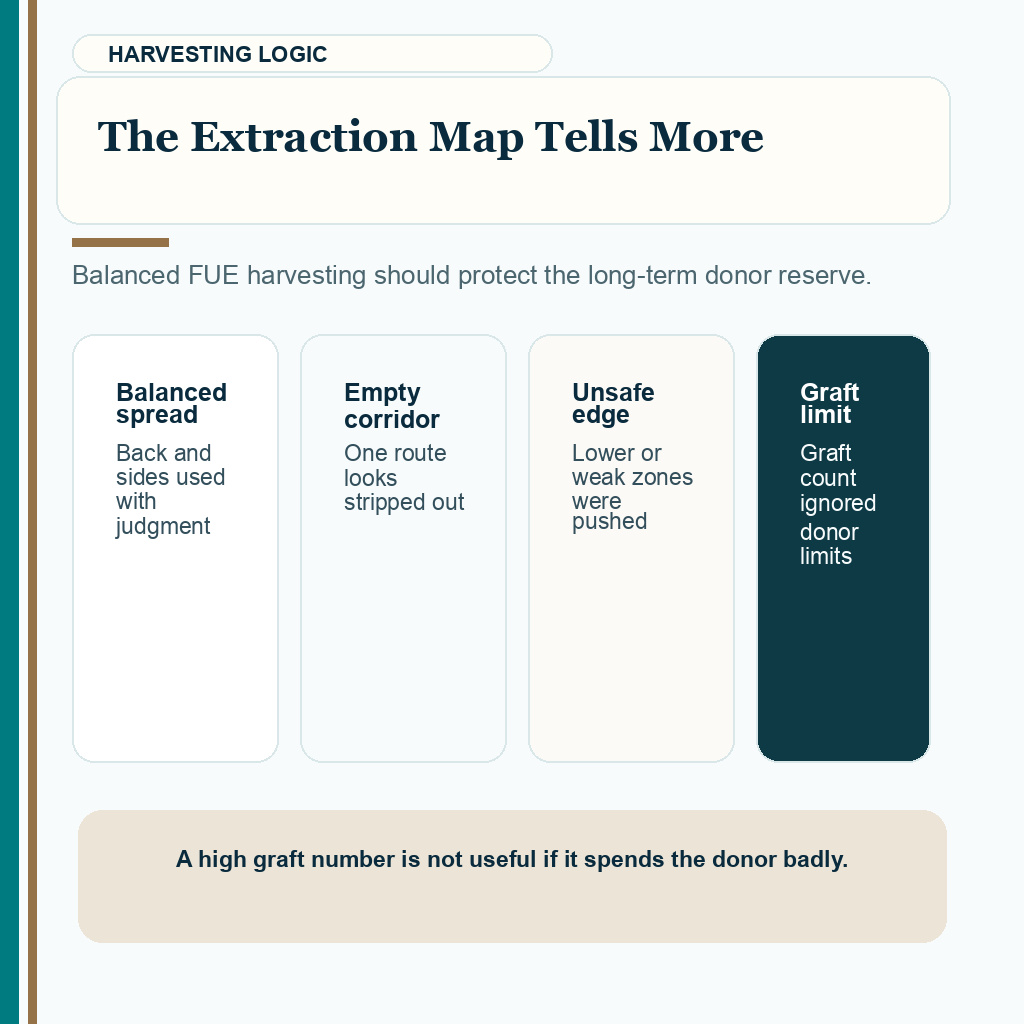
These 10 donor area review slides separate timing, improvement trend, shock loss, overharvesting pattern, warning signs, extraction map, photo distortion, useful photo set, early judgment, and donor reserve protection. Swipe sideways, use the arrows one slide at a time, or choose a number below the image.
Warning signs that need quick review
Some signs are not only cosmetic. Increasing pain, spreading hot redness, pus, bad smell, worsening swelling, bleeding, fever, or skin that is turning dark, grey, or unusually wet should be checked quickly. These signs can suggest infection, irritation, poor healing, or another medical problem.
If you have severe donor area pain after a hair transplant, do not treat it as a normal photo concern. Pain that is sharp, increasing, or disturbing sleep needs different attention from simple patchiness in a photo.
The same is true when redness, scabs, or pimples are getting worse instead of settling. Mild surface changes can be normal, but spreading inflammation deserves careful follow-up. If these signs appear, do not wait for the next monthly photo. The redness, scabs, and pimples after hair transplant page explains those warning signs in more detail.
Extraction pattern changes the answer
Extraction pattern is one of the first details I look at. A careful FUE extraction should be distributed across the safe donor area. It should not create obvious empty corridors or take too much from one region just to reach an impressive graft number.
When I look at a donor area, I ask whether the harvesting looks balanced. I compare the back and sides. I look at whether the lower neck or unstable areas were used too aggressively. I also consider the number of grafts and the original donor density.
During extraction, the donor is divided into working zones and access can change as the work moves across the back and sides. You may be face down, turned, or asked to tilt your head. That position alone does not show whether the harvesting was careful. I would compare the planned donor map with the immediate extraction photos and the healed pattern. The extractions should be broadly distributed, not concentrated in whichever section was easiest to reach.
Graft numbers must never be separated from donor planning. A plan that sounds attractive in the recipient area can be harmful if the donor cannot safely support it. How a surgeon calculates graft numbers explains this relationship more fully.
Good donor management is not simply taking fewer grafts. It is taking the right grafts from the right zones in a pattern that preserves future options.
Hair length and lighting can exaggerate the donor area
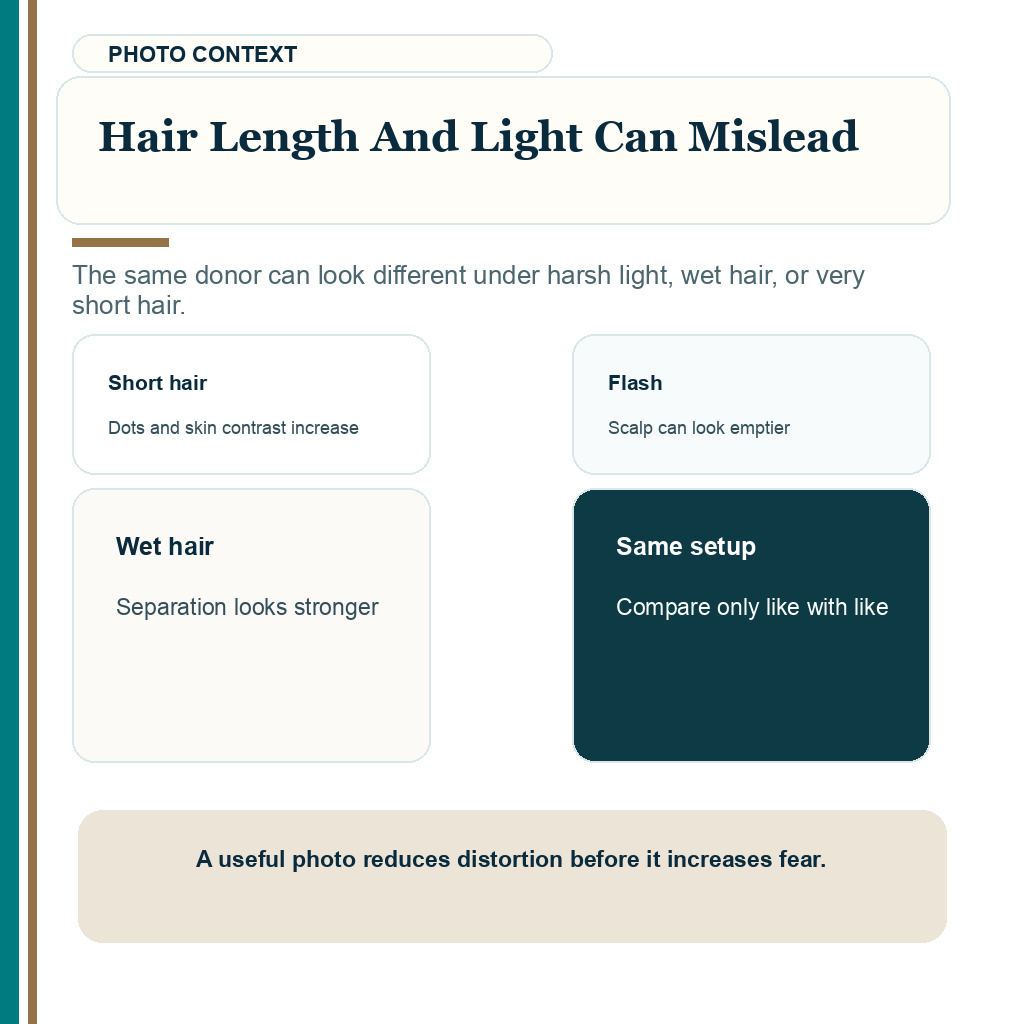
Hair length changes the donor appearance dramatically. A donor area seen at a few millimeters can look much more open than the same area seen with longer hair. This matters most when a patient is judging a very short haircut or a close phone photo. If you plan to keep a very short cut, short hair after FUE and donor scars becomes a separate planning question, not only a healing question.
Lighting also matters. Flash, bathroom mirrors, wet hair, close phone angles, and overhead light can make the donor look emptier than it appears in daily life. Clinic result photos are often taken with controlled light and a flattering hair length, so comparing them with a panic photo at home is not fair.
The photo set matters for that reason. Use dry hair, normal room light, the same distance, the same angles, and monthly comparison. A useful photo should help the decision. It should not create more confusion.
When should photos be sent for review?
Send photos if the donor area is getting worse, if pain or redness is increasing, if the pattern looks sharply depleted, or if you keep checking it so often that you can no longer judge the trend. If symptoms are changing quickly, send photos the same day instead of waiting for the next monthly comparison. Asking for review is reasonable. Guessing alone is not helpful.

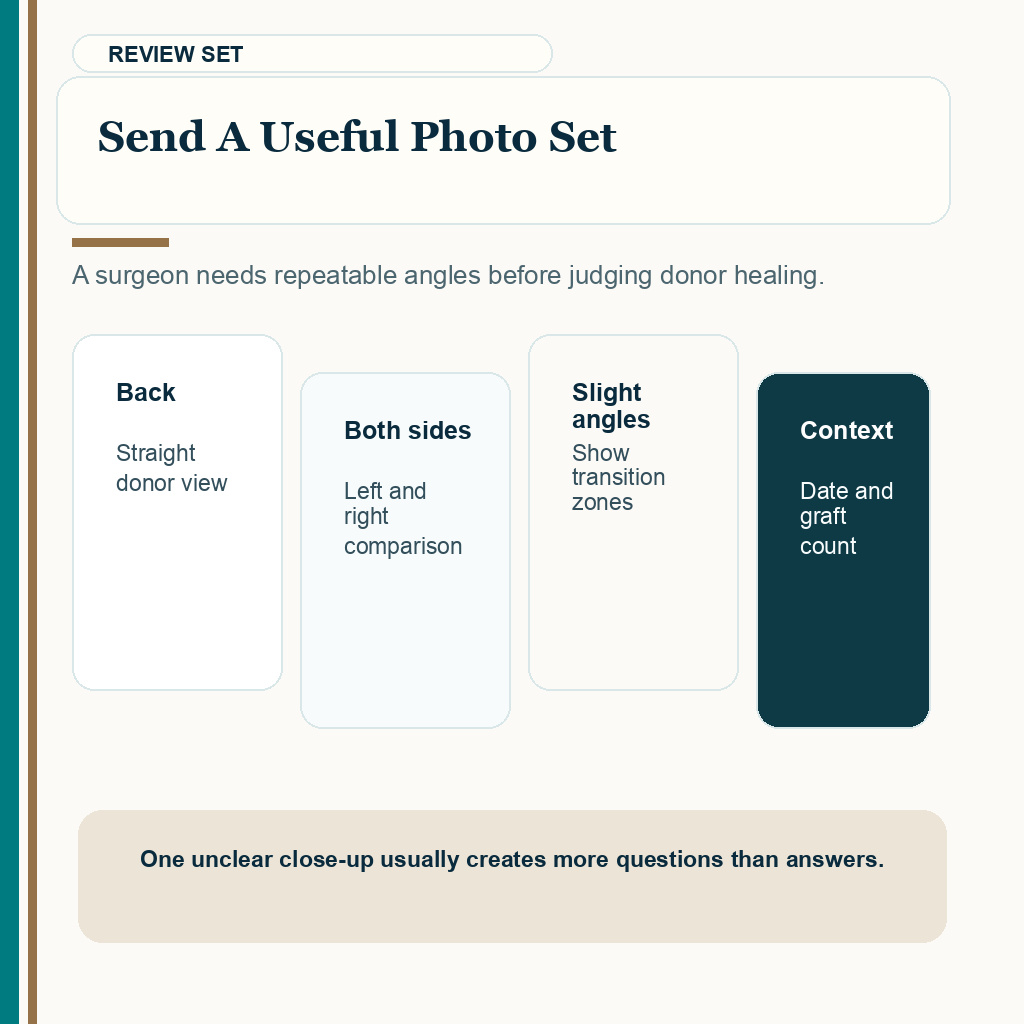
Send photos from the back, both sides, and slight angles. Keep the hair dry. Use consistent lighting. Do not press the camera against the scalp. Add the surgery date, graft number if you know it, medications, symptoms, and whether the appearance is improving or worsening.
Take the donor photo with the head in a natural position, not bent down to stretch the skin. A stretched neck can change the shadow and make the extraction pattern look sharper.
Good follow-up depends on good information. A clinic cannot judge the donor responsibly from one unclear close photo. With proper photos and timing, the surgeon can separate a normal healing concern from a case that needs closer attention.
When is it too early to judge the final donor area?
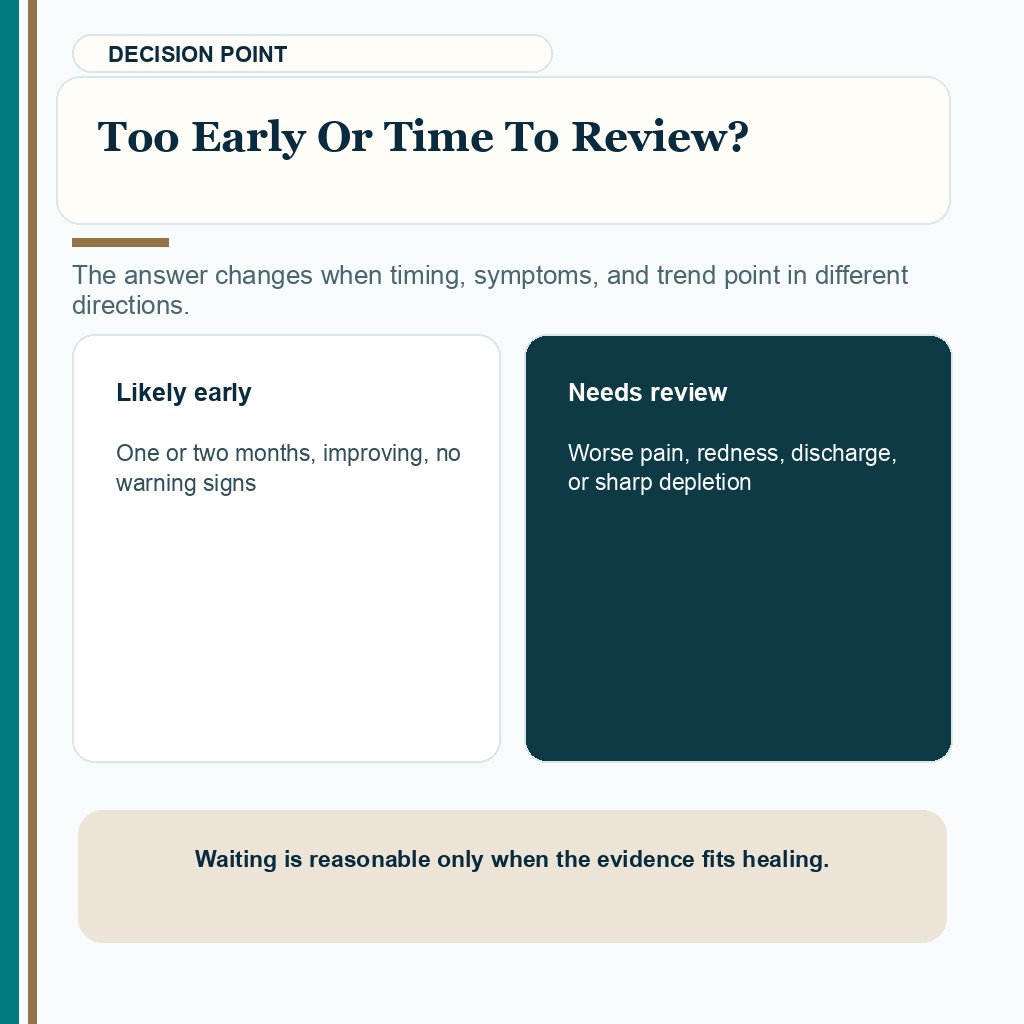
I avoid final donor judgment at one or two months unless there is an obvious medical problem or a very abnormal extraction pattern. Many temporary donor changes are easier to interpret between three and six months, and the cosmetic impression can continue changing as the hair grows longer.
At three months, redness is often quieter and some shock related thinning may begin to recover. At six months, the picture is more meaningful. Even then, hairstyle, hair caliber, skin contrast, and the amount of extracted grafts still affect the final look.
If the donor remains visibly see through after the hair has grown, the conversation becomes more serious. At that point I review the extraction pattern, preoperative donor density, graft number, punch size, scarring, and whether the patient had naturally weak donor hair before surgery.
Minoxidil and supplements cannot replace donor protection
Minoxidil, supplements, and supportive treatments should not be presented as a guaranteed repair for donor damage. If the issue is temporary shedding or inflammation, time and proper scalp management may already bring improvement. If the issue is true overharvesting, no tablet or topical product can put removed follicular units back into the donor area.
Sometimes medical support may help surrounding native hair look stronger, especially if the patient has diffuse thinning or miniaturization. That is different from repairing a depleted donor zone.
Support can help the scalp and existing hair in selected cases, but donor protection must happen during the first surgery. Prevention is much stronger than rescue.
Avoiding irritation while the donor area heals
Avoid aggressive scratching, harsh brushing, early close shaving, strong chemical products, microneedling, and daily inspection under harsh light. These habits increase anxiety and can irritate the scalp.
Follow the clinic instructions for washing and normal hair transplant aftercare. Ordinary washing under the clinic protocol is different from scrubbing, picking, or testing the skin. If the scalp is itchy or tender, do not start random products because someone online suggested them.
If you are worried about ingredients, the safer approach is to keep products simple and follow medical instructions. Harmful ingredients in hair products explains why the early healing scalp should not be treated like normal skin.
If the donor area was truly overharvested
If the donor area was truly overharvested, the discussion must be responsible. The goal is usually camouflage, blending, or damage limitation, not a perfect return to the original donor.
Options may include growing the hair longer, changing the haircut, scalp micropigmentation in selected cases, medical support for surrounding hair, or very careful grafting into visible depleted zones in rare situations. Each option has limits. A damaged donor is difficult to repair because the donor itself is the resource normally used for repair.
I am strict about donor management. Overharvested donor area repair can sometimes improve the look, but it cannot recreate an untouched donor area. Careful harvesting matters before the first surgery, not only after a problem appears.
Judging whether the original clinic protected the donor area
Ask whether the clinic measured your donor capacity, explained the safe donor area, documented the graft number, distributed extraction evenly, and planned for future hair loss. A clinic that only talks about how many grafts it can take may be missing the more important question.
High-volume clinic models can create donor problems when the surgery is treated like production work rather than patient-specific planning. The danger is not only a weak result in the recipient area. The danger is losing donor reserve that may be needed later.
If you are comparing clinics for a future procedure, look carefully at how they speak about the donor area. The consultation should explain limits, not only promise density. This is part of how to choose a hair transplant clinic in Turkey.
A practical way to proceed
An uneven donor area in the early months needs a trend, not a panic judgment. Standardized photos, gentle care, and steady review of whether the area is improving give a clearer picture.
If the area is improving, time may be the right treatment. If pain, redness, swelling, or discharge is worsening, get medical review quickly. If the extraction pattern looks clearly abnormal, ask for a proper explanation instead of accepting vague reassurance.
The donor area is your long-term hair reserve. It deserves the same seriousness as the transplanted hairline. A healing donor should become less noticeable over time. If it does not, the patient needs a clear plan rather than a soothing phrase.
Read this review excerpt
First wash completed and visual instructions given to my daughter.