


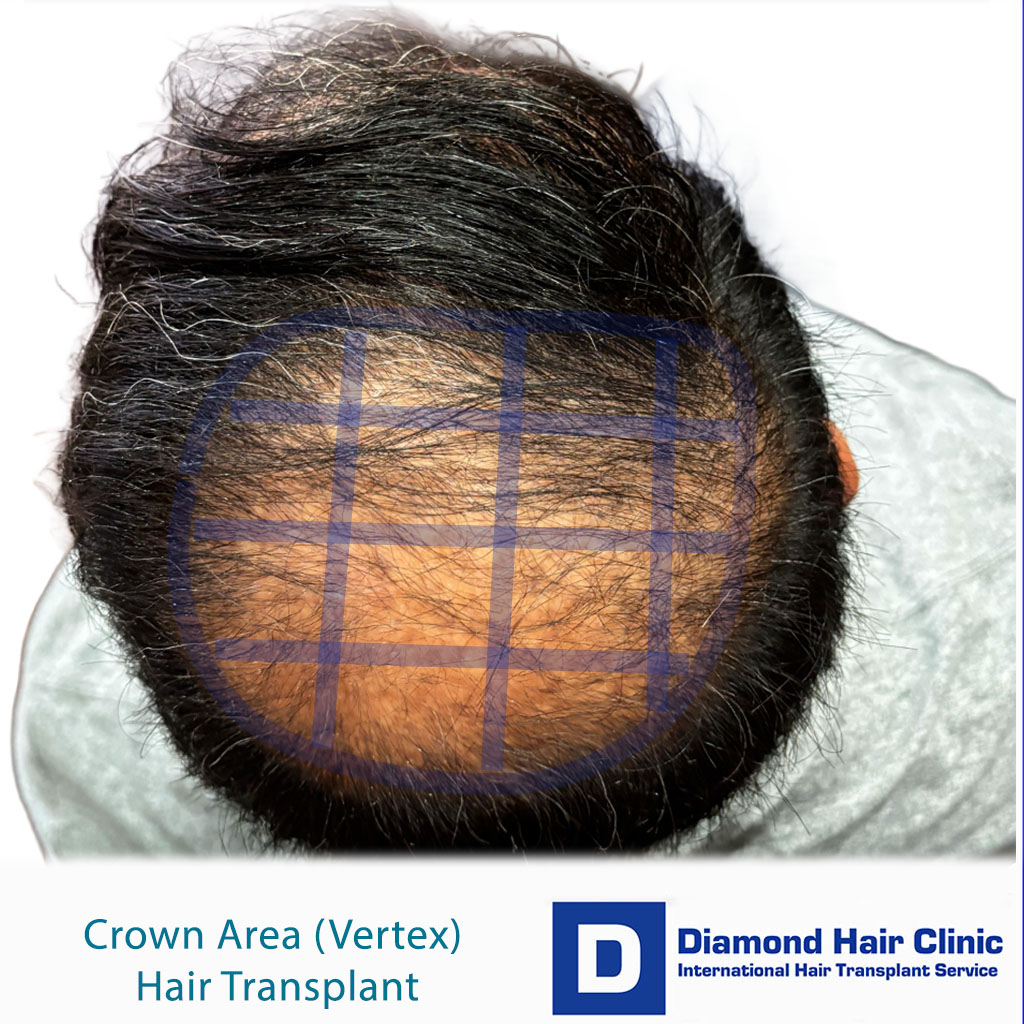
Crown Hair Transplant Planning and Expectations
A crown hair transplant makes sense when the diagnosis is clear, the donor area is strong enough, the front has been planned properly, and the patient understands that the crown rarely gives the same dense visual effect as the hairline. If the crown is early, active, unstable, or competing with limited donor supply, observation and medical support may be the better first step. When prescribed TRT is part of the background, testosterone therapy and hair transplant planning helps separate graft growth from native crown hair that may keep changing.
The crown can improve meaningfully, but it should not be treated as an empty circle that only needs filling. A crown that bothers a patient in photos may be true androgenetic hair loss, a normal whorl that exposes scalp, or a mixture of both. The decision is not only whether grafts can be placed there. The decision is whether using grafts there now protects the patient’s future appearance. This is one reason Norwood 4 or 5 hair transplant planning treats the crown as one part of a larger donor budget decision.
In younger patients, the crown is a future map as much as a current gap. The plan has to explain what happens if thinning widens around the grafted circle, because the donor area must still be useful years later.
Being on treatment can lower some uncertainty, but it does not remove the need to save grafts for a wider future crown.
The consultation should make the limits clear. The patient needs to know what improvement is realistic, what may still show under strong light, and what donor reserve must remain for later years. This is especially important during a hair transplant in your 30s, when the crown may keep changing after the first operation.
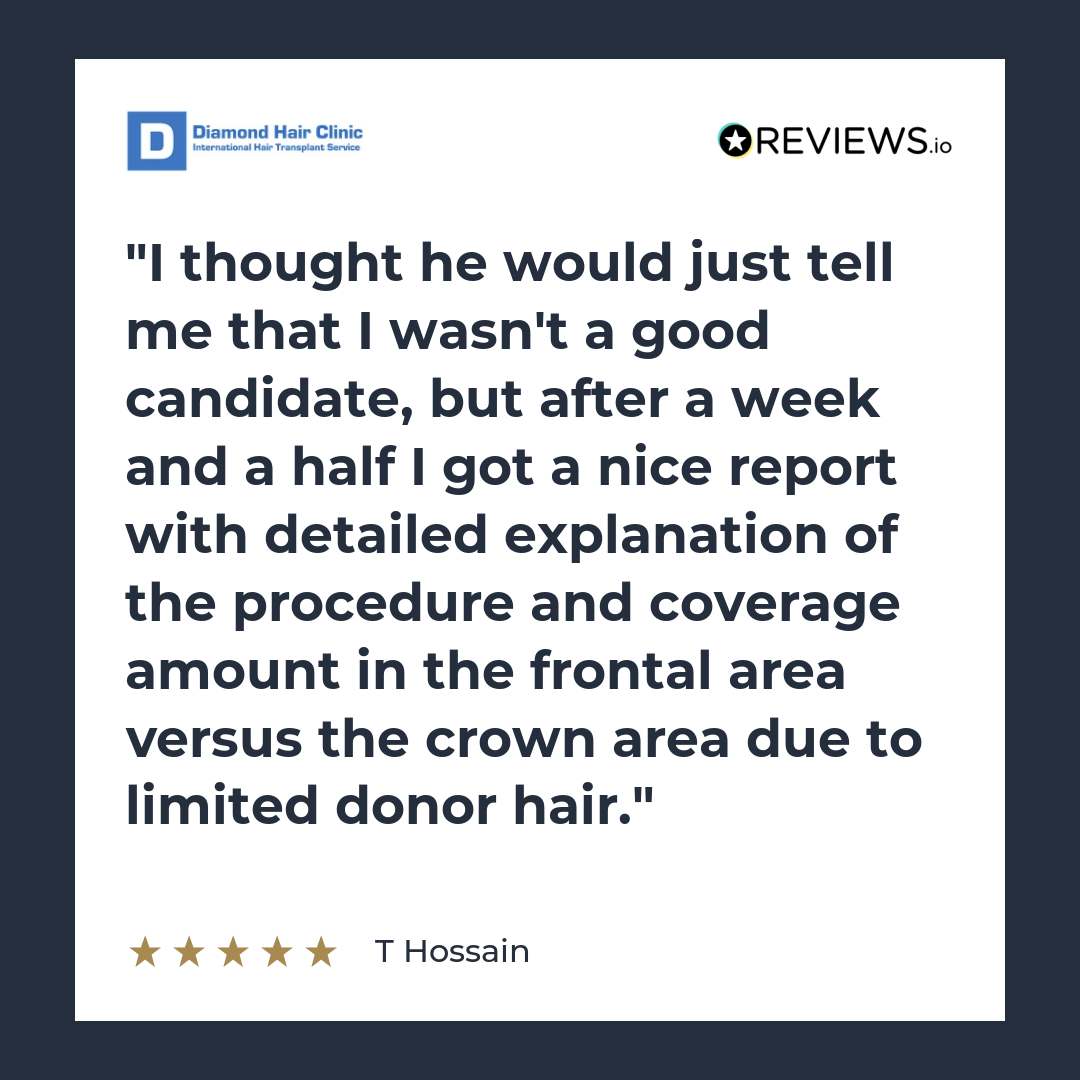
Read this review excerpt
I thought he would just tell me that I wasn't a good candidate, but after a week and a half I got a nice report with detailed explanation of the procedure and coverage amount in the frontal area versus the crown area due to limited donor hair.
A serious crown session can still leave some scalp visible if the treated area is wide, the hair is fine, or the surrounding native hair keeps miniaturizing. I do not judge crown density from the total graft number alone. I need to know how much of that number actually went into the crown, how large the crown was, and what density the donor area could safely support.
For a quote that covers the front and crown, the total graft number is not enough. The plan should divide the grafts by zone, state what the smaller crown allocation is intended to achieve, identify which thinning will remain untreated, and show the donor reserve kept for future loss. This makes a staged plan comparable with a larger session without spending extra grafts because one overhead photograph looks weak.
Use the written plan as the first reference when the crown looks different from what you expected soon after surgery. Ask the clinic which areas were intended for fuller coverage, lighter blending, or a later stage before deciding that an uneven area represents a mistake.
When the visible worry is mostly at the front rather than the crown, I usually plan the face framing area before the crown. Crown work asks for more patience because lighting, hair direction, swirl pattern, and donor limits can make the back of the scalp look worse than it really is.
Crown optics before surgery
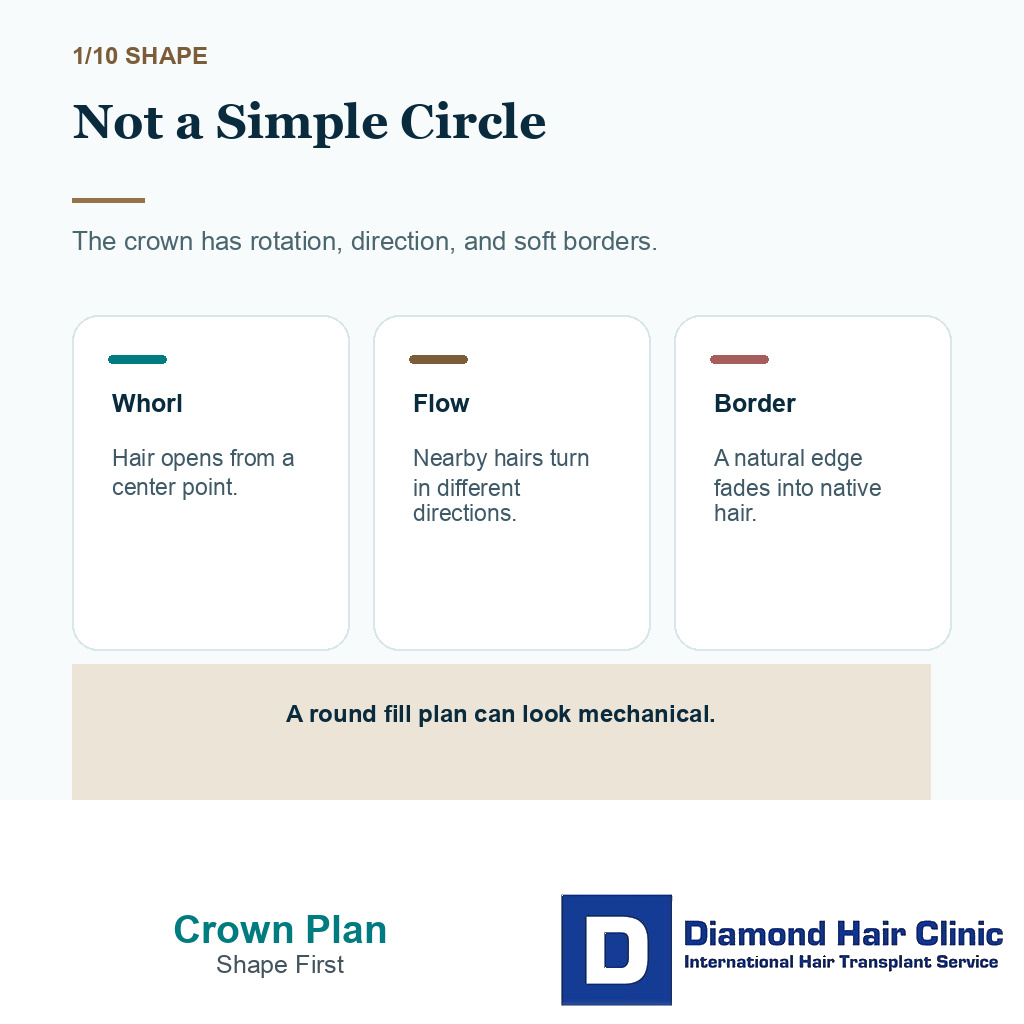
The crown can look empty even when useful hair is still present because the hair does not flow in one simple direction. Most people have a whorl there. Hairs rotate from a center point and open outward. When hair opens in different directions, the scalp becomes easier to see.
The front behaves differently. Frontal hair usually overlaps in a more organized direction and hides the scalp more easily. The crown has less of that overlap. The center of the whorl can expose skin before the patient has lost as much hair as he thinks.
I separate true thinning from crown optics before any graft count is discussed. A visible center point does not always mean surgery is needed. A widening, pale, shiny, or progressively larger crown with miniaturized hairs is a different finding. The crown whorl pattern should be understood before anyone starts counting grafts.
Many poor crown plans begin with a visual mistake. The clinic sees a round pale area and treats it as a simple bald spot. A natural crown is not a simple round space. It has direction, rotation, soft transitions, and surrounding native hair that may keep changing.
Confirming true crown thinning
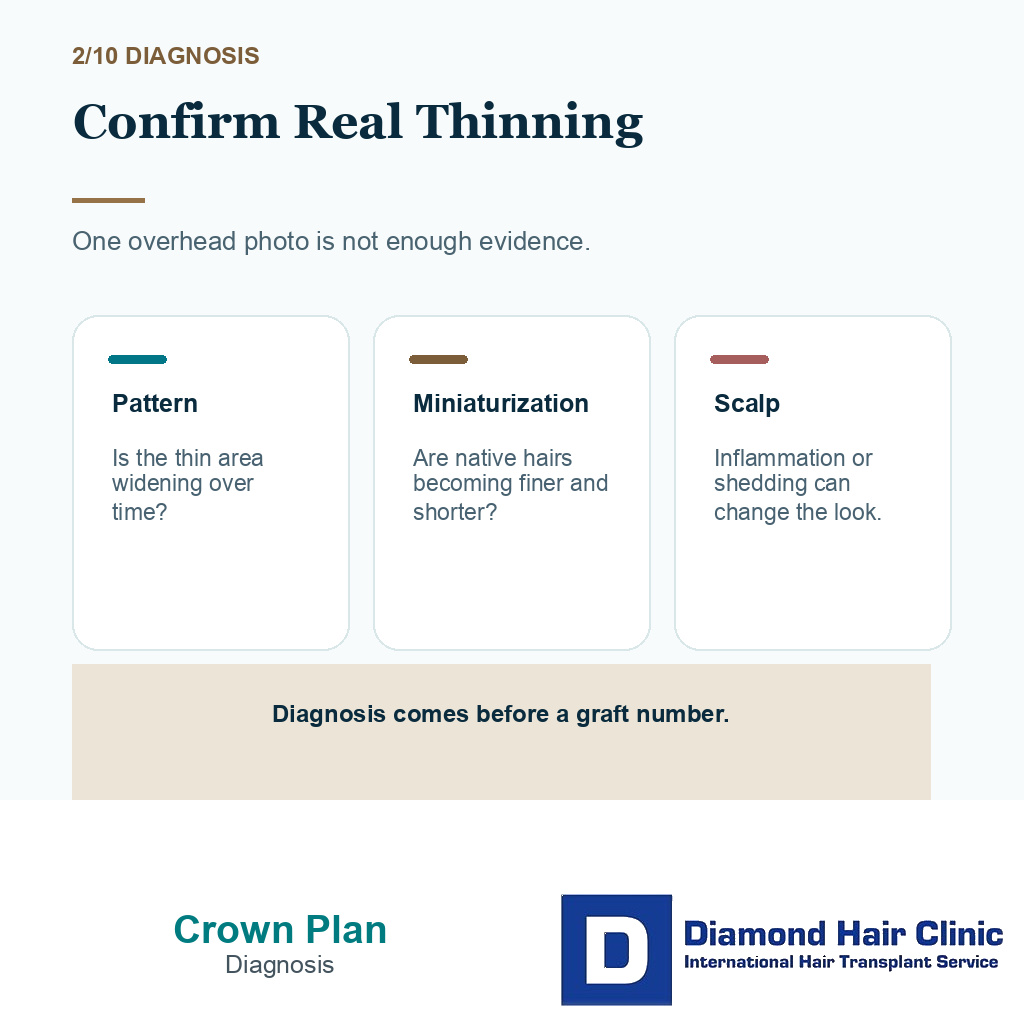
The crown is evaluated with photos, magnification when needed, family pattern, age, hair caliber, and change over time. I do not judge it from one harsh image. A single photo from above can exaggerate the problem, especially if the hair is wet, short, parted, or under direct light.
True androgenetic crown thinning usually shows miniaturization. The hairs become finer and shorter before the area becomes fully bald. In men, the crown can open in a circular or oval pattern. In women, the top and crown may look more diffuse. Scalp inflammation, shedding, dermatitis, thyroid issues, medication changes, stress, or nutritional problems can also make the area look worse.
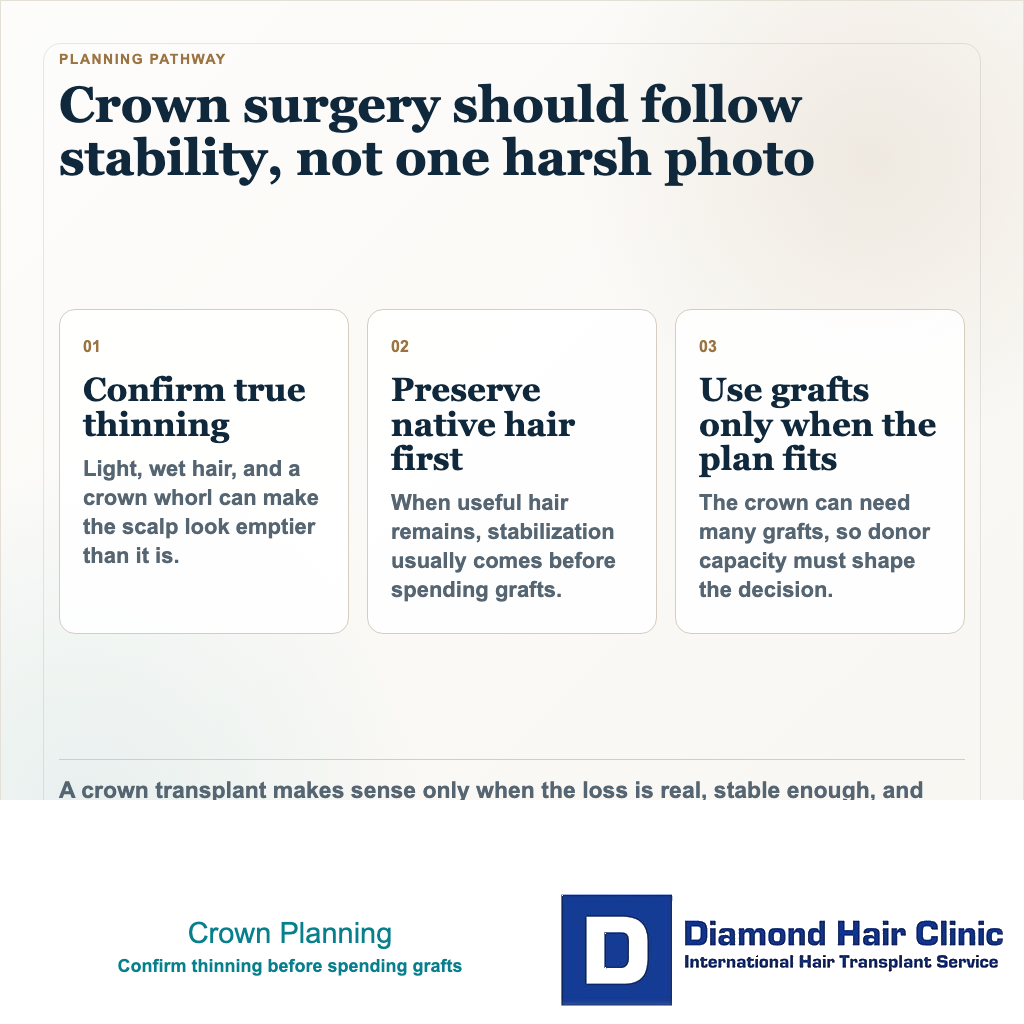
Crown planning should begin with what the crown is actually doing. If the pattern is early and there is still a lot of vulnerable native hair, a rushed transplant can place grafts into an area that may change quickly around them.
A patient who is unsure should compare normal dry hair photos taken under similar lighting every few months. That gives a fairer view than repeated panic photos from a few centimeters above the scalp.
Light, wet hair, and phone photos
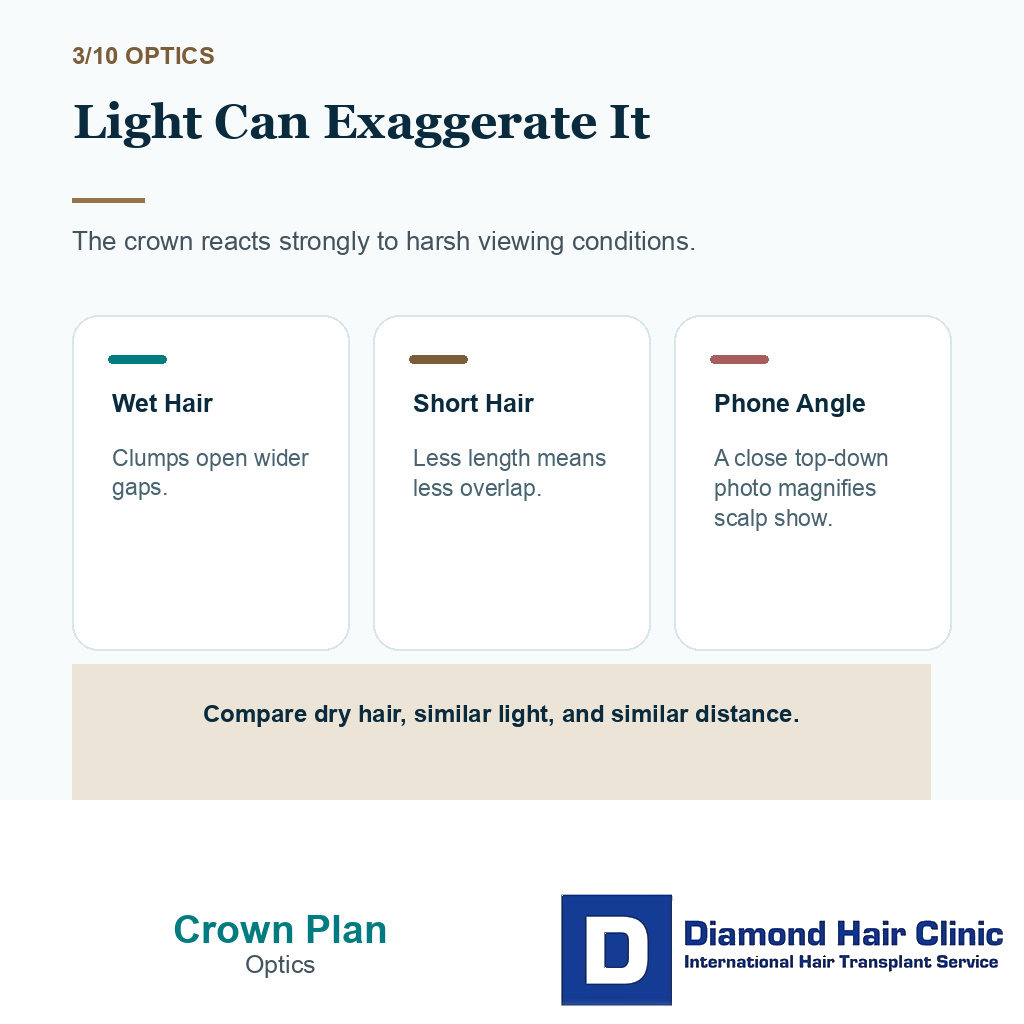
The crown is very sensitive to light. Overhead light travels directly onto the scalp, and the whorl opens the hair away from the center. Wet hair clumps together and leaves wider gaps. Short hair can remove the small amount of coverage that longer strands provide. Phone cameras from above often make all of this look more severe.
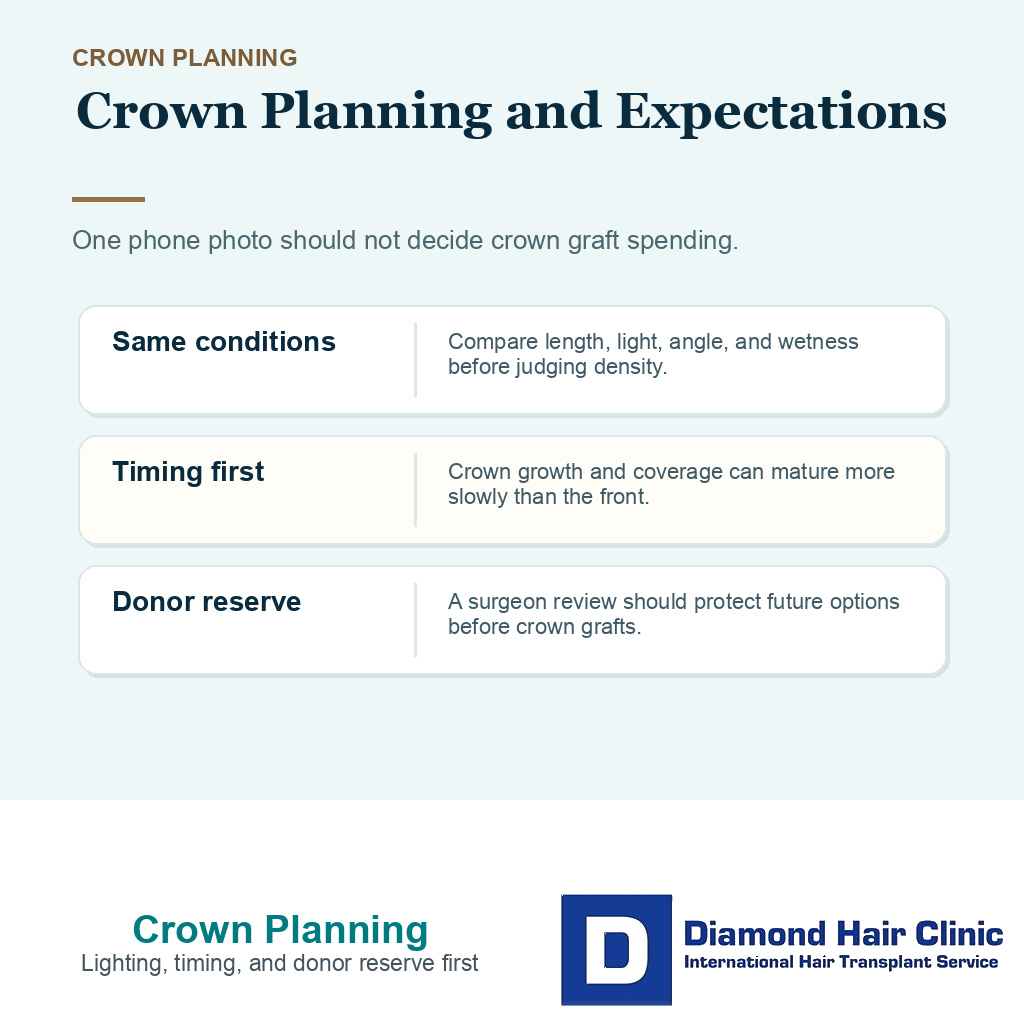
Crown thinning needs diagnosis and repeated views, because lighting and hair direction can exaggerate the empty look.
A crown can look acceptable in ordinary life and much weaker in a bathroom photo. This does not mean the concern is imaginary. It means the testing condition is harsh. Strong light can expose even well planned density, which is why judging hair under harsh light needs context.
In consultation, I judge the crown under several conditions. Dry hair, normal indoor light, daylight, and social distance all matter. If the crown only looks alarming in one extreme photo, the plan should be slower. If it looks thin in normal life from many angles, then the discussion changes.
When crown progress looks slow, compare it with the job the crown was given. A small whorl fill, a wide thinning crown, and a crown treated after the front was prioritized will not mature with the same visual story.
Patients also need to know that a transplanted crown will still be affected by light. Surgery can improve coverage. It cannot make the crown immune to every camera angle.
Nonsurgical support before grafts
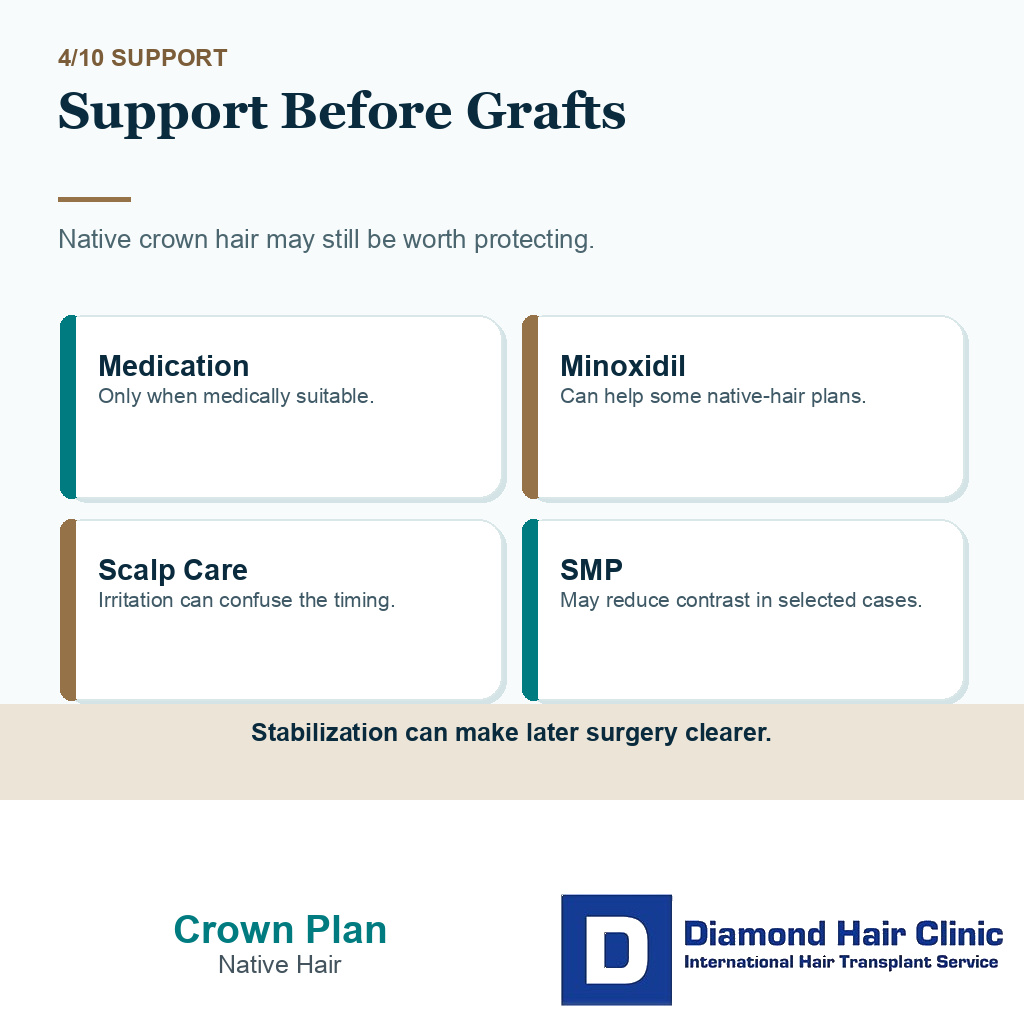
When the crown still has meaningful native hair, the priority is to stabilize it before donor grafts are spent. Supportive treatment may slow miniaturization, thicken some vulnerable hairs, or reveal that the crown is still changing too quickly for surgery.
Medication can sometimes reduce the need for crown grafts, but it helps only when there is hair left to support. Finasteride, dutasteride, minoxidil, PRP, or microneedling may be discussed in suitable patients. None should be sold as full crown restoration.
Scalp micropigmentation can reduce scalp contrast in selected crowns that already have some hair or partial transplant coverage. I treat SMP as camouflage. It can make pale scalp less obvious, but it does not grow hair, increase donor supply, or fix poor graft planning.
Crown support choices before grafts
Medication response
Native crown hairs may thicken or stabilize when follicles can still respond.
SMP camouflage
Pigment can soften scalp contrast in selected cases, but it does not create hair.
Graft spending
Donor grafts should be used after the front, mid scalp, and future reserve are considered.
I do not put these choices in the same category. Medication is about native hair support. SMP is about contrast. Surgery is about spending limited donor grafts. Keeping those decisions separate protects the hairline, mid scalp, later progression, and any repair work the patient may need.
Medication before crown surgery
Medication usually comes before crown surgery when the crown is still early, the patient is young, native hairs are visibly miniaturized, the future pattern is unclear, or the front has not yet been planned. In these patients, immediate crown surgery can spend donor grafts before the real shape of the hair loss is known.
A medical trial does not mean the patient is being dismissed. It means the case may become safer after stabilization. Medication before hair transplant surgery can sometimes protect the final surgical plan by delaying surgery.
With crown planning, not now does not always mean never. Some patients need to wait, some may later need only a restrained crown plan, and some improve enough that surgery becomes less urgent. I decide that from response to treatment, donor capacity, age, hair caliber, and what is happening at the front.
A young patient asking to fill only the crown needs long-term review before surgery. The patient may feel the crown is the emotional problem today, but the front may become the more visible problem later.
Situations where crown surgery makes sense
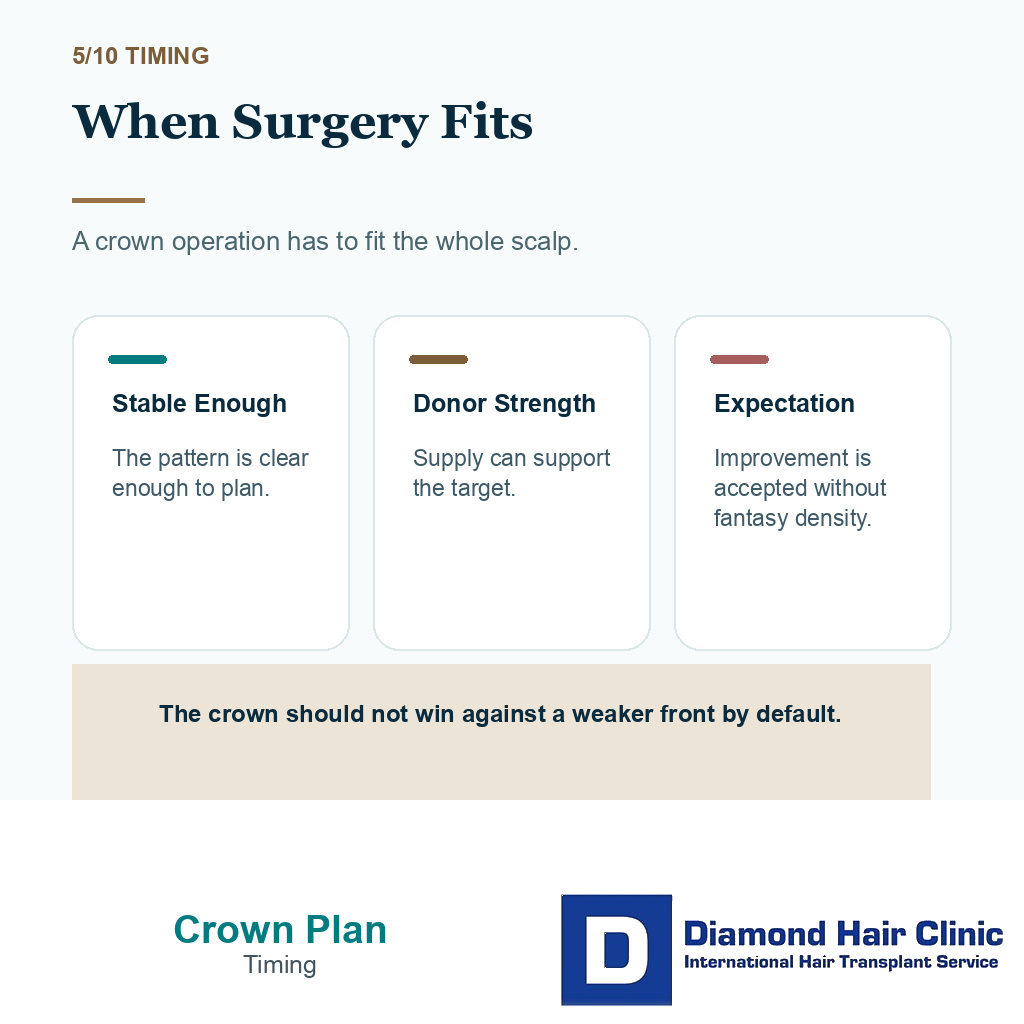
Crown surgery is reasonable when the diagnosis is stable enough, the donor area can support the plan, the patient accepts realistic density, and the operation fits the whole scalp strategy. A crown transplant is more convincing when it improves a defined pattern rather than chasing every faint sign of light reflection.
A small crown with good surrounding hair and thick donor hair may need a moderate number of grafts and can respond well. A larger crown with fine hair, pale scalp, strong contrast, and continued miniaturization may need many more grafts and still show some scalp in bright light. A crown that needs 1,500 to 2,000 grafts is not the same problem as a crown that may need 3,000 or more to make a visible change.
Graft numbers must be calculated with the rest of the scalp in mind. How a surgeon calculates graft numbers depends on area size, hair thickness, density target, and donor reserve. A claim that one fixed number repairs every crown is not surgical planning.
Satisfaction threshold matters in crown planning. If the patient would only accept a dense wall of hair, crown surgery may disappoint him even when the grafts grow well.
Crown donor spend compass
Four checks before spending grafts on the crown
Crown planning is not only about filling a circle. The plan has to separate true thinning from optical effects, then decide whether the crown deserves grafts now or should wait.
True thinning
Is the crown truly thinning?
Light, wet hair, short haircuts, and phone angles can exaggerate the crown.
Lighting, wet hair, short hair, and camera angle can make the crown look worse than it is.
Use this as a planning frame, not a diagnosis or approval for surgery. The final plan still depends on donor reserve, recipient area anatomy, hair type, medical history, and future hair loss risk.
Graft numbers and the full scalp plan
The graft number depends on the size of the crown, the amount of native hair still present, hair thickness, skin contrast, curl, and the density target. A smaller crown may improve with 1,500 to 2,000 grafts. A larger crown can need 3,000 grafts or more and still not look completely full under strong light. What 2,000 grafts can achieve changes by area, hair type, and expectation.
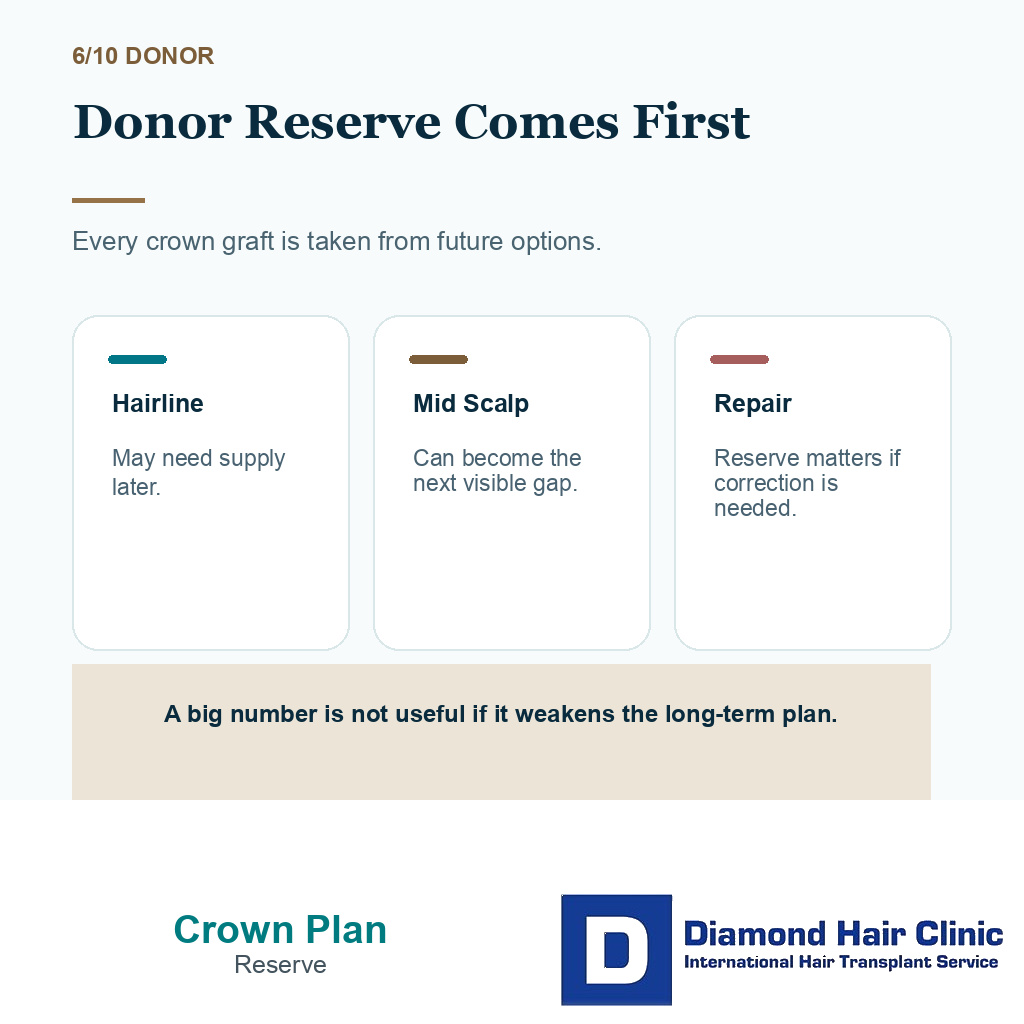
A crown plan is only good when it protects the donor area and the future hairline. If using 3,000 grafts in the crown leaves too little for the front or mid scalp later, the number may be technically possible but strategically unwise.
The same number of grafts can be wise in one crown and weak in another. The question is not only how many grafts can fit. The question is whether those grafts create enough visible benefit without weakening the plan for the rest of the head.
The crown is harder than the hairline
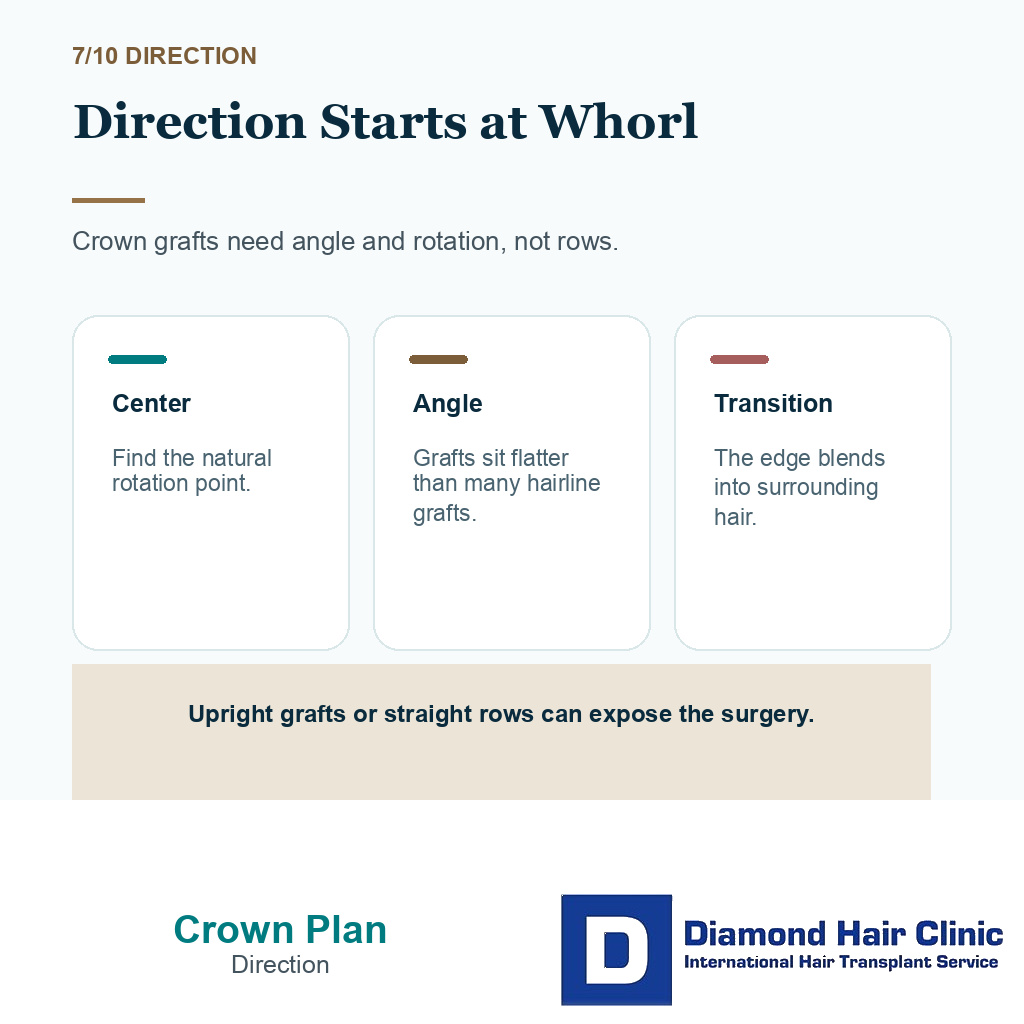
The crown is harder because the surface curves, the hair rotates, and the hairs must be placed flatter to the skin. The hairline benefits from forward overlap. The crown needs circular flow. Grafts placed too upright can look unnatural and may fail to create useful coverage.
The same number of grafts often creates a stronger visual effect in the hairline than in the crown. The front frames the face. The crown is seen from above and behind, often under overhead light. That difference changes the value of each graft.
A technically careful FUE hair transplant or Sapphire FUE plan can restore the crown, but the technique name alone is not enough. The surgeon still has to design the direction, depth, density, transition, and graft distribution.
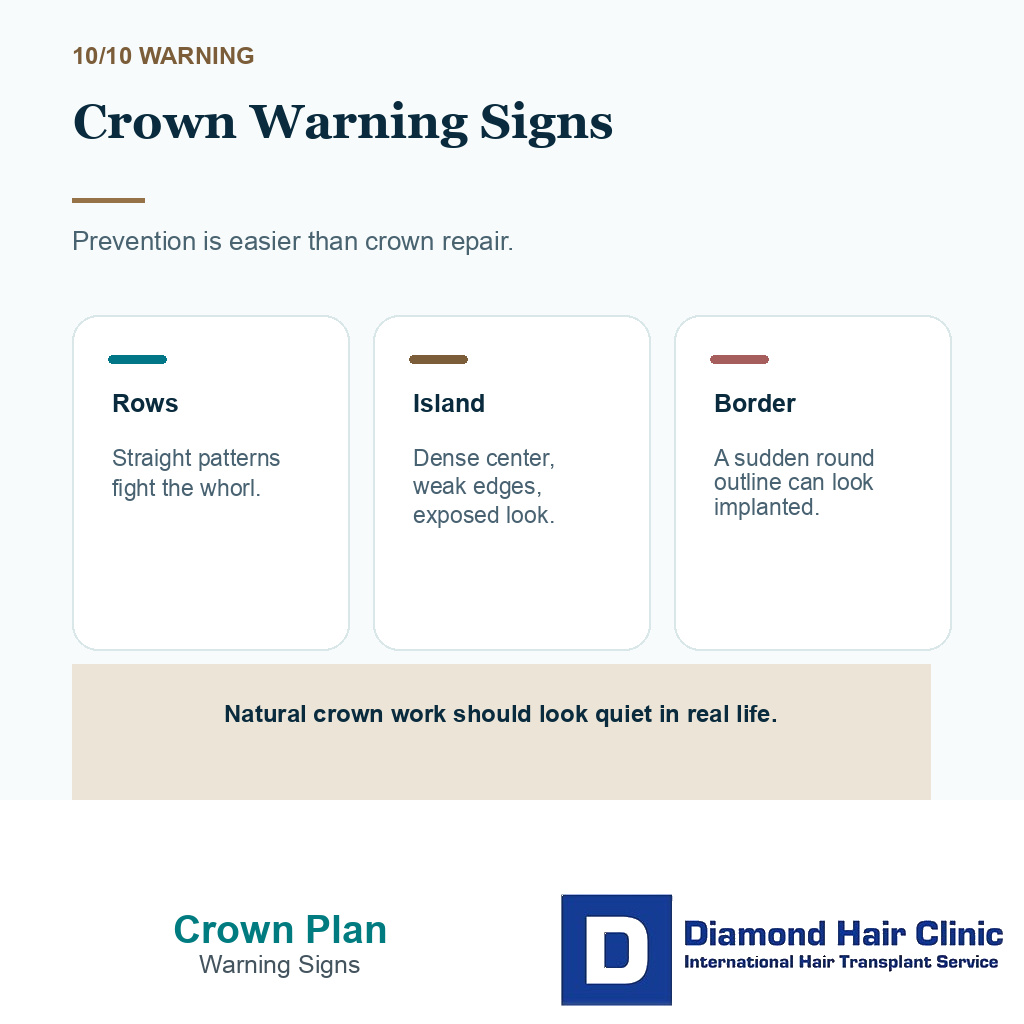
In the crown, poor planning can be very visible. Straight rows, harsh circular borders, upright grafts, or a dense central island can make the result look artificial. Natural crown work needs movement and softness, not only graft count.
Crown graft direction and donor budget
Crown grafts should be planned from the natural hair direction outward, not as a mechanical circle. The surgeon has to identify the whorl, the surrounding flow, the weak zone, the transition into the mid scalp, and the donor budget available for future hair loss.
The center of the crown often needs careful handling. Too much density in the center can waste grafts and still leave a weak outer edge. Too little structure can leave the crown looking unresolved. The best plan uses grafts to create visible improvement while keeping enough donor reserve for the future.
Donor hair is limited. Once grafts are spent in the crown, they cannot be used for the hairline, mid scalp, later progression, or repair. Careful donor management means treating the donor area like a lifetime budget.
The crown should not become a graft sink. Grafts spent in the crown must still leave room for the hairline, mid scalp, later progression, or repair.
High volume clinic promises can be risky here. A patient may be impressed by a large graft quote, but if the extraction pattern is poor or grafts are spread too thinly across a wide crown, the result may still look weak. A larger number only helps when the distribution, donor reserve, and long-term plan are sound.
Hair style and length also change the plan. A crown with some length can use overlap from the surrounding hair. A crown worn very short exposes spacing more easily. Curly or wavy hair may create better coverage than fine straight hair with the same graft count.
These 10 crown planning slides keep the decision focused on crown optics, true thinning, light and photo distortion, nonsurgical support, timing, donor reserve, whorl direction, realistic density, future front or middle scalp needs, and warning signs of an artificial result. Swipe sideways, use the arrows, or choose a number below the image.
A good crown can still show scalp
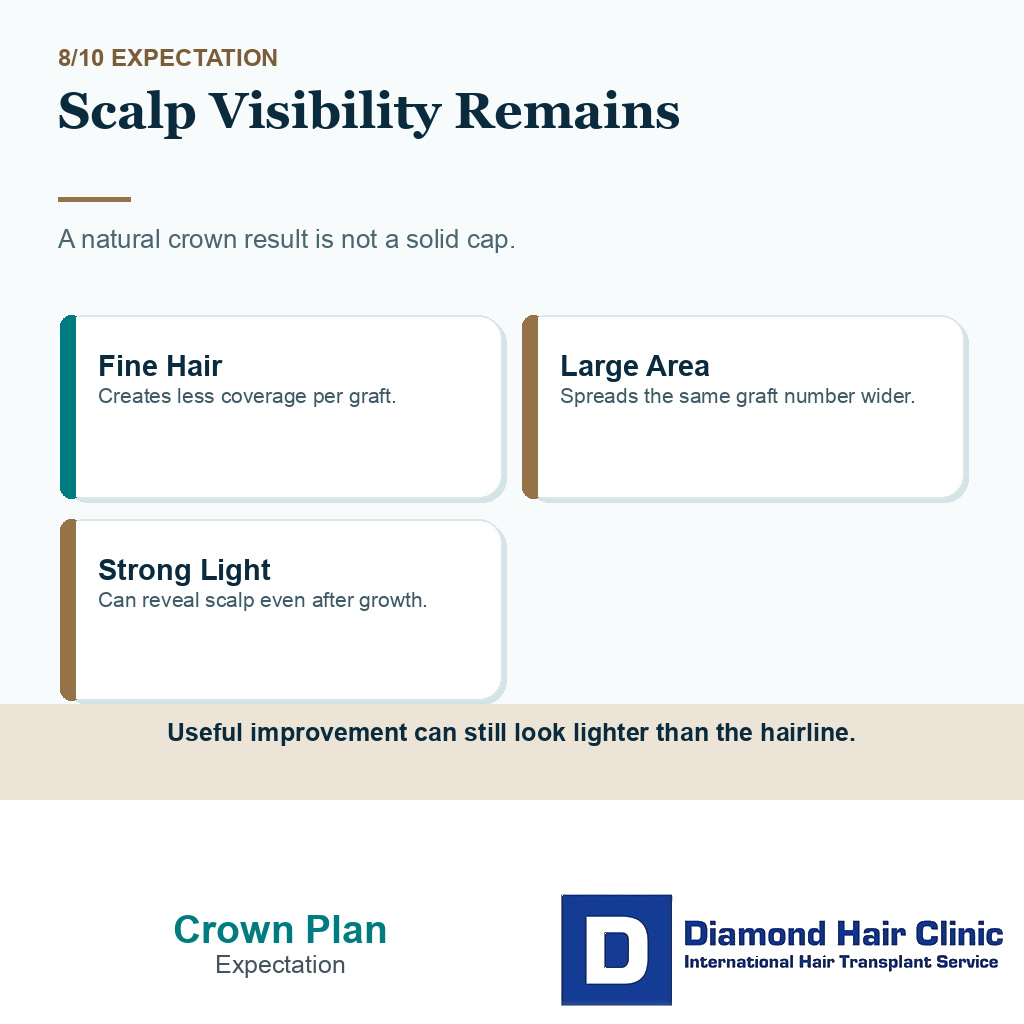
A good crown result can still show some scalp in harsh light. Fine hair, a large area, pale scalp, dark hair, low native density, and strong overhead light can all reduce the visual effect.
That does not mean the surgery failed. It may mean the improvement is real but the expectation was too high. Why some hair transplant results look thin explains how density, hair caliber, graft distribution, and lighting interact.
The crown often needs a more modest density target than the hairline because donor supply must be protected. If a surgeon tries to make every square centimeter of the crown look packed, the patient may lose the ability to address more important areas later.
Natural improvement is different from complete reversal. A successful crown plan may reduce the bald look, soften the shine, improve the outline, and make the area less distracting, while still showing a little scalp in strong light.
Crown growth timeline
The crown often takes longer to judge than the front. Early growth may feel slow, and the cosmetic change can be less dramatic because the improvement is viewed from above and behind rather than in the mirror. Many crown results keep maturing beyond 12 months, and some need 15 to 18 months before the patient can judge final density fairly.
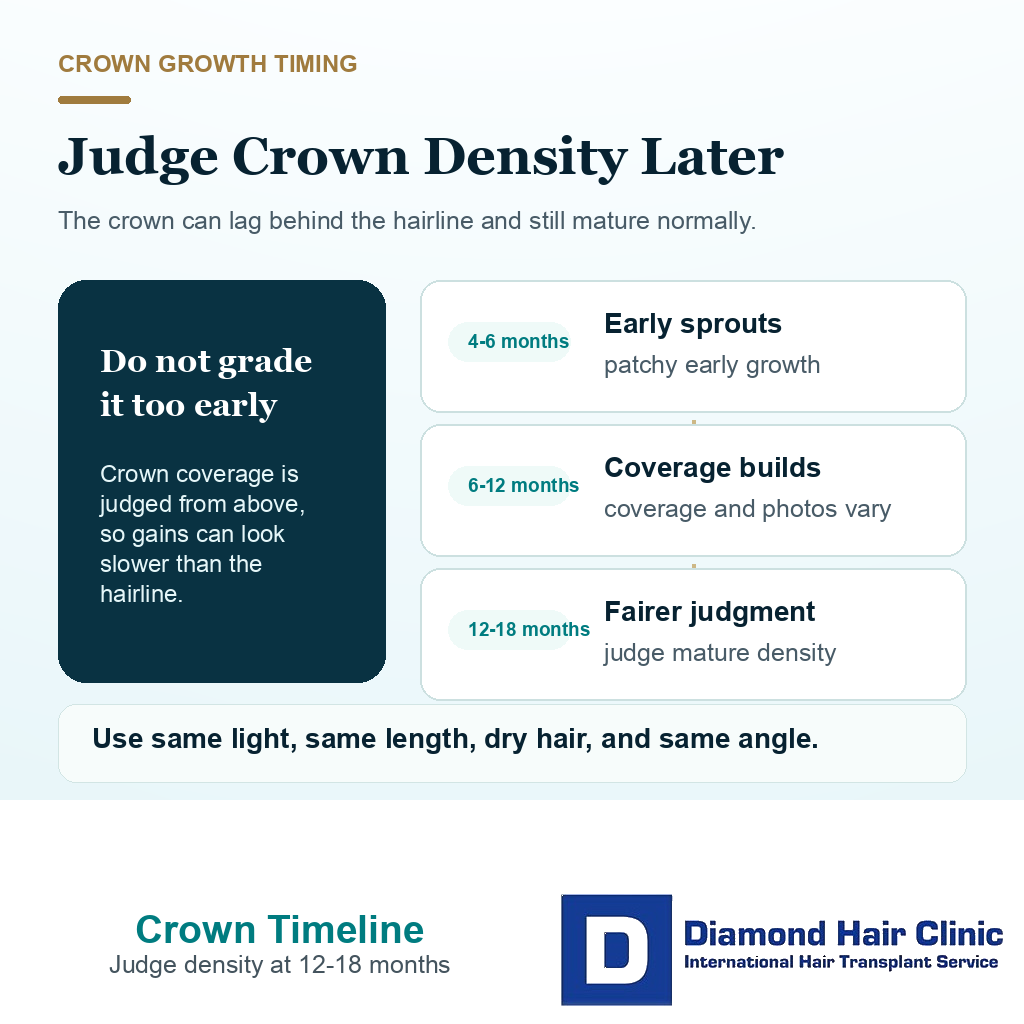
Patients often worry because the hairline improves first and the crown lags behind. That pattern can be normal. Looking thin at 7 months after a hair transplant can help put mid recovery anxiety in context before the result is judged too early.
During this period, photos should be taken consistently. Same hair length, same light, same angle, dry hair, and similar distance give a better comparison. If every photo is taken under a different harsh condition, the patient may think the crown is changing more than it really is.
A consistent monthly photo set is useful here because the crown and the hairline do not mature with the same visual rhythm. Tracking hair transplant growth without panicking keeps those photo comparisons separate instead of turning one overhead crown image into the whole verdict.
Slow crown growth is not the same as crown failure. Waiting does not mean ignoring problems. Patchy growth, unusual redness, infection signs, strong asymmetry, or a clearly unnatural graft pattern should be reviewed. Ordinary slow crown maturation is different.
After the crown has had enough time to mature, unexpectedly weak growth should not be explained by location alone. I review the operation record for how many grafts were placed in the crown, how they were handled and stored, time outside the body, placement difficulty, and any healing problem. Crown anatomy can limit the visual effect, but it does not replace an operative review.
Hairline priority before the crown
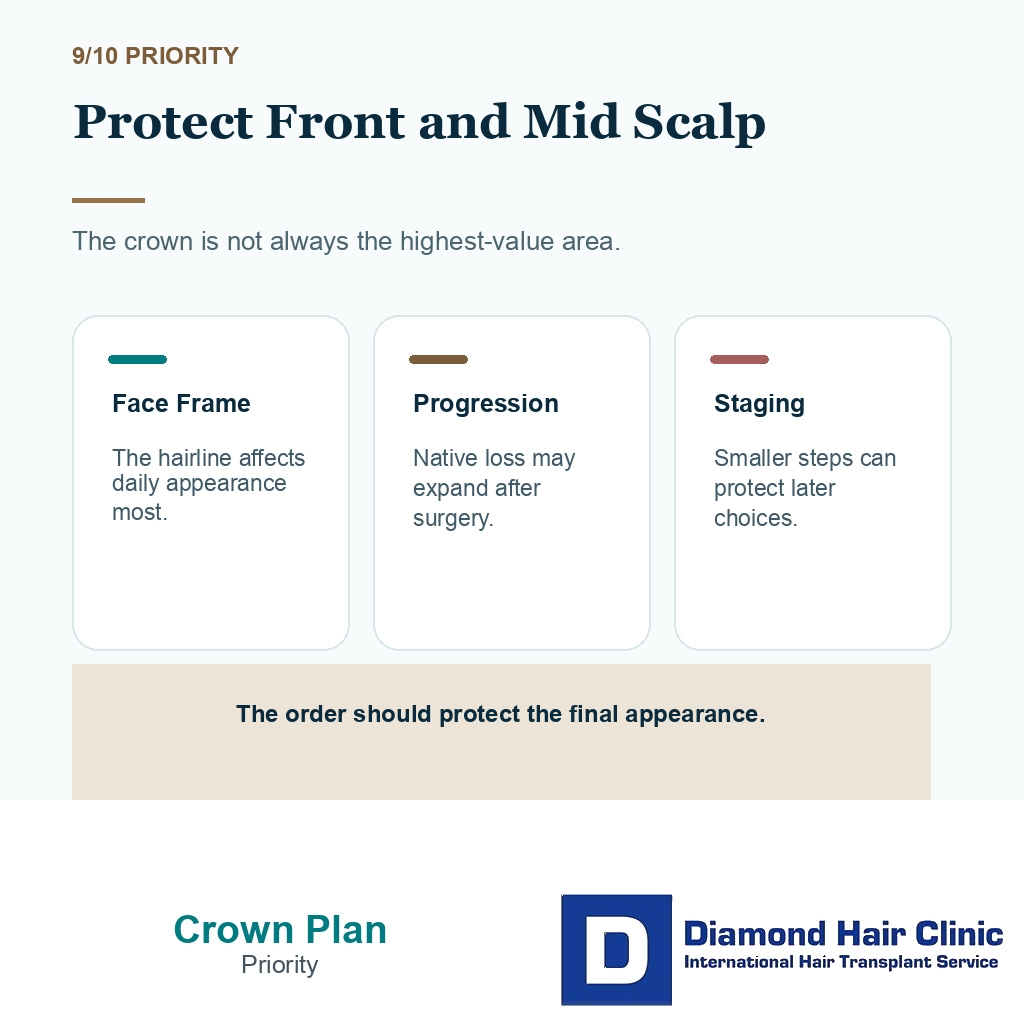
The hairline usually deserves priority because it frames the face. A natural hairline design changes how a patient looks in conversation, photographs, and daily life. The crown matters, but it usually has less cosmetic value per graft than the front.
In a patient with advanced thinning, donor planning becomes even more important. A Norwood 6 or 7 hair transplant can look natural when priorities are realistic, but trying to fill the hairline, mid scalp, and crown aggressively at once can dilute the whole result.
Crown surgery before frontal planning can be reasonable in selected patients with strong donor reserves and a stable crown limited pattern. It is not my usual starting point when the front is weak or likely to become weak. The patient may later regret using a large graft number in an area that is less visible than the face framing zone. If a first surgery has already built the hairline but left the top thin, that is a separate second transplant planning problem, not a reason to spend the crown donor budget quickly.
The order should protect the final appearance, not only solve the area that currently causes the most anxiety.
Ongoing crown change after surgery
A crown transplant moves stronger donor hair into the crown, but it does not stop androgenetic hair loss in the surrounding native hairs. If the native hair around the grafts keeps miniaturizing, the crown can look weaker again even when transplanted hairs survive.
This is a common misunderstanding. The patient may think transplanted grafts disappeared, but the real problem may be ongoing loss around them. My article on whether hair loss can continue after a hair transplant explains this wider issue.
Long range planning matters more in the crown because the area can expand outward. If the transplant creates a dense center and the surrounding native hair disappears, the patient may be left with an island. A softer plan with attention to future boundaries, sometimes through smaller staged hair transplant sessions, is often safer than an aggressive central fill.
The patient also needs follow up on the medical side when native hair is at risk. Surgery and medical management should not be treated as separate worlds when the crown is still changing.
Artificial crown warning signs
A crown result looks artificial when the surgeon ignores the natural flow of the area. Straight rows, upright grafts, a round edge, a dense middle with weak surroundings, or a sudden border between transplanted and native hair can all expose the surgery.
The crown should fade into the surrounding hair. It should respect the direction of the whorl. It should not look like a patch placed on the back of the scalp. The recipient area must be created with angle, depth, and direction that fit the patient, not with a standard pattern copied from another case.
Repairing an artificial crown can be difficult because donor hair has already been spent. Sometimes the solution is adding softness around the border. Sometimes grafts need to be removed or redistributed. Sometimes the donor area is already too limited for a full correction. Hair transplant repair shows why prevention is much easier than repair.
Natural crown work is quiet. It should make the scalp less noticeable without calling attention to the surgery itself.
Beard hair and scalp micropigmentation
Beard hair can help selected crown cases when scalp donor hair is limited, but it has to be used with caution. Beard hair is often thicker and different in texture, so it is usually better as support behind scalp hair rather than as the main visible soft hair in delicate areas. Beard hair for the crown needs careful patient selection.
Beard hair may improve coverage in a crown that already has scalp hair structure, but it should not be promised as an easy solution to donor depletion.
If beard hair is suggested because the crown is competing with a weak scalp donor, the crown decision becomes more conservative, not less. Extra donor sources may soften selected coverage, but they do not protect the scalp reserve needed for the front, future thinning, or repair.
Scalp micropigmentation can help reduce scalp contrast when the hair is short enough and the patient accepts the maintenance and style limits. It works as optical support. It does not add hair and it cannot fix wrong graft direction.
Both options are secondary tools. They can support a plan, but they should not be used to excuse poor graft planning or unrealistic expectations.
Better candidate profile for crown surgery
A better crown candidate usually has a clear diagnosis, enough donor capacity, realistic expectations, good hair characteristics, and a frontal plan that is either already stable or manageable. He understands that the crown can improve without becoming perfectly dense.
A weaker candidate often has active early crown loss, a weak donor area, major frontal thinning, very fine hair, high scalp contrast, aggressive family history, or an expectation that the crown should look like teenage density. That patient may still be helped, but the plan must be more restrained.
Being a good candidate for hair transplant surgery matters here because candidacy is not only about having hair loss. The real issue is whether surgery can create a result that remains reasonable as the patient ages.
A patient who accepts realistic improvement is often easier to help than a patient who demands a perfect crown. The crown rewards careful planning. It punishes fantasy planning.
The crown can wait when donor reserve needs priority
Decide about crown surgery by asking whether the operation protects the whole scalp plan. If the crown is stable, donor strength is good, the front is planned, and expectations are realistic, crown surgery can be a worthwhile improvement. If the crown is early, unstable, or competing with a weak hairline for limited grafts, waiting may be wiser.
I plan the crown as part of the full strategy, not as an isolated spot. The hair transplant procedure is only safe when grafts are used with judgment, angle is respected, and the donor area is protected for the future.
The right crown decision protects the whole scalp plan, not only the area that bothers the patient today. The crown deserves more patience than many patients expect. It needs diagnosis before grafts, medical discussion before surgery when native hair is still vulnerable, and donor planning before density promises.
When those steps are respected, crown work is more likely to look natural in real life and less likely to spend grafts too early.