


Future Hair Loss Planning After Transplant Surgery
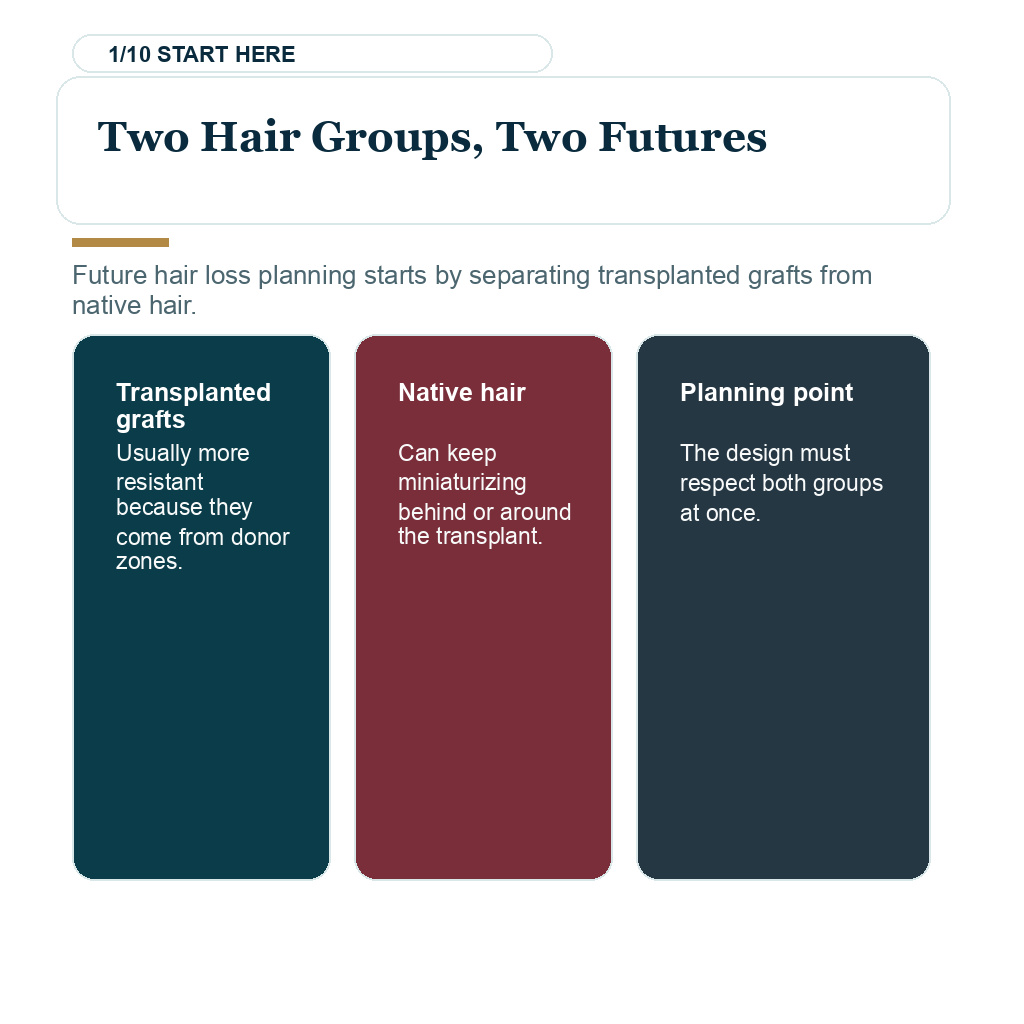
Hair loss can continue after a hair transplant. The main distinction is between transplanted grafts and the native hair that remains around them. Transplanted grafts usually come from the donor area and are more resistant to the original pattern of hair loss, while native hair behind, between, or around the transplant can still thin over time. A hair transplant can improve coverage, but it does not stop the biology of future hair loss. A panic photo taken with wet hair or harsh light should not be compared with a dry clinic photo. Use the same hair length, lighting, and angle before deciding that native hair has changed.
Surgery should not be planned only around the hair a patient has today. I keep in mind the hair the patient may lose in the years ahead, especially behind the hairline, through the mid scalp, and in the crown. If that future is ignored, even a technically successful transplant can begin to look thin, disconnected, or poorly balanced later. A strong family hair loss history before a hair transplant can change how much native hair risk I keep in mind.
Thinning noticed after a return to the gym often gets blamed on training. I begin with the location of the change, matched photos, medication history, and native hair stability before deciding whether weight training and hair loss around a hair transplant have any connection.
Panic and false reassurance are both unhelpful here. I separate temporary shedding, native hair progression, medication response, donor capacity, and the possible need for another session. The result also needs enough time to mature, often 12 to 18 months, before those explanations can be judged fairly.
Cycle change and real progression can overlap. When hair loss continues after surgery, I do not decide from shed count alone. I compare transplanted zones, native zones, donor strength, medication history, and scalp health so a temporary shed is not confused with a planning problem.
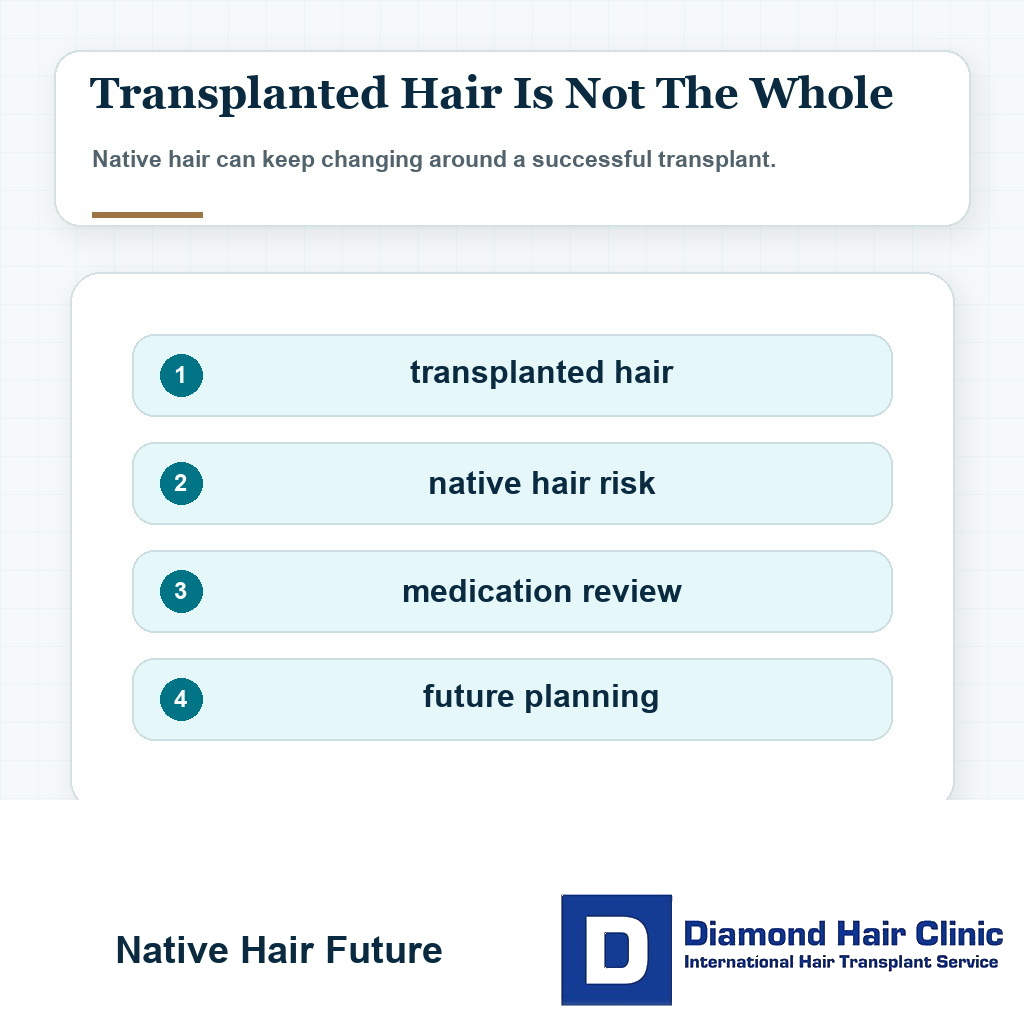
A thinner look later is not one diagnosis, and it should be separated into transplanted hair, native hair, donor quality, medication, and lighting. Before calling it graft failure, I first want to know which hair has changed. It may be transplanted grafts, native hair around the transplant, donor hair quality, lighting, hair length, or a medication change. These lead to different answers. If that uncertainty was already visible before surgery, still losing hair on medication before a hair transplant should change the surgical plan. The same distinction is central to a one year FUE result review, because native hair loss can imitate poor graft growth.
Transplanted hair can grow while native hair thins
This can happen. A patient may see the transplanted hair begin to grow while the native hair behind it, between it, or around it continues to miniaturize. This can make the result feel confusing because the surgery worked in one sense, but the overall appearance still changes. Name the changing hair first, then judge how the whole style looks today.
Photos taken on surgery day or the original graft map can make this distinction clearer. Compare the new thin area with the recorded recipient zones rather than guessing from today’s hairstyle. A gap behind the implanted front, thinning between recipient islands, and reduced density inside the recorded graft zone lead to different reviews.
Some patients worry that placing grafts near native hair made those hairs miniaturize faster. I do not assume that. Surgery can cause temporary shedding in weak native hairs, and those same hairs can also keep following the pattern they already had before surgery.
The transplanted grafts are not magic new hair. They are hair moved from a stronger donor area into a weaker area. If the remaining native hair in the recipient area was already unstable before surgery, it can keep thinning after surgery. I take finasteride before or after a hair transplant seriously in selected male patients, when it is medically suitable and the patient understands the decision.
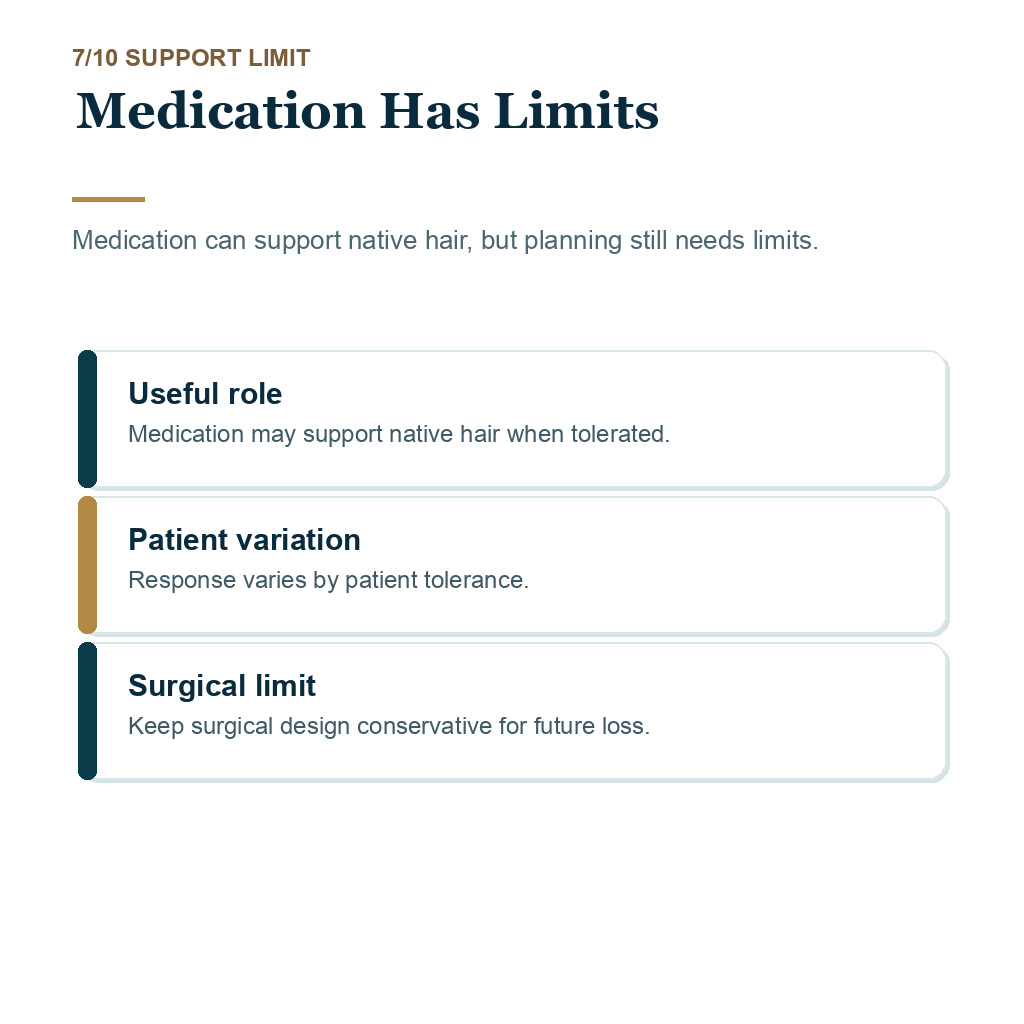
I also keep this in mind. I do not use medication as a threat. Some patients cannot use it, some choose not to, and some need alternatives. In those cases, the operation must be planned more carefully. Planning a hair transplant without finasteride can still be possible, but the design has to respect future loss.
Surgical judgment matters here. I look beyond whether grafts can be placed and test whether the result will still make sense if the surrounding native hair becomes weaker later.
Transplanted hair itself can thin if the donor area is not stable
It is less common than native hair progression, but it can happen. I am deliberate about absolute promises that every transplanted hair will remain perfect for life. Transplanted grafts are usually more resistant because they are taken from the donor area, but that protection depends on the donor area being selected correctly.
If grafts are taken from an unsafe zone, a weak donor area, or a donor area affected by miniaturization, the transplanted hairs may not behave as strongly as expected over many years. I pay special attention to this in patients with retrograde alopecia or DUPA, because the donor supply may look acceptable in casual photos while still being unstable under proper examination.
In this situation, planning around a weak donor area matters more than the promise of permanence. When a patient says the transplanted hair is thinning later, I separate transplanted hair, surrounding native hair, lighting, hair length, medication shedding, and donor selection before naming the problem. These explanations need different responses.
A separate cause check for transplanted hair thinning years later is useful before planning another procedure.
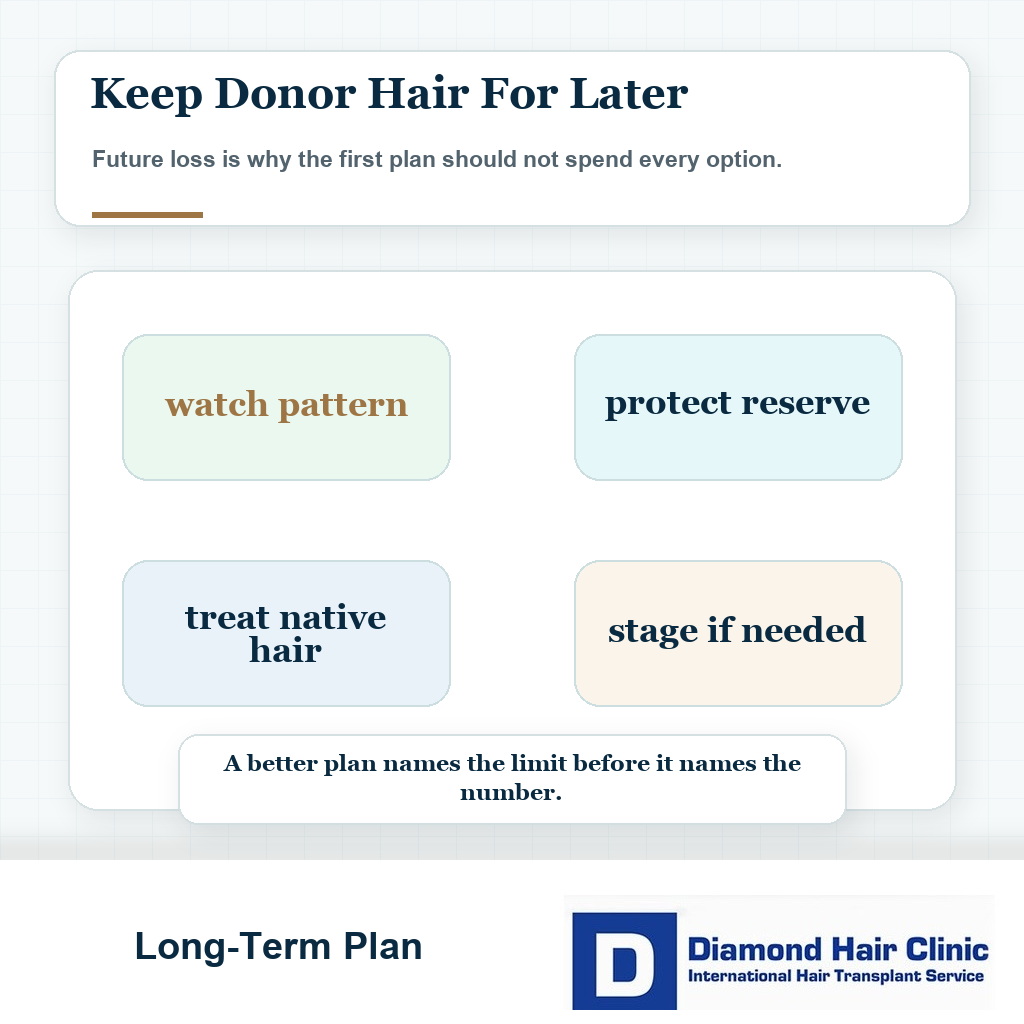
Native hair protection map
Four checks when hair loss continues after surgery
A transplant can grow well while nearby native hair keeps changing. The review separates transplanted grafts, native hair, crown movement, and future donor reserve.
Transplanted hair
Are the transplanted grafts growing?
A result can look thinner because surrounding native hair changed, not because every graft failed.
Not necessarily. Native hair can thin around growing transplanted grafts.
Use this as a planning frame, not a diagnosis or approval for surgery. The final plan still depends on donor reserve, recipient area anatomy, hair type, medical history, and future hair loss risk.
Good surgery does not stop future hair loss
It happens because surgery and hair loss are two different problems. Surgery redistributes hair. It does not switch off the genetic tendency that caused thinning in the first place. A good operation can improve the frame of the face and add density in selected areas, but it cannot promise that every untreated follicle will stay strong forever.
In consultation, the transplant is only one part of the plan. The donor hair gives us a limited reserve, the native hair gives us the context, and the future hair loss pattern tells us how conservative the design should be. When androgenetic alopecia is diagnosed before FUE, the diagnosis matters only if it changes native hair protection, donor budgeting, and timing.
If the surgeon ignores miniaturization, active shedding, family history, age, crown involvement, or medication tolerance, the plan may look attractive on surgery day and fragile several years later. This affects both the medical safety of the plan and the way the result will look.
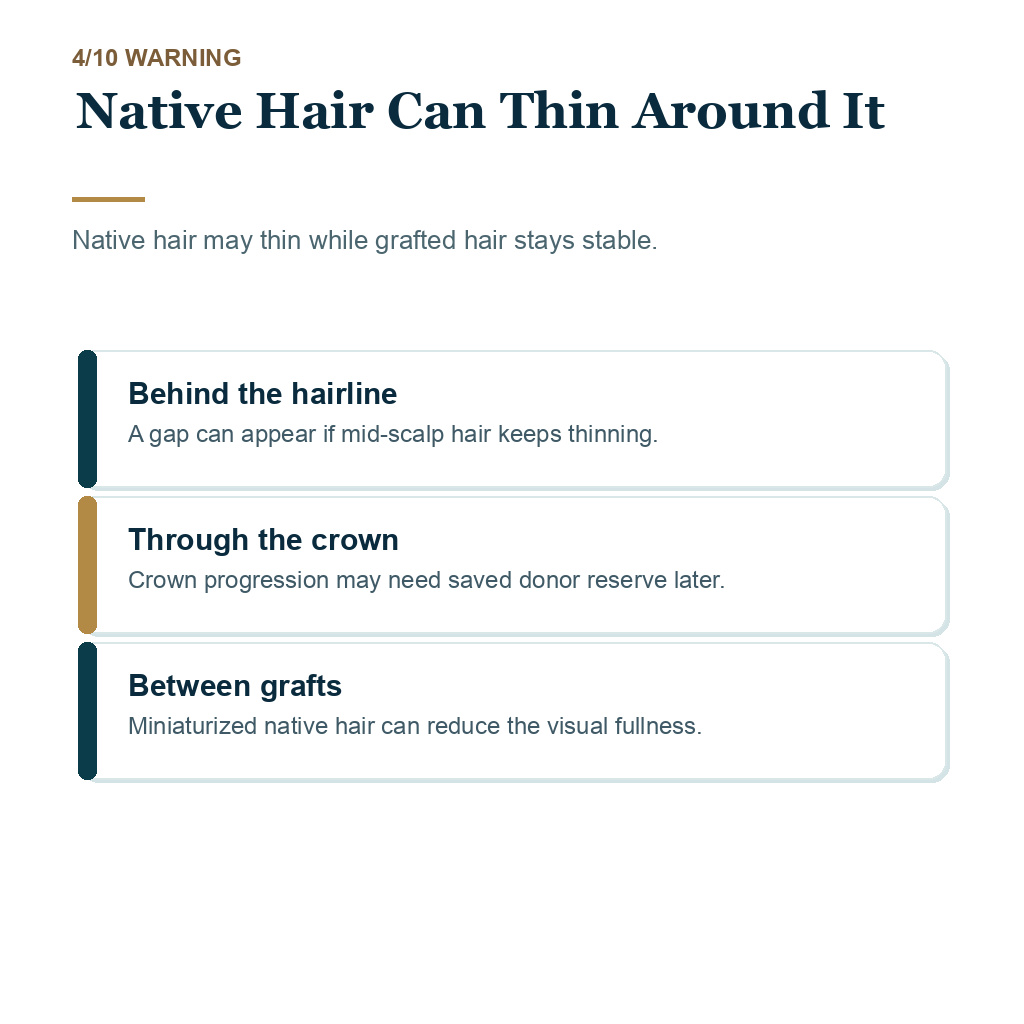
A natural result depends on blending. If the transplanted area stays stronger while the native hair behind it fades, the patient may notice a new contrast. Sometimes this appears as a gap between transplanted and native hair. Sometimes it appears as a thin mid scalp behind a stronger hairline. Sometimes the crown slowly becomes the new concern.
Normal shedding compared with real progression
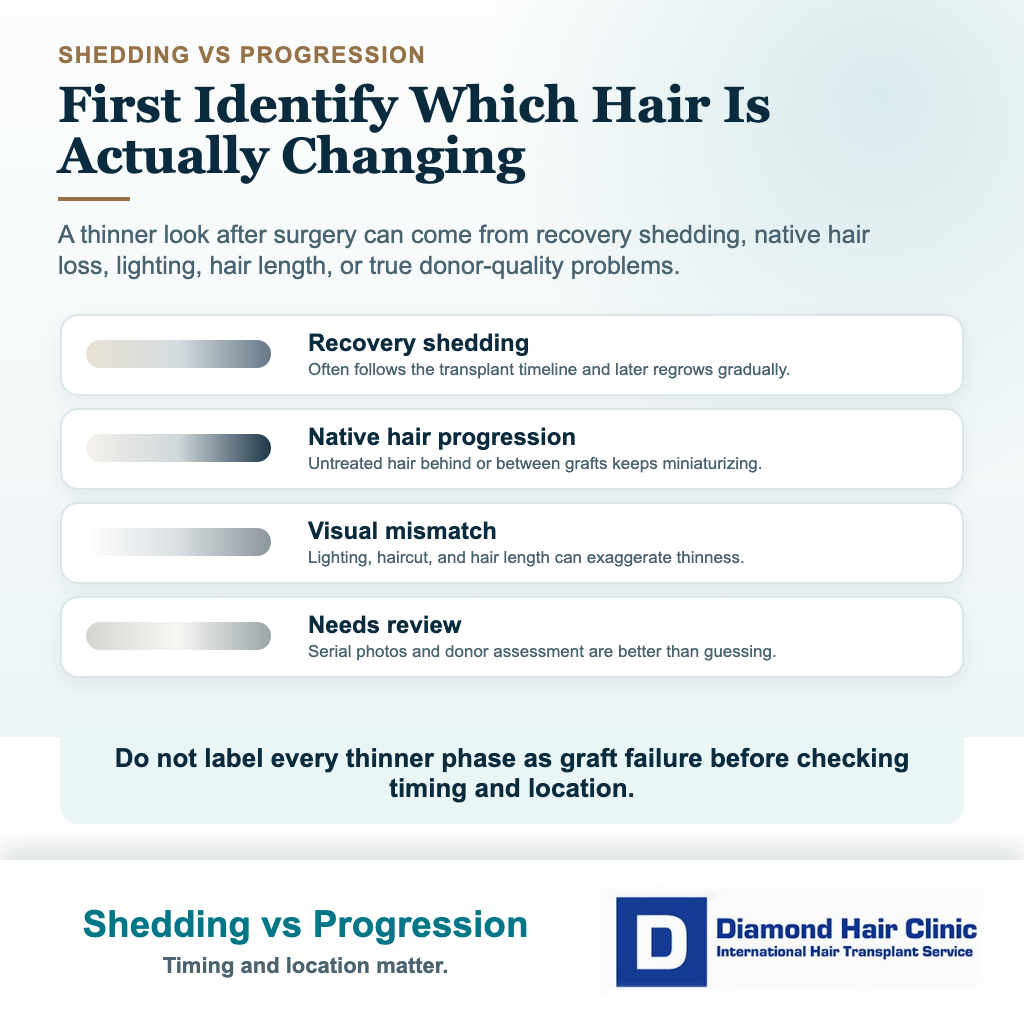
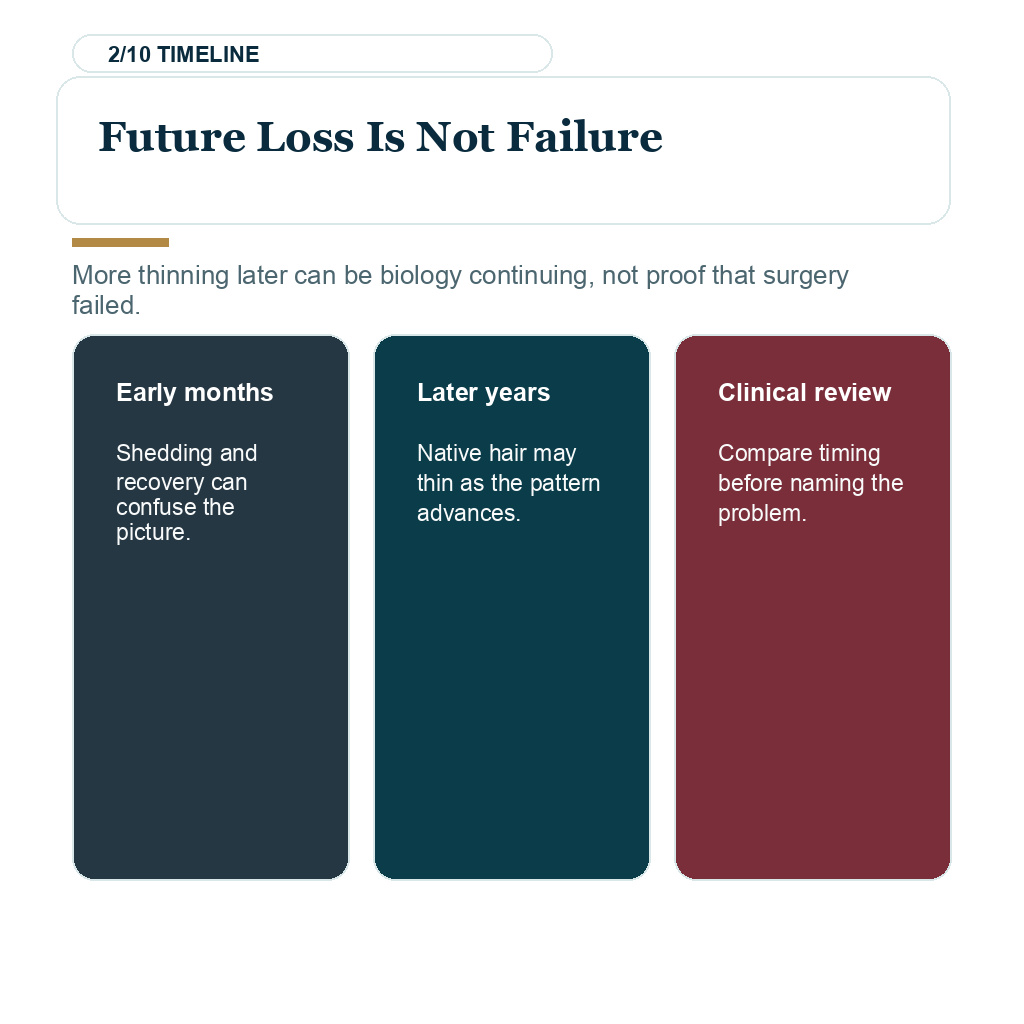
Start with timing. In the early weeks after surgery, shedding is expected. Transplanted hairs often shed. Native hairs can also shed temporarily because the scalp has been through surgery. This does not always mean the transplant has failed or that the patient is losing all native hair permanently.
I read native hair shedding after surgery through its timing, location, caliber, preoperative condition, and existing miniaturization. A recent history of having started, stopped, or changed medication can blur that picture. Minoxidil timing before surgery therefore needs deliberate planning, and its use afterward must fit both the healing stage and the patient’s wider treatment plan.
The practical difference is this. Temporary shedding is usually a hair cycle response during recovery. Real progression is the underlying pattern continuing. A sudden shed in the early recovery window is different from a widening crown, a thinning mid scalp, or a growing gap behind the transplanted hairline many months later. Sometimes both happen together, and that is when patients become most anxious.
If the thinning appears in the first 2 to 8 weeks, I am more likely to think about shock loss, especially when the native hair was weak before surgery. If the area keeps thinning many months later, or if the thinning follows the patient’s original male pattern, I become more concerned about progression. Native hair shock loss after a hair transplant is the early recovery concern I separate from true long term progression.
Reddit perspective
Protecting native hair behind transplanted grafts
Transplanted grafts may remain while native hair continues to thin behind them. The following Reddit reply describes that long-term problem.
Hairtransplant on Reddit · 2200 grafts post op
Dr. Mehmet Demircioglu's original comment is no longer visible on Reddit after moderator removal. Its exact wording is preserved below because his surgical perspective remains relevant.
Medication decisions require individual medical review. The exact Reddit wording is preserved, but it is not a universal prescription.
Medication and the surgical plan
Medication can change the plan when the hair loss is active and the patient still has meaningful native hair to protect. If medical treatment stabilizes vulnerable native hair, the surgeon may be able to design a more conservative transplant. If the patient cannot use medication, or does not want to use it, the surgeon may need to lower the ambition of the plan and protect the donor area more carefully.
Medication is planning information, not a moral test. A young man with diffuse thinning, active shedding, and a strong family history is different from an older man with a stable pattern and a clear frontal recession. The same graft number can be sensible in one patient and risky in another.
Older age can make the pattern easier to read, but it does not remove future loss. The design still needs to show how later middle scalp or crown thinning would be handled, where medication fits, and how much donor reserve remains untouched.
Seen before surgery, untreated native hair changes the timing discussion. The operation can improve the visible gap, but the plan still has to protect native hair before donor grafts are spent.
For patients who cannot use long term medication, I plan the transplant with a harder future test. The hairline, density, and donor spend have to remain sensible if the native hair behind the grafts keeps thinning.
Planning to fix every future change with another transplant is not the same as having a maintenance plan. Another operation may be useful later, but it only works if enough safe donor hair remains and the new thinning pattern can still be blended naturally.
This also affects patients who think they may shave in the future. A low, dense transplanted front can be difficult to make look natural if native hair behind it keeps thinning and the patient later wants a buzzed style. The hairline should be decided with the future haircut in mind, not only with today’s styling goal, because shaving after a hair transplant tests the front design and the donor area together.
I usually slow down when the hair situation is changing quickly. If a patient has just started treatment and is shedding, I usually want observation before final planning unless the surgical area is clearly empty and the plan would not change. During a minoxidil shed, temporary shedding can hide the real baseline and make a graft estimate premature.
Transplanted grafts can still grow when hair loss medication is not part of the plan. The main risk sits in the native hair around them. If that hair keeps thinning, a good early result can start to look separated when the first design did not leave room for change.
Unstable native hair calls for timing control, not a larger graft count. More grafts can fill an area today, but they cannot make poor timing a wise choice.
Crown and mid scalp changes after the hairline improves
The crown and mid scalp are common areas where patients notice this problem. A strong frontal improvement can make the face look better, but the crown may continue to thin because it has its own pattern, its own whorl direction, and often a larger surface area than patients realize.
The crown is also graft hungry. It can consume many grafts without giving the same visual return as the frontal area. For that reason, crown hair transplant planning must be careful, especially in younger patients or patients with limited donor capacity.
Trying to cover the hairline, mid scalp, and crown aggressively in one session can make the proposal look impressive while placing the cost on the donor area. I give priority to the zone with the most stable visual benefit and preserve part of the safe reserve for later hair loss or a staged second session.
Crown planning cannot be reduced to one fixed answer. The useful decision is how much coverage the donor can support, when that coverage should be attempted, and whether a limited graft plan can create a useful improvement under ordinary lighting.
Clinic promises can hide long term risk
A clinic promise can hide this risk if the conversation is reduced to coverage and graft number. The patient asks for coverage. The clinic gives a large graft number. The patient feels reassured. But if nobody has explained future native hair loss, donor limits, medication choices, crown progression, and what may happen behind the transplanted area, the patient has not received a complete plan.
Certainty and urgency in the same consultation make me slow the decision down. A responsible plan leaves the patient able to name the area surgery can improve, the native hair it cannot preserve by itself, and the donor reserve that will remain.
A shallow promise often focuses on the maximum number of grafts. But the safer approach is not always the plan with the largest number. If the donor area is treated like an unlimited supply, the patient may later need repair surgery with fewer options. I warn patients about overharvesting the donor area before they compare clinics by graft count alone.
This is not an attack on other clinics. A patient deserves to know that a hair transplant is permanent redistribution. Once donor grafts are used, they are no longer available for the future.
Waiting when hair loss is still active
Waiting is often the stronger decision while the pattern is changing quickly, the crown is expanding, the mid scalp is diffuse, or newly started medication has not had enough time to show whether the native hair is stabilizing. For a very young patient, that interval can prevent a permanent design from being built around a temporary picture.
Time shows whether treatment stabilizes the native hair, how quickly the crown is widening, and whether a requested low hairline would remain supportable. Those observations protect donor grafts until the real pattern is clear enough to design around.
Candidacy depends on timing as well as the presence of hair loss. My assessment of a good candidate for a hair transplant asks whether operating now offers more benefit than harm. Surgery may be technically possible, but the timing can still be wrong.
It can be difficult for patients to hear because hair loss is emotional. I understand that. A careful delay before surgery is kinder than leaving a patient with a result that becomes harder to manage later.
Protecting the donor area when future loss is likely
I treat the donor area as a lifetime budget. This is part of the core principles in my work. A hair transplant does not create new follicles. It moves existing follicles from one place to another. That means every graft used today must be justified by the result it can create and the future it leaves behind.
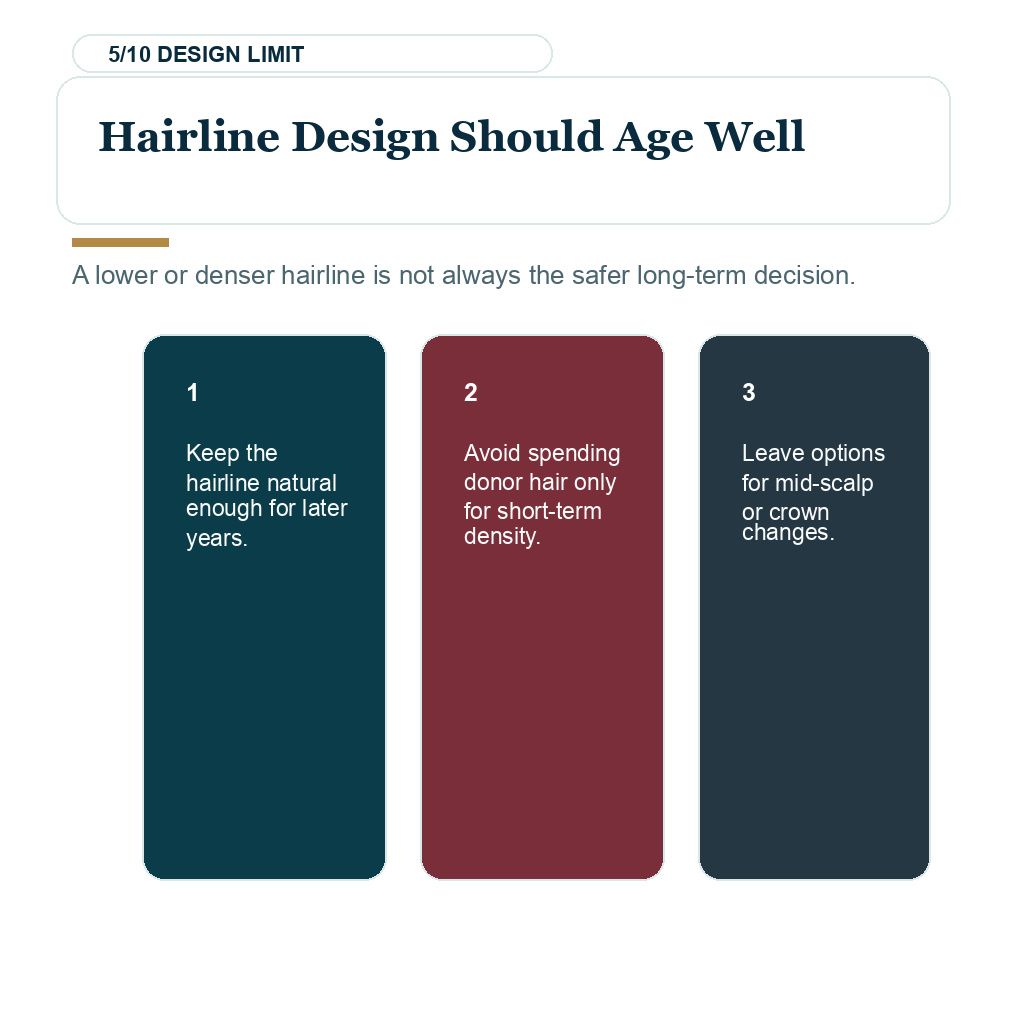
Likely future loss changes how I spend donor hair. Short term density cannot justify exhausting the reserve or lowering the hairline beyond what later thinning can support. The front must remain visually coherent even if untreated hair behind it becomes weaker.
The donor area should be evaluated for density, hair caliber, miniaturization, safe extraction pattern, previous surgery, and future need. The back of the scalp may look strong in casual photos, but I would not take this to mean that it can safely provide any number a clinic wants to advertise.
Careful planning matters most when the future is uncertain. A moderate, natural, well placed result can age better than an aggressive result that spends the donor too quickly.
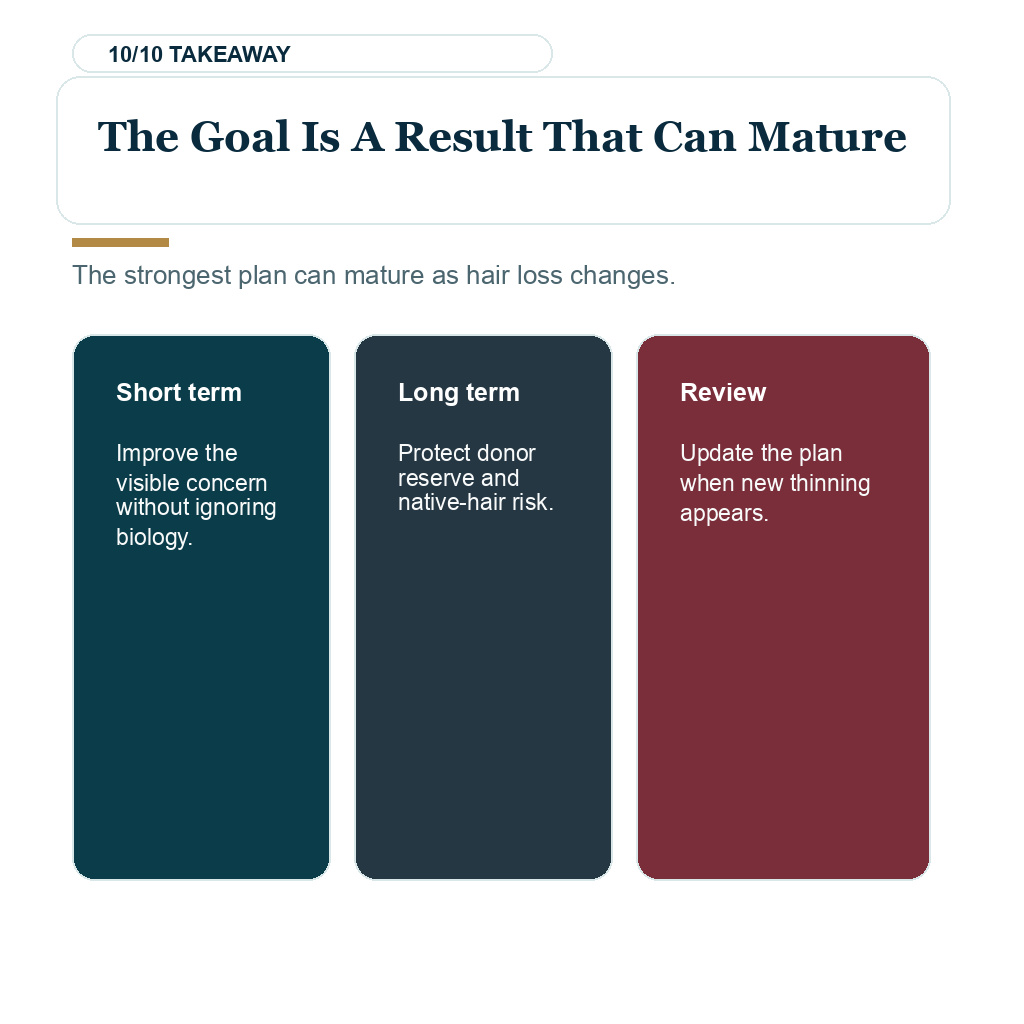
Use the 10 future hair loss planning slides below to separate transplanted grafts, native hair progression, timing, donor budgeting, hairline design, medication limits, photo review, second session planning, and the long-term result. Swipe the carousel, use the arrows one step at a time, or choose a number below the image to jump to that point.




Points to review before accepting a transplant plan
Before accepting a plan, you should understand why surgery is being recommended now, what native hair may continue to thin, how medication was considered, and what the donor area must still provide later. If these points are vague, you are not ready to judge the plan.

Read this review excerpt
Because of that, I asked the doctor to mainly focus on restoring the temples and hairline, while leaving areas with strong existing hair untouched. This would preserve more donor hair for potential future procedures and also make it easier to wear my hair short on the sides and back.
A practical review should include a few clear points. The hair loss pattern should be stable enough to plan. The crown and mid scalp should not be ignored if they are likely to change. The hairline should be mature enough for your age and donor capacity. The graft number should be explained by area and purpose, not presented as a trophy. You should know what will be left untreated and why.
These points also help you understand whether a second hair transplant is worth it in the future, or whether the first plan is already spending too much donor hair. A second surgery can be useful, but it should be an option preserved by the first surgery, not a rescue forced by poor planning.
If a clinic cannot explain the plan in this way, I would slow down. You should feel informed enough to decide, not pushed to reserve a date before the risks are clear.
Years later, separate graft growth from native thinning
I judge the operation at two different points. The transplanted area should grow naturally, and the design should still sit well beside changing native hair years later. Treating surgery as a one time cure ignores that later view.
Long term hair loss does not follow the same course in every patient. Stable native hair may leave a transplanted area looking balanced for many years. If thinning continues, the next discussion may include medically suitable medication, PRP or red light therapy as supportive options in selected cases, a later session, or changed coverage expectations. I make that distinction after proper growth time, not from an anxious early month.
Later thinning somewhere else may occur even when the transplanted grafts remain sound. A new thin area also needs a diagnosis before more grafts are considered. The location of change and the remaining donor reserve decide which response is appropriate.
Protect the donor area, treat vulnerable native hair, and avoid chasing every thin spot immediately. Review the result at the correct milestone and check whether the design will still look natural years later, not only whether it looks full in one photo.
A hair transplant can be a very good decision, but only when it is planned with the future in mind. If hair loss can continue after surgery, the solution is not panic. The solution is better diagnosis, better timing, careful donor management, and a surgeon led plan that respects donor limits.
Three years later, the location of thinning matters
Thinning several years after surgery should be located before the whole result is called a failure. A stable transplanted front with a weaker crown or a thinner native zone behind it may reflect continued native hair loss. Compare the change with the original placement map, matched photographs, medication history, and remaining donor reserve before considering observation, medical stabilization, or another procedure.