
Second Hair Transplant Value Depends on Donor Reserve
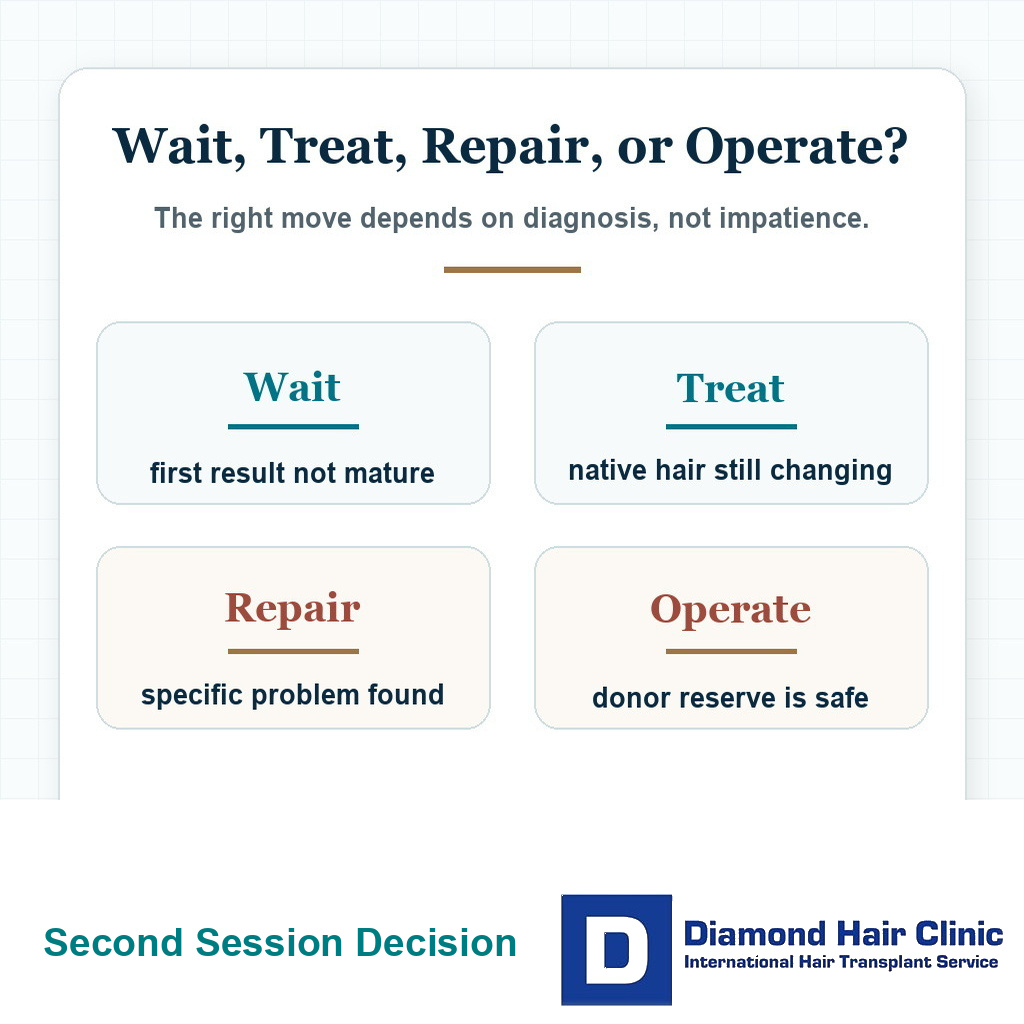
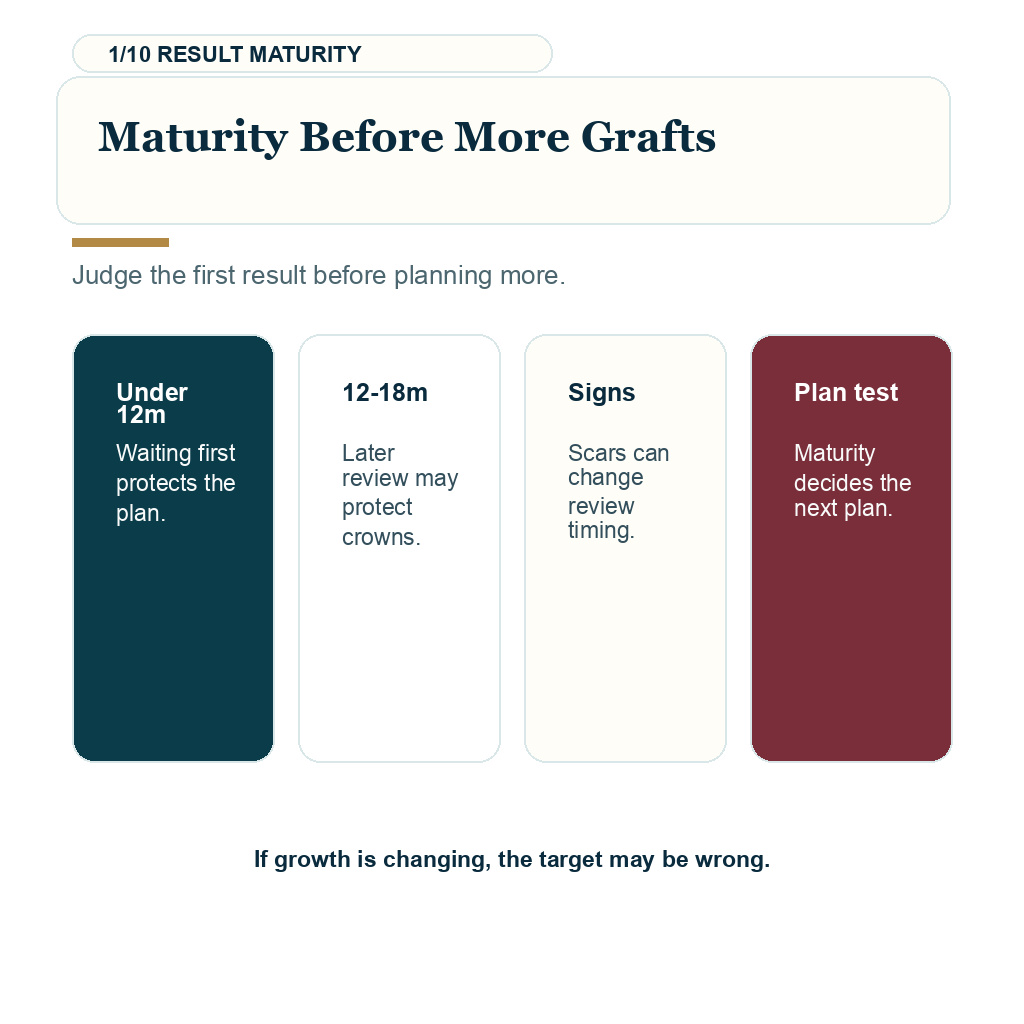
A second hair transplant is worth it only when the first result is mature, the donor area can safely support more extraction, and the goal is specific enough to justify the grafts it spends. If the first surgery is less than 12 months old, waiting is usually the medical answer unless there is a serious medical or technical problem. For crown work, slow growth, or repair decisions, 12 to 18 months is often a better review window.
The question is rarely just, “Can I have more grafts?” I first ask what the second procedure is supposed to solve. A small refinement may need only hair transplant touch up grafts. A planned second stage adds coverage that was deliberately saved for later. A repair corrects a design, growth, angle, scar, or donor problem. An anxiety driven chase for perfection is different again. Bring the first surgical report and photo timeline, because the second plan should not start from memory alone.
Those decisions must not be judged in the same way. A second operation can be excellent when the first result is stable and the donor reserve is strong. It can also be a mistake if the first procedure was poorly planned, if the donor area is already weakened, or if another surgery is being used to calm uncertainty rather than solve a defined surgical issue.
A planned second stage is not a failure of the first operation. In advanced hair loss, trying to cover the hairline, middle scalp, and crown in one aggressive session can make the first photo look impressive while leaving too little reserve for the future.
Staging protects more than the total graft count. The softest single hair grafts are limited, and I want them reserved for the visible hairline instead of spread across several zones in one operation. Let the first priority zone grow and mature before committing more donor grafts elsewhere. That review can show whether the remaining plan still deserves more grafts, needs a different priority, or should stop.
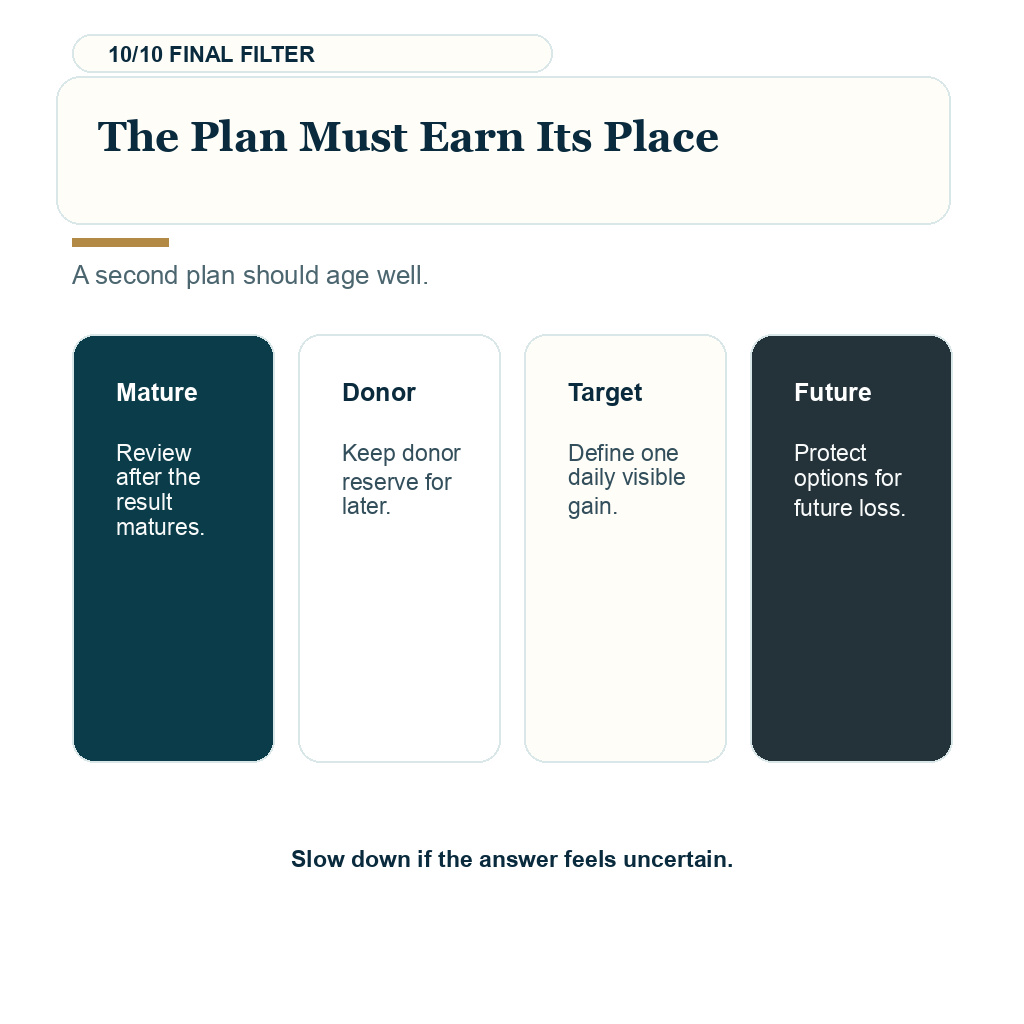
Every graft used in a second plan has to earn the donor reserve it spends. A second hair transplant is not a quick top up. It is a strategic decision about the rest of your life with progressive hair loss. If a weak area only shows when the hair is wet, under harsh light, or without styling product, I still measure it against donor reserve before advising another operation.
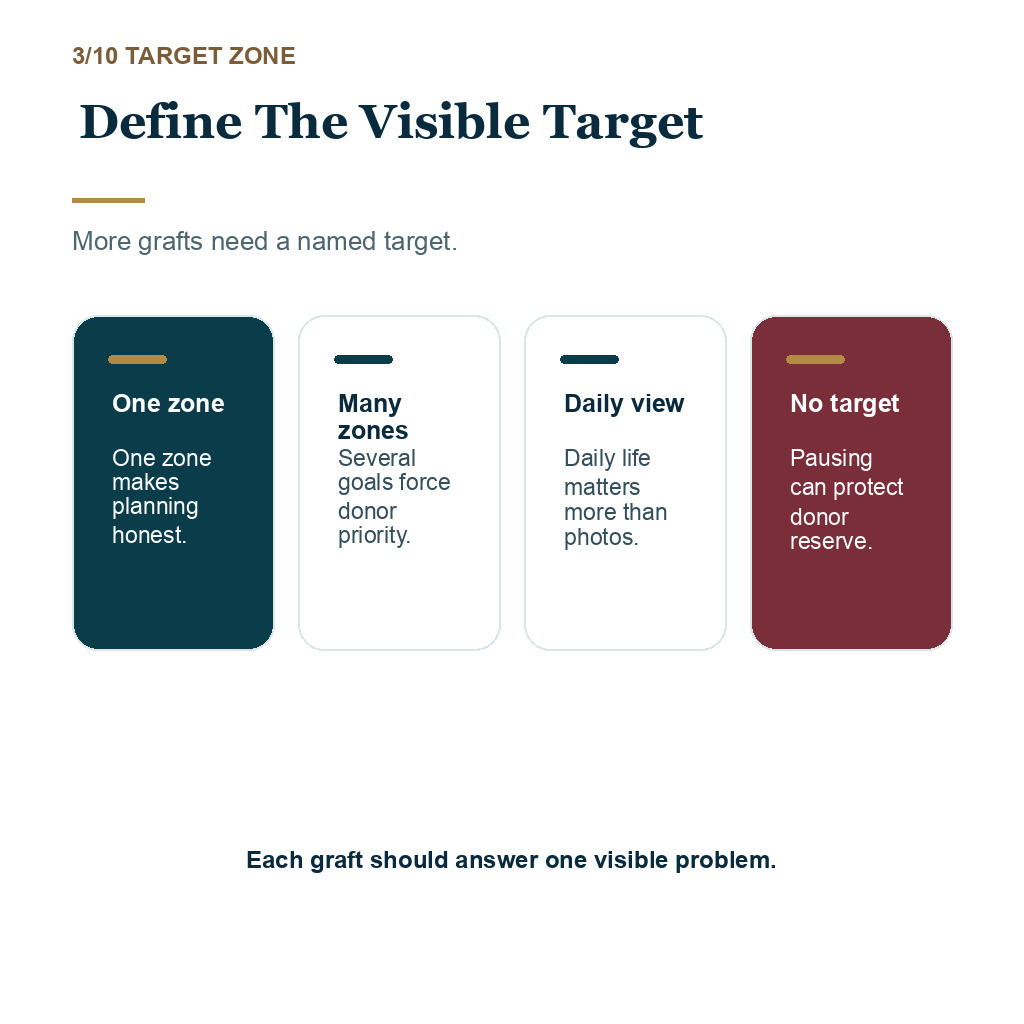
A second hair transplant still needs a separate reason. Before planning it, name the zone, the donor budget, and why the first operation did not solve that point. If the concern keeps moving between density, crown coverage, repair, or one bad photo, the next surgery is not ready yet.
Work and travel deserve a place in that plan. A second procedure may look sensible on paper but still be poorly timed when your role puts you in front of people or travel is hard to change while the area is recovering. The date should leave room for that part of daily life.
When the first operation made the hairline stronger but the top still looks thin, second transplant planning after a hairline focused first surgery needs an even stricter donor review.
A second hair transplant can be a good idea in selected cases
Another operation can make sense when the first procedure created a stable foundation, the donor area still looks strong, and the remaining goal is clear. That may mean adding density to a well designed front, treating a planned crown stage, or improving an untreated area that was intentionally left for later.
This is common in advanced hair loss. A staged approach may feel slower, but it can protect the donor area better than trying to do everything at once. The important point is that the second procedure should improve the total harmony of the result, not simply add more hair wherever the mirror feels disappointing that day.
For crown work, the decision deserves extra care. The crown changes direction in a spiral pattern and often needs many grafts for only moderate visual coverage. If the crown was intentionally left for a later stage, the second procedure may be logical. If the donor reserve is weak, the same crown plan may be too expensive biologically.
A second surgery may also help when the first operation was deliberately conservative and the growth is now mature. If the hairline is natural, the angles are correct, and the donor still looks healthy, adding density can be reasonable.
Waiting for the final result protects the plan
One of the easiest mistakes is judging the first result too early. Hair transplant growth is not linear. A result can look poor at one month, uneven at four months, promising at six months, and still not mature at nine months.
Many people panic during the ugly duckling stage. Shedding, redness, patchiness, and slower growth on one side can feel like proof of failure. Sometimes the follicles are simply moving through the normal cycle after surgery. A second operation should not be the first response to anxiety around months 4 to 6. Before I consider it, I rebuild the evidence set from the original graft count, treated zones, donor healing, medication timeline, and matched photos.
Planning a second hair transplant before the first one has matured can turn a temporary stage into a permanent surgical decision. In most cases, I evaluate around 12 months, and sometimes later, especially for crowns, repair cases, or slower growers. If the concern is mainly whether it is too early to judge failure, the timing question comes before the graft number question.
Short, fine hairs appearing after the first year do not by themselves establish a second wave of transplant growth. Their appearance can reflect ordinary hair cycling or changes in hair loss treatment, so I compare the original surgical map, medication history and matched photographs before attributing them to the transplant. For a second procedure, the important finding is whether coverage and hair thickness are still changing in the intended treatment area. A few new hairs alone cannot predict the final density or set a longer waiting period for everyone.
There are exceptions. Clear scarring, severe donor damage, obvious misdirection, or a hairline design that is visibly unnatural can start the discussion earlier. Even then, the corrective plan usually needs patience because tissue quality, old graft direction, and emotional readiness all matter.
A second operation should not be judged by how quickly it can be booked. The result, tissue, donor area, and decision making state must be ready for another surgical plan.
Second session donor ledger
Four checks before a second hair transplant
A second procedure should not start with graft desire. It should start with final growth, donor reserve, the exact problem being solved, and what must stay available for later.
Final result
Has the first result finished maturing?
If growth, texture, or density is still changing, a second operation can be planned around the wrong problem.
Because timing matters. The first result, donor area, and tissue need enough maturity before the next plan is reliable.
Use this as a planning frame, not a diagnosis or approval for surgery. The final plan still depends on donor reserve, recipient area anatomy, hair type, medical history, and future hair loss risk.
Donor area checks come before a second transplant
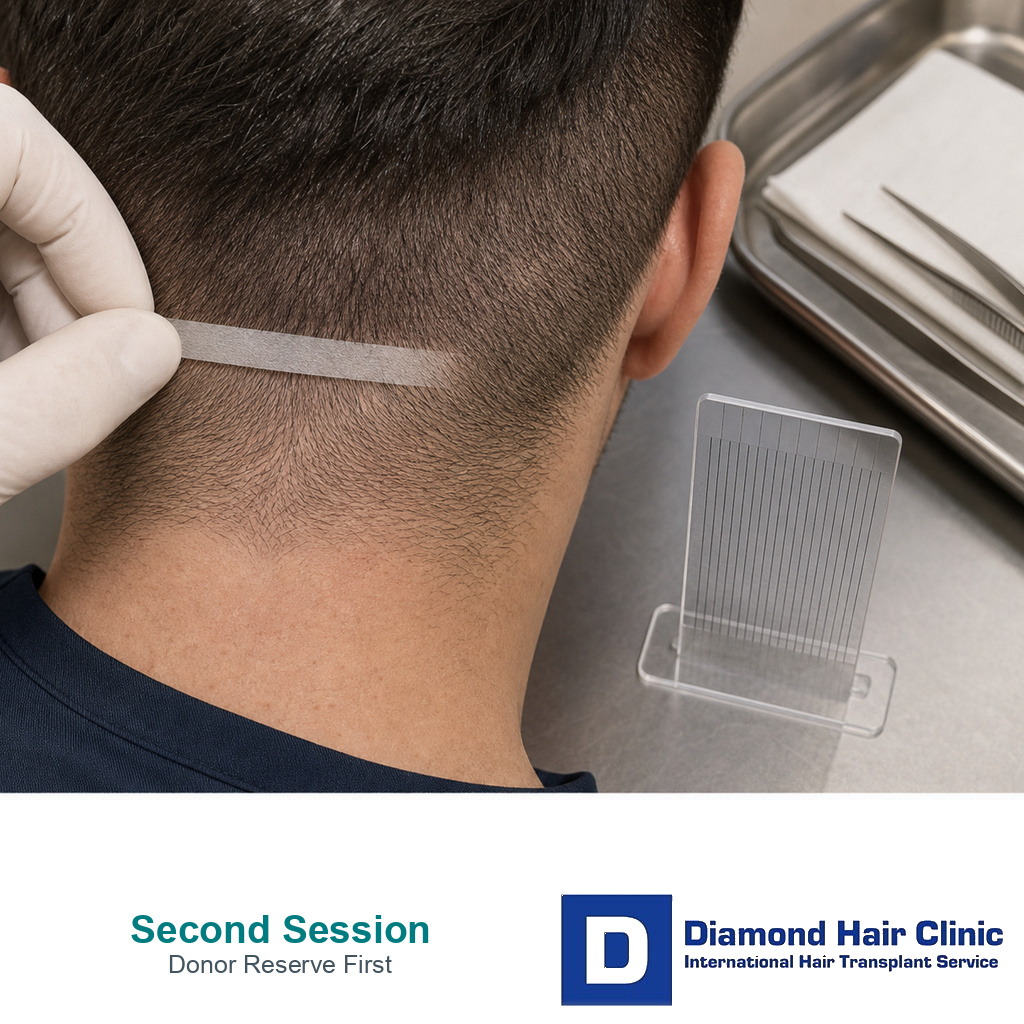
The donor area is a limited lifetime budget, not a refillable supply. If it was used wisely, there may be enough reserve for future work. If it was spent aggressively, every correction becomes more difficult.
Before a second transplant, donor review should include density, extraction pattern, scar visibility, hair caliber, scalp contrast, and how the donor looks at different haircut lengths. A donor area can look acceptable when grown out but show thinning or patchiness with a fade.
Many people are surprised by this after FUE. They were told that FUE leaves no scar, but FUE still leaves thousands of small extraction points. When extraction is controlled and well distributed, the donor can still look natural. When extraction is too concentrated, the back of the head can look patchy or see through.
In a second procedure, donor management matters more, not less. I need to know how many grafts were truly extracted, where they were taken from, how they survived, whether the remaining density is uniform, and whether future hair loss may need more grafts later.
A weak donor area is not a small inconvenience. It can limit density, crown coverage, repair options, and even the ability to wear short hair comfortably.
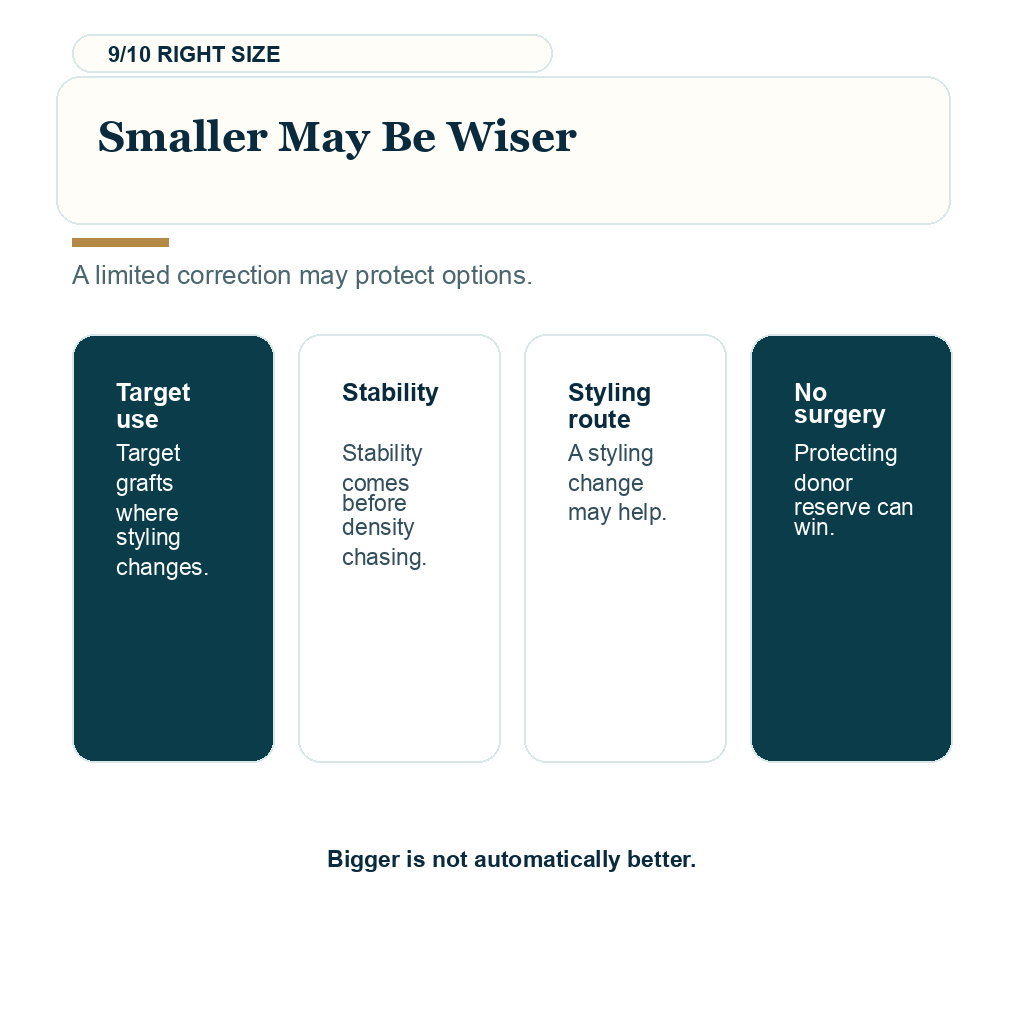
A large second session is risky when the only reason is that the first result feels thin. If the donor is already compromised, the answer may be a smaller targeted improvement, medical stabilization, styling adjustment, or no surgery.

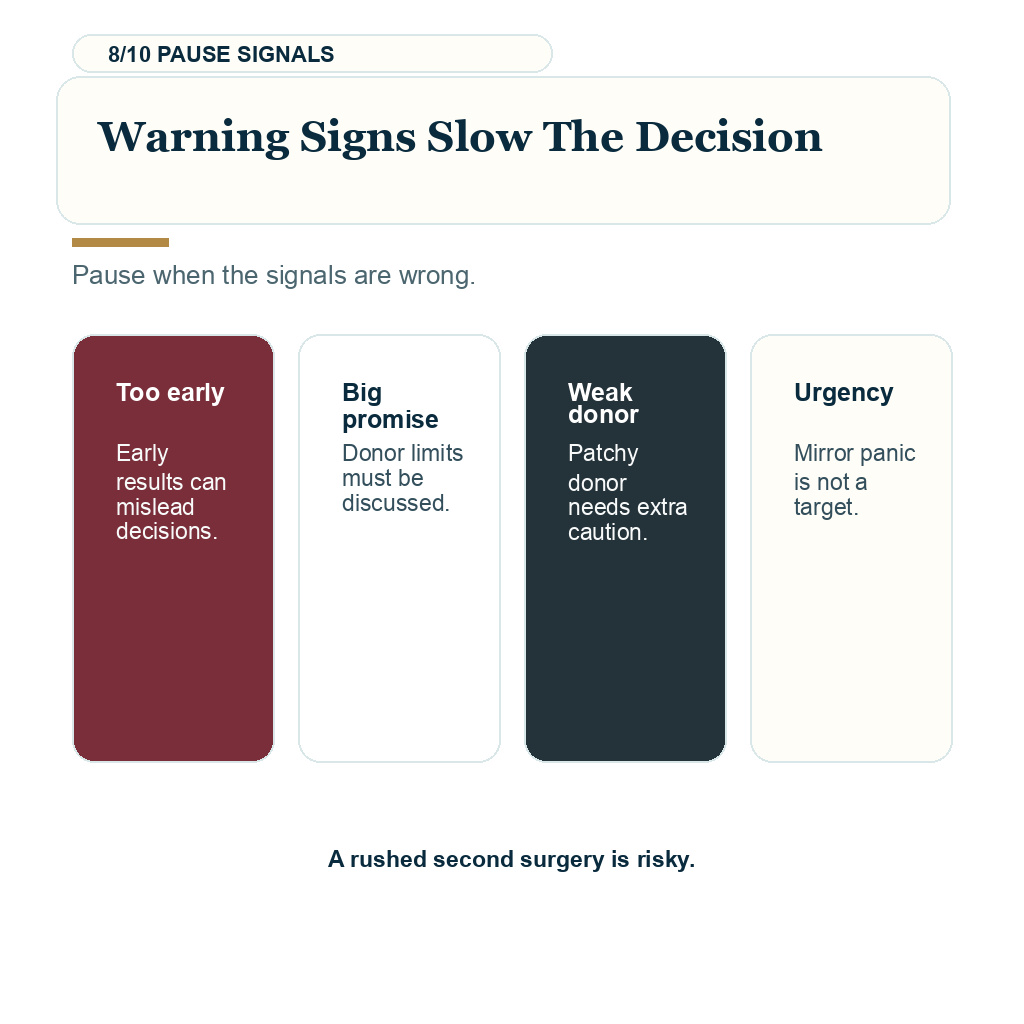
Use the 10 second transplant planning slides below to review result maturity, donor reserve, the target zone, repair versus density, future hair loss, crown tradeoffs, warning signs, records, smaller options, and the final stop or proceed filter. Swipe the carousel, use the arrows one step at a time, or choose a number below the image to jump to that point.

Clear goals and limits must come before saying yes
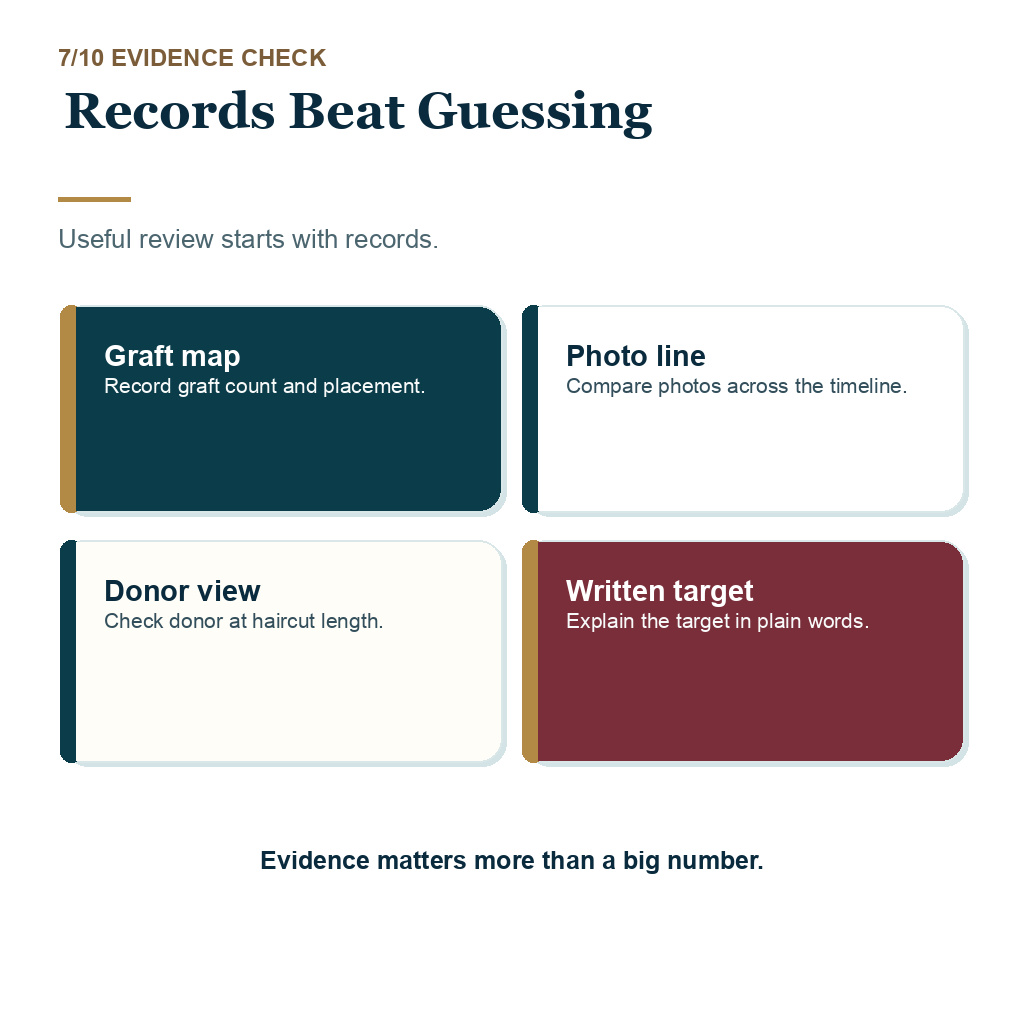
Another surgery should begin with the first graft count, placement map, donor healing record, and the area that causes a problem in normal life rather than only in harsh photographs. These facts show whether the next procedure is a small refinement, a planned second stage, or a repair.
The new graft estimate must be tied to a target area. Graft number calculation depends on surface area, hair shaft thickness, donor capacity, and density goal together. A big number without distribution is not a plan.
If your first transplant brought a major change, a refinement need not recreate that excitement to be worthwhile. Better coverage in one agreed area or a softer transition may be the whole goal, provided the expected improvement justifies another operation.
Know what is being preserved for the future. If the second procedure uses most of the remaining donor reserve, what happens if the crown expands or the middle scalp thins later? That question is uncomfortable, but avoiding it is how regret starts.
A second transplant becomes safer when you can explain the plan back in plain language. If the plan still sounds vague, it is too early to operate.
A second transplant can improve some thin or disappointing results
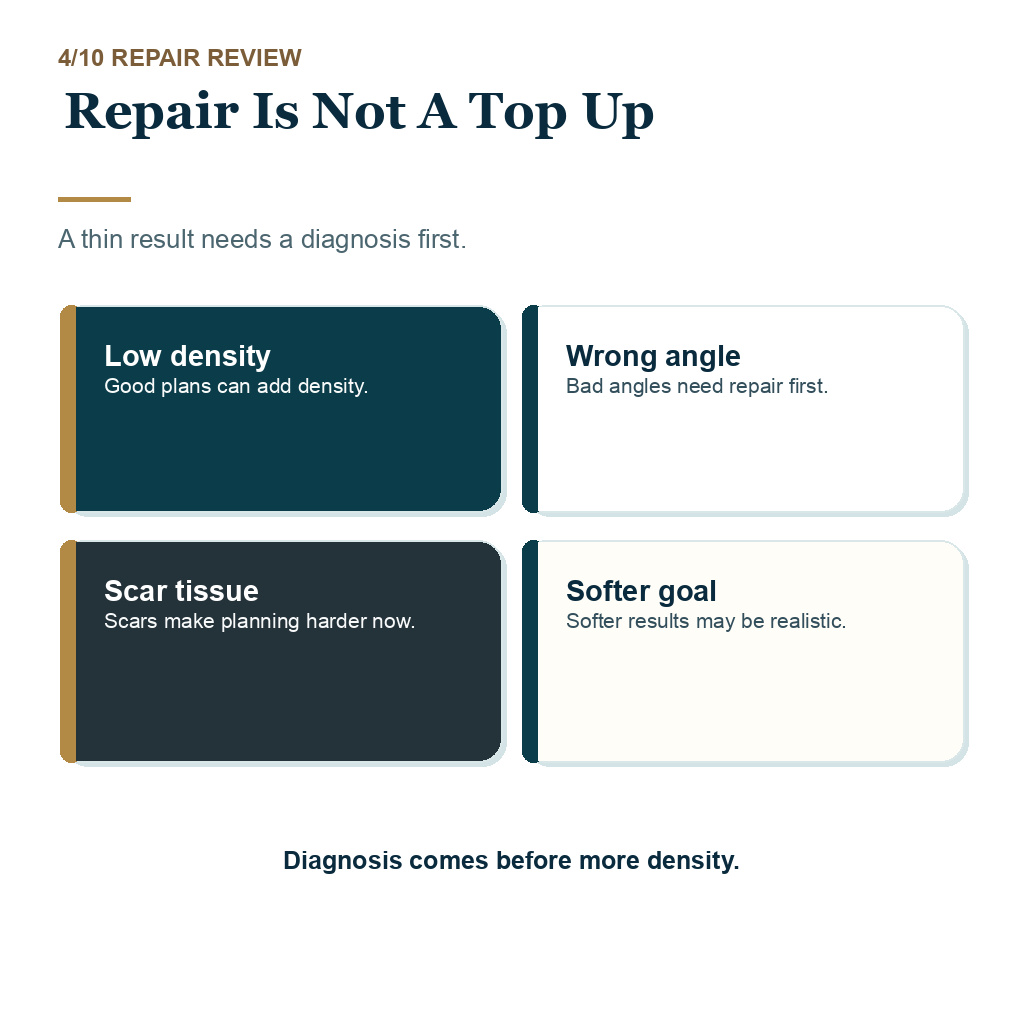
Sometimes, but the reason for the thin result matters. A result may look thin because too few grafts were placed, the area was too large, graft survival was poor, native hair continued to thin, or the expectation was photographic density in real life.
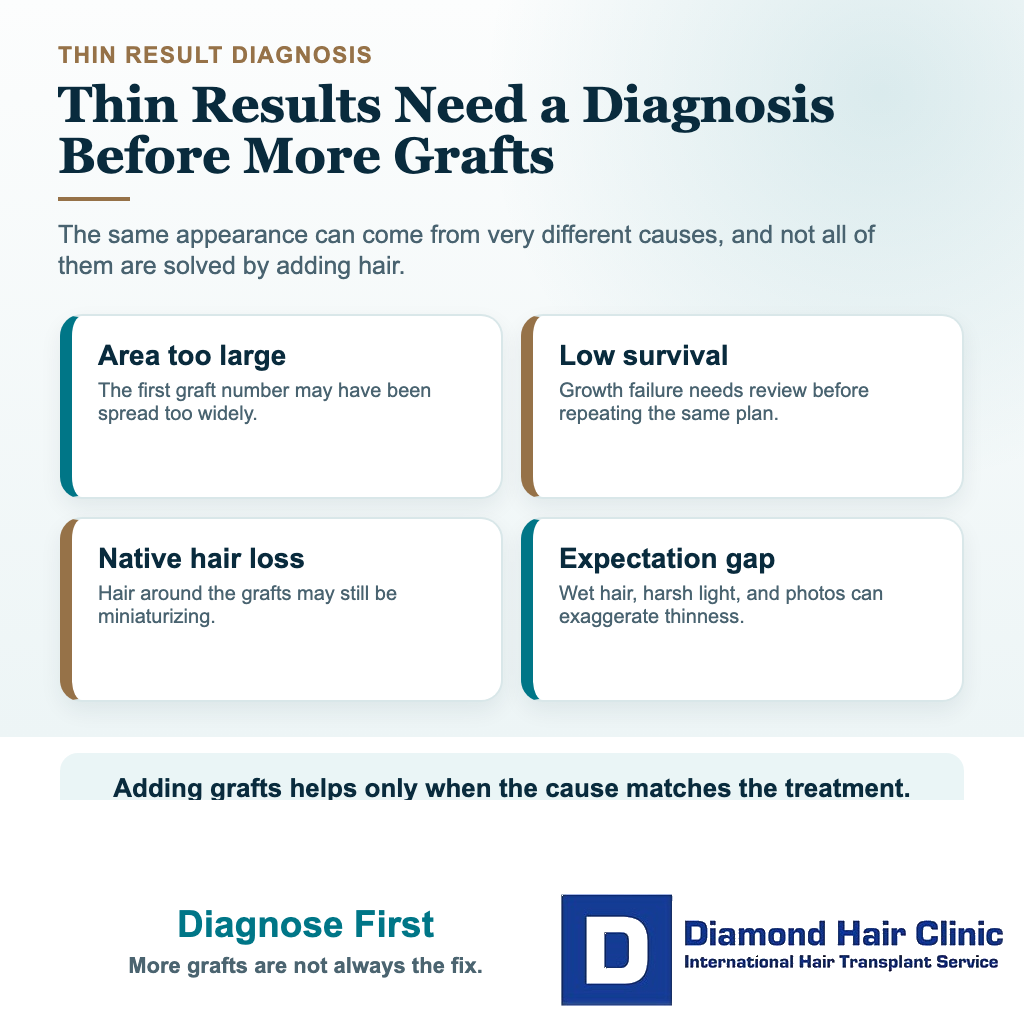
These problems are not the same. Adding grafts may help one case and harm another. If the first hairline was placed too low and too straight, adding density can make the design harder to repair. If graft angles are wrong, placing more hair between them may not solve the visual problem.
A disappointing result should not be reviewed only by asking how many grafts were used. The review should include design, hair direction, recipient spacing, donor condition, scalp visibility, hair shaft thickness, and whether the result changes under harsh light, wet hair, or normal daily styling. Design failure and density shortfall need separate plans, because each one spends donor reserve differently.
Another operation can improve density when the first structure is good and the donor can support it. It is less predictable when the first operation created poor angles, pitting, cobblestoning, a pluggy hairline, or donor depletion.
Repair surgery is often more complex than the first operation. The surgeon is working around old graft direction, previous extraction patterns, scar tissue, and someone who may already feel anxious or betrayed. The realistic goal may be a softer, less artificial, easier to style result rather than perfection.
Medication and future hair loss change the decision
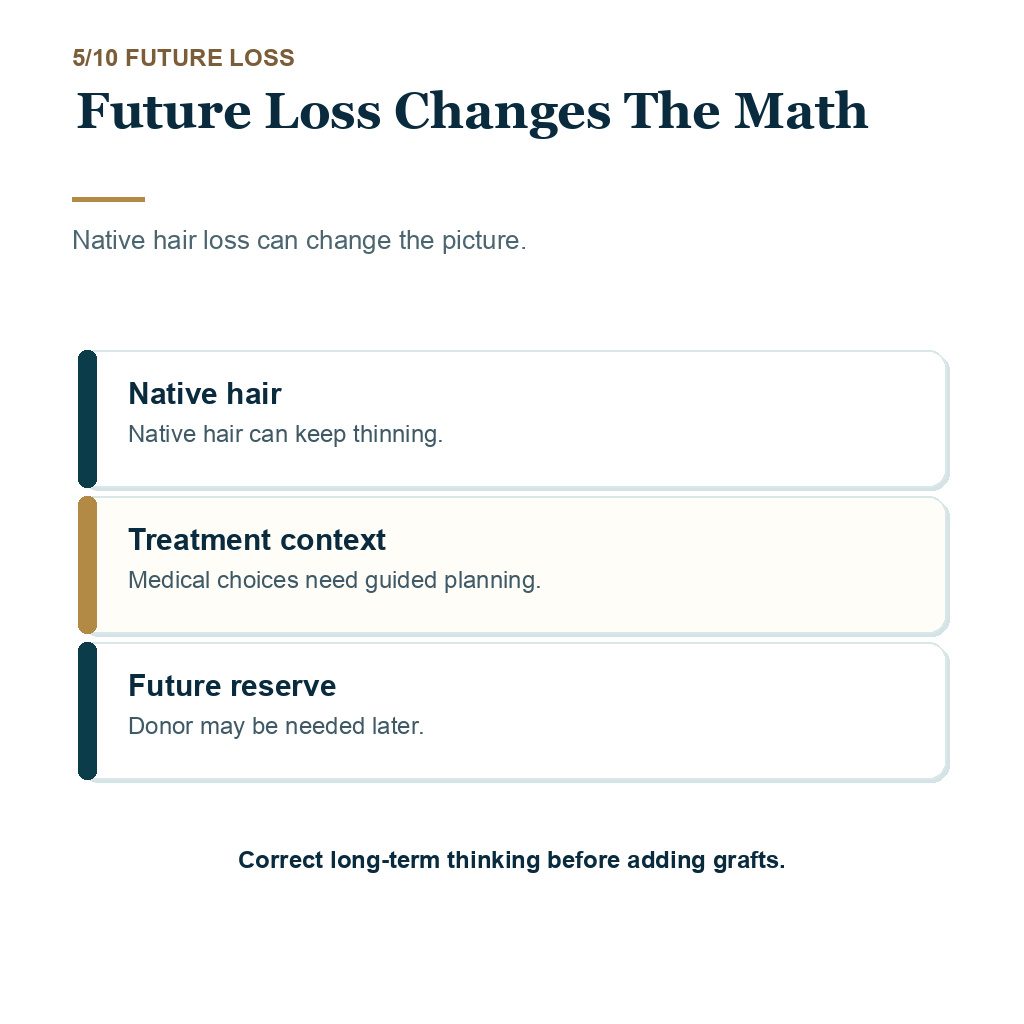
A hair transplant moves hair. It does not stop the biological process of hair loss. Before using more donor reserve, I want to know whether the apparent thinning is coming from graft survival, transplanted hair thinning years later, native hair loss around the transplant, shedding, or the original plan.
Before adding density through an area that was transplanted before, keep clear baseline photos of every hair already growing there. A second operation creates new recipient sites among existing follicles. Temporary postoperative shedding can make the zone look thinner, while direct follicle injury is a different concern. One early photo cannot separate those outcomes, so compare matched views through follow-up and have persistent thinning reviewed before deciding that the earlier transplant has failed.
If native hair continues to miniaturize behind the transplanted zone, the first result may look thinner even when the transplanted grafts survived. This is especially important in a young patient whose pattern is still moving.
Medication decisions are personal and need proper medical guidance. Some people do well with finasteride, dutasteride, minoxidil, or a combined plan. Some cannot tolerate certain medicines. Some were never properly told what untreated future hair loss could mean before surgery.
A first transplant done without finasteride or minoxidil is not failure by itself, and it is not automatic approval for another surgery. I look at what changed since the first result, how much native hair was lost, and whether the remaining donor reserve can improve the appearance without creating a weaker long term position.
If someone refuses or cannot use medical treatment, the surgical plan usually needs to be more careful because the donor may have to serve a larger future area of loss. The question of hair transplant without finasteride is therefore not only about medication. It is also about density, hairline height, crown expectations, and future surgery risk.
The second plan should correct weak long term thinking, not repeat it.
Crown coverage and hairline density need priority setting
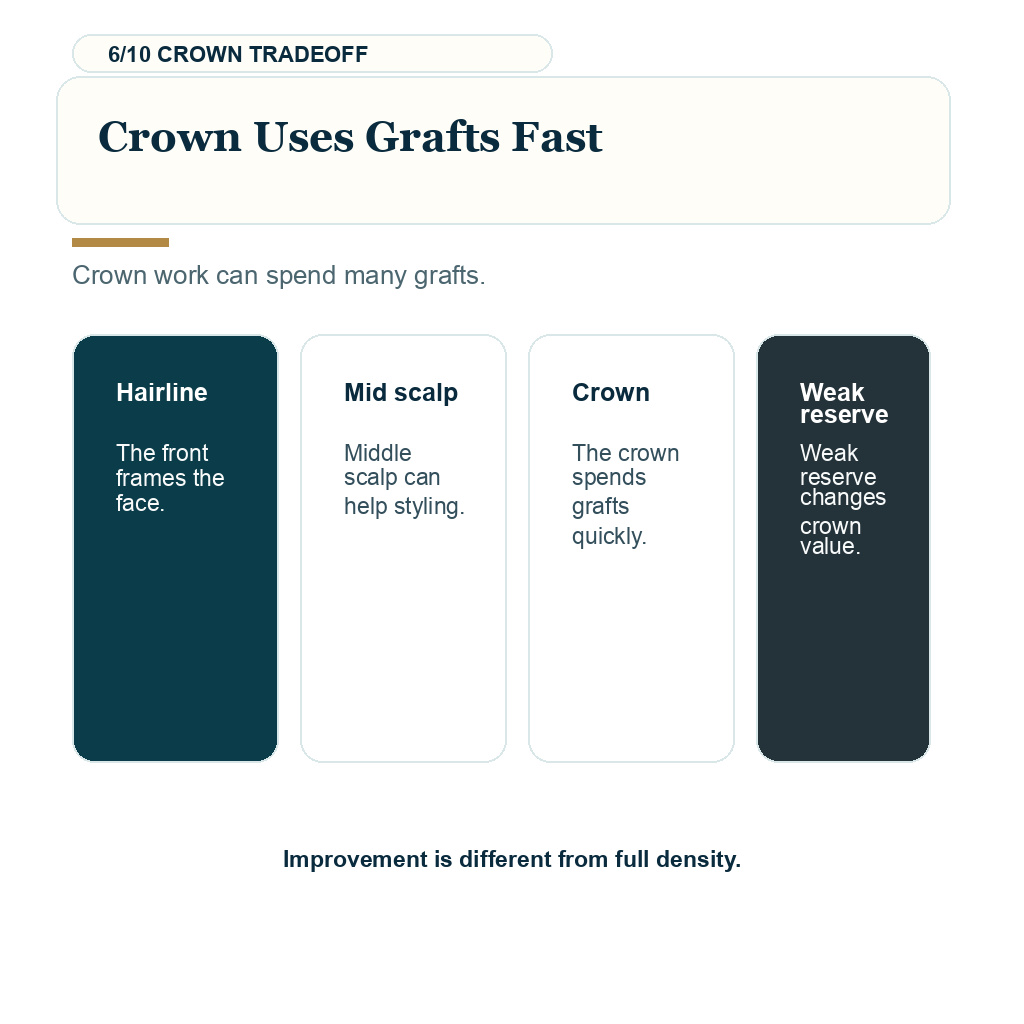
The crown and the frontal hairline create different kinds of dissatisfaction. The hairline frames the face. The crown can consume many grafts while still looking lighter under bright overhead light.
Many people want both. They want a strong hairline, fuller temples, denser middle scalp, and a crown that does not show. The difficulty is that donor supply is limited, especially in advanced hair loss.
Grafts should go where they create the greatest visible benefit. An age-appropriate hairline with natural irregularity may be more valuable than an aggressively low line that uses too many grafts too early. Hairline design in hair transplant is part of that donor decision.
The crown is a common reason for a second surgery because many first procedures protect it intentionally. That can disappoint someone who expected full coverage everywhere, but often it is not negligence. It is donor preservation.
When a second session is considered for crown coverage, the key question is whether you will be satisfied with improvement rather than full density. Crown restoration often means reducing scalp visibility, not recreating teenage density.
Warning signs should slow the decision before a second transplant
The first warning sign is rushing. If a clinic pushes another operation before the first result has matured, slow down. Surgery should not be sold as a quick answer to normal waiting anxiety.
The second warning sign is unlimited density language. Nobody has unlimited donor hair. If a consultation speaks only about graft numbers and not donor capacity, future loss, survival, hairline design, and scarring risk, the consultation is incomplete.
The third warning sign is unclear responsibility. You should know who designs the hairline, who administers anesthesia, who extracts grafts, who creates the recipient area, and who places grafts. Surgeon involvement can vary greatly between clinics.
The fourth warning sign is ignoring donor damage. If the first procedure already created visible thinning, patchiness, or overharvesting, another procedure must be planned with extreme caution. Donor area overharvesting in hair transplant can be difficult to reverse.
The fifth warning sign is emotional urgency. If you are checking mirrors obsessively, avoiding every photograph, and believing that one more surgery will finally bring peace, that emotional state needs attention before operating.
Another operation is also risky when you are chasing someone else’s result. Hair characteristics differ. Donor density differs. Curl, color contrast, scalp thickness, hair caliber, and loss pattern all change what is possible. An AI image can show the feature that bothers you, but it cannot decide a repair. It may make a lower hairline, fuller corners, or a softer angle look achievable while changing the face and surrounding hair at the same time. The real hairline, graft direction, donor reserve, and one defined flaw still have to lead the plan.
The best second procedure is not the one with the biggest graft number. It is the one that respects the donor area, corrects a real problem, and still leaves options for the future.
Waiting, repair, or second surgery depends on the diagnosis
Diagnosis comes before the desire for more grafts. Low density, poor growth, an unnatural hairline, donor damage, ongoing native hair loss, crown visibility, and anxiety during the waiting period are different problems and do not share one plan for another operation.
If the first surgery is less than 12 months old, waiting may be the best treatment. If the result is mature and the design is good, a second procedure may be a reasonable way to improve density or treat a planned second area.
If the first result is unnatural, the plan may need to be repair rather than adding density alone. Repair can involve removing or softening poorly placed grafts, rebuilding the hairline, improving angles, or camouflaging old work.
If the donor area is weak, the answer may be smaller. Sometimes a limited number of grafts in the most visible area is wiser than another large session. Sometimes beard or body hair can help selected cases, but it is not a magic solution and it does not behave exactly like scalp hair.
Before committing, put the first result, the concern in daily life, the remaining donor reserve, the risk of future loss, and the surgeon responsible for the critical steps into one written plan. A donor area that looks patchy only a few weeks after a second extraction should be documented in the same zones, haircut, and lighting as healing progresses. One early photograph cannot establish the final reserve or permanent overharvesting.
When a second hair transplant is planned correctly, it can bring genuine relief. It can improve framing, reduce see through areas, make styling easier, and help you think less about hair every morning.
Bring two matched photos to the review. One should show the hairstyle that looks acceptable and the other should show the style that exposes the thin area. If the concern appears only when the hair is pulled back or parted a certain way, it still matters, but it defines a smaller job than adding density everywhere. The surgeon can then judge whether that styling freedom is worth the donor cost.
I am not simply trying to add hair. The result has to look natural and still make sense five, ten, and twenty years later. If the second operation feels uncertain, do not rush because of a discount, a limited slot, or a result you saw online. A slower plan may protect the final result better.

Read this review excerpt
told me the quality of my donor hair and what he could take out and advised me what will the be best outcome with what donor hair I had.