



Ten Month FUE Growth Review
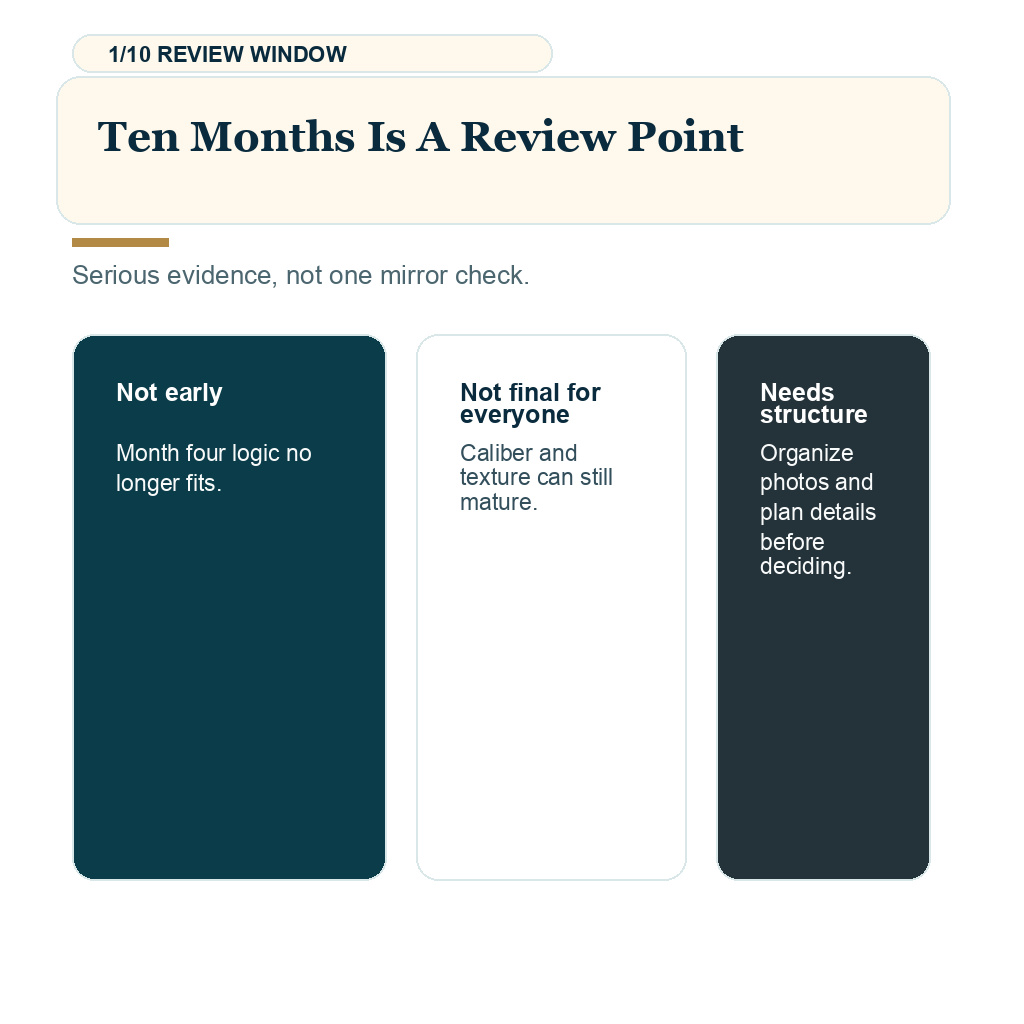
At 10 months, I take a hair transplant result seriously, but I do not judge it from one mirror check or one photo. Most visible growth should already be present. What may still change is thickness, texture, styling behavior and, in the crown, slower maturation. What should not be ignored is a zone that repeatedly looks sparse in controlled photos, especially if it does not match the original graft plan.
The first distinction is simple. Maturing hair, true low density, ongoing native hair changes, and photo distortion are not the same problem. A wet photo under bathroom light can make a reasonable result look weaker. The same sparse area across repeated dry photos is stronger evidence.
Online progress updates are useful only after the basics are matched, including treated area, graft plan, crown involvement, native hair loss, hair length, and lighting. Around ten months, a useful review should also say whether the original number meant grafts or hairs and which zones were treated. That makes a thin area easier to compare with the plan.
If the result is thin at 10 months, more grafts are only one possible answer. I first ask whether the transplanted hairs are still gaining caliber, whether the original plan used enough grafts for the size of the area, whether native hair has continued to thin, and whether the design itself looks natural. If the concern was already visible at month eight, a month eight hairline check can help separate late maturation from a design problem before repair is discussed. Month 10 is a review point, not a verdict from one bad image. Before another surgery is discussed, I separate maturation, native hair change, and design limits.
Judging at 10 months can still be early
Ten months is not early in the way that month 4 or month 5 is early. By this stage, the awkward early growth phase should be behind you, most new growth should be visible, and the general direction of the result should be clearer. If there is almost no growth at 10 months, or if one zone looks empty compared with the graft plan, that deserves proper review.
This point is also not a permanent density baseline. If the hair looked stronger and then seems lighter, I compare the same area under the same conditions and check caliber, styling, native hair, crown timing, and shedding history before calling it lost density.
If the concern began earlier, the month five hair growth check helps separate an interim tracking point from the later evidence expected at ten months.
At month 10, I still avoid calling every result final. Some hair can thicken between months 10 and 12, especially when texture, length, crown direction, and styling are still changing. But a late start does not restart the whole calendar. If growth only became visible several months after surgery and then slowed, I compare controlled photos, graft plan, native hair, and medication context before deciding whether the remaining wait is realistic or whether review should begin. The one year FUE result review is where late refinement should be weighed against repair planning.
By month 10, I expect real evidence rather than early recovery guesses. The photos, growth pattern, donor condition, and remaining thin areas still need to be reviewed together before a patient decides the result has failed or pays for another procedure. Waiting is no longer blind waiting, but final judgment still needs structure.
A late start does not reset the whole calendar
When growth begins later than expected, month 10 still needs caution, but I do not treat it like month six. Late starters can keep improving in caliber and styling value, especially when the crown or fine hair is involved. I do not promise a second full growth cycle just because the first visible change arrived late. I put more weight on whether the same zone is still gaining coverage on matched photos, not on whether one recent month felt slower.
Details that can still improve after month 10
After month 10, I mainly expect refinement, not a complete transformation. Hair shafts may become thicker. The hair can behave less wiry. Direction may blend better as length increases. The patient may also learn how the transplanted hair wants to sit, especially around the hairline, crown, or temple transition.
That is different from saying a weak result will magically become dense. If the density is clearly low because the area was too large for the graft number, extra months will not create new grafts. If the hairline was placed too low or too straight, time will not redesign it. If the donor was overused or the angles were poor, waiting may only make the problem easier to see.
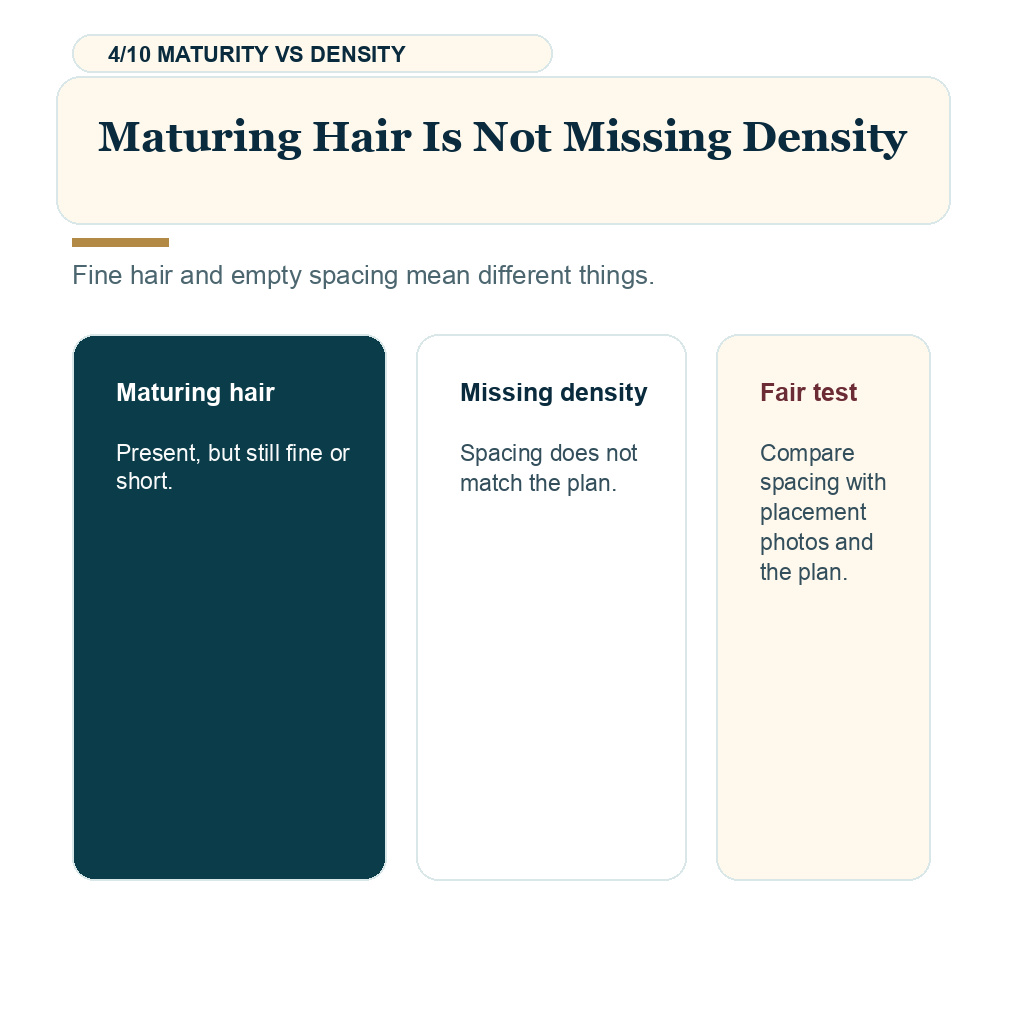
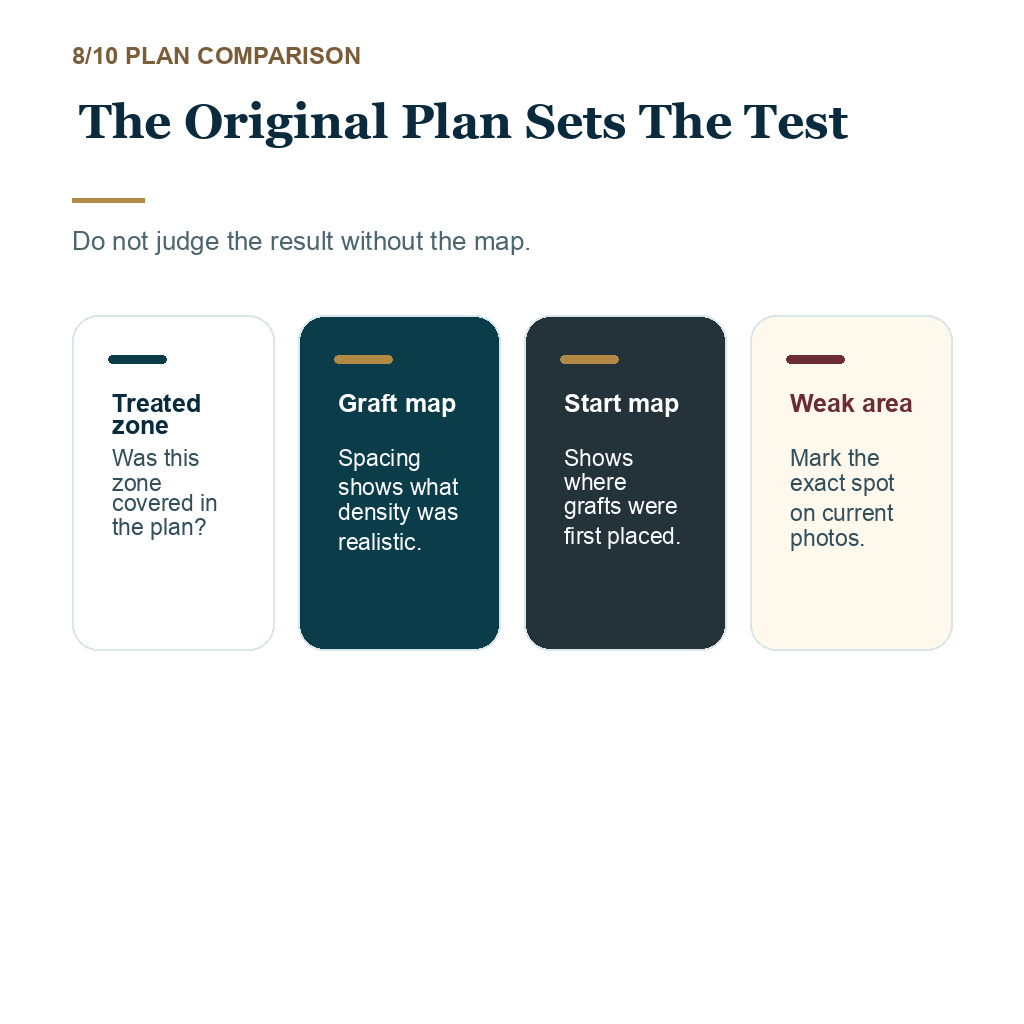
By month 10, the review separates maturing hair from missing density. Maturing hair is present but still thin, short, or visually soft. Missing density means the visible graft distribution does not match the coverage goal. I compare photos at month 10 with the surgical plan, the immediate placement photos, and the treated zone map, not only with another patient’s online result.

At 10 months, I separate ongoing maturation from a sparse area that repeats in controlled photos.
Thin density at month 10 that needs review
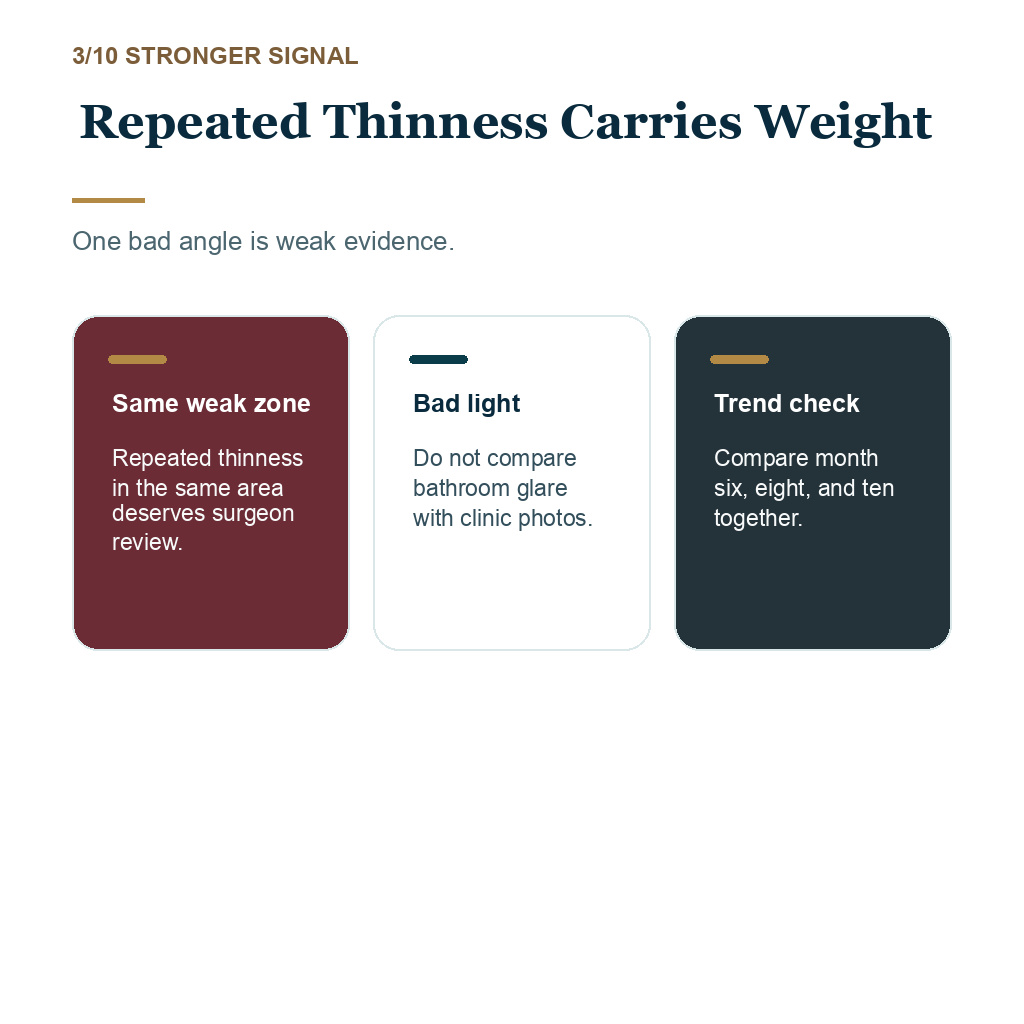
Thin density at 10 months needs review when the concern is stable across controlled conditions. Use dry hair, same lighting, same hair length, same styling direction, and close comparison with photos from before surgery and immediately after surgery. A single bad mirror angle is weak evidence. Repeated thinness in the same zone under the same conditions is stronger evidence.
I pay special attention when the hair only looks acceptable if it is combed one exact way. That can happen after a normal transplant because styling always affects density. It can also reveal a real coverage limitation. The difference depends on graft distribution, hair caliber, curl, contrast between hair and scalp, and the size of the area that was treated.
A serious review is also needed when there is new shedding, scalp inflammation, strong dandruff, redness, itching, or a medication change. A result that appears thinner at 10 months may not be a failed transplant. It may be a mixture of transplanted hair, native hair progression, styling, and scalp condition. I need enough information to separate these factors.
Trend matters. If the same area improved clearly from month 8 to month 10, I am careful before calling it finished. If the same controlled view looks almost unchanged from month 6 to month 10, the concern becomes stronger. A judgment at month 10 should compare time points, not only one disappointing photo.

At this stage, the review should separate growth maturity, photo conditions, native hair, donor record, and the original graft plan.
Use the 10 result review slides below to separate timing, photo control, repeated thinness, maturing hair, crown context, native hair changes, styling direction, the original plan, and second session logic. Swipe the carousel, use the arrows one at a time, or choose a number below the image to jump to that point.

Use comparable photos before deciding
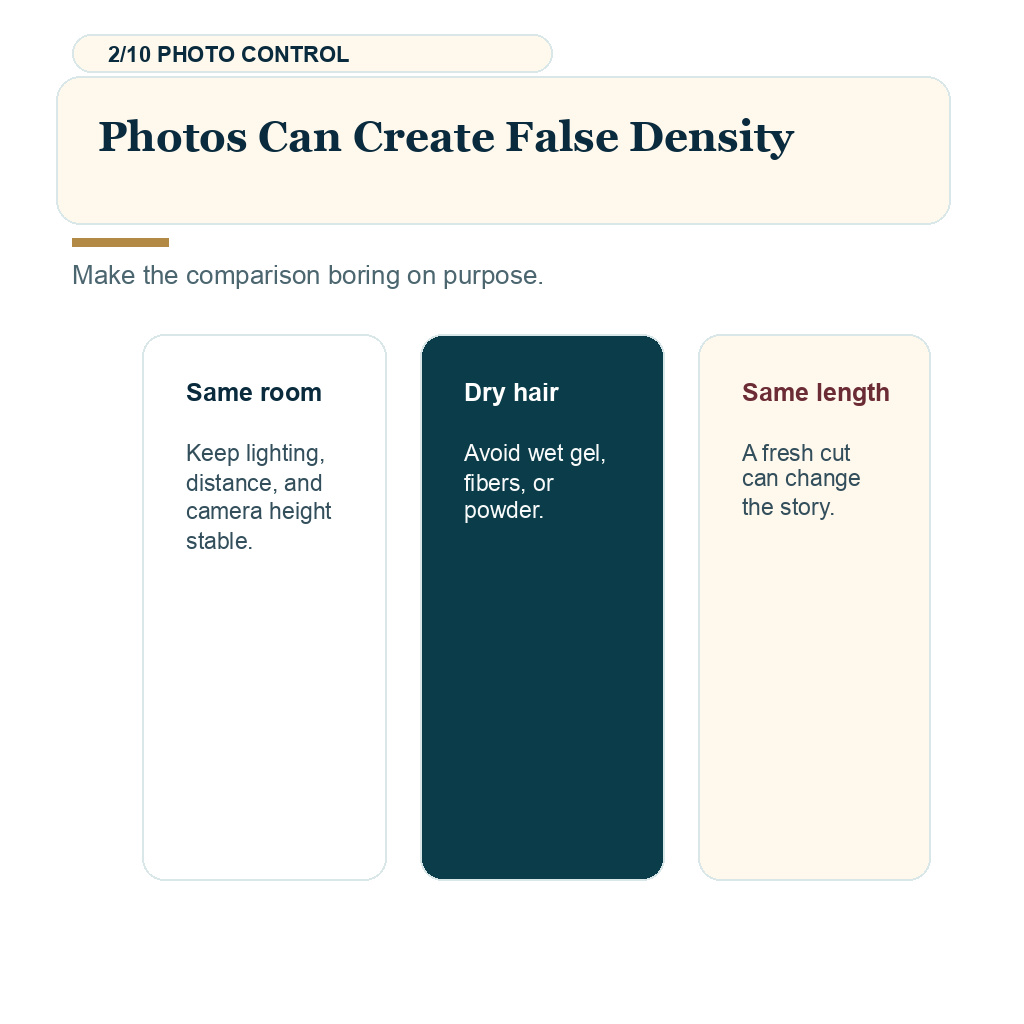
Good review photos are boring on purpose. Take them with dry hair, no fibers, no powder, no wet styling product, and no strong overhead bathroom light. Use the same room, same distance, same camera height, and similar hair length whenever possible. Then add a short comb through video if the density concern changes when the hair moves. Add one normal distance view, because extreme close photos can make a thin patch feel larger than it is in daily life.
I ask for several views because one angle can mislead both the patient and the surgeon. Photograph the front hairline, both temples, top view, crown if it was treated, donor area, and a short video showing the area that bothers you. These photos are not meant to flatter the result or make it look worse. They remove the lighting and styling tricks that can make one head look different five minutes apart. That matters when a hairline looks different from the front and top view, because one angle can mislead both the patient and the surgeon.
Hair length must be part of the comparison. A fresh short haircut at month 10 can make density look weaker than a longer photo from month 8. A longer styled photo at month 10 can also hide a real gap. Write down the haircut length, styling product, fibers, and whether the hair was washed that day.
Photo reliability becomes part of the medical review when images disagree. Harsh light and wet hair or a short comb through video can change whether we wait, review medically, or discuss another session.
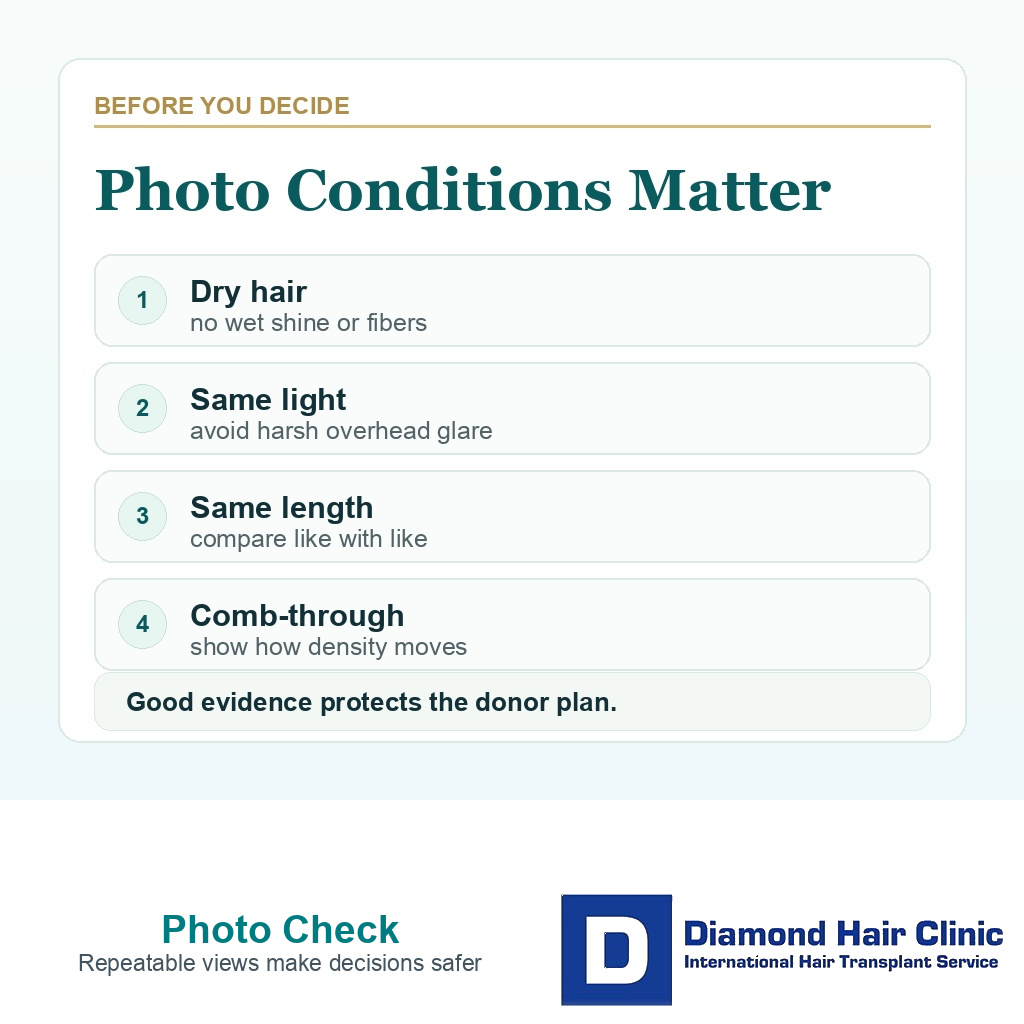
Photo conditions can change how dense a 10 month hair transplant result appears.
Styling direction and how density looks
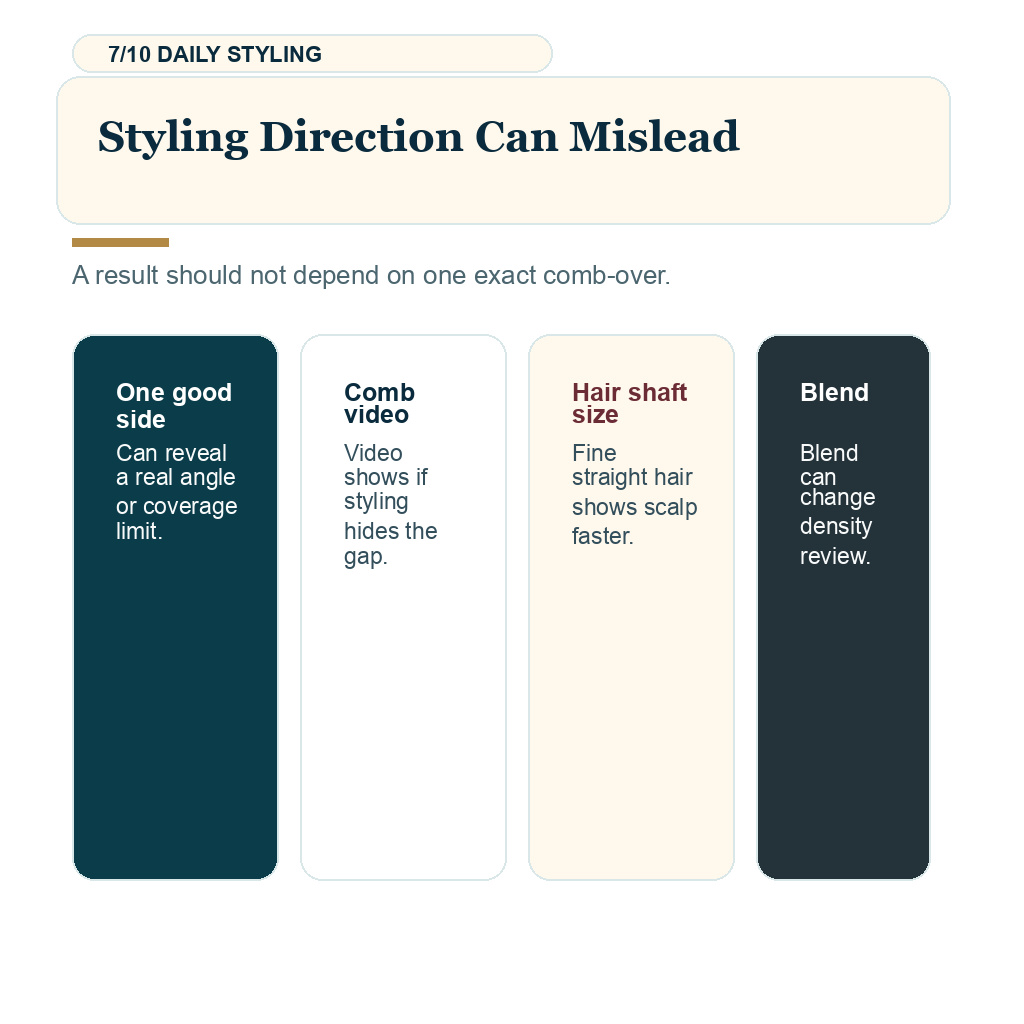
Hair transplant density is partly visual illusion. Coverage, direction, hair shaft size, color contrast, curl, length, and layering all matter. The same graft number can look strong in one patient and modest in another. Fine, straight, dark hair over light skin often shows scalp more easily than coarse or wavy hair with lower contrast.
Because of this, a patient may say the result looks acceptable when flipped left but weak when flipped right. The grafts may be growing, but the angles, hair length, or native hair pattern may create a preferred styling direction. Sometimes this is a normal limitation. Sometimes the plan did not respect how the patient actually wears the hair.
A natural result is not judged only by density. The hairline should suit the face, the transition should stay soft, the direction should blend with native hair, and the donor area should remain protected. The full result standard is wider than graft count.
Crown and middle scalp results behave differently
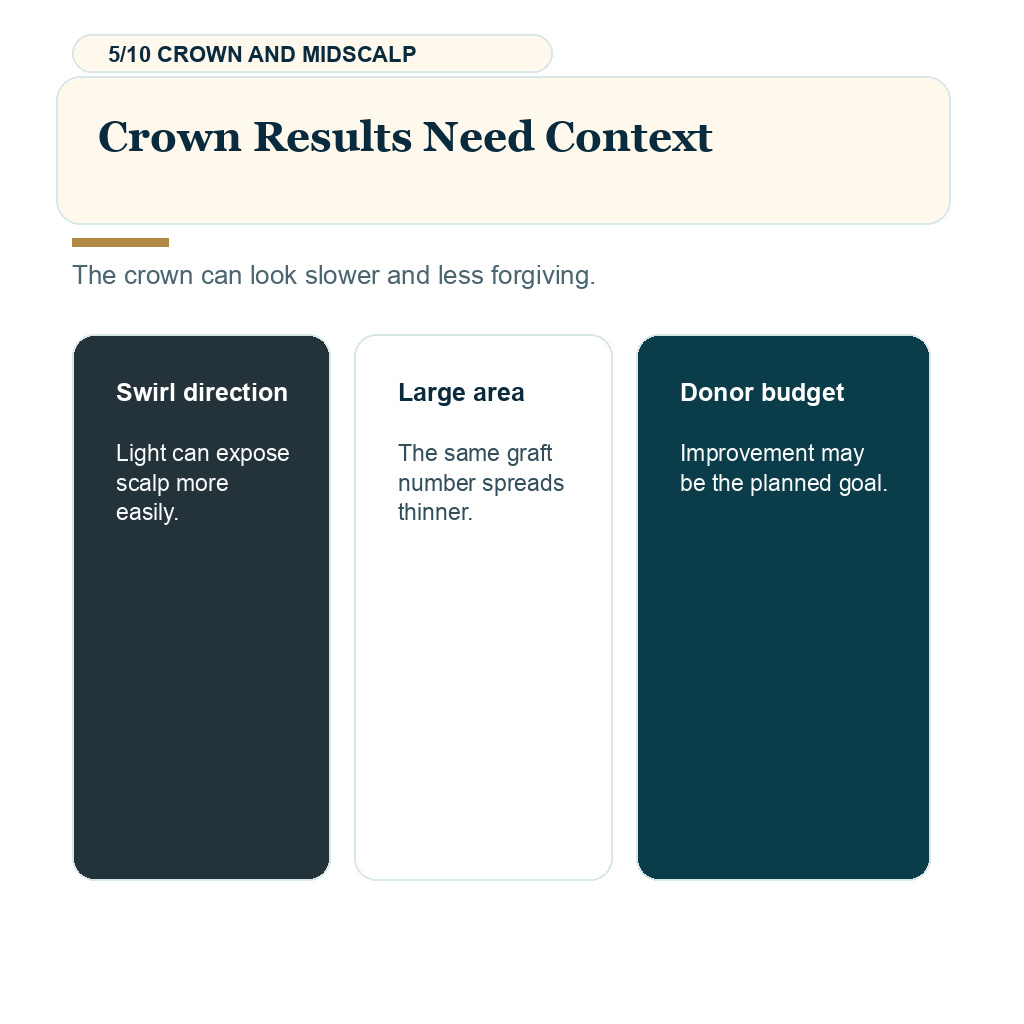
The crown is often less forgiving than the frontal hairline. It has a swirl, a larger surface area, and a stronger tendency to expose scalp under direct light. Even when growth is progressing, the crown can look thinner than expected because the same number of grafts covers less visual area there.
At 10 months, a crown result may still be improving, but it also needs careful judgment. If the crown was large, the donor budget may have been used to create improvement rather than full coverage. If the plan tried to fill a large crown too aggressively, the donor area may pay the price. When I review a crown hair transplant, I include age, Norwood pattern, donor strength, and future hair loss risk.
Middle scalp work can also look uneven at this stage because transplanted hair, native hair, and miniaturized hair may sit together. The review should not isolate one thin patch without asking whether the surrounding native hair is still changing.
Medication and native hair loss can change the picture
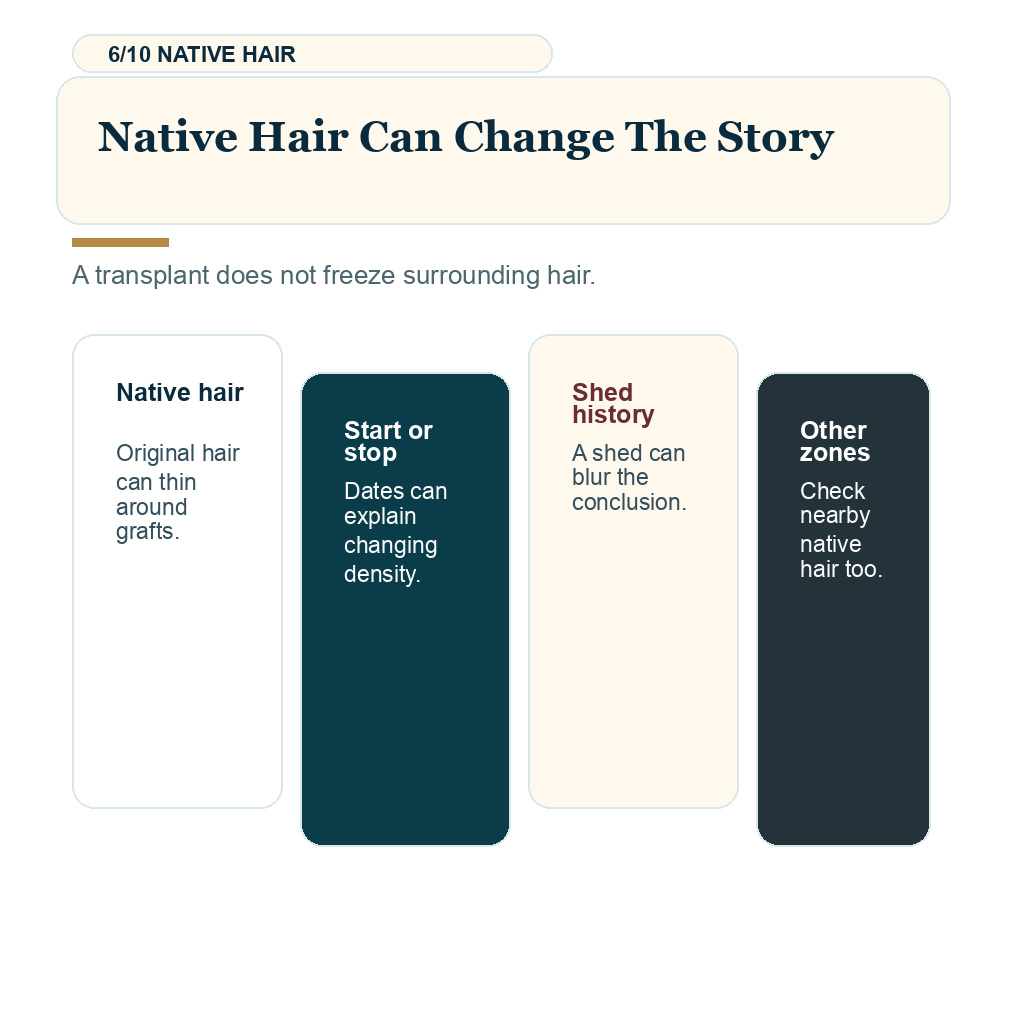
A hair transplant moves hair. It does not stop future native hair loss. If native hair continues to miniaturize after surgery, the patient may feel that the transplant is failing even when the transplanted grafts are growing. This is especially important in younger patients, diffuse thinning patients, crown patients, and patients who are not stable on medical treatment.
Medication can also confuse the visual story. Some patients start finasteride or minoxidil around the time of surgery and later see improvement from both the transplant and the medicine. Others stop medication and lose native density around the transplanted area. The result then looks thinner, but the reason is not always graft survival.
The medication history can change how month 10 is interpreted. I need to know what was used before surgery, whether it was stopped or started after surgery, whether there was a shed, and whether the untreated native hair is still moving. That review connects closely with tracking hair transplant growth and understanding why some hair transplant results look thin.
Keep medication changes out of this test unless your doctor has told you to change the plan. A new start, stop, dose change, or shed can blur the conclusion. Bring the dates of medication changes so the clinic can separate transplant maturation from movement of native hair.
Second session discussion timing
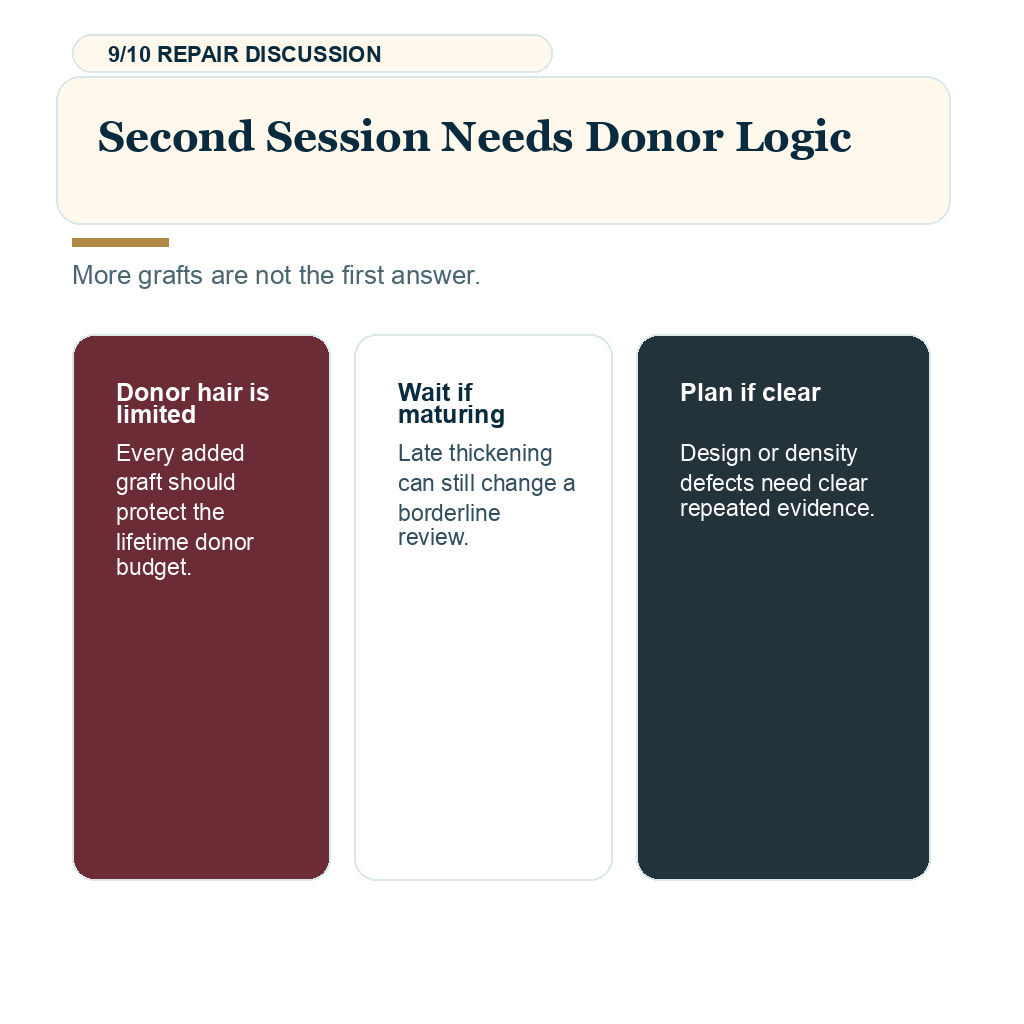
A second session can be discussed at 10 months, but I do not plan it from frustration alone. I first need to see the original graft plan, current donor condition, recipient area size, hairline design, crown involvement, and current hair loss stability. A second session uses more donor hair, so the decision must protect the lifetime donor budget.
If another clinic offers a quick repair, pause before paying a deposit. Ask the reviewing surgeon to compare the original graft map, current donor view, and same lighting photos, because a repair quote is only useful when it explains what problem it is solving.
At ten months, some cases simply need patience until the review at 12 months. In others, the discussion can begin earlier because the gap is clear, the donor remains safe, and the first procedure was intentionally conservative. A small refinement is very different from trying to rescue an unrealistic first plan.
If the concern is crown thickness, diffuse thinning, or hair caliber, the later review should carry more weight before a deposit is paid. If the concern is a clearly unnatural hairline shape, poor direction, or obvious donor overuse, planning can start earlier, but the repair decision still has to protect the remaining donor supply.
A second hair transplant discussion at month 10 has a narrower job. The evidence must be strong enough to discuss extra density responsibly, instead of judging a result that is still maturing.
Design or graft survival problem is different from timing
Some concerns are less likely to be solved by time. A hairline that is visibly too low, too straight, or poorly angled does not become age appropriate because another two months pass. Pluggy spacing, unnatural direction, cobblestoning, or obvious gaps in the planned density may also need a different discussion from normal maturation.
Graft survival cannot be read well from casual photos, but a surgeon can compare graft placement immediately after surgery with the distribution at 10 months. If a zone was densely placed and now shows little growth, that needs a closer look. If the zone was sparsely placed from the start because the donor budget was limited, the result may be predictable rather than failed.
Another part of the review is whether the patient expected a density that the graft number could not reasonably create. A review of 45 grafts per cm2, fine hair and transplant density, and touch up graft planning can explain why visual density is not just a number.
My month 10 review focuses on evidence
At Diamond Hair Clinic, I review a 10 month result as a clinical planning question, not as a social media comparison. I want standardized photos, the original surgical plan, the graft distribution, the treated zones, donor condition, current medication history, and how the hair behaves in normal daily styling.
I separate three possible conclusions. The result may be on track and still maturing. It may be limited by hair caliber, large surface area, crown demand, or careful donor use. Or there may be a real issue with design, density, growth, or ongoing native hair loss that needs a plan. These are different conversations.
A real concern should not be ignored. One harsh photo should not push the patient into unnecessary surgery either. The best review at month 10 protects both the result you already have and the donor hair you may still need later.
Month ten needs controlled photos
At 10 months, review a thin result with matched photos, the original graft plan, the treated area size, hair caliber, native hair status, medication context, crown demand, and donor limits.
Some cases still mature after this point, but vague reassurance is not enough when the same area looks weak in every controlled condition or the design itself looks unnatural.
The follow-up choice should come from evidence. Wait when the signs still fit maturation, review carefully when the picture is mixed, and discuss another session only when the donor area and original plan make that responsible.
Read this review excerpt
We also had a levelled conversation about my hairline and results I could expect based on my donor density area.