



Hair Transplant Growth at Month Five
At month five, a hair transplant can still look unfinished, and that alone does not mean it failed. This is the point where I look for movement, not mature density. New short hairs, gradual thickening, a healthier scalp, and better comparison with month four are useful signs. A completely silent area, worsening scalp symptoms, or no change in comparable photos deserves review.
One photo at month five is not a verdict when lighting, haircut length, and angle have changed. I compare where grafts were placed, whether short hairs are lengthening, how the donor and native hair are behaving, and whether the crown, temples, or one side is simply moving more slowly. If another patient’s online progress photo is driving the worry, read why online hair transplant photos can mislead recovery judgment before judging month five as a failure. Month five is a tracking point, not a final judgment, especially when crown lighting, temple angles, and recent medication changes are mixed into the same worry.
A result can look better in daily life and still look unfinished in close photos. Around four to six months, I treat that difference as a tracking problem, not a success or failure label. The review should separate grafted zones, crown behavior, native hair changes, medication changes, and whether the same area is improving across matched photos.
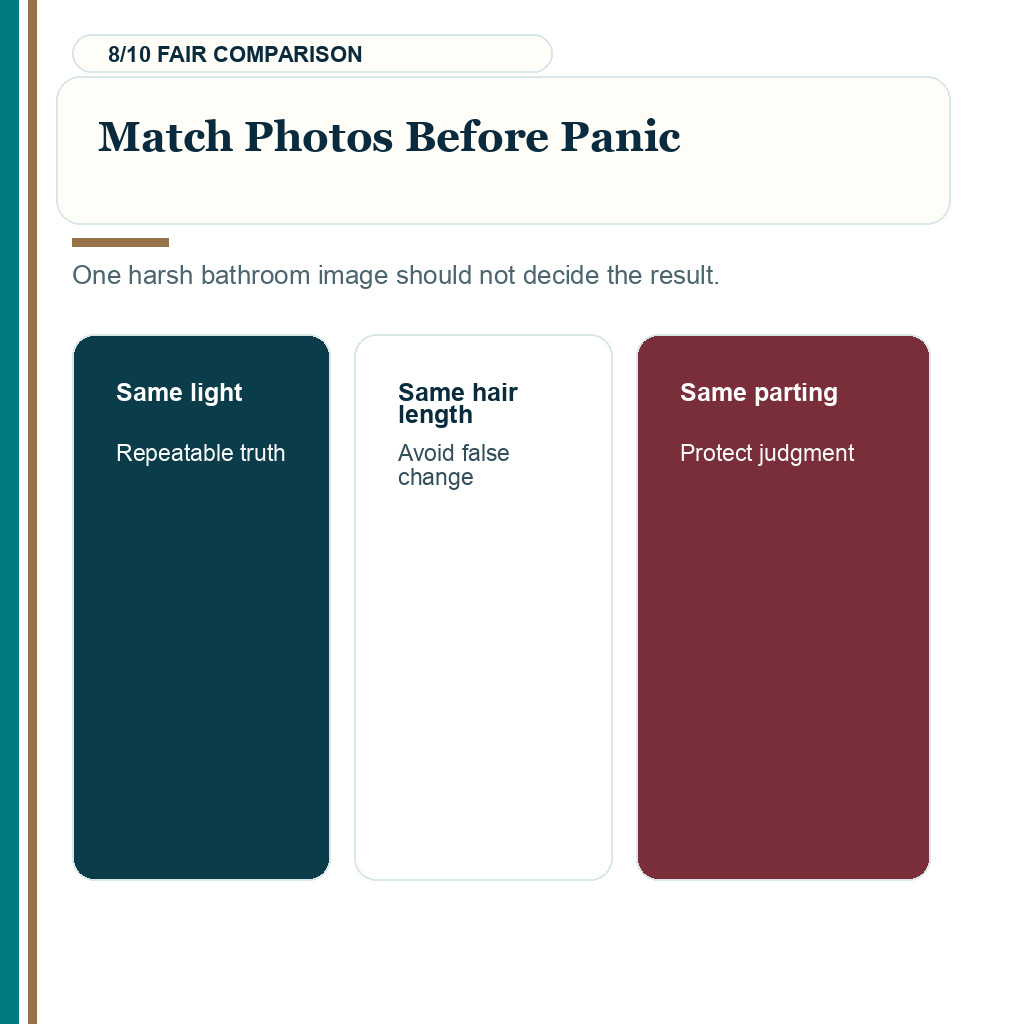
At month five, keep the comparison simple and repeatable. Same room, similar light, dry hair when possible, and the same haircut length show more than one dramatic phone photo taken when the result looks worst.
A one year FUE result review should not be judged by month five density alone. The useful question now is whether there is a trend to follow, whether the pattern fits the original plan, and whether anything needs earlier clinic review.
Month five growth signals
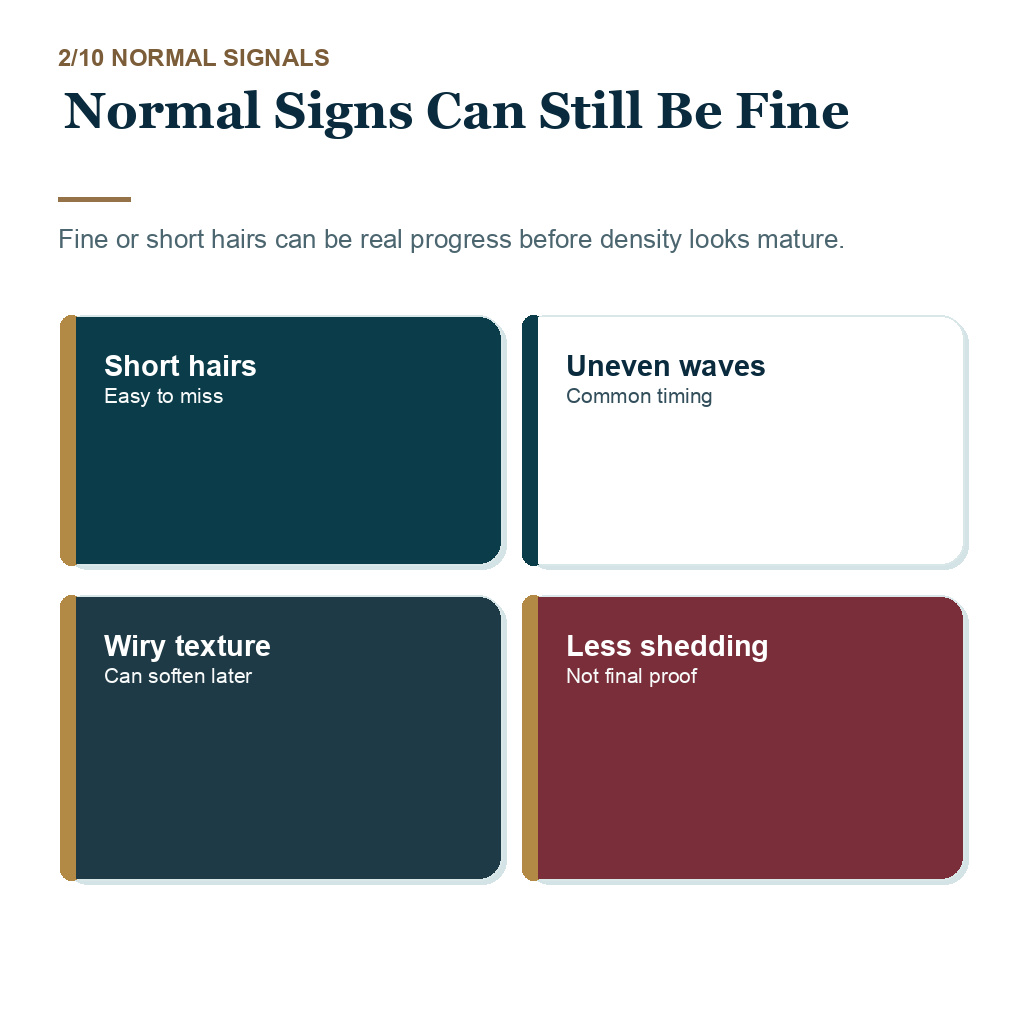
By month five, many people have moved beyond the worst shedding phase, but they have not reached mature density. The transplanted hairs that are visible may still be fine, pale, wiry, or uneven. Some grafts may be producing short hairs that are easy to miss unless the light, camera distance, and hair length are similar each time.
The hairline may show shape earlier than the mid scalp. The crown may still look weak because crown growth often matures slowly and the swirl exposes scalp more easily. If your comparison point is low density at month four, month five should be assessed as direction of change rather than final density.
Four practical signs matter most. More coverage than last month, new short hairs in the planned graft zones, a settled scalp without active inflammation, and stable native hair around the transplant all help the review. I also separate short hairs growing in the grafted zone from longer native hair simply covering the area. The location and trend of the new hairs matter more than one isolated close image.
Reasons month five can feel behind expectations
People are often told that growth begins around month three or four. That is broadly true, but it can create unrealistic pressure at month five. Beginning growth is not the same as visible cosmetic density. A hair shaft that has just emerged still needs time to lengthen, thicken, darken, and blend with nearby hair.
Hair also grows in mixed waves. One patch may begin early while another starts later. The same person may see stronger movement in the frontal line and much less in the crown. A harsh bathroom light, wet hair, or a close flash photo can make the result look thinner than it looks at ordinary social distance. If photos are taken under different conditions, harsh light and wet hair can turn an early checkpoint into unnecessary fear.
Biological growth and cosmetic density are not the same reading. Early hairs may be real but still too short or too fine to change the overall look. Month five is late enough for expectation to rise, but early enough for the result to remain immature. A useful review compares stable photos and examines the scalp before any repair conclusion.
Reassuring signs at month five
Reassuring signs include new short hairs in the transplanted zone, gradual thickening of hairs that were already visible, less redness, less itching, and better blending with native hair. The improvement does not need to be dramatic. Steady change matters more than one dramatic weekly jump. Those short hairs need context, so I separate them from retained shafts in fine new hairs after FUE.
Uneven but expanding growth can also be reassuring. For example, a hairline that looked sparse at month four may now have more visible points of growth, even if density still seems weak. The visual result may lag behind the biological progress. In a proper review, magnified photos often show small hairs that a mirror does not show. Those hairs matter more when they appear as a repeated pattern, not only as one point in one close photo.
It is also reassuring when the donor area has settled, the scalp is not inflamed, and there are no persistent pustules, crusts, drainage, painful areas, or spreading redness. Settled skin does not guarantee a great result, but it removes several problems that can interfere with growth or confuse the picture. A comfortable scalp with new short hairs is very different from a comfortable scalp with a completely silent zone.
Slow growth that needs review
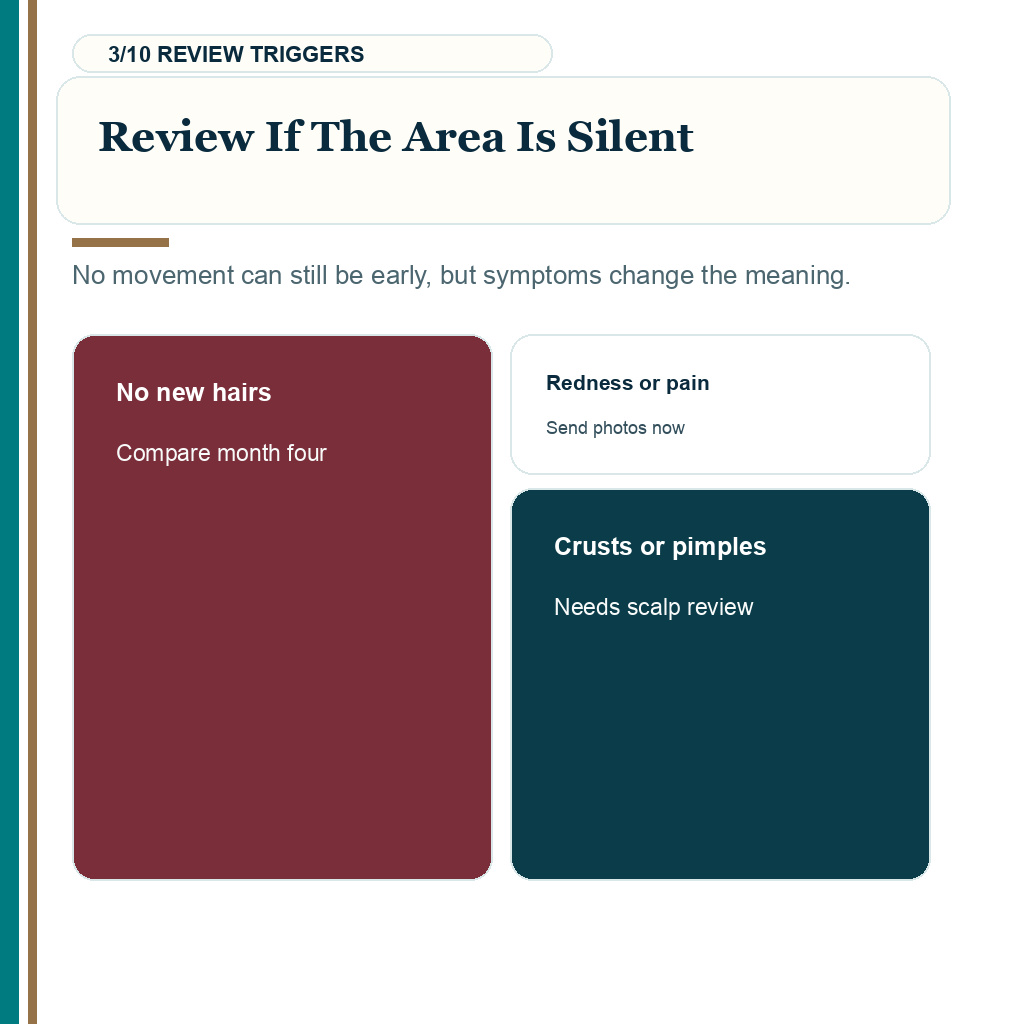
Slow growth deserves review when there is no visible movement at all compared with month four, when one zone stays completely empty while nearby zones are changing, or when the scalp has persistent redness, heat, pustules, crusting, pain, drainage, or abnormal tenderness. These details do not mean failure by themselves, but they deserve more than reassurance.
I also review more carefully when there was difficult early recovery, intense scratching, prolonged scabbing, repeated bleeding, infection concern, folliculitis, or clear trauma to the grafted area. The question is not only whether hairs are visible today. The question is whether the biological and surgical history fits a slow but moving result, or a result that may need closer follow up.
Before calling the outcome a failed hair transplant too early, I compare the timeline, operative plan, graft distribution, donor quality, skin condition, and standardized photos. I also ask whether the month four and month five images were taken with the same hair length, light, dryness, styling, and parting line. No improvement at all deserves structured review. Panic alone is not a diagnosis, but silence from the transplanted area should not be ignored.
Comparing month five with months four, six, seven, and ten
Month four is the early growth window for many people. It can still look thin, and the result is too immature for judgment. Month five should show some direction, but it is still not final cosmetic density. Month six should usually make the pattern easier to read, which is why the six month density check belongs to the next stage of review.
By month seven with a thin appearance, I expect a clearer pattern. Density may still improve after that, but the review becomes narrower. I need to know whether the result is simply maturing slowly, or whether design, graft survival, native hair loss, donor limitation, or scalp health is affecting the appearance.
The ten month result is a later and more useful checkpoint for cosmetic judgment, although some thickening may continue. Month five sits between early hope and later evidence. It is useful for organizing information, confirming whether movement exists, and deciding whether earlier review is needed. It is not a useful time to declare repair.
Crown, temples, or one side may grow more slowly
Different areas can mature differently. The crown hair transplant area often looks slower because the natural whorl spreads the hair in several directions and overhead light reaches the scalp more easily. Before I decide that the crown is truly lagging, I need the same camera angle, dry hair, and similar hair length.
Temples can also look delayed because the hairs are finer, the angles are more delicate, and small gaps are visible. One side may lag because shedding, vascular recovery, sleep position, skin tension, or local inflammation was different. Mild asymmetry at month five does not settle the final result.
The concern becomes stronger when one side has no new hairs, no short stubble, no change in comparable photos, and no explanation from early recovery. That is when the review should move from general reassurance to direct comparison with the graft plan, the placement map, and any local event such as scratching, bleeding, pressure, or inflammation in that zone.
Shedding still possible at month five
Some shedding can still happen at month five, especially in native hair around the transplant or after medication changes. Transplanted hairs may also cycle unevenly. The mistake is assuming that every shed hair is a lost graft. A hair shaft can shed while the follicle remains alive under the skin. The timing matters because a medication change, illness, stress episode, or native hair cycle can shift the appearance without proving graft failure.
If the same concern continues into month six, seven, or eight, I separate month 6 to 8 shedding after FUE from slow maturation, medication shedding, and native hair changes. The more important distinction is transplanted hair versus native hair. If surrounding native hair thins while transplanted hairs are starting to grow, the whole area may look weaker than expected. Native hair shock loss can make a transplant look less successful during recovery, even when grafts are beginning to work.
Medication can add another layer. Starting or restarting minoxidil may cause temporary shedding, and a minoxidil shed during transplant recovery can confuse the month five picture. Finasteride before and after a transplant may protect native hair in selected patients, while stopping finasteride after surgery can expose ongoing loss in some people. Tell the clinic the dates of any start, stop, restart, dose change, side effect, or shedding episode before the growth review is judged.
Photos that make a month five review useful

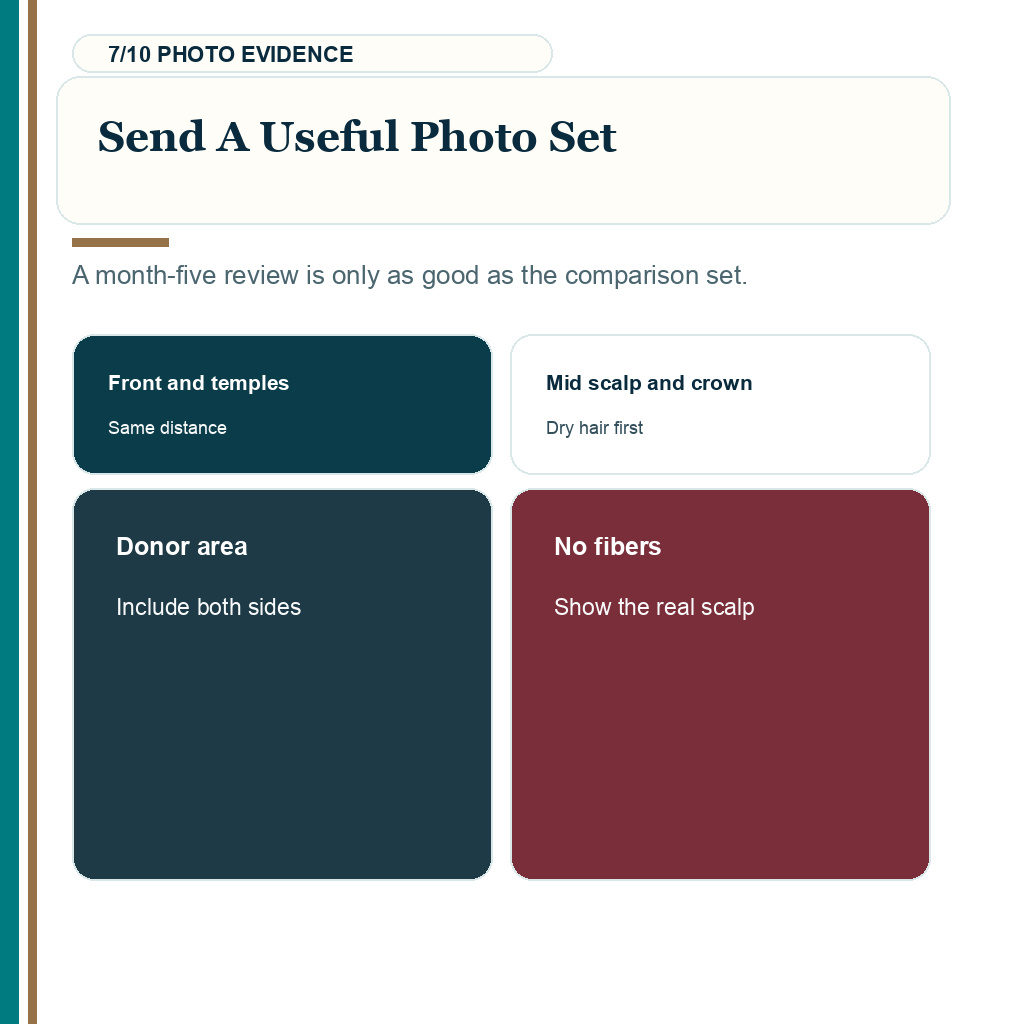
The best month five review uses a structured photo routine. Send front, both temples, mid scalp, crown, donor area, and any zone that worries you. Use the same room, similar distance, dry hair, no hair fibers, no concealer, no heavy styling product, no flash if possible, and natural or steady light. Keep the hair length, parting line, and wash timing similar. If you had a haircut, say so.
Comb through videos can be more useful than still photos because they show how hair behaves when lifted, parted, and moved. A short hair transplant comb through video can reveal whether density is weak everywhere or whether the issue is a lighting angle, parting line, or crown swirl. Move the hair slowly. Fast combing hides the short hairs we are trying to judge.
A month five review needs more than your worst photo. It also needs more than your best photo. A clinic needs the range. Repeated, comparable photos protect you from both false panic and false confidence. At month five, the useful decision is whether to keep tracking, request review, or wait before any repair planning.
Keep a normal light photo set alongside the harsh light set. Harsh light can show gaps, but normal distance shows whether the concern appears in daily life.
Around months 4 to 6, I label harsh light images as stress tests rather than daily life verdicts. They can show where the mid scalp opens under pressure, but the next decision still depends on a matched series, the graft map, native hair behavior, and whether the same area is changing.
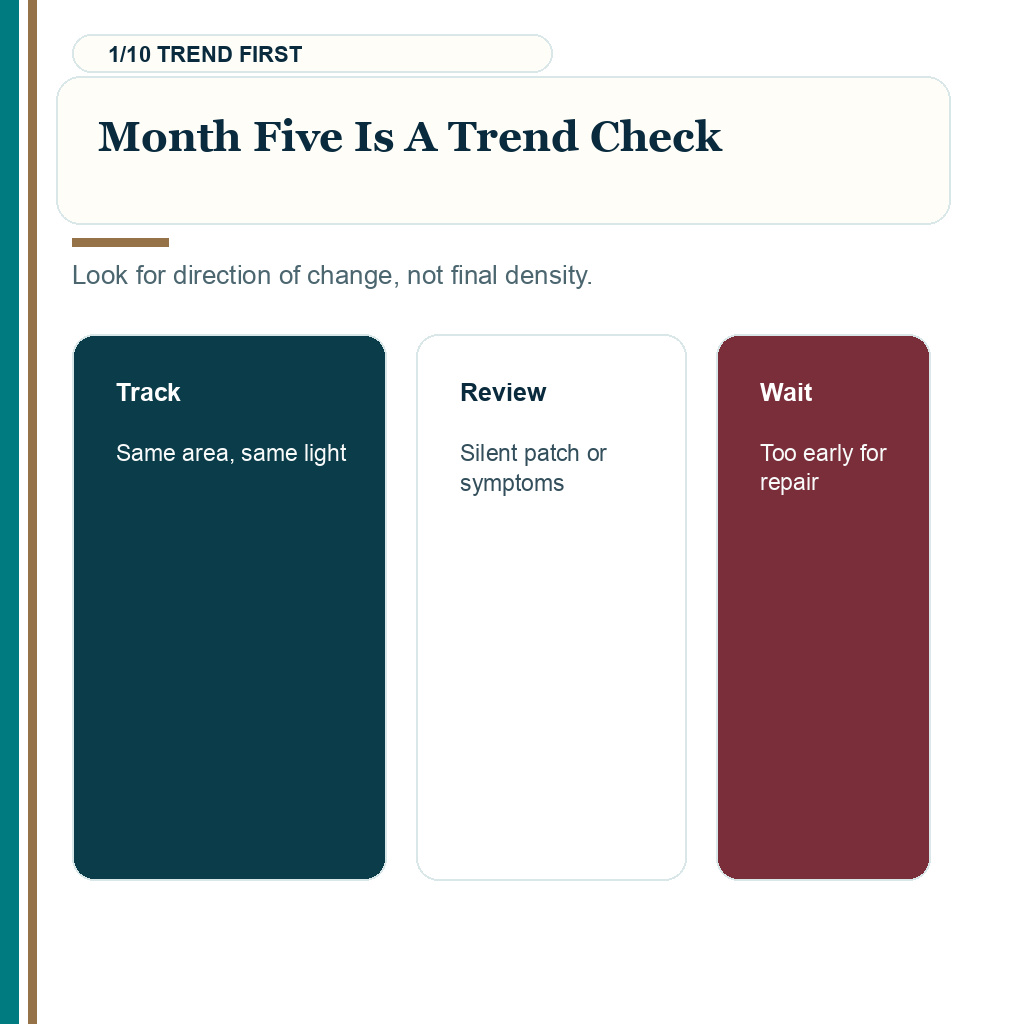
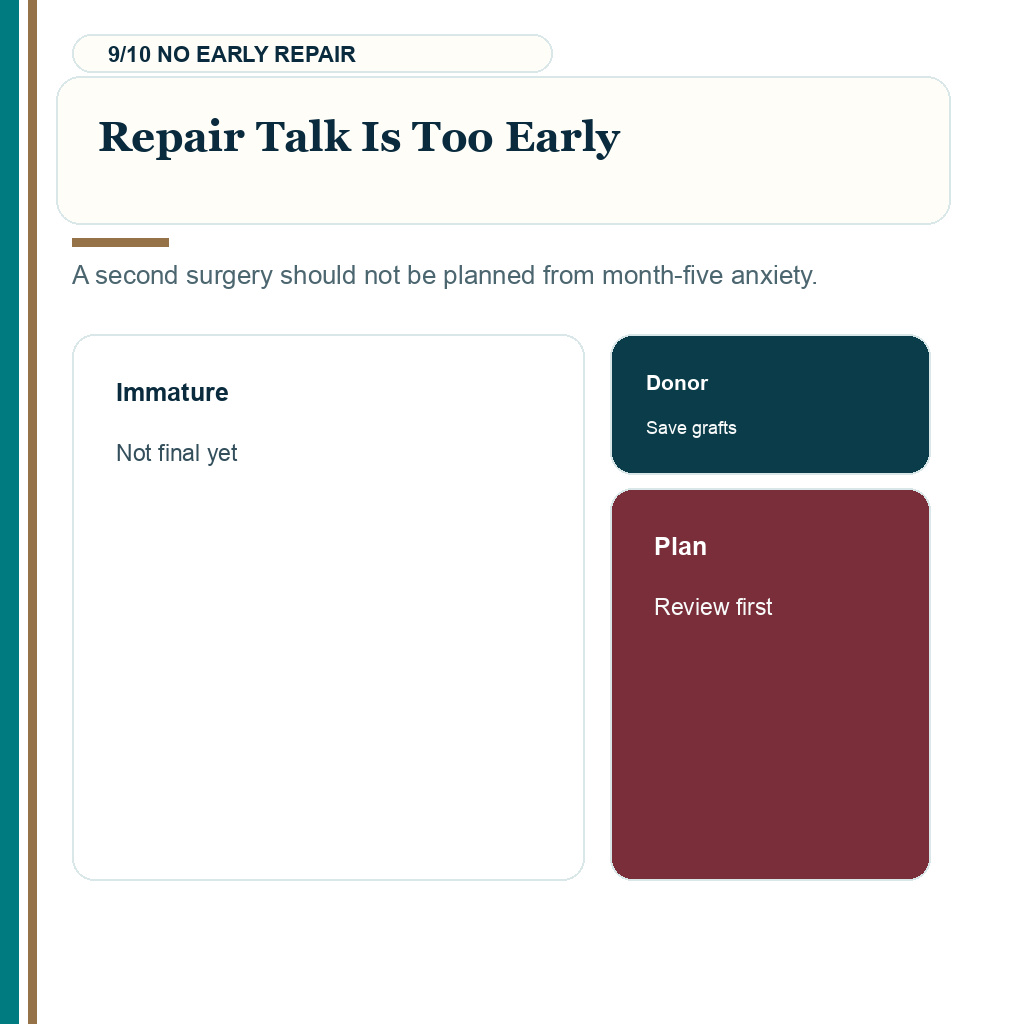
Use these 10 month five growth review slides to separate normal immature growth from a silent area, symptoms that need review, photo evidence, crown or temple delay, medication context, and why repair planning is usually too early. Swipe sideways, use the arrows one slide at a time, or choose a number below the image.



Medication, native hair changes, and the result
A transplant does not freeze the rest of the scalp. If native hair keeps miniaturizing behind or around the transplanted zone, the result may look thinner even while transplanted hair is growing. Month five density should be read with the original hair loss pattern, age, donor capacity, medication history, and family history. I separate new graft growth from background miniaturization before I decide whether the transplant itself is slow.
Medication is not a cosmetic shortcut, and it is not suitable for everyone, but it can change the background against which a transplant is judged. If native hair is unstable, the clinic should separate graft growth from continuing hair loss. Otherwise, thinning from untreated progression may be blamed on the transplant.
Compare your result with people who started from a similar pattern, not with random online photos. Hair transplant results from hair like yours are more useful than comparing yourself with a different age, graft count, hair caliber, color contrast, or donor strength.
One bad photo should not decide the result
Do not change treatment, stop or start medication, shave the area aggressively, plan repair, or call the result a failure because of one bad photo. A close flash image with wet hair can exaggerate every gap. A short haircut can reveal areas that looked better when the hair was longer. A different angle can make the crown look empty.
Also avoid checking too often. Daily inspection often makes recovery feel slower because hair growth is measured in millimeters, not emotions. Weekly or monthly comparisons are more useful. If the scalp is settled and there is movement, the best decision may be to keep documenting the trend. Repeated rubbing, aggressive parting, picking, or extra washing can create a new problem while trying to prove growth.
A genuine warning sign should not be hidden from your clinic. Send clear photos and describe symptoms, timeline, medication changes, shedding changes, and whether the concern is improving, unchanged, or worsening. Do not ignore a silent area, but do not turn one harsh image into a final judgment.
Repair and extra graft talk is too early
Repair planning at month five is premature in most cases. Hair may still thicken for many months, and the true density pattern is not stable enough for a responsible graft plan. Discussing concern is reasonable. Committing to repair is different. The exception is not low density alone. It is a medical concern such as persistent inflammation, infection signs, scarring change, or a completely silent zone that needs earlier review.
A hair transplant touch up or second hair transplant enters the discussion only after there is enough evidence. That includes mature photos, donor evaluation, original graft numbers, hairline design, current miniaturization, scalp health, and the reason the first result looks weak. Without that diagnosis, extra grafts can spend donor hair without solving the real cause.
Early repair thinking can waste donor hair. If the first result is still maturing, extra grafts may be unnecessary. If the issue is poor design, progressive native hair loss, or donor limitation, adding grafts without diagnosis can make the next plan worse. Do not rush into repair planning at month five.
Month five is a comparison checkpoint
At month five, the question is movement. New short hairs, length change between matched photos, calmer skin, and early softening of the transplanted area are more useful than one harsh light image.
Fine hair, crown work, broad coverage, high contrast, illness, medication changes, and native hair shedding can all slow the visual payoff. The original graft plan gives the photo its context.
If one area stays silent, the scalp is irritated, or comparable photos show no progress, review it earlier. If the pattern is improving, keep the follow-up structured and avoid turning month five into a rushed repair decision.

Read this review excerpt
Every single one of my questions was answered and they made sure I had all the details I needed to make an informed decision.