


Should a Hair Transplant Look Natural in Harsh Light, Wind, and Wet Hair?
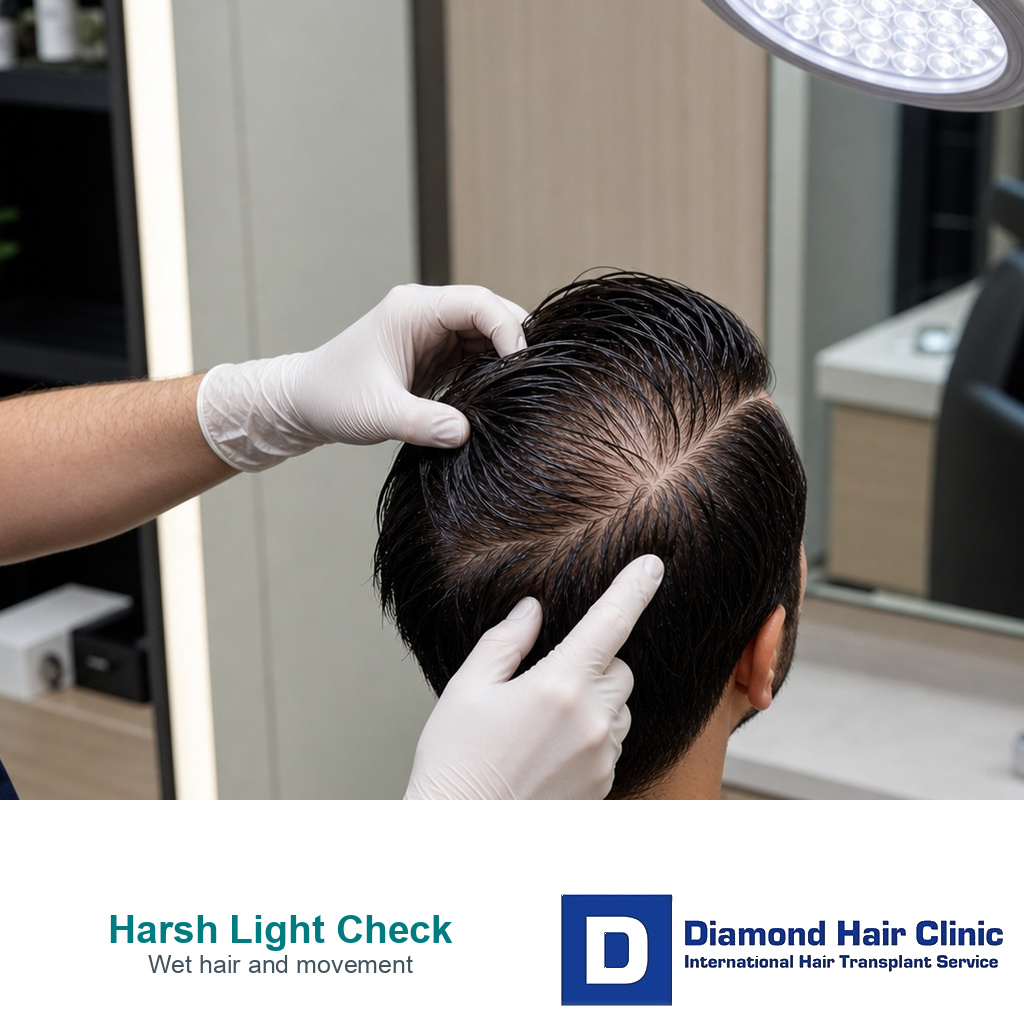
A well planned hair transplant should still look natural in normal daily life, including daylight, office light, movement, and quick styling. But no hair transplant should be promised as if it will recreate teenage density in every harsh condition. Wet hair, direct overhead light, wind, and close phone photos can all make the scalp look more visible.
The important distinction is whether the result only looks lighter in harsh conditions, or whether it looks thin, artificial, lined up, or poorly planned in ordinary conditions too. A mature transplant should not need perfect lighting to look acceptable, but it also should not be judged only by the most unforgiving photo you can create. Keep one dry daily photo beside the harsh light photo, so the stress test does not become the only record.
Crown areas are among the hardest places to judge under this kind of stress. Overhead light enters the whorl, and wet hair separates instead of overlapping. A crown that looks acceptable dry can show more scalp after swimming or a shower. That is a visibility condition, not a full result judgment by itself.
Many patients test their result in ways they never used to test their native hair. They wet the hair, stand under a bathroom light, pull the hair apart, take close photos, then compare that image with polished clinic results. That comparison can create anxiety even when the transplant is developing normally.
Transplanted hair can look different when the light changes
Strong light exposes the spacing between hairs. This happens with native hair too, but a transplanted area has already lost original density, so the contrast can feel more obvious.
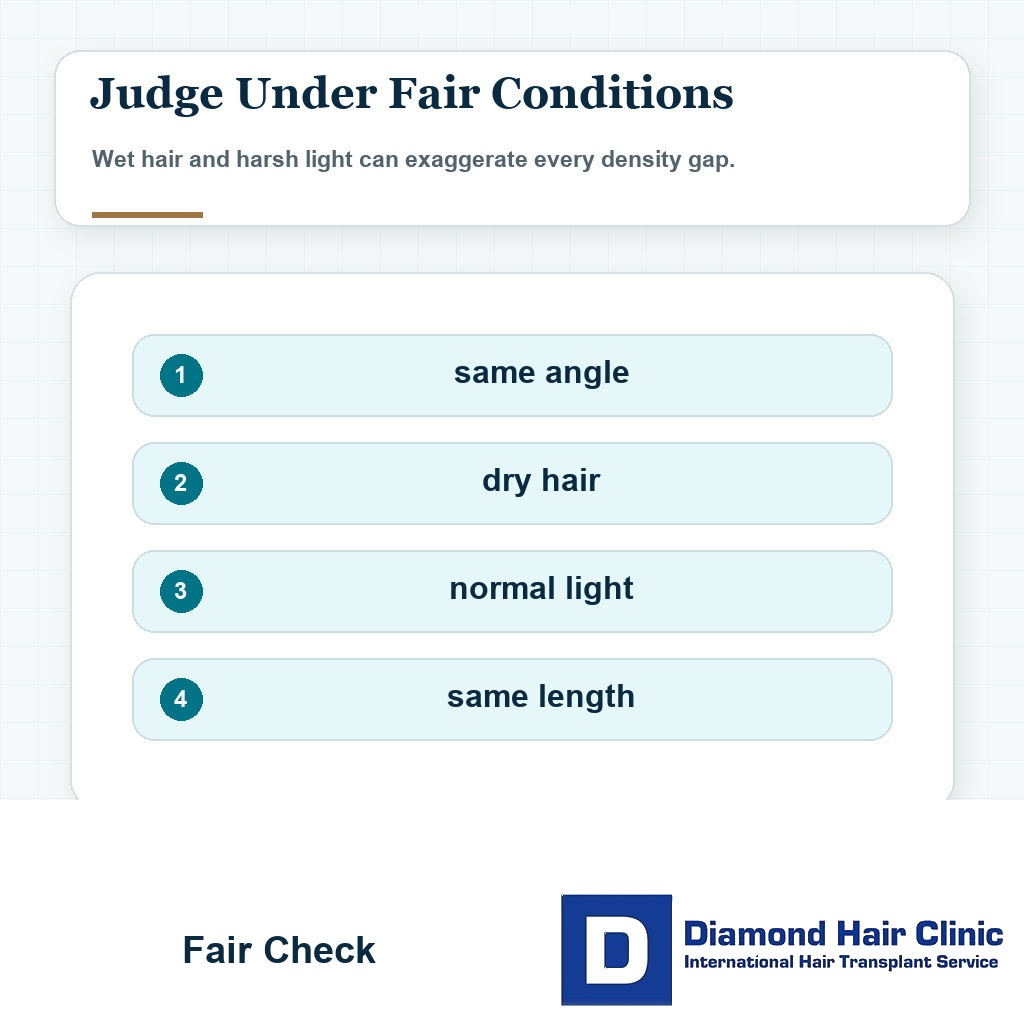
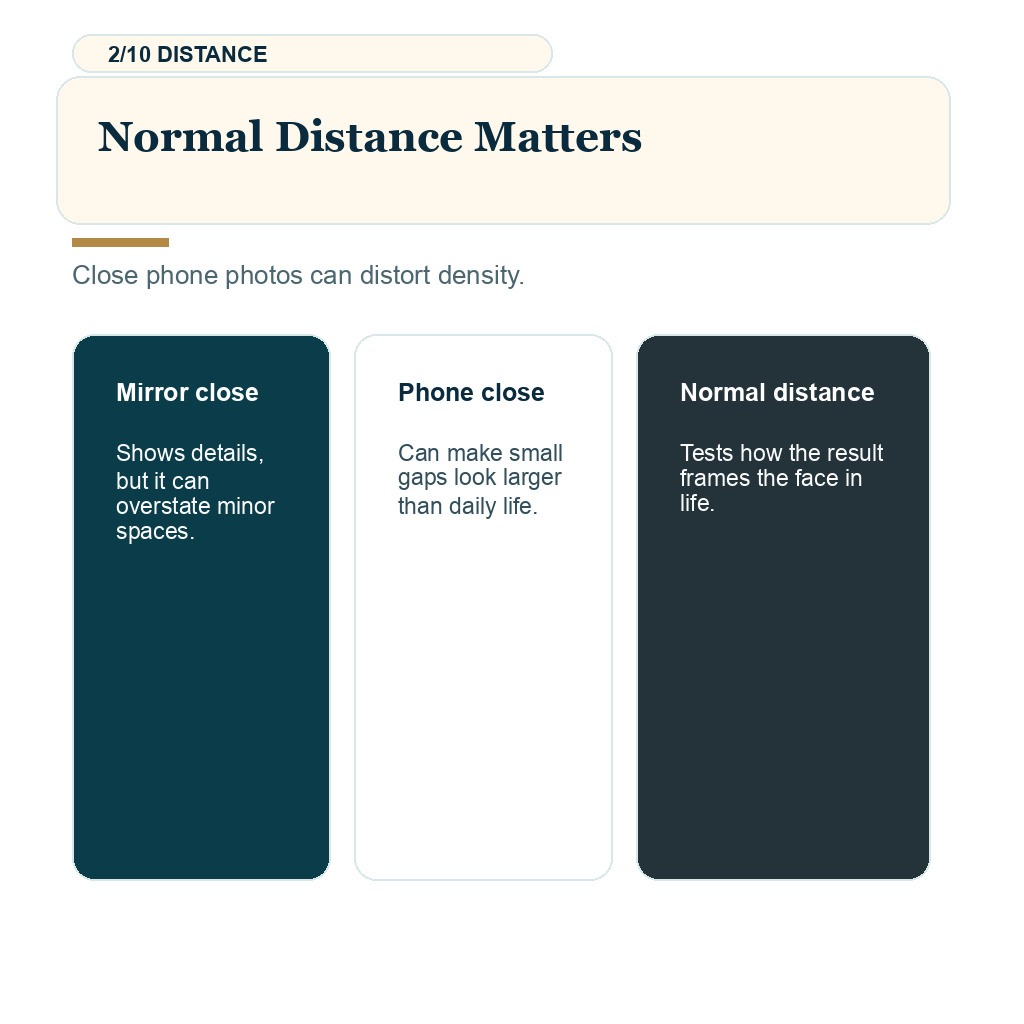
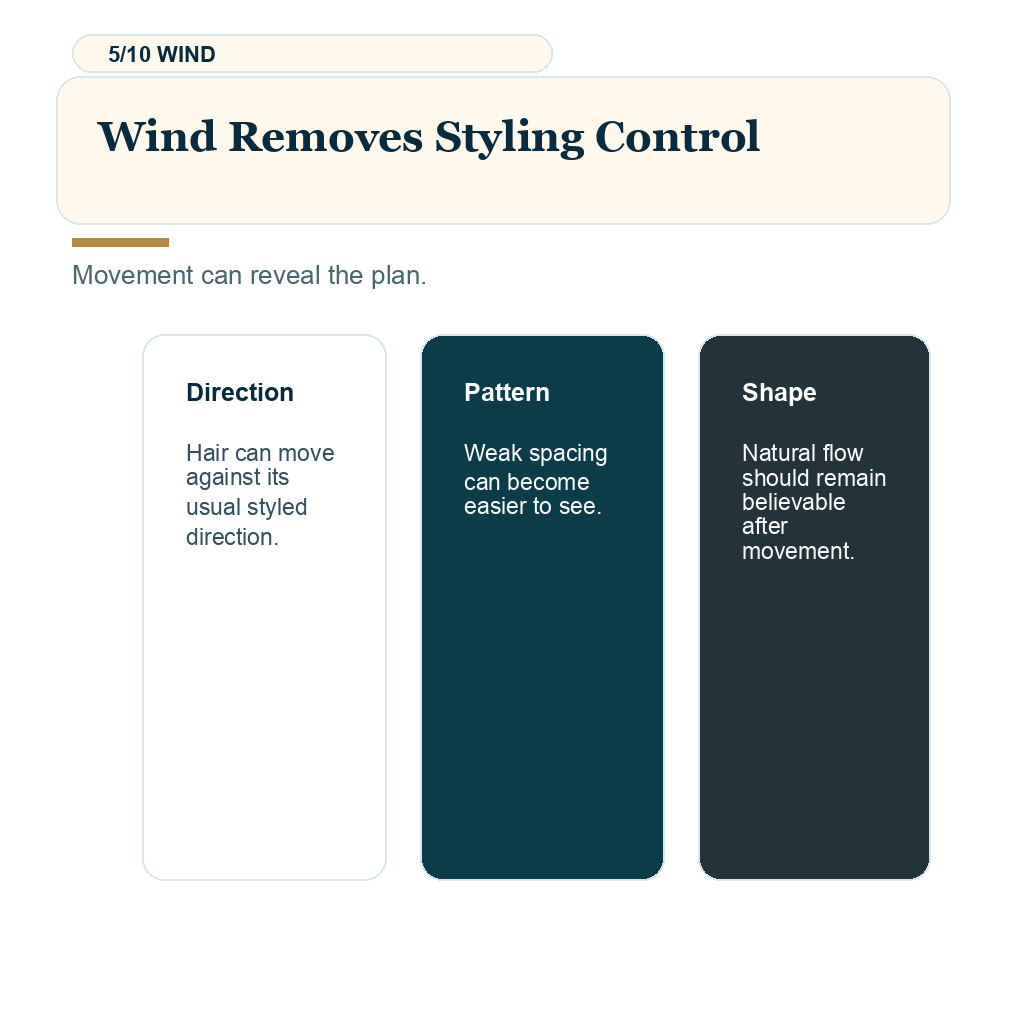
When light comes from above or behind, the scalp reflects more clearly. When the hair is wet, strands group together and leave wider spaces. When wind moves hair against its usual direction, it can reveal areas that normally look fuller when styled. The fairest comparison keeps length, dryness, distance, and light direction as similar as possible.
Sweat adds another distortion because it makes hairs group together and reflect light from the scalp. If the same area looks acceptable when the hair is clean, dry, and viewed from a normal distance, a sweaty photo under harsh light belongs in the comparison, not as the whole result.
That alone does not mean the transplant is weak. Hair is not a solid sheet. Coverage depends on hair shaft thickness, curl, color contrast, recipient area size, and how the grafts were distributed. Those details explain why some hair transplant results look thin even when the graft count sounds reasonable. The color part of that review is covered in blonde and red hair transplant planning, because light and copper tones can change what looks full under unforgiving light.
Before surgery, I look at these details carefully. A patient with thick, slightly wavy hair and low scalp contrast can often create more visual coverage than a patient with fine, straight, dark hair on light skin, even with a similar graft number.
Hair length and styling affect scalp visibility
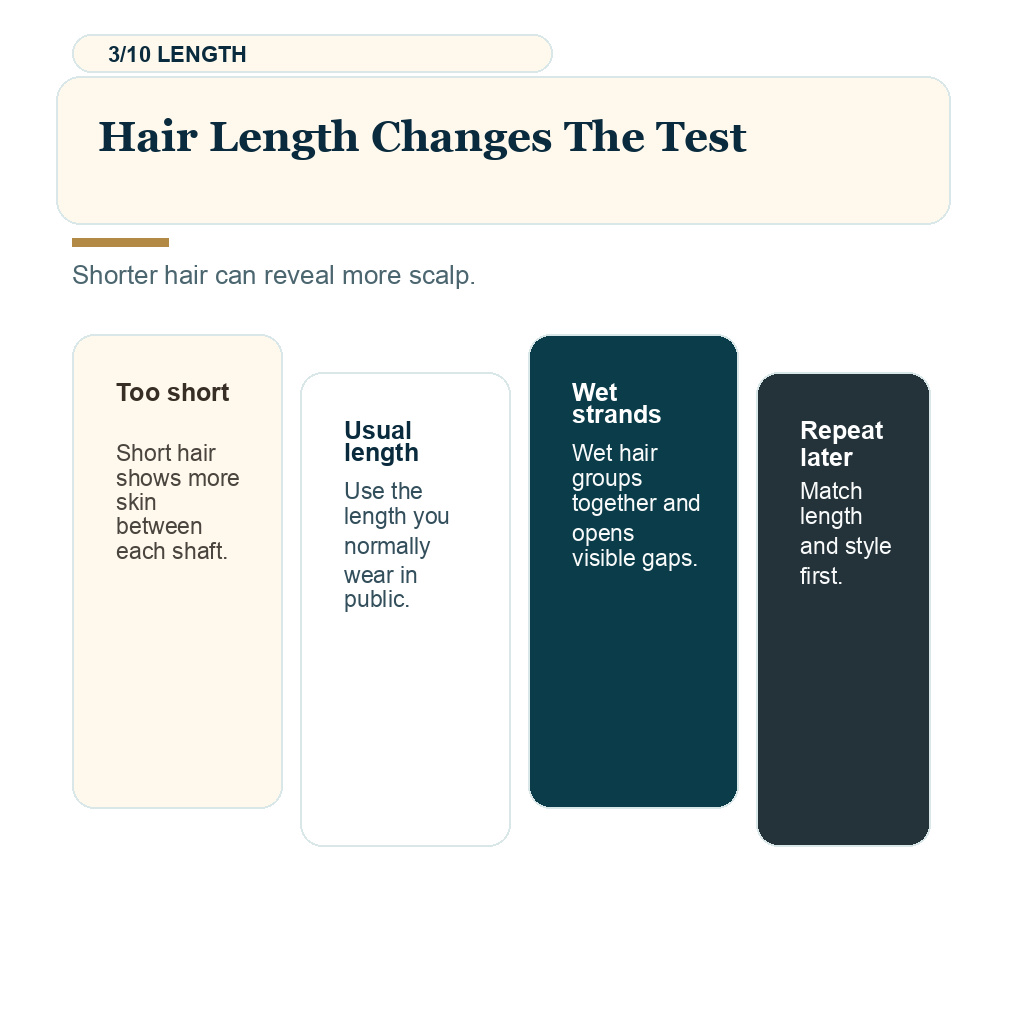
Hair length and styling can change the result more than patients expect. Very short hair gives less overlap. Wet hair separates into groups. Flat hair exposes more scalp than textured hair. A sharp part line can make one area look weaker than it looks in daily movement.
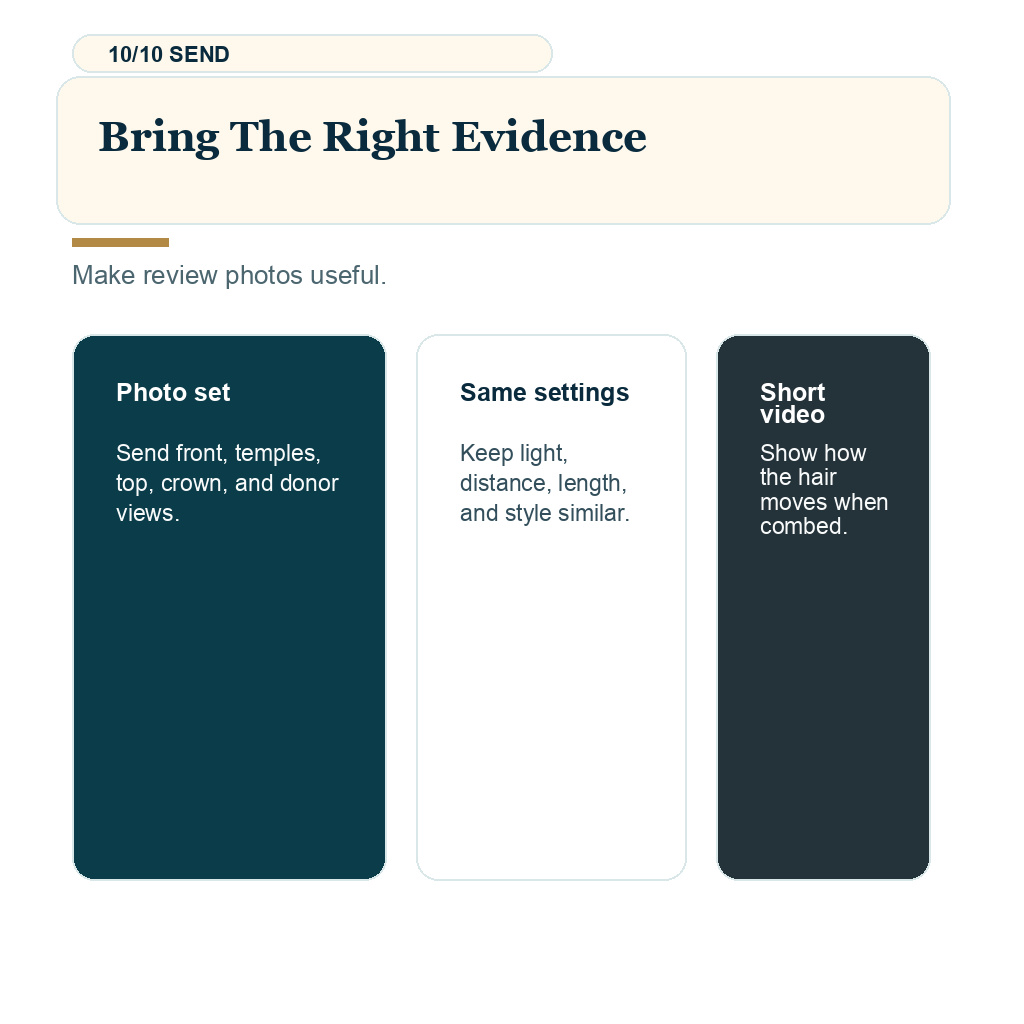
A result should not be judged from one bathroom light photo. The same scalp can look different with a different haircut, hair direction, styling habit, light source, and distance from the camera. Comb through videos can help only when the hair is shown fairly, not only under the most flattering or most punishing condition.
Styling can make a good result look fuller, but it should not be the only thing holding the result together. If the transplant looks natural only when every hair is arranged perfectly, the original plan may have been too weak, too broad, or too dependent on a favorable photo.
Scalp visibility in bright light does not always mean failure
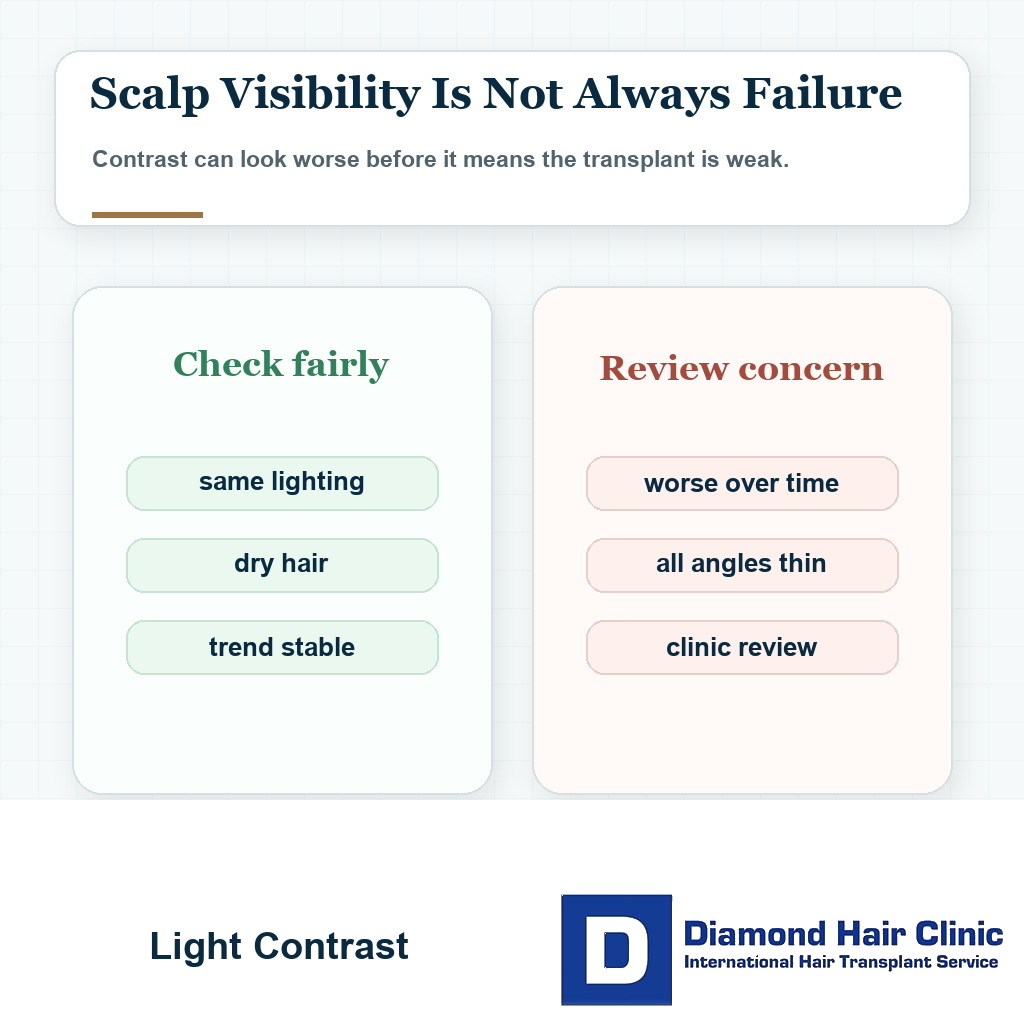
No. Some scalp visibility in bright light, wet hair, or close inspection does not by itself mean failure. I look at whether the hair frames the face naturally in normal daily situations.
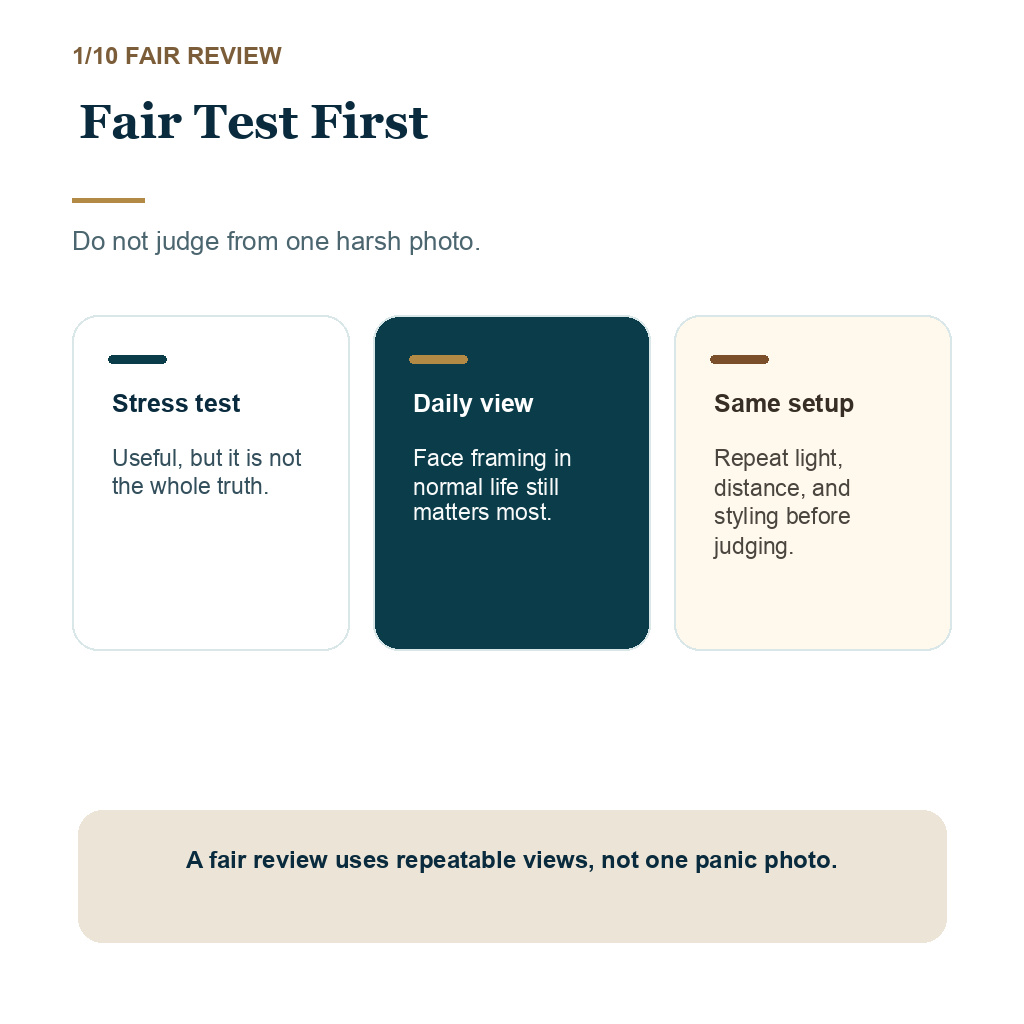
A fair review uses several conditions. Look at the hair dry and wet, styled and unstyled, indoors and outdoors, close up and from normal conversational distance. One harsh photo should not decide the entire result. Use the harsh light photo as one stress test, then add a normal distance dry photo so the review includes both the worst view and daily view. For a fair comparison, keep the area, light, camera distance, and hair condition as consistent as possible between photos.
Product, oil, wetness, and a close part can all make the scalp look more exposed. I want one ordinary dry hairstyle view from the same day before treating a stress photo as the main result.
Around the fourth to sixth month, that split protects the review from false panic. Direct light may expose a thin looking mid scalp, while the ordinary distance view keeps the same concern grounded in daily life instead of only a harsh condition.
The concern becomes stronger when the hair looks transparent in ordinary light, when the hairline looks hard or lined up, when thick grafts are visible at the front, or when the result fails to frame the face after full maturation.
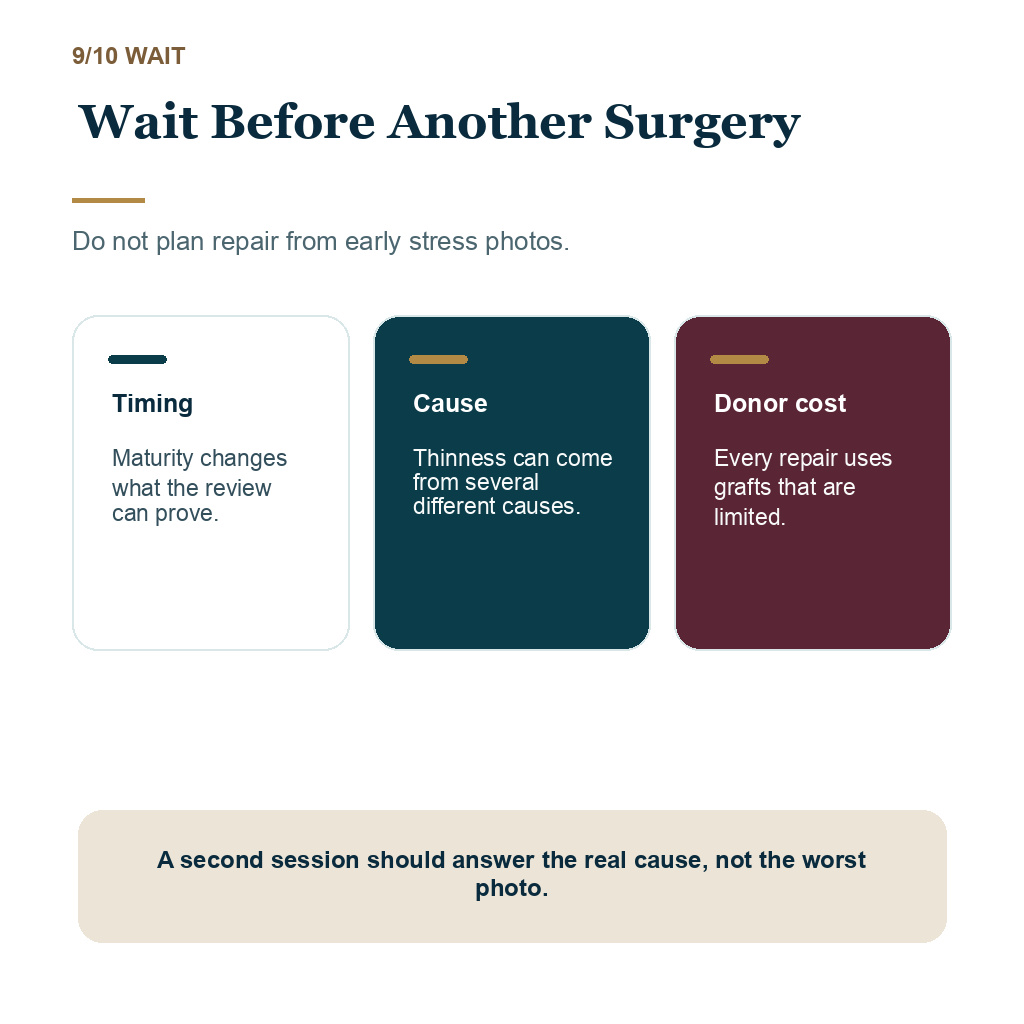
Timing matters as well. At month 4, month 5, or month 6, the hair may still be immature, uneven, or wiry. A six month density check is useful, but it is still not the same as judging a mature result.
Real life durability depends on planning details
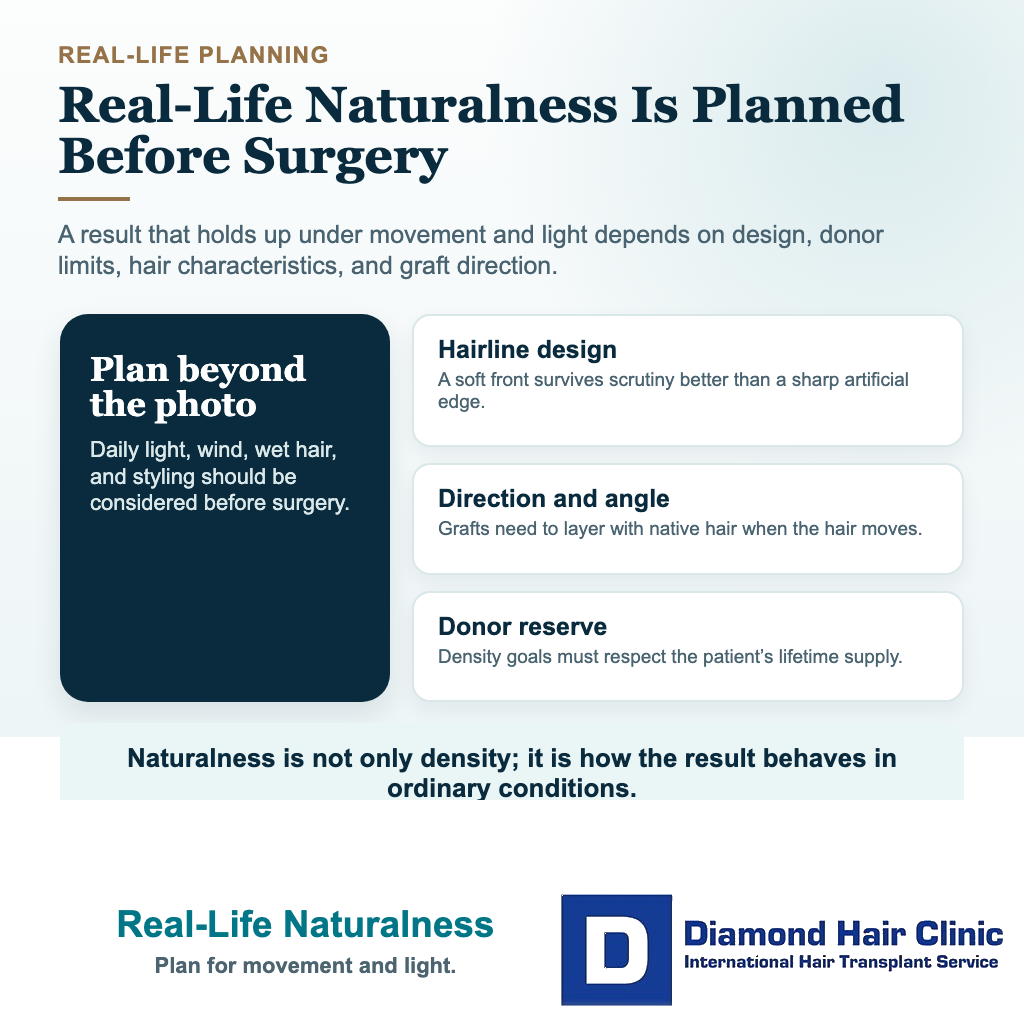
The result that holds up best in real life is not the one with the most aggressive promise. It is the one with the best planning.
Planning starts with candidacy, donor strength, hair caliber, scalp contrast, future hair loss, and the size of the recipient area. The donor area is a limited resource, so it should not be spent only to create one impressive photograph.
Hairline design also matters. A low, straight front that seems dense in one angle can look unnatural when the hair moves. A softer transition, correct direction, and irregular distribution usually age better in real conditions.
Direction and angle are not small technical details. If grafts are placed in the wrong direction, the hair may not layer properly. If the frontal zone lacks softness, the eye can notice the transplant even when density is acceptable.
At the front, I want softer grafts with one hair, irregular spacing, and a gradual transition. Behind the first line, stronger grafts can create more body, but they still need natural direction and careful distribution.
Wind, wet hair, and fibers reveal different weaknesses
A result that looks good only in dry, styled photos may still disappoint the patient in ordinary life. Wet hair, wind, strong light, and hair fibers each test a different part of the plan. They show whether the hairline transition is soft, whether the density target was realistic, and whether the donor was spent in the right zone. I do not promise that a transplant removes every need for styling help. I plan so the result remains believable when styling is less controlled.
Wind or wet hair can expose a weak plan
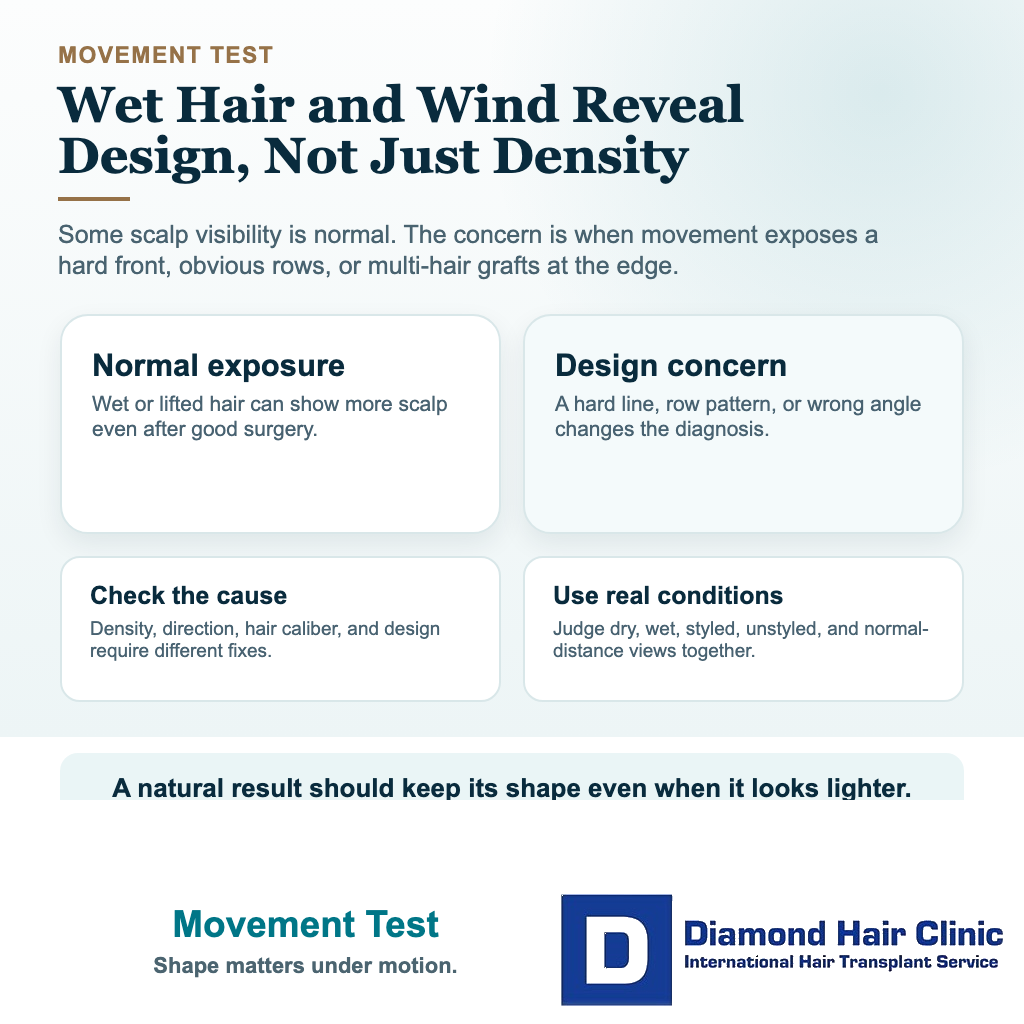
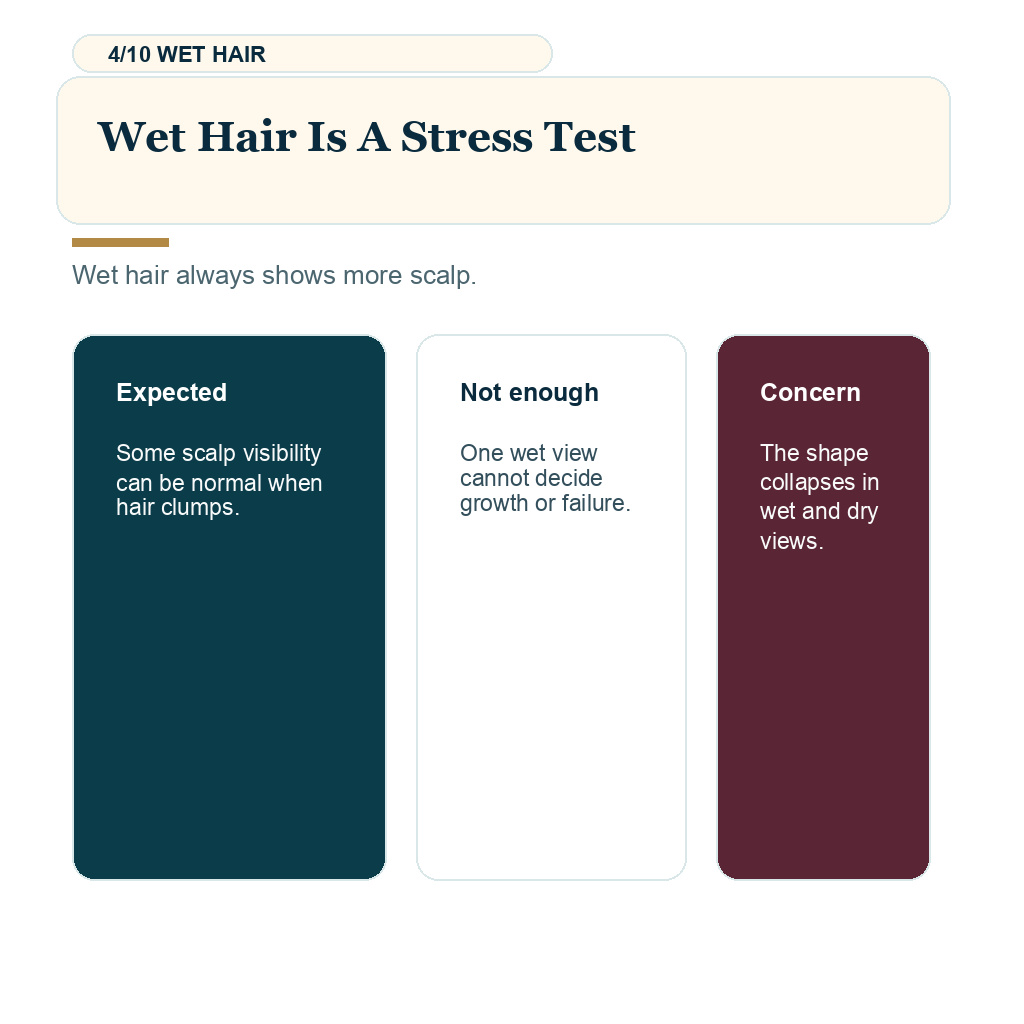
Yes, wind and wet hair can expose weaknesses that styled photos hide. Dry hair styled forward can create an impression of density. Wet hair clumps. Wind lifts the hair and removes some control. In those moments, poor distribution, weak angles, low density, or unnatural hairline work can become easier to see.
There is still nuance. A transplant can look slightly lighter when wet and still be a good result. Wet hair always shows more scalp because the strands stick together.
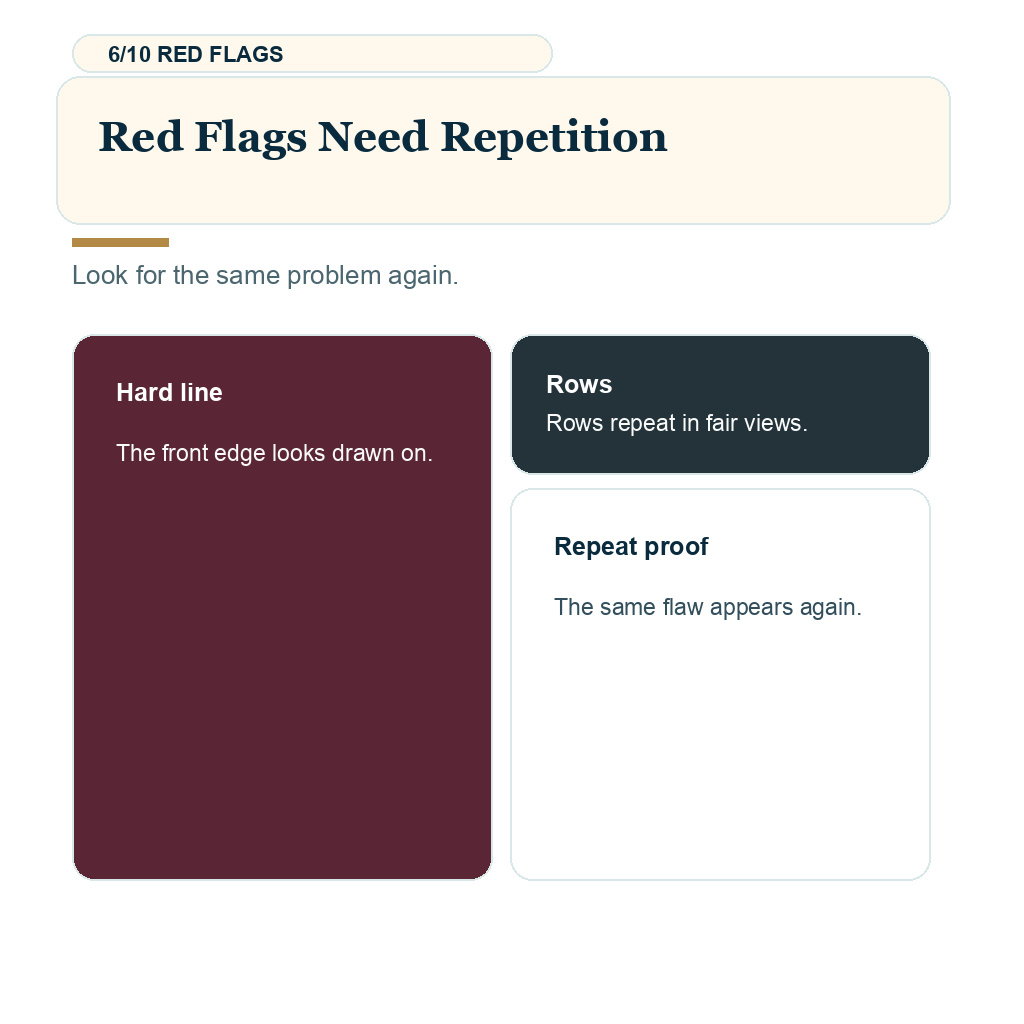
The red flag is a result that loses its natural shape completely when the hair moves. If the hairline suddenly looks like a hard line, if obvious rows appear, or if the front shows thick grafts, the issue is not only wet hair. The issue is design and execution.
At Diamond Hair Clinic, Dr. Mehmet Demircioglu creates the recipient area incisions himself with a sapphire blade. The tool supports precision, but the judgment behind angle, direction, density distribution, and donor use is what protects naturalness.
Hair fibers may still be useful after a hair transplant
Some patients stop using fibers after a mature hair transplant. Some still use a small amount for special situations, especially under strong light or when they want extra cosmetic fullness. Both situations can be normal.
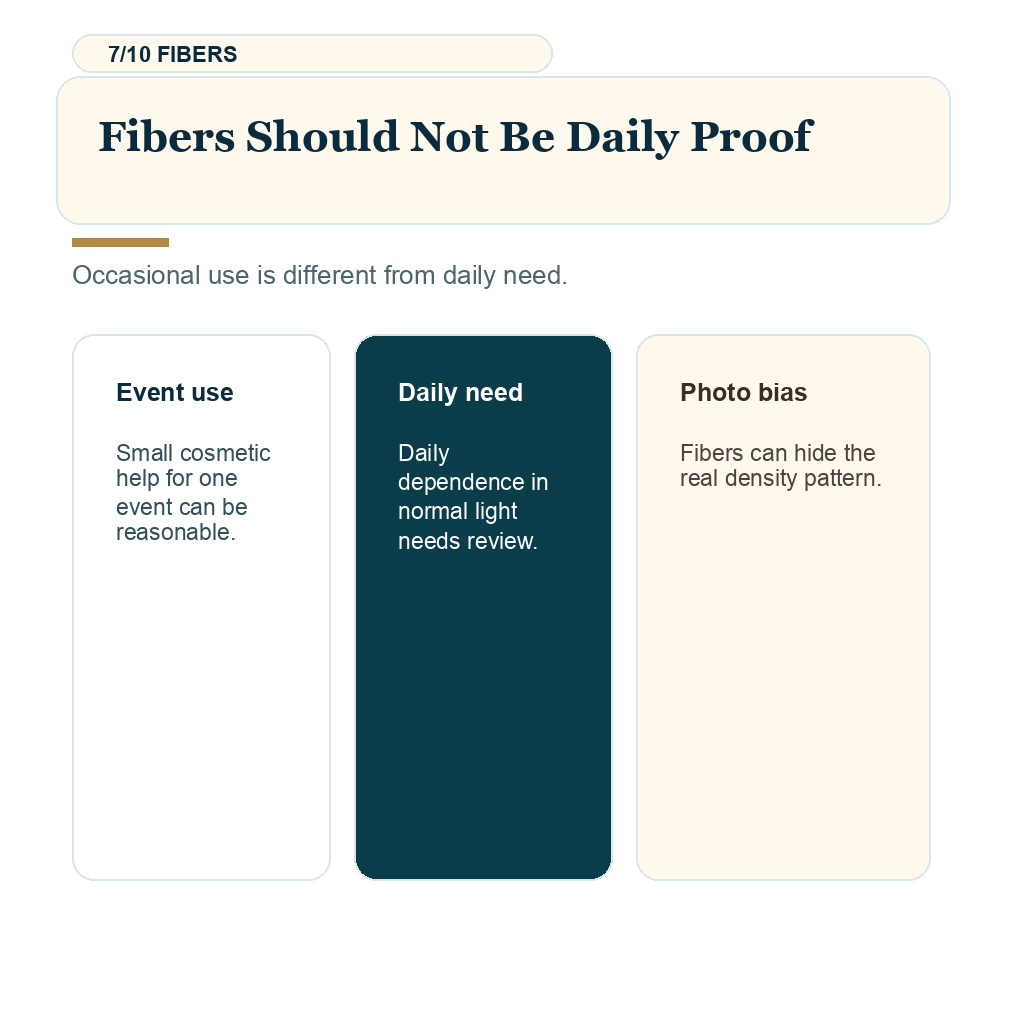
Daily dependence is different from occasional cosmetic help. A small amount of fiber for a photograph, event, or harsh lighting does not prove failure. Needing fibers every day because the transplanted area looks weak in normal light deserves a closer review.
If the patient had advanced hair loss, fine hair, strong scalp contrast, or limited donor supply, a little fiber may improve the cosmetic impression. That can mean the surgery created the best responsible foundation possible while the patient still wants extra styling support.
If the patient cannot leave the house without fibers because the transplanted area looks poor in ordinary conditions, then I want to examine growth, distribution, native hair loss, hairline design, and the promises made before surgery. The decision is different from simply asking when hair fibers can be used after a hair transplant.
Clinic photos can create the wrong expectation
Clinic photos can educate, but they can also mislead when they show only the most flattering version of the result. Dry hair, careful styling, soft light, and a controlled camera angle can make density look stronger than it appears in daily life.
Good documentation shows more than a polished frontal view. Different angles, donor area visibility, harsh light, movement, and result photo context help patients understand what the result really does.
High graft numbers can also create the wrong expectation. A clinic may use a large number to make the result sound dense everywhere, but the donor area has limits. A large number without donor planning can still create a thin or unnatural result.
The difference between a surgeon-led clinic and a high volume model becomes clear here. A result that remains natural for years is more valuable than a dramatic photograph that spends donor reserve too quickly.
Expected thinness and red flags need separation
Thinness can be an expected limitation when the donor area is limited, the balding area is wide, the hair shafts are fine, or the result is being judged wet or under very bright light. The transplant may still be successful if it improves facial framing, looks natural, and preserves future options.
Thinness is more concerning when the mature result looks weak in normal light, when the density is patchy without a clear reason, when the hairline looks artificial, or when the donor area has been overused without producing a strong recipient result.
Be skeptical of a clinic promising full original density across a large balding area in one session. That kind of promise often ignores biology. It may also hide too many grafts used without a safe plan.
Do not judge the result only by how many grafts were moved. Judge how intelligently the donor was used, how natural the front looks, how stable the plan is, and how the hair behaves in real life.
Use the 10 real life result check slides below to separate harsh light, wet hair, wind, hair length, normal distance, fibers, clinic photo bias, repeated red flags, waiting before another surgery, and what evidence to send for review. Swipe the carousel, use the arrows one step at a time, or choose a number below the image to jump to that point.

Judge thinness in the light where you live
Wet hair, wind, and harsh light can expose a transplant more than clinic photos do. That does not always mean failure, especially while growth is still immature.
Review the result after it has had time to mature, and compare dry, wet, indoor, outdoor, close, and normal distance views. The reason for thinness may be low growth, weak design, native hair loss, lighting, or expectation.
A natural result is not one that hides scalp in every condition. It is one that looks normal enough that daily life stops being arranged around the transplant.
Read this review excerpt
We also had a levelled conversation about my hairline and results I could expect based on my donor density area.