


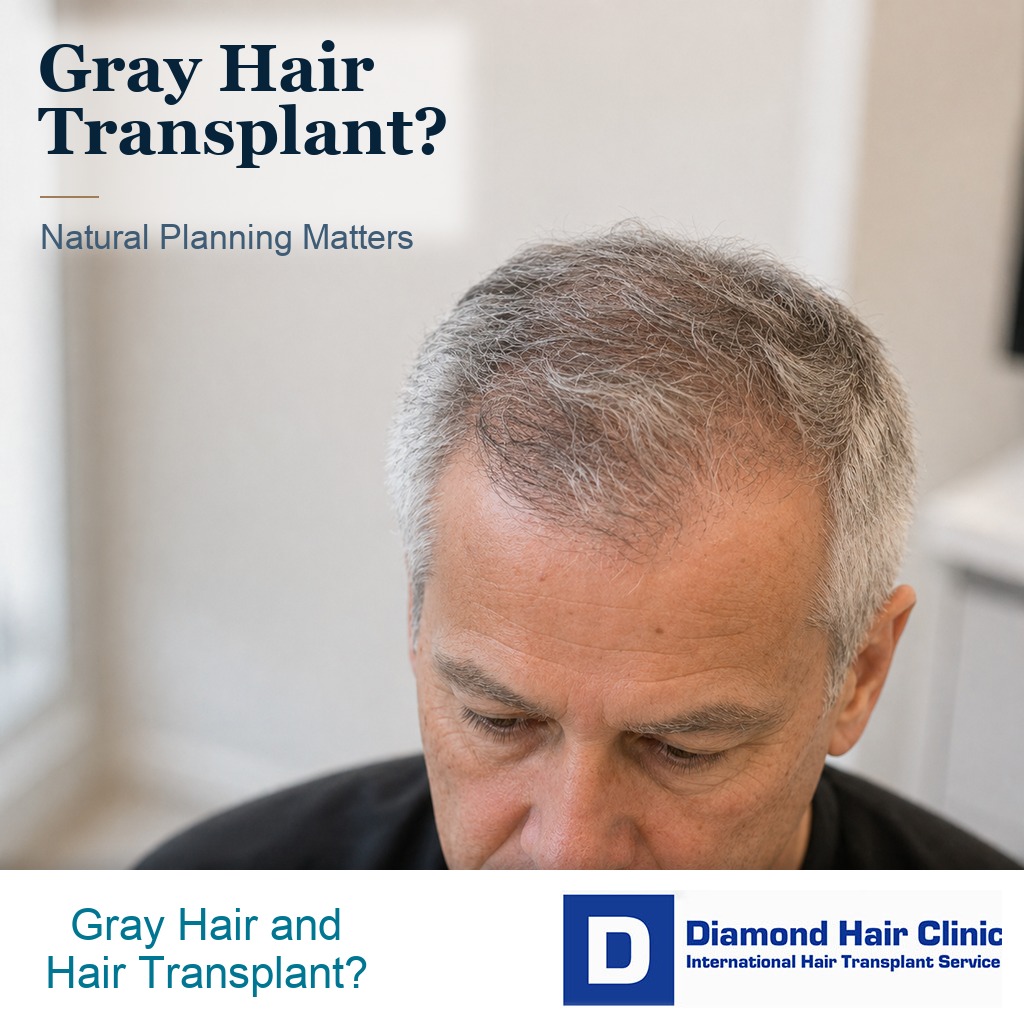
Gray Hair Transplant Visibility and Planning
You can have a hair transplant if you have gray or white hair, as long as your donor area is strong enough and your overall plan is medically sensible. Hair that has lost pigment is not necessarily weak hair. The decision depends on whether the color, thickness, donor supply, hairline design, and future hair loss pattern can be planned in a way that still looks natural years later.
Plan the result around the color you can maintain. A dyed hairline still has to look believable when roots grow in and the shade is between touch ups.
Gray donor hair does not make me reject a case. The warning sign is expecting surgery to make you look like a much younger version of yourself while ignoring how the hair has naturally aged. A good plan should respect the donor area, the existing gray pattern, and the face in front of me today.
White and silver hair can grow normally after transplant
White or silver hair can grow after transplantation because the follicle can still be healthy even when the hair shaft has less pigment. What matters during examination is donor quality, donor stability, the hair loss pattern, and the scalp condition, not color alone. A pale hair can be surgically useful when the follicle is healthy and the plan is correct.
The transplanted hair usually keeps the character of the donor hair. If the donor area has a mixture of dark and silver strands, the new area may also show a mixture. That is not surgical failure. It is the donor pattern appearing in a new location.

Transplanted gray hair usually keeps its color
I do not plan surgery on the promise that a gray or white graft will turn dark after it is moved. I also do not promise that a dark graft will stay dark forever as the patient ages. Transplanted hair and nearby native hair can also lose pigment at different rates, so the color may not match perfectly as both areas age.
Sometimes patients notice the color more after surgery because the hair is shorter, the light catches it differently, or the new hair grows in an area where they are looking very closely every day. That usually does not mean the transplant changed the biology of the hair. It often means the patient is seeing the donor pattern more clearly.
The plan has to follow the real donor pattern. If the donor area is salt and pepper, the result should be planned as salt and pepper. Trying to use surgery as a permanent return to dark hair is the wrong target.
In FUE hair transplant planning, this becomes a matter of follicle selection, angle, distribution, and long term strategy. The color of the hair is only one detail inside a much larger surgical decision. That larger decision also applies to blonde and red hair transplant planning, where pigment, skin tone, shaft caliber, and donor reserve change how coverage is seen.
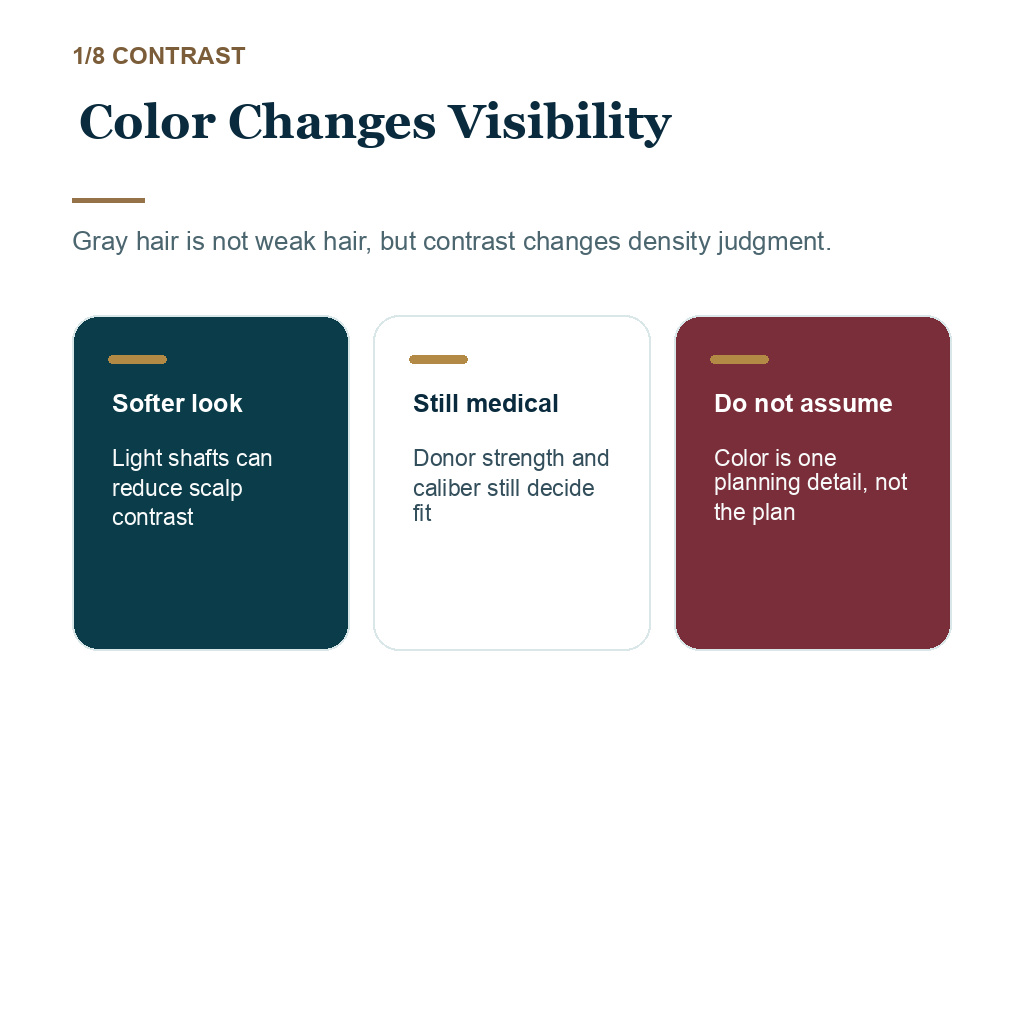
Lighter hair can look thinner or softer
It can do either, depending on the patient. Lighter hair sometimes creates less contrast against lighter skin, which can make the scalp look softer and less exposed. When that happens, a moderate density may look more forgiving than the same density with very dark hair on pale skin.
But color does not simply create density. A fine, soft, white hair may give less visual coverage than a thicker dark hair. Pigment can mislead patients here, because hair caliber and hair color are separate details. Color can soften contrast, but hair caliber still changes how much each graft covers.
When I see a patient with light, white, or silver hair, I consider how the result will look in daily light, wet hair, and short hair. A transplant can look good in clinic lighting but more exposed in real life if the planning was based only on a flattering photo. Planning also has to account for hair transplant results in harsh light and wet hair, because daily lighting can expose weak density more than clinic photos do.
Donor area color matters before surgery
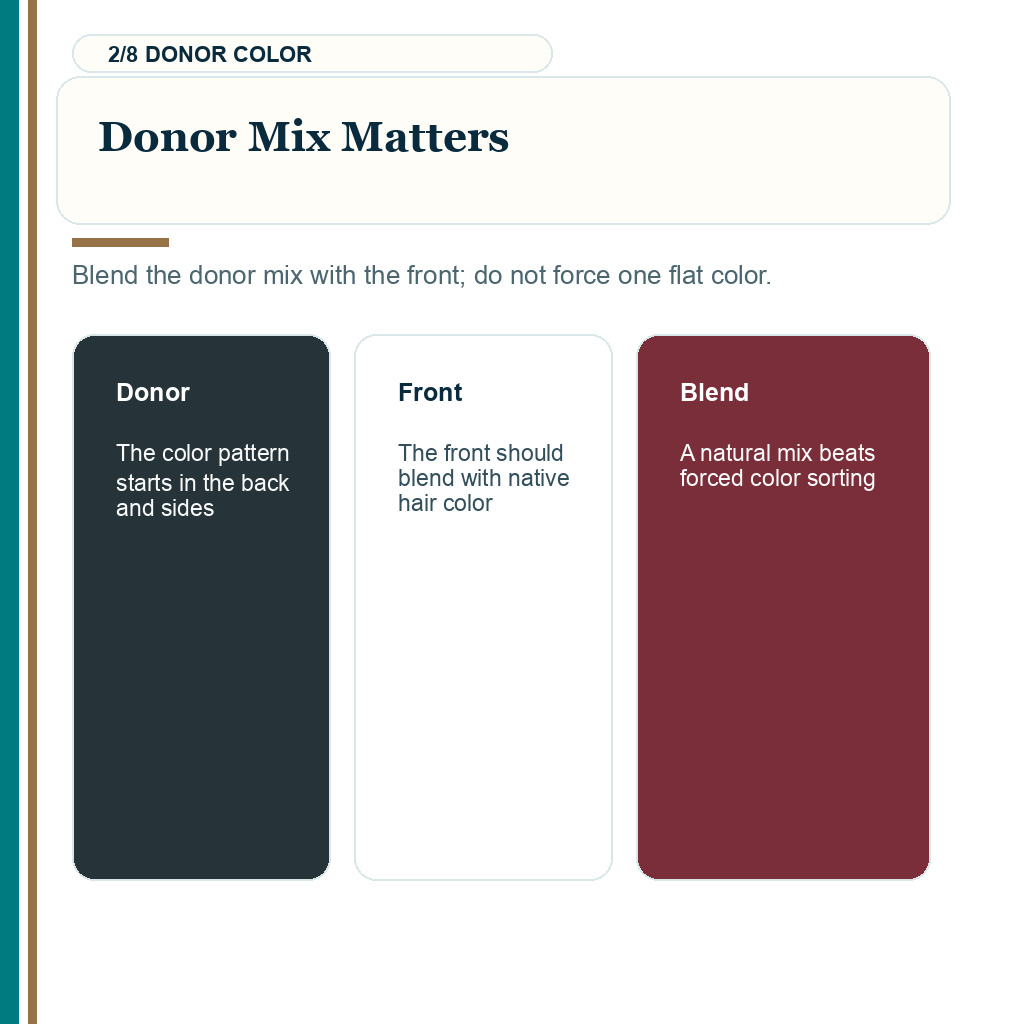
The donor area matters because it is the source of the transplanted hair. If the back and sides are mostly gray while the front still has darker native hair, blending becomes part of the surgical plan. The hairline should not look separate from the rest of the scalp.
A gray donor graft will not become dark because it is moved to the front. With a mixed gray and dark donor area, the design should place that mix where it looks natural instead of pretending the recipient area will change the hair color.
In younger men who already have lighter strands in the donor area, the color pattern deserves careful review before the plan is accepted. Some patients worry that every pale graft will appear as a bright patch in the hairline. That fear is understandable, but the answer is not panic, and it is not trying to remove every pale graft. The answer is avoiding a color block that looks separate from the rest of the hair through examination, selection, and placement.
Good donor management means more than counting grafts. The plan has to consider the pattern of gray and dark hairs, the strength of the safe donor area, the extraction distribution, and how much donor capacity should be protected for the future. Patients should understand the donor area as a limited lifetime resource, not as an unlimited supply.
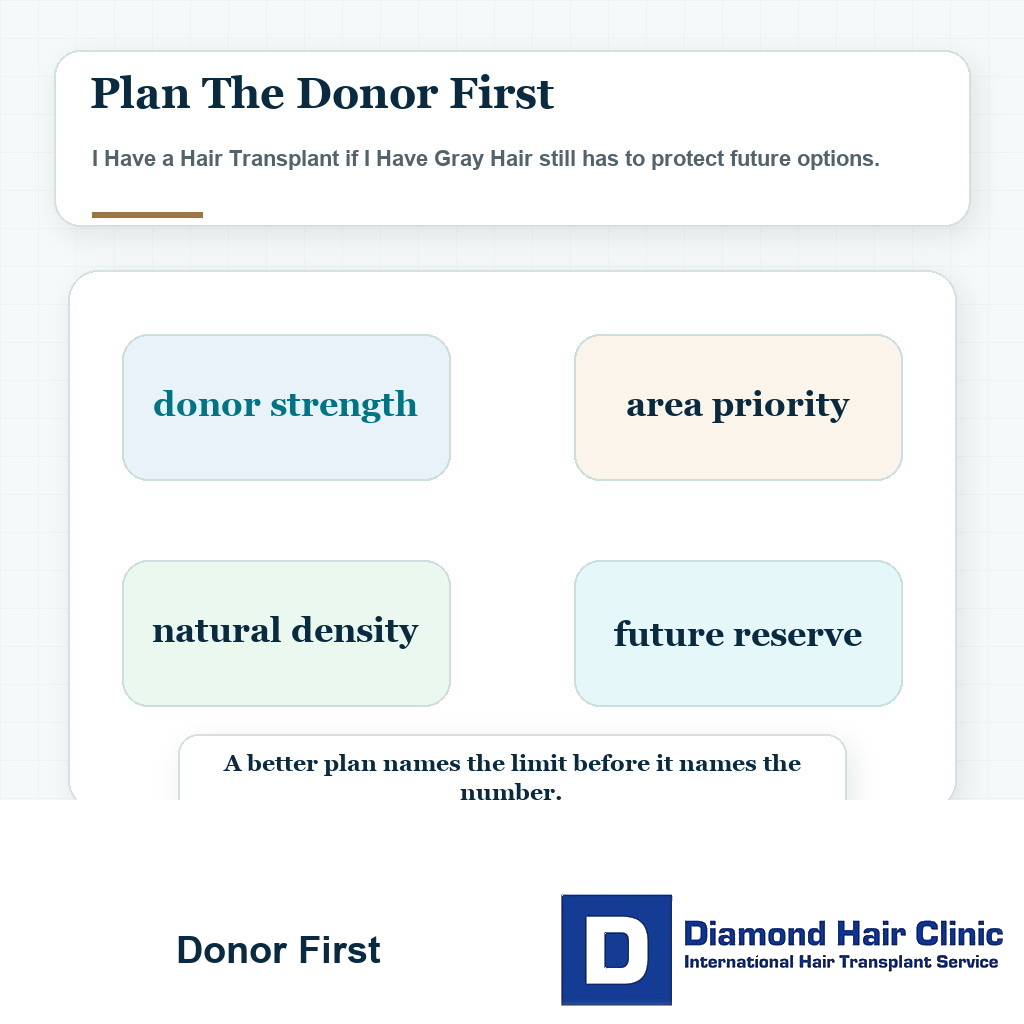
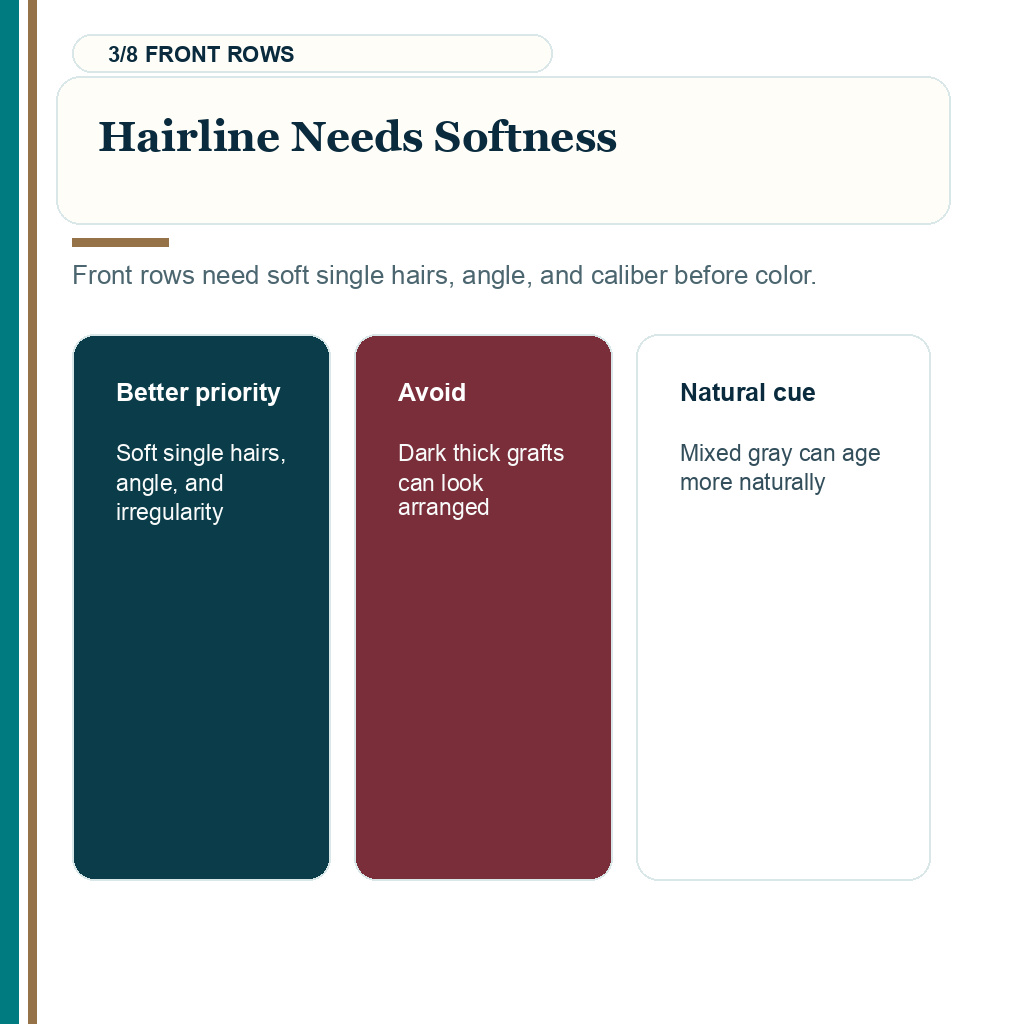
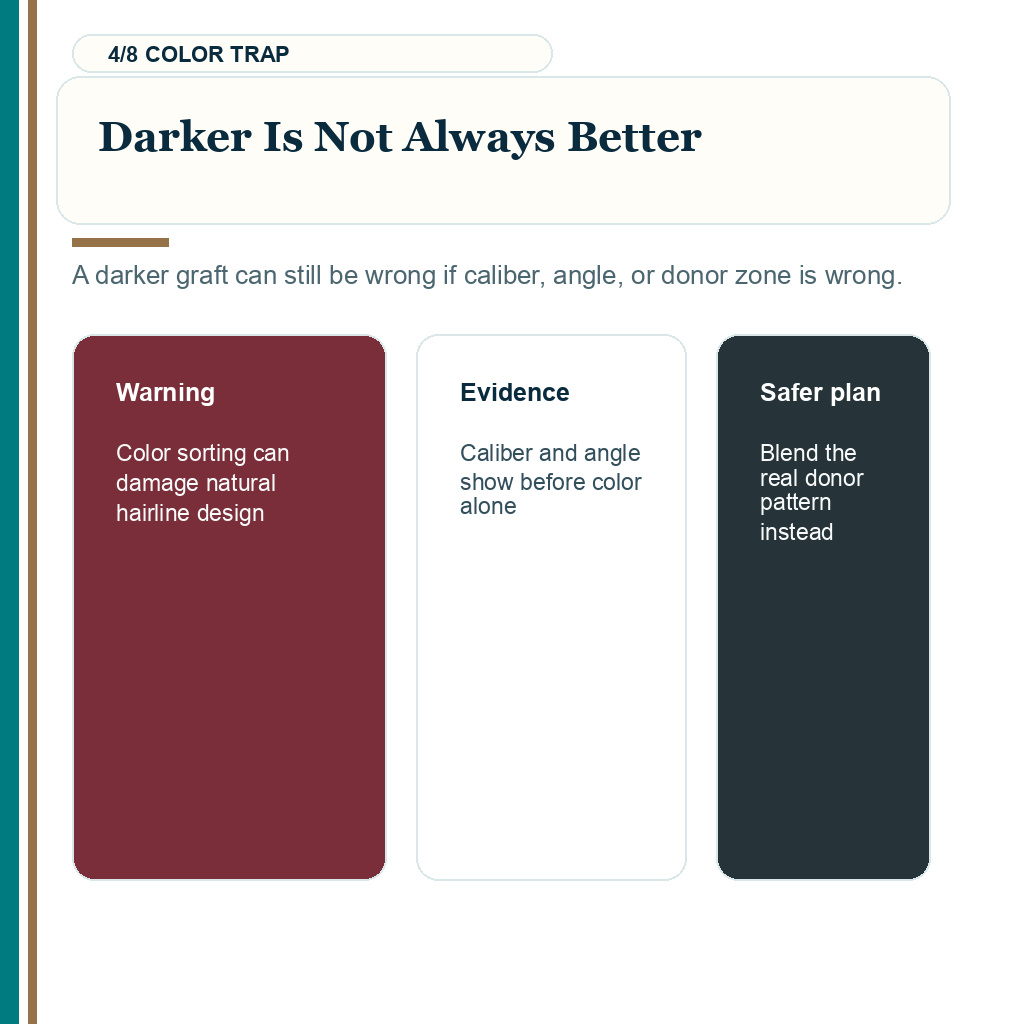
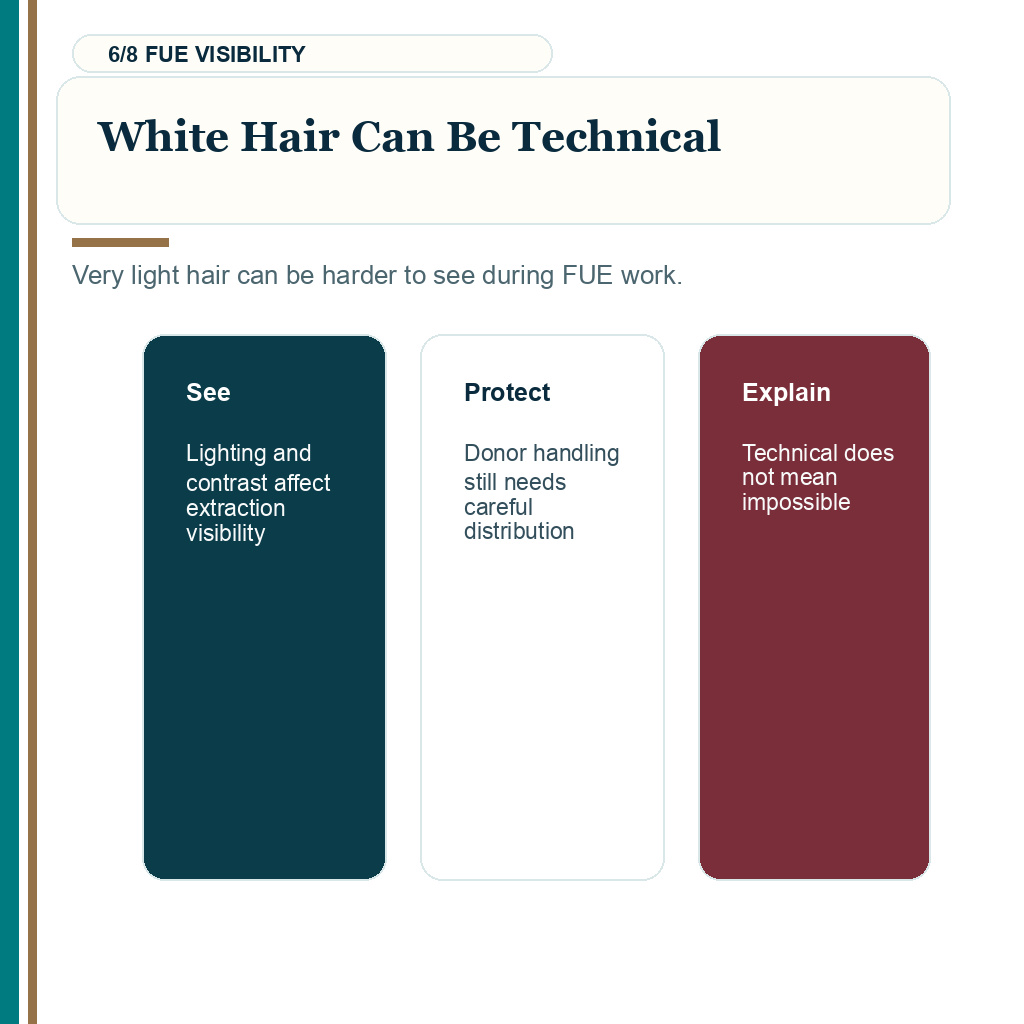
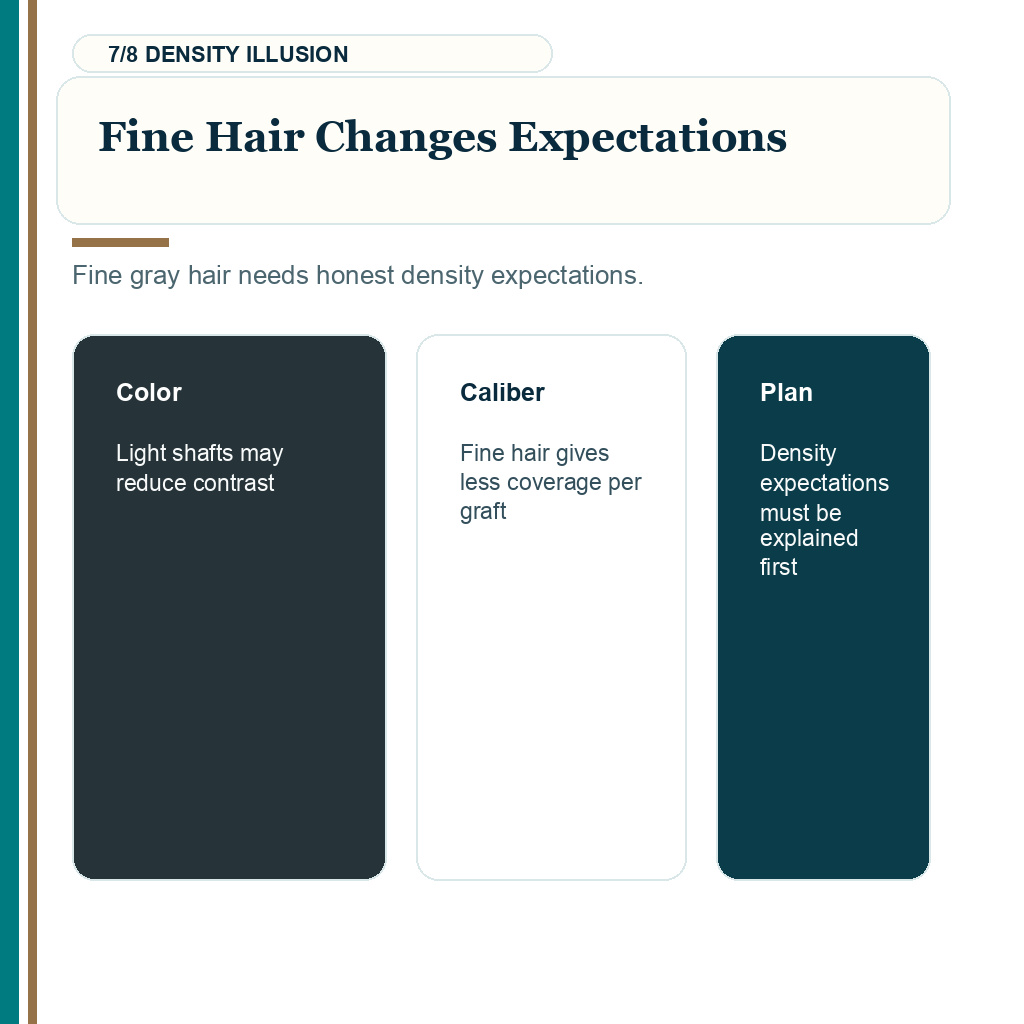
Use the 8 gray hair planning slides below to compare color contrast, donor area mix, hairline softness, dye timing, FUE visibility, fine hair limits, natural aging design, and promise checks. Swipe the carousel, use the arrows one step at a time, or choose a number below the image to jump to that point.

Darker hairs are not always better for the front
Sometimes I can be selective, especially when the donor area has a visible mix of dark and gray hairs. But this is not perfect color sorting. In the first rows, I still protect natural hairline design, soft single hair grafts, correct angle, and a pattern that does not look arranged.
In the first row, color is not the only priority. A pale single hair graft may be safer than a darker graft that is too thick or grows in the wrong direction. Chasing color alone can make the hairline less natural.
If the donor area is mostly gray, forcing only darker hairs into the hairline may not be realistic. It can also waste good grafts if the surgeon starts chasing color instead of choosing the best grafts for survival, direction, and long term planning.
With many patients, a natural mix is better than an artificial attempt to hide every gray hair. Real aging hair is not one flat color. It has variation. A good transplant should respect that variation instead of fighting it too aggressively.
Lighter donor hairs can suit the hairline
Lighter donor hairs can be used for the hairline, but they must be used with judgment. The first rows should look soft, irregular, and age appropriate. If the front is built with the wrong grafts, wrong angles, or a color pattern that does not match the native hair, the result can draw attention for the wrong reason.
A low, dense, youthful hairline needs extra caution when the hair and face already show a more mature age. Silver hair often makes this point even clearer. A natural result is not simply a matter of filling empty space. It is a matter of creating a design that belongs to the patient.
Natural hairline design must include age, facial structure, donor supply, hair direction, and future loss. With lighter hair, I also consider how the front will age as more native hair loses pigment over time.
Dye timing should be planned before consultation or surgery
If you usually dye your hair, I review what your hair looks like both with color and without color if possible. Dye can make the hair easier to see, but it can also hide the true gray pattern of the donor area. For consultation, accurate information is more useful than a cosmetically polished appearance.
Send photos before and after any recent dye if color affects what you see. Gray donor hair can change the contrast in photos, and a fresh dye can hide the difference the surgeon needs to judge.
Dye for assessment, dye for surgical visibility, and dye after surgery are three different decisions. Mixing them together is how patients get confused.
If the hair is already dyed when we start the assessment, I may ask for older photos or clear root photos so I can judge the real pattern. That is different from controlled dye used before surgery to help very pale hair show more clearly under magnification. After surgery, the priority changes again because the scalp must heal before chemical dye returns.
Before surgery, the timing of dye should be decided with the clinic that will operate on you. My guide to coloring hair before FUE explains why visibility has to be balanced against scalp irritation, staining, and allergic reaction risk. I also do not want dye used to hide donor weakness, miniaturization, or an uneven gray pattern during assessment.
After surgery, the scalp needs time to heal before chemical dye is considered again. For timing and irritation risk, my guide on when to dye hair after a hair transplant explains when dye can return after surgery. Cosmetic impatience should stay away from a healing scalp.
Gray or white hair can make FUE more technical
Gray or white hair can be harder to see during extraction and implantation, especially when the hair is very light against the scalp. Do not read that as a growth problem or as proof that surgery cannot be done. It is mainly a visibility and preparation issue.
Some clinics may dye very light hair before surgery to improve visualization. Others may use magnification, lighting, trimming, and careful handling. The method matters less than whether the clinic has a real plan and whether the person responsible for surgery has actually evaluated the donor area properly.
A consultation based only on a few unclear photographs becomes weaker when the hair is light, white, or silver. A transplant in this situation can be planned from photos only when the photos are strong enough and the limitations are respected. I explain those limits in my article about planning a hair transplant from photos.
Silver hair can help a result age naturally
Sometimes yes. Silver hair can help a mature result look softer because it belongs naturally to the aging face. The color pattern is not a disadvantage by itself. In some patients, it actually supports an age appropriate result because the visual contrast is lower and the design does not need to chase youthful darkness.
But this only works when the design is mature. If the hairline is too low, too straight, or too dense at the edge, a softer color will not save the result. A poor pattern remains a poor pattern.
Surgical discipline matters here. The transplant should still make sense when the patient is 50, 60, or 70. I discuss that broader idea in my article on whether a hair transplant can still look natural as you get older.
Caution is higher in some silver haired patients
Advanced hair loss, limited donor capacity, unrealistic density expectations, or a plan that depends on covering too much scalp in one session all deserve caution. Hair color does not remove those limits. It only changes how those limits appear visually.
A patient with lower scalp contrast may feel reassured, but I do not let that reassurance replace donor budgeting. If the crown is large, the front is empty, and the donor is limited, I still have to decide what should be prioritized. Surgery may be technically possible but strategically unwise if the plan spends the donor too quickly.
Candidacy matters more than color. The first question is whether the patient is truly a good candidate for a hair transplant. If the candidacy is poor, lighter hair will not turn a poor plan into a responsible one.
Fine or low density hair changes expectations
Fine pale hair behaves very differently from thick silver hair. It can look elegant when it is well distributed, but it may provide less coverage per graft. The result can still be natural, but the patient must understand that natural does not always mean visually dense under every condition.
A strong density promise is not responsible when the hair shaft diameter cannot support that promise. Fine hair requires careful planning, softer expectations, and a stronger respect for the donor reserve. When lighter color and fine caliber are present together, the consultation should be especially clear about what surgery can and cannot do.
Patients in this situation should read my explanation of hair transplant planning with fine hair. It helps separate the cosmetic illusion of fullness from the actual number and quality of hairs available.
Clinic promises need closer scrutiny
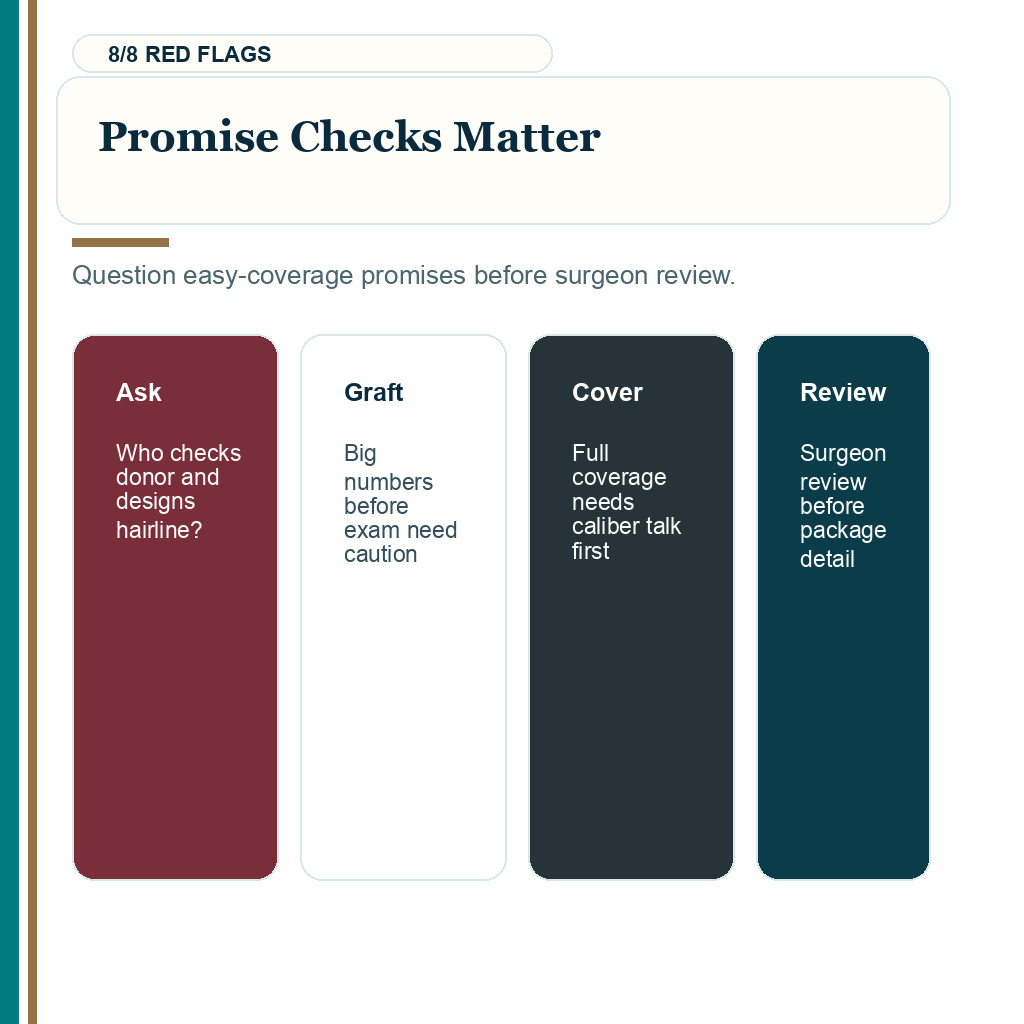
A clinic promise needs closer scrutiny if gray hair is presented as an easy marketing advantage without proper donor examination, or if the conversation moves immediately to a big graft number, a fast discount, or a promise of full coverage without discussing hair caliber, color contrast, future loss, and donor preservation.
Gray hair is not a problem to hide, and it is not a shortcut that solves density. It is one part of a responsible plan. If the clinic avoids explaining who will design the hairline, who will create the recipient area, and how the donor will be protected, the color of the hair is no longer the main concern.
A good result needs natural distribution, suitable density, clean donor management, and a design that still fits the patient after the excitement of surgery has passed. Focus on what a natural hair transplant result really means, not only what looks impressive in one photograph.
Silver hair still needs donor discipline
White or gray hair can soften contrast and look natural, but color does not protect the donor area for us. I still judge hair caliber, curl, density, contrast, age, hairline height, and future loss before grafts are spent.
Consultation photos and hairline design need to show the real color pattern, not a dyed or idealized version. Lighter hair may look forgiving in some light and thinner in other light.
Silver hair is not the risk by itself. The risk is a graft number or hairline that ignores donor reserve because the color looks forgiving today.

Read this review excerpt
Every single one of my questions was answered and they made sure I had all the details I needed to make an informed decision.