


Clinic Choice Decides Hair Transplant Safety in Turkey
Turkey can be a strong hair transplant destination when the clinic is medically serious, the surgeon is meaningfully involved, donor reserve is protected, and the plan is realistic. It becomes a poor choice when price, convenience, or high graft promises replace medical judgment.
Before booking, separate the sales offer from the surgical decision. The important points are who examines the donor in person, who makes the incision plan, and what would make the team lower the graft number or postpone surgery.
That distinction matters before a patient books. Turkey is not the result. Turkey is the location. The result comes from diagnosis, donor management, hairline design, graft handling, recipient area incisions, aftercare, and planning for future hair loss.
Turkey has excellent hair transplant surgeons and also weak commercial clinics. Do not be blindly impressed by Turkey’s reputation, and do not be blindly afraid of it either. Judge the clinic model, donor plan, and surgical responsibility before treating Turkey itself as the deciding factor.
Turkey Can Be a Good Choice With the Right Clinic
Turkey can be a good choice when the patient is a real candidate, understands the limits of surgery, and chooses a clinic that can explain the medical plan clearly. The clinic needs to assess the donor area, choose a safe graft number, design a natural hairline, and explain how future hair loss will be managed.
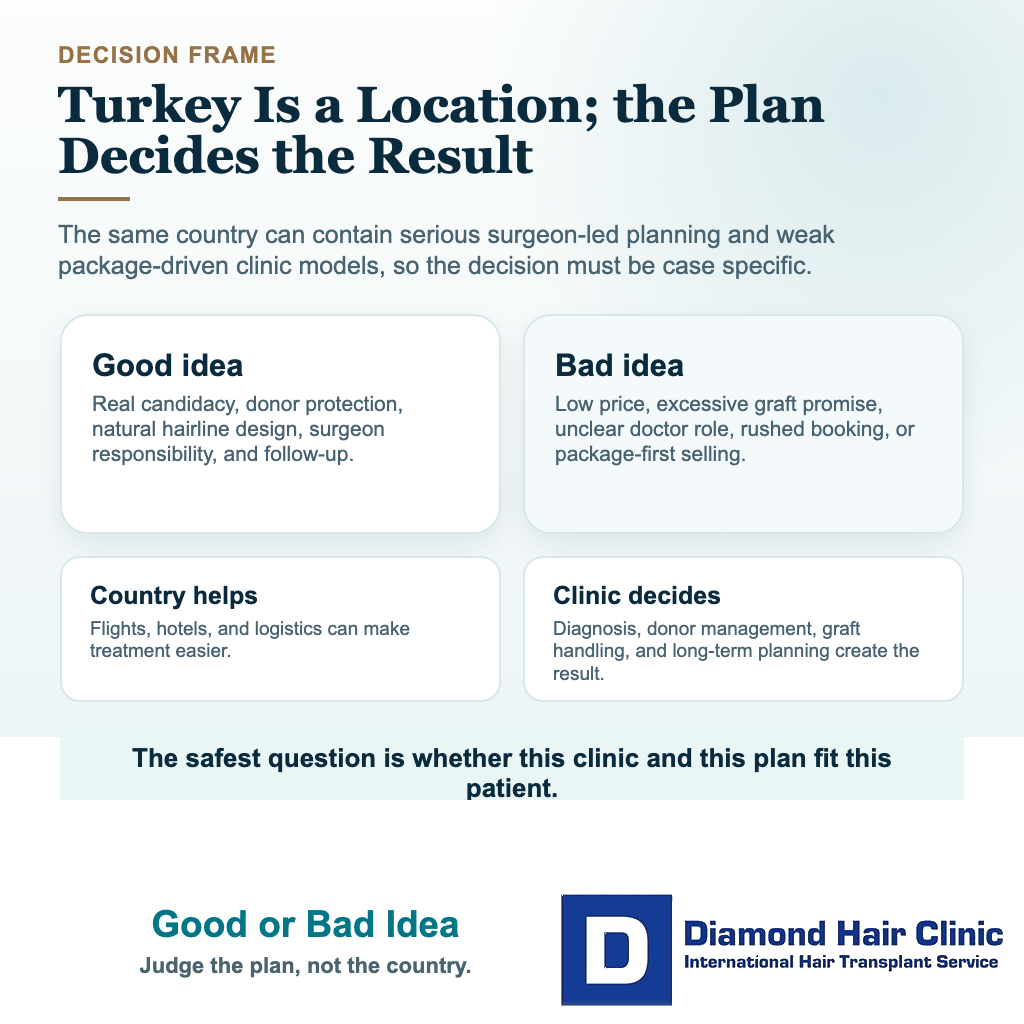
Istanbul can also be practical because it has strong medical tourism infrastructure, experienced teams, direct flights, hotel support, and organized travel. Those advantages matter only when the clinic is medically responsible.
When I discuss hair transplant in Turkey, I separate travel comfort from surgical judgment. Turkey can make the trip easier. It cannot make a weak plan safe.
The Trip Becomes a Bad Idea When Planning Is Weak
The trip becomes a bad idea when the patient chooses the cheapest package without knowing who performs the surgery. It is also a bad idea when the clinic promises an excessive graft number, lowers the hairline too much, ignores donor limits, or treats every patient as suitable.
A bad plan can create problems that last for years. An unnatural hairline can require repair. Overharvesting can damage the donor area. Poor graft direction can make the result difficult to hide. Weak aftercare can leave the patient anxious after returning home.
The warning signs in red flags of Turkish hair transplant clinics are there because these risks are real. The answer is not to avoid Turkey as a country. The answer is to avoid poor clinic models.
Some patients should slow down before booking
Some patients need to slow down before committing to surgery abroad. A young patient with fast hair loss, a weak donor area, a request for a very low hairline, or an expectation of full crown density from one session may need a different conversation first. In these cases, a responsible recommendation may be a smaller plan, staged coverage, medical treatment first, or no surgery yet.
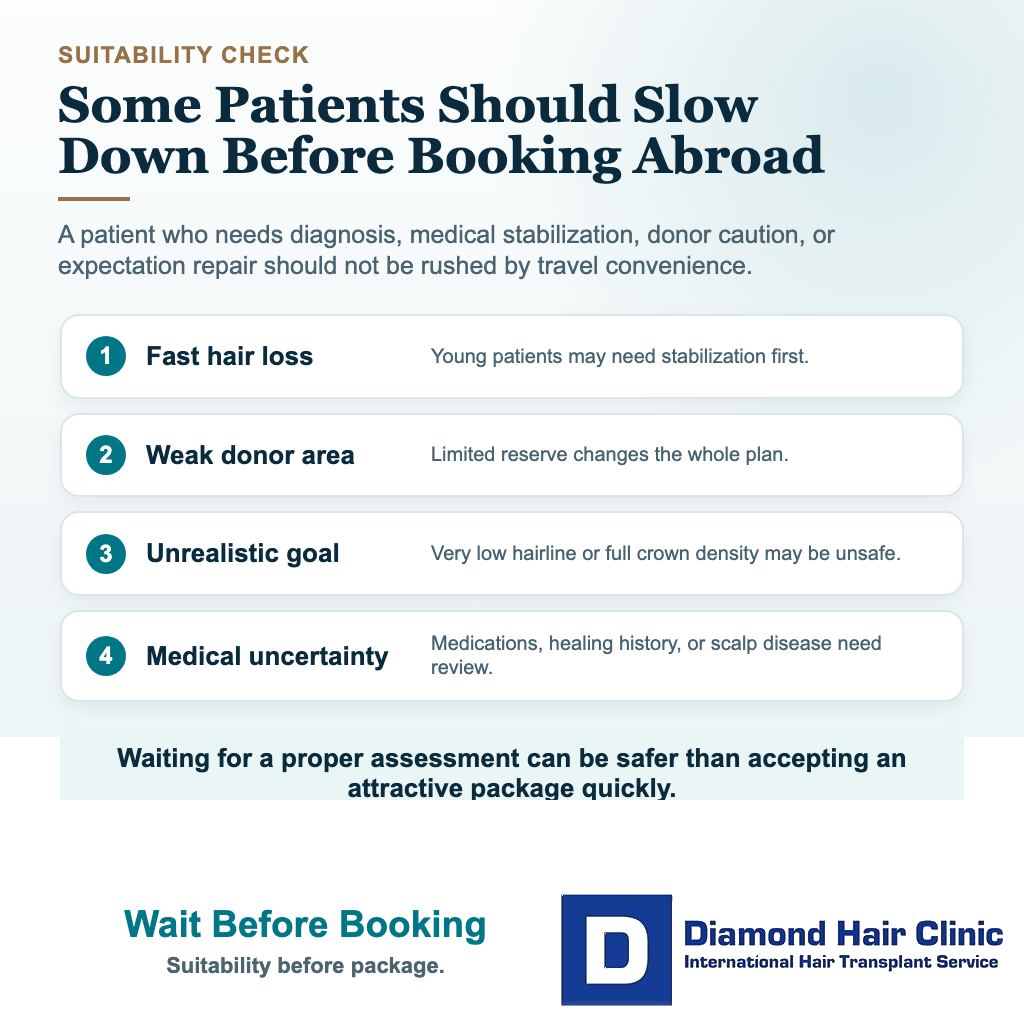
Unclear medical history needs the same level of caution. Blood pressure problems, heart history, medications, scalp disease, smoking, and previous poor healing can all change the plan. A clinic should not treat these details as paperwork. They can affect anesthesia, bleeding, healing, graft survival, and travel safety.
Suitability comes before price or technique. A proper good candidate for a hair transplant review looks at those limits before the patient rushes into an attractive package.
Surgeon involvement is the real safety point
Surgeon involvement matters because the most important decisions are medical, not logistical. The hairline is not only a drawing. The graft number is not only a sales figure. Donor hair is not unlimited. The recipient area incisions decide angle, direction, distribution, and naturalness.
The patient needs to know who examines the donor area, designs the hairline, creates the recipient incisions, supervises graft handling, and takes responsibility if the plan changes during surgery. A team can help, but medical responsibility should not disappear into a package name.
Choosing a hair transplant clinic in Turkey begins with medical responsibility, not travel convenience, for exactly this reason.
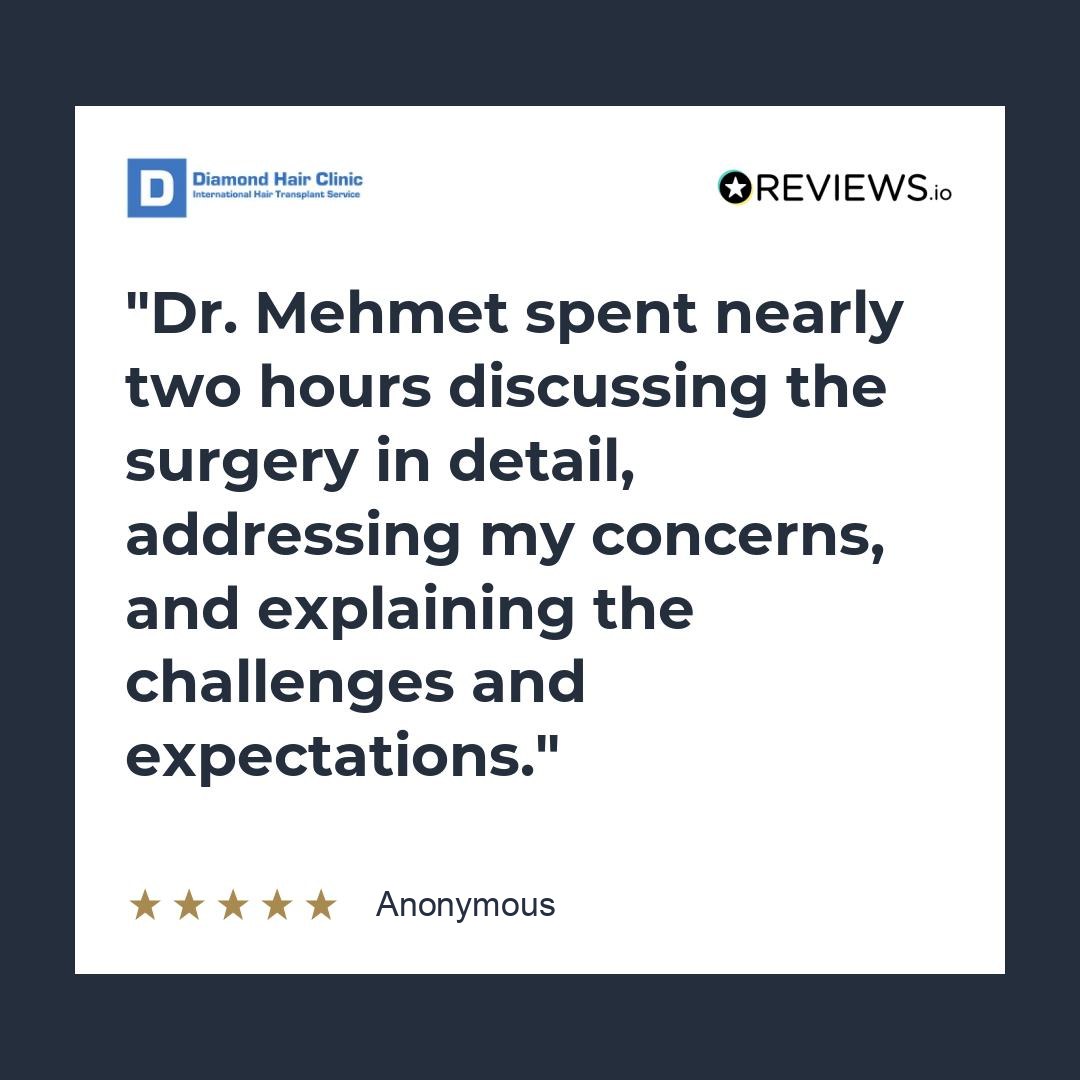
Read this review excerpt
Dr. Mehmet spent nearly two hours discussing the surgery in detail, addressing my concerns, and explaining the challenges and expectations.
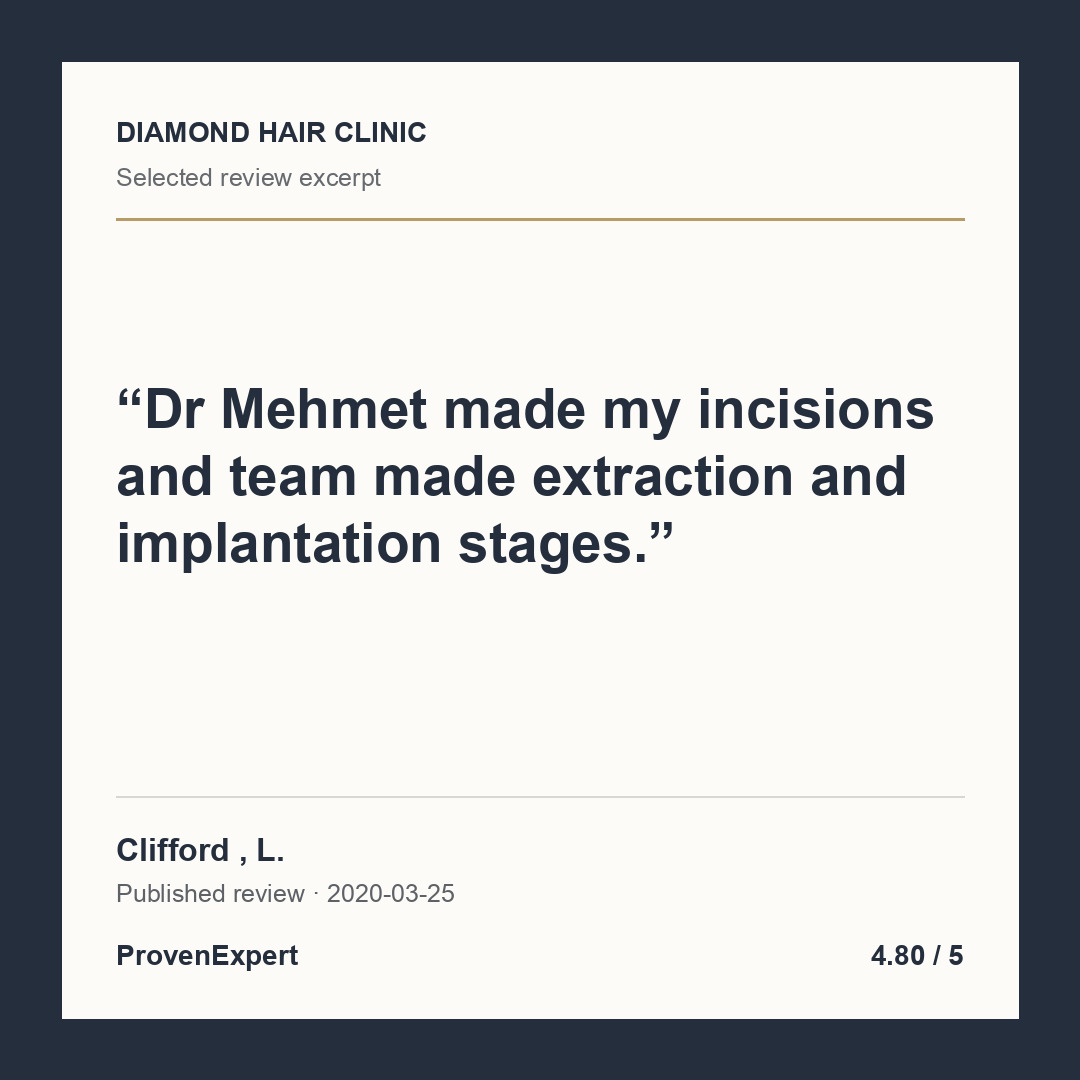
Read this review excerpt
Dr Mehmet made my incisions and team made extraction and implantation stages.
Donor reserve must decide the plan
Donor reserve is the limited supply that makes the surgery possible. A clinic can move hair from the donor area, but it cannot create endless new hair. If too many grafts are taken, the patient may lose future options.
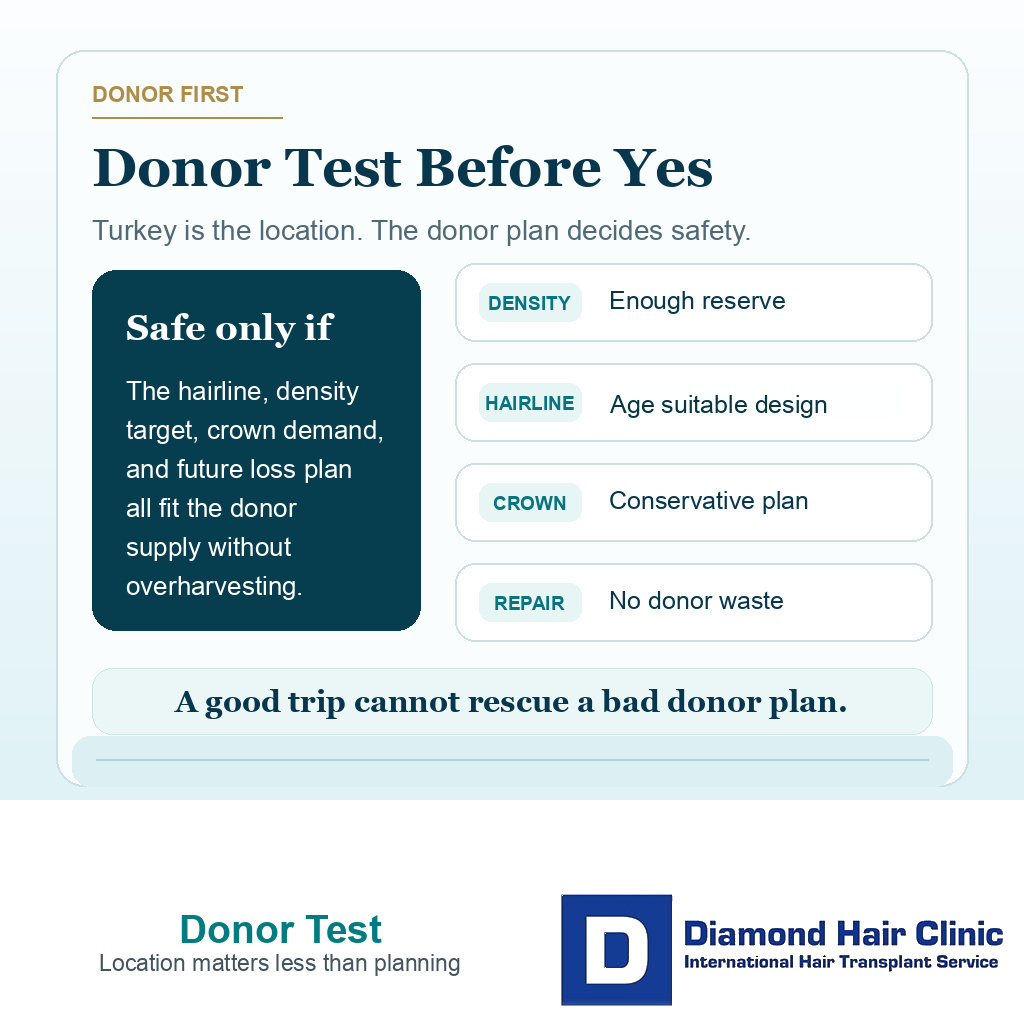
Some patients are attracted by very large graft promises because they sound like better value. I see it differently. The right graft number is the number that gives useful coverage while protecting the donor area for the future.
If the donor is weak, if hair loss is advanced, or if the patient is young with ongoing loss, the surgical recommendation may be more limited than the patient expected. That is not a failure. It protects planning for the years ahead.
Low price needs medical context
A lower price can reflect local costs, currency, travel structure, and clinic overhead. That is different from a price made possible by removing surgeon time, shortening the consultation, rushing graft handling, or treating too many people in the same day.
So I do not judge price alone. I ask what the price includes, what it leaves out, who is medically responsible, whether the graft number is realistic, and how aftercare works after the patient goes home.
The return home plan belongs inside the decision, not after it. Before the trip feels like a good idea, you should know what records you will leave with and how worrying symptoms are handled after the flight.
When reading hair transplant cost in Turkey, judge price together with the clinic model. A cheap procedure can become expensive if repair is needed later.
A very cheap offer may still come from a clinic with real medical standards, but it needs stronger questions, not fewer questions.
Technique names do not make weak planning safe
Modern technique names can help when they are used properly, but they do not make a weak clinic safe. FUE, Sapphire FUE, and DHI are not magic words. They are methods that still depend on planning and execution.
A method recommendation should be tied to the case itself. Donor area, hairline design, recipient needs, graft number, hair type, and recovery all matter more than marketing language.
Technology can support good surgery. It cannot replace surgical judgment.
Regulation is a foundation, not the result
Official regulation matters because the procedure belongs in an authorized medical setting. It is a foundation for safety. It is not a guarantee of a natural result.
The Turkey Ministry of Health check matters because legal status is only the starting point. A clinic can meet administrative requirements and still vary in skill, ethics, planning, and patient communication.
Patients need to check both sides. Is the clinic legally serious, and can the surgical team explain why this plan is safe for this donor area?
Deposit only after the medical answers
A deposit should come after the medical answers, not before them. Before paying, you need a real assessment, a realistic graft estimate, a clear explanation of donor limits, a named medical responsibility structure, written preparation instructions, and clear travel timing. A proper case review before travel should also say what may change after the clinic examines the scalp, so the patient does not feel trapped by a deposit or flight.
Know how many days to stay, when the first wash happens, how aftercare works, and who answers questions after returning home.
If the clinic refuses to answer medical questions but asks the patient to secure a date quickly, that is not a good sign.
Travel timing belongs in the medical plan
Travel timing is part of the medical plan. Do not think only about surgery day. The first wash, swelling period, sleeping position, flight timing, and early communication after returning home all matter. Patients with a clotting history, heart history, or long flight should have that travel risk reviewed before surgery.
Before travel, the clinic needs to give clear instructions before hair transplant surgery. After surgery, the patient needs to understand the washing routine, medication use, warning signs, and how to protect the grafts during the first days.
The recovery plan should be clear enough to follow when the patient is tired, swollen, or far from the clinic. If the patient is sent home with vague instructions and no real follow up, the low price of the package becomes less meaningful.
The broader hair transplant aftercare guidance matters because many early mistakes happen after the operation, not during it.
The 4 slides below keep the travel timing checks together. Swipe sideways, use the arrows to move one slide at a time, or use the numbered controls under the image to jump to a specific slide.
Questions that test the clinic model
Before surgery, the donor examiner, hairline designer, surgeon creating the recipient sites, graft calculation, daily patient volume, and backup plan for a weaker donor area should all be clear.
The clinic should have mature results close to your case and a clear plan for crown coverage, weak donor areas, previous surgery, medical conditions, future hair loss, and follow-up after you return home.
The consultation should welcome serious questions. If the questions irritate the clinic, the patient has learned something important.
Reviews need careful reading
Reviews are useful, but they should not replace medical assessment. Early reviews can describe travel and staff kindness, but they cannot judge final growth. Mature reviews with clear photos, donor views, timeline, and clinic response are more useful.
When reading hair transplant reviews in Turkey, look for the medical pattern behind the story. A useful review shows planning, donor condition, hairline design, recovery, and the clinic response over time.
Do not choose a clinic only because it has many stars. Choose it because the medical plan survives careful questioning.
When Turkey is a sensible choice?
Turkey is a sensible choice when the clinic is chosen carefully and the plan protects the patient. It becomes a poor choice when price, convenience, or marketing replaces medical judgment.
If the clinic can explain only the package, price, date, and technique name, the decision is not ready yet. The explanation should connect the donor area, hairline, graft number, surgeon role, aftercare, and future hair loss.
In the clinic model I use, an unsuitable patient is turned away rather than pushed into a result that looks exciting at first but harms the donor reserve or ages poorly.
Turkey is not the real decision. The specific clinic, surgeon, and plan must be good for your case.
Read this review excerpt
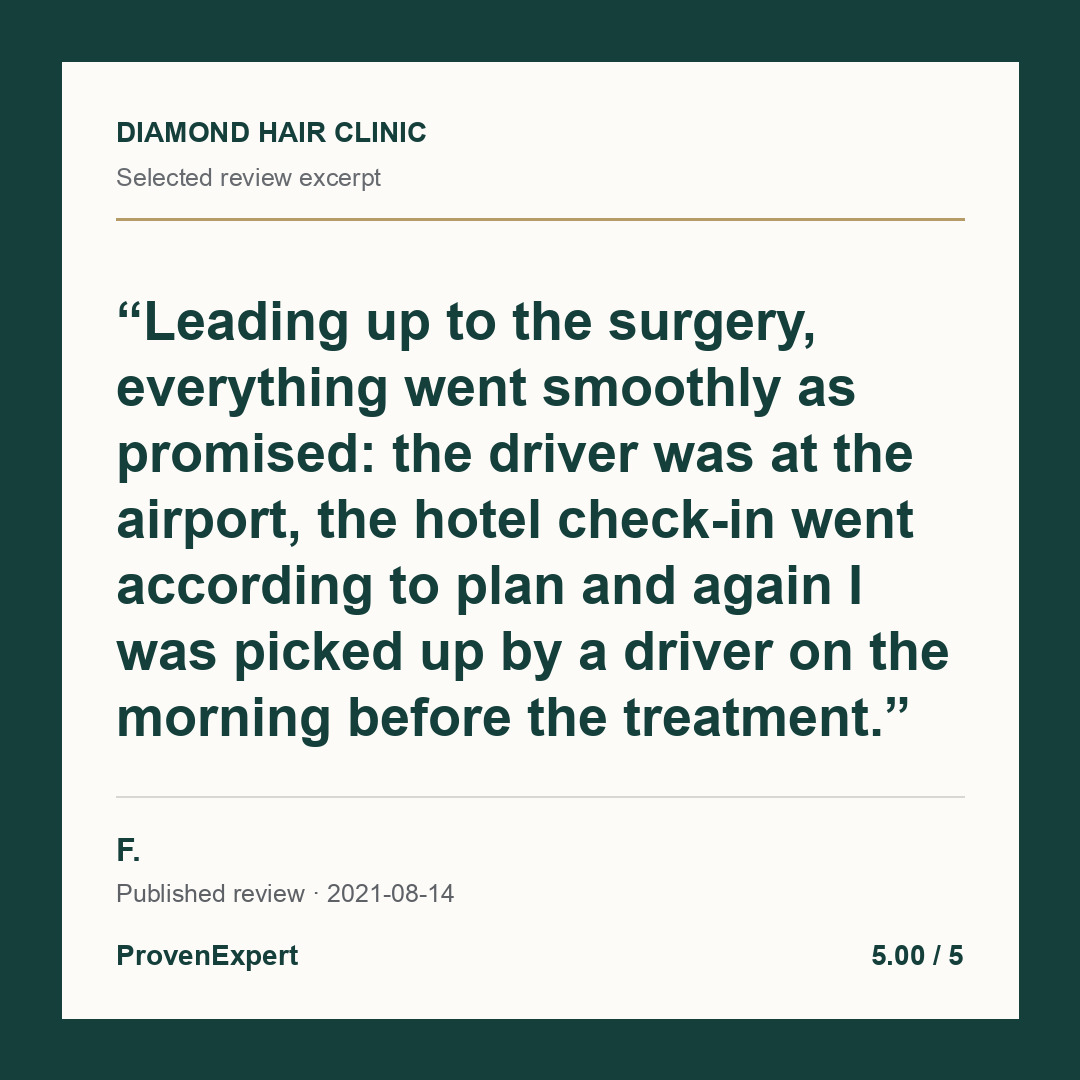
Leading up to the surgery, everything went smoothly as promised: the driver was at the airport, the hotel check-in went according to plan and again I was picked up by a driver on the morning before the treatment.

Read this review excerpt
I very highly recommend Diamond hair clinic with Dr. Demircioglu and his team. They were all so professional and easy to talk with. I am still in contact with him and sending monthly updates about my progress.