



Turkey’s Ministry of Health Is Only One Safety Check
If you are travelling to Turkey for a hair transplant, the Ministry of Health framework is a useful safety layer, but it is not a surgical quality guarantee. It can help you check whether a provider sits inside the official health tourism system. It cannot tell you whether your donor area will be protected, whether the hairline plan is natural, or whether the right person is medically responsible on surgery day.
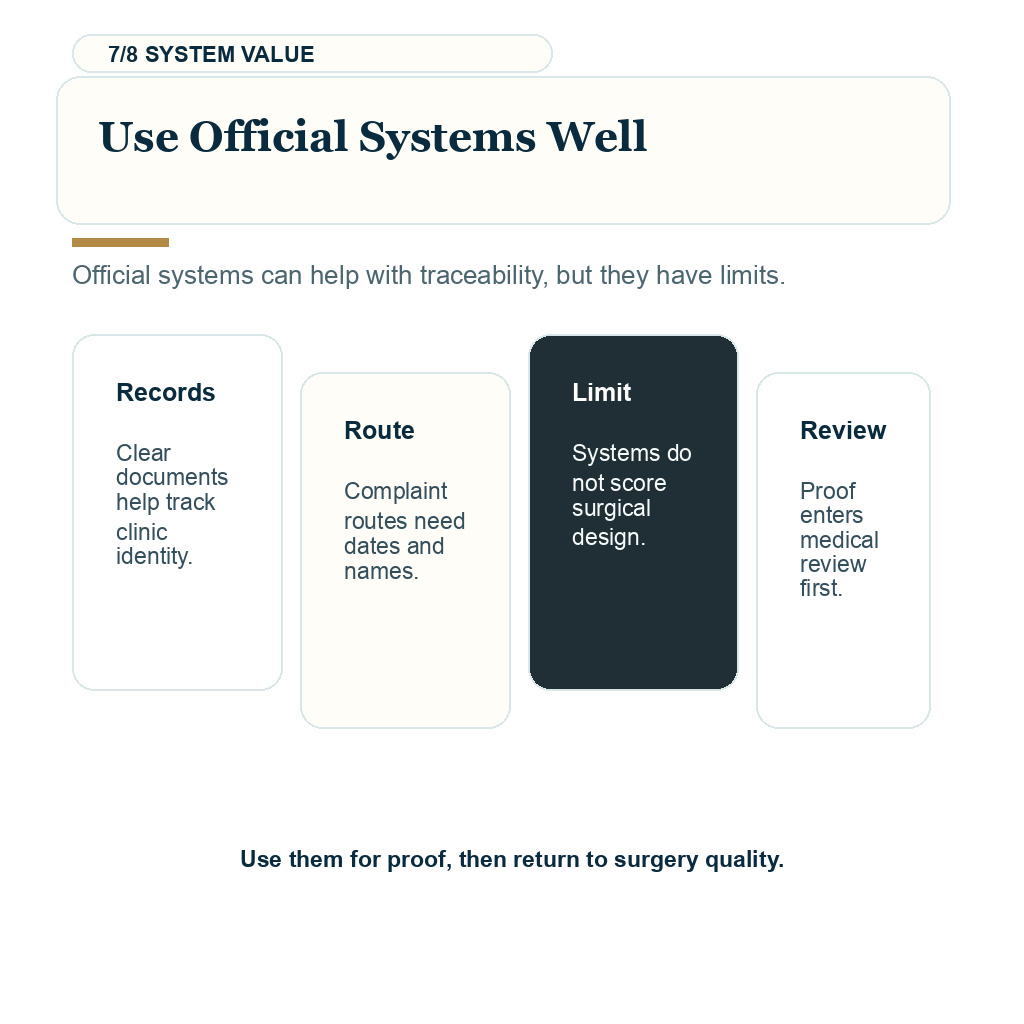
Official authorization is one layer of the check. It does not answer whether the day is overbooked, who performs each step, or who can change the plan for safety.
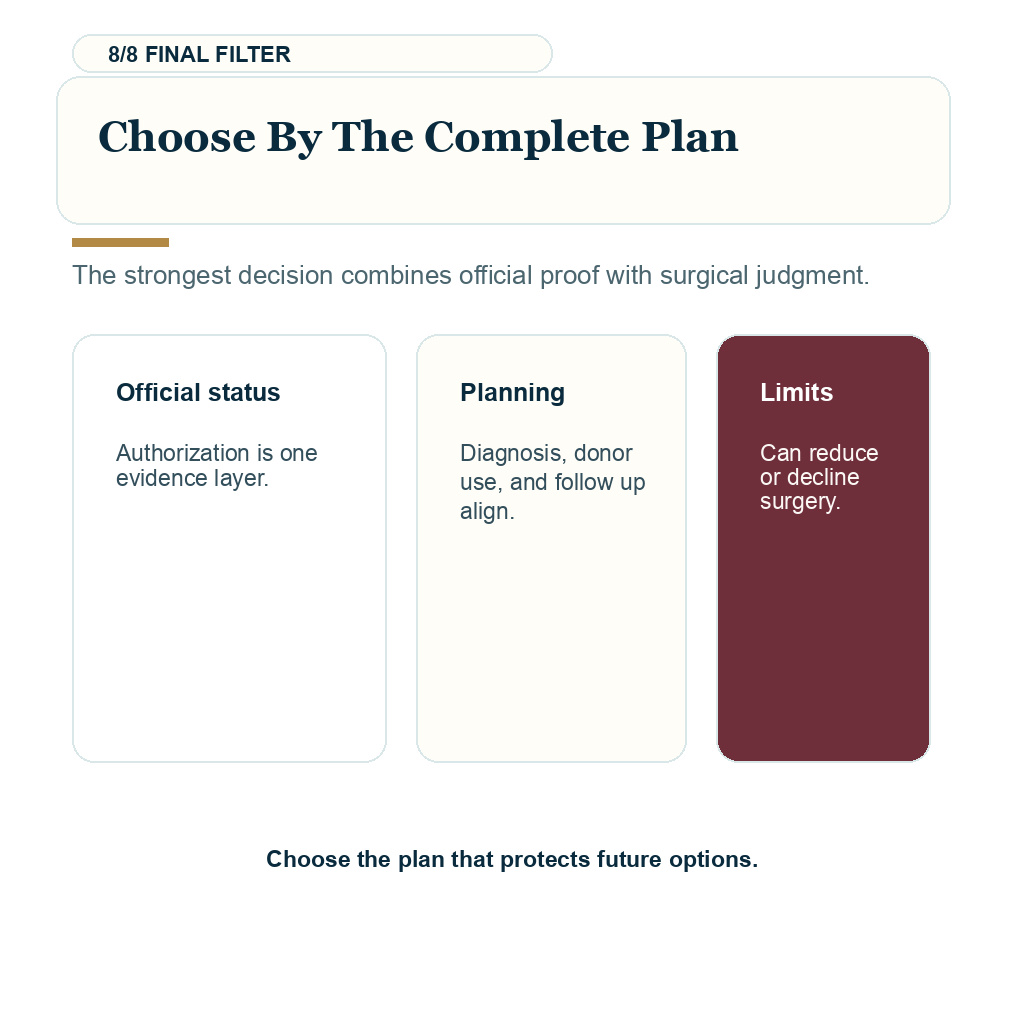
Here is the distinction I want patients to keep in mind. Official authorization can support traceability, documentation, patient communication, and complaint routes. The surgical result still depends on diagnosis, donor management, graft handling, recipient area creation, aftercare, and planning over time.
I do not tell patients to ignore regulation. I also do not let regulation replace the surgical questions. It is one safety check, not the operation plan.
What does this mean for a patient travelling to Turkey?
For an international patient, the Ministry of Health belongs to the background structure of medical tourism in Turkey. It is not the surgeon, it is not the clinic, and it is not the person drawing the hairline or deciding how much donor hair can safely be used.
Its role is broader. It helps define how healthcare institutions, health tourism providers, and related organizations should operate inside the country. Patients coming from abroad are often making decisions from photos, messages, reviews, package offers, and unfamiliar legal language, so that background structure has real value.
Use regulation as the first layer of protection, then move quickly to the questions that affect the result. Who examines the donor area? Who designs the hairline? Who creates the recipient area? How many patients are treated in one day? What happens if the donor area looks weaker in person than it did in photographs?
Official oversight is the starting point
Turkey has a formal framework for international health tourism. The international health tourism regulation published in the Official Gazette on April 26, 2025 under No 32882 addresses minimum service standards, authorization of healthcare providers and intermediary organizations, registration, reporting, pricing and invoice rules, promotion, inspection, and administrative sanctions.
The practical meaning is not that every legal detail needs to be memorized. The useful point is that health tourism is not supposed to be a loose advertising market where any business can present itself to foreign patients as a medical provider. The system is built around authorization and traceability.
That still does not mean every experience is excellent. It means there is a formal structure the patient can ask about. If a clinic speaks to international patients but cannot clearly explain its authorization, responsible doctor, medical facility, and complaint route, that is not a small detail. It is a reason to slow down.
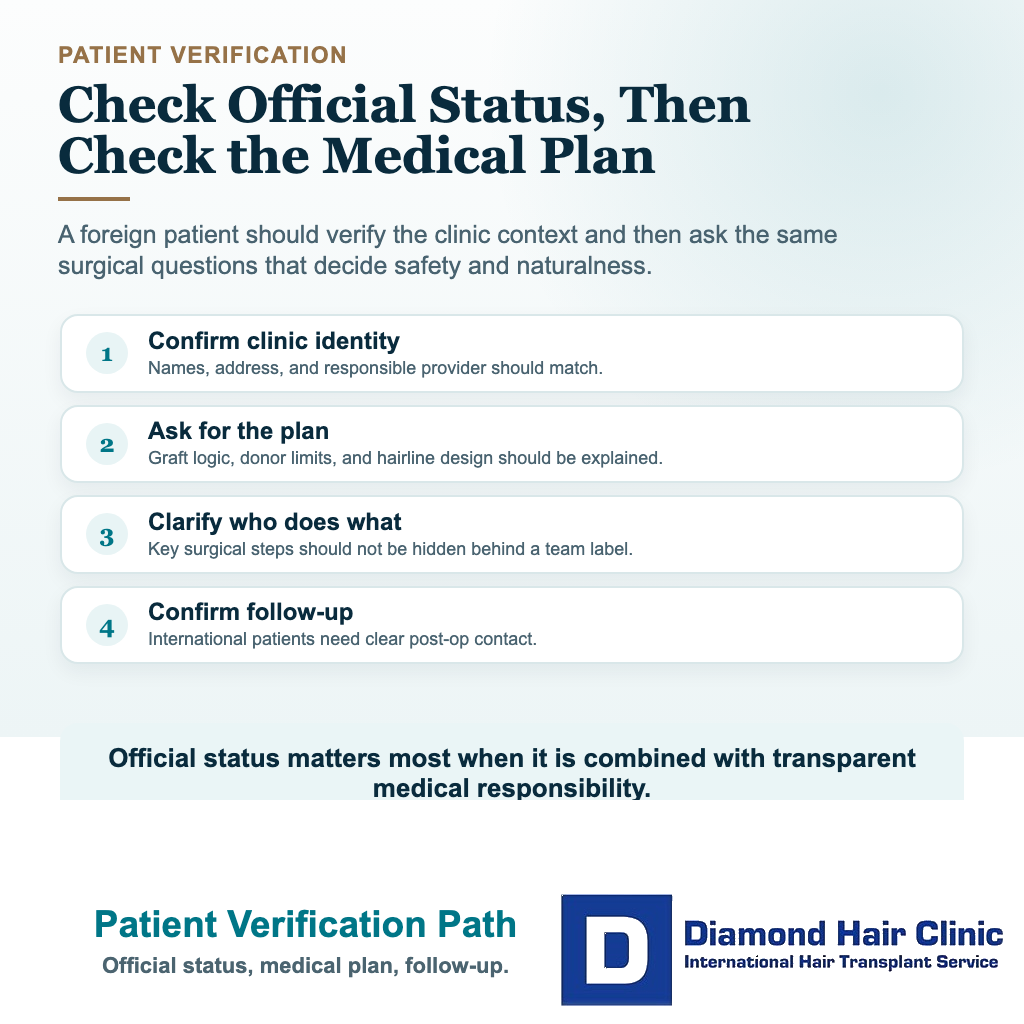
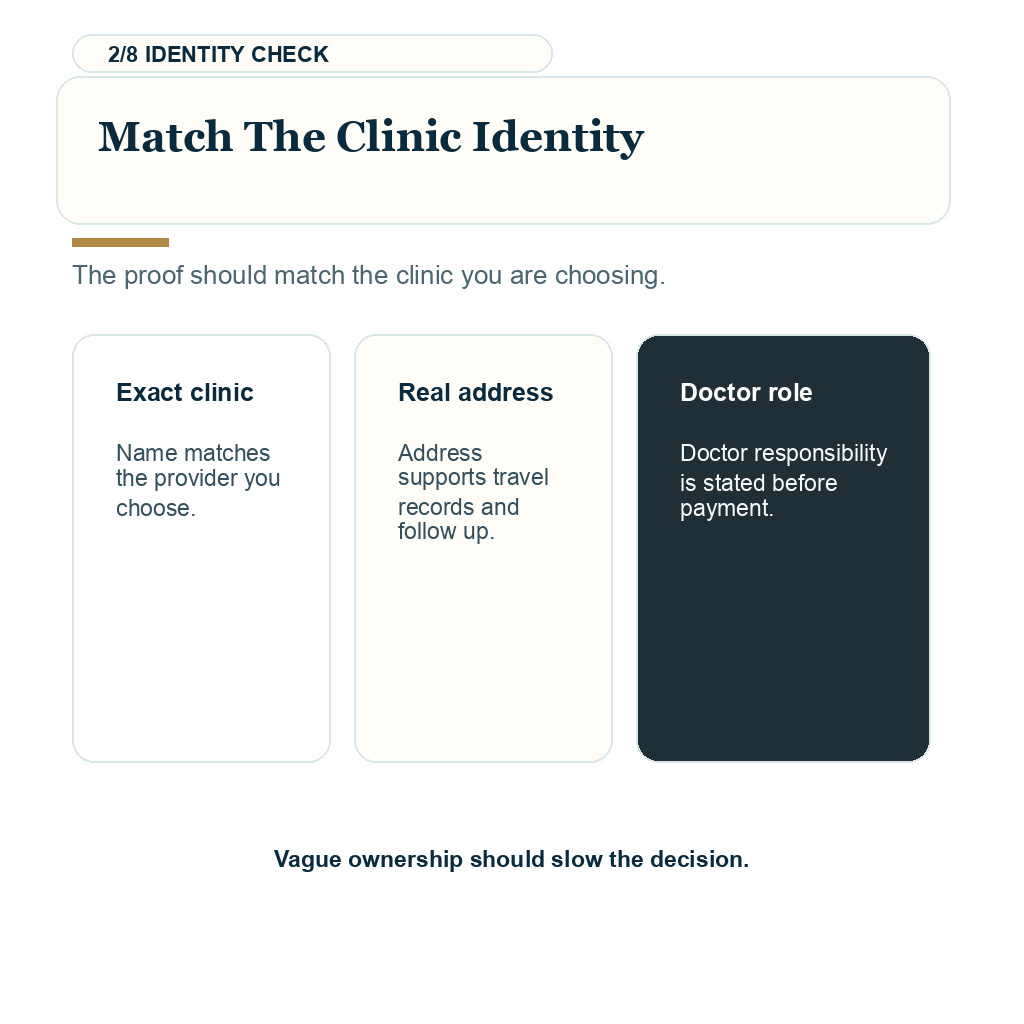
Check that the name you verify is the place you will actually enter. If the website, coordinator, payment route, and clinic address point to different names, slow down until the structure is clear.
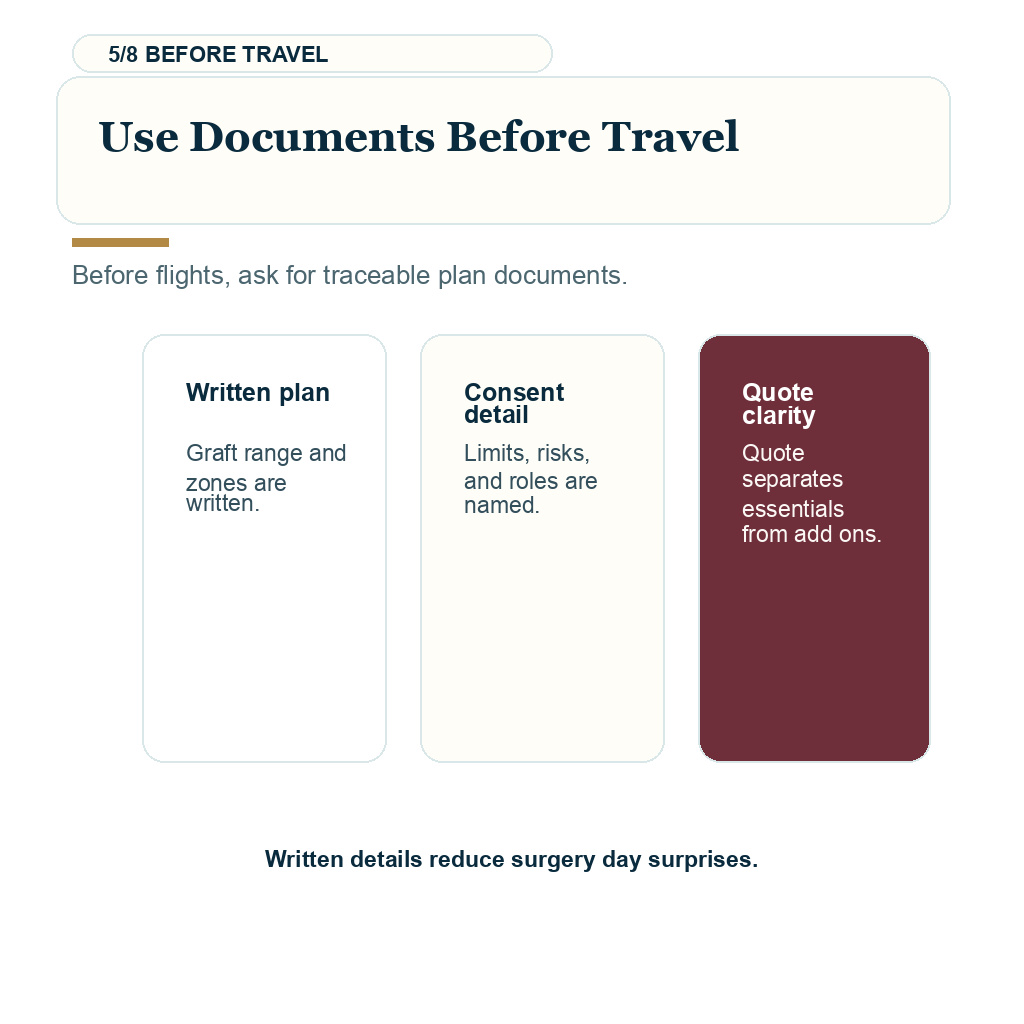
The service agreement, consent form, invoice, and payment receipt should all identify the authorized provider and the facility where surgery will happen. Different names across the coordinator, travel company, clinic brand, and medical facility need a written explanation before payment. A certificate is more useful when the documents identify the same accountable medical service.
What does an authorization certificate prove?
An International Health Tourism Authorization Certificate is part of the permission structure for providers working with international health tourism patients. It is one document patients can ask about when checking whether a clinic or healthcare facility is operating inside the official health tourism framework.
A certificate is not proof of surgical judgment. It does not show whether your donor area will be protected, whether your hairline will age well, whether your graft number is realistic, or whether the operation will be performed with enough medical responsibility.
It is still relevant. A patient travelling for hair transplant in Turkey should prefer a clinic that can speak clearly about its legal and medical status. Vague replies about authorization, the named doctor, the facility, or surgical responsibility are a reason to pause before sending money or booking flights.
Where do HealthTürkiye and USHAS fit?
HealthTürkiye is the official international healthcare platform connected with Turkey’s health tourism structure. USHAS is the international health services organization linked with the Ministry of Health. These names matter because they show that international healthcare is being presented through an organized official channel, not only through separate clinic advertisements.
From the patient’s point of view, this helps with orientation. It can show that health tourism is treated as a coordinated national field. It can help patients understand official routes, listed facilities, health professionals, and authorized agencies.
It still does not replace a medical consultation. A platform cannot examine donor miniaturization, decide whether your crown should wait, judge whether 3000 grafts are safe for your donor area, or tell you whether a lower hairline would be a long-term mistake. Those are surgical decisions.
Regulation cannot judge the surgical plan
Ministry oversight can create an organized healthcare environment, but it does not guarantee a natural hair transplant result. This distinction protects patients from a common misunderstanding.
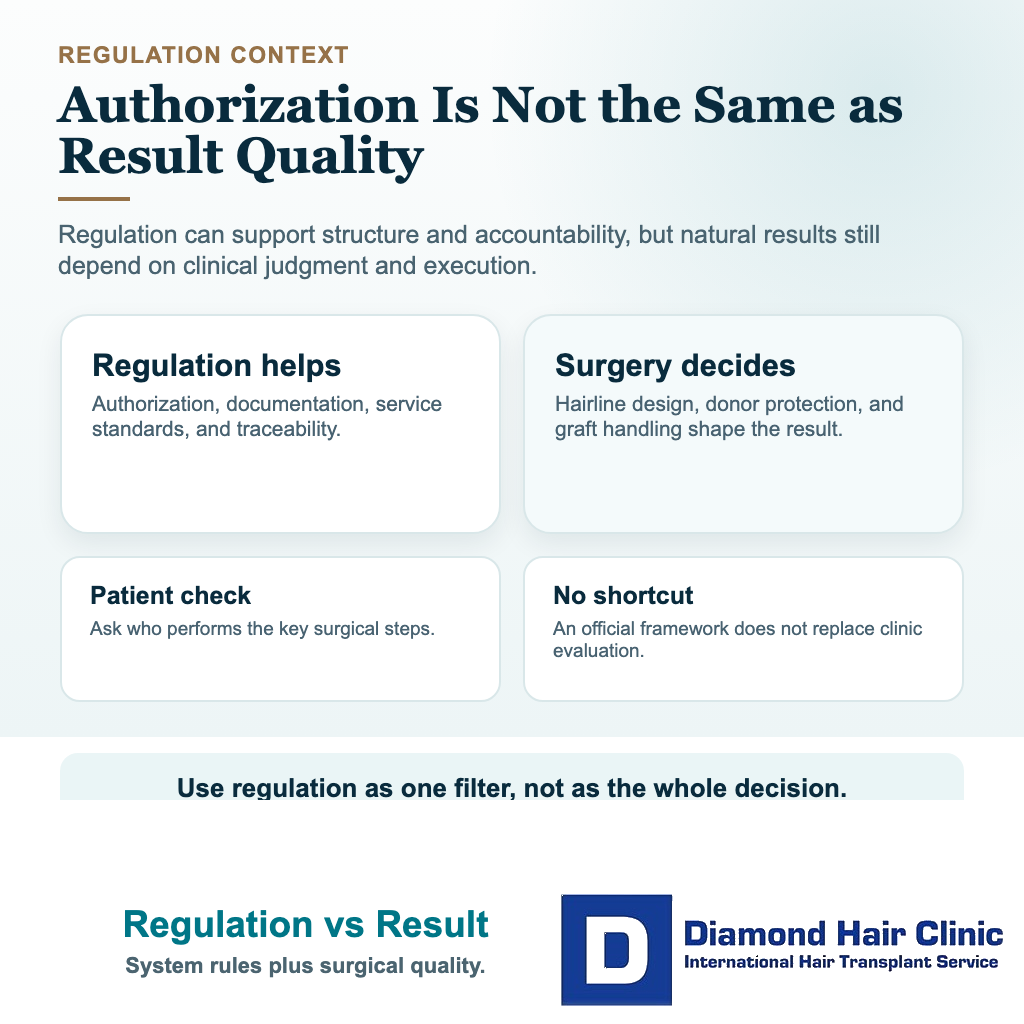
A clinic can operate inside a regulated system and still make weak surgical choices. It can advertise aggressively, promise too many grafts, draw a low flat hairline, overuse the donor area, or delegate important steps without the patient understanding who is responsible. Regulation reduces some background risks, but it cannot replace patient judgment about the clinic model.
For a hair transplant patient, the most important checks remain medical and surgical. You need to know who actually performs the hair transplant, how the hairline is designed, how donor supply is protected, and whether the graft plan is realistic for long-term hair loss.
Why did health tourism in Turkey become so visible?
Turkey became visible in medical tourism because several things developed together. The country has strong private healthcare capacity, experienced doctors in many fields, international flight access, competitive prices, and a national structure that treats health tourism as a formal sector.
Hair transplantation became one of the most visible parts of this story because demand is high, the result is visual, and patients can compare prices across countries very easily. The lower cost compared with many Western countries helped Turkey grow, but cost alone does not explain the field.
Patients should read cost carefully. A lower price can be reasonable when the system is efficient and the clinic is responsible. It becomes dangerous when the price is achieved by extreme patient volume, unclear doctor involvement, rushed planning, or poor aftercare. When the money side is part of the decision, judge hair transplant cost in Turkey together with medical responsibility.
Use official proof, then ask surgical questions
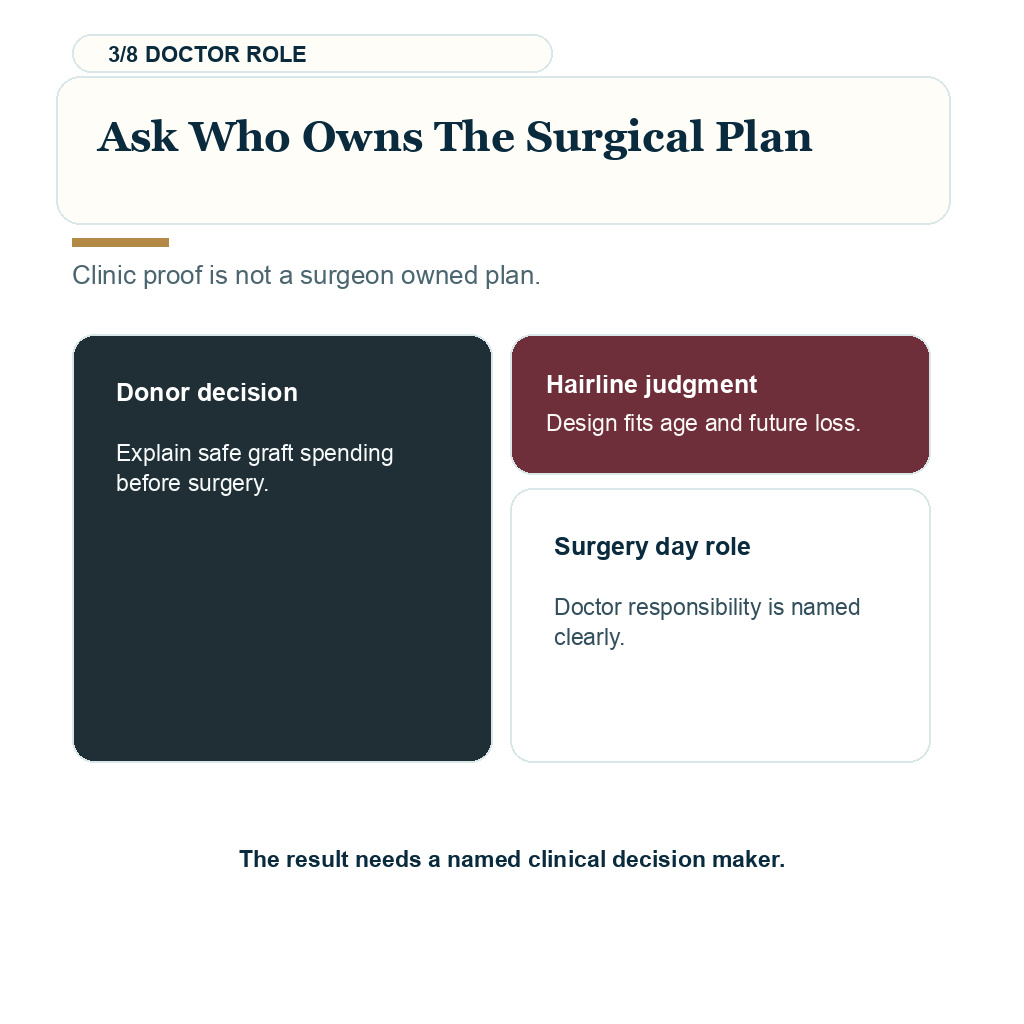
Use the Ministry of Health and HealthTürkiye framework as a starting point, not as the whole clinic review. The clinic should be appropriately authorized for international patients. The responsible physician, surgery location, and role split for each part of the procedure should be clear before travel.
Travel support is not medical responsibility. A facilitator or agency may help with hotel, transfer, translation, or travel organization. That is not the same as the physician who examines you, approves the plan, creates the recipient area, and remains responsible if donor supply is not strong enough for the requested graft number.
Then move from regulation to surgery. Ask how many grafts are being proposed, why that number is safe, how the donor area will be managed, what density is realistic, how the hairline will age, and what the clinic will not do even if the patient asks for it.
International patients also need to know how communication works after returning home. A surgery date and airport transfer are not enough. Written instructions, direct contact for concerns, and a realistic plan for the first weeks of healing matter before surgery, during travel, and after surgery. Good regulation helps the system, but good hair transplant aftercare still depends on the clinic that treats you.
For the clinic decision itself, choosing a hair transplant clinic in Turkey should go beyond authorization and examine whether the medical plan is careful, specific, and free from sales pressure.
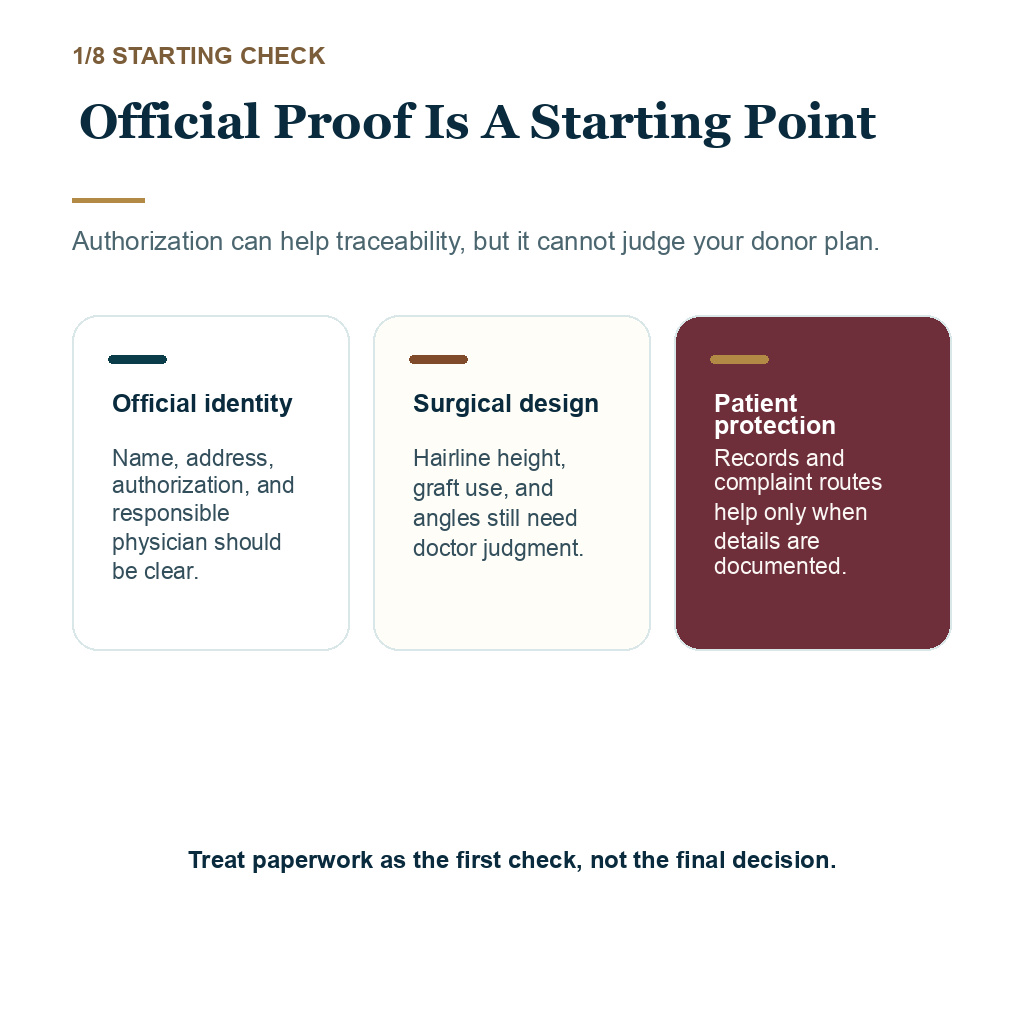
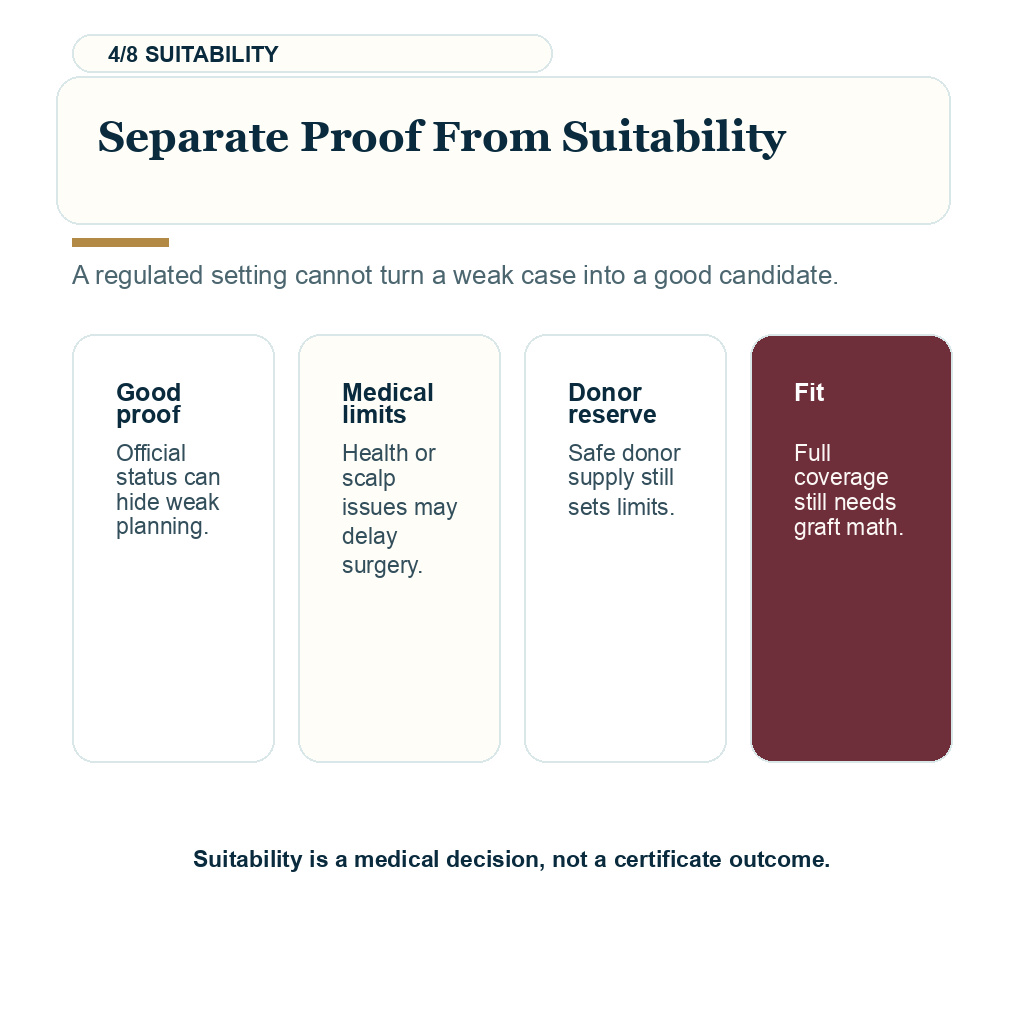
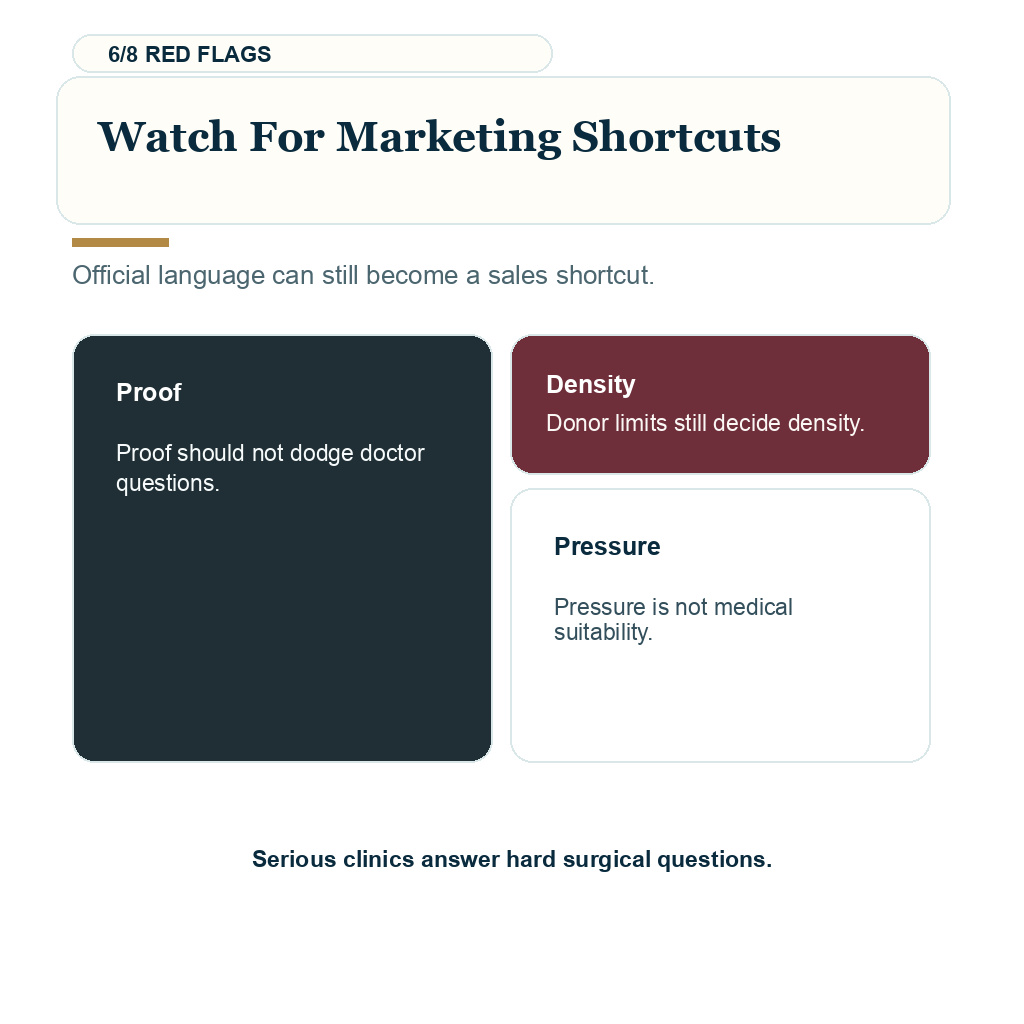
Use the 8 Ministry of Health proof slides below to turn official authorization into surgical questions. Swipe sideways, use the arrows, or choose a number below the image.
When authorization still does not make surgery suitable?
A regulated setting cannot turn a weak case into a good surgical candidate. I would still slow down, reduce the plan, or decline surgery when donor reserve is poor, diffuse thinning is active, the scalp diagnosis is not settled, a medical issue needs review, the requested hairline would age badly, or the patient expects full coverage that the donor cannot support.
This is the part a certificate cannot decide. The medical plan has to say what will be treated, what will not be treated, why the graft number is reasonable, and which finding would make surgery unsafe after direct examination.
Before travel, international patients need to separate official proof from medical suitability. Official proof helps you know the environment is traceable. Suitability still comes from the surgeon’s case review, donor judgment, hairline judgment, and willingness to say no when surgery would create a repair problem.
Warning signs still matter in a regulated system
Be cautious when a clinic hides the doctor’s role, promises a very high graft number without donor analysis, pushes the lowest possible hairline, gives the same plan to many patients, avoids written medical responsibility, or treats the operation like a package product rather than surgery.
Some organization is normal. A package, transfer, translator, coordinator, or first wash appointment can make medical travel easier. The warning sign is different. It is when the organization hides who is medically responsible for diagnosis, donor planning, recipient area incisions, graft handling, and follow-up.
The red flags of Turkish hair mills are worth reading in this context because many patient injuries come from clinic model problems, not from the country itself.
How I think about regulation inside my clinic?
In my clinic, I see regulation as a necessary foundation, not the complete answer. The consultation should respect the legal and medical framework around international patients. But the standard inside the operating room must go further than paperwork.
In hair transplantation, the result depends on diagnosis, donor management, hairline design, graft handling, recipient area creation, aftercare, and long-term planning. These are not abstract administrative details. They are the decisions that determine whether a patient looks natural or ends up needing repair.
In my own clinic model, direct surgeon involvement, one patient per day, and careful donor planning matter because official paperwork cannot correct a rushed hairline, overused donor supply, or a graft plan that was never realistic. The system matters, but the personal medical responsibility behind each patient matters more.
Regulation should lead to surgical questions
For me, Ministry of Health rules are a starting point, not the whole hair transplant plan. A licensed setting matters, but it does not tell you who designs the hairline, how donor limits are judged, or how your individual risks are handled.
Regulation is only the starting point. Before booking, identify the doctor who will examine you and create the recipient incisions. The plan should also explain how a weaker donor finding would reduce the graft target and how future hair loss has been considered.
Official structure should make the medical conversation clearer, not replace it. A regulated environment matters most when it is joined to a surgeon-led plan that explains the case in front of you.

Read this review excerpt
Probably my only concern of the whole trip was when my transport pulled up to a different hotel than I had been told but this was solved instantly and was only due to the Covid situation.