


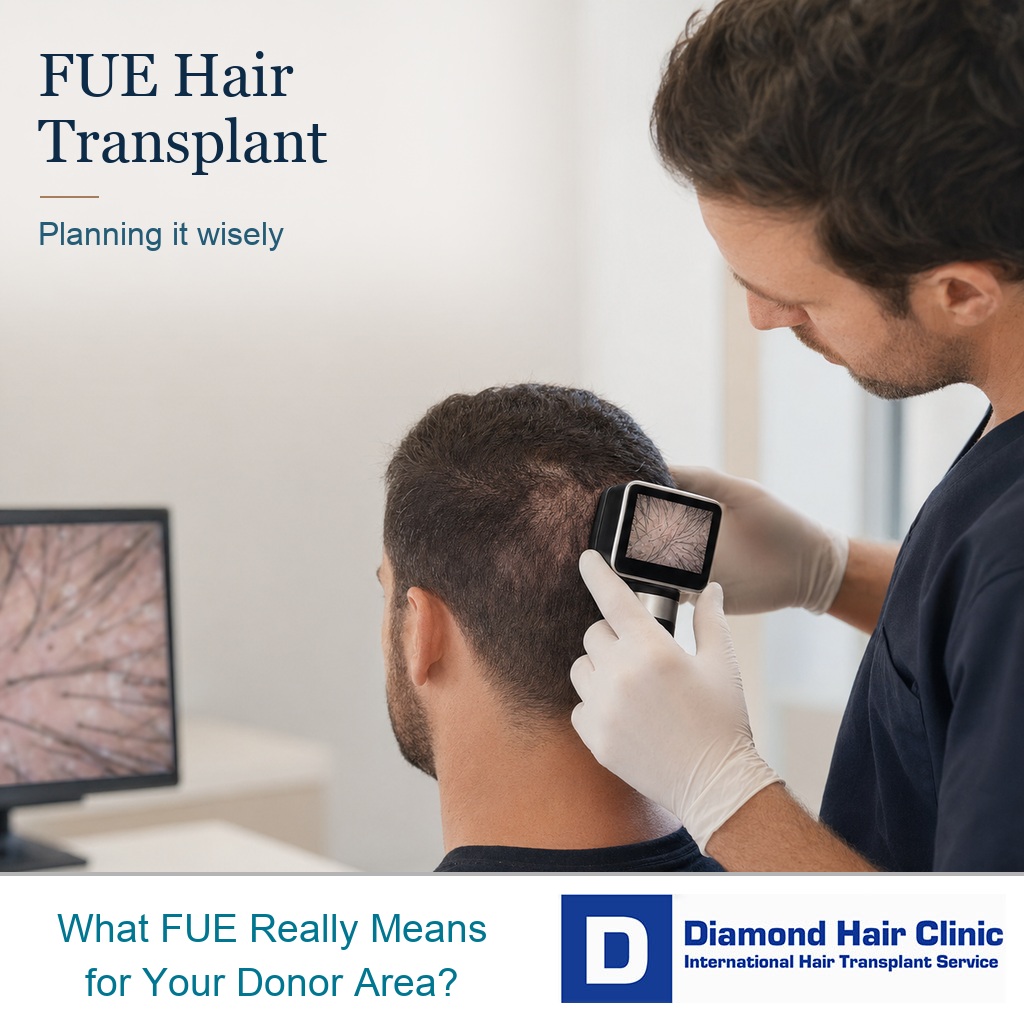
FUE Hair Transplant Benefits and Limits
FUE should not be judged by the technique name alone. In the operation, individual follicular units are removed one by one from the donor area and transplanted into thinning or bald areas. It can be the right choice when your donor area is suitable, your hair loss pattern is understood, and the plan protects your future as much as it improves your appearance today. It is not the right choice simply because it is popular, widely advertised, described as leaving no marks, or sold as a unshaven hair transplant that removes the need for donor planning. For patients who wear a fade or buzz cut, the question of short hair after FUE and donor scars deserves review before treating FUE as a simple technique choice.
FUE quote comparisons need more than a technique name. The useful comparison is who designs the plan, who extracts, who opens channels, who places grafts, how the donor limit was measured, and who checks direction. Very different graft numbers usually mean the clinics are assuming different donor limits. The price comparison is not meaningful until the donor budget behind each number is clear.
I keep the answer grounded in the actual plan. FUE can give a natural and lasting result, but only when it is planned with surgical judgment. The technique itself does not guarantee quality. Results depend on donor management, hairline design, graft handling, incision direction, density planning, and aftercare that the patient can follow. FUE is a tool. The surgeon’s judgment decides whether that tool helps or harms the patient.
When I assess a patient for FUE, I do not begin with a graft number. I begin with the patient’s age, donor area, hair caliber, family history, medication situation, crown pattern, expectations, previous surgeries if any, and the reason the patient wants surgery now. Some patients are ready for FUE. Some need a more conservative plan. Some should wait. Some should first stabilize their hair loss. In this part of the decision, careful planning matters more than any technique name.
Basic meaning of FUE hair transplant
FUE became widely known as Follicular Unit Extraction. Many surgeons now prefer the term Follicular Unit Excision because it describes the surgical act more accurately. In everyday patient language, both names are used, but the meaning is the same for most consultations. Individual natural hair groups are removed from the donor area with small punches and then placed into the recipient area.
A follicular unit is not always one hair. It can contain 1 to 4 hairs, sometimes more depending on the person. These units grow naturally in small groups in the scalp. In FUE, I remove these units one by one instead of removing a strip of skin from the donor area. That distinction still matters because patients often judge techniques by the scar they fear, while surgeons have to judge how grafts are taken and how the donor area will look years later.
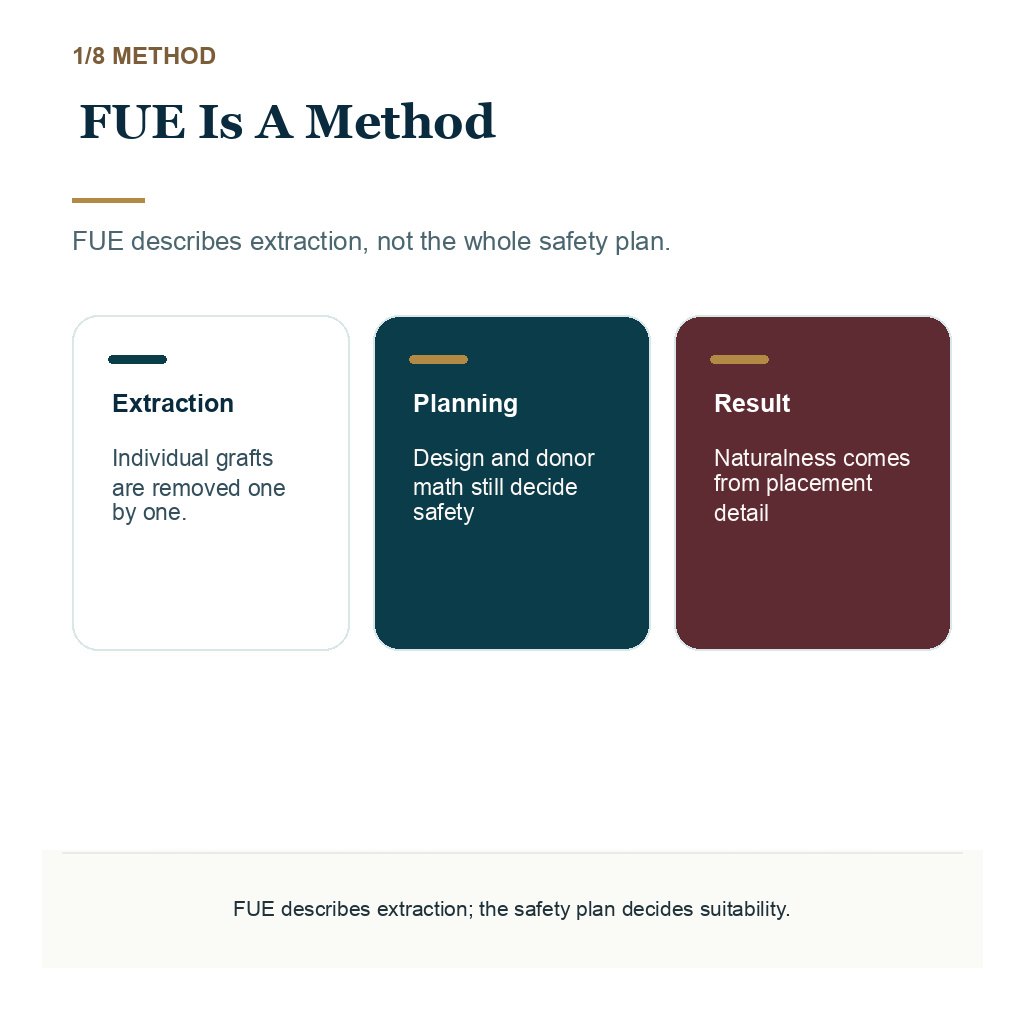
The recipient area is a separate part of the operation. Removing grafts with FUE does not necessarily mean they will be placed well. The grafts still need to be distributed into the thinning area with correct angle, direction, density, and hair type selection. FUE is the harvesting method, not the whole hair transplant. The final look depends on the complete surgical plan.
In many modern clinics, FUE is performed with manual or motorized punches. Punch sizes commonly used in FUE are small, often around 0.7 to 1.2 mm depending on the patient and the surgeon’s approach. The plan should release the follicular unit with minimal trauma, then remove it gently and preserve it until implantation.
A smaller punch does not create more donor follicles or make a larger harvest safe. I choose the punch to release the graft cleanly, then keep the total extraction within the donor plan.
That description can sound easy when written in one sentence, but it is much more delicate in real surgery. Hair follicles do not grow straight under the skin in every patient. Very curly or Afro hair, thick skin, scarring, previous surgery, and unusual follicle angles can make extraction more difficult. A patient may look like a good FUE candidate from a photo but still need a careful in person or detailed remote evaluation before the plan is trusted. In selected repair cases, the same method may also be considered when judging whether FUE grafts can repair a FUT scar, but scar tissue needs a more cautious plan than normal scalp.
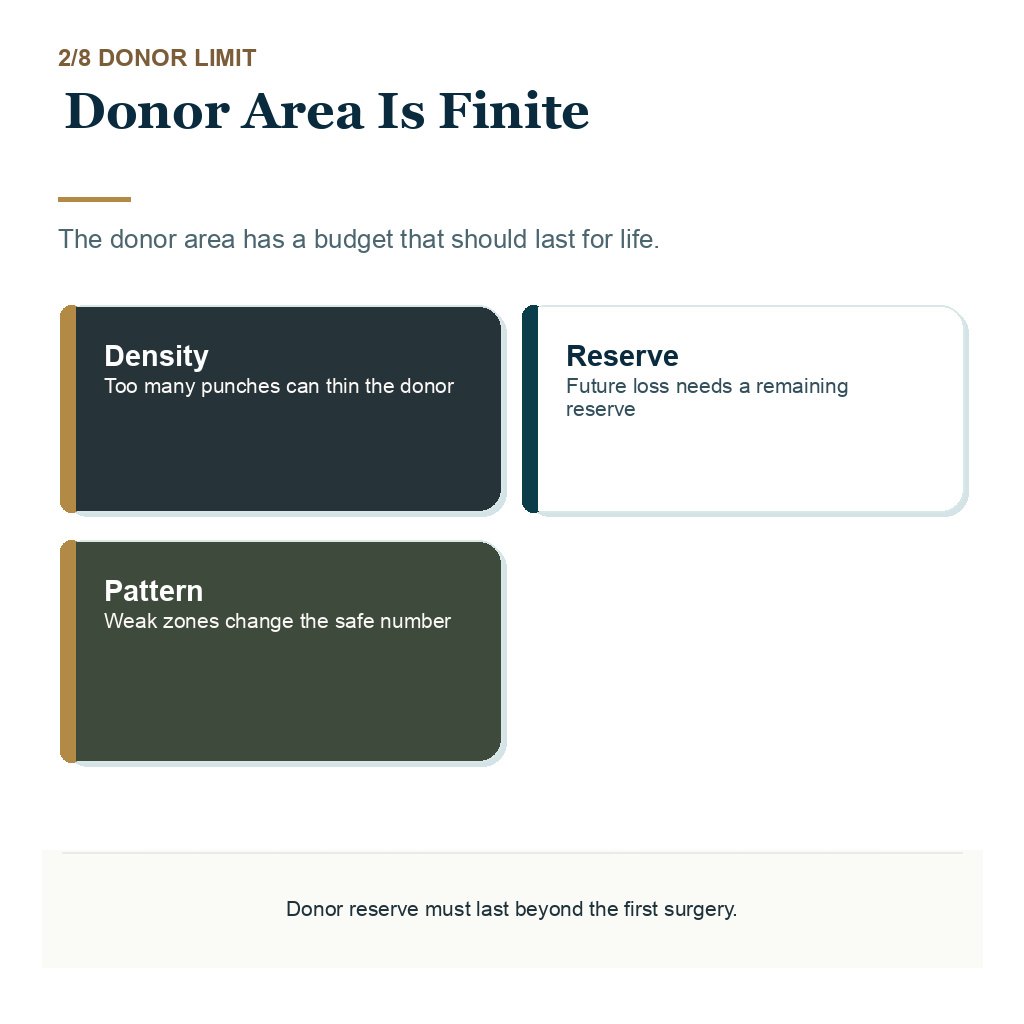
The donor area is usually the back and sides of the scalp because these hairs tend to be more resistant to the hormone related miniaturization seen in male pattern hair loss. But resistant does not mean unlimited. Every graft removed from the donor area is permanently removed from that area. I describe donor hair as a lifetime resource.
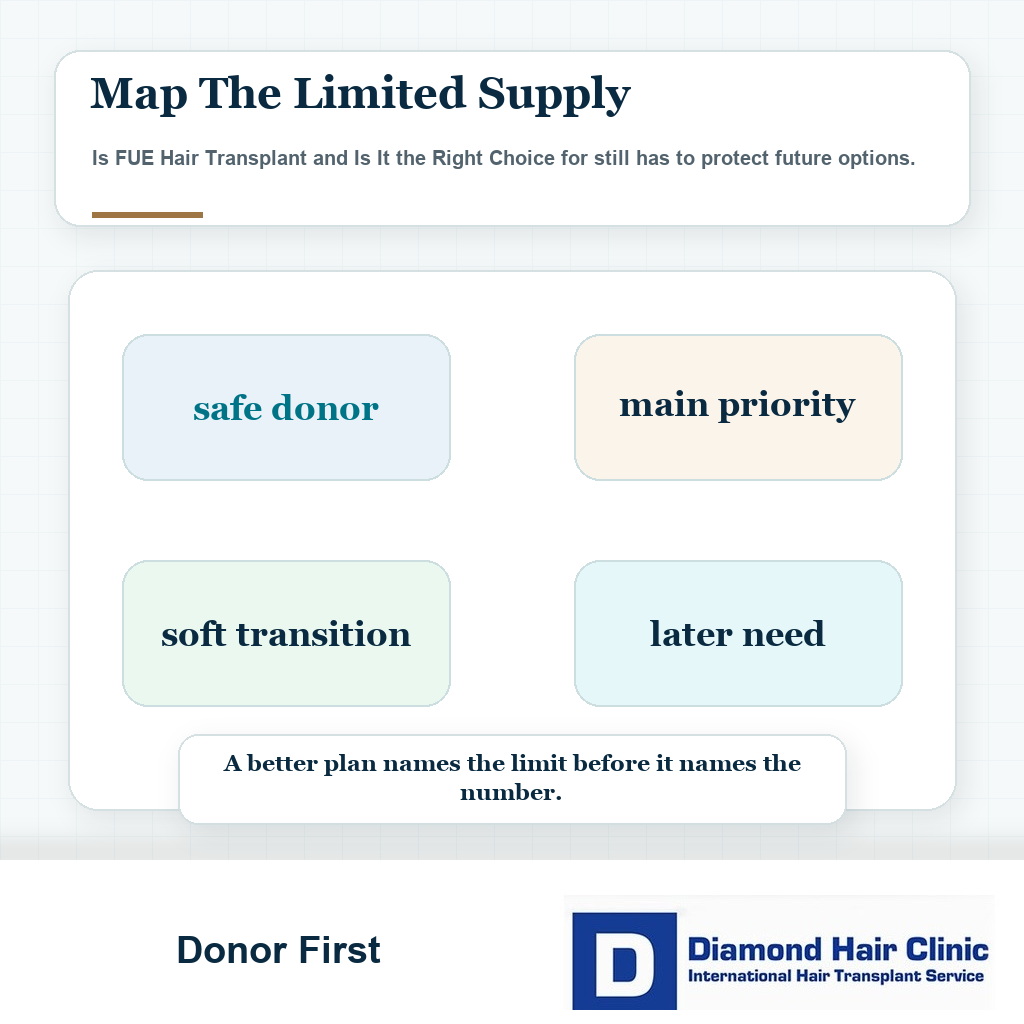
FUE is therefore not just graft removal. The surgical decision is how much hair can be taken safely, where it can be taken from, where it should be placed, and what the patient may need later. A good FUE plan treats the donor area like a budget that must last for life.
FUE changed hair transplant history
To understand FUE properly, patients should know where it sits in the history of hair transplantation. Hair transplant surgery did not begin with the natural looking methods patients see today. Older techniques used larger grafts and sometimes produced obvious plug like results. These results could grow hair, but they often failed aesthetically because the hair did not blend naturally with the face and scalp.
Over time, hair transplantation became more refined. Surgeons began using smaller grafts, then follicular unit based transplantation, which respected the way hair grows in natural groupings. Naturalness improved not because hair transplantation became magical, but because surgeons learned to work with the anatomy of the hair instead of fighting it.
FUT, also called strip surgery, became a major step in this evolution. In FUT, a strip of donor scalp is removed, then divided under magnification into follicular units. FUT can still be useful in specific cases, especially when the donor strategy requires a large number of grafts from a defined zone. The trade off is a linear scar. I discuss this in more detail on the page about FUT hair transplant.
FUE changed the donor conversation. Instead of removing a strip, the surgeon could remove follicular units one by one. For many patients, this meant no linear scar, faster donor healing, and more flexibility with shorter hairstyles. FUE also helped expand the possibilities for beard, eyebrow, scar repair, and body hair use in selected cases, although each of these requires separate judgment.
But FUE did not erase the lessons of earlier hair transplantation. A poorly designed FUE hairline can still look artificial. A poorly managed FUE donor area can still be damaged. A clinic can use a modern extraction tool and still create an dated looking result if the planning is weak. I see FUE as a historical improvement, not a substitute for surgical thinking.
The broader history of hair transplantation teaches a useful lesson. Every technical advance solves some problems and creates new responsibilities. FUE solved the linear scar concern for many patients, but it also made overharvesting easier to hide at first. Because each extraction wound is small, weak clinics can take too many grafts and make the donor look thin later.
The historical value of FUE is that it gave surgeons a more flexible harvesting method. The unsafe part is that marketing made some patients believe the method itself is enough. It is not. The patient still needs diagnosis, planning, design, and follow up. The technique changed. The responsibility did not.
Real advantages of FUE hair transplant
FUE avoids a linear donor scar, which matters for patients who want shorter hair or feel uncomfortable with the idea of strip surgery and stitches. I still explain that this is not the same as a scarless operation. FUE leaves many tiny extraction points, and they stay discreet only when the donor area is harvested carefully.
FUE also gives the surgeon flexibility. Grafts can be selected one by one, the extraction pattern can be distributed, finer single grafts can be reserved for the frontal hairline, and stronger grafts can be used where visual density matters more. This flexibility is useful only when it is controlled. If it becomes a race for more grafts, the advantage turns into a risk.
Recovery is often easier for patients to accept with FUE. Many patients return to normal daily routines relatively quickly, although the scalp is not fully healed immediately. The donor dots usually close fast, scabs fall, redness settles gradually, and the visible signs often become easier to manage within the first 10 days. Still, patients should not confuse early comfort with final healing.
FUE can also help in selected repair situations. Grafts may sometimes be placed into a previous FUT scar to soften its appearance, or FUE may be used after FUT as part of a lifetime donor plan. This is advanced planning, not a simple menu choice.
In limited cases, FUE can use donor hair outside the scalp, such as beard or chest hair, when scalp donor supply is not enough. This is not a first option for every patient. Body and beard hair behave differently from scalp hair. Their texture, growth cycle, curl, caliber, and cosmetic role must be considered carefully. They can support a repair plan in selected cases, but they should not be sold as a simple replacement for a poor scalp donor area.
For small or moderate cases, FUE can be especially useful. A patient with limited frontal recession, a small scar, or selected temple work may benefit from the controlled nature of FUE. The surgeon can harvest an appropriate number of grafts without creating a strip scar that may be unnecessary for a smaller operation.
The best advantage of FUE is not speed or marketing appeal. It is the ability to create a refined plan while preserving future options. When FUE is done well, it can restore the frontal frame, improve density, and keep the donor area looking natural. When it is done poorly, the same method can create donor depletion, unnatural density, and difficult repair problems.
Limits and risks patients should not ignore
The biggest misunderstanding about FUE is the idea that it is scarless. It is not. FUE does not create a long linear scar, but each extraction creates a small wound. In a good case, those tiny marks are difficult to notice. In a poorly planned case, they can become visible as white dots, patchy donor thinning, or an uneven donor pattern.
Overharvesting is the risk patients need to take seriously. It happens when too many grafts are removed, when the extraction pattern is too dense in one zone, or when the surgeon harvests outside the stable donor area. This is not only a cosmetic issue. It can limit future repair, reduce short haircut options, and make the patient feel trapped because the back of the head now reveals the surgery.
My approach to donor area overharvesting is preventive. A slightly more conservative first surgery is better than creating a donor problem that later becomes difficult or impossible to fully correct. During the excitement of planning a new hairline, it is easy to forget that the donor area cannot replace what was removed.
Graft damage is another limit that is easy to underestimate from the outside. A follicular unit is delicate. If the punch angle is wrong, the graft can be transected. If forceps handling is rough, the graft can be damaged. If grafts dry out or remain outside the body without proper management, growth can suffer. I do not reduce FUE to a device or motor. The hands and judgment behind the tool matter.
If early extractions repeatedly produce transected or incomplete grafts, I pause and reassess the punch angle, depth and size before deciding whether FUE should continue. A promised graft number is not a reason to keep extracting when graft quality is poor.
A clean extraction does not save a poor recipient area design. The result can still look unnatural if the hairline is too low, too straight, too dense at the front, or built with the wrong graft type. Thick multiple hair grafts at the front can look pluggy. Wrong hair angle can make the result look obvious in daylight.
FUE also does not stop future hair loss. It moves resistant hairs into thinning areas, but native hair can continue to miniaturize behind or around the transplant. A patient may have a nice result at 12 months and then lose more native hair later. Medication, family history, age, crown pattern, and long term planning matter.
Patients can also misread the early recovery period. Shedding, redness, uneven early growth, donor redness, or shock loss may make the operation feel as if it has failed. Some of this can be normal. Some signs need attention. A careful clinic prepares the patient for the difference. Recovery guidance is part of surgical responsibility, not an afterthought.
FUE becomes unsafe when it is sold as an effortless story. If a clinic says it is painless, scarless, guaranteed, unlimited, and suitable for everyone, that should make the patient slow down. Surgery does not become safe because the sales language is comfortable. A responsible FUE plan explains the limits clearly before asking for commitment.
test what you know.
Planning, donor hair and recovery.
Every answer explained.
Check the basics of FUE
Three questions about grafts, scars and surgical limits.
Question 1 of 3
FUE removes individual follicular units rather than a strip of donor scalp.
Avoiding a linear scar means that FUE leaves no scars at all.
FUE prevents the native hair around a transplant from thinning later.
This checks your understanding. It does not determine your suitability for surgery.
Candidate quality and donor area protection
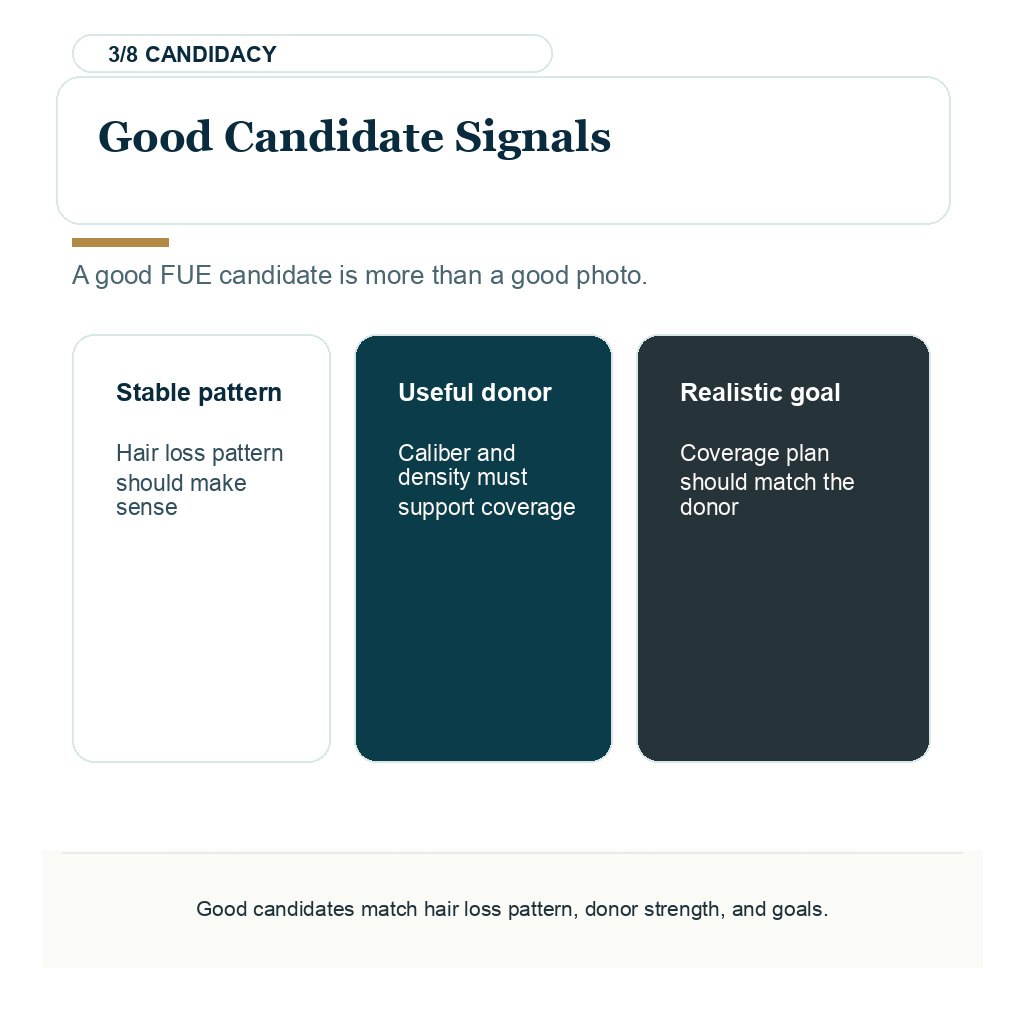
A good FUE candidate usually has a stable enough hair loss pattern, a healthy scalp, enough donor density, realistic expectations, and a surgical goal that can be achieved without exhausting the donor area. The patient does not need perfect hair. The plan must match the biology.
Age matters. A young patient with early recession may want a low, dense hairline, but the future hair loss pattern may not yet be clear. If I use too many grafts too early, the patient may look good for a short period but face a more difficult problem later. In younger patients, conservative design and medical stabilization often matter more than aggressive density.
Hair caliber matters. Thick hair creates more visual coverage than fine hair. Curly or wavy hair can give a fuller appearance, but it may be more technically demanding to extract safely. Straight fine hair may require more careful density planning because each graft contributes less visual coverage. The same graft number does not produce the same look in every patient.
Skin and hair contrast matters. Dark hair on light skin shows gaps more easily. Light hair on light skin may look fuller with fewer grafts because the contrast is softer. Two patients can receive similar graft numbers and still have very different visual outcomes.
Donor density matters, but donor quality is not only density. I look at miniaturization in the donor, scalp laxity, previous extraction patterns, hair direction, scarring, and the safe donor zone. If the donor is already weak, I may reduce the plan, delay surgery, or advise against surgery. FUE cannot create donor hair that does not exist.
The area being treated matters. Frontal hairline restoration often provides strong visual value because it frames the face. Crown work can be more demanding because the area is large and the whorl pattern spreads density in multiple directions. In some patients, treating the front first and delaying or limiting crown work protects future grafts better.
Medication tolerance matters. Some patients cannot or do not want to use finasteride, dutasteride, or minoxidil, and I respect that. But the decision affects the surgical plan. If native hair is likely to continue miniaturizing and the patient is considering a hair transplant without finasteride, the transplant design must be more conservative. Surgery and medical management are different tools, but they influence each other.
Expectations matter most of all. A patient who expects teenage density, a very low hairline, full crown coverage, and no visible donor change may not be ready for surgery. A patient who understands trade offs, accepts long term planning, and values naturalness is usually easier to help. A good candidate is not only someone who is a good candidate for FUE. It is someone whose expectations match what FUE can responsibly achieve.
Donor area protection during FUE
The donor area is the foundation of FUE. If the donor is damaged, the patient loses options. The hairline may receive the attention, but the donor area determines what is possible now and what remains possible later.
When I examine the donor area, I am not only asking whether there is hair. I want the consultation to document donor density, hair caliber, miniaturization, previous extraction or strip scars, the safe donor zone, and the haircut length the patient wants to keep. A quoted graft number is not useful unless those details explain where the grafts can safely come from and what reserve will remain for the future.
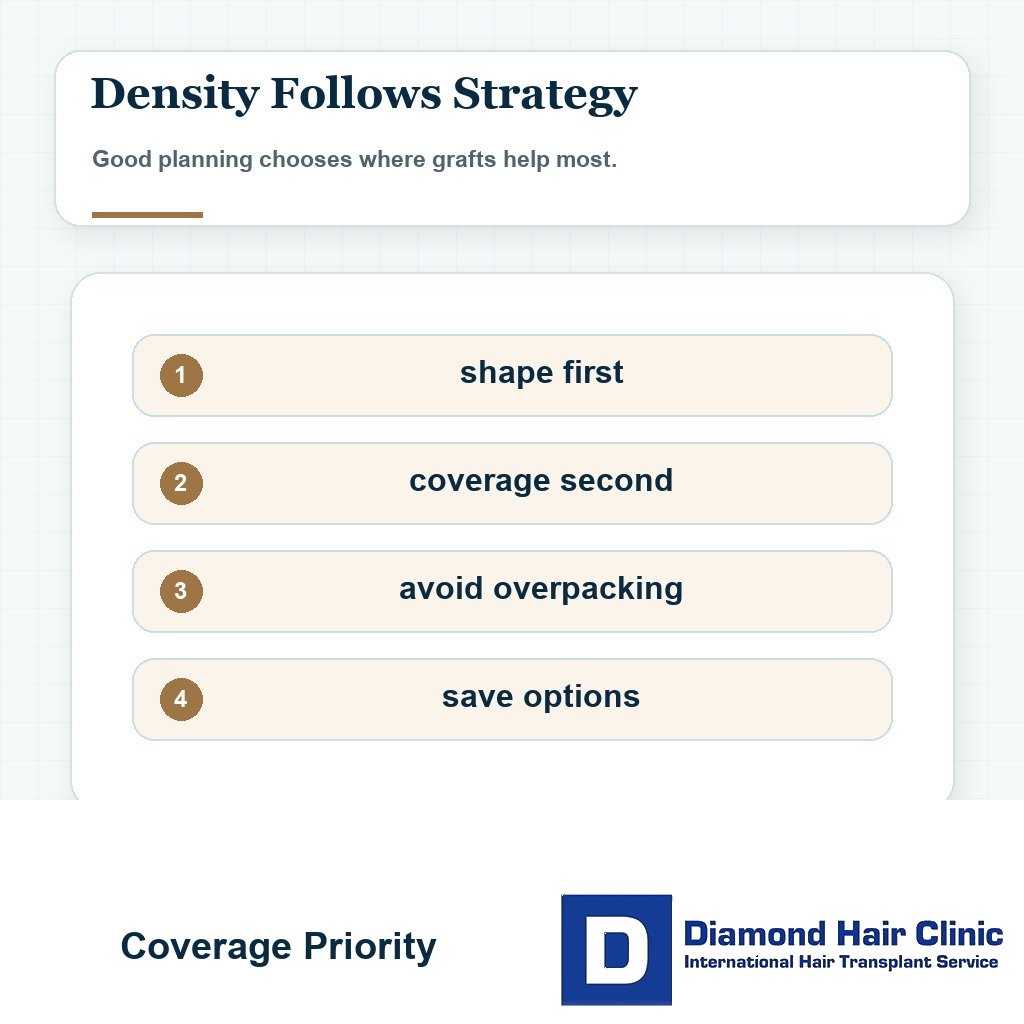
A good extraction pattern is spread with logic. It avoids taking too many grafts from one small zone. It respects the safe donor region. It avoids creating a sharp visual contrast between harvested and unharvested areas. It also avoids chasing grafts from areas that may thin later.
The safe donor area has different boundaries from one person to another. Thinning can extend down from the crown or rise from the nape, and the sides can be less stable than they look in a photograph. I check those borders as well as the dense central area. Grafts taken from a thinning border may continue to thin after transplantation. Later thinning around the extraction marks can also make those marks easier to see.
In FUE, the surgeon must think in three dimensions. The hair exits the skin at one angle, travels under the skin in another shape, and may curve depending on hair type. A punch that looks centered on the surface can still injure the follicle underneath if the angle is misjudged. Curly hair and previous surgery make this judgment even more delicate.
Donor planning also depends on the intended hairstyle. A patient who wants to wear a short buzz cut needs a more cautious donor pattern than a patient who keeps the hair longer. FUE gives more flexibility than FUT for short hair, but it does not make the donor invisible under every length, every light, and every extraction number.
I also consider the psychology of the donor area. Patients often worry about the front before surgery and then worry about the donor after surgery. They look at the back of the head in harsh light, with wet hair, or under a phone camera flash. Some early concern is normal. But if the donor has been harvested aggressively, the anxiety may be justified.
For that reason, prevention is better than repair. Once donor hair has been removed, it cannot be placed back into the donor area in a simple way. Some cosmetic improvement may be possible in selected repair cases, but it is limited. The better surgical decision is to avoid donor damage in the first operation.
My rule is to make the donor area look like it was respected. The front can improve while the donor still looks natural from behind. A good result should not solve one angle of the head while creating a new problem at the back.
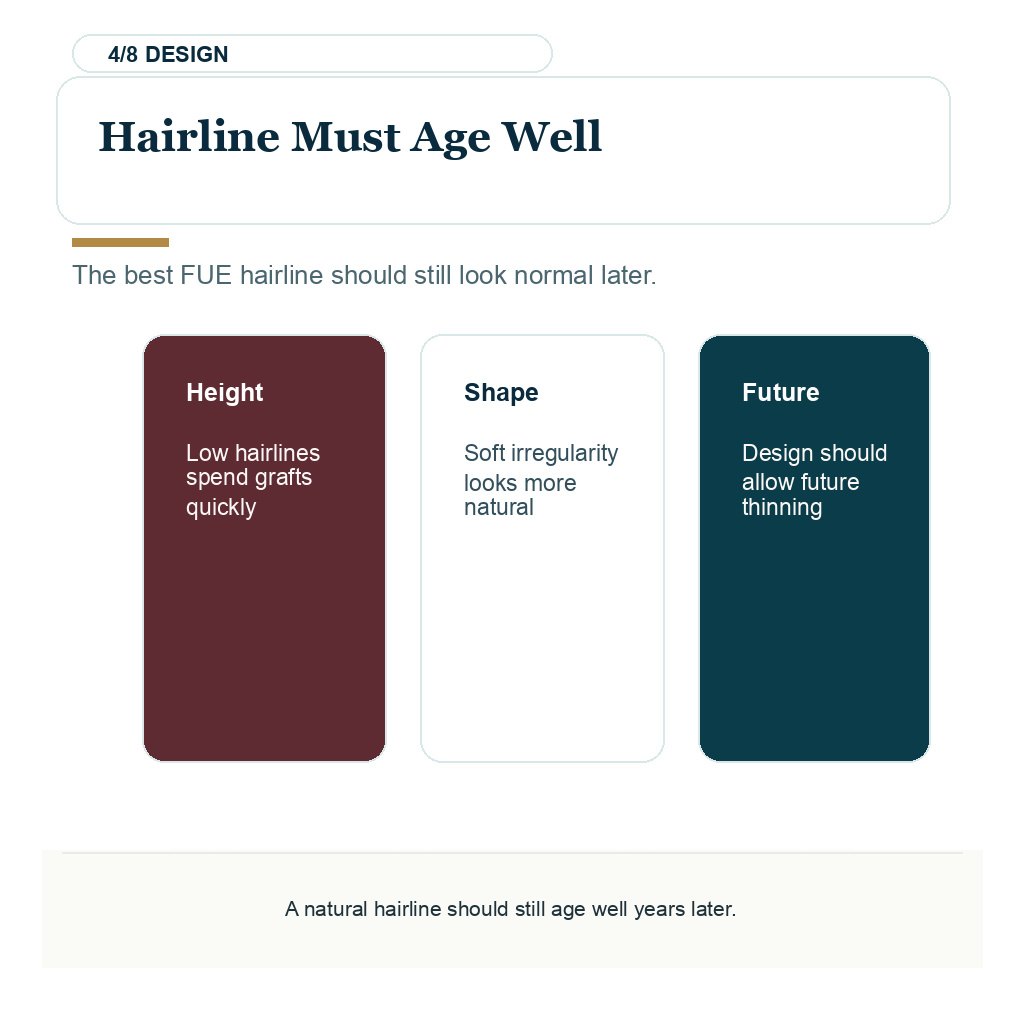
I use these 8 slides as a quick donor protection check. Swipe sideways, use the arrows one slide at a time, or choose a number below the image.
Technically possible can still be the wrong plan
Sometimes FUE can technically be performed, but I still would not recommend surgery yet. This happens when the donor looks thin, the hair loss pattern is still moving, the requested hairline is too low, the crown demand would consume too many grafts, or the patient wants a result that only looks possible in edited photographs.
Removing grafts is only the first test. The more important test is what the patient will look like in five or ten years if native hair continues to thin. If FUE uses the donor reserve too early, the operation can solve today’s photograph while creating tomorrow’s repair problem.
In these cases, I may advise medication review, a smaller first session, delayed crown work, a higher hairline, or waiting until the pattern is clearer. That is not a refusal to help. It is how I protect the patient from using a lifetime donor supply for a short term wish.
Safe graft numbers in FUE
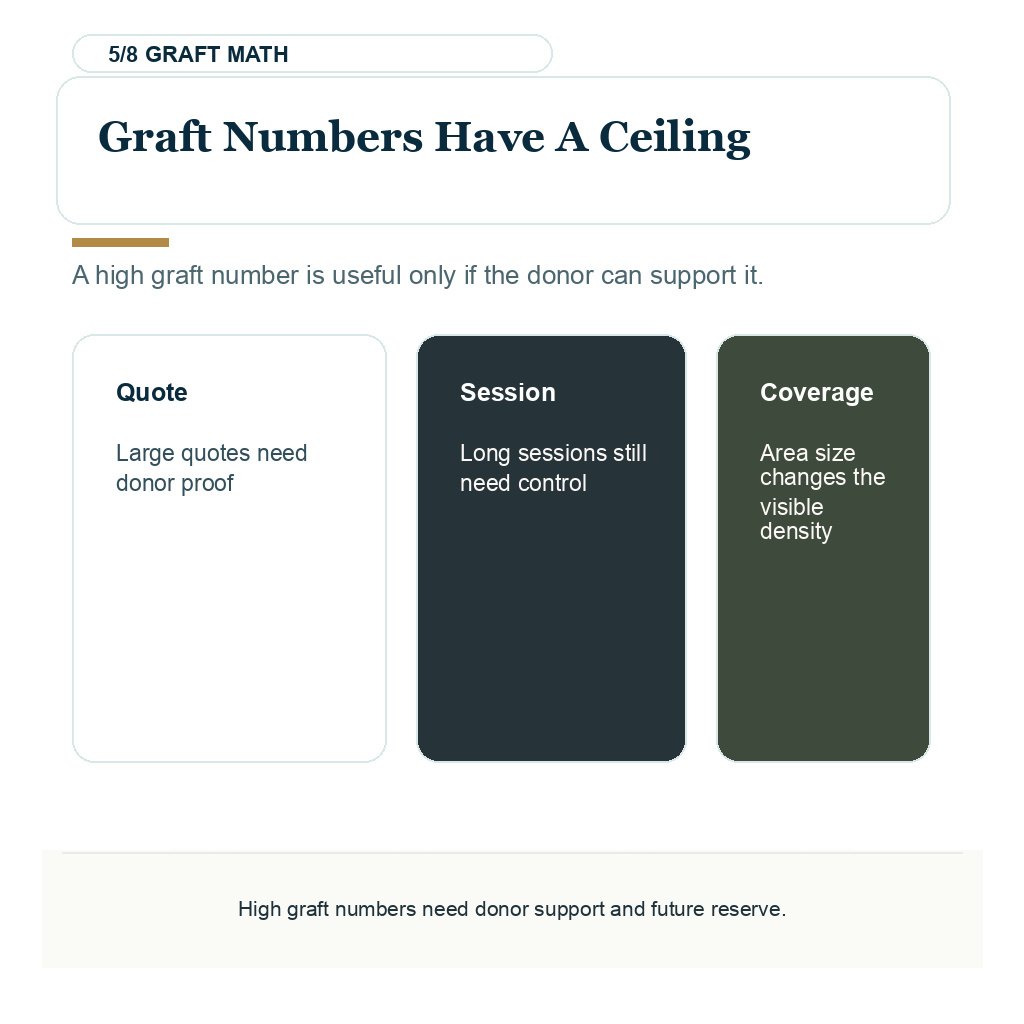
There is no responsible universal graft number for FUE. The safe number depends on donor density, hair caliber, scalp contrast, head size, previous surgery, the size of the recipient area, the crown pattern, the patient’s age, and the likelihood of future hair loss. If a clinic gives a large number quickly without explaining these factors, the number does not reassure me.
I calculate the graft number from the surgical design. I decide which area deserves treatment, what density is responsible for that area, and whether the donor can support the plan without being weakened. The graft number is the result of this reasoning, not the beginning of it.
Many patients focus on whether 3,000 grafts, 4,000 grafts, or 5,000 grafts is good. The number alone tells me very little. 3,000 grafts can be excellent in one patient and insufficient in another. 5,000 grafts can be appropriate in a strong donor with a large but realistic plan, or excessive in a patient whose donor cannot safely support it.
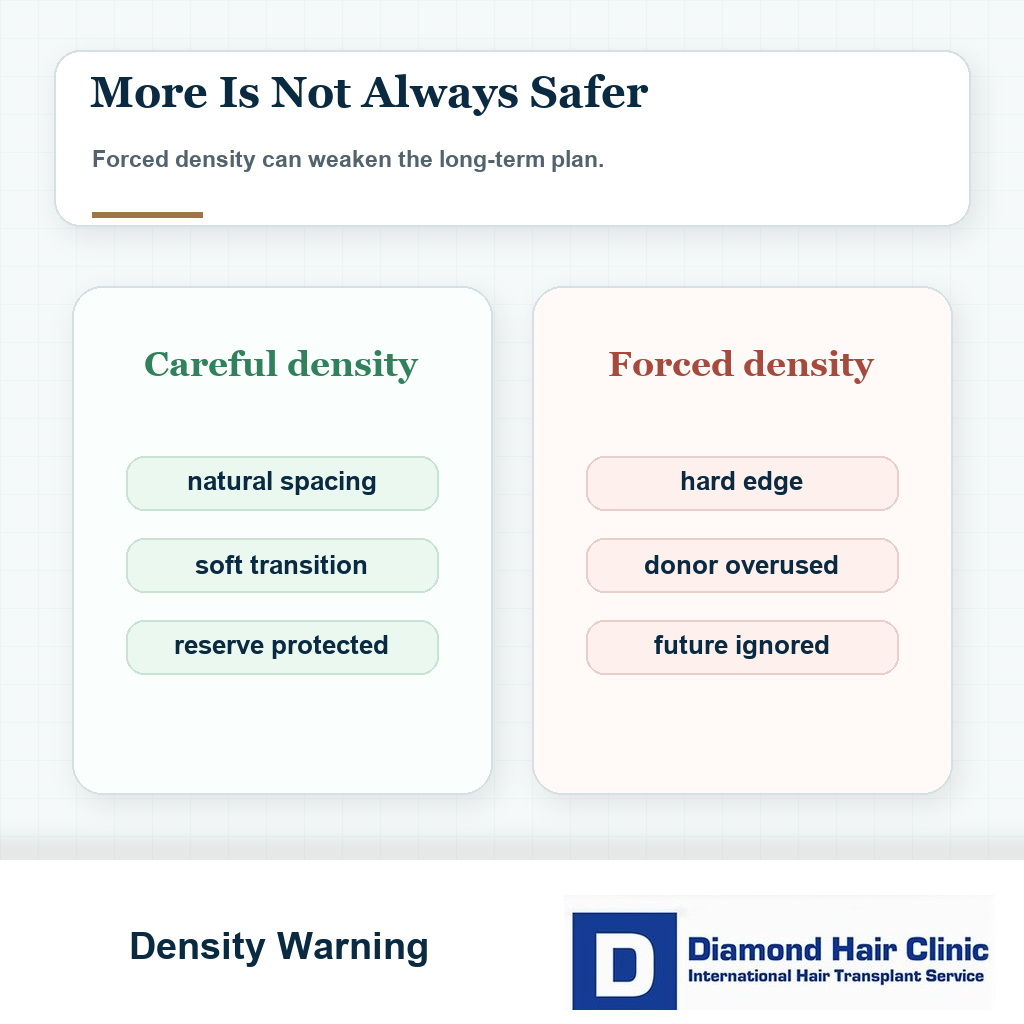
Distribution matters as much as total number. A dense frontal hairline and a thin middle scalp may look strange. A scattered plan over a large area may look weak everywhere. A crown filled too aggressively may waste grafts that the patient later needs for the front. A good graft plan chooses priorities.
I often tell patients that hair transplantation is not painting a wall. You cannot simply cover every empty area evenly. The scalp has blood supply limits, donor limits, cosmetic priorities, and future hair loss patterns. I am not trying to fill every square millimeter. The plan should create the best visual improvement with the safest long term use of grafts.
High graft numbers are especially risky when used as a sales promise. A large number can sound impressive, but patients should ask where those grafts will come from, where they will go, and what will remain for the future. If the explanation is vague, the number is not reassuring.
More grafts can also mean a longer procedure, more graft handling time, more donor stress, and more demand on the recipient tissue. Large sessions are not always wrong. They must be justified by the patient’s anatomy and surgical plan. The right graft number is not the biggest number. It is the number the donor and recipient area can support responsibly.
FUE, Sapphire FUE, DHI, and FUT compared
Patients often compare method names before they understand the basic hair transplant terminology. This confusion is normal because clinics often present techniques like competing products. For the patient, the names describe different parts of the operation.
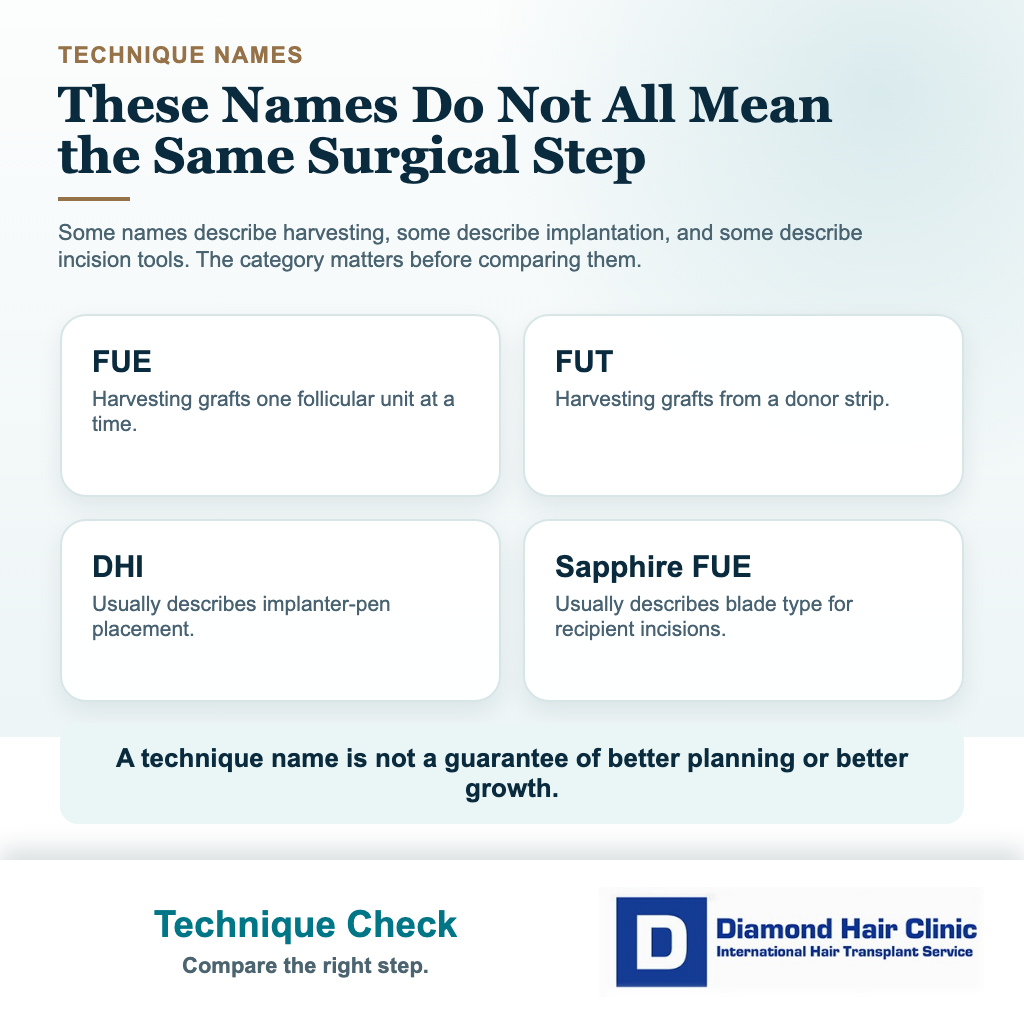
FUE describes how grafts are harvested. FUT describes another way to harvest grafts by removing a strip and dissecting follicular units. DHI usually refers to implantation with an implanter pen. Sapphire FUE refers to recipient area incision creation with sapphire blades in a FUE plan. These are not all the same category.
If a patient is comparing implantation approaches, I usually recommend reading a careful DHI and FUE comparison because many people think DHI and FUE are direct opposites. They are not. A patient can have FUE harvesting and then different implantation strategies depending on the clinic and case.
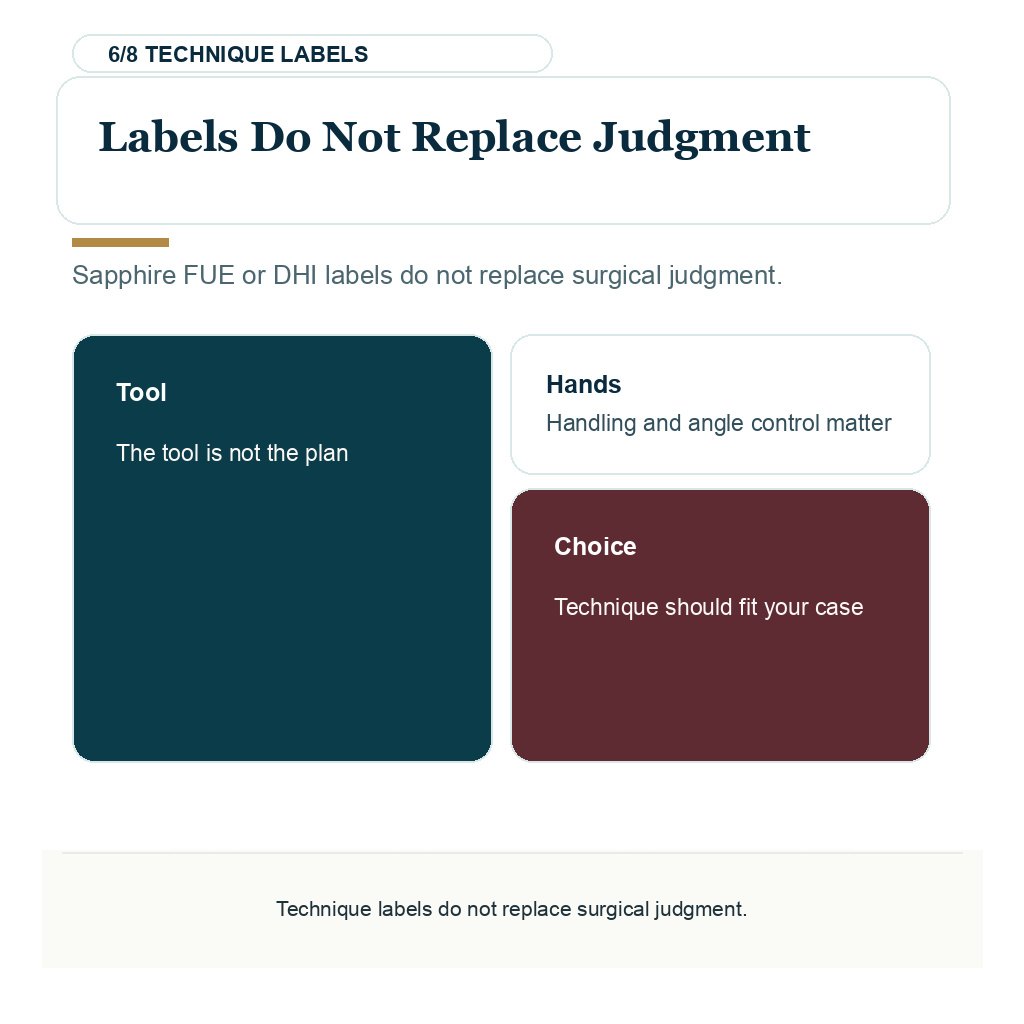
I use Sapphire FUE planning when I believe it helps with refined recipient area control. But I never tell patients that sapphire alone creates a natural result. The blade material does not design the hairline, choose the grafts, manage the donor, or decide the correct angle. The surgeon does.
FUT can still have a place in specific cases, especially when lifetime donor planning is complex and the patient accepts a linear scar. Some patients dislike the idea immediately. I understand that. But a serious surgeon should be able to explain the trade off rather than pretend one method is always superior for every person.
Robotic FUE and motorized FUE also need careful interpretation. Technology can help, but it does not replace diagnosis. A robot or motor does not know what hairline will age well on your face. It does not know whether your crown should be delayed. It does not know whether your expectations are safe. Technology can support surgery, but it should not become the surgeon.
The method choice should answer the patient’s real concern. I assess how the donor hair can be used safely, which approach gives the best chance of a natural result, how future options will be protected, and which steps the surgeon will personally control. When the discussion reaches that level, the technique names become easier to judge.
Natural FUE results come from surgical detail
A natural FUE result begins before any graft is removed. It begins with the design. The hairline must fit the patient’s face, age, donor capacity, hair loss pattern, and future risk. If the hairline is too low or too straight, the result may look artificial even if the grafts grow well.
I treat natural hairline design as a central step in FUE. The front should usually use finer single hair grafts. The transition behind the hairline should be gradual. The angles should follow native direction. The temples should not be rebuilt aggressively unless the donor and facial proportions justify it.
Naturalness is not created by randomness alone. Some patients hear that a natural hairline must be irregular and then imagine a messy line. That is not the goal. The goal is controlled irregularity. The hairline should look soft and organic, but still planned. Too much symmetry looks artificial. Too much disorder also looks artificial.
Density must also be realistic. Patients often want the thickest possible result, especially after looking at dramatic photos. But dense packing must respect blood supply, graft size, skin quality, and future hair loss. A very dense low hairline may look exciting early, but it can consume too many grafts and create problems later.
Hair direction is another reason surgeon involvement matters. Hair exits the scalp at different angles in the frontal hairline, middle scalp, temples, and crown. If grafts are placed upright where they should lie flatter, the result may look unnatural. If the crown whorl is ignored, the crown can look strange even with good growth.
A natural FUE result also depends on what is not done. I may avoid a low hairline. I may avoid heavy crown work. I may leave some recession if it suits the face and protects the future. Patients sometimes think this is less ambitious. I see it as better long term surgery. My aim is not to make the patient look transplanted. The plan should make the patient look naturally improved.
When I look at a result, I do not only check whether hair grew. I check whether the donor looks healthy, whether the front is soft, whether the density is appropriate, whether the face looks balanced, and whether the plan can survive future hair loss. That is the difference between growth and a good result.
Check the plan beyond the technique name
Three questions about donor use and result quality.
Question 1 of 3
The largest offered graft number is always the safest FUE plan.
A successful extraction alone guarantees a natural hairline.
A blade or implanter name can replace the need to assess the surgeon’s plan.
This checks your understanding. It does not determine your suitability for surgery.
Surgery day and early recovery
On the day of FUE, the plan should already be clear. The operation is not the time to discover that the patient wants a completely different hairline or that the donor cannot support the promised number. Before surgery, I confirm the design, review the donor, answer remaining questions, and make sure the patient understands the goal.
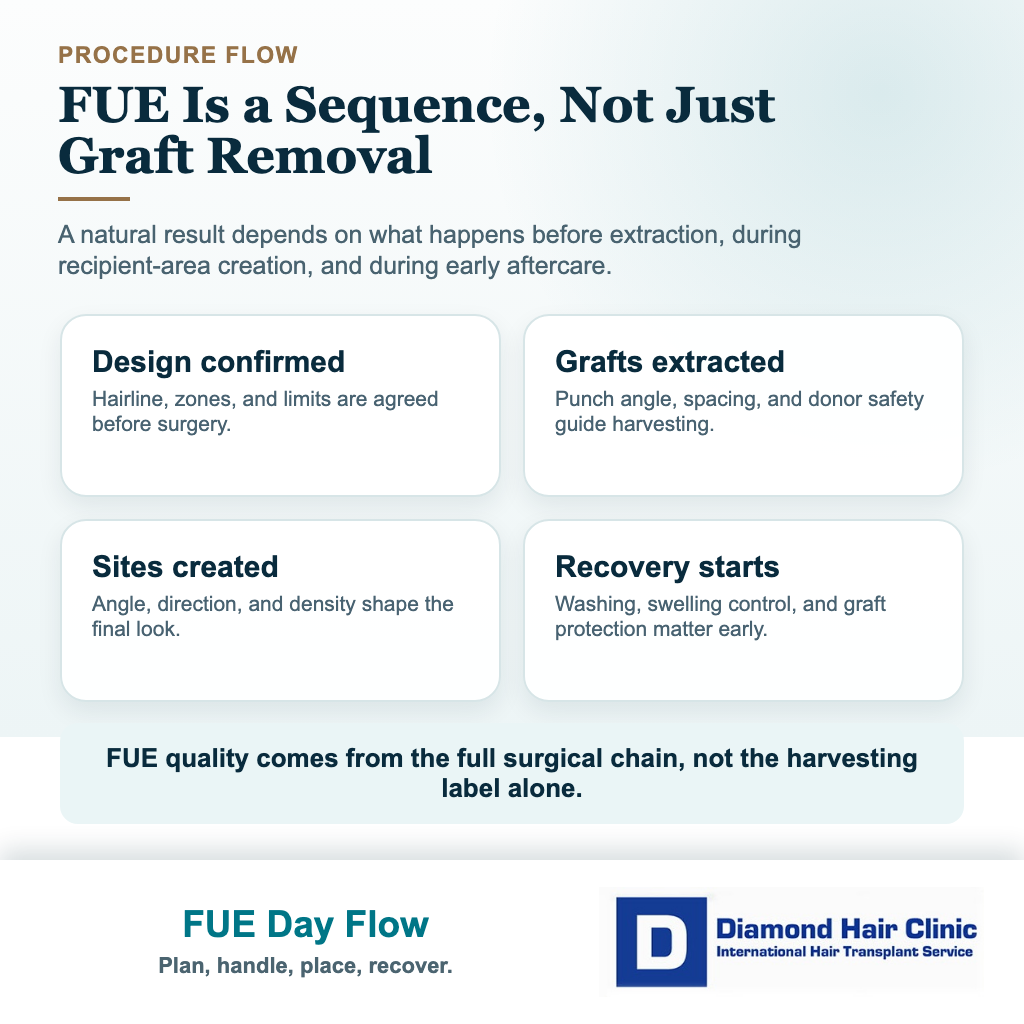
The hair is usually trimmed so the exit angle of the follicles can be seen clearly. The donor area is anesthetized. Grafts are removed one by one, with attention to angle, depth, punch control, spacing, and graft quality. The grafts are then preserved carefully until implantation.
The recipient area is created according to the design. I create the recipient area incisions myself because this step controls angle, direction, distribution, and density. If a patient wants to understand why this matters, the question of who performs your hair transplant should be asked before choosing a clinic.
Implantation follows the incision plan. The right grafts must be placed in the right zones. The frontal hairline needs finer grafts. The areas behind it can use stronger grafts. The crown needs whorl direction and careful density. Each area has a different cosmetic job.
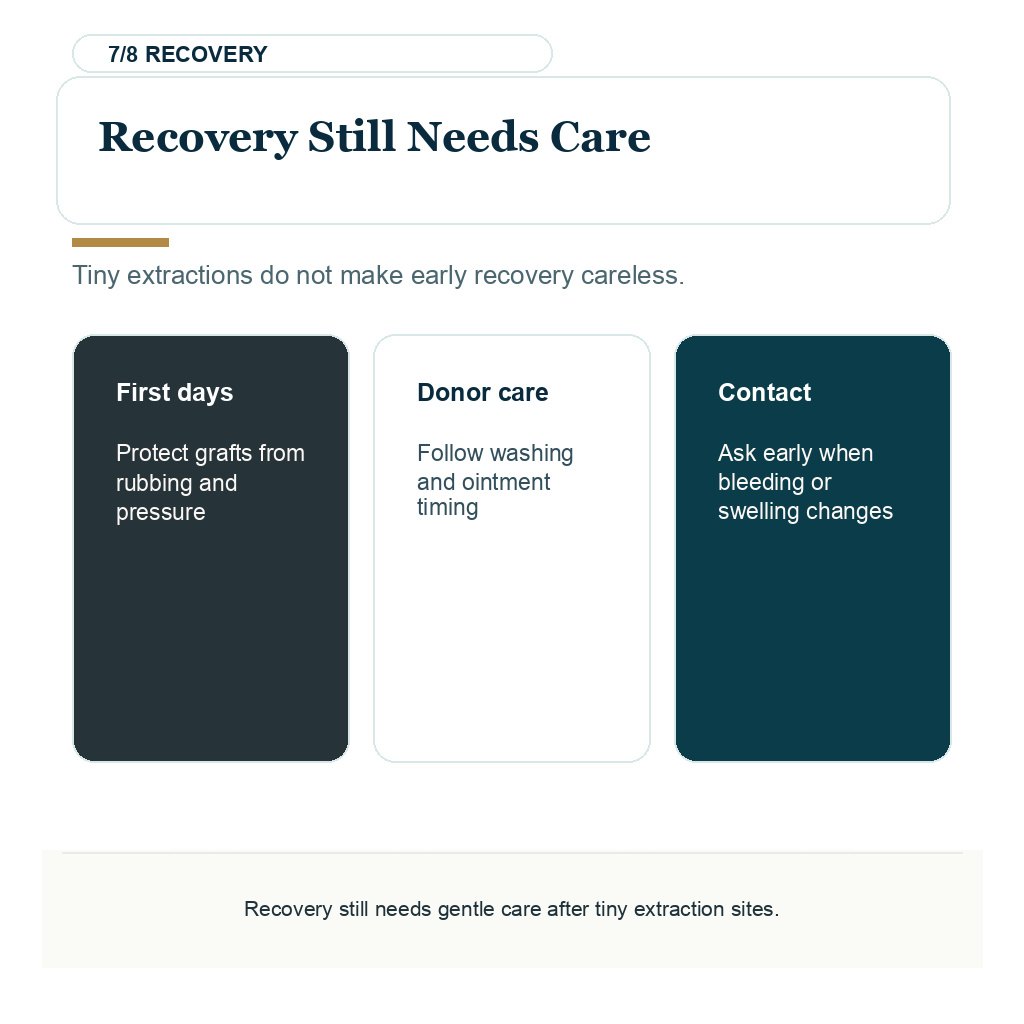
After surgery, the early recovery period begins. Swelling, redness, scabbing, itching, shedding, and temporary unevenness can happen. These signs can worry patients, but many are part of normal healing. At Diamond Hair Clinic, the second day check and the ten day washing routine matter because patients need clear guidance in the period when anxiety is highest.
For a broader recovery explanation, the hair transplant aftercare page explains many practical points. The key idea is that the first days are about protecting grafts, the first weeks are about healing, and the following months are about waiting for growth to mature.
Shedding often begins after the early healing phase. This can be emotionally difficult because the patient sees transplanted hairs fall and thinks the operation has failed. Often, the follicle remains and the visible hair shaft sheds as part of the cycle. New growth appears gradually. Final density should not be judged from this early period.
The donor area also needs patience. It may look red, thin, or patchy early, especially with very short hair, wet hair, or harsh light. Temporary donor shock loss, short shaved hair, and inflammation can make the area look worse before it settles. True overharvesting is different. It leaves a persistent pattern of reduced donor density after the early healing and hair length changes have improved. The donor plan must be careful from the beginning because that difference is not always obvious to a worried patient in the first weeks.
Patients also need to know when to ask for clinic review. Strong pain, worsening redness, unusual odor, pus, fever, or spreading wound problems should not be ignored. Clear recovery instructions help the patient separate normal anxiety from warning signs. Reassurance is useful only when it is medically responsible.
Judging clinic promises before choosing FUE
The easiest way to sell FUE is to make it sound effortless. Some clinics promise a huge graft number, full coverage, fast recovery, a perfect hairline, and a low price in the same conversation. That combination should make a patient slow down.
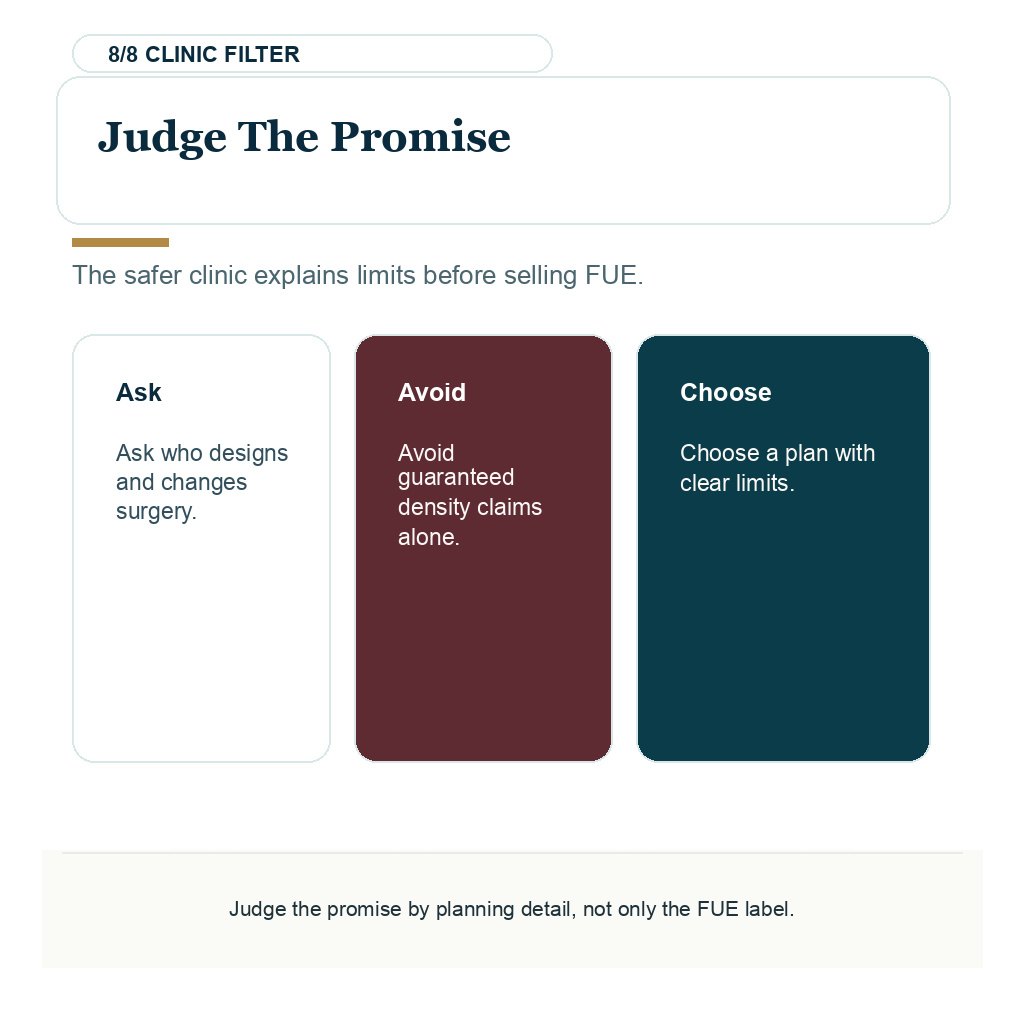
A useful FUE consultation should explain what can be achieved and what should not be attempted. Patients need to know the donor evaluation, the reason behind the graft number, the hairline design, the density goal, medication when relevant, future hair loss risk, surgeon involvement, and aftercare.
When I judge a clinic promise, I look for discipline. A good plan explains why FUE suits that patient, how the donor area will be protected, what should be left for the future, and why the crown may need staged planning. It also gives the patient enough time to decide without pressure.
I may advise waiting when hair loss is still very active, when the donor is weak, when the patient is too young for the requested hairline, when crown expectations are too high, or when the patient is rushing from panic. Surgery can be technically possible and still strategically unwise. This belongs among the harder parts of consultation, but it protects the patient.
For patients considering FUE in Turkey, I want the decision to be based on surgical clarity, not travel excitement or price pressure. Istanbul has excellent possibilities, but the country name does not perform the operation. The clinic model, surgeon involvement, donor management, and aftercare system matter more than the marketing label.
Patients should make this decision with a clear plan. Choose FUE if the plan protects your donor area, respects your future hair loss, creates a natural hairline, and gives you a realistic understanding of recovery and growth. Do not choose FUE because someone promised the biggest number of grafts. In hair transplantation, a strong result is often created by careful limits, not by aggressive promises.
Do not reduce the decision to whether FUE works. FUE can work beautifully, but the proposed plan still has to make sense if your hair loss continues. When the answer is unclear, waiting, adjusting the plan, or choosing a more conservative design may protect you more than rushing into surgery.

Read this review excerpt
He was very thorough in every little detail and I never felt pressure to do anything I wasn’t sure of.