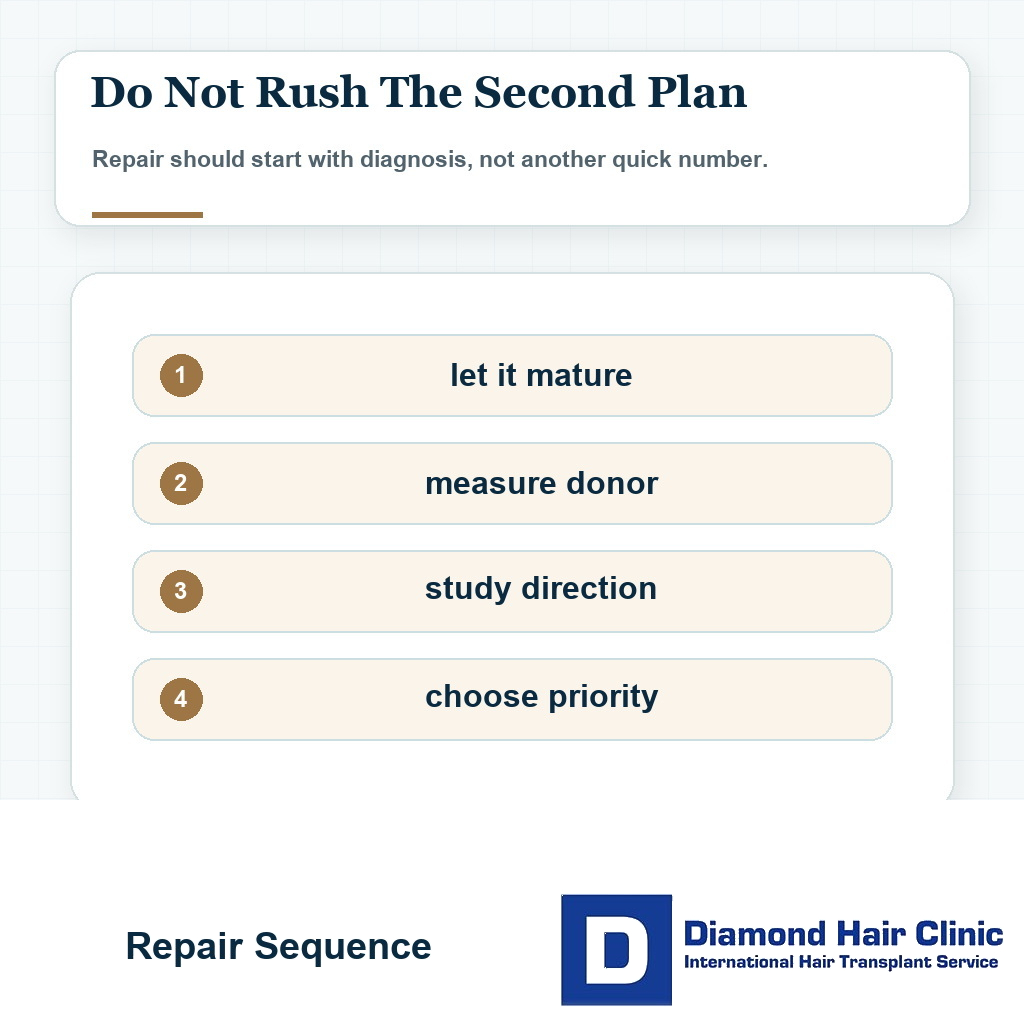


FUE Grafts for FUT Scar Repair
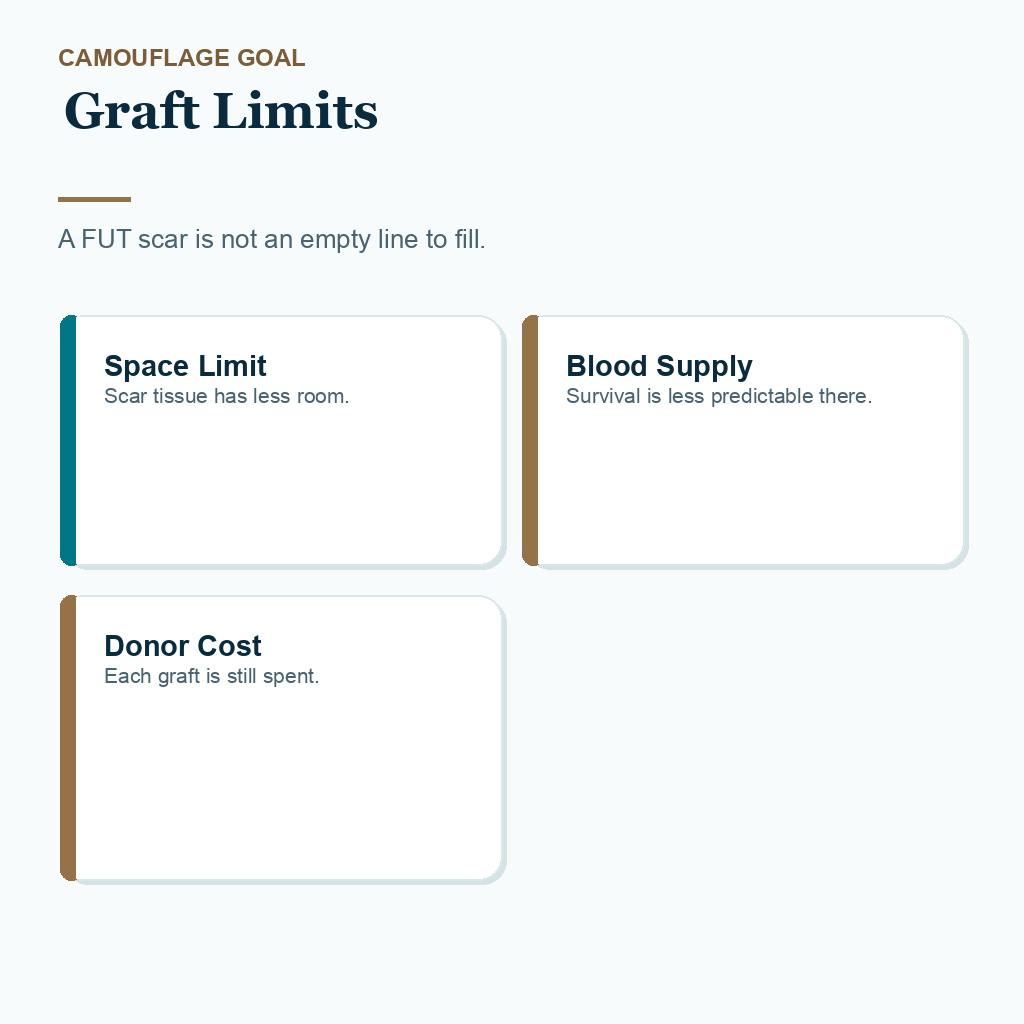
A strip scar can sometimes be softened with carefully placed grafts, but it cannot be erased like a line on paper. Scar tissue is different from normal scalp. The blood supply can be weaker, the skin may be tight or firm, and graft growth is usually less predictable than in an untouched recipient area.
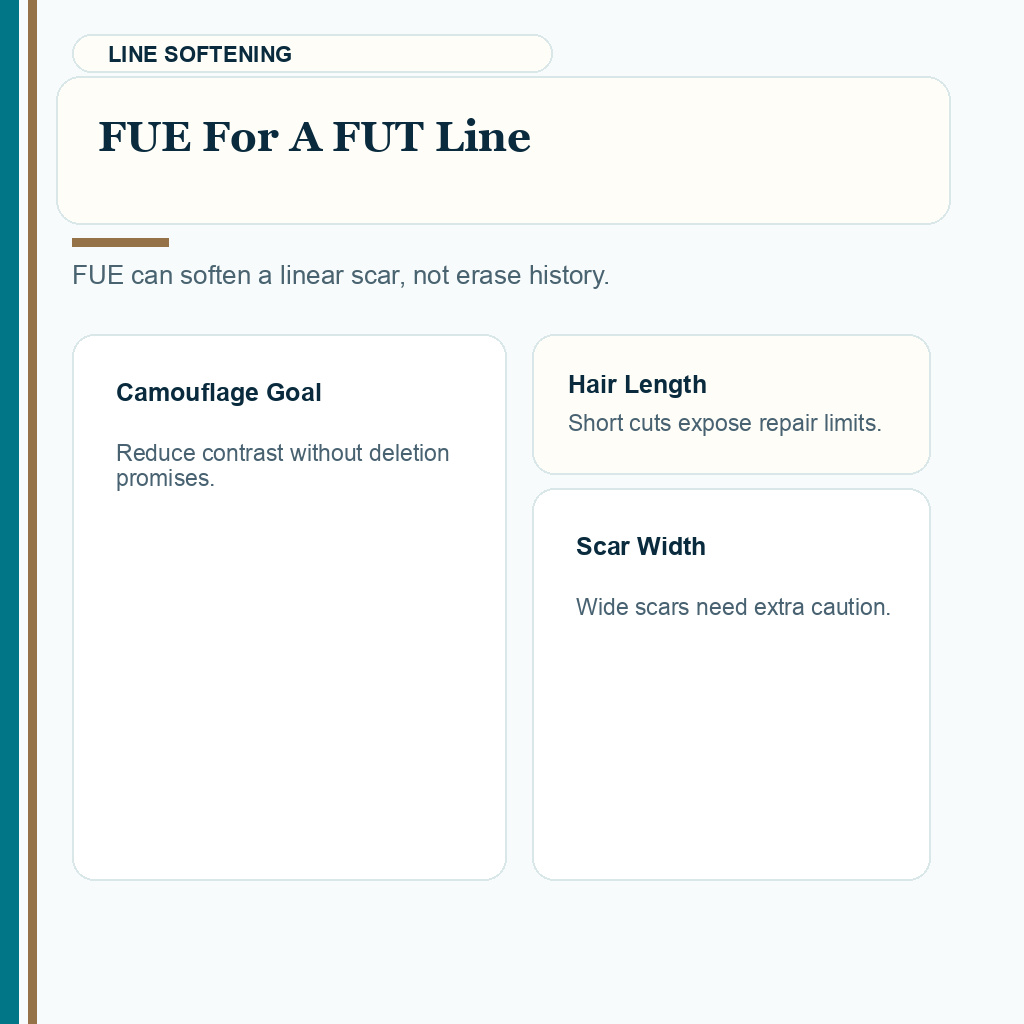
When a patient is planning FUE after FUT, the first decision is not only whether grafts can be placed into the scar. It is whether grafting is the best way to make the scar less visible at the haircut length the patient actually wants to wear. A successful repair may soften a white line under a number two or three guard. It may still not let the patient shave down to the skin without seeing the scar, and that distinction should be clear before any grafts are used.
Name the clipper guard when you discuss the scar instead of saying only that you wear it short. A repair that works at one length may still leave the line visible when the haircut drops closer to the skin.
Send one photo at your real haircut length and one with the hair lifted above the scar. The repair target is easier to judge when the surgeon can see both daily camouflage and the bare line.
For me, suitability starts with the scar itself. A flat, mature scar with enough surrounding donor hair may respond well to cautious FUE grafting. A raised, stretched, painful, unstable scar, or a scar surrounded by thin donor hair, may need another approach. The biggest mistake is treating scar repair like a normal density operation instead of a scar, haircut, and donor budget decision.
Examining the scar first
When I examine a patient with a FUT scar, I first separate what is technically possible from what is worth spending donor grafts on. A scar may accept grafts, but the patient’s limited donor supply still has to serve the whole long term plan.
A scar can often accept grafts, especially when it is soft, pale, flat, and stable. But the repair must be planned with controlled density. The aim is not to make the scar area look like untouched scalp. The aim is to break the contrast so the eye no longer sees a clear white or shiny line through the hair. If pigment is being considered instead of grafts, review SMP with hair transplant results as camouflage, not scar erasure.
If the patient is still deciding between the original strip method and FUE, I first make sure the patient understands how a FUT hair transplant creates a linear donor scar. That background matters because the decision depends on how the scar formed, how wide it became, and how much surrounding donor hair remains.
Before I use grafts for a FUT scar, it helps to understand what can improve, what may remain visible, and what risk is created by harvesting more grafts from the same donor area.
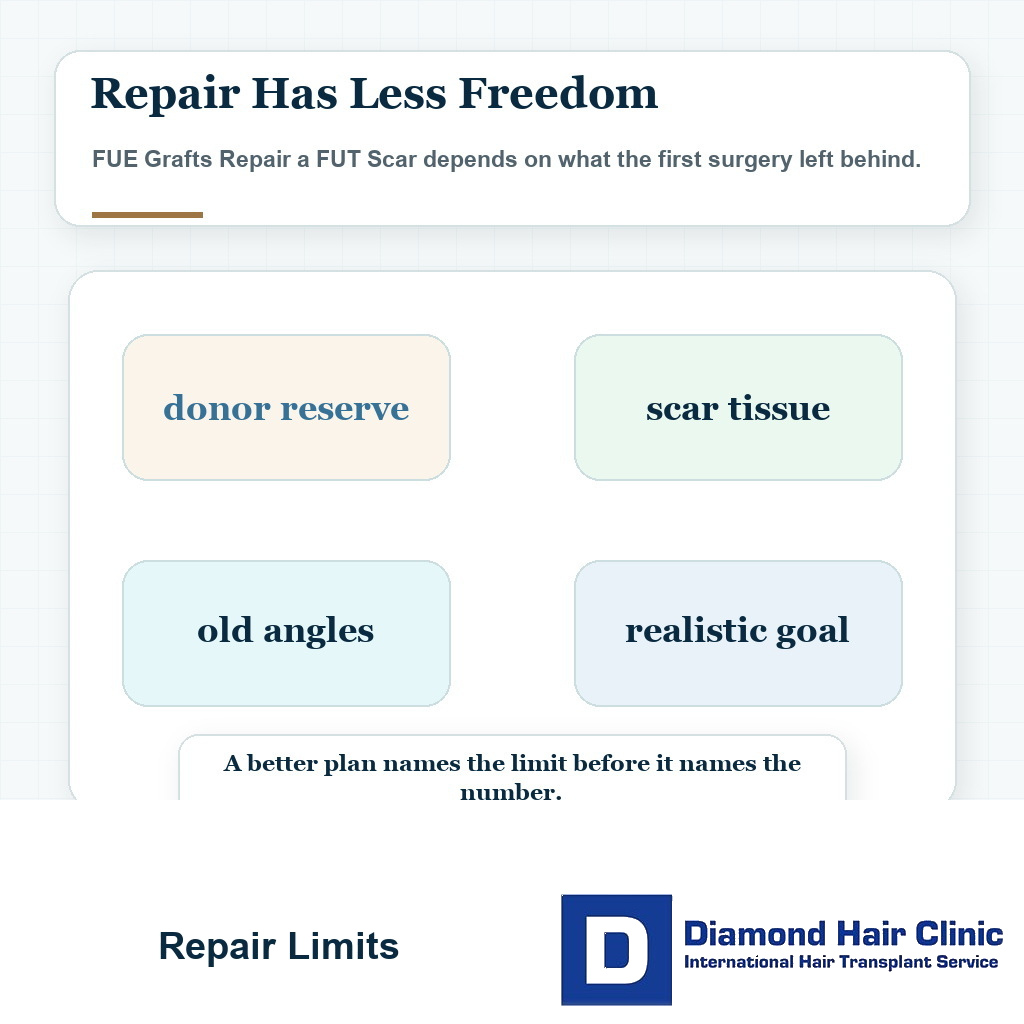
Scar tissue is different from normal scalp
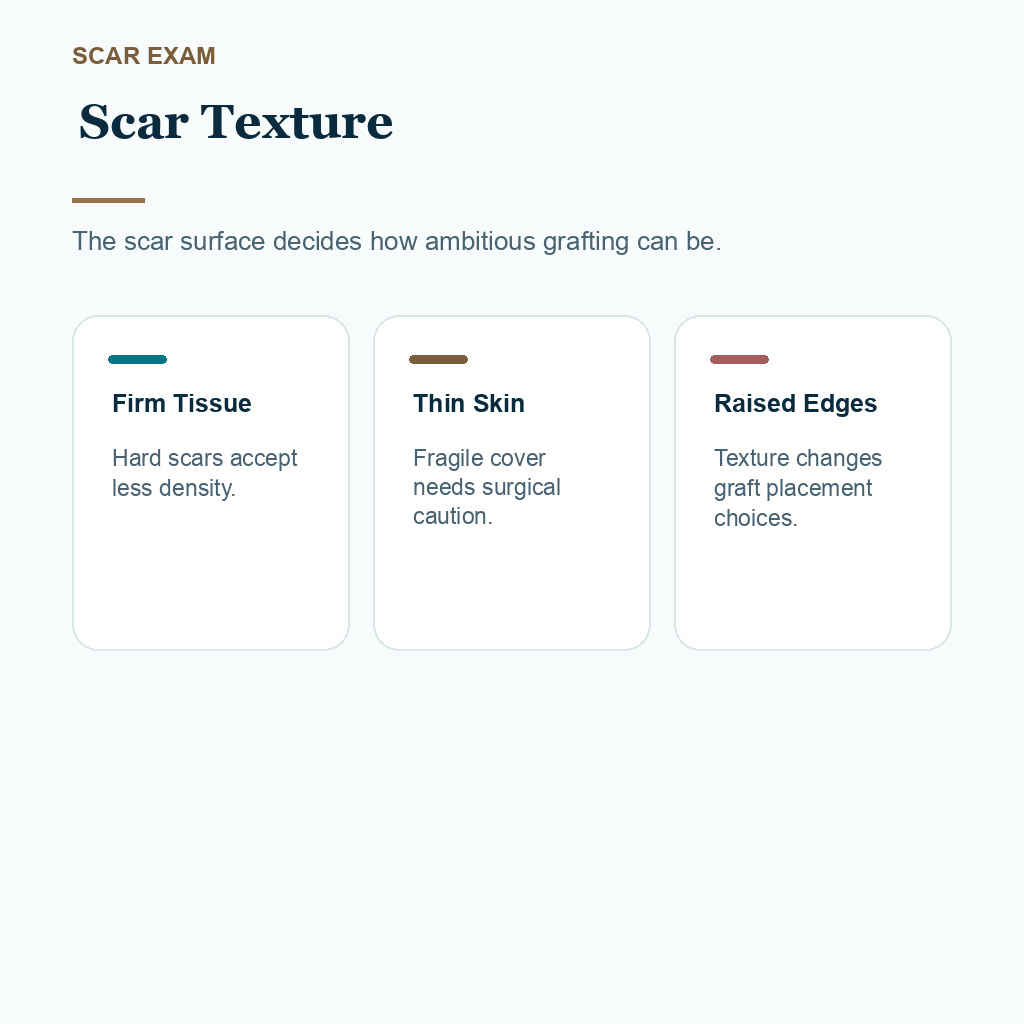
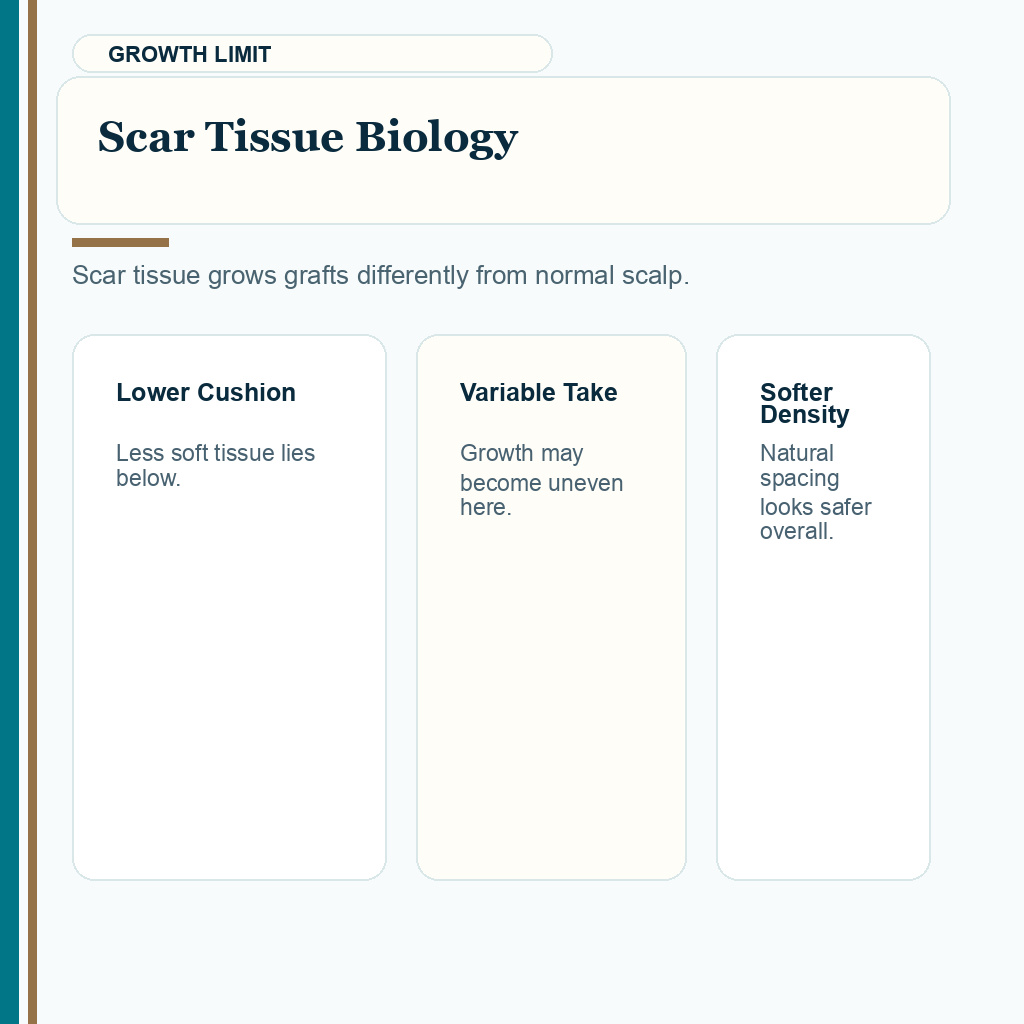
Normal scalp has a more predictable blood supply and a softer tissue structure. Scar tissue is more fibrous. It may have less blood flow, less elasticity, and a surface that does not behave like normal skin when tiny recipient area openings are made. A narrow flat scar and a wide tight scar are not the same surgical field.
In scar tissue, grafts need to be placed more cautiously than in a normal bald area. Dense packing can look attractive in a clinic explanation, but in scar tissue it can work against graft survival. More grafts in a scar are not better by themselves.
The repair is usually performed with the same basic harvesting logic used in a FUE hair transplant, but the recipient area judgment is different. The angle, depth, spacing, and blood supply of the scar need more attention than the marketing name of the technique.
No one should be promised that every graft will grow. Scar camouflage can be very helpful, but it is still corrective work in altered tissue. The patient deserves a more careful conversation than an easy before and after promise.
Small test area may come first
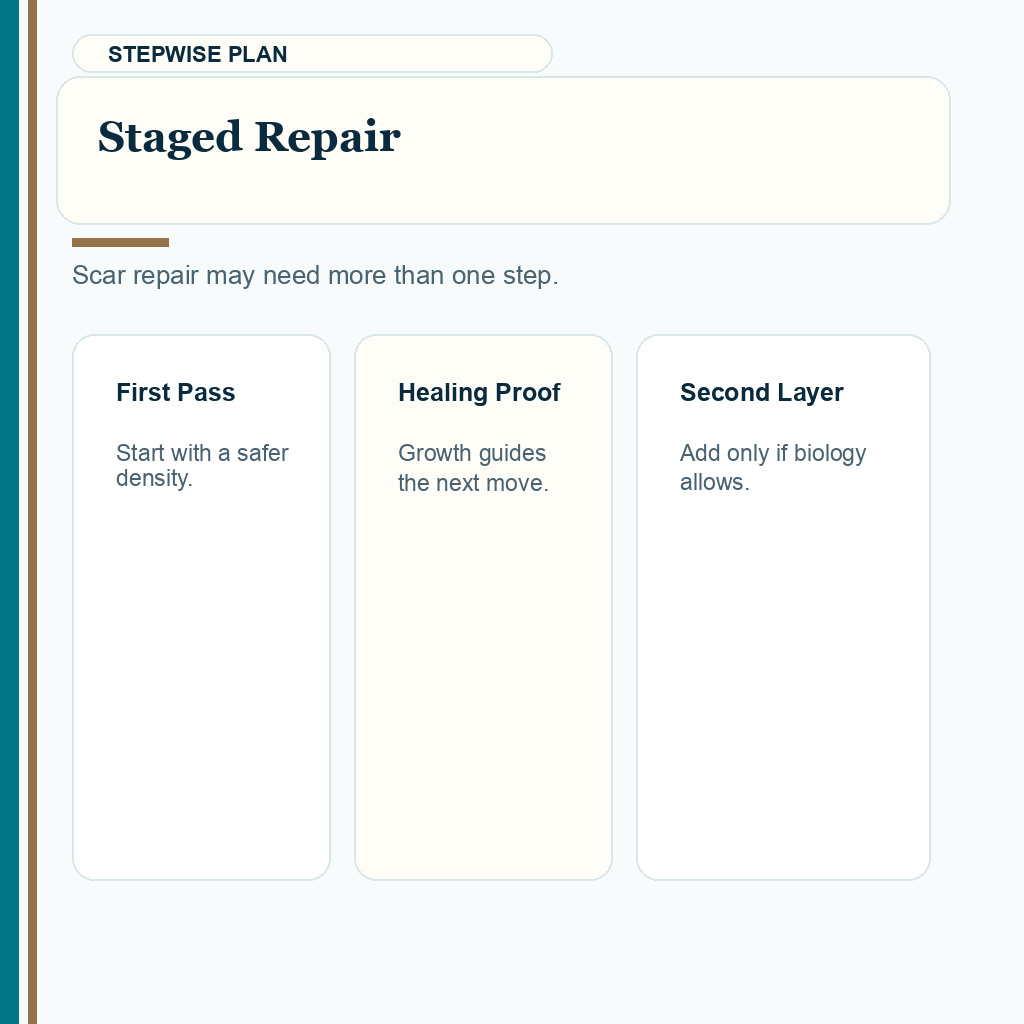
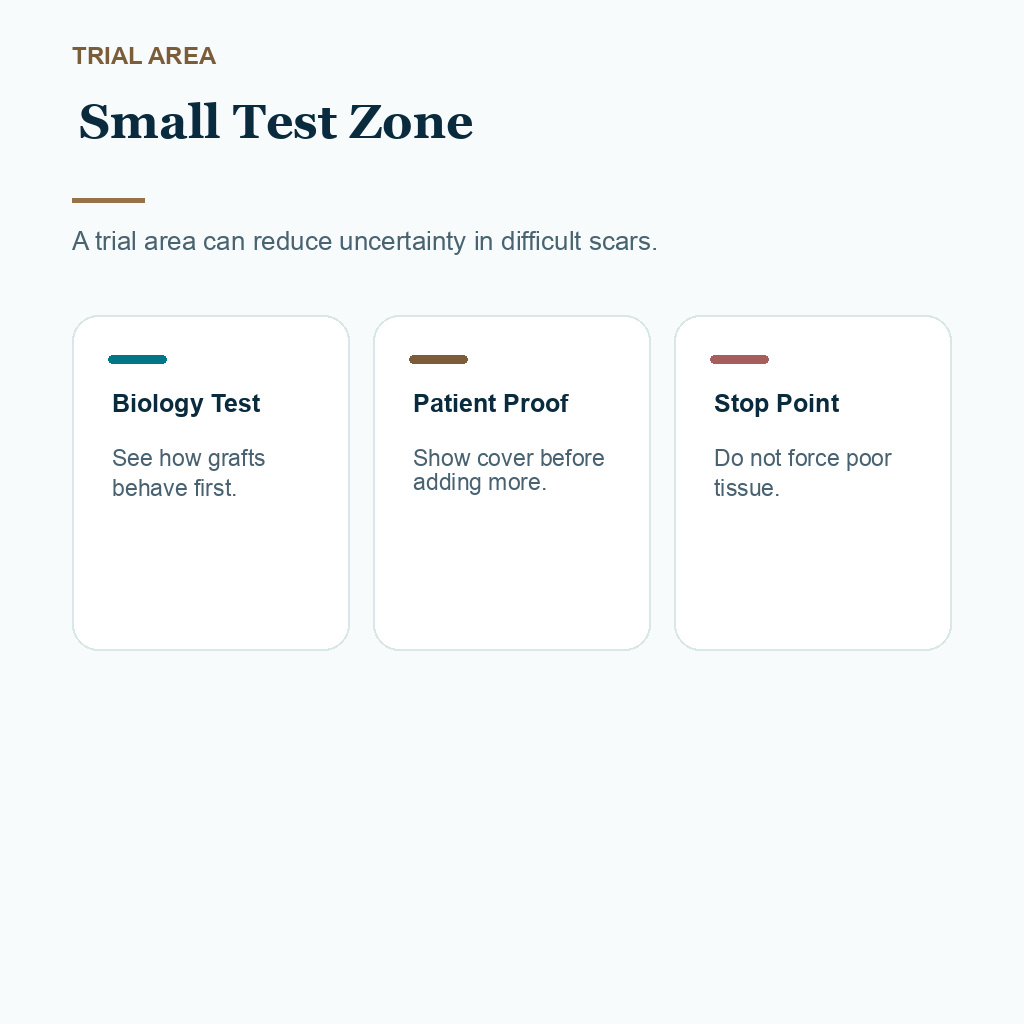
In a scar with uncertain blood supply, a small cautious first stage can be wiser than trying to fill the whole line in one session. It lets me see how the tissue accepts grafts, how the skin heals, and whether the patient is likely to benefit from more grafting later.
Not every scar needs a test session. A mature, soft, narrow scar may be suitable for a planned camouflage session. But when scar texture, width, tightness, or limited donor strength makes me uncertain, staged repair protects grafts and donor reserve.
A patient may want the fastest solution because the scar has been visible for years. I understand that. But in scar repair, patience can save grafts. A partial first stage that grows well gives me better information than an aggressive session that asks too much from altered tissue.
Read this review excerpt
“Also I had a FUT-transplant 8 years ago so we decided to try to cover the old FUT-scar up with new grafts.”
Reasonable FUT scar repair candidates
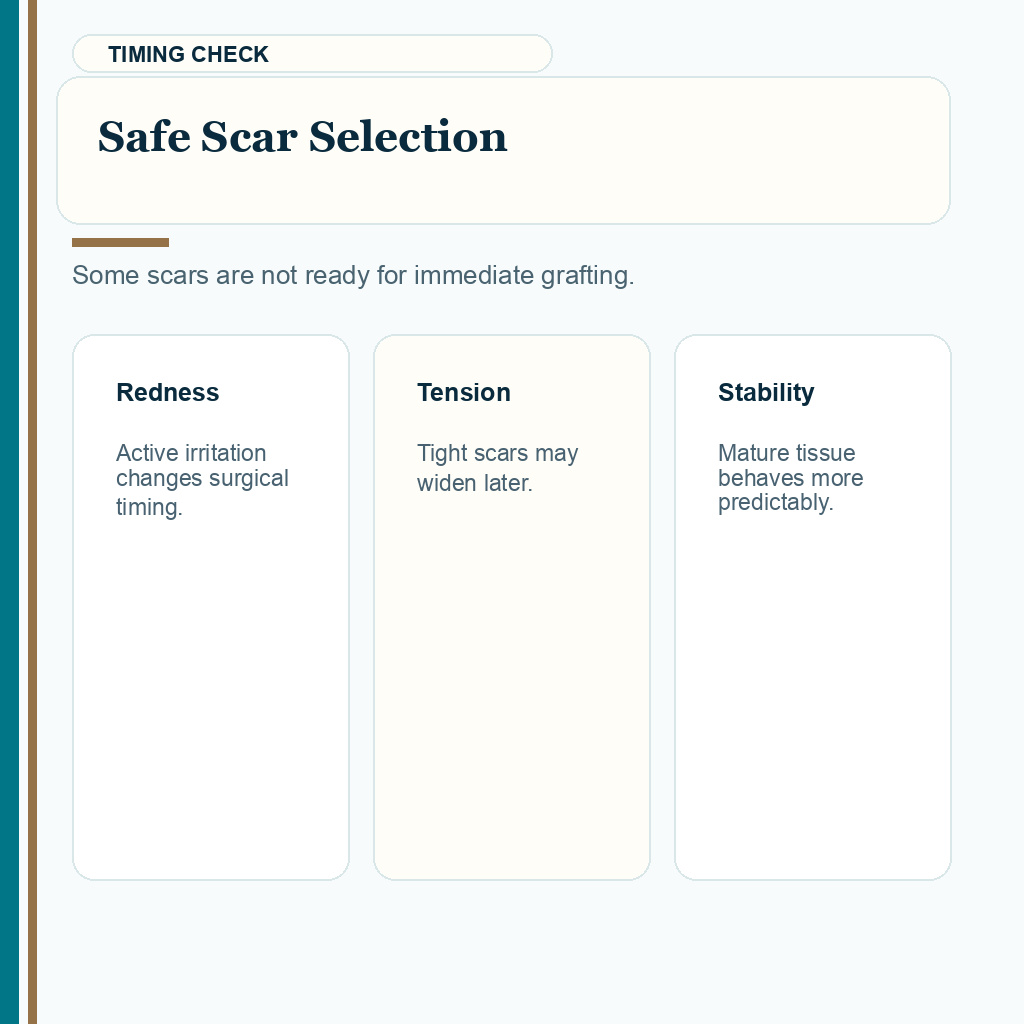
A FUT scar is a better candidate when it is mature, flat, light in color, and not actively changing. If the scar is recent, red, thick, or still settling, waiting is usually safer. Commonly, the scar needs judgment at least 10 to 12 months after the original surgery, because earlier scars can still change.
I review the surrounding hair. If the hair above and below the scar is strong, the goal may be focused camouflage. A small number of well placed grafts can break the line and make the scar much less noticeable at a reasonable haircut length.
If the scar is wide but the surrounding donor hair is still healthy, grafting may still help, but I explain that the patient may need staged improvement. One session can make the line less obvious. It may not make the scar disappear under every haircut, every light, and every angle.
The right goal is usually not to make the old surgery disappear. It is to make the scar less visible in daily life without spending donor grafts carelessly.
Scars where grafting is unsafe
A raised, thick, painful, very red, or medically unstable scar makes me slow down. A strong history of abnormal scarring also matters. In those cases, the problem may not be only the old surgical technique. The patient’s healing pattern may also be part of the story.
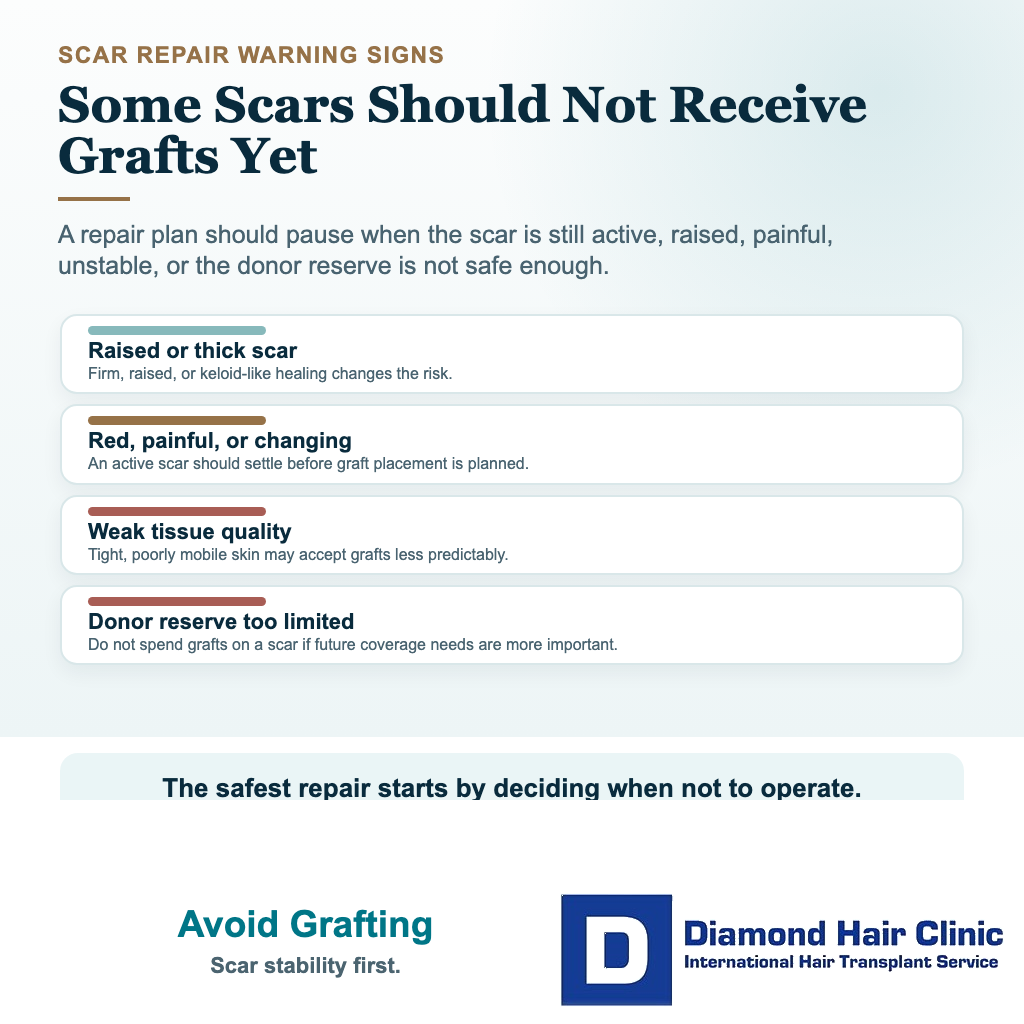
With a history of raised scars, I compare the case carefully, just as I do when discussing hair transplant surgery and keloid scar risk. A patient who forms thick scars may not be helped by simply adding another surgical step too quickly.
Grafting should also be avoided when the donor area is already very thin. A repair that hides one line but creates wider donor thinning is not a successful repair. In this part of the decision, the patient may feel emotionally ready for surgery, but surgically the plan may still be unwise.
A very wide scar may need a scar revision discussion before grafting. A flat but pale scar may respond better to scalp micropigmentation for color contrast. If the donor area is already thin, doing nothing for now may be the most responsible advice.
Graft numbers to soften a scar
I cannot give one reliable graft number without examining the scar. The number depends on the length of the scar, its width, the contrast between the scar and the surrounding scalp, hair caliber, hair color, skin color, and how short the patient wants to cut the hair.
For some narrow scars, the repair may be a small focused session. For a long or widened scar, a staged approach may be safer than placing too many grafts at once. Scar tissue often rewards patience more than aggression.
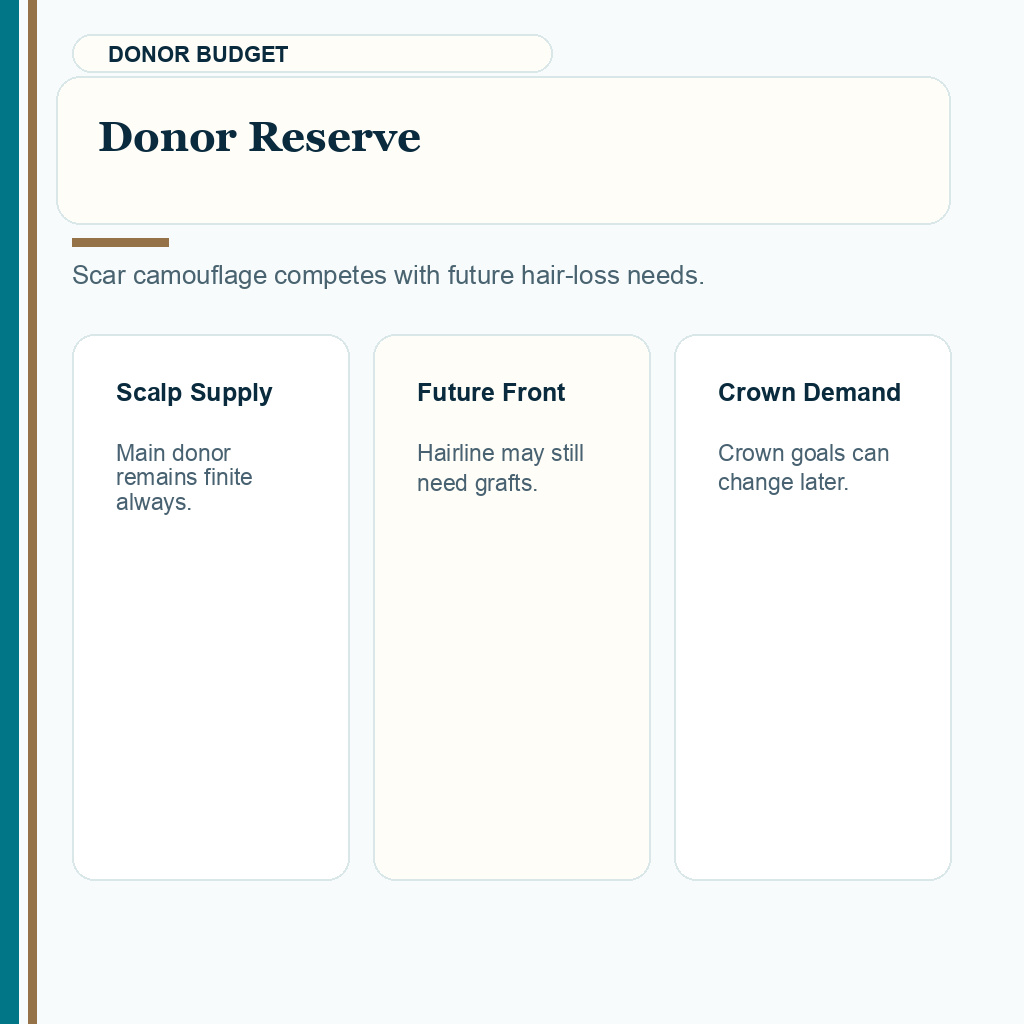
I am less interested in how many grafts can be placed than in how many the scar can support and how many the donor area can afford to lose. Careful donor area planning matters because every corrective graft used here cannot be used later for the hairline, middle scalp, or crown.
Patients sometimes ask for the scar to be filled as densely as possible. I understand the wish, especially when the scar has bothered them for years. But if I overpack scar tissue with poor blood supply, I may reduce growth and waste grafts. A lighter, more strategic repair can sometimes give a better cosmetic result than a dense and impatient one.

SMP, scar revision, or grafting first
There is no single order that fits every patient. If the scar is narrow but bright or pale, scalp micropigmentation for thin hair or scar contrast may be useful. SMP changes color contrast, but it does not add hair texture. That distinction matters because a pale line may blend better while the scar itself still remains.
If the scar is very wide and the scalp has enough laxity, scar revision may reduce the width before grafting is considered. But revision is still surgery. It can improve a scar, or it can stretch again if the tension and healing pattern are unfavorable.
Another FUT and a scar revision are different decisions. Revision still depends on scar width, mobility, remaining laxity, previous healing, and closure tension. Staples or sutures matter, but the closure material alone cannot decide whether revision is suitable.
When the scar is flat and the patient wants a softer hair bearing look, FUE grafting can be considered. The choice depends on the scar itself, the hairstyle goal, the donor reserve, and the patient’s tolerance for staged improvement.
A combination can be sensible, but the order matters. Treatments should not be mixed just because each one sounds useful. The first step might be reducing width, adding hair texture, or reducing color contrast. Without that logic, the patient is just collecting treatments.
Beard or body hair for FUT scar repair
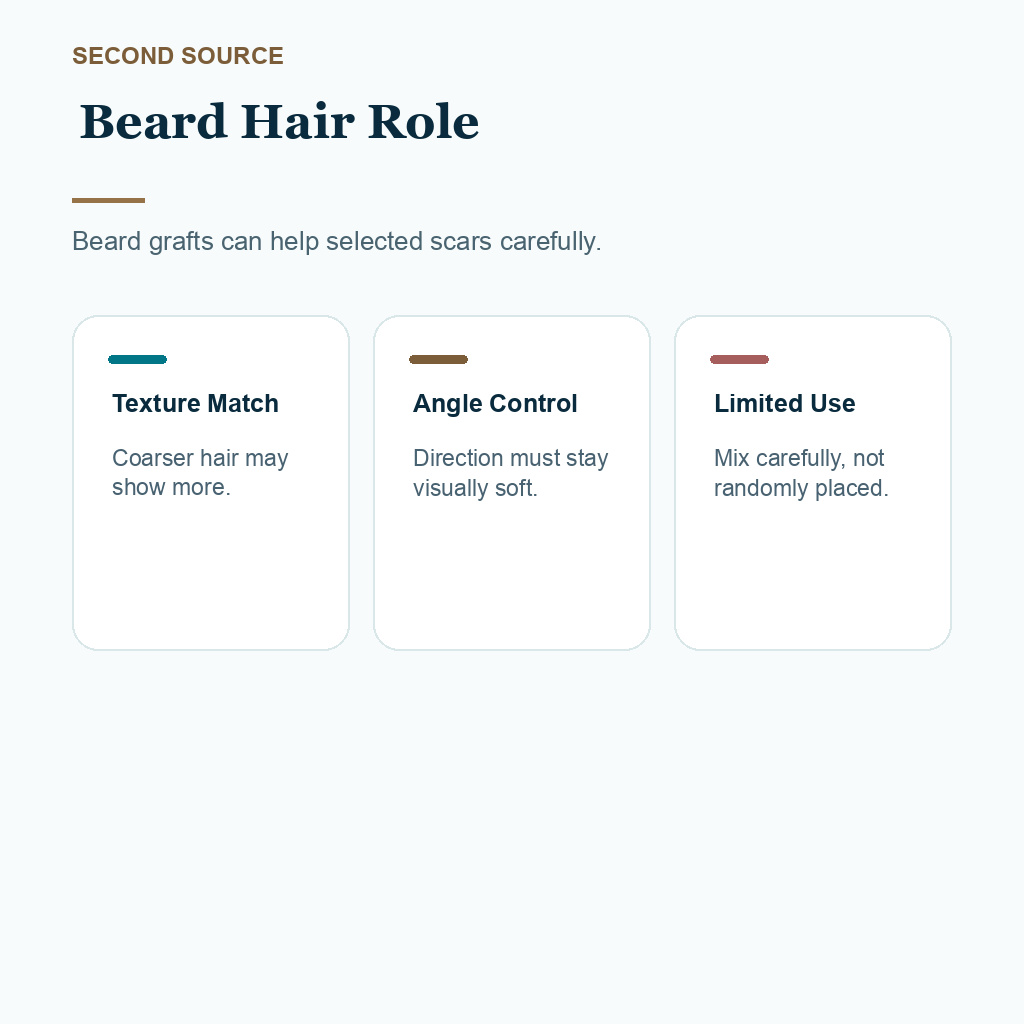
Beard hair can sometimes help with scar camouflage, especially when scalp donor grafts are limited. But it is not a simple substitute for scalp hair. It is usually thicker and has a different character, so I use it carefully.
In selected cases, beard or body hair as an additional donor source can support camouflage. I am not trying to create a dense patch of beard like hair in the donor area. I am trying to reduce the visibility of the line while keeping the surrounding area natural.
I also consider the harvesting scar from the beard or body area. A patient who already feels distressed by one scar should not be pushed into a new donor source without a careful discussion of tradeoffs.
When scalp donor hair is available and matches the surrounding donor area better, it is often the better choice for the most visible part of the repair. Beard hair can be a useful support, but it should not be presented as an easy solution to every scar.
Clinic promises that need caution
A clinic promise worries me when the scar is described as if it were a standard transplant area. A FUT scar is not the same as a normal recipient area. If nobody examines the scar texture, width, mobility, blood supply, and surrounding donor density, the promise is too neat.
Full disappearance is another promise that should make a patient pause. A good correction can make a scar less visible. It may allow a shorter haircut than before. It may reduce the emotional weight of the scar. But no surgeon should promise that scar tissue will behave like untouched scalp.
If the consultation focuses only on selling graft numbers, that is a warning sign. The plan should include donor protection, realistic density, alternatives, healing risk, and what happens if the first stage gives partial improvement.
For patients who already had a disappointing operation, the plan needs even more caution. A broad bad hair transplant repair plan should not only chase a quick visual fix. It should protect the patient’s remaining options.
Donor area consequences for the future
Every graft placed into a FUT scar comes from somewhere. If the patient still has progressive hair loss, crown thinning, a thinning frontal area, or a possible need for future surgery, the plan must look beyond the line itself.
Even a small correction needs careful judgment. A scar may feel emotionally urgent for the patient, but the donor area is still a lifetime budget. If I use too much donor hair for the scar, I may leave the patient with fewer options later.
Extra caution is also needed when the donor area already shows signs of overharvesting after a hair transplant. In that case, another FUE session may make the surrounding area look thinner, even if the scar itself improves.
If the donor is naturally limited, the case has to be approached like a weak donor area before hair transplant surgery. The repair has to respect what the donor can safely give. A surgeon should not solve a narrow line by creating a larger zone of thinning.
Shaving or very short hair after scar repair
One expectation needs to be clear before surgery. FUE grafting into a FUT scar can reduce visibility, but it may not allow every patient to shave the donor area very short. The scar can still catch light differently, especially in bright lighting or when the hair is clipped close to the skin.
If the patient’s main goal is a very short haircut, I discuss the same practical issues involved in judging whether they can shave their head after a hair transplant. The answer depends on scar width, skin contrast, hair caliber, and whether there are also FUE dot scars or donor thinning.
A repair can be successful even if the patient still needs to keep a little length. That may sound disappointing at first, but for many patients the real goal is not a shaved scalp. The real goal is to stop feeling exposed every time the hair is cut slightly shorter.
The haircut goal should be defined before surgery, not after the grafts have already been used. A number one guard is a different target from simply wearing the back shorter without a clear white line, and it may need a different repair plan.
Patients need to understand before scar repair
FUE grafts can be a good tool for FUT scar camouflage, but only when the scar and donor area are suitable. Success needs judgment by whether the scar becomes less noticeable in real life, not by whether the area looks perfect under close inspection.
The decision should not be rushed because of embarrassment or regret. A linear scar can create a strong emotional reaction, especially when it came from a previous surgery the patient regrets. But the repair decision has to be more careful than the first mistake.
Before surgery, I need to know the scar age, width, texture, the patient’s healing history, donor strength, future hair loss risk, haircut goal, and whether SMP or scar revision might serve the patient better. When the FUT scar and frontal scalp are treated in the same session, the recovery plan also has to keep pressure and rubbing away from both recipient areas. I want the sleep and support setup decided before surgery, not improvised on the first night. If any of these points are ignored, the plan is incomplete.
Think of this as careful camouflage, not a way to make the old surgery disappear. When it is planned with surgical judgment, it can make a meaningful difference. When it is sold too simply, it can waste donor grafts and leave the patient with another problem to correct.