



Beard hair in scalp restoration
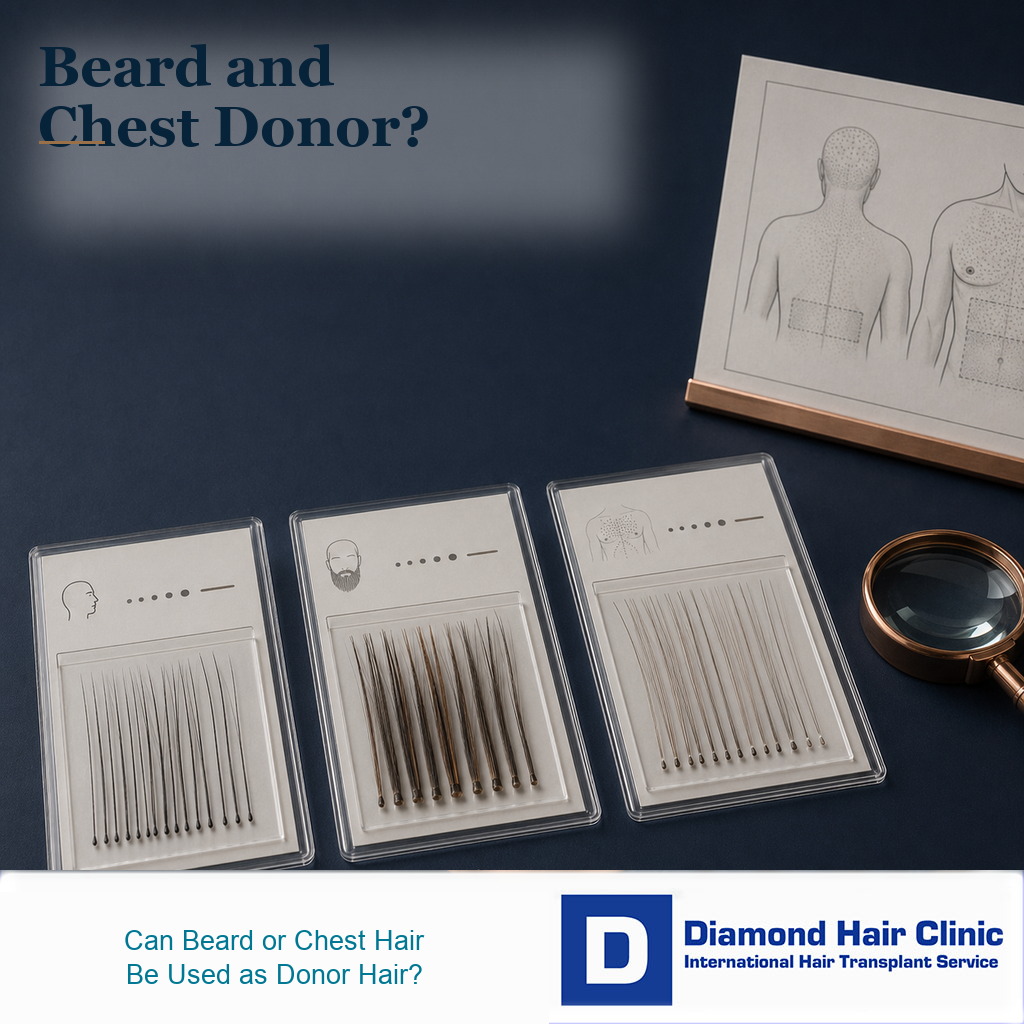
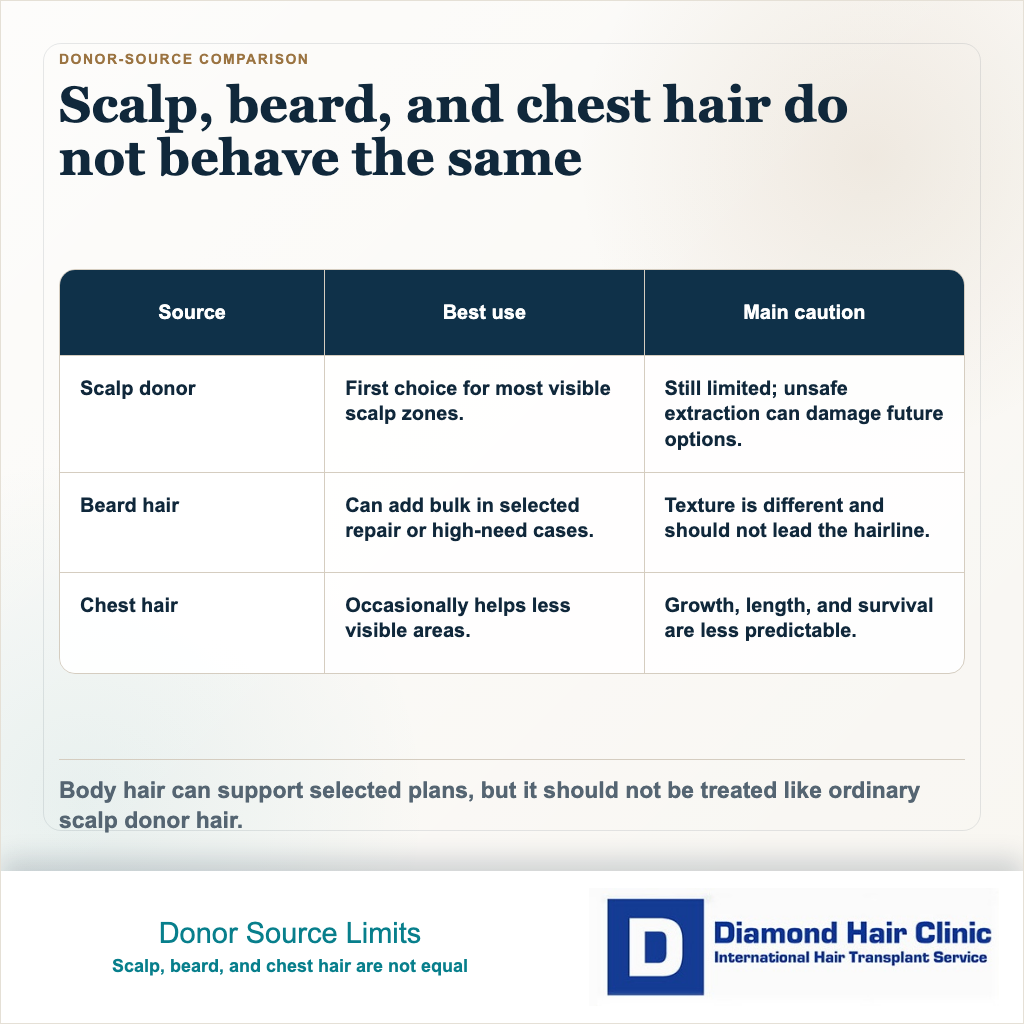
Beard hair is usually the strongest donor source outside the scalp. It is often thicker and more robust than chest or limb hair, so in selected men it can add useful visual coverage when scalp donor supply is limited.
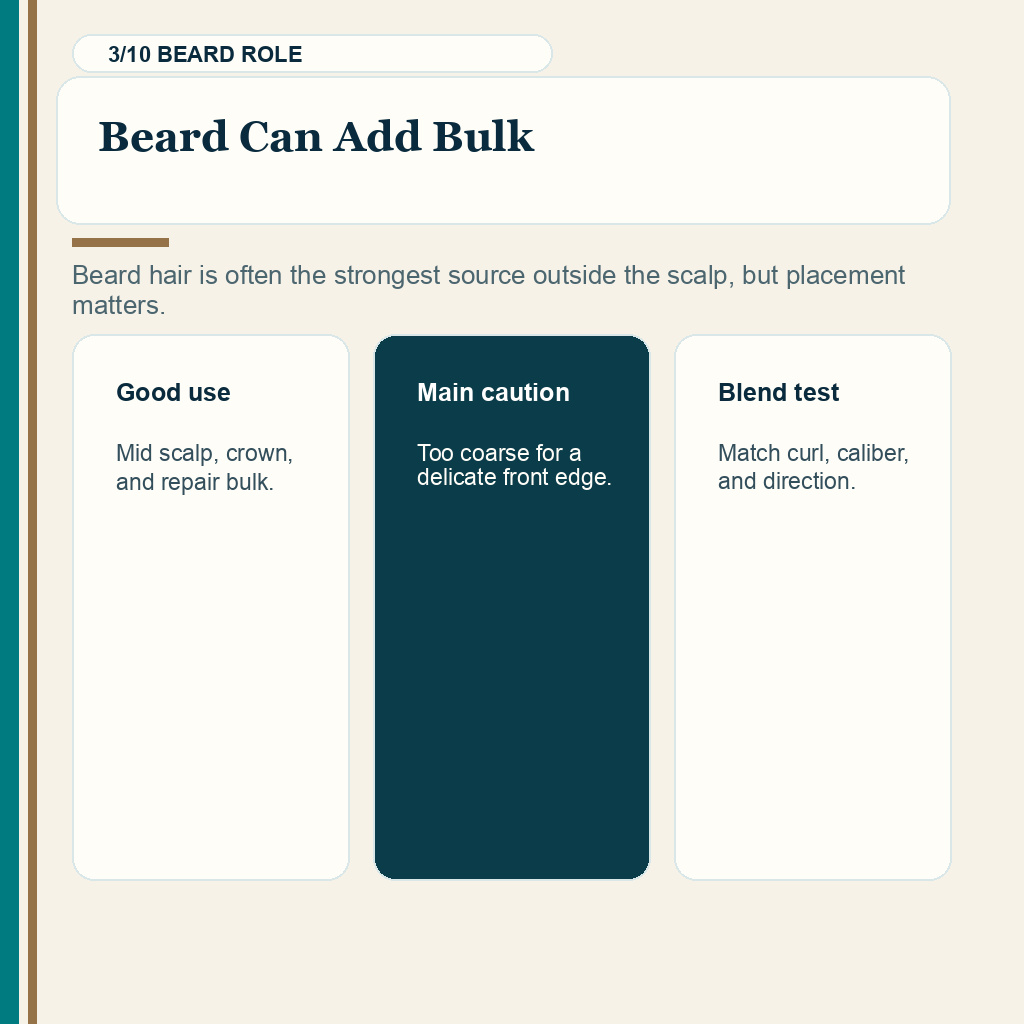
Beard hair is usually better behind the hairline, in the mid scalp, in the crown, or in repair cases where the aim is to add bulk and reduce visible scalp. It is not my first choice for the delicate front edge because the texture can be too coarse and the grafts may stand out.
This is different from a dedicated beard transplant, where the purpose is to restore facial beard density. Using beard hair as a scalp donor source has a different cosmetic risk because the beard graft must blend into scalp hair.
One practical use is a carefully selected beard hair crown transplant, especially when scalp donor hair is limited and the crown needs supportive density rather than a soft frontal hairline.
Chest and other body hair in selected cases
Chest hair has to earn its place in the plan. It can help some patients, but it is less predictable than beard hair. It may be wavy, short, fine, light, or variable in direction. Some chest hair blends acceptably in less visible scalp zones when mixed with scalp or beard hair. Other chest hair is too weak to create real cosmetic value.
Hair from the arms, legs, back, abdomen, or other body areas is usually a last option. These hairs may have shorter growth cycles and less length, so thousands of body grafts do not always translate into strong coverage.
Body hair can sometimes help in scar coverage or repair when the alternative is no further improvement, but it should not be sold as equal to normal scalp donor hair. A patient with an overused donor area may need a repair strategy rather than a promise that body hair will solve everything. Overharvested donor area repair explains why these cases need caution.
Check the donor source and its role
Three short questions about the section you have just read.
Question 1 of 3
Body hair for a transplant must come from the patient’s own donor areas.
Beard hair always becomes identical to scalp hair after transplantation.
Scalp donor hair usually remains the first source considered.
This checks your understanding. It does not determine your suitability for surgery.
Keeping body hair away from the hairline
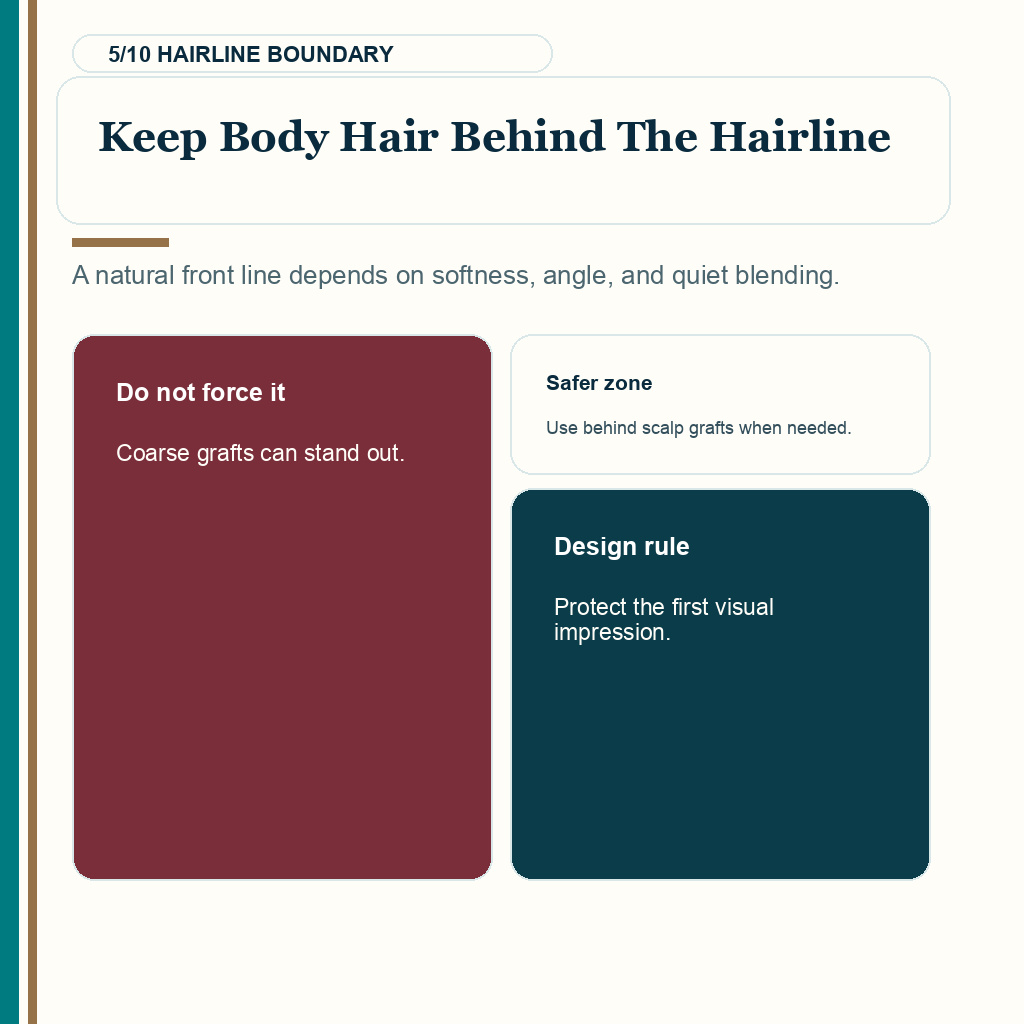
The frontal hairline is the least forgiving area of a transplant. Natural hairline design depends on fine single scalp grafts, soft irregularity, and natural direction in the first visible rows. Beard or chest hair can look too thick, too wiry, too curly, or too different in color for this zone.
If body hair is placed at the hairline, the mismatch can show even when the grafts grow. The line may look rough, coarse, or artificial. I am especially cautious with body hair for hair transplant temples or the front because visible edge work leaves very little room for texture mismatch.
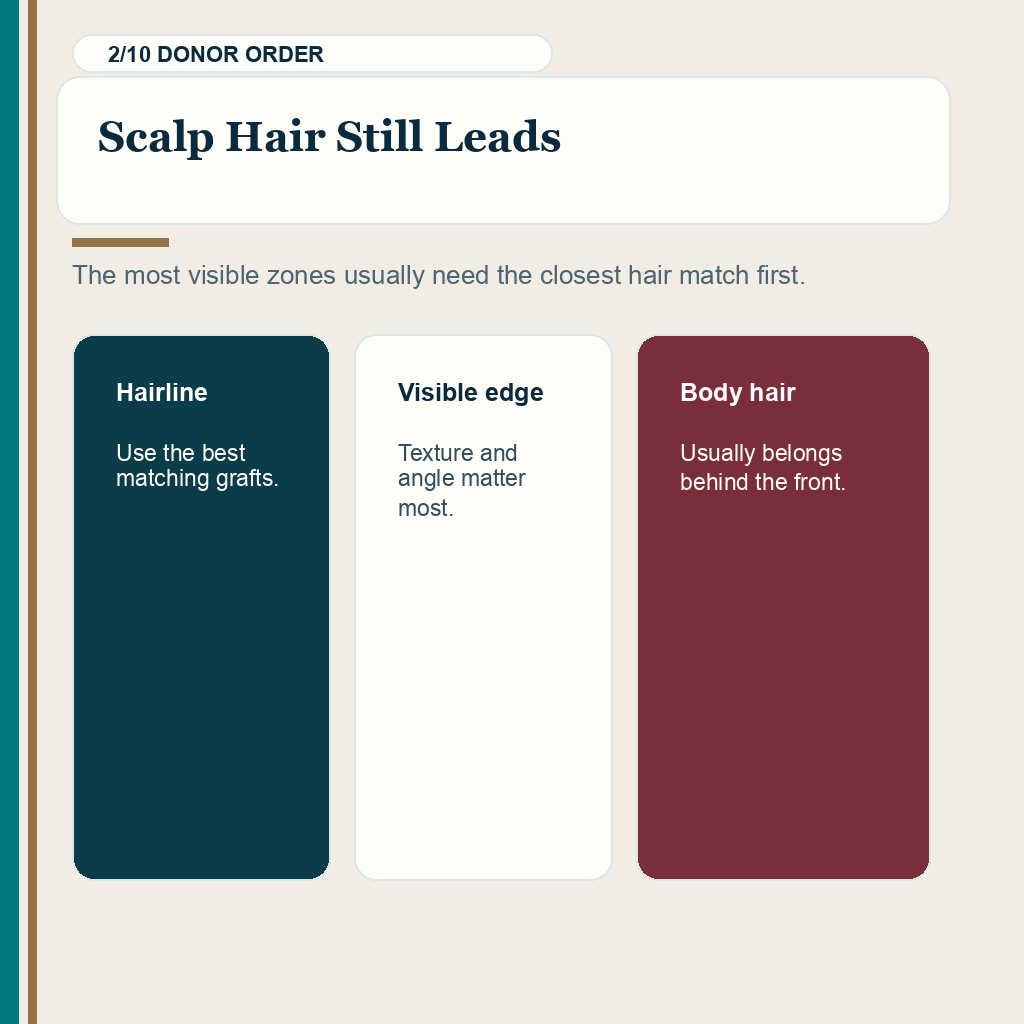
The front hairline is usually a scalp hair job. Body hair can sometimes sit behind scalp grafts, but it should not be trusted as the visible leading edge unless the case is very unusual and the patient understands the cosmetic compromise.
In a third surgery, body hair should not be used to make the visible hairline look possible only on paper. Beard or chest grafts may help selected support zones, but the first visible rows still need the closest match or no surgery.

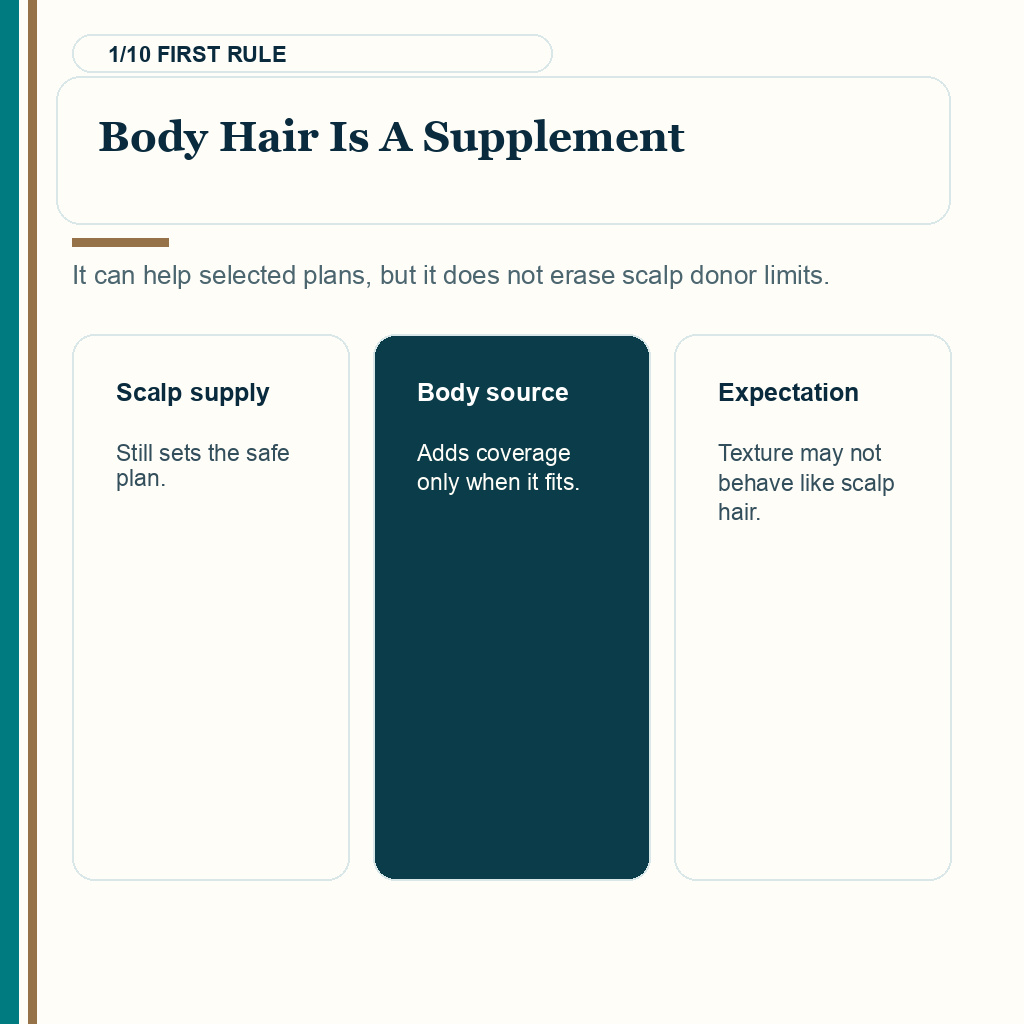
Body hair is usually a support source for selected zones, not a replacement for fine scalp hair at the hairline.
Blending body hair behind scalp grafts
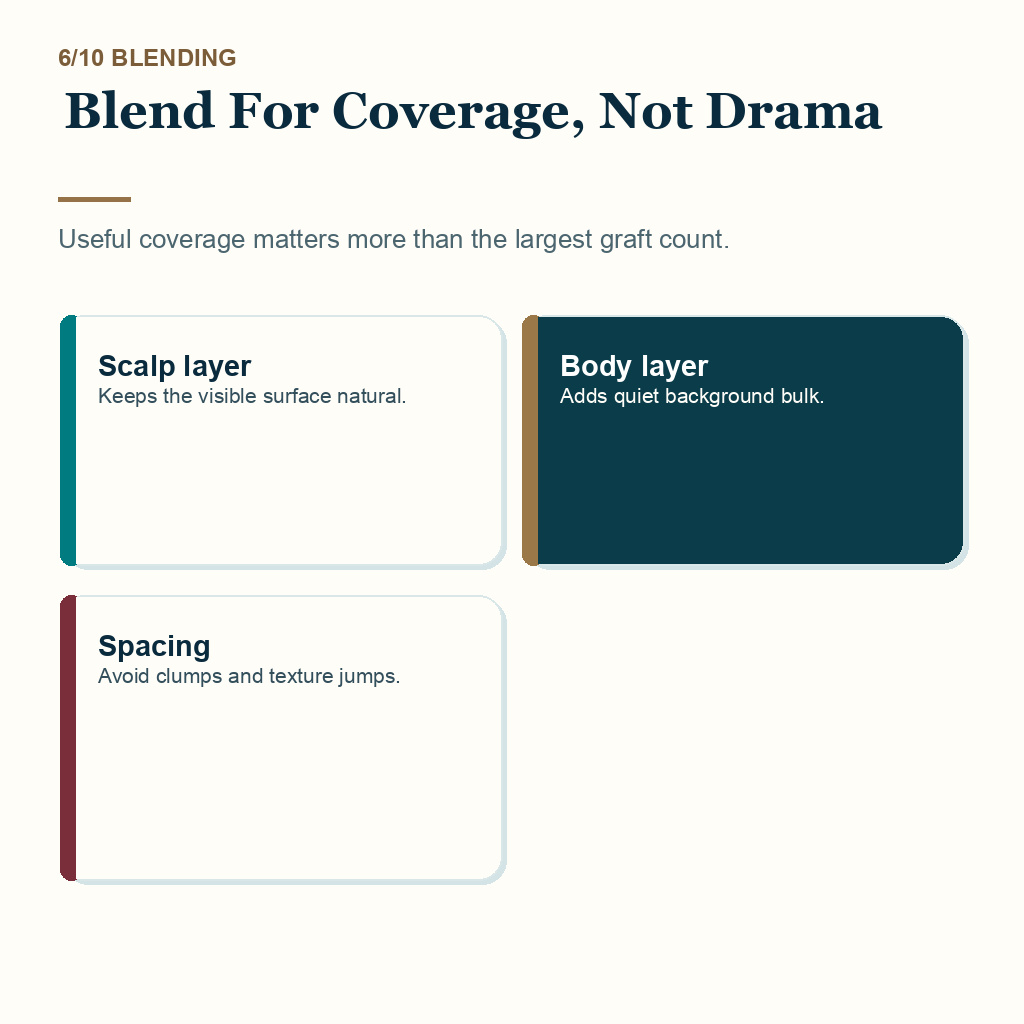
Body hair works best when it is blended, not displayed. Scalp grafts are better for the hairline and delicate transitions. Beard or selected chest hair may sit behind scalp grafts where the texture difference is less obvious and the goal is added visual bulk.
In a crown or mid scalp plan, the surgeon has to consider curl, color, thickness, length, and direction. If beard hair creates a coarse patch, the patient may notice the mismatch every time the hair is wet, short, or photographed under harsh light. When you assess the mature blend, compare it without styling product as well. Oil, gloss, or firm hold can change separation and scalp contrast, making the blend look better or worse without changing growth.
Blending also means respecting density limits. A surgeon cannot turn weak body hair into scalp hair by placing more of it. Too much body hair in the wrong zone can make the transplant look rough rather than full. This is the same reason some hair transplant results look thin even when the graft number sounds impressive.
The best use is often quiet support. The patient notices better coverage, not a separate kind of hair sitting in the scalp.
Technical demands of body hair extraction
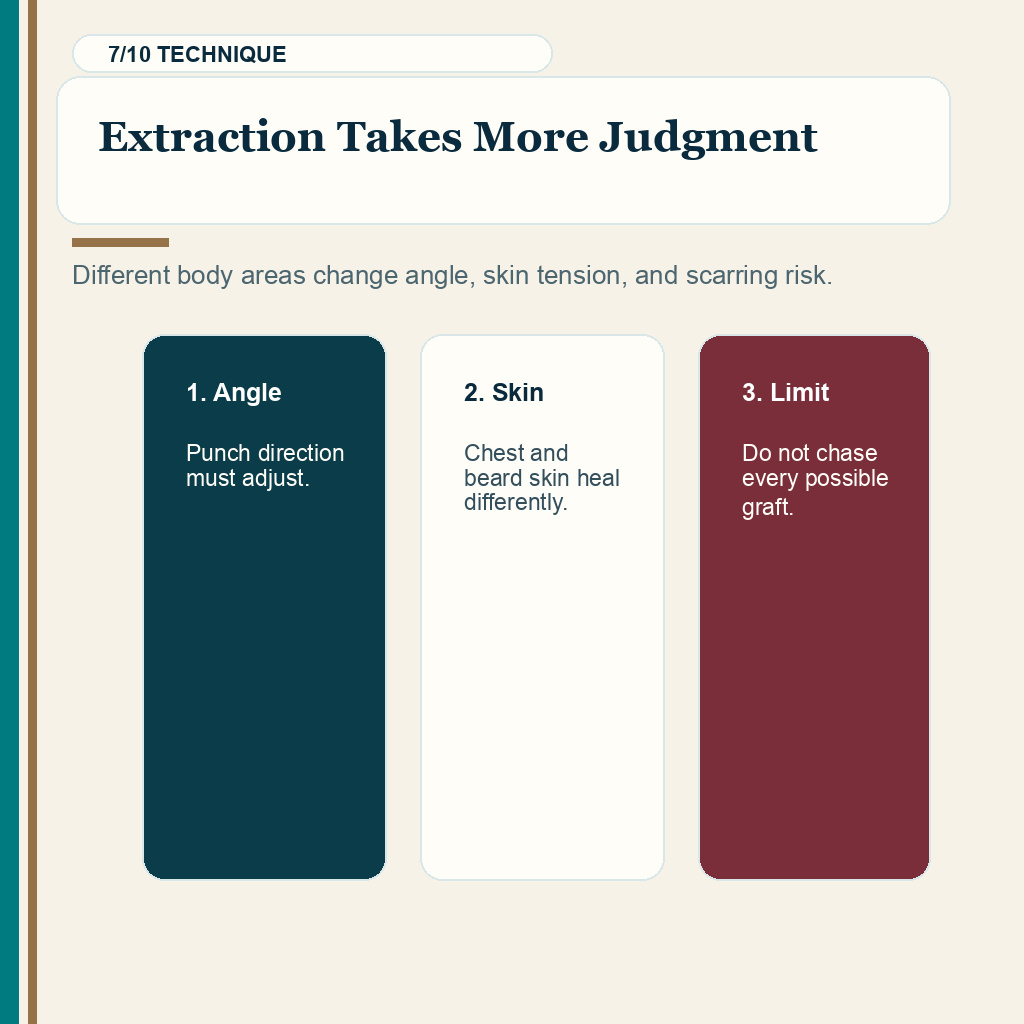
Body hair extraction is harder because the exit angle, curl under the skin, shaft diameter, and follicle depth can differ from scalp hair. The surgeon has to adapt punch size, angle, pressure, and extraction rhythm to the donor source. A method that works well on scalp hair may not be safe for beard or chest hair.
Beard hair can be thick and curved. Chest hair can be flatter, finer, and more variable. If extraction is aggressive or poorly angled, transection risk can rise. Transection means the follicle is damaged during removal and may not grow properly after placement.
The tools matter, but tools do not replace judgment. A careful Sapphire FUE plan may help create precise recipient openings, but body hair extraction still requires surgeon understanding of each donor source. Instruments support the plan rather than replacing it.
Body hair growth is less predictable
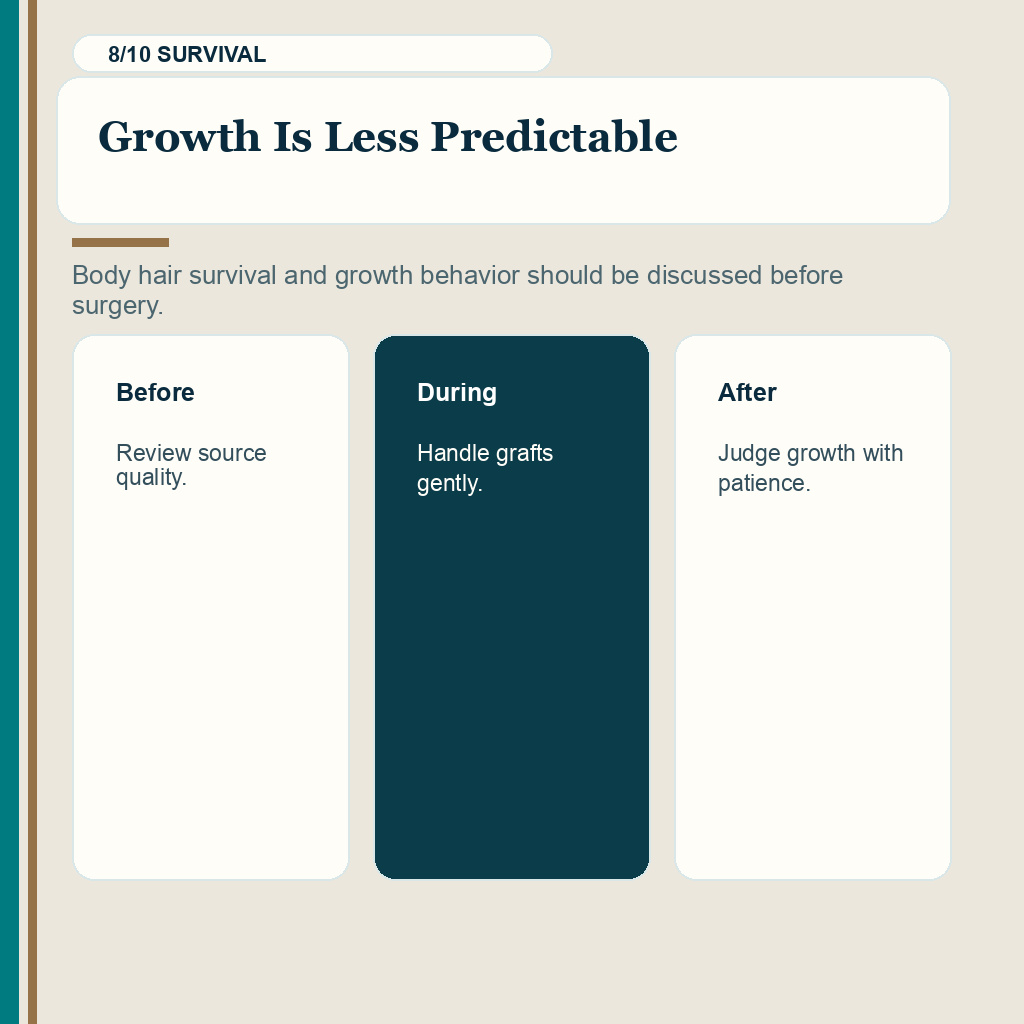
No doctor can give one exact body hair survival percentage that applies to every patient. Published experience shows that scalp, beard, and chest hair can behave differently after transplantation. Beard hair is often more promising than chest hair, but it still does not become scalp hair simply because it is moved to the scalp.
A body hair percentage is only useful when the measurement is clear. Attempted extractions, grafts that were intact enough to place, and hairs growing at a mature review are different counts. One percentage can hide where the count changed, so the estimate should name the donor source, the stage being measured, and when growth will be assessed.
Chest and other body hairs can be more variable in length, growth rate, and cosmetic effect. Some may grow well enough to improve coverage. Some may add less value than expected. That uncertainty is one reason I avoid using body hair as a marketing promise.
A clinic that promises body hair will grow like scalp hair is oversimplifying the procedure. A more useful discussion is what the body hair can realistically add, where it can be hidden, and how much texture difference the patient can tolerate.
No body hair plan can make a weak surgical candidate safe by itself. It may improve coverage, soften a repair, or support the crown, but the plan still has to respect donor limits.
Scarring discussion for beard and chest donors
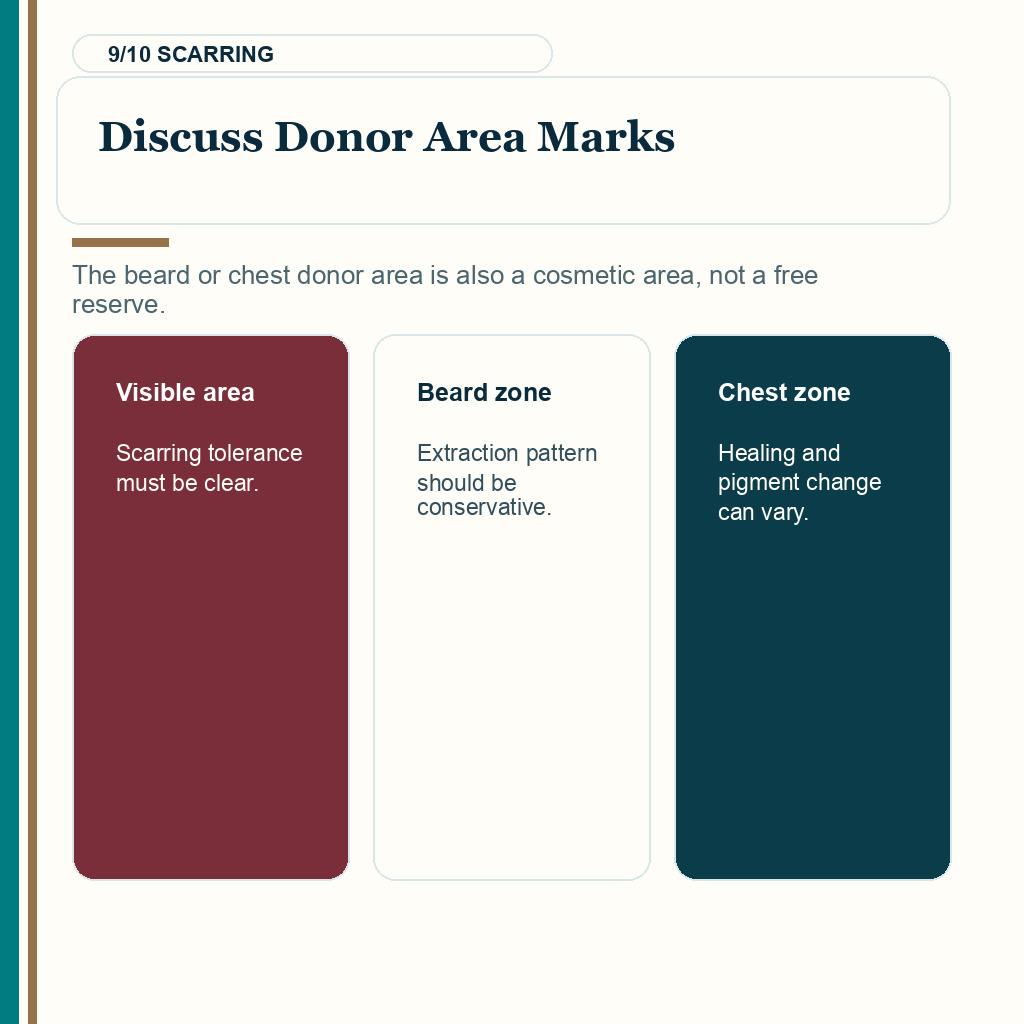
Body hair extraction can leave small scars in the donor area. In the beard area, marks may hide well in many patients, especially under remaining beard hair. On the chest or other body areas, marks may be more visible depending on skin color, hair density, healing tendency, and how much is extracted.
Patients with a history of thick scars, raised scars, or keloid tendency need a careful discussion before body hair is harvested. Keloid or hypertrophic scars and hair transplant surgery explains why scarring history changes the plan.
Scarring is not only a scalp issue. A patient may accept small marks on the scalp donor area but feel differently about visible dots under the chin, on the neck, or on the chest. Consent needs to include where the hair is taken from and how that area may look later.
Aftercare for beard and neck donor sites
If beard or neck hair is harvested, I separate that donor site from the scalp donor area in the written aftercare. The face and neck meet razors, collars, skincare products, and daily friction, so the instructions should state when washing and shaving can restart and what should stay off the healing skin. Do not borrow the scalp schedule or improvise with aftershave.
Small extraction points and temporary redness can be part of early healing. Increasing pain, spreading redness, pus, persistent swelling, or worsening bumps need clinical review. Send clear photos before shaving over the area or applying a new product, and follow the operating surgeon’s instructions for that donor site.
Better candidates for body hair use
A better candidate usually has limited scalp donor supply, advanced hair loss, repair needs, or a crown and mid scalp plan where body hair can be blended behind scalp grafts. He also has strong beard hair or suitable chest hair, realistic expectations, and enough patience to judge the result slowly.
In advanced baldness, some patients may benefit when scalp donor hair alone cannot provide enough coverage. This can apply to selected Norwood 6 or 7 hair transplant planning, but only when the donor math and expectations are realistic.
Staging also has to be acceptable. Body hair can add time and complexity. It may need to be mixed carefully with scalp grafts. It should not be rushed into a large session only because the patient wants a dramatic graft number.
Check body hair limits and aftercare
Three short questions about the section you have just read.
Question 1 of 3
Coarse beard hair is automatically a good choice for the front edge of a hairline.
Beard and chest harvesting can leave visible marks or scars.
An abundant beard guarantees that any failed scalp transplant can be repaired.
This checks your understanding. It does not determine your suitability for surgery.
Poor candidates for body hair donor plans
Body hair is usually the wrong choice when the patient has enough scalp donor hair for a safer plan, when the requested area is the frontal hairline, when body hair is very fine or sparse, when scarring risk is high, or when expectations are based on scalp hair quality.
It is also the wrong choice when the patient is trying to use body hair to avoid a difficult truth about candidacy. Some patients are not poor candidates only because the scalp donor is weak. They are poor candidates because the hair loss pattern, donor supply, expectations, and future risk do not fit a safe operation.
In those cases, a smaller plan, medical treatment, scalp micropigmentation, shaving strategy, or no surgery may protect the patient better than an aggressive body hair plan.
What would make me leave body hair out of the plan?
I leave body hair out when it is being used to make an unsafe plan sound possible. Sparse chest hair, very different color or curl, a history of raised scarring, poor beard density, or a request to build the first hairline rows with non scalp hair can make the added donor source a liability.
I also avoid using body hair to chase full coverage in advanced baldness when the patient expects it to behave like scalp hair. In selected Norwood 6 or 7 planning, beard hair may add useful bulk behind scalp grafts. It does not erase the need for a conservative frontal design and a realistic crown conversation.
When old scars or repair needs are part of the case, body hair can sometimes support camouflage, but only after the scar and donor site are judged together. In transplanting hair into scar tissue, I also have to decide whether the scar can accept grafts and whether the donor area can afford that cost.
Questions before accepting a body hair plan
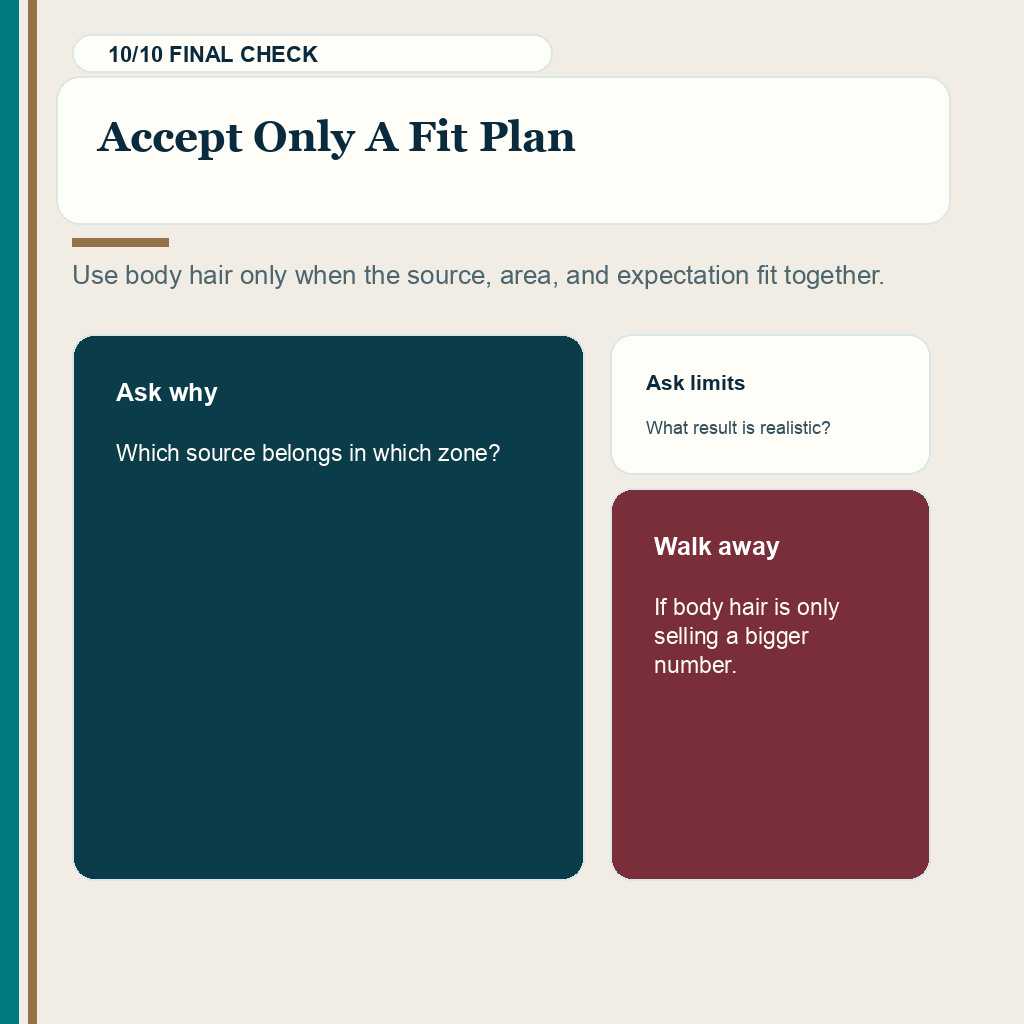
Placement matters more than the total body hair count. The written plan should identify which grafts come from scalp, beard, chest, or another area, how many are expected from each source, and the zone where each texture can blend naturally.

Read this review excerpt
how many grafts can be taken from the donor areas (my head donor area is very small), how will he spread the donated grafts and very precise explanation what to expect from the transplantation process.
The surgeon should be able to explain how body hair quality is judged. Beard density, chest hair caliber, color match, curl, skin healing, and previous scarring all matter. A patient with thick beard hair and good skin healing is not the same as a patient with sparse chest hair and a keloid tendency.
Responsibility also has to be clear. In consultation, I want the extraction role and recipient area control named plainly. Body hair is not a simple technician task. Who performs your hair transplant matters even more when the case is complex and surgical responsibility cannot be vague.
Mature examples are useful only when they match the same donor source. A crown result supported with beard hair does not prove that chest hair can build a hairline. A repair case with mixed donor sources does not prove that body hair is suitable for every weak donor patient.
Cost and time in body hair work
Body hair work can take more time because extraction is slower and the donor source is less predictable. I judge the cost by the full surgical plan, not by the idea that body hair is simply another graft supply.
Pricing should be separated from the graft number promise. The estimate should state whether beard, chest, or other body grafts are priced differently, whether I will personally evaluate that donor source, how many body grafts are realistic, where they will be placed, and what happens if the yield is lower than expected.
A cheaper plan that uses body hair casually can become more expensive if the texture looks wrong or the case needs repair. A smaller plan with slower extraction and stricter placement may protect the donor area better. For hair transplant cost in Turkey, body hair pricing has to include surgeon involvement, extraction time, realistic yield, and donor safety instead of the graft number alone.
Body hair is reserve, not a rescue promise
In selected repair or advanced cases, beard or chest grafts may add useful support, but they still do not behave exactly like scalp hair. Texture, growth cycle, color, curl, and placement decide whether the mix looks natural.
Scalp hair usually belongs in the most visible zones. Body hair is better considered as support where the difference is less exposed and the expectation is realistic.
Before any body hair is removed with laser, map whether it has future donor value. Once that reserve is reduced, it may not be available for repair planning.