


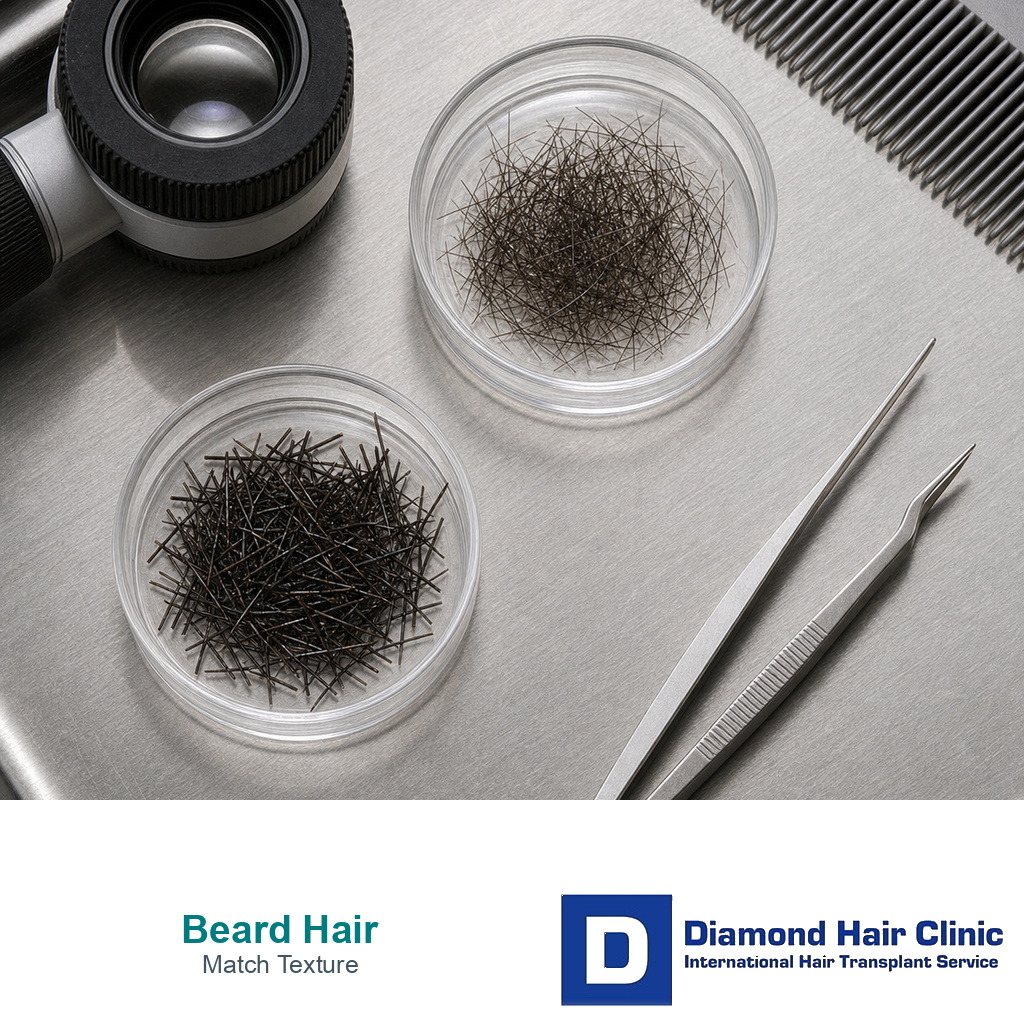
Beard Hair for Crown Transplant When Donor Hair Is Limited
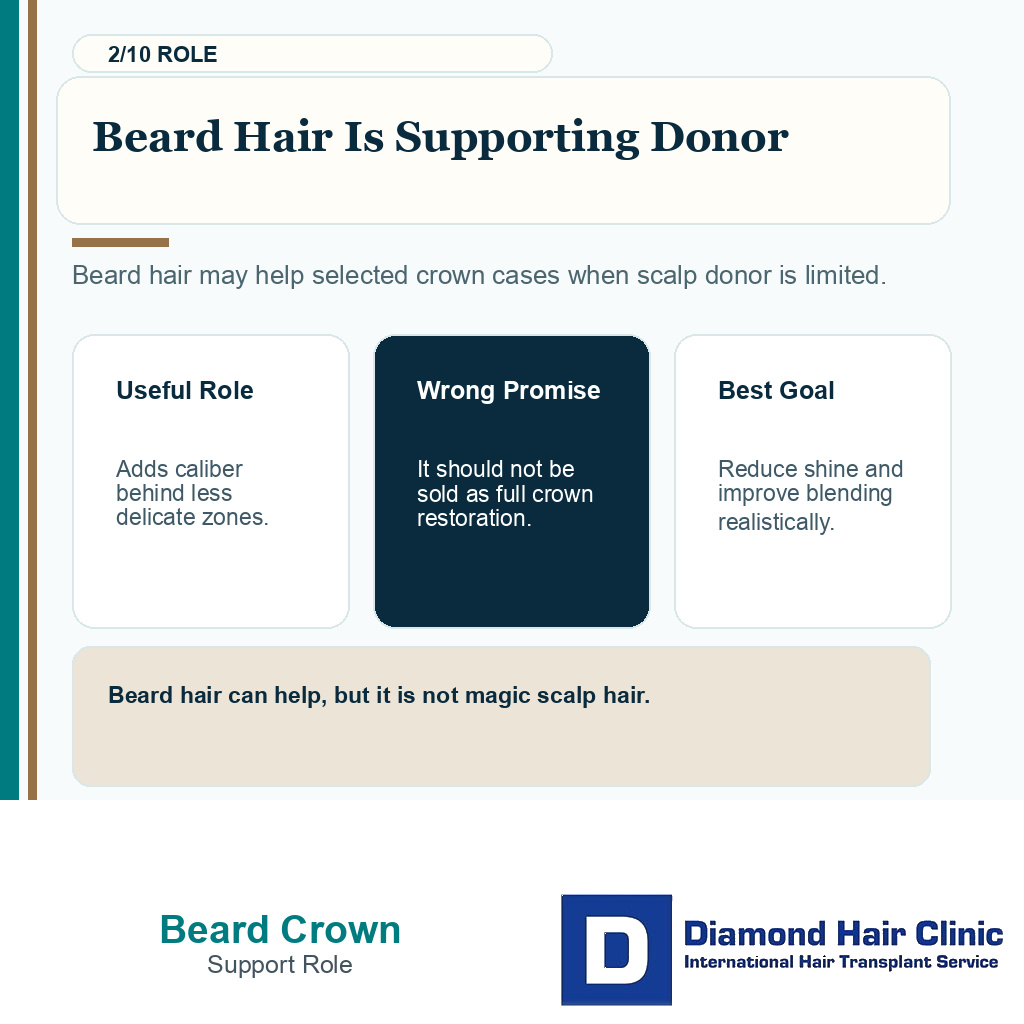
Beard hair can be used for crown coverage when scalp donor hair is limited and the patient’s case fits, but I use it as a supporting donor source, not as a magic replacement for scalp hair. The beard donor is usually thicker, coarser, and different in texture, so it works best when it is mixed carefully into the crown or less delicate scalp zones.
Using beard hair in the hairline deserves particular caution, and I do not use it to promise a dense crown when the donor situation cannot support that promise.
The crown is already a difficult area because it has a swirl pattern, catches overhead light, and can consume many grafts without looking as full as patients imagine. When scalp donor hair is limited, finding another donor source is only one part of the decision. The case depends on whether beard hair gives enough cosmetic benefit without creating a new donor problem on the face or neck.
When beard hair is used in the crown, the blend matters more than the source label. The plan has to define where beard hair starts, where it stops, how much scalp hair remains in the blend, and how the crown swirl is protected from a visible texture patch. Photo examples only help when they show the blend in ordinary length and light. A close wet crown image can make beard hair look smoother or harsher than it really is.
I keep the limits clear. Beard hair may be helpful when the front has been protected, scalp donor hair has been used wisely, the beard donor is strong, and the patient accepts a realistic crown improvement rather than perfect density. A plan that reduces shine and improves blending can be worthwhile, but it should not be sold as a full crown restoration.
Beard hair is not free density, because the face and neck remain donor areas with their own limits. It is a visible donor trade, so the beard and neck area must be protected too. For patients still deciding on grooming, I treat laser hair removal before future donor planning as part of that same reserve discussion.
Beard hair can support crown coverage
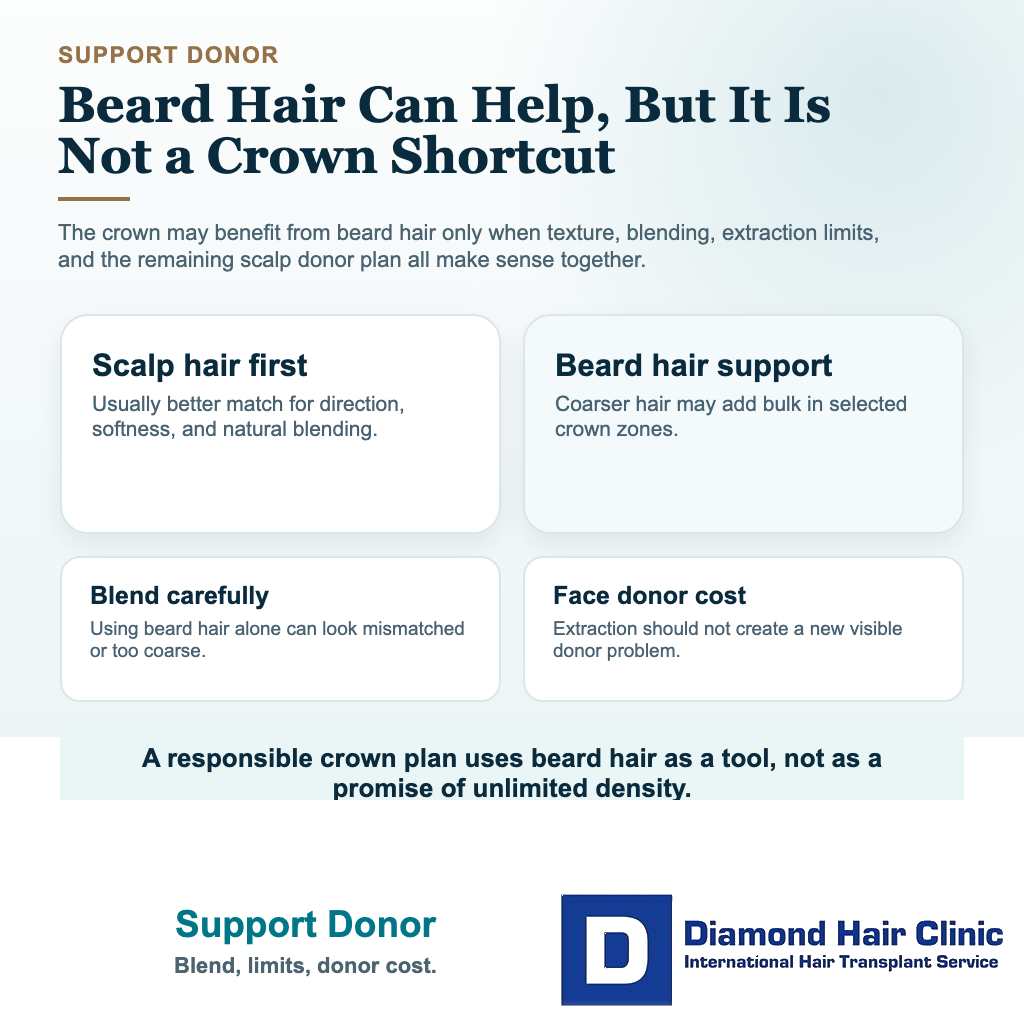
Beard hair can help because it often has a thicker shaft than scalp hair. In the crown, that thickness can reduce scalp shine and improve the impression of coverage, especially when the scalp donor has already been used or is naturally weak.
Beard hair should not be treated as if it behaves exactly like scalp hair. It can feel different, grow differently, and look different if placed in the wrong zone. I think of it as a strategic filler, not as identical replacement hair.
When I plan a crown hair transplant, I first define what the crown actually needs and whether donor capacity can support that goal. The beard donor enters the conversation only after that basic planning is clear.
Crown is harder than patients expect
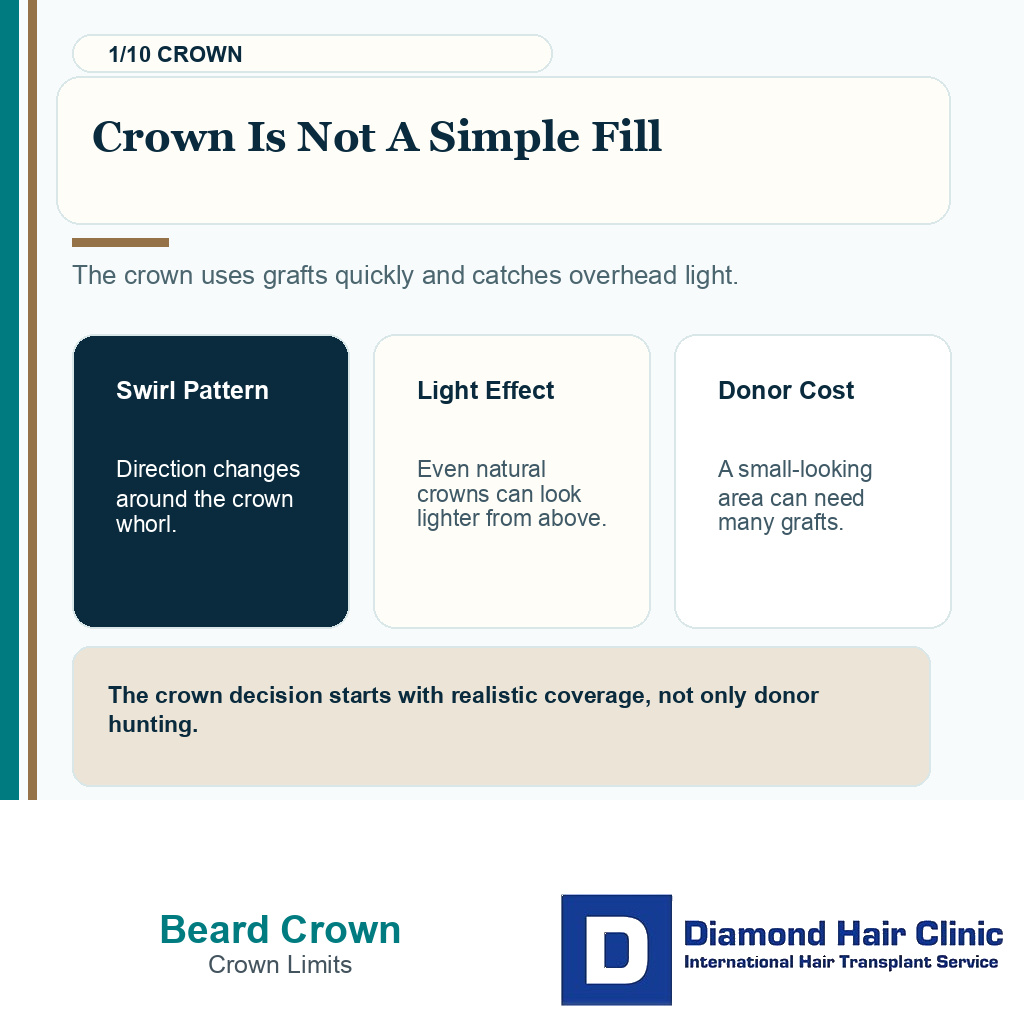
The crown is a demanding area because the hair changes direction around a swirl. Even natural crowns often look lighter under strong overhead light. A transplanted crown must respect that pattern or it can look strange even when the grafts grow.
The crown also uses grafts quickly. A patient may see what looks like a small thin spot in the mirror, but once the area is measured, the required graft count can be larger than expected. If the front is also weak, the surgeon must decide where the limited donor hair gives the biggest visual benefit.
At that point, whether the hairline or crown should come first becomes a real planning question. A fuller crown with a weak front can still leave the patient unhappy because the face is framed by the frontal hairline.
Beard hair makes surgical sense only in selected crown cases
It may make sense when the scalp donor is weak, previous surgeries have used many grafts, the crown goal is modest, and the beard donor is strong enough to donate without creating a visible cosmetic problem.
It can also be useful in selected repair or advanced hair loss cases where scalp donor hair should be reserved for the front and middle scalp. Then, the beard donor may help add coverage behind the most delicate zones. In a Norwood 6 or 7 hair transplant, that support role must be explained carefully before the patient expects full coverage.
A weak donor area does not by itself make surgery impossible, but it changes the standard. Every graft source must earn its place in the plan.
Scalp donor planning still comes first
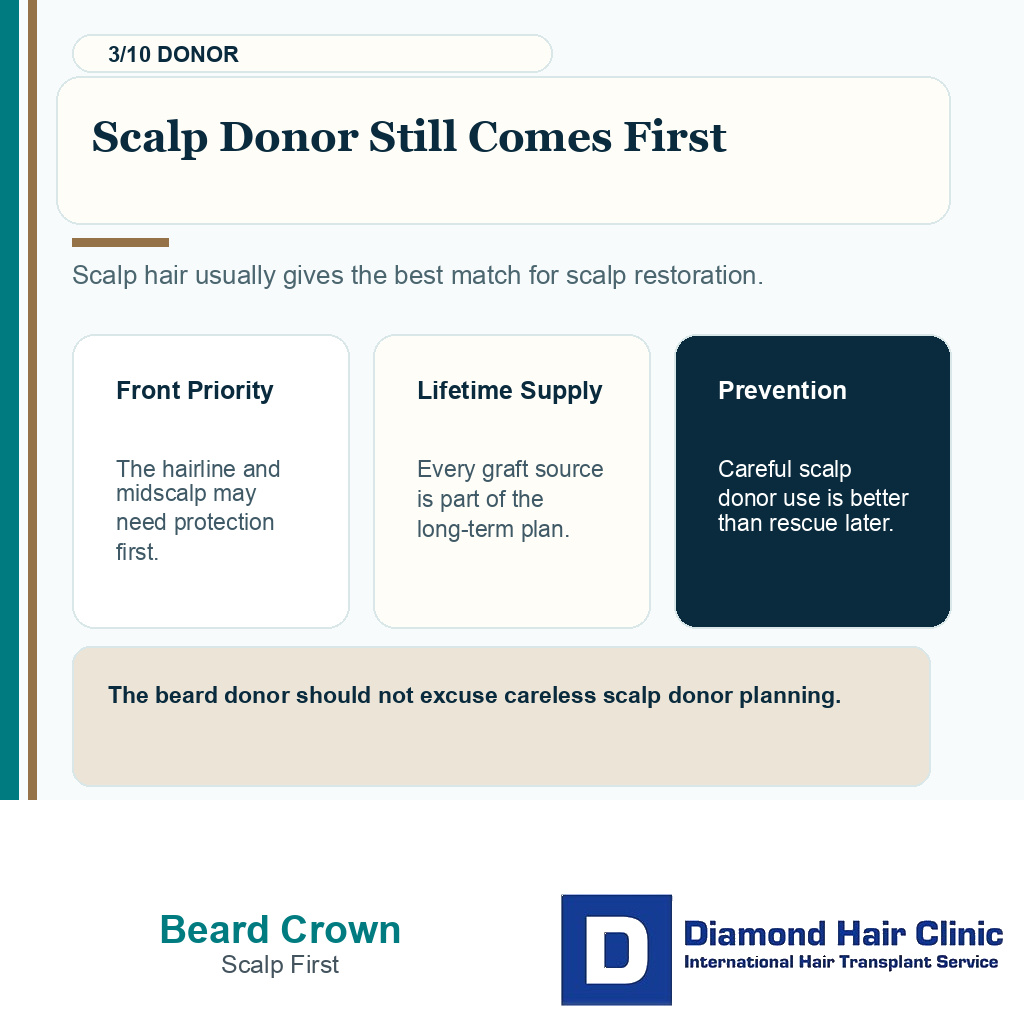
Scalp donor hair usually gives the best match for scalp restoration. It is softer, more predictable, and easier to blend in delicate areas. The beard donor can help, but it should not become an excuse for careless scalp donor use.
A conservative first plan is better than telling a patient later that the beard donor is needed because the scalp donor was spent too aggressively. Prevention is better than rescue.
Donor area planning remains central. A graft used today is part of the patient’s lifetime graft supply, whether it came from the scalp or the beard.
Beard hair differs from scalp hair
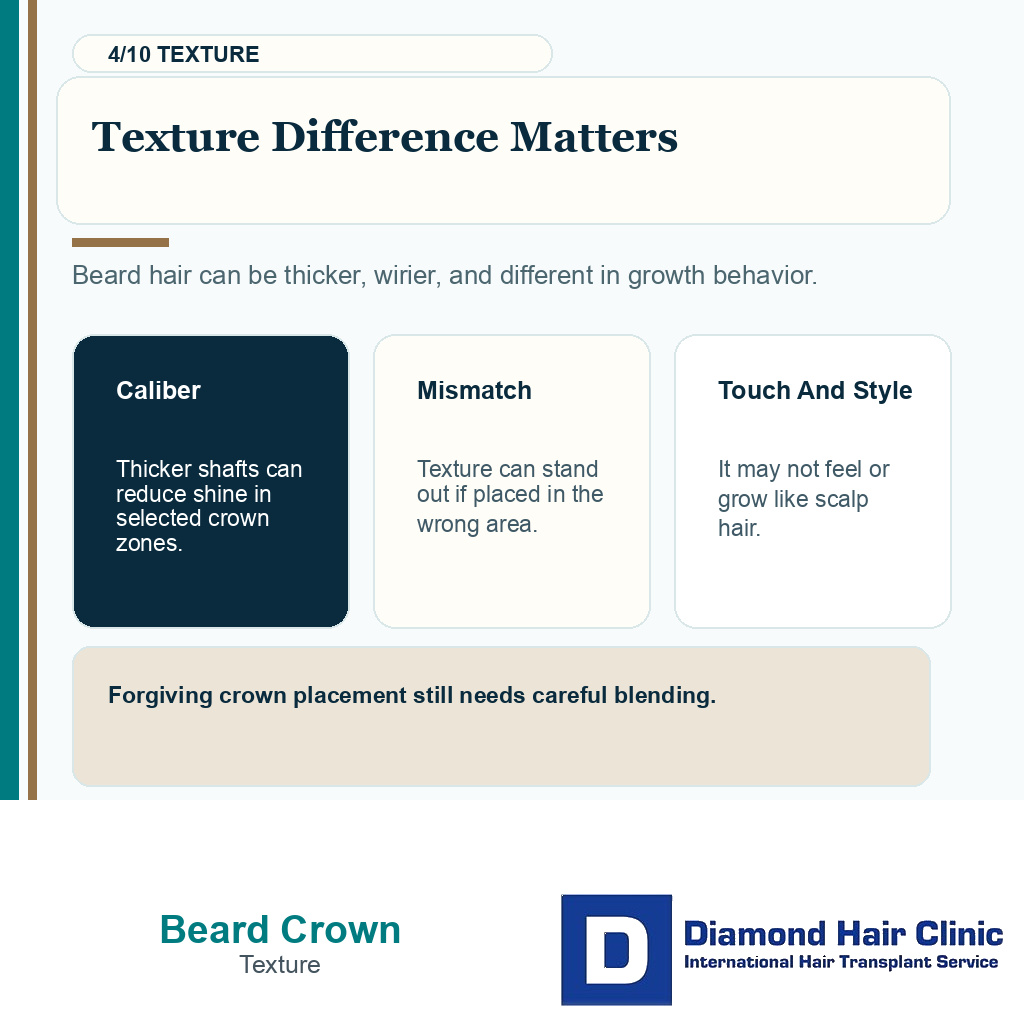
This hair is often thicker and more wiry. It may have a different growth cycle and may not grow as long as scalp hair. The color, curl, caliber, and texture may also be different from the hair around it. It may blend better as it gains length, but it does not simply turn into scalp donor hair.
In the crown, these differences can be more forgiving than in the hairline because the crown is viewed from farther away and already has a changing direction pattern. Still, forgiving does not mean careless. It should usually be blended with scalp hair rather than placed as one obvious patch.
Planning with body hair, chest hair, and beard hair as donor sources is a compromise with a specific purpose.
Using beard hair alone in the crown
Sometimes it can be used heavily in a crown, but I am deliberate about relying on it alone. A crown made only from the beard donor can have a different feel and a different visual character, especially if the surrounding scalp hair is finer.
When possible, scalp hair should guide the natural direction and soften the visible blend, then the beard donor can support density behind it. This creates a more balanced result than simply filling the crown with the thickest available donor source.
If the scalp donor is too weak to contribute meaningfully, then the patient must understand the compromise clearly. The goal may become reduced shine and better coverage, not a crown that looks identical to native scalp hair.
Chest hair and other body hair
Body or beard hair can increase crown options, but it should not be counted like scalp hair. Curl, growth cycle, color, and blending decide whether it supports coverage or draws attention.
In my judgment, the beard donor is usually the strongest option outside the scalp when it is suitable, but even that needs caution. Chest hair may have a role in selected advanced cases or repair planning, but it should not be presented as a simple way to rebuild a full crown.
The more donor sources a clinic adds, the more clearly the explanation has to be given. The patient needs to know why each source is being used, where each source will be placed, and what cosmetic compromise is being accepted.
Beard hair usually does not belong in the hairline
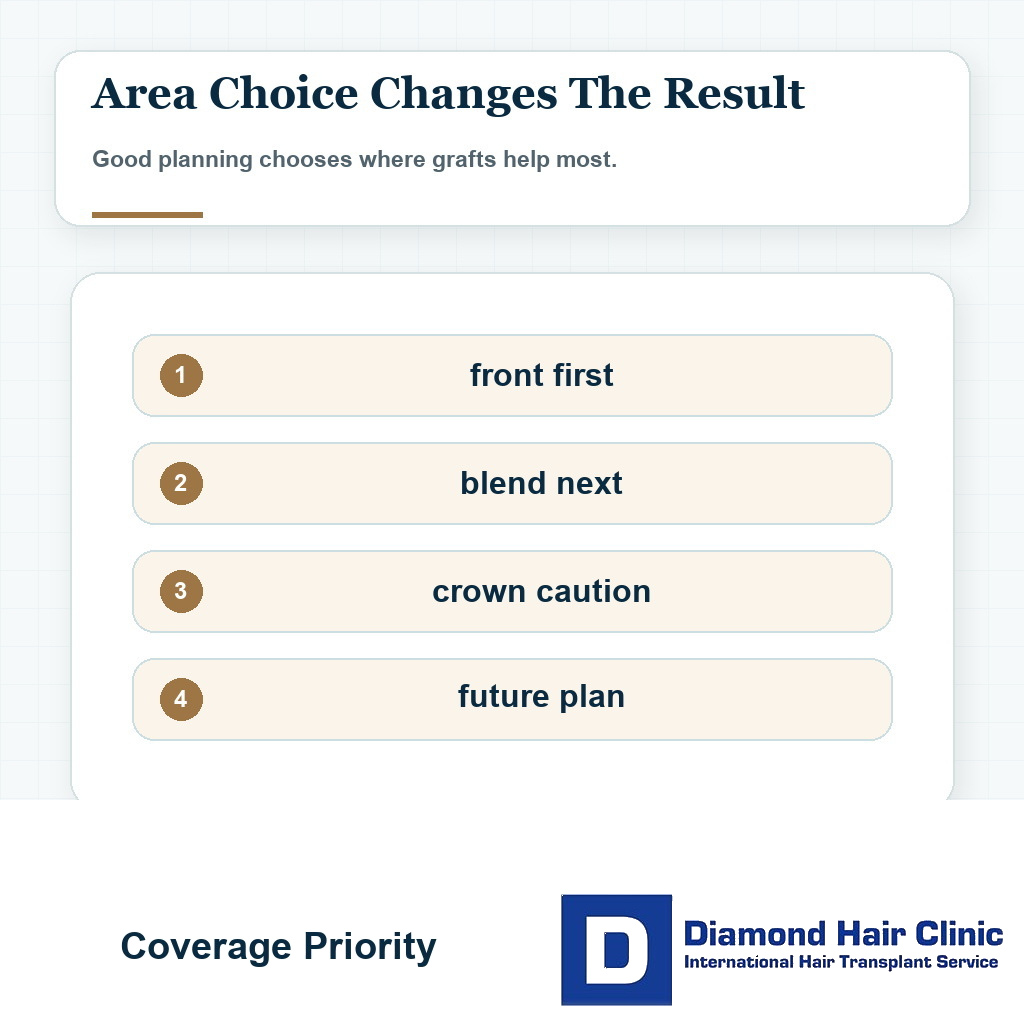
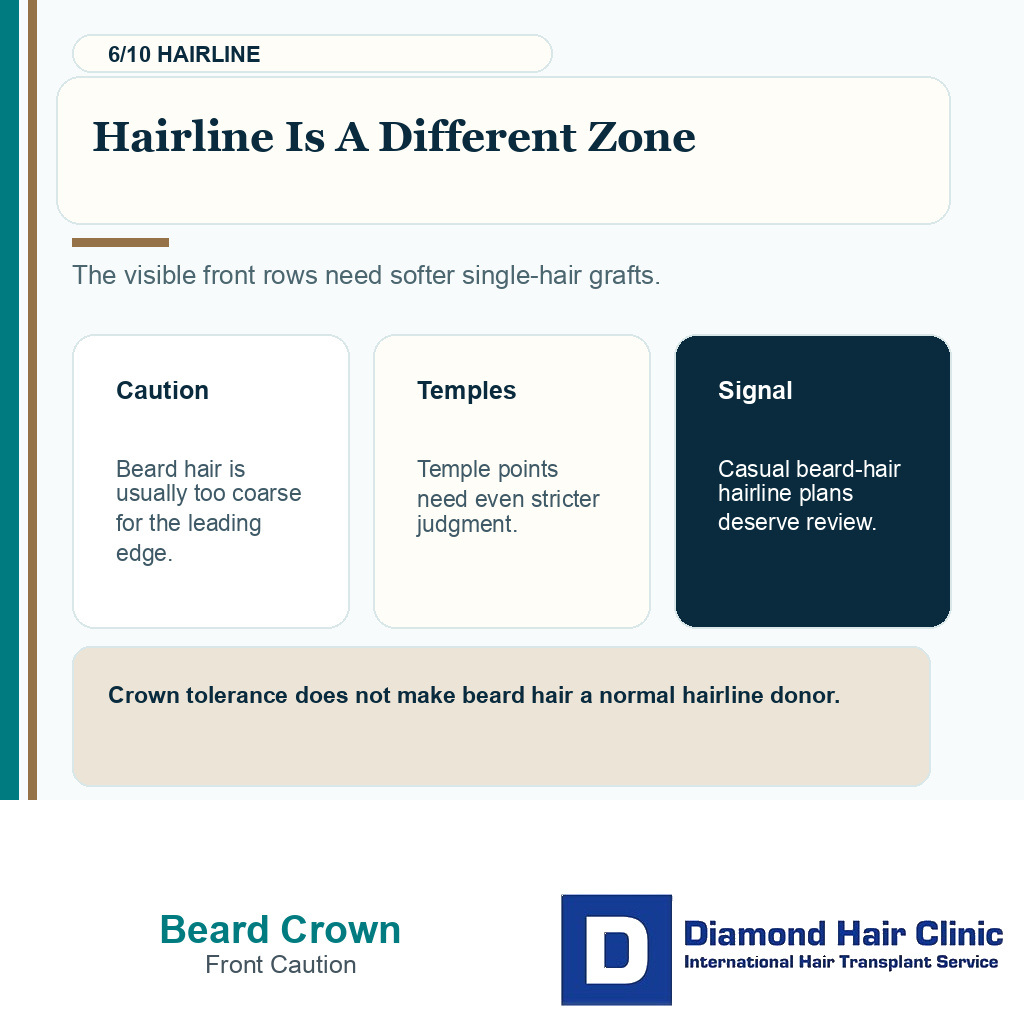
In general, I avoid the beard donor in the visible hairline. The first rows need soft single hair grafts, natural irregularity, and a fine transition. It is usually too coarse for that job.
There are rare repair situations where a surgeon may use hair from outside the scalp creatively, but that is not routine hairline design. Be very cautious if a clinic casually suggests using it for the front row.
The temples need a different standard. Body or beard hair for the temples needs much stricter judgment than the crown because the area is delicate and visible.
Planning after one or two previous surgeries
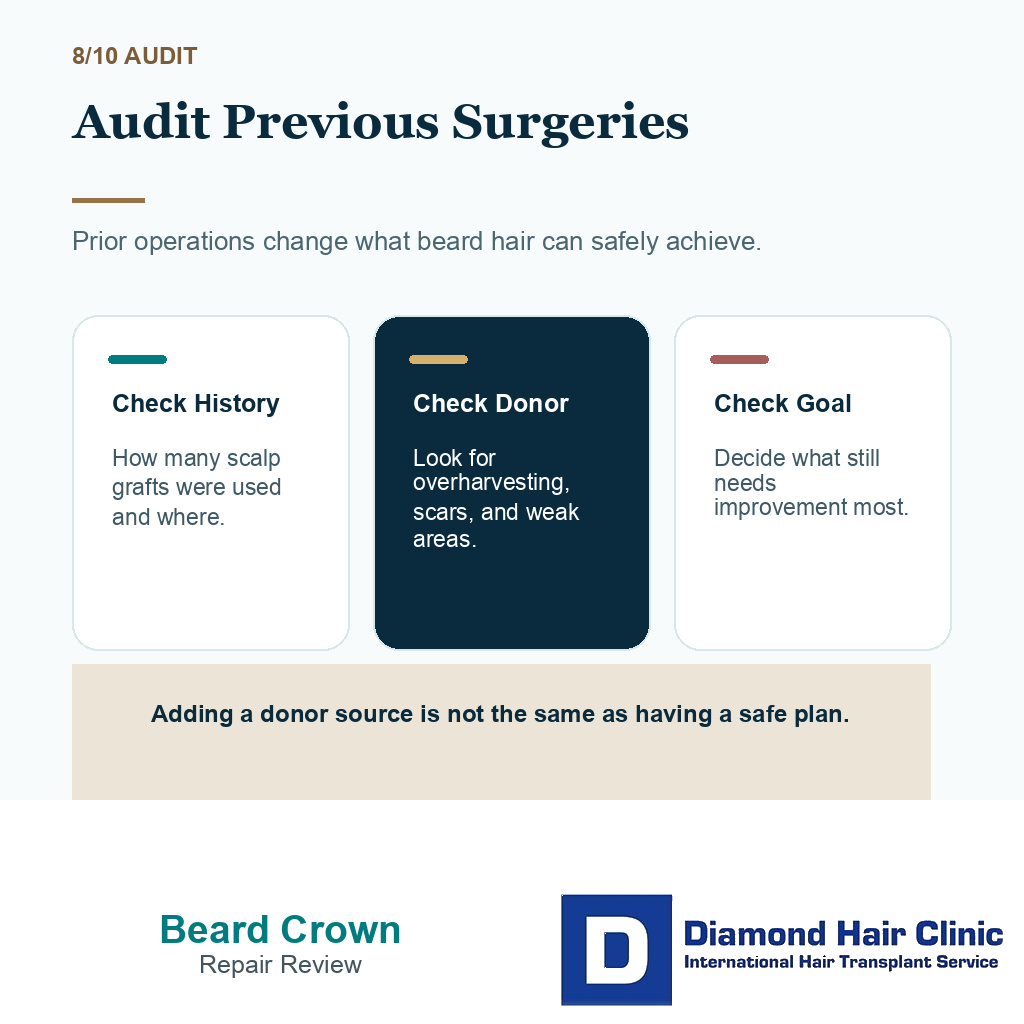
Patients who have already had surgery need a full donor audit before the beard donor is discussed seriously. The audit should include how many scalp grafts were used, where they were taken from, whether the donor is overharvested, how the previous grafts grew, and what still needs improvement.
A second hair transplant or third hair transplant should not be planned by simply adding another donor source. The plan must explain what is left and what result is realistic.
If previous work was too aggressive, beard hair may help soften the visual deficit. But it cannot fully undo poor planning. It should be part of a staged repair strategy, not a desperate attempt to fill everything at once.
Coverage limits in the crown
The limits are beard density, extraction safety, texture mismatch, growth behavior, crown size, and patient expectation. Some patients have strong beard donor hair. Some do not. Some heal with tiny marks. Others may notice changes when they shave.
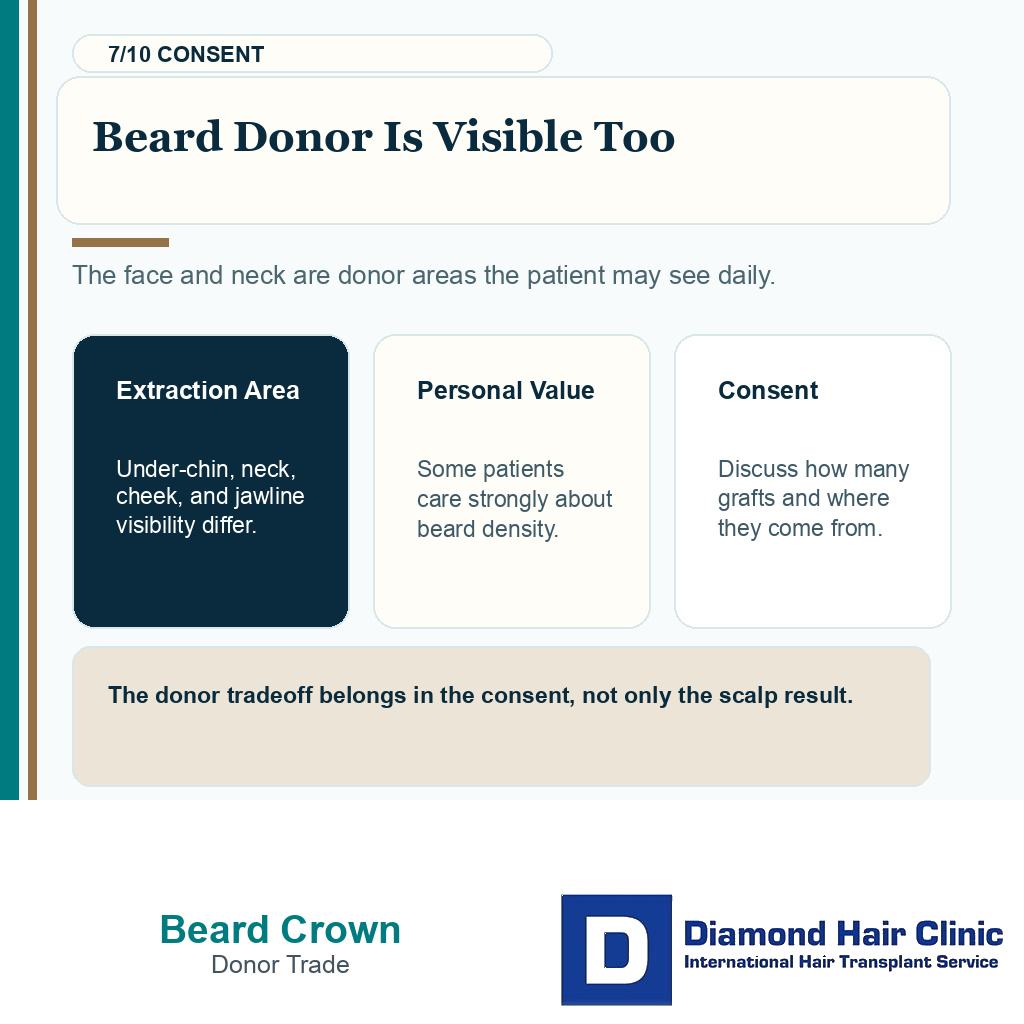
The face and neck are not invisible donor zones. Under the chin may be less visible for some patients, but the cheek and jawline can matter cosmetically. A patient who values a full beard should not give away that appearance without understanding the tradeoff.
That donor protection idea applies here. A donor source should not be treated as unlimited just because it is outside the scalp.
Mixing beard hair in the crown
When beard hair is used, it is usually best mixed with scalp hair when possible. Scalp hair is better for the more visible transition zones. Coarser grafts are more acceptable in the less exposed parts of the crown than in the tight whorl or visible transition edge. Their thickness can help coverage there without drawing attention.
The crown swirl also matters. Coarse grafts must follow the natural direction change. If the direction is wrong, the crown can look unnatural even if the grafts survive.
Growth is not the only standard. Direction, texture, spacing, and blending decide whether the result looks natural.
Consent before beard extraction
The patient needs to know where the beard grafts will be taken from, how many are planned, whether the extraction area may look thinner, and how those grafts may feel on the scalp. It should also be clear that they may not behave exactly like scalp hair when touched or styled.
Some patients shave every day and are not very concerned about beard density. Others are very attached to their beard. I do not assume. Consent should include the donor area that the patient sees in the mirror, not only the recipient area on the scalp.
Make that tradeoff specific before extraction. Decide whether a thinner cheek line, under chin change, or neck donor mark would bother you more than a modest crown gain.
The plan also has to explain what will not be possible. If the purpose is to reduce shine and improve coverage, the beard donor may help. If the goal is a teenage crown in a depleted donor patient, the plan is not realistic.
Beard hair is wrong for the crown when expectations are unrealistic
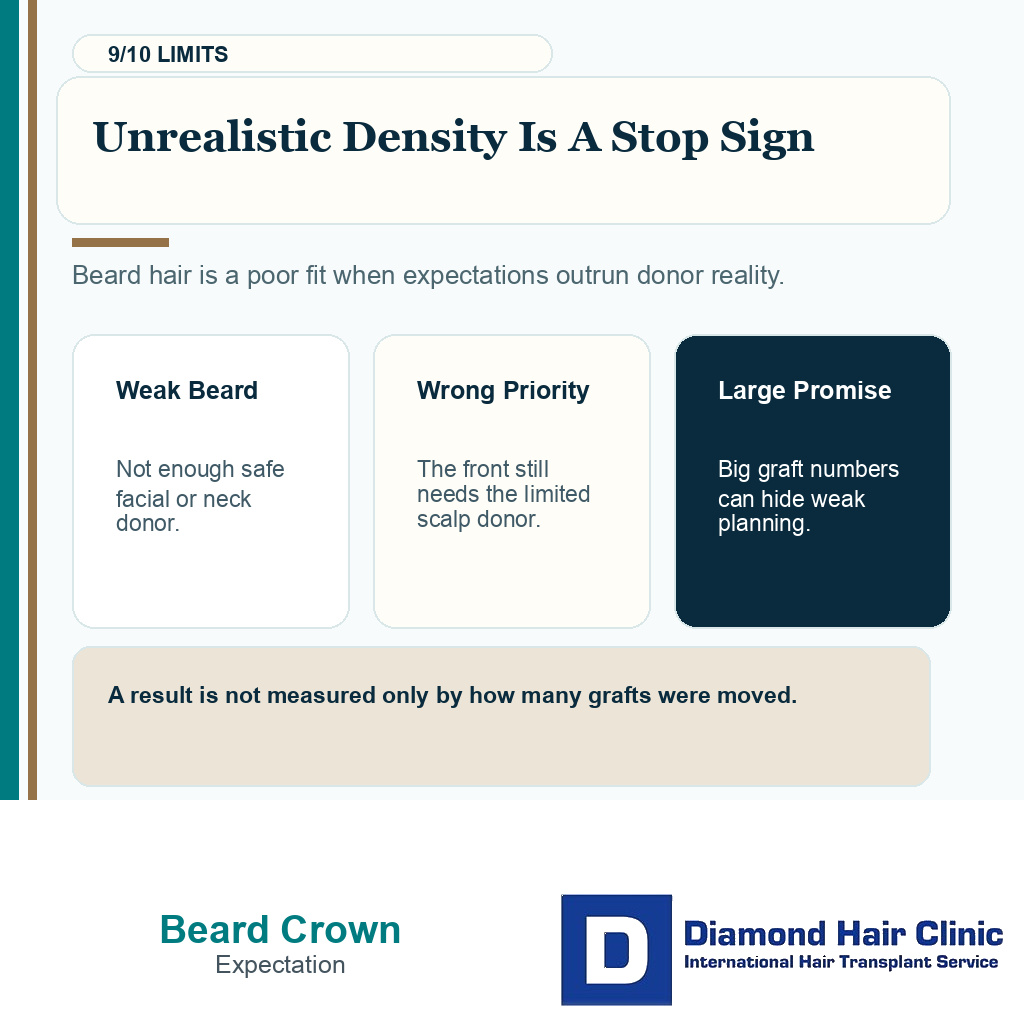
Beard hair is not appropriate if the beard donor is weak, if the patient expects perfect density, if the front still needs priority, if the scalp loss is too extensive for the available donor, or if another operation is likely to create more regret than benefit.
The plan is also weak if the beard donor is being used mainly to advertise a large graft number. Combining donor sources can sound impressive, but the patient needs to know why each source is being used.
Protecting donor supply can matter more than adding crown density. A result is not measured only by how many grafts were moved. A natural hair transplant result comes from planning, not aggressive coverage at any cost.
Use these 10 crown planning slides to weigh donor limits, texture differences, expectations, and beard graft tradeoffs before accepting a plan. Swipe sideways, use an arrow, or choose a number below the image.

Beard grafts cannot replace donor limits
It can be useful for crown coverage in patients whose case fits with limited scalp donor hair, but it should be used with clear limits. It is best as a supporting donor source, usually mixed with scalp hair, and usually kept away from the most delicate frontal zones.
Before a plan uses the beard donor for the crown, the scalp donor role should be clear, the front should be protected, and the crown target should be realistic under overhead light. The grafts need a defined blend, not just a second donor source added to the count.
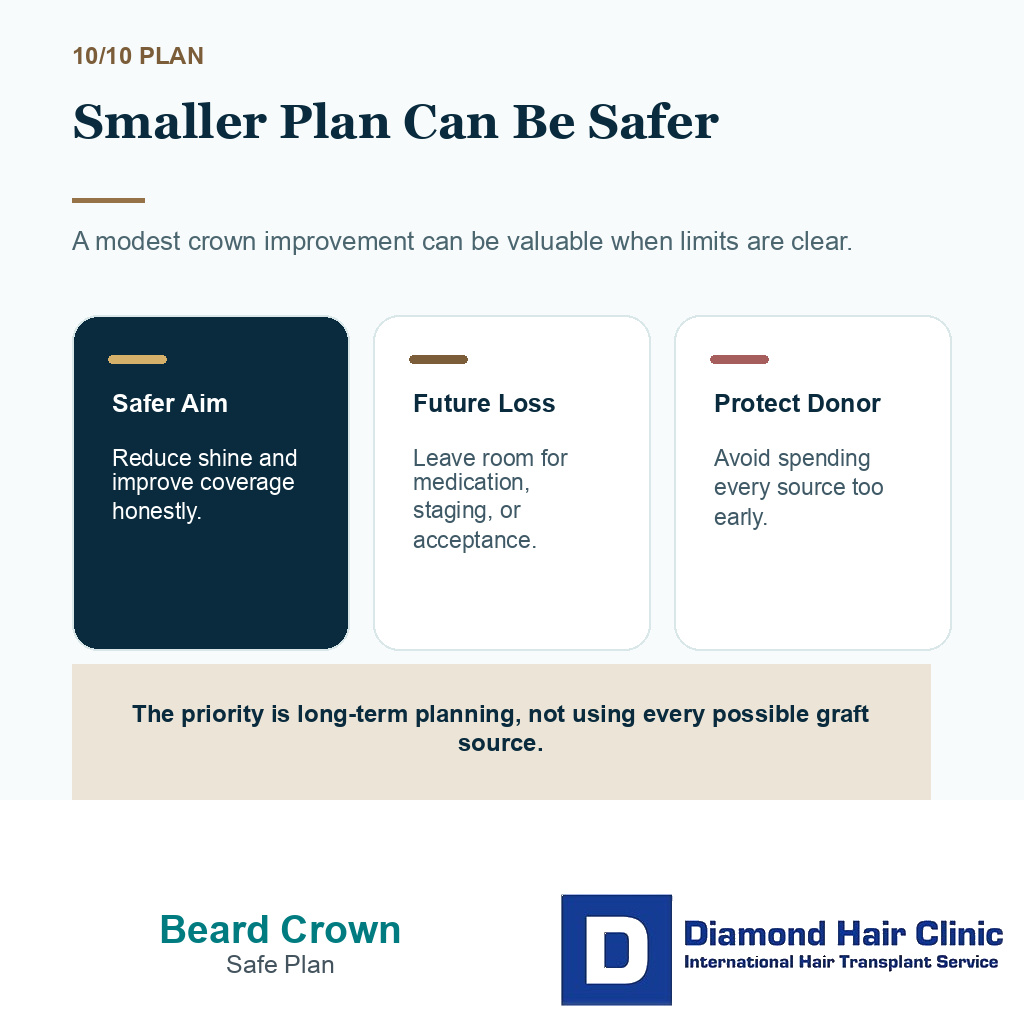
The plan also has to age well if the crown continues to expand. A small improvement can be very worthwhile when the patient understands that future thinning may still need medication, another stage, or acceptance of lighter crown coverage.
The priority is not to use every possible graft source. The priority is to protect the patient from spending donor hair too early, creating a visible beard donor problem, or building a crown that does not match the long term plan. Beard hair can help, but only when the reason for using it is clear.
Read this review excerpt
We also had a levelled conversation about my hairline and results I could expect based on my donor density area.