


Beard Transplant Procedure Costs and Risks
Beards are back in focus
A beard transplant can help when patchy cheeks, a thin mustache, or a scar gap cannot be corrected with grooming alone. Before price or graft count, the first clinical decision is whether donor hair can blend with the existing beard, whether the skin is ready for surgery, and whether the planned density will still look natural after trimming and shaving. If the possible donor is under the chin or on the neck, a separate neck beard donor hair review should map texture match, visible thinning, and shaving habits before graft numbers are discussed.
A small correction is enough for some patients. Building a full beard would spend much more donor hair and may create a result that is difficult to soften later. That difference matters more than the fashion trend behind beard popularity. For men with scalp hair loss risk, I protect future hairline and repair reserve before spending scalp donor hair on the beard.
Demand for beard transplants is rising
More men are asking about beard transplants because patchy cheeks, a weak mustache, or an uneven jawline can affect how the face feels in photos and daily grooming. That demand does not make every beard a good surgical target. The face needs more restraint than a style trend because the result is visible every time the beard is trimmed or shaved.
Transplanted beard hair can be long lasting when the donor hair is stable and the grafts grow well, but it is not something to buy and forget. Surgery moves follicles into facial skin, and the angle, density, donor choice, skin condition, and close shave expectation decide whether the result is worth living with.
Guide overview
Designed to serve as a comprehensive repository for all beard transplant related inquiries, this guide aims to demystify the intricacies of the surgical procedure while also probing the broader social and psychological dimensions involved.
Whether you’re actively considering undergoing a beard transplant or simply curious about the process, our thorough scrutiny will give you the knowledge you need to navigate this complex landscape confidently.
Beard transplantation process
Hair transplantation works by moving hair follicles from a donor area to a recipient area on the body. Once transplanted, these follicles go through a phase of shedding, followed by regrowth, and usually continue to produce hair in the newly established area for an extended period, often a lifetime.
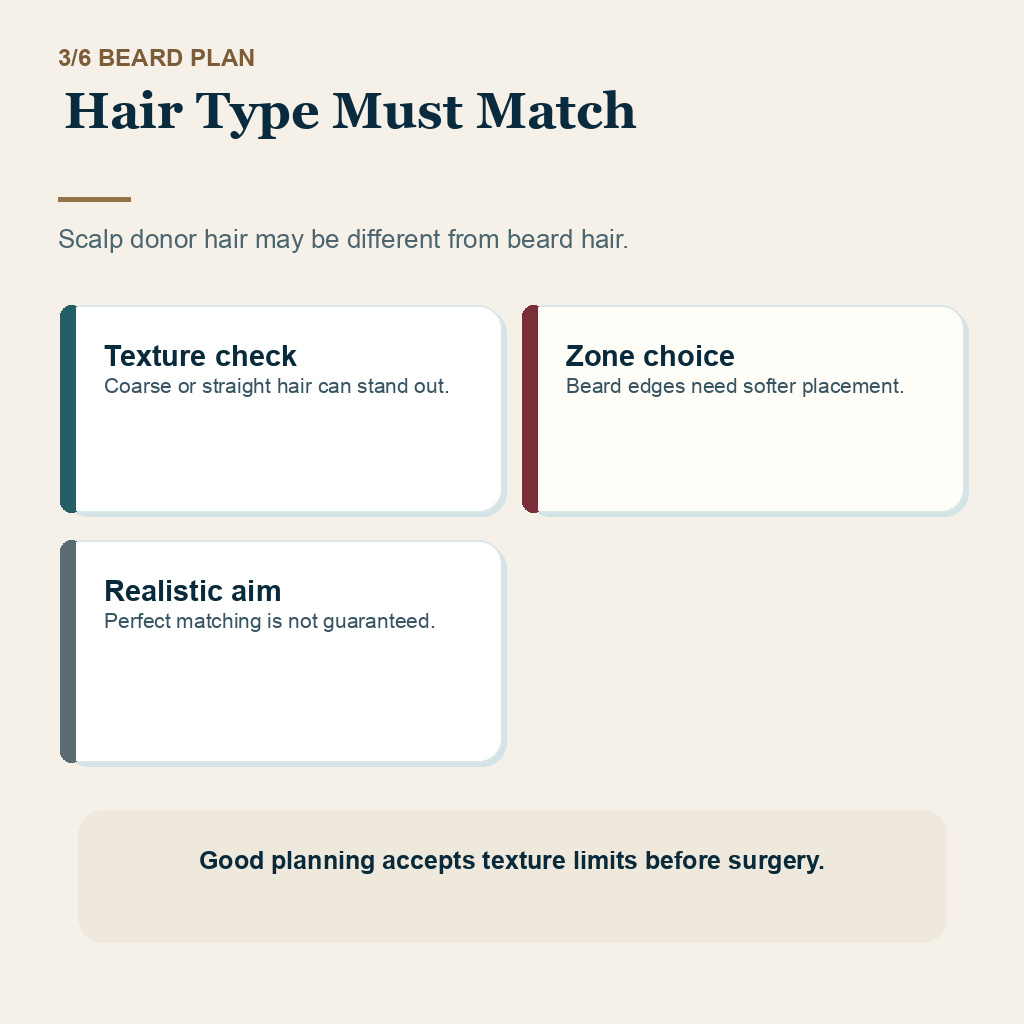
Scalp hair is often used for beard transplants, including mustache transplant planning. Its texture and growth characteristics do not always match facial hair.
Before using scalp donor hair for a large beard plan, I first review what should remain available for future scalp hair loss, hairline work, or repair. A dense cheek or jawline goal can spend grafts that may later be needed for a hairline, crown, or repair. The beard should not quietly take the donor budget if the scalp pattern is still changing or future repair may need reserve.
For a beard transplant plan, take photos with the beard grown out and trimmed short. Grown hair shows the fullness you like, while short hair exposes patch borders, direction changes, and whether scalp donor hair can blend with the existing beard.
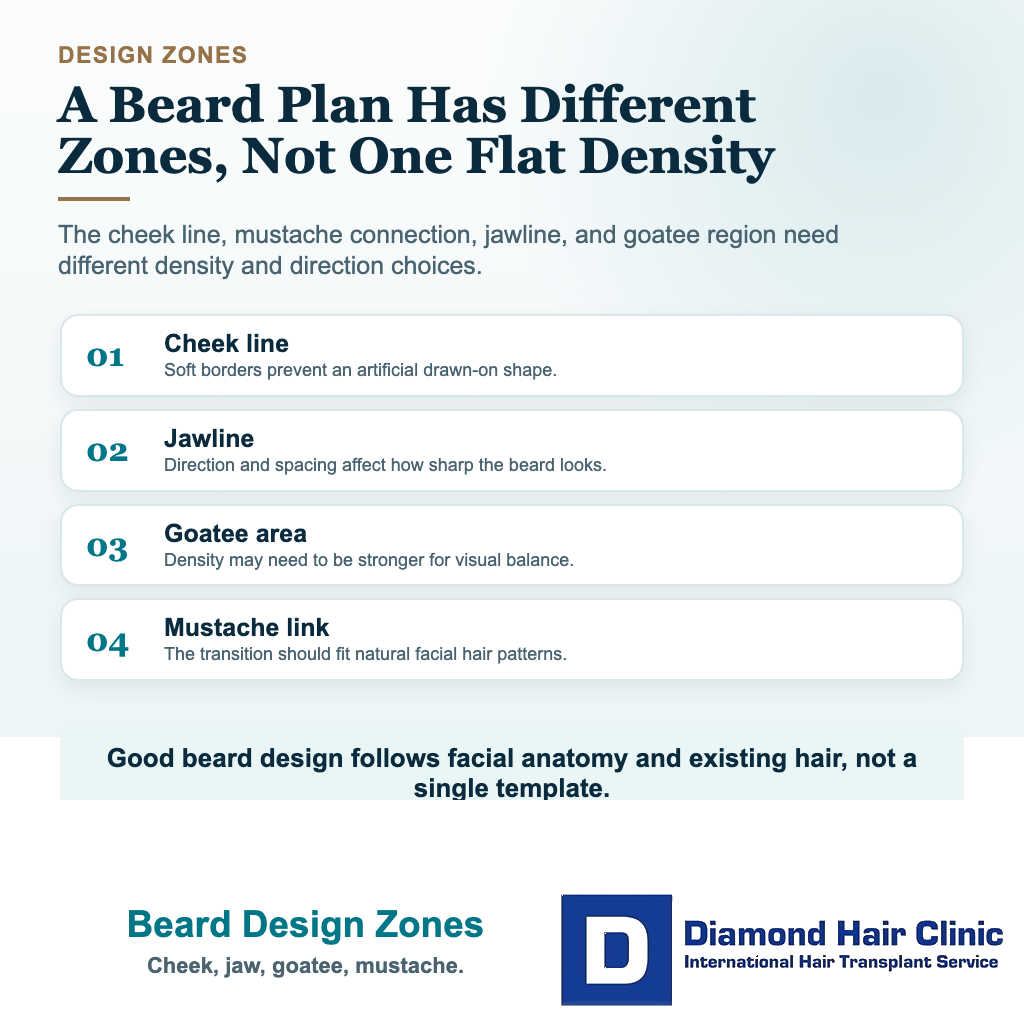
Before graft placement, agree on direction by facial zone rather than approving only a beard outline. Cheek, sideburn, jawline, moustache, and goatee hairs do not all leave the skin at the same angle. For very short grooming, document that direction plan because even small mismatches can stay visible.
Say before design day if you still want the option to shave very close. A beard that looks fuller with length may still bother you when the skin is bare.
Assess that choice with the face relaxed, in neutral light, and at more than one beard length. A design that blends when grown out may show spacing, angle, or texture differences after a very close trim, so the preferred shaving length belongs in the plan before grafts are placed.
Reasons patients choose beard transplants
The motivations behind choosing to undergo a beard transplant can be diverse, often driven by a combination of personal, societal, and medical factors.
The main reasons are usually personal, cultural, medical, and psychological.
Beard style and facial identity
Indeed, a finely groomed beard can transform an individual’s appearance, effectively elevating their sense of style. For a subset of men, sporting a beard transcends mere fashion trends to become a potent vehicle for personal expression, even encapsulating their identity.
Cultural expectations around beards
Beards’ cultural and societal implications can differ vastly depending on geographical regions and ethnic communities. A complete, robust beard is equated with wisdom, masculinity, or social standing in certain societies. These deeply rooted beliefs can serve potent motivators, compelling individuals to pursue beard transplants to assimilate into or distinguish themselves within their specific social milieu.
Medical reasons for beard gaps
Medical conditions such as alopecia areata can result in uneven or patchy facial hair growth. Similarly, scarring from past injuries can inhibit natural beard growth. For those facing such challenges, beard transplants offer a medically sound avenue for achieving a fuller, more uniform beard. Medical journals like the Journal of Cutaneous and Aesthetic Surgery have delved into the efficacy of beard transplants for those with medical conditions, offering credence to this solution.
Confidence and psychological benefit
A fuller beard may help someone feel more comfortable with their appearance, but that is a personal response, not a guaranteed benefit of surgery. The aim should be a specific change to the beard that matters to you, without treating facial hair as a measure of masculinity or personal worth.
Clinic response to beard transplant demand
Several factors explain the growing demand for beard transplants.
Fashion trends and beard popularity
From runway models to magazine covers, beards have become ubiquitous in men’s fashion. This increasing trend has made beard transplants more appealing to men of all ages.
Market demand for beard transplantation
The beard transplant industry is experiencing a steady growth rate, bolstered by advancements in surgical techniques and increasing societal acceptance. The market is expected to continue this upward trajectory for the foreseeable future.
Celebrity influence on demand
Celebrity influence is powerful. Several well known figures have either undergone beard transplants or openly discussed their interest in the procedure. This celebrity endorsement serves as social proof, amplifying public interest and acceptance.
Forces driving beard transplant demand
As the allure of beard transplants gains mainstream momentum, many factors synergistically feed into this escalating demand.
The key drivers are easy to understand when they are separated from the marketing noise.
Fashion trends shaping demand
Beards have transitioned from a fad to a dominant force in men’s fashion. Runway models grace the covers of leading lifestyle magazines that regularly showcase them. This growing visibility has made the idea of beard transplants increasingly palatable, extending its appeal to men across various age groups.
Psychosocial factors
Industry analyses suggest a consistent upward trajectory in the demand for beard transplants. This growth is underpinned by continued advancements in surgical methods, making the procedure more effective and less invasive. Social attitudes toward beard transplants have also evolved, further normalizing the practice. Market reports indicate that this trend is not transient and is expected to sustain its growth, making it a burgeoning sector in aesthetic medicine.
Market trends and technique changes
The role of celebrities in shaping public opinion cannot be overstated. Several high profile individuals have either undergone beard transplantation procedures or publicly expressed interest. These endorsements serve as a form of social validation, reinforcing public interest in the procedure and adding an aspirational element to the discourse surrounding beard transplants.
Celebrity culture and patient expectations
An informed perspective on the psychological and social ramifications of a beard transplant can go a long way in mentally preparing you for this transformative procedure.
Confidence after a beard transplant
Feeling happier with your beard and feeling more confident in social situations are not the same outcome. Surgery can change facial hair, but it cannot promise better relationships, social acceptance, or relief from wider distress. Discuss what you hope will change before deciding whether the operation is likely to help.
Social reactions after cosmetic surgery
While societal views are increasingly accepting of cosmetic interventions, some stigma persists. Being prepared for diverse reactions from your social circles is advisable. It’s beneficial to have ready responses to possible questions or criticisms and to identify supportive allies who can help counteract negative social pressures.
FUE and FUT techniques in beard transplants
Beard transplantation mainly uses two surgical techniques, Follicular Unit Extraction (FUE) and Follicular Unit Transplantation (FUT). In the FUE method, individual hair follicles are harvested from the donor area one at a time for transplantation. FUT involves removing a narrow strip of tissue from the donor area, then dividing it into smaller follicular units for grafting into the recipient area.
The choice between FUE and FUT can significantly impact the transplant process and its outcomes. FUE is generally less invasive, reducing the likelihood of noticeable scarring. However, it often demands more time in the surgical chair and may yield fewer follicles for transplantation. On the other hand, FUT usually provides a higher density of follicles for transplant but leaves behind a linear scar that can be noticeable if you prefer shorter hairstyles.
Donor hair source
For most beard transplants, the donor’s hair is harvested from the back of the scalp. This specific region is often selected for two primary reasons. First, the hair in this area is generally resistant to the effects of male pattern baldness due to its genetic predisposition.
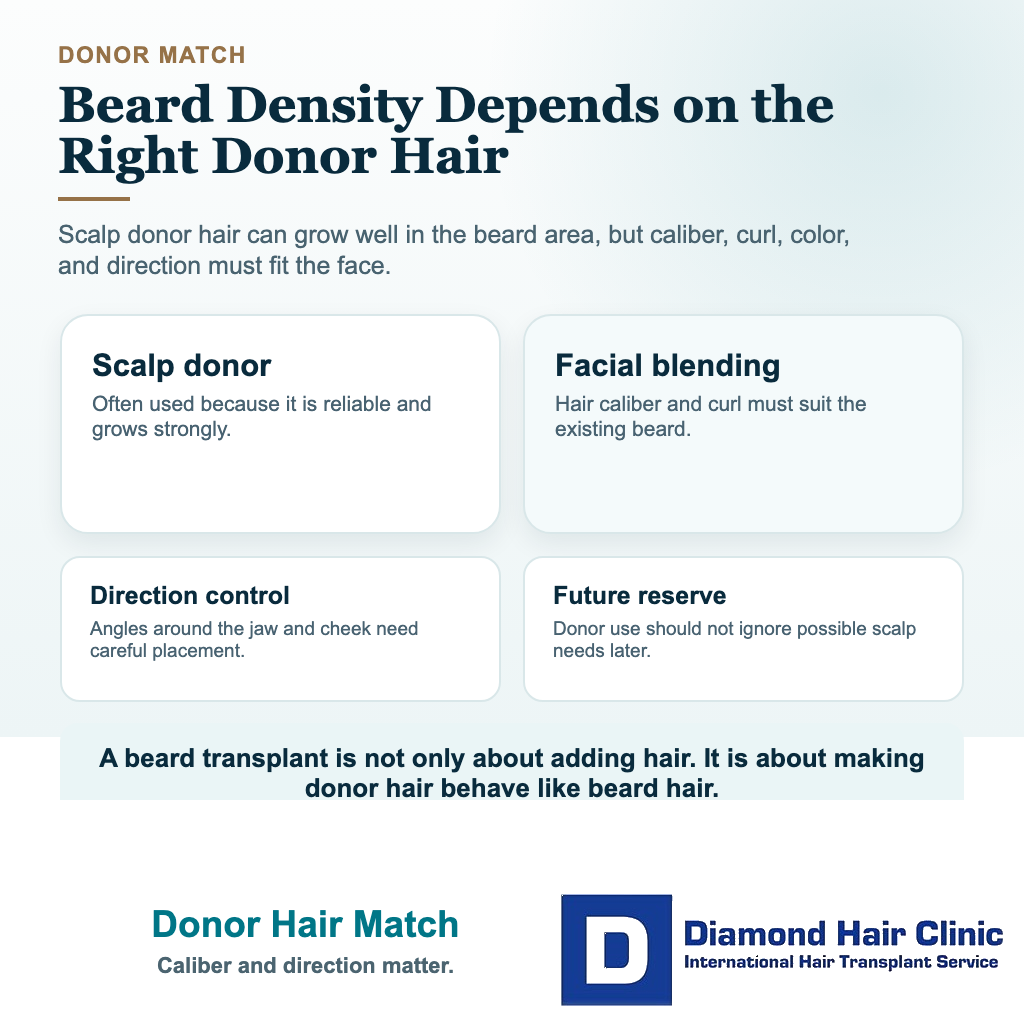
Second, suitability depends on the individual donor hair, not just the area it comes from.
Beard transplant procedure steps
Understanding the intricacies of the beard transplant procedure is invaluable for anyone contemplating this surgical intervention.
Initial consultation
The journey starts with a comprehensive consultation with a board certified surgeon. This meeting serves as a forum to outline your aesthetic goals, evaluate the suitability of your donor hair, and provide an initial cost estimate. Some clinics may use advanced imaging techniques to simulate potential outcomes, offering a more grounded basis for expectations.
Procedure duration
A beard transplant procedure can span 3 to 8 hours, depending on the number of relocated follicular units. During this period, donor hairs are meticulously harvested and then strategically implanted into planned incisions in the facial area. The exact duration can also depend on the surgical method, as follicular unit extraction (FUE) often takes longer than other techniques.
Anesthesia and comfort options
Local anesthesia is predominantly administered to numb the donor and recipient areas, mitigating pain and discomfort. To enhance the patient experience, some clinics offer sedative options to induce a relaxed state throughout the procedure.
Early aftercare expectations
Optimal aftercare is critical to achieving successful transplant outcomes. The early recovery period usually includes the following points.
Immediate effects after surgery
It’s normal to experience some swelling, redness, and slight discomfort in the transplanted and donor areas. While these symptoms usually subside quickly, they can be managed effectively through prescribed medications and topical treatments.
The shedding phase
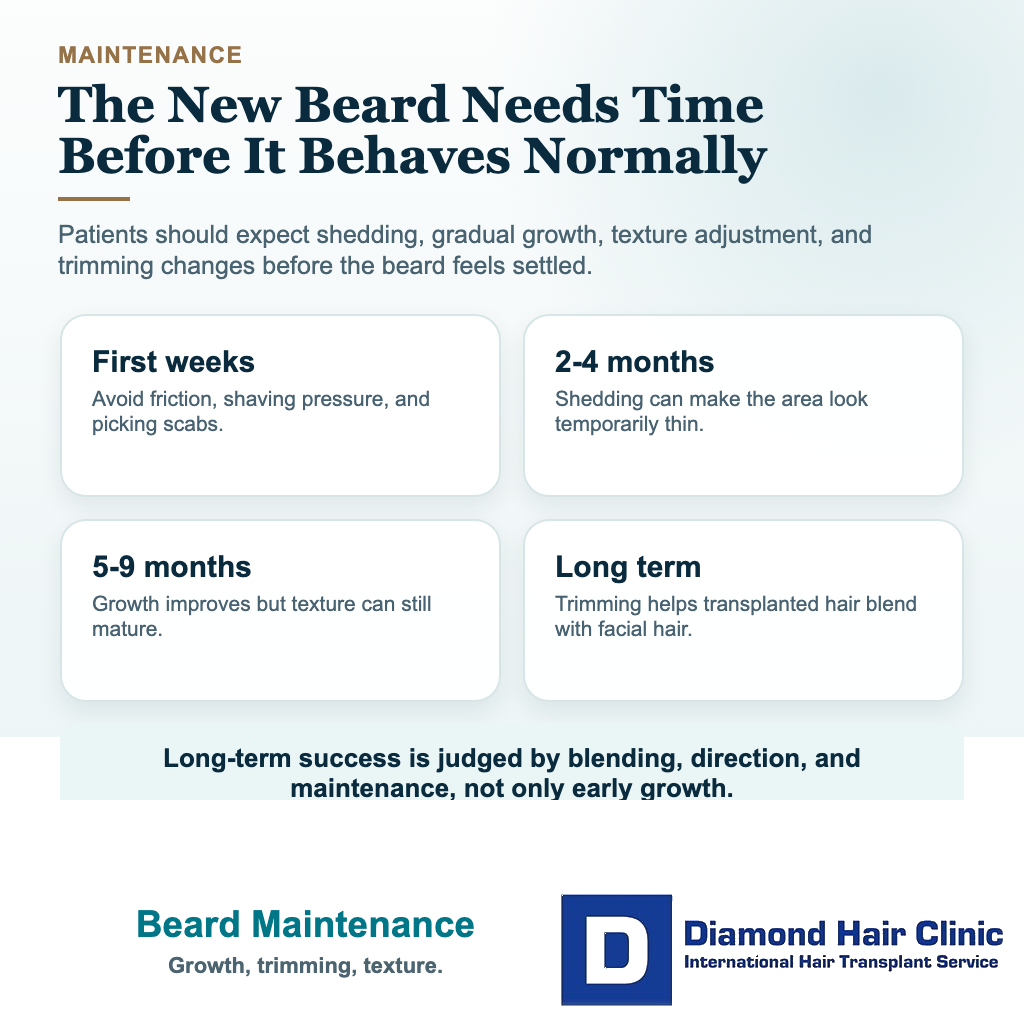
Around two to three weeks following the surgery, the newly implanted hairs will undergo a shedding phase. This is a natural, anticipated part of the follicular life cycle, allowing robust, permanent hair growth.
Full beard maturation timing
Generally, noticeable improvements become evident after six months, with full maturation typically achieved by the one year mark. However, this timeline can fluctuate depending on individual variables such as age, overall health condition, and the quality of donor hair.
Beard transplant cost structure
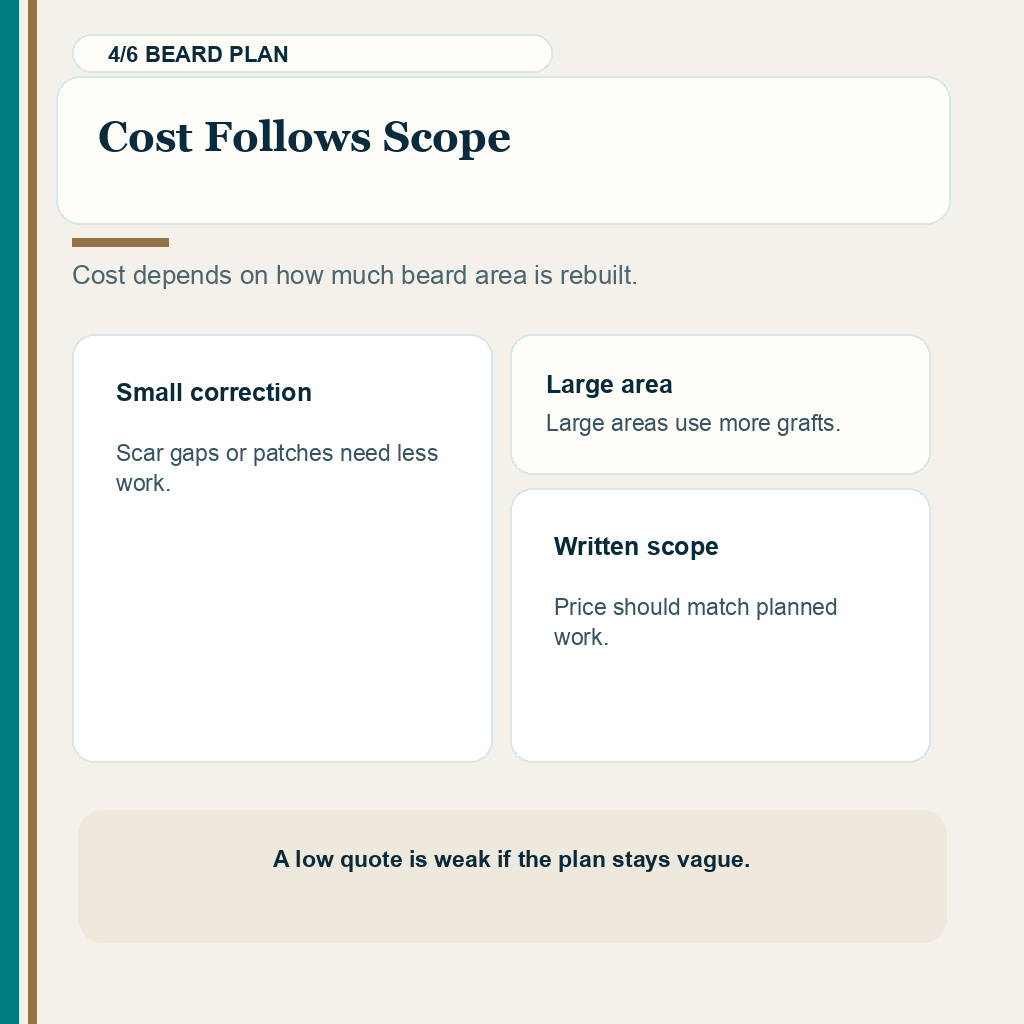
Deciding to undergo a beard transplant is a personal and financial decision, entailing various costs that can fluctuate significantly. These costs hinge on a myriad of factors, such as the number of grafts needed, the expertise of the surgeon, and the clinic’s geographical location. Evaluating these elements in the context of your financial capacity and the results you aim to achieve is vital.
Average Costs by Country
A comprehensive beard transplant from a reputable clinic in the United States is generally priced between $20,000 to $30,000. By contrast, the cost is substantially lower in countries like India, which averages between $2000 and $3000.
In Turkey, beard transplant packages, which often include the expertise of seasoned surgeons, hotel accommodations, and transportation services, usually fall within the $5,000 to $10,000 range.
Factors Beyond Cost
The cost is a significant consideration, but it shouldn’t be the only metric that guides your choice. You should also consider the surgeon’s expertise level, professional standing, and how comfortable you feel during initial consultations. Remember, this is a medical procedure, and ensuring you’re in capable hands is paramount.
Cost components
The total expense of a beard transplant usually includes several categories.
- Consultation fees cover the initial meeting to determine whether you are a suitable candidate for the transplant.
- Surgical expenses usually make up the largest share of the total cost.
- Anesthesia charges cover the medication and monitoring used to keep the surgery comfortable.
- Aftercare costs can include follow up consultations and medication for recovery.
Geographical Influence on Pricing
The location of the clinic is not to be underestimated when assessing cost. Metropolitan hubs, or clinics run by highly experienced surgeons, usually charge more due to higher operational costs and demand for specialized services.
Financing and Insurance Options
Financing plans are increasingly common in many clinics, offering various payment schemes to suit different budgets. Furthermore, some health insurance policies may provide partial coverage, primarily if the procedure is undertaken for medical reasons, such as after trauma facial reconstruction.
Choosing the right surgeon
Choosing the right surgeon for a beard transplant requires careful consideration. Below is a comprehensive guide to assist you in making an informed choice.
Surgeon credentials
A board dermatology or plastic surgery certification is necessary when seeking a qualified surgeon. This ensures the professional has undergone rigorous training and adheres to industry standards.
Look for experience in beard restoration itself, not just scalp work.
Before and after portfolios matter
Compare healed beard cases, including the cheeks, mustache, sideburns, or jawline relevant to your plan. Hair direction and the transition into existing facial hair should remain visible, not hidden by a longer beard. The photographs should identify when they were taken and whether another procedure contributed to the result.
Decision points for consultation
During the initial consultation, specific inquiries can provide deeper insight into the surgeon’s qualifications and what you can expect from the procedure.
Questions to discuss
During the consultation, patients need to know the surgeon’s experience with beard transplants, the clinic’s realistic success rates, the possible complications, and what options exist if the result needs refinement later.
Additionally, this is the opportunity to discuss your expectations and any apprehensions you may have. Open dialogue at this stage can lead to more tailored treatment and better outcomes.
Risks and how they are managed
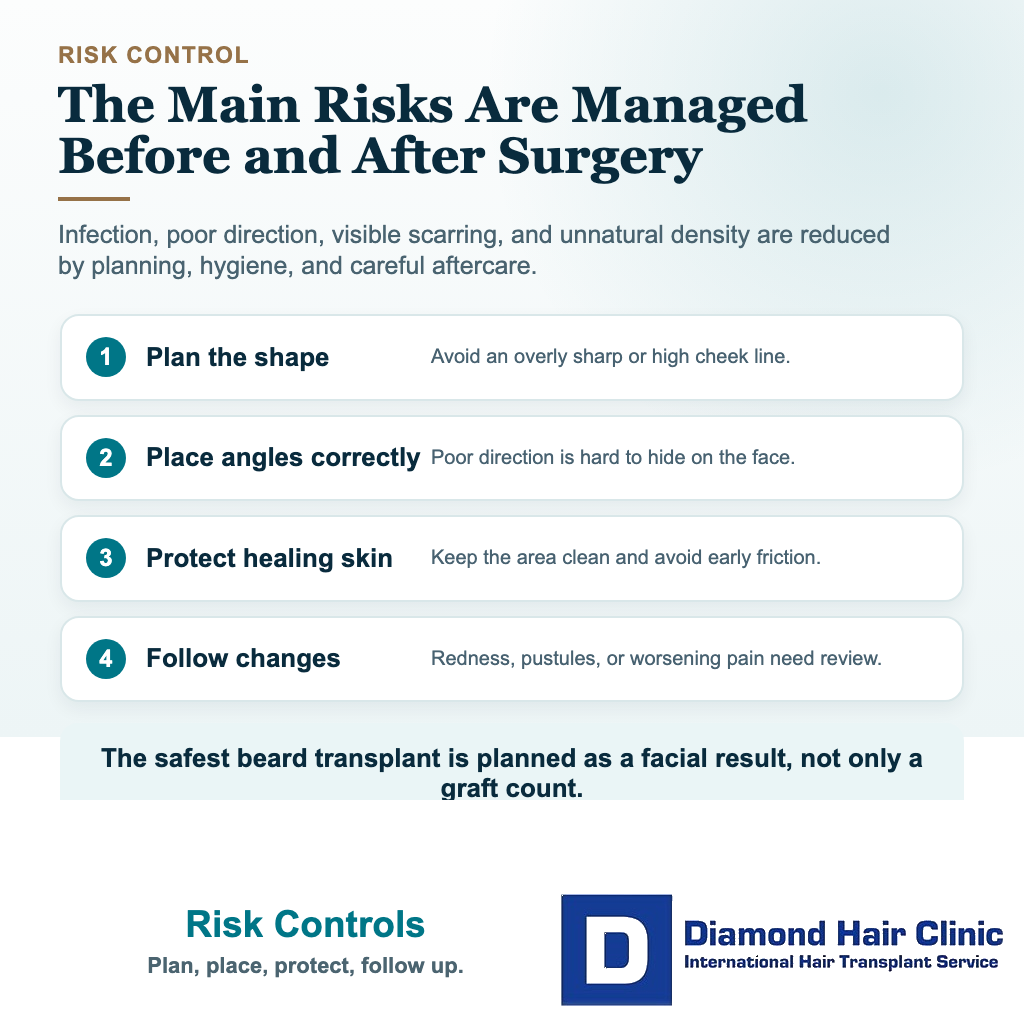
Understanding the risks and how to manage them effectively is indispensable when contemplating a beard transplant. Here is a nuanced approach to understanding what complications might occur and how they can be mitigated.
Possible complications
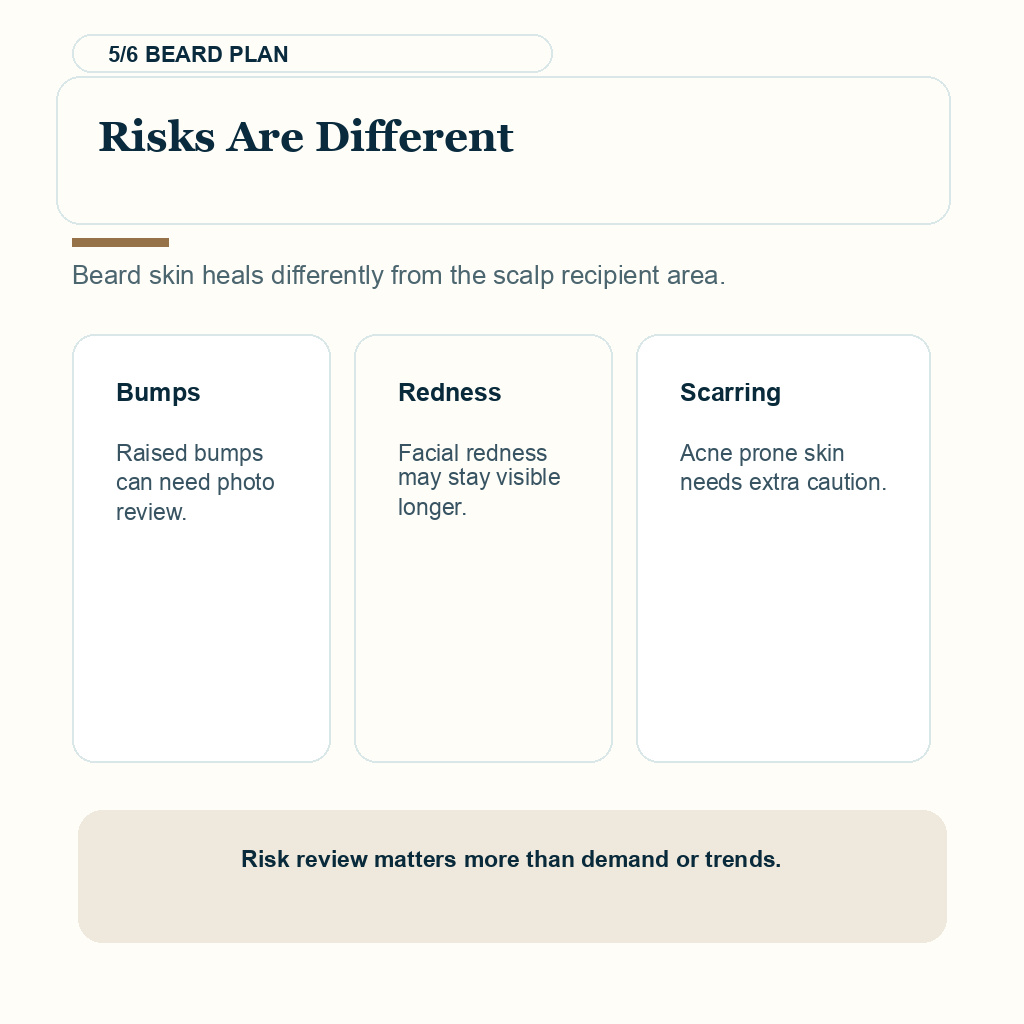
Common complications in beard transplants are infection, scarring, and uneven hair growth. Following your surgeon’s aftercare instructions carefully helps reduce these risks.
If the concern is a previous beard transplant, separate angle, density, skin bumps, scar, and donor limit problems before asking for one simple repair quote.
When I assess a previous beard transplant, the reported graft total is only a starting point. It does not show how many grafts were placed in each facial zone, how many grew, or whether the work was divided sensibly across the cheek, jawline, moustache, and chin. I compare the operation record and placement map with the beard at short and longer lengths before discussing another session. If that record is missing, I cannot calculate an extra graft number from photos alone.
A study published in the Journal of Clinical and Aesthetic Dermatology found that most complications from beard transplant procedures are preventable when patients strictly follow aftercare instructions.
Infection control
Medical facilities deploy stringent infection control measures to reduce risks. These protocols often include using advanced sterilization methods and administering prophylactic antibiotics to counter potential bacterial infections. It’s worth noting that these standards are usually mandated by healthcare regulations, ensuring a uniformly high level of safety.
Safe recovery
For a smooth and uneventful recovery, following aftercare guidelines is essential. This means keeping the transplant site clean, taking prescribed medications, and conducting regular self checks for signs of infection or other complications.
Many clinicians also recommend periodic follow-up appointments to monitor the transplant site and make necessary adjustments to your follow-up plan.
Long term maintenance
Contrary to popular belief, a beard transplant is not a one time decision. It needs an ongoing commitment to upkeep for enduring results.
Ongoing maintenance
Maintaining your newly transplanted beard typically involves regular grooming, such as trimming and shaping, and the occasional use of specialized beard grooming products.
The American Academy of Dermatology suggests that specialized products like beard oils and balms can nourish the beard and underlying skin, making them worth considering in your maintenance routine.
Future touch up sessions
As you age, you may notice natural hair thinning, which could make touch up sessions appealing for preserving the fullness and density of your beard. These are generally less invasive than the original transplant and are tailored to your evolving needs.
Longevity compared with other procedures
Regarding longevity, beard transplants generally offer a more permanent solution than other cosmetic interventions such as dermal fillers. However, individual results can vary, and external factors like lifestyle and genetics can also influence the lifespan of your transplant.
Alternatives to beard transplants
Before committing to the surgical route of a beard transplant, it’s wise to consider less invasive methods that could fulfill your aesthetic objectives.
Minoxidil and microneedling
Minoxidil, a topical treatment, and microneedling, a technique that employs fine needles to puncture the skin, are designed to stimulate hair growth. Studies in the International Journal of Trichology have shown that both treatments can somewhat enhance hair density, although their efficacy varies among individuals.
Pros and cons of alternatives
Non-surgical methods like Minoxidil and Microneedling have their advantages and disadvantages. Plus, they are initially less invasive and often less expensive. However, they usually require extended use and may not provide the permanence or desired density achievable with a beard transplant.
Results with alternative methods
A treatment that stimulates existing hair and an operation that moves follicles are not interchangeable. Their usefulness depends on the cause and extent of the beard gap and the result you want. Discuss suitable alternatives with a clinician rather than assuming that surgery has a higher success rate for every beard problem.
Preparing for a beard transplant
Successfully preparing for a beard transplant requires a balanced approach, considering your mental and physical state for optimal results.
Mental and physical preparation
Consulting a psychologist or a mental health expert can bolster emotional preparedness for the procedure. They can guide you through potential anxieties or emotional barriers that could influence the transplant’s success.
On the physical side, a comprehensive medical evaluation is crucial. This checkup, ideally conducted by a specialist in cosmetic surgery, will assess your suitability for the procedure and may include tests for underlying conditions that could affect the outcome. According to the American Society of Plastic Surgeons, proper mental and physical assessments can significantly impact cosmetic surgeries’ success and satisfaction rates.
Lifestyle adjustments
Certain habits and medications can hinder the transplant’s success. Smoking, for instance, is known to impair blood flow and can negatively affect healing and graft survival. Your surgeon recommends ceasing smoking and adjusting medications that may interfere with the procedure. The guidelines by the ISHRS preoperative preparation specifically mention the negative impact of smoking and certain medications on surgical outcomes.
Topics to discuss with the surgeon
Clearly articulating your expectations and desired goals is critical when consulting your surgeon. Utilizing visual aids like photographs can provide a tangible reference point, helping the surgeon understand what you’re aiming for. This discussion should ideally happen during your initial consultation to allow for thorough planning and a tailored approach to your transplant.



Beard transplant success
Patient stories can explain what recovery and daily grooming felt like for one person. They cannot predict your graft growth, beard density, or satisfaction. Judge the result against the agreed facial areas and design, not only the enthusiasm of a testimonial.
Before and after experiences
Before and after portfolios are useful when the cases resemble your starting beard and planned treatment areas. Look for the donor source, beard length, follow-up stage, and any additional sessions. A selected collection of good results does not establish how often all patients are satisfied.
These portfolios often include detailed case studies and can provide insights into the surgeon’s expertise. For instance, studies in the Journal of Cosmetic Dermatology often publish patient satisfaction metrics and before and after data, serving as an additional resource.
Visual examples and realistic expectations
Photos and videos are selected examples, not an unbiased forecast of your beard. Compare similar beard lengths and viewing conditions, and use close detail alongside an ordinary distance view. Your donor hair, starting facial hair, and planned areas still need their own assessment.
Future beard transplant techniques
Beard transplants are on the cusp of significant transformations as technological advancements and shifts in aesthetic preferences stand poised to reshape the industry.
Expected technique improvements
Looking ahead, laser assisted techniques and gene therapy are emerging as promising avenues for improving the precision and efficacy of beard transplants. Laser assisted methods could offer more accurate follicle placement, while gene therapy might address issues like uneven beard growth at the genetic level. According to the International Society of Hair Restoration Surgery, ongoing research in these areas aims to optimize surgical techniques and patient outcomes.
Aesthetic preferences and planning
Changing societal norms and fluctuating fashion trends will likely considerably impact the kinds of beard styles that gain popularity. This cultural shift, in turn, could influence surgical techniques and patient choices. A study by the Journal of Aesthetic Surgery indicates that aesthetic preferences can significantly affect demand for specific types of cosmetic procedures, beard transplants included.
Market growth expectations
As beard transplants become more accessible and socially accepted, market growth is anticipated. Social media influencers and evolving beauty standards are expected to drive this expansion. Platforms like Instagram, where visual aesthetics are at the forefront, could be powerful catalysts in popularizing the procedure and expanding the market.
Main points from this guide
A beard transplant can provide facial hair for the long term when the grafts grow, but this does not guarantee full density, a natural direction, or satisfaction with the design. The operation needs to fit your donor supply, facial skin, and grooming preferences. Permanence alone is not a reason to choose surgery.
Key points for candidates
Be aware of potential risks, prepare yourself thoroughly, and manage your expectations pragmatically. The choice of surgeon is crucial, so invest time in research and evaluations. Adhering strictly to aftercare guidelines can significantly influence the success of the transplant.
Final recommendations
Exercise due diligence in your decision making process. Consult various reliable resources, including healthcare professionals and individuals who have experienced the procedure. This will enable you to assess whether a beard transplant aligns with your aesthetic goals and personal circumstances.
The final decision should rest on a beard plan you are comfortable living with, not a promise that the operation will transform your confidence. Take time to weigh the intended change against the donor cost, recovery, and limits of later adjustment.
Your choice of a qualified surgeon and adherence to aftercare instructions will significantly affect the procedure’s outcome. Lastly, a well informed decision, enriched by consultations with medical experts and past patients, will provide a robust framework for determining if a beard transplant is a suitable path for you.
Beard Transplant FAQs
Exercise after a beard transplant
After undergoing a beard transplant, the general guideline is to wait approximately 3 to 4 weeks before resuming your exercise regimen. However, this time frame is not fixed. It can change based on the rigor of your typical workouts and how swiftly your body heals.
Medical research, such as studies published in journals like the Journal of Cosmetic Dermatology, suggests that the healing process can be individualized, which means some people might recover more quickly than others.
High intensity workouts may require a longer pause to prevent complications like infection or dislodgement of transplanted hair grafts.
Donor hair quality and beard transplant outcome
The characteristics of the donor’s hair play a pivotal role in determining the success of a beard transplant.
Factors such as the hair’s thickness, color, and curl pattern significantly contribute to the overall visual appearance of the transplanted beard. For instance, thicker donor hairs provide a fuller and denser look, often producing more satisfying results. Similarly, the color of the donor’s hair should ideally match the recipient’s existing hair for a seamless and natural blend.
Studies on hair transplantation, such as those published in the Journal of Dermatological Surgery, confirm that the donor’s hair quality is crucial for achieving optimal results. Moreover, curl pattern matters too. Hair that is too curly or straight may not blend well with the recipient’s existing facial hair, affecting the overall aesthetic balance.
Early signs of a successful beard transplant
Early healing does not confirm the final result of a beard transplant. Little redness or a surface that looks healed cannot tell you how much hair will grow or how full the beard will look.
Transplanted hairs can shed before regrowth begins. Shedding alone is not proof that the transplant has failed. Coverage becomes clearer as the hairs grow over the following months, when their direction and blend with the existing beard can also be assessed.
Contact your surgeon or a local clinician promptly for increasing pain, worsening redness or heat, discharge, or fever.
Age requirements for beard transplant
While there is no universally mandated age limit for undergoing a beard transplant, medical professionals typically advise candidates to be at least 25 years old. This recommendation is rooted in the understanding that facial hair development can persist into one’s mid 20s.
By waiting until age 25, individuals are more likely to have a stable facial hair growth pattern, making it easier to achieve a natural looking result. Guidelines from the International Society of Hair Restoration Surgery echo this viewpoint, emphasizing that a person’s facial hair characteristics may not be fully mature until their mid 20s. Opting for a beard transplant before this age might yield inconsistent or weaker results as natural facial hair develops.
Reversing or adjusting beard transplants
Altering or undoing a beard transplant is generally not advised and poses considerable challenges. Once the transplanted hair follicles have successfully grafted and initiated growth, any attempts to remove or reposition them could jeopardize the health of the follicles and are likely to cause scarring. If you are worried about bumps, scarring, or removal difficulty, read the separate guide to beard transplant regret before treating the operation as easy to reverse.
In hair restoration surgery, the grafting process is designed to be permanent. Medical literature, such as articles in the Journal of Plastic, Reconstructive & Aesthetic Surgery, underscore the difficulty of reversing or modifying established transplants without risking follicle damage. The roots integrate with the blood supply and become part of the recipient area’s skin, making any adjustments an intricate and risky procedure.
If adjustments are necessary, options such as laser hair removal or further transplantation to balance the appearance can be considered. However, these come with risks and limitations, including the possibility of uneven results or additional scarring.

Read this review excerpt
Diamond Hair was the only clinic asking for medications, treatments I've done before, and other type of questions that make me feel confident on the professionalism that they practice with their clients.