


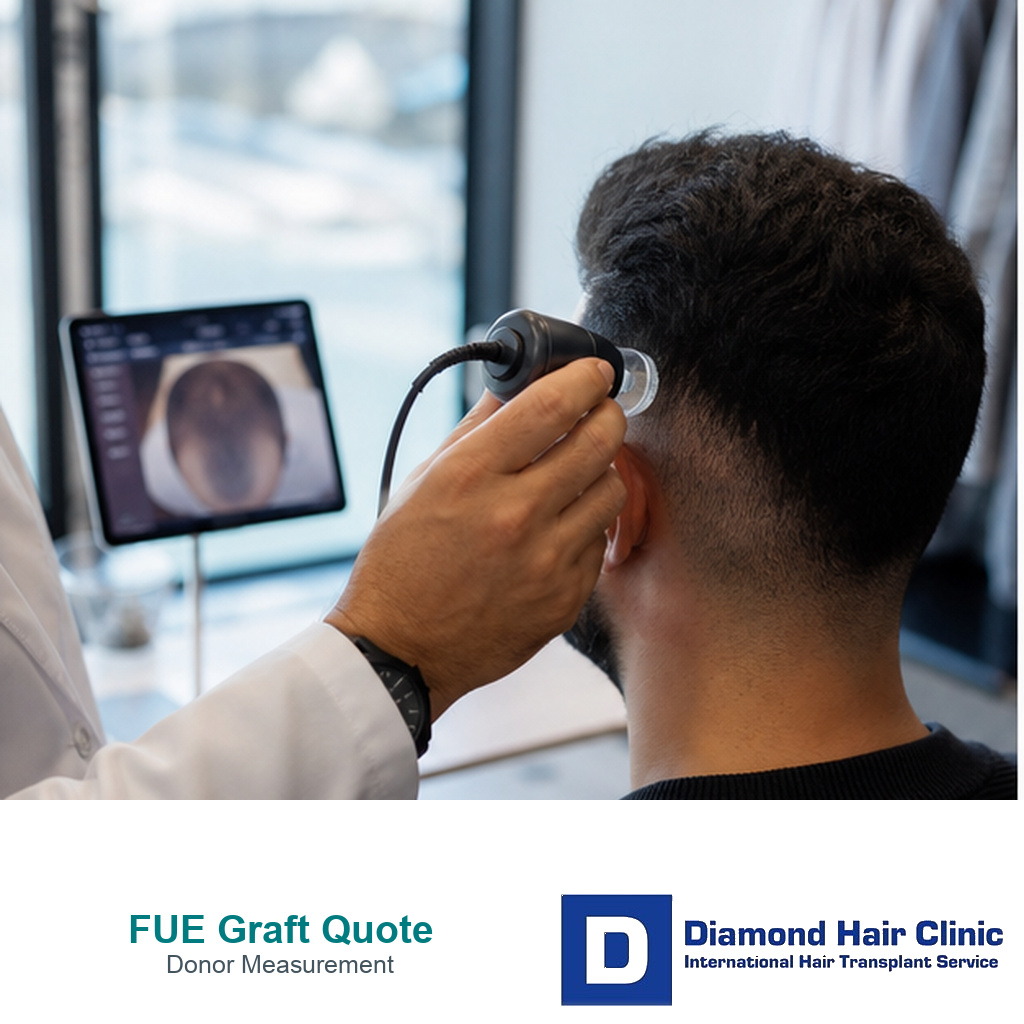
A FUE Graft Quote Should Stay Provisional Until the Donor Is Measured
If a clinic gives you a FUE graft number from photos or a quick online exchange, use it as a starting estimate, not as a final surgical promise. Before I accept a number, I want the hair loss diagnosis and donor limits to make clear what the donor can safely give, what the recipient area really needs, and what should be left for later. That means looking beyond a few pictures and checking donor density, hair caliber, miniaturization, safe zone borders, previous extraction, crown demand, and long term reserve. Even a message for 4,000 to 4,500 grafts can still be only an estimate if no one has measured the donor in person.
A large difference between quotes should make the consultation more specific. The larger number should explain whether it includes extra areas, denser packing, a lower hairline, crown work, or a different estimate of safe donor supply. The answer should explain the treatment map, not simply defend the higher or lower number. The comparison is clearer when each quote lists the same target zones in the same order. A lower number may be conservative, or it may simply leave part of the proposed work untreated. The zones explain the difference better than the headline graft total.
When the bald area is broad, the quote must separate a first session target from a lifetime donor budget. Those two numbers can look similar in a message, but they lead to different surgery. Payment pressure should not turn an unfinished estimate into a fixed surgical promise.
The quote is a starting point, not the final plan
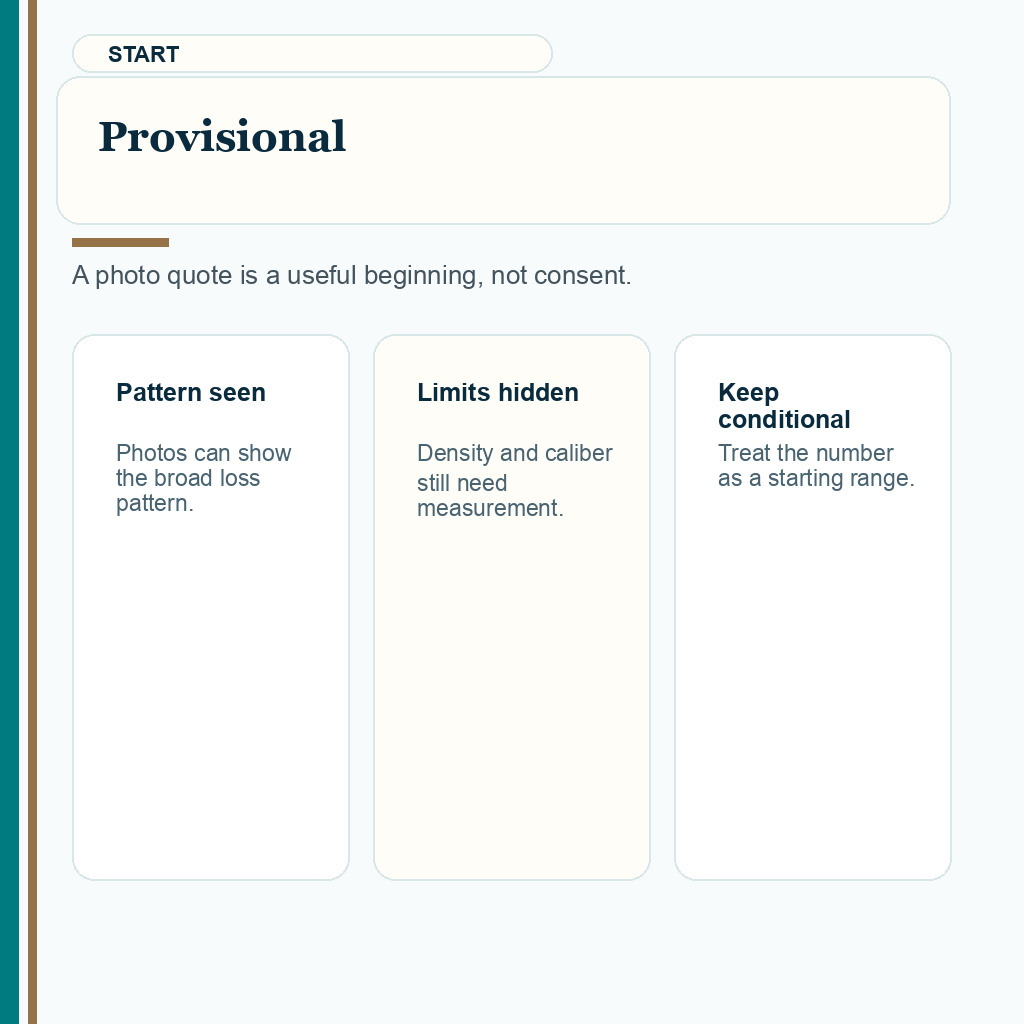
Remote planning is useful. I can often look at photos and understand the broad pattern, including hairline position, frontal loss, crown size, donor appearance, previous surgery marks, and whether the plan may be aiming for too much in one session. That first review can tell us whether the case seems reasonable, whether more information is needed, or whether travel should wait for more evidence. Remote estimates should state whether the count is a target, a ceiling, or a range that may change after measurement.
But photos cannot measure everything. They can hide fine hair. They can make a donor area look denser because the hair is longer, wet, brushed forward, or photographed under flattering light. They may not show retrograde thinning near the nape or sides. They may not show whether the donor resembles the thinning top. They rarely show the exact surface area from which grafts can be removed evenly.
For that reason, a number sent from photos should not be treated as the final answer. A proper plan has to stay conditional until direct examination confirms the donor. This is especially true when the quote is high, when one clinic says the donor is weak while another offers a large number, or when the patient is young and may need future surgery. The concern is close to the one I explain in weak donor and high graft quote conflicts, but here the focus is narrower. The quote should stay provisional until donor evidence supports the number and the treatment map.
A trustworthy estimate has a refusal point at the in person exam. The clinic should be able to explain why the number could go down, not only the highest number it hopes to reach.
When the question is framed as donor suitability rather than graft count, donor measurement has to come first. A confident yes from photos should still explain what density, miniaturization, safe zone borders, and medication history must confirm before the plan becomes final.
A photo quote should have a brake built into it before travel or payment pressure fixes the number. The clinic should tell you what donor finding would lower the number before you arrive, so a smaller plan does not feel like a surprise on surgery day.
Photos can show the pattern, but they cannot measure the reserve
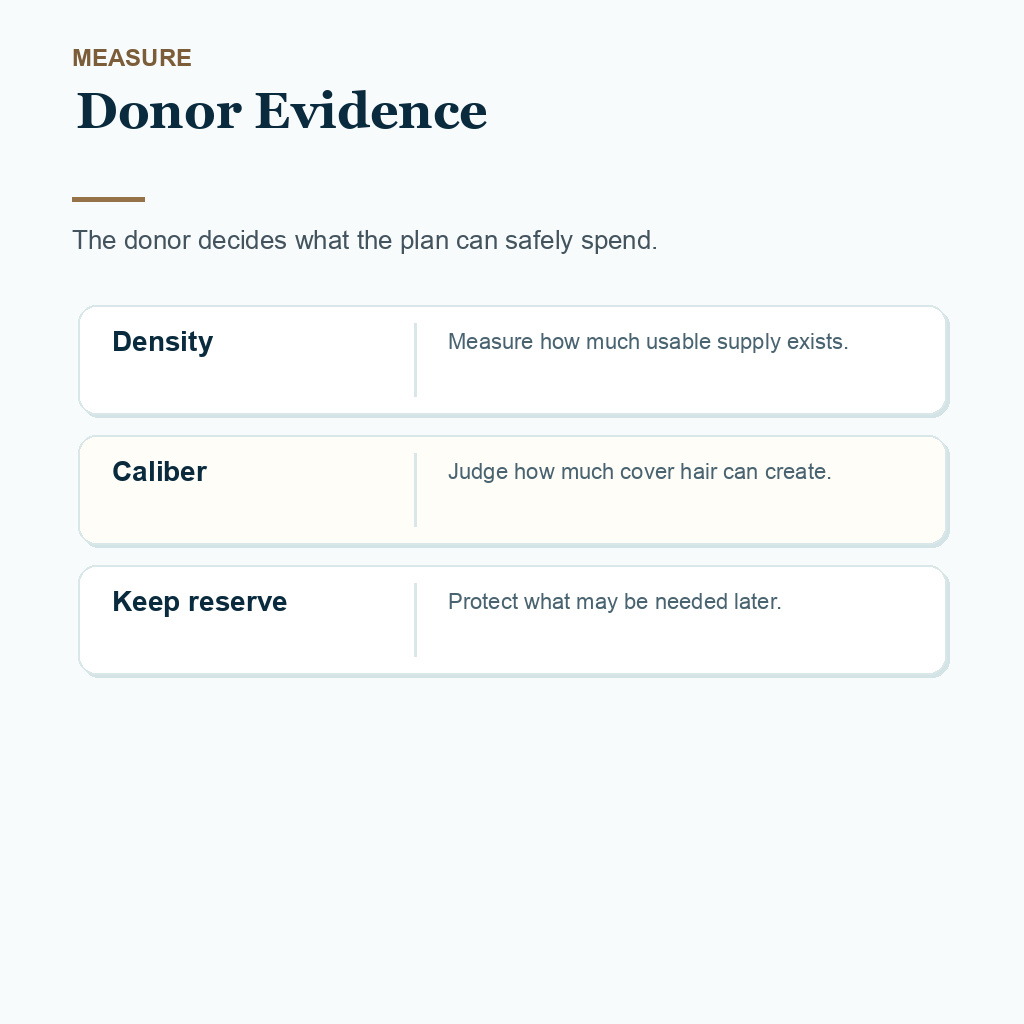
In a donor examination, the question is not only whether hair exists at the back of the scalp. I judge whether those hairs are reliable enough to move, how many follicular units can be removed without visible depletion, and which parts of the donor need protection. The safe zone cannot be reduced to a line drawn on a photo. It is a planning boundary that has to make sense for that patient.
An extraction map should not end as a dense central block with an abrupt outer edge. Across the measured safe donor area, the pattern should be spread so the remaining density stays as consistent as the patient’s hair characteristics and future reserve allow. Near the outside of that map, the transition also needs attention. A sharp change in extraction density can make the used area easier to outline when the hair is short.
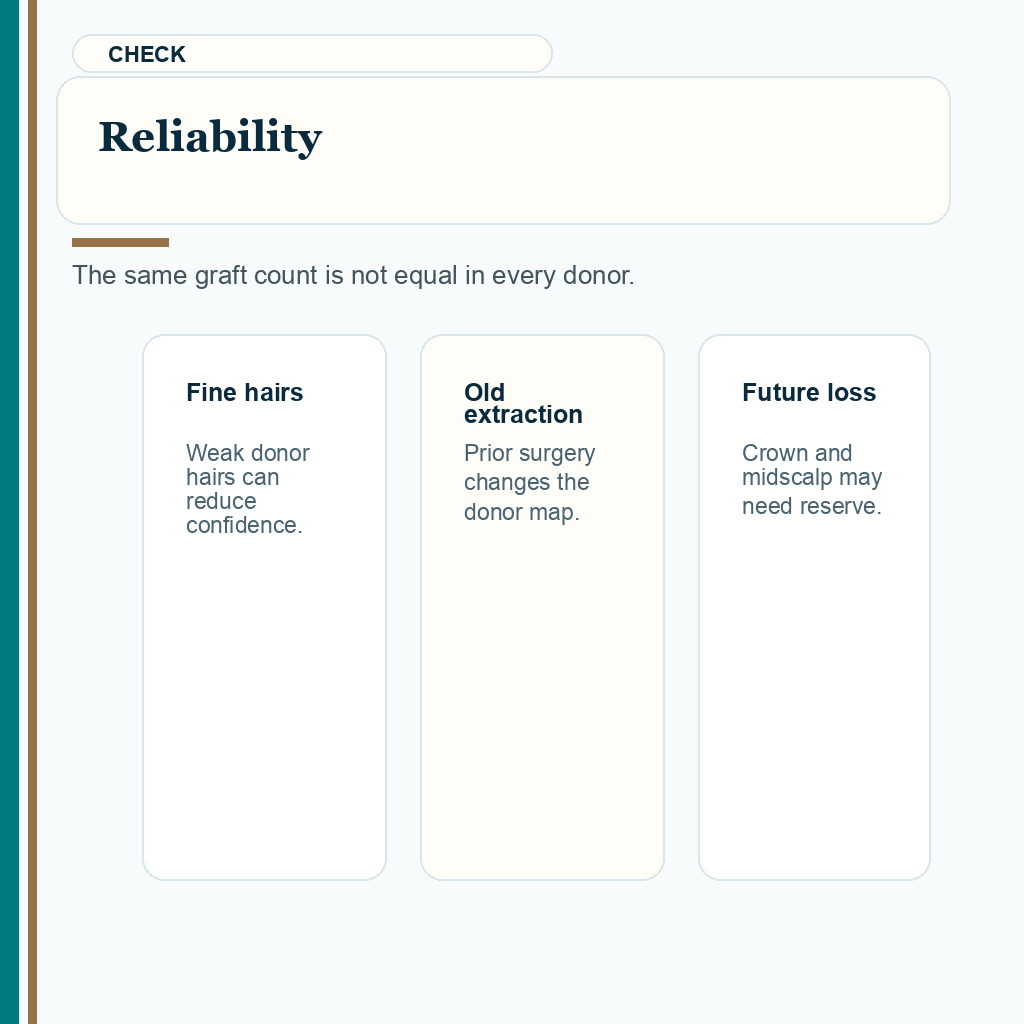
Density matters, but density is not the whole story. Hair shaft thickness, curl, color contrast, follicular unit groupings, scalp visibility, age, family pattern, crown demand, previous surgery, and signs of miniaturization all change the value of the same graft number. Two patients can both receive a 3,000 graft quote and have very different safety margins.
A plan that favours grafts with several hairs can move more hair for the same graft count. It also removes more hairs from the donor area. That higher hair total still has to leave enough coverage across the back and sides.
A density reading from one donor patch describes that patch, not the total supply available for surgery. I match it to the usable donor area and the distribution of previous extractions before estimating what can safely be taken.
A visible bald surface can make 6,000 to 7,000 grafts sound logical, but the donor still decides whether that total is possible. A photo estimate around 4,000 to 4,500 grafts belongs as a first range, not proof that fuller top and crown coverage is safe. Direct measurement decides whether the work stays smaller, becomes staged, or should not continue.
Magnification or trichoscopy can help separate thicker terminal hairs from finer miniaturized hairs. It can also show whether the donor has the texture of a stable donor area or whether it behaves more like the thinning recipient area. If miniaturization is present in the donor, the question is not only how many grafts can be extracted today. The question becomes whether those grafts will remain dependable after they are moved. That deeper issue belongs to donor miniaturization and safe zone checks.
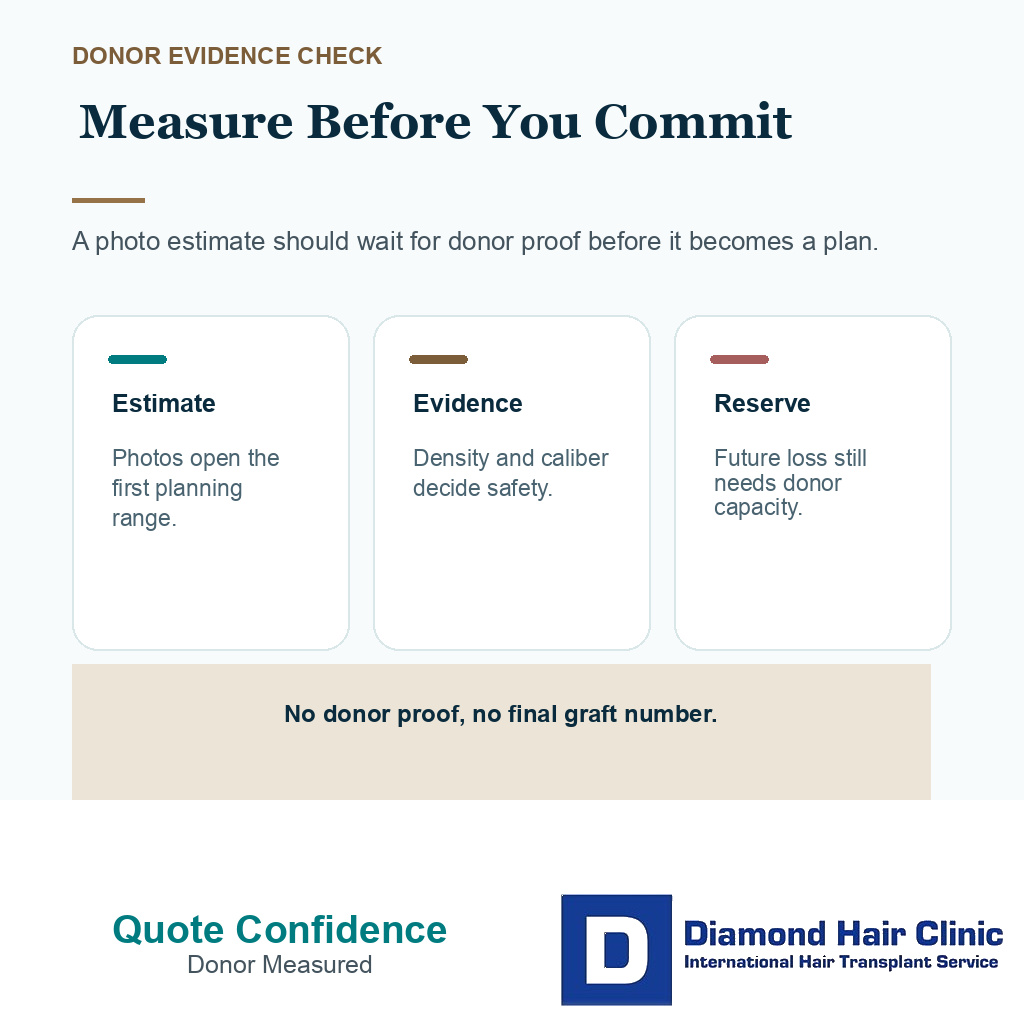
A lower graft number can protect the donor
Many patients feel disappointed when the final number is lower than the first estimate. I understand that reaction. A higher graft number can sound like more coverage, more value, and more confidence. But in donor planning, more grafts do not make the plan better by themselves. More grafts help only when the donor can safely provide them and the recipient plan uses them wisely.
A conservative quote can be good planning when it protects the donor area. A smaller number may disappoint a patient who expected a dramatic change, but it may be the better surgical choice when a lower hairline, high density, or crown coverage would spend donor reserve too fast. The clinic should explain what the lower number protects, not hide behind vague caution.
If a direct donor review shows lower density, fine caliber, early miniaturization, a narrow safe zone, previous extraction marks, or a large future crown demand, I may reduce the first session number. That is not a downgrade in care. It may be the exact decision that prevents donor area overharvesting before surgery.
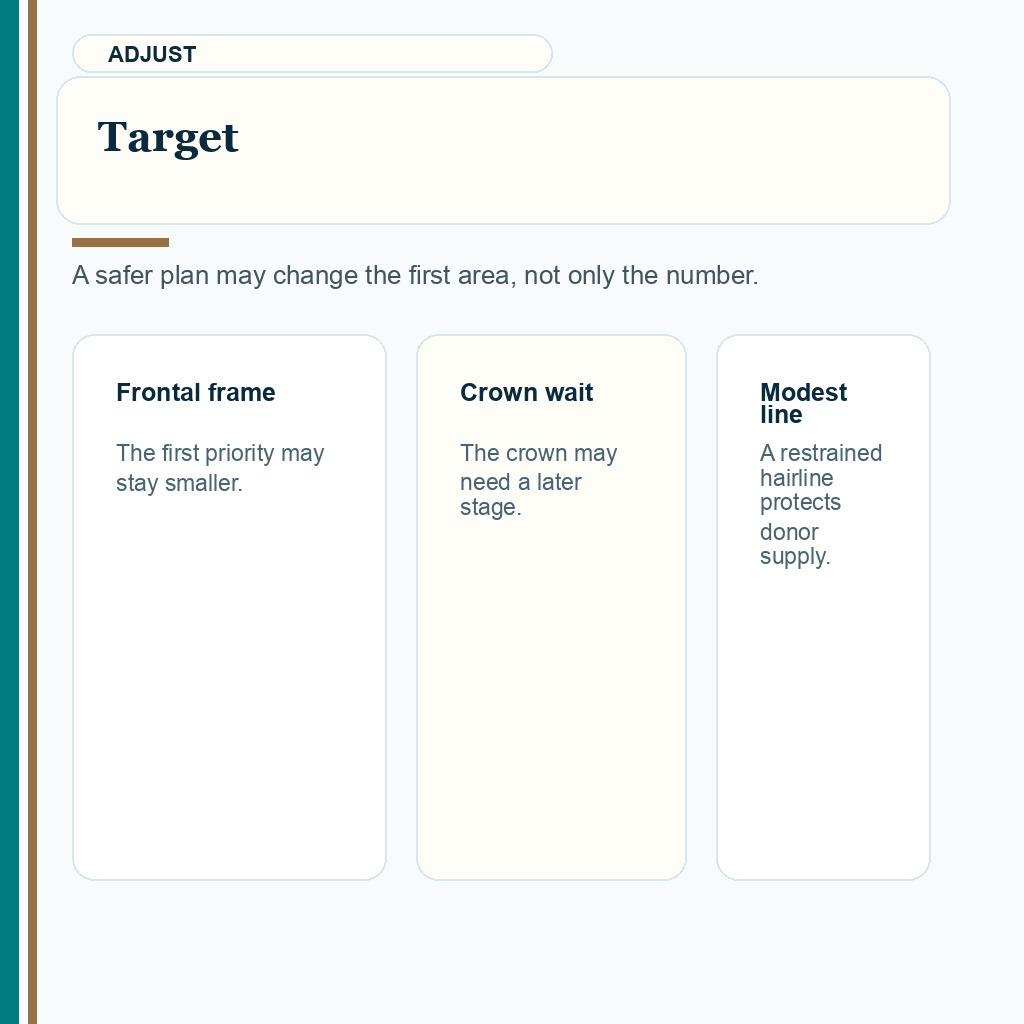
A lower number can also reflect visual return more accurately. If the hair is very fine, a large number may still not create the density the patient imagines. If the bald area is broad, spreading grafts too thinly can make every area look unfinished. If the donor is limited, spending too much now may leave no useful reserve for a second stage. In those cases, it may be better to choose a smaller frontal priority, a conservative hairline, or a staged plan.
It is better to explain a protected donor plan before surgery than explain donor depletion after surgery. A patient can accept a conservative plan, reject it, ask for another opinion, or wait. But once donor grafts are removed, they are no longer sitting in reserve.

Read this review excerpt
Donor discussion
told me the quality of my donor hair and what he could take out and advised me what will the be best outcome with what donor hair I had.

Read this review excerpt
He was very friendly and professional and explained to me what would happen during the surgery. Moreover, he gave me a choice regarding the distribution of the hair grafts on my scalp.
Some findings change the target area instead of only the number
A graft quote is not only a count. It is a promise about where those grafts will be used. If the direct review changes the donor picture, it can also change the first target. The safest first session may be the frontal third instead of the crown. It may be hairline reinforcement rather than a low new hairline. It may be a smaller zone that creates a visible frame while leaving reserve for later.
Diffuse thinning shows the point clearly. If the top is unstable and the donor also looks borderline, the first decision is not a race to a high number. The first decision is whether the pattern is stable enough for surgery and whether the native hair around the grafts can support the result. This kind of case belongs beside a diffuse thinning stability check before FUE.
Previous surgery changes the target as well. A second transplant should not treat the patient as a new case. The first graft count, extraction pattern, current donor appearance, and recipient growth all matter. A patient planning another operation abroad should bring the same evidence I describe in checking the donor record before a second hair transplant.
Proof Check
What can change a FUE graft quote?
Use each donor finding as a planning question. A good quote should explain which evidence supports the number and what would make it change.
Photos start the estimate
Photos show the broad loss pattern and whether a first plan seems realistic. They do not prove how much donor hair can be removed safely.
- Use it to screen for obvious limits before travel.
- The number stays conditional until direct review.
Density and caliber test the supply
Measured density and hair shaft quality explain why the same graft count can look fuller in one patient and thinner in another.
- Use it to estimate safe extraction and visual return.
- The quote can adjust number, spacing, or target size.
Miniaturization tests reliability
If many donor hairs are becoming finer, the issue is not only today’s count. It is whether those grafts will behave reliably after transfer.
- Use it to decide whether FUE should shrink, stage, or wait.
- The quote may reduce the number or protect weak zones.
Previous extraction changes the map
A second operation needs the old graft record, current donor appearance, and extraction spread. The donor is not a fresh supply.
- Use it to avoid taking more from already thinned zones.
- The quote may stage repair or change the first priority.
Future reserve protects later options
A quote should leave enough donor hair for likely future loss. A plan that spends too much today can become harder to defend later.
- Use it to balance hairline, midscalp, crown, and age.
- The quote may choose a conservative target or staged plan.
Clinic quotes should be compared by evidence, not optimism
If one clinic quotes 2,500 grafts and another quotes 5,000, confidence in the number matters less than the measurement behind it. A serious estimate explains whether the donor was judged from photos only, whether short donor hair was requested, whether density and caliber were checked, how future crown loss was handled, and which zones should not be harvested.
Online feedback can help you prepare better questions, but it should not become the surgical plan. A public comment cannot measure your donor area, and a stranger’s result does not prove your safe extraction number. Use online feedback before a hair transplant plan to collect questions, then bring those questions back to the surgeon who can examine you.
A proper second opinion before a hair transplant should not simply confirm the biggest number. It should test the assumptions under the number. If the high quote cannot explain donor density, miniaturization, safe zone limits, extraction spread, and future reserve, it is not a stronger plan just because it sounds more generous.
Hairs and grafts are not interchangeable in a quote
Numbers written as hairs can sound larger than numbers written as grafts. They are not the same unit. One graft may contain one hair, two hairs, or more, and the way those grafts are distributed matters as much as the headline total. Before comparing clinic numbers, I want the quote to name whether it is counting follicular units or hairs, where the single hair grafts will be used, and how the donor will look after extraction. A big number is only useful when the unit and the plan are clear.
What should be settled before booking from a graft quote?
If you are a younger patient, still early in the hair loss pattern, and several clinics give different graft and price quotes, I would not choose from the number first. First settle whether the loss is stable enough for surgery, what medicine has actually been tolerated, whether finasteride is part of a realistic plan, and whether a recent minoxidil stop or change is making the baseline harder to read.
The written quote should separate the corners, frontal band, midscalp, and crown. For a younger Norwood 3 hairline plan, it should also explain grafts and hairs separately, because one follicular unit can carry one hair or several. Then it should show how much donor reserve stays untouched and who has the authority to lower, stage, or refuse the plan after the donor is measured. Without that, a lower price or larger number is not clearer. It is an unfinished surgical plan.
Read this review excerpt
We were so impressed with the initial report, which explained the procedure, using photographs to show where grafts would be put.
Read this review excerpt
Diamond Hair Clinic sent me a document with all the details and was the only clinic to send me pictures of expected coverage from the transplant.
Decision points before travel, deposit, or surgery day consent
Before travel or a large deposit, the quoted number needs a clear provisional or final label. The clinic should explain what could change after direct examination, whether the donor was judged from photos only, whether density and caliber will be checked, and whether miniaturization could reduce the safe number.
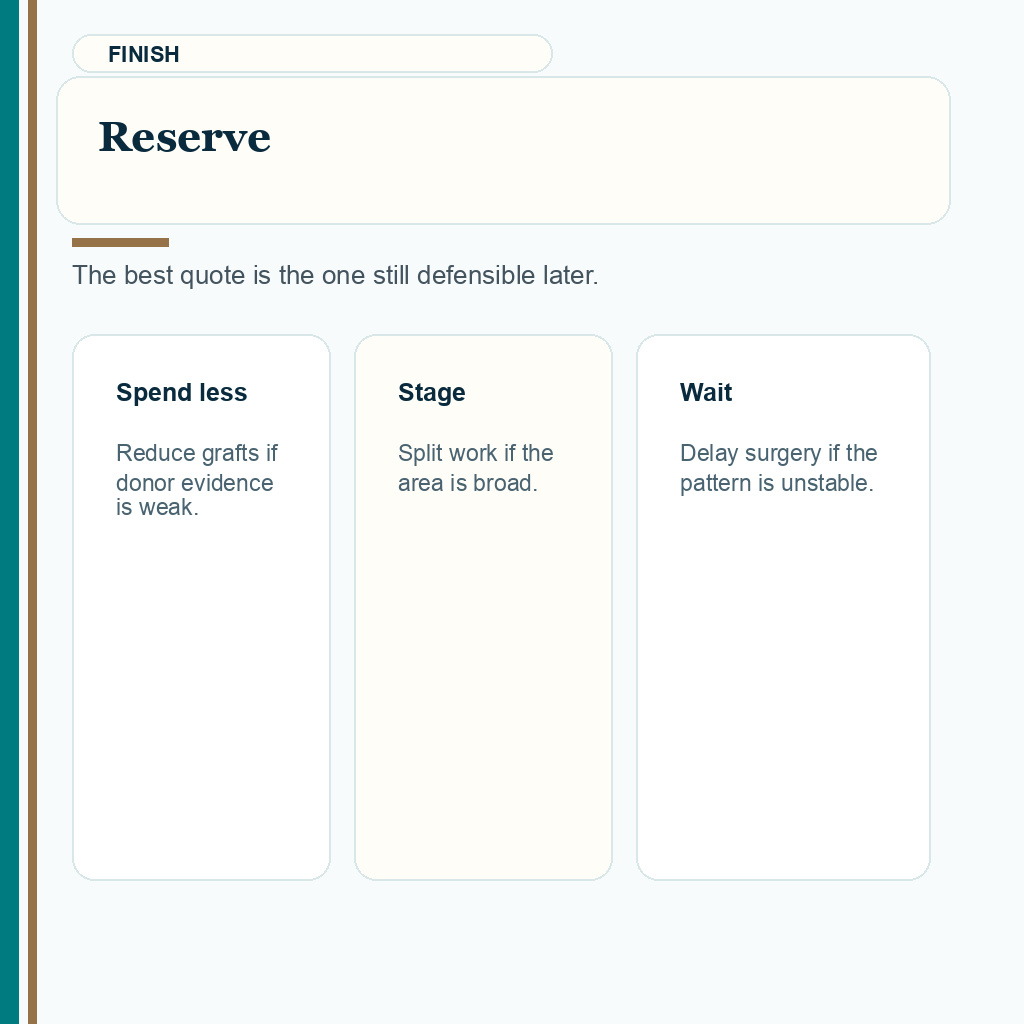
A weaker final donor review needs a distribution plan, not a vague promise. The answer should clarify whether the clinic would lower the graft target, protect the crown, stage the work, or refuse surgery. A responsible plan does not make every scenario sound like the same operation. It has boundaries.
The untouched donor reserve matters. The donor is not renewable, and donor hair does not grow back after FUE. If the clinic can tell you how many grafts it wants today but cannot explain what must remain for later, the quote is incomplete.
The first session also has to fit the lifetime plan. A hairline that looks attractive now can become a problem if the midscalp or crown progresses and no useful reserve remains. Every serious FUE quote should sit behind lifetime hair transplant graft planning.
A quote should survive the donor exam
A graft number estimated from photos is only a starting point. It has to survive measurements of donor density, hair caliber, safe extraction area, miniaturization, hairline position, and the likelihood that future loss will need grafts later.
If those details lower the number, it may mean the donor area is being protected instead of being used to make the quote look more generous.
Before travel or deposit, clarify how the number is allowed to change after examination. A plan that can explain its limits is stronger than a high count that depends on ignoring them.