


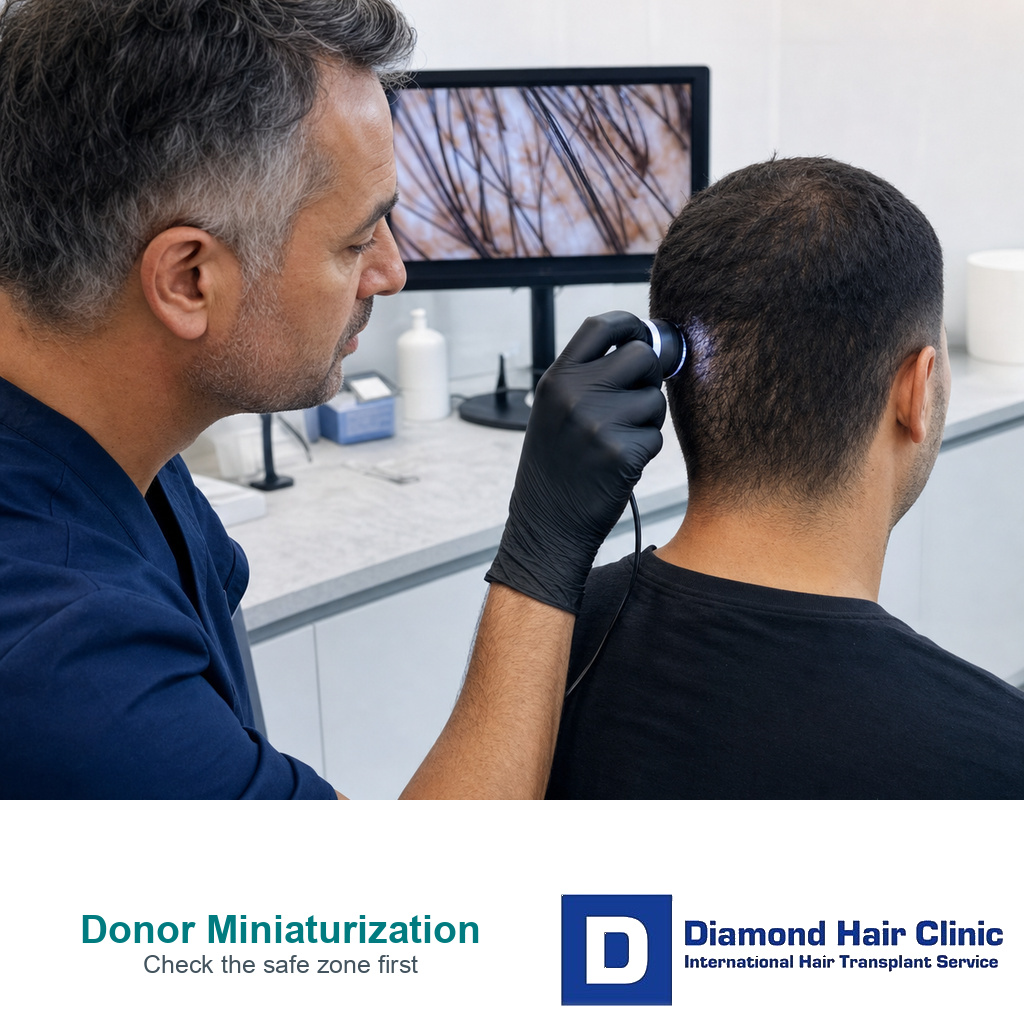
Donor Miniaturization and Safe Zone Checks
Donor miniaturization before a hair transplant does not always make surgery impossible, but it makes the donor decision much more serious. If many hairs in the donor area are becoming thinner, shorter, softer, or less stable, those hairs may not behave like reliable donor grafts after FUE. I may reduce the graft number, postpone surgery, ask for medical stabilization, or advise against surgery for now.
Reliability changes the plan
Before I treat the donor area as a supply zone, I check it inside the wider hair loss diagnosis pathway. A miniaturizing safe zone changes the question from how many grafts can be moved to which hairs are reliable enough to move.
The important distinction is not thick versus thin. It is stable versus unstable. Naturally fine hair can still be usable when the donor pattern is stable, while miniaturizing donor hair needs a stricter safety decision. A donor that looks thick in one photo is not the same as a stable donor under magnified review, especially when the sides or nape are already thinning.
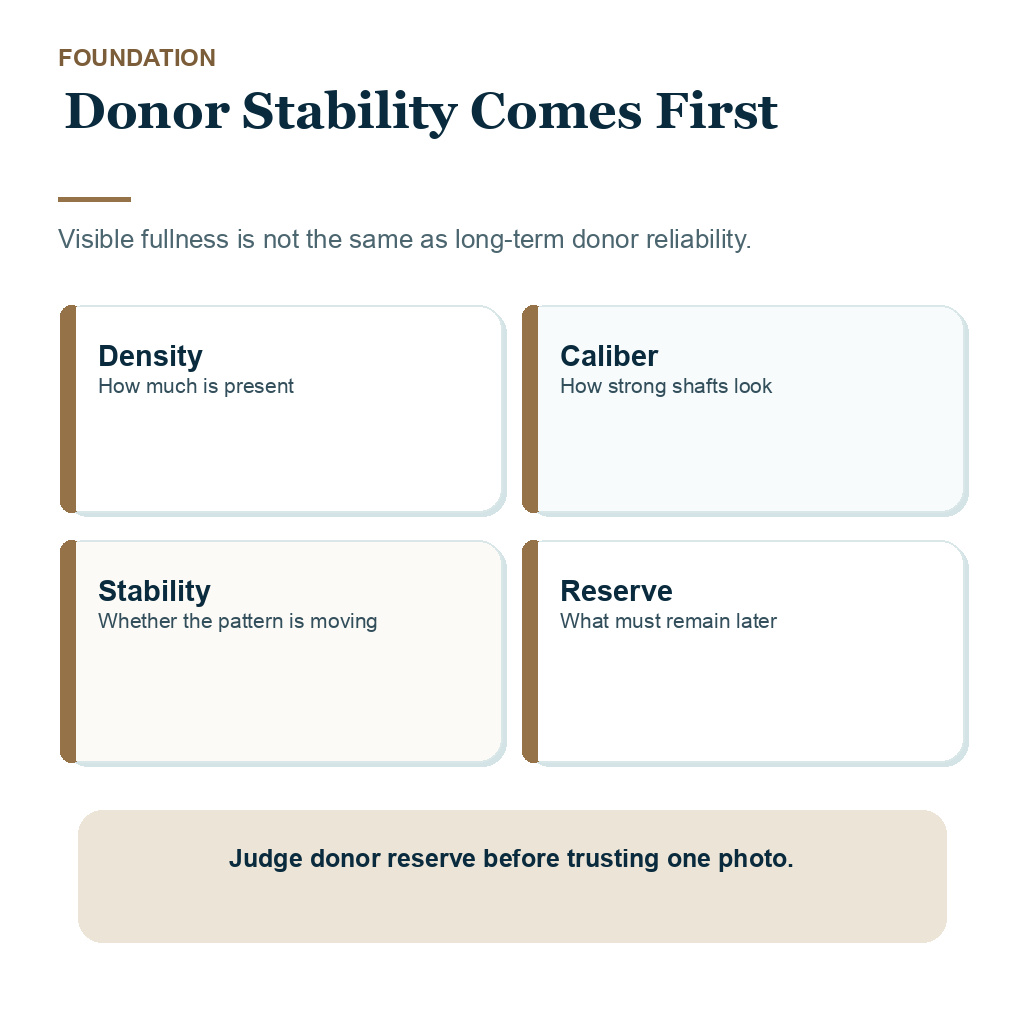
I treat the donor area as your limited surgical reserve. A photo can make that reserve look stronger than it is, especially when hair is longer, curly, or photographed in soft light. A proper donor check looks at density, hair shaft caliber, miniaturization, safe zone borders, extraction pattern, and future loss risk. I also consider the reserve the donor must still provide later, because an early front corner plan can become unsafe if it spends hair that future loss may need. The written assessment should show whether concern sits across the central donor, the sides, the lower nape, or several regions. A single reassuring phrase about a good donor is too vague when the border areas behave differently.
A donor review needs short hair photos and magnified assessment, not only a back of head picture. A donor can look full in one photo and still need a stricter safety decision.
One late donor photo should not be used as proof of either miniaturization or overharvesting. I look at the donor texture before surgery, the current hair caliber, and whether the thinning follows safe zone borders or the extraction pattern. Treatment may support vulnerable native hair, but it cannot make removed donor follicles reappear.
Do not crop out the lower nape or the area above the ears when you send donor photos. Those borders can show whether the safe zone is narrower than the center back suggests. That border only becomes usable when it behaves like this patient’s stable donor hair, not because the same area is safe in every person.
Donor miniaturization changes surgical candidacy
Miniaturization means a follicle is still present, but the hair shaft it produces has become finer and weaker. The hair may look shorter, lighter, softer, or less able to create coverage. On the top of the scalp, this is a familiar part of androgenetic hair loss. In the donor area, it becomes a transplant safety question.
When I examine a donor area, I do not only count visible follicular units. I look at the quality of those units. A donor zone with many fine miniaturized hairs may produce a graft count on paper, but those grafts may not give the coverage, durability, or cosmetic value the patient expects.
In a borderline case, weak donor area hair transplant planning needs more than a quick look from across the room. I need to decide whether the donor looks weak because of natural low density, fine caliber, spacing in curly hair, lighting, a short haircut, or true miniaturization.
One full donor photo can miss instability
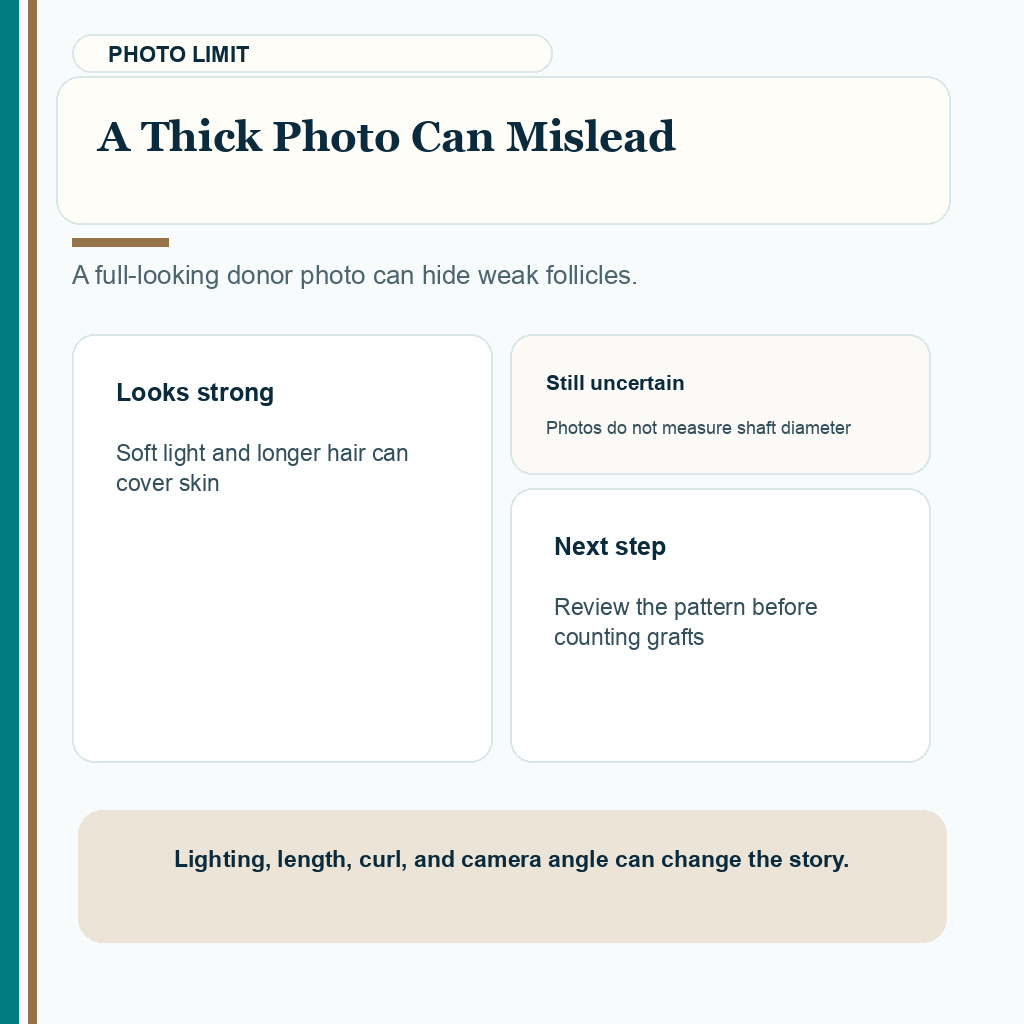
A donor can look strong in ordinary photos because the hair is longer, the lighting is soft, the back of the scalp is not shaved, or the hair type creates coverage by clumping. Curly, wavy, gray, or coarse hair can hide the skin better than fine straight hair. The opposite can also happen. A donor can look weaker than it is when the hair is very short or photographed under harsh light.
Back and side thinning changes the meaning of a high graft quote. Treatment may still be discussed for vulnerable native hair, but it does not turn unstable donor hair into permanent donor supply. When the donor rim itself is miniaturizing, the surgical number may need to become smaller, delayed, or refused.
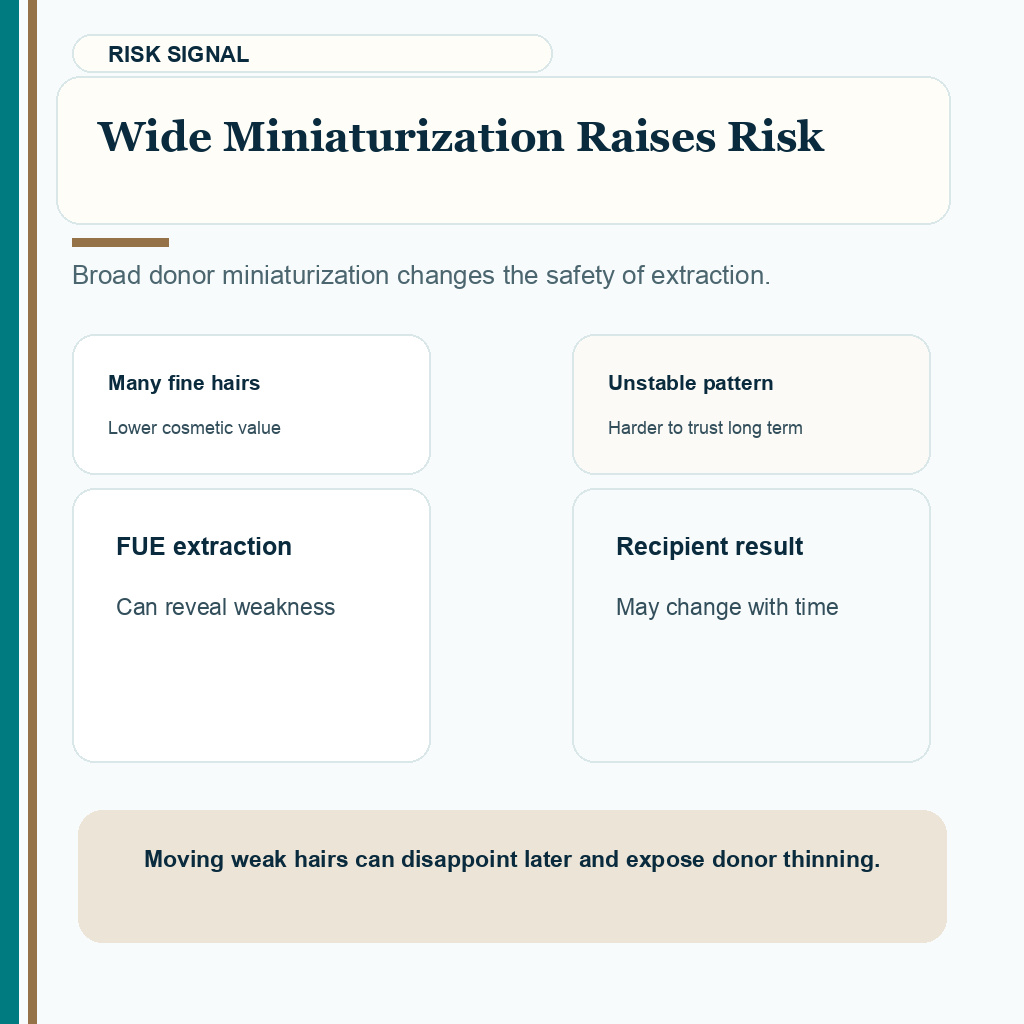
The safety problem appears when visible fullness hides unstable follicles. If the donor contains a high proportion of miniaturizing hairs, aggressive extraction can expose the weakness. After FUE, the remaining donor may look thinner, and the transplanted hair may not carry the same long-term reliability as stable occipital donor hair.
The broader donor area question is not only how much hair can be taken. It is also what must remain behind. The donor should heal with a natural pattern, not with patchy depletion that becomes obvious when the patient returns to short hair.
Safe donor zone checks before graft targets
I start with a broad visual examination of the back, sides, nape border, retrograde thinning pattern, crown relation, and current haircut. Then I look closer. Magnification or trichoscopy helps separate terminal hairs from finer miniaturized hairs and gives a better sense of follicular unit density, shaft diameter, and hair shaft variability.
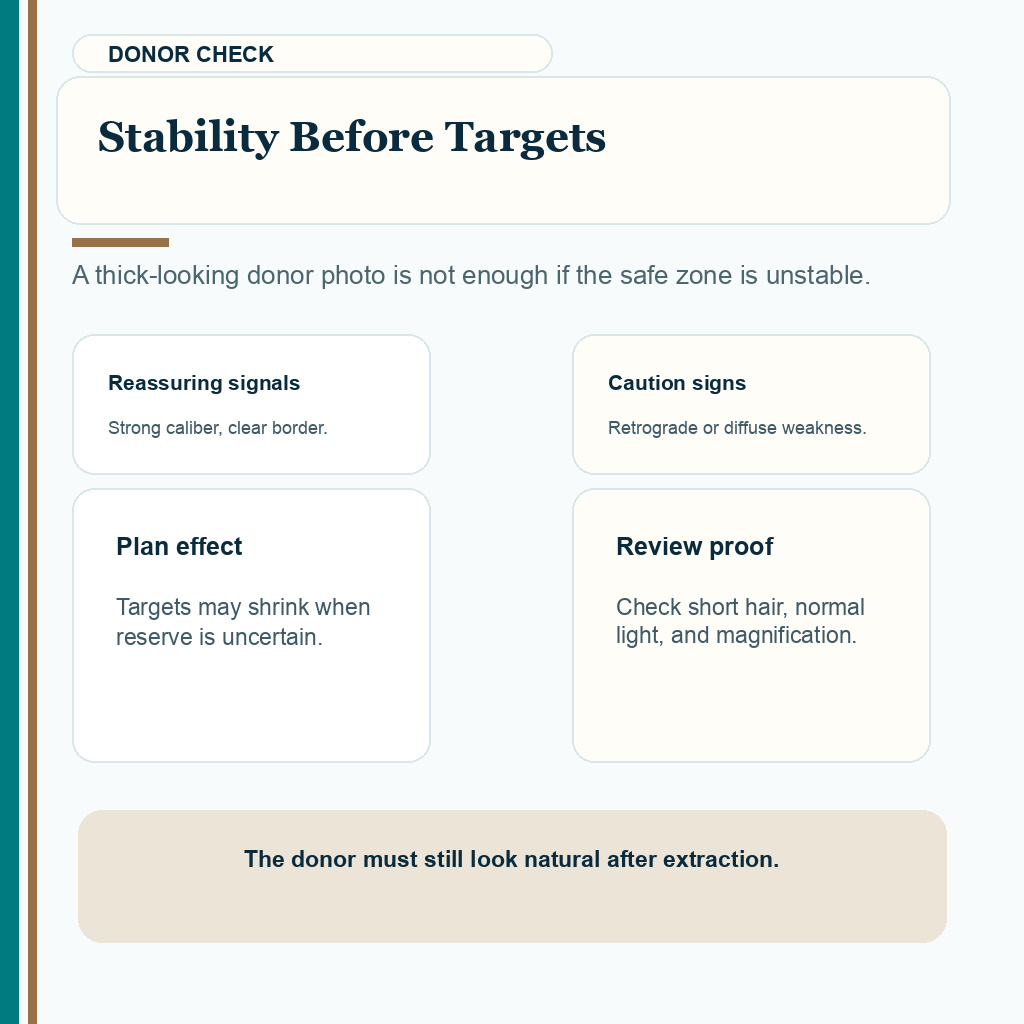
The safe donor zone is called safe because those follicles are expected to be more resistant to androgen driven miniaturization. That expectation still has to be tested in the individual patient. A low hairline plan, crown plan, or repair plan built on an unstable donor can fail before the first graft is placed.
Previous extractions or repair removals change this calculation. The donor review has to count what was already spent, where the extraction pattern sits, and whether the remaining stable zone can still support the next cosmetic priority.
I also look for a mismatch between the top and the donor. If the top is diffusely thin and the donor has a similar miniaturized texture, the case may involve a broader pattern rather than simple frontal recession. The microscope can change the plan more than the graft estimate does.
Pattern labels can help only when they send the case back to donor examination. Diffuse thinning, retrograde borders, and DUPA suspicion all mean different things if the donor is stable under magnification. Before crown or mid scalp grafts are planned, I need to know that the hair being moved is the reliable part of the scalp.
Miniaturization changes the surgical plan
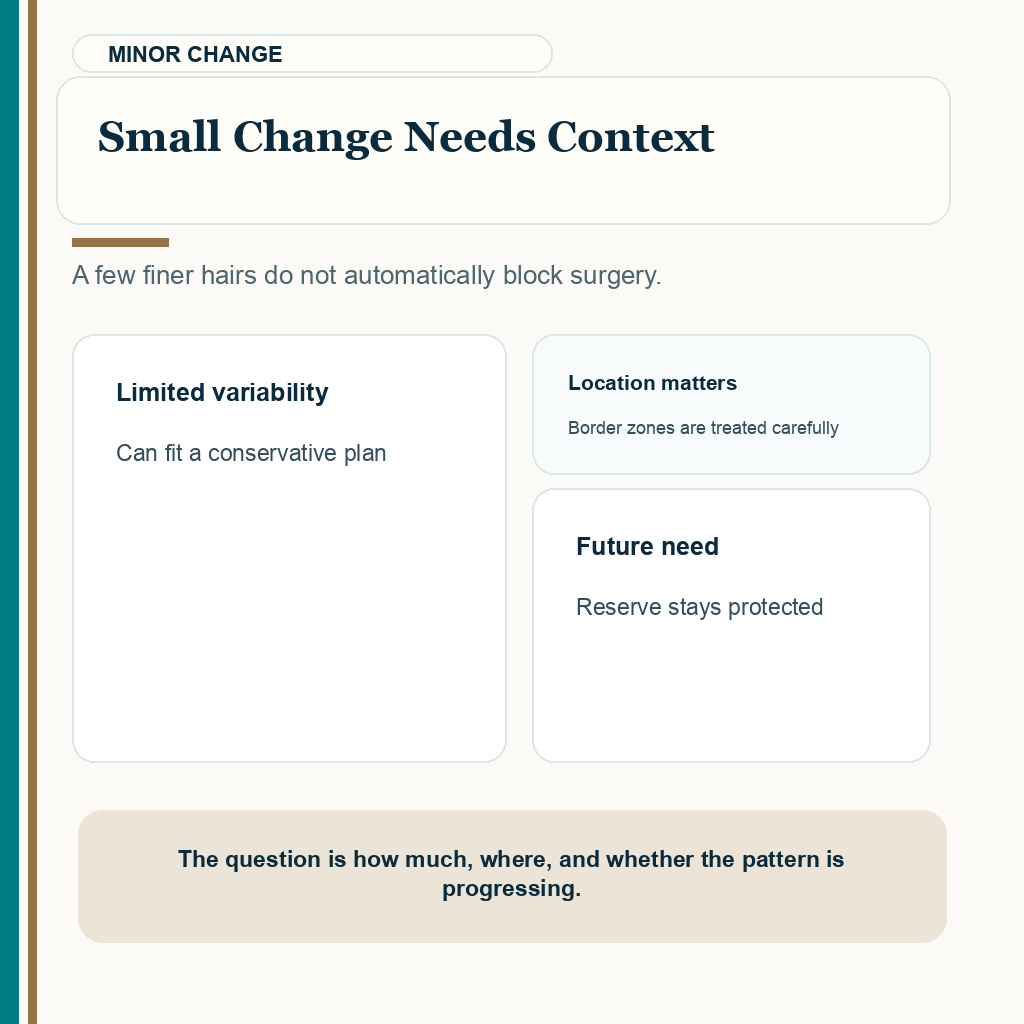
Small, limited miniaturization does not always block surgery. I separate minor donor variability from a donor area that is widely miniaturizing. The decision depends on how many unstable hairs I see, where they sit, whether the pattern is progressing, what the recipient area needs, and how much donor hair must remain untouched for the future.
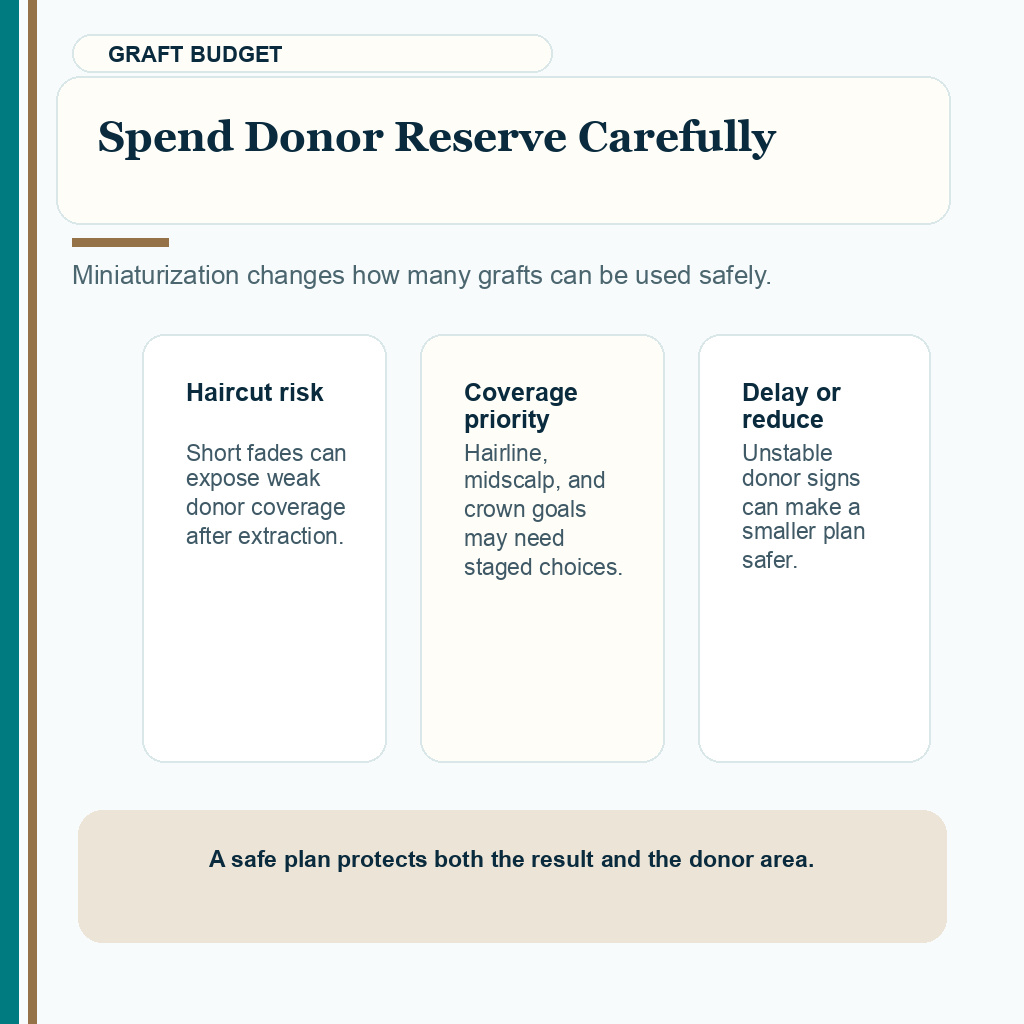
If the donor has acceptable density but some areas are weaker, I may narrow the extraction zone, reduce the graft target, avoid the lower nape, avoid the lateral border, or keep the first surgery focused on the most valuable cosmetic area. A conservative frontal plan can make sense when a wide crown promise would spend too much donor. That lower border becomes even more important when acne keloidalis nuchae affects the nape.
At this point, lifetime graft planning matters. You may ask for the maximum number now, but I have to protect the grafts that may be needed later. Miniaturization turns graft counting into risk management.
Use these 10 donor reliability slides to separate photo fullness, safe zone testing, limited versus widespread miniaturization, DUPA or retrograde border risk, stabilization, pressure to accept a graft number, and pause decisions. Swipe sideways, use the arrows one slide at a time, or choose a number below the image.



DUPA and retrograde thinning change the answer
Diffuse thinning, DUPA, and retrograde thinning matter because they can involve areas many people assume are permanent donor hair. In diffuse unpatterned alopecia, thinning may affect the scalp more broadly, including the occipital region. In retrograde thinning, the lower and side borders of the donor area can be less stable.
That distinction matters before FUE. If grafts are harvested from an unstable border, you may lose coverage in the donor and may also move weaker hairs into the recipient area. The result can look acceptable early and then disappoint as both native and transplanted coverage change.
When that late change appears in the recipient area, transplanted hair thinning years later should be checked against donor miniaturization instead of treated as a simple density request.
I separate retrograde alopecia and DUPA hair transplant planning from ordinary male pattern hair loss because the donor question is different. Before I talk about graft numbers, I need to know whether the donor zone is stable enough to support surgery at all, and if yes, how cautious the extraction must be.
Photos open the discussion but cannot close it
Photos are useful, but they are not enough for this decision. You may send a photo of the back of the head with thick hair and a side photo under different lighting. You may also send a shaved donor photo that looks alarming even though the follicular density is acceptable. The camera does not measure hair shaft diameter or miniaturization.
When I review hair transplant planning from photos, I use the images to decide what needs to be examined, not to promise surgery. The most useful photo set includes the back, both sides, nape border, crown, top view, wet or parted top when relevant, and the haircut length used in the photos.
After that review, examination still has to decide the case. Donor miniaturization is both a microscopic question and a pattern question. A still photo can open the conversation. It cannot safely close it.
Stabilization and medicine before surgery
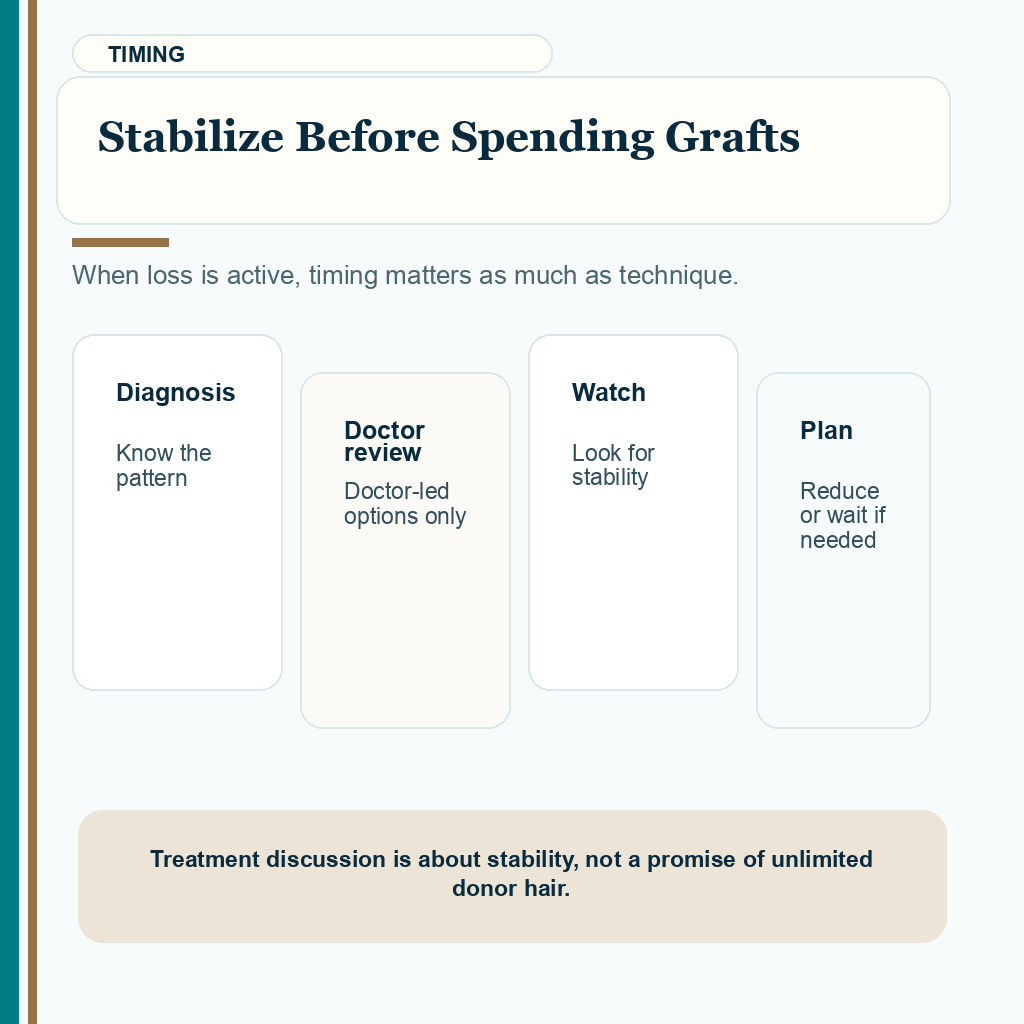
When miniaturization appears active, I look at whether hair loss is being treated and whether the pattern has stabilized. Medication does not create unlimited donor hair, and it does not turn every borderline case into a surgical case. It may, however, slow progression and make timing more responsible in selected patients.
The discussion may include finasteride, dutasteride, minoxidil, or other medical options depending on sex, age, medical history, tolerance, and diagnosis. The point is not to use medicine as a marketing promise. It is to see whether the donor and recipient areas are stable enough for a surgical plan.
Some patients research a hair transplant without finasteride. That can be possible in selected situations, but donor miniaturization makes the conversation stricter. If the donor itself is unstable, I cannot ignore the future because the patient wants surgery now.
If donor miniaturization is present, refusing medication does not make the case impossible by itself, but it removes one possible stabilization tool. I would not use that donor aggressively until the pattern, magnification findings, and likely future loss are understood.
Graft numbers, overharvesting, and short haircuts
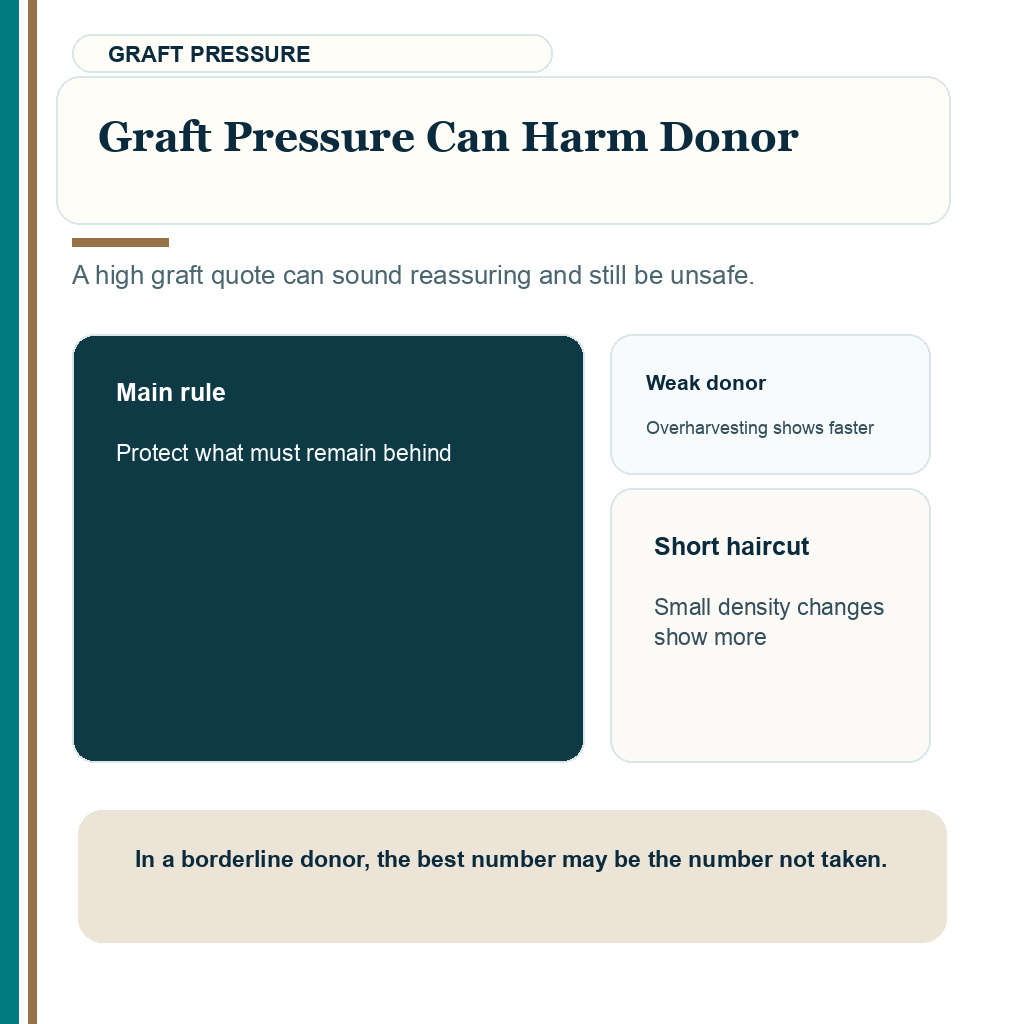
A high graft quote can sound reassuring, but it may be dangerous when the donor is already borderline. FUE removes follicles one by one. The extraction points heal, but the extracted hairs do not grow back in the donor. If too many grafts are taken from a weak donor, the patient may see visible thinning, patchy donor texture, or a haircut limitation that was not explained well enough.
Donor area overharvesting is not only a technical mistake. It is often a planning mistake. The extraction pattern, graft number, donor density, hair diameter, and future hairstyle all interact.
I also explain that donor hair does not grow back after FUE. The donor can look normal when extraction is limited and well distributed, but it is not a renewable supply. If you want very short fades after surgery, I need even more caution because small density changes become easier to see.
Hair caliber changes the meaning of miniaturization
Hair caliber changes coverage. A donor with thick shafts may cover more skin with fewer hairs. A donor with fine shafts may need more grafts to create the same visual density, but the donor may not have enough safe reserve to support that extra demand.
Fine hair transplant planning needs careful expectations. Fine hair is not bad hair. It simply behaves differently. If fine hair is also miniaturizing in the donor, the plan becomes even more conservative.
The contrast between hair color and skin color matters too. Dark fine hair on light skin can expose gaps more easily. Curly hair may give better coverage but can make photos harder to interpret. A donor assessment has to translate those visual factors into a surgical plan, not only a graft number.
Surgery should pause when donor miniaturization is active
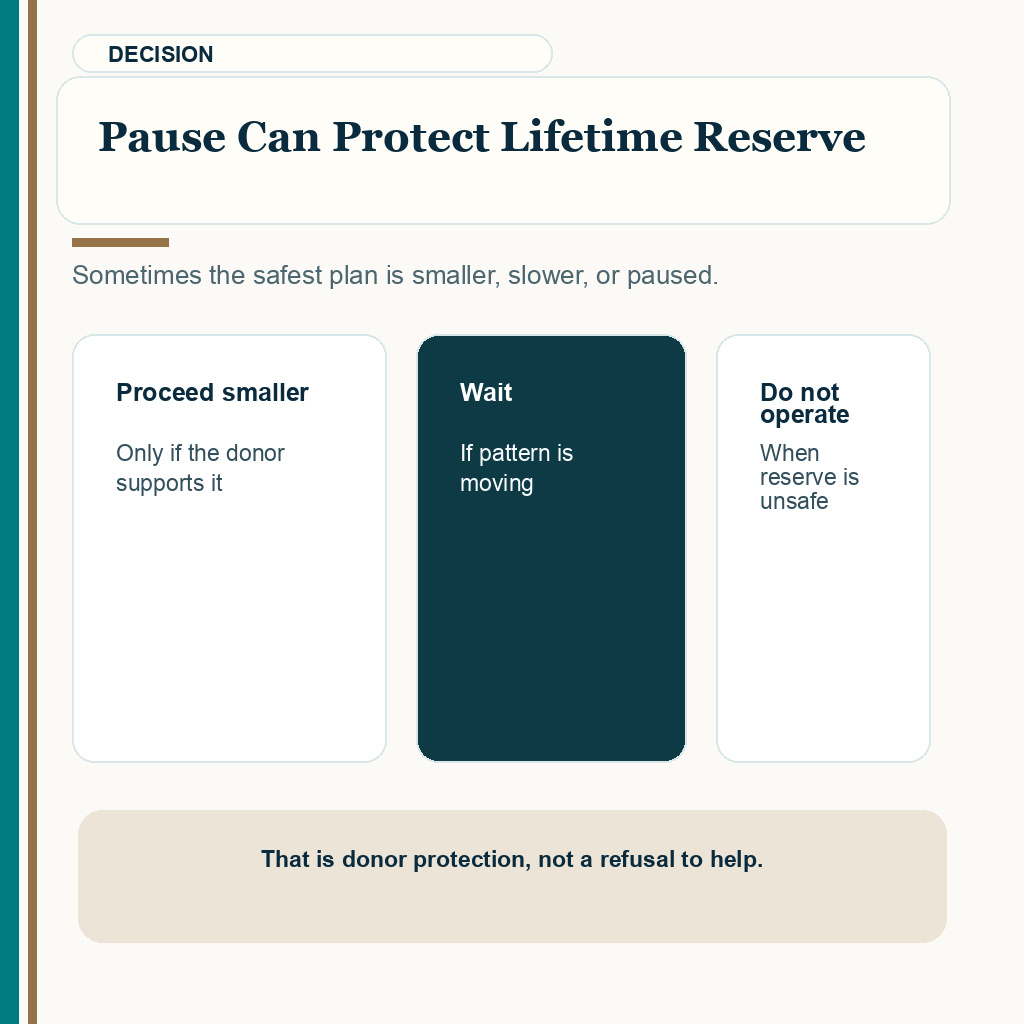
I may advise against surgery when donor miniaturization is widespread, the pattern is rapidly changing, DUPA is suspected, the patient is very young with unstable loss, the requested coverage is too large for the donor, or the expectations depend on a graft number the donor cannot safely provide. When I see that pattern, the question is not only whether a hairline can be improved. It is whether you are a good candidate for a hair transplant at all.
I may also pause when the diagnosis is unclear. Telogen effluvium, inflammatory scalp disease, alopecia areata variants, nutritional problems, thyroid disease, medication related shedding, and androgenetic hair loss can overlap. Surgery does not treat those causes. It only moves follicles.
I see this as donor protection, not a refusal to help. You can recover from disappointment after hearing that surgery must wait. You cannot easily recover a donor area that was spent before it was properly checked.
Stable donor hair sets the graft number
If you are worried about donor miniaturization before a hair transplant, do not rely on a single photo of the back of the head or a large graft quote. Ask how the donor was examined, whether miniaturization was checked, which parts of the donor are considered safe, and how many grafts must remain for the future.
A stronger plan does not try to win the consultation by promising more grafts. It protects the donor, designs around future hair loss, and leaves room for medication, observation, a smaller first session, or no surgery for now.
I only treat donor hair permanence after hair transplant as a strong idea when the grafts truly come from stable donor hair. If the donor is miniaturizing, I do not use the word permanent casually. Before surgery, the safe donor zone must be checked, not assumed.

Read this review excerpt
Diamond Hair was the only clinic asking for medications, treatments I've done before, and other type of questions that make me feel confident on the professionalism that they practice with their clients.