


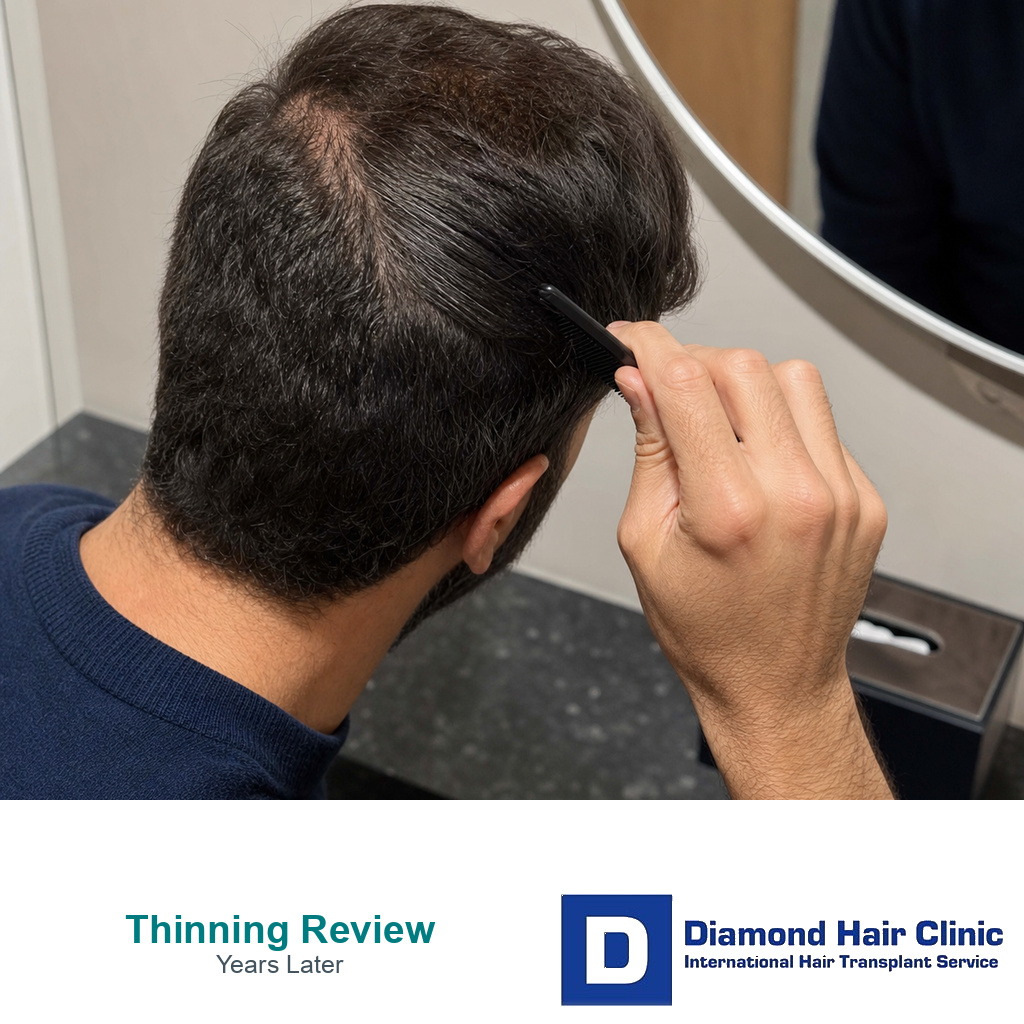
Transplanted Hair Thinning Years Later Needs the Right Diagnosis
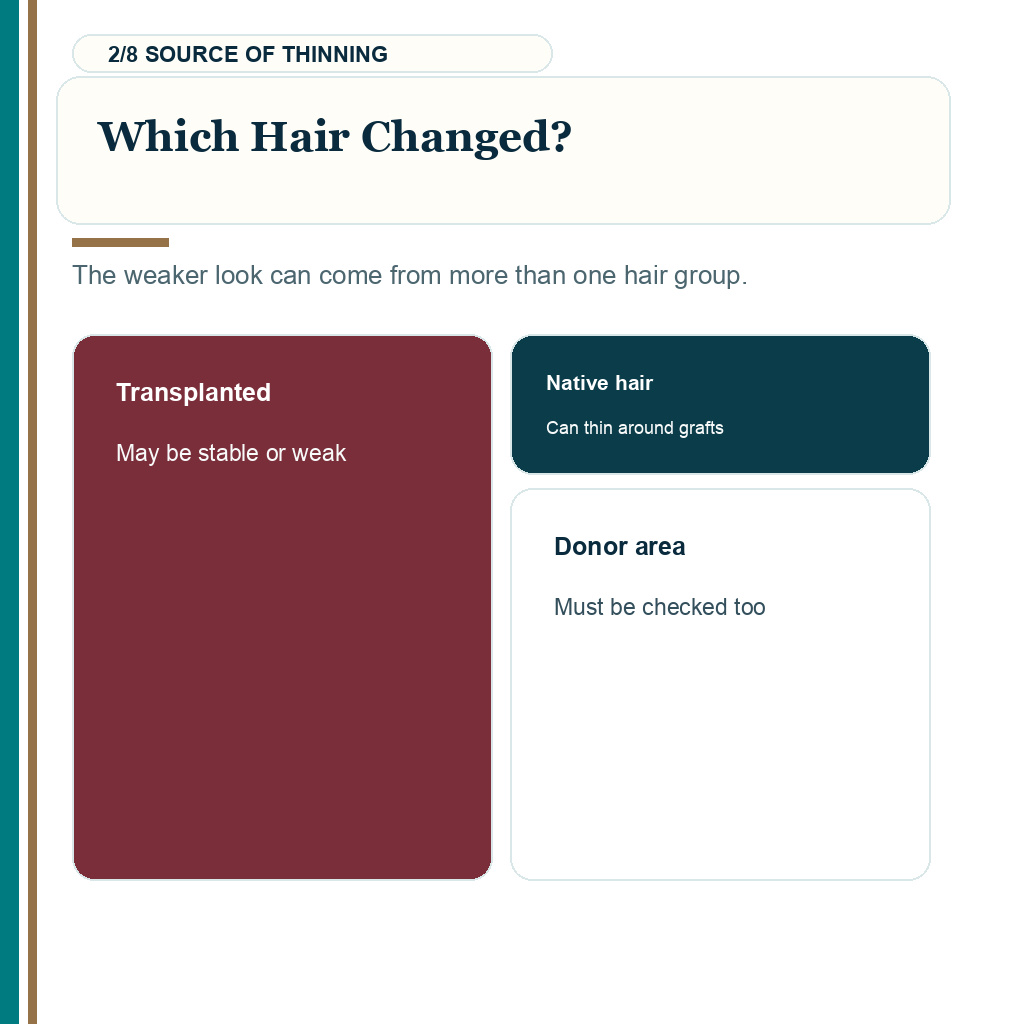
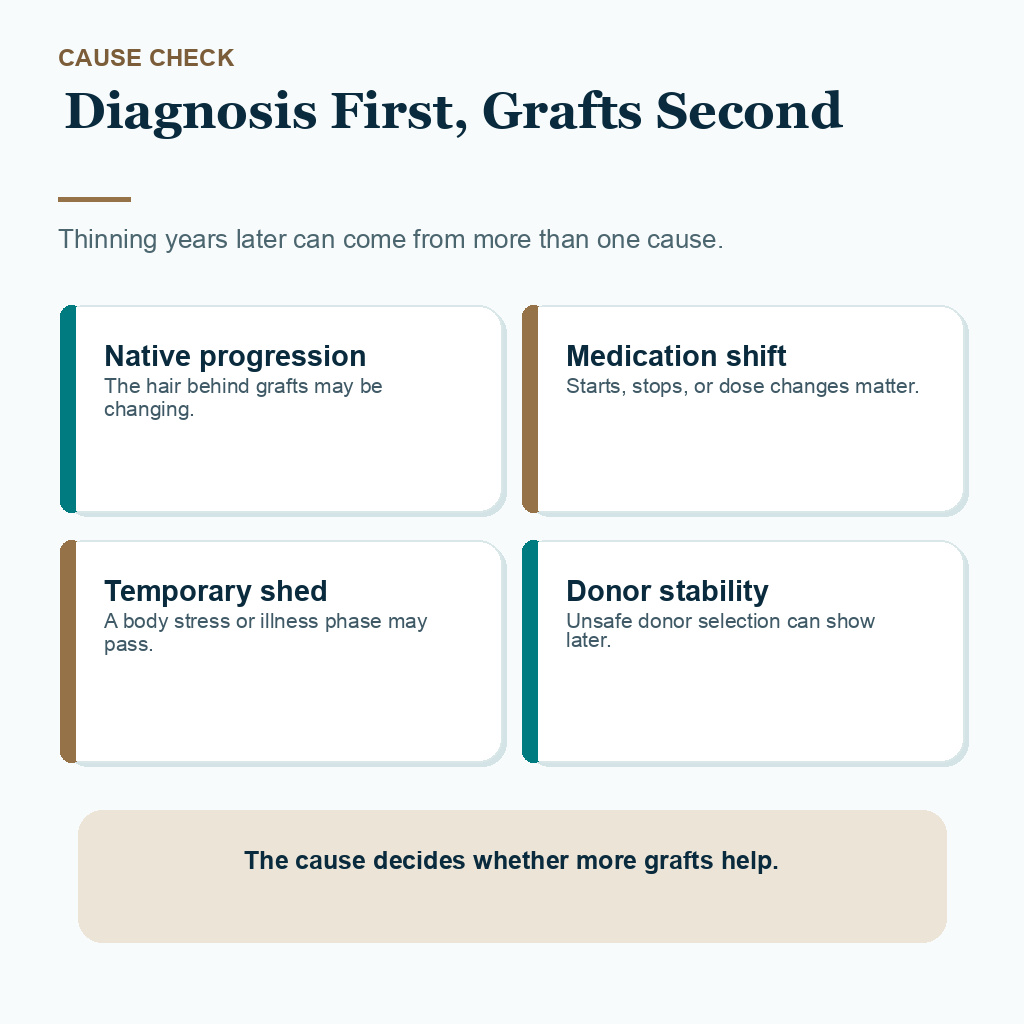
If transplanted hair looked good for a while and then appears thinner years later, I do not start with another surgery. I start by finding out which hair actually changed. The weaker look may come from transplanted grafts, native hair around the grafts, donor area miniaturization, medication changes, a temporary shedding event, or a first result that was never as dense as it seemed under good styling and light.
The same mirror photo can lead to very different decisions. If the change is mainly native hair, stabilization may matter more than surgery. If the donor area looks unstable, I slow down before spending more grafts. If the timing follows illness, weight loss, stress, or a medication change, the first step may be medical review and time. The wrong shortcut is to assume that every late density change means the grafts failed or that another transplant is automatically the answer.
A hair transplant does not freeze the whole scalp in time. It moves selected donor hairs into a new position. The rest of the scalp continues to follow its biology, so even transplanted hairs need context when the change appears several years after surgery.
Late thinning diagnosis gate
Which hair actually changed years later?
Use this before assuming the grafts failed or booking another transplant.
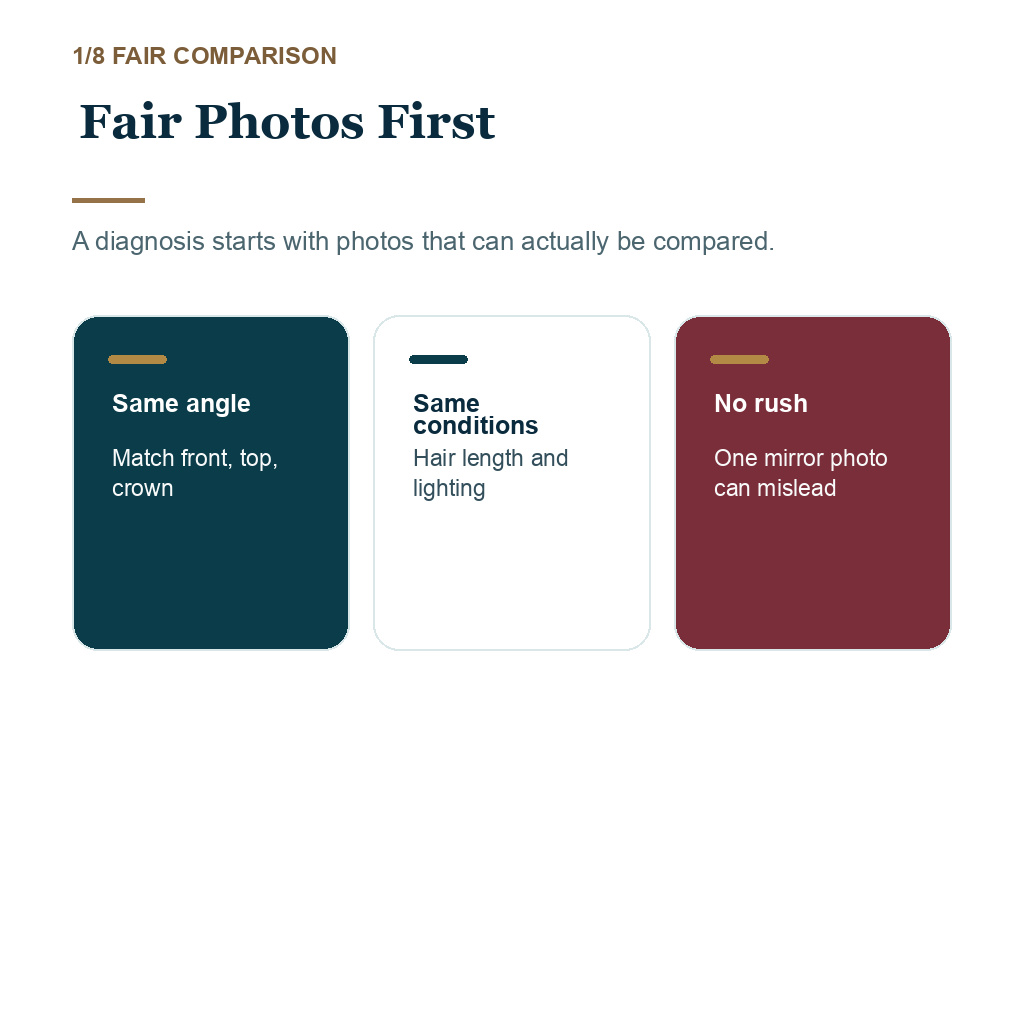
Start with fair comparison photos. The same angle, hair length, lighting, and product use are needed before deciding that density truly changed.
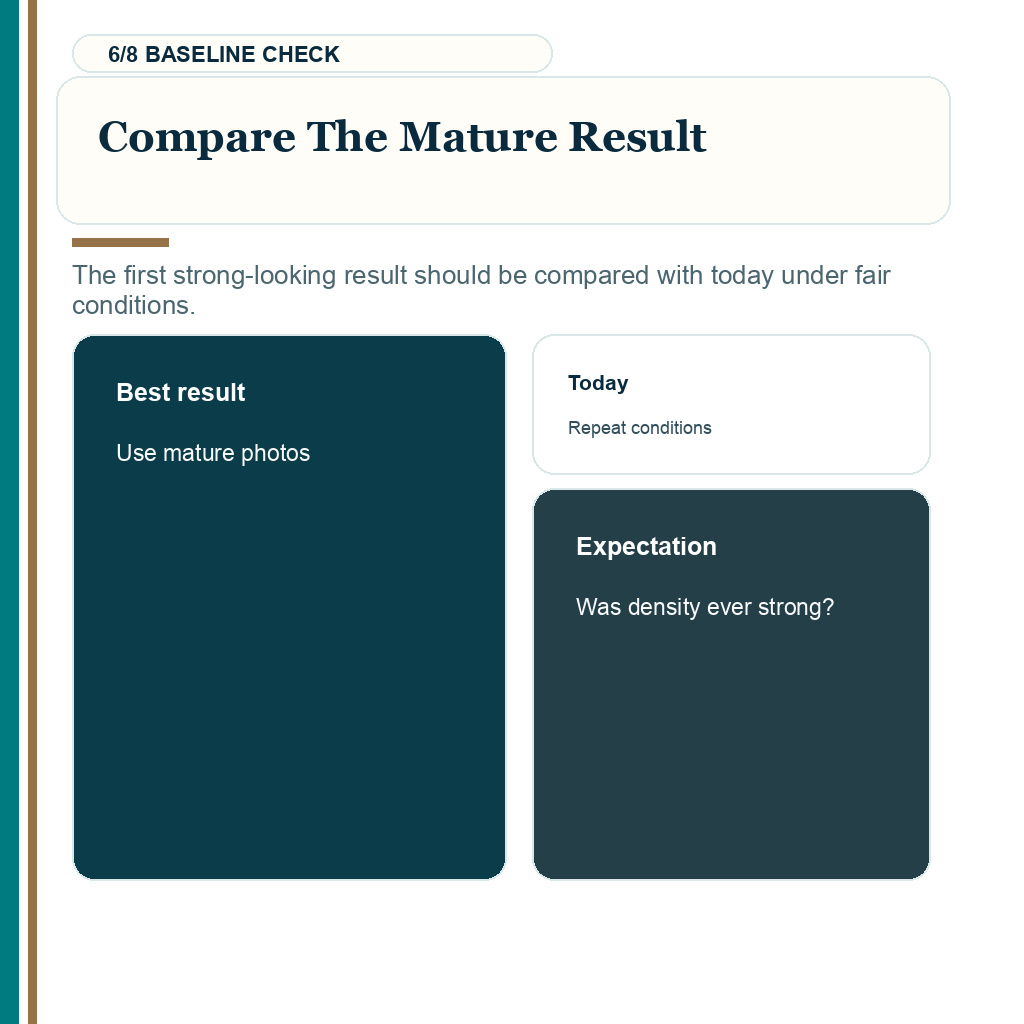
If the old transplant once looked strong, place that best stable photo beside today’s matched photo. Add a note about medication changes, stopped treatment, heavy shedding, or a different styling routine, because those details can make native hair look weaker while the grafted zone is still present.
Old records help, but missing records should not turn the review into guesswork. Current photos, the best stable result you can find, and a clear memory of the original plan are better than rebuilding an exact graft count from marketing paperwork.
When thinning appears years later, compare the transplanted zone with the native hair around it. The question is different when the planted area itself changes, when surrounding hair keeps miniaturizing, or when lighting and hair length changed.
Years later, I do not use a temporary cycle explanation too quickly. A transplant that looked strong and stayed stable first needs a review of what changed after that stable point, not a quick assumption that all transplanted hairs are only shedding normally.
Normal cycling and permanent loss are not the same event. A follicle can release a hair shaft during the resting phase and later return to growth, so one shed does not prove that the graft has disappeared. I become more concerned when matched photographs show the same transplanted zone losing coverage across repeated checks. That pattern still needs a diagnosis because donor miniaturization, scalp disease, medication changes, or native hair loss may be part of what changed.
A safe review separates fair photos, native hair loss, donor stability, medication or shedding timing, the strength of the first result, and whether a second transplant has a clear diagnosis.

Read this review excerpt
told me the quality of my donor hair and what he could take out and advised me what will the be best outcome with what donor hair I had.
Which hair is actually thinning?
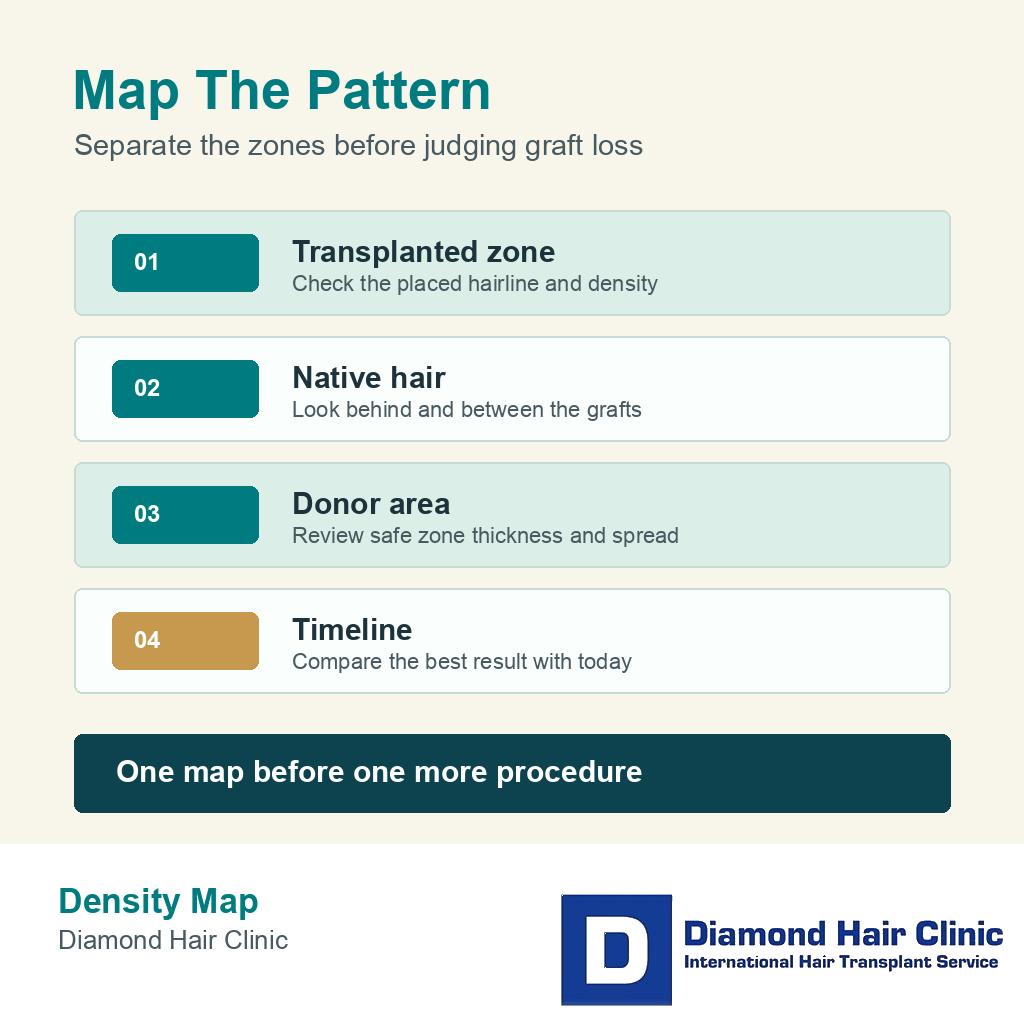
I start with a simple question that is often missed. Is the thinning inside the transplanted zone, or is the hair around the transplanted zone changing? From a normal mirror distance, the front can look like one single area. Clinically, I separate the grafted hairline, the native forelock, the mid scalp, the temples, the crown, and the donor area.
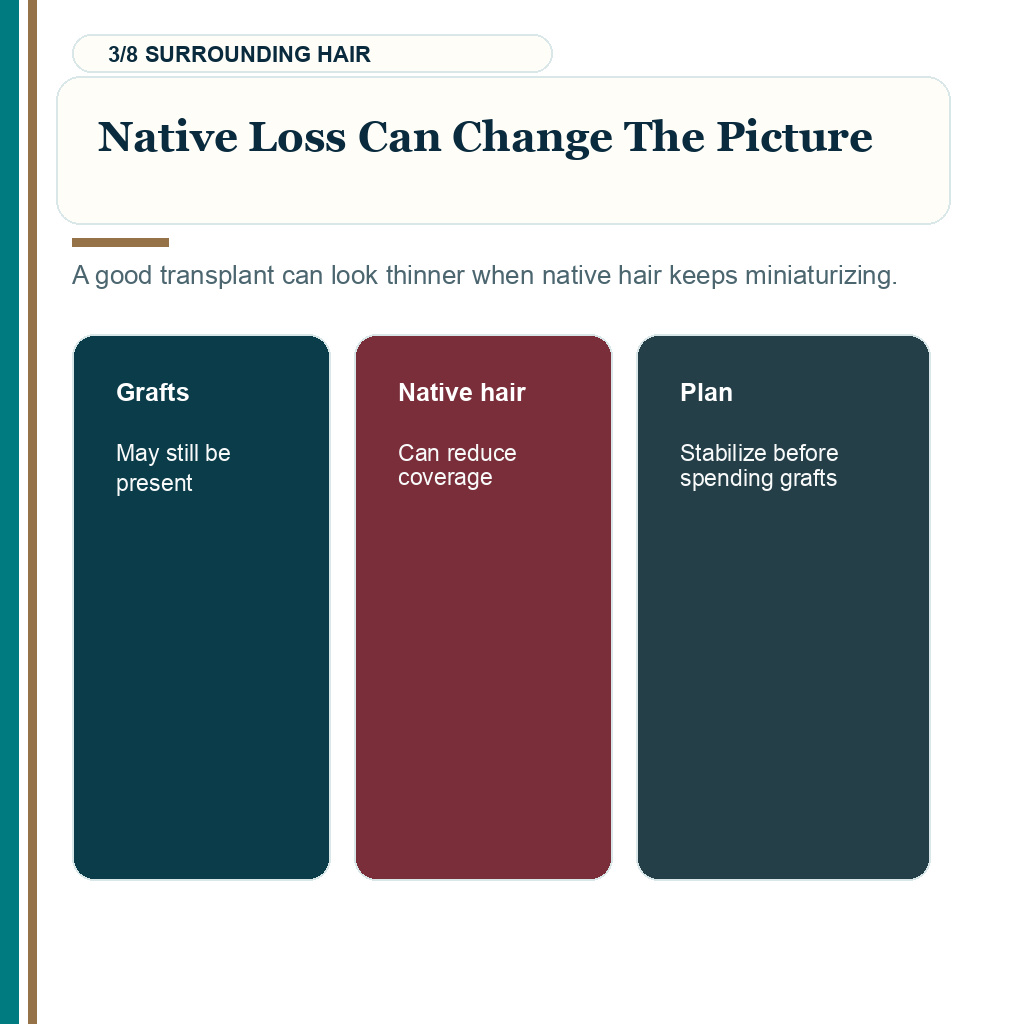
Photos can mislead if they are taken only from the front. A transplanted front line may still be present while the native hair behind it has miniaturized. The result then looks thinner because the transition behind the transplant is weaker. A similar problem can appear when there is a gap between transplanted and native hair. The grafts may not be the only issue.
I ask for clear photos under the same lighting, with the hair dry, not styled forward, and parted through the area of concern. Old photos from the best period of the result are also important. One worrying selfie shows emotion. A photo timeline shows pattern.
Can transplanted hair really thin later?
Usually transplanted hair is more stable than the original thinning hair because it is taken from the donor area. That principle is real, but it is often oversold. Stable donor hair is not the same as every harvested hair being impossible to lose.
The question of whether donor hair is permanent after a hair transplant depends on donor quality, extraction zone, diagnosis, age, family pattern, and whether the surgeon avoided unstable areas. If grafts were taken too high, too low, too far forward, or from an area that was already miniaturizing, the long term behavior can be weaker.
Permanent donor hair still needs context. When a patient says donor hair is permanent, I slow that sentence down. Well selected donor hair is expected to be more resistant, but the donor area still has to be examined. If there is donor miniaturization before hair transplant, the long-term plan changes before graft numbers are discussed.
Could native hair loss be making the transplant look worse?
Yes. A technically good transplant can look weaker if the native hair around it continues to thin. This is common when surgery was done young, when the family pattern is strong, or when the original plan focused on the visible hairline but did not leave enough room for future loss behind it.
I discuss future hair loss after a hair transplant because surgery solves a distribution problem. It does not switch off androgenetic hair loss in the remaining native hair. If the plan was too focused on today’s hairline and not enough on future thinning, the result can look exposed years later.
Local thinning and diffuse thinning need different decisions. If native hair has receded behind the transplant, adding grafts may help only if donor reserve is strong enough and the future plan is realistic. If the thinning is diffuse across the scalp, another operation may create temporary density but leave you chasing a moving target.
Did a medication change confuse the timeline?
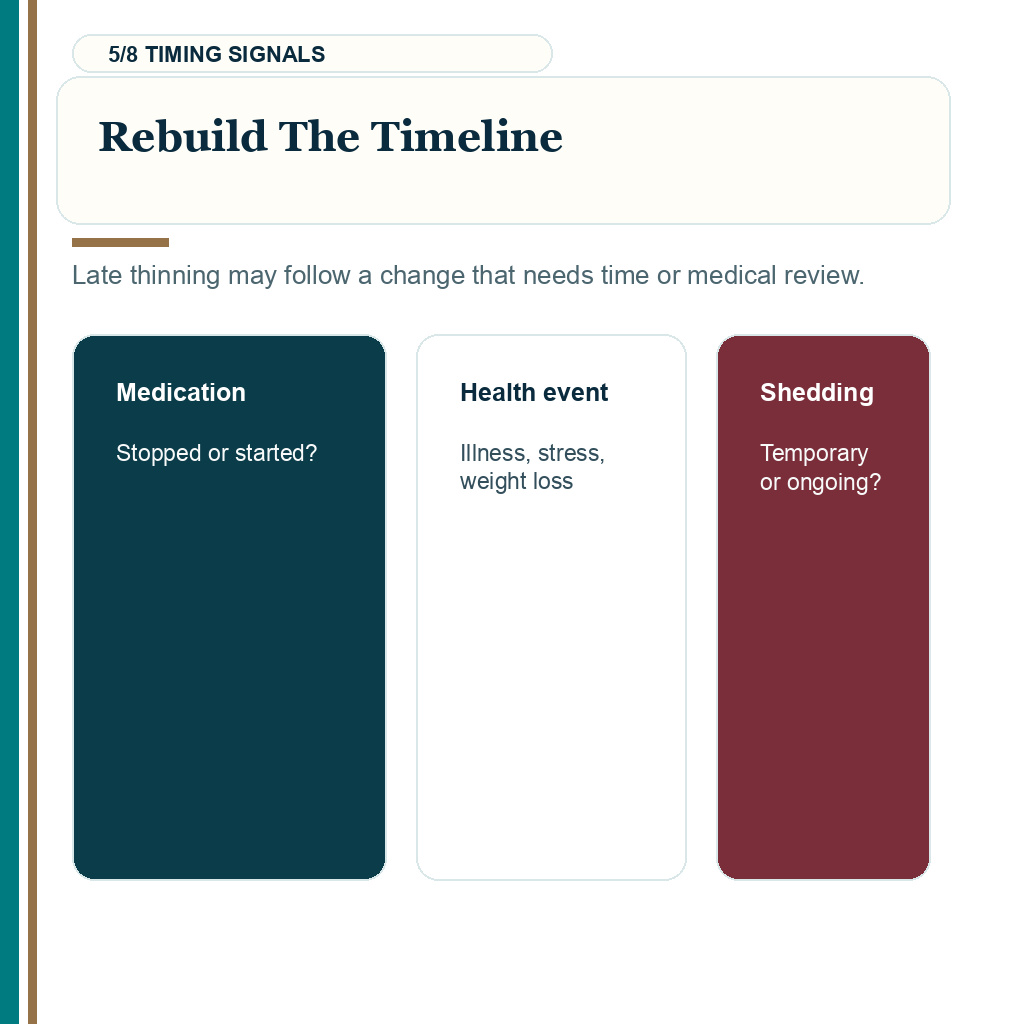
Medication changes matter when hair looks thinner years after surgery. I need dates, dose changes, breaks, and side effects, not just the drug names. Starting, stopping, or changing minoxidil, finasteride, or dutasteride can overlap with shedding or renewed miniaturization.
For example, oral minoxidil around hair transplant planning can support selected cases when prescribed appropriately, but changing hair medication can also create confusing shedding phases. A person may think the transplant suddenly failed when the real issue is a medication change, inconsistent use, or untreated native hair loss.
Medication response needs review when someone is still losing hair on medication. Medication does not make every scalp stable. It may slow the process, but response is variable. If thinning continues despite treatment, the plan should be reviewed before grafts are added.
Could this be temporary shedding?
Not every late density change is permanent. Illness, major stress, rapid weight loss, nutritional deficiency, medication changes, surgery, and other body stressors can push hair into a shedding phase. You may notice more hair in the shower or on the pillow and assume the transplanted hair is disappearing. Switching to night shift work can make the timeline harder to read, because sleep debt, stress, and routine changes may arrive around the same period as thinning. A work schedule alone is not enough proof that grafts failed. I review the transplanted zone, native hair around it, donor stability, medication history, and scalp condition before deciding what caused the change.
The timing helps. Telogen effluvium around hair transplant decisions usually has a trigger and a delayed shedding pattern. It can affect native hair and areas that look transplanted because the whole scalp is cycling differently for a while.
There is also a separate situation where minoxidil is started or changed and then shedding appears. A minoxidil shedding phase during hair transplant planning needs cautious interpretation. It may be part of a treatment transition, not proof that grafts are lost.
Temporary shedding should not be used as a label when there is visible miniaturization, patchy loss, scalp pain or burning, scaling, redness, pustules, donor thinning, or steady worsening. Those signs need examination, and sometimes dermatologic review, before repair surgery is considered.
A recent normal blood test does not replace a scalp examination when your hair suddenly looks thinner years after a transplant. Bring the actual report so the dermatologist can see what was measured. Your history and scalp findings help determine whether any further tests are needed.
The strength of the first result matters
Sometimes the transplant did not truly thin years later. It may have had weak yield from the beginning, but that became more obvious later when the hair was cut shorter, styled differently, photographed under harsher light, or exposed by native hair loss behind it.
The early record changes the conversation. I want to know how the area looked at 12 months, 18 months, and during the period when the result felt successful. If the density was never strong, the discussion is different from a result that clearly held well and then changed.
The question of whether a result is a failed hair transplant or too early to judge is most relevant in the first year, but this reasoning helps later. We should not label a late problem without comparing the expected timeline, the documented result, and the current pattern.
Weak early yield can come from graft handling, low survival, poor donor selection, dense packing beyond what the tissue could support, smoking, inflammation, scalp disease, or unrealistic planning. Years later, the repair question is not only how many grafts to add. It is why the first density was weak and whether the same risk is still present.
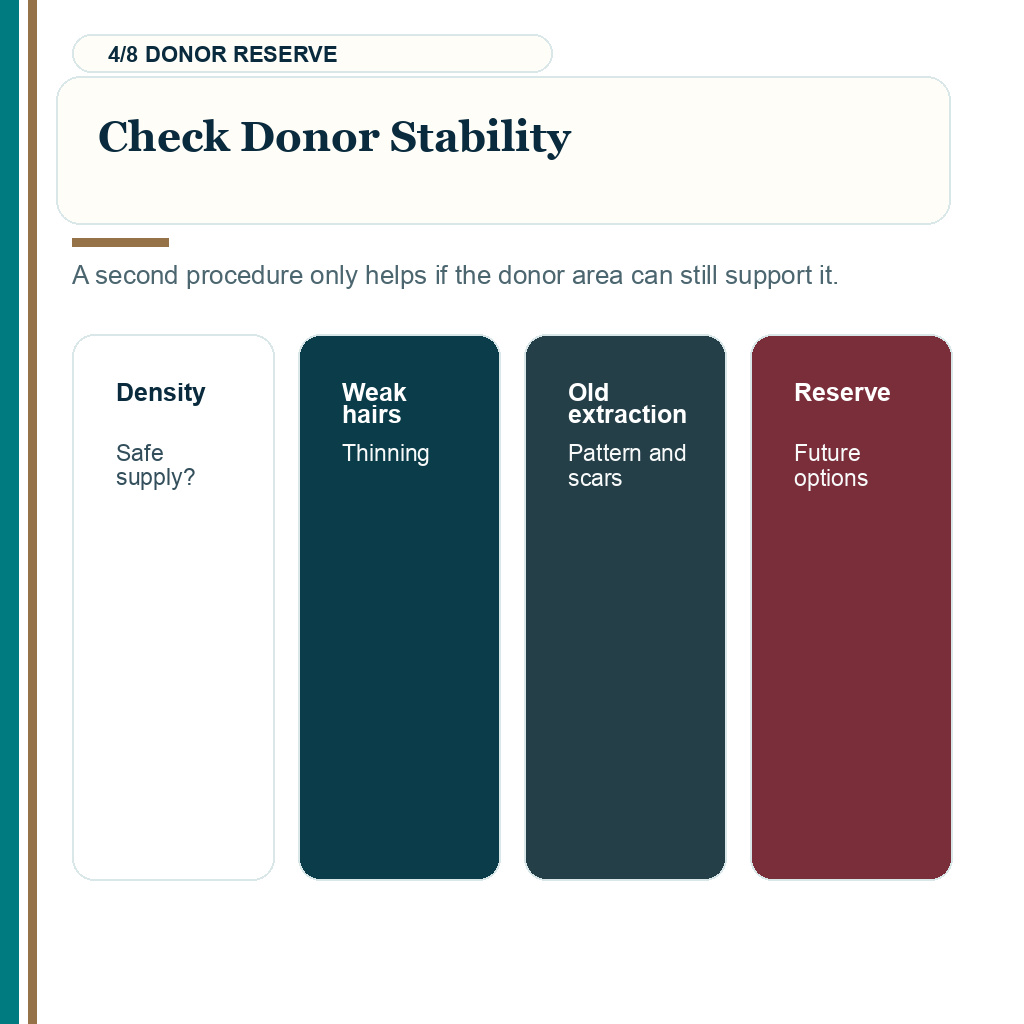
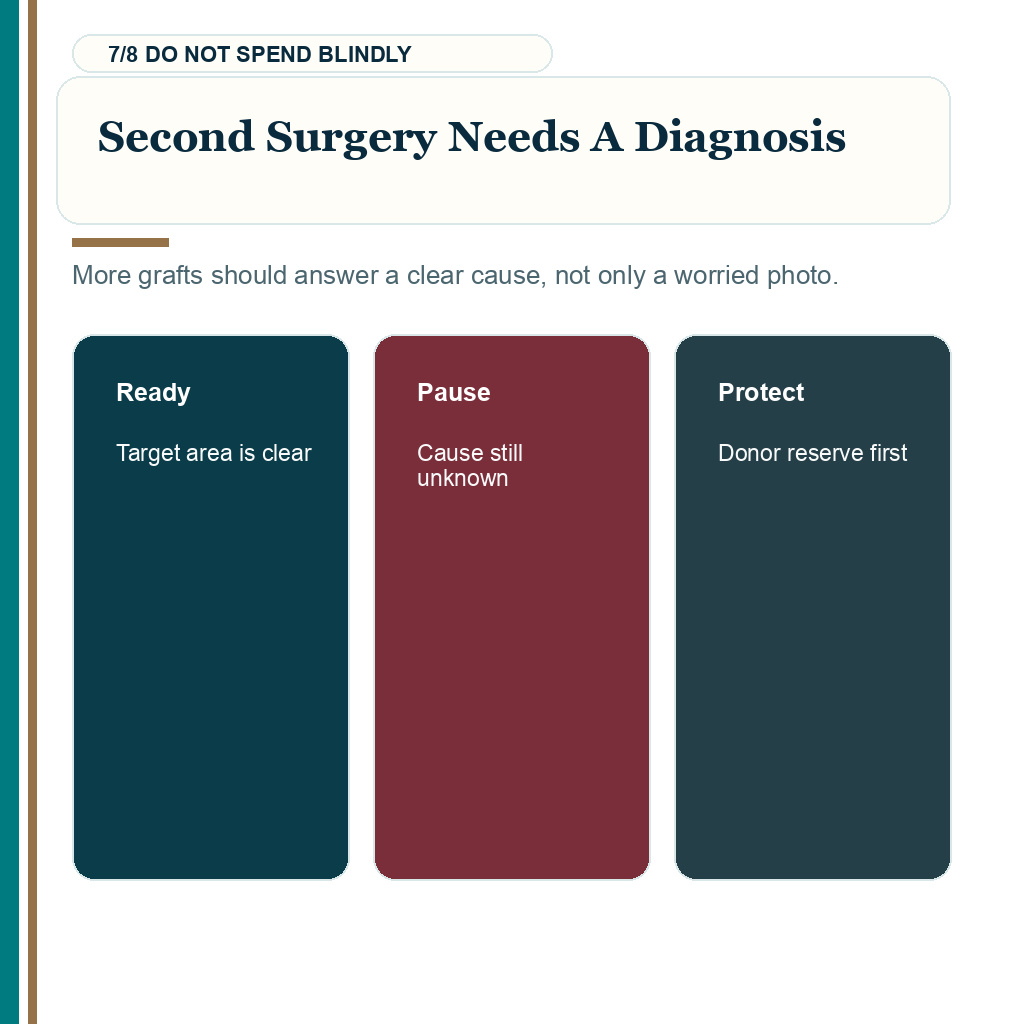
These 8 diagnosis slides separate fair comparison photos, which hair changed, native hair loss, donor stability, medication or shedding timing, the first mature result, second surgery readiness, and the review material needed before more grafts are spent. Swipe sideways, use the arrows one slide at a time, or choose a number below the image.

A second transplant should not be rushed
Sometimes a second procedure is the right answer, but it should come after diagnosis. A second operation spends more donor hair. If the cause is active native loss, diffuse thinning, scalp disease, or unstable donor hair, more grafts may not solve the real problem.
A second hair transplant can be worth it when the donor reserve is adequate, the target area is clear, expectations are realistic, and the future pattern has been considered. It can be the wrong move when someone is trying to cover progressive thinning without enough donor supply, or when the donor area itself may be unstable.
A weak donor area makes every graft decision stricter. If donor supply is limited, every graft needs a clear job. Spending grafts before understanding the late thinning pattern can make future repair harder.
If I cannot explain what the added grafts are solving, I would not spend them yet.
Useful review material should be sent first
For this problem, I want the old operation details if they are available. Send the surgery date, graft number, graft distribution, donor area photos, early postoperative photos, and photos from the best period of the result. A short comb through video can also help because it shows how the hair separates behind the hairline. If those records are missing, current photos still help, but the history is less complete.
Then I look at the scalp in sections. I compare the front line, the area behind the front line, the mid scalp, the crown, and the donor area. The review checks hair shaft thinning, density change, scalp inflammation, scars, and diffuse loss. If the pattern suggests a medical scalp disease or a non-surgical cause, dermatologic review may be needed before any repair plan.
Alongside the photos, send a short timeline of medication changes, illness, weight loss, stress, new diagnoses, and family pattern. These details are not small talk. They help separate graft loss, native loss, donor miniaturization, temporary shedding, and weak early yield.
Late thinning needs a cause first
Thinning years after a hair transplant can come from native hair loss, donor miniaturization, temporary shedding, scalp inflammation, or a weak first surgery. Those causes look similar in the mirror, but they do not lead to the same answer.
Compare old and new photos, check the donor area, review medication history, and separate transplanted hair from surrounding native hair before adding more grafts. Sometimes the answer is treatment or observation. Sometimes it is repair surgery. The cause has to be clearer before donor hair is spent again.