



Comb Through Videos Do Not Prove Density Alone
A hair transplant comb through video can be useful, but it is not proof by itself. It shows how the hair behaves when it moves, yet the same result can look stronger or weaker depending on lighting, hair length, wetness, camera angle, styling, and the month after surgery. In the consultation room, I treat the clip as one piece of context, not a verdict. I want to see the hairline, the mid scalp, the crown if it was treated, and the donor area under conditions that are close to real life. It becomes stronger evidence when it is part of a structured one year FUE result review with comparable photos.
If you are comparing clinics, do not judge only the most flattering clip. If you are judging your own result at 6, 7, or 8 months, do not panic from one harsh video. A good review separates delayed growth from weak density, poor direction, too much styling, and donor overuse. Use a comb through video beside dry, wet, and normal distance views. Movement captures behavior. Matched views also show whether a video is hiding weak areas with hair direction, product, or a short clip.
Good comb through video standards
A fair comb through video should move slowly through the areas that matter. I want to see the front hairline, both temples, the mid scalp, and any crown work that was included in the plan. If the video only pushes hair forward and never parts it, it may show styling skill more than surgical quality.
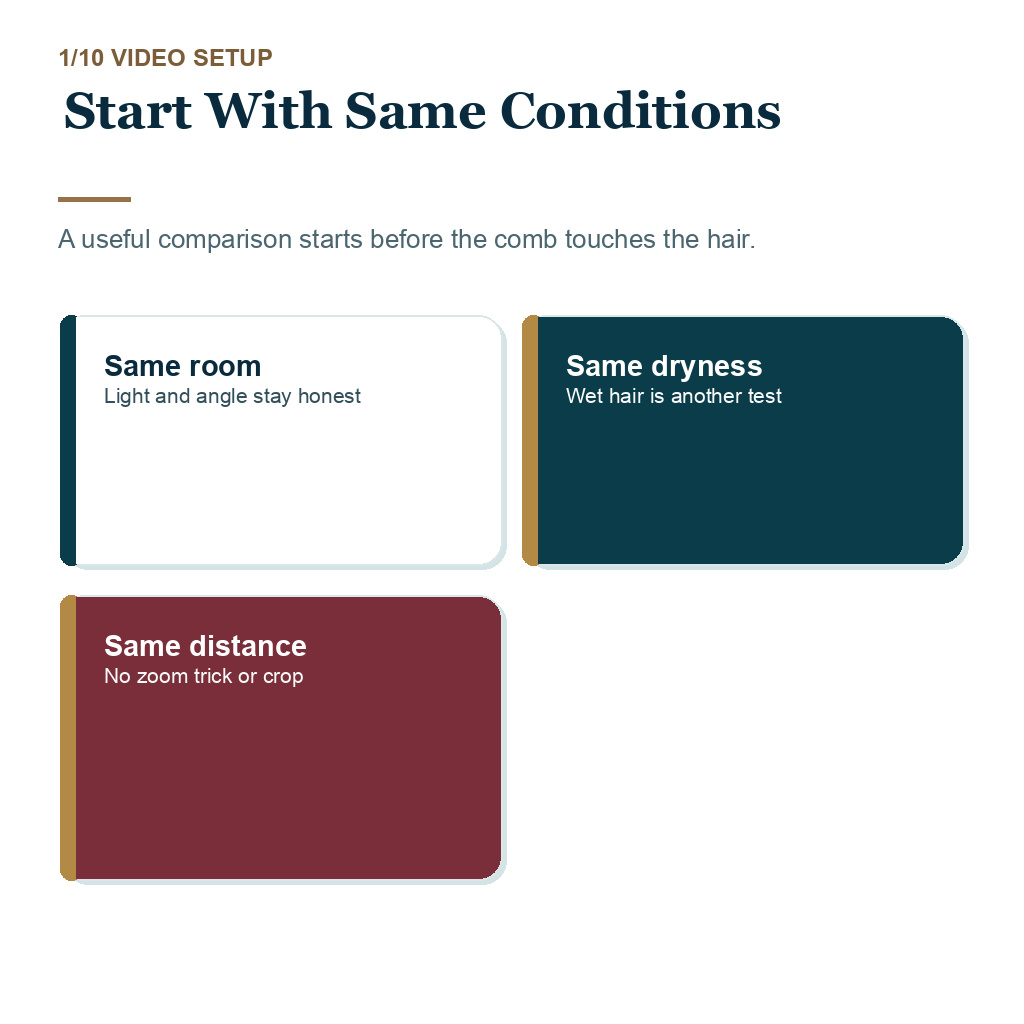
Start the clip before the comb touches the hair. A few seconds of resting hair shows what the stress test is being compared with.
For a remote consultation, keep one assessment pass continuous. Begin with the resting hair, move slowly through the recipient zones, and finish with the donor area without jump cuts. If you stop, change the light, or restyle the hair, say so and begin a separate labeled clip. An edited montage can provide an overview, but it should not replace the uninterrupted view used for assessment.
Include the donor area in at least one slow clip when you are comparing a result or a clinic. A video that proves only the best recipient angle can still leave the donor and weaker zones unanswered.
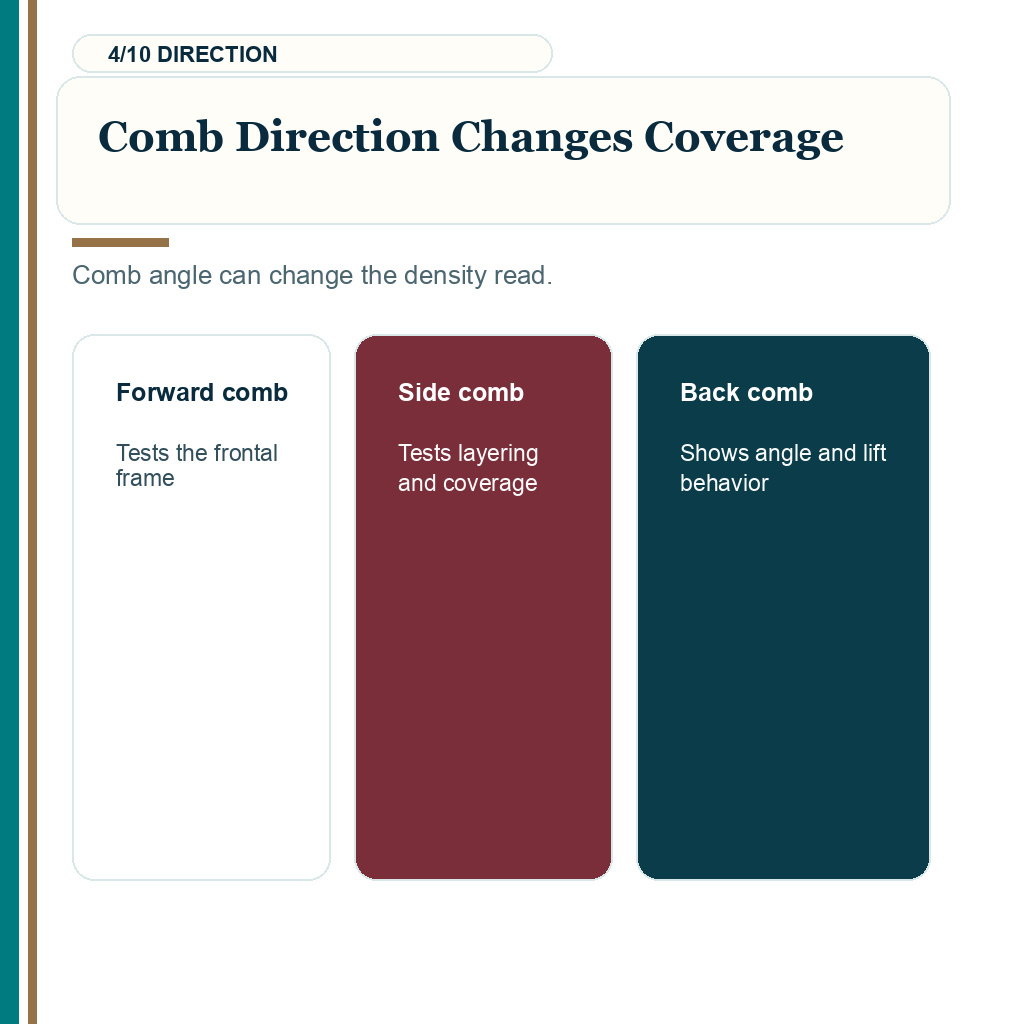
The hair should be shown from more than one angle. Front only footage can hide weak temple blending. Top down footage can make every result look thinner than it feels in daily life. Side angles matter because they show direction, layering, and whether the transplanted hair joins the native hair naturally.
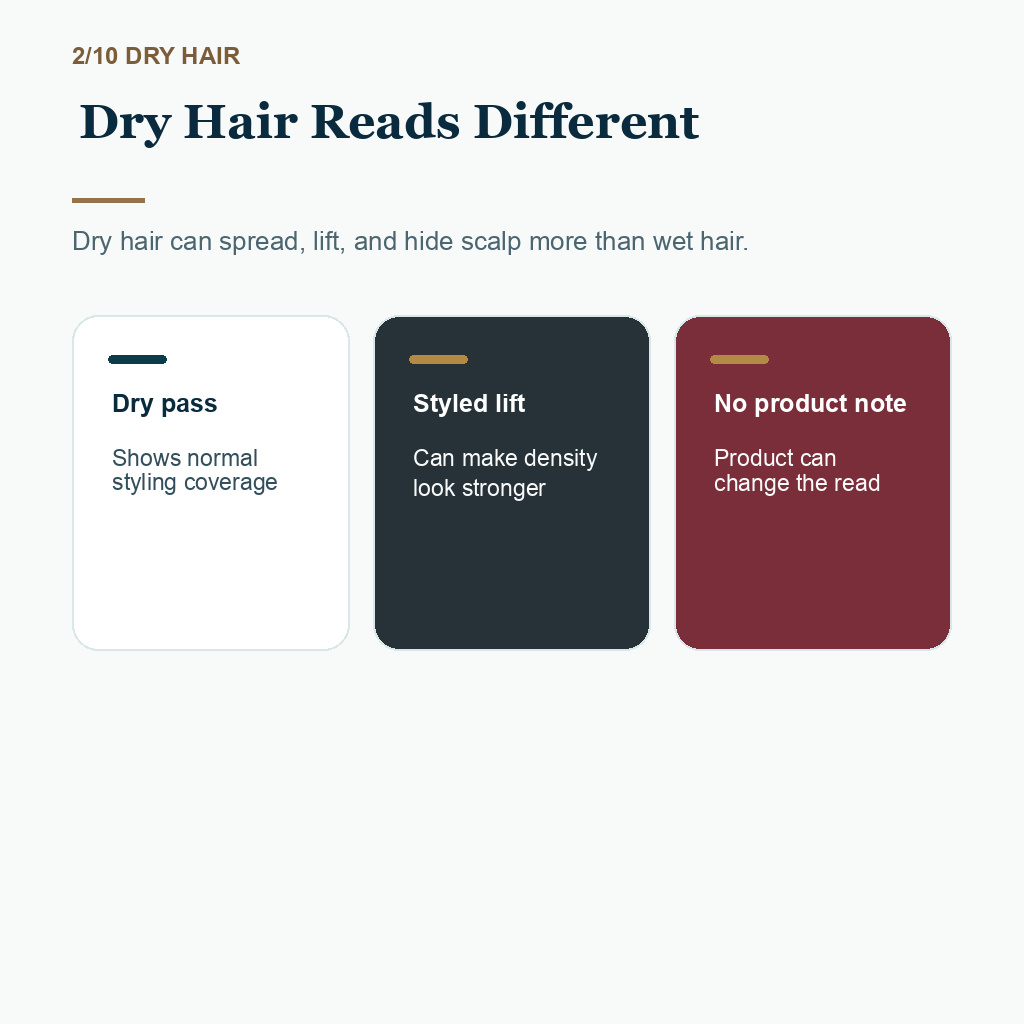
Comb through proof is strongest when it includes dry hair, lightly parted hair, and a realistic light source. It becomes even more useful when you compare it with hair transplant results from hair like yours, not only with the clinic’s best dense examples. Hair transplant before and after photos can still mislead when lighting, angle, or styling is controlled too tightly. Moving video reduces some of that risk, but it does not remove it.
Reasons the same result can look different in video
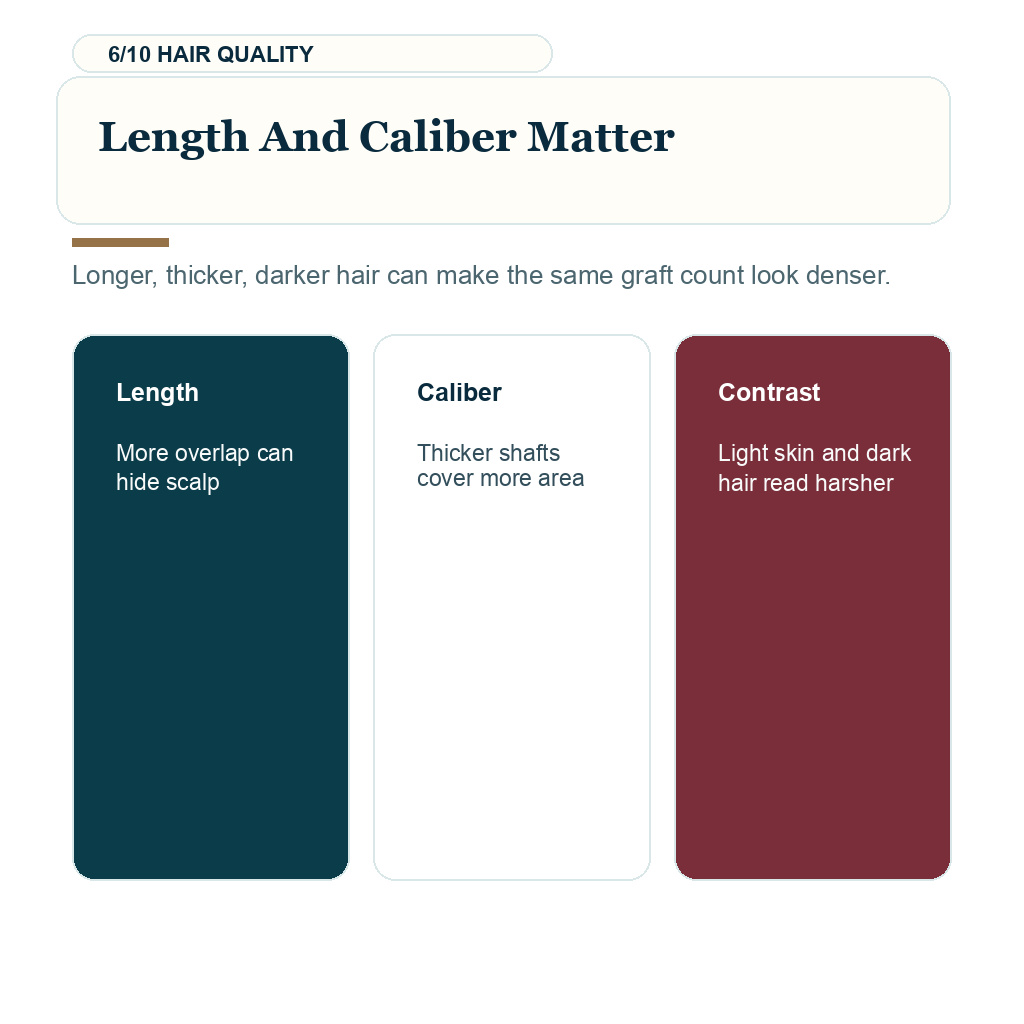
Hair transplant density is not only a graft count. Visual coverage changes with shaft thickness, curl, color contrast, hair length, exit angle, and how the hair is layered. The same transplant can look different under different conditions.
Dark hair on light skin often shows more scalp than lighter hair on lighter skin. Fine hair can grow well but still cover less surface than coarse hair. Curly or wavy hair may give more coverage because the shaft occupies more visual space. If you have fine, straight, dark hair, you need a more careful explanation of realistic density before surgery, not stronger marketing language afterward.
One clip is too narrow for a density judgment. I compare the comb through video with the surgical plan, graft distribution, donor quality, hair caliber, and the size of the treated area. Hair caliber can change the visual result even when graft growth is good, especially with fine hair after hair transplant.
Light, wet hair, length, and the view
Bright overhead light is unforgiving. Wet hair clumps together and opens spaces between strands. Very short hair removes the layering effect that helps coverage. Longer hair can cover more, but it can also hide weak distribution until the comb lifts it.
None of these conditions are fake. They are real life conditions. The mistake is judging the entire surgery from only one of them. A better review uses normal room light, brighter light, dry hair, and, when relevant, lightly damp hair. That gives a clearer sense of how the result behaves outside a clinic photo area.

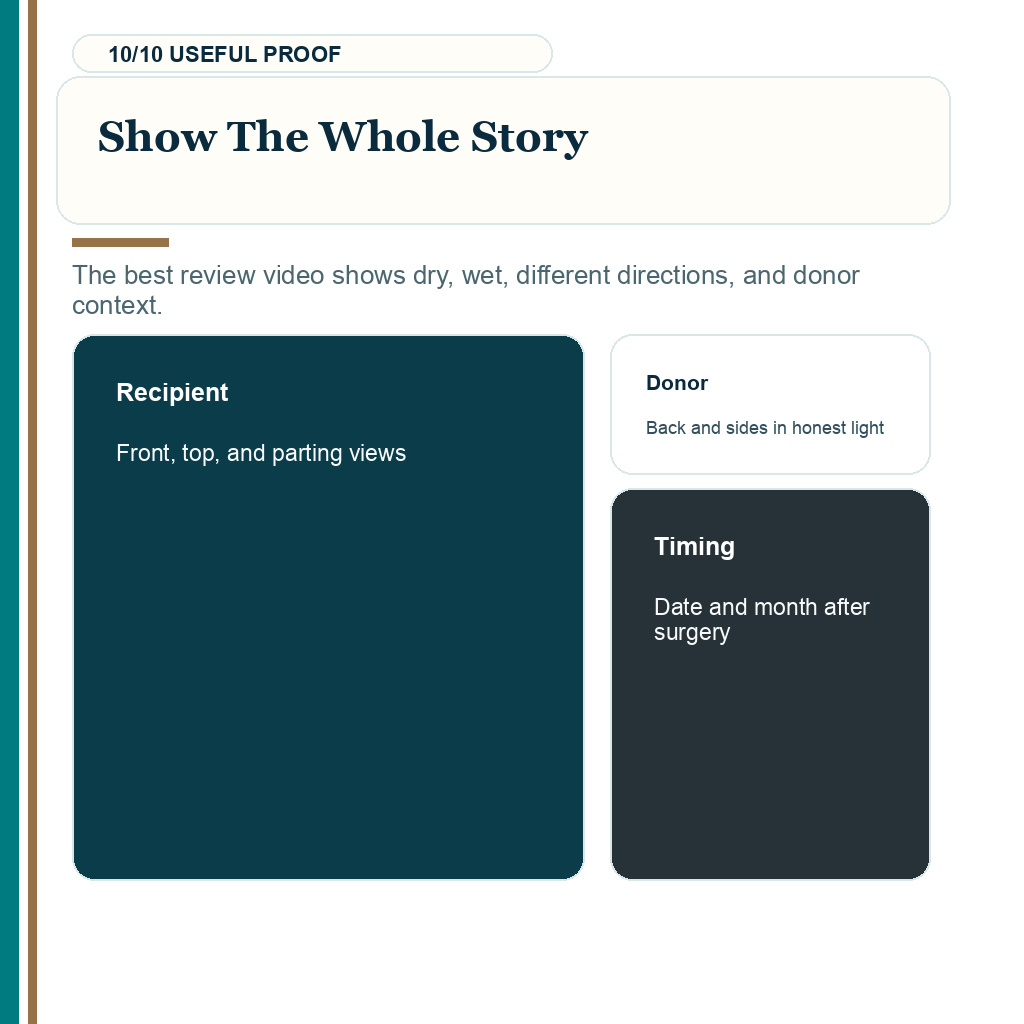
A useful result video should show dry hair, bright light, gentle parting, and donor view.
Many people worry when a result looks thinner in wind, bright light, or after washing. That can happen even with a good transplant because transplanted hair creates visual coverage, not untouched original density. If the worry comes from those conditions, I separate it from true low density in harsh light, wind, and wet hair after hair transplant.
Density judgment can be too early in video
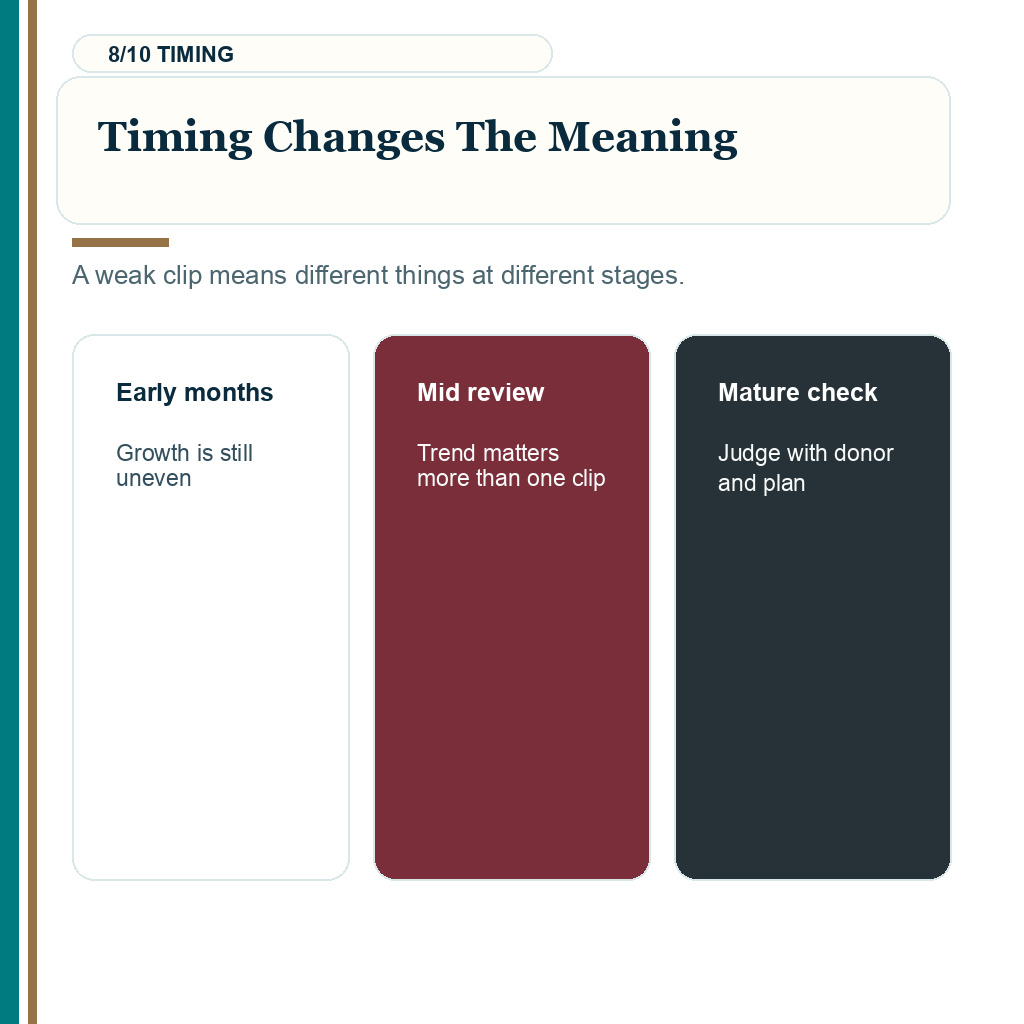
Month 4 is usually too early. Month 6 can show direction and early coverage, but it can still underestimate the final result. Month 7 or 8 is more informative, especially in the hairline and mid scalp, but maturation can continue. For some people, 12 months gives a fairer judgment, and crown work can take longer to look settled. A focused six month density check helps keep that video in the correct timeline. If you are worried because the early recipient area looked patterned, that belongs in an earlier review, not a final density judgment.
Month eight is useful, but it is not always final. A thin looking comb through at that stage needs context. Was the area large? Was the crown treated? Is the hair fine? Are you still losing native hair? Is there inflammation, shock loss, or a medication issue? Was the original plan conservative because donor supply was limited?
If you are only 4 months after surgery, your concern is closer to low density at 4 months after hair transplant than to final result assessment. If you are around 7 months and still worried, thin hair transplant results at 7 months need a more specific timing frame.
Hairline design clues from combing
A still photo can hide direction. A comb through video can expose it. When hair is lifted, pushed sideways, or moved backward, I look at the angle of the grafts, the softness of the front line, and whether the hairline has irregularity instead of a hard drawn border.
Good hairline design does not depend only on density. The first rows need softness. The direction must match your natural pattern. Temple work has to blend with the face. If the front is packed too aggressively or placed in a straight artificial line, a video may look impressive for a few seconds but less natural when the hair moves.
When you send me a video, I watch the transition zone behind the hairline. A dense front with a weak area immediately behind it can look like a wall from one angle and thin from another. If the hair only looks natural when it is pushed in one direction, I also think about wrong hair direction after hair transplant.
Donor area proof also matters
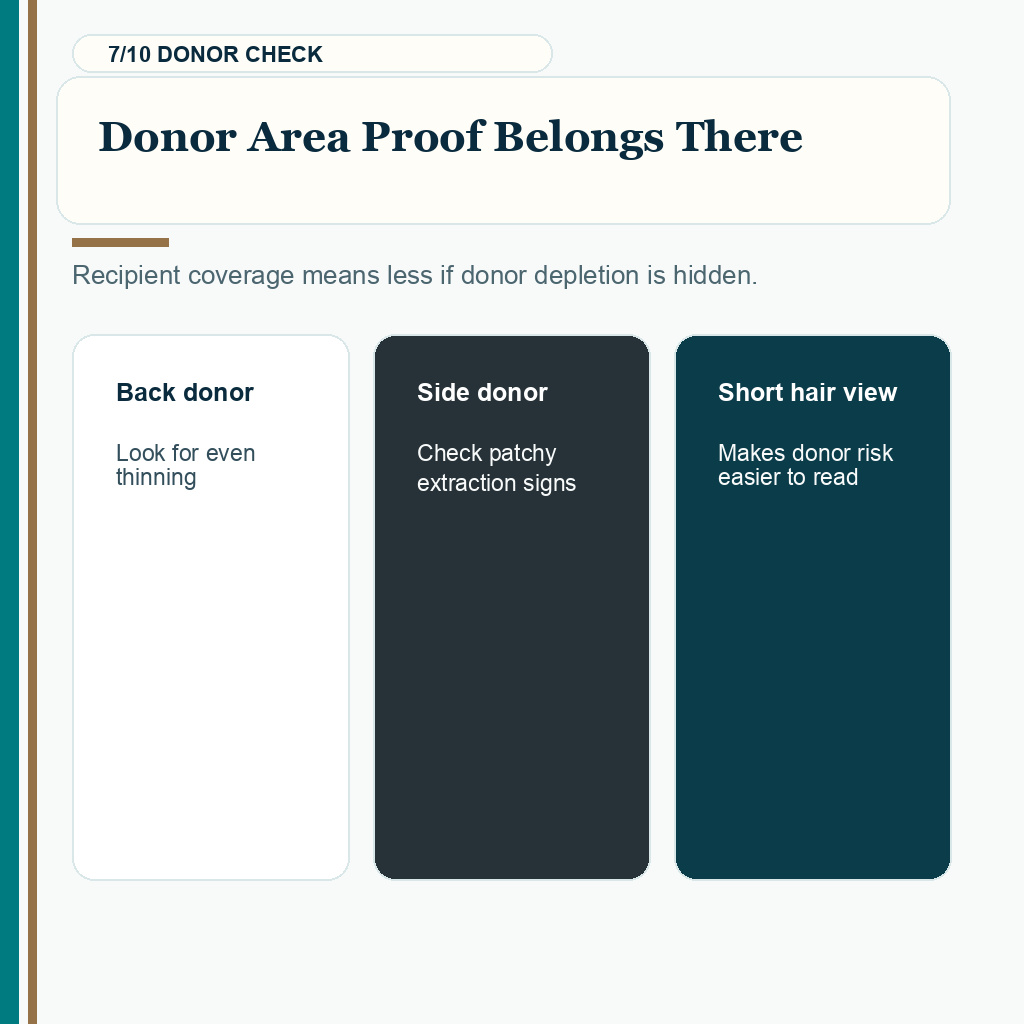
A strong recipient area video does not tell the whole story. The donor area is the bank. If too much was removed to create a dramatic front, you may pay for that later with visible thinning in the back or fewer options for a second procedure.
Donor area proof matters as much as recipient area proof. I want to see how the donor looks with a realistic haircut, not only a long style that hides extraction changes. The more advanced the hair loss pattern, the more the donor area matters.
Graft numbers can become misleading here. A high graft count may sound impressive, but I focus more on whether those grafts were used wisely. Hair transplant graft count verification helps confirm what was placed, while lifetime graft planning keeps the donor budget protected beyond the first result video.
Checks before trusting a result video
Ask when the video was taken. A 6 month clip, a 12 month clip, and an 18 month clip do not mean the same thing. Ask whether the hair is dry or wet. Ask whether fibers, styling powder, SMP, long hair, or careful lighting are involved. Ask which areas were transplanted and how many grafts were placed in each zone.
A clip filmed after a small refinement can include growth from an earlier transplant. I want the description to separate the grafts placed in each operation and give the time since the most recent work on the area being shown.

A reliable density video should show movement, timing, normal and bright light, and the donor area.
The donor area and the original plan belong in the same review. A clinic can show a beautiful front view while avoiding the back of the scalp. That is not enough if you may need future work.
Density is an optical result, not only a graft number. A discussion about 45 grafts per cm2 is only useful when the recipient area size, hair caliber, contrast, graft survival, and donor reserve are understood. A clip that looks dense under one condition does not prove that the plan was safe for your future.
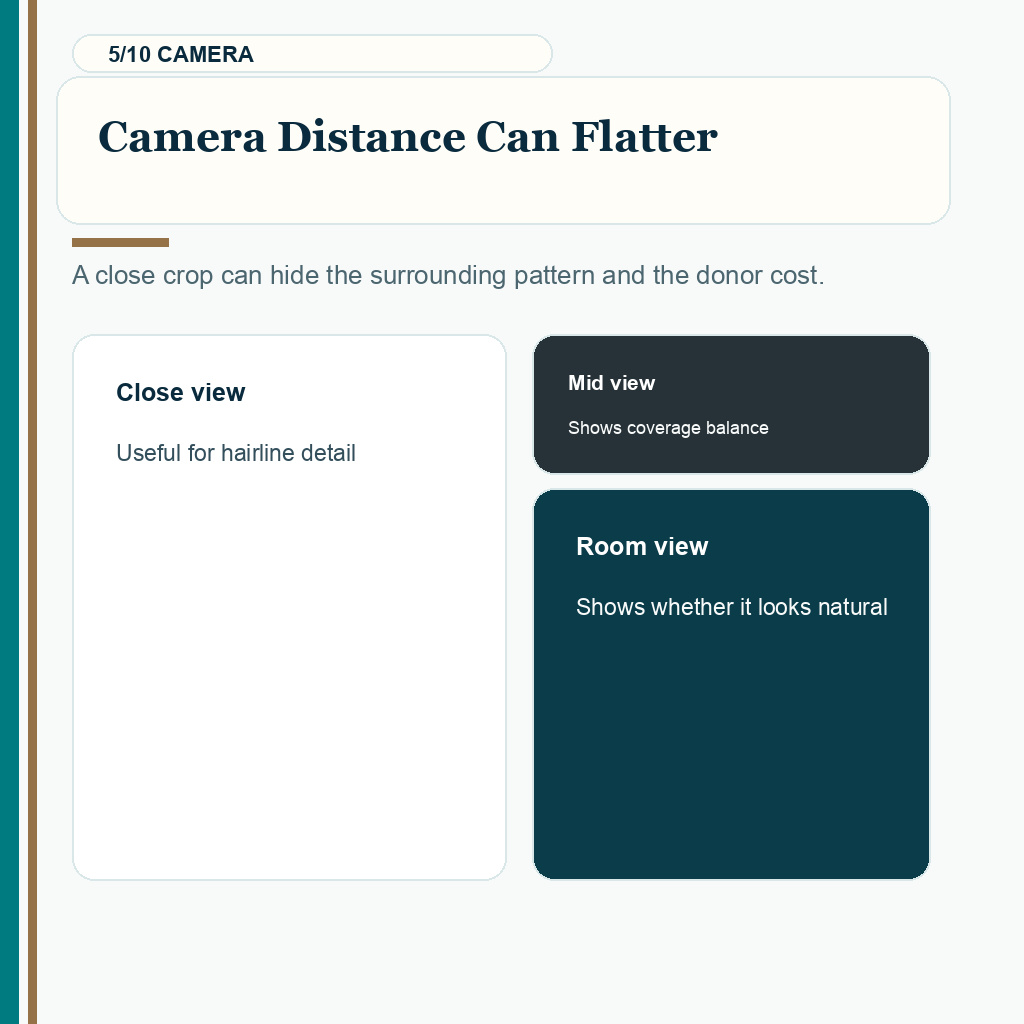
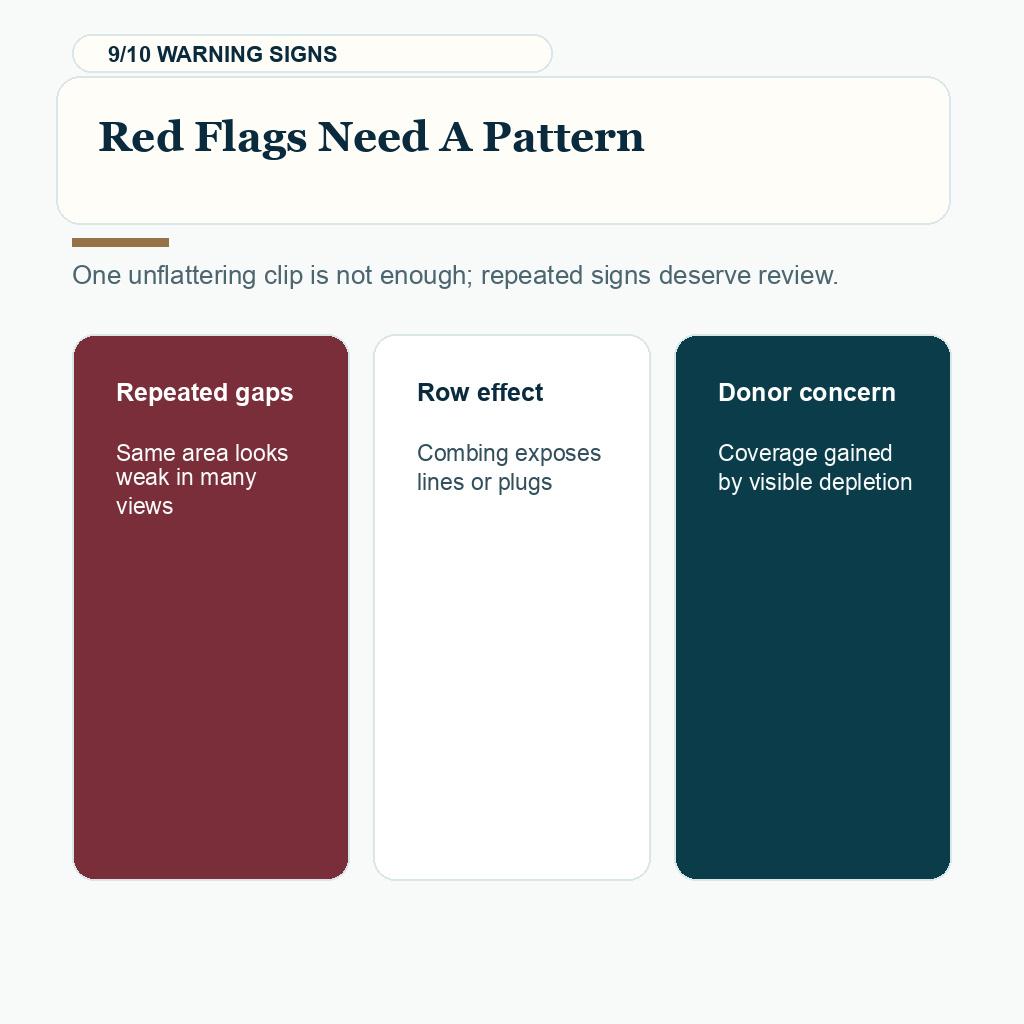
Use the 10 comb through video slides below to separate lighting, wet and dry hair, comb direction, camera distance, hair caliber, donor proof, timing, warning patterns, and what a useful review video should show. Swipe the carousel, use the arrows one step at a time, or choose a number below the image to jump to that point.

Weak looking comb through results
Sometimes it can be improved, but the cause matters first. If you are still early, maturation may be the answer. If native hair continues to thin, medication review may matter more than another surgery. If the hairline direction is wrong, repair planning follows a different path from adding density. If the donor area is limited, improvement may need to stay modest.
A weak comb through video at 12 to 18 months deserves a structured review. I look at the original photos, surgical plan, graft count by zone, current donor condition, hair caliber, scalp health, and whether there is ongoing hair loss. A result that fails every condition deserves a proper review. It does not deserve a quick promise of more grafts.
Some people can improve the appearance with a carefully planned small correction. Some may benefit from scalp micropigmentation when the issue is contrast or donor scar visibility. Some repair cases need a more cautious discussion, especially after overpacking or donor depletion, because bad hair transplant repair is often more limited than the first surgery.
Too much density can make the result worse
The densest possible result is a common request because people want the comb through video to look perfect. I understand the wish. But a hair transplant is not a contest to place the maximum number of grafts into the smallest area.
Very aggressive packing can risk graft survival, shock loss around native hair, and poor long term donor use. When too many grafts in one area are placed, density can become harmful because the plan is too aggressive.
A good comb through result is not always the one that looks thickest in a short clip. It is the result that still looks natural when the hair moves, when you age, and when future hair loss is considered.
Using videos to track your result
Use videos as records, not as a daily verdict. If you film every day under different light, with different hair length, and from different distances, you will create anxiety rather than clarity.
A consistent monthly record is more useful. Use the same room, the same light, the same hair length when possible, the same angles, and no fibers. Take front, side, top, and donor views. Add one slow comb through clip if it helps. Then compare month to month, not morning to evening.
Make the camera position repeatable when you record the crown or donor area by yourself. Use a small tripod, a shelf, or a stable selfie stick with a timer instead of holding the phone at a new angle each month. Mark where you sit or stand, keep the lens height and distance similar, and check that the whole area is inside the frame before you move. If another person records it, show them the previous view to match. This does not turn a photo into medical proof, but it keeps camera drift from looking like a density change.
Do not let videos make you obsessive. If the result bothers you, send a consistent set of photos and one clear video to the clinic. A surgeon can read a structured record better than a collection of panic clips taken under every possible light.

A useful follow up video record uses the same setup, a steady interval, and one clear clip instead of daily comparison.
A comb through video needs the whole case
A comb through clip can show movement, lighting, and how hair separates, but it cannot prove density by itself. The same video looks different when donor capacity, hair caliber, graft distribution, age, and original area size are known.
Before surgery, the video helps only if it shows useful angles and donor condition. After surgery, timing matters. For repair, the original record and donor photographs may matter as much as the recipient clip.
A clear continuous result clip still does not establish who performed the surgery.
A natural transplant is planned for ordinary light, wet hair, short hair, and future thinning. A flattering video is useful evidence, but it should never become the whole surgical plan.
Read this review excerpt
We also had a levelled conversation about my hairline and results I could expect based on my donor density area.