



Low Density at Six Months Needs Context and Review
At six months after a hair transplant, the most common worry is simple. You can see hair, but it still looks thin. The hairline may be present, but not yet frame the face with the strength you expected. Under harsh light, wet hair, or a close phone camera, the result can look weaker than it feels in normal life.
If the main worry is actual hair fall during this window, the month 6 to 8 shedding review is the more specific way to separate cycle change from a true density problem.
That pattern is different from ordinary low density if the six month result was improving and then looked thinner. I place it with shedding, medication timing, native hair stability, and repeated photo comparison before repair talk starts.
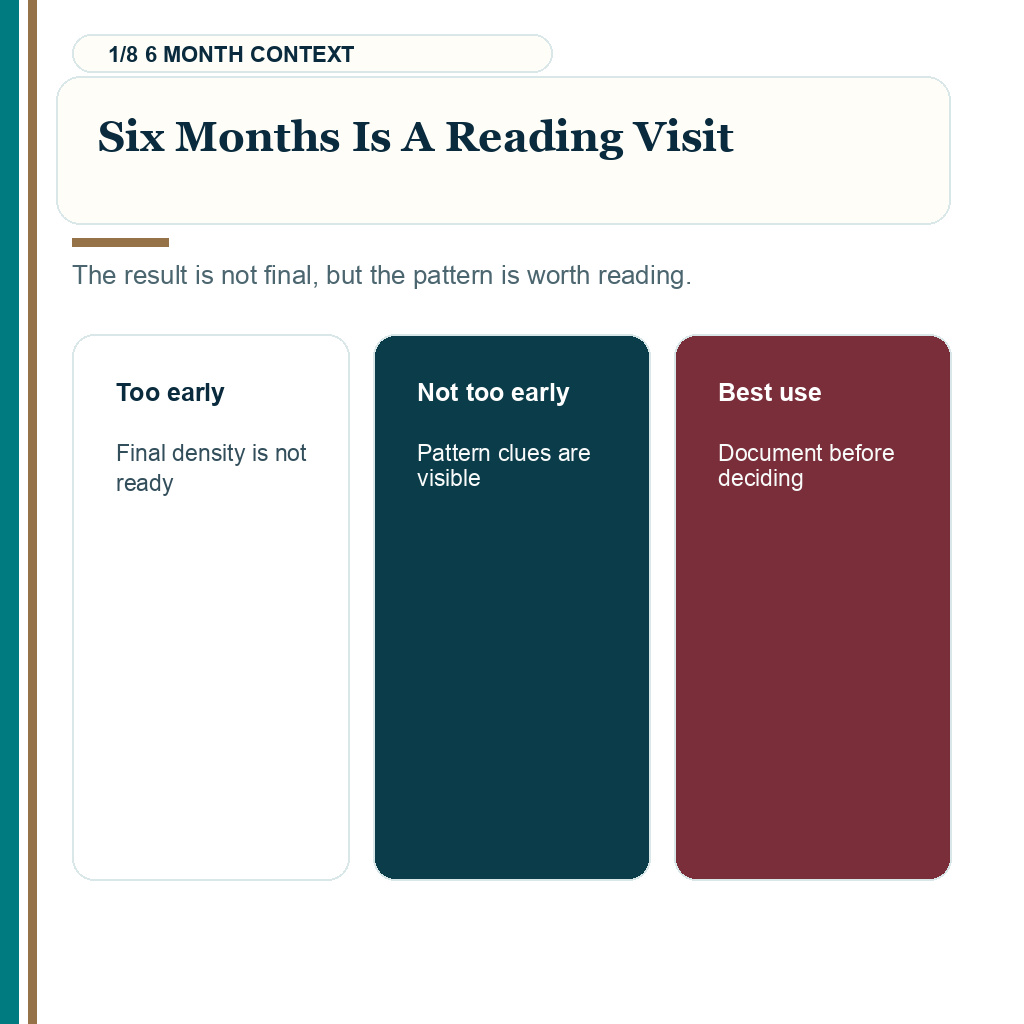
Six months is not the final density point. It is also not a month to ignore. I treat month six as a pattern review visit. Enough time has passed to see direction, early coverage, healing, and documentation quality, but not enough time to call every thin area a failure or rush into repair.
Growth activity and final cosmetic density are different things. You may have new hairs appearing and still not have the final thickness, length, texture, or styling control. The six month decision is documentation first, not surgery. You need fair comparison, clean photos, and a realistic plan for the next few months. When growth activity appears only as soft small hairs, interpreting baby hairs after a hair transplant can keep the review more precise. The part line and combing direction should stay the same too.
Do not pull a small hair to check graft survival. The resistance of one hair cannot show what is happening beneath the skin, and a pull test adds avoidable irritation without answering the real concern. Compare the whole treated zone in matched photographs and review the surgical record and recovery course instead.
Judge the same area in the same conditions before deciding it is thin. Wet hair, flash, a short trim, and a new part can make month six look worse than it really is.
Six months is not the final density point
Six months is too early to judge final density after FUE, including DHI style implantation. Many transplanted hairs have appeared by this point, but shaft caliber, length, texture, and styling control can still improve. Six months is a progress review, not a final verdict. The difference between a thin looking month six and a stronger month nine or month ten can be very real.
The earlier timeline also matters. If you were worried about low density at 4 months, month six may already look more organized. If you were still in an uneven stage at the month five hair growth check, the sixth month can show whether the result is moving in the right direction. It is a checkpoint, not the finish line.
Reasons density can still look thin at six months
Density can look thin at six months for several reasons. New hair may be short. Some shafts may still be fine. Hair can grow at different speeds across the hairline, temples, midscalp, and crown. If your hair has high scalp to hair contrast, you may see scalp between hairs even when growth is present. Fine hair also gives less visual coverage than coarse hair with the same graft number.
Lighting can exaggerate the problem. Daily mirror checking, flash photos, wet hair, or hair pulled backward can expose gaps that are less visible during normal movement. I look carefully at harsh light, wind, and wet hair because the same transplant can look very different depending on test conditions.
A weak photo is evidence to review, not proof that growth is over or that repair is already the next step. The pattern across many photos matters more than the most upsetting image.
For a mid scalp concern, I also separate direct light from daily light. Direct light can expose a developing area more sharply, while daily light shows whether that weakness changes how the result looks in ordinary life.
Visible signs I expect by month six
By month six, I expect to see the outline of the plan. The hairline position, general zone coverage, early direction, and whether grafts are appearing in the intended areas should be visible. The result may still lack body, but it should not feel completely disconnected from the surgical plan. Do not compare month six density only with the immediate after surgery dot pattern. Those dots show placement, not mature cosmetic coverage.
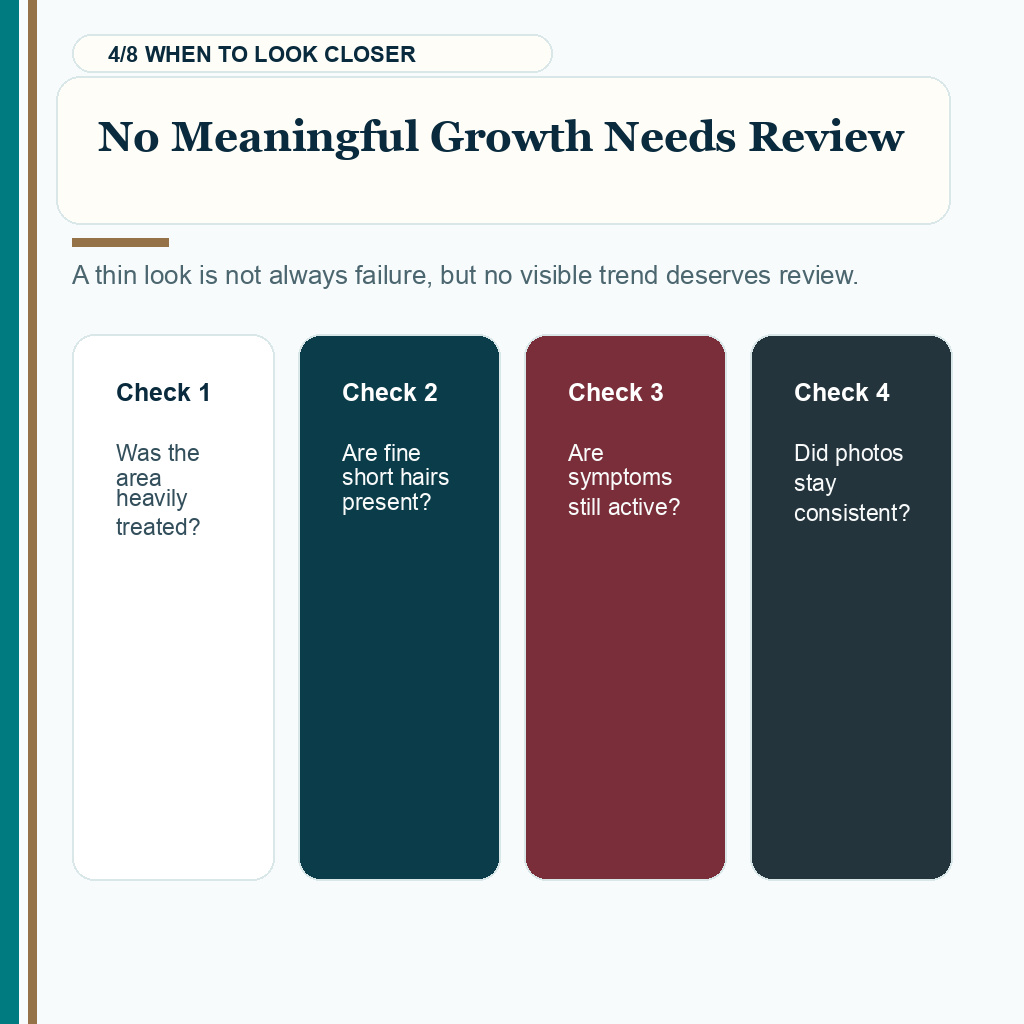
If nothing meaningful is visible at six months, the case deserves closer review. That review does not immediately mean repair. It means checking the surgical record, graft count, treated zones, healing history, shedding episodes, medication changes, and whether the photos are fair. I also want to know whether the empty looking area is truly empty or whether very fine, short, light catching hairs are present but not yet giving cosmetic coverage. Month six is early for final density, but it is late enough to organize the review, especially whether the weak zone was heavily treated, lightly blended, or left for a later stage by design.
A six month review is only useful when the original treated zones and graft number are part of the context. The same photo means different things after a small hairline case than after a wide crown and midscalp plan.
Photos can mislead a six month density review
Phone photos are useful but unforgiving. A close camera angle can make scalp look wider. Wet hair can collapse coverage. Bright overhead light can remove the natural shadow that creates visual density. A short haircut can remove layering. A long top combed forward can hide a weak midscalp. Portrait mode, beauty filters, sharpening, and different zoom levels can also change the apparent density, so simple unfiltered photos taken from the same distance are more reliable.
Add one normal distance photo to the close views. A close image helps inspection, but it should not be the only picture you use to judge how your face is framed.
I value motion and repeatability. A clear hair transplant comb through video can reveal how the hair behaves when it moves, while before and after photos need similar angles, hair length, and lighting to mean anything. Without that consistency, you may compare a harsh six month image with a polished promotional image and feel misled.
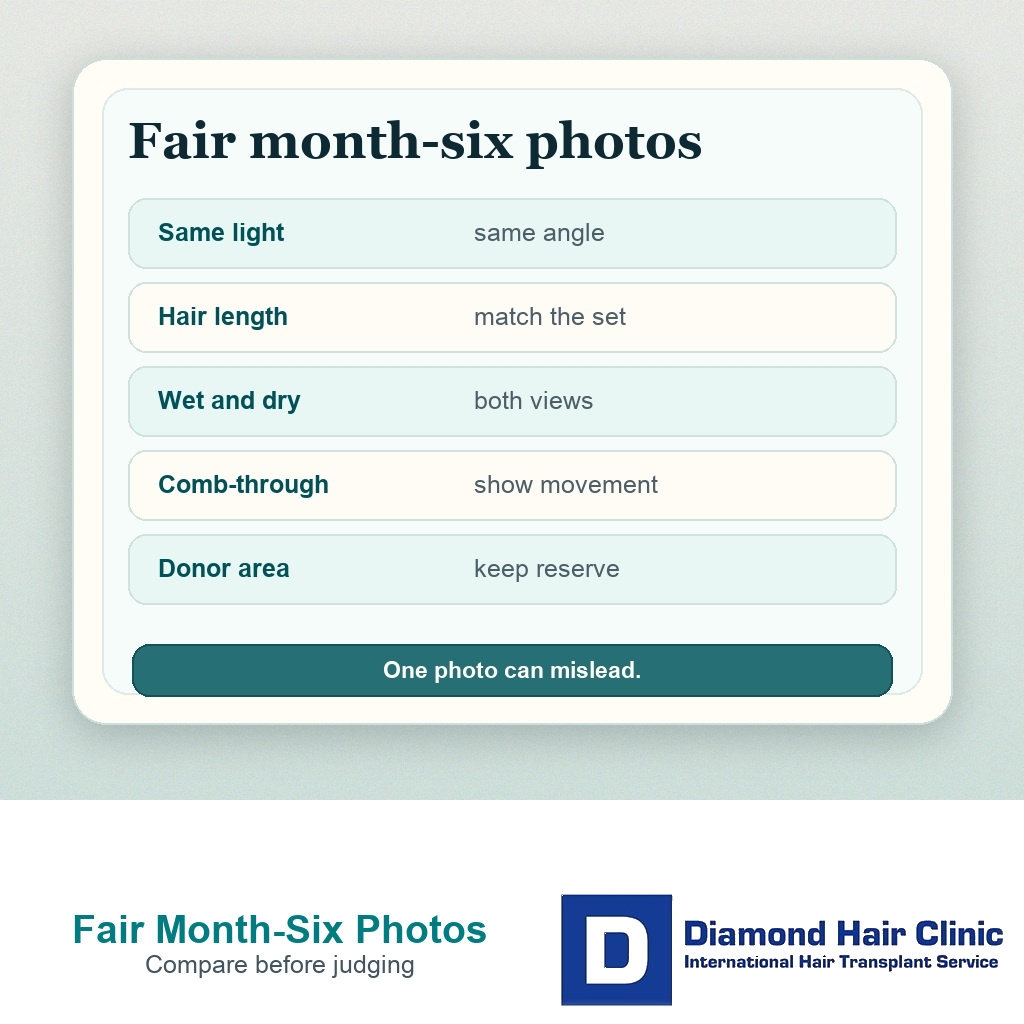
Six month density review needs repeatable photos, not a single bathroom light image.
Six month thinness that needs closer review
Closer review is reasonable when a zone has almost no visible growth, when one side is far behind the other without a clear explanation, when the hair direction looks unnatural, when the hairline edge looks pluggy or gapped, or when redness, tenderness, scaling, crusting, itching, pain, or pimples continue in a way that does not fit normal healing. Sudden worsening after earlier improvement also deserves review, because that pattern may point to shedding, inflammation, medication change, or native hair loss rather than simple slow growth. The question is not only “is it thin?” but whether the pattern matches the surgical map and the month six stage.
One slow patch at six months needs context, not an instant repair plan. I compare whether that area is changing over the next reviews, whether the skin there had more scabbing or irritation, and whether the rest of the transplant is moving forward.
A thin appearance can also come from planning limits. A low graft number across a wide area cannot create dense coverage. Fine hair cannot behave like thick hair. The discussion about why some hair transplant results look sparse applies strongly at month six because you may be judging growth when the real issue is hair caliber, area size, or expectation.
Concern at six months is valid, but the cause must be separated before any new surgery is planned.
Native hair loss and shedding can affect density
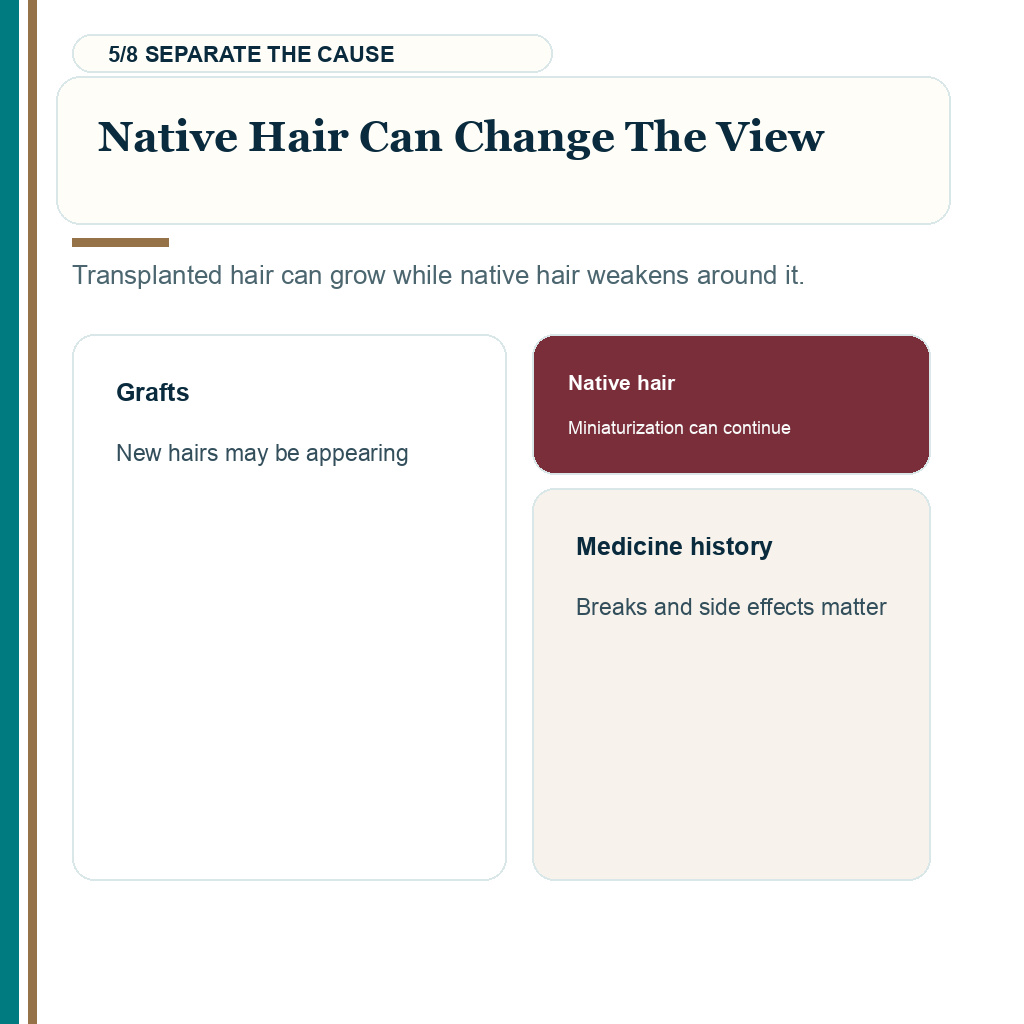
Transplanted hair can grow while native hair around it continues to weaken. If you had diffuse thinning, weak midscalp hair, or unstable crown hair before surgery, month six density can look disappointing even when grafts are appearing. The transplant may be adding hair while surrounding native hair is losing strength.
Before surgery photos matter here. If the area behind the hairline was already weak, the six month image may show a mixture of new growth and continuing miniaturization. Hair loss after a hair transplant can continue in surrounding native hair. Surgery can move resistant donor hair, but it does not freeze every non transplanted hair. Medication breaks, new stressors, illness, rapid weight change, or a recent shedding episode should be mentioned before assuming the transplant itself has failed.
Hair caliber and texture change the density impression
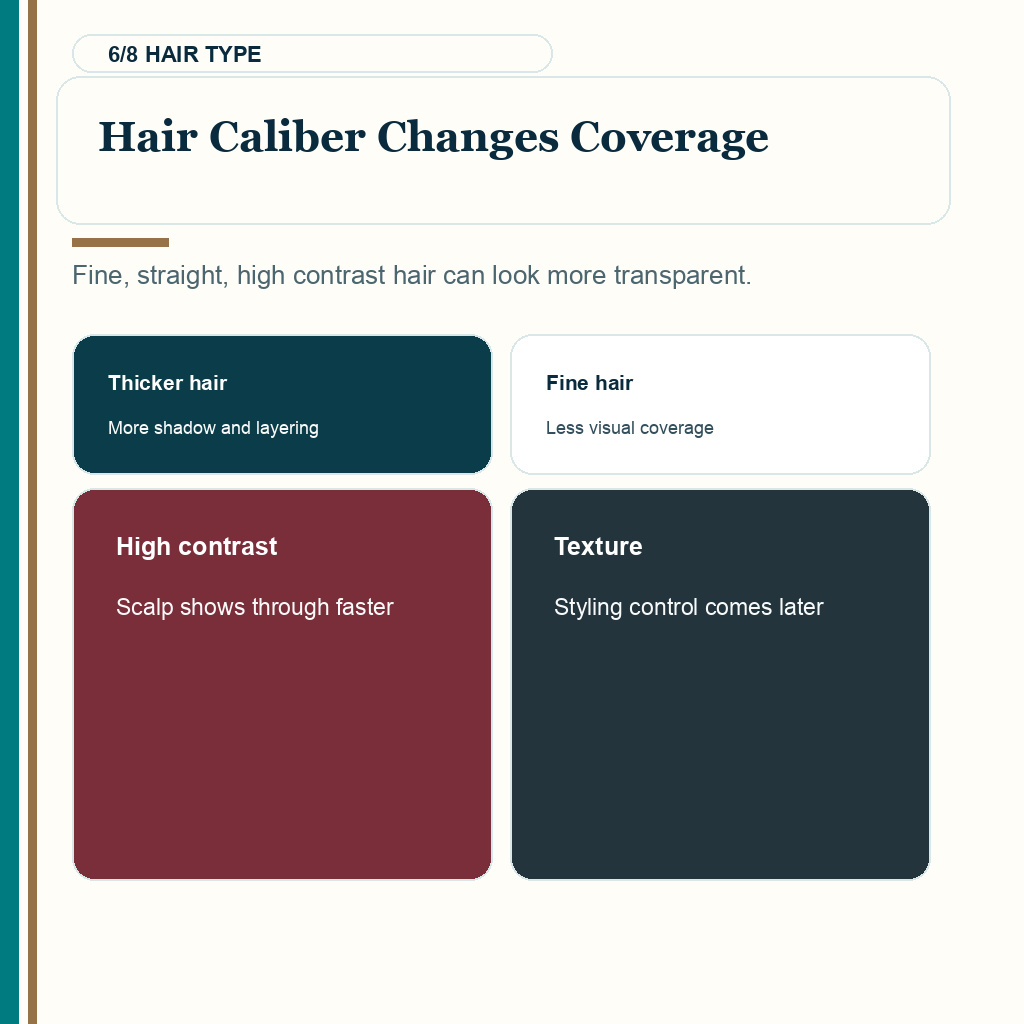
Two patients can receive a similar graft number and look very different at six months. Coarse, wavy, low contrast hair gives stronger coverage. Fine, straight, dark hair on pale scalp often looks more transparent. Curl, shaft diameter, scalp color, and hair to skin contrast shape the cosmetic result as much as raw graft numbers.
Month six can also be awkward because hair may be long enough to reveal direction but not long enough to layer well. Texture may be wiry or uneven. Styling may still be difficult. Cosmetic density is not just how many hairs have emerged. It is how those hairs behave together.
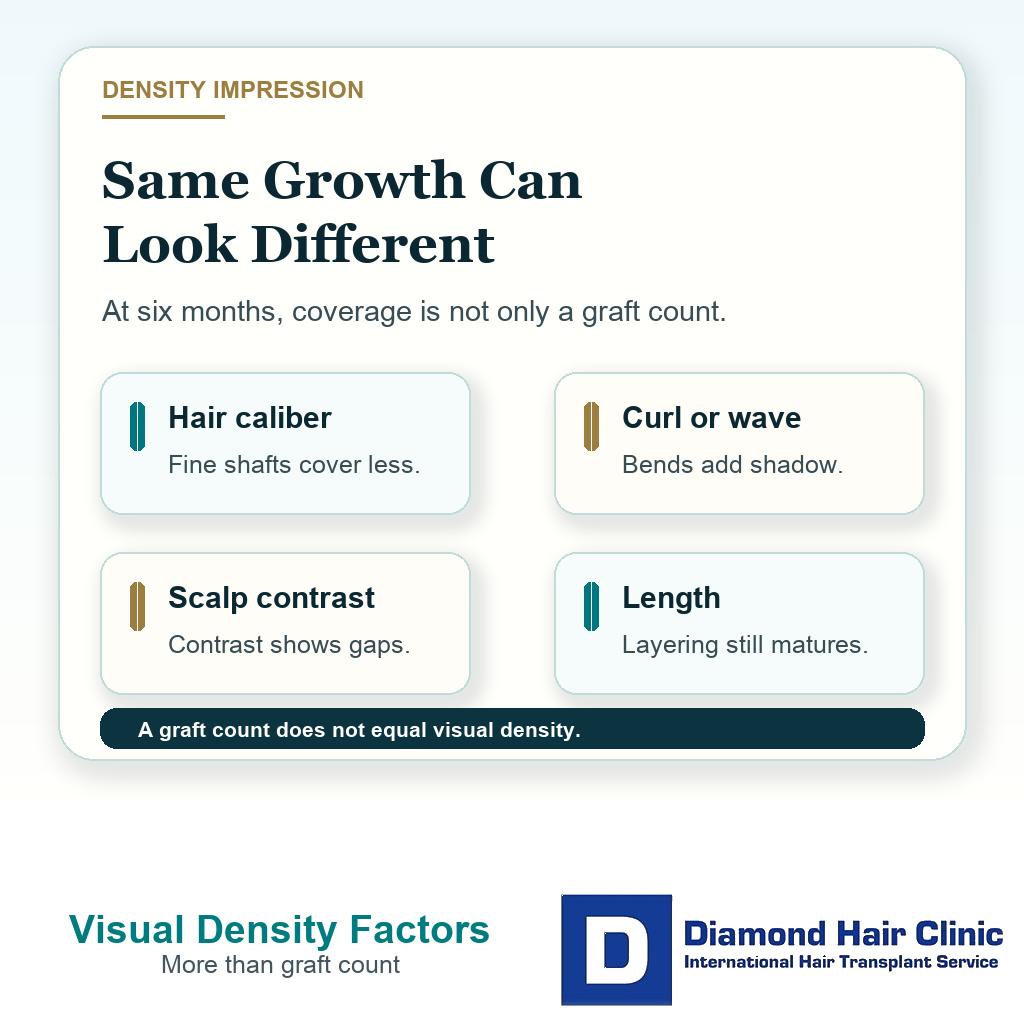
At six months, the same graft growth can look different depending on hair caliber, curl, scalp contrast, and length.
Repair or a second session is usually too early
For most patients, no. Six months is too early for most repair decisions. You may need a review appointment, better documentation, medication discussion, or another review in two or three months, but planning another surgery too early can waste donor reserve and create a second mistake on top of an unfinished first result. I would not pay a repair deposit at this stage unless a clear urgent problem has already been diagnosed. Before any repair plan, separate late maturation, poor growth, native hair loss, design error, and photo conditions. Each one leads to a different answer.
After a recent second procedure, a thin area does not prove that the clinic avoided it because another pass would damage the hairs already there. A proper review identifies how long it has been since the latest procedure, the donor reserve that remains, and the plan for that area. Those details give you a sounder basis for deciding whether another procedure is sensible.
There are exceptions. If graft direction is clearly wrong, if the hairline design is visibly unnatural, if the donor area shows damage, or if there is an active skin or medical issue, I need to assess it without delay. But even then, the next step is diagnosis. A 7 month thin hair transplant review or month eight hairline check gives a stronger base for decisions than month six alone.
Do not spend donor reserve to answer a question that time and documentation can answer better.
Review before reassurance
Reassurance only has value when it is based on evidence. Before saying that everything is normal, I need to review the original diagnosis, graft count, recipient zones, hair caliber, density plan, donor area, healing course, and the area that was actually treated. A generic timeline reply may feel comforting for one day, but it does not solve the uncertainty. A useful review should leave you with the next observation date, what to photograph, and what finding would change the plan.
I also check whether the comparison is fair. Preoperative hair length, wetness in the month six photo, camera distance, medication changes, and shock loss can all change the reading. A careful month six review can guide the next observation period without pretending the result is already final.
Sending a useful six month update
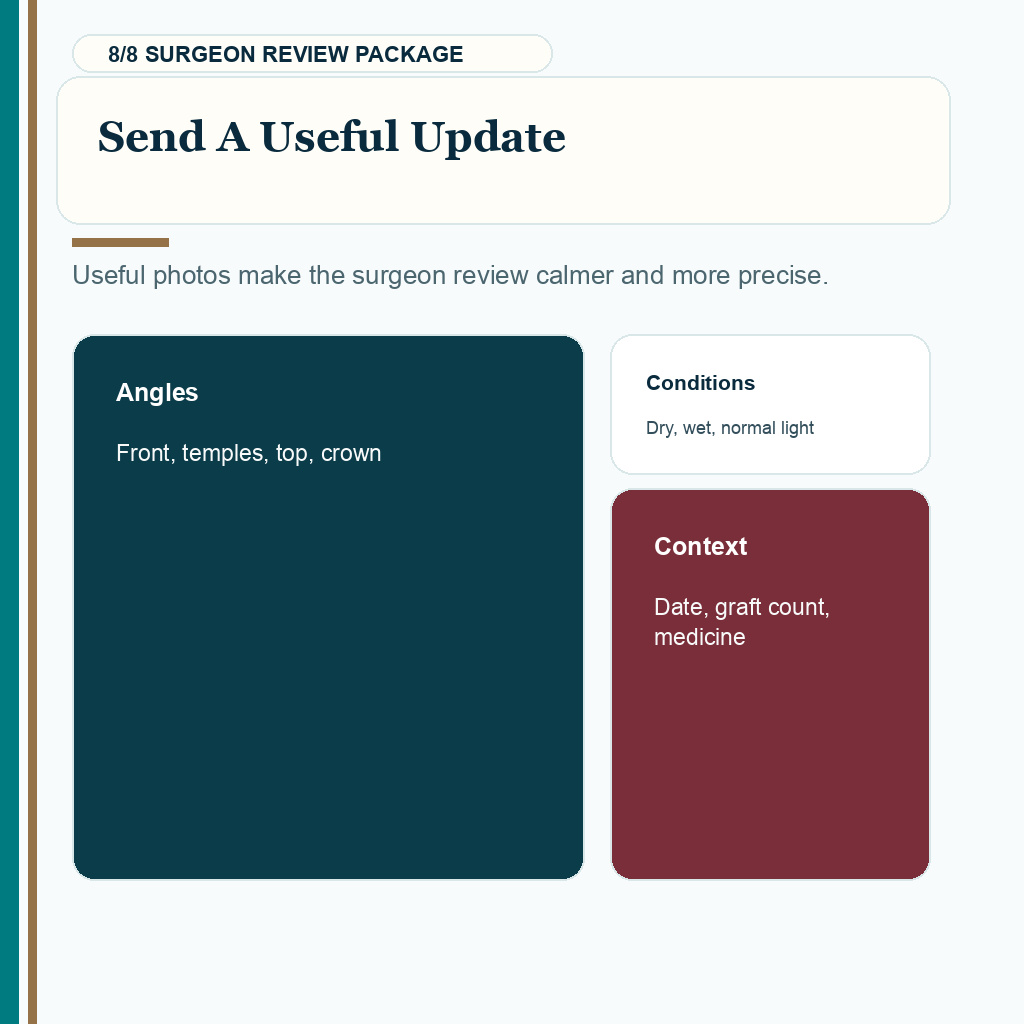
Send front, temple, midscalp, crown, and donor photos. Use dry hair and wet hair. Keep the same light, same distance, same angle, and similar hair length when possible. Include one short comb through video. Add one close donor area photo and one photo with the hair parted through the weak zone, because those views help separate coverage from styling. Mention the surgery date, graft count, areas treated, medication changes, shedding episodes, scalp symptoms, and the exact zone that worries you most.
The worst image alone can mislead at six months. So can the best styled image. A fair six month update shows normal room light, harsh light, wet hair, dry hair, and movement. A consistent monthly photo record gives me a chance to answer the real concern instead of reacting to a single frame.
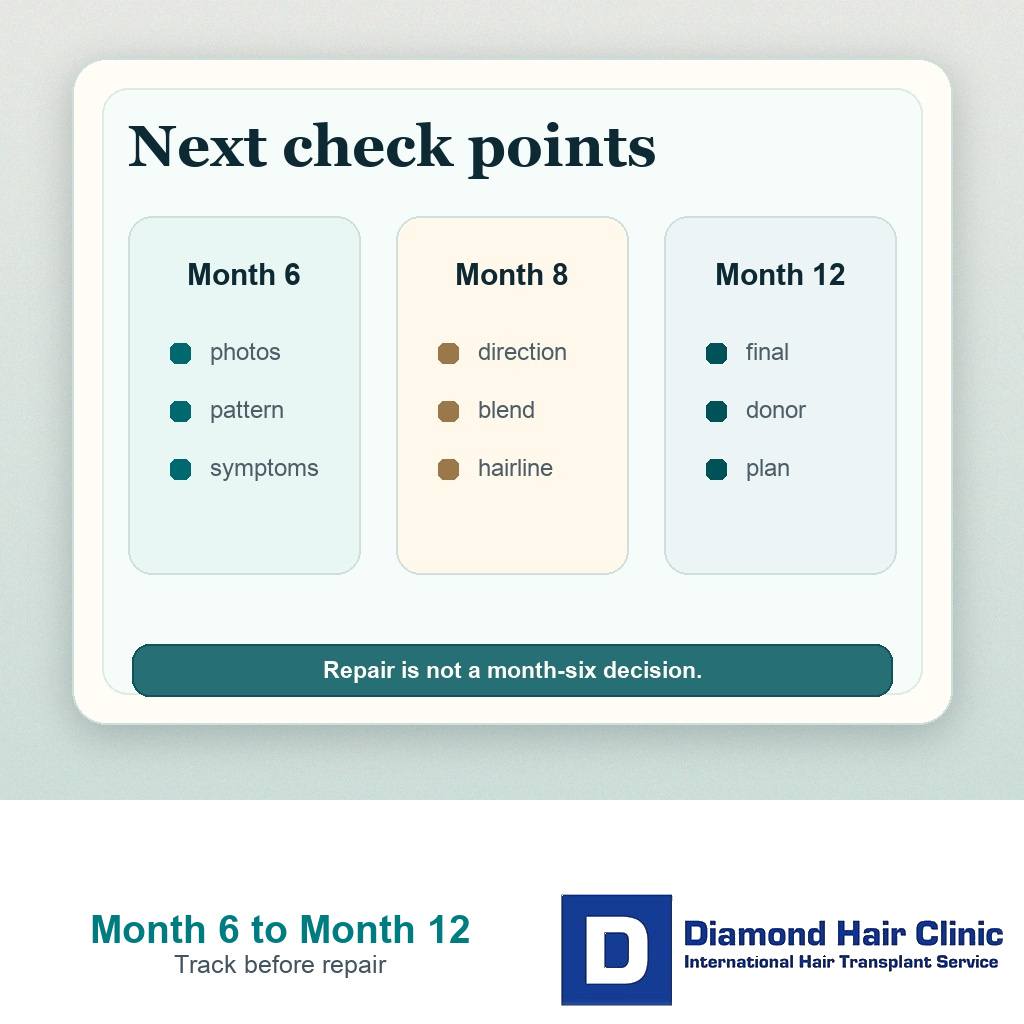
At six months, the next plan should protect donor reserve while tracking how density develops.
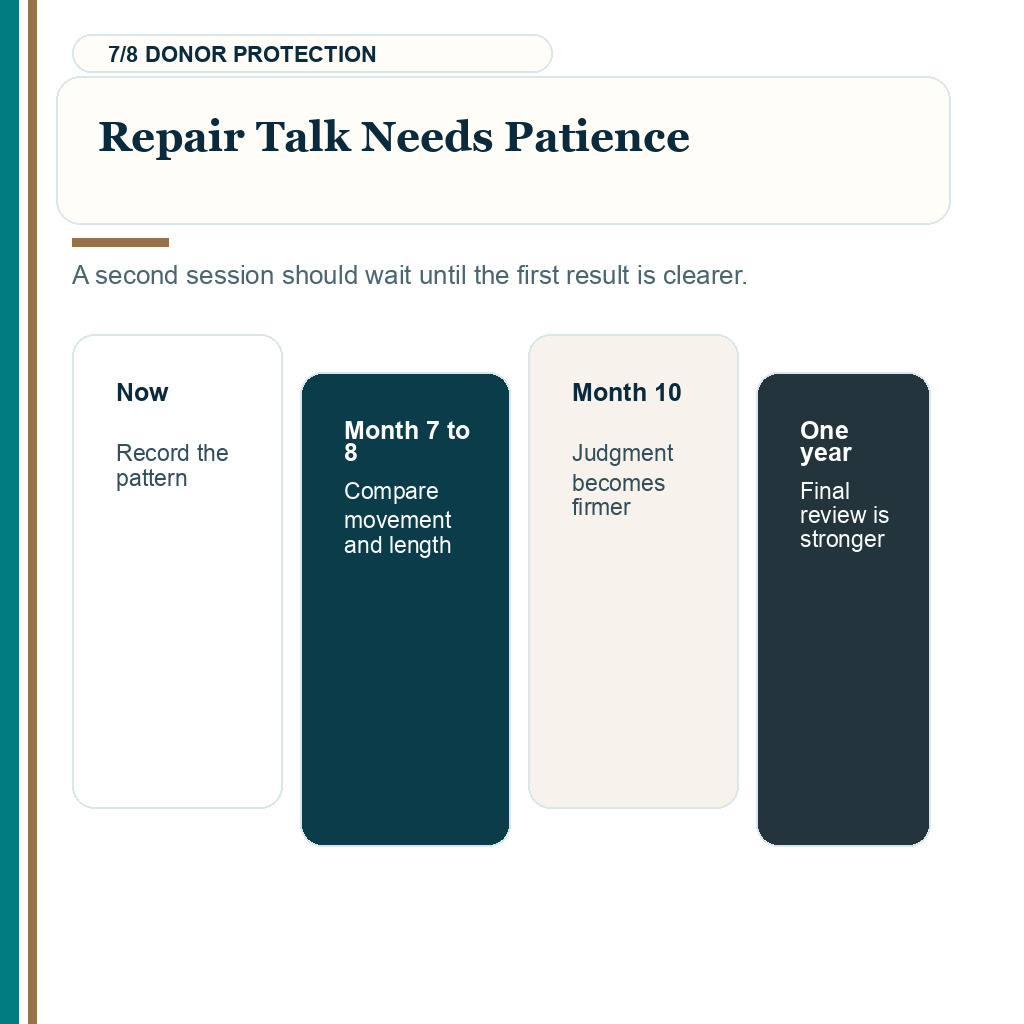
Use the 8 six month evidence slides below to read density by timing, photo conditions, visible growth pattern, native hair changes, hair caliber, repair timing, and the update package a surgeon needs. Swipe the carousel, use the arrows one step at a time, or choose a number below the image to jump to that point.


Reading the next few months without panic
Month seven and month eight often give a clearer answer than month six. Hair length improves, more shafts become visible, and the weak areas either begin to blend or remain clearly behind. By month ten, density judgment becomes firmer, and by one year the review is based on better evidence.
That sequence is why month six anxiety should not jump straight into repair. The one year FUE result review is the stronger moment for final judgment. If another procedure is needed later, smaller staged hair transplant sessions may protect the donor area better than an emotional large session planned too early.
At six months, pattern matters more than one photo
At Diamond Hair Clinic, I take six month concern seriously without treating it as a final verdict. I listen to the concern, but the decision still has to stay medically disciplined. A useful review looks beyond whether hair has appeared and checks pattern improvement, photo fairness, native hair stability, and donor protection for the future.
An improving pattern gets documentation and recheck. An unclear pattern needs better photos and planned follow up. A concerning pattern needs investigation rather than dismissal. Early repair planning is risky when the result is still maturing and the donor supply needs protection.
Six month density can still improve. It can also reveal warning signs. The difference comes from reading the pattern carefully, not from judging one photo, one mirror, or one anxious day.
Read this review excerpt
We also had a levelled conversation about my hairline and results I could expect based on my donor density area.