



Hair Transplant Results From Hair Like Yours
Before you trust a clinic gallery, the examples need to be close to your own hair, donor area, loss pattern, and goal. Hair texture, shaft thickness, skin contrast, donor strength, age, sex, medication history, and repair history all change what a hair transplant can realistically look like. A dense result on coarse dark hair does not predict the same visual effect on fine light hair. A strong frontal hairline result does not answer a crown or diffuse thinning problem.
Age matching is part of that comparison. If you are reviewing hair transplant results in the 40s or 50s, compare donor strength, crown size, health context, and coverage goals, not only graft numbers.
Before choosing a hair transplant clinic, I want the comparison to become more specific. A strong result is not just a good looking photo. It is a case close enough to your hair, donor, contrast, and goals to make the plan realistic. Similar does not mean identical, but the comparison should match the details that change density, naturalness, and donor safety.
Similar cases before clinic choice
Hair transplantation is not judged only by graft survival. You judge the result in a mirror, under light, with your own hair color, hairstyle, forehead shape, donor limit, and future hair loss risk. Two clinics can show beautiful photographs, but the important question is whether those photographs answer the person sitting in front of us.
Add your ordinary life to the comparison. The goal may be less styling time, more freedom with haircuts, or feeling comfortable under bright light, in wind, during exercise, or around water. A result photo cannot prove those changes, but the clinic should show enough angles and hair states to explain whether the plan is likely to support them.
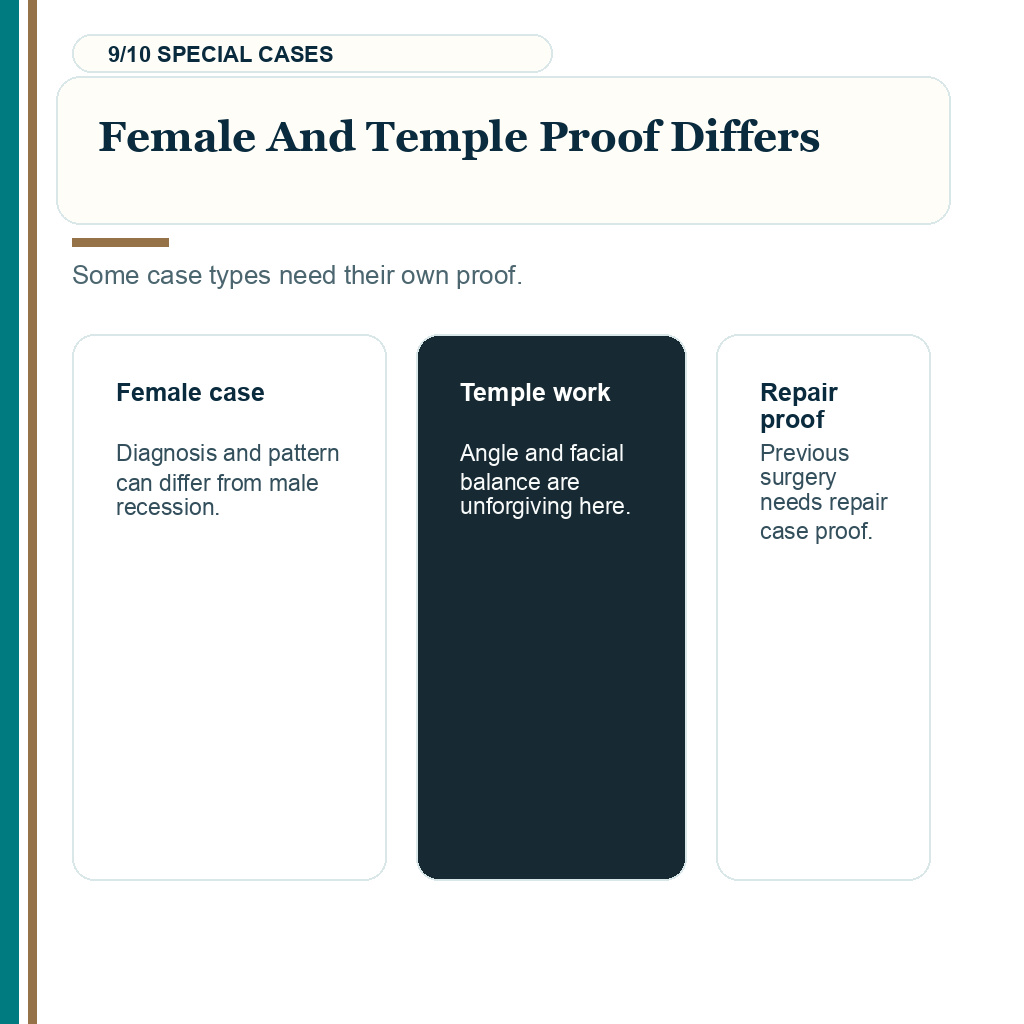
A young man with coarse wavy hair, low contrast between hair and skin, and a strong donor area may look fuller with a different graft distribution than a man with fine straight hair, pale skin, and a wide thinning pattern. A woman with temple recession or frontal thinning needs different proof than a male Norwood hairline case. A repair case needs repair judgment, not only first time results.
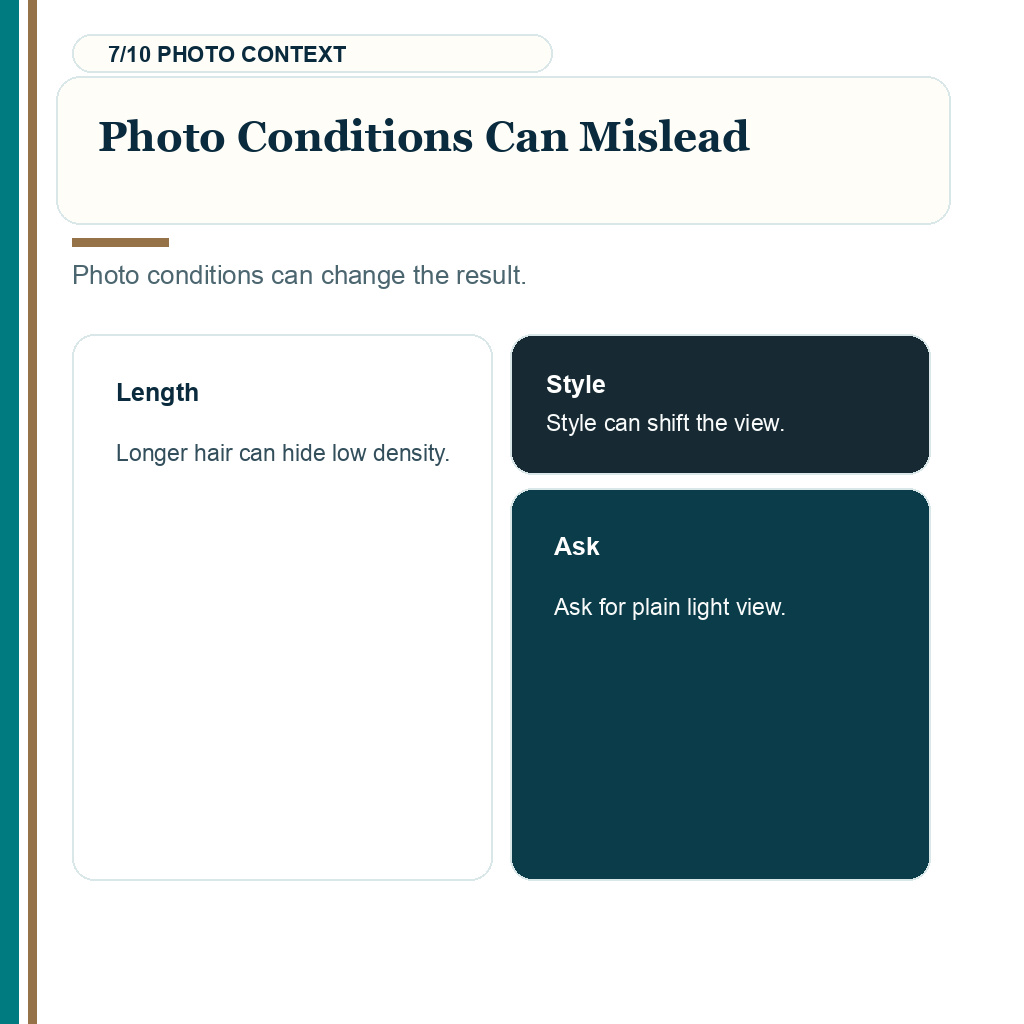
I use a result gallery as the beginning of the conversation, not the end. If the clinic cannot explain why a result is relevant to your case, the photograph is decoration. Hair transplant before and after photos need their own context because lighting, styling, hair length, and timing can make a result look stronger or weaker than it really is. Social media hair transplant results need another filter because popularity does not prove similarity to your case.
One close hairline photo is only one view. For planning, I want to see the donor area, normal hair length, ordinary lighting, and the starting pattern. A result gallery that hides the donor area leaves out part of the surgical tradeoff.
Make the mismatch part of the comparison. Donor reserve, hair and skin contrast, crown demand, and hairline ambition can make a similar looking photo less relevant to your plan.
A case comparison also needs names and dates. The clinic should identify the surgeon and team responsible for the result, when and where the operation took place, and who handled planning, extraction, recipient openings, and placement. Compare those responsibilities with the roles proposed for your surgery. The same clinic name or general system does not establish that the same people will perform those steps. A beautiful anonymous gallery is weaker than a smaller set of cases the clinic can explain in detail. One result can be an exception, so look across several comparable cases before deciding that a surgeon’s usual style fits you. Notice whether the same hairline shape, temple treatment, density pattern, or donor approach keeps appearing. Consistency can be reassuring, but the design still has to fit your face, hair type, loss pattern, and future donor plan.
A showcase hairline is more useful when the clinic can explain how the final shape was agreed. Separate what the patient asked for from what the surgeon recommended, what changed after discussion, and what was confirmed before surgery. Patient preference matters, but it should not turn the consultation into copying a photograph or accepting the clinic’s usual template. The final design still has to fit facial proportions, likely future loss, and donor limits.
Can a hair transplant make my hair look closer to how it used to?
A hair transplant can make the front look closer to the way you remember it, especially when the main gap is the hairline, temples, or fringe. It still does not put back every native hair that was lost. I explain this as rebuilding visual coverage from a limited donor supply, not turning the scalp back to an earlier age.
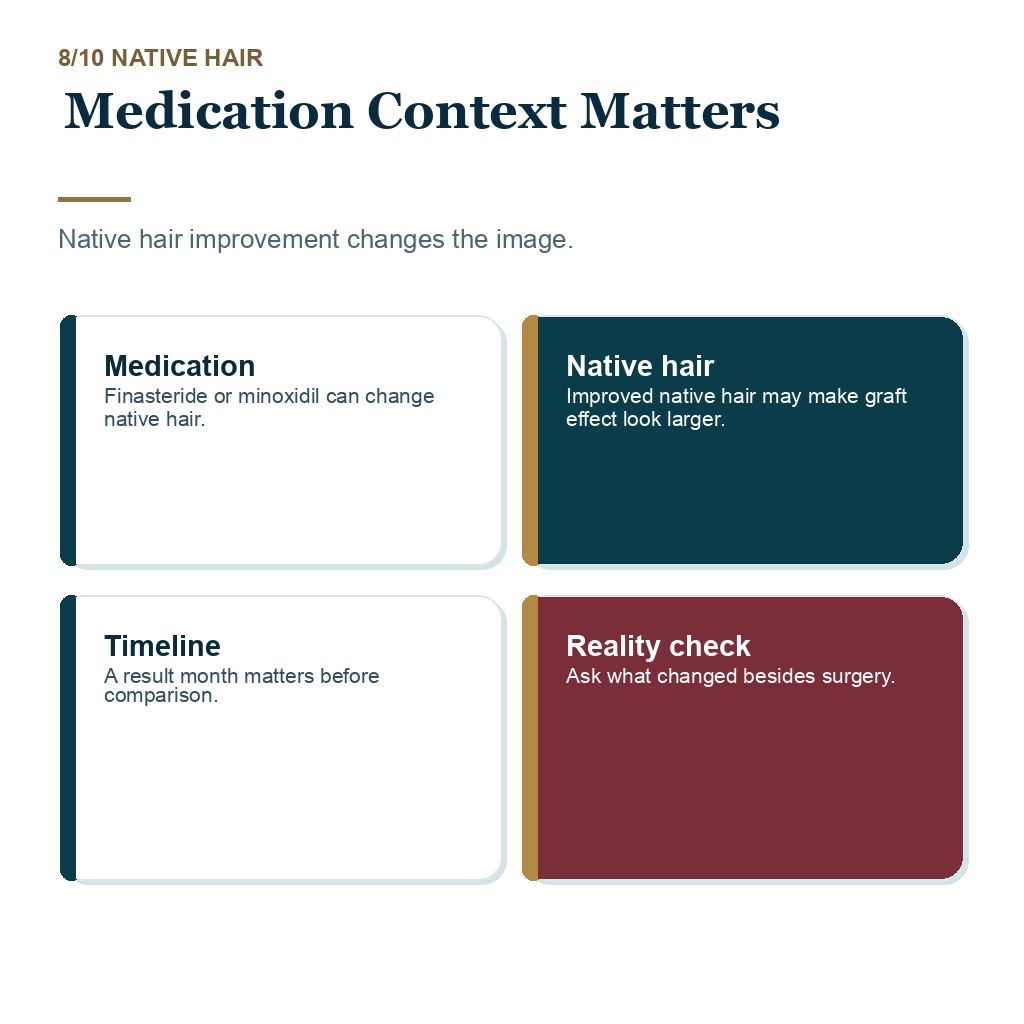
The final look depends on how much hair was lost, hair shaft thickness, curl, skin contrast, the size of the treated area, hairline design, and whether native hair can continue thinning after surgery. Medication may help selected patients hold the background hair, but it does not change the donor limit or guarantee that the new front will copy the old one.
Hair characteristics that need to match
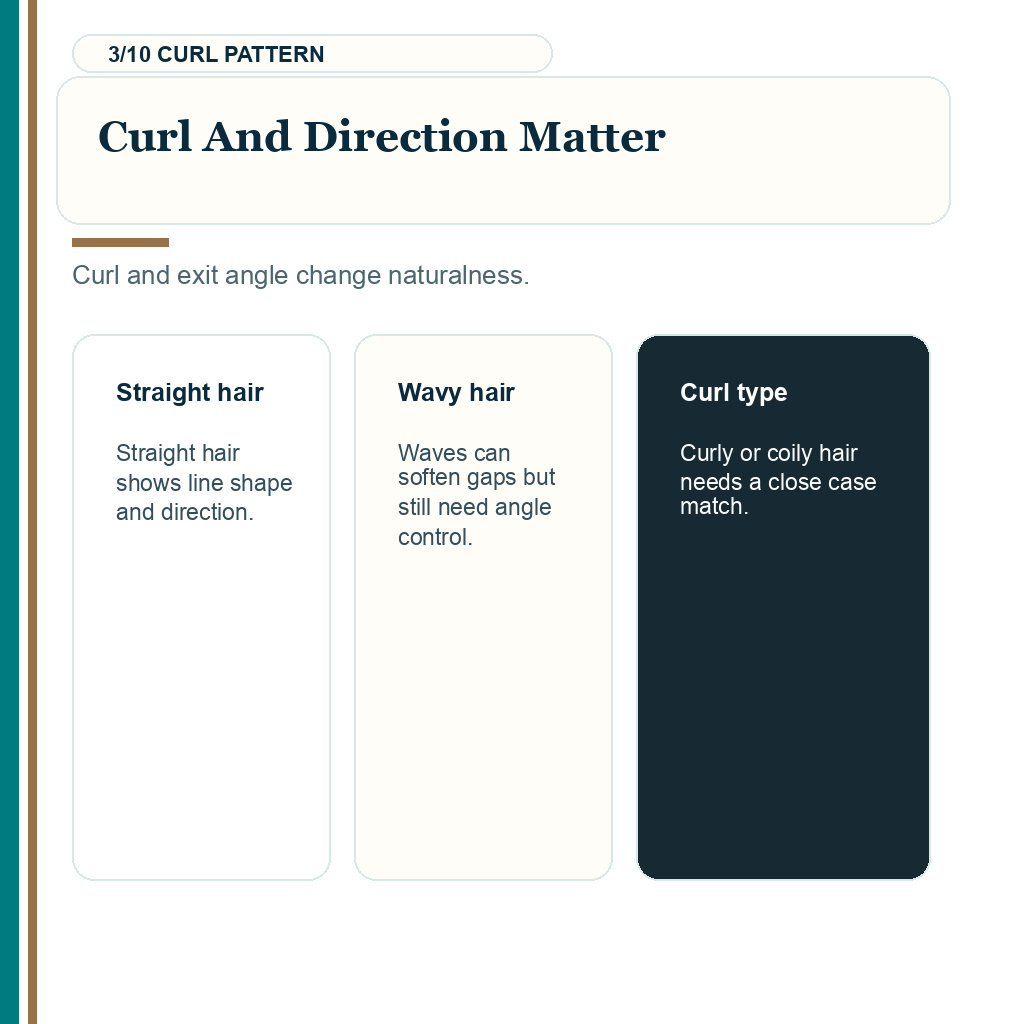
The most useful comparison starts with texture. Straight, wavy, curly, and coiled hair do not behave the same way after implantation. Curl can create coverage by bending over the scalp, but it also changes extraction, graft handling, angle control, and the way density is perceived. Hair shaft caliber matters as well. Coarse hair can cover more scalp with fewer visible gaps. Fine hair may need more careful distribution to avoid looking thin.
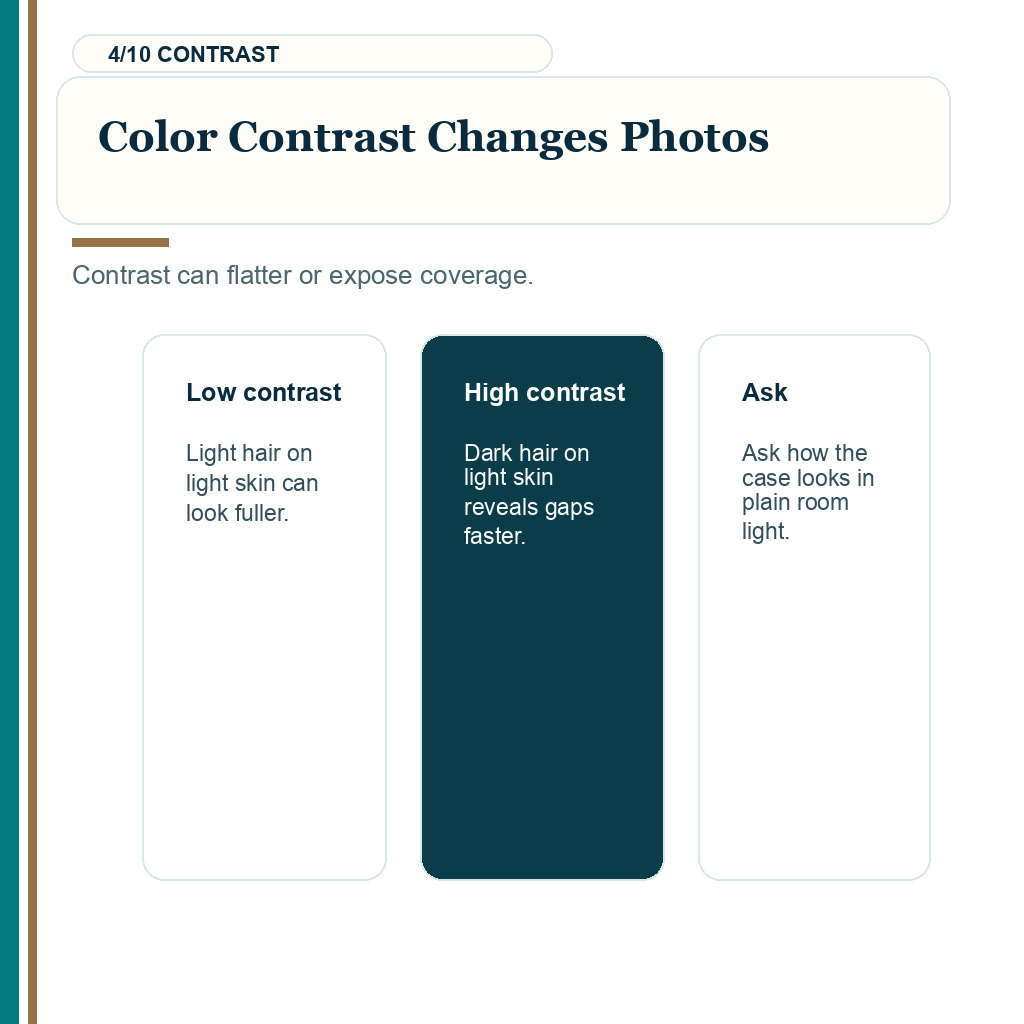
Color contrast is another major factor. Dark hair on light skin exposes every gap more clearly. Dark hair on darker skin, gray hair on light skin, or lighter brown hair on olive skin can create a softer contrast. That does not make planning simple, but it changes how many grafts are needed for the same visual impression.
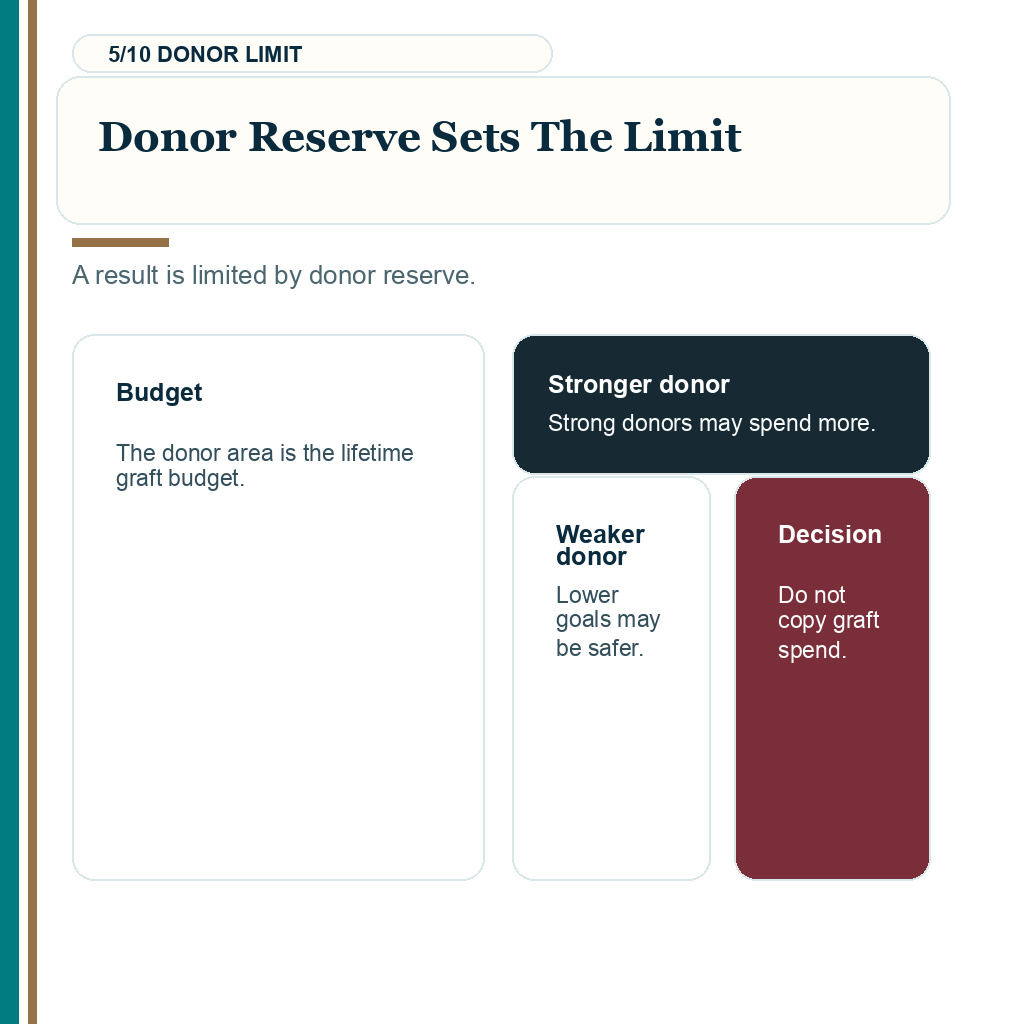
Donor reserve must also resemble yours. A result from a dense donor area cannot be copied onto a donor with low density, previous extraction, miniaturization, scarring, or a large future hair loss risk. Think of the donor area as more than a place to take grafts from. It is the reserve for the whole plan over time.
Graft numbers do not explain every result
Many people compare numbers first. They look at 2,500 grafts, 3,500 grafts, or 4,000 grafts. Numbers matter, but they are not the result. Graft number is not the result. A graft count means very little unless we know how many hairs each graft carried, where the grafts were placed, how large the area was, how thick the native hair was, and what the donor can safely support later.
The same 3,000 grafts can look dense in a narrow frontal zone and thin across a broad frontal, midscalp, and crown pattern. The same number can also look different when one person has coarse curled hair and another has fine straight hair. I do not want you to chase the largest number. I want the number to fit the design, donor safety, and future need.
If a result looks thin after a large graft count, the cause may be area size, hair caliber, contrast, growth percentage, styling, lighting, or overambitious planning. The question of why some hair transplant results look thin separates graft count from visible density.
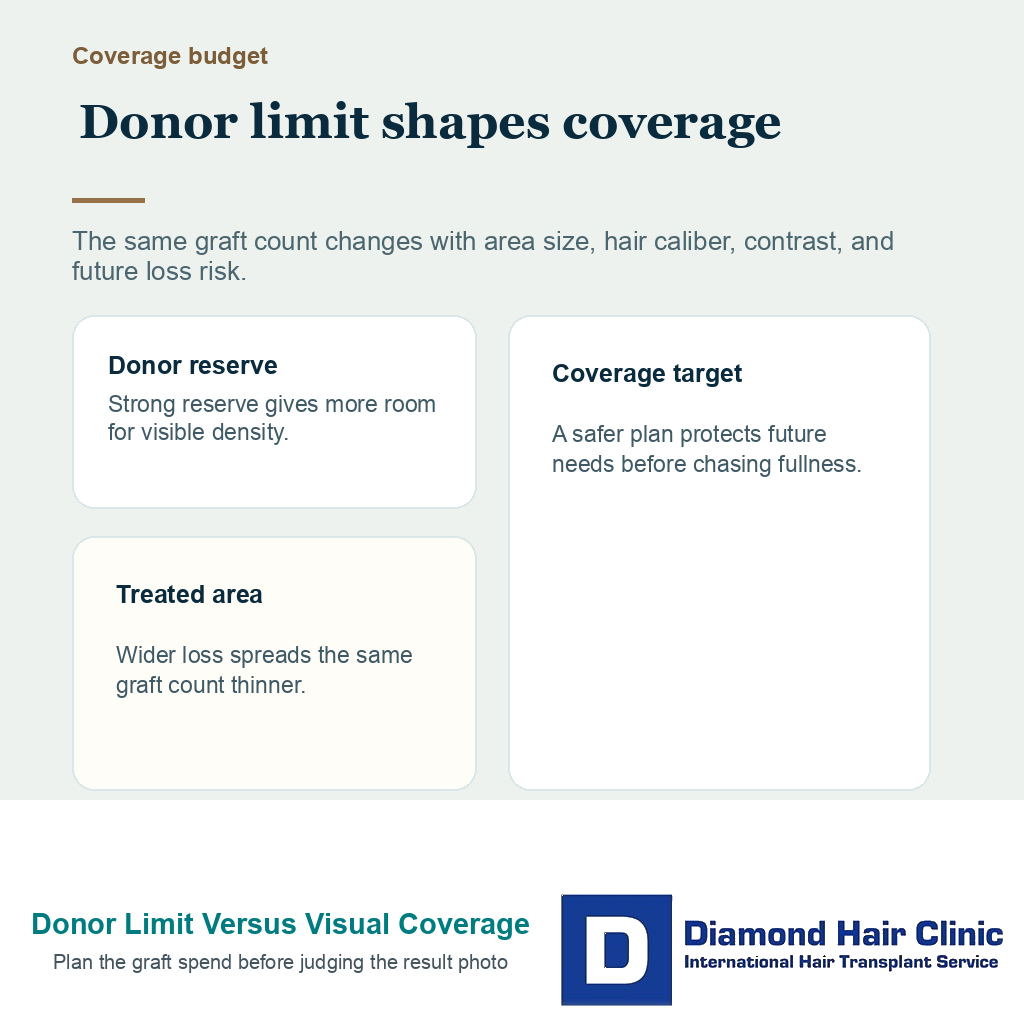
Donor supply, treated area size, and future hair loss risk shape how much coverage a graft count can create.
Curly, wavy, and Afro textured hair need separate comparison
Curly, wavy, and Afro textured hair can create excellent visual coverage when the plan is right. The bend of the hair may cover more scalp surface than very straight hair. But this advantage does not remove the technical responsibility. Curved follicles can be harder to extract safely. The exit angle, graft direction, and handling must respect the natural curve.
Texture changes both coverage and technical difficulty. A clinic that shows mostly straight hair cases may still be skilled, but coiled or very curly hair needs relevant examples. One attractive result is not enough. The important issue is whether the clinic understands how curl type changes extraction, placement angle, hairline softness, and donor preservation.
For coiled hair, Afro and curly hair transplant planning changes the comparison because follicle shape and curl behavior affect extraction, angle control, and visible coverage. The useful example is one where those technical demands resemble yours.
Skin tone and hair color contrast change the visual result
Contrast decides how visible the scalp is between hairs. This is one reason a result can look full in one case and transparent in another, even if the graft number is similar. A high contrast case may need more careful density strategy, softer hairline transition, and realistic discussion about crown coverage or future sessions.
Lighting can exaggerate this difference. A wet hair photograph under a bright light may reveal scalp that is hidden in normal dry conditions. A low light photograph can hide gaps. A result gallery is more reliable when it includes consistent lighting, hair length, and styling. A hair transplant comb through video can help because movement under light shows more than a still photograph.
Skin tone also affects hairline design. The front must look soft at social distance and under close inspection. A dense wall of grafts can look artificial on high contrast skin if the transition zone is not planned well. Good hairline design in hair transplantation depends on angle, irregularity, density transition, and careful density control.
Female hairline and temple cases need different proof
Female hairline work is often judged incorrectly when it is compared with male frontal restoration. The aesthetic goal can be different, the parting pattern can be different, and the background hair loss may need medical evaluation before surgery is planned. A woman with diffuse thinning needs a different discussion from a man rebuilding a receded front.
If a clinic shows only male hairline results, that does not answer a female temple, forehead lowering, or diffuse frontal thinning question. I want to see cases that match the shape, density problem, and long term diagnosis. For many women, the most important decision is whether surgery is appropriate at all, not only where the new hairline can be placed.
Female hairline hair transplant planning has its own differences. Here, the key principle is to avoid borrowing confidence from the wrong gallery. A result from a different sex, pattern, or diagnosis can be attractive and still not be relevant.
Repair patients need repair evidence
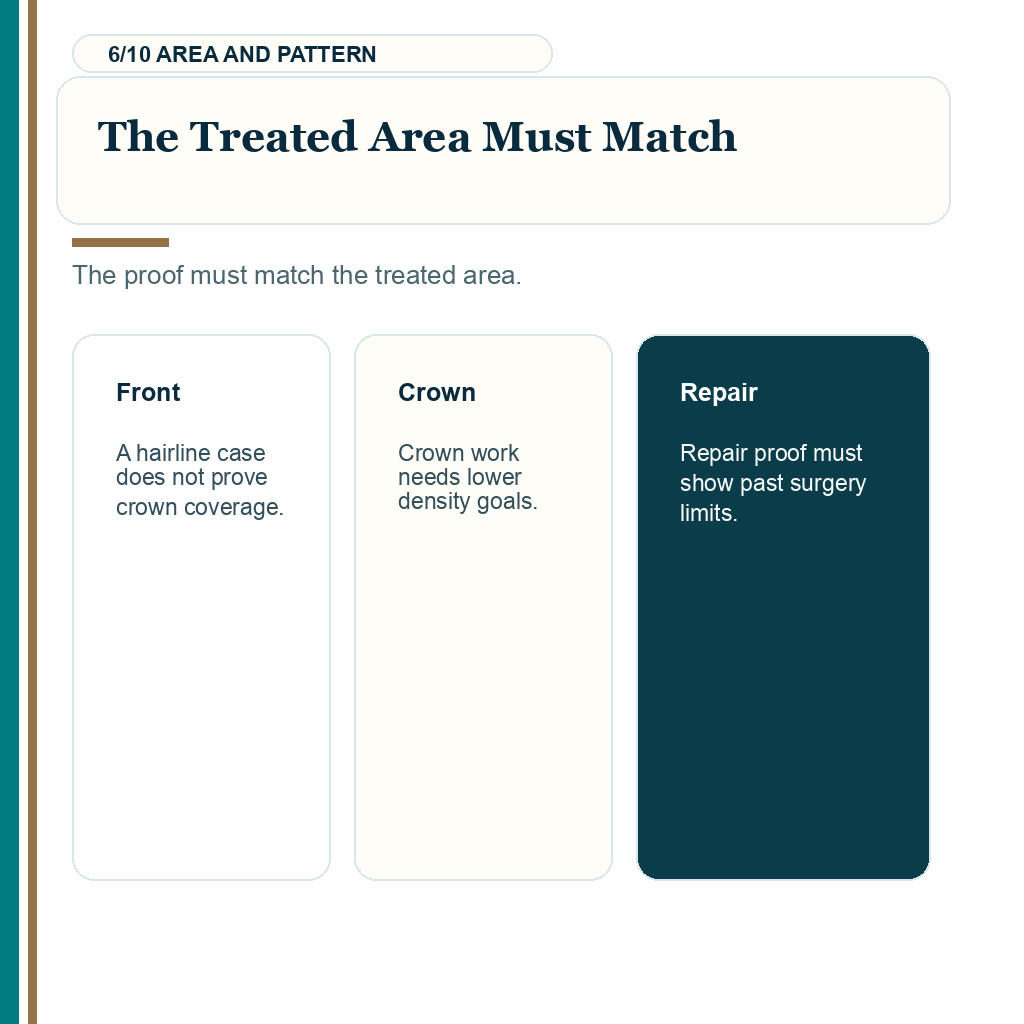
A repair case needs a different level of proof. The donor may already be reduced. The hairline may have poor angle, pluggy grafts, scarring, low density, or an unnatural shape. The recipient area may need camouflage rather than a clean first operation. These cases cannot be judged by a first time dense result on untouched donor supply.
Repair cases need repair examples. Clinic discussion should include corrected wide hairlines, low hairlines, pluggy grafts, depleted donor areas, scar visibility, direction problems, or density problems similar to yours. It should also be clear about what it would not attempt. Refusal can be a sign of judgment when the donor is too limited or the expectation is unrealistic.
Getting a second opinion before a hair transplant is helpful for repair patients because a second opinion should challenge the plan, not simply repeat what the patient wants to hear. If two clinics give very different graft numbers, the disagreement deserves explanation.
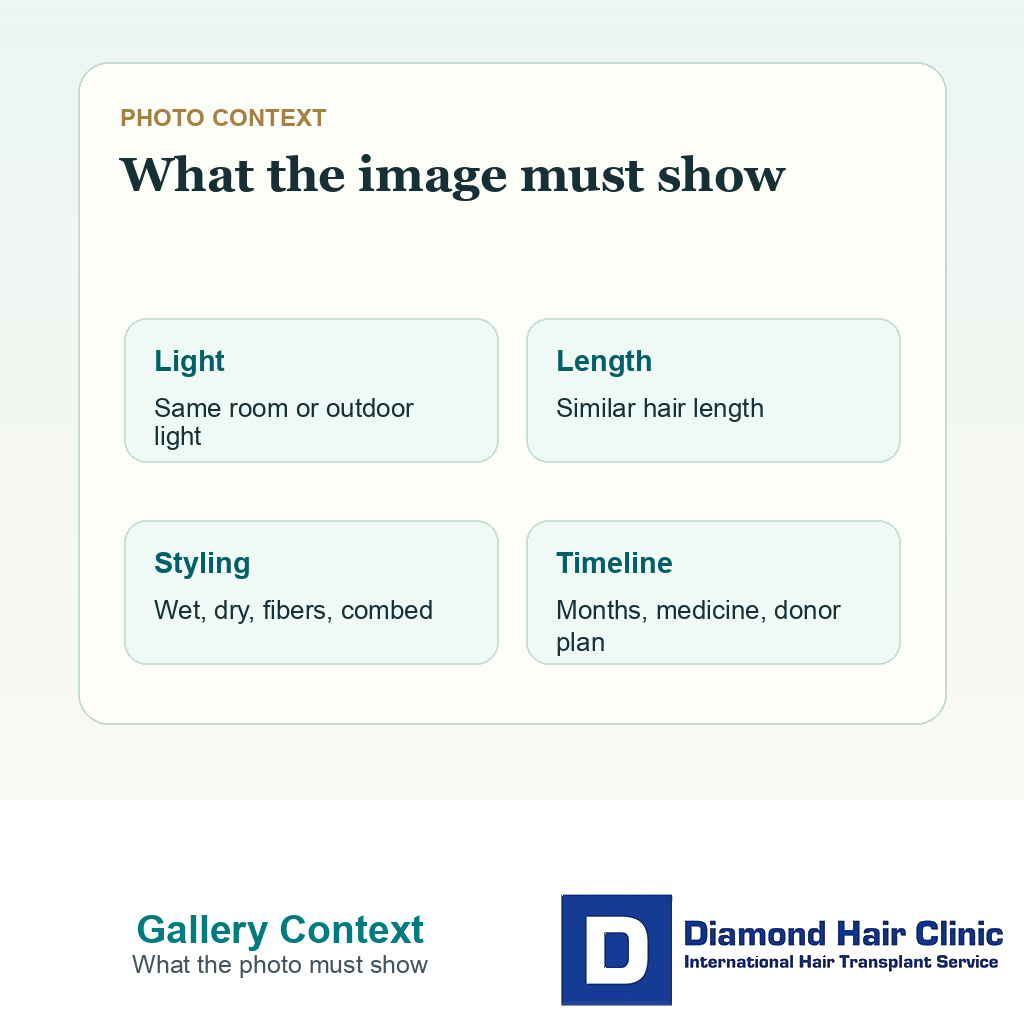
A good result photo needs context. Lighting, hair length, styling, timeline, medication plan, and the original donor limitation all matter.
Before and after photos can mislead
A result photograph can mislead without being fake. Hair can be longer after surgery. Lighting can be softer. The after photo can be taken from a lower angle. Hair fibers, product, blow drying, wetness, or combing direction can change the appearance. Medication may also have improved native hair, so the photograph may show more than graft placement alone.
Comparable photos should use similar angles, similar hair length, dry hair, and consistent lighting. Front views alone are not enough for many cases. If the crown, temples, midscalp, or donor reserve is the limiting issue, those areas should be shown or discussed, not cropped away.
The after photograph should make clear how many operations contributed to it. A first transplant followed by smaller refinements can produce a final result that should not be attributed to one session. Look for the graft count and treated areas for each operation, with the time since the last procedure made clear. A caption giving only the most recent graft count can make the treatment needed to reach that appearance look smaller than it was.
Context comes first when I read the image. The preoperative pattern, graft number, crown involvement, donor density, medication timing, month after surgery, and whether the hair was dry, wet, combed forward, or lifted with a comb all change the interpretation. That context also matters for an AI hair transplant simulation because the preview is weaker without donor, graft count, and timeline context.
Timing matters. A five- or six month image may be a progress update, not the final result. A twelve- to eighteen month comparison is usually more useful for judging growth, density, hairline softness, and donor recovery. If a clinic shows only early dramatic updates, ask what the mature results look like too.
A photo based estimate has limits, but good photographs still matter. A hair transplant plan from photos can show some details and miss others. A gallery should help the surgeon explain the plan, not replace the examination.
Questions to ask before booking
The clinic should show examples that match your main limitation. Fine hair needs fine hair cases. High skin and hair contrast needs high contrast examples. Limited donor supply needs careful donor planning. Female, curly, diffuse, crown heavy, or repair cases need specific results rather than a generic best case gallery.
If you are comparing cases in your late 50s or 60s, do not search only by age. A similar Norwood 6 or 7 pattern, donor rim, crown size, hair caliber, and coverage goal usually tell more than the birthday. I apply that matching filter when reviewing hair transplant planning in your 40s or 50s, because an older patient still needs a case match that respects donor limits.
The responsibility question also matters. Who designs the hairline, decides graft distribution, evaluates the donor, and supervises graft handling? A clinic can have attractive marketing and still fail at responsibility. Surgeon involvement in hair transplantation matters because the person making the plan matters as much as the photographs shown during sales.
Less glamorous evidence matters as well. Donor area healing, average density cases, careful plans for limited donor supply, and results with limitations similar to yours can reveal judgment more clearly than the best case image. The strongest gallery is usually the one that can explain average and difficult cases, not only the most impressive result.
Patients who wear fades, short sides, or very tight curls need donor examples at a similar haircut length after healing. A donor photo with longer hair can hide extraction spacing that would matter to the way you actually wear your hair.
If the conversation becomes only about a discount, a very high graft promise, or a quick booking slot, step back. Hair mill warning signs in Turkey are not only about price. They are also about generic plans, weak donor discussion, unclear surgical responsibility, and results that cannot be connected to your own case.
Privacy can limit what a clinic can publish publicly, and that is understandable. But privacy should not become a way to avoid a serious discussion. Even when faces are hidden or cases are shown only during consultation, the clinic should still explain the pattern, donor condition, graft number, timing, medication context, and limitations.
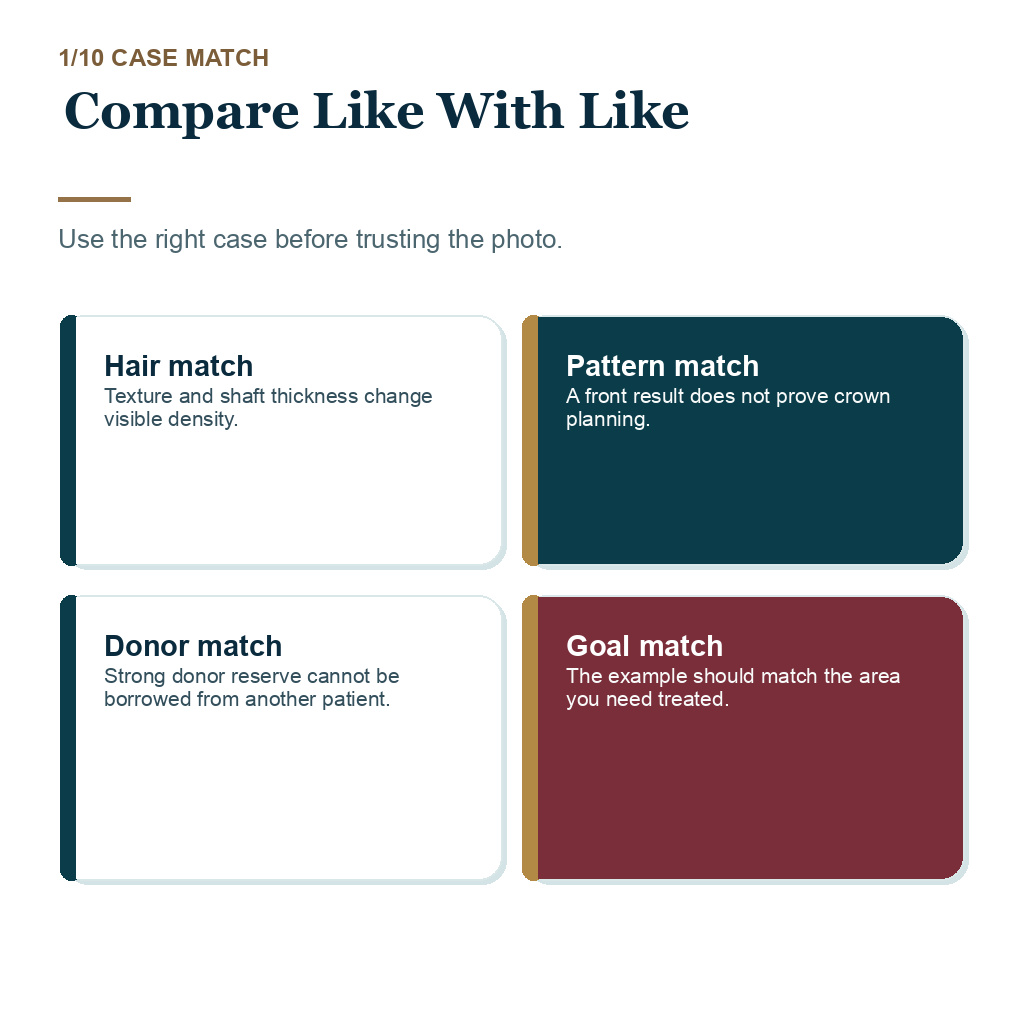
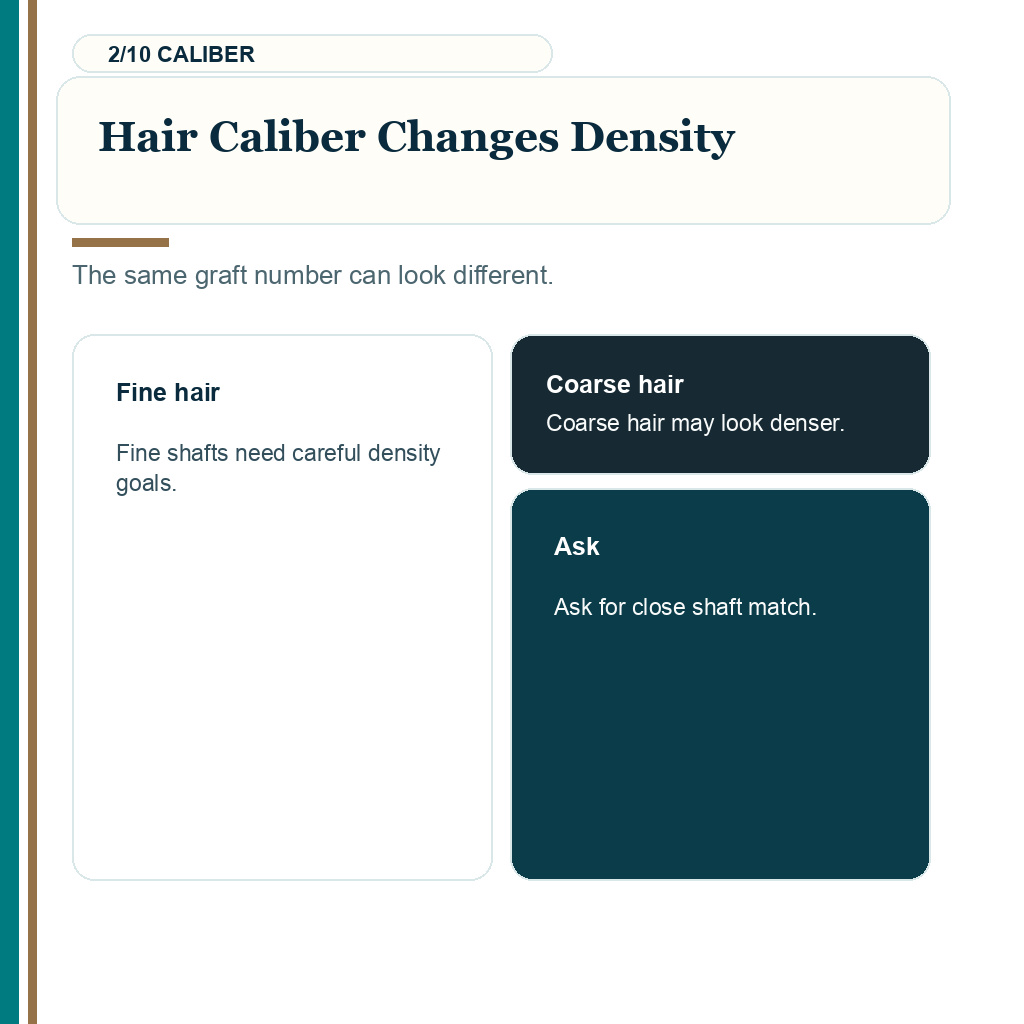
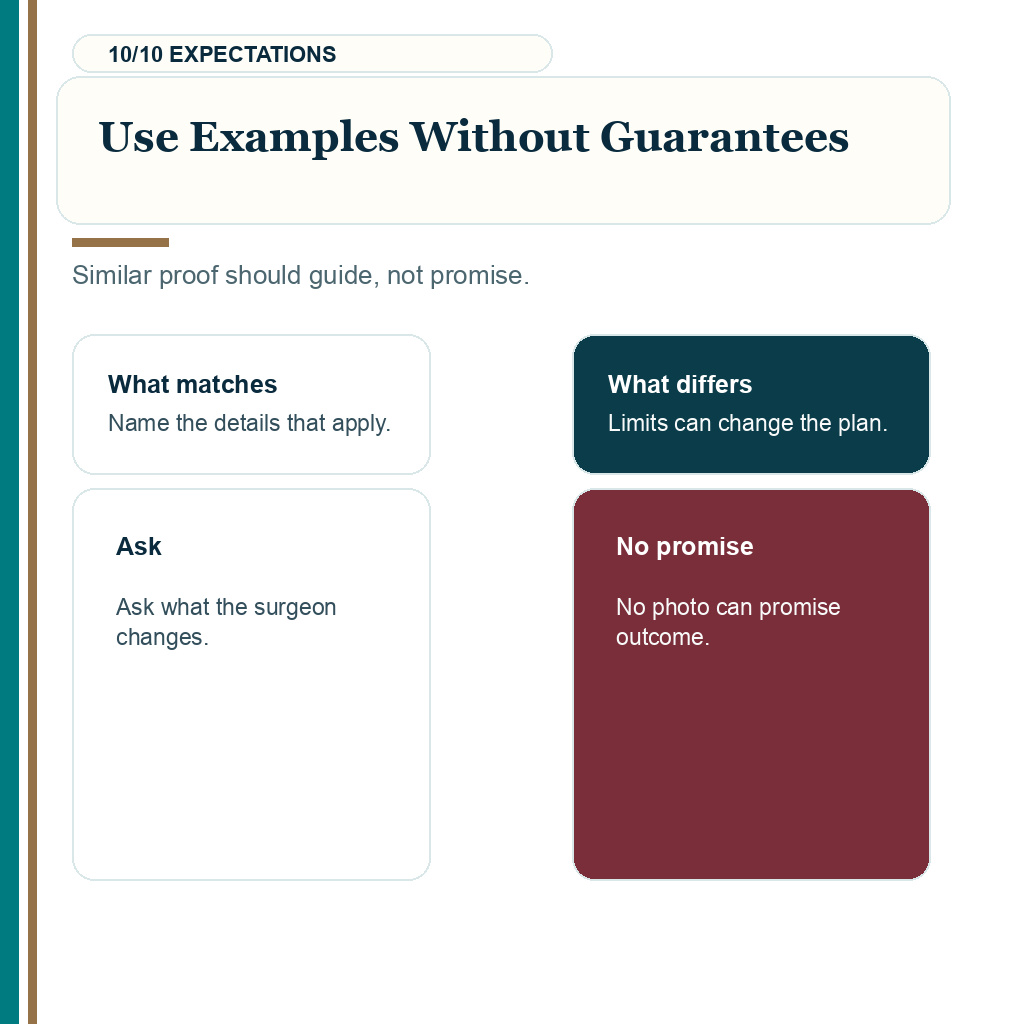
Use the 10 result match slides below to compare hair caliber, curl, color contrast, donor strength, loss pattern, photo conditions, medication context, female or temple cases, repair proof, and expectation limits. Swipe the carousel, use the arrows one step at a time, or choose a number below the image to jump to that point.
When a good result still does not fit your case?
A case can match your hair texture and still fail as a planning guide if donor strength, graft budget, age, medication response, crown demand, or repair history is different. I do not want a patient to borrow confidence from one matching detail while ignoring the limitation that matters most.
The comparison should say what matches and what does not. If the shown patient had stronger donor supply, a narrower treated area, lower contrast, stable medication, or no crown demand, your plan may need a higher hairline, a lower density target, staged coverage, or no surgery for now.
That explanation is more useful than a gallery label. The consultation should tell you which part of the case helps your planning and which part does not apply.
When a similar result should not lead to surgery?
A similar result should not lead directly to surgery when the patient is younger, losing hair faster, has weaker donor reserve, has a different hair to scalp contrast, or needs crown coverage that the example did not need.
I may use a similar case to explain what is possible, but I still have to decide whether this patient’s donor, pattern, age, hairline request, and expectations make surgery safe. A good comparison photo can guide the conversation, but it cannot approve the case by itself.
Using similar results without becoming unrealistic
Similar cases are useful, but they are still examples, not guarantees. Biology, graft survival, healing, medication response, native hair progression, and styling habits vary. Even a close comparison cannot promise the same outcome. It can only make the discussion more precise.
I use similar results to narrow the range of expectation. They show what is possible, what is risky, and what must be protected. They also help decide whether the first session should focus on the frontal frame, midscalp, crown, or repair camouflage. Lifetime hair transplant graft planning matters here because the one year photograph is only part of the judgment. The plan also has to make sense years later.
Context matters more than the image alone. A result from hair like yours should lead to a better consultation. It should clarify what matched, what did not match, what the clinic would change for your donor, and where the limits are. That is a healthier way to choose a clinic than trusting the most impressive image in the gallery.
Read this review excerpt
We also had a levelled conversation about my hairline and results I could expect based on my donor density area.