


Social Media Hair Transplant Results Need Context
An attractive post can start a useful question, but it should not decide your clinic, surgeon, hairline, graft number, or package. A post can show one selected outcome. It cannot show whether that case was typical, how the donor area looked before surgery, who made the medical decisions, how grafts were handled, or whether the same plan would be safe for you.
When an online result impresses you, I first separate inspiration, evidence, and proof. The image may be attractive. It may even show a real patient. But it still has to be tested against your donor area, hair type, age, hair loss pattern, medical history, and long term plan. Use social media to collect better questions, not to commit quickly. A viral result is a clue, not a surgical assessment or proof that the same plan fits your donor area.
Why a result post cannot decide suitability?
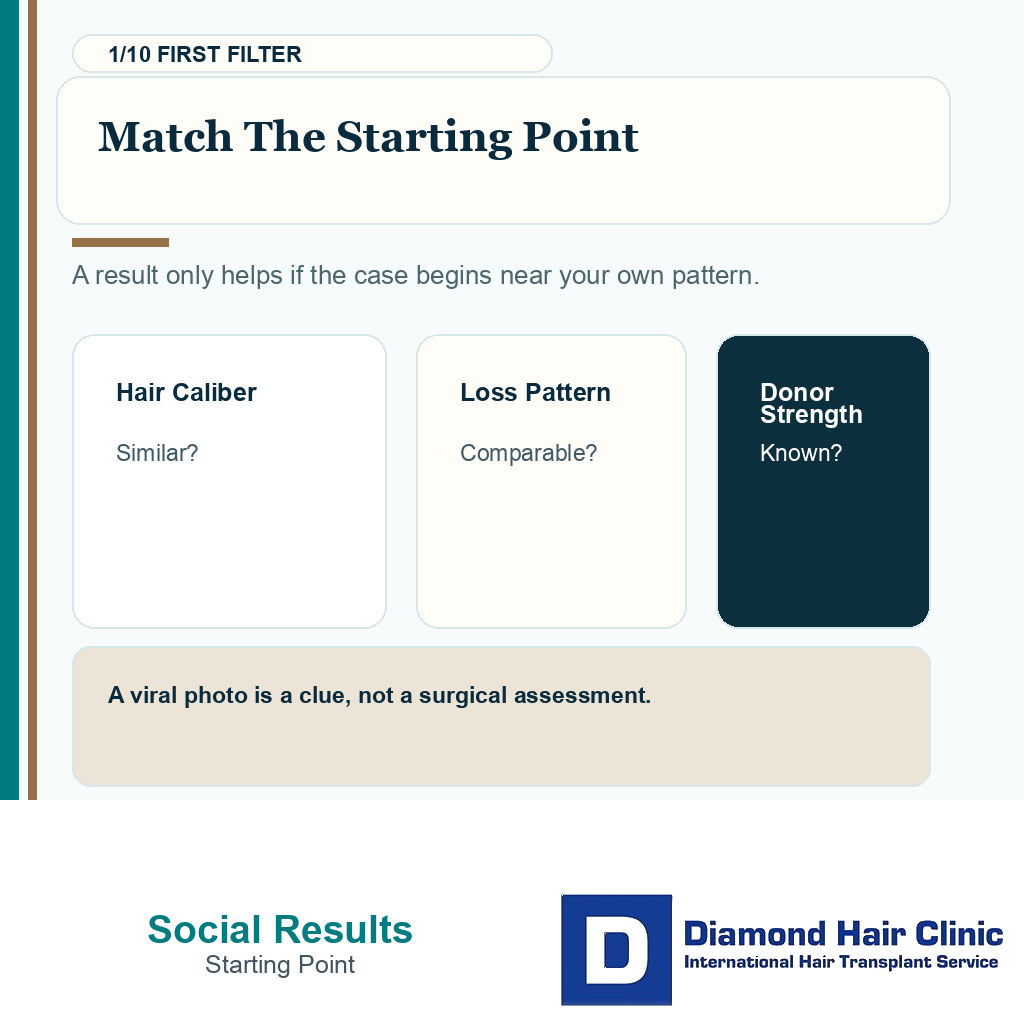
A result can be real and still not be relevant for you. I need to know donor strength, hair caliber, curl, contrast, age, medication history, medical risks, and whether native loss is still moving before a result can influence your plan.
Follow up and aftercare are also invisible in many posts. A clean final photo does not show how scabs were cleaned, whether inflammation settled normally, how follow up was handled after travel, or whether medication improved native hair. When those details are missing, use the post as a question, not as proof that you are suitable.
Useful signals from social media results
Social media can help you notice the kind of hairline, density, styling, and recovery appearance that attracts your eye. It can also help you collect examples before a consultation. That is useful when you compare them carefully. A result post may show hairline softness, temple shape, frontal density, crown styling, or lighting that makes a transplant look stronger or weaker.
A striking result may belong to someone with thick hair shafts, low scalp contrast, strong donor supply or a favorable medication response. Those details can be missing from the post. Compare hair transplant before and after photos with similar angles, lighting, hair length, postoperative stage and a donor view before judging how relevant the case is to you.
When exceptional starts to feel ordinary
- An exceptional transformation. A dramatic change catches your attention before the case details are clear.
- Attention brings it back. Shares and repeat viewing can keep the same striking result in sight.
- Repeated exposure feels familiar. Seeing exceptional outcomes often can make them feel like everyday results.
- Expectations rise. Your own expected coverage or density may drift toward the showcase case.
- The striking example wins again. The next dramatic result can attract more attention and restart the cycle.
Break the loop by comparing several documented cases with hair like yours, including ordinary outcomes. This describes how repeated exposure can shape expectations, not how any particular platform ranks posts.
Limits of reels and influencer results
A reel cannot prove who performed the critical surgical steps. A comb through video can show how the hair moves, but it still cannot prove that the donor area was protected, the graft count was appropriate, the hairline was age appropriate, or the patient was a good candidate. Fast cuts, filters, sharpening, dry styling, fibers, and camera distance can all make gaps, redness, donor thinning, or weak density harder to notice. It also cannot prove proper follow up after the patient left the clinic.
Missing footage has limits too. If an edited video does not show the consultation, medication discussion, consent, or donor measurements, those details are unverified from that video. Their absence does not prove that they never happened. This applies to a promotional patient journey and to a critical reaction video. Neither should fill a gap in the record with a convenient assumption.
The distinction matters because hair transplantation is not only a visual service. It is a medical and surgical procedure. The part that looks attractive online may be the easiest part to market. The harder parts are diagnosis, donor planning, hairline design, incision angle, graft handling, and long term native hair loss planning. If the post hides the surgeon’s role, the result is incomplete evidence.
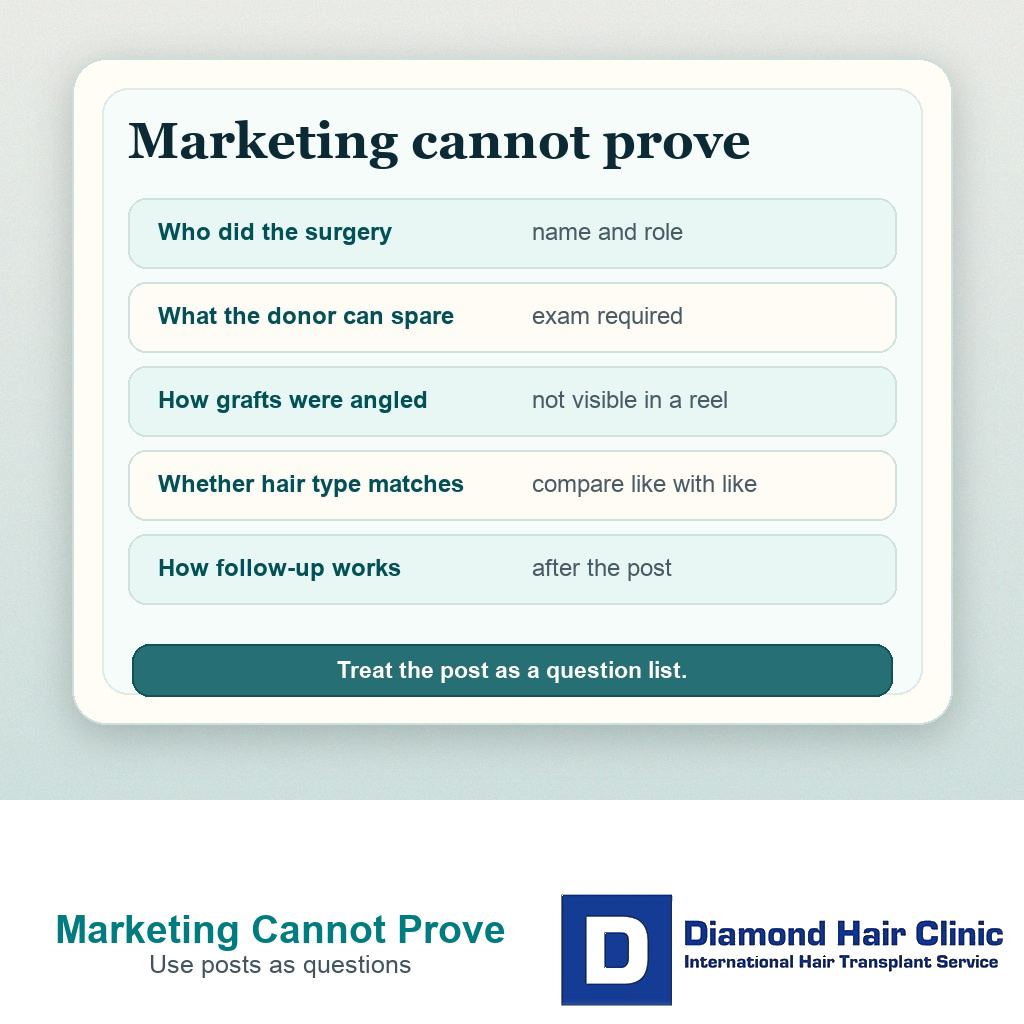
A result post cannot prove the medical planning behind the transplant.
If a post is sponsored, discounted, or tied to an influencer, treat it as marketing until the medical details are visible. Comparable photos, donor context, graft number, timeline, and surgeon responsibility matter more than the caption. A conference photograph, rating badge, or long list of endorsements may support a decision to research further. None identifies who planned a particular operation or who will make those decisions in yours. Keep those signals separate from the written role and treatment plan.
Celebrity hairlines can mislead your plan
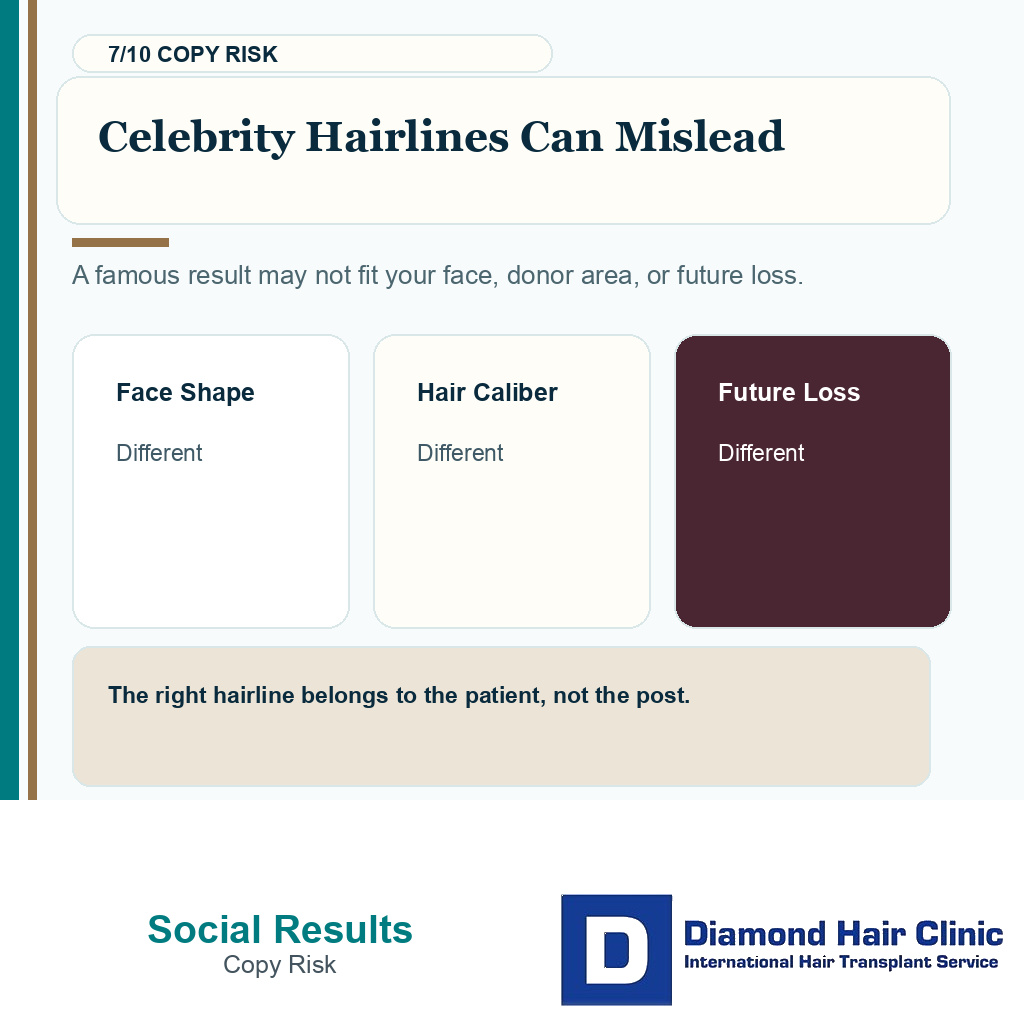
Celebrity and influencer hairlines are risky examples because they are often shown through styling, lighting, makeup, editing, and public image control. You may think, “I want that hairline,” without knowing the person’s original hair loss pattern, donor quality, age, hair caliber, medication use, or whether the visible result came from one surgery, multiple sessions, styling, fibers, or ongoing treatment.
A hairline that suits one face may look artificial on another. A low, flat, youthful hairline can look exciting in a post and still age poorly. I design a hairline around your face and future hair loss instead of copying a famous result that does not fit your donor supply. In real planning, hairline design in hair transplant must stay individual.
Fair comparison for before and after photos
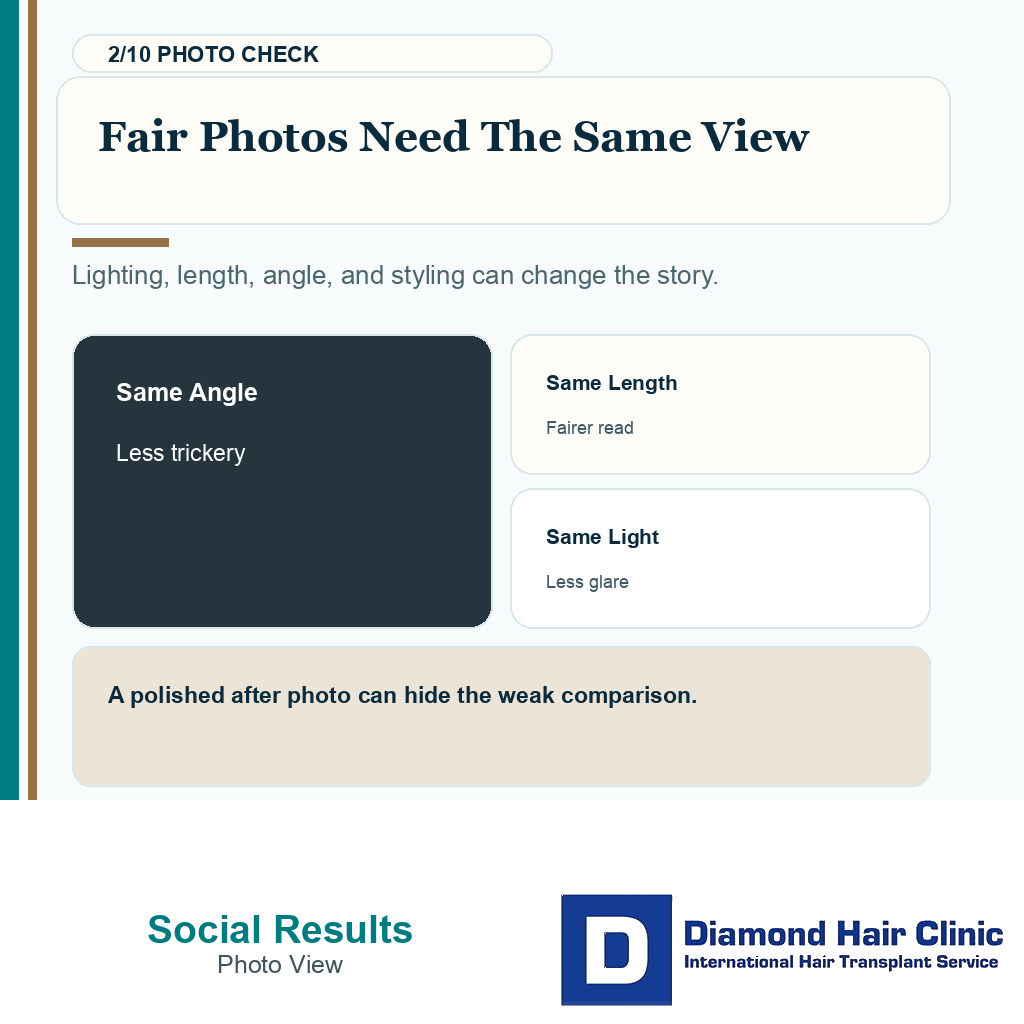
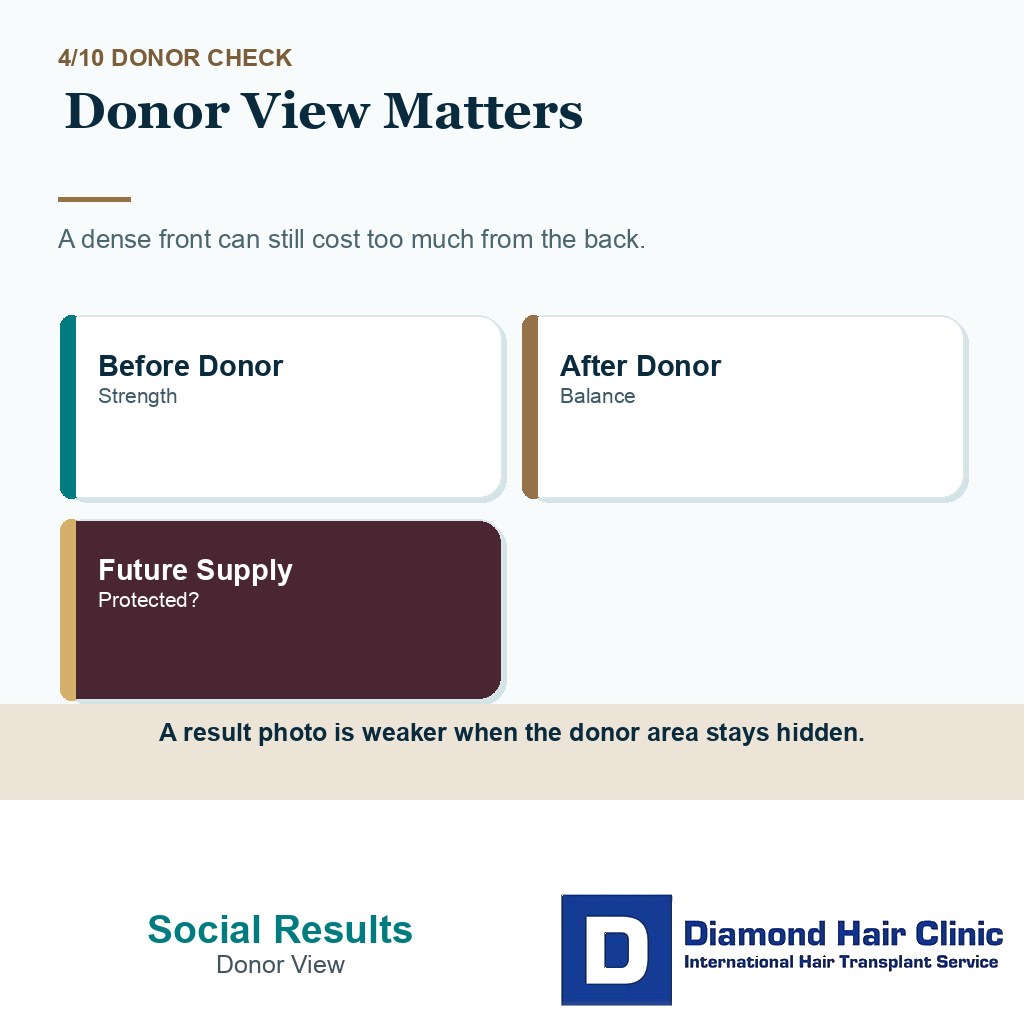
Fair comparison needs the same angle, similar hair length, similar lighting, dry and wet views when possible, and a clear view of the donor area. If one photo is under harsh bathroom light and the other is styled under soft clinic light, the comparison is weak. If the after photo hides the donor area, the result may look impressive while still using too much donor hair.

Before trusting a social media result, compare photos under similar lighting, length, angle, and wet or dry conditions.
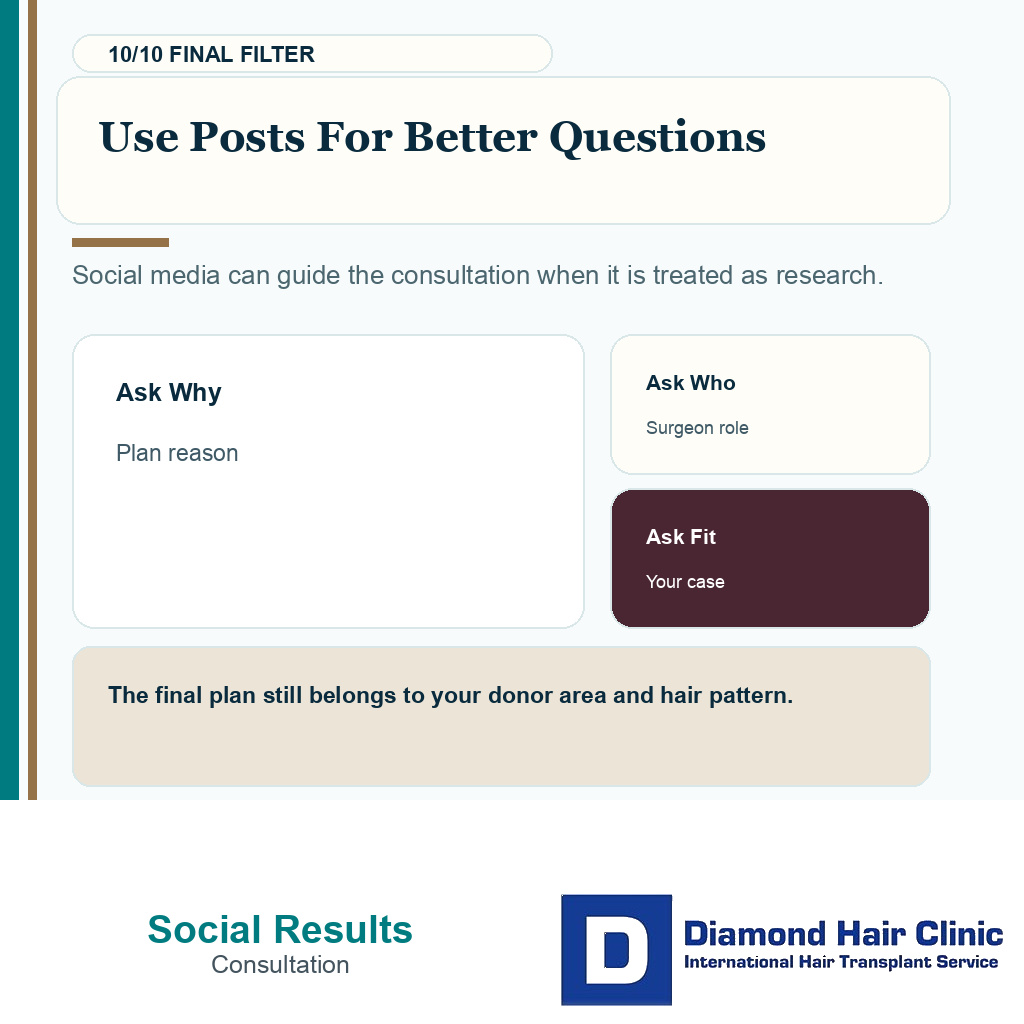
Patient photos are more useful when they include the clinic name, surgeon name, graft count, timeline, hair length, medication context, donor area view, and follow up details. Ask whether the result is shown at 4 months, 8 months, 12 months, or later, because timing changes what can fairly be expected. That still does not prove every post is true, but it gives you real details to ask about in the consultation. If the only evidence is a glossy after image with no clinical context, I treat it as inspiration only.
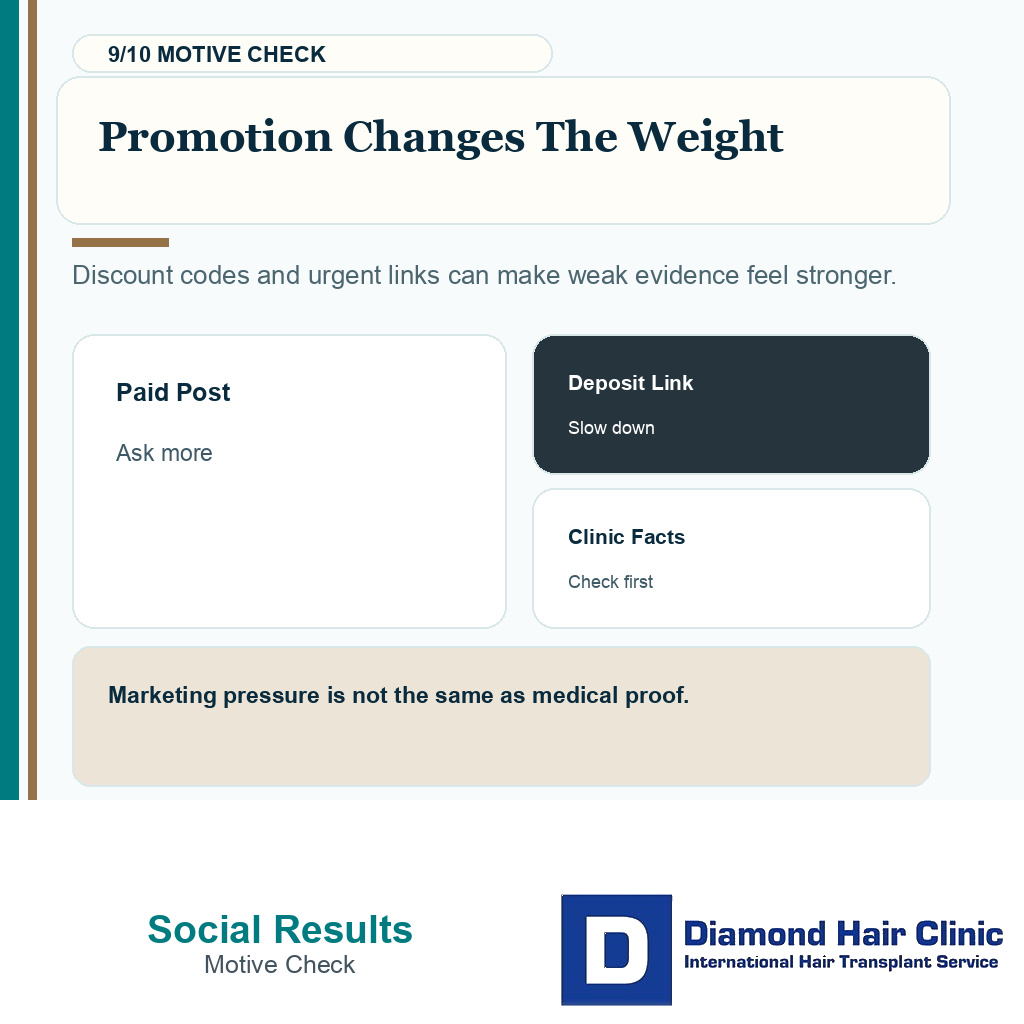
Use the 10 social media result review slides below to test lighting, timing, donor view, surgeon role, graft claims, and promotion pressure before trusting a result post. Swipe the carousel, use the arrows for one step at a time, or choose a number below the image to jump to that point.


Surgeon role clarity before surgery
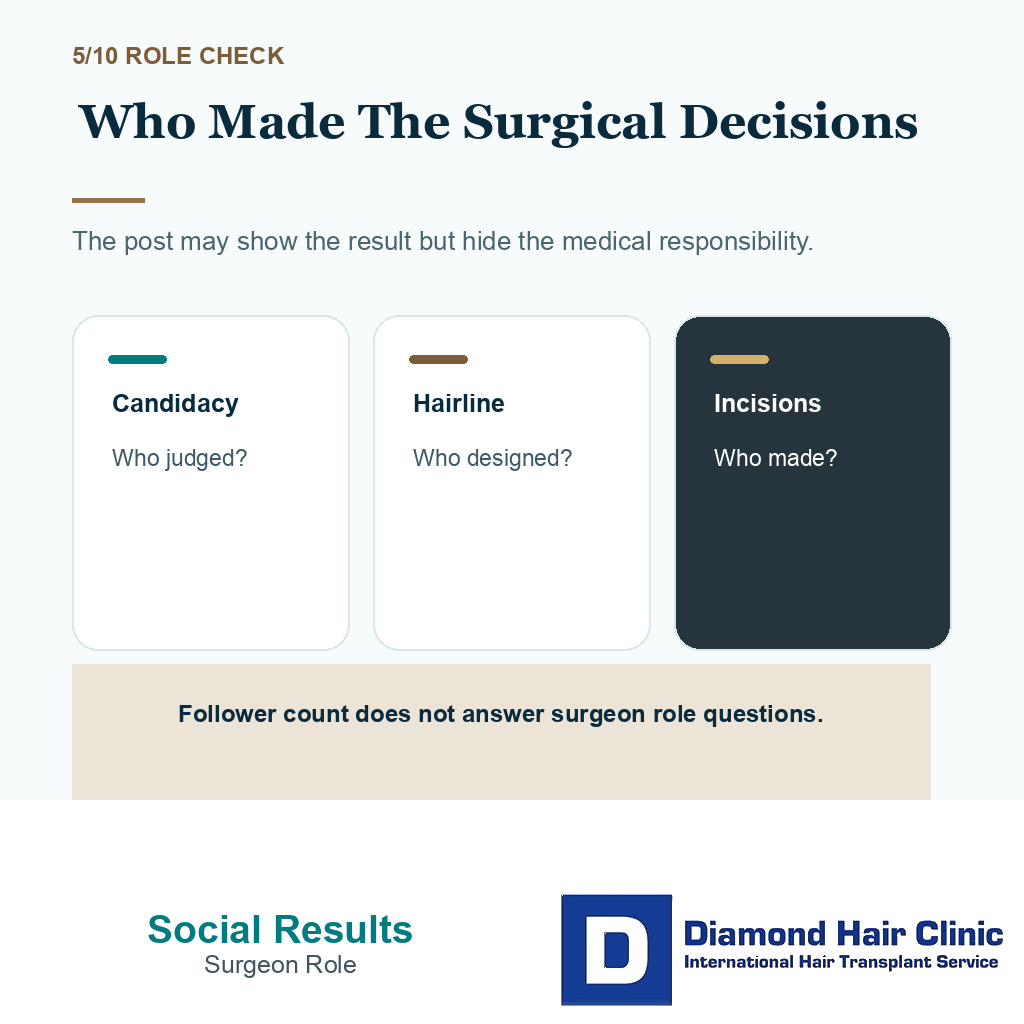
Ask who evaluates candidacy, who designs the hairline, who plans the graft distribution, who makes the incisions, who supervises extraction and placement, and who is responsible if the plan changes on surgery day. These are not rude questions. They are basic surgical questions.
Many patients focus on the brand page because the post looks polished. Clarify the people behind the post. The practical questions around surgeon involvement in hair transplant surgery and who performs your hair transplant surgery matter more than follower count.
Graft numbers and density claims need context
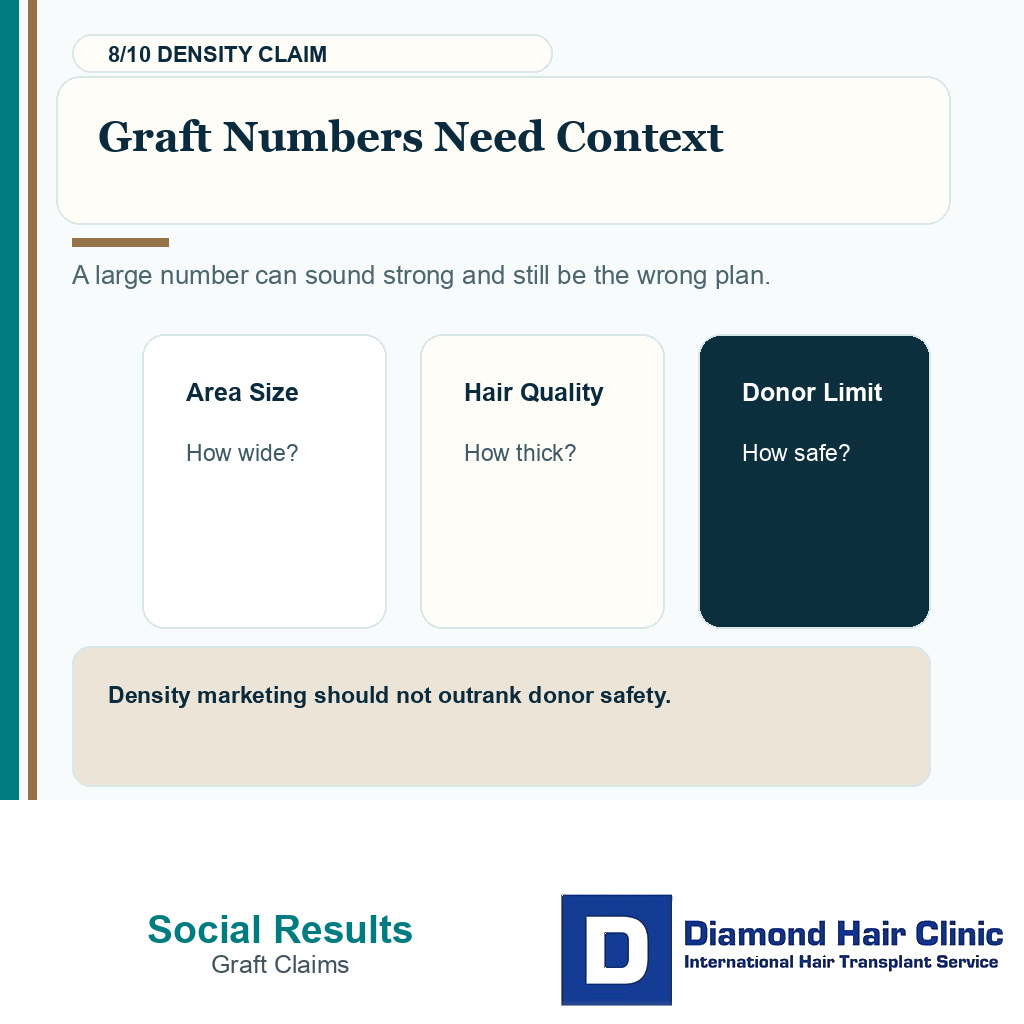
High graft numbers look impressive online. They can also be misleading. A patient with strong donor hair, coarse hair shafts, and low scalp contrast may look dense with a moderate graft number. Another patient may need a different plan because donor reserve is weaker, the crown is expanding, or native hair loss is still active.
I separate medical graft planning from sales numbers. The issue is not how many grafts can be taken. It is how many can be used without damaging the donor area or stealing options from the future. Density marketing should never outrank donor safety. If a post makes a very large number sound easy, compare it with hair transplant graft count verification.
Paid promotions and reviews change the risk
A paid promotion is not false by itself, but it changes how you should read the claim. If a discount, commission, gifted procedure, affiliate link, or other benefit is involved, that relationship should be clear before you treat the post as independent patient experience. The disclosure should be easy to notice in the post, caption, or video itself, not hidden after extra clicks or mixed into vague tags. Disclosure helps you read the recommendation with that relationship in mind. It does not make the result clinically useful by itself. The clinic may select only the best cases, the easiest hair types, or the most dramatic transformations. Reviews can also be filtered, encouraged, or placed where unhappy patients are less visible.
Replies and likes can help you form questions, but they cannot prove follow up quality, donor safety, or ordinary light appearance. The missing evidence is still the result in normal conditions and the donor plan behind it.
A personal before and after comparison of dating matches or replies cannot show how much of the change came from a transplant. Different photographs, profile wording, timing, and how the person uses the app may also change the response.
A review does not have to be fake to be unhelpful. It becomes useful only when it gives enough medical detail, including the surgeon name, graft plan, donor healing, follow up, and the result in ordinary light. The opposite problem exists too. Good hair transplant results may stay quiet online, which can make the visible conversation feel more negative than the full reality. If you are comparing clinics in Turkey, compare hair transplant reviews in Turkey with red flags of Turkish hair transplant clinics.
An unfinished result timeline is incomplete evidence, not an outcome. A person may stop posting because the result improved, the account was lost, privacy became more important, or the result disappointed them. Without a later comparable update, none of those explanations can be confirmed. Mark the case as unknown instead of letting silence improve or damage the clinic’s record.
Similar hair matters more than popular results
The best comparison is not the most famous result. It is a patient whose age, hair loss pattern, hair caliber, curl, skin to hair contrast, donor density, crown demand, and surgical goal resemble yours. A celebrity with thick hair shafts and strong donor supply is a poor guide for a patient with diffuse thinning. A young patient chasing a low hairline is different from a mature patient trying to soften recession without exhausting donor supply.
Before using a social result as a model, ask to see hair transplant results from hair like yours. This turns a vague wish into a medical comparison. It also protects you from copying a result that looks good because the underlying hair characteristics were easier than yours.
Warning signs before paying a deposit
Slow down if the clinic pushes a deposit before the medical plan is clear, promises a guaranteed result, avoids naming the surgeon’s role, gives a very high graft number without explaining donor limits, or uses influencer urgency to make you feel you will miss a special chance. A discount should never replace a diagnosis.
If you feel rushed, treat hair transplant booking pressure as part of the medical decision, not only the payment decision. Also be cautious with any hair transplant guarantee that makes surgery sound more certain than biology allows. Pressure before clarity is a warning sign.
A promoted result can show the best version of access and attention. Before trusting it, separate the visible outcome from the ordinary clinic pathway that a patient who was not filmed will actually receive.
Using social media research before consultation
Use social media to prepare a question list. Save examples you like, but write down why you like them. Keep the account name, post date, claimed timeline, and any graft number or surgeon name shown with the post, because screenshots without context can become misleading later. Name the feature, whether it is the hairline height, temple shape, density, styling, crown coverage, donor appearance, or overall age fit. Then ask the clinic whether that feature is realistic for your donor area and hair loss pattern. The same applies if you save an AI hair transplant simulation. Bring it as a preference reference, then ask whether the donor and hairline plan can support it.
This is different from asking a clinic to copy a photo. The consultation should explain what fits you, what does not, and what tradeoff each choice creates. A hair transplant consultation should do more than quote grafts. It should test the examples against your donor area, medical history, hairline goal, and future hair loss. Online examples can start that conversation, but they should not replace scalp examination, donor assessment, medical history, and surgical planning. For hair transplant planning from photos alone, photos help, but the final plan must stay medical.
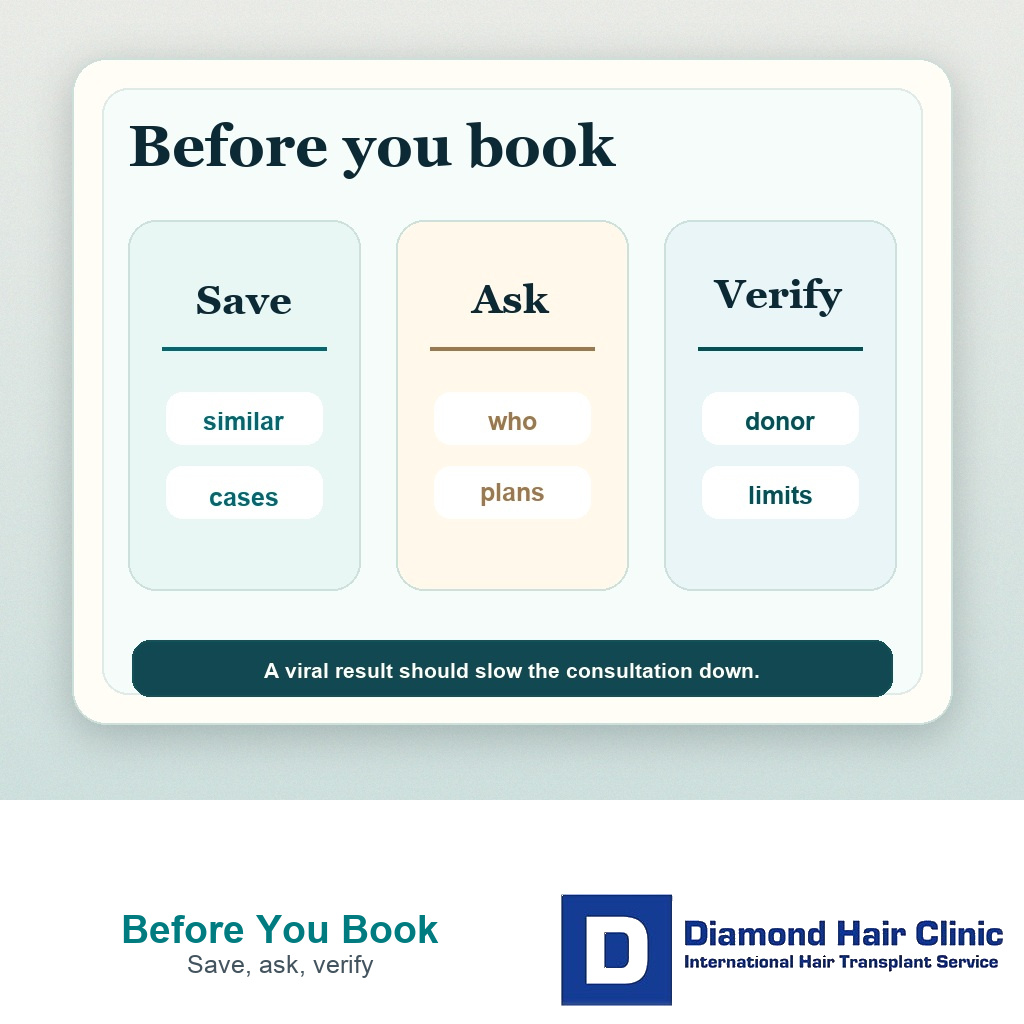
Use social media results as a question list before consultation.
When I would still say no after a popular result?
A popular result does not change a poor candidate into a safe one. I would still say no when the patient’s donor reserve is weak, the loss pattern is unstable, the requested hairline would spend too much, or the expected density is based on another person’s hair caliber and styling.
Social media can show what surgery may achieve in selected cases. It should not decide who is suitable, how many grafts are safe, or whether travel makes sense before the medical plan has been tested.
Slow down or get another opinion
Get another opinion if the clinic cannot explain why the graft number fits your donor area, if the hairline looks lower than your long term pattern can support, if the surgeon’s role is vague, if the package feels more important than the plan, or if one result has made you feel you are losing time.
This matters most for young patients, diffuse thinners, crown heavy cases, repair patients, and anyone with unstable medication response. A social post can make surgery feel straightforward. Your case may need a slower plan. A second opinion is not a delay tactic when it protects donor supply and future options.
Many social media pages combine result posts with hotel, transfer, discount, limited slot, or all inclusive messages. These details can make travel easier, but they are not surgical proof. A comfortable package does not tell you whether your donor area is safe, whether the surgeon will design the hairline, or whether the clinic will follow you after you return home.
If you are comparing overseas options, read package claims through a medical lens. With hair transplant packages in Turkey, I separate travel support from surgical proof. The package can support the trip. It should not be the reason the surgery plan is accepted.
My way of judging social media results
Social media is useful only when it makes the consultation more precise. Bring examples. Ask why a result works. Ask whether your hair, donor supply, age, medication situation, crown pattern, and hairline goal are comparable. Ask who performs the critical steps. Ask what cannot be promised.
If the clinic welcomes those questions, you get more useful answers. If the clinic becomes vague, rushed, or sales driven, the impressive post has already done its job for them. If you cannot explain why the result relates to your own case, leave it as inspiration. The result you live with is not created by the post you saw. It is created by diagnosis, planning, incision design, graft handling, donor management, and follow up. Use social media for curiosity, not commitment.
Read this review excerpt
We also had a levelled conversation about my hairline and results I could expect based on my donor density area.