


Day One Hair Transplant Photos Cannot Prove Final Results
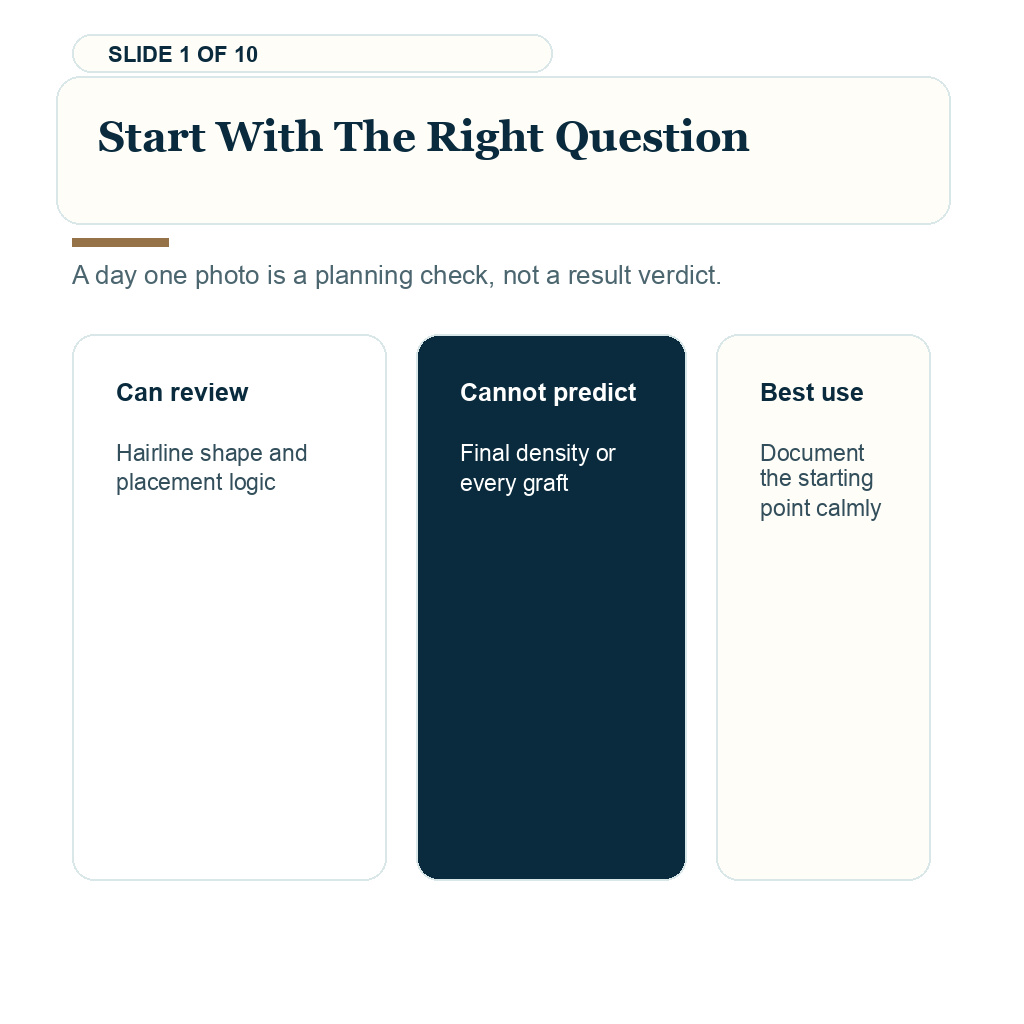
You can judge some parts of a hair transplant from day one photos, but you cannot judge the final result. On day one, I can review the hairline design, visible placement pattern, graft distribution, and donor extraction pattern. I cannot judge final growth, final density, shock loss, hair maturation, or whether every graft will grow.
Day one photos are a surgical planning check, not a result verdict. They may show whether the plan looks sensible. They may also show early warning signs. But they cannot tell you how the transplant will look after shedding, regrowth, thickening, styling, and normal daily light.
Keep the original day one photos before cropping or sending compressed screenshots. A small social media crop can hide donor extraction patterns, side angles, and the wider distribution that makes the photo useful later.
Before you leave the clinic, keep one complete immediate postoperative set on your own phone. A staff member can take the donor and recipient views when you cannot frame them yourself. Look through every image while you are still there and retake any view that is blurred, cropped, or poorly lit. This set does not prove the graft count or final result. It gives you a day one record you control before healing changes what the camera can show.
Leaving without a complete set does not make the record unavailable. The clinic may still have the original recipient and donor views, including angles that were not sent in the discharge message. Request those files and keep them with the graft count and treated zones, because that day cannot be photographed again. One clear photograph with a visible metric ruler beside the recipient area can preserve scale. Ask the clinic to include the ruler in frame without covering the treated area and save the original file. Use that image as a reference, not as the official graft count. The clinic’s written operative record should remain the source for extracted and implanted totals.
The common mistake is trying to judge biology from a fresh surgical snapshot. The operation is over, the adrenaline drops, and the mirror suddenly feels very serious. A phone photo taken under harsh light can make a careful plan look worrying, and a dramatic fresh hairline photo can make a weak plan look better than it is.
Day one hair transplant photos show placement and early healing only
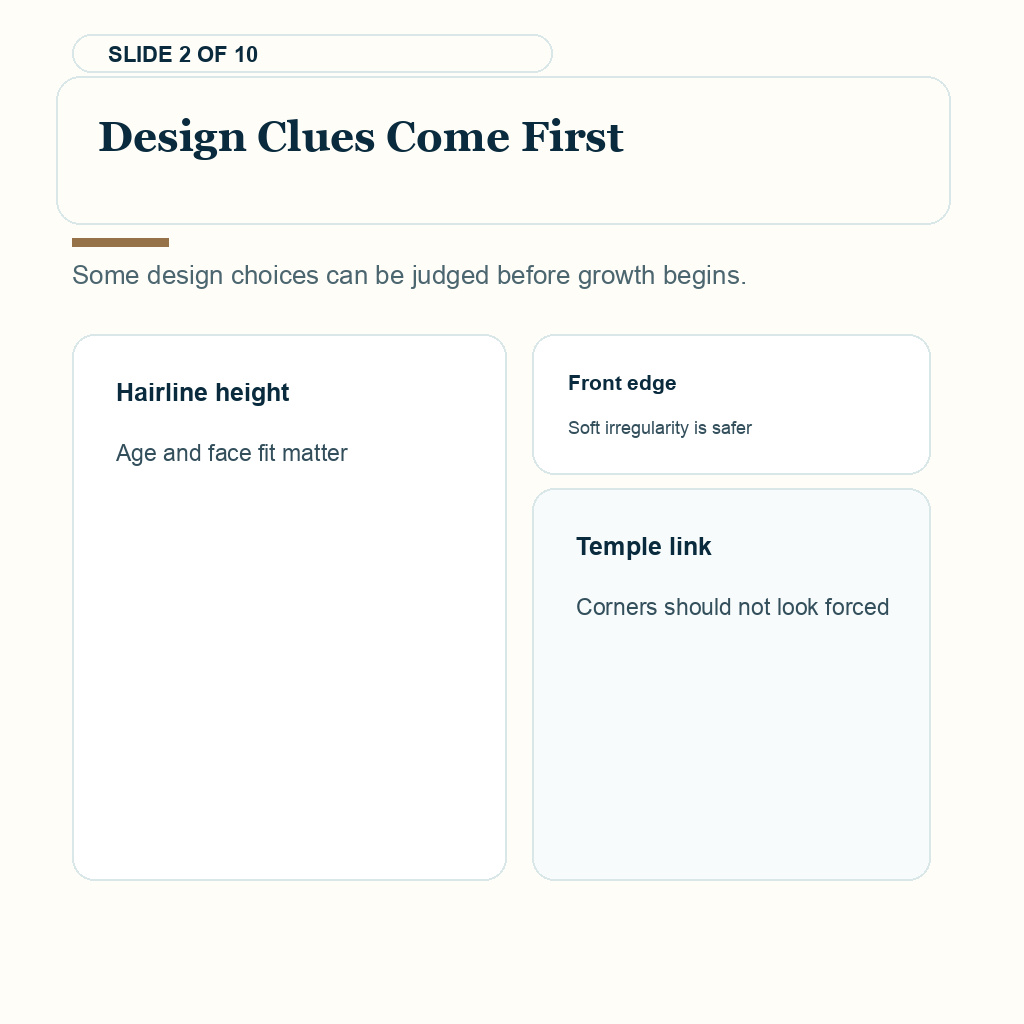
They can show the outline of the plan. I look at hairline height, shape, temple connection, recipient area distribution, and whether the design suits the face and age. A hairline that is too low, too straight, or too juvenile can be concerning from the beginning.
They can also show whether the placement looks thoughtful. A soft front edge, irregularity, correct direction, and delicate single hair placement at the front are reassuring signs. Hairline design matters before growth starts because a weak design cannot be rescued by density alone.
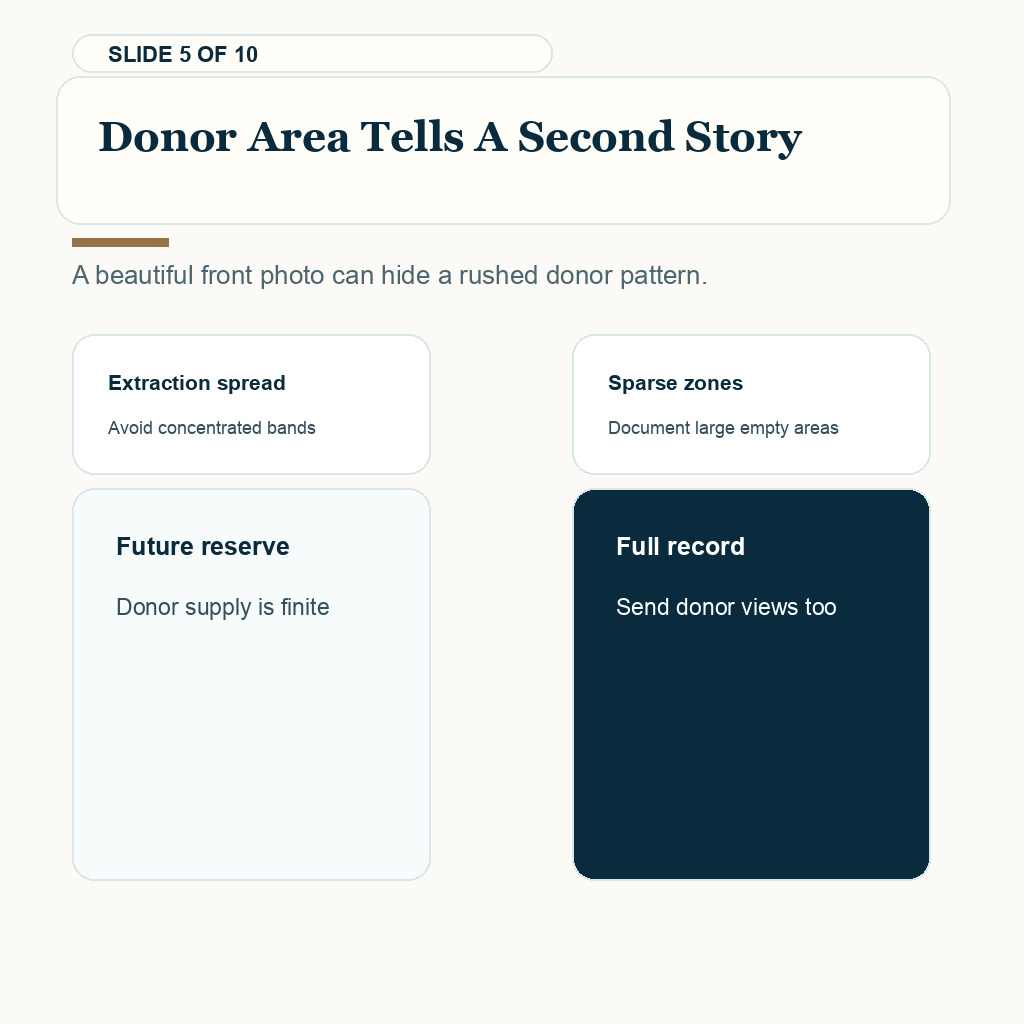
The donor area matters just as much. A frontal photo may look exciting, but the back and sides show how carefully the grafts were taken. If the extraction pattern already looks concentrated, patchy, or rushed, I do not ignore that just because the fresh hairline looks impressive.

Day one photos cannot predict the final result
They cannot tell you whether every graft will survive. They cannot tell you how quickly the hair will grow, whether native hair will shed around the transplanted area, or whether the final density will satisfy you at month 12.
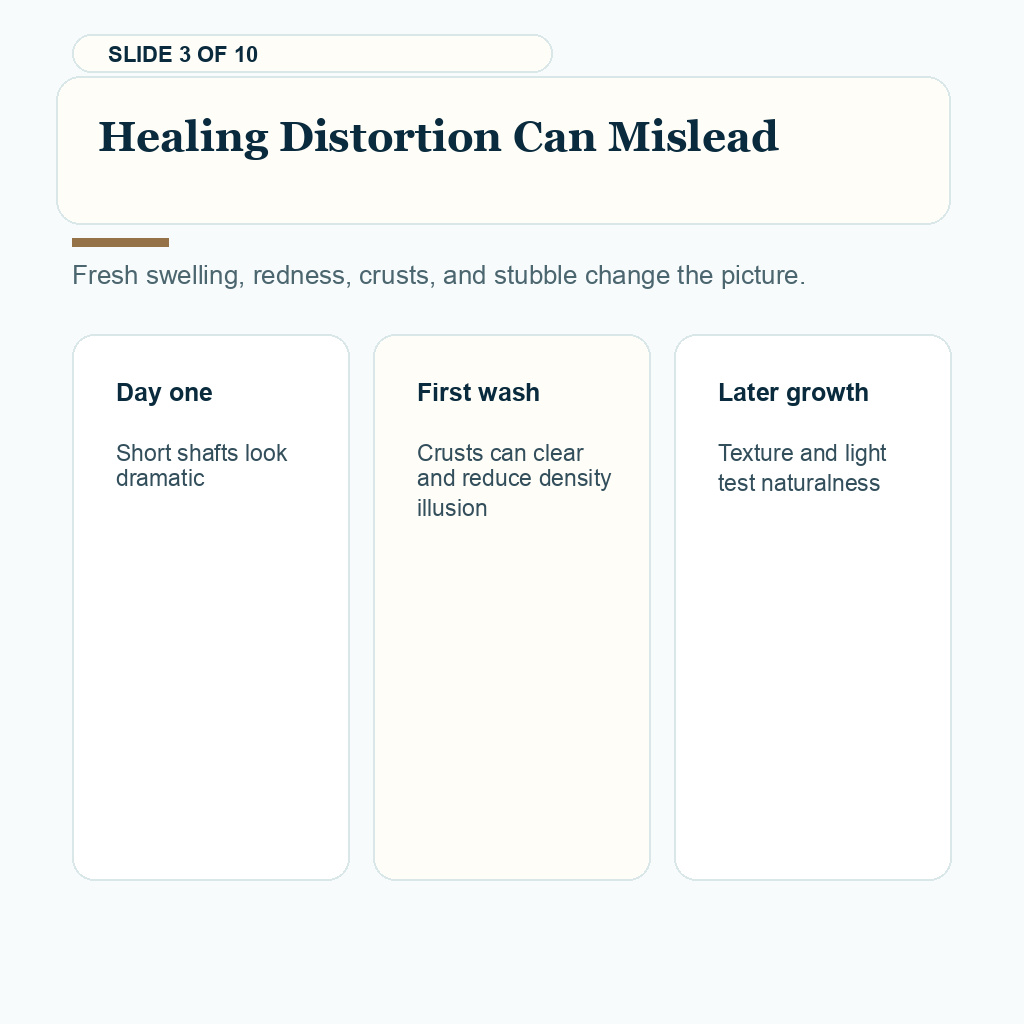
The short hairs visible on day one can create a strong emotional impression. Many of those shafts later shed before true growth begins. That temporary disappearance can feel like failure, but it is part of the normal growth cycle for many people. Tracking hair transplant growth over time gives a fairer picture than judging one fresh photo.
Day one also hides texture. Hair that looks neat when it is short and surrounded by redness may behave differently after it grows, bends, curls, and catches light. Naturalness is tested later, in motion and in normal lighting.
Early healing can look wrong before it settles
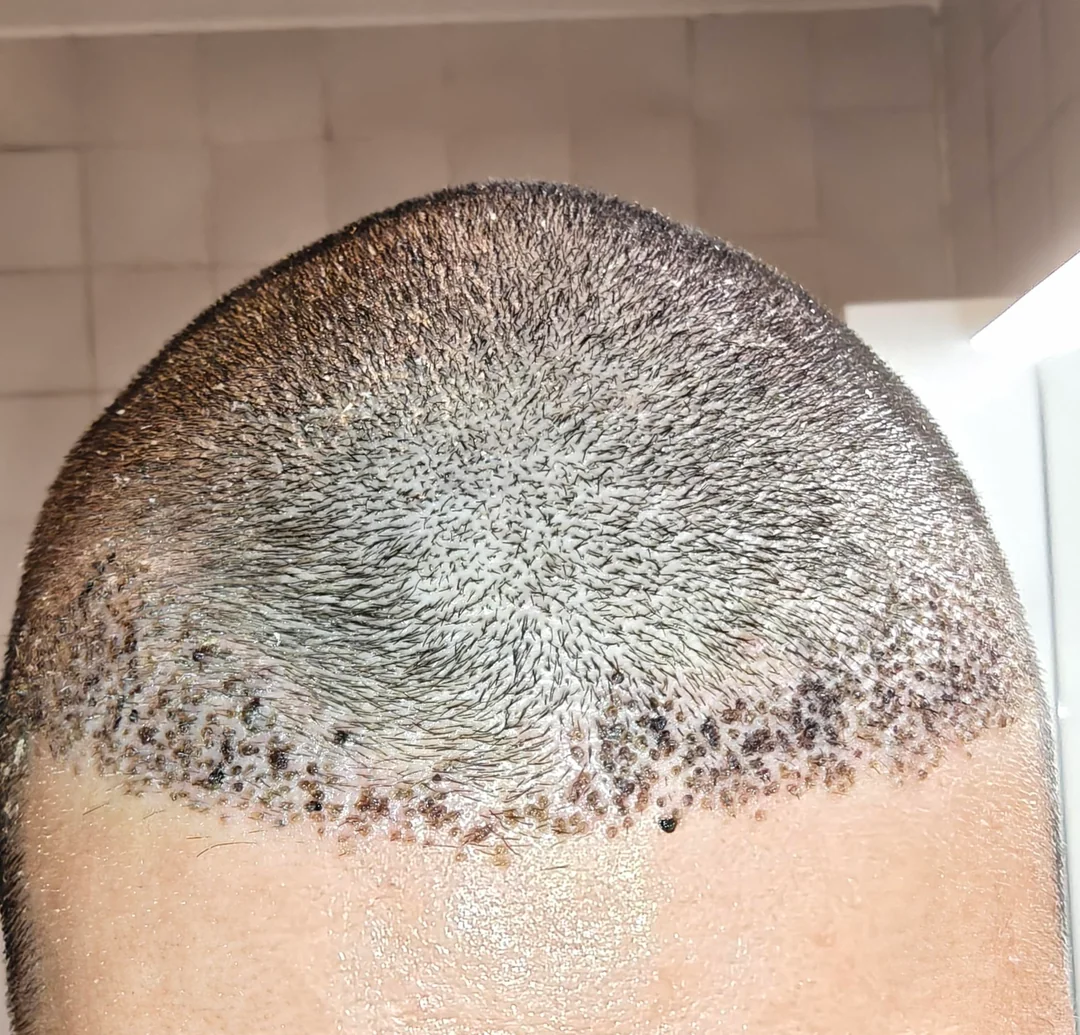
Swelling can make one side look higher, lower, wider, or more uneven than it will look later. Crusts and short stubble can make the hairline look denser or rougher than it truly is. Redness can exaggerate gaps. A freshly shaved donor area can look more dramatic than it will after the first 10 to 14 days.
The first wash can also change the appearance. When crusts soften and clear, the recipient area may suddenly look less dense after washing. That is not the same as losing the transplant.
Some hairs may come away with scabs. This panic is common. A dry hair shaft in a scab is different from a graft being pulled out with bleeding or tissue, which is why scabs with hairs after a hair transplant need careful interpretation.

Serious day one signs deserve review
Some concerns should not be dismissed as ordinary anxiety. A hairline that is clearly too low for the age, face, or future hair loss pattern deserves review. A front edge that looks rigid and unnaturally straight also deserves attention. Real hairlines need softness and irregularity.
Donor warning signs matter too. Concentrated extraction bands, large sparse zones, or obvious uneven harvesting should be documented. The day one photo is not the final donor appearance, but it may reveal how the surgery was approached.
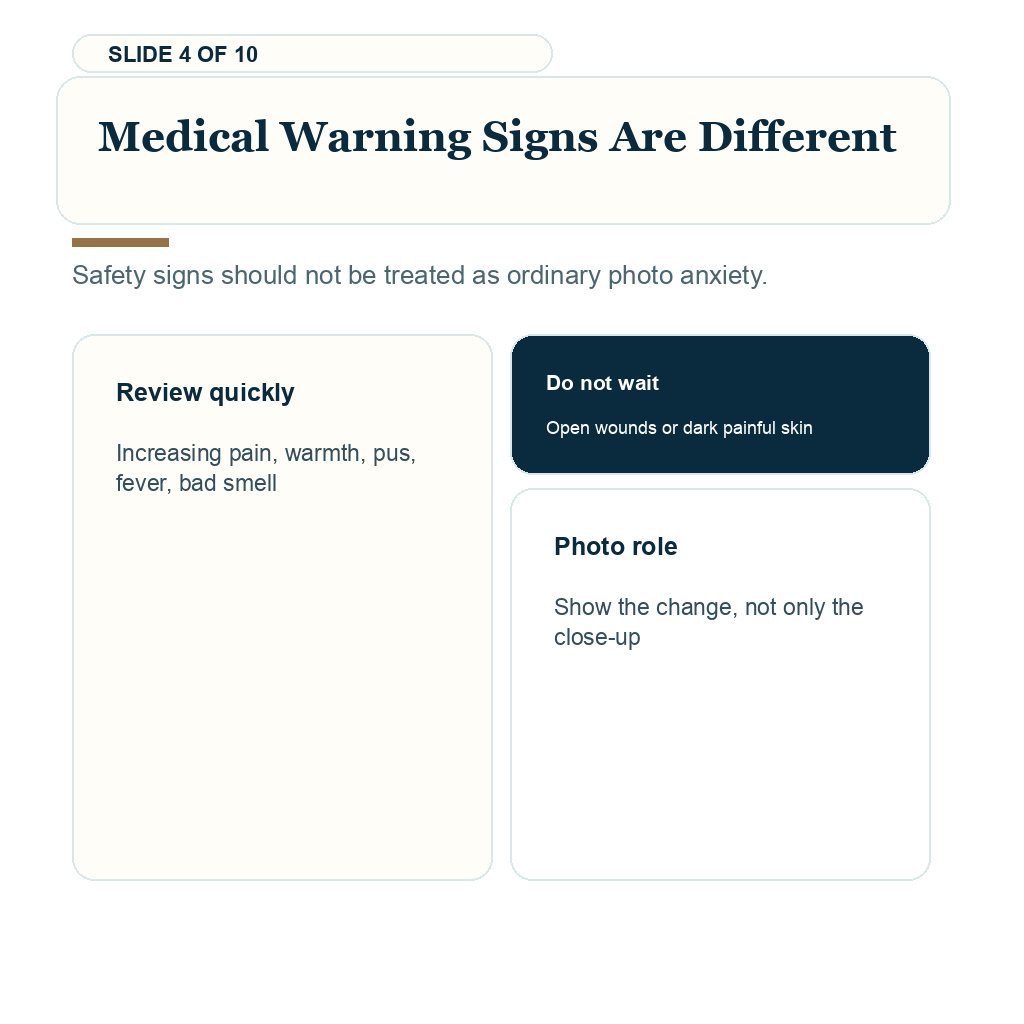
Medical warning signs belong in a different category. Increasing pain, spreading redness, warmth, pus, fever, bad smell, open wounds, or dark painful skin should be reviewed quickly by the clinic or a qualified doctor. Hair transplant necrosis warning signs need urgent attention when dark tissue or black painful scabbing appears.
These 10 day one photo review slides separate design clues, healing distortion, warning signs, donor evidence, density traps, graft number context, fair photo documentation, and when another review is useful. Swipe sideways, use the arrows one slide at a time, or choose a number below the image.
Rows, direction, and thick grafts can sometimes be judged early
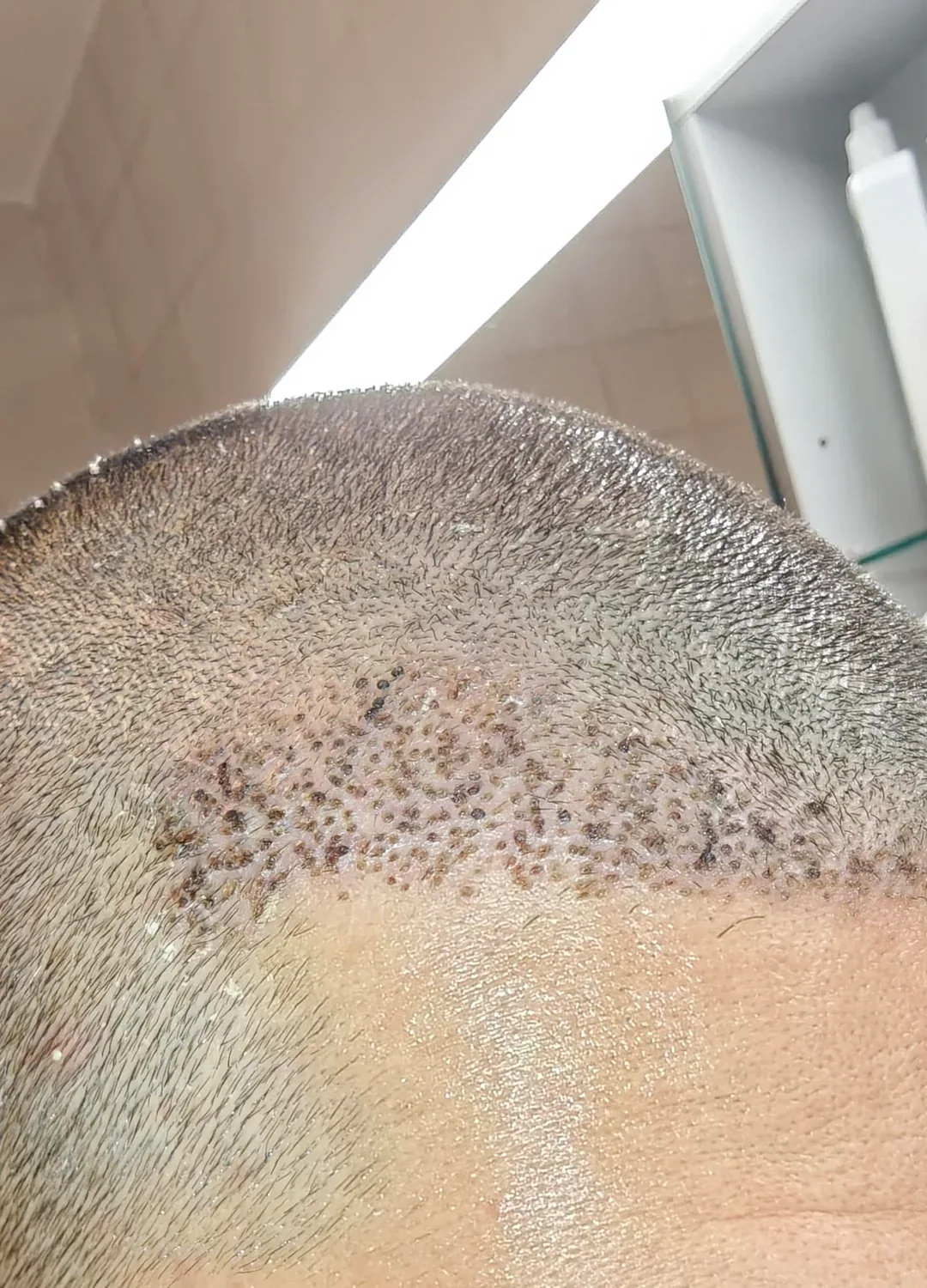
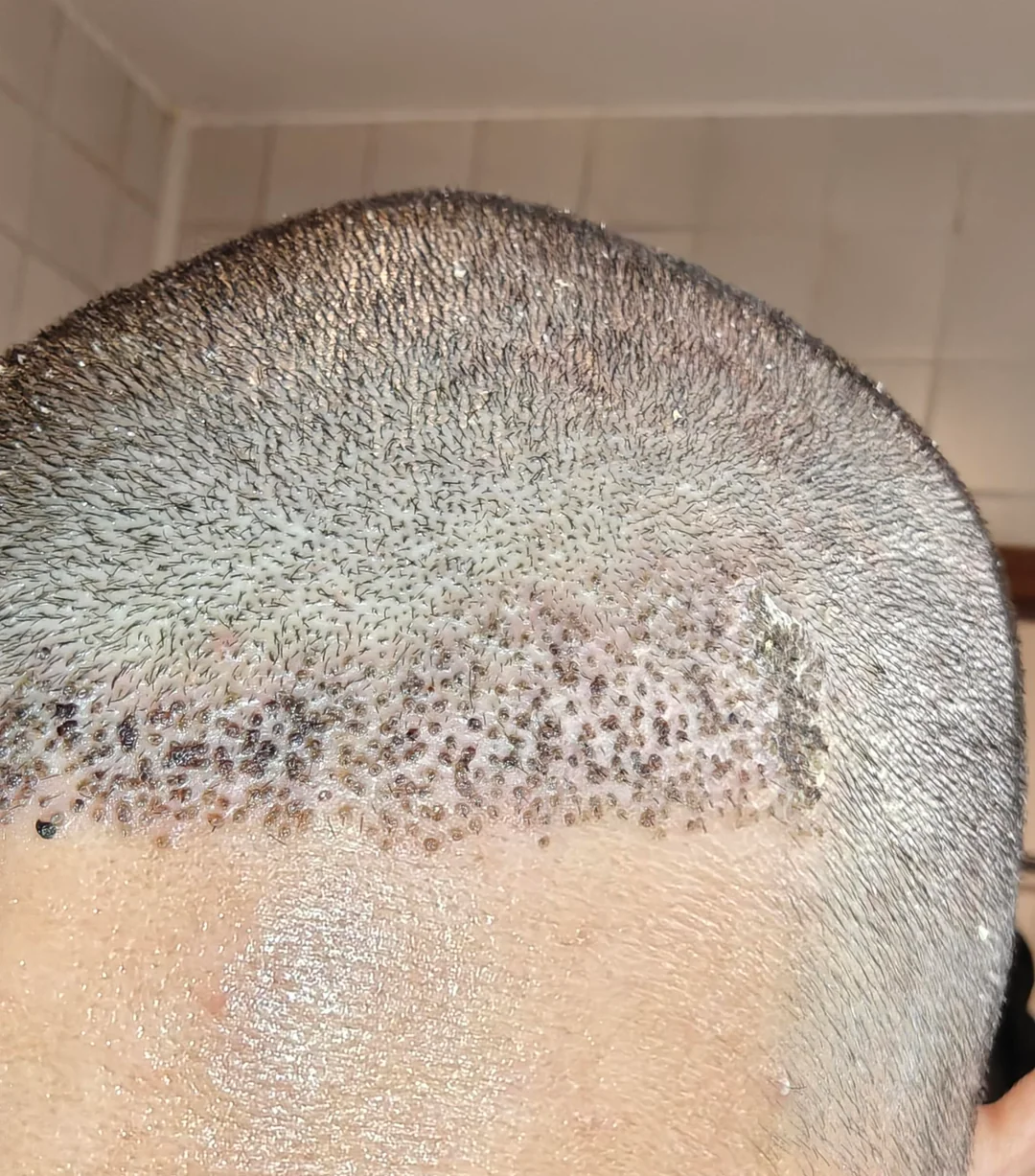
Sometimes they can be suspected, but they need careful interpretation. Short hairs, crusts, blood spots, and swelling can make spacing look more mechanical than it will after healing. A fresh close photo can exaggerate order.
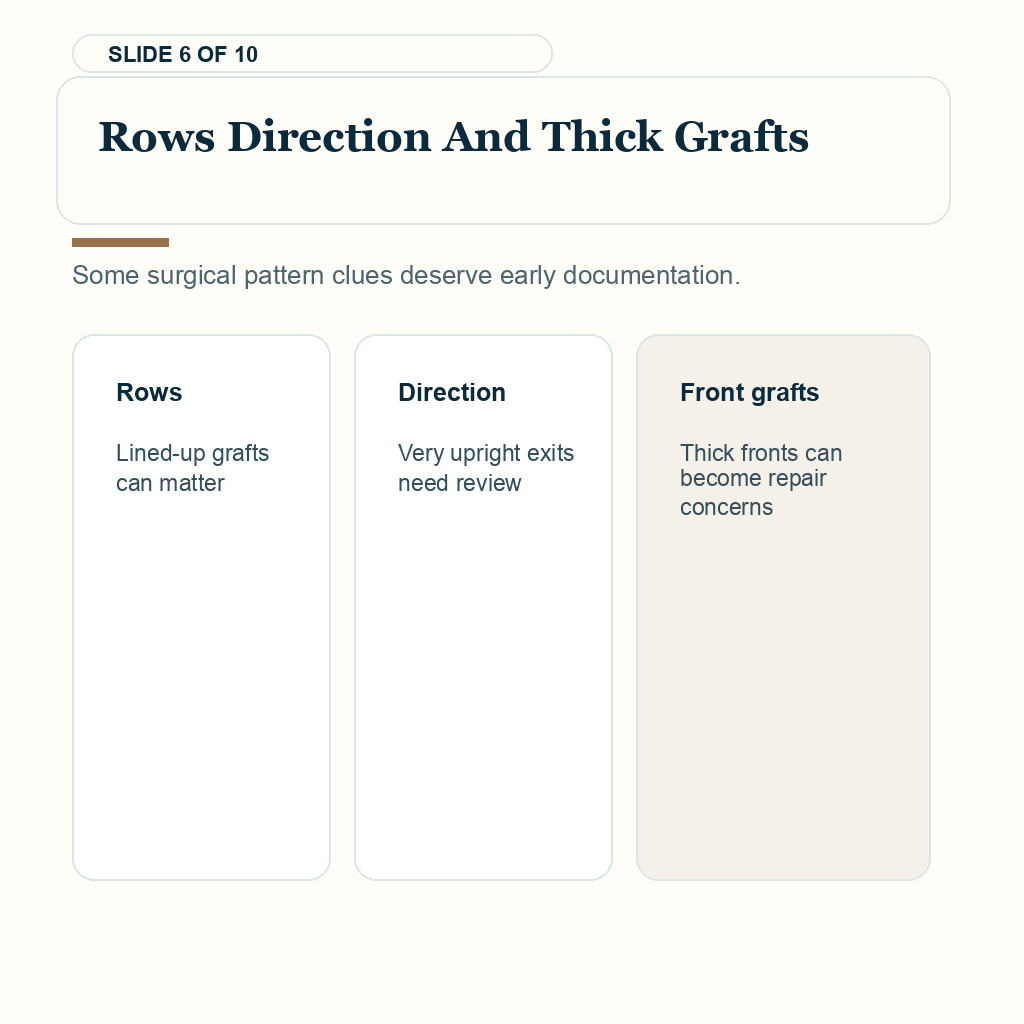
Still, I do not ignore a clearly artificial pattern. If grafts appear lined up in obvious rows, if the front edge appears built with thick grafts containing several hairs, or if the visible hairline direction looks very upright, I document it early. I do not call it the final cosmetic result, but I do not pretend the concern is meaningless.
Direction matters because transplanted hair must leave the scalp in a natural flow. If the concern remains after growth, it becomes closer to wrong hair direction after a hair transplant. Thick grafts at the front can also become a repair issue, especially when the line is low or straight, as in some pluggy hairline repair cases.
Early density and symmetry can mislead patients
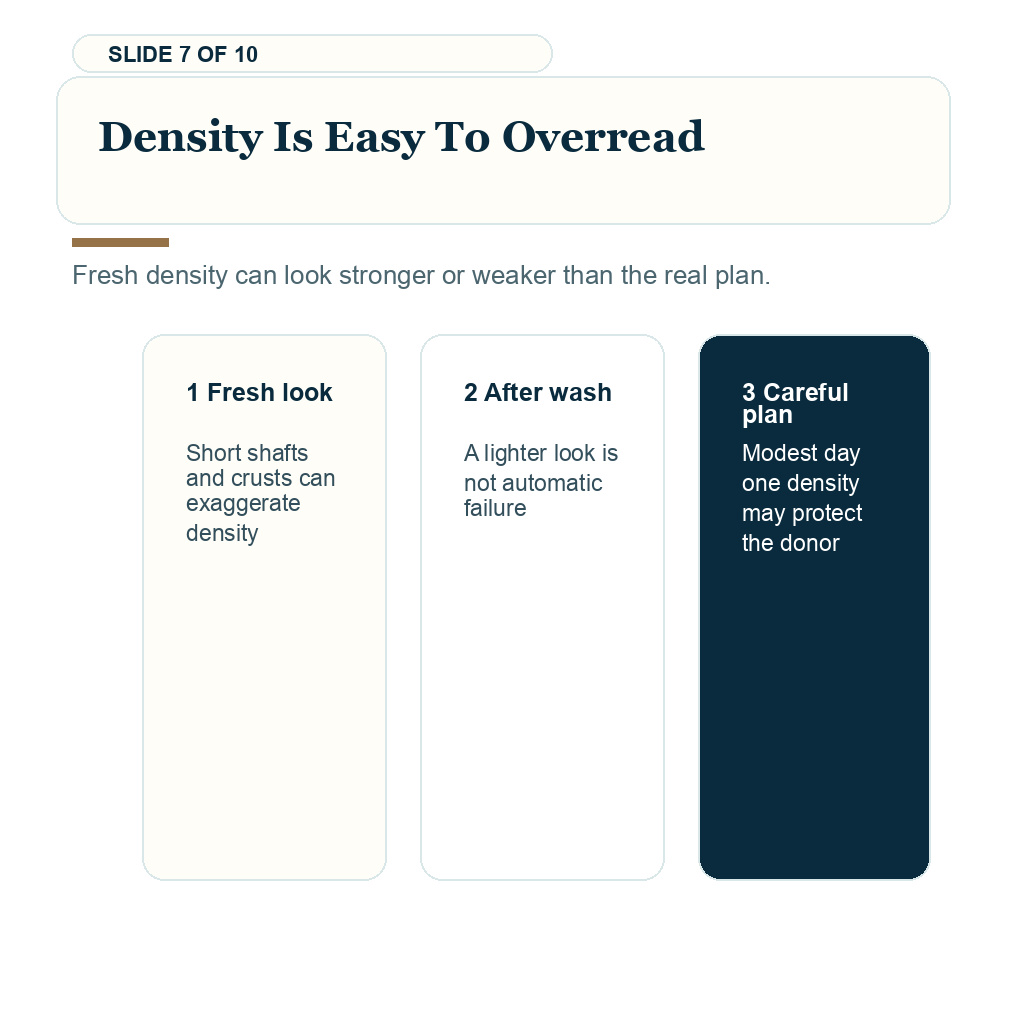
Fresh density is an illusion. The scalp contains short shafts, crusts, redness, and swelling. It may look wonderfully dense on day one, then lighter after washing and shedding. The same trap can happen when day 10 stubble looks dense before shedding changes the picture. That does not mean the surgery failed by itself.
The opposite can also happen. A careful plan may look modest at first because the surgeon protected the donor area, avoided unsafe crowding, and planned for future loss. A dramatic fresh photo is not always a safer plan.
Symmetry is also easy to misunderstand. Mild early unevenness can come from swelling, natural facial asymmetry, or deliberate planning. A perfectly straight and equal hairline may actually look less natural than a softer, slightly irregular one. If the concern persists later, then uneven hairline after hair transplant becomes the more relevant question.
The graft number does not prove the day one photo is good
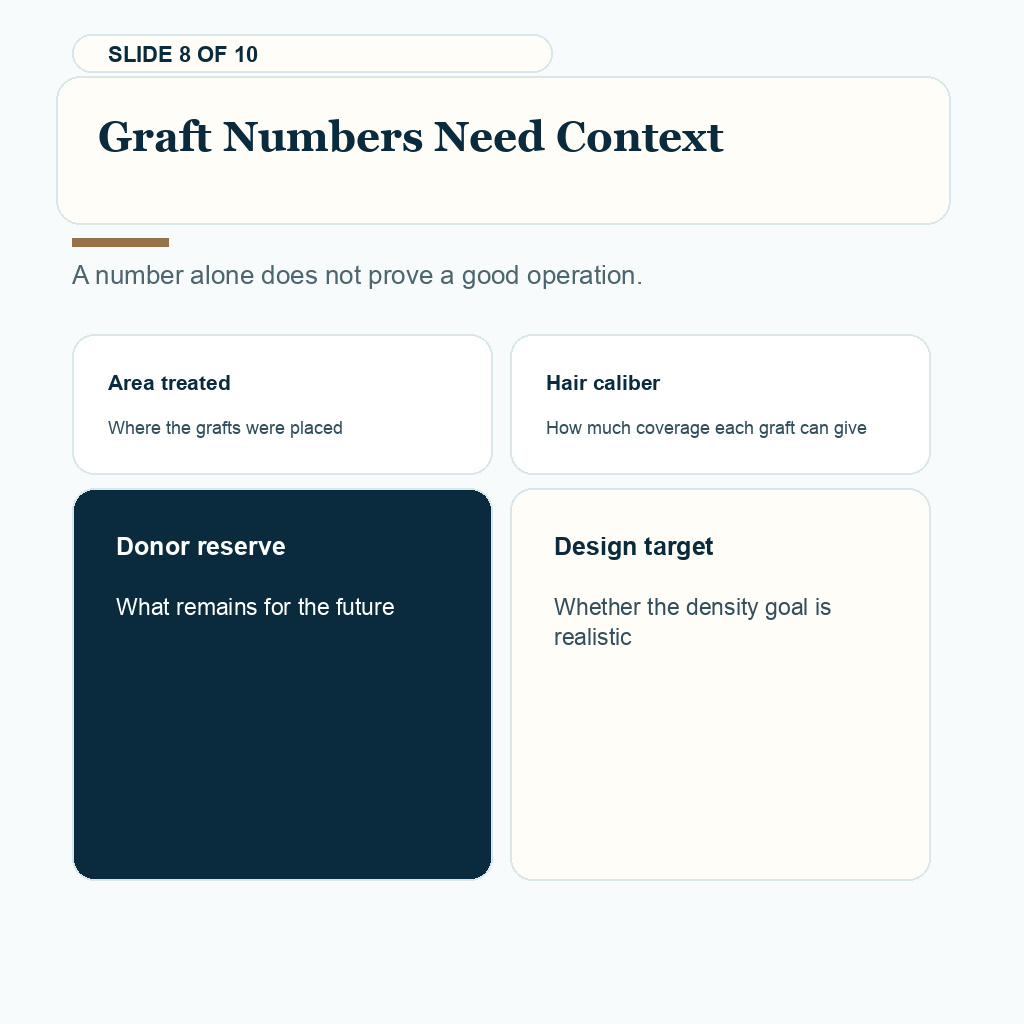
No. A graft number without area, donor quality, hair caliber, density target, and design logic is incomplete information. A clinic can say 4000 grafts and still use them poorly. Another plan may use fewer grafts more intelligently. A total number cannot explain whether a small crown pass, open temple corner, or mature hairline height was deliberate unless the written plan names those priorities.
Graft numbers need to be calculated from the recipient area size, donor reserve, hair characteristics, and long-term strategy. The day one photo should not be judged by number alone.
Visual density needs context too. I ask whether the design, donor management, and future plan are sound. I do not judge only whether the fresh scalp looks full.
Future planning matters more than the fresh photo
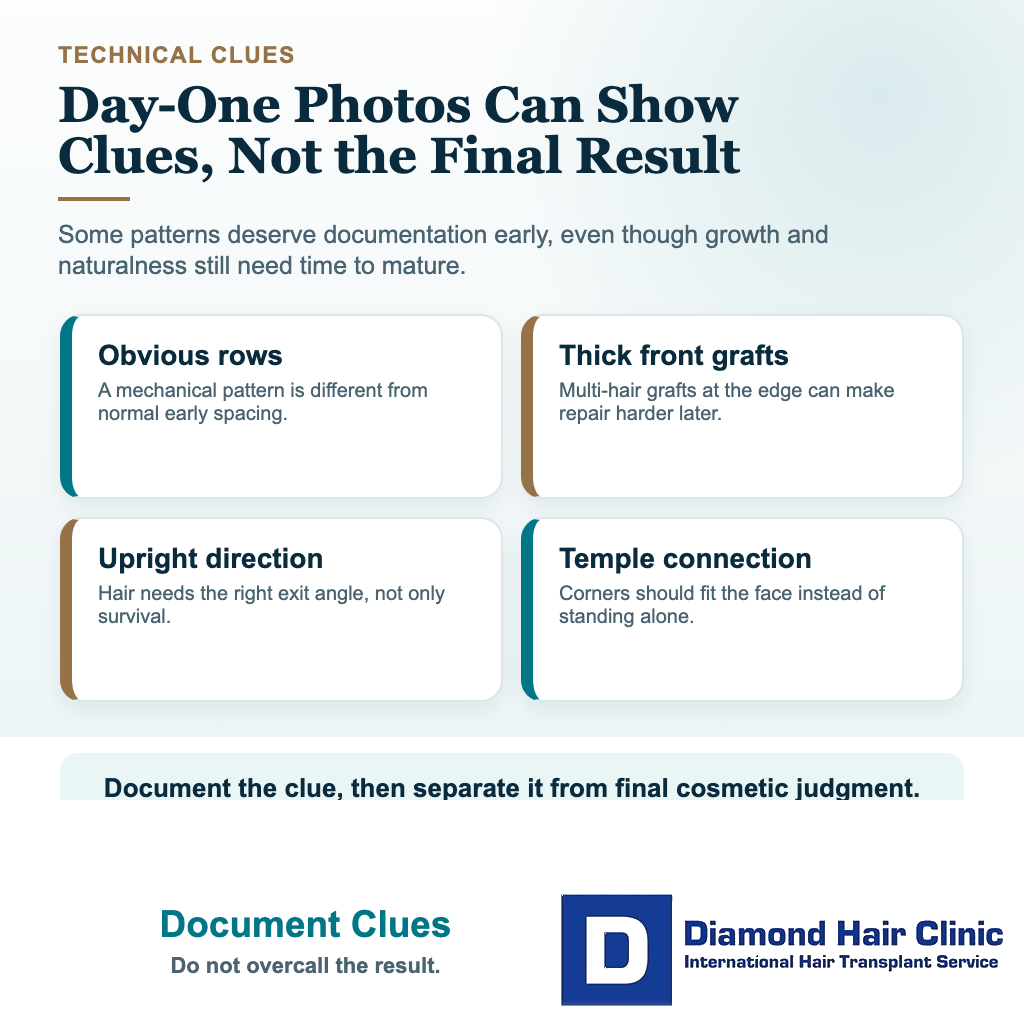
The question I ask is simple. Does this design belong to the next 10 years of the person’s hair loss pattern, or only to the first update photo after surgery?
Compare the photo with your written plan before comparing it with another patient’s reveal. I want to know whether the grafts match your zones, donor limits, and long term strategy.
A good plan respects future hair loss. It protects donor resources, avoids chasing a teenage hairline, and focuses on what can remain natural even if native hair continues to thin. This matters especially in younger people, because the plan cannot be built only for next month’s front photo.
Candidacy comes before artistry. If the deeper question is whether someone is a good candidate for a hair transplant, a dramatic day one photo should not close the discussion.
Concern documentation should start with clear photos and details
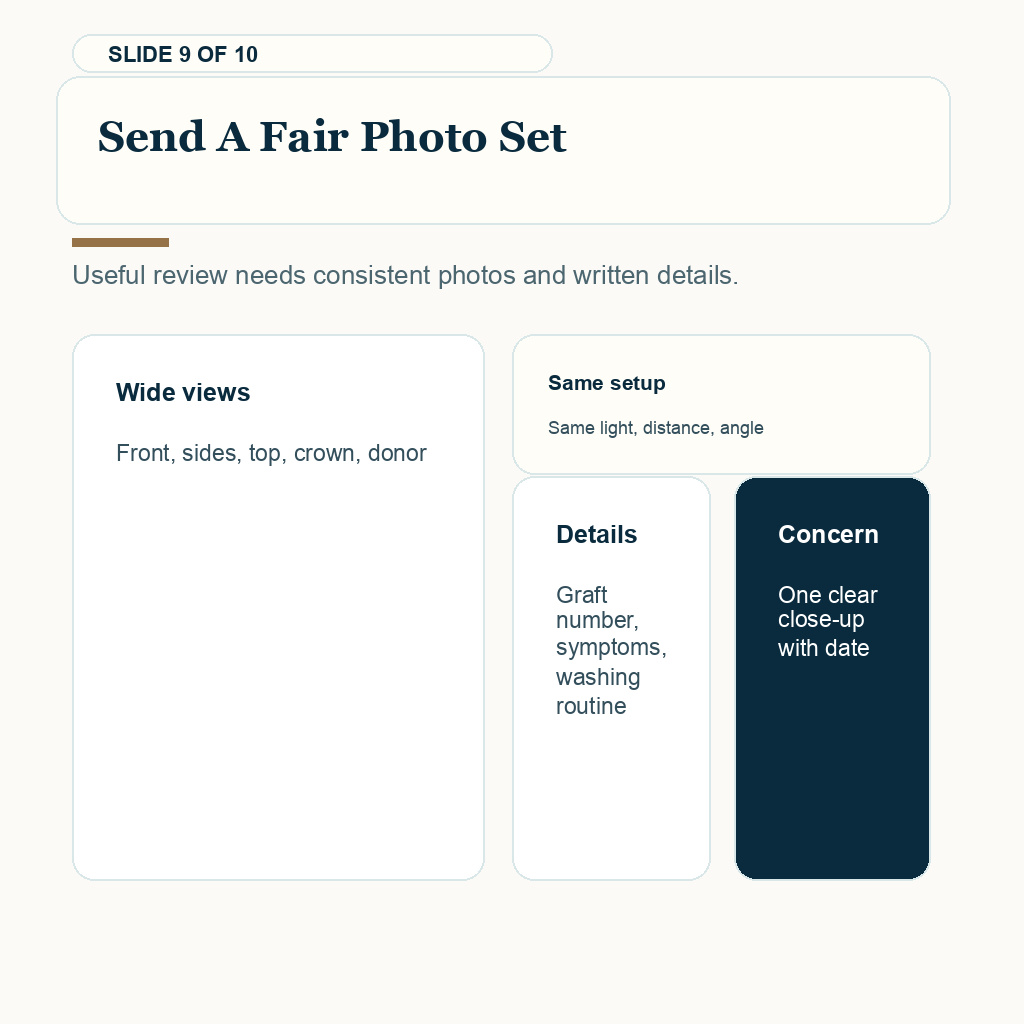
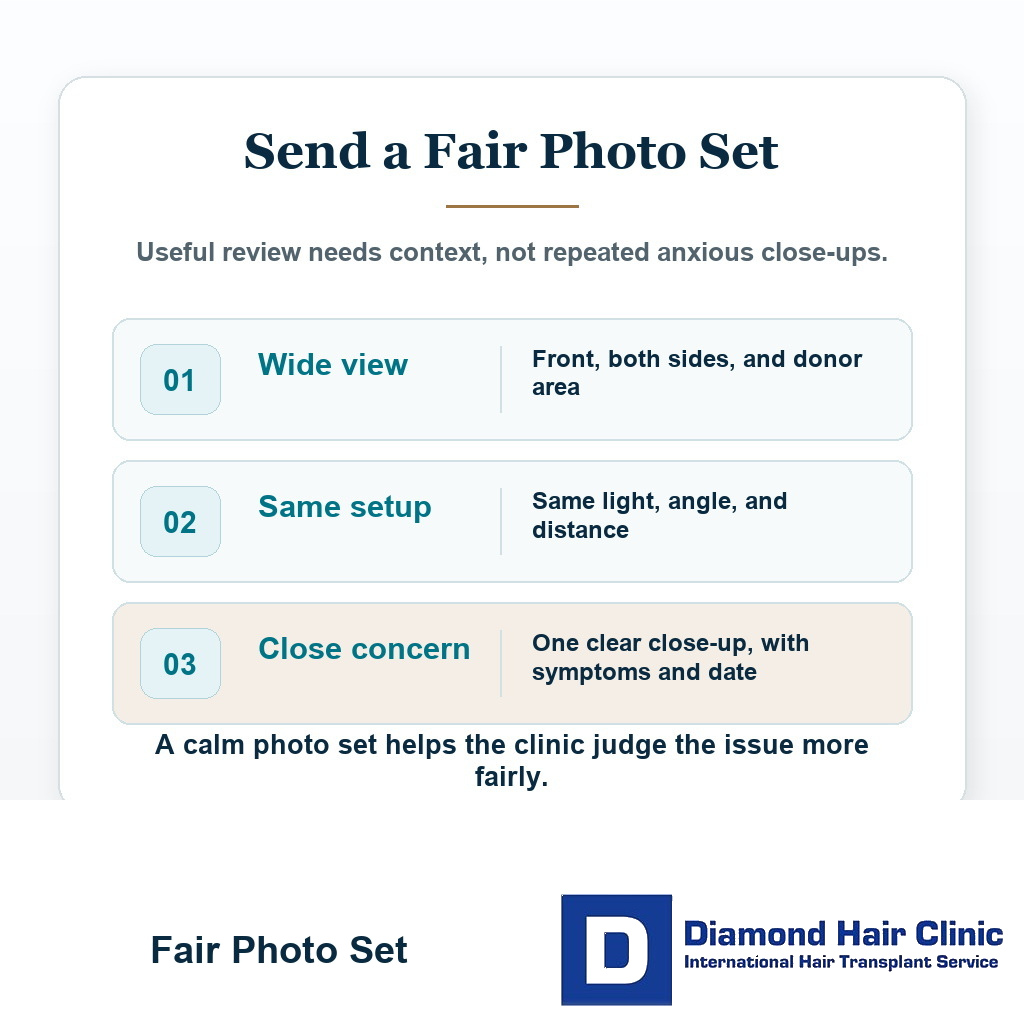
If you feel uneasy, take clear photos rather than 20 emotional close ups. Include the front, both oblique angles, both side views, the top, the crown if treated, and the donor area. Keep the light steady and the camera at the same distance each time. The follow-up guide on early hair transplant review photos explains the exact photo set to send when density or direction looks worrying after washing.
Write down the graft number, areas treated, who performed each surgical step, aftercare instructions, symptoms, washing routine, and the exact concern. This information is more useful than asking whether one close photo looks good or bad.
Follow hair transplant aftercare carefully while documenting. Rubbing, scratching, inspecting grafts too closely, or changing the washing routine because of fear can create more risk than the photo itself.
What I can judge before the result exists?
On day one, I can review placement logic, early bleeding, swelling, visible trauma, hairline shape, donor extraction pattern, and whether the treated area matches the plan. I cannot judge final density, full growth, texture, caliber, or whether the result will look mature at 12 months.
This distinction protects the patient from two mistakes. One mistake is ignoring a real early warning sign because the result is not mature. The other is calling the surgery failed from a fresh photo that only shows swelling, crusts, short shafts, and early redness.
The useful day one record includes clear photos and written details, not only a dramatic close-up. It should help the surgeon decide whether aftercare needs to change, whether the scalp needs medical review, or whether the patient simply needs a calmer timeline.
Waiting and second opinions depend on the type of concern
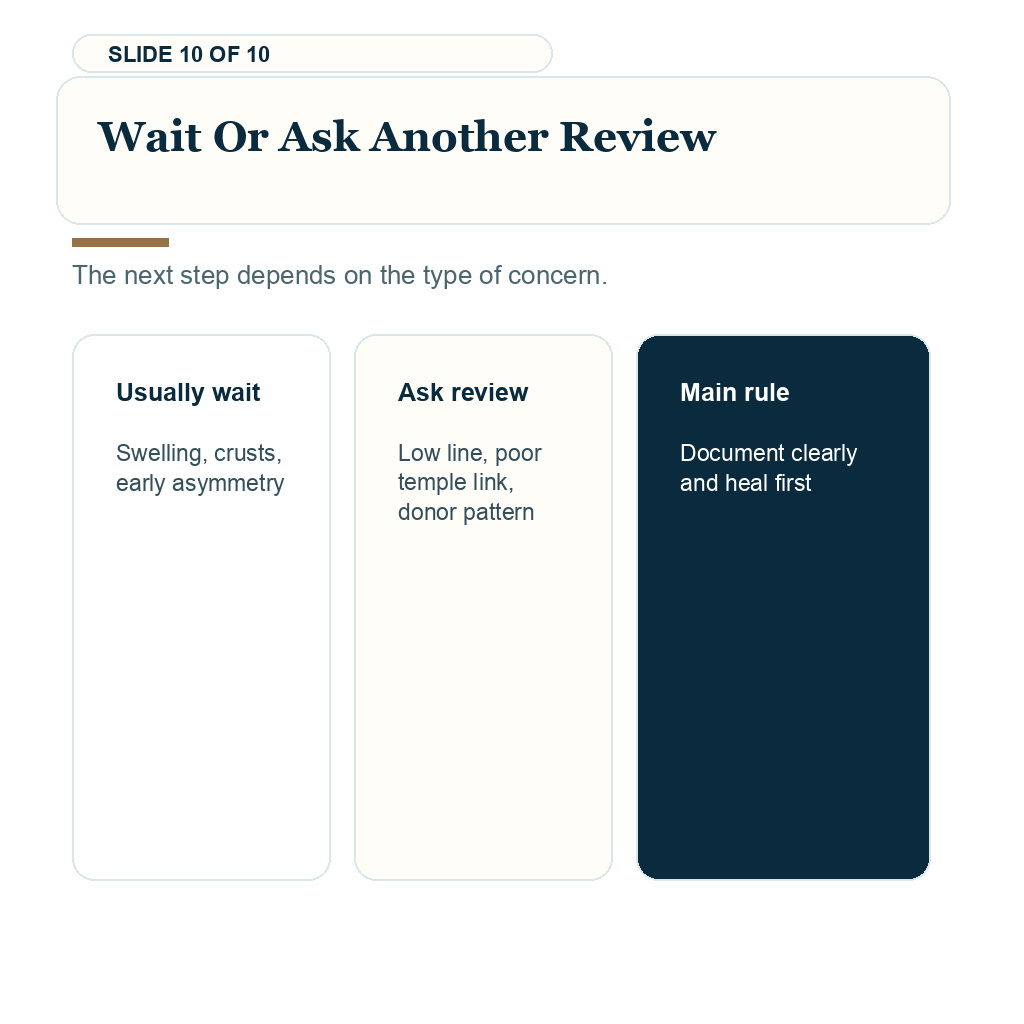
Waiting is usually wiser when the concern is swelling, redness, crusting, appearance after the first wash, mild early asymmetry, or density that looks low in the first days. These can create strong anxiety without proving a failed result.
Another opinion becomes more useful when the hairline already appears clearly too low, too straight, too aggressive for age, poorly connected to the temples, or when the donor area shows a suspicious extraction pattern. It is also reasonable if the clinic avoids clear answers about who performed the important surgical steps.
The purpose of another opinion is not always to plan repair. Sometimes the best opinion tells you to document carefully, heal properly, and avoid making an emotional decision too soon.
Comparing the early photo with later evidence needs context. The broader guide to hair transplant before and after photos explains why lighting, angles, timing, donor views, and case match matter.
Day one photos can reveal the thinking behind the surgery, but they cannot tell you the final quality of growth. Judge the design, donor pattern, and long-term logic. Then give biology the time it needs.
Read this review excerpt
We also had a levelled conversation about my hairline and results I could expect based on my donor density area.