


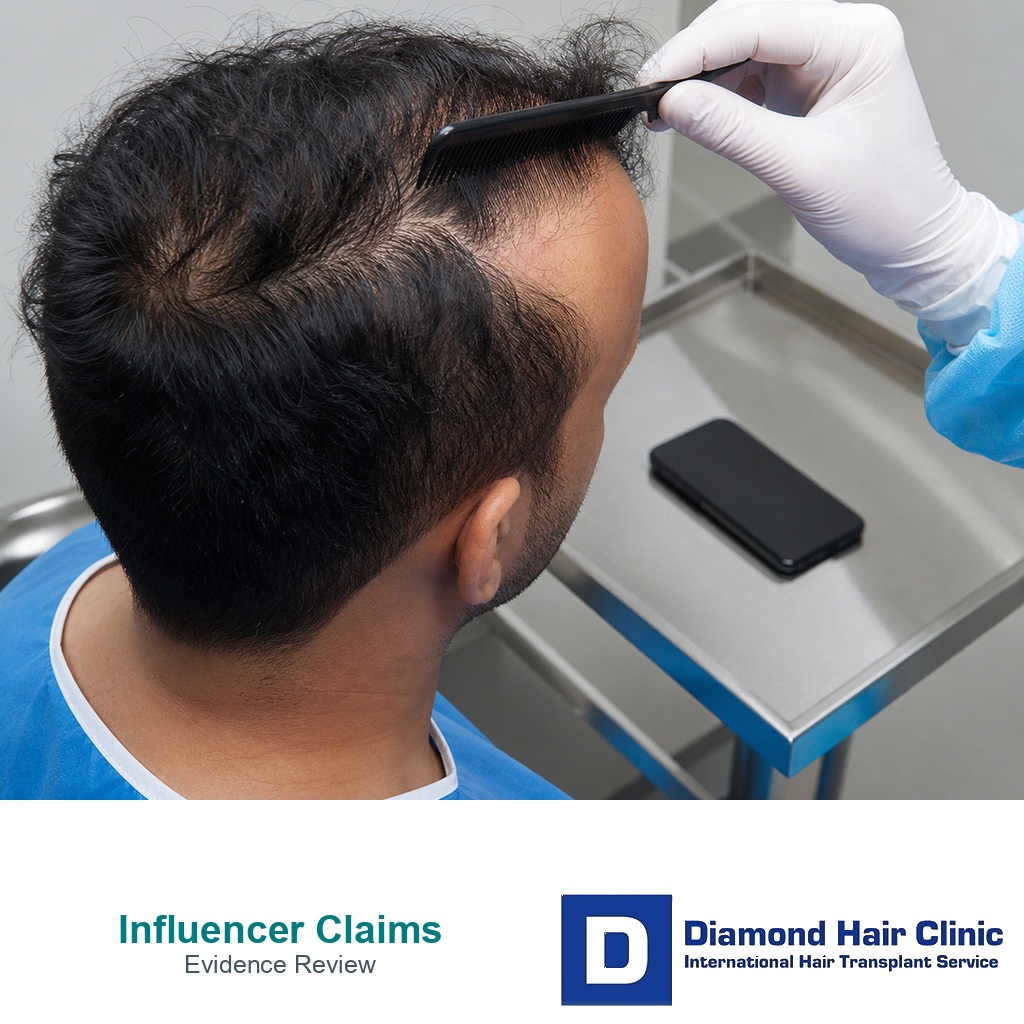
Hair Transplant Influencers Need Medical Verification
A hair transplant influencer can help you notice questions you had not thought about. A video may show the recovery period, the emotional side of hair loss, or what a result looks like after several months.
But an influencer should not decide your surgery. A hair transplant is not a product recommendation. It permanently moves a limited donor supply into the recipient area. Once grafts are used, the decision cannot be undone like changing a hotel, package, or travel plan.
The useful way to read influencer content is simple. Let it give you questions, not certainty. Treat a personal story, discount code, clinic list, dramatic photo, and medical plan as different things. Before you book, the decision still has to survive diagnosis, donor measurement, surgeon responsibility, medical consent, and a plan built for your own hair loss pattern.
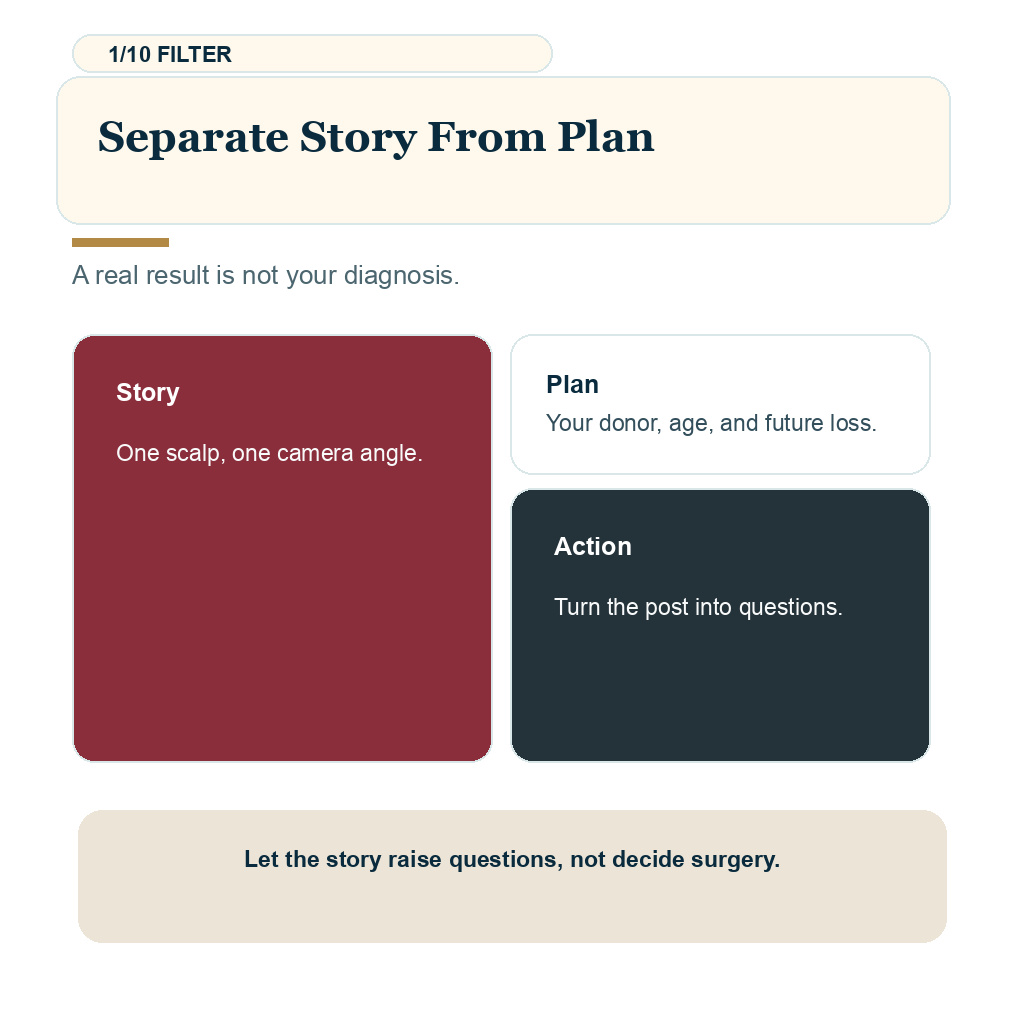
A good result on someone else can be real and still be a poor guide for you. Their age, donor strength, hair caliber, skin contrast, crown demand, medication use, and future hair loss may be different from yours. I treat online stories as a starting point, not as proof that the same surgery is right for another scalp.
Before a story affects your booking, look for the quiet views. Normal lighting, no styling, donor area, timeline, and who made the surgical decisions matter more than the edit.
Influencer recommendations can feel convincing before the medical details are checked
Hair loss changes the way people search. A harsh photo, a comment from someone close, bathroom lighting, or a windy day can make the decision feel urgent. In that moment, a confident online voice can feel safer than sitting with uncertainty.
Someone says they already did the research. They show a good result. They speak about the clinic with confidence. The mind wants relief, so the recommendation starts to feel like an answer before the medical risk has been checked.
The danger is speed. Many people who later feel regret after a hair transplant do not regret wanting hair. They regret trusting a list, discount, result post, or clinic brand before understanding donor limits, hairline design, crown demand, and future hair loss.
If online content makes you feel rushed, pause. A good surgical decision should become clearer when you ask more questions. It should not depend on panic, urgency, or the fear that you will miss your chance.
Paid recommendations still need separate verification
A paid recommendation can still describe one person’s real experience. A person can receive a benefit and still show a genuine personal result. The practical issue is different. A personal result and an independent medical recommendation are not the same thing.
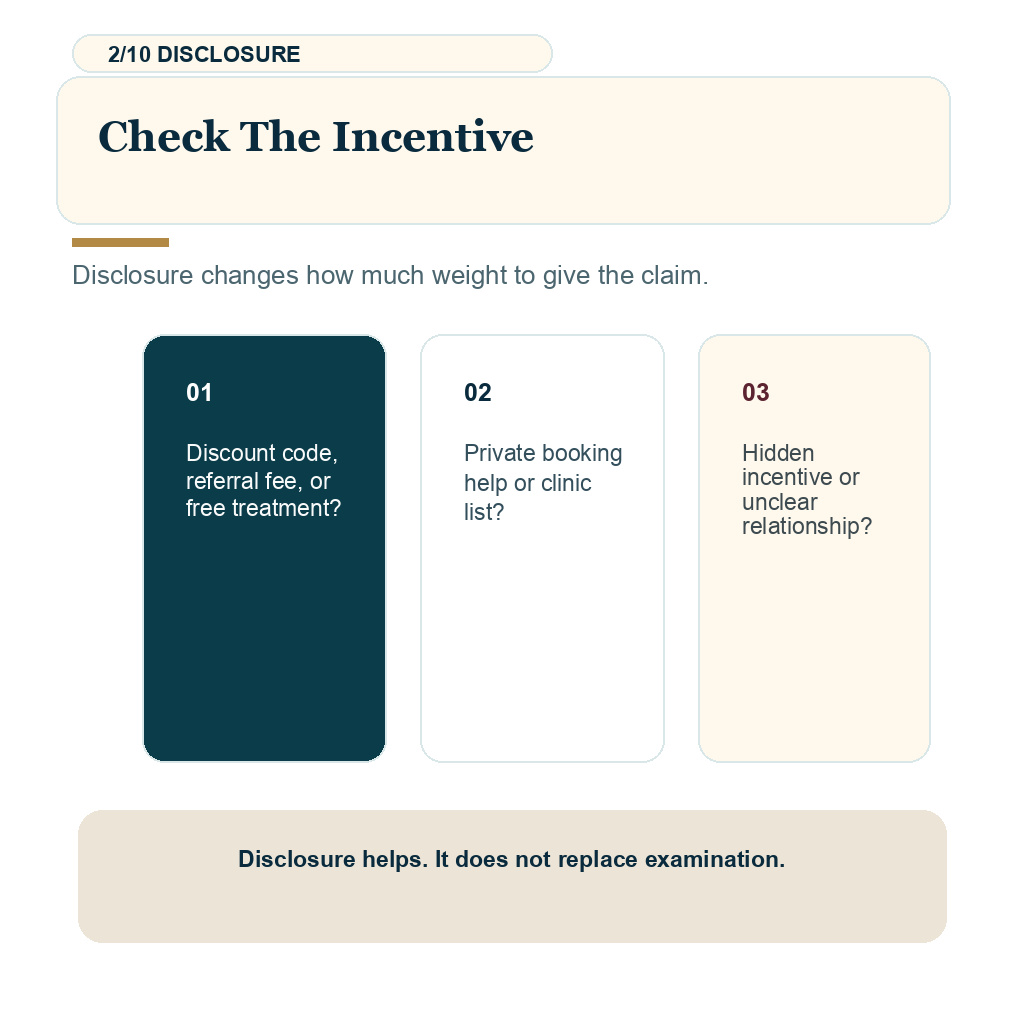
Referral fees, clinic partnerships, discount codes, free treatment, paid lists, or private booking support should change how much weight you give the recommendation. Disclosure helps. Hidden incentives are more concerning because they make a sales route look like neutral advice.
Being approached by a clinic can reflect the value of an audience, not a judgment that surgery is appropriate. Several invitations are not several independent clinical opinions. A complimentary offer still needs the same assessment of candidacy, donor reserve, future loss, and timing as an operation you pay for yourself.
Filmed or promoted patient journeys may include more access, filming time, or doctor attention than the ordinary pathway. Separate that journey from the decision that matters for your own case. The same surgical roles, supervision, and follow-up still need to apply to you.
A free add on after a result post belongs in the same category. It may be harmless, but it should not become the reason to skip the donor, hairline, surgeon role, and follow up questions.
Even a fully disclosed recommendation cannot examine your donor area. It cannot judge whether the graft number is safe, whether your hair loss is stable, whether crown work is safe now, or whether your expectations match your donor reserve.
Public reputation can help, and hair transplant reviews in Turkey can be useful when they include real details. But reviews and posts are still selective. A clinic may show its best cases, easiest hair types, or most dramatic transformations. That shows possibility, not your likely result.
Before trusting one polished story, ask what the post cannot prove. It cannot prove who made the surgical decisions, how grafts were handled, whether the donor was protected, or whether the same plan would be safe for your case.
A referral route still needs clear medical proof
A referral can introduce a clinic. It cannot give medical consent. Treat a discount code, clinic list, booking service, or direct message recommendation as a lead, not as a decision.
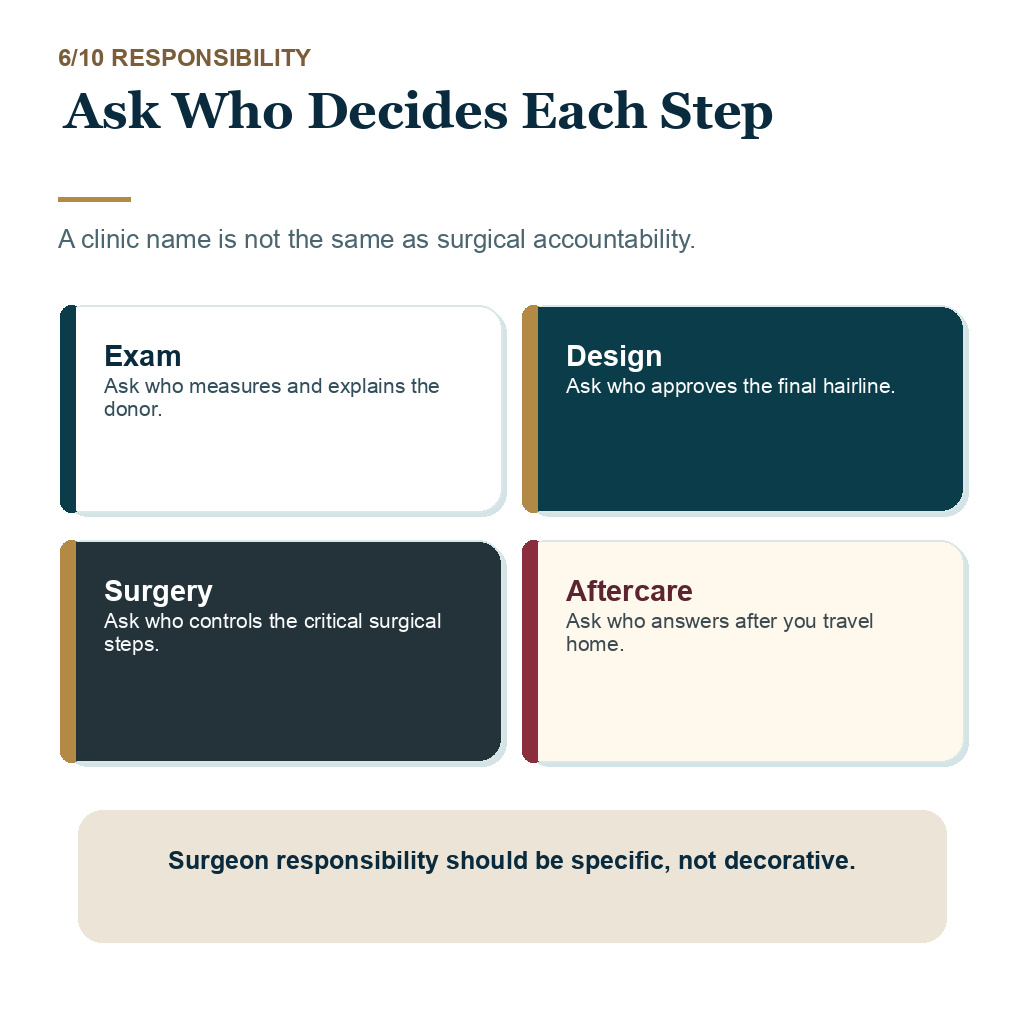
The same clinical questions must be answered as if you found the clinic alone. Who examines the case? Who designs the hairline? Who decides the graft number? Who creates the recipient area incisions? Who supervises extraction and placement? Who follows the result after you return home?
The clinic also needs to explain what happens if surgery is not advisable. That answer matters. A safe clinic must be able to say no, reduce the plan, delay surgery, or explain why medication or further observation should come before grafts.
Before paying through any referral route, make sure the basics are clear. The guide to what should be clear before booking a hair transplant separates excitement from the information you need before committing.
Useful patient stories show the details behind the result
The most useful stories are not always the most polished ones. I pay attention when someone explains the awkward months, the waiting period, the donor healing, the styling limits, the crown compromise, or the small imperfections that remained after a good result.
Marketing often removes those parts. It shows travel, operation day, early growth, final smile, and a clean transformation. That may still be a real story, but the edited version can hide the details that help another person make a safer decision.
Look for details that are hard to polish away. Donor appearance after a short haircut, harsh light, wet hair, shedding, redness, numbness, itching, swelling, and the anxiety of waiting month after month tell you more than one strong final image.
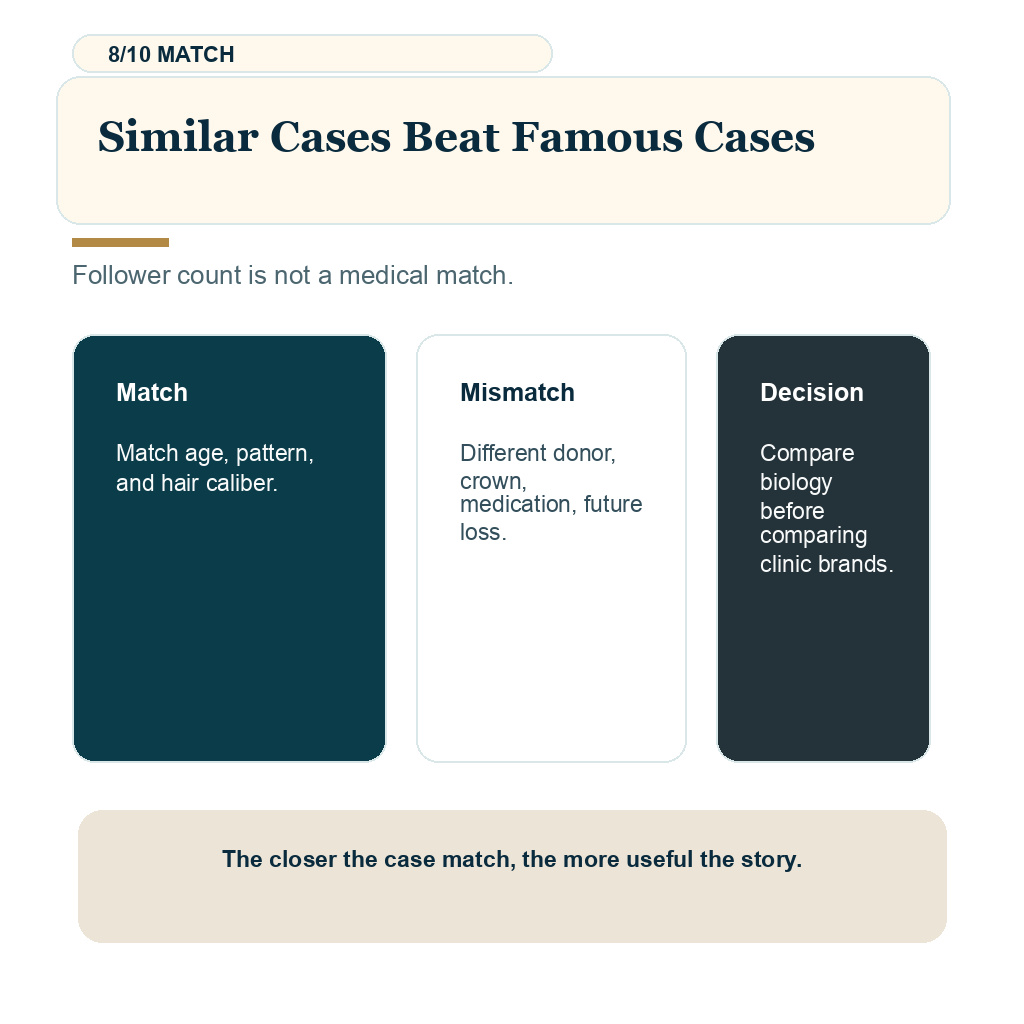
Compare yourself with similar cases, not famous cases. Similar age, donor strength, hair caliber, curl, scalp contrast, Norwood pattern, crown demand, and medication status matter more than follower count. A small frontal case does not predict what is possible for advanced baldness.
Surgeon responsibility matters more than social proof
The decisions that shape a hair transplant are not decorative. Hairline placement, graft distribution, donor management, extraction pattern, angle, direction, density planning, and future loss strategy decide whether the result looks natural years later.
In a careful clinic, the plan is not built around the largest number that sounds impressive. An unsafe number should be refused even when it would make the package look more attractive.
High-volume clinic marketing becomes dangerous when price and volume hide who is responsible. Many people think the main difference between clinics is price. Often the deeper difference is whether one surgeon owns the diagnosis, donor protection, tradeoffs, and follow-up when the patient is worried at month two.
If the surgeon is only a name on the website while the main surgical decisions are unclear, you may not know who is accountable. A skilled team matters, but the surgeon still has to guide diagnosis, design, planning, recipient area incisions, and critical surgical judgment.
Before trusting any recommendation, compare it with the principles behind a surgeon-led hair transplant clinic.
Medical checks before trusting a recommendation
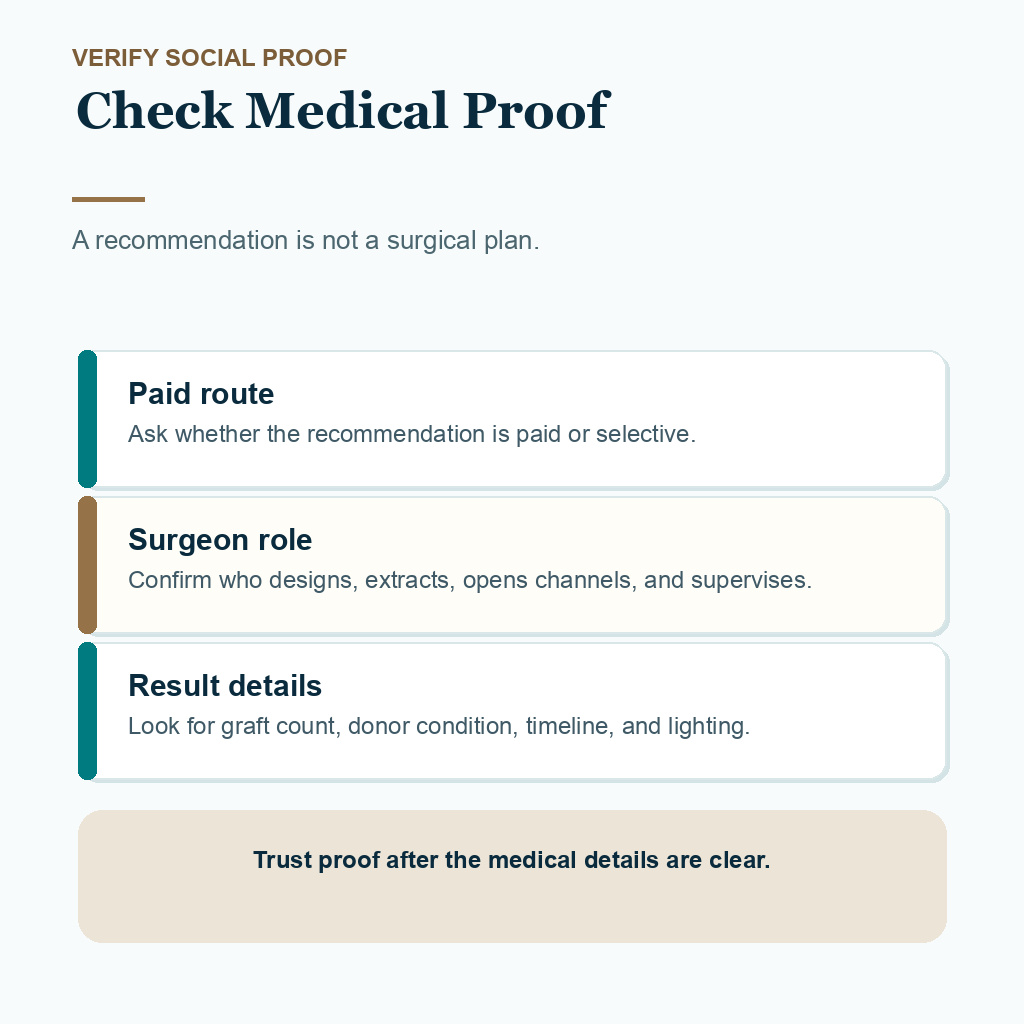
Separate the person recommending the clinic from the clinic’s actual process. The recommendation may lead to a consultation, but the consultation must stand on its own.
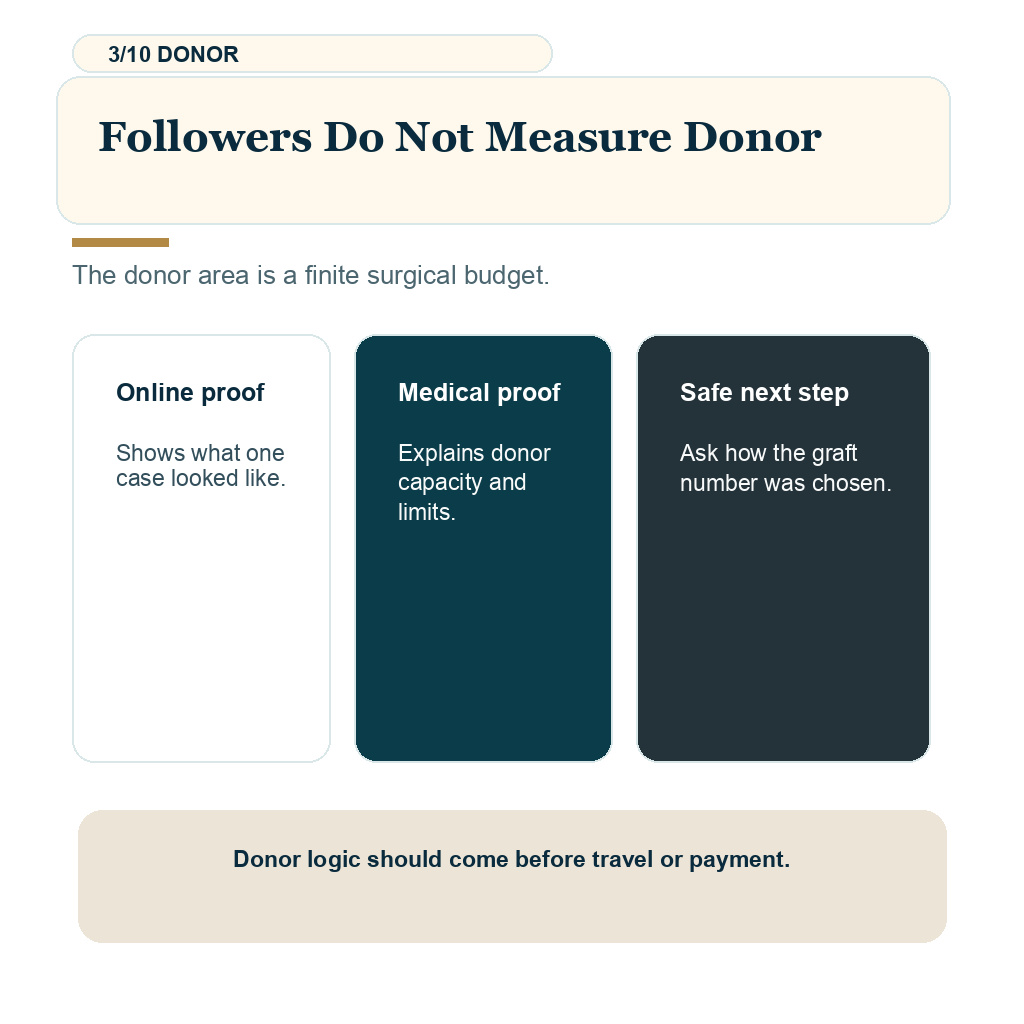
The donor area needs to be measured and explained. A graft number should come from donor capacity, hair caliber, recipient area need, and future planning, not only from the bald area you want covered. How graft numbers are calculated should be tied to those limits, not treated as a sales number.
The hairline discussion should happen before surgery day pressure begins. The design needs to fit age, face, temple points, future thinning risk, and available donor supply. This is especially important if someone is too young for a hair transplant or still losing native hair quickly.
You should also know how many patients are scheduled that day and which steps the surgeon performs personally. Single graft use in the frontal hairline, angle control, direction, and graft handling are not small details. They are part of why a result looks natural or artificial.
Social proof can distort hairline, density, and donor expectations
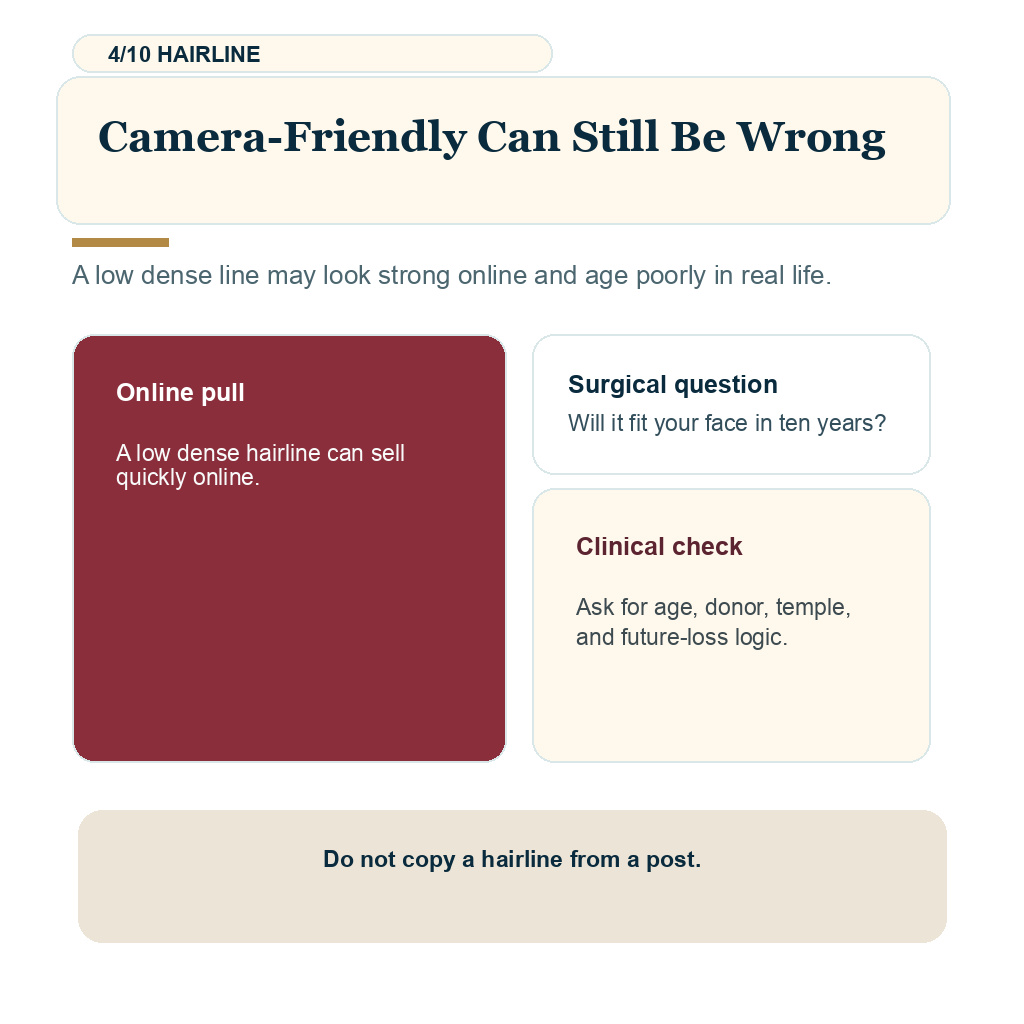
Social proof often favors the most dramatic transformation. A low hairline, dense frontal wall, or huge graft number can look powerful in a post. But the scalp is not a flat photograph. It is a living donor supply with limits.
The trap is thinking impressive means appropriate. A dense low straight hairline may look exciting immediately after surgery, especially when redness and short grafts create a temporary impression of fullness. Years later, the same design can look too young, too flat, or disconnected from continuing hair loss behind it.
Natural hairline design frames the face in a way that can still make sense as the person ages. Density also needs context. A result can look good on camera and still feel thin in daily life under bright light, wet hair, or short styling.
Donor expectations deserve the same scrutiny. Extraction marks, temporary donor shock, or reduced density at the back and sides may surprise people. Some of that can recover. Some of it can show the cost of taking too many grafts or concentrating extraction too tightly.
Suitability needs to be checked before prices are compared or travel is booked. First find out whether you are truly a good candidate for a hair transplant.
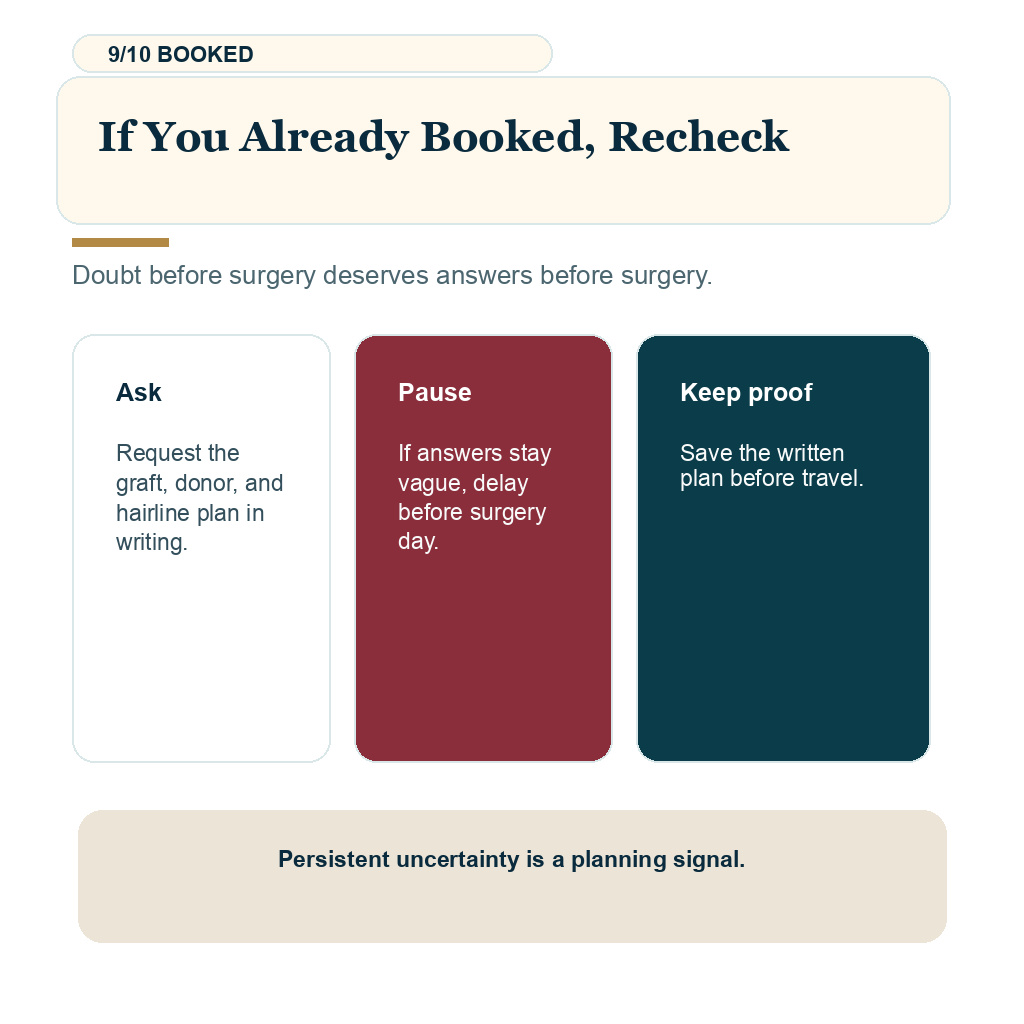
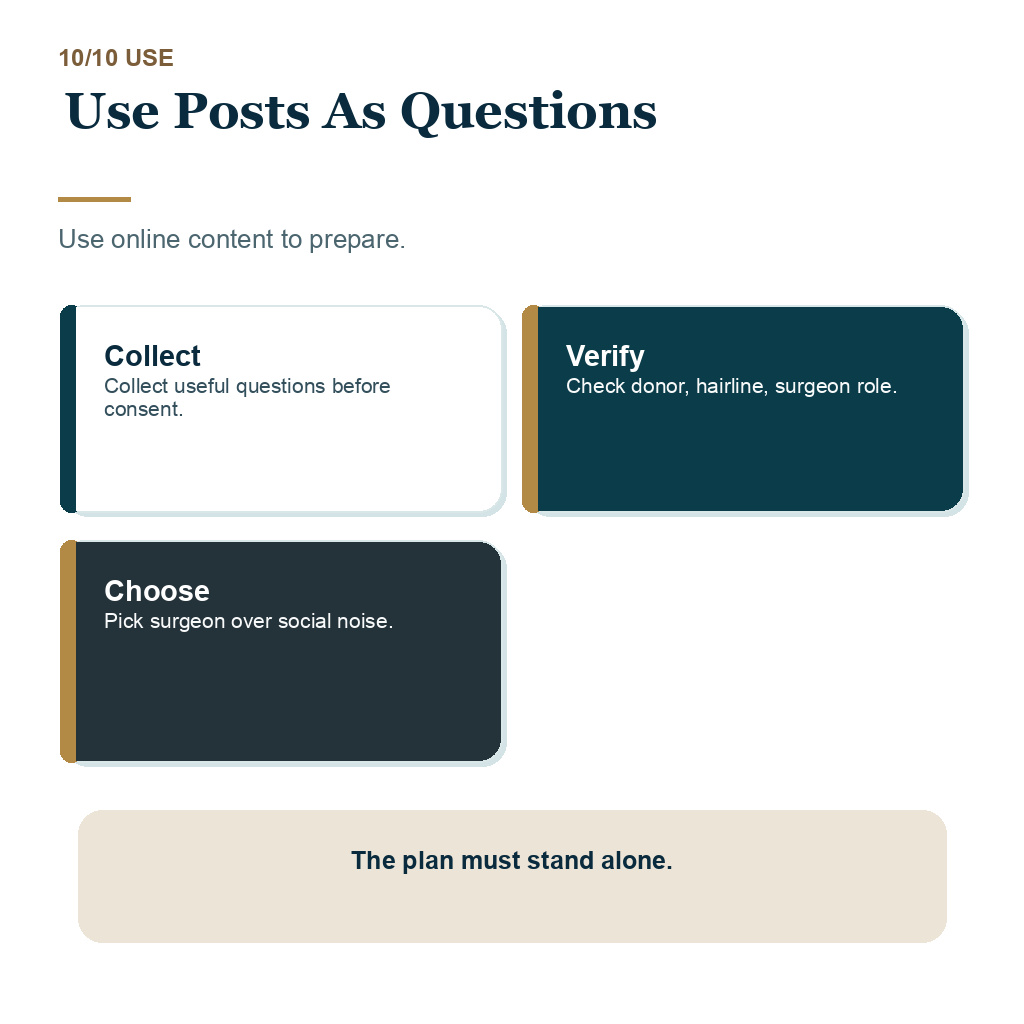
Use the 10 influencer proof filter slides below to separate personal stories, incentives, donor limits, hairline design, photo conditions, surgeon responsibility, urgency, similar case proof, booked case doubt, and the questions to ask before surgery. Swipe the carousel, use the arrows one step at a time, or choose a number below the image to jump to that point.


Uncertainty after booking needs a careful review before surgery
If you have already booked and feel unsure, do not ignore that feeling. Anxiety before surgery is common, but persistent doubt often means some important answer is still missing.
Start by asking the clinic for clear written answers. The answers should explain who performs each step of the hair transplant, what graft number is planned, how the donor will be protected, what hairline was agreed, what happens if the plan changes on surgery day, and what aftercare support will be available after travel.
If the answers remain vague, postponing may be safer. Losing a deposit is frustrating, but losing donor grafts to a weak plan can be much more costly. Repair surgery is usually harder, more expensive, more emotionally tiring, and more limited than doing the first procedure correctly.
Be careful with discounts, limited slots, package deadlines, and influencer urgency. A medical decision should not depend on a countdown. The donor area will still be finite tomorrow.
Online proof still needs medical verification
Influencer results can help you collect better questions. They cannot examine your donor area, measure miniaturization, choose a safe hairline, or prove who will do the critical surgical steps.
Look past the most dramatic case. Review ordinary results, healed donor areas, normal lighting, hair like yours, crown cases if the crown is your concern, and repair stories if you already had a poor transplant.
Then compare the clinic’s behavior with the red flags of Turkish hair transplant clinics. Celebrity proof, low prices, and confident graft numbers mean little if the clinic avoids surgeon identity, donor limits, medication, aftercare, or refusal when surgery is not suitable.
Use online voices to become more prepared. The plan should still make sense after the excitement fades and the donor area has to live with the result.
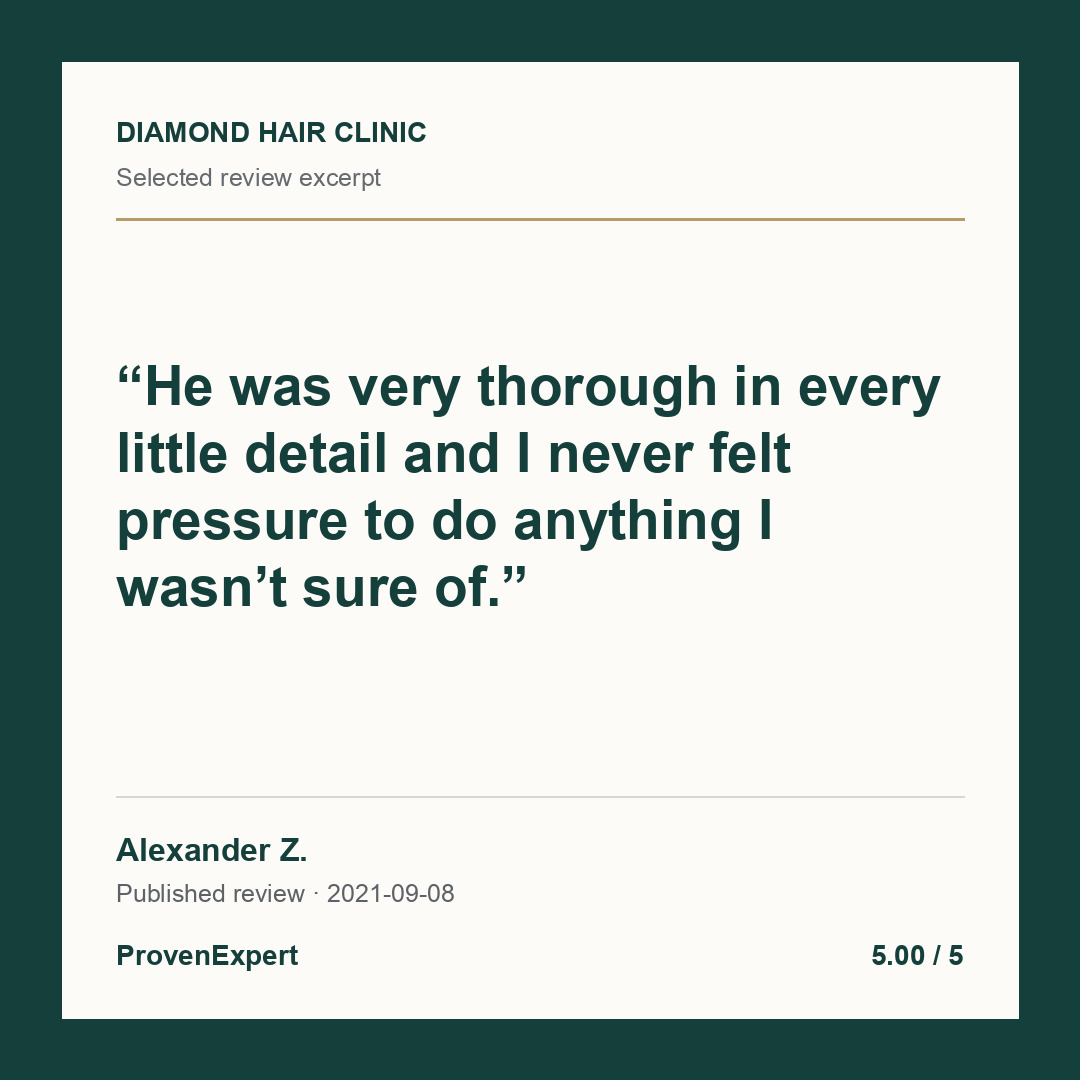
Read this review excerpt
He was very thorough in every little detail and I never felt pressure to do anything I wasn’t sure of.