


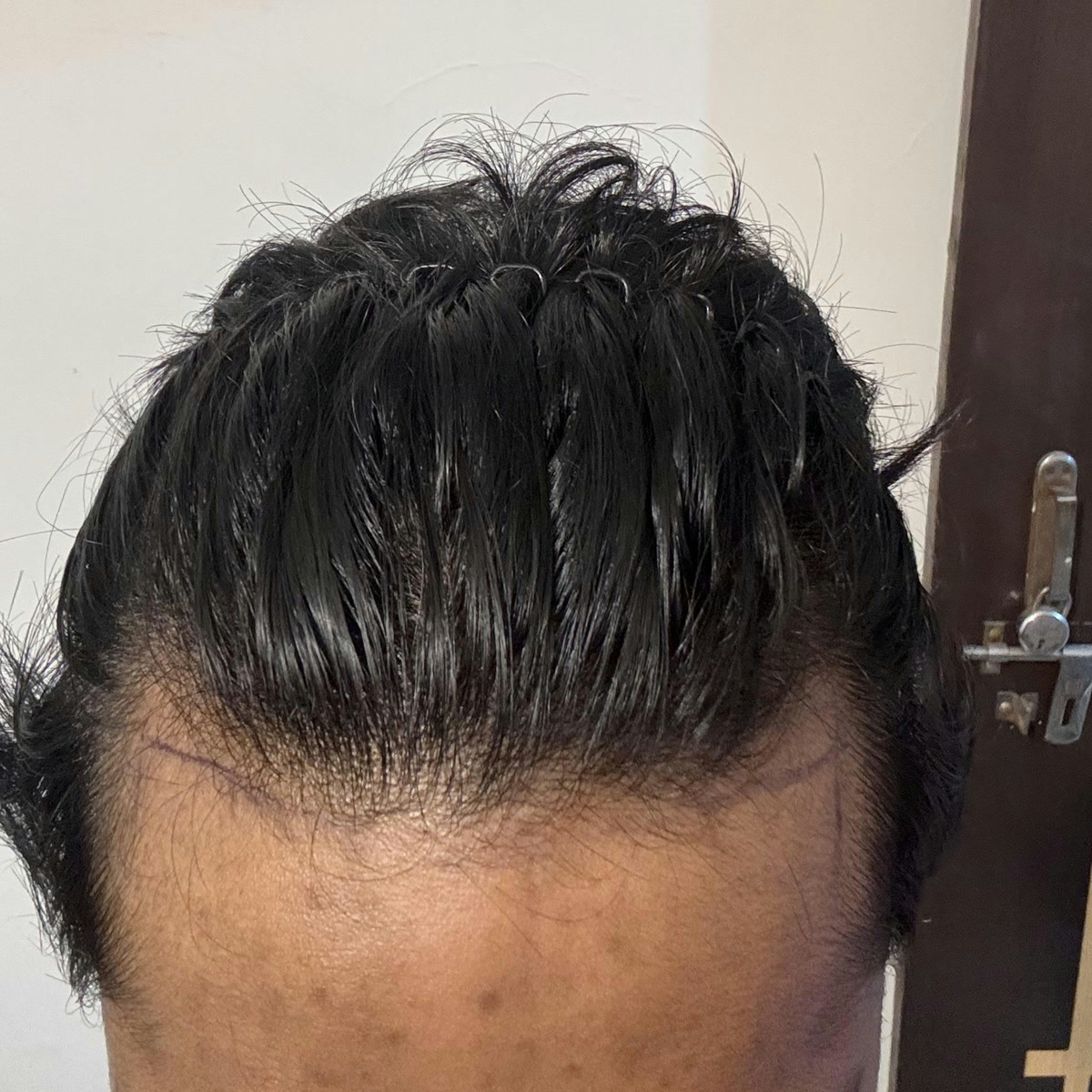
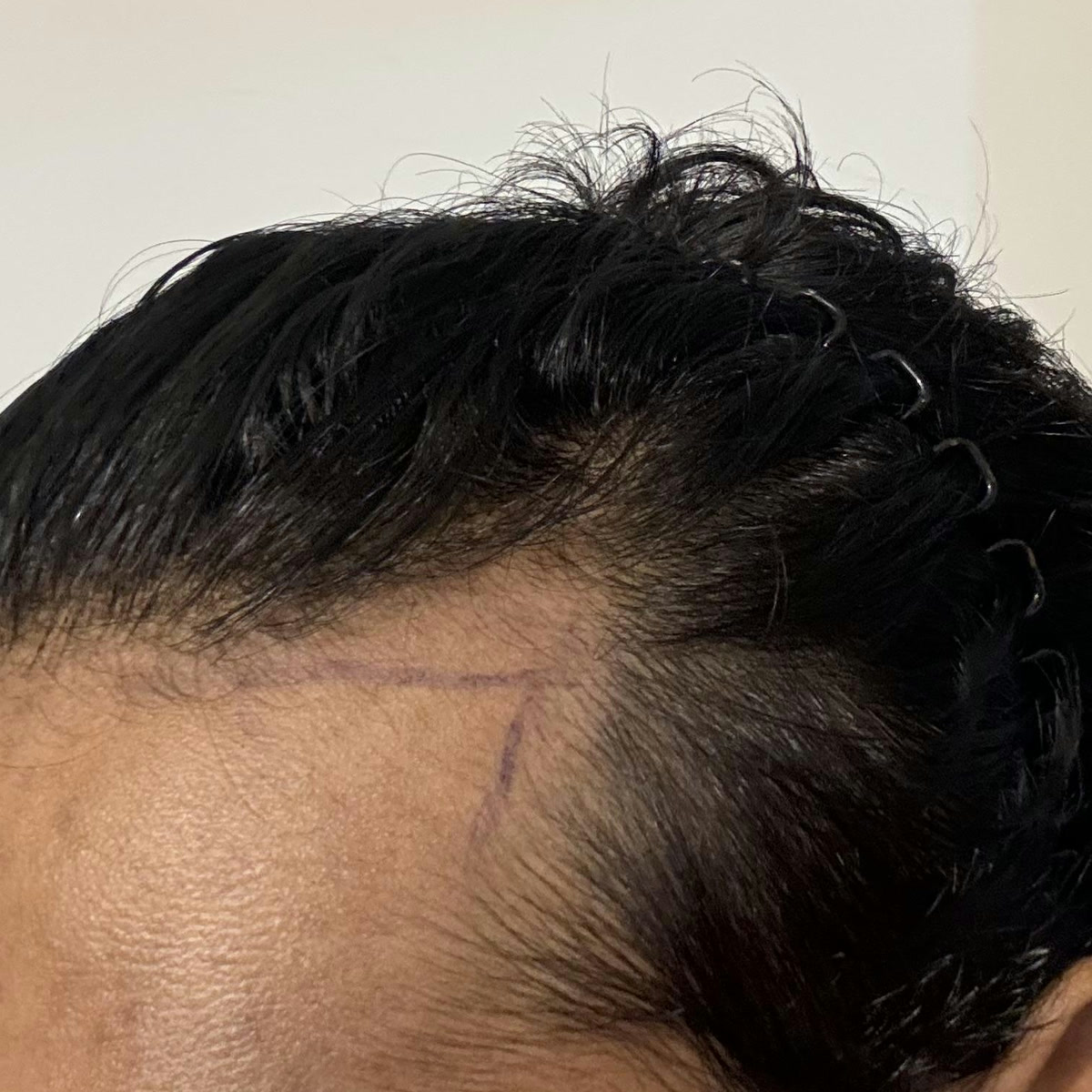
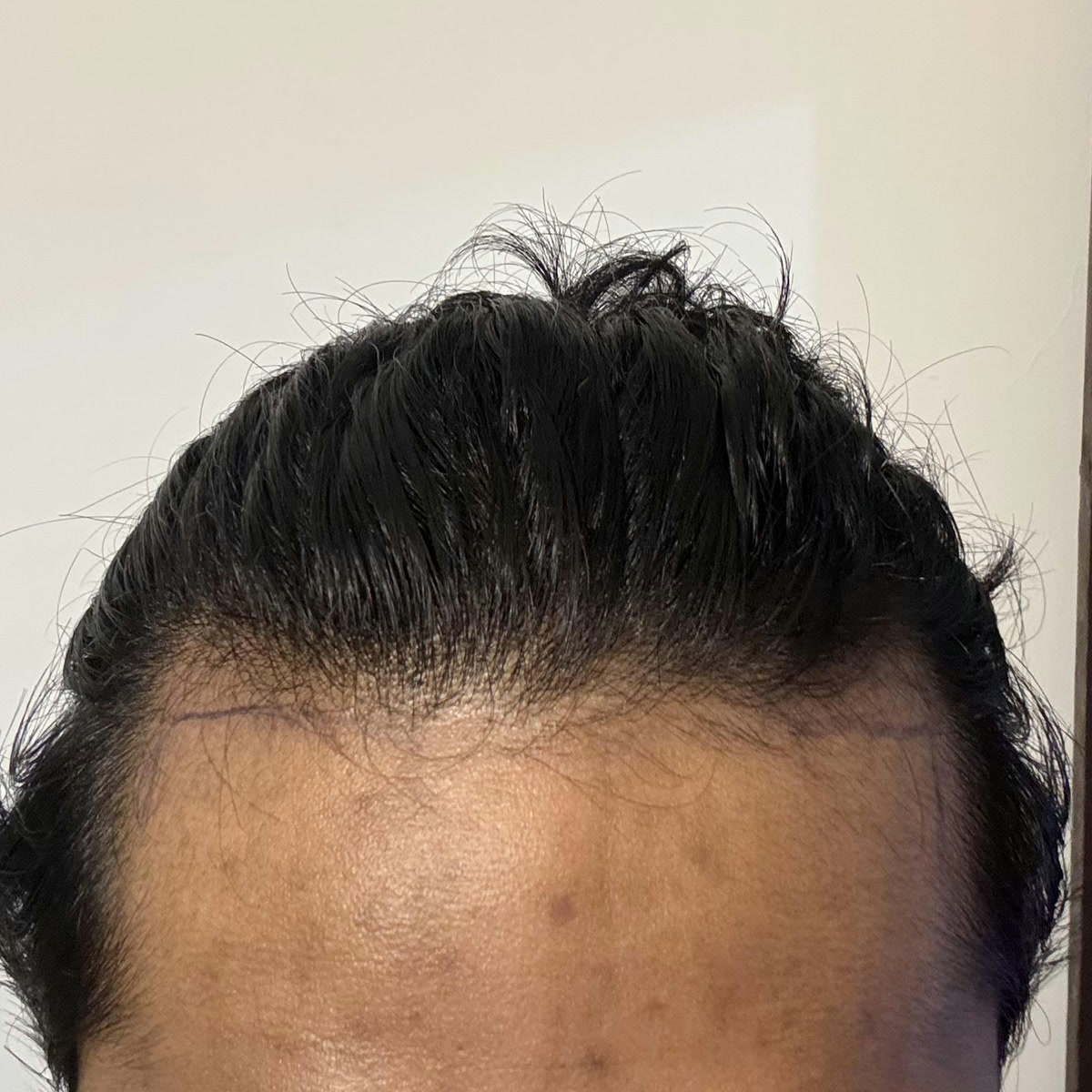
A young hairline needs a mature design
A young hairline cannot be designed only for today’s face and today’s insecurity. It also has to respect the face you will carry as you become older.
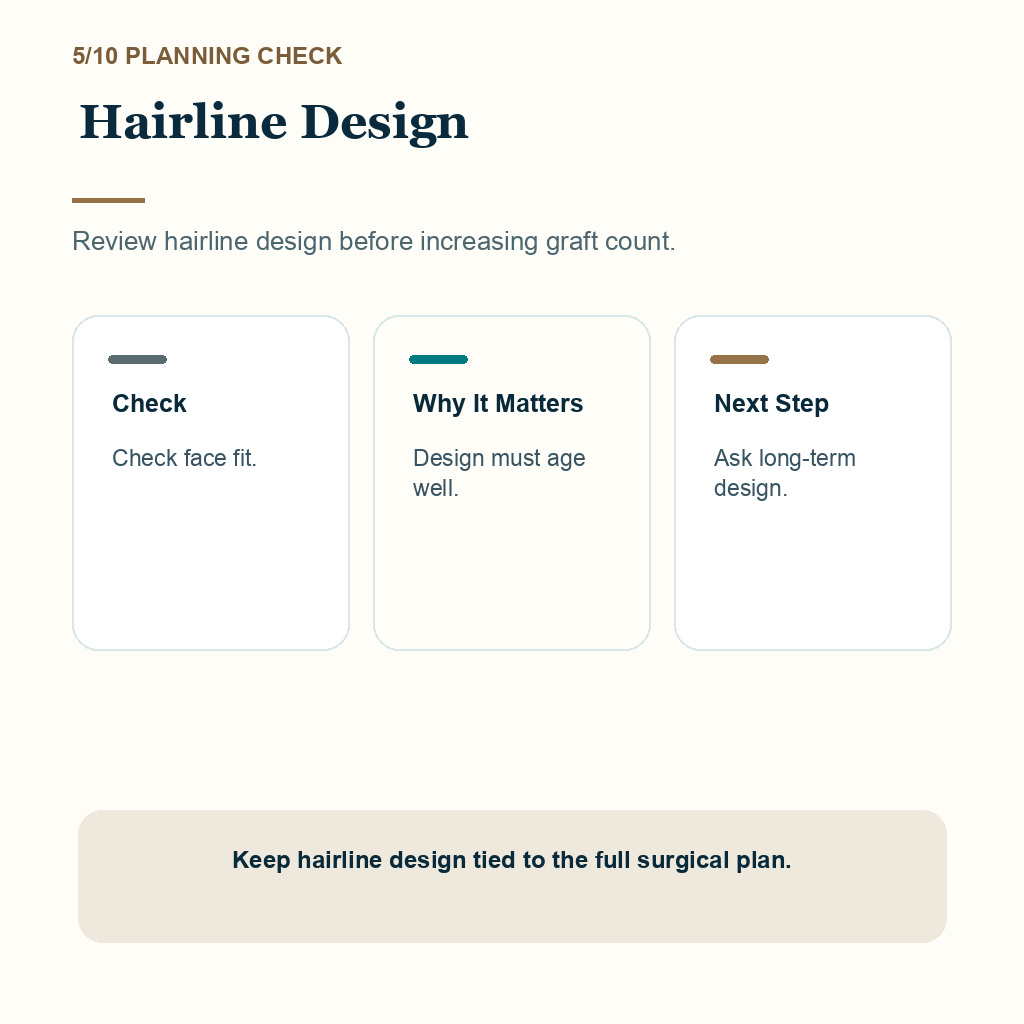
A natural hairline is not only low. It has the right height, shape, irregularity, density, and direction for the face and the future risk of hair loss. Natural and age appropriate hairline design should not announce that surgery was done.
A very low hairline can use too many grafts and create an unnatural frame. In younger cases, this mistake is often driven by impatience, aggressive marketing, or the wish to recreate teenage hair.
A transplant should not try to freeze the face at 17. It should create a mature improvement that still looks normal later. Low and flat hairlines need extra caution because they can look impressive at first while carrying a high future cost.
Conservative has to be defined before surgery, especially in a young patient. A small graft number can still fix a permanent hairline position, so I want the plan to state the height, density, reserve, and what happens if the mid scalp or crown changes later.
Surgery may need clearer timing
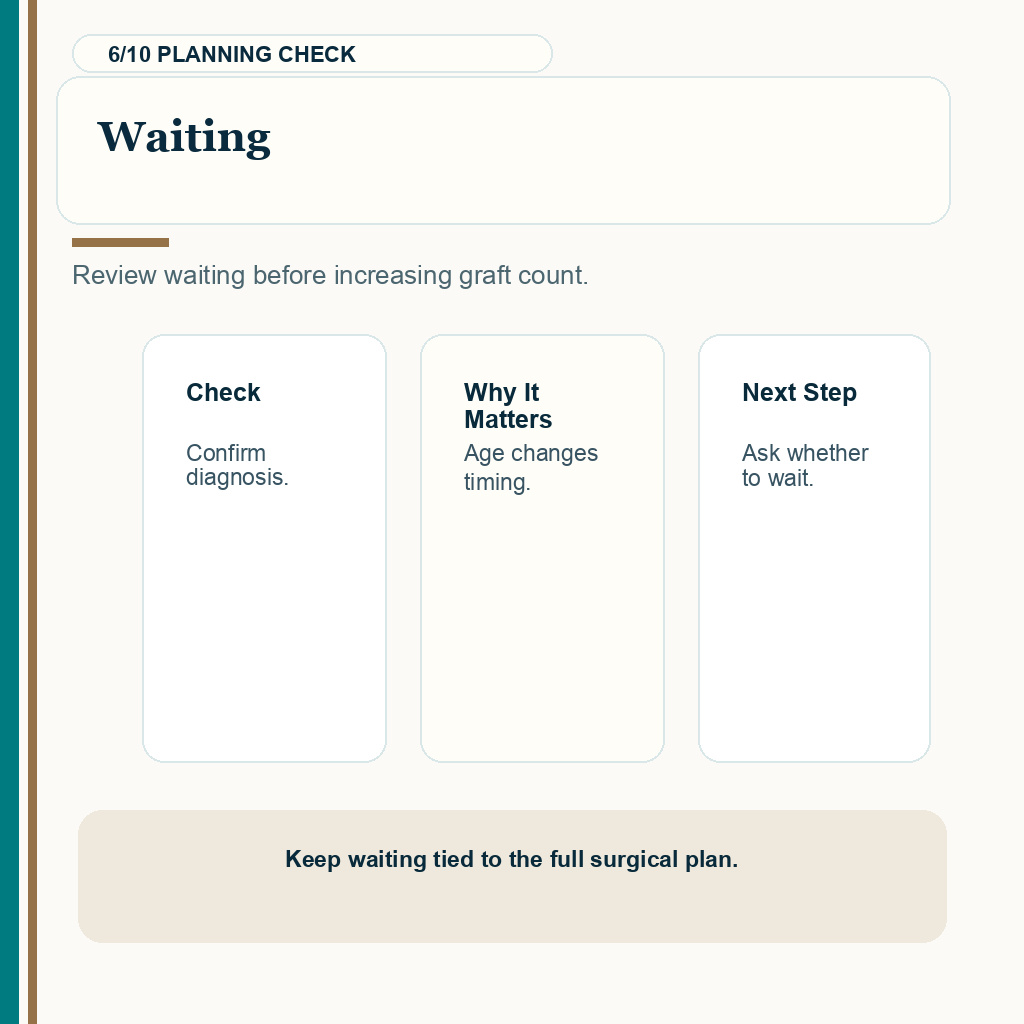
An unclear diagnosis, active loss, incomplete donor evaluation, newly started treatment, or strong emotional pressure can make immediate surgery too early.
A structured waiting period is not wasted time. It can be used for monthly photos, medical evaluation, stabilization, family pattern review, and a more realistic design conversation. If medication has just started, immediate surgery may prevent you from learning whether native hair was about to improve or settle.
There is another benefit. Waiting often separates medical planning from sales pressure. A proper consultation explains what information is needed before surgery. A sales focused clinic usually pushes a date before the difficult questions are answered.
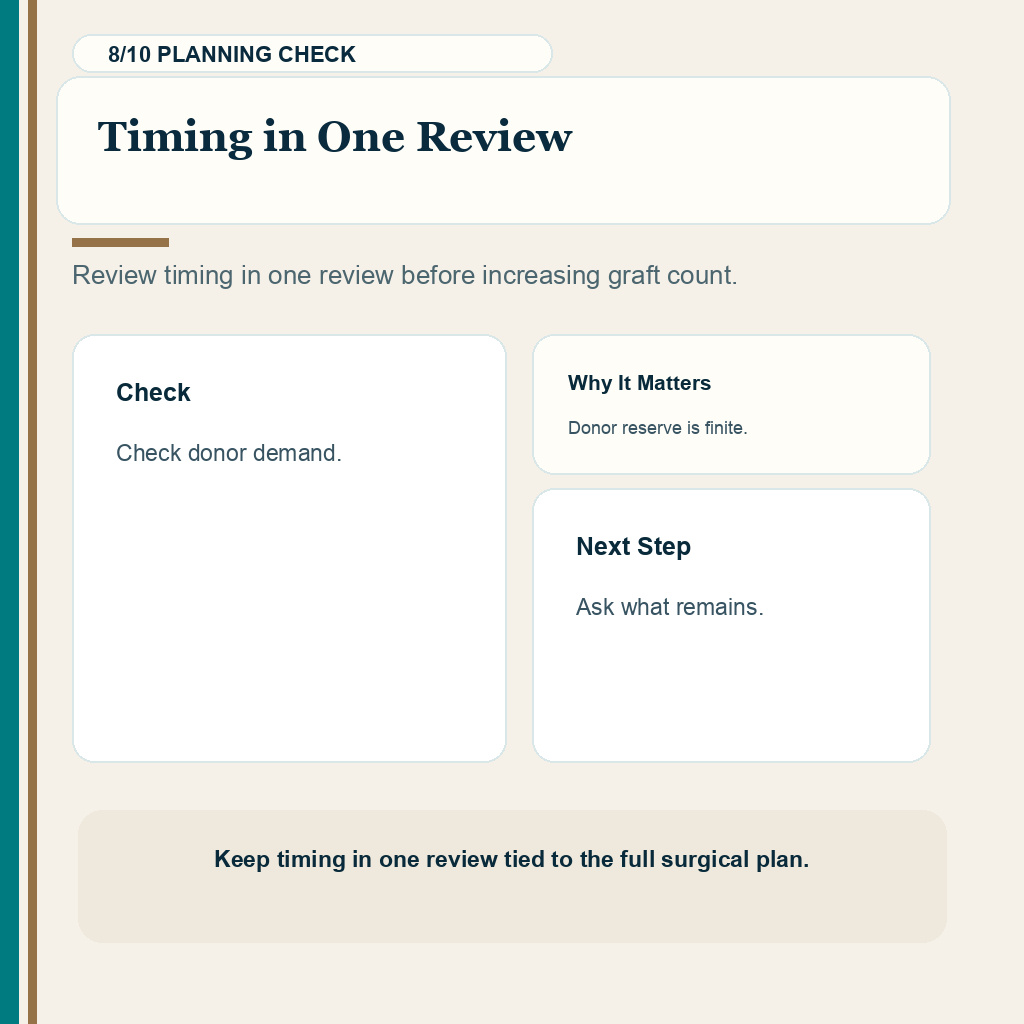
Some young people fear that waiting means losing their chance. In reality, premature surgery can remove choices from the future. Donor grafts used too early cannot be put back. This is the same donor protection logic behind being declined for hair transplant when timing is unsafe.
Confidence concerns still need careful timing
The emotional side of early hair loss should not be dismissed. Avoiding photos, dating, swimming, bright light, or social events can become heavy. I do not treat that as vanity.
If dating confidence is part of the pressure, I ask whether the request is about a real hair pattern or about needing surgery to prove personal worth. A transplant may help the frame of the face when the plan is conservative and the donor area supports it. If the goal is to erase rejection, fix self worth, or make an unsafe low hairline feel acceptable, that is an emotional readiness issue before it is a graft question.
But a painful emotion does not by itself make surgery the safest first step. Sometimes the kindest answer is to stabilize, observe, and plan rather than operate immediately.
I separate what can be improved now from what must be protected for the future.
For some people, treatment, hairstyle changes, fibers, or simply understanding the real pattern can reduce panic enough to make a better decision. For others, a small and carefully planned surgery may eventually be reasonable. If the distress is severe, obsessive, or disconnected from what the scalp examination shows, the readiness question also needs attention before surgery.
Clinic pressure is a reason to slow down
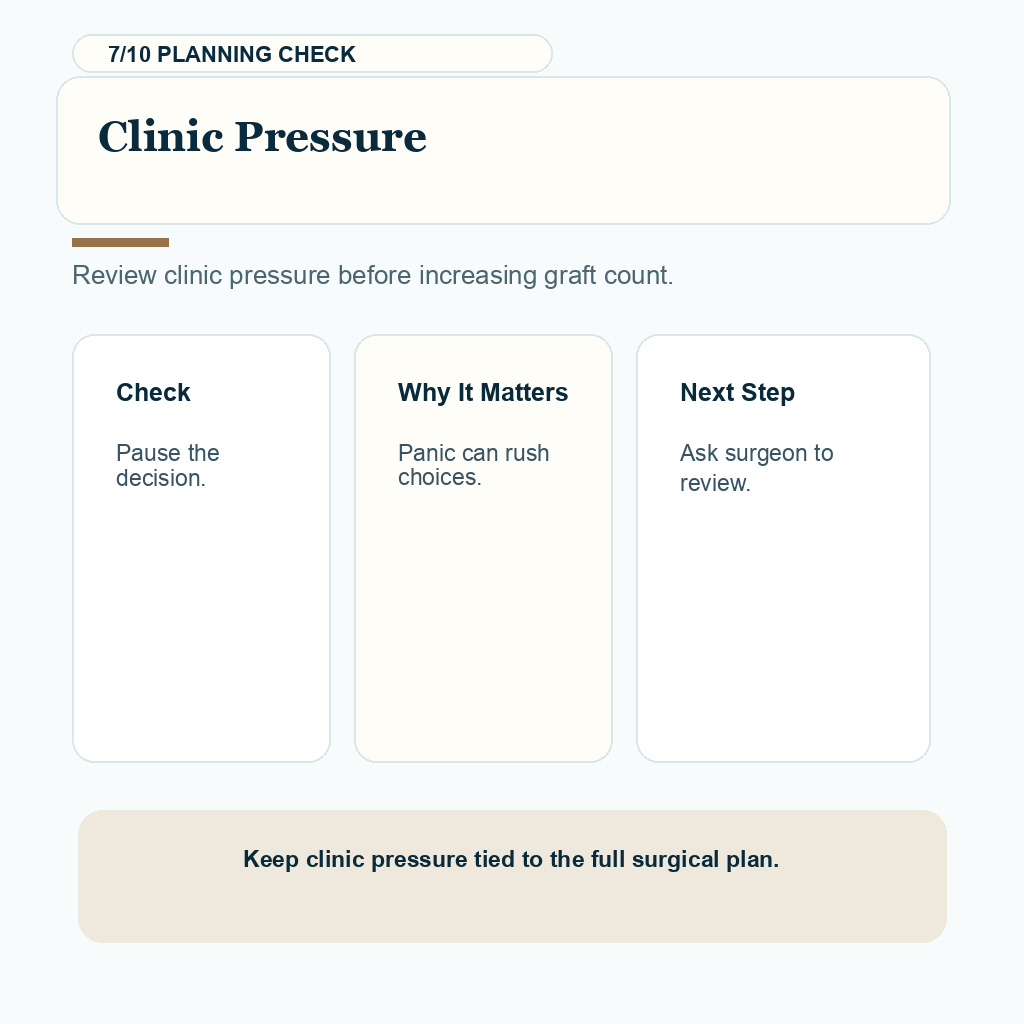
Slow down if a clinic gives a large graft number immediately without explaining diagnosis, donor limits, future loss, and hairline strategy.
Slow down if the first serious conversation is mainly with a salesperson, not with the doctor responsible for the surgical plan. A clinic that says yes too quickly to a young person may not be protecting that person’s future.
Sometimes the ethical answer is not now, not this hairline, or not this many grafts. That answer can be disappointing in the moment, but it may save the donor area and reduce the chance of repair surgery later.
High-volume clinics can be especially risky when they treat young people as easy cases. Anxiety can be pushed by discounts, urgency, package language, and dramatic result photos. Know the red flags of hair transplant clinics before choosing where to have surgery.
Decision points before surgery
I am in my early twenties and already tried finasteride or minoxidil. Can I still have a hair transplant?
It can be possible, but the medicine history is only one part of the decision. I still need diagnosis, older photos, a stable enough pattern, donor measurement, and a hairline that can age well. If the top is diffusely thin or the loss is still moving, I slow the plan down before donor grafts are spent.

Start with the diagnosis being treated, then compare stability, activity, and donor strength for this surgery as well as possible future needs.
Clarify who designs the hairline, makes the recipient area openings, performs extraction, places grafts, and decides if the plan must change on the day of surgery. If responsibility is unclear, you are not being protected.
Review graft distribution for the hairline, mid scalp, and crown. A total number alone is not enough because distribution shows the thinking behind the surgery.
The consultation should also define the refusal point. A clinic that never refuses young people, never recommends waiting, and never adjusts the plan downward is not showing medical judgment.
For a young patient, I want to know what would make surgery smaller, later, or not worth doing now. A responsible plan needs a refusal point, not just a graft number, a youthful hairline, and a hopeful photo.
Before committing, understand what happens if hair loss continues. Native hair may keep changing, because hair loss can continue after a hair transplant.
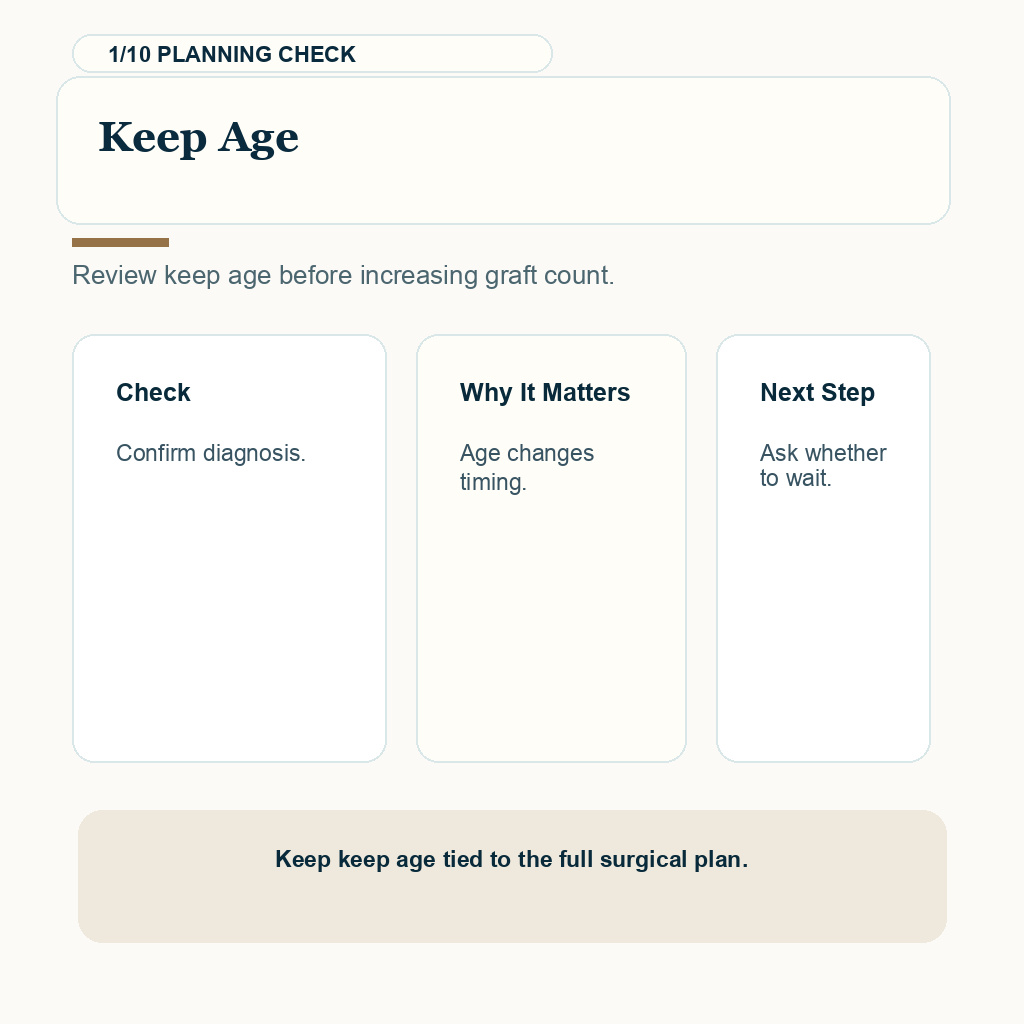
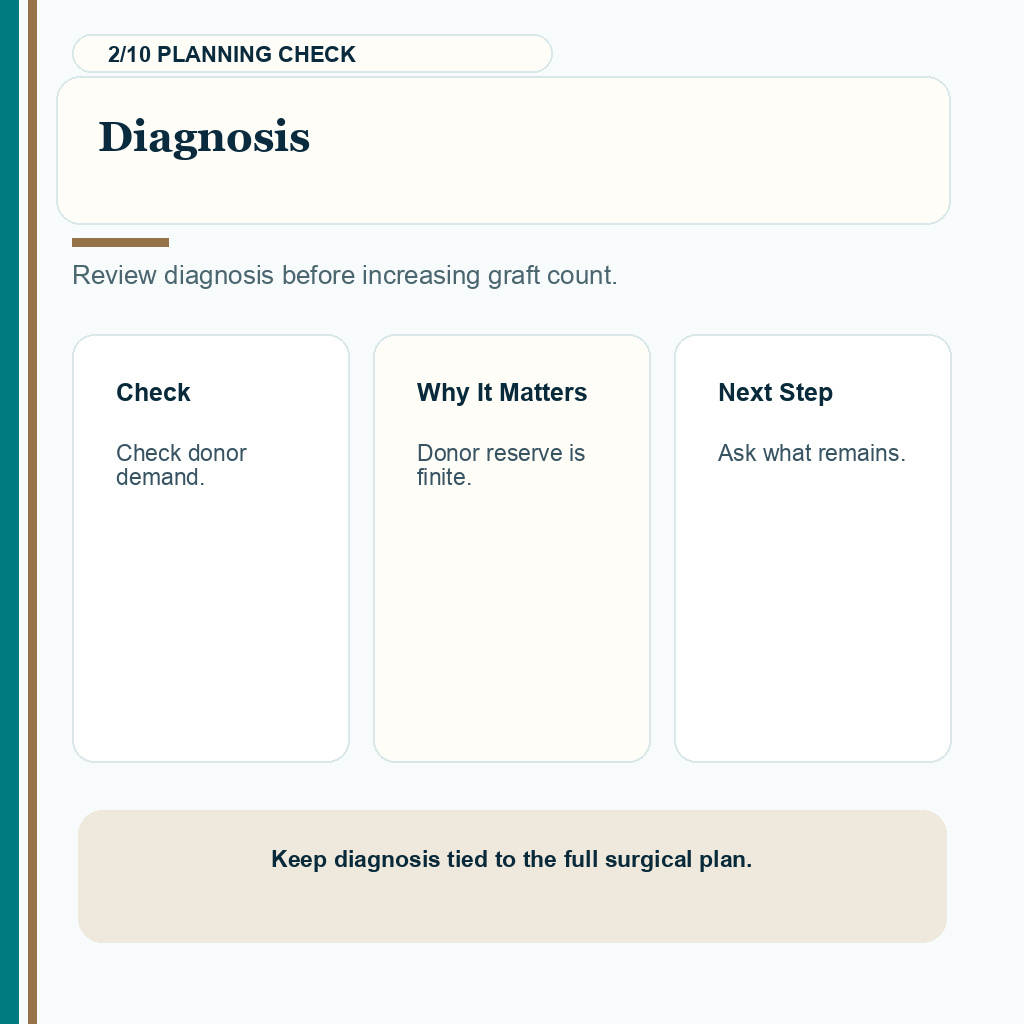
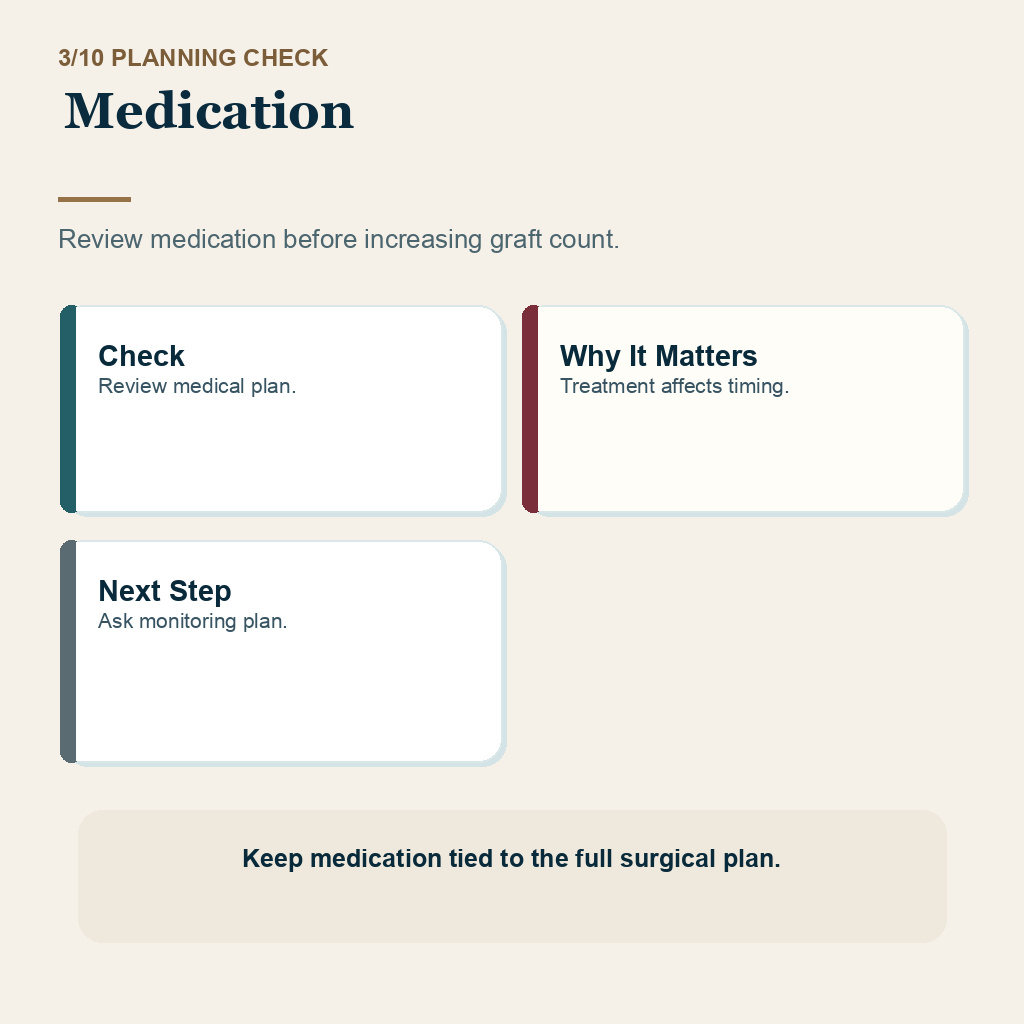
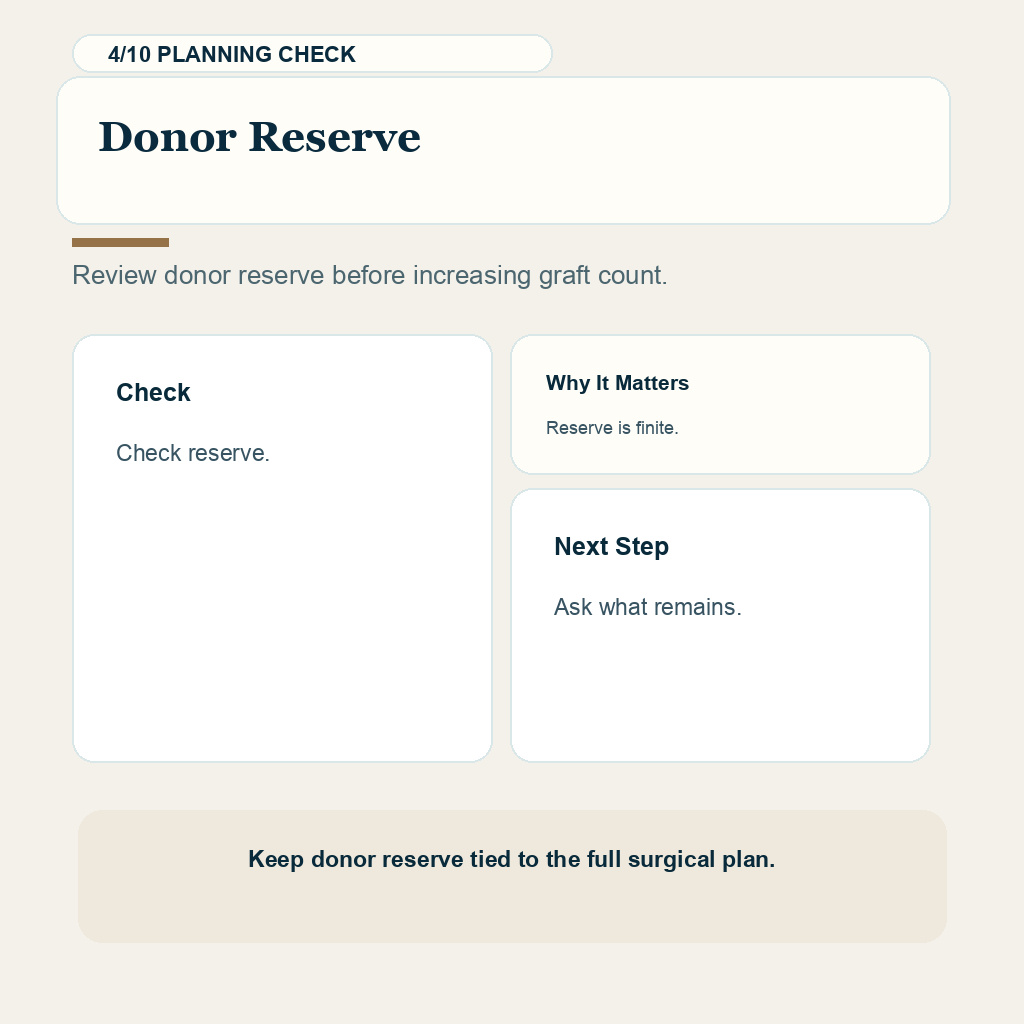

test what you know.
Planning, donor hair and recovery.
Every answer explained.
Surgery can be reasonable when the pattern is clearer
I may consider surgery when the diagnosis is clear, the hair loss is stable enough, the donor area is suitable, and the person understands that future planning matters more than instant transformation. For a young patient, the refusal point matters as much as the design. The plan should protect future loss and treatment options before travel or payment locks in surgery.
The limits of surgery must be understood. A good transplant can improve the hairline and density, but it cannot promise that future hair loss will stop.
If surgery is appropriate, I choose a careful and strategic plan. The graft number needs to create a meaningful improvement, but not so much that it sacrifices future options. A smaller mature design can be stronger than a large youthful design that leaves no room for change.
Technique matters, but it does not rescue a poor plan. Sapphire FUE, DHI, or any other method still depends on diagnosis, donor capacity, hairline design, recipient area direction, and long-term judgment.
My priority is careful planning over volume. Protecting a young person from premature surgery is better than performing an operation that looks attractive today and creates problems tomorrow.
If you are in the late teenage years or early twenties and thinking about a hair transplant, the decision should show clear timing, protected donor reserve, understood hair loss, and a surgeon planning for your future self.
You may not need to wait forever. But you do need a plan that can live with you, not only a hairline that looks exciting for the next few months.

Read this review excerpt
Every single one of my questions was answered and they made sure I had all the details I needed to make an informed decision.