


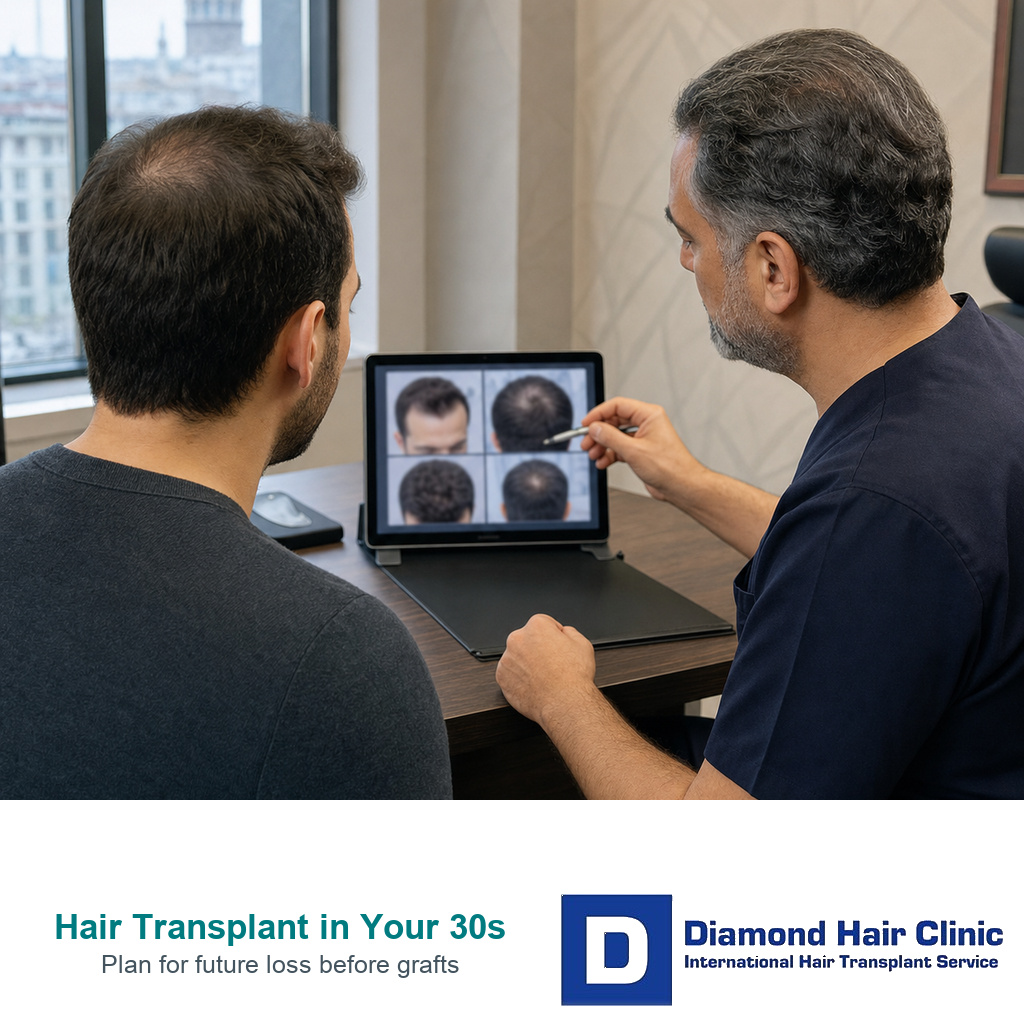
Hair Transplant Planning in Your 30s
A hair transplant in your 30s can be a good decision when the hair loss pattern is clear enough, the donor area is strong enough, and the plan leaves room for future thinning. The plan must protect future options, not only rebuild the hairline you want today. If the frontal loss is stable, the crown risk is realistic, and medical treatment has been discussed properly, surgery may fit well. If thinning is moving quickly or the donor area is weak, waiting or treating the hair loss first can be the better decision.
Your 30s are a common time to ask this question because the decision feels more realistic than it did in the early 20s, but the hair loss story may still be moving. That middle stage is where planning matters. A patient at 31 with active diffuse thinning needs a different plan from a patient at 38 with stable frontal recession and a strong donor area. A design that looks strong at 33 can look wrong at 43 if it ignores the crown, native hair, donor reserve, medication tolerance, and whether the plan is something you can realistically maintain.
The decision works best when age is treated as context, not permission. Pattern, medicine history, donor reserve, and future crown risk should point in the same direction.
Age alone does not decide this because donor reserve and future loss still matter. I look at the pattern in front of me, the likely direction of the loss, the donor area under magnification, the expectation attached to the hairline, and whether the first operation still makes sense if more native hair thins later. A good 30s plan is not only a hairline plan. It is a map for what may happen after the first result grows.
Your 30s are a different planning window
In the 20s, the main danger is often uncertainty. The pattern can still be declaring itself, and an aggressive hairline can use donor hair before the real extent of loss is clear. I am strict with very young men because a man who may be too young for a hair transplant needs timing advice before he needs a low hairline.
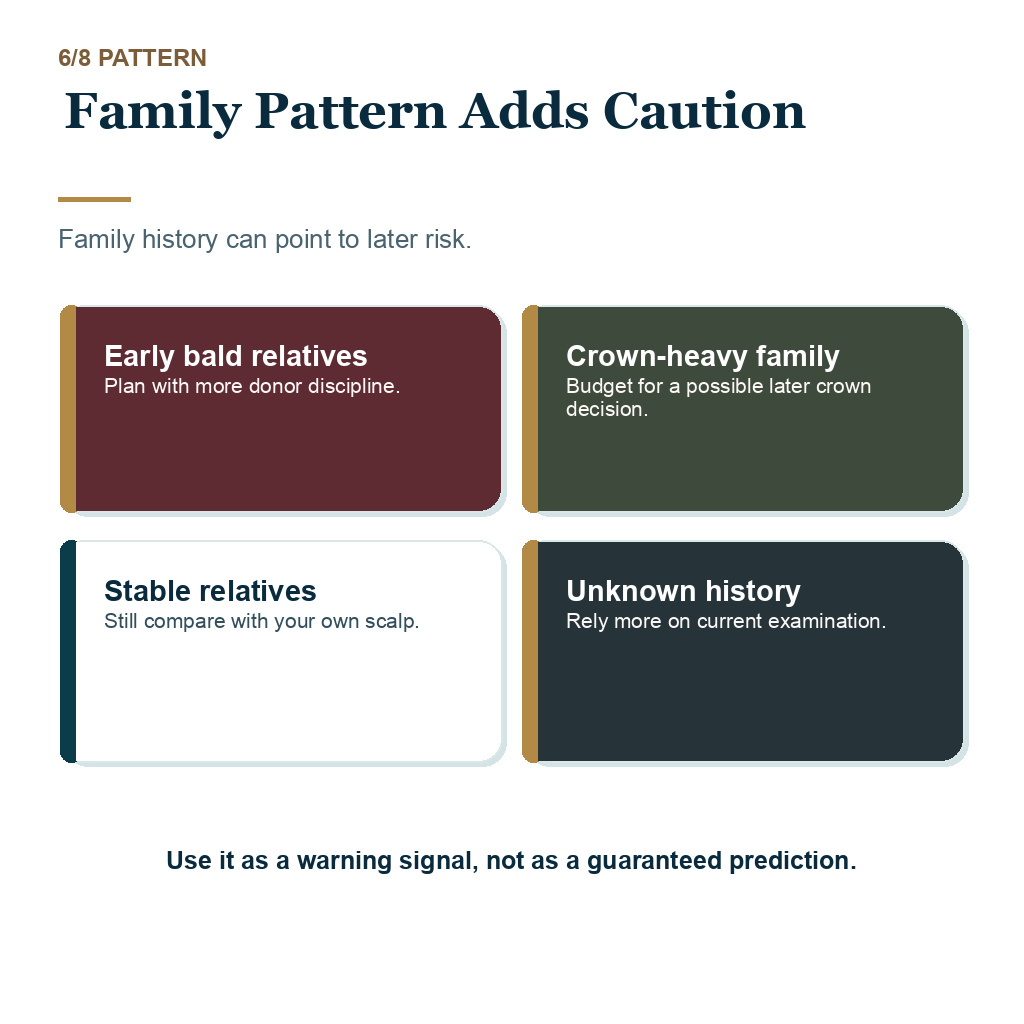
In the 30s, there is more information to work with. The hairline shape, temple recession, family pattern, crown involvement, medication history, and speed of thinning can be assessed with more confidence. Family history is useful when it shows when close relatives lost hair, whether the crown opened early, and whether older brothers, the father, or either side of the family show advanced loss. More information does not remove the need for caution. It makes the plan more precise. A focused family pattern review before hair transplant adds context about future risk to that assessment.
Compared with a hair transplant in your 40s or 50s, the 30s often carry a longer future timeline. You may still have decades of native hair change ahead. I do not plan only for the next set of photos. I plan for how the transplant will age around hair that may continue thinning.
Pattern stability before planning
Stability does not mean the hair has stopped changing forever. It means the pattern is clear enough to plan without pretending the future is already solved. I compare photos taken under similar conditions, look for crown involvement, check whether shedding is sudden or chronic, and consider whether diffuse thinning, thyroid disease, anemia, or inflammatory scalp disease could be changing the picture.
Photos over time help, but they are not the whole diagnosis. Wet hair, harsh lighting, and panic photos can make thinning look worse. Styled hair and clinic marketing photos can make thinning look better. The scalp examination and donor assessment matter more than one frightening photo.
If the hair loss is moving fast, surgery may need to wait. Active hair loss before a transplant can turn a beautiful small hairline into an isolated island later if the native hair around it continues to thin while the design stays fixed. The transplanted grafts may be fine, but the surrounding hair may not be ready to support the design. When progression is rapid, a period of medical stabilization or observation can be more valuable than rushing to use grafts.
Medication tolerance changes the surgical plan
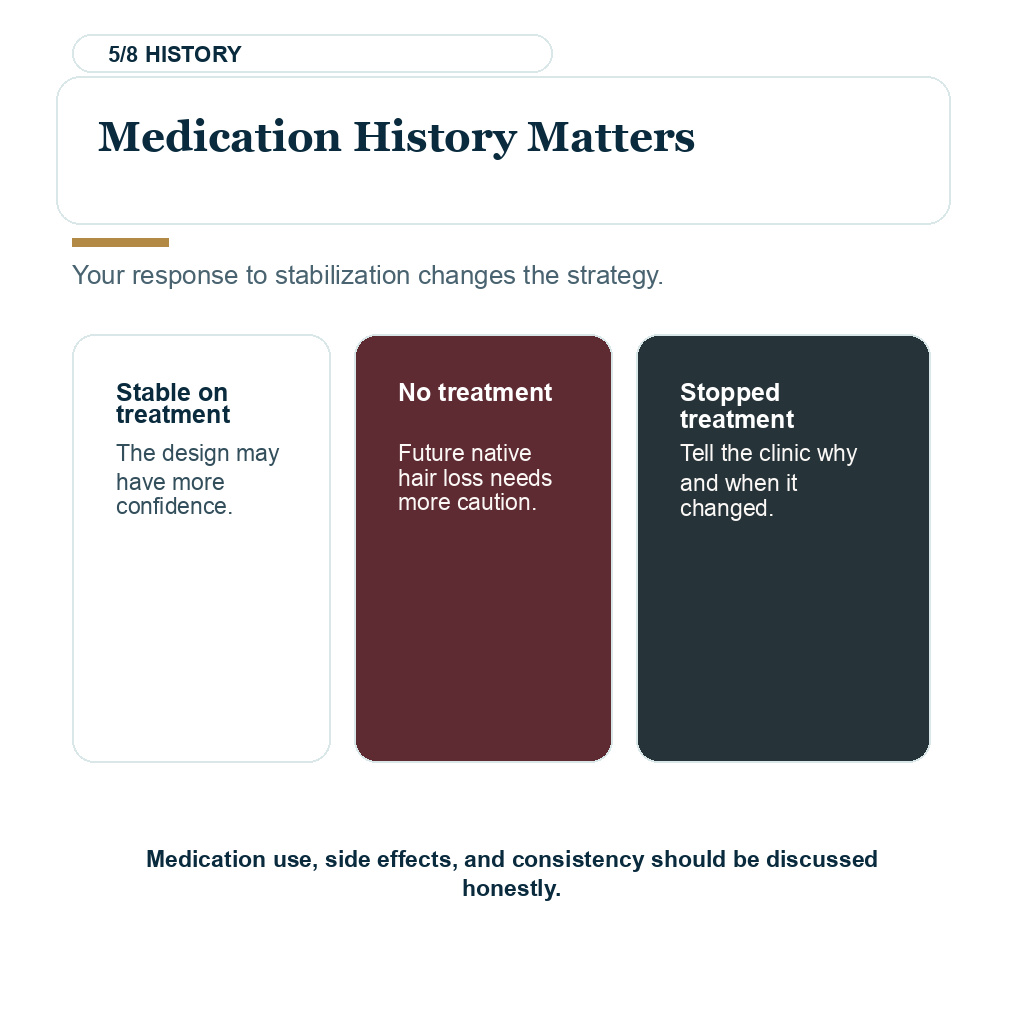
Medication is not a moral test. It is a planning variable. In your 30s, I need to know whether you are using finasteride, dutasteride, minoxidil, or another hair loss treatment, whether it is tolerated, how long it has been used, and whether you are willing to continue it when appropriate. Surgery moves hair. It does not stop future native hair loss.
You can sometimes have a hair transplant without finasteride, but the plan must be more cautious if medication is not used or not tolerated because the risk to native hair changes.
For some men, medication helps stabilize the native hair so the surgical design can be more predictable. For others, side effects, fertility planning, or personal preference change the discussion. If treatment was just started, I need enough time to judge tolerance and direction before using grafts. A plan should not assume a stable medication response before you have actually lived with the treatment. I do not force one answer onto every man in his 30s. The surgical design must match the medical reality you can actually maintain.
Finasteride before or after a hair transplant belongs in this planning discussion because the transplant decision should not be separated from the medical plan for the native hair.
Hairline design years later
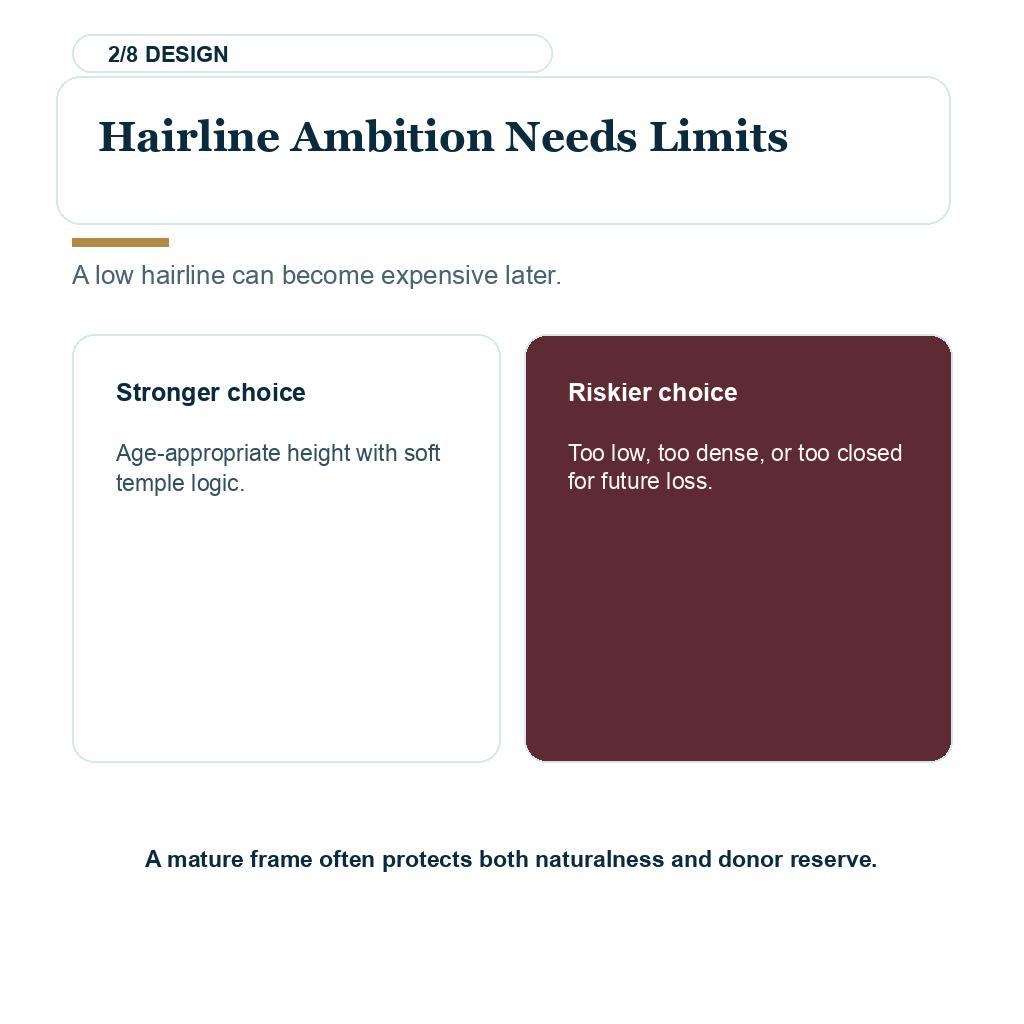
The hairline should suit the face now and still look natural if more hair is lost later. In the 30s, the temptation is to rebuild the lowest youthful hairline. That can be a mistake. A low, flat, dense hairline can use too many grafts and may look artificial as the face and surrounding hair age. I also look at what will sit behind the hairline later, because a strong front with thinning through the middle can become visually unbalanced.
Natural hairline design in hair transplant surgery depends on height, shape, irregularity, temple transition, hair direction, and graft selection. A strong plan uses finer grafts at the front, respects the patient’s facial proportions, and avoids a straight wall of hair.
Some clinic proposals look attractive because they promise a dramatic before and after change. In the 30s, I am more interested in whether the design will still look natural as native hair changes. Low and flat hairlines can become a warning sign when the design ignores future loss.
Donor reserve should not be spent too early
The donor area is limited. A first operation in the 30s should not spend donor hair as if no future operation will ever be needed. Reserve is not only the number of grafts left. It is also the safe extraction pattern, donor density, miniaturization risk, and how natural the donor area will look after healing. I want the first extraction pattern to leave usable donor hair for future needs, not only avoid obvious thinning in the first year. Even a successful result may need support later if the crown opens, the middle thins, or you want a refinement after natural aging.
Graft number alone can mislead. A proposal for 2,500 grafts, 3,000 grafts, or 4,000 grafts is not good or bad by itself. The real issue is whether the number fits the donor area, recipient size, hair thickness, future loss pattern, and density target. A high graft number is not proof of a better plan.
Donor area overharvesting is a long term planning problem as much as a cosmetic problem. The first operation in the 30s needs to preserve enough reserve for future hair loss, not only create enough coverage for the first result.
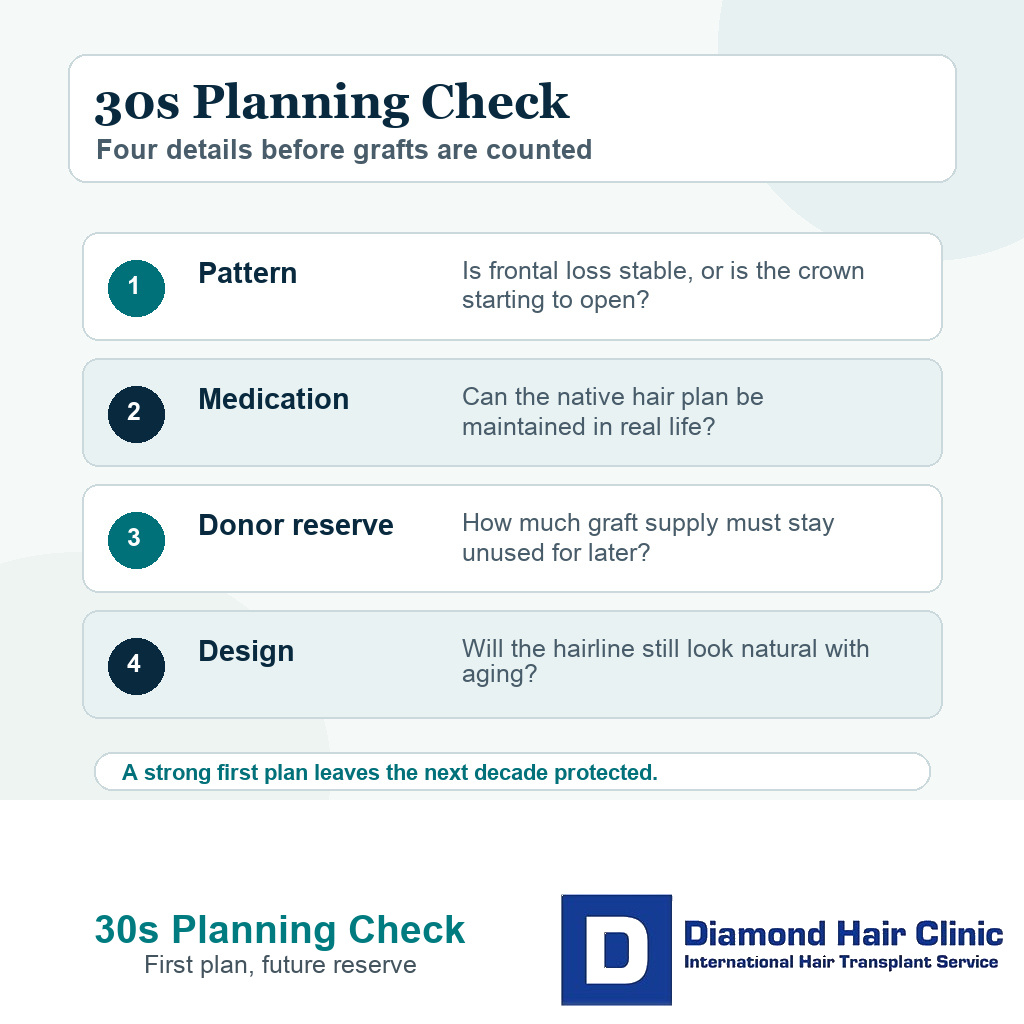
The 30s decision is more reliable when pattern, medication, donor reserve, and crown risk are reviewed together.
Early crown thinning and the priority
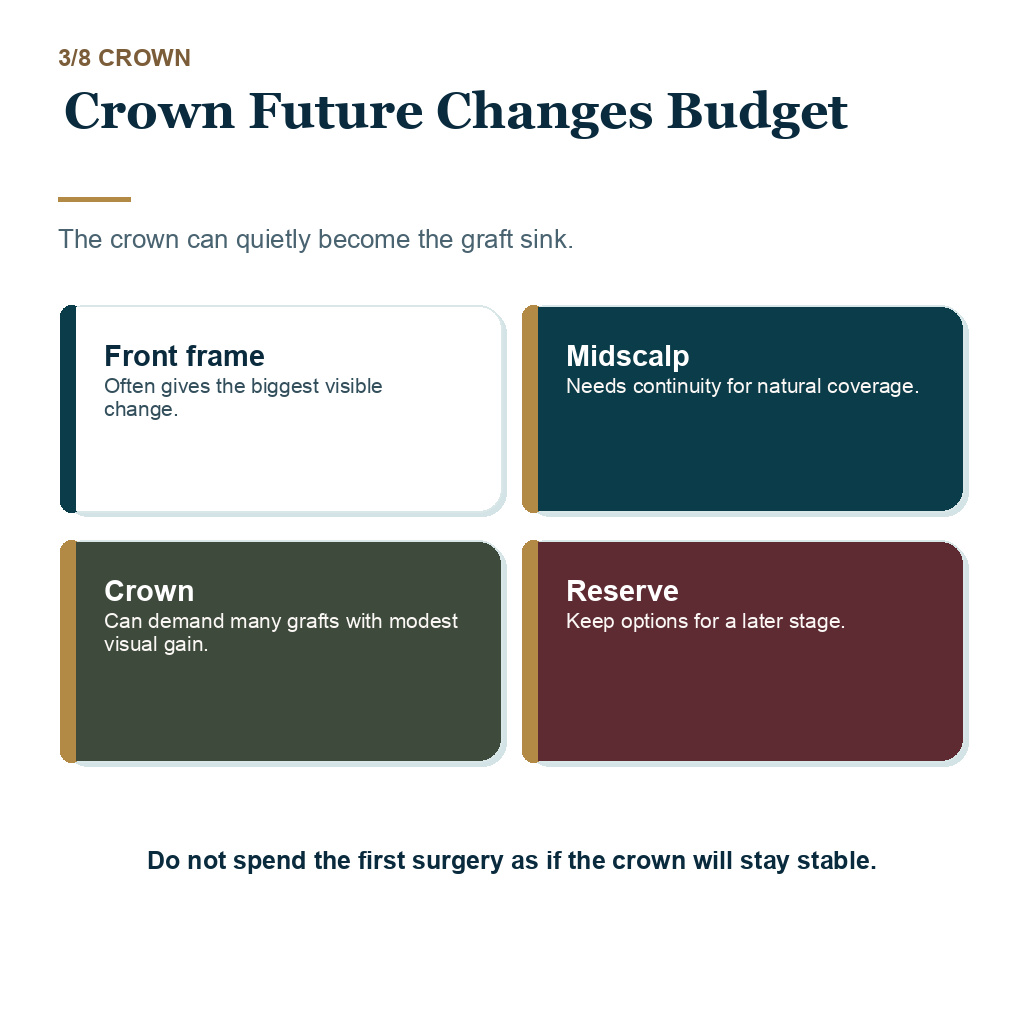
Crown thinning changes the whole plan. The crown can consume many grafts and still look less dense than the front because of the swirl pattern and the way light hits the scalp. If you are in your 30s with both frontal recession and early crown loss, the first decision is which area deserves priority, not how to fill everything at once. When donor reserve is limited, a conservative frontal frame often matters more than chasing crown density too early.
A dense front with an ignored crown may look good in frontal photos and weak from above. A large crown session too early can use donor hair that may be needed for the front later. The choice between hairline or crown first in hair transplant planning has to protect the donor supply, not only one camera angle.
A crown hair transplant can be valuable for the right patient, but the expectation must be realistic. I am not trying to make the crown look like a teenage scalp under every light. I am trying to create coverage that fits the donor supply and the rest of the head. Sometimes that means treating or monitoring the crown while the first surgery focuses on a conservative frontal frame.
What can photos show, and what do they miss?
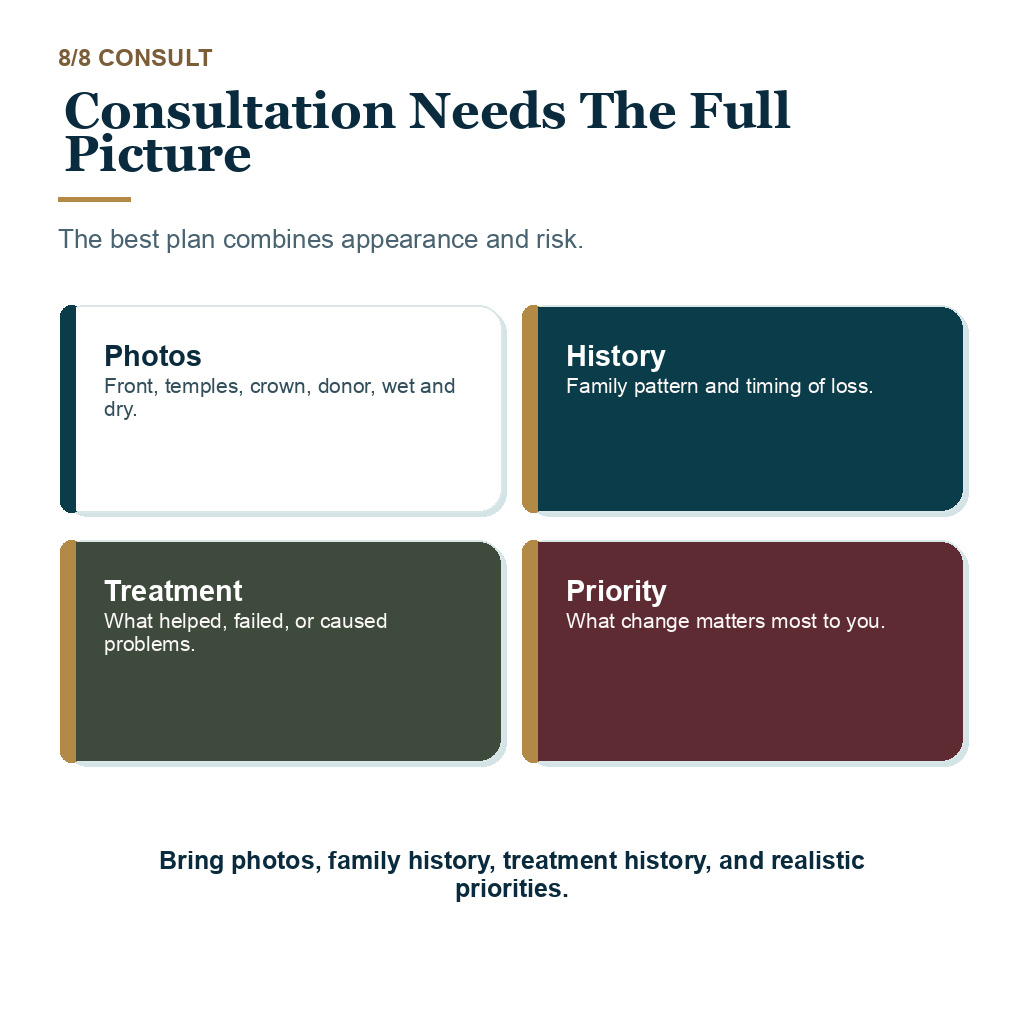
Photos can show the concern, but they cannot measure everything. A camera cannot reliably tell the donor density, miniaturization pattern, graft quality, hair shaft thickness, safe donor boundaries, or true future risk. A comb through video, wet hair view, and close review of the donor area can help, but they still do not replace examination under proper lighting and magnification. Outside advice can raise useful questions, but it cannot decide donor reserve without examination.
In consultations, I often see the same conflict. One person has told you to do surgery now. Another has told you to wait. Another says medication is mandatory. Another says it is unnecessary. The missing piece is often examination. Without seeing the donor area and the pattern properly, advice becomes guesswork.
For someone in the 30s, photos are a starting point. They can show frontal recession, crown exposure, styling limits, and emotional pressure. They cannot decide the final graft number, hairline height, or whether the crown should be touched.
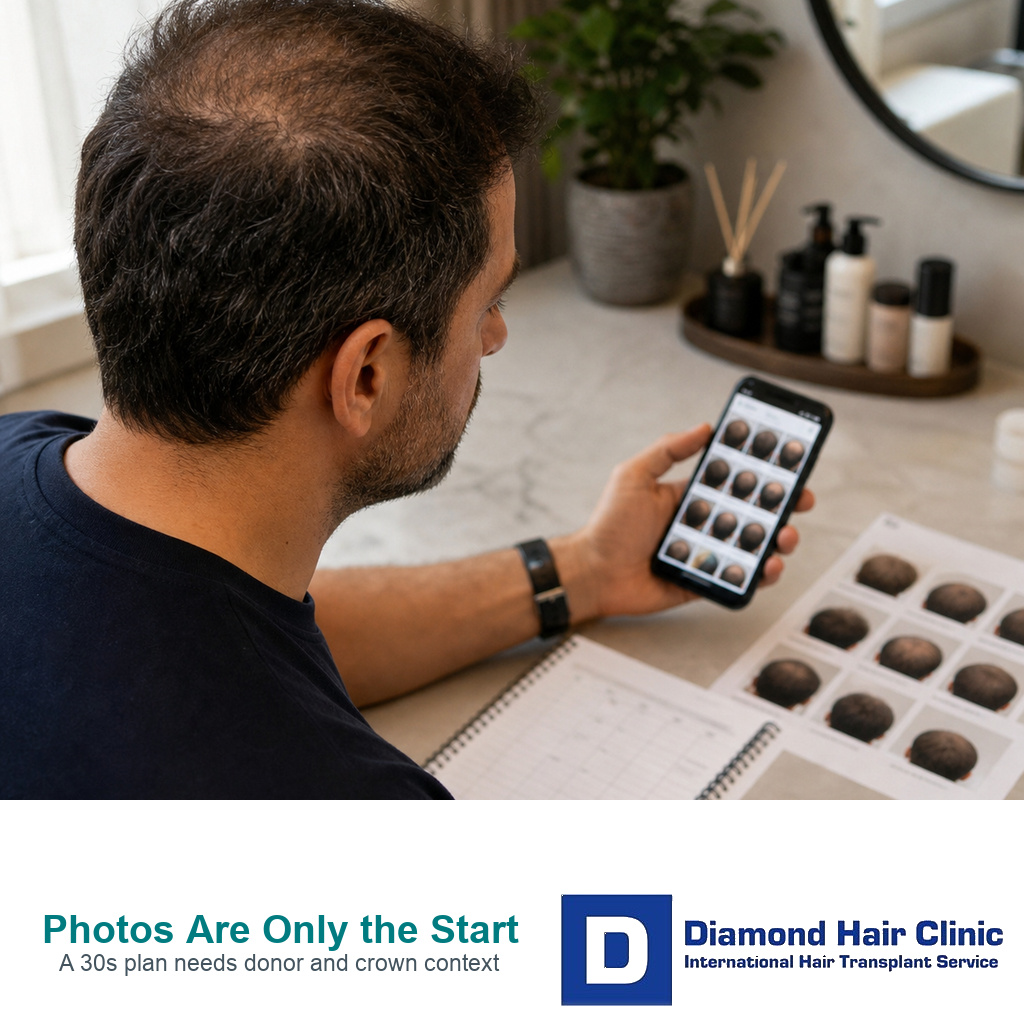
Photos help, but age, pattern, donor reserve, and crown risk still need clinical judgment.
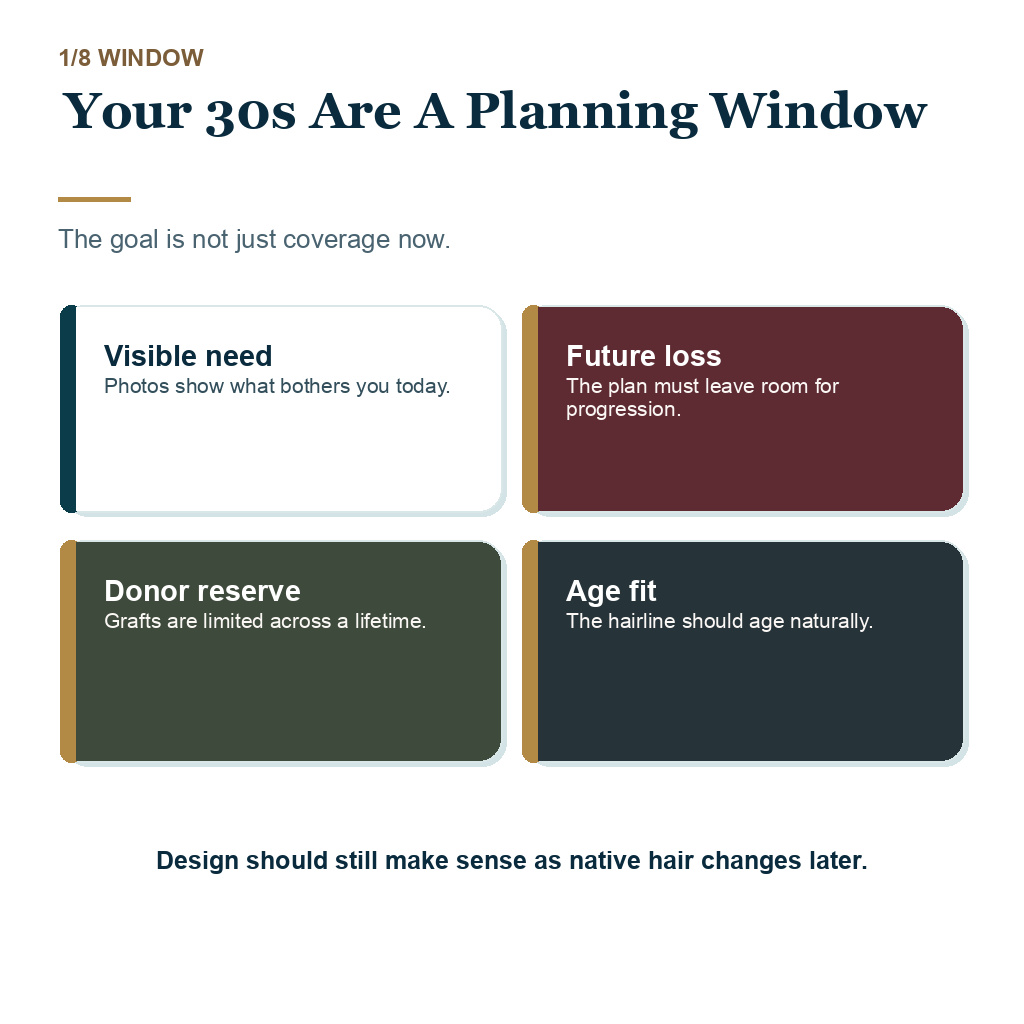
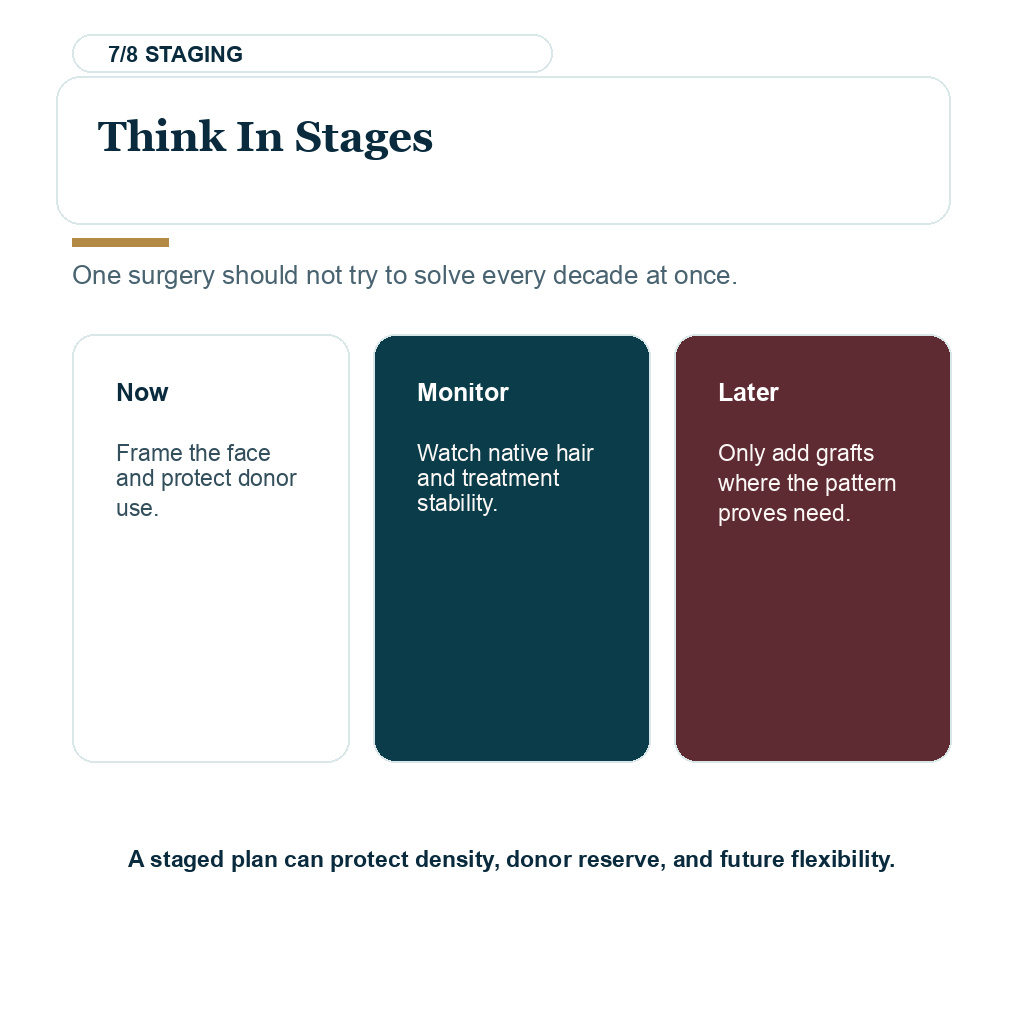
Use the eight slides below as a planning map, not as proof that surgery is automatically right in your 30s. They separate current goals, hairline limits, crown budget, photo limits, medication history, family pattern, staged planning, and consultation evidence so the decision is judged by evidence rather than age alone.

The second transplant should remain possible
Some men in their 30s will need only one carefully planned operation. Others may need a second session years later. The answer depends on future native hair loss, medication response, crown involvement, donor strength, and how cautious the first design is.
I do not present a second session as failure. It can be part of a staged plan. The problem starts when the first operation spends donor hair aggressively and leaves no room for the next stage. The first transplant should make a possible second transplant easier, not harder.
I approach second hair transplant decisions as part of long term planning, not as a separate problem years later. In your 30s, that thinking should already be present during the first consultation. The first hairline, density target, and donor extraction pattern should leave a second stage possible without forcing a repair of the first stage.
Situations where surgery waits
Surgery should wait when the pattern is unclear, shedding is sudden, the donor area is weak, scalp disease is active, expectations are unrealistic, or the patient wants a hairline that spends too much donor hair too early. It should also wait when the patient has not been told what future native hair loss could do to the result.
A man of 30 with mild stable temple recession and a strong donor area is not the same as a man of 30 with diffuse thinning, crown loss, and no medical plan. The same birthday can lead to very different surgical decisions.
If the proposed operation sounds like a simple cosmetic fix for a lifelong hair loss pattern, pause. The plan has to explain what is being treated now, what is being watched, what medication may or may not do, what would trigger a second stage later, and what donor reserve must remain untouched.
Leave room for the next decade
In your 30s, the consultation has to show what is being treated now and what is being deliberately left alone. The hairline, midscalp, crown, medication assumptions, family pattern, and donor reserve all belong in the same conversation before grafts are counted.
A number such as 3,000 grafts in a hair transplant only becomes meaningful when it is tied to area size, hair caliber, density target, and future loss. Without that context, the number can sound reassuring while hiding the real tradeoff.
The best first operation is not the one that looks most dramatic on a one year photo. It is the one that still leaves a patient with options if the crown opens, native hair thins, or styling goals change later.

Read this review excerpt
Every single one of my questions was answered and they made sure I had all the details I needed to make an informed decision.