


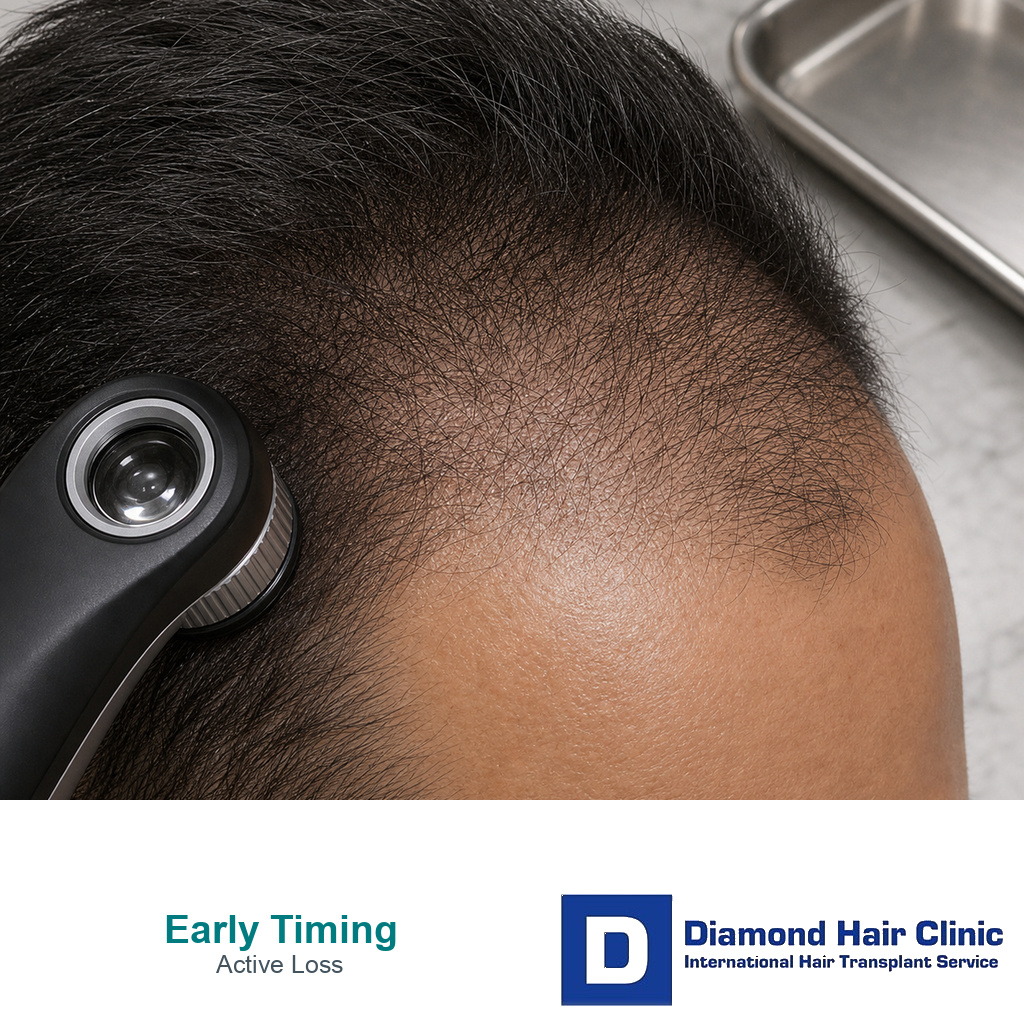
Active Hair Loss and Early Transplant Timing
Having a hair transplant while hair loss was still active does not always mean you made a mistake. Two questions need to be separated first. Was the result judged too early, or was the original plan built as if hair loss had already stopped? Before that point, a young patient who has already tried medication may still need waiting, documentation, or a smaller staged plan if the pattern is moving.
If the hairline was conservative, the donor area was protected, the recipient area was handled carefully, and you now work on stabilizing the native hair, the result may still age well. When active shedding is linked to thyroid disease before a hair transplant, the timing question becomes even more important. If the operation used too many grafts, placed the hairline too low, ignored diffuse thinning, or treated surgery as a cure for hair loss, the future risk is higher.
Review the timing, donor reserve, and native hair plan before calling the surgery too early. Put dated photos beside medicine changes, shedding episodes, and family pattern clues, because the same look can come from a rushed plan, active native loss, or judging too soon. If the photos are not dated, sort them by haircut or event before judging whether the loss truly accelerated. A similar pause is needed when treatment has improved the visible plan before surgery, because the old graft plan may need to be rechecked before donor hair is spent.
This early point matters. Panic after surgery can lead to another bad decision. If surgery was timed around a wedding deadline, travel plan, or emotional pressure, it can be tempting to treat every early change as proof the timing was wrong. Active hair loss after a hair transplant needs a clear plan. It does not need shame, fear, or a rushed second procedure. If stress is taking over your judgment, the article about stress after a hair transplant may help you separate emotional pressure from medical facts.
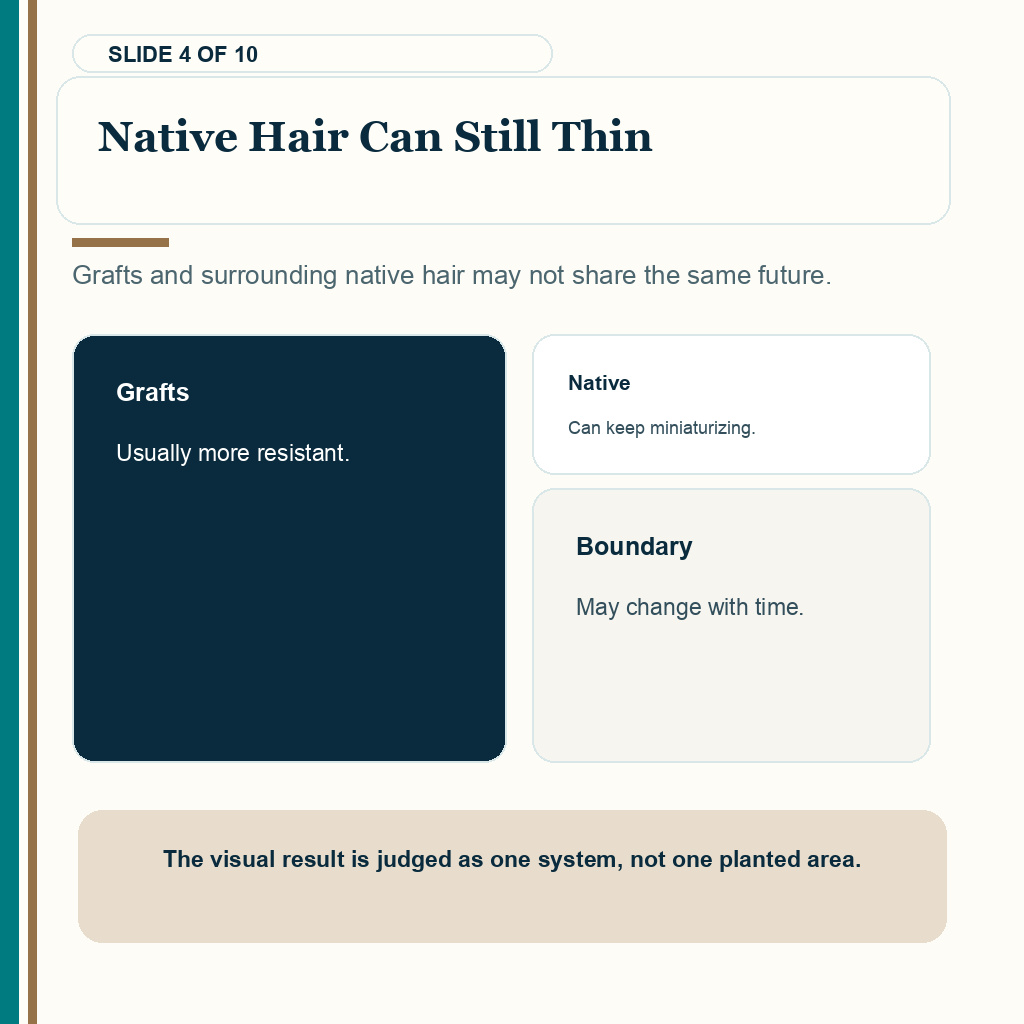
A hair transplant moves resistant donor hair into the thinning area. It does not stop the biological process that was weakening the surrounding native hair. The transplant and the remaining hair have to be judged as one long term system. A technically clean surgery can still become visually weak if the native hair behind it continues to disappear.
Timing triage gate
Which problem are you trying to separate first?
Use this before deciding that surgery was too early, or before planning a second operation.
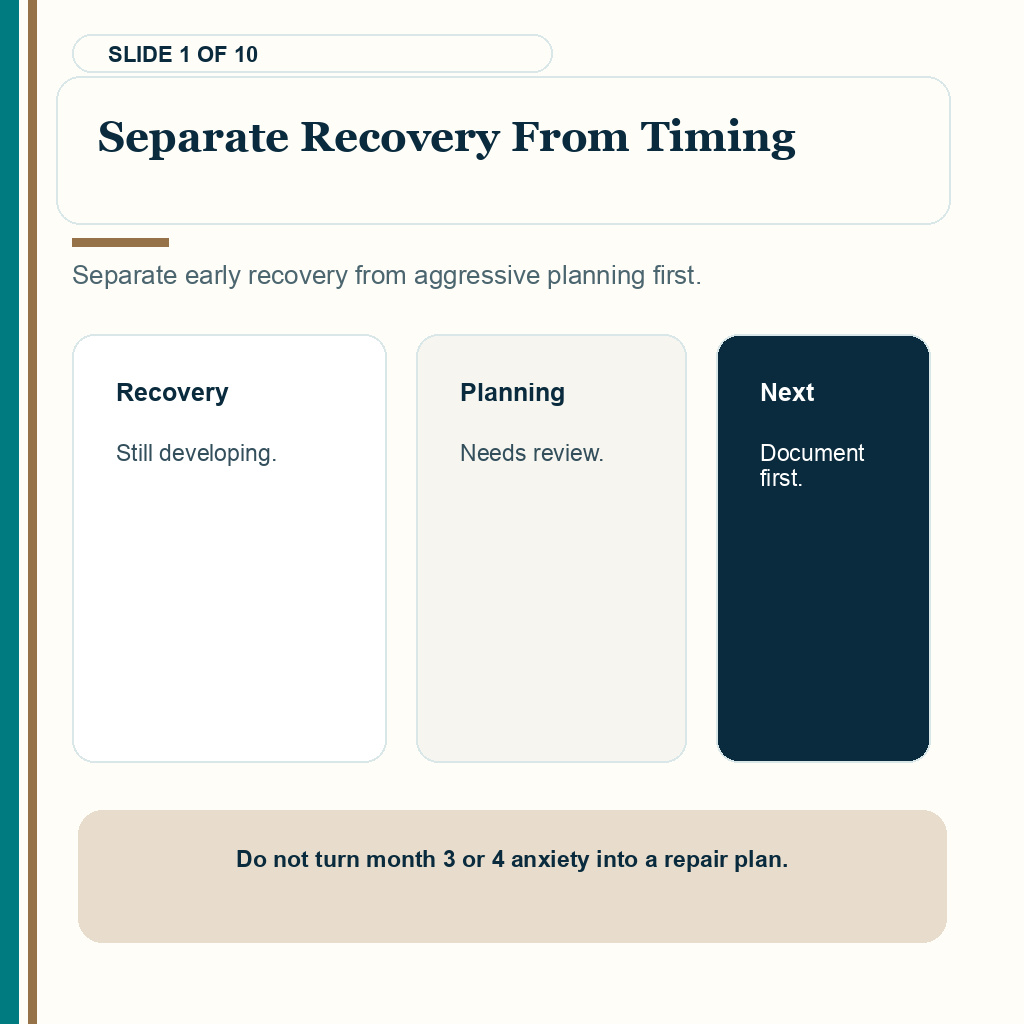
Do not turn normal recovery uncertainty into a repair plan. Use consistent photos and wait for the growth timeline before judging density or shape.
The useful split is growth timing, native hair activity, donor reserve, aggressive design signs, crown demand, and whether repair is being discussed too early.
First steps after the surgery already happened
If the transplant has already been done, the first step is not to punish yourself. The useful step is to protect the situation you have now. Do not rush into a second surgery because you are frightened by early shedding, weak lighting, or comments from other people.
After surgery, protect the present situation in a practical order. Document the transplant properly, wait long enough for the first result to mature, review whether native hair is still changing, and protect the remaining donor area. Medication, when appropriate, belongs in a qualified medical discussion. If medication is not appropriate, the surgical plan has to become even more conservative.
The most dangerous reaction is to treat anxiety as a surgical indication. A second procedure can sometimes help, but only after the first result, the native hair, and the donor reserve are understood clearly. More grafts do not simply correct an early timing mistake.
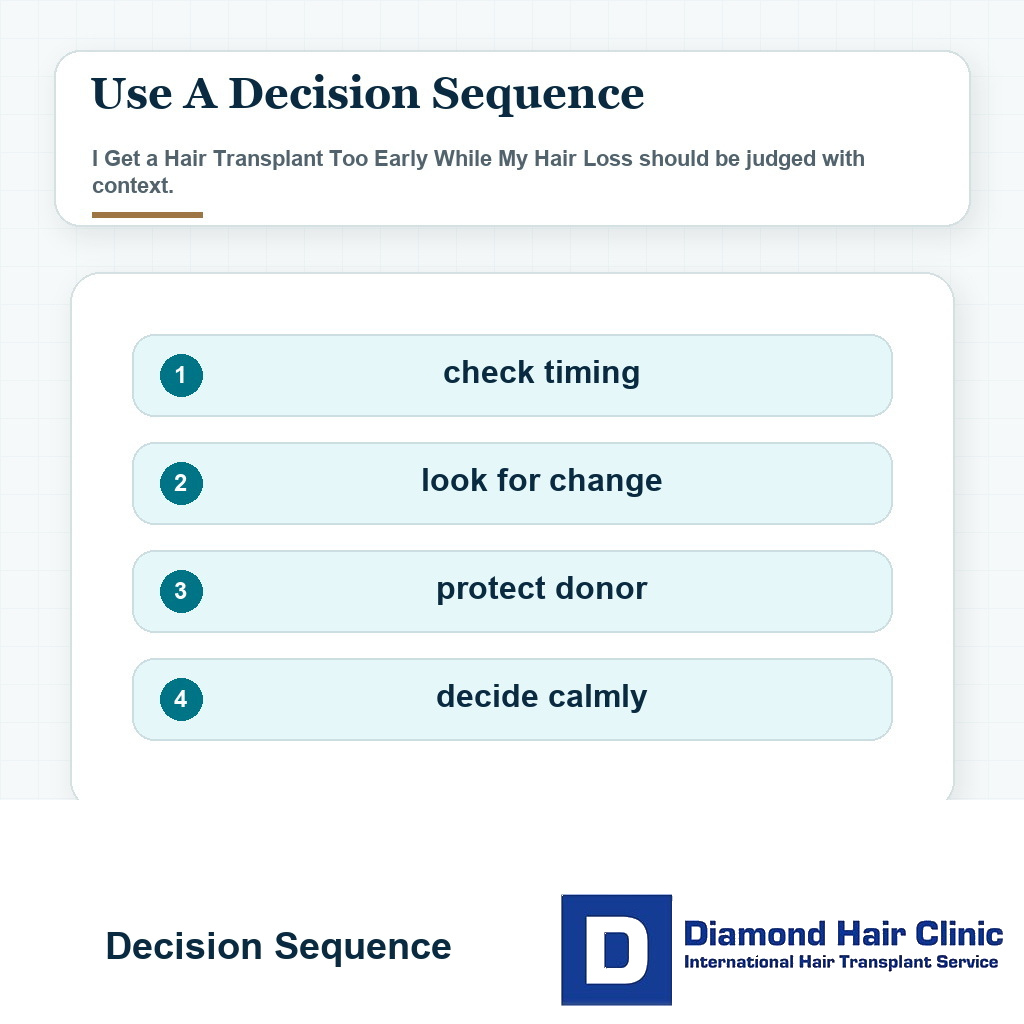
When waiting is the treatment decision?
Before surgery, active loss can make waiting the most protective decision. Rapid change, an unstable crown, diffuse miniaturization, strong family history, young age, medication history, and the future shape of the proposed hairline all matter before grafts are spent. A patient can have androgenetic alopecia before FUE and still need waiting, stabilization, or a smaller design if the pattern is still moving.
Diagnosis can still be too active for surgery
Even when the diagnosis is correct, I connect timing to the broader hair loss diagnosis before hair transplant pathway. Stability decides whether grafts should be spent now, watched for longer, or planned in a smaller first step.
A delay should not be vague. The plan should say what needs to become clearer, such as medication response, shedding pattern, photos over time, scalp diagnosis, or whether the donor can support the design. That turns waiting into a medical plan, not a dismissal.
If the patient already had surgery, the next decision still has to protect the donor area. More grafts should wait until growth, native hair activity, and donor reserve are understood. Panic is a poor reason to spend the second part of the donor.
Operating while hair loss is still active
Active hair loss means the pattern is still changing. The hairline may still be moving, the mid scalp may be thinning, the crown may be opening, or many hairs may be miniaturizing even though they are not completely gone yet. The same timing caution applies when hair pulling is still active, because the target area is not stable enough for graft planning. In this situation, the patient may look as if there is enough native hair to blend with a transplant today, but the same area may look different in one or two years.
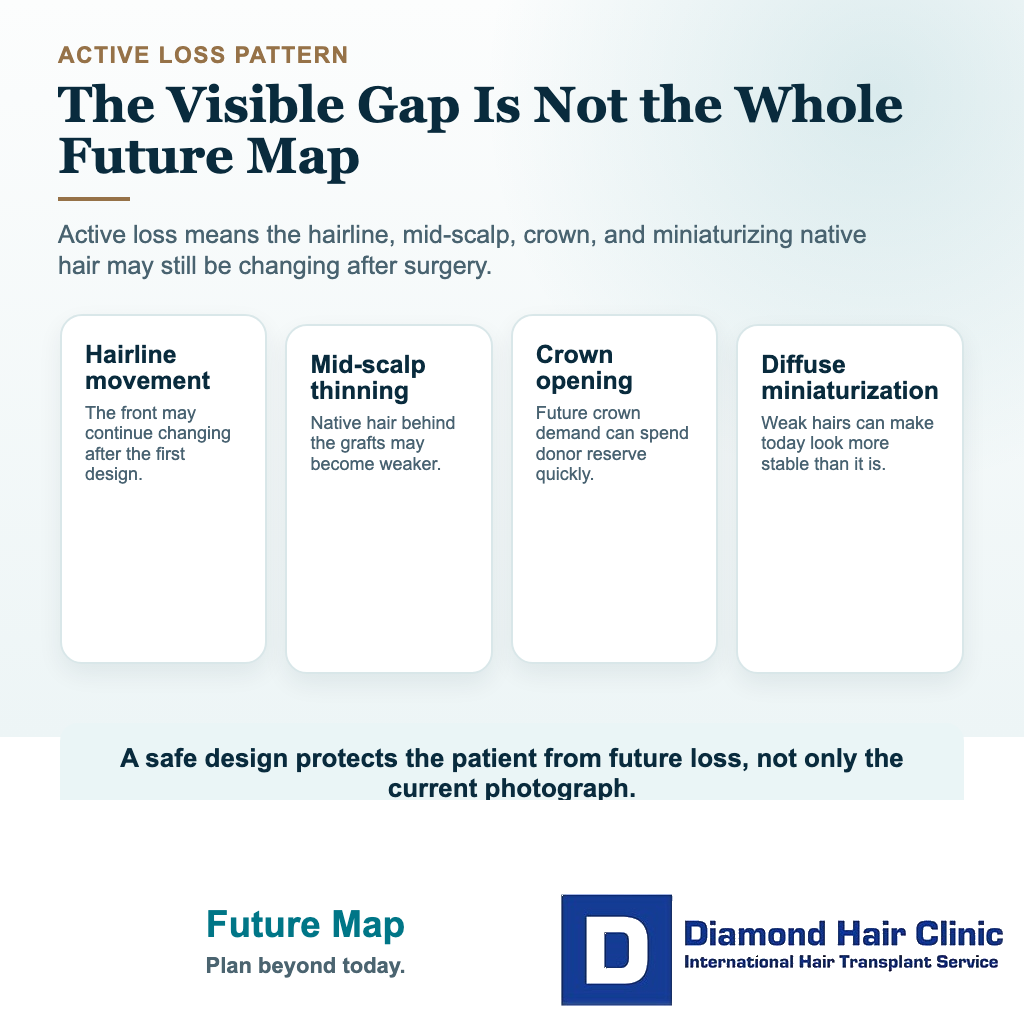
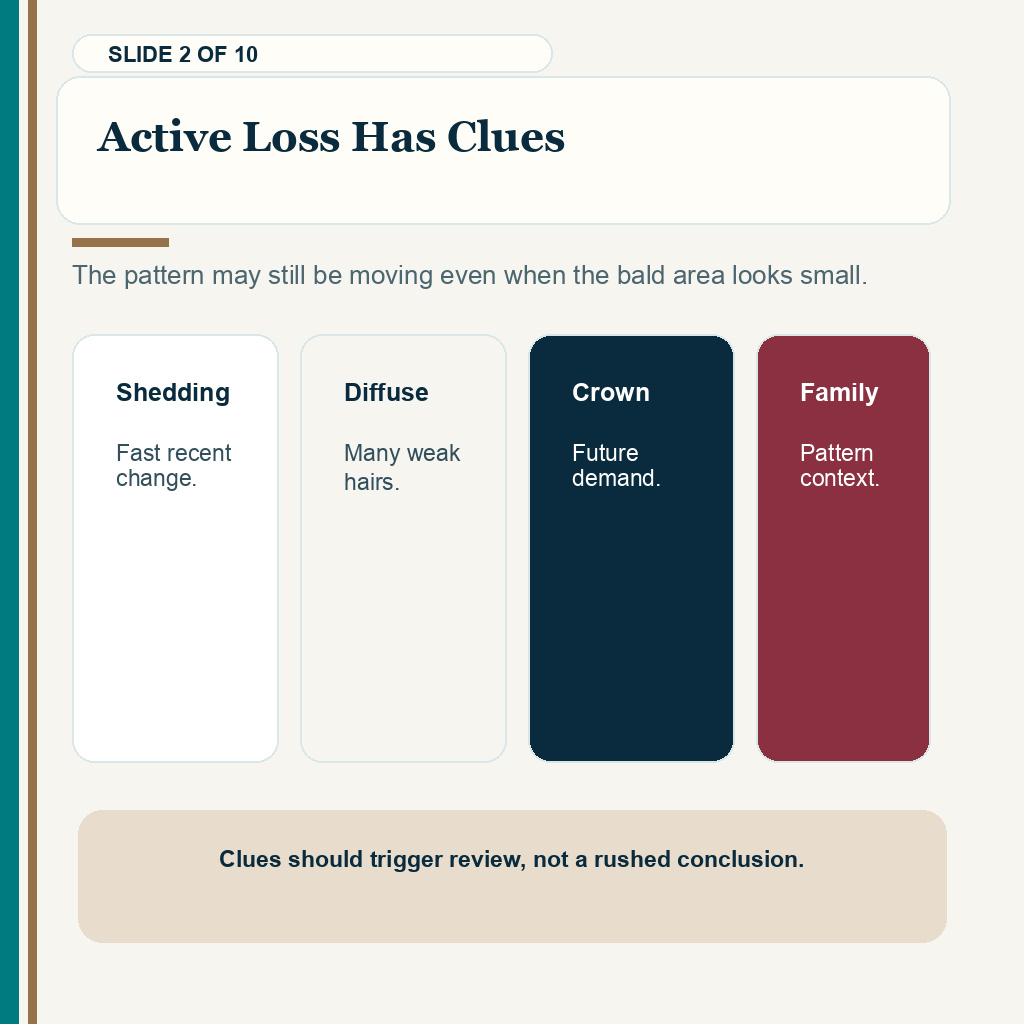
Active loss is judged by more than the size of the bald area. Hair caliber, family history, age, crown involvement, the donor area, and the strength of the native hair behind the planned hairline all matter. A patient can have a small visible recession but still have an unstable pattern.
Before I treat that small recession surgically, I separate a mature hairline from active recession and then look at family pattern, donor reserve, and timing. A separate family history hair transplant plan helps turn that risk into a donor and timing decision.
When discussing medication before a hair transplant, the purpose is not to delay patients for no reason. The purpose is to understand whether the native hair is still changing quickly. In specific cases, a period of observation can reveal whether surgery should be smaller, postponed, or planned in a different order. This matters even more when TRT and active hair loss are part of the same picture. If anabolic steroid use is also involved, the timing question needs even more medical clarity.
The unsafe part is not active hair loss by itself. The unsafe part is pretending active hair loss is already finished. If a clinic designs a low, dense hairline as if the patient will never lose more hair, the patient may feel satisfied in the early photos and disappointed later when the untouched hair behind the transplant weakens.
Uncertain cases make aggressive planning risky. A conservative design may not look as dramatic on day one, but it often looks wiser after years of aging, miniaturization, and donor area limits.
Age can make early surgery more risky
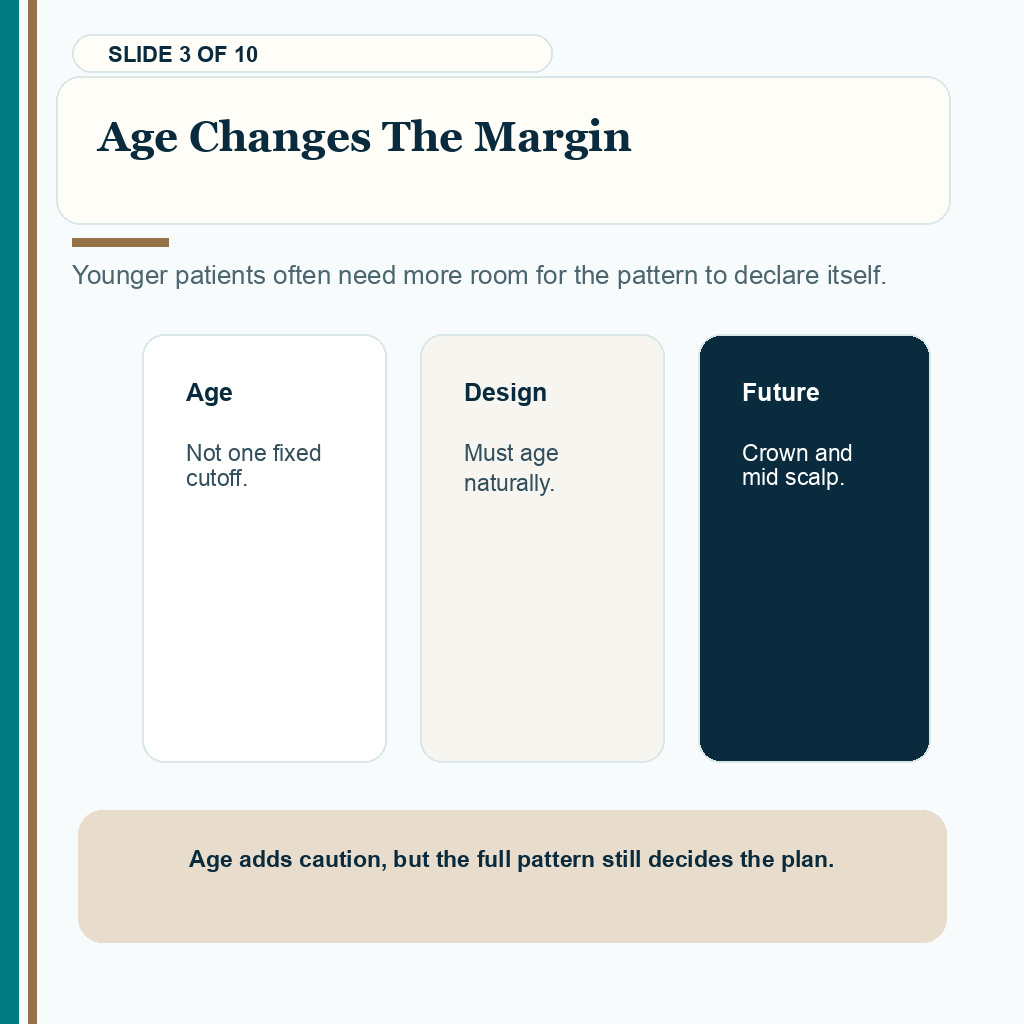
Age matters because younger patients often have less predictable hair loss. A patient aged 22 with rapid recession, crown changes, strong family history, and diffuse miniaturization is very different from a patient in their thirties with slow, stable temple recession and a strong donor area.
Age is not a fixed rule, but caution increases when the pattern is still declaring itself. The younger the patient, the more the hairline must be judged against how it may look at 35, 45, and 55. A hairline that looks exciting at 23 can become difficult to support if the mid scalp and crown thin later.
A patient who may be too young for a hair transplant should not feel dismissed. Hair loss at a young age can be emotionally heavy. The point is to avoid creating a permanent design before the future pattern is clear enough.
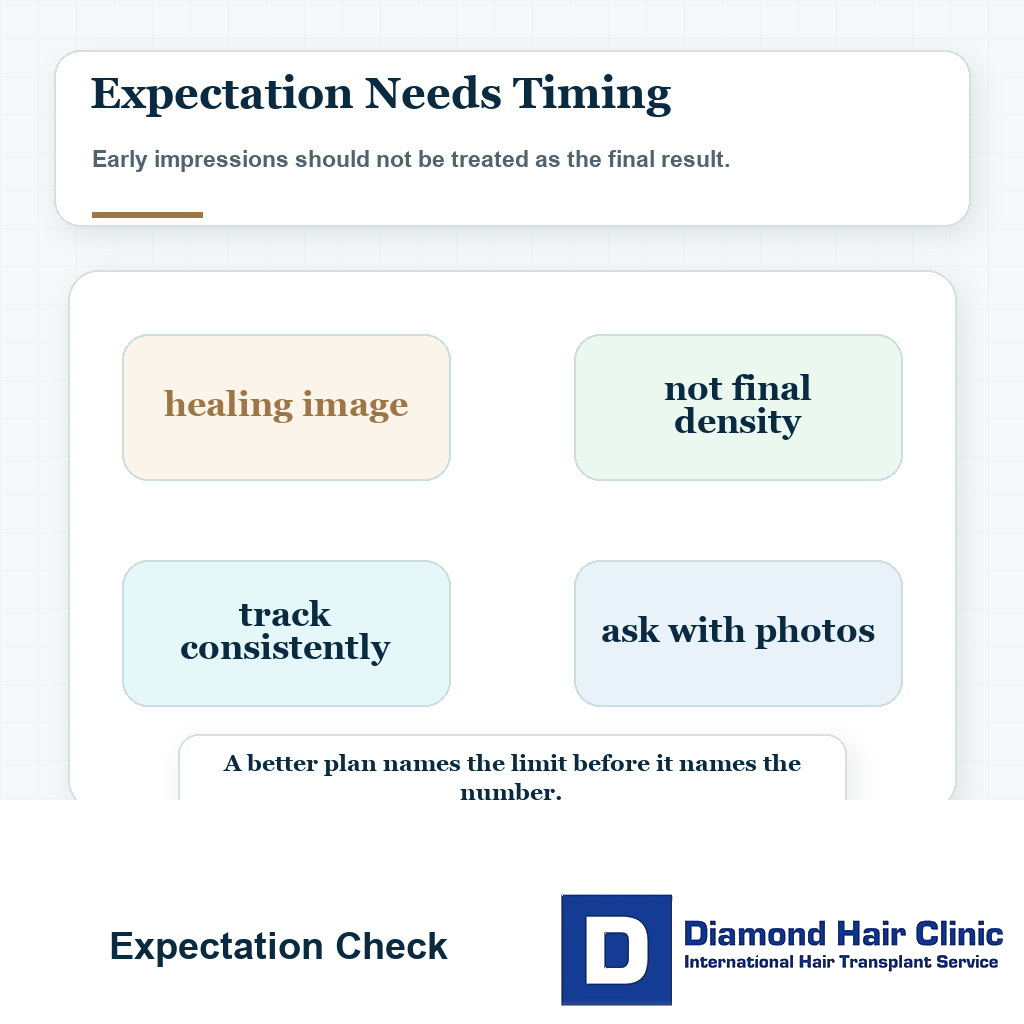
Native hair can keep thinning after grafts grow
Transplanted hairs and native hairs do not always have the same future. The transplanted grafts are usually taken from the safer donor region, where hair is more resistant to male pattern hair loss. The native hairs in the frontal area, mid scalp, and crown may still be sensitive to the same process that caused the original thinning.
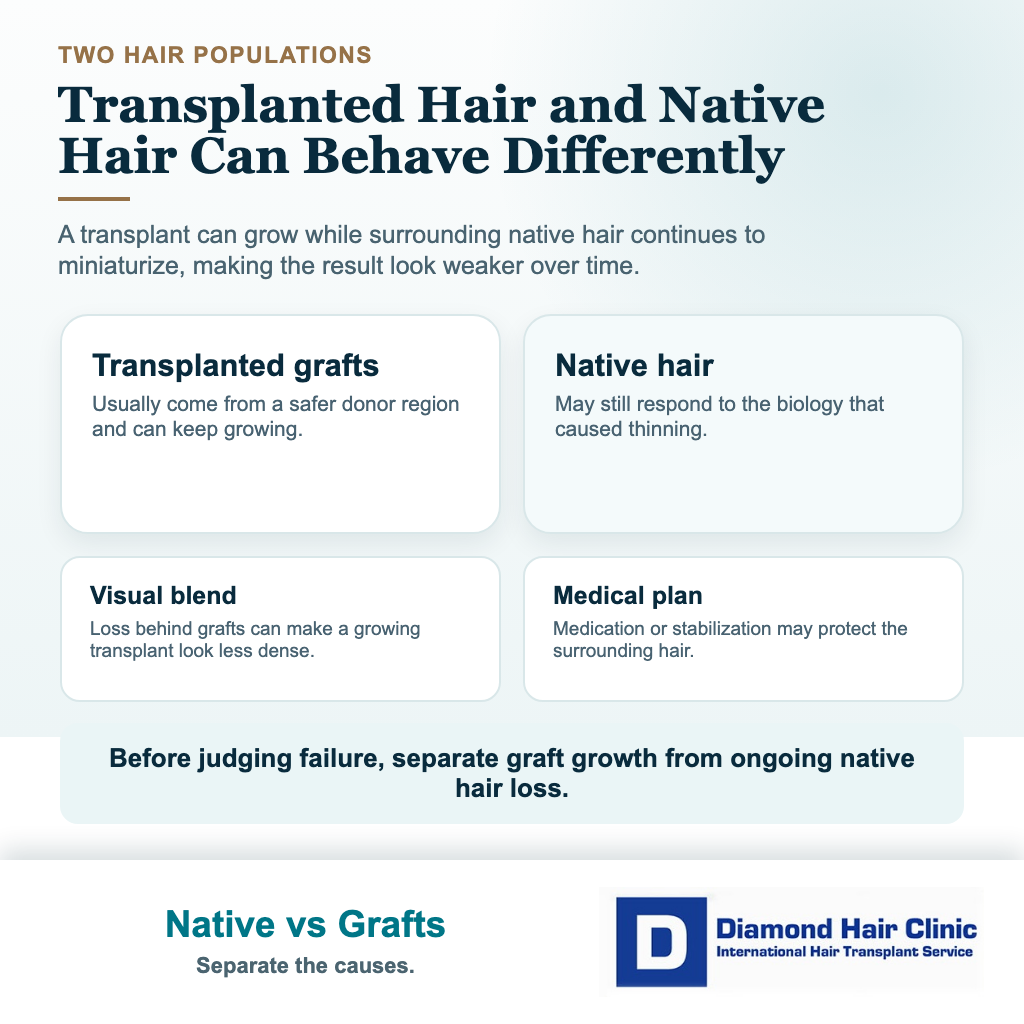
Many patients only understand this after surgery. They see the transplanted hair begin to grow, but the surrounding hair still sheds, weakens, or becomes finer. The patient then asks whether the transplant failed, when the more accurate question may be whether the native hair is continuing to miniaturize.
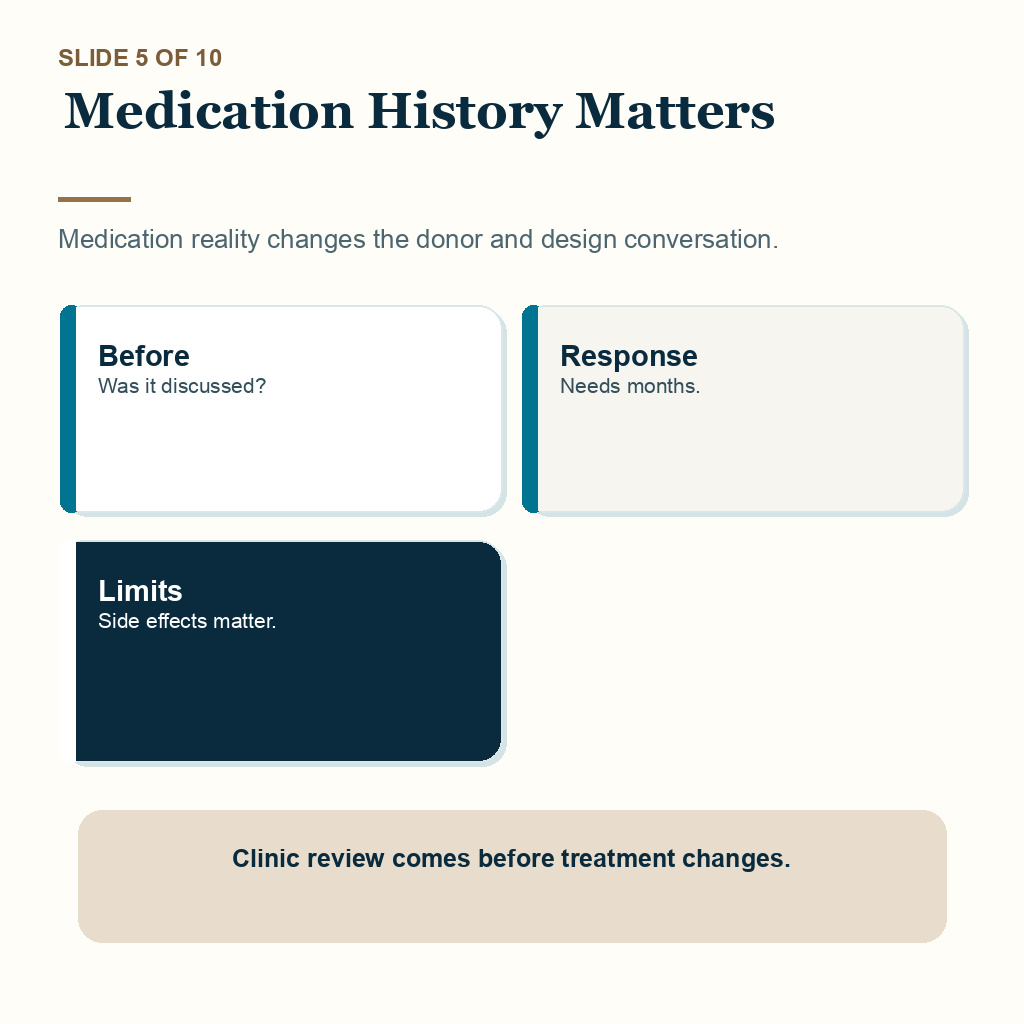
Hair transplant without finasteride needs careful discussion because medication reality changes the design. Some patients cannot take a DHT blocker. Some choose not to. Some tolerate it well. The surgical plan must respect the medication reality of that patient.
If a patient is unlikely to use medical support, the design usually needs to become more conservative. The donor area should be protected more strictly, every weak zone should not be chased, and the hairline should still look natural if more native hair is lost later.
A transplant can replace lost density, but it cannot promise that surrounding native hair will stay unchanged. Long term planning matters more than a short term graft count. A patient is not buying only a first year result. They are living with a surgical design for many years.
Two patients with similar photos can need different plans. One may have stable recession and thick donor hair. The other may have fine hair, early crown changes, and clear miniaturization behind the frontal area. The number of visible grafts needed today may look similar, but the long term risk is not the same.
Normal recovery is not the same as a planning mistake
In the first months, it is very easy to misread the situation. During the first 10 to 14 days, the priority is to protect the grafts and let the scalp settle. After that, transplanted hairs often shed. Around month 3, many patients look worse than they hoped because the new growth has not become visible yet.
Native hair can also shed temporarily. Native hair shock loss often appears within the first 2 to 8 weeks. Many temporary cases begin improving after month 3, and lack of improvement by month 6 deserves a careful review.
This timeline matters because a patient can confuse normal recovery with proof that the operation was too early. At four months, weak density does not always mean failure. At six months, the picture may still be incomplete. At 12 to 18 months, the result is much more responsible to judge.
Not every concern should be ignored until 18 months. Pain, pus, spreading inflammation, black skin changes, severe persistent redness, or sudden unusual loss should be reviewed. But thin appearance during the early growth phase is often not enough to declare the surgery a mistake.
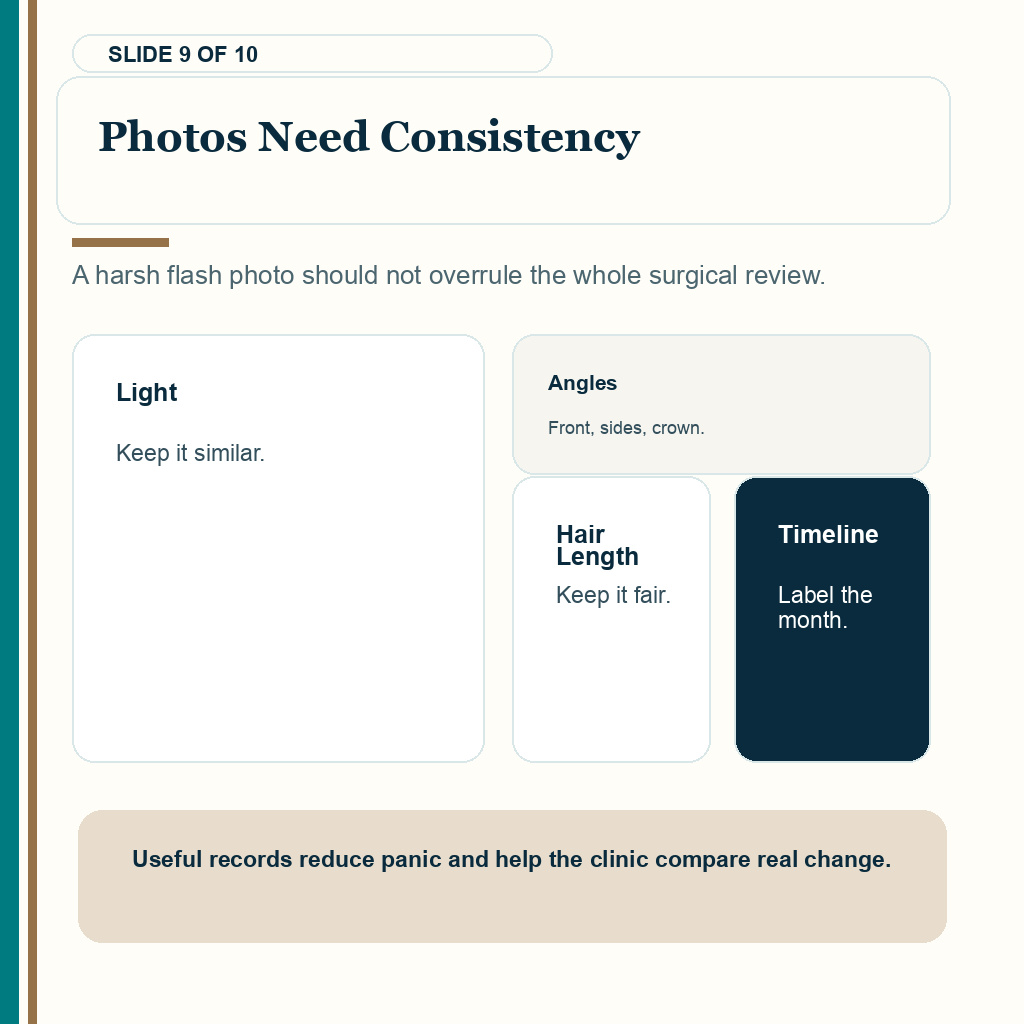
Consistent documentation matters. Take photos in the same light, from the same angles, with the same hair length when possible. One wet bathroom photo next to a dry clinic photo can make the result look worse than it is, and it should not drive a major decision.
The early months are for healing and observation, not for judging your final identity in the mirror. If you are worried, ask for a structured review instead of searching for one sentence that tells you everything is either perfect or ruined.
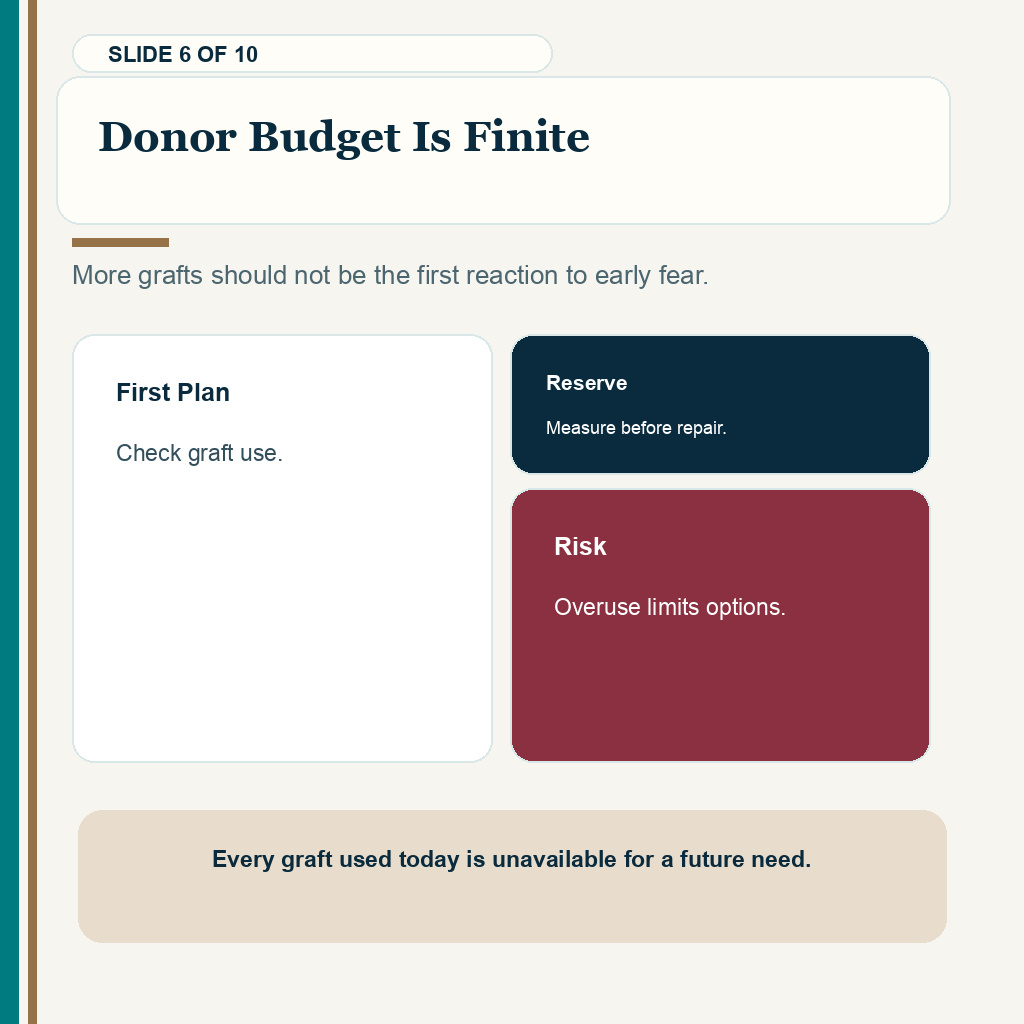
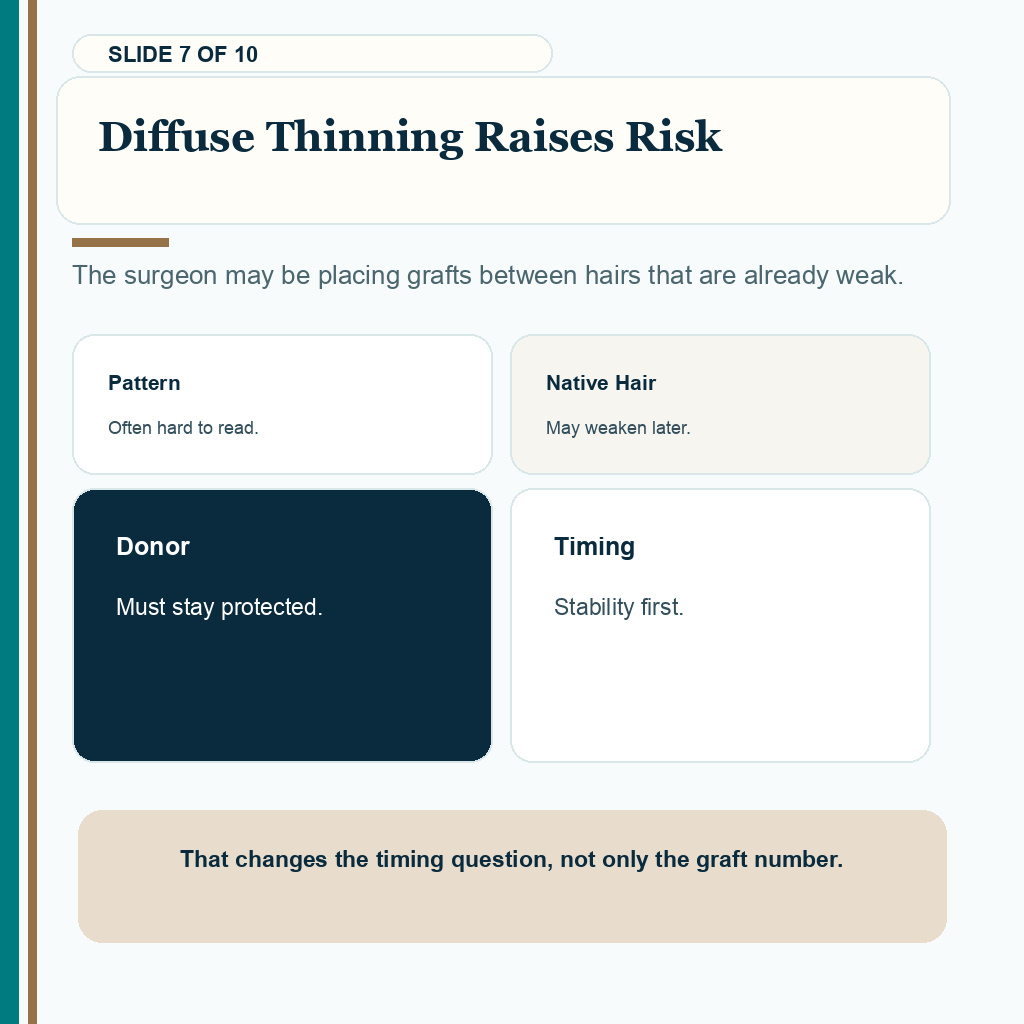
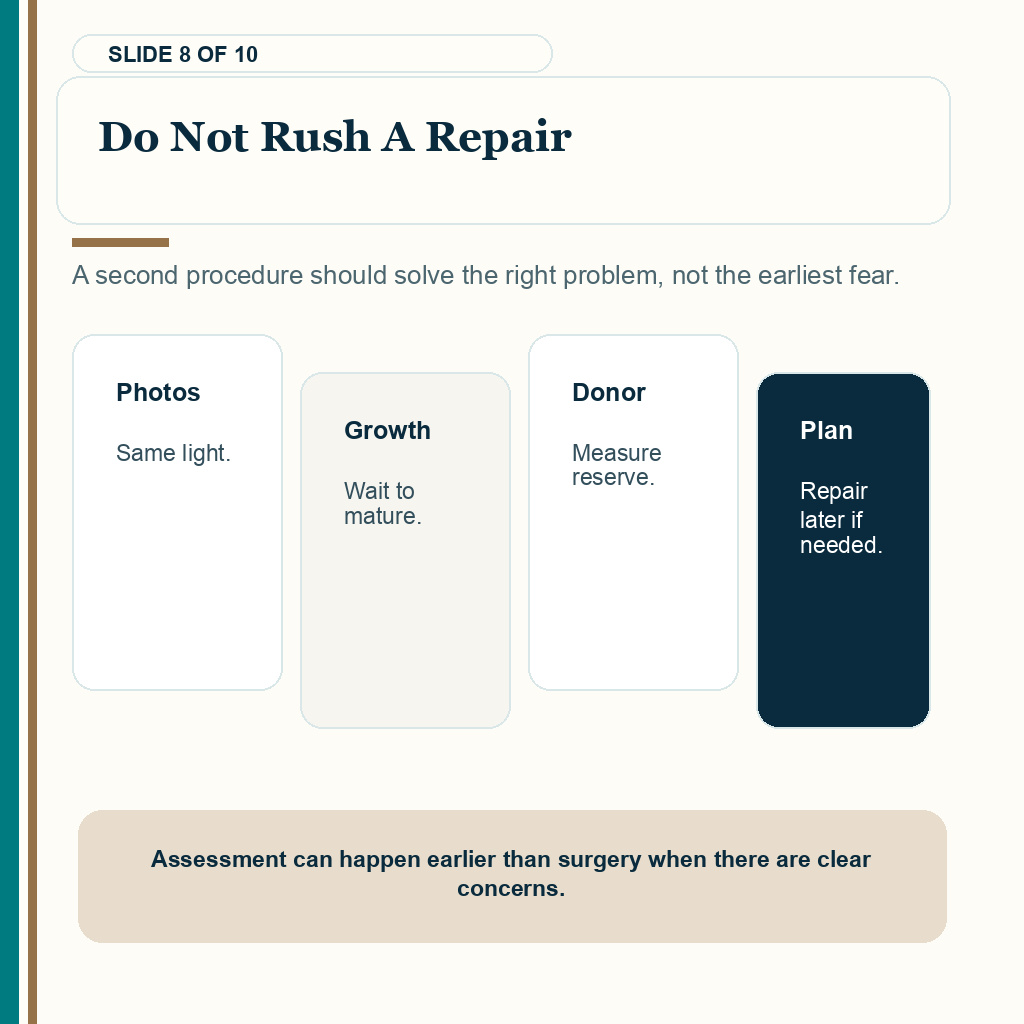
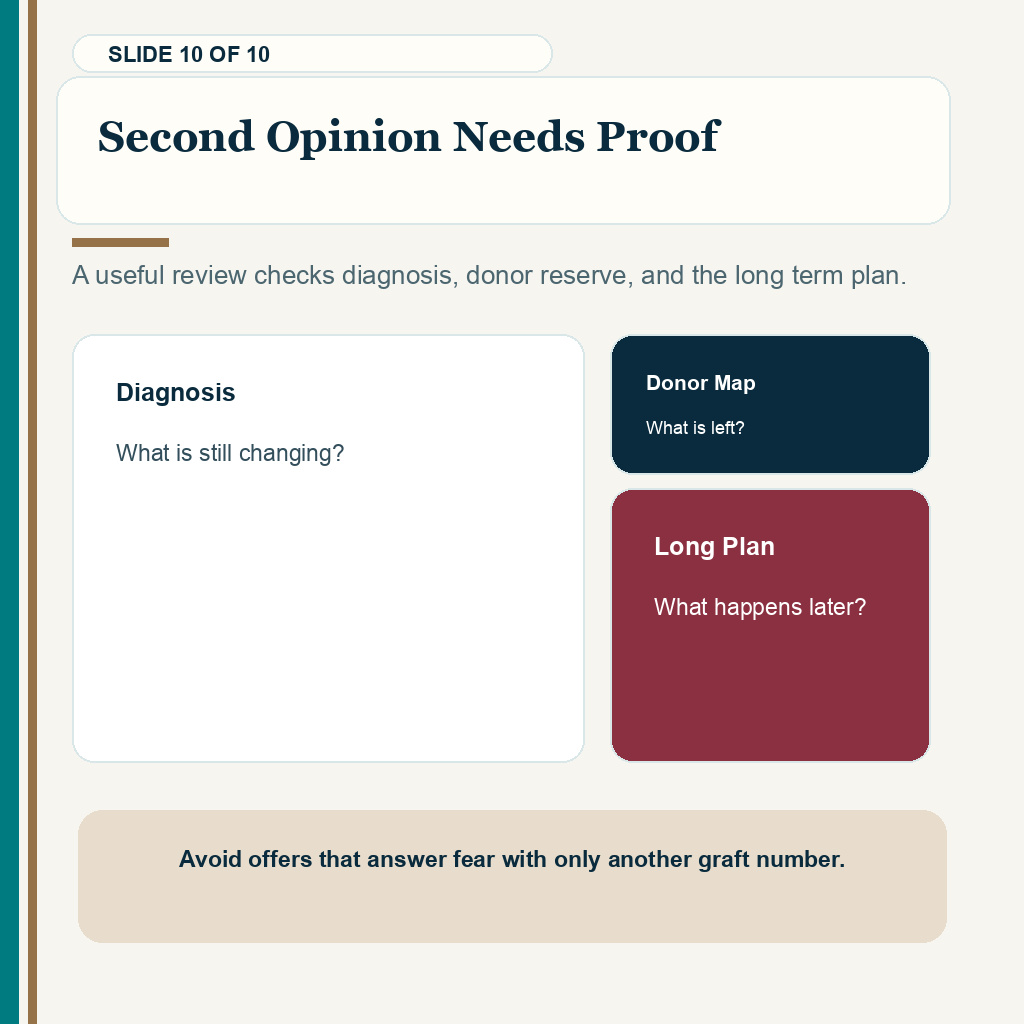
These 10 timing and stability slides separate early recovery, active loss clues, age, native hair, medication history, donor budget, diffuse thinning, repair timing, photo records, and second opinion proof. Swipe sideways, use the arrows one slide at a time, or choose a number below the image.
Diffuse thinning makes timing more delicate
Diffuse thinning before FUE is more delicate because the scalp still contains many hairs, but many of them may be weak. The surgeon is not only filling an empty space. He may be placing grafts between native hairs that are already fragile.
A diffuse thinning hair transplant needs more caution than a clearly empty frontal recession. If the existing hairs are miniaturized, they may not provide stable support for the transplanted grafts in the future. The plan must account for what is present today and what may disappear later.
In some diffuse cases, surgery is still useful. In others, medical stabilization first is wiser. The difference is not always visible to the patient because diffuse thinning can look better under soft light and much worse under harsh light. Wet hair, short hair, flash photos, and scalp contrast can change the impression dramatically.
Diffuse thinning can create regret in a specific way. The patient may not be bald enough to need aggressive surgery, but the hair can feel thin enough to cause distress every day. That emotional middle zone can make quick surgery feel attractive.
Practically, this is not only about whether grafts can be placed. The clearer question is whether placing grafts now will make the long term situation easier or more complicated. Sometimes the best surgical judgment is to make the plan smaller, delay it, or refuse surgery for now.
Medication can still help after the transplant is done
Medication can still help after a transplant in specific cases, but it should be reviewed with a qualified doctor who understands the case. Starting medical treatment after surgery does not erase the fact that surgery was done, but it may help protect the native hair that remains.
When medication can delay a hair transplant before surgery, it does so by stabilizing or improving weak native hair in some patients. After surgery, the goal is similar, but the timing is different. Now the plan is to protect the surrounding hair, reduce future contrast, and make the surgical result easier to maintain visually.
Starting, stopping, and changing medication in panic needs careful review. Finasteride, dutasteride, minoxidil, PRP, and other options all have different purposes, limitations, and possible side effects. A patient who had side effects or hormone sensitivity needs a careful medical discussion, not pressure.
If you started medication after surgery, do not judge its effect in a few weeks. Hair cycles are slow. Shedding can happen. Improvement or stabilization often needs months of consistent follow up. The decision should be made with documentation and medical supervision.
Medication after surgery is not a punishment for choosing surgery too early. It is one possible tool for protecting the hair that surgery did not replace. Some patients need it strongly. Some cannot use it. Either way, the surgery plan must be clear about that reality.
Avoid one common emotional mistake. If surgery feels too early, medication can start to feel like something that must rescue everything quickly. That is not fair to the patient or to the treatment. The more reasonable goal is to slow the moving part of the problem, then judge the surgical result with better information.
Connect the medical plan with photographic follow up. If the crown becomes more stable, the mid scalp holds better, and the transplanted area continues to mature, the patient may need less surgery than they feared. If the native hair continues to decline despite treatment, the next surgical discussion becomes more realistic because we are no longer guessing blindly.
Signs the original plan may have been too aggressive
The first warning sign is a hairline design that was too low for the patient’s age, donor capacity, and future pattern. A low hairline can look exciting immediately after surgery, but if the native hair behind it continues to thin, the result may begin to look disconnected.
Another sign is very high graft use for a patient with limited donor capacity. If a large number of grafts was used to create early visual drama, the patient may have fewer options later. That risk is higher when the crown, mid scalp, or future loss pattern was not planned.
A visible gap between transplanted hair and native hair can also raise the question of planning. Sometimes the gap is temporary because of shaving, shedding, or shock loss. Sometimes it is a sign that the weak native hair behind the transplanted zone was not respected enough.
Direction, density distribution, and transition all need review. A result that looks natural as you get older is not created only by placing many grafts. The front must be soft, the density must fade intelligently, and the design must make sense if the patient loses more hair behind it.
The most aggressive plan is not always the one with the most grafts. Sometimes it is the plan that ignores uncertainty. If the surgeon did not explain what may happen if native hair keeps thinning, the consultation was incomplete.
One psychological clue matters. If a patient says they were promised that one operation would solve everything forever, the planning deserves questioning. Hair transplantation is powerful, but male pattern hair loss is usually a long term condition. The plan should reduce uncertainty, not hide it behind a confident package.
Protecting the donor area now
Donor supply is limited, and the remaining donor reserve has to be protected. Once grafts are removed, they cannot simply be put back as if nothing happened. If you now worry that surgery happened too early, protecting what remains becomes the priority.
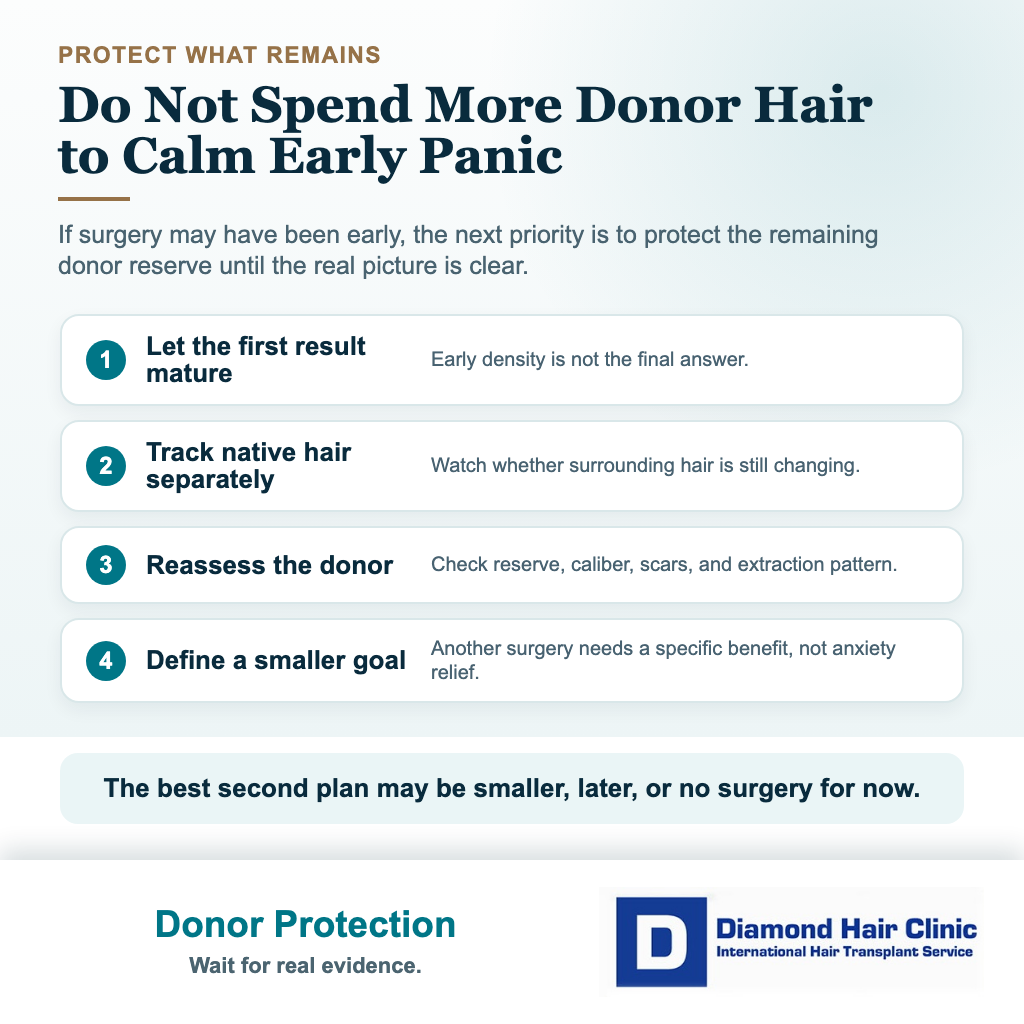
Do not rush into a second procedure because you dislike the early look. Do not ask another clinic to fill every thin zone immediately. Do not chase density before you know whether the first result is mature and whether the native hair is stabilizing.
Candidacy must be reassessed before another operation. The first operation does not necessarily make the second one wise. A second procedure needs a new evaluation of donor supply, hair caliber, scar pattern, density, recipient area condition, and whether the patient is still a good candidate for a hair transplant.
If the donor area was already weak or heavily used, the plan must become more disciplined. Sometimes the best decision is a smaller correction. Sometimes the best decision is no surgery for now. Sometimes medication, styling, or scalp micropigmentation may be part of the discussion.
When a patient has anxiety after an early transplant, the donor area needs protection from emotional decision making. Every graft used today is a graft that cannot be used for a future need. In this situation, careful planning is not hesitation. It is part of responsible surgery.
Reasons to avoid more surgery for now
More surgery should usually wait if the first transplant is still too early to judge, if shedding is active, if the native hair is changing quickly, or if the donor area looks weak. It should also pause if the patient is mainly trying to relieve regret rather than solve a clearly diagnosed surgical problem.
A second procedure may also be unwise if the original hairline was already too low, the crown is unstable, the patient cannot accept moderate density, or the remaining donor supply is limited. In those situations, another operation can make the long term problem harder to manage.
Sometimes the useful message is not “no forever”. It is “not yet.” Time can show whether the transplanted grafts grew, whether shock loss recovered, whether medication helped, and whether the native hair stabilized. That information is worth more than a rushed graft number.
Repair or a second session needs careful timing
Repair or a second session should usually be considered only after the first result has matured enough to judge responsibly. Commonly, that means waiting at least 12 to 18 months. Some complex cases need even longer before the more cautious plan becomes clear.
If you are at month 4, month 5, or month 6, you may still be in an incomplete growth phase. A thin result at that point can improve. Native shock loss can recover. Texture can settle. Hair shafts can thicken over time.
Judging a hair transplant too early is one of the easiest ways to create unnecessary fear. The patient sees a weak stage, labels it failure, and starts searching for another surgery before the first one has shown its real outcome.
There are exceptions. If the hairline direction is clearly wrong, the design is obviously unnatural, donor area looks visibly overharvested, or there are serious skin problems, an earlier expert assessment can be useful. But assessment is not the same as immediate surgery.
If repair is needed later, the plan should be more deliberate and more precise than the first operation. A bad hair transplant repair is not simply a matter of adding grafts. It may require removing poor grafts, softening the hairline, rebuilding transitions, protecting donor supply, and accepting limits.
Sometimes the hardest advice is to wait even when the patient is unhappy. Waiting does not mean doing nothing. It means letting growth mature, controlling inflammation if present, documenting the native hair, and understanding whether the main problem is design, density, continued loss, or anxiety during recovery.
Early recovery is not the final answer
Separate timing from design before deciding that surgery has failed. In early recovery, first check whether healing is normal and growth is still developing. At 12 to 18 months, the discussion becomes final density, naturalness, donor condition, and how the native hair has changed.
The next distinction is transplanted hair versus native hair. Ask whether the transplanted area is growing poorly, whether the native hair behind it is thinning, or whether both are happening. These are different problems and need different solutions.
Use consistent photos before deciding the result is failing. Keep the same lighting, angles, and hair length when possible. Dry and wet comparisons can both help, but they should not be mixed randomly. A harsh flash photo at short length can make almost any result look weaker.
The original plan should also be reviewed. The graft number, treated areas, crown strategy, hairline height, diffuse thinning, medication discussion, and donor evaluation all change the interpretation of an early result. Panic becomes easier to control when the plan is understood clearly.
Do not let embarrassment silence you. Many patients who fear they operated too early feel ashamed, but shame does not protect the donor or improve the plan. The useful question is what can be protected now.
Another transplant is not always the right move. Often the patient needs documentation, stabilization, time, and a clear surgical review first. A clear plan can still prevent a second mistake even if the first decision was imperfect.
Unstable loss changes the whole design
If the case were being planned from the beginning, the first question would be whether the patient is truly ready for permanent surgical design. A patient who is too young for a hair transplant may not be too young because of age alone. They may be too early because the pattern is unstable, the expectations are urgent, or the donor area needs protection.
The donor area needs careful examination. Miniaturization, density, hair caliber, safe zone width, and family pattern all matter. The requested graft number should never replace surgical judgment.
The recipient area also needs to be seen as a future map, not only a current empty space. If the native hair behind the hairline is weak, the design should not depend on that weak hair staying forever. If the crown is opening, treating the front aggressively may leave the crown difficult to manage later.
In specific cases, 6 to 12 months of stabilization before committing to surgery can be wiser. Do not read that as every patient must wait. It means that when the biological pattern is unclear, waiting can give the surgeon better information and the patient a better protected plan.
If surgery is still appropriate, the design should age naturally. The donor area should be used carefully, future options protected, and the hairline should belong to the face. One operation should not be sold as the solution to a lifelong condition.
If you already had surgery, the same principles still apply. You cannot change the timing, but you can improve what happens next. Stabilize the native hair where possible. Wait long enough to judge the result. Keep the donor area available for later work, and choose any second surgery with more information, not more panic.
Think about active hair loss after a hair transplant in a more useful way. The date of surgery matters, but the next plan matters too. The situation should not be reduced to one frightening question about whether everything is lost. Ask what can still be stabilized, what must be protected, and whether the next decision is made with better judgment than the first one.

Read this review excerpt
Every single one of my questions was answered and they made sure I had all the details I needed to make an informed decision.