


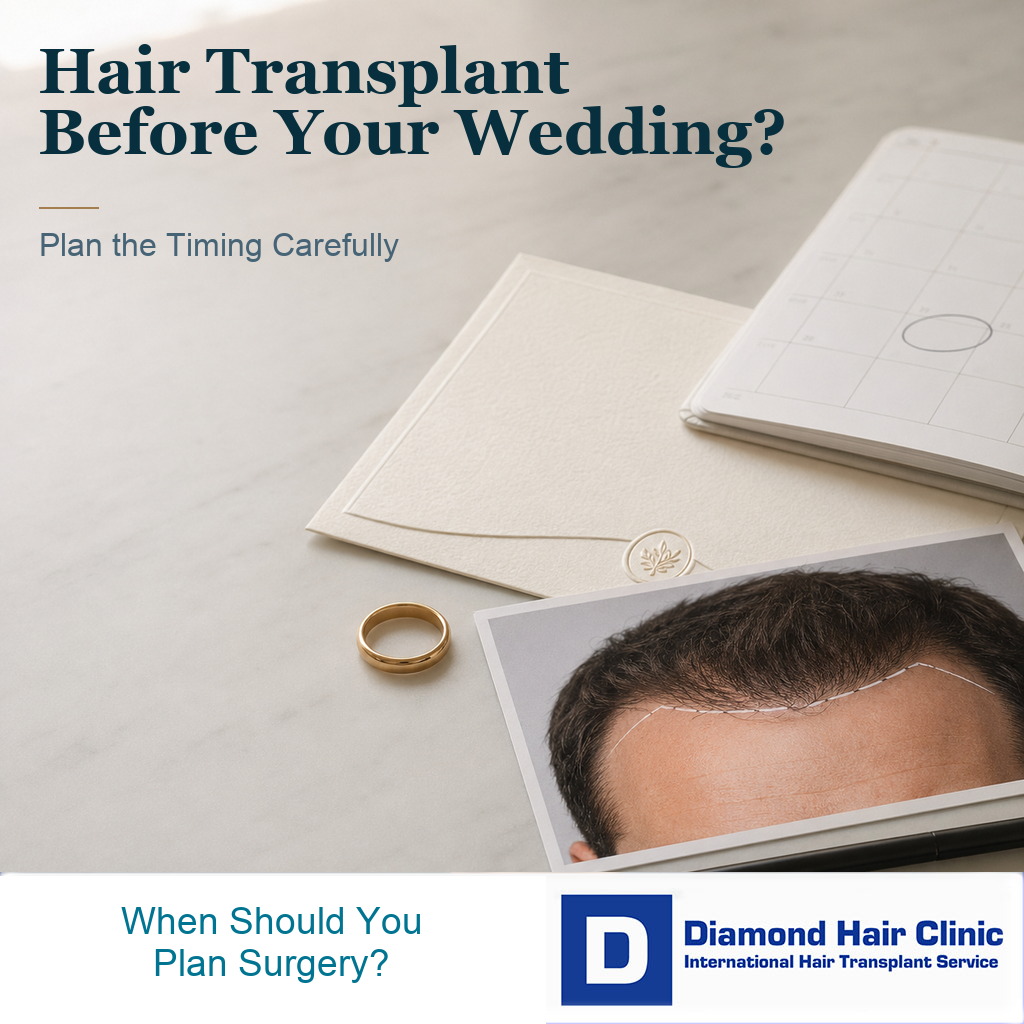
FUE Timing Before a Wedding
Most patients have the calmest wedding timeline when the transplant is planned at least 12 months before the wedding. A plan at 9 months can sometimes look presentable when the work is limited to the frontal hairline, but 6 months is still uncertain even in a good case. If the wedding is only 3 or 4 months away, protecting the event and planning surgery afterward is often the calmer decision.
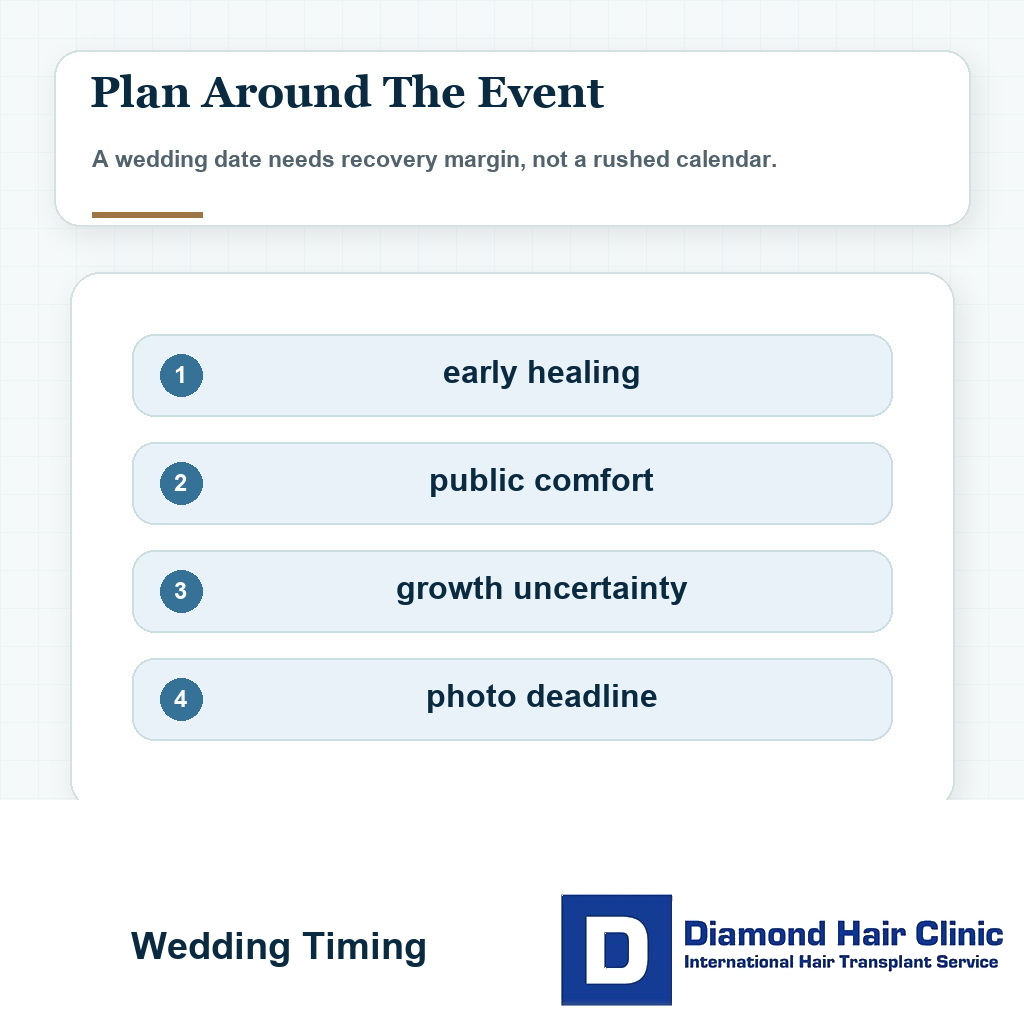
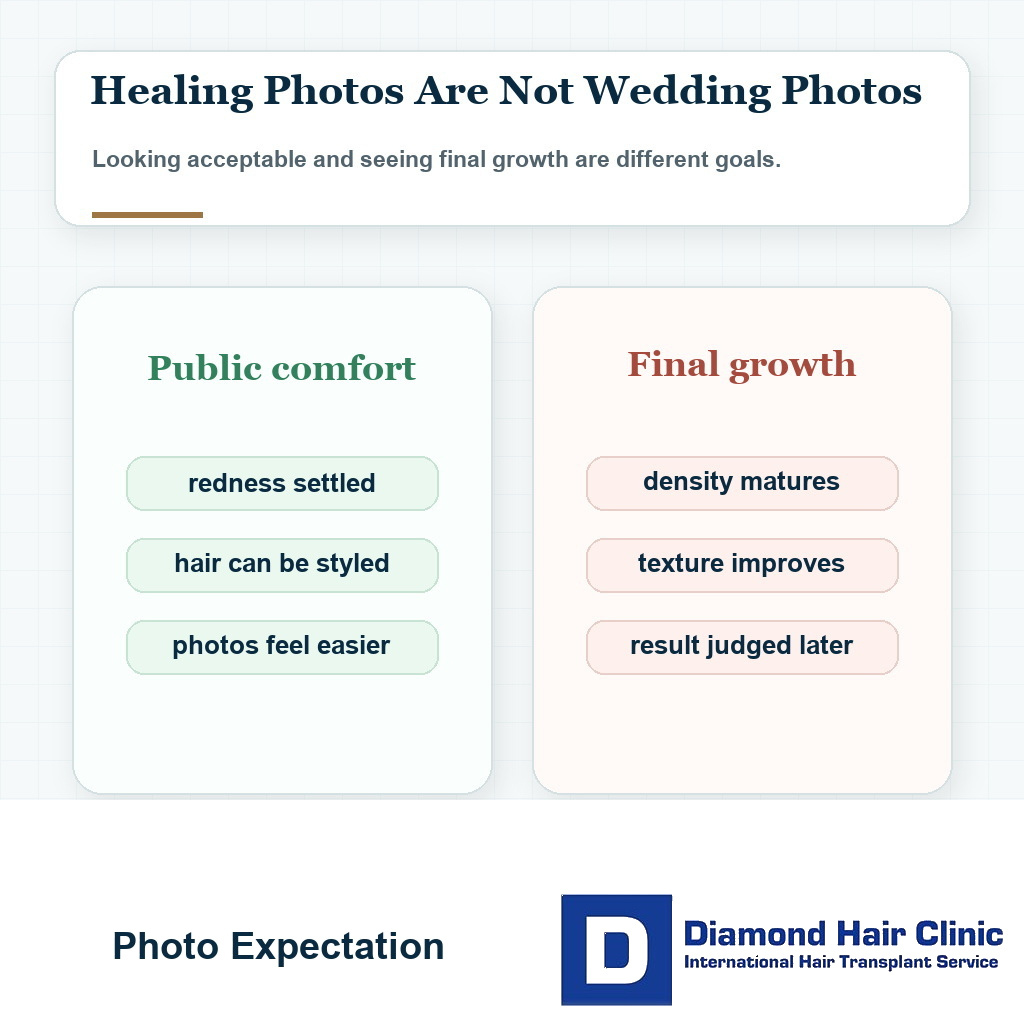
Healing and growth are not the same thing. Your scalp may be healed enough to be seen in public after the first 10 to 14 days, but wedding photographs, close family attention, strong lighting, hair styling, and emotional pressure are different from ordinary daily life. A wedding date should never force a rushed surgical plan. For a wedding, the real deadline is often the first formal photo or family event, not the operation date itself.
If the event is close, plan for the hair stage you will actually have on that date. Haircut length, camera lighting, redness, and styling limits matter more than the result you hope to see later. Retained short hairs or light shedding before the event should not be treated as the wedding result. The plan still has to work with the length, coverage, and styling limits that are real on that date.
Before the event, test the haircut and lighting in ordinary photos rather than discovering the problem in formal pictures. A styling trial cannot speed growth, but it can show whether redness, length mismatch, or product limits need a calmer plan. Have the stylist handle your hair under the same light before the event, especially if products or combing will be different from your daily routine.
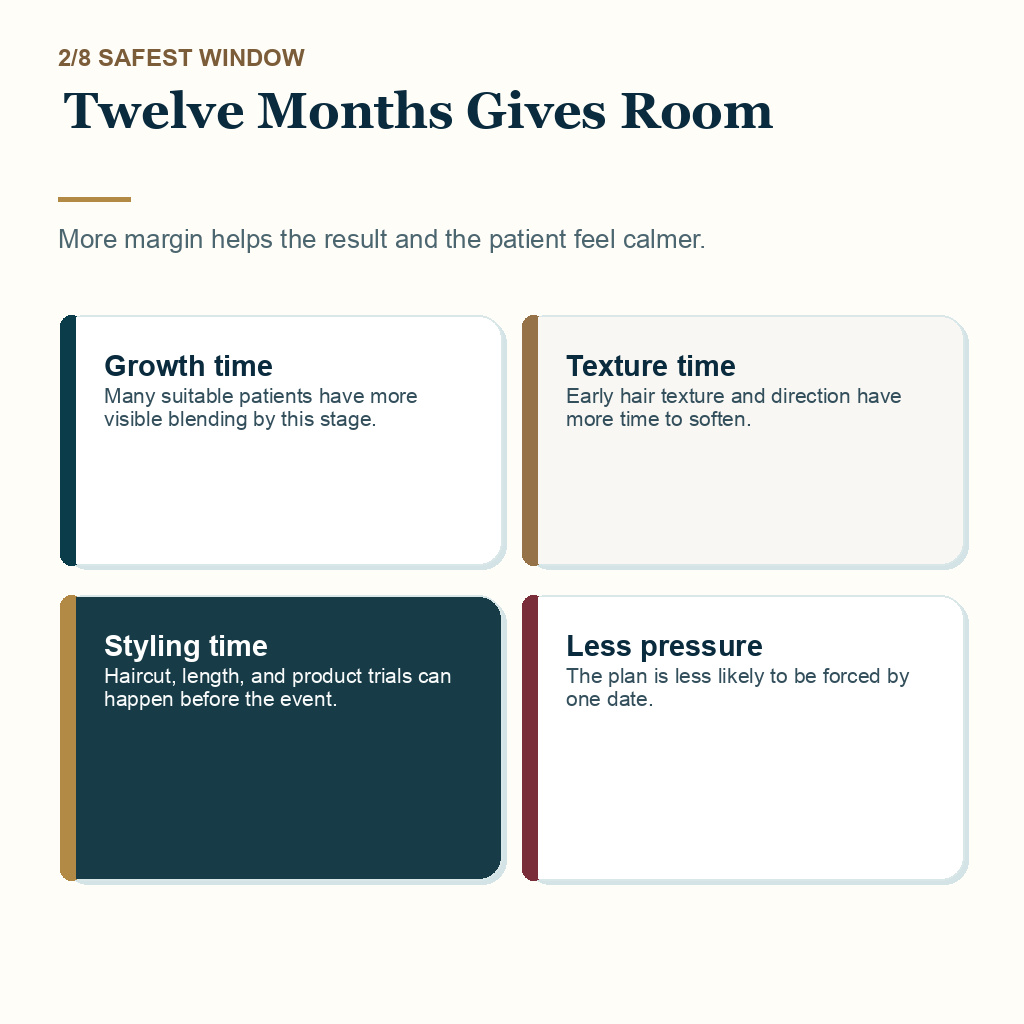
Twelve months is the most reliable wedding timeline
For most patients, 12 months gives the strongest balance between visible improvement and emotional comfort. By that stage, the transplanted hair has usually grown enough to blend better with native hair, the early texture has softened, and the patient has more styling options. The result may still continue to mature after 12 months, especially in the crown, but the face framing effect is usually much more reliable than it is at month 4 or month 6.
When I plan surgery around a wedding, I do not only ask when the skin will heal. I ask when the patient needs to feel comfortable in photographs. That is different from ordinary recovery. It includes the hair length, the direction of the new hairs, the density expectation, the redness of the recipient area, and whether the existing hair can help cover the healing phase.
I separate being medically healed from being socially ready. A patient may look normal after a hair transplant in daily life before they feel ready for wedding photographs. For a wedding, I add more margin because the emotional pressure is greater and the photographs remain for life.
Nine months can work for some patients
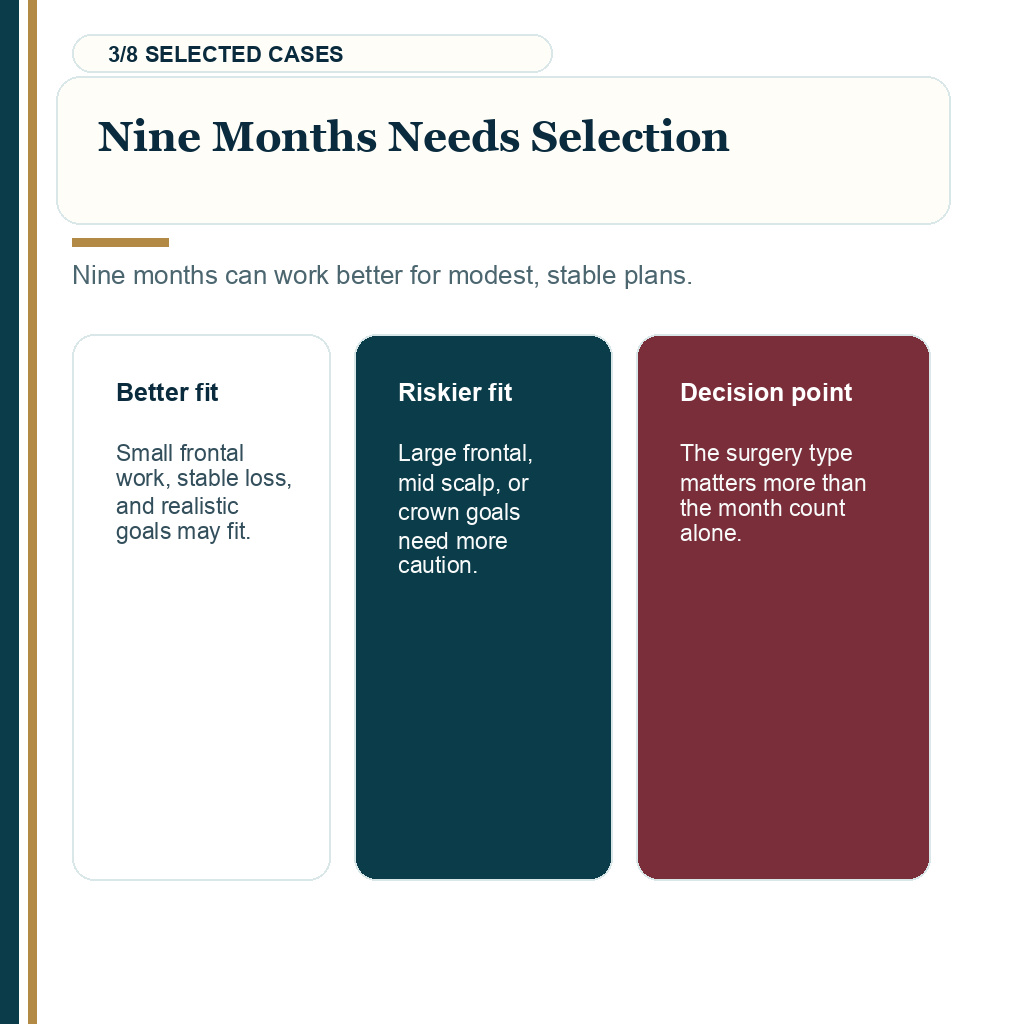
9 Months can be enough for some patients, but I do not use it as a universal rule. A patient with a small or moderate frontal hairline plan, stable hair loss, good donor quality, and realistic expectations may look very good by 9 months. Another patient with diffuse thinning, crown work, poor donor capacity, or ongoing native hair loss may still feel unfinished at the same point.
The month count alone is not enough. The useful detail is the kind of surgery that was done and whether the result at 9 months will be strong enough for your specific wedding situation. A small hairline refinement behaves differently from a large session across the frontal area, mid scalp, and crown. A conservative design that protects the donor area may look more natural than a dramatic design that tries to change the whole face quickly.
Plan from the earliest photo date that matters, not only from the wedding day. Many couples have engagement photos, family gatherings, travel, suit fittings, rehearsal events, and close up pictures before the ceremony. If the first major photos are 2 months before the wedding, then a 9 month plan is really a 7 month visual deadline.
Six months is a gamble rather than a promise
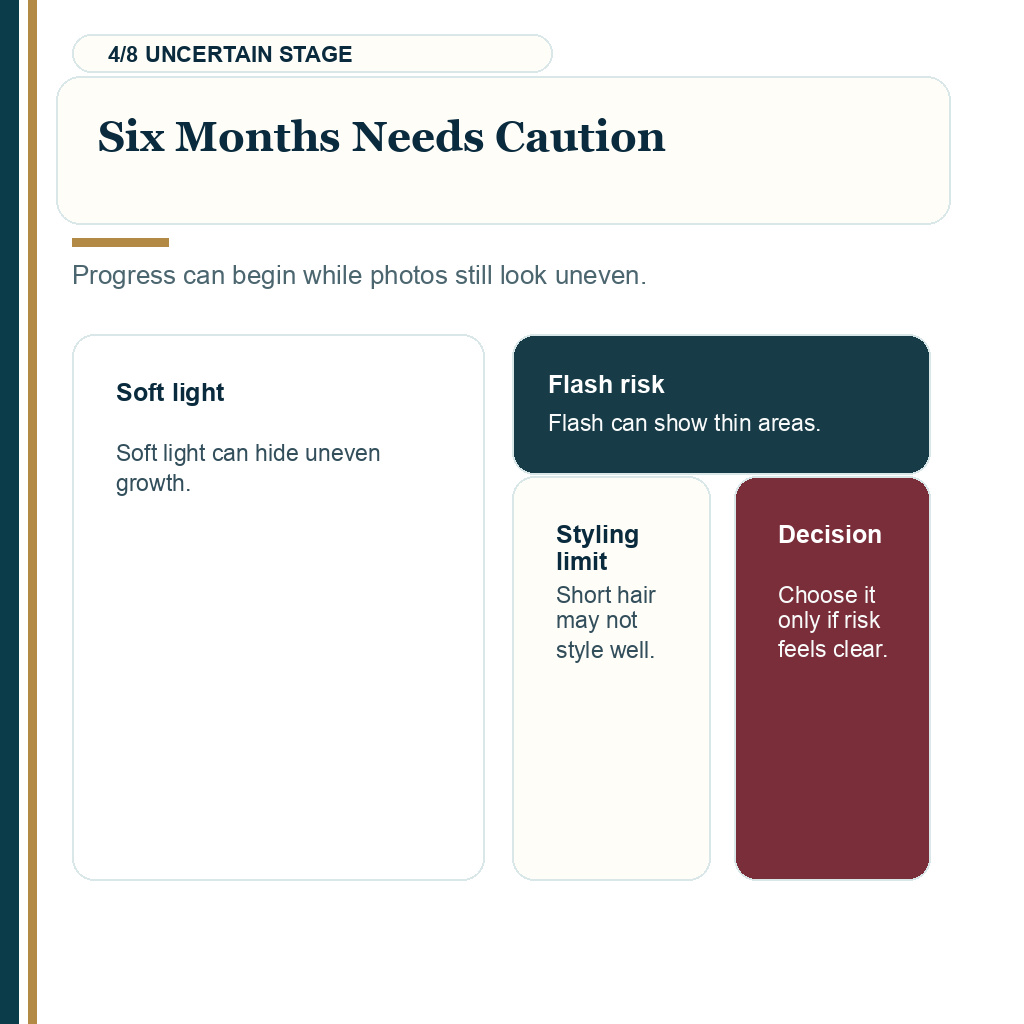
Six months is the stage where some patients start to feel encouraged, but it is also a stage where many patients become impatient. The hair may be growing, but it can still be short, uneven, fine, or difficult to style. It may look better in soft light and weaker in harsh light. This is normal, but it matters when the question is wedding photographs.
I avoid giving a patient false certainty at 6 months. Some patients do look good enough by then, especially after limited frontal work. Others are still in a transitional phase. The transplanted hair may not have enough length, the density may not yet be visually stable, and the native hair may still be changing. At this point, the result may be encouraging without being wedding reliable.
If you are already in the 6 month window before a wedding, the decision becomes more personal. I look at your current hair, donor area, hair loss pattern, medication situation, and how much change you actually need. Sometimes surgery is still reasonable. Sometimes the wiser plan is to avoid new surgery, use conservative styling, and revisit surgery after the wedding when there is more time to judge clearly.
Three or four months is usually too close
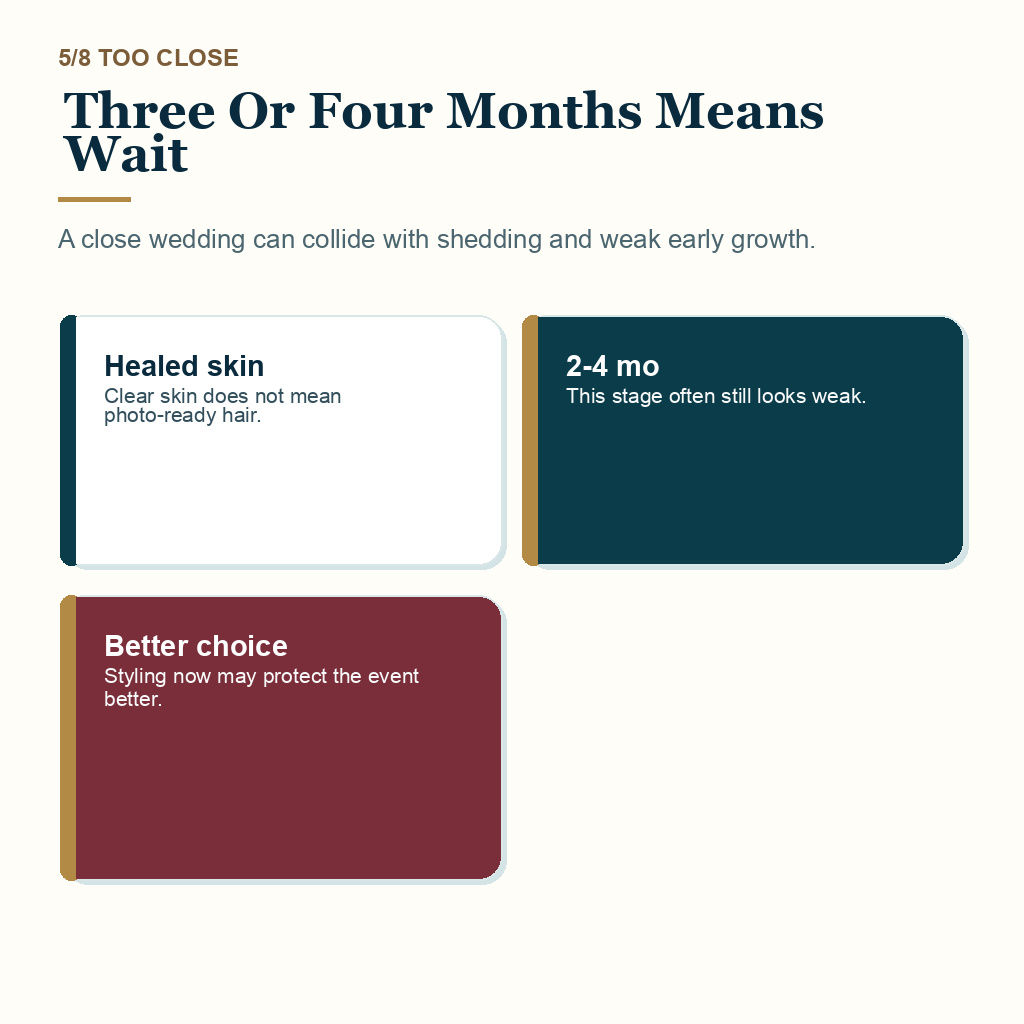
If the wedding is only 3 or 4 months away, the decision needs to slow down. At this stage, you may be healed, but you may also be entering the period where transplanted hairs have shed and early new growth is not yet strong. In other words, you can look worse before you look better. This is not failure. It is part of the normal recovery timeline.
The first 10 days are mainly about protecting the grafts and allowing scabs to clear safely. The first few weeks are about reducing irritation, swelling, and visible healing signs. But by month 2, month 3, and sometimes month 4, the visual situation can be emotionally difficult because the new hairs have not yet created enough cosmetic value.
Good hair transplant aftercare is necessary, but aftercare alone cannot speed biology. If the wedding is soon, it is better to protect the patient from panic than to sell a timeline that sounds convenient. A rushed operation can turn a happy event into months of checking the mirror every morning.
Plan around photos, not only the wedding day
Wedding planning usually includes more than one day. There may be professional photos before the wedding, family visits, travel, ceremonies, and social events where people look at you closely. Hair transplant timing needs planning around the first moment when your appearance truly matters and whether you can keep the hair transplant private, not only around the ceremony date. A schedule that works for daily life can still fail under formal lighting, styling, and close family attention.
Work and wedding photographs are not the same problem. A patient may be able to answer emails or join quiet meetings much earlier than they feel ready for bright cameras, formal styling, and close family attention. That is different from deciding how much time to take off work after a hair transplant.
Camera lighting can be less forgiving than normal conversation. Wet hair, strong flash, overhead light, and short new hairs can make a normal stage look thinner than it feels in the mirror. I often remind patients that photographs are not neutral. They can exaggerate contrast between transplanted and native hair.
If you are trying to judge your own progress before a wedding, take photos in a consistent way rather than chasing daily changes. Monthly, comparable photographs are the best way to track hair transplant growth. Before a wedding, that steady documentation becomes more useful than mirror checking every morning.
Honeymoon or destination travel can change timing
Plan from the first travel day that exposes the scalp to heat, sun, swimming, sweat, hats, styling products, or long flights, not only from the ceremony. A quiet recovery at home is not the same as beach travel, late nights, formal styling, and crowded family events.
Here, patients sometimes confuse looking ready with being ready. Strong sun exposure after a hair transplant, pool water or seawater, repeated sweating, alcohol, late nights, and tight travel schedules can irritate a healing scalp or make the patient less careful with aftercare. These details matter more when the surgery is recent.
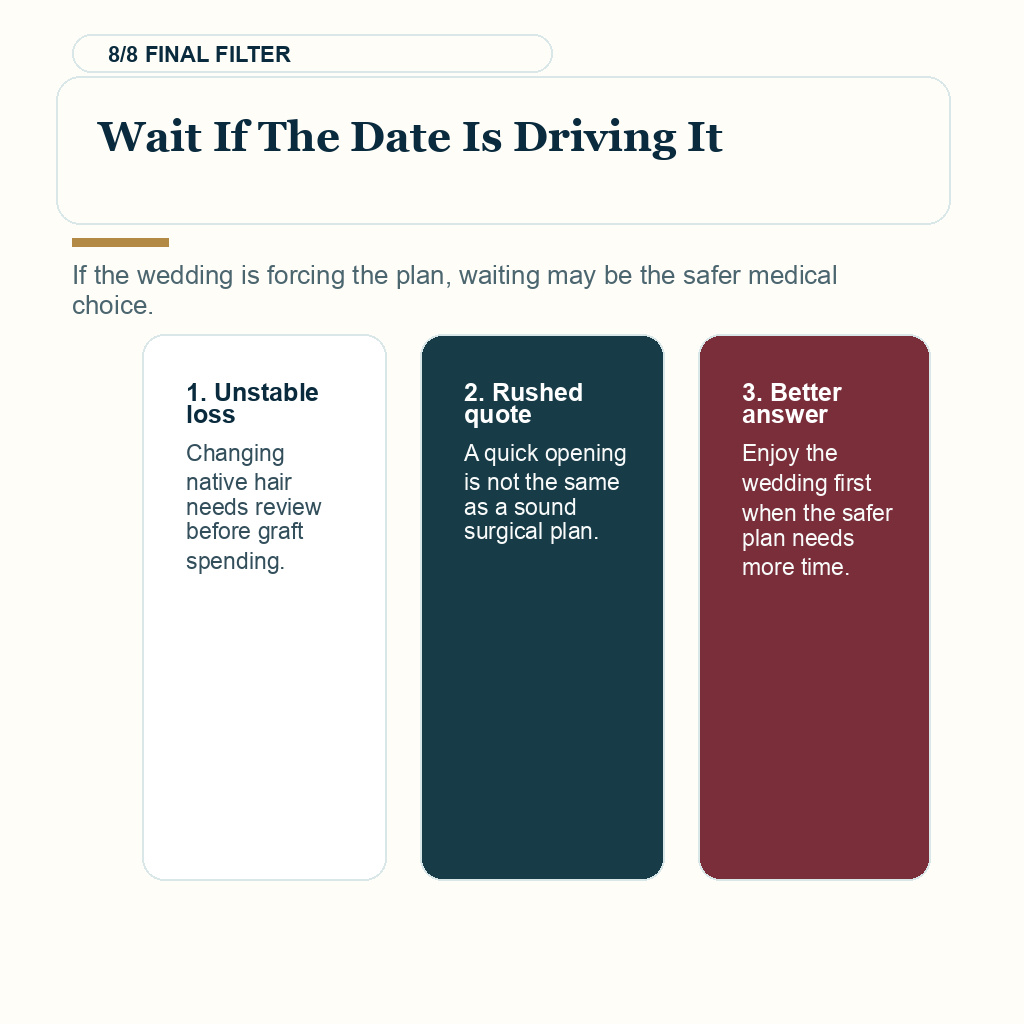
When the honeymoon starts soon after the wedding, I include it in the same timeline. Sun, swimming, long flights, hats, photos, and a packed travel schedule can move the real deadline earlier. If those risks crowd the calendar, the calmer choice may be to enjoy the wedding and travel first, then plan surgery after the pressure has passed.
Hairline design and graft numbers change the timing
A wedding can tempt a patient to ask for a lower, denser, more dramatic hairline. I understand the feeling, but this is exactly where surgical judgment matters. A hairline that photographs well for one day but looks too low, too straight, or too dense for the long term is not a good trade.
I plan the hairline for the face, the donor capacity, the future hair loss pattern, and the patient’s age. A mature and natural hairline may be less dramatic in the first moment, but it is usually safer and more elegant over time. If a patient has limited donor capacity or progressive thinning, the wedding date does not change the biology. It should not push the surgeon into using too many grafts too early.
Before a major life event, natural hairline design matters more than a dramatic short term photo. I am trying to create a result that still makes sense years later. A wedding is one day, but your donor area is a lifetime budget.
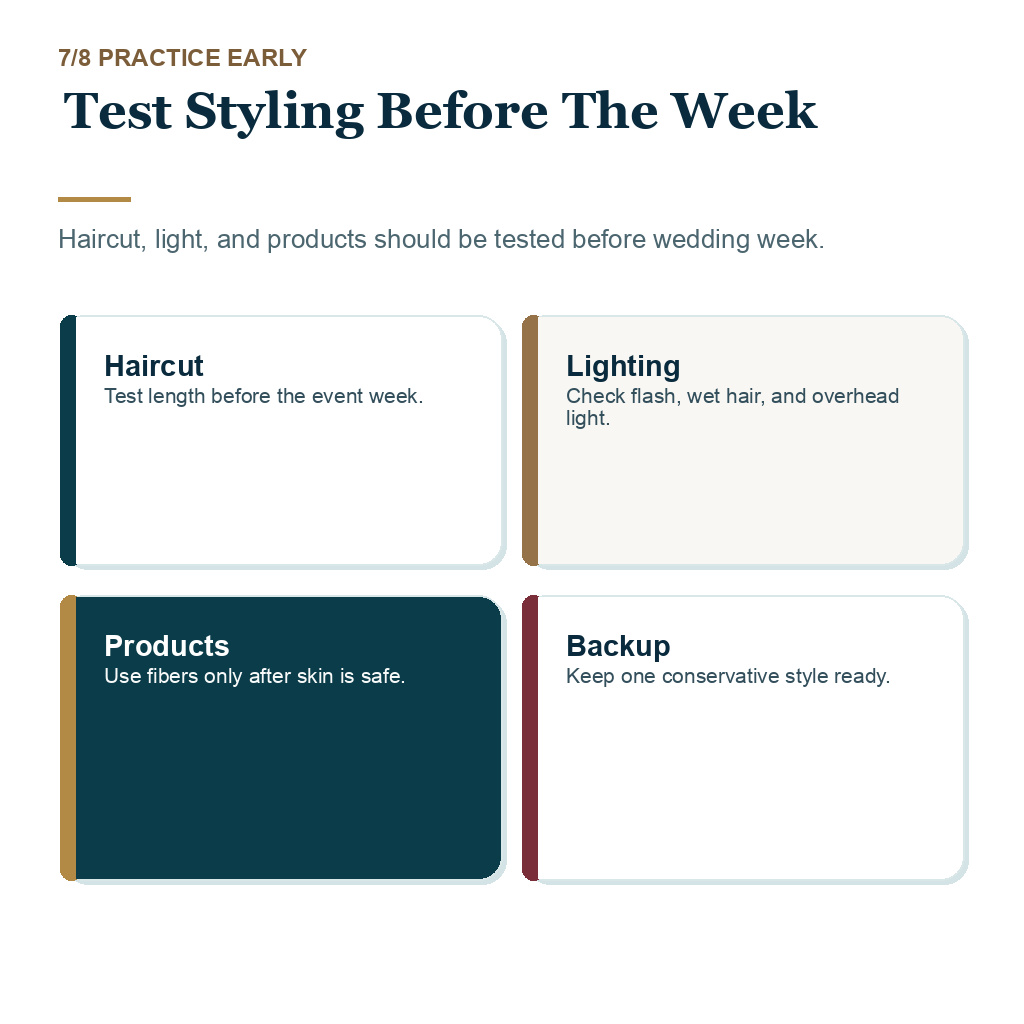
Use the 8 wedding timing slides below to separate the first photo date, 12 month margin, selected 9 month plans, uncertain 6 month results, the three to four month danger window, surgical scope, styling tests, and when waiting until after the wedding is wiser. Swipe the carousel, use the arrows one step at a time, or choose a number below the image to jump to that point.


Medication and ongoing hair loss can change the plan
If your hair loss is still active, if your crown is changing quickly, or if your native hair is miniaturizing around the planned recipient area, the wedding timeline must be judged more carefully. Surgery can move permanent donor hair, but it cannot stop all future native hair loss by itself.
A patient may want the wedding to be the deadline, but the scalp does not know that deadline. If the pattern is unstable, it may be better to stabilize the situation first, discuss medication options, and avoid a rushed plan that creates a nice temporary frame but leaves the patient exposed later. The reason is simple. Hair loss can continue after a hair transplant.
The realistic discussion may include finasteride, minoxidil, or other medical management. Some patients cannot or should not use the same treatment, but the decision needs review before surgery rather than ignored. If you are considering a hair transplant without finasteride, the timing question becomes even more individual because future thinning may affect how the result ages.
No shave surgery, hats, and fibers have limits
A no shave or DHI label can hide the haircut better, but it cannot make a short wedding timeline safe by itself. Redness, shedding, styling limits, and uneven early growth still need their own margin.
These options can help in selected situations, but they do not remove the need for proper timing. No shave surgery may reduce the visible change for some patients, but it is not suitable for every case and it should not be chosen only because a wedding is close. Sometimes the attempt to hide surgery makes the operation technically more difficult or limits what can be done well.
Careful hat use after a hair transplant, styling, and camouflage products may help later in recovery, but they must be used carefully. Anything that rubs, pulls, irritates, or presses on the recipient area too early can create unnecessary risk. Glued hair systems need extra caution shortly after surgery because the grafts and healing skin need protection, not pressure and adhesive stress.
If a clinic presents non shaven hair transplant as an easy way to solve a wedding deadline, slow down and ask whether the method is truly suitable for your donor area, hair length, graft number, and surgical goal. A technique should serve the patient’s anatomy. It should not be used as a marketing shortcut.
Haircuts, styling, and camouflage need early testing
Do not leave the first haircut or styling experiment until the wedding week. If surgery has already been done, test the haircut, styling direction, and photo lighting before the wedding day. A last minute change can create more anxiety than the hair itself.
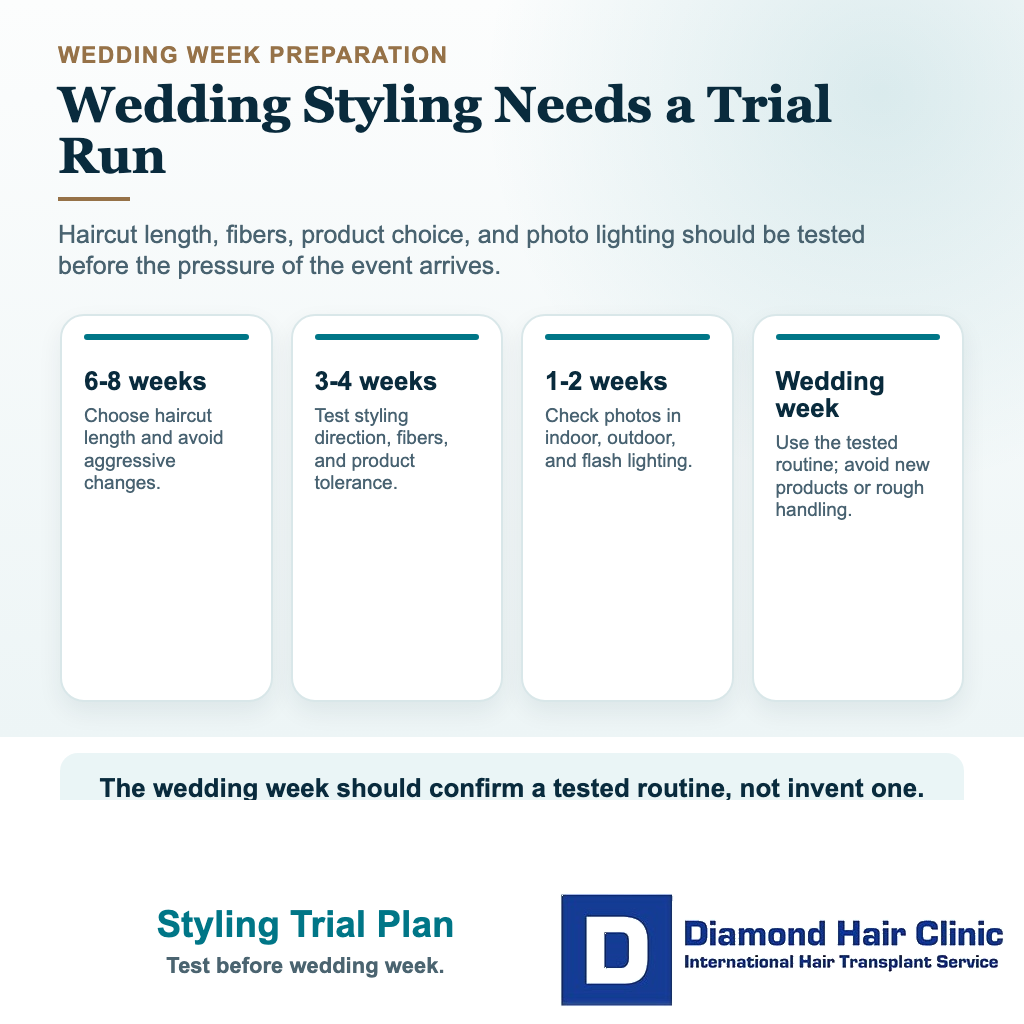
Hair fibers can help carefully chosen patients after the recipient area and skin are safe, but they should not be used early over healing grafts. If fibers are part of the wedding plan, build in time to understand when hair fibers can be used after a hair transplant and test them before formal photos, not on the wedding morning.
If you plan to keep the hair very short, test that look early as well. A buzzed or shaved style can reveal redness, color contrast, uneven early growth, or donor trimming more than a slightly longer style. I also discuss shaving the head after a hair transplant with patients who want a clean look for an event.
Easy timing promises need careful judgment
When a clinic makes the timing sound too easy, that is a warning sign. A useful consultation should not only say that you will look good. It should explain what can be achieved by your date, what cannot be guaranteed, what the donor area can safely provide, and how future hair loss changes the plan.
You need to know who is responsible for the design, who makes the recipient area incisions, how the graft number was chosen, and whether the clinic is planning for the wedding or for your lifetime. A quick opening in the calendar is not the same thing as a good surgical plan. If the consultation is mostly built around urgency, discount, or availability, pause before committing.
Guidance on choosing a hair transplant clinic in Turkey is especially relevant here. The wedding should not make you accept poor communication, vague surgeon involvement, or a graft number that was given before your donor area was properly evaluated.
Before and after photos can mislead before a wedding
They can. Before and after photos are useful only when they are clear, consistent, and complete. A clinic can show an excellent 12 month result, but that does not tell you how the patient looked at month 3, month 6, or during the awkward stage before a wedding or public event. It also does not tell you whether your donor area, hair caliber, skin tone, and hair loss pattern are similar.
Before a wedding, patients naturally look for reassurance. They may focus on the most flattering photographs and imagine that their own timeline will follow the same path. But a responsible plan should be based on your examination, not on another patient’s best angle. Strong lighting, wet hair, styled hair, and selected camera distance can all change the impression.
Before you trust another patient’s timeline, learn how to judge hair transplant before and after photos. A beautiful result is encouraging, but it should not pressure you into operating too late before your own event or photos.
Waiting until after the wedding can be wiser
Waiting is often better when the wedding is close, the hair loss is unstable, the donor area needs careful assessment, the patient is choosing a clinic mainly because of quick availability, or the planned surgery would require an aggressive graft number to meet the deadline. Waiting can feel frustrating, but it may protect the patient from a decision made under emotional pressure.
Waiting is also better when the patient is anxious in a way that makes clear judgment difficult. If every answer is being filtered through fear of the wedding photos, it can be hard to evaluate the real surgical plan. In that case, temporary styling may be safer than permanent surgery done for the wrong reason.
As a practical rule, 12 months or more gives many suitable patients a more predictable plan. Around 9 months may still be reasonable in selected cases, but the plan should be conservative and accurate. At 6 months, you must accept uncertainty. At only 3 or 4 months, operating needs a very careful reason.
Do not let one date force a lifetime surgical decision. A wedding should be a happy deadline, not a medical shortcut. If the plan is right, the timing is safe, and the expectations are realistic, surgery before a wedding can be a reasonable decision. If the plan is rushed, unclear, or built around promises, waiting until after the wedding is often the more responsible choice.
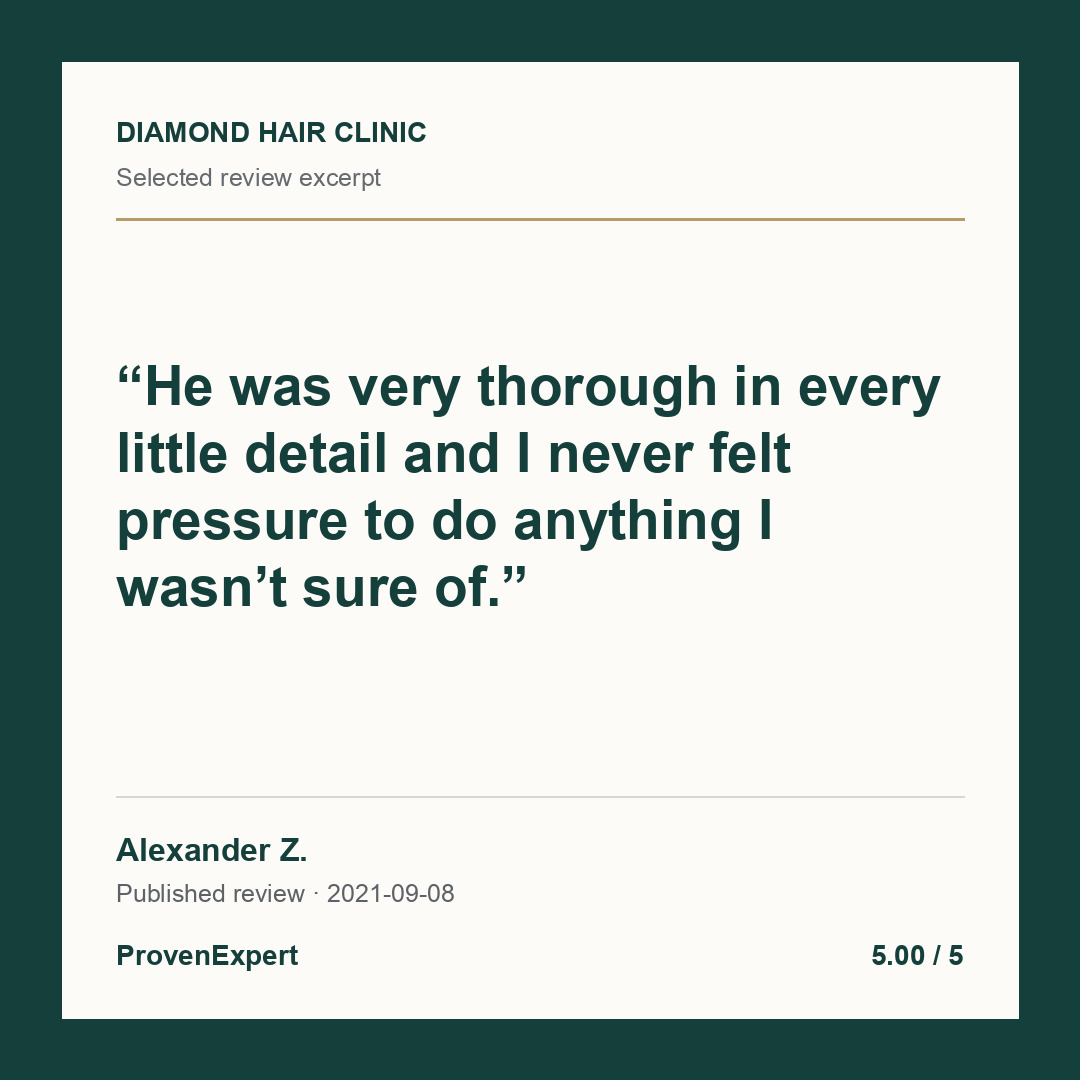
Read this review excerpt
He was very thorough in every little detail and I never felt pressure to do anything I wasn’t sure of.