Pool Sea and Infection Risk During Recovery
I advise you to avoid swimming after a hair transplant for the first 3 months. This includes swimming pools, the sea, hot tubs, saunas, steam rooms, and similar environments. If your question is a true cold plunge or ice bath rather than normal swimming, use the separate timing guide.
The grafts are part of the reason, but they are not the whole reason. Even when the grafts feel more secure, the scalp may not be ready for chlorine, saltwater, heat, sweat, sun, towels, crowds, and cap pressure. If the scalp is fully healed after 3 months and your surgeon has no concern, swimming is usually much safer.
If your trip includes a beach or hotel pool, decide before travel that the water is not part of the recovery plan. Sitting near the pool is different from putting healing skin into chlorine, saltwater, sun, towels, and sand.
A quick dip still counts as water exposure. The scalp may meet chlorine or salt, then a towel, sun, and your hands before you notice how often you touched it.
Three months can sound long when you feel normal after 2 weeks. But feeling normal and being ready for recreational water are different things. The skin has been surgically worked on, and it deserves more time than a vacation schedule may allow.
This instruction is not meant to make recovery unnecessarily strict. It protects the recipient area, the donor area, and the final result from preventable irritation.
This matters especially if you travel for surgery and want to combine the procedure with a holiday or a beach day after a hair transplant. You may already be in another country, the weather may be beautiful, and the hotel may have a pool. The recovery schedule still cannot be forced to match the holiday schedule.
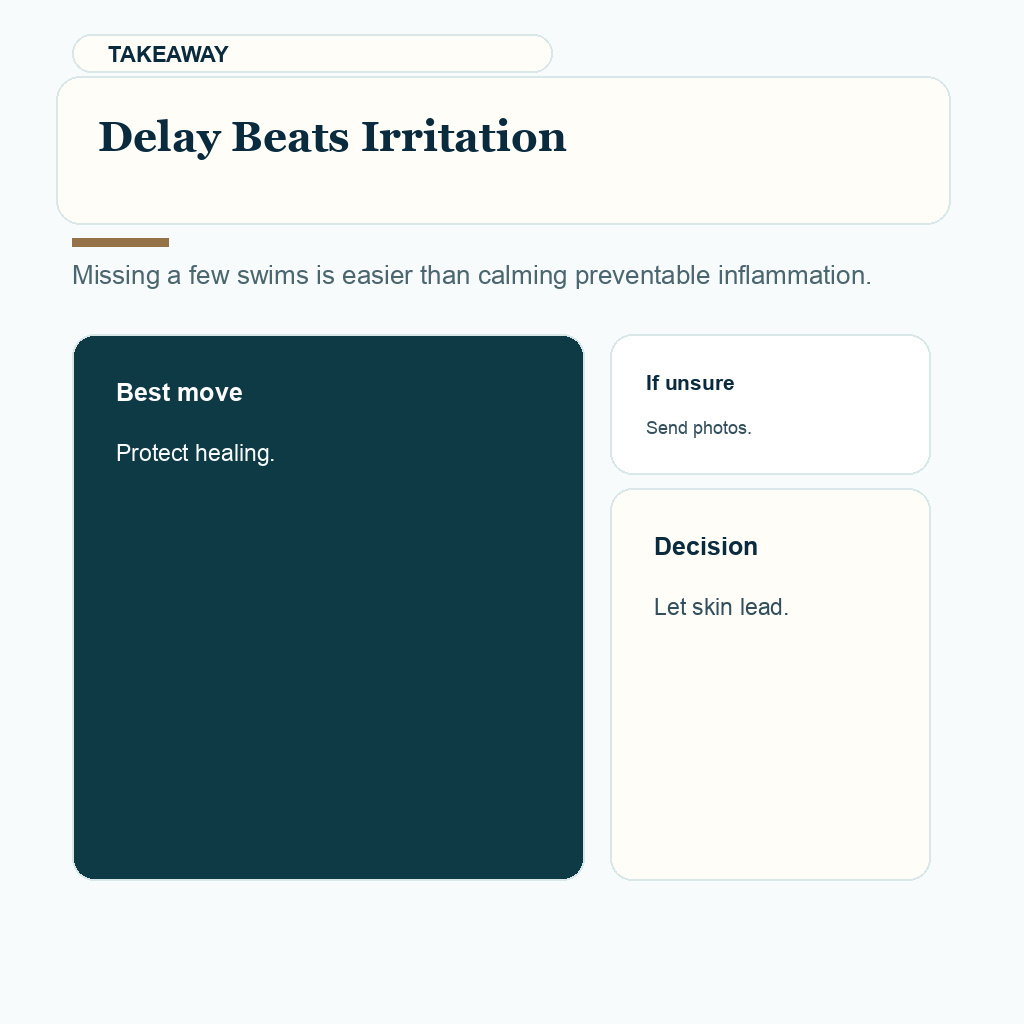
A missed swim is disappointing. Avoidable inflammation during the months when the result is still developing is a much bigger problem.
Swimming usually waits 3 months
Water is only one part of swimming risk, because towels, heat, sun, and pressure can matter at the same time.
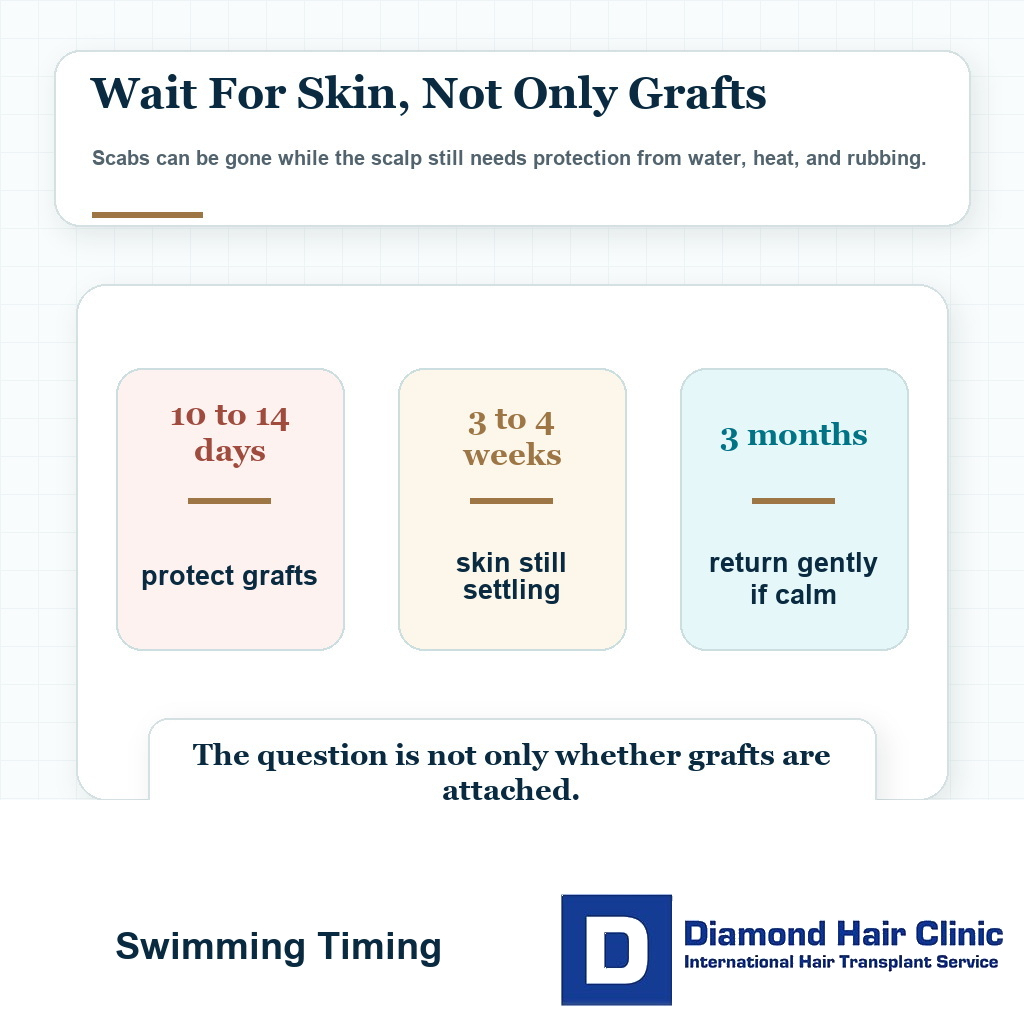
In the first 10 to 14 days, the main priority is graft protection. During the first 3 to 4 weeks, the scalp is still moving through controlled healing. After that, the grafts may be much more secure, but the skin can still be sensitive.
In hair transplant aftercare, graft security and scalp recovery are separate issues. You can be past the most fragile graft period and still not be ready for pool water or seawater.
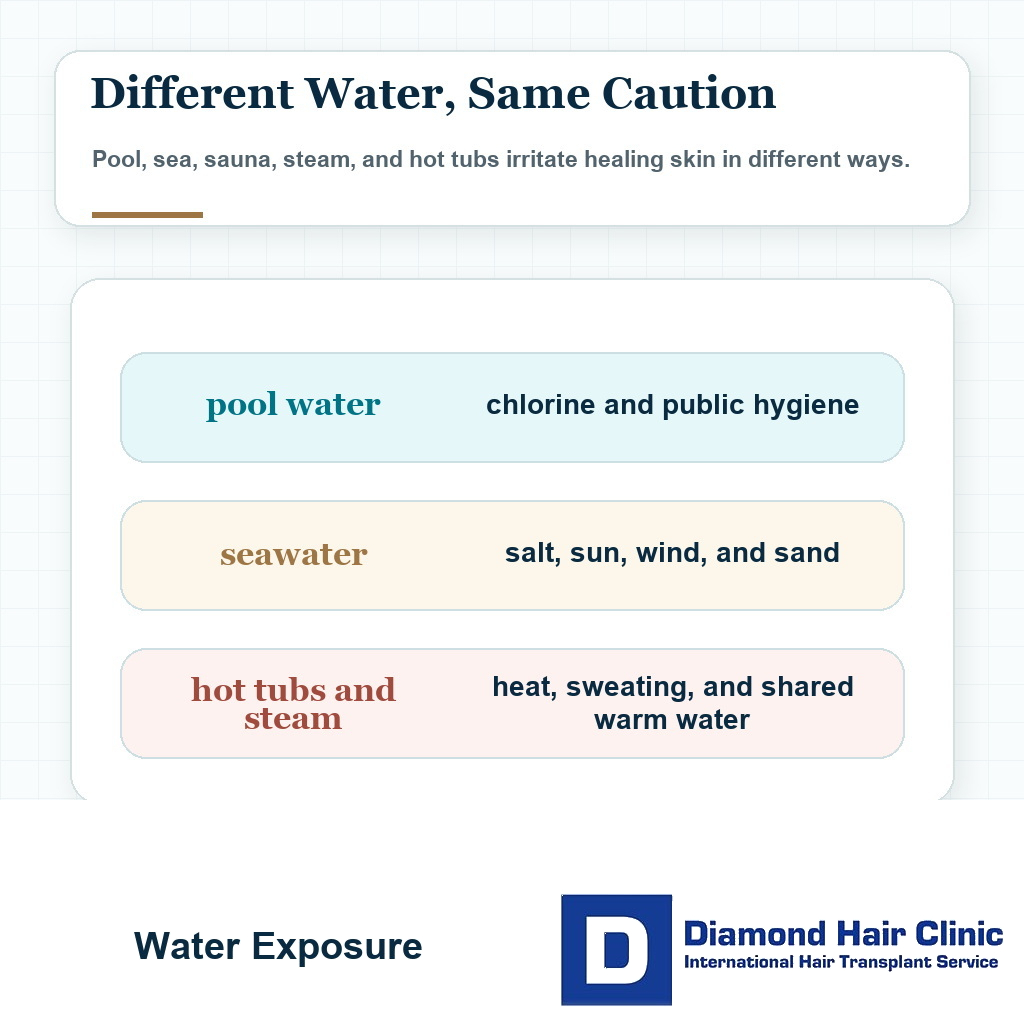
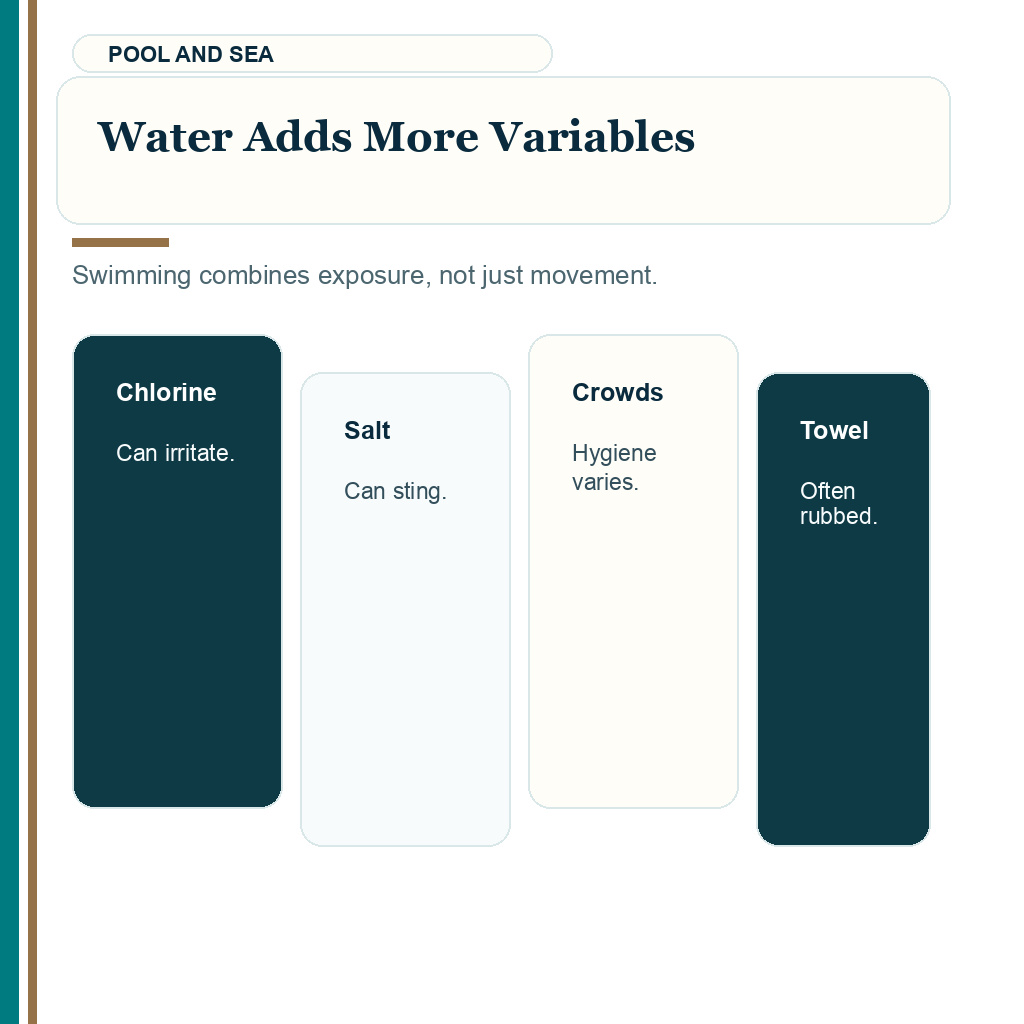
Chlorine can irritate healing skin. Saltwater can sting and dry the scalp. Hot tubs and saunas bring heat, sweat, and contamination concerns. No single factor is usually the whole problem. Sea water, pool water, sun, and towel drying need one plan because the irritation risk usually comes from the combination.
If the scalp becomes irritated, you may start scratching, rubbing, checking, or overwashing the area. That chain of behavior can create more trouble than the water exposure itself.
Many people think the only question is whether grafts can be pulled out. That is too narrow. A good recovery is also about keeping the skin settled, avoiding inflammation, and preventing the small habits that make you repeatedly touch the scalp. Do not average several clinics’ timelines into your own clearance. The plan needs to match your surgeon’s rules, the water you will enter, and the way your scalp looks that week.
I factor in the donor area. The back and sides may look better quickly, but tiny extraction points still need respectful healing. Pool chemicals, saltwater, sweat, and towel friction can irritate both sides of the surgery.
Waiting 3 months is not fear. It gives the scalp enough time to close properly, settle down, and become less reactive before you expose it to water environments.
Swimming once scabs are gone
The disappearance of scabs does not mean the scalp is ready for swimming. Scab removal is only one stage of healing. It tells us the crusts have come away. It does not prove that the skin barrier is mature enough for chlorine, seawater, heat, or repeated towel drying.
It is normal to feel reassured when the scabs come off because the transplant looks cleaner. That relief makes sense. But a cleaner appearance is not the same as full biological recovery.
This also matters when patients worry about lost grafts after hair transplant scabs. A scab can fall without meaning a graft was lost, but it is still not a sign that every normal activity is safe.
The early skin may still be pink, dry, itchy, tight, or slightly inflamed. These are reasons to protect it, not reasons to challenge it with a pool.
If you swim too early and then develop redness or itching, the next problem is often touching. Itching can lead to rubbing, rubbing can lead to irritation, and irritation can lead to anxiety.
The correct question is not only whether the scabs are gone. The detail that matters is whether the skin is quiet and whether enough time has passed for safe exposure.
Early washing after a hair transplant is not the same as swimming. A controlled wash is done with specific instructions, gentle pressure, clean products, and limited contact. Swimming is uncontrolled exposure, often followed by towel drying, sun, heat, sweat, or a cap.
In a pool or the sea, you cannot control who was in the water before you, how the scalp will react, or how often you will need to wipe water away. I separate medically guided washing from recreational water activity.
Pool water versus seawater
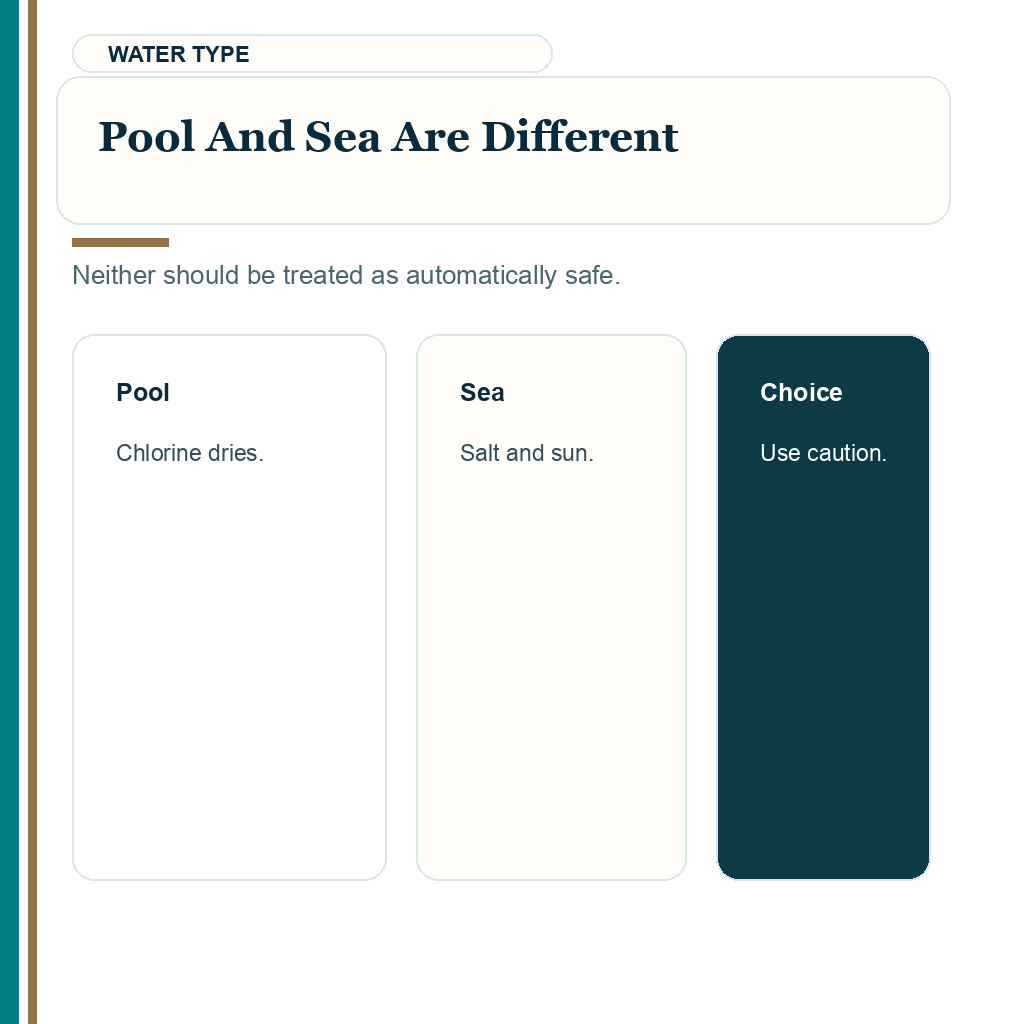
Pool water and seawater are different, but neither is ideal during the early recovery period. Pool water often contains chlorine and other chemicals. Seawater contains salt, bacteria exposure, wind, sand, and usually strong sun.
Some people think the sea is more natural, so it must be safer. I do not see it that way after surgery. Natural does not by itself mean safe for a healing scalp.
When you are cleared to swim again, make the first return simple. Do not combine the first swim with a long beach day, a tight swim cap, heavy sun, alcohol, and repeated towel rubbing, because then it is hard to know what irritated the scalp if redness or itching appears.
At a beach, you are rarely only touching seawater. You are sweating, walking in heat, using a towel, maybe wearing a hat, and often staying outside longer than planned. All of these can irritate the scalp.
At a pool, the water may look clean, but chlorine can dry and irritate sensitive skin. Public pool environments also bring hygiene questions that do not belong near a freshly operated scalp.
Lakes, rivers, and other natural water are not a shortcut. They add uncontrolled water exposure, temperature changes, and hygiene uncertainty, so they should not be treated as safer than a pool in the early recovery period.
I do not create a separate early approval for pools or the sea. For practical purposes, I advise avoiding both during the first 3 months.
After 3 months, if the scalp is settled, there are no open areas, and there is no unusual redness or irritation, swimming becomes a much more reasonable activity.
If you have a history of sensitive skin, dermatitis, folliculitis, or strong redness after minor irritation, I may be even more cautious. The same activity that is harmless for one person can be irritating for another.
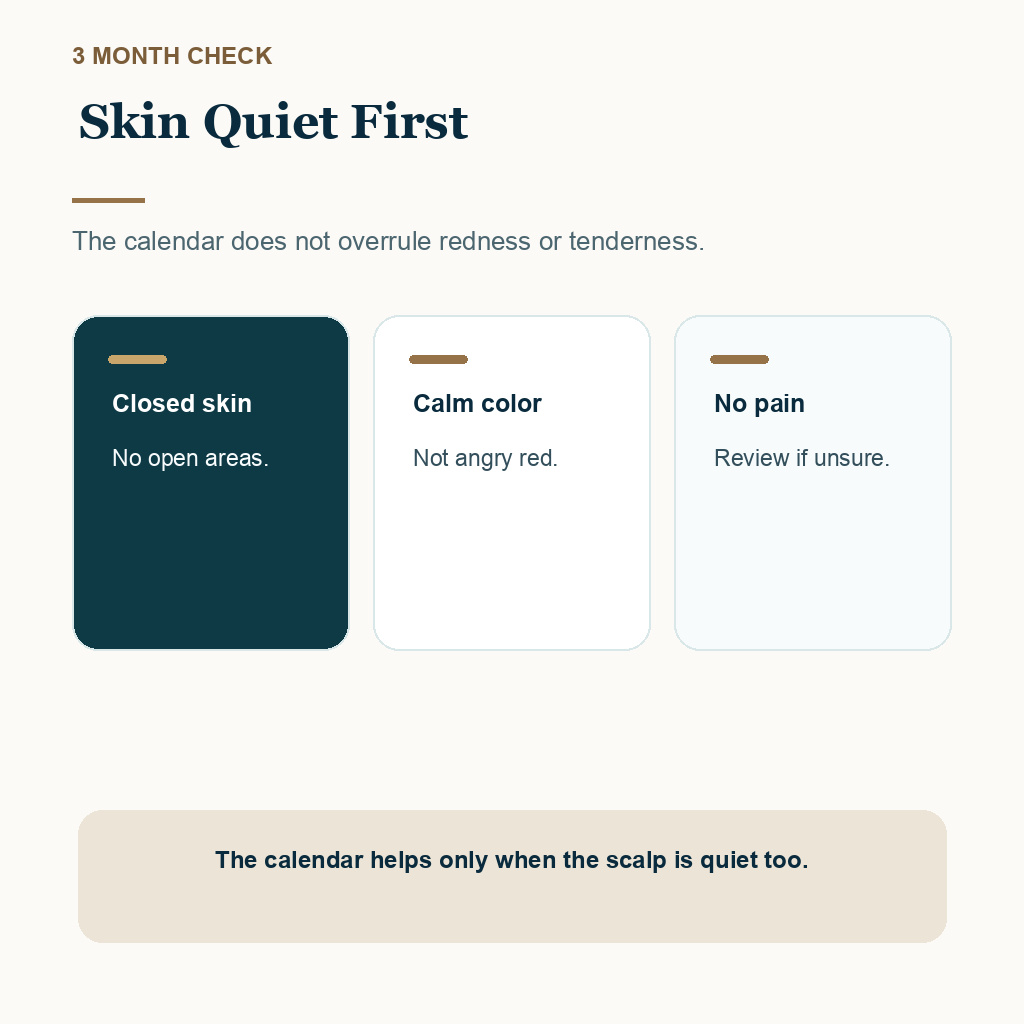
The 3 month rule is a strong general guide, but it does not replace looking at the scalp. If redness, tenderness, bumps, or unusual sensitivity are still present, I want the skin reviewed directly instead of approving swimming from the calendar alone.
Swim caps do not make early swimming safer
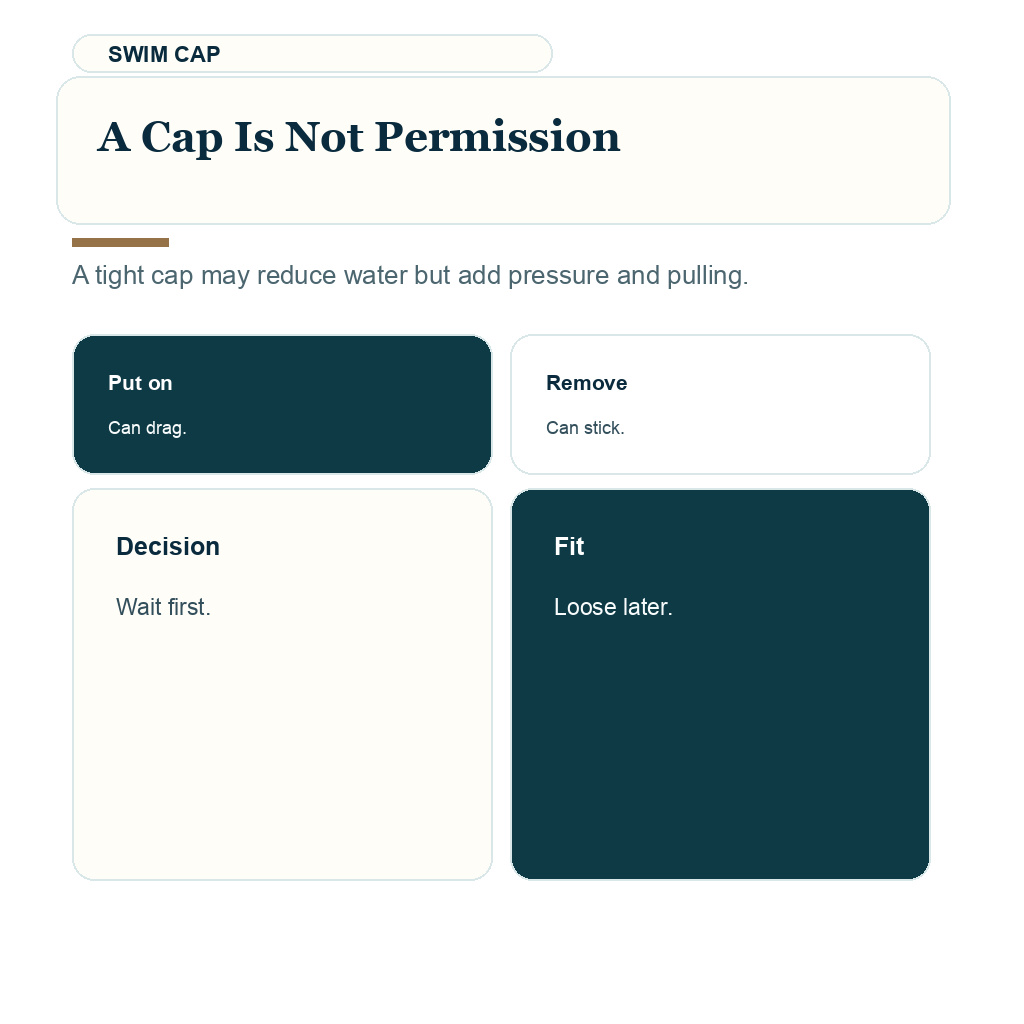
A swim cap is not a permission slip to swim early. A swim cap may reduce direct water contact, but it can also create pressure, pulling, heat, and friction on the recipient area.
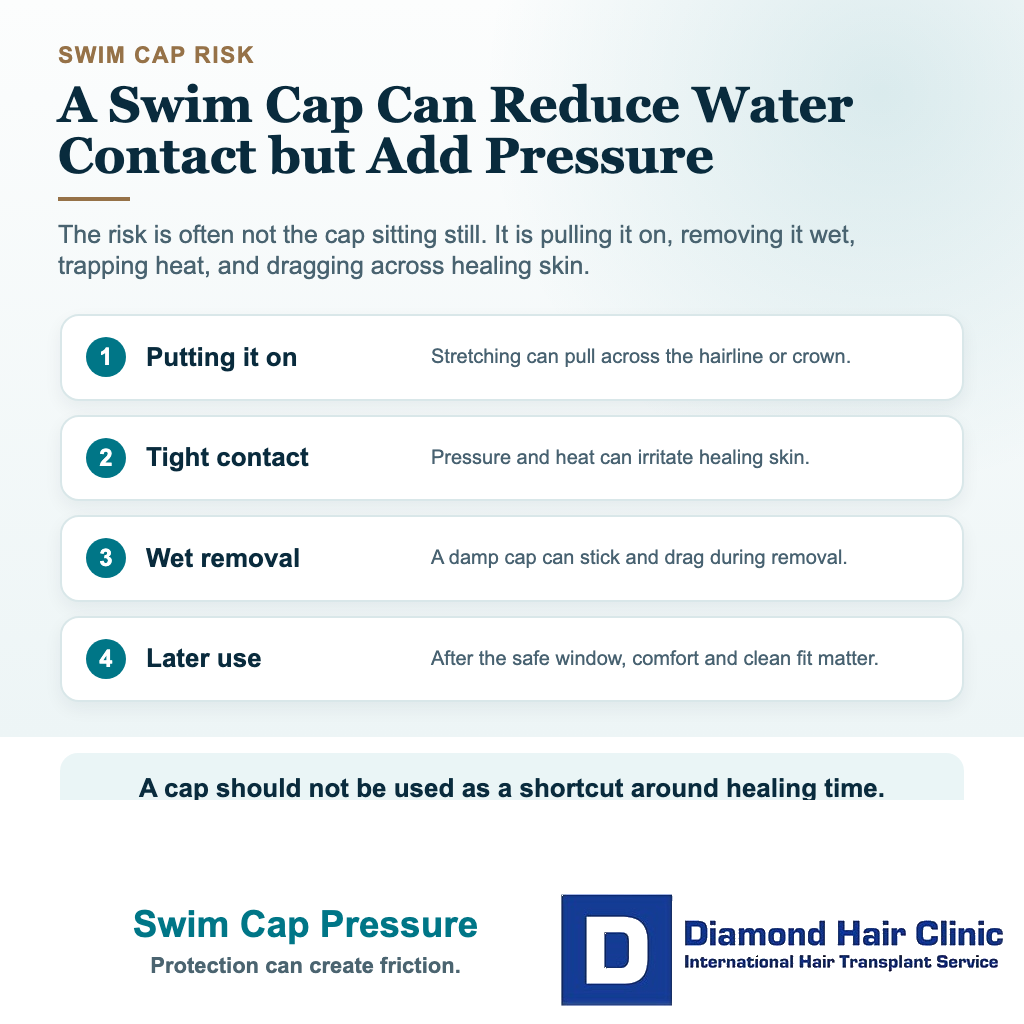
The problem often happens when you put the cap on or remove it. A tight cap can drag across the hairline or crown, and a wet cap can stick to the scalp. That is not the right kind of movement around healing skin.
I apply similar pressure logic with wearing a helmet after a hair transplant, although a swim cap is usually lighter. The question is not only weight. Contact, friction, and repetition matter too.
After the safer window, a clean and comfortable swim cap can be reasonable if the scalp is settled and the cap does not pull on the transplanted area. But do not use it as a trick to enter the pool sooner.
If the only reason swimming feels safe is the cap, the timing is probably still too early.
Saunas, hot tubs, and steam rooms
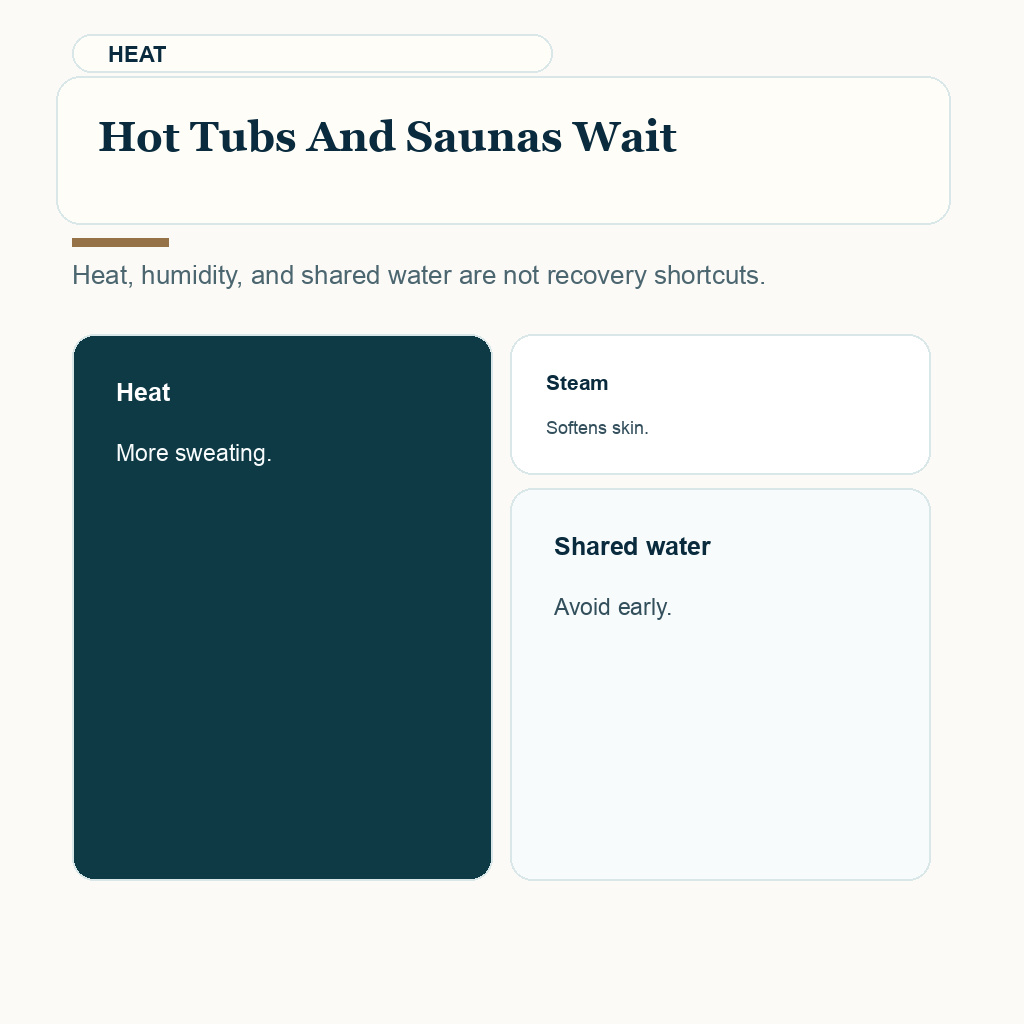
I advise waiting 3 months for saunas, hot tubs, and steam rooms as well. In some ways, I am even more cautious with them than ordinary swimming because they combine heat, sweating, humidity, and hygiene concerns.
Heat increases blood flow and sweating. Sweating can irritate the recipient area and donor area. Steam and humidity can soften the skin and make you more likely to rub or wipe the scalp.
Hot tubs are not simply warm water. They are shared warm water environments, and that exposure is a poor match for healing micro wounds or recently sensitive skin.
Seasonal recovery follows this reasoning. The broader question of summer or winter hair transplant timing is not whether heat is magically bad. It is whether sweating, sun, and irritation can stay controlled.
If redness, pimples, folliculitis, or scalp sensitivity persist after 3 months, I may still advise waiting longer. The calendar matters, but the scalp matters more.
This also matters for patients who naturally sweat heavily. Swimming often comes with heat and exertion, and heavy sweating can keep the scalp irritated. If you are already struggling with itching, adding more heat is not wise.
A sauna is not a test of graft strength. It is an unnecessary irritation challenge during a period when quiet healing is more valuable.
Beach trips without swimming
Going to the beach without swimming may still be a problem in the early period. A beach usually means sun, heat, wind, sand, sweat, hats, and repeated touching. That is exactly the environment to avoid while the scalp is settling.
Strong sun is one of the biggest concerns. A freshly healing scalp does not benefit from direct sunlight. Redness can worsen, pigmentation can become more noticeable, and the patient may become uncomfortable enough to touch the area repeatedly.
If you must be outdoors, protection should be careful and medically sensible. The hat question also needs timing, because a hat after a hair transplant can help only when it is loose, clean, and not rubbing the grafted area.
A beach holiday also encourages normal behavior too early. Friends swim, sit in the sun, drink, take photos, and stay outside for hours. It becomes harder to protect the scalp when everyone around you is behaving as if recovery is already finished.
If you already planned a beach trip shortly after surgery, delaying the trip is safer than forcing the transplant to fit the holiday. Let surgery set the recovery schedule, not the other way around.
After 3 months, beach activity is usually more realistic, but sun protection and common sense still matter, especially if the scalp remains pink or sensitive. A shaded meal near the beach is not the same as a long afternoon in sun, wind, saltwater, and towel friction.
Wind is another part of the beach that many people underestimate. Wind dries the skin and encourages you to adjust hats, wipe the forehead, or touch the hairline. These small actions are exactly what need to be reduced in the early recovery period.
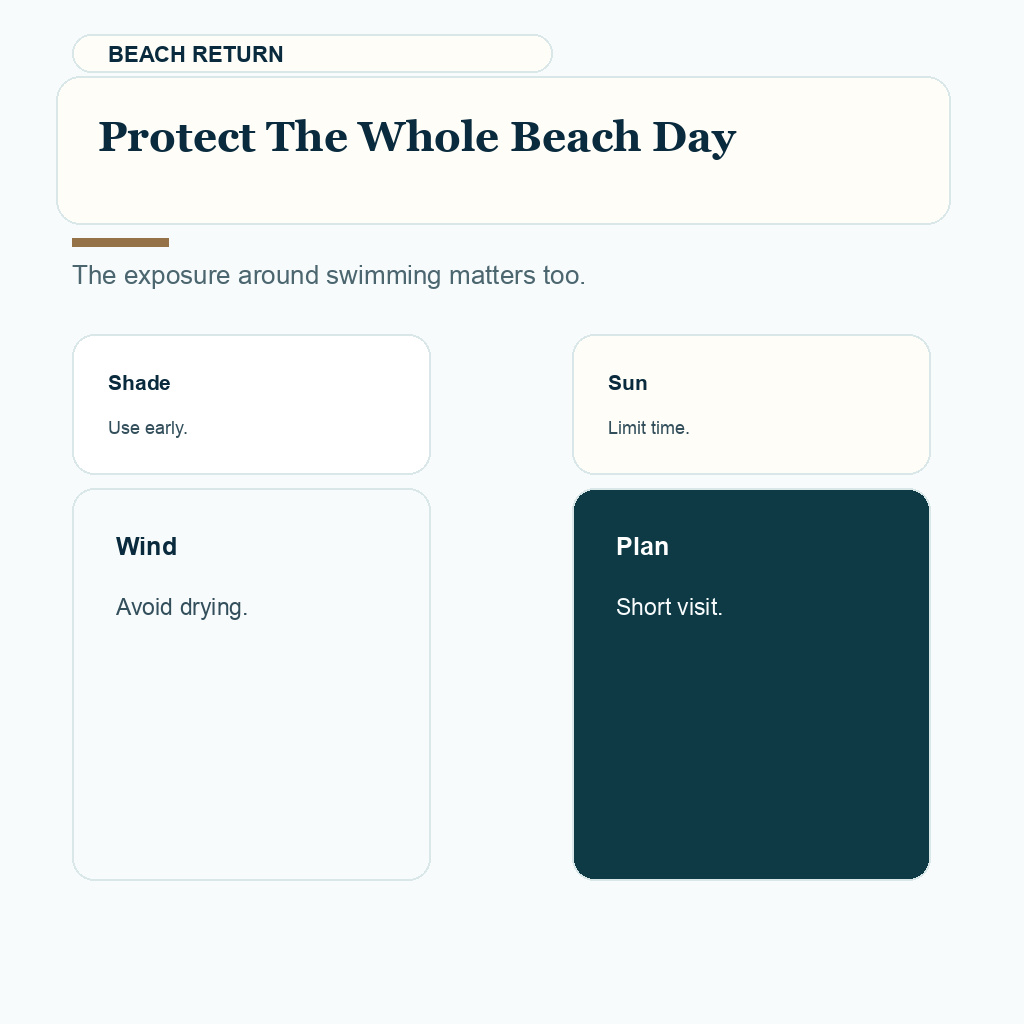
If you go to a beach after the safe window, choose shade, keep the scalp protected, and do not turn the first beach day into a long exposure test. A short careful visit is more sensible than spending many hours in sun and water.
Swimming too early and graft risk
One early swim does not necessarily ruin every transplant. Do not panic if you accidentally got water on the scalp. But deliberately swimming early is an avoidable risk, and I do not recommend it.
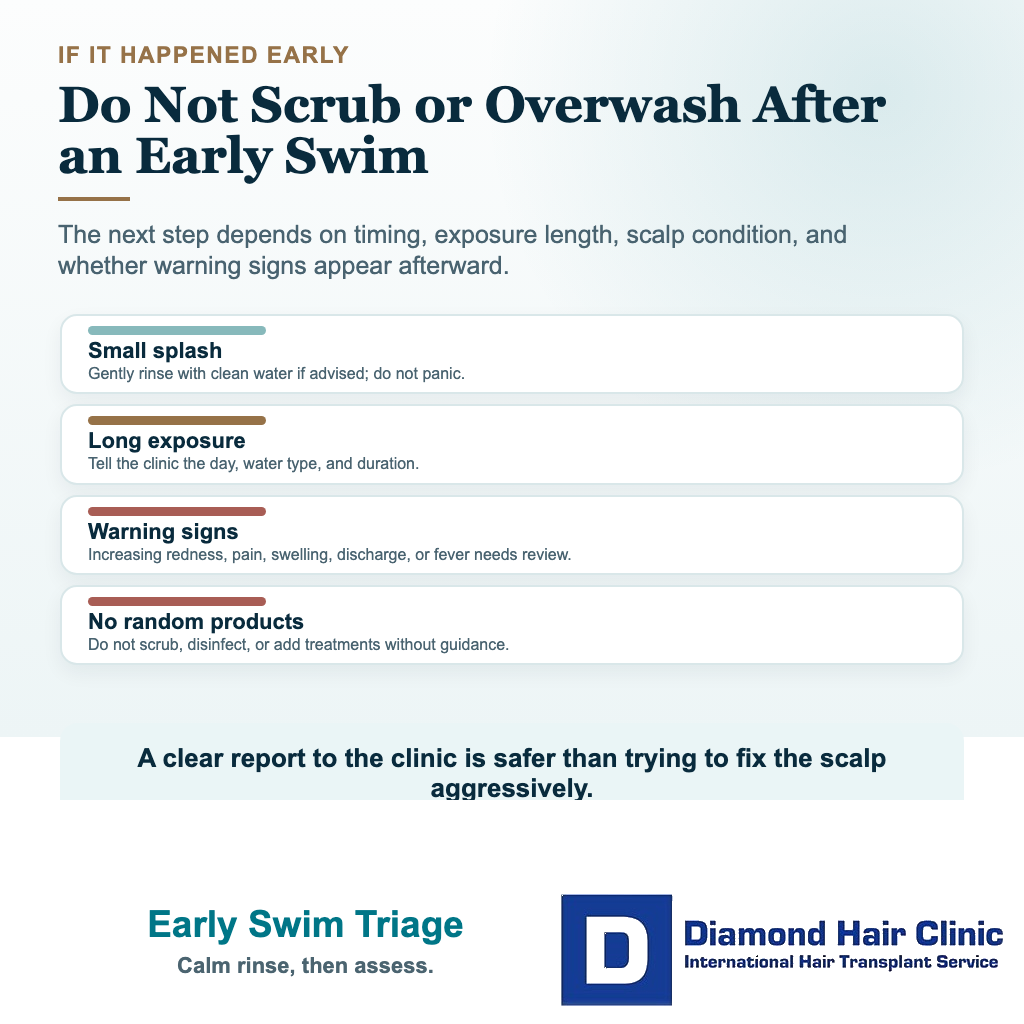
The danger depends on timing, scalp condition, water type, friction, sun exposure, and what happened afterward. A quick accidental splash is not the same as spending an afternoon in a pool and rubbing the scalp with a towel.
The early recipient area should not be treated like normal skin. Even when the grafts are more secure, the surrounding tissue is still recovering from many tiny incisions.
If you swam too early, do not scrub the scalp to fix it. Do not apply random products. Do not overwash. Contact the clinic, explain the timing and exposure, and send photos in steady lighting if there is redness, itching, pain, swelling, or discharge.
With early worries, panic often creates the second mistake after the first mistake. A measured correction is better than aggressive self treatment.
For example, if the scalp feels itchy after accidental water exposure, do not start scratching to check whether the grafts are still there. If you see a few hairs in scabs or dry skin, do not immediately assume failure. The pattern of symptoms and the timing matter.
If redness, bumps, or irritation appear, compare the area over the next day and share photos for review. Some symptoms are normal and others need attention, especially when judging redness, scabs, and pimples after a hair transplant.
One early water exposure is not an instant verdict on every graft. Waiting removes an unnecessary risk when the scalp is still settling.
Holiday planning during recovery
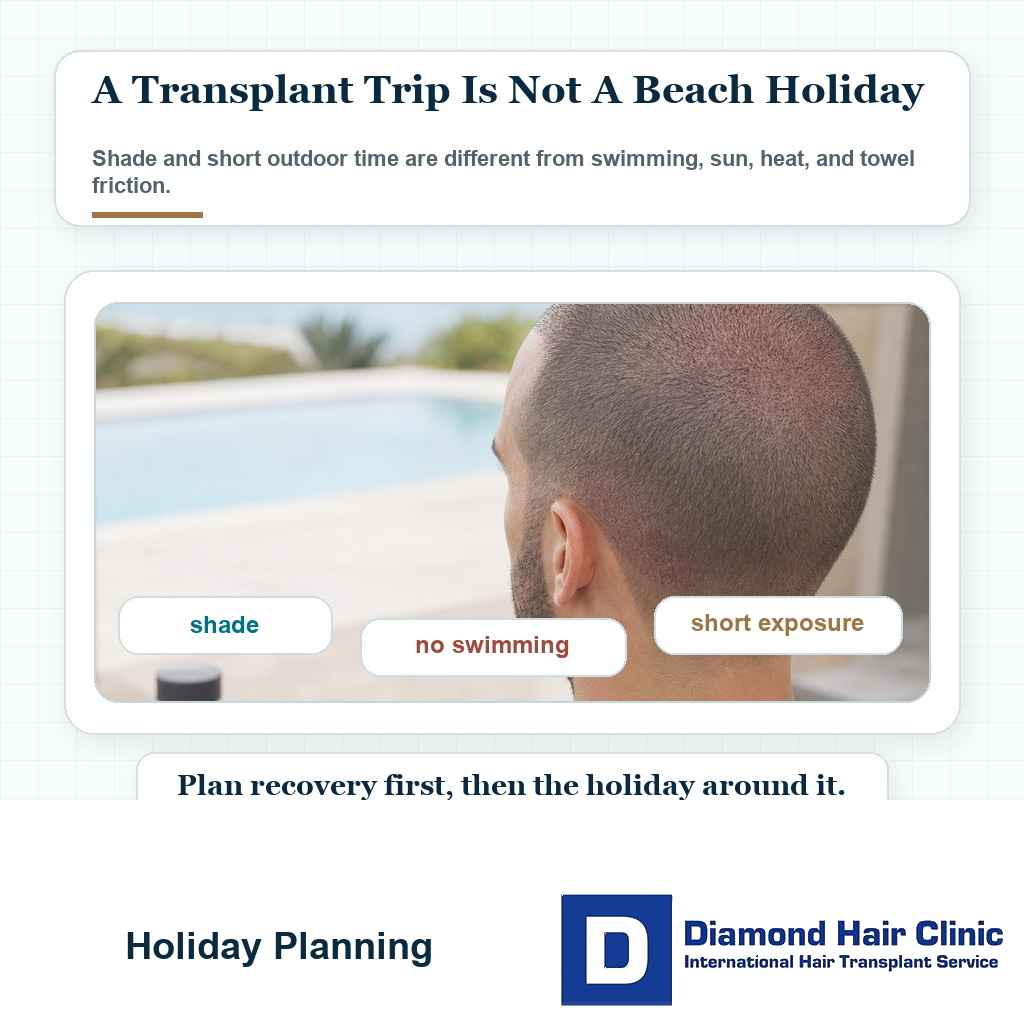
If swimming, beach time, hot tubs, or sauna use are central parts of your holiday, do not schedule the holiday immediately after surgery. A hair transplant trip and a beach holiday are not the same thing.
For the first 10 to 14 days, graft protection is the priority. For the first month, controlled healing and avoiding unnecessary irritation remain part of the plan. For the first 3 months, avoid swimming pools, the sea, hot tubs, saunas, and steam rooms.
That timeline also affects travel. If you are flying home soon after surgery, focus on safe movement, sleep, and avoiding contact. Many people underestimate flying after a hair transplant as part of recovery.
Work leave also matters. Some people technically return to work quickly, but exercise after a hair transplant, swimming, and social life do not return on the same calendar. Recovery planning should include time off work after a hair transplant, not only the operation day.
If you want a vacation, choose a quiet recovery schedule. Walking, resting, eating well, and following instructions are better than building a holiday around activities you are not yet allowed to enjoy.
A well planned transplant is supposed to make future life easier. Do not place it in conflict with a trip that makes early healing harder.
When a family holiday is already planned, discuss it before surgery rather than after. In some cases the surgery date should move. In others, the date can stay but the holiday behavior must change.
What concerns me is pretending that a fresh transplant can be hidden inside a normal beach holiday. It creates too many conflicts between social comfort and medical protection.
Exercise while swimming still waits
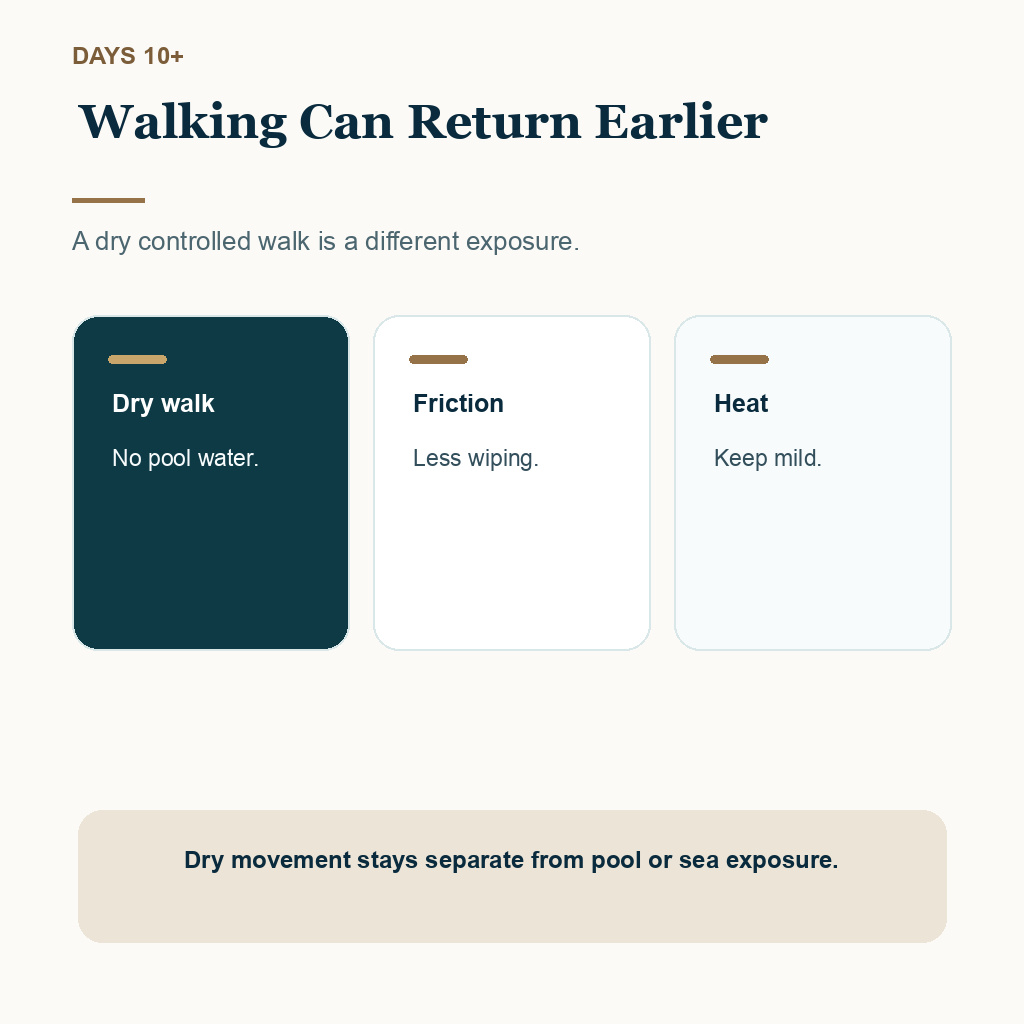
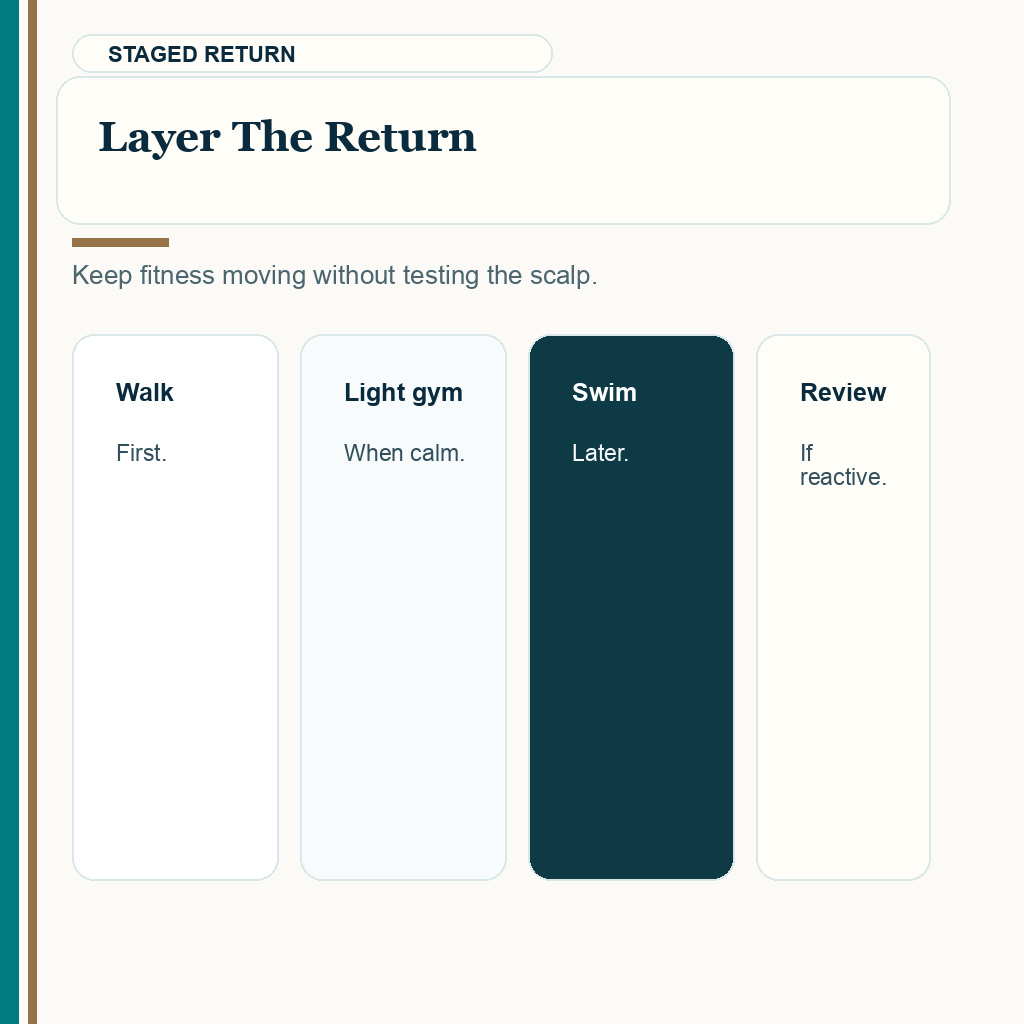
Light walking is usually different from swimming. Walking can often return earlier because it does not usually involve chlorine, saltwater, heat, towel rubbing, or submerging the scalp. But intensity matters.
Hard training, heavy sweating, and contact sports should return much later than walking. Controlled gym work may be possible earlier in some patients, but swimming belongs in a different category because it combines exertion with water exposure, pool chemicals or seawater, and towel friction.
Some people say they will swim slowly and carefully. Even then, the pool environment still adds chemical exposure, hygiene uncertainty, and drying or rubbing afterward.
If you need movement for your mood, walk in cool conditions. Avoid heat, avoid sweating heavily, and do not turn exercise into a test of how fast you can return to normal life.
Recovery also means keeping the scalp quiet enough that you do not create avoidable inflammation or anxiety, even after the grafts feel more secure.
Returning slowly usually costs you nothing. Rushing can create irritation that was completely unnecessary.
Do not use swimming as a way to reduce anxiety. Recovery can feel restrictive, and wanting life to feel normal again is understandable. But early swimming is the wrong outlet for that feeling.
If you need movement, walk. If you need fresh air, choose shade and low heat. For reassurance, share photos for review instead of testing the scalp in pool water or sea water.
The 8 exercise and water slides below separate dry walking, sweat control, pool or sea variables, hot water, beach activity, swim caps, staged fitness, and delay signs. Swipe sideways, use the arrows one slide at a time, or choose a number below the image.


Red or sensitive scalp after 3 months
If the scalp is still red, itchy, bumpy, painful, or unusually sensitive after 3 months, swimming may still need to wait. The 3 month rule is a strong general minimum, but it is not stronger than the clinical condition of the scalp.
Some people heal more slowly. Skin type, previous inflammation, high density placement, sun exposure, washing habits, sweating, and irritation can all change the recovery experience.
If there are pimples, crusting, heat, discharge, or persistent discomfort, the scalp needs examination. Do not try to treat the problem by soaking it in pool water or seawater.
Medication and supportive treatment may also matter if inflammation is present. Understand prescribed medications after hair transplant, and do not add unapproved products because the scalp feels dry or irritated.
A sensitive scalp may also look worse when the hair is wet. Wet hair separates, exposes the scalp, and can make a normal recovery look thinner than it is. This visual problem is easier to understand in harsh light, wind, and wet hair.
If the scalp is settled after 3 months, swimming is usually more reasonable. If the scalp is still reactive, waiting is still the better choice.
This is judged by the person in front of me. A date on the calendar is helpful, but the scalp gives the final answer in real clinical life.
Returning to swimming after 3 months
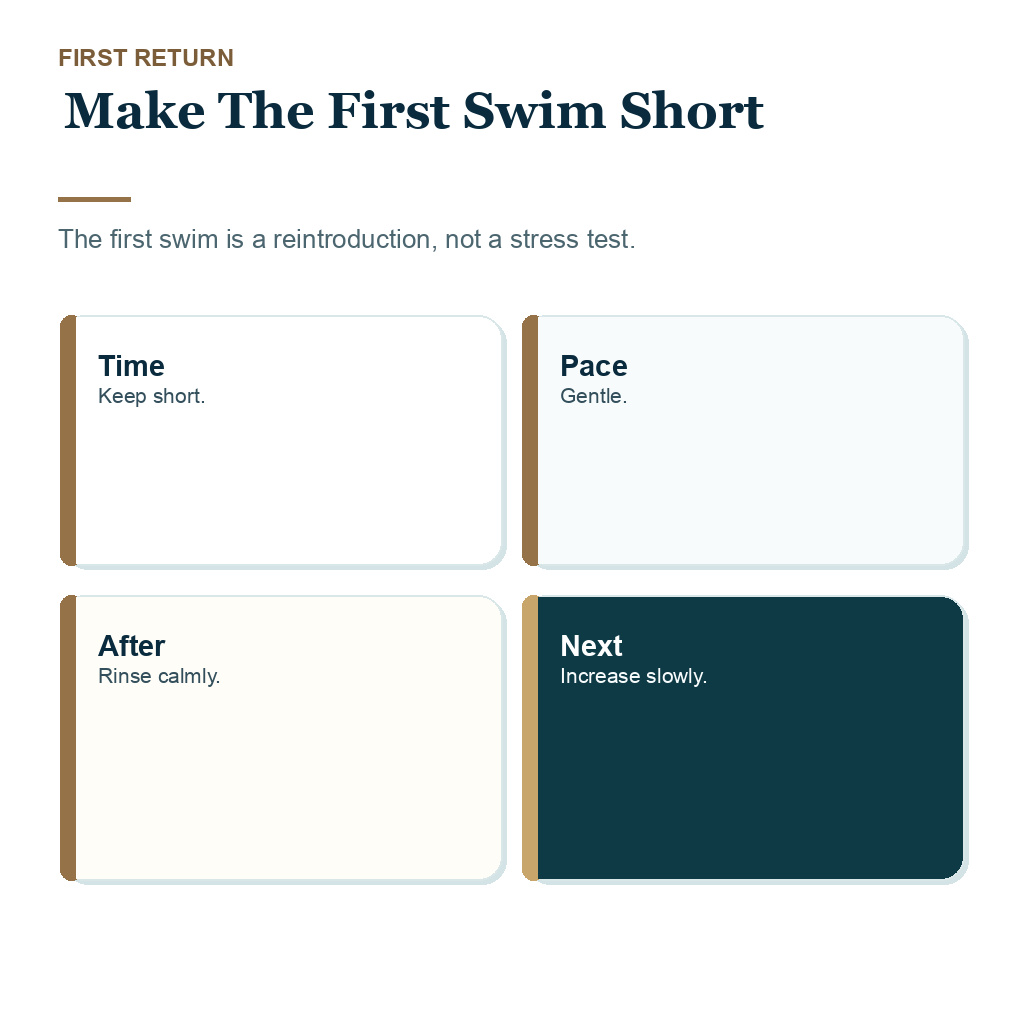
When you return to swimming after 3 months, start gently. Do not make the first session long, hot, sunny, or intense. A short controlled swim is better than a full beach day.
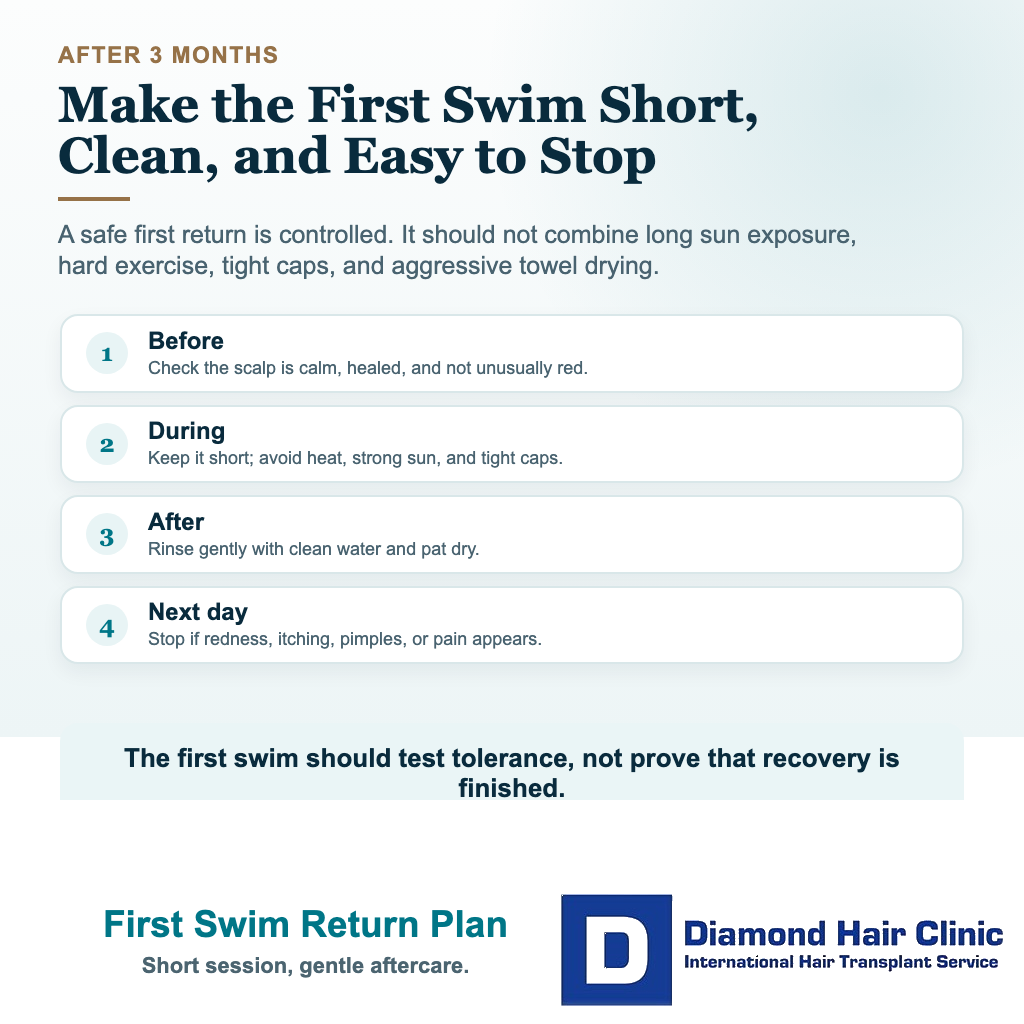
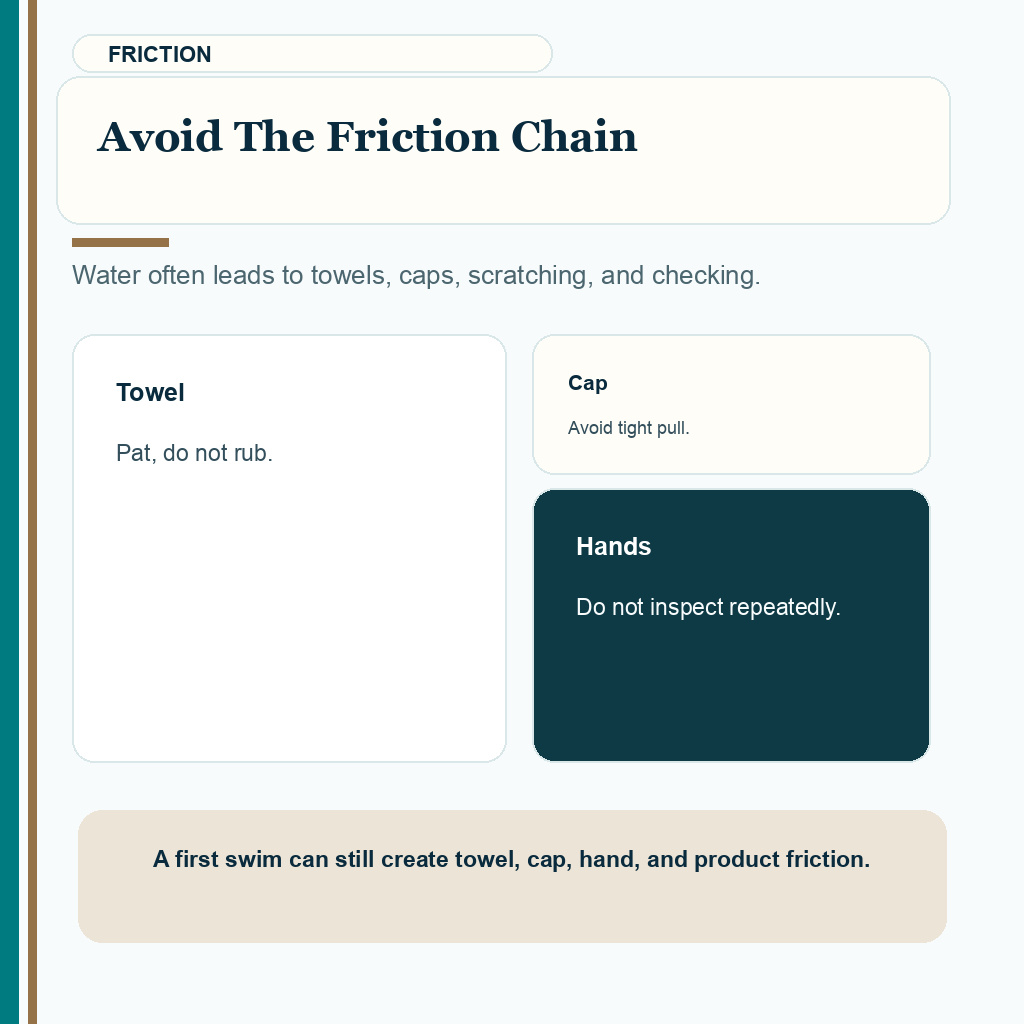
Rinse the scalp gently afterward with clean water. Do not scrub. Do not rub aggressively with a towel. Pat carefully and keep the scalp clean and comfortable.
Avoid strong direct sun, especially if there is still redness. Avoid tight swim caps if they press or drag across the recipient area. Avoid scratching if chlorine or saltwater makes the scalp feel dry.
If you notice unusual redness, itching, pain, swelling, or pimples after returning to swimming, stop and contact the clinic. Do not keep repeating the exposure and hoping the scalp will adapt.
Do not treat the first swim as proof that everything is finished. Hair transplant growth is still a long process. The scalp may be ready for swimming before the cosmetic result has fully matured.
Being gentle is part of protecting the result. The aim goes beyond graft survival. Comfort, skin stability, and your ability to wait for growth without creating new irritation all matter.
I use this practical thinking before surgery as well. You should understand recovery details before committing to a hair transplant, especially if you have travel, sports, or holiday plans soon after the procedure.
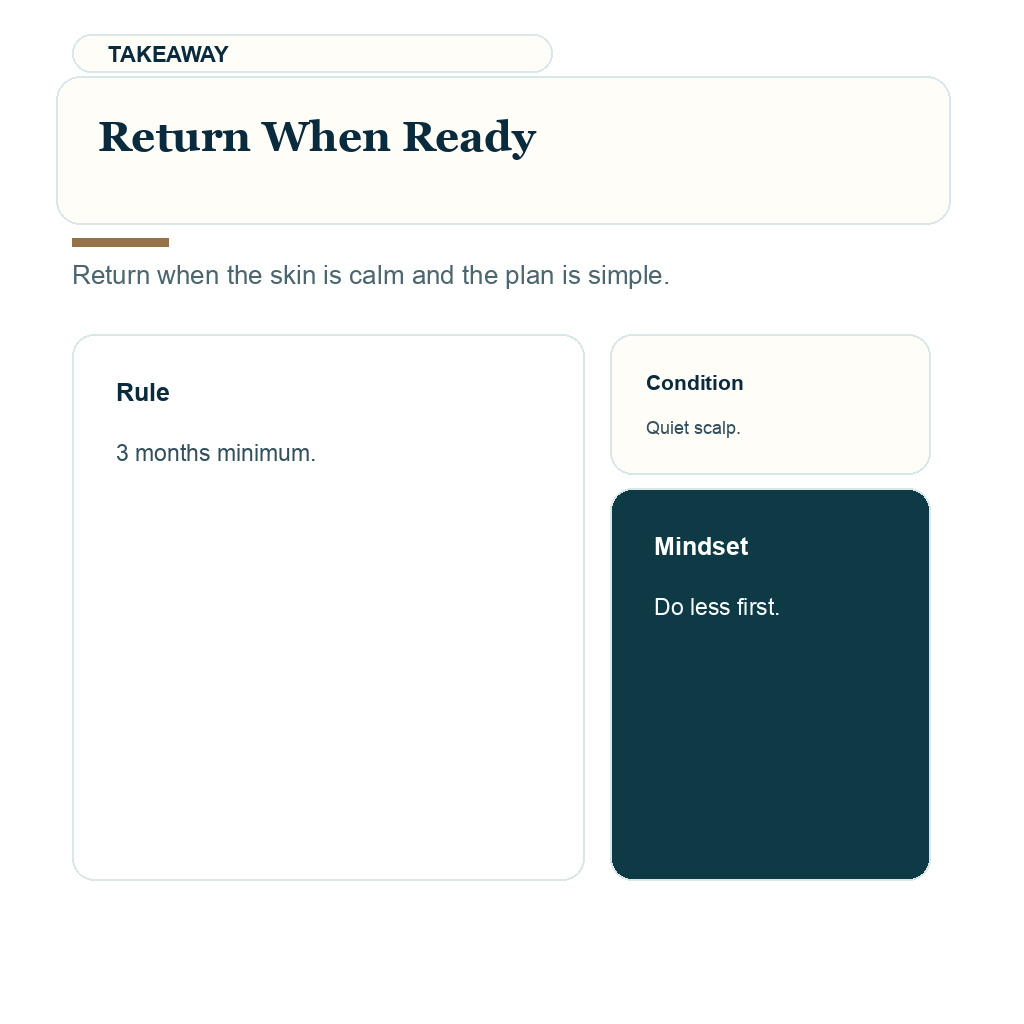
A practical plan is simple. Wait 3 months, return gently, protect the scalp from sun and friction, and let the result mature without turning recovery into a test of impatience.
The 8 first return slides below separate quiet skin readiness, a short first swim, towel or cap friction, warning signs, pool versus sea exposure, beach conditions, reactive scalp decisions, and the final return rule. Swipe sideways, use the arrows one slide at a time, or choose a number below the image.
Read this review excerpt
First wash completed and visual instructions given to my daughter.