


Plan Beach Visits Around Sun and Swimming
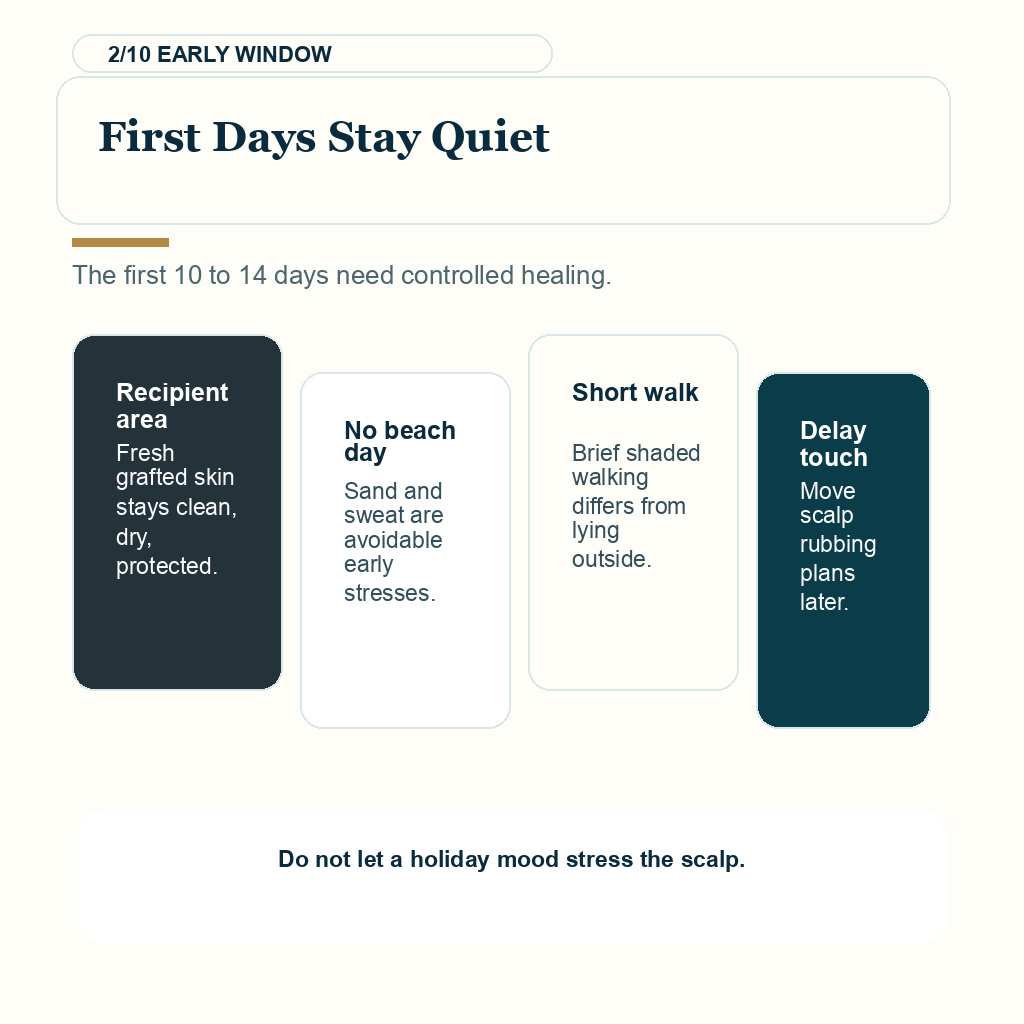
Do not treat a beach day as normal activity during the first 10 to 14 days after a hair transplant. A short shaded walk near the sea is very different from sitting in strong sun, swimming, sweating, using sunscreen on fresh grafts, drying the scalp with a towel, or letting sand and saltwater touch the recipient area.
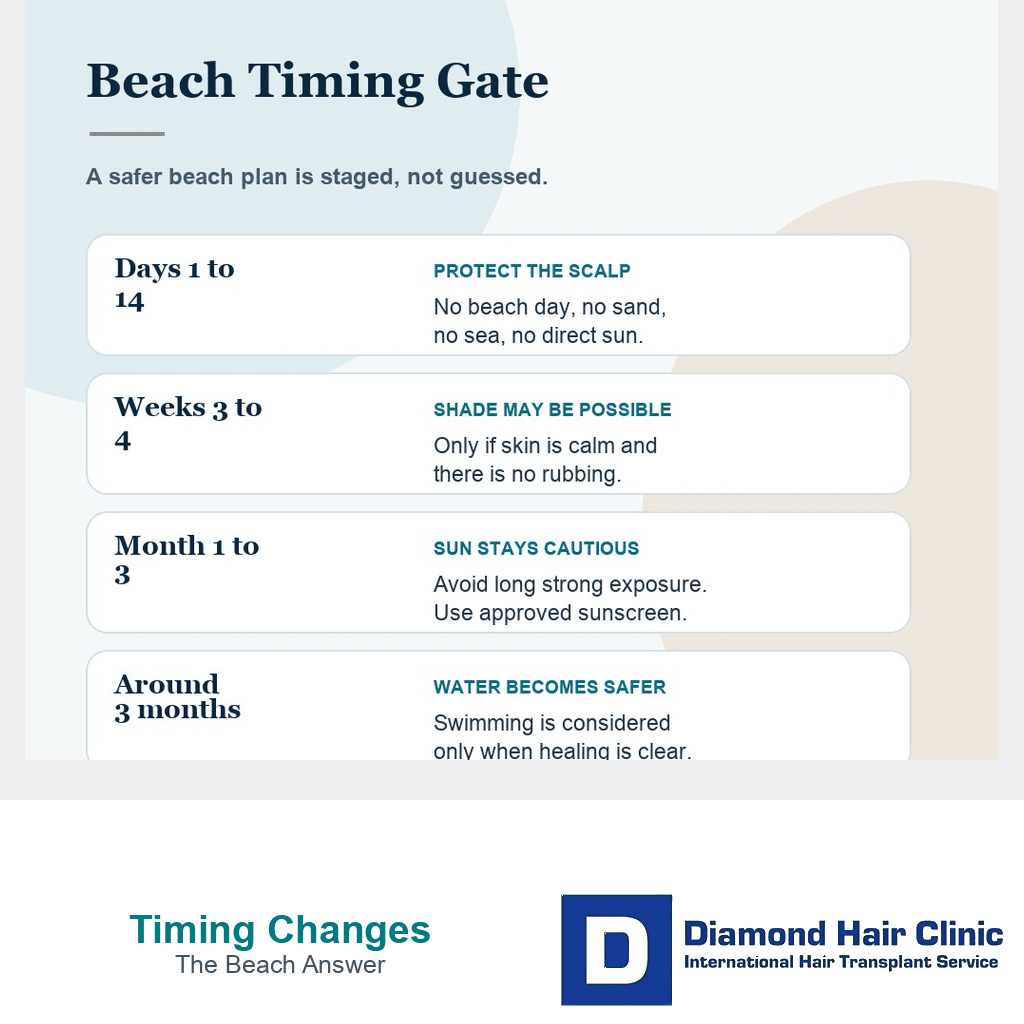
My usual planning advice is direct. Protect the scalp strictly for the first 10 to 14 days. Avoid strong direct sun for at least 1 month, keep prolonged beach sun cautious for about 2 to 3 months, and avoid swimming in the sea or pool for the first 3 months. If your scalp is red, painful, wet, crusted, swollen, or still sensitive, the beach should wait even if the calendar says your holiday has started.
The word beach is too broad. The risk comes from the combination of sun, heat, sweat, wind, sand, towel friction, sunscreen, hats, saltwater, and social pressure. A tanning bed before a beach trip belongs in the same early avoidance category because it adds artificial UV to healing skin.
A beach routine is different from one quiet outdoor moment. Regular swimming, strong sun, sweat, towel drying, sand, sunscreen, and social pressure all need to be planned together instead of approved one by one.
If the trip is already booked, split the plan into beach view, beach walk, swimming, sunbathing, sunscreen, and towel drying. These are different exposures, so one safe part of the holiday does not make the whole beach routine safe.
The worry is understandable. Many people travel for surgery, stay in a hotel, see the sea outside, and feel almost normal after a few days. If that beach exposure creates a sunburned scalp before surgery, the operation may need a separate timing decision. Feeling normal is not the same as being ready for beach exposure. The recipient area still needs protected healing, and a good result is not worth risking for one early beach day.
Sun, sand, sweat, and swimming arrive together
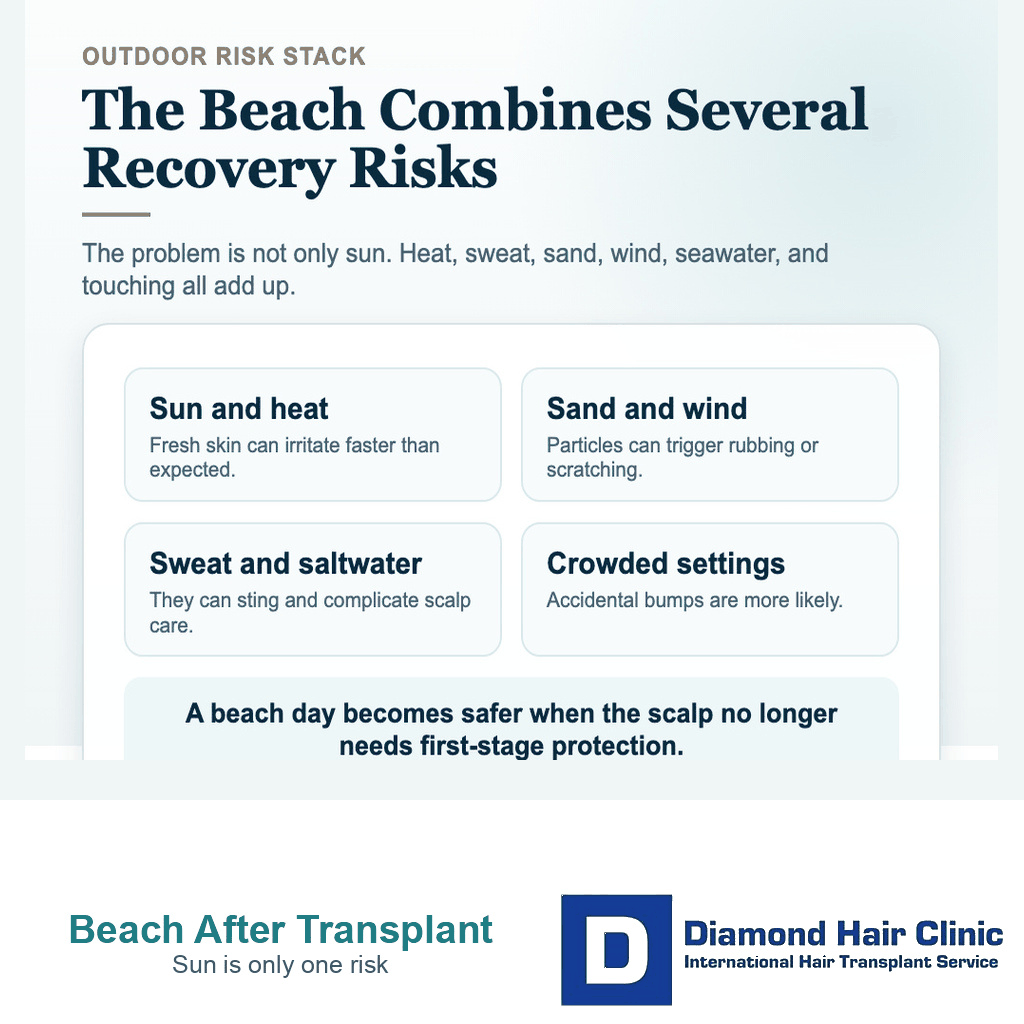
A short walk outside can be controlled. You can stay in shade, avoid heat, keep the scalp dry, and return indoors quickly if you feel warm or uncomfortable. A beach day is harder to control because sun, wind, sweat, sand, towels, saltwater, sunscreen, hats, and social pressure all arrive together.
When I assess this question, I do not ask only whether the grafts are secure. I ask what will touch the scalp, how long the exposure will last, whether you will sweat, whether the hat is loose, whether the skin has fully closed, and whether you can avoid rubbing. Those details matter more than the word beach.
With sun after a hair transplant, strong light on healing skin deserves caution. The beach adds another layer because you are usually exposed for longer and are more likely to wipe sweat, adjust a hat, lie down, or decide that one quick swim will be harmless.
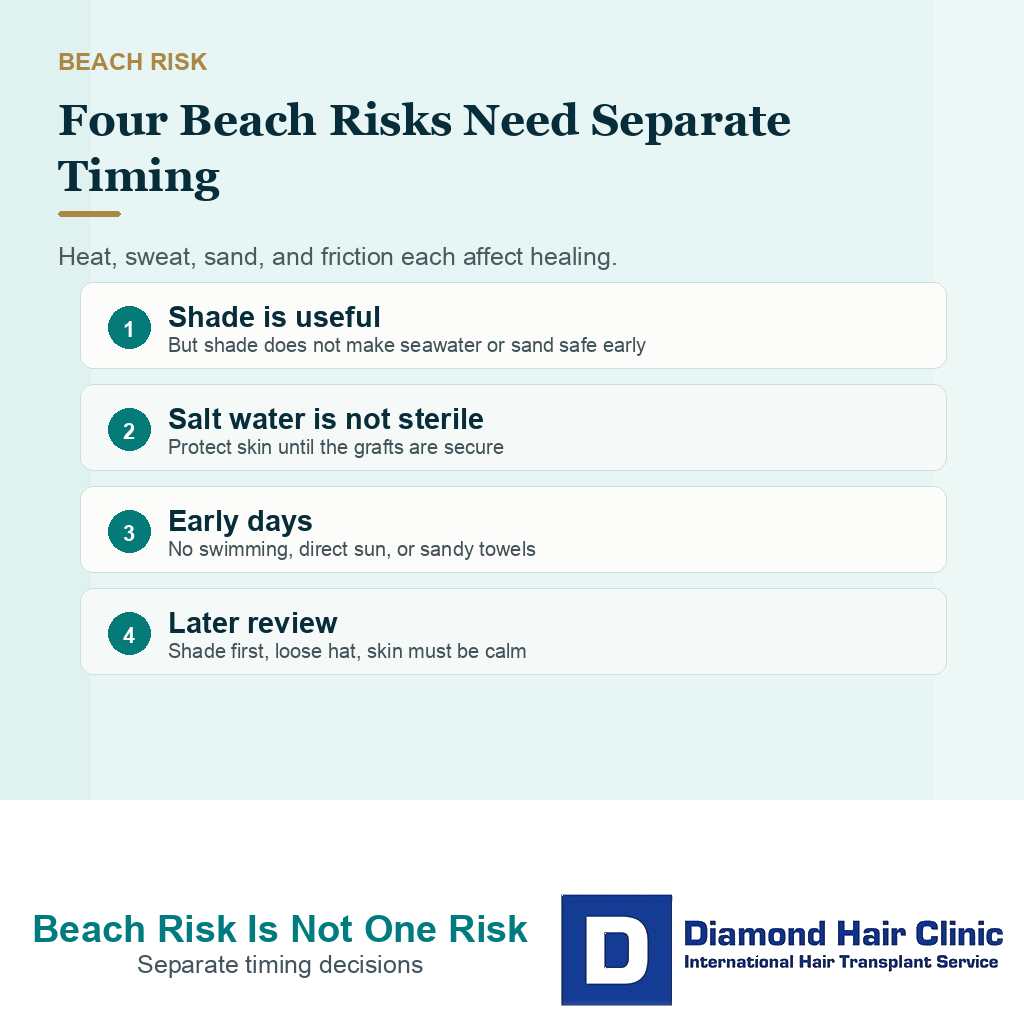
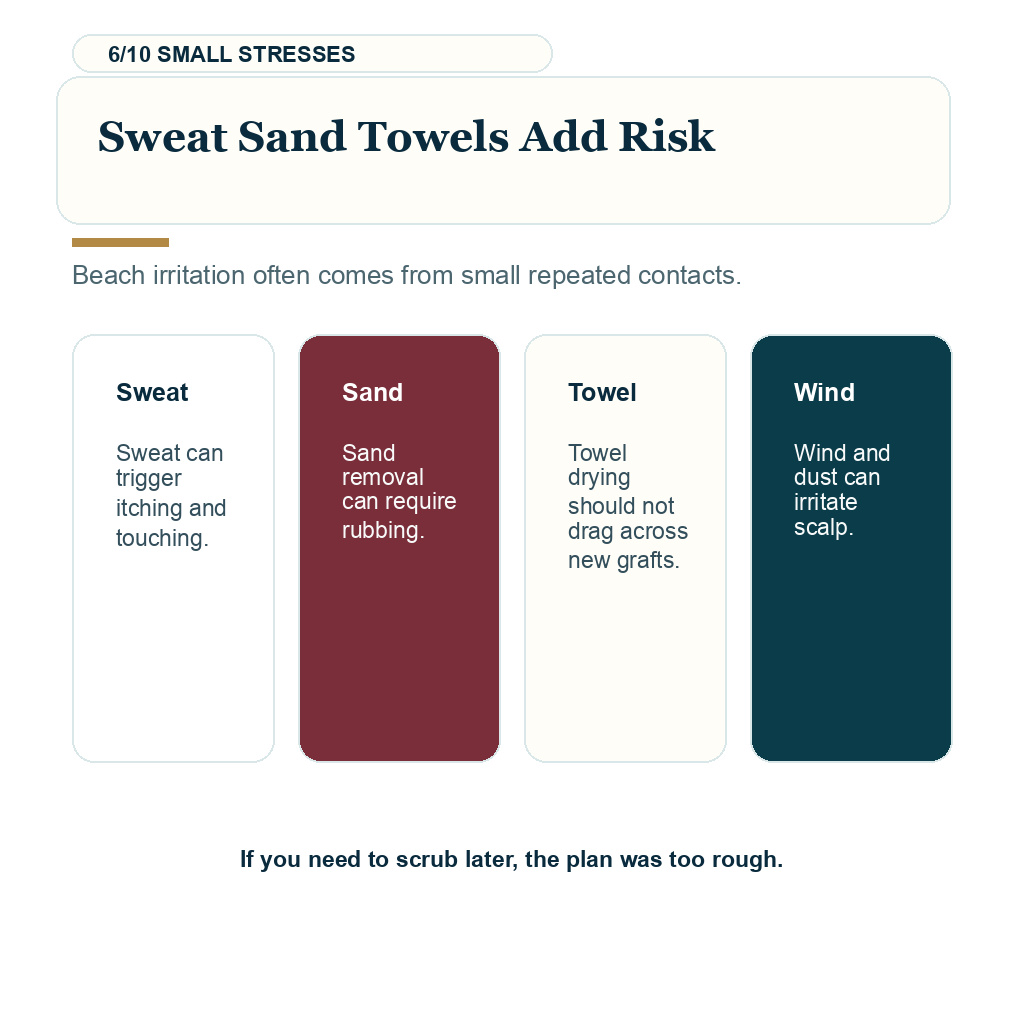
The danger is rarely one small moment. It is the combination of repeated small irritations. A little heat, a little sweat, a towel rub, a tight hat, and a brief swim can turn into a recovery environment that is no longer controlled.
Sitting near the beach is different from swimming
If the operation was uncomplicated and the scalp is healing as expected, sitting in shade near the beach may become more reasonable after the first 10 to 14 days. I still want you to think like someone recovering from surgery, not like someone on a normal holiday.
The recipient area should be dry, the scabs should be coming away normally or already gone, and there should be no fresh bleeding, increasing pain, discharge, open skin, or worsening redness. The hat should be loose and clean. Nothing should drag across the hairline when it is put on or removed.
The difference between being outdoors and being exposed matters. A quiet hour in deep shade is not the same as lying under midday sun. A short walk on a hotel path is not the same as sitting on hot sand while sweating. If the plan depends on a tight cap, repeated towel use, or staying outside for hours, I become more cautious.
Patients sometimes ask whether graft security changes the answer. Secure does not mean ready for every form of rubbing, heat, water, or pressure, especially when judging when hair transplant grafts are secure. It means the risk of dislodging grafts has fallen. The skin still needs respect.
Sea or pool swimming should wait longer
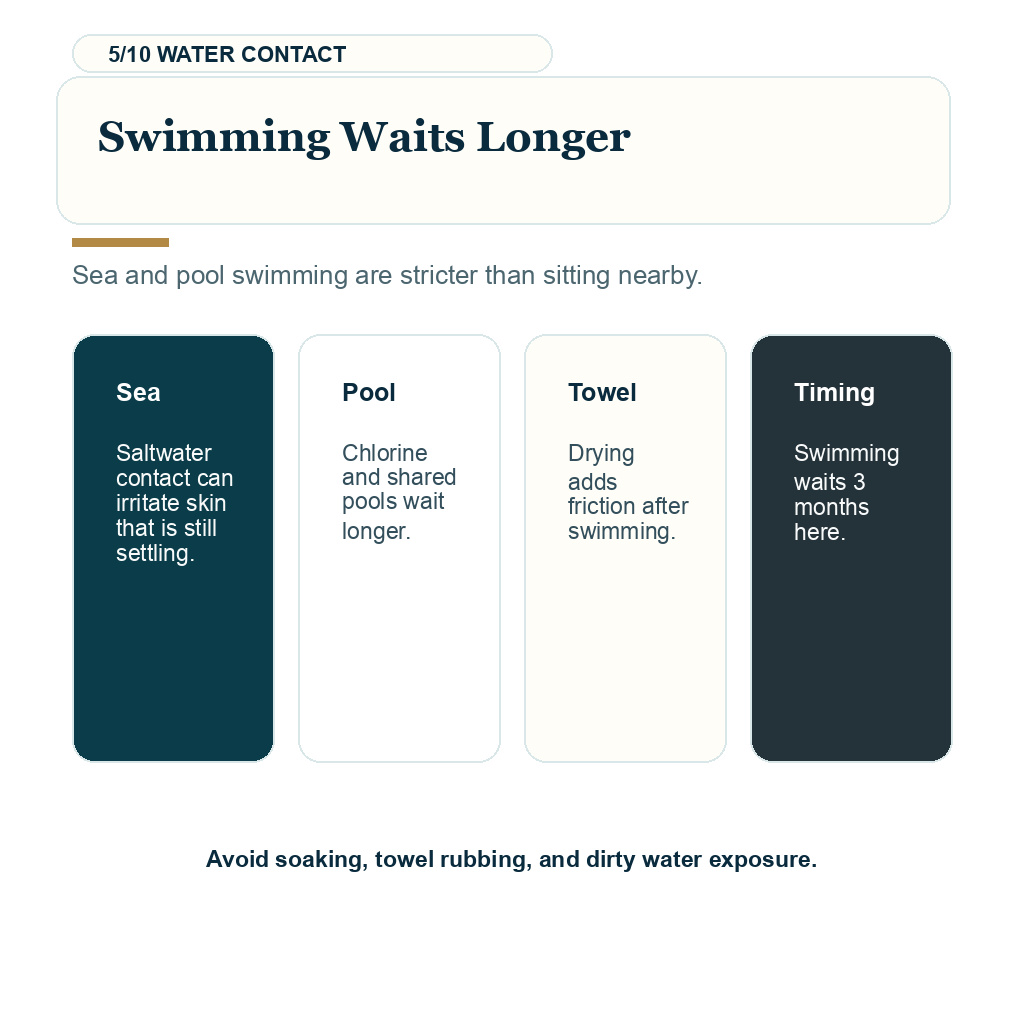
I advise patients to avoid swimming after a hair transplant for the first 3 months. This includes the sea, swimming pools, hot tubs, and similar recreational water. The reason is not only graft loss. The scalp surface, donor area, and recipient area have all been through surgery, and recreational water brings more variables than a controlled wash.
Saltwater, chlorine, heat, towels, wet hats, swim caps, sweat, and sunscreen residue can all irritate healing skin. Sea water is not sterile, and saltwater or brackish water can be a wound infection problem when skin is still open. A pool or the sea also changes behavior. You touch the scalp, wipe water away, scratch salt, lie on a towel, or try to hide redness under a cap while the skin is not ready.
Swimming after a hair transplant has its own timing. Sitting in shade and entering the water are separate decisions. If one is allowed later, it does not necessarily approve the other.
Treat snorkeling as swimming, not as a beach walk. A mask strap, repeated head dipping, saltwater, and towel drying make it a water activity even if the rest of the holiday feels calm.
Missing swimming during one trip is a better trade than creating inflammation, irritation, or anxiety during the months when the result is still developing. A holiday can be repeated. Donor grafts and early healing should not be treated casually.
Sun protection still has limits early on
Shade helps, but shade is not a complete beach plan. It reduces direct sun, but it does not remove sweat, sand, wind, towel friction, or the temptation to swim. A shaded beach chair can still be hot, dusty, and difficult to control.
Sunscreen also has a timing issue. In the first days, I avoid applying sunscreen, oils, gels, or creams onto fresh grafts. Once the skin is healed enough and your surgeon approves, a broad spectrum water resistant sunscreen with SPF 30 or higher can be useful outdoors and should be reapplied every 2 hours, sooner after sweating or water exposure. Water resistant does not mean waterproof, and it does not make swimming safe before the scalp is ready for pools, sea water, or sunscreen. Before that stage, shade and avoidance are safer than product layering.
A hat can protect the scalp, but only if it behaves like protection rather than pressure. The timing for wearing a hat after a hair transplant matters because a loose, clean, breathable hat is very different from a tight cap that rubs the hairline or traps heat.
Heavy sweat, repeated wiping, and constant hat adjustments are different from sitting quietly in shade. If those are part of the beach plan, leave the beach and treat recovery guidance about sweating after a hair transplant as the more useful rule.
Already booked beach trips need a safer plan
If the trip is already booked, change the activity before you change the recovery rules. A shaded walk near the water is not the same as sitting under strong sun, swimming, sweating, applying sunscreen to fresh grafts, or drying the scalp with a towel. The safest holiday version is usually quiet, shaded, clean, and short.
Do not use sunscreen as a way to make very early beach exposure acceptable. Fresh grafts and healing skin should not be coated with random products just because the sun is strong. If you must travel, plan shade, loose scalp protection when your clinic allows it, air conditioned rest, and no swimming until the scalp is ready. Beach advice has to separate sun exposure, swimming, sweat, sand, towel friction, and sunscreen instead of treating the beach as one simple fixed answer.
After going to the beach too early, watch the scalp
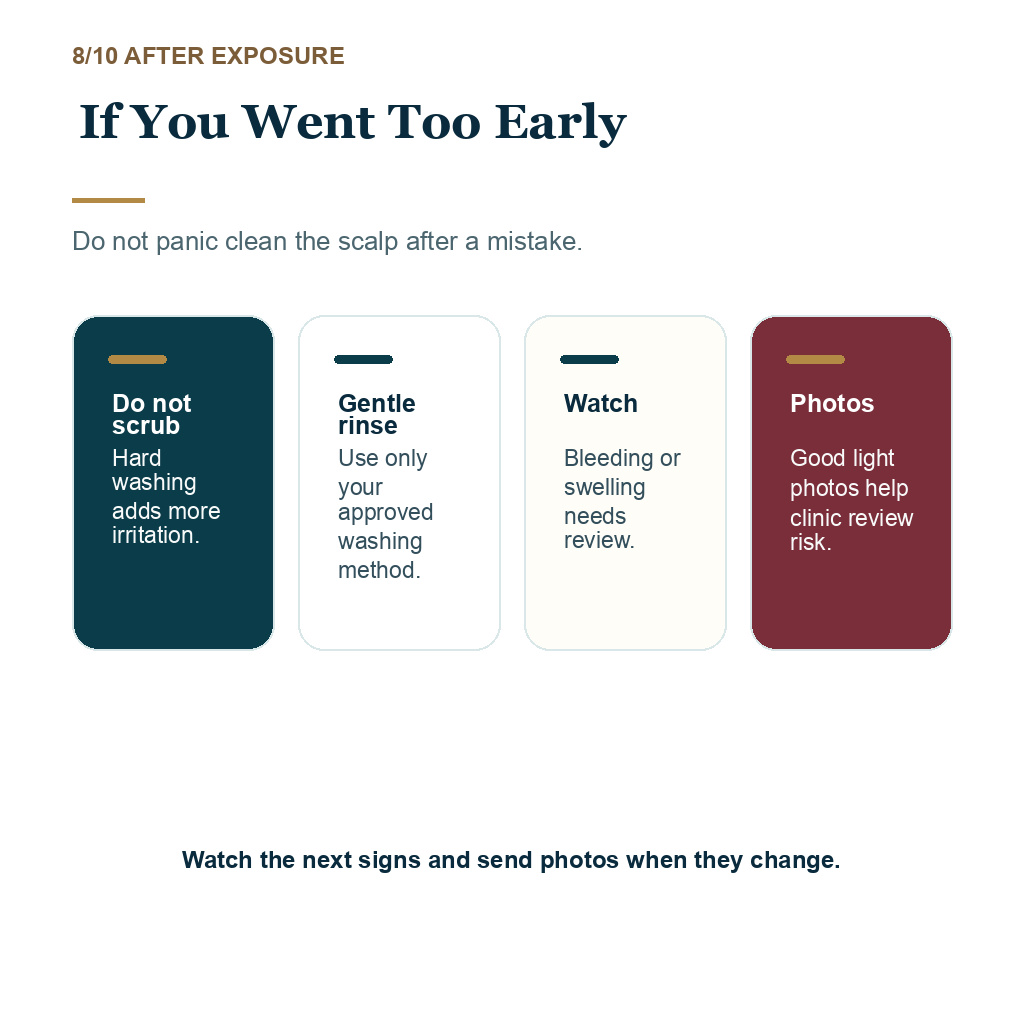
First, do not panic and do not start rubbing or treating the scalp aggressively. Move indoors, keep the scalp protected, and avoid any more sun, sand, sweat, or water exposure. If the area feels dry or tight, follow your clinic’s aftercare instructions rather than adding random products.
Then judge what actually happened. A few minutes in shade is different from swimming. A little warmth is different from sunburn. A loose hat is different from a tight wet cap. A brief mistake without bleeding, pain, discharge, or open skin is usually handled with observation and careful aftercare.
If rain, seawater, or dirty water touched the scalp, look at timing, pressure, cleanliness, and your reaction afterward. With rain after a hair transplant, water itself is not the only issue. The rubbing and wiping afterward often create more risk.
If you are unsure, share front, side, and close photos taken in good light with your clinic. Tell them the surgery date, what touched the scalp, whether you swam, whether there was sunburn, whether anything bled, and whether pain or redness is getting worse. That information is more useful than simply saying that you went to the beach.
Holiday planning around a hair transplant
If you are coming to Turkey for surgery, do not design the trip as a beach holiday with a procedure in the middle. Design it as a medical trip with recovery time. The sea, restaurants, and sightseeing may be nearby, but the scalp does not recover faster because the hotel is pleasant.
For many international patients, the first decision is how long to stay after surgery. A few protected recovery days are often more useful than rushing through the schedule. Keep that in mind with how many days to stay in Turkey after a hair transplant. The purpose is to leave with the grafts protected, the donor area checked, and the instructions understood.
Flying home is a separate planning point. Most medically stable patients can fly, but the airport can create bumping, sweating, luggage strain, poor sleep, and rushed movements. The timing for flying after a hair transplant gives a better framework than assuming travel permission means normal holiday behavior.
If your calendar only works by adding a beach holiday immediately after surgery, moving the surgery date may be the better decision. A hair transplant should be planned around the grafts, donor area, skin healing, and follow up, not around the hotel pool.
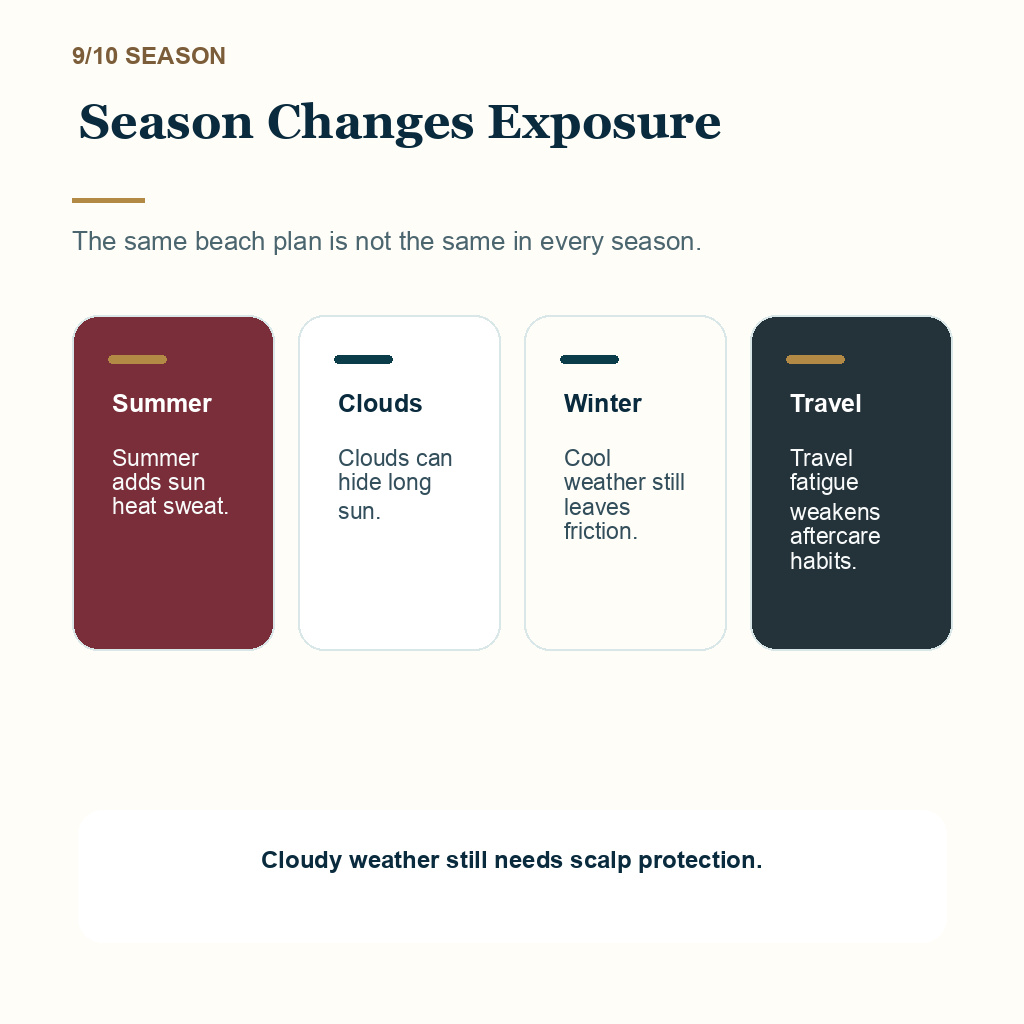
Season changes sun, sweat, and swimming risk
Season changes comfort, but it does not remove the recovery rules. Summer can work well if you can stay indoors, avoid strong sun, and keep the scalp cool. Winter can be easier for avoiding beach pressure, but winter does not protect someone who returns to normal activity too quickly.
Whether summer or winter is better for a hair transplant depends on the recovery plan in front of you. The best season is the one that lets you recover properly. For some patients, that means avoiding surgery just before a beach trip, wedding, work event, or long outdoor holiday.
I look at the real schedule. If you can rest quietly, stay shaded, follow washing instructions, and avoid swimming, summer may be acceptable. If you know you will be on a beach every day, sweating under a hat, or trying to hide the transplant from friends, the timing is weak even if the surgery itself is technically possible.
A clinic that makes the recovery sound too easy may be focusing on the booking rather than the patient. Serious planning should include what you will actually do in the first two weeks and what you should avoid during the first months.
Beach exposure signs that need clinic review
Ask for photo review if beach exposure is followed by fresh bleeding, open skin, worsening pain, spreading redness, discharge, pus, fever, increasing swelling, or a clear impact to the recipient area. Ask the clinic as well if you had sunburn on the transplanted area or if scabs were pulled off by rubbing, towel drying, hat removal, or scratching.
Do not cover a problem with sunscreen, oils, aloe vera, heavy moisturizer, antiseptic, or leftover medication without medical guidance. Products can hide what the skin is doing and may irritate tissue that needs review.
For photos, simple clear images in natural indoor light are enough. Take the front, both sides, and above if possible. Do not keep pressing the scalp to show the concern. The aim is to show the skin, not to test whether the grafts are still there.
If everything looks settled and the exposure was brief, the answer may simply be to return to careful aftercare and avoid repeating the mistake. If the skin is getting worse, the answer changes. A clear early message to the clinic is better than waiting several days while trying home solutions.
Use the 10 beach activity slides below to separate shade, sun, SPF, swimming, sweat, sand, towel friction, booked trips, season risk, and clinic review. Swipe sideways, use the arrows, or choose a number below the image.





Shade and swimming are different decisions
Ask a narrower question than whether the beach is allowed. Ask whether your scalp is ready for the exact beach activity you plan. Sitting in shade for a short period, walking near the sea, wearing a loose hat, applying sunscreen, lying on a towel, sweating for hours, and swimming are not the same decision.
Protect the first 10 to 14 days. Keep strong sun away for at least 1 month, stay cautious with prolonged sun for about 2 to 3 months, and avoid swimming for 3 months unless your surgeon gives a different instruction for your case. Use hair transplant aftercare as the foundation, then judge the beach as an extra exposure on top of normal recovery.
If the beach plan can be quiet, shaded, short, dry, and free from rubbing, it may become reasonable earlier than swimming. If the plan involves sea, pool, sweating, towel friction, sand, tight headwear, or long midday sun, it should wait.
Calendar permission matters less than what the scalp is still healing from. A short holiday should not create a preventable problem, and patient timing protects both graft survival and the final result.
Read this review excerpt
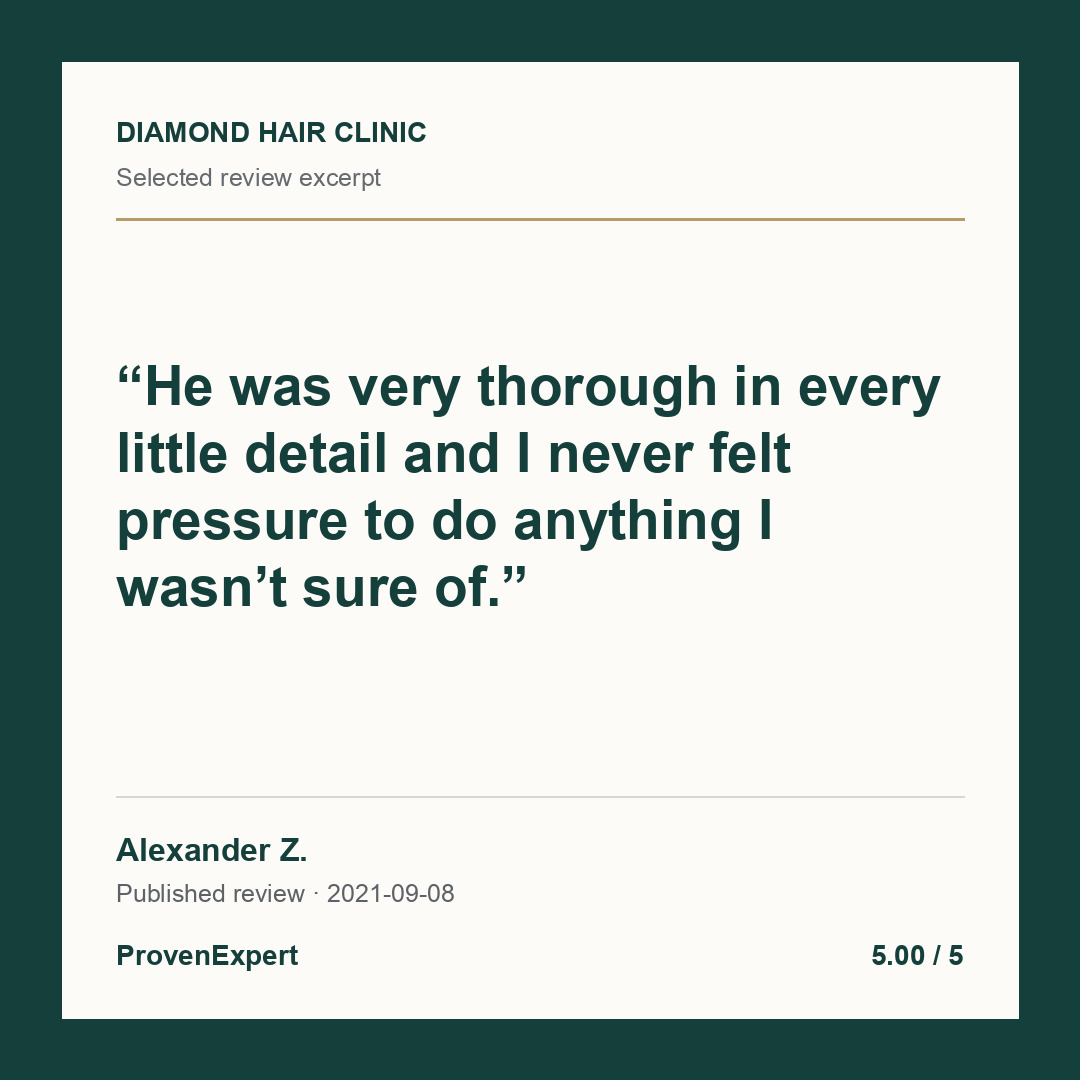
He was very thorough in every little detail and I never felt pressure to do anything I wasn’t sure of.