


Protecting Healing Grafts From Sun Exposure
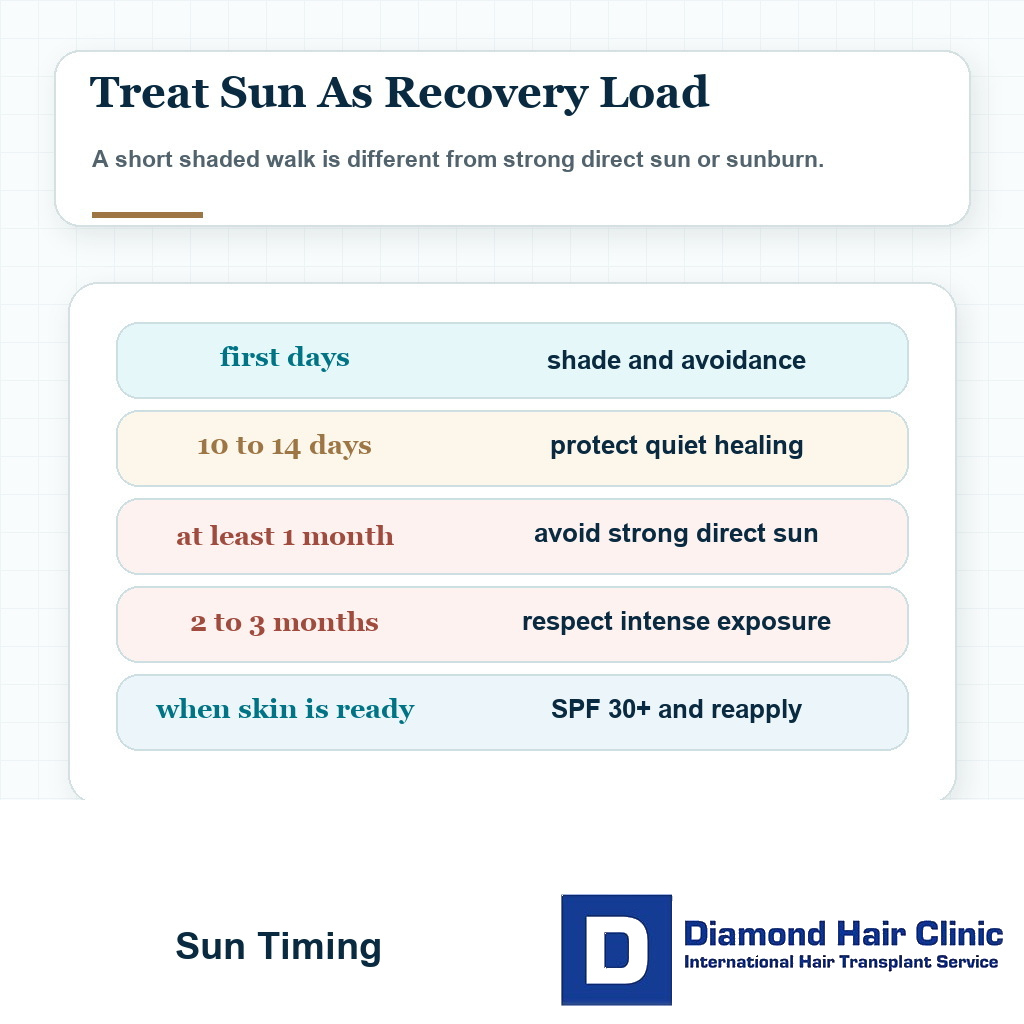
Avoid strong direct sun after a hair transplant for at least 1 month, and keep treating prolonged or intense sun carefully for about 2 to 3 months. A short walk outside is different from midday sun, beach exposure after a hair transplant, or a real sunburn. The same distinction matters when deciding whether going out after hair transplant surgery is sensible in the first days.
Once the skin is healed enough and your surgeon approves sunscreen, use a broad spectrum, water resistant sunscreen with SPF 30 or higher, and reapply it every 2 hours outdoors, sooner after sweating or water exposure. In the first days, protection means shade and avoiding sun, not covering a fresh scalp with products. When sun protection involves a bucket hat, bandana, or soft cap, soft headwear after transplant helps separate shade from pressure.
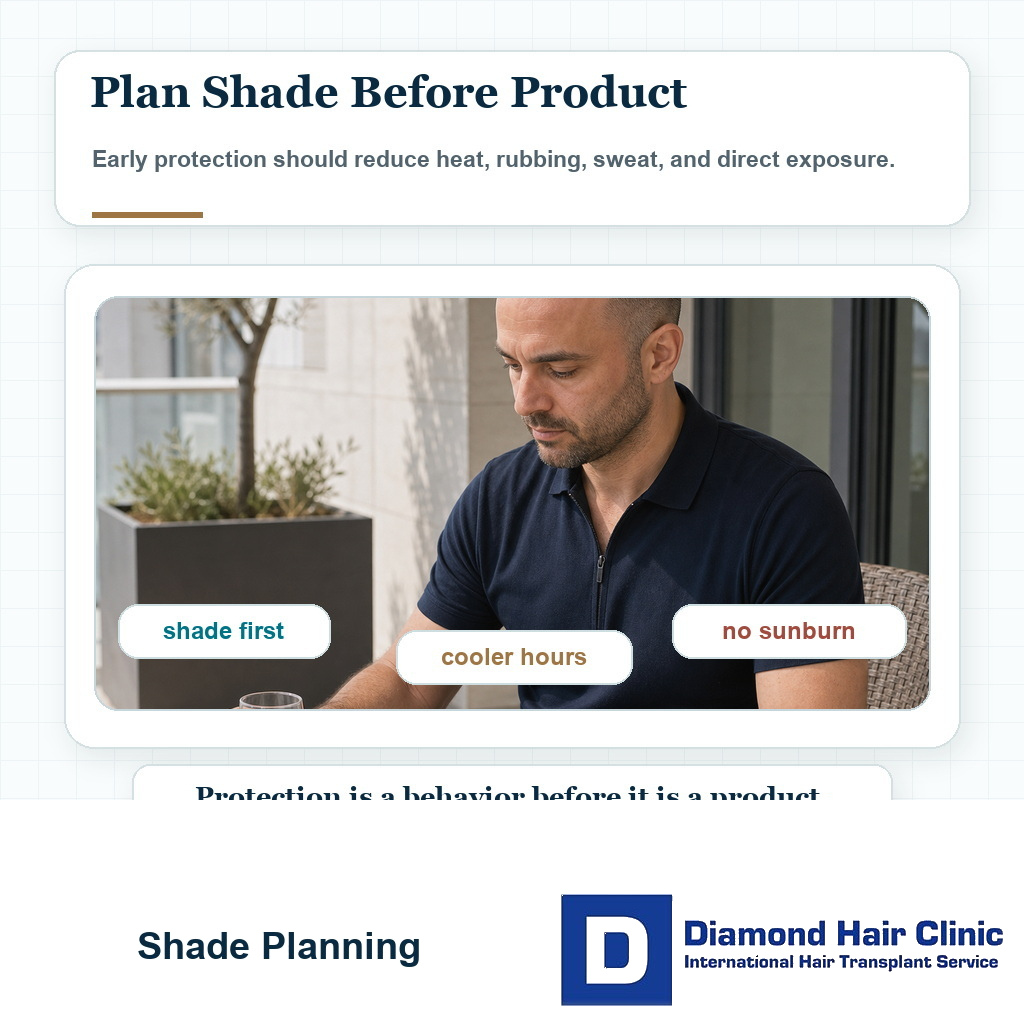
Choose shade in a way that keeps the scalp cool and untouched. Sitting under a tight sweaty cap or beside strong window light is different from a short shaded walk with a cool scalp and no pressure on the grafts.
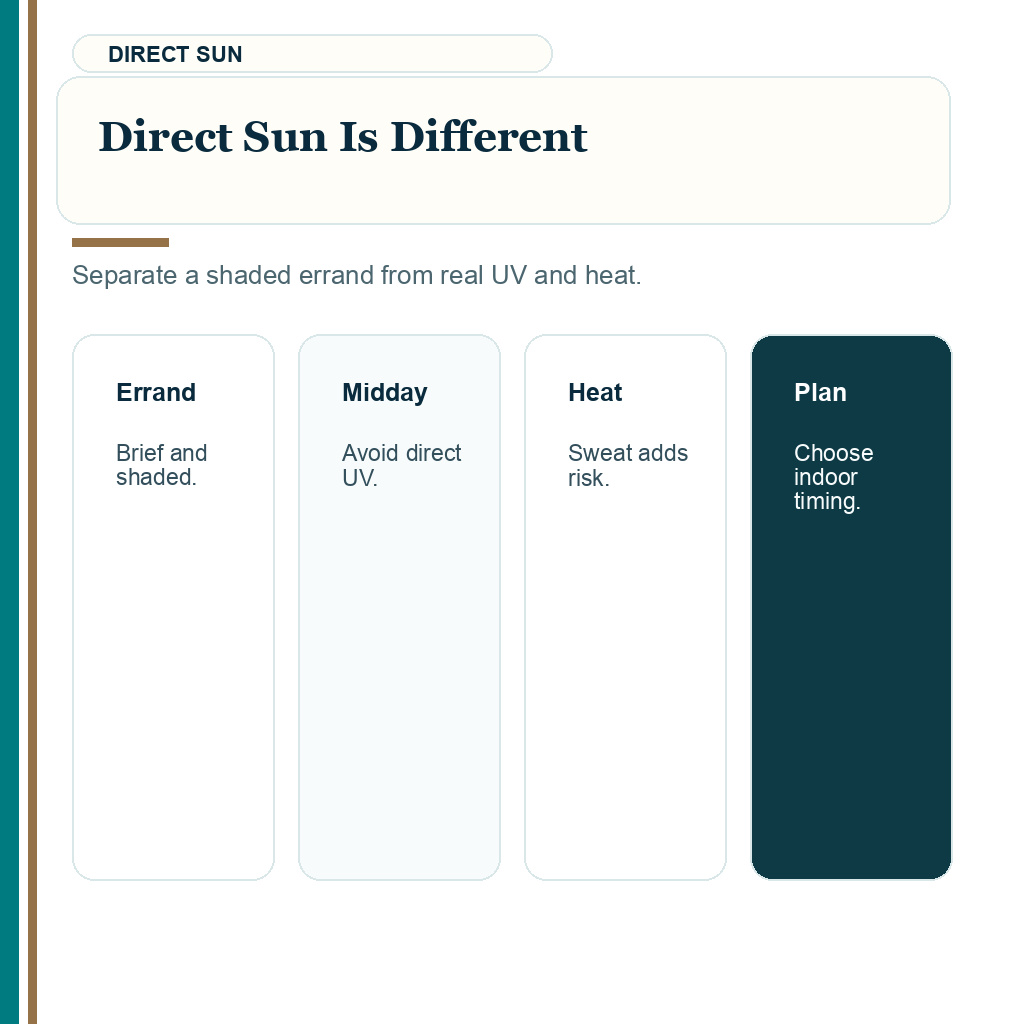
Separate direct sun from ordinary bright light. Sitting by a window, walking to a taxi, and lying on a beach create different exposure problems for a healing scalp.
This question often comes before surgery. You may be traveling, returning to work, living in a sunny climate, or planning surgery around a holiday. The real fear is whether sunlight can ruin grafts. If direct sun is part of outdoor work, the return date should also follow the planning in physical work after hair transplant.
The answer needs to be firm but not frightening. Sun is not usually one brief moment that ruins grafts, but strong sun on a freshly healing scalp is not helpful. It can worsen redness, dryness, irritation, pigmentation, sweating, and the urge to touch the recipient area.
Keep fresh scalp out of strong sun while the skin settles
Brief outdoor exposure is not usually what damages a transplant. The bigger problem is strong sun on skin that is already red, dry, itchy, or swollen. Heat can increase sweating, make the scalp more uncomfortable, and tempt you to wipe or scratch the recipient area.
In the early healing period, shade is better than testing tolerance. Use loose protection only when your clinic says it will not rub the grafts. Avoid tight hats, sunscreen on broken or crusted skin, beach heat, sauna like conditions, and long walks under direct midday sun. If sightseeing is part of the trip, plan a shaded route before surgery instead of deciding with a hot, tender scalp afterward.
Sun also changes how recovery looks. A scalp that seems mildly pink indoors may look much redder outside, and pigmentation can become more noticeable on irritated skin. If outdoor work or travel makes sun unavoidable, plan the return around shade, short exposure, and a scalp that is calm enough to inspect without constant touching.
Sun protection matters because the scalp is still healing
After a hair transplant, the scalp has gone through a real medical procedure. The recipient area has tiny openings where grafts were placed, and the donor area has extraction points that are also healing.
Fresh healing skin reacts more easily than normal skin. Sun can make it warmer, redder, more irritated, and more uncomfortable. If you then rub, scratch, wipe sweat, or apply products too early, the problem becomes behavioral as well as biological.
In the first 10 to 14 days, the priority is protection and quiet healing. The practical details are in hair transplant aftercare. The principle is simple. Keep the scalp shaded, clean, and calm.
Sun exposure also changes how you judge recovery. A scalp that is a little red indoors can look very red outdoors. Bright sunlight can make every crust, pink area, and thin patch look more dramatic.
A brief walk outside is different from testing fresh scalp with strong sun, heat, and sweat. It means early recovery should not become a sun exposure test.
Healing skin should not be asked to handle surgery, heat, sweat, and strong sun at the same time. That is the clinical logic.
There is another timing issue. In the early days, you are already learning how to wash, sleep, avoid rubbing, and manage swelling. Adding sun exposure makes the routine more complicated when it should stay controlled.
An uneventful recovery is easier to judge. The fewer things testing the scalp each day, the easier it is to notice whether healing is settling normally.
Sunburn and transplant recovery
A sunburned scalp before a hair transplant can delay the operation, and sunburn is also a real problem after surgery. It can inflame the skin, worsen redness, increase discomfort, and make you more likely to touch or scratch the scalp.
Do not think only in terms of graft death. That is too narrow. A sunburned scalp can create irritation, delayed comfort, pigmentation changes, and unnecessary anxiety during a period when the scalp should be settling.
Sunburn can also make photos look frightening. You may think the transplant is failing when the real issue is inflamed skin from sun exposure.
If the scalp burns, do not apply random creams, oils, after sun gels, or strong products without asking your surgeon. Many products that feel soothing on normal skin may not be appropriate for a fresh recipient area.
Product use on irritated skin also needs attention. Harmful ingredients in hair products can make irritated skin and product exposure a poor combination.
Prevention is easier than rescue. Shade, timing, loose protection when appropriate, and patience are better than treating a sunburn afterward.
If sunburn happens, contact the clinic with photos taken in steady lighting. Do not experiment with strong creams or home remedies because the skin feels hot. The wrong product can add irritation to an already irritated scalp.
A sunburn can also make the donor area uncomfortable. Most people focus only on the front, but the donor area is healing too and should not be forgotten.
Check the back before you trust the hat. Headwear should shade the donor area as well as the recipient area. A cap that covers the front but leaves the healing donor exposed is only partial protection. Look from the side and back before going outside, then make sure the fabric is loose, clean, cool, and not rubbing either treated zone.
The donor area can feel deceptively normal before it is fully settled. If it becomes hot, dry, or irritated from sun, you may start worrying about patchiness or delayed healing.
After accidental sun exposure
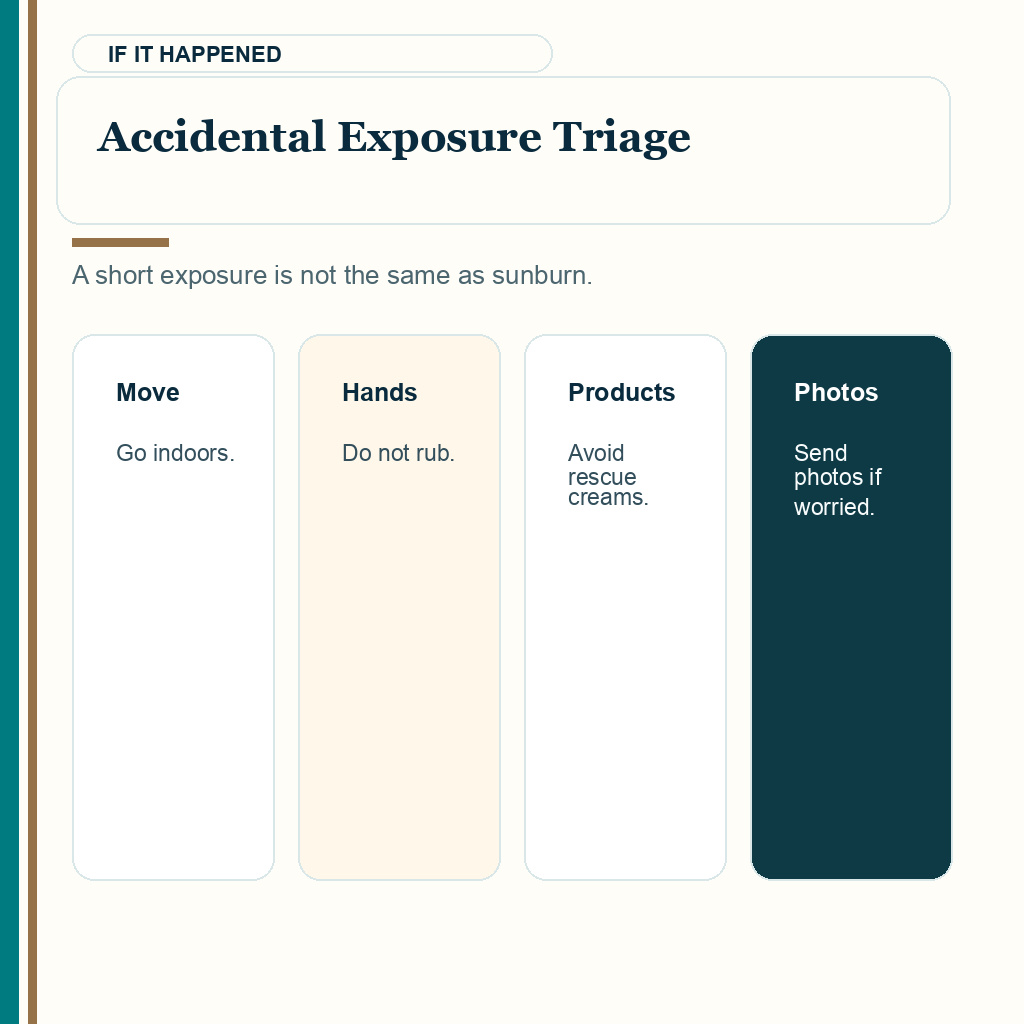
If you had a short accidental exposure and the scalp did not burn, blister, become painful, or become clearly more inflamed, do not panic. A brief moment in the sun is not the same as a beach day or a real sunburn.

Get out of the sun, cool the situation down with shade and indoor rest, keep the scalp clean, avoid rubbing, and message the clinic with photos if you are worried.
Do not try to rescue the scalp with random creams, oils, after sun products, or strong home remedies. A healing recipient area can react badly to products that would be harmless on normal skin.
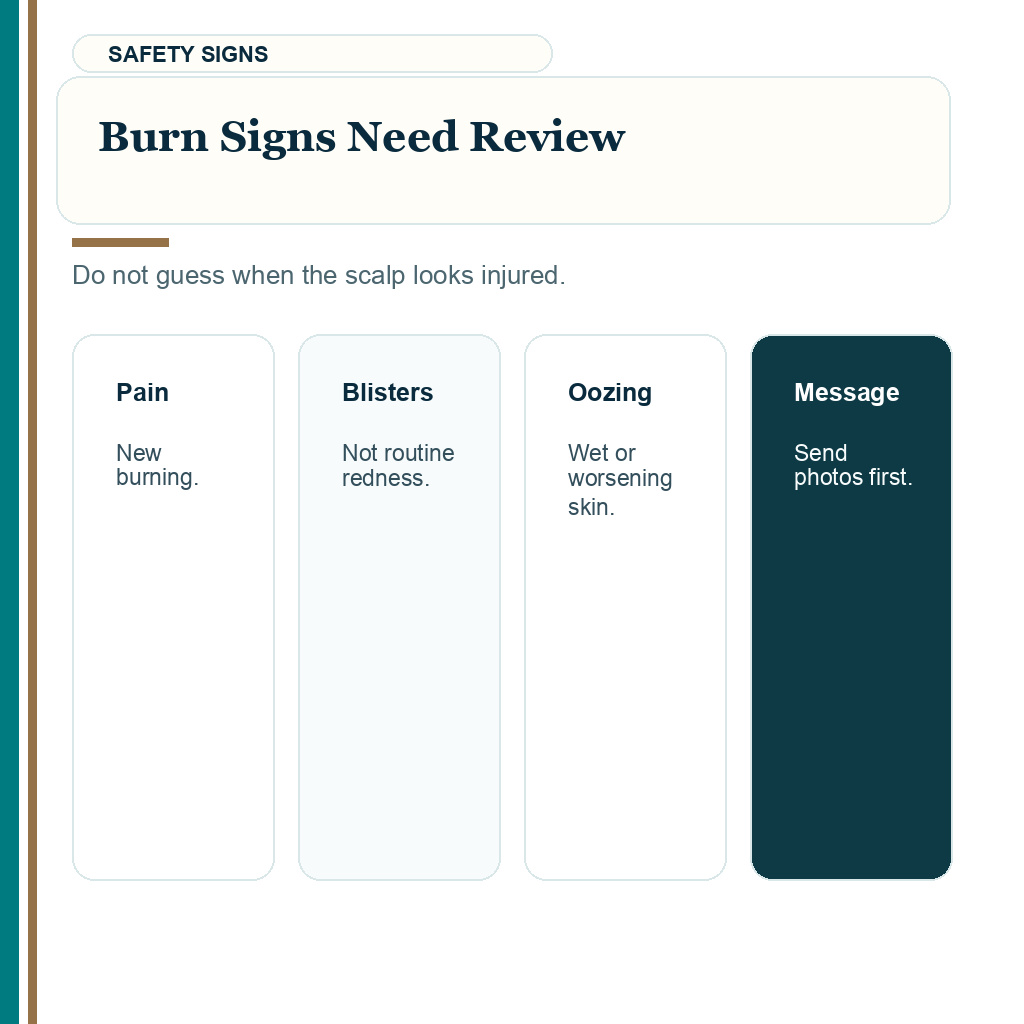
If the scalp is burned, painful, swollen, blistered, oozing, or becoming worse instead of calmer, the clinic should review it rather than guess from symptoms alone. This is not only about whether the grafts survive. The important detail is whether the skin is healing calmly enough to protect the whole result.
Most anxiety after accidental sun exposure comes from uncertainty. A careful photo review is much more helpful than searching for frightening examples and touching the scalp every few minutes to see if something changed.
Avoid strong direct sun during the early healing window
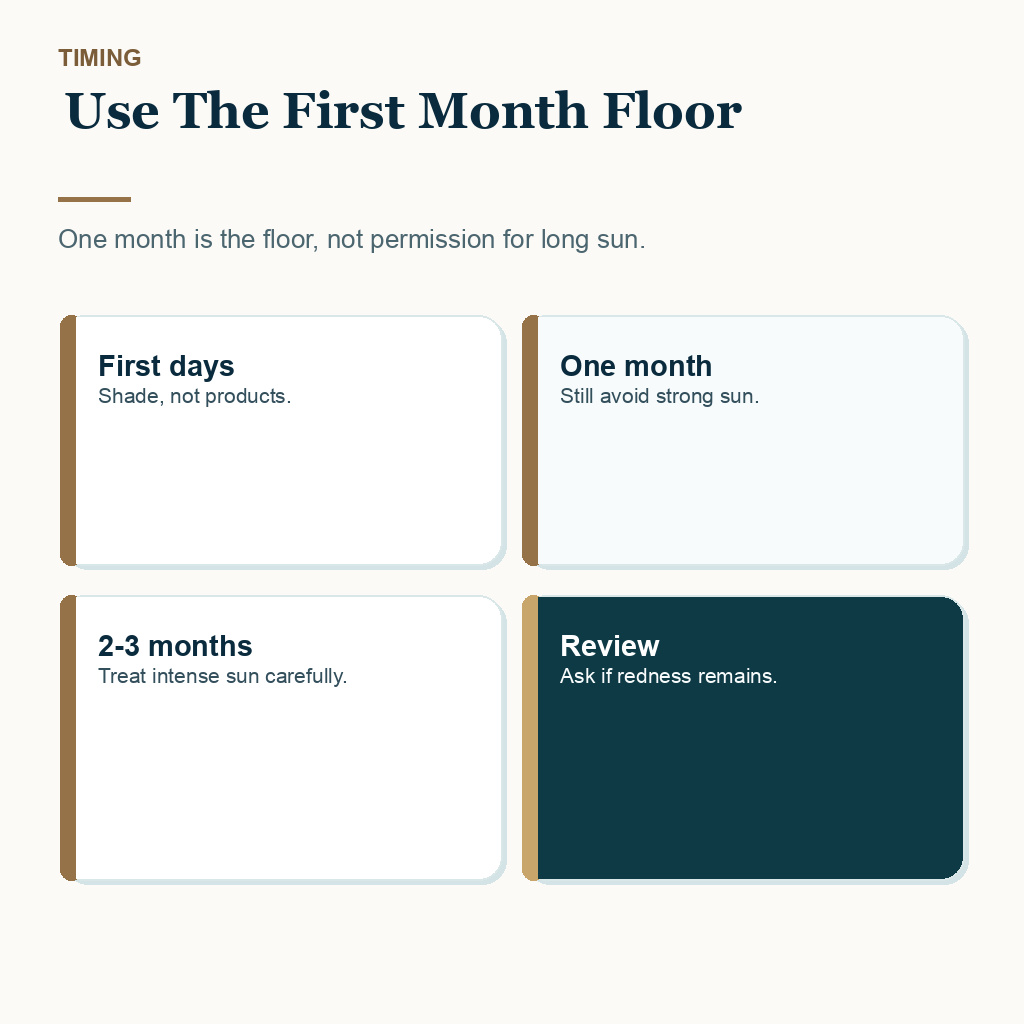
Be especially careful for at least 1 month. During that time, avoid strong direct sun, long outdoor exposure, beach days, tanning beds or deliberate tanning, and situations where the scalp becomes hot and sweaty.
After the first month, I still prefer careful planning around strong sun for about 2 to 3 months. The scalp may look calmer, but healing and skin sensitivity can still be present.
This timing is also consistent with how I think about summer surgery. A hair transplant can be done in summer, but summer requires planning. I explain the broader seasonal decisions in hair transplant in summer or winter because the operation date has to match the recovery routine.
A few minutes outside is not the same as sunbathing. Walking from a car into a building is very different from sitting outdoors for two hours, especially if the scalp becomes hot or pink afterward.
The unsafe part is usually not one small moment. The unsafe part is repeated casual exposure, especially when each exposure is dismissed as only a short time.
If you live in a very sunny place, plan your day around shade, cooler hours, and practical coverage once the scalp can tolerate it. If eye protection is part of that plan, judge glasses or sunglasses after a hair transplant by whether the frame touches the grafted temples or hairline.
Patients sometimes ask about driving with sunlight through the car window. A short drive is usually not the same as sitting outdoors, but long exposure through glass can still warm the scalp and increase discomfort. If the scalp is getting hot, change the situation instead of testing it.
For a short walk outside, choose the shortest practical route. Do not turn recovery into a sightseeing day just because the surgery itself is finished.
Cloudy weather can also mislead you. UV exposure and heat can still matter without a clear blue sky, especially if you stay outside for a long time or sit near water, sand, or bright pavement.
This matters long after the grafts have healed if the crown, mid scalp, or donor area still has thin coverage. New hair can improve shade in some zones, but it is not a medical shield. I still ask patients with exposed scalp to use sensible sun protection and to have changing marks checked instead of assuming hair coverage solves the skin question.
For the scalp itself, I do not use a single online risk number as a diagnosis. Research does connect more advanced male pattern baldness with higher rates of some scalp skin cancers, but the practical response is protection and dermatology review for changing spots, not promising that hair surgery prevents cancer.
Sunscreen timing after a hair transplant
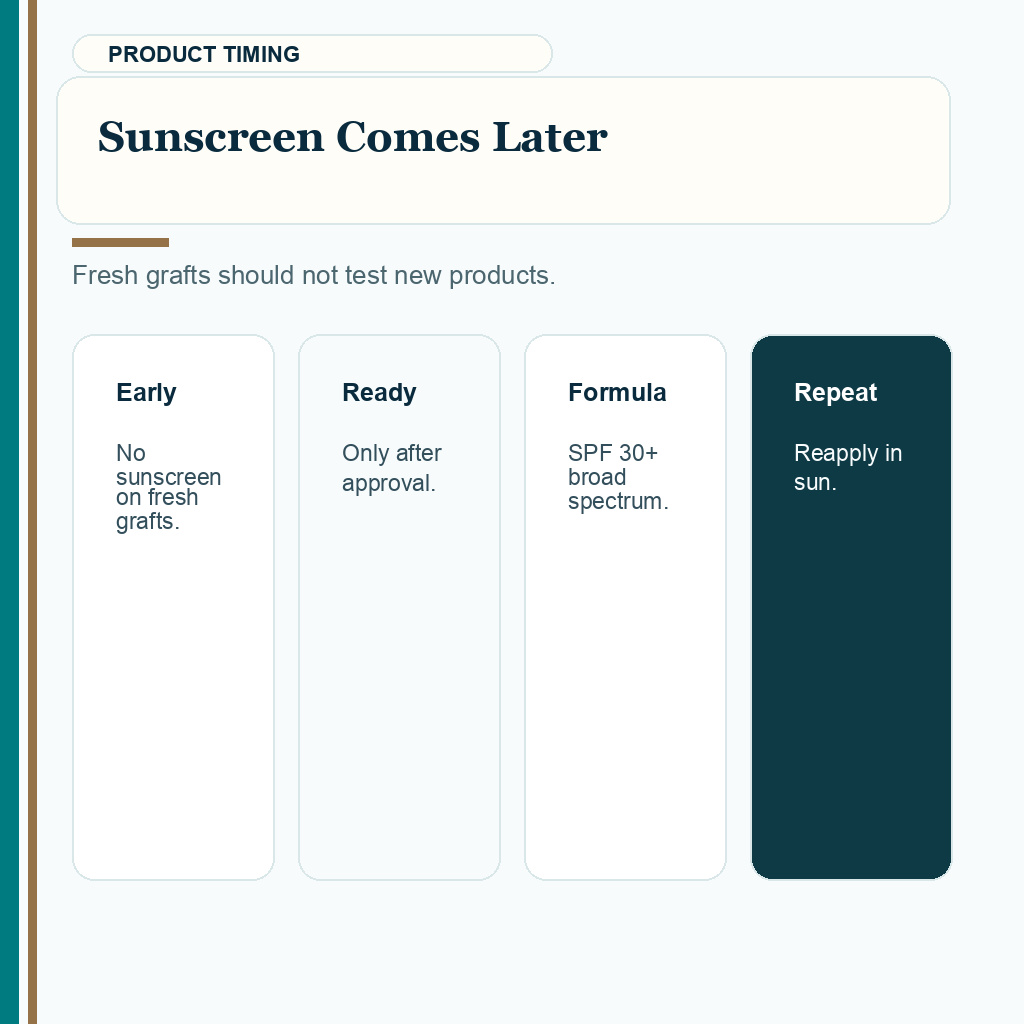
Sunscreen should not be treated as the first solution in the earliest days. In the beginning, avoid strong sun and keep products away from the fresh recipient area unless your clinic has specifically approved them.

Once the skin is healed enough and sunscreen is appropriate, the sensible standard is a broad spectrum, water resistant sunscreen with SPF 30 or higher. It should be reapplied every 2 hours outdoors and sooner after sweating or water exposure.
The exact day depends on healing. If crusts remain, the skin is open, there is irritation, or the scalp is still very sensitive, do not rush sunscreen onto the grafted area.
Avoid heavy, oily, fragranced, or irritating products early. Sunscreen is helpful only when the scalp is ready for it and the product is suitable.
If you are also dealing with redness, pimples, or scabs, first understand what is normal and what needs attention. Redness, scabs, and pimples after a hair transplant can help with that distinction.
The practical order matters. Avoid sun first. Use sunscreen later when the skin is ready. Do not use sunscreen as an excuse to sit in strong sun too early.
Think carefully about sensitivity. If a product burns, stings, creates itching, or makes redness worse, stop and ask for advice. A product that is fine for the face may not be ideal for a healing scalp.
Once sunscreen is allowed, apply it gently. Do not rub aggressively into the recipient area. Protection should protect the scalp, not become another form of trauma.
Ask before applying it when the skin may not be ready. A quick review of clear photos is better than testing a product because you feel impatient to go outside.
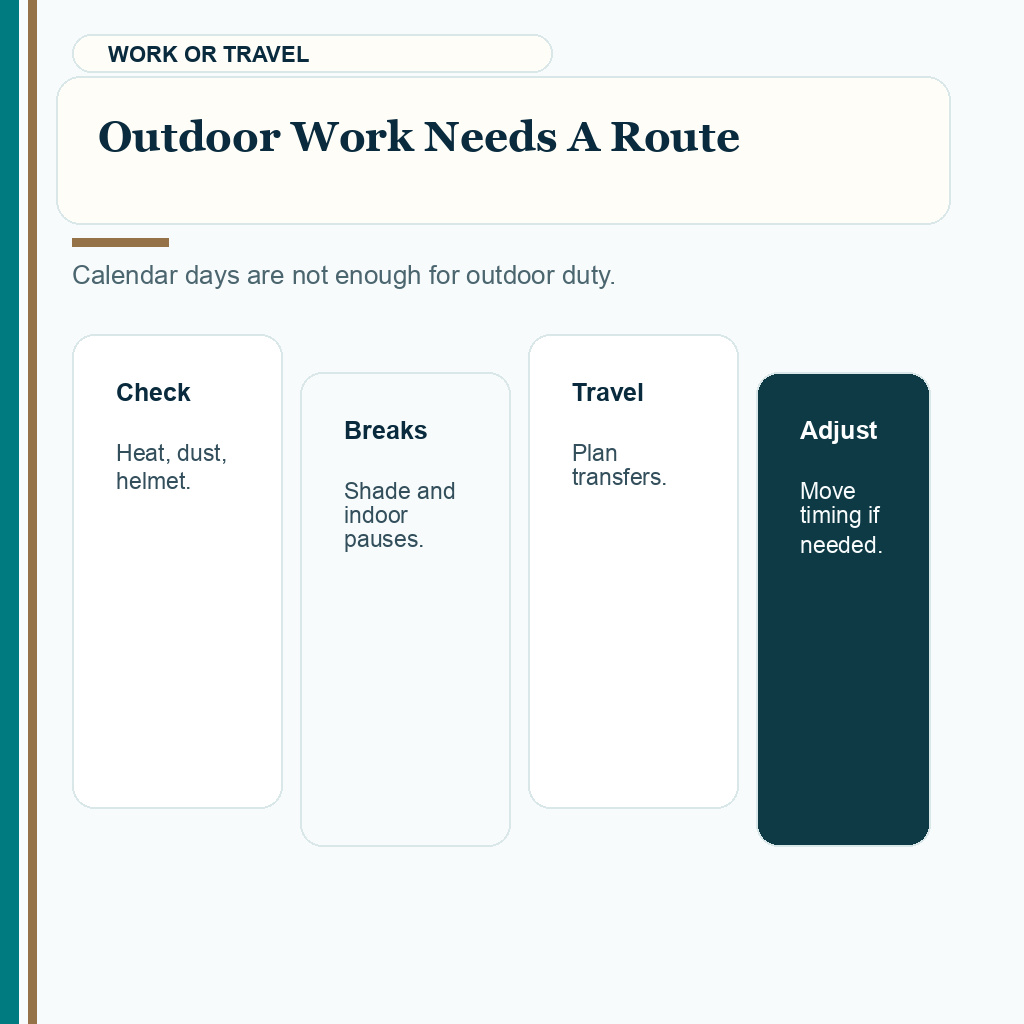
The 8 sun exposure slides below separate direct sun, the first month floor, accidental exposure, sunscreen readiness, hat fit, beach heat, outdoor work or travel, and burn warning signs. Swipe sideways, use the arrows one slide at a time, or choose a number below the image.
Hats compared with sunscreen after surgery
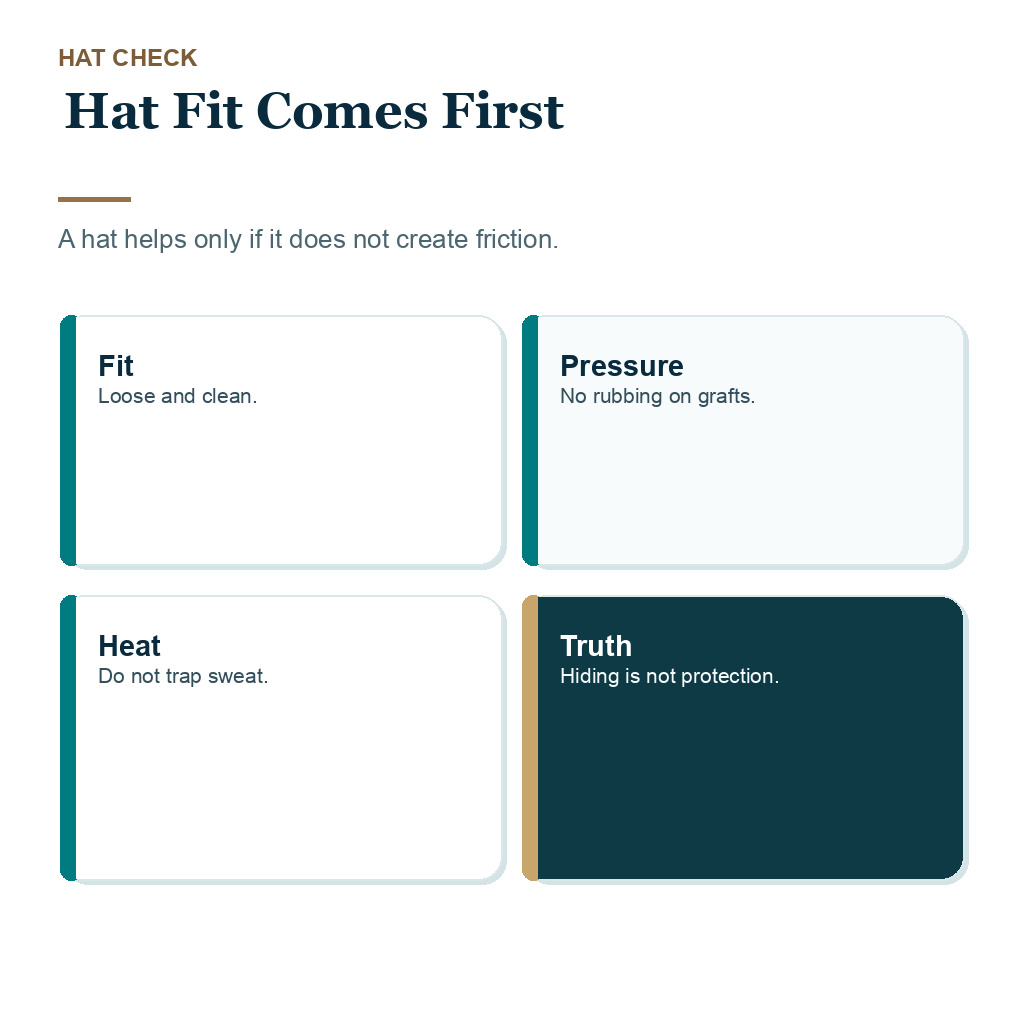
In the earliest days, the best sun protection is usually avoidance and shade. A hat may be useful later, but it should not press or rub on the recipient area too early.
Hat timing depends on fit, cleanliness, heat, pressure, and the condition of the scalp. A loose clean hat for a short period is different from a tight cap worn for hours in hot weather.
I discuss timing more specifically in wearing a hat after a hair transplant. For sun exposure, protection should not create a new source of friction.
If a hat makes the scalp hot and sweaty, it may solve one problem while creating another. If it rubs the grafted area, it is not good protection.
Some patients wear a hat to hide the surgery and then stay outside longer because they feel covered. That can be a mistake. Hiding the scalp and protecting the scalp are not the same thing. The hat should help healing, not encourage a longer day outside.
Use shade, timing, and short exposure. A hat is a tool, not permission for a long day in the sun.
The same hat can be safe or unsafe depending on timing. A loose clean hat for a short errand after the early fragile period is different from a tight cap worn under summer heat all afternoon.
If you remove the hat and see pressure marks, sweat, or irritation, that is important information. The scalp is telling you that the protection method may be too much or too early.
A hat is not simply safer than sunscreen. In reality, both can be wrong at the wrong time. Early avoidance is often the cleanest protection.
Beach exposure after a hair transplant
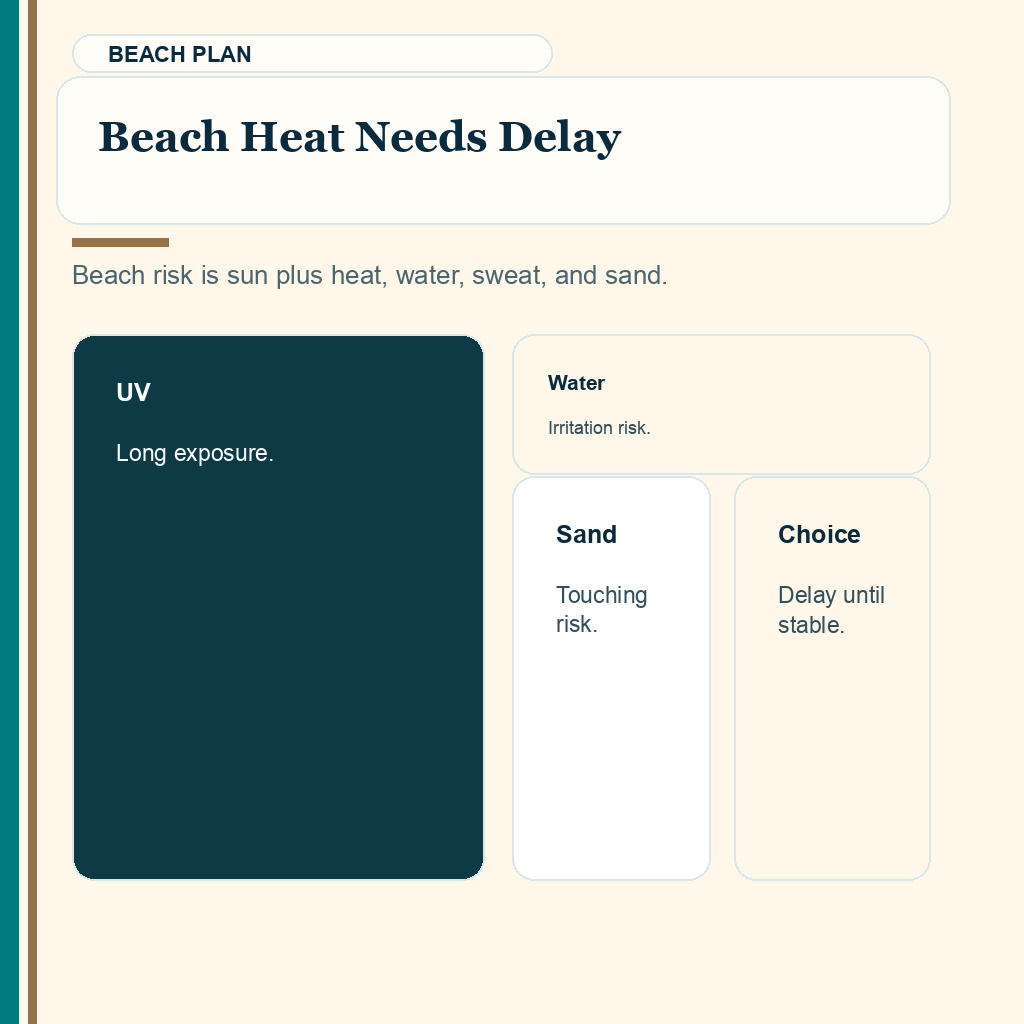
Beach exposure should wait in the early recovery period. The beach is not only sun. It usually includes heat, sweating, saltwater, towels, sand, wind, sunscreen, hats, swimming, and social activity.

For swimming pools, the sea, hot tubs, saunas and steam rooms, patients are usually guided to wait 3 months. The same timing logic is covered in swimming after a hair transplant.
Even if you promise not to swim, a beach day can still create problems. You may sweat, touch the scalp, adjust a hat repeatedly, lie on a towel, or stay under strong sunlight longer than planned.
Patients often ask because they want to combine surgery with a vacation. The desire is understandable, especially when traveling internationally. But surgery recovery is not a beach holiday.
If you want a vacation, choose quiet indoor plans, gentle walking, and shaded meals after the early period. Do not build the trip around sun exposure.
One person may get away with a careless beach day. Another may worsen redness and irritation. Surgery should not be planned around luck.
This matters for patients who come to Istanbul and want to turn the trip into a holiday. I love that patients enjoy the city, but after surgery the scalp has priority. A quiet recovery plan is better than trying to fit in every outdoor activity.
Outside time should be short and shaded, with midday heat avoided, and it should not be combined with sweat, alcohol, swimming, or poor sleep. Recovery becomes harder when several small stresses happen together.
It is easier to avoid the beach than to go there and promise not to behave like someone at the beach. Recovery plans should be realistic.
Outdoor work and travel planning
If you must be outdoors, reduce exposure. Choose shade, shorter periods, cooler hours, loose protection when appropriate, and avoid sweating as much as possible.
Work and travel planning should be realistic before surgery. If your job requires outdoor labor under strong sun, you may need more time off or a different surgery date.
Time off work after a hair transplant depends on the physical environment, not only the number of days away from work.
Travel can create similar problems. Airports, walking outdoors, delayed transfers, hats, and fatigue can all make you less careful. The planning in flying after a hair transplant matters because rushed travel often leads to more sun, sweat, and rubbing than patients expect.
If you live in a sunny climate, do not panic. You can recover safely, but you need a plan. A person who plans shade and timing usually does much better than someone who improvises after surgery.
The country being sunny is only part of the planning. The practical detail is whether your real routine allows you to protect the scalp.
Outdoor work is one of the clearest examples. An office job can be controlled more easily than work on construction sites, roads, gardens, boats, or outdoor events.
If your work cannot be modified, the responsible choice may be more recovery time. Returning too early just because the scalp is hidden under a hat does not solve heat, sweat, or friction.
Sun, redness, and pigmentation
Strong sun can make redness look worse and can sometimes make pigmentation more noticeable. This is especially relevant if your skin is already reactive or fair.
Redness after a transplant is not always a complication. It can be part of healing. But sun exposure can intensify the appearance and make you more anxious.
Once anxiety rises, you may take more photos, touch the scalp, wash too aggressively, or apply products to fix the redness. That is how one avoidable problem can lead to several others.
Exercise and sun often overlap. You go outside, sweat, become hot, and then try to clean the scalp quickly. Exercise after a hair transplant needs respect for heat and sweating.
Alcohol can also make outdoor behavior less careful. If a sunny social event includes drinking, long hours outside, and poor sleep, the aftercare risk becomes higher. That risk is part of the reason I pay close attention to alcohol after a hair transplant.
Sun protection is not only about the skin. It is also about keeping recovery controlled enough that you can follow aftercare properly.
I also see that strong sun makes patients inspect the result under the worst possible conditions. Harsh light can expose every thin area and every red patch. That can create fear long before the result is ready to judge.
Early recovery should not be judged under strong sunlight, wet hair, and close camera angles. Those conditions make even normal healing look more dramatic.
Planning surgery in a sunny climate
If you live somewhere sunny, plan before surgery. Think about work, commuting, outdoor hobbies, hats, sunscreen timing, and whether you can avoid strong sun for at least 1 month.
If you cannot avoid outdoor exposure, tell your surgeon before committing to a surgery date. It may affect timing, travel dates, and aftercare instructions.
Summer surgery is not wrong by itself, but summer behavior needs respect. Heat, sweat, sun, and social plans can make recovery harder if you treat the operation casually.
A person who understands the rules can recover well in a sunny country. Someone who treats surgery like a small grooming appointment may struggle even in mild weather.
Good planning is part of good surgery. You should know what life will look like after the operation, not only what the result may look like after 12 to 18 months.
Before surgery, discuss practical questions about work, travel, daily sun exposure, whether you can stay indoors, and whether beach plans can wait. These details matter.
If you cannot avoid sun because of your job or lifestyle, explain that before surgery. Then timing can be discussed instead of pretending aftercare will be easy.
The surgery date should fit your real life. It should not be chosen only because there is an available slot or a flight discount.
Sometimes a quieter season or a quieter work period is the better choice. A better date can make recovery easier without changing the operation itself.
Sun exposure needs healed skin first
Protect the scalp from strong direct sun for at least 1 month, keep respecting strong sun for 2 to 3 months, use sunscreen only when the skin is ready, and avoid beach behavior early.
- When the skin is fresh, crusted, or open, choose shade and avoid direct sun. Do not use sunscreen on the recipient area unless your clinic has specifically cleared it.
- When the skin is closed and the clinic has cleared product use, use sunscreen after hair transplant on exposed skin, but keep exposure short and reapply when outdoors.
- For beach days or outdoor work, plan sun, sweat, headwear, washing, and timing together instead of approving one item in isolation.
- For long term exposed scalp, protect the crown, part line, temples, ears, and neck, and check changing spots instead of hiding them with products.
If you need sunscreen later, use a broad spectrum, water resistant sunscreen with SPF 30 or higher, and reapply every 2 hours outdoors. But remember that sunscreen is not permission to overexpose healing skin or spend long hours under direct sun.
If you need a hat, make sure it is loose, clean, and not rubbing the recipient area. For outdoor time, choose shade and cooler hours.
The same careful judgment that protects a planned result should continue after surgery. Sun exposure looks minor until it creates unnecessary redness, irritation, and worry.
A clear timeline keeps recovery safer than improvising day by day.
That timeline protects more than grafts. It protects comfort, skin color, donor healing, and the steady mindset needed to wait for growth.
A transplant is a long result, not a short event. Sun protection is one small part of respecting that long result.
If you protect the scalp well during the early months, you remove one avoidable reason for redness, irritation, and fear. That is worth the temporary inconvenience.
Sun avoidance is temporary. Protection matters most while the scalp is still in the healing period.
After that, outdoor life can return with sensible habits, better timing, and less stress.
Read this review excerpt
First wash completed and visual instructions given to my daughter.