


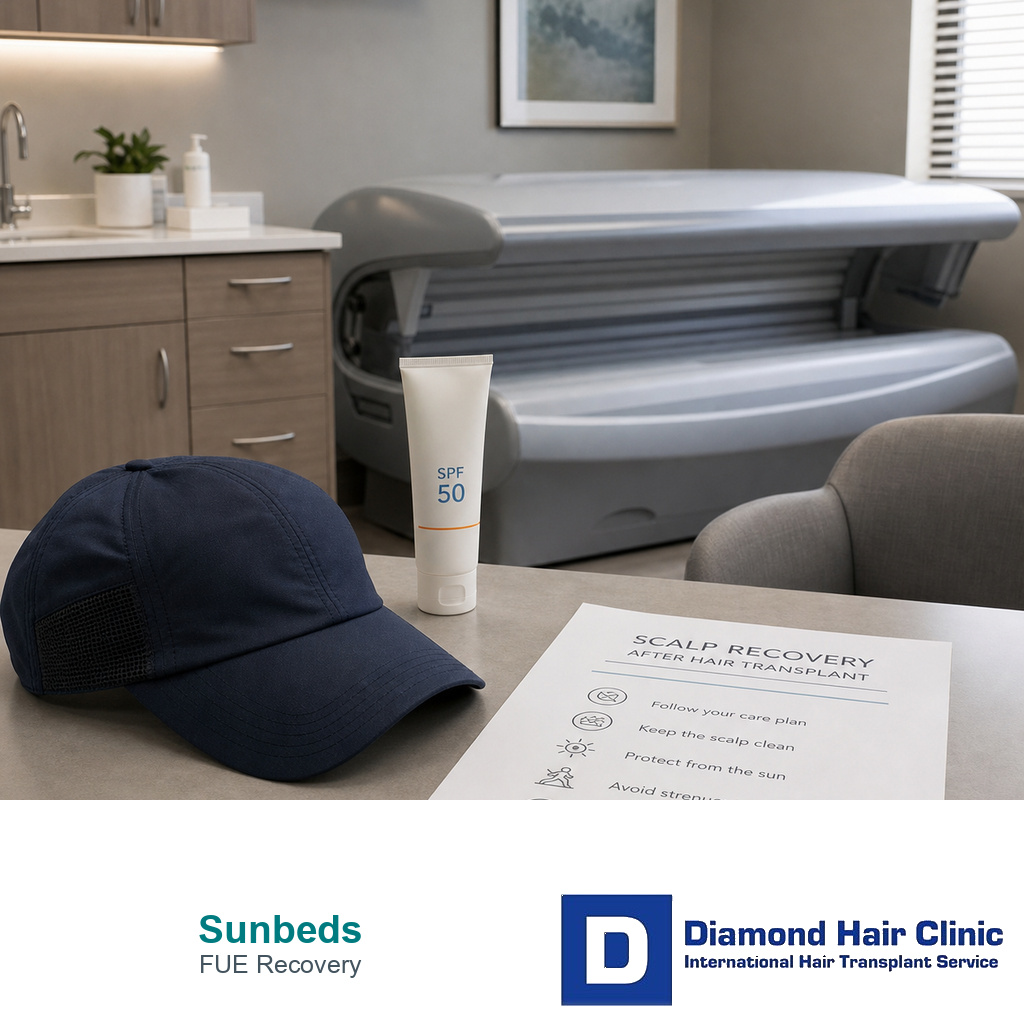
Sunbed Exposure and Healing Scalp Safety
Not in the first month after a hair transplant, and not while the recipient or donor area is red, scabbed, tender, itchy, flaky, shiny, burned, or recently healed. After that, I judge the timing by the skin in front of me, not by the calendar alone. A closed, quiet scalp at 3 months is different from a pink, sensitive scalp at 3 months.
A cosmetic reason, such as matching a pale scalp with a tanned face before a holiday, is still weaker than waiting for calm skin.
I do not think of this mainly as instant graft destruction. The bigger issue is artificial UV on healing skin. It can worsen redness, dryness, irritation, sweating, pigment change, and the urge to rub or scratch. A real UV tanning bed is not the same as ordinary indoor light, shade, or medical red light therapy.
Do not treat a tanning bed as a recovery shortcut. It is an elective exposure that can wait until the scalp is closed, quiet, and no longer reacting. It is also not a vitamin D treatment for recovery. If vitamin D is a concern, handle that through ordinary medical advice or blood testing, not through a UV session on healing scalp skin.
A tanning bed is not judged by whether the grafts feel anchored, because heat, dryness, pigment change, and the urge to scratch still belong to the skin recovery decision.
Tanning beds are different from normal light
Tanning equipment is designed to expose the skin to ultraviolet radiation. That is different from sitting in a bright room, taking a short shaded walk, or standing near a window. The dose can be concentrated, the scalp can heat up, and the exposure is deliberate rather than accidental. The long term skin cancer and photoaging risks are separate from graft survival, but they still matter when deciding whether the session is worth it.
After FUE, the recipient area has many small sites where grafts were placed. The donor area has extraction points. Even when the grafts are becoming secure, the skin surface still has to recover from inflammation, crusting, dryness, and sensitivity. I handle sun exposure after a hair transplant cautiously for the same reason.
I look at graft security and skin tolerance separately. The grafts may be anchored enough for normal life to return gradually while the surface skin is still too reactive for artificial UV stress. Grafts becoming secure after a hair transplant is not proof that the scalp is ready for sunbed exposure.
Complete sunbed avoidance period
Avoid tanning beds while there are scabs, open areas, oozing, fresh bleeding, strong redness, crusts, pimples, swelling, heat, pain, shiny skin, peeling, or clear sensitivity. I also avoid them when you are still using frequent spray, washing very gently, or sending photos because the scalp looks irritated.
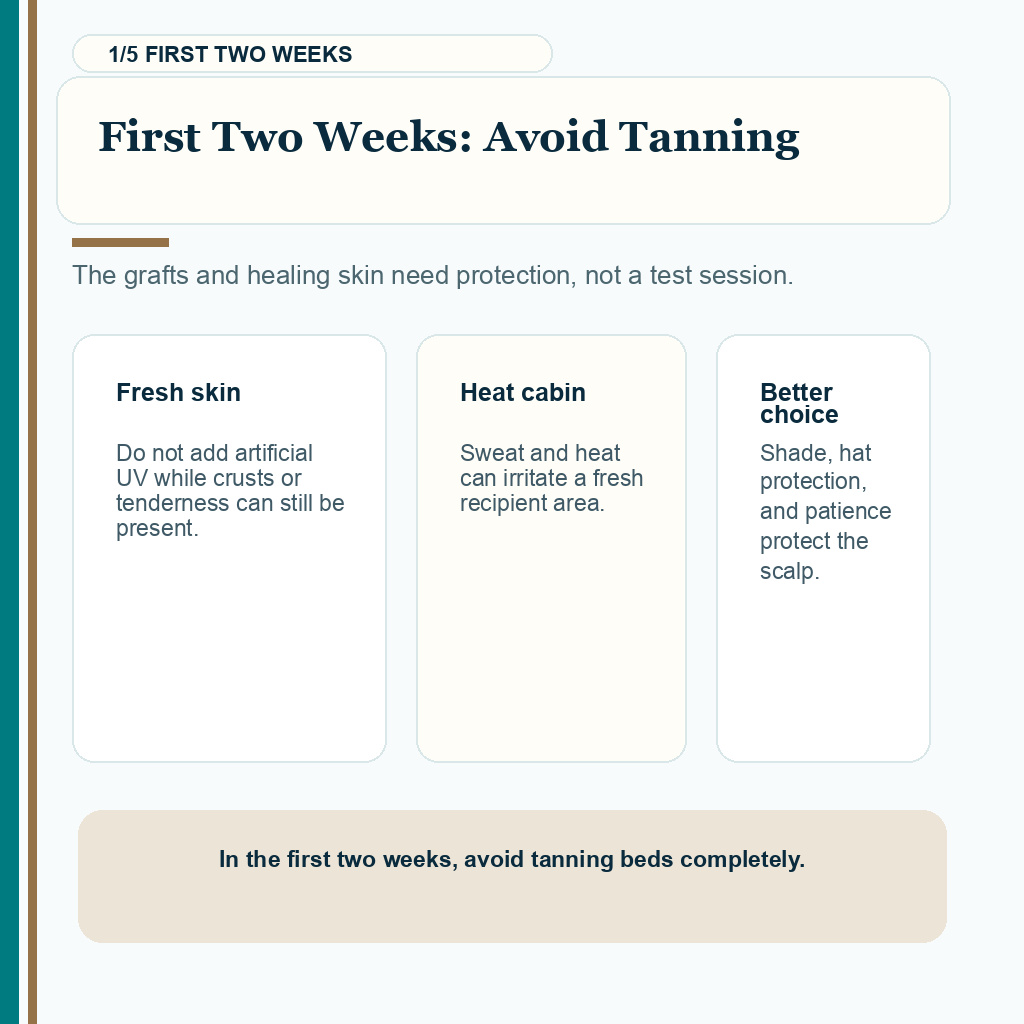
During the first 10 to 14 days, I keep tanning beds completely out of the plan. The scalp is still in a protection phase. Strong heat, sweat, friction, and UV exposure add variables that do not help the grafts or the skin. If the area is still crusted after that, the timing should stay conservative even if the calendar has moved forward.
During the first month, tanning beds, beach sun, long outdoor sun, and deliberate tanning plans should stay out of the recovery plan. If you are already reading about sunburned scalp and hair transplant timing, treat a tanning bed as the same category of risk, not as a safer indoor version.
Answer changes after the first month
After the first month, the discussion becomes more individual. Some scalps look closed and settled. Others remain pink, dry, flaky, itchy, or reactive. If the skin is still changing, it is safer to wait before deliberate exposure. A short wait is usually easier than managing redness or pigmentation that lasts longer than expected.
By 2 to 3 months, many people can return to more normal outdoor routines with sensible protection. That does not mean a tanning bed becomes a good idea. It means the scalp may tolerate ordinary daily exposure better. Artificial UV remains a stronger, optional exposure with no recovery benefit.
The skin decides before the tan does. If the scalp is pink, sore, peeling, itchy, shiny, or easily irritated, delay the sunbed. If the donor area is also sensitive, do not ignore it just because the recipient area looks calmer.
Tanning beds versus normal sun exposure
For a healing transplanted scalp, a tanning bed is not safer than outdoor sun. It may feel controlled because it is indoors and timed, but the point of the device is still UV exposure. Some beds use more UVA, some include UVB, and most people do not know the exact output, lamp age, maintenance, or true dose.
Outdoor sun can be managed with shade, timing, a loose hat, and short exposure. A tanning bed places the scalp in the exposure zone on purpose. Even if the session is brief, the scalp is being asked to tolerate something it does not need for recovery.
If you plan to tan only the body and fully cover the scalp, the discussion is slightly different, but I still check the details. No UV should reach the recipient or donor area, and heat, sweat, friction, tanning products, and removing the cover still matter. A towel that slips, a tight cap that rubs, or a sweaty cover can turn a session meant only for the body into a scalp contact problem. Tanning only the body is lower risk for the grafts only when the healing scalp is truly protected and already settled.
There is also a behavioral risk. Once tanning starts early, it becomes easier to add beach days, long sun exposure, tanning oils, or repeated sessions. That pattern is harder on healing skin than one accidental short exposure.
Red light beds are a separate question
Some salons advertise beds that combine red light with tanning. The name can confuse people after FUE. Medical red light therapy and a UV tanning bed are not the same decision. A true red light device does not aim to tan the skin. A tanning bed does.
If the device emits UV, I treat it as a tanning bed even if the marketing mentions red light. If it is a non UV red light panel or cap, then the timing depends on contact, heat, hygiene, pressure, and whether the scalp is closed. Red light therapy after a hair transplant and laser cap timing after a hair transplant are different conversations from UV tanning.
The device needs a clear light type before it goes near a healing scalp. If the answer is unclear, if the bed includes UV, or if the staff cannot separate red light from tanning lamps, keep it out of recovery. A salon label is not enough protection for recently treated skin.

A UV tanning bed and a non UV red light device are different decisions after FUE.
Sunscreen does not make a sunbed safe
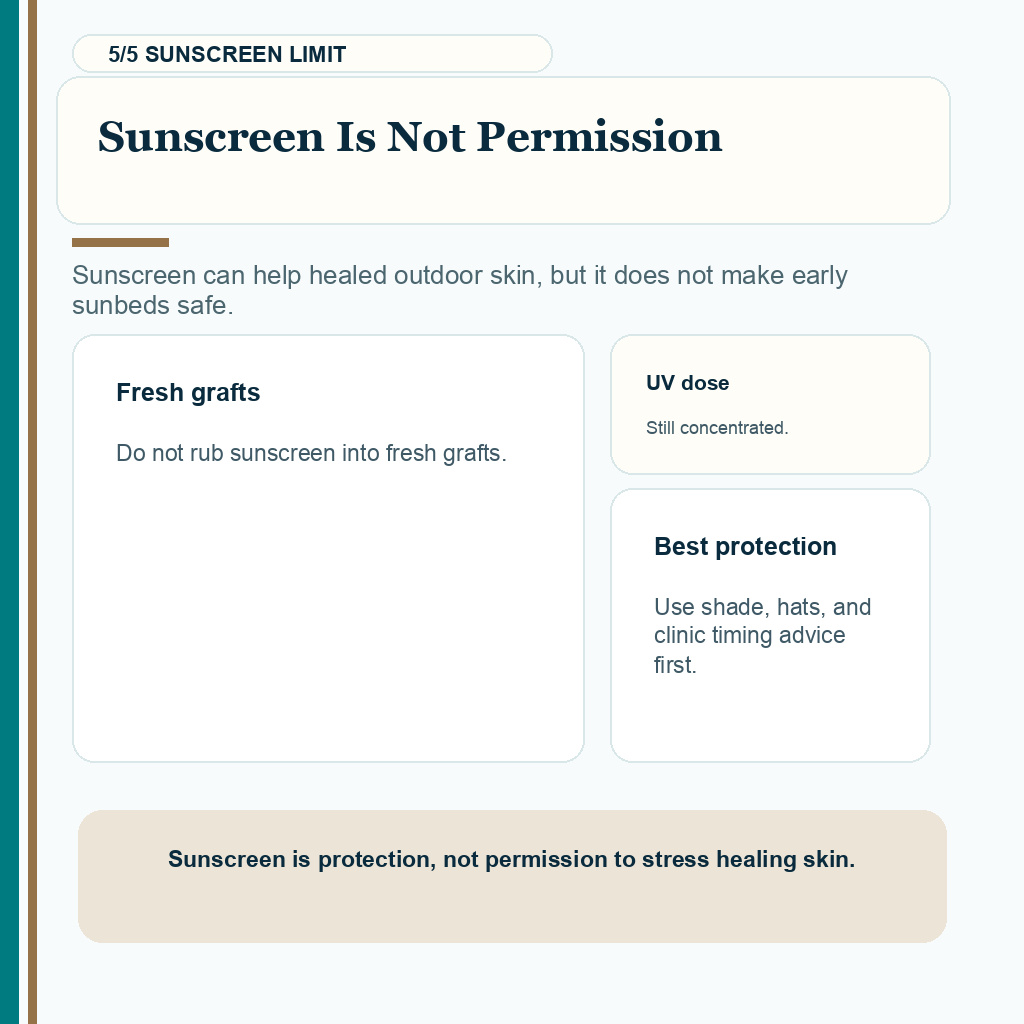
Sunscreen does not turn an early tanning bed session into a safe recovery step. In the early days, sunscreen should not be rubbed into fresh grafts. Later, sunscreen can protect healed skin outdoors, but it does not make artificial UV desirable for a recently transplanted scalp.
Once the skin is closed and your surgeon approves product contact, sunscreen on the transplanted scalp can be useful for outdoor exposure. The product should be broad spectrum, tolerated by the skin, and removable without scrubbing. Tanning oils, bronzers, alcohol based sprays, and products that need hard washing are poor choices on or near the recipient and donor areas during recovery.
A sunless self tanning product is not the same as a UV tanning bed, but it is still a product contact question. If it needs rubbing, has fragrance or alcohol, stains crusts, hides redness, or needs aggressive washing later, it should stay away from the healing scalp.
A loose hat is often more useful than applying products to a sensitive scalp. Wearing a hat after a hair transplant should still be judged by timing, fit, pressure, and whether the fabric rubs the grafts or donor area.
Redness or itching means the scalp is not ready
Redness and itching are information from the skin. Mild pinkness can be part of normal recovery, especially in lighter skin types. Itching can come from dryness, crusts, healing, product irritation, sweat, or inflammation. A tanning session can make both worse.
If the scalp has persistent redness, scabs, pimples, or new irritation, read the signs before adding artificial UV. Redness, scabs, and pimples after a hair transplant need to be separated from infection, folliculitis, product reaction, sunburn, or delayed healing. Itching after a hair transplant also becomes more difficult if heat and sweat are added too early.
Do not tan over a warning sign. If the skin is trying to settle, let it settle first. Covering redness with a tan can hide the clinical picture and delay a useful photo review.

Before artificial UV exposure, the scalp should be closed, calm, and free from active redness, scabs, tenderness, or itching flare.
Tanning and graft recovery
Once grafts are properly anchored, normal life gradually returns. A single late exposure does not usually mean the follicles are gone. The stronger concern is the healing skin around them. Burn, pigment change, prolonged redness, dryness, inflammation, and scratching can all make recovery more difficult.
The transplanted hair shaft may shed during the early months regardless of tanning. Shedding does not prove that a tanning bed damaged the grafts. At the same time, it is not sensible to stress healing skin just to test what it can tolerate.
For darker skin types, a burn or irritation can leave pigmentation changes. For lighter skin types, redness can last longer and be more visible. For everyone, artificial UV adds risk without adding anything necessary to graft growth.
Already used a tanning bed
Do not panic. Stop further sessions and look at the scalp in normal light. Check for pain, heat, increasing redness, swelling, blistering, peeling, open areas, drainage, bleeding, or a sudden change in comfort. Take clear photos from the front, both sides, top, donor area, and close image views of any suspicious spot.
If the scalp feels normal and looks unchanged, the clinic may simply advise observation and strict UV avoidance. If there is burn, blistering, spreading redness, significant pain, or fluid, ask for clinic review promptly. If the symptoms are severe or you feel unwell, local medical review may be needed.
Do not try to treat the scalp by adding many products. Aftersun gels, oils, perfumes, heavy moisturizers, numbing sprays, steroid creams, or strong scrubbing can irritate a healing recipient area. Move out of heat, avoid more exposure, take clear photos, and keep the message to the clinic factual. Include the date of surgery, date of tanning bed exposure, session length, device type if known, sunscreen or cap used, symptoms, and photos.

If a tanning bed was used during recovery, stop further exposure and send clear scalp photos if redness, pain, blistering, fluid, or swelling appears.
Vacation tanning after FUE changes the answer
Vacation creates the same pressure in a different form. You may want a tanning bed before the beach, a sunbed at the hotel, or a quick session before a wedding or party. That is still optional UV exposure on a scalp that may be healing.
If you are trying to look more even for a vacation, keep the scalp out of the cosmetic experiment. A hat, towel, or sunscreen can shift, rub, or hide redness, and a tanning booth still adds heat and artificial UV. Let the skin settle before making color the goal.
Beach timing after a hair transplant involves sun, sweat, saltwater, sand, sunscreen, and swimming. A tanning bed removes saltwater and sand, but it does not remove UV. If your holiday is close to the transplant, plan shade and a loose hat instead of planning a tan.
A base tan is not real protection for a healing transplanted scalp. It is still UV injury to the skin, only spread out before the trip. If a holiday is close enough that tanning feels urgent, it is usually close enough that the scalp still deserves protection.
Sweat also matters. A hot tanning cabin can trigger sweating, and sweating after a hair transplant is more relevant when the scalp is still fresh, itchy, or crusted. A quiet scalp is more important than a holiday photo during recovery.
Tanning bed timing framework
For the first 2 weeks, keep tanning beds out completely. The grafts and skin need protection. In weeks 3 to 4, deliberate tanning should still wait, because the scalp may look better before it is truly ready for UV stress.
From 1 to 3 months, I still prefer caution. Outdoor life can usually expand gradually, but tanning beds remain unnecessary. If the scalp is red, itchy, dry, peeling, shiny, or sensitive, wait. If you have a history of abnormal pigmentation, burn easily, or use medicines that increase photosensitivity, the threshold to avoid artificial UV is even lower.
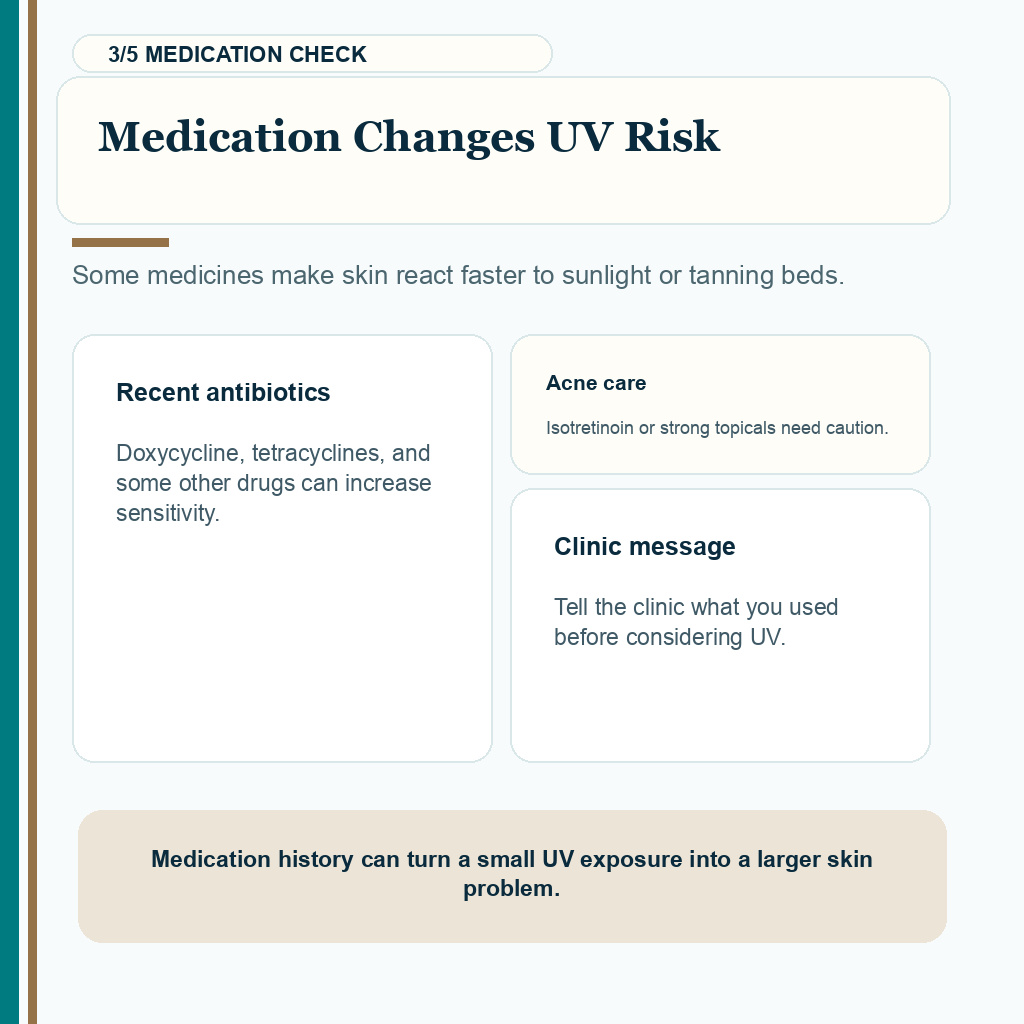
Tell the clinic if you recently used doxycycline, tetracycline, fluoroquinolone antibiotics, isotretinoin, strong acne treatments, certain diuretics, St. John’s wort, or any medicine that has made you burn or react to sunlight before. This does not mean every medication blocks normal outdoor life, but it makes artificial UV exposure a worse tradeoff during recovery.
After 3 to 6 months, the decision depends on skin calmness, medical history, and how much risk you are willing to accept. Shade, hat protection, and gradual outdoor exposure are still safer choices than a tanning bed. Later than 6 months, a fully healed scalp may tolerate more normal life, but skin cancer risk from tanning beds remains a separate health issue.
These 5 slides show why tanning beds and healing scalp skin are a poor mix until redness, sensitivity, and crusting have settled. Swipe sideways, use the arrows, or choose a number below the image.


Tanning can wait longer than healing skin can
A tanning bed is not urgent after a hair transplant. If the scalp is still red, tender, itchy, scabbed, recently burned, or sensitive to medicines or supplements, artificial UV should wait.
Even after the skin closes, the safer question is whether the exposure adds anything worth the risk. Shade, loose coverage, and better timing usually reduce avoidable risk with less skin stress.
The transplant will take months to mature. A tanning session can wait until the scalp no longer needs special protection.
Read this review excerpt
First wash completed and visual instructions given to my daughter.