


Laser Caps Should Wait Until the Scalp Is Calm
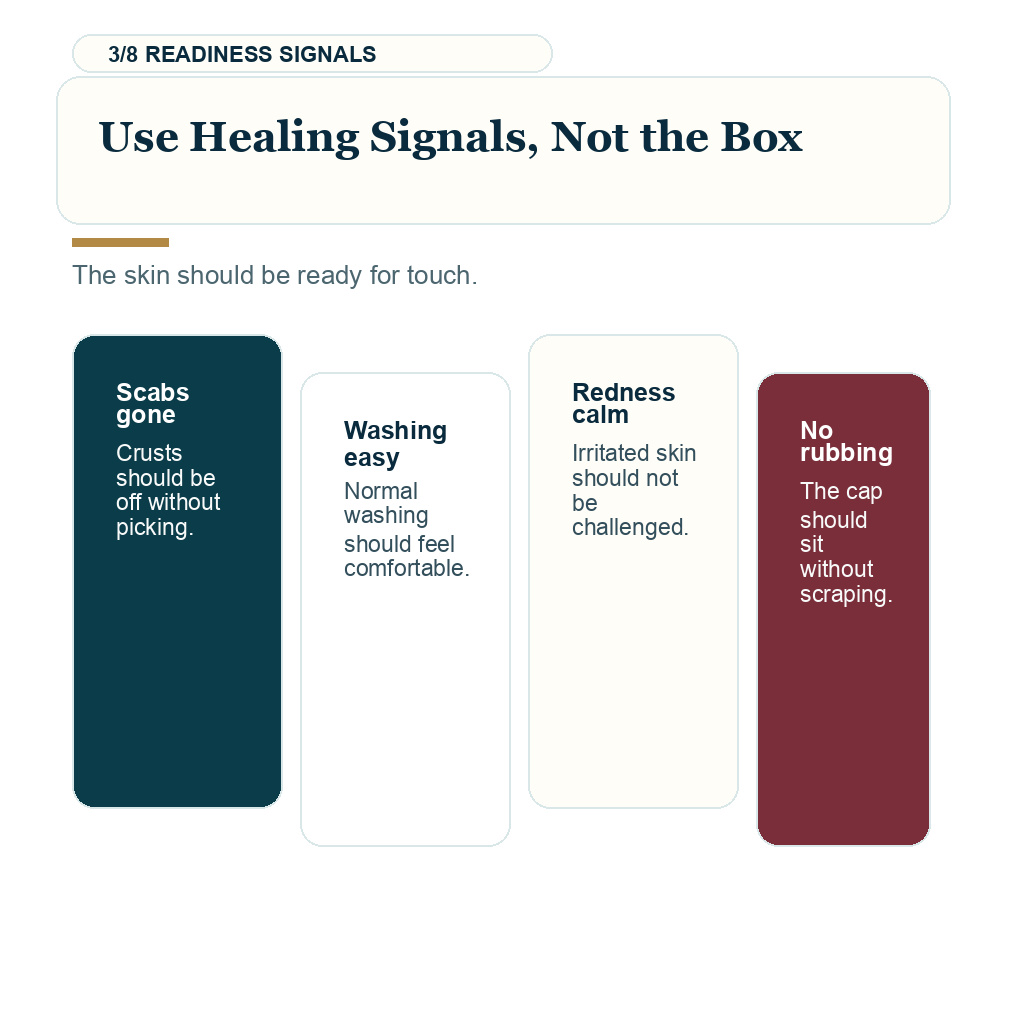
Do not put a home laser cap on fresh grafts during the first 10 to 14 days after a hair transplant unless your surgeon has specifically cleared that exact device and timing. I discuss a home cap only after the scabs are gone, the skin is closed, washing is comfortable, and the cap does not create pressure, heat, or rubbing on the recipient area. For many uncomplicated cases, that means the conversation starts around 2 to 4 weeks, not during the first healing days.
Low level light is not the only issue. The home device has to sit on healing skin. A laser cap may have a role later when androgenetic hair loss is still active, especially for native hair support. A device may be cleared or marketed for pattern hair loss, but that is not proof that it protects fresh grafts, speeds up every transplant, or rescues a weak operation. It belongs after the basics of hair transplant aftercare, not before them.
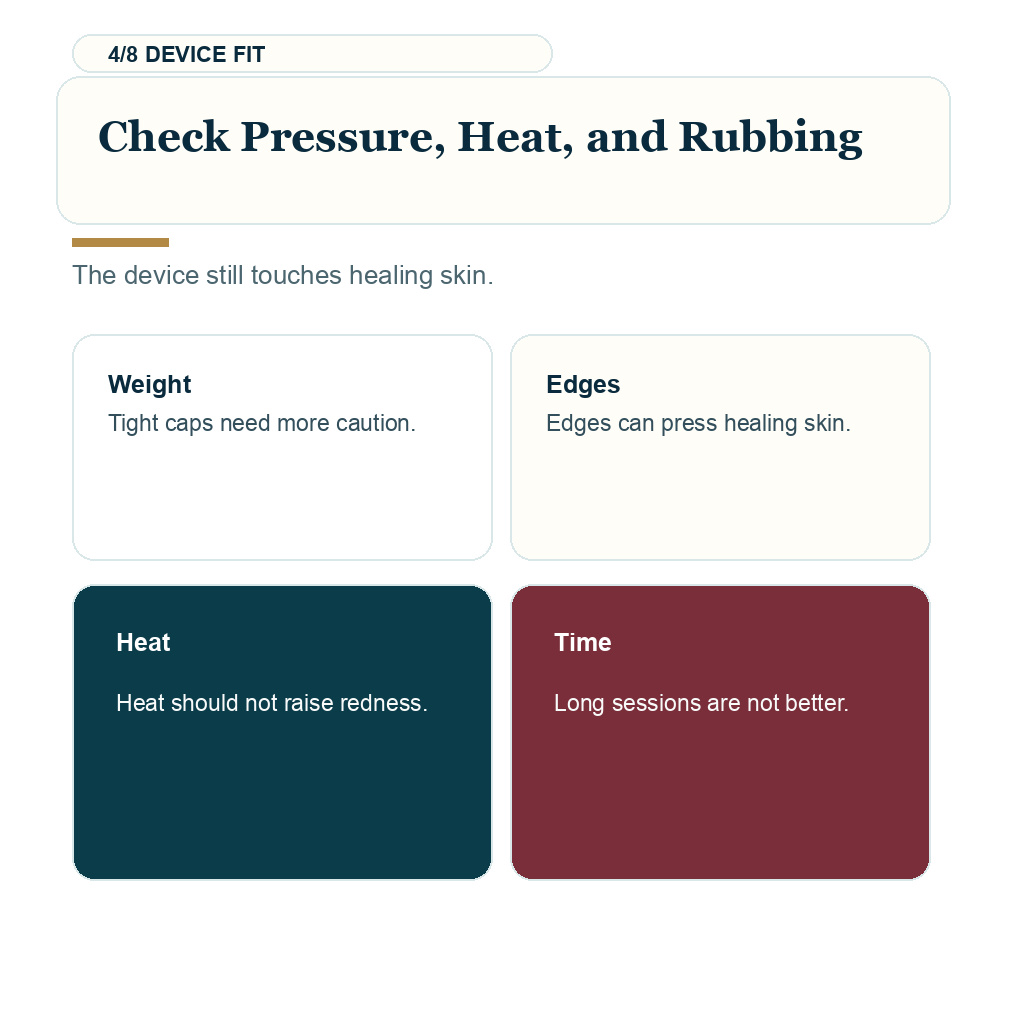
Before restarting a laser cap, check the contact points, pressure, heat, and cleaning routine. A device that feels light in your hands can still rub healing skin when it is worn regularly. After a short fit check, the cap should not leave pressure marks or make the scalp feel warmer.
Clean the inside of the cap before it returns to the scalp. Dust, sweat, and old product residue matter because the device touches the same skin you are trying not to irritate.
Also separate FDA cleared or CE marked device language from sales claims. Clearance for pattern hair loss does not mean the same device has been tested on fresh transplant wounds, scabs, or early graft sites. If the company promises faster transplant growth, ask for evidence specific to transplant recovery rather than accepting the marketing sentence.
Timing a home laser cap safely
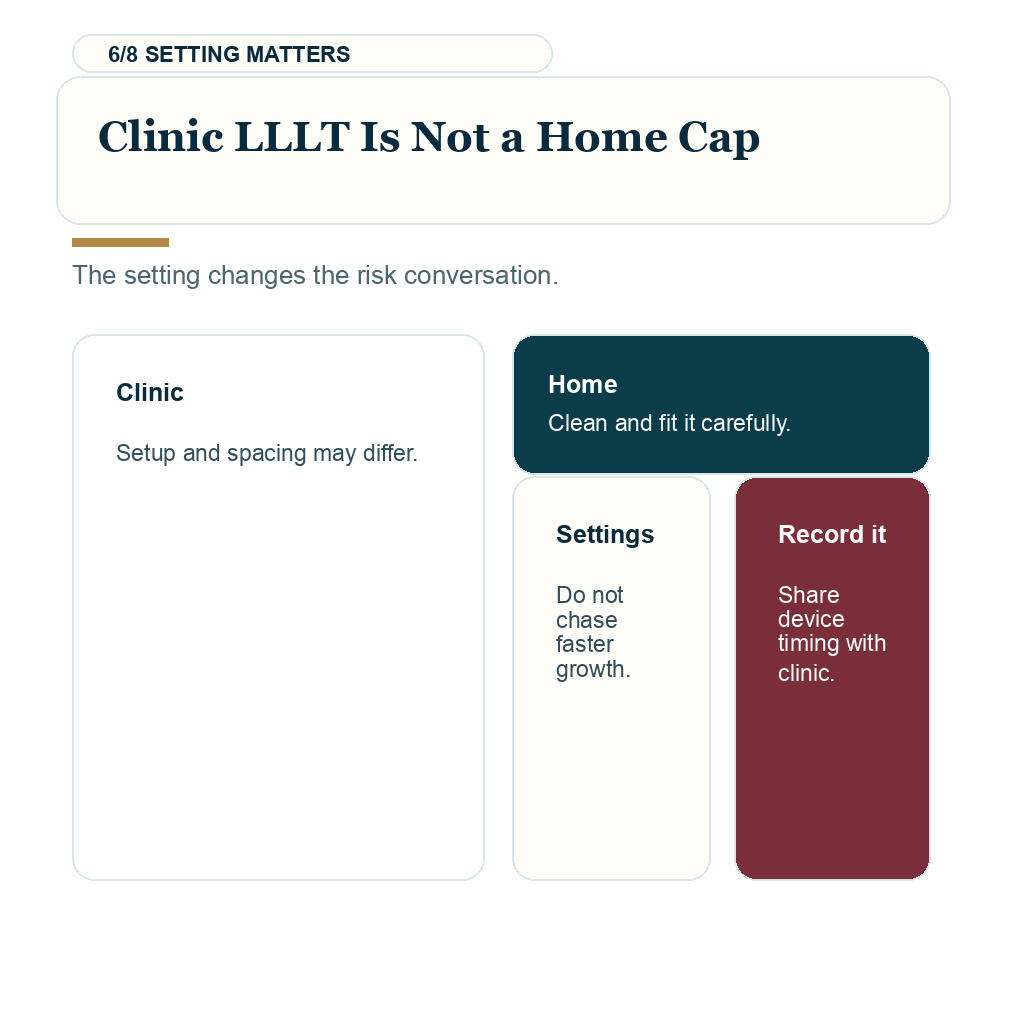
Supervised light therapy in a clinic is different from a home cap. In a clinic, the team can position the device and see the scalp. A home cap sits on the head, can shift, can trap warmth, and may be used repeatedly while no one is checking the skin.
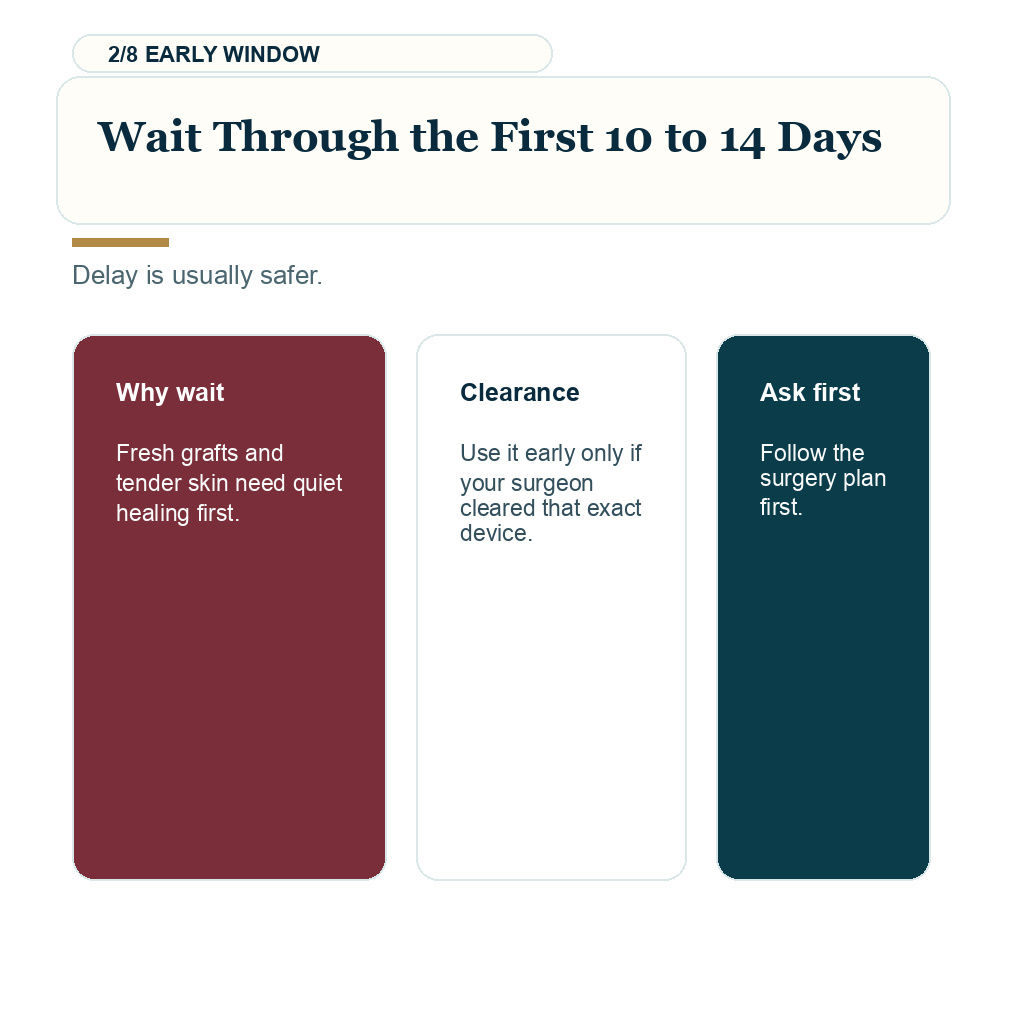
In the first 10 to 14 days, I want the recipient area left quiet. The problems are friction, cap edges, rubbing during placement, trapped warmth, and repeated checking in the mirror. The early graft protection window matters, but graft anchoring is not the only issue. A cap can still create pressure, heat, or rubbing even after hair transplant grafts are secure. Skin comfort matters too.
After scabs have come away and washing is comfortable, I judge the exact cap. It should sit loosely without pressing on the hairline, warming the scalp, or needing to be forced into position. Any doubt about the fit is a reason to wait.
The cap should also be clean. Do not use a shared, dusty, sweaty, or product covered device on healing skin. Wipe the contact surfaces according to the manufacturer instructions, let the scalp be dry, and avoid using the cap immediately after oils, sprays, fibers, concealers, or heavy styling products.
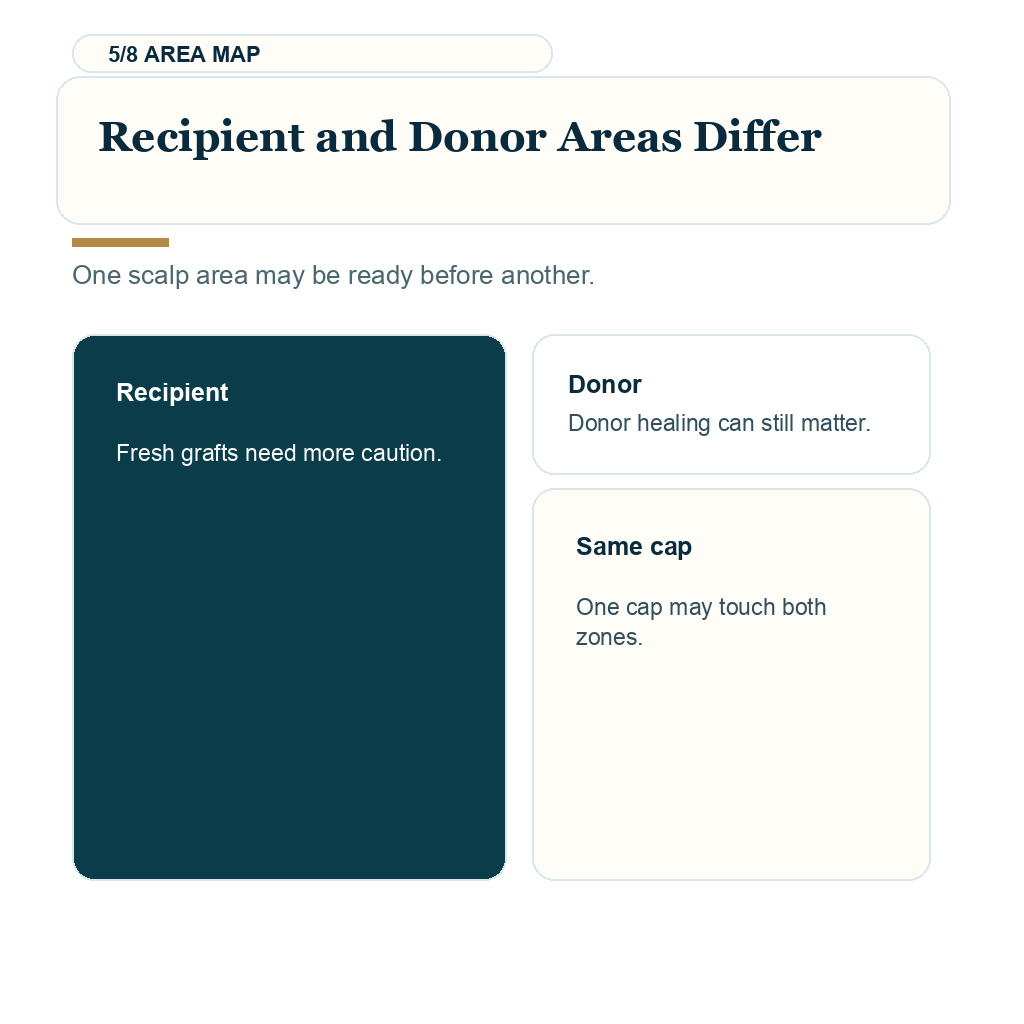
I also separate the donor area from the recipient area. Some caps mainly touch the top of the head, but some operations involve crown work, temple work, or a long frontal band. A device that seems harmless after one transplant pattern may sit directly on another grafted zone. Timing should follow the surgery that was actually done, not a generic instruction from the device box.
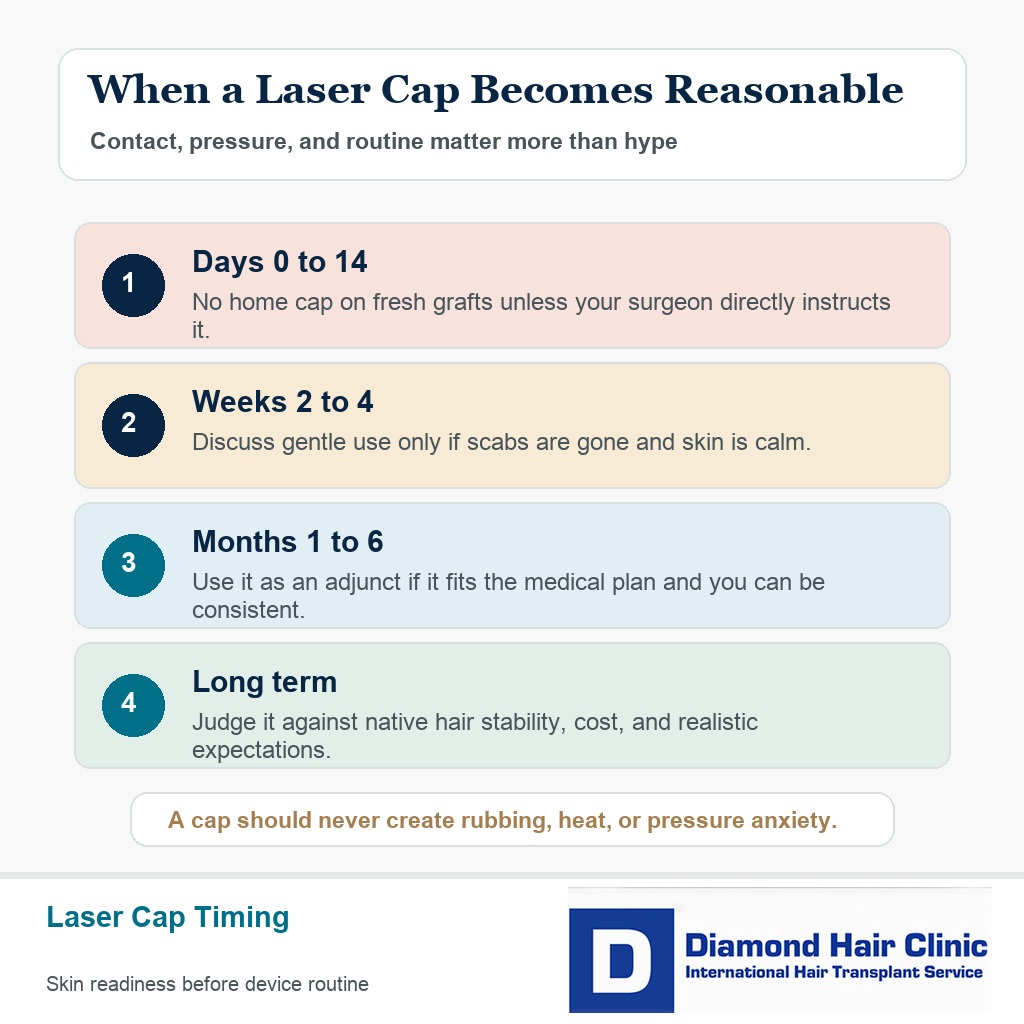
Scalp readiness for contact and pressure matters more than device popularity.
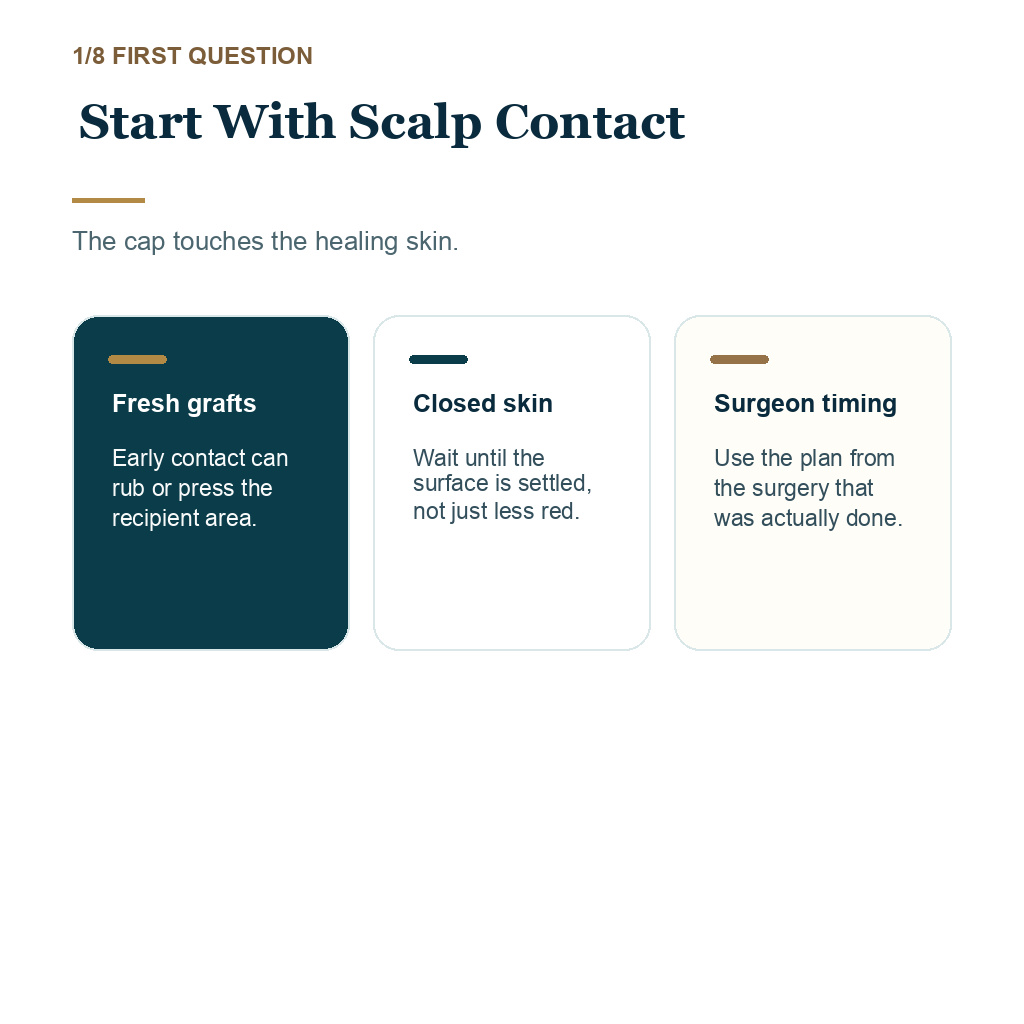
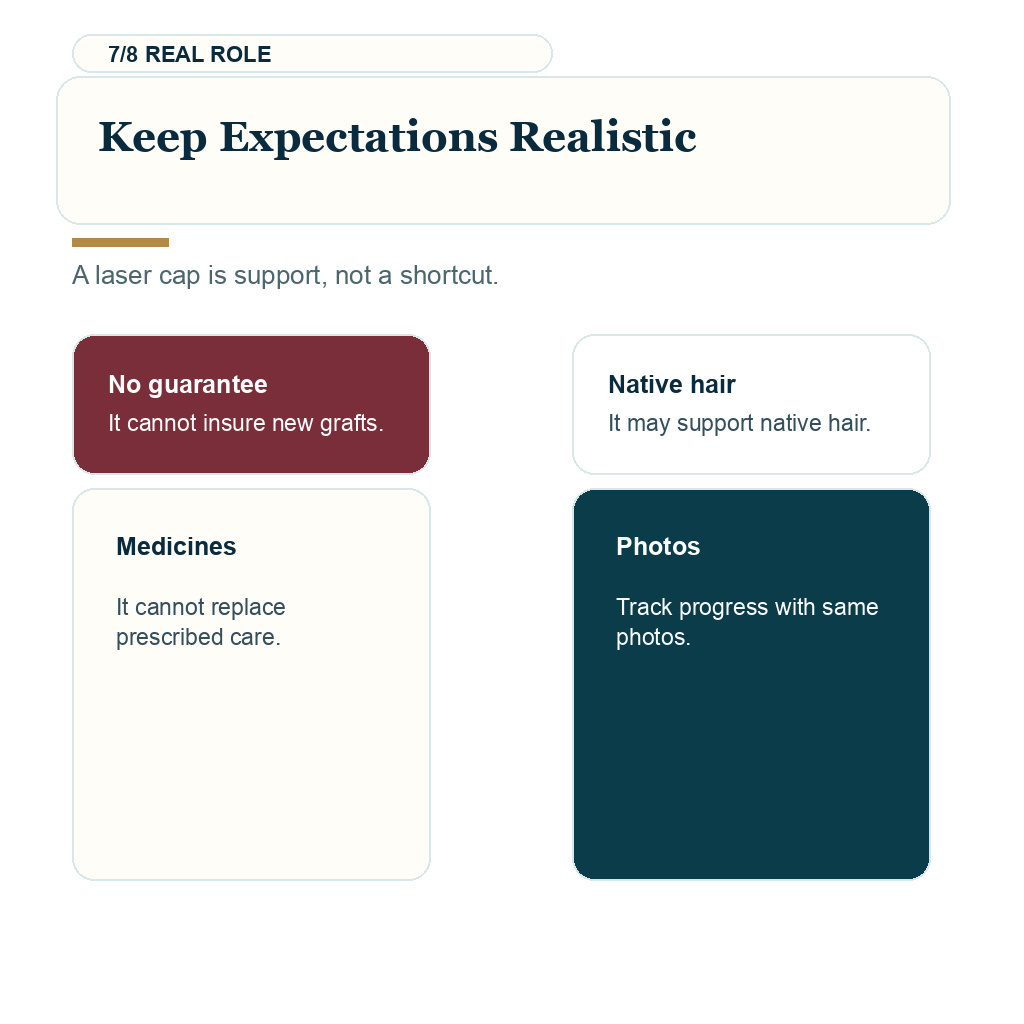
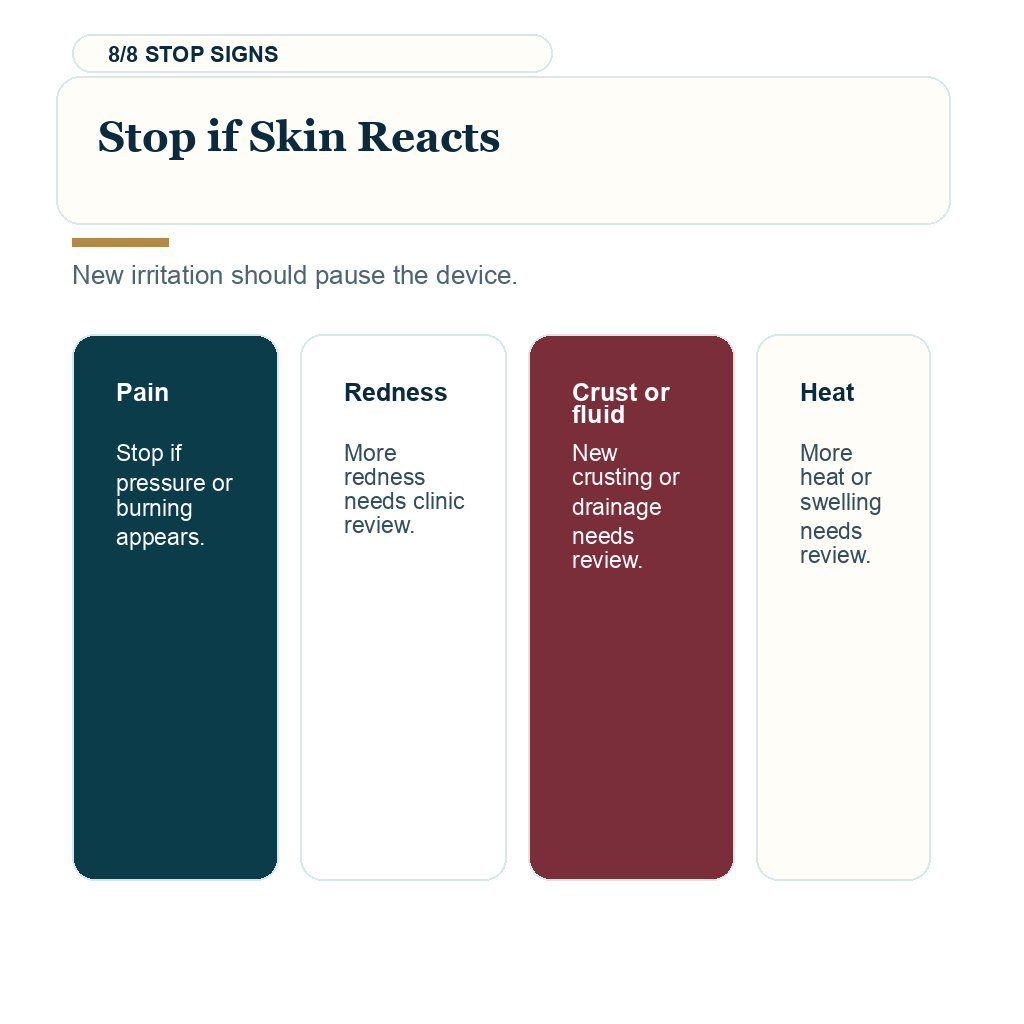
Use the 8 laser cap readiness slides below to separate fresh graft contact, the first 10 to 14 days, scab and washing comfort, pressure and heat, recipient versus donor areas, clinic versus home devices, realistic expectations, and warning signs. Swipe the carousel, use the arrows one step at a time, or choose a number below the image to jump to that point.
Some clinics recommend LLLT after surgery
Low level laser therapy, often called LLLT or red light therapy after a hair transplant, is used in hair loss because some evidence supports improved hair counts in selected androgenetic alopecia cases. This is different from a tanning bed after FUE, where the main issue is UV exposure and skin irritation rather than low level light. That evidence is mainly about hair biology and native hair support. It should not be stretched into a promise that every transplanted graft will grow faster because someone bought a cap.
Some clinics also sell devices, so I separate clinical reasoning from sales language. A useful adjunct should come with modest expectations, clear timing, and no pressure to buy. If the device is presented as the secret ingredient that makes the transplant succeed, caution is appropriate.
My concern is the way fear can turn an optional support tool into an urgent purchase. The decision should fit the diagnosis, the healing stage, the budget, and the long term hair loss plan.
Realistic role of a laser cap
In the right case, LLLT may support miniaturizing native hair and may be part of a broader nonsurgical plan. It is more reasonable to think about it as a slow supportive treatment than as a dramatic growth accelerator. Consistency matters, and even with consistency, response varies.
Extra sessions are not a shortcut. Follow the device protocol and the clinic timing instead of doubling the schedule because you are anxious. Overuse can create heat, irritation, pressure time, and more checking behavior without proving that the result will improve.
The best candidate is not someone expecting the cap to create density from nowhere. It may make more sense when there is ongoing androgenetic thinning, limited tolerance for certain medicines, interest in an additional tool that is not medication, and a clear understanding that the effect is limited and gradual.
This is close to how I discuss minoxidil after a hair transplant. A treatment can help native hair in selected cases, but it does not change the number of grafts placed. It also does not replace the need to judge whether native hair is still thinning over time.
Extra caution is needed with scalp sensitivity, seborrheic dermatitis, contact irritation, or a habit of scratching when the scalp feels warm. A device that improves compliance for one person can create irritation for another. The practical question is whether this exact cap can be used without disturbing healing or creating anxiety.
Limits of a laser cap after hair transplant
A laser cap cannot turn a weak plan into a strong result. It cannot create more donor hair. It cannot correct a low hairline that should not have been designed. It cannot guarantee graft survival. It cannot stop future native hair loss by itself. It cannot make a sparse result look dense under every light.
Month 2 or month 3 anxiety is a different problem. Early recovery already has shedding, redness, uneven density, and changing hair shafts. Clean photo tracking and a proper review are safer than adding a device only because the scalp looks thin under bad light. If the cap makes you stare at the scalp every day, it can increase anxiety rather than reduce it.
The healthier habit is to track hair transplant growth at sensible intervals with clean photos and similar lighting. Daily device use should not become daily judgment of the result.
Pressure from the cap can matter
In the first healing stage, pressure is one of the reasons I avoid home caps. The cap may touch the hairline, crown, or donor area. You may adjust it several times without noticing how much contact it creates. If there are scabs, tenderness, or open points, the device is not worth that contact.
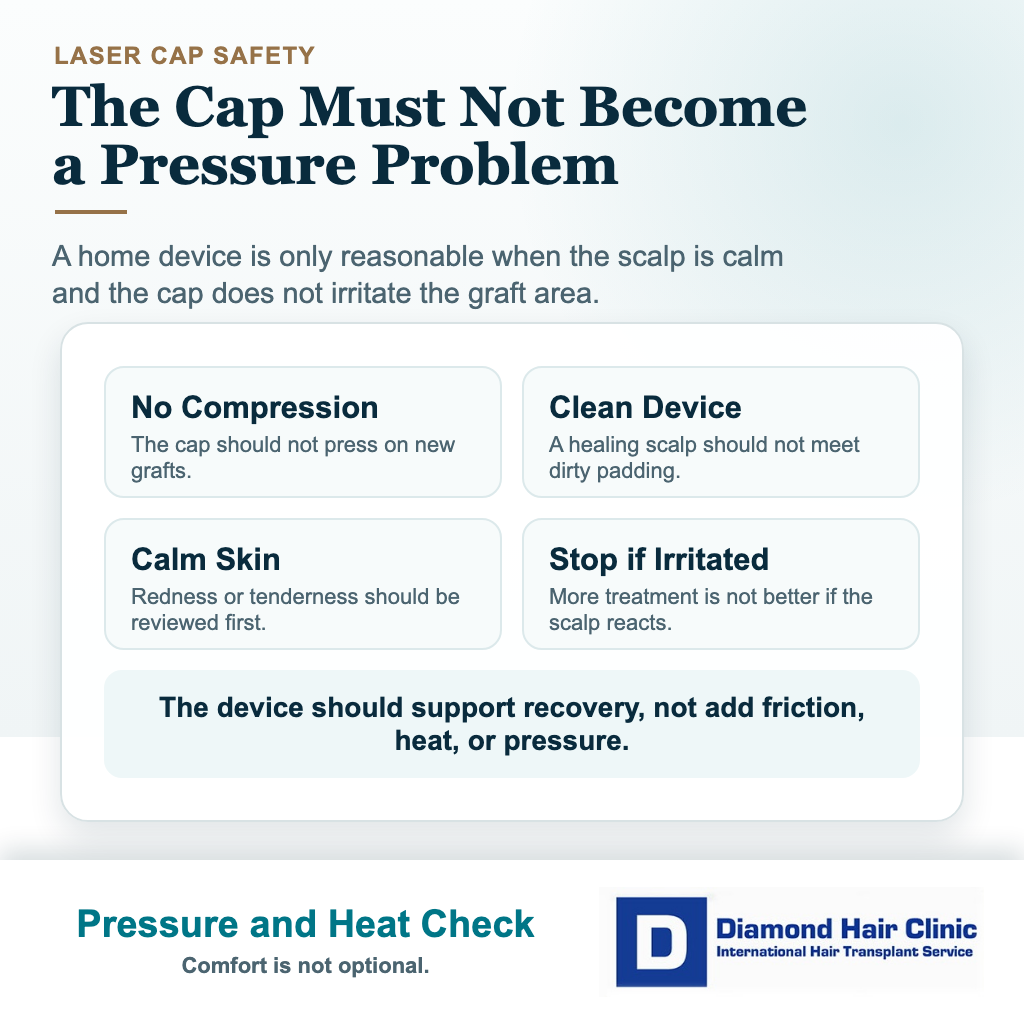
Later, when the scalp is closed and comfortable, gentle contact is less concerning. But one careful fitting is different from daily tight sessions while the skin is still reactive. The cap should not leave marks, cause pain, trap strong heat, pull hair shafts, or make you scratch afterward.
Check the skin after the first few sessions. If there are pressure lines across the hairline, new tenderness, itching, pimples, flaking, or a warm irritated feeling, pause and share photos with the clinic. A device routine should not make it harder for the clinic to read the scalp surface.
If the transplant was in a high frontal hairline area, the front rim of the cap is especially relevant. If the operation was in the crown, the upper inner surface matters. Do not assume every cap fits every surgery pattern. Device shape and treated area have to match.
If you already used a laser cap too early
If you already used a home laser cap too early, stop using it for now and judge what happened to the scalp. A short, light contact without pain, fresh bleeding, pressure marks, caught scabs, new swelling, or stronger redness is usually less concerning than repeated use, forced pressure, or rubbing the cap over the recipient area.
Do not try to correct the mistake by washing aggressively, scratching, cooling the scalp with ice, or adding extra device sessions later. The safer response is to return to the basic recovery plan and let the clinic review the situation if there is any doubt.
Share clear photos if the cap touched the grafted area before the scabs were gone, if the scalp feels hotter or more painful after use, if the device left marks, if scabs were pulled, or if redness, discharge, bumps, swelling, or tenderness is getting worse. The important details are the surgery day, the treated area, the cap model, how long it was used, whether it pressed on the grafts, and what changed afterward.
When the device has a narrow reason?
A laser cap becomes easier to discuss when the reason is narrow. Is the goal native hair support, pattern hair loss maintenance, supervised recovery in clinic, or a home habit after the scalp has settled? Those are different uses.
A laser cap should not become insurance for everything the patient fears. It cannot prove graft survival, replace washing, correct poor graft handling, reverse an unsafe donor plan, or make a weak surgical result dense. It may support selected native hair when the diagnosis fits and the patient can use it consistently.
For an international patient, the written plan should name timing, device fit, pressure risk, warning signs, and who reviews scalp reactions after travel. A home device should add a controlled routine, not another reason for the patient to touch or worry about the healing area.
Buying a device before you see growth
Do not buy a device from panic. The first months after surgery are already emotionally difficult. The scalp can look thinner after scabs come off. Transplanted hairs may shed. Native hair may also shed temporarily. Buying a device in that anxious period can feel like taking control, but it may not answer the real question.
Ask why you want it. If the reason is that you have a clear diagnosis of androgenetic hair loss and want a long term adjunct, the discussion is reasonable. If the reason is fear that the transplant is failing at week 3, the better response is follow up and photos.
I also compare cost with consistency. A device that stays in a drawer is expensive decoration. A device used obsessively before the scalp is ready is not helpful either. The right candidate can use it as a routine, not as a rescue attempt.
There is also an opportunity cost. The money spent on a device may be reasonable when you already have a safe long term plan. It may be less reasonable if you still need diagnosis, medication review, donor planning, or a proper follow up appointment. Spending carefully is better than buying every extra product because the waiting phase feels uncomfortable. If you are comparing a laser cap with other products, such as copper peptide serums or regenerative or stem cell add ons, judge each one separately instead of buying a stack.
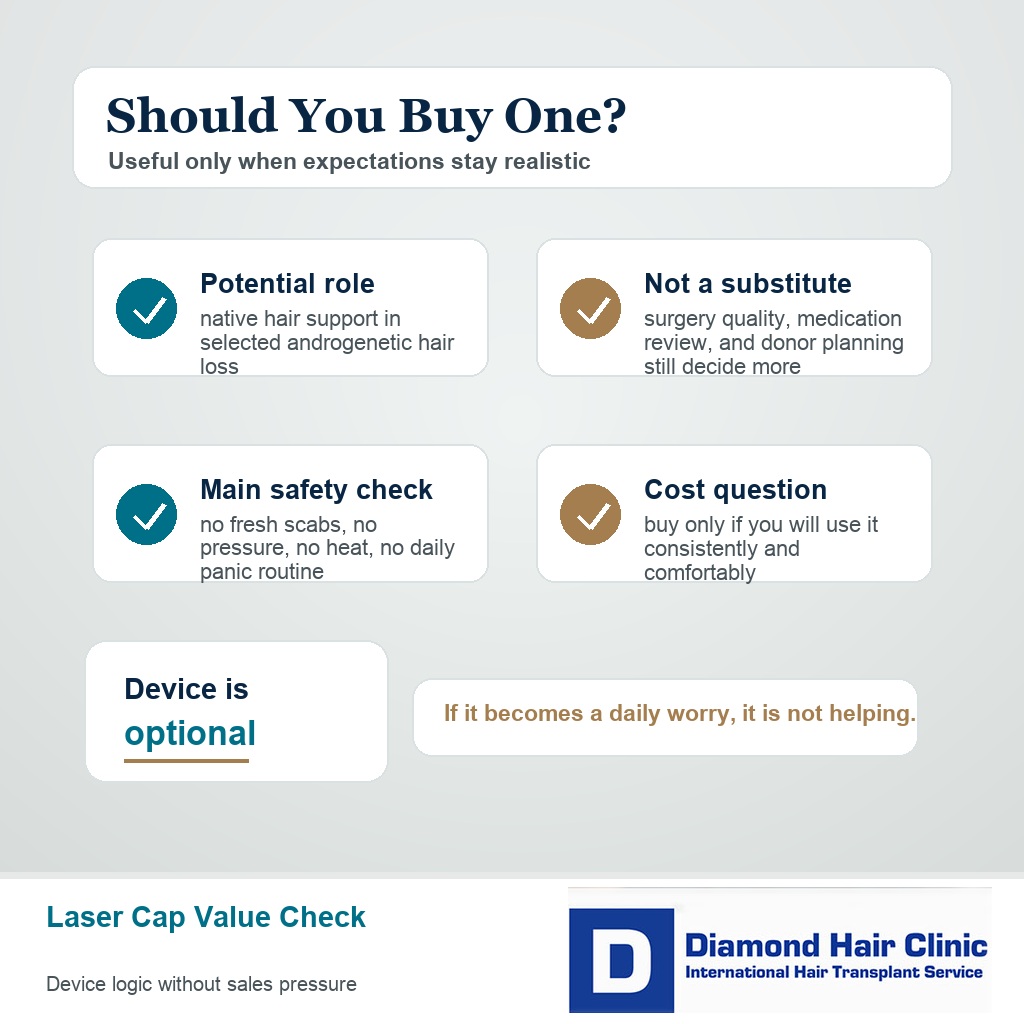
LLLT can be an adjunct in the right case, but it should not replace surgery quality, medical planning, or follow up.
LLLT does not replace finasteride, minoxidil, or PRP
LLLT belongs in a different category. It does not have to replace a medication plan, and it should not be sold as a cleaner version of every other treatment. The right plan depends on age, diagnosis, pattern of loss, donor capacity, side effect history, and tolerance for long term treatment.
A laser cap can be part of a no medication plan only if the surgical plan is still safe without expecting the device to hold every native hair. I still plan around diagnosis, donor reserve, future thinning, and whether a second operation would truly remain possible.
If you are stopping finasteride after a hair transplant, a laser cap does not cancel the risk of future native thinning. If you are comparing dutasteride or finasteride after a hair transplant, that is a medical discussion, not shopping for a device.
PRP, exosomes, and other adjunct treatments may have a role, but the plan should not become a stack of treatments added because the patient is frightened. Each part should have a reason.
Clinic LLLT can differ from a home cap
A clinic device can be different because the team can see the scalp, control the position, and avoid pressure on the grafted area. A home cap is handled without direct observation, and it may sit differently depending on head shape and the transplanted zone.
The word LED is still too vague to carry timing or benefit claims from one device to another. The device, scalp contact, and intended purpose need to be clear, especially when one plan targets native hair and another is presented as postoperative recovery. A supervised clinic session and a home laser cap are not interchangeable just because both use light.
For that reason, do not copy timing from a clinic photo or another person’s recovery diary. This is not only about whether light reaches the scalp. The decision depends on whether the device creates contact, heat, friction, or a habit of touching the healing area too often.
If a clinic offers supervised LLLT early, ask exactly what touches the scalp and why it is being used. If you are using a purchased cap at home, I still prefer waiting until the skin is closed, clean, and comfortable.
Using it for shock loss or native hair
Native hair shock loss can happen after surgery, especially when weak miniaturized hair is already under stress. A laser cap should not be promised as a shield against all shedding. Some temporary shedding can occur even when grafts are not lost. That distinction matters in native hair shock loss after a hair transplant.
If the purpose is native hair support, the conversation becomes more reasonable after the early healing period. The diagnosis still matters. Diffuse androgenetic thinning, temporary shock loss, telogen shedding, medication changes, and poor nutrition are not the same problem.
A cap may be one supportive tool. It should not distract from the larger question of why the native hair is thinning and what plan protects the donor area and the remaining hair over years.
I separate those two because transplanted hair and native hair do not behave identically. The transplanted follicles are moved from a safer donor zone, while surrounding native hairs may continue to miniaturize. If you use a cap and later see improvement, we still need to understand what improved. Was it native hair caliber, reduced shedding, better styling, lighting, or normal transplant maturation? Without that distinction, the device gets too much credit or too much blame.
Warning signs that mean you should stop
Stop using the device and share clear photos if the scalp becomes more red, painful, hot, wet, swollen, itchy, bumpy, or sensitive after use. Stop if the cap catches scabs, pulls hairs, leaves pressure marks, or makes washing more uncomfortable.
Stop as well if the device is damaged, if the inner surface scratches the skin, if you feel burning heat, or if you are tempted to use it over unapproved creams to make the session feel stronger. A home device should stay boring and predictable.
Redness, scabs, or pimples after a hair transplant need review when they worsen or become hidden under a device. A device should never hide the surface that the clinic needs to see.
Also stop if the device is changing your behavior in a bad way. If you keep checking the scalp after every session, comparing photos daily, or increasing use because you are afraid, the routine is no longer helping recovery.
Laser caps should not irritate healing skin
Before restarting the cap, confirm that the scalp is closed and comfortable, the device fits without pressure, and the diagnosis gives LLLT a reasonable role. It also needs to fit a consistent routine without carrying unrealistic expectations.
If any answer is no, wait. Waiting is not losing ground when the scalp is still healing. If all answers are yes, discuss the device with the surgeon who knows your case. Use it gently, keep the schedule realistic, and stop if the scalp reacts.
I keep this conservative because the foundation of the result is still surgery. The angle of the grafts, donor management, hairline design, density planning, and long term native hair strategy matter more than a device. A laser cap can be an adjunct after the scalp is ready. It should never replace what makes a hair transplant result good.
Read this review excerpt
He was very thorough in every little detail and I never felt pressure to do anything I wasn’t sure of.