



Native Shock Loss and Recovery Timing
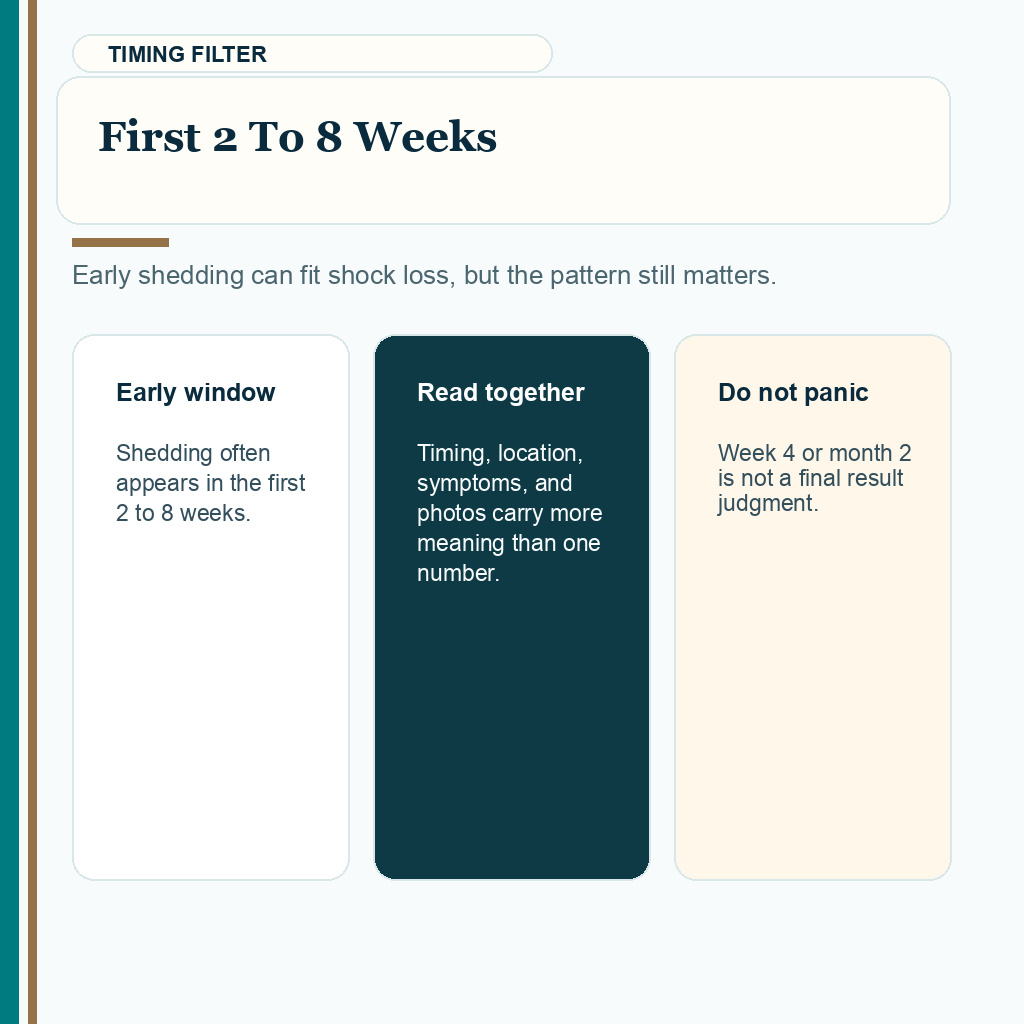
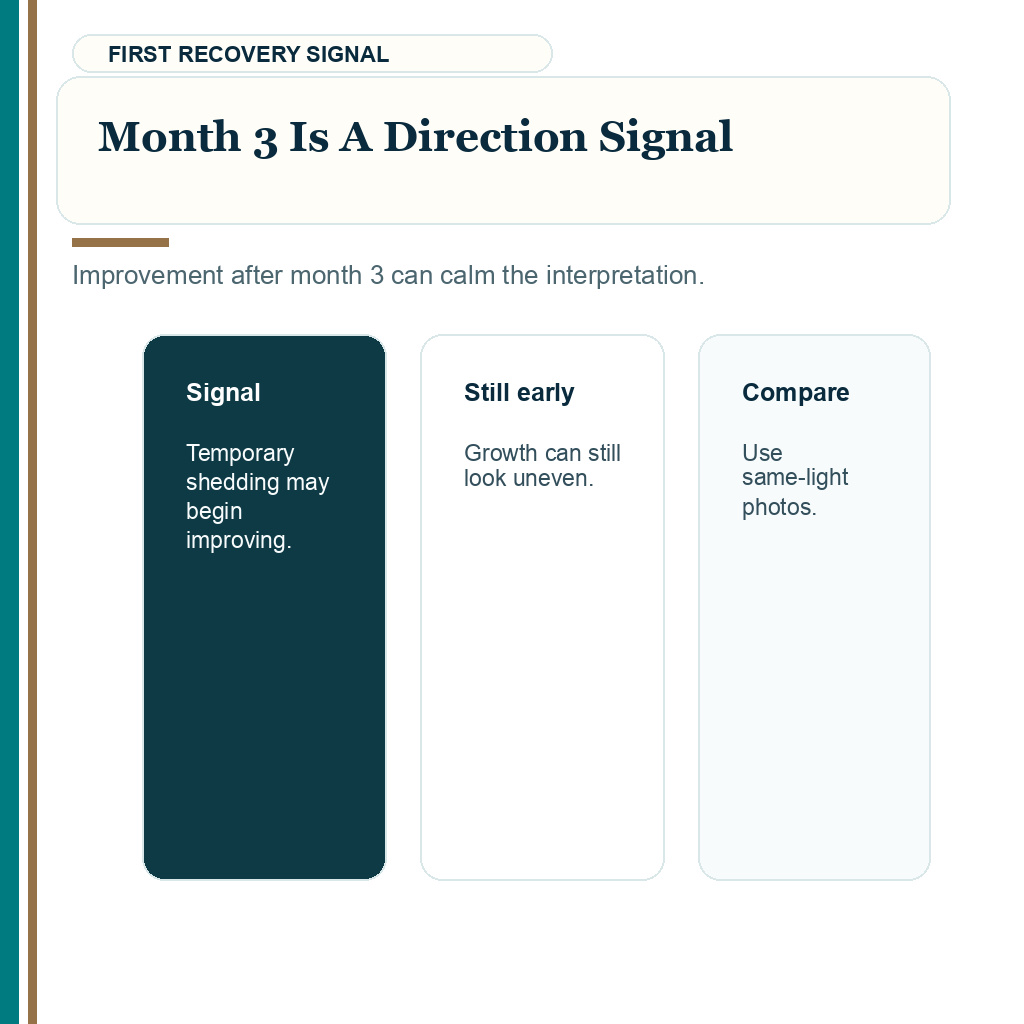
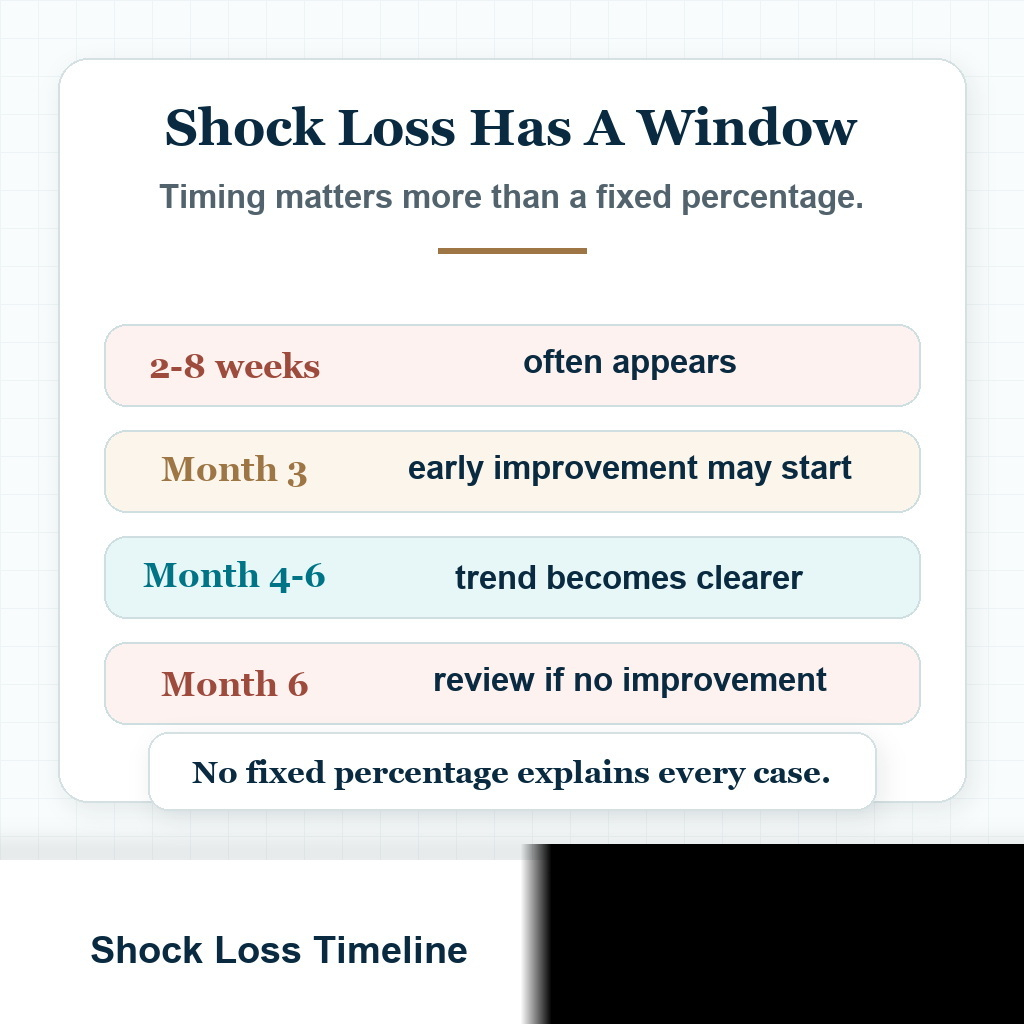
There is no reliable fixed percentage for native shock loss timing and pattern after surgery that applies to every person. I cannot responsibly tell you it is 20 percent, 50 percent, or any single number. The more useful answer is the timing and pattern. If native shock loss happens, it often appears within the first 2 to 8 weeks. Many temporary cases begin improving after month 3, and no improvement by month 6 deserves a proper surgeon review.
If you are around two months after surgery and see no visible new growth, that alone does not prove a failed transplant. The transplanted shafts may have shed, the follicles may still be resting, and nearby native hair can make the area look thinner. I look first at scalp comfort, repeatable photos, and whether the same zone is getting worse. Increasing pain, spreading redness, discharge, fever, bleeding after trauma, or no movement across later matched photos changes the review. Later, if the concern is the transplant result itself rather than native hair shock loss, separate a failed hair transplant from a result that is still too early to judge.
If thinning appears later than the usual shock loss window, I also consider whether month 6 to 8 shedding after FUE reflects native hair loss, a cycle shift, medication timing, or scalp inflammation.
When the transplant was mainly at the hairline but thinning worry appears on the top or crown, label the zones before calling it shock loss. Hair beside the work, hair far behind it, and shedding linked to medication or active hair loss are different situations. Compare the same zones under the same light while the early shedding phase settles, rather than letting one bad week decide the story.
Name the area before naming the problem. Shedding beside the work, far behind it, or in a medicine related pattern can point to different explanations.
The desire for a cleaner number is understandable. At week 4 or month 2, uncertainty can make every shed hair feel important. But the amount of native shock loss depends on the strength of the native hair before surgery, the amount of miniaturization, surgical trauma, recipient area density, inflammation, and the quality of planning.
So the answer is not vague to avoid the question. It is specific in the way a surgeon has to be specific. I separate the problem into three possible stories.
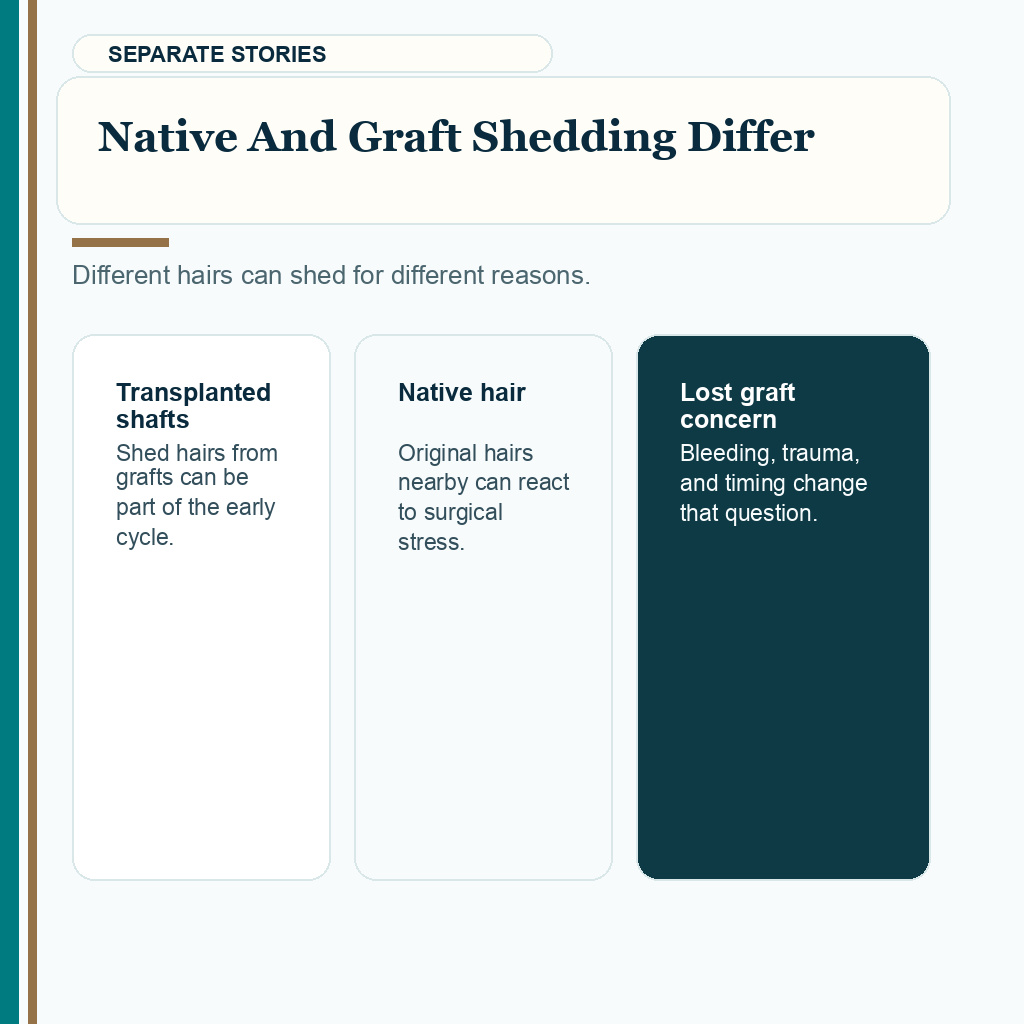
First, transplanted hairs may shed, or in some people there may be little or no shedding from transplanted hairs. Second, original hairs around the work may shed temporarily. Third, already weak native hairs may not return with the same strength. Later, a similar distinction matters when patients ask whether baby hairs after a hair transplant are graft growth or weakened native hair.
That distinction protects you from two opposite mistakes. One is panicking at week 4 or week 6 when the scalp is still inside a normal recovery window. The other is accepting every change as normal when the native hair was unstable before surgery.
When the diagnosis is clearer, you can wait without making rushed decisions, or you can get help at the right time.
Native hair can shed after surgery stress
Native hair can shed after surgery because the scalp has been through controlled surgical stress. Local anesthesia, swelling, inflammation, incision creation, graft placement, and tissue tension can push nearby hairs into a shedding phase.
Temporary shock loss is not proof that the surgeon cut every native follicle. It also does not mean the transplant failed. In many temporary cases, the follicle remains alive and starts cycling again as healing settles.
The detail that matters before surgery is the quality of the native hair. A strong hair and a miniaturized hair do not have the same reserve. They may sit close to each other in the recipient area, but they do not react to surgical stress in the same way.
Consultation has to include more than how many grafts were placed. The surgeon must judge what kind of hair was already present between and around those grafts. Transplanting into an empty area is one situation. Transplanting between fragile existing hairs is a different situation.
That work can be done well in the right person, but it must never be treated as a routine filling job. If the existing hairs are already near the end of their life cycle because of androgenetic hair loss, surgery may reveal that weakness earlier. What looks like shock loss may partly be natural progression that was already happening.
Overly neat answers such as all shock loss grows back are not precise enough. Fear driven answers that make every shed hair sound permanent are not useful either. The responsible answer sits between those two extremes.
Most early shedding after surgery is not a disaster. Timing, scalp health, the strength of the hair that was present before surgery, and whether the area is improving or worsening month by month all matter.
Native shock loss is different from transplanted hair shedding
Native shock loss and transplanted hair shedding can happen in a similar part of the recovery timeline, but they are not the same diagnosis.
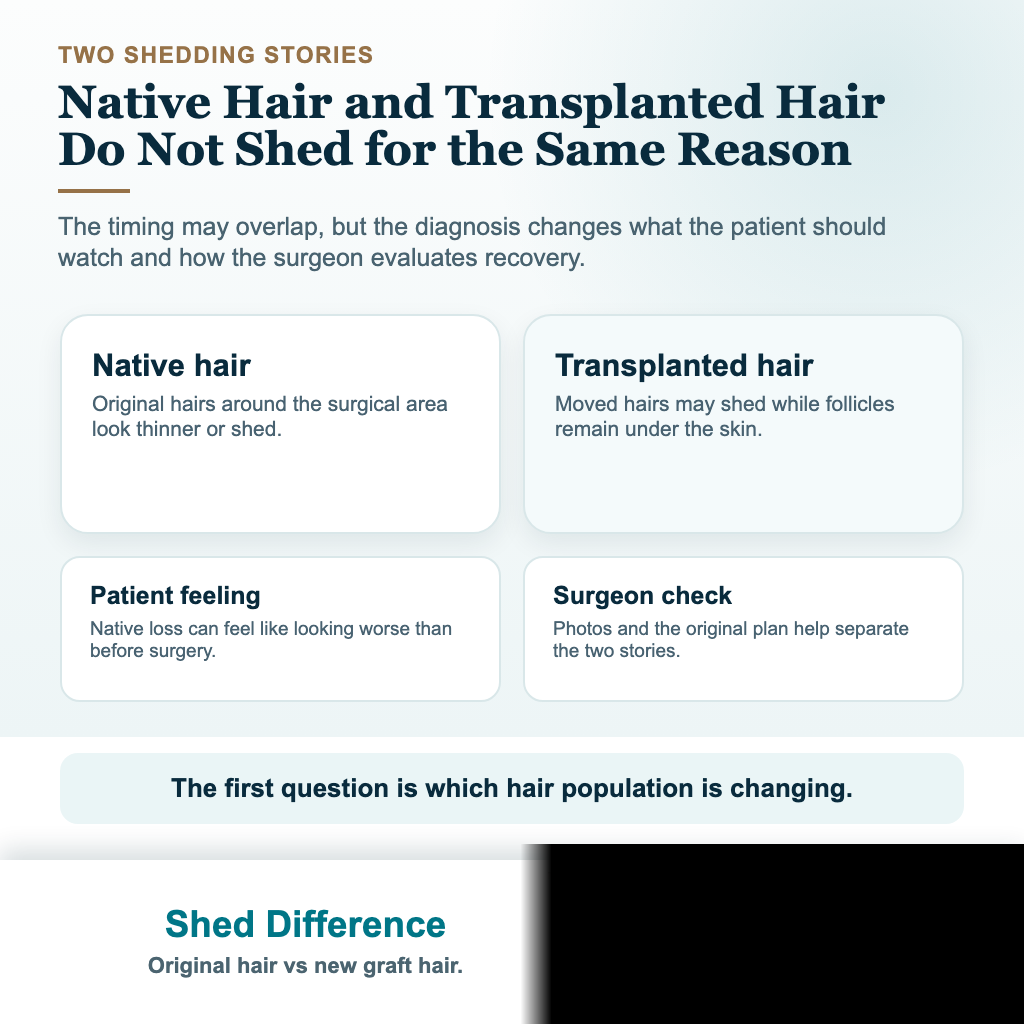
Transplanted hairs often shed after surgery while the follicle remains under the skin. Shedding of transplanted hair is often mistaken for graft failure.
Native shock loss means the original hairs around the surgical area become thinner or shed after the operation. These are hairs you already had before surgery, not the new grafts.
The worry feels different in each case. When transplanted hairs shed, you may worry the grafts are gone. When native hair sheds, you may feel that you look worse than before surgery.
It is also easy to confuse shock loss with lost grafts when scabs came off. A hair shaft in a scab, a shed hair, and a dislodged graft are not the same thing.
A true graft dislodgement early after surgery is a different event and is more concerning when it comes with fresh bleeding. Native shock loss is usually a hair cycle and tissue response problem, not the same as a graft being pulled out.
The visual confusion is understandable. You see hair in the sink, on the pillow, or during washing, and every hair looks important. But a shed shaft does not tell the full story. The important question is whether the follicle can produce hair again.
Panic inspection of individual hairs is not a good diagnostic method. The first weeks are emotional enough, and obsessive checking rarely gives reliable information.
Can you tell transplanted hair from native hair in early recovery?
In the first month or two, usually not with confidence. One short, fine, or patchy hair does not prove that you are seeing a new graft, a native hair returning after shock loss, or a cycle change related to medication.
I first look at the surgical map, the photos before surgery, the early post-operative photos, and the dates when minoxidil, finasteride, or other treatments were started, stopped, or changed. Those details matter more than trying to identify one hair under bathroom light.
Label the photo by zone when you send it. A thinning patch inside the recipient area, behind the recipient area, or far from the operation can point to different explanations even when the shedding looks similar.
This is especially true when there was diffuse thinning before surgery. Some native hairs were already weak, some transplanted shafts may have shed, and medication can change the shedding pattern. The useful step is to document the pattern with consistent photos and ask for review if the area keeps worsening, becomes inflamed, or is still not moving in the right direction by the month 4 to month 6 checkpoints.
Miniaturized native hairs carry the highest risk
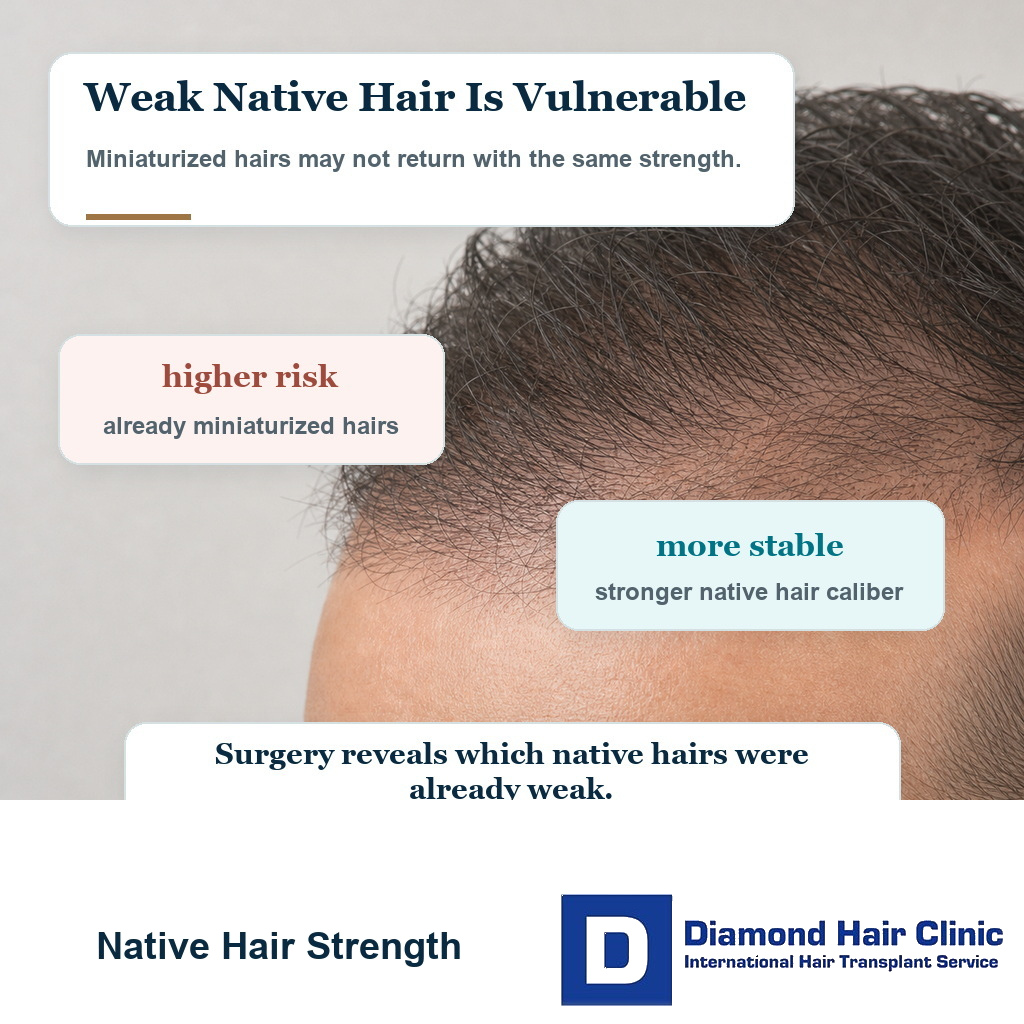
The native hairs most at risk are the ones that were already miniaturized before surgery. These hairs may still create coverage from a distance, but under magnification they are thin, weak, and biologically unstable.
Diffuse thinning and hair transplant concerns need special caution. In diffuse thinning, the scalp may still contain many hairs, but many of them are fragile.
When grafts are placed between fragile native hairs, the surgeon has to balance possible cosmetic improvement against the risk of shocking hairs that were already weak. The plan must be more conservative than it would be in a clearly empty area.
Medication can also be part of the risk discussion. If active miniaturization is present, I often want to discuss medication before a hair transplant before committing donor grafts into unstable native hair. Discuss device support such as a laser cap after a hair transplant only after diagnosis, not as a way to guess at the cause of shedding.
If you cannot or do not want to use finasteride, that does not dismiss you as a patient. It means the plan needs more caution, because the surgical design must respect what may happen to the surrounding native hair. That separate decision is discussed in the guide to a hair transplant without finasteride.
That does not mean medication fits every patient. The decision needs to be made before surgery, not during panic after shedding changes the mirror.
Weak native hair is not only a cosmetic detail. It changes density planning, graft placement, and how direct I need to be about the final appearance. You may believe you still have plenty of hair because the scalp is not completely bald. Under magnification, many of those hairs may be thin, short, and losing caliber.
If these hairs shed after surgery, they may recover slowly, recover partially, or fail to return if they were already close to the end. That makes assessment before surgery important. The surgeon cannot look only at the bald area. The hairs that remain also need close examination, because sometimes those hairs are the real risk.
Permanent shock loss needs careful wording
But the wording needs context. Surgery does not usually turn a strong healthy native hair into a dead follicle simply because nearby grafts were placed. What can happen is that hairs already badly miniaturized shed after the operation and do not have enough biological strength to return with the same thickness.
The phrase permanent shock loss needs context. Commonly, what is called permanent shock loss is really a mixture of temporary shedding, ongoing androgenetic hair loss, and weak native hairs that were already close to disappearing.
From a planning point of view, the lesson is the same. Fragile native hair needs to be identified before surgery, and the risk needs direct explanation. If the plan depends on every weak hair surviving, the plan is too optimistic.
The more miniaturized the native hair was before surgery, the less any surgeon can promise that every shed hair will return.
Usual timing and recovery checkpoints
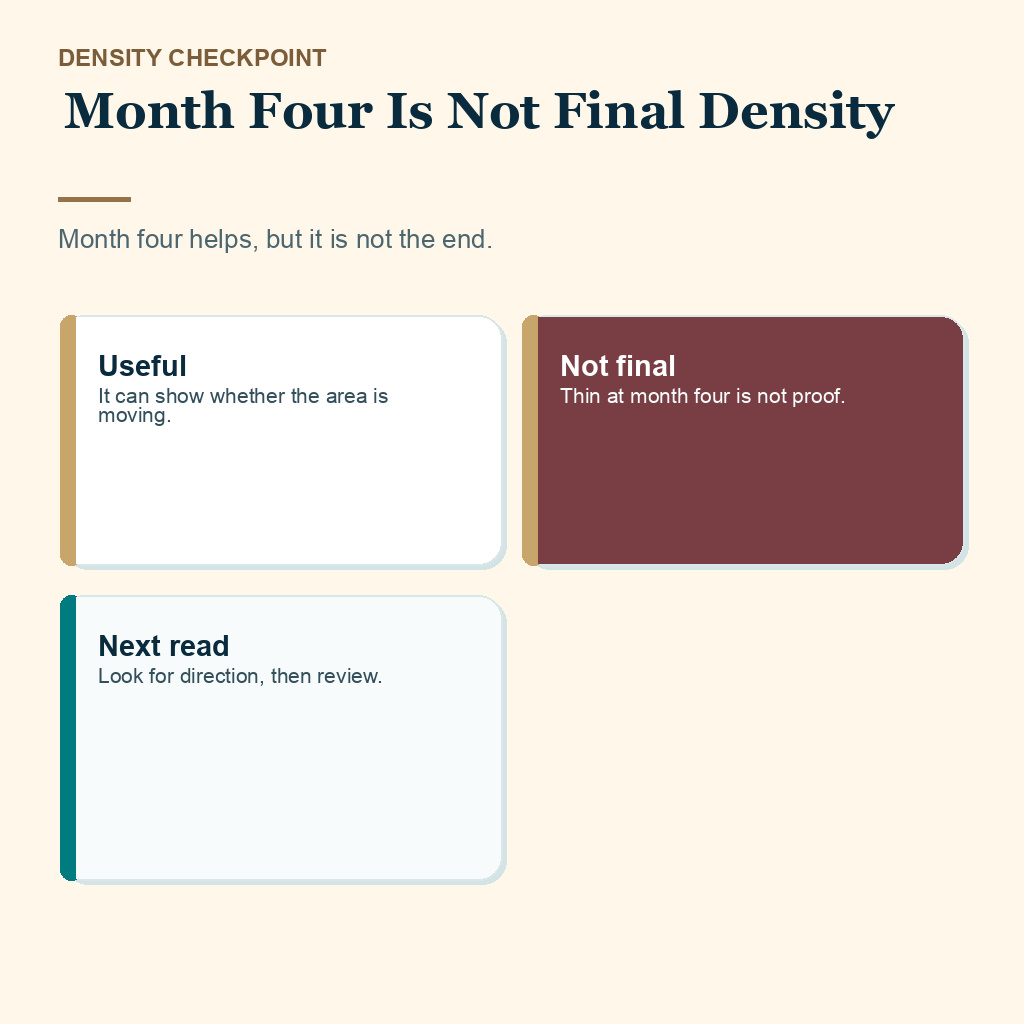
The practical range is clear. Native hair shock loss often becomes noticeable within the first 2 to 8 weeks after surgery. In many temporary cases, early improvement begins after month 3, and the picture becomes easier to judge between month 4 and month 6.
This timeline is not a guarantee. Some people shed earlier. Some notice the thinning later because the hair length changes, the scabs disappear, or the transplanted area enters the ugly phase.
At 1 to 2 months, it is very easy to feel that surgery made everything worse. The transplanted hairs may have shed, the native hair may look thinner, and the contrast between areas can be difficult to look at every day.
By month 4, density can still look disappointing. Low density at 4 months after a hair transplant is a common point where many people begin to judge too early.
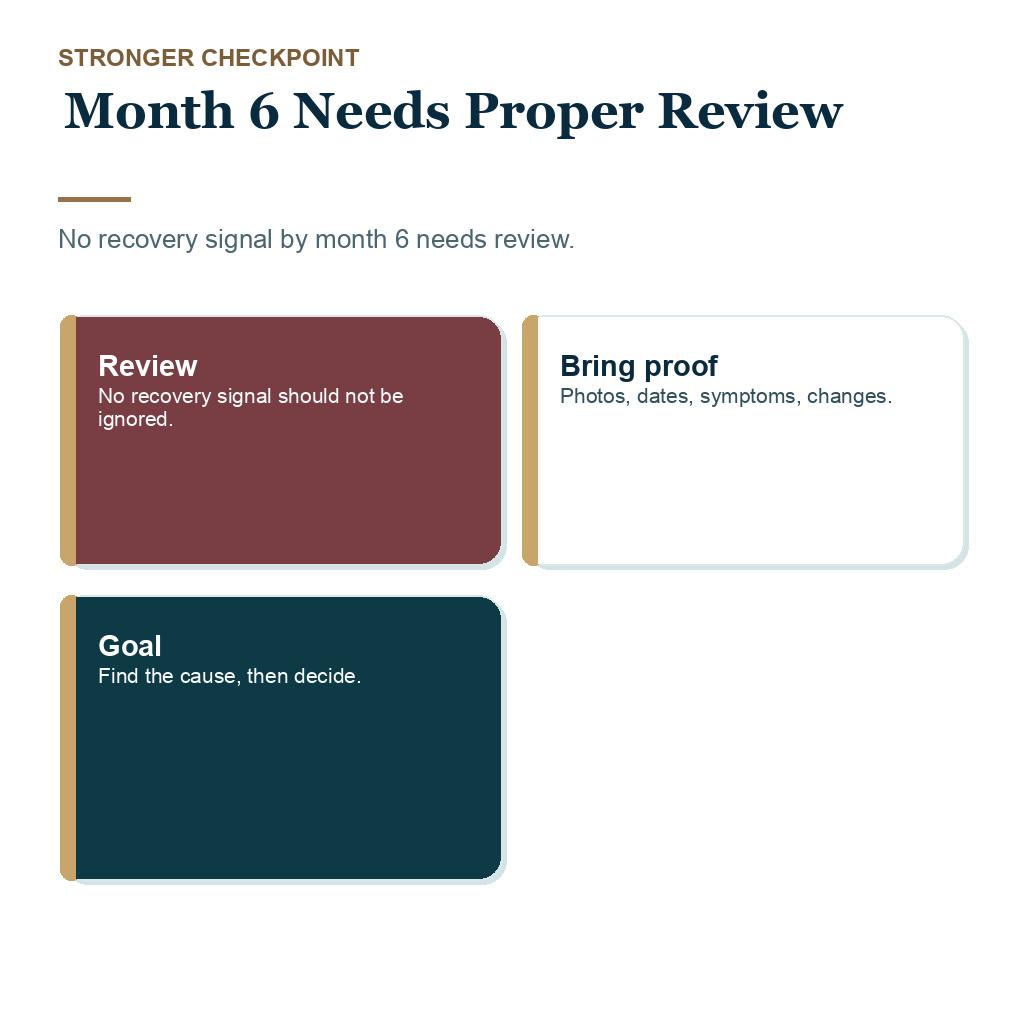
If the native hair is slowly returning and the scalp looks quiet, observation is often reasonable. If the area is still worsening, inflamed, painful, or completely inactive by month 6, a proper review is needed.
That review needs to include photos before surgery, day one photos, current photos in consistent lighting, medication history, and a clear look at whether the native hair was already miniaturized.
Month 2 is not a final judgment month. Month 4 is not a final judgment month either. These months are useful for follow up, but they are not the end of the story.
Month 6 is more meaningful because enough time has passed to see whether the area is moving in the right direction. Even then, it is a stronger checkpoint, not always the final cosmetic result.
The 10 native shock loss slides below separate timing, transplanted shedding, weak native hair, ongoing loss, donor area shock, planning risk, documentation, warning signs, and safer next steps. Swipe sideways, use the arrows one slide at a time, or choose a number below the image.


Separating shock loss from ongoing hair loss
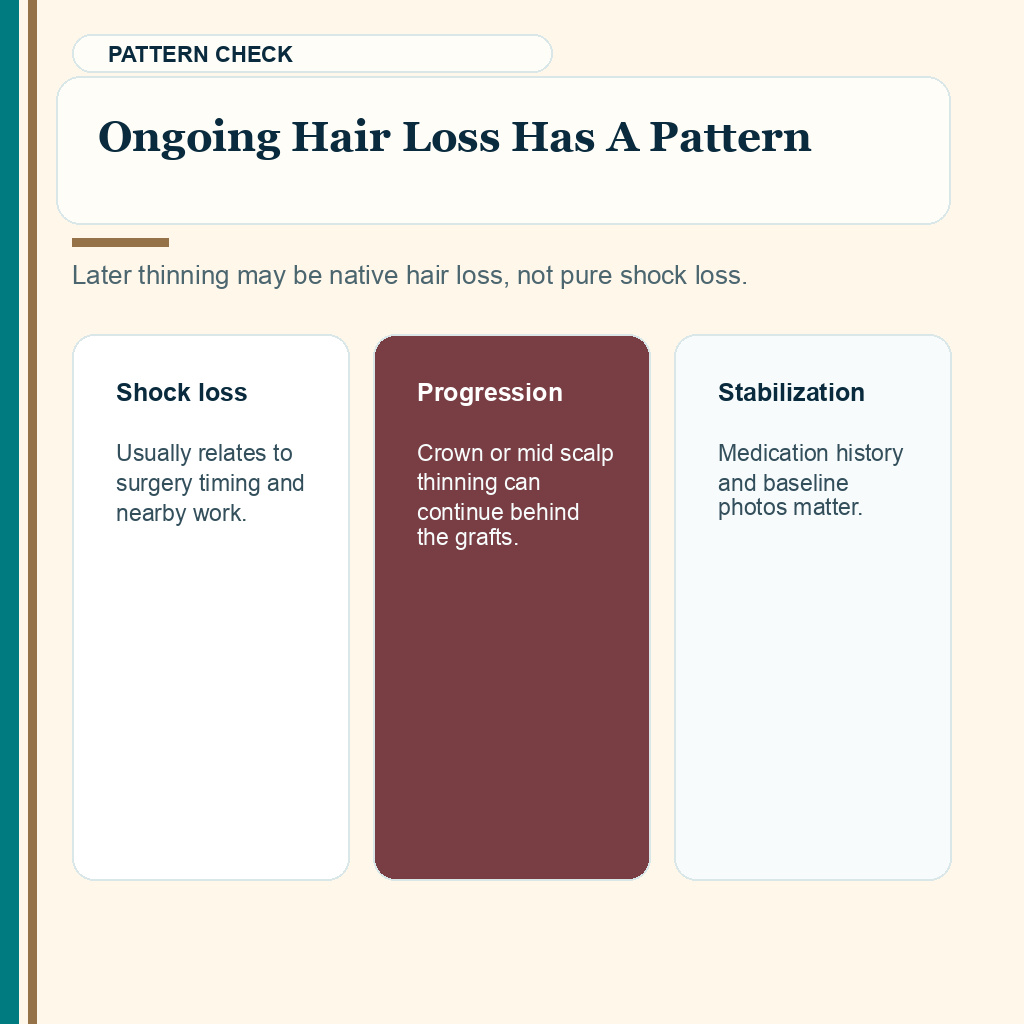
Shock loss usually has a relationship to surgery timing. It appears after the operation and often affects the areas close to surgical work.
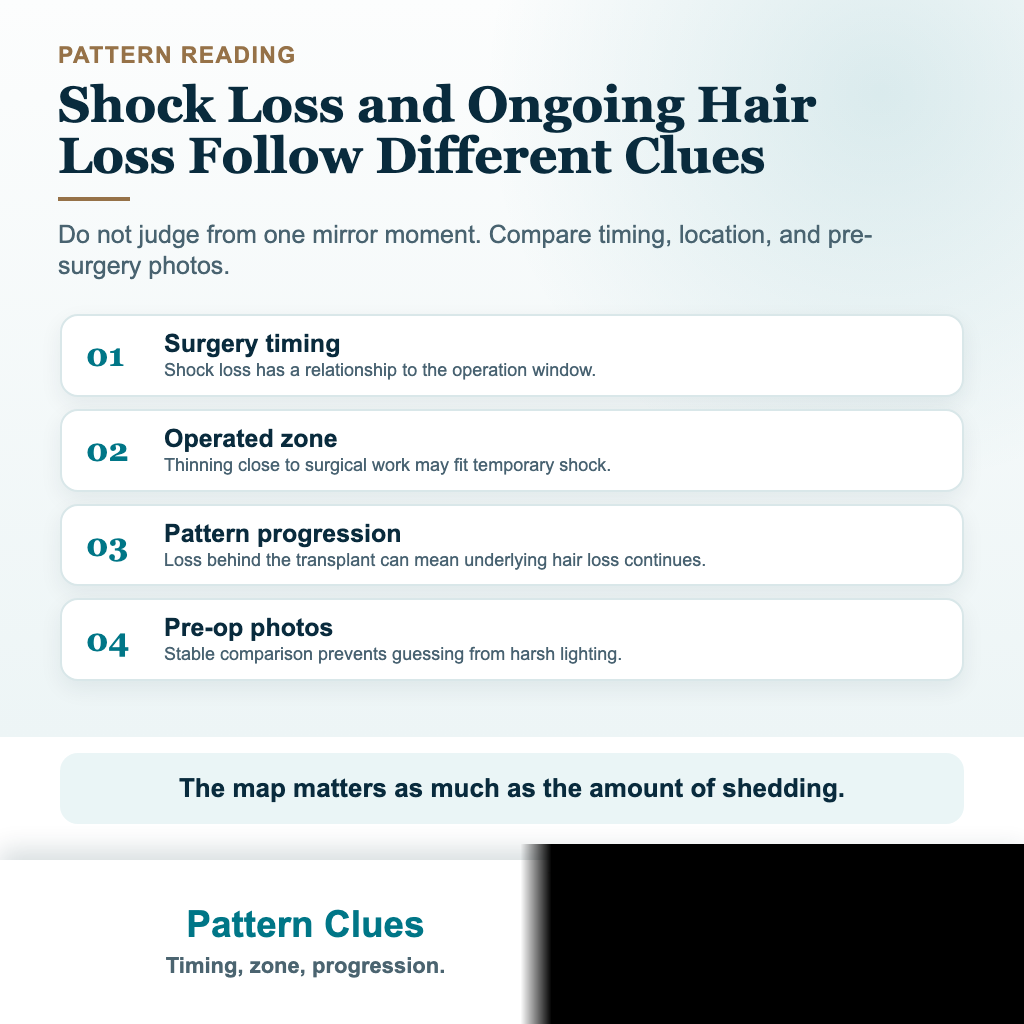
Ongoing hair loss is different. It is the continuation of your underlying hair loss pattern. It may affect the crown, middle scalp, or areas behind the transplant even if the grafts themselves are growing.
Some people notice a gap between transplanted and native hair months after surgery. The transplant may be growing, but the native hair behind it may continue to miniaturize.
To separate these problems, compare the current appearance with photos before surgery and ask where the loss is happening. Is it limited to the surgical field, or is the whole pattern progressing?
If there was active hair loss before surgery and no stabilization plan, ongoing loss becomes more likely. If the thinning appears suddenly around the operated zone and later improves, temporary shock loss becomes more likely.
The difference is not always obvious from a single photo. A proper evaluation needs timing, pattern, magnification when possible, and direct discussion about treatment choices.
One clue is whether the loss respects the operated area. Shock loss often feels connected to the surgery zone. Ongoing androgenetic loss often follows the original pattern, even outside the area that was worked on.
Another clue is the condition of the surrounding hair. If nearby hairs keep becoming thinner and weaker over time, ongoing miniaturization may be part of the problem. If they shed suddenly and then gradually return, temporary shock loss is more likely.
One close photo is not enough for diagnosis. A close photo can show scalp, but it cannot always show the timeline. Hair loss is a story over time, not one image.
Dense packing and poor planning can increase risk
Aggressive surgery can increase the risk. The scalp has limits. When too many incisions are made too close together, the surrounding tissue and existing hairs can be stressed more than necessary.
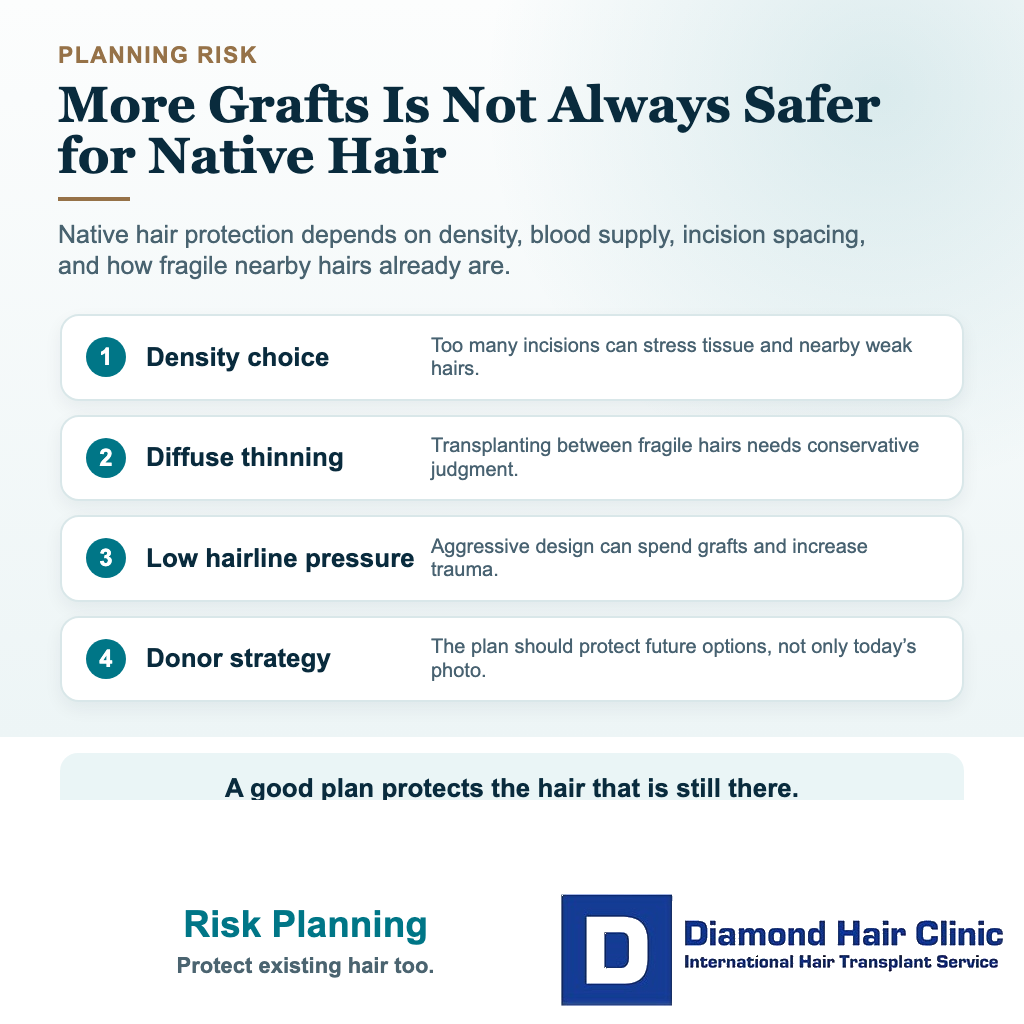
Dense packing must not be treated as a marketing word. Density must be planned with blood supply, hair caliber, skin quality, native hair, and donor reserve in mind.
The risk of too many grafts in one area matters because more grafts do not always mean a better result. Sometimes more aggression only creates more trauma.
Poor planning can also mean chasing a very low hairline, placing grafts into unstable diffuse thinning, or spreading grafts across too large an area. All of these decisions can make recovery harder to interpret.
A responsible surgeon does not only ask how many grafts can be placed. The decision depends on how many grafts need to be placed, where they need to be placed, and what native hairs are being asked to survive around them.
For that reason, surgeon led planning matters. Native shock loss risk cannot be removed completely, but good planning can reduce avoidable trauma and avoid false promises.
Properly planned density and careless density are not the same thing. Properly planned density respects existing blood supply and natural hair direction. Careless density tries to impress with numbers without respecting tissue behavior.
The desire for maximum density is understandable. The goal is visible improvement. But the strongest plan is not always the most aggressive plan. Often, the better plan is the one that creates enough cosmetic improvement while keeping native hair and future options protected.
Donor area shock loss needs separate assessment
Shock loss can happen in the donor area as well as the recipient area. In the donor area, it can make the back or sides look thinner, patchier, or more uneven than expected.
This does not always mean the donor was overharvested. At 1 to 2 months, short hair length, redness, extraction marks, and temporary shedding can exaggerate the appearance.
Early donor anxiety is discussed in the guide to why the donor area can look uneven at 1 to 2 months, because many people judge the donor too early from harsh photos.
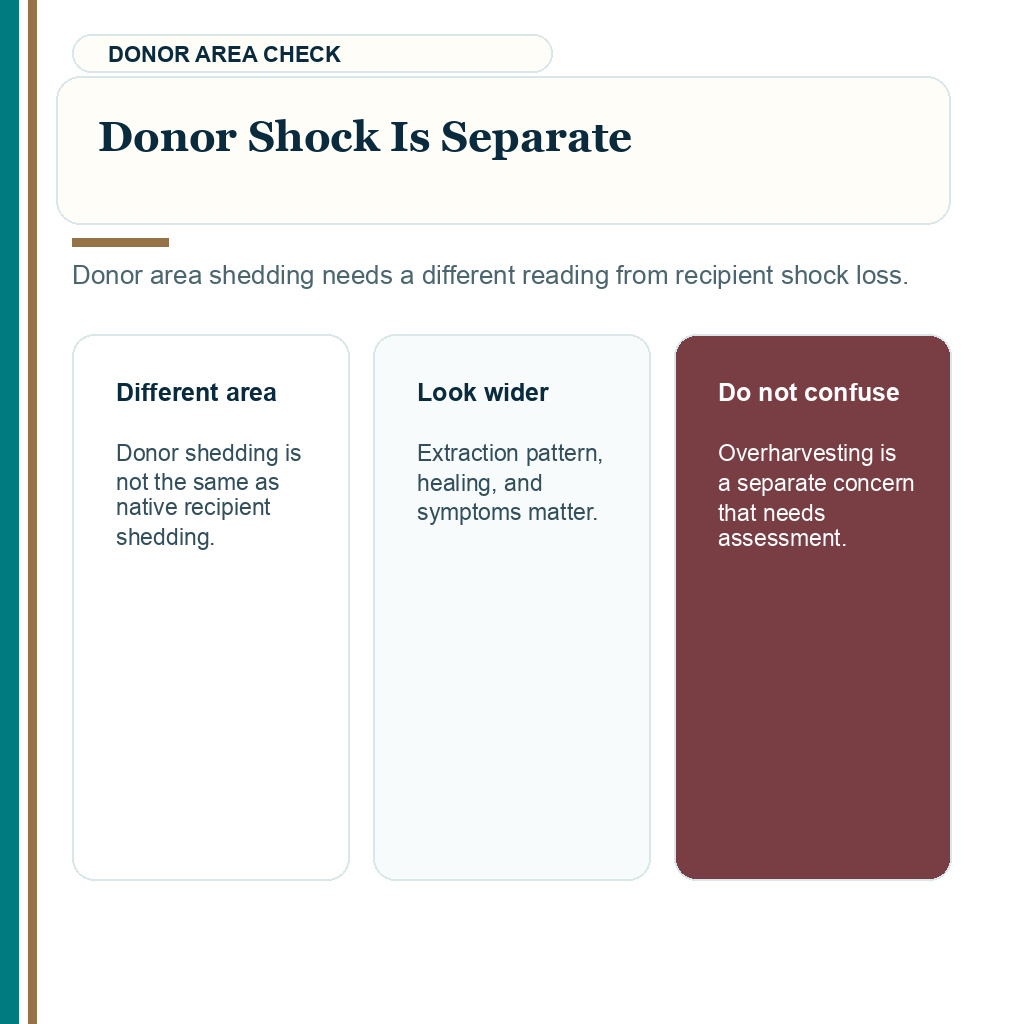
Donor shock loss and overharvesting are not the same. Shock loss may improve over several months. Overharvesting means too many follicular units were removed, or they were removed in a poor pattern.
Donor concerns need assessment through extraction distribution, hair length, donor density before surgery, current photos, and whether the area is improving month by month.
Timing matters here. A donor area at 4 weeks is not the final donor area. But if the donor looks depleted, patchy, and unchanged after several months, that deserves a more serious assessment.
The donor area also needs judgment with the hair grown to a reasonable length. A very short cut can reveal every extraction mark and every temporary patch. Still, hair length cannot become an excuse for poor extraction. If the extraction pattern is aggressive, concentrated, or taken from unsafe zones, that is a different problem.
A surgeon needs to be able to explain not only how many grafts were taken, but where they were taken from and why.
Start with documentation, not panic treatment
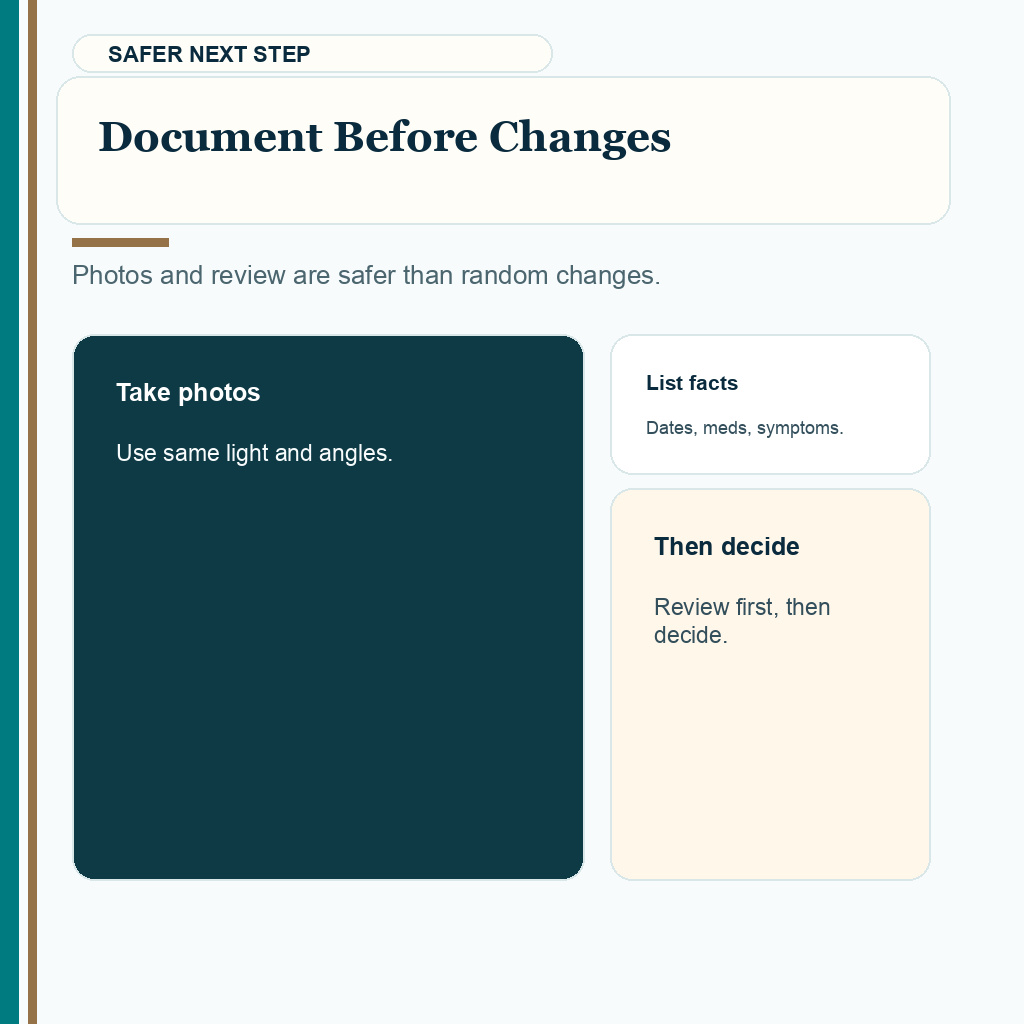
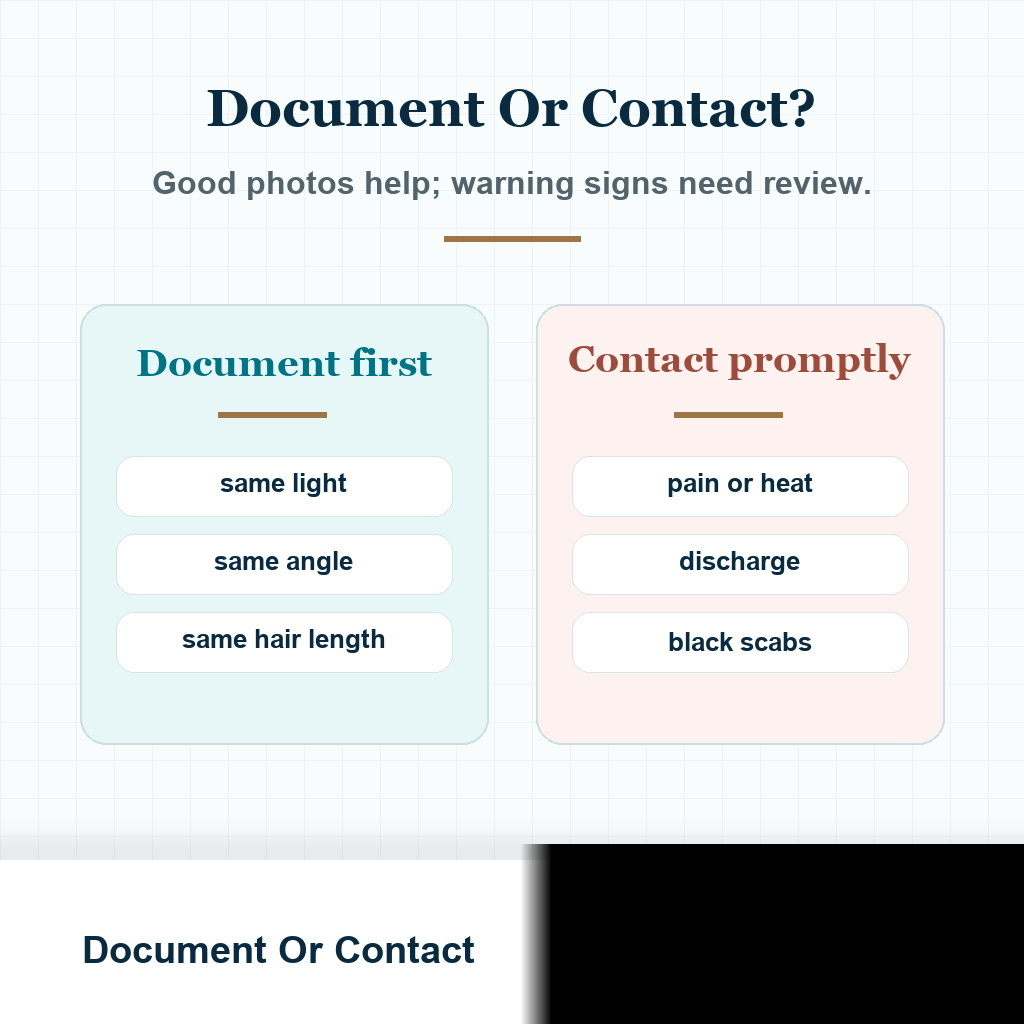
Start with documentation, not a new treatment plan. Take consistent photos in the same light, with the same hair length when possible, and from the same angles. One bad mirror moment is not enough evidence.
Then contact your clinic with useful details. Tell them when the thinning started, whether it is improving or worsening, whether there is pain or inflammation, and whether there were recent medication changes.
Do not start changing treatments randomly because of panic. Minoxidil, finasteride, dutasteride, PRP, laser or light devices, supplements, and treatments for inflammation all create their own signals. If you change several things at once, it becomes harder to know what helped, what irritated the scalp, and what was simply time.
Observation and intervention are different decisions. If the thinning is temporary shock loss, the main treatment may be time, gentle handling, and good follow up. If the thinning is ongoing hair loss, the plan may involve medical stabilization and a more deliberate long term strategy.
The wrong response is to rush into a second surgery before the diagnosis is clear. Adding grafts into a situation you do not understand can waste donor hair and make the next problem harder to solve.
Stable grooming also helps during the anxious weeks. A dramatic haircut can make the comparison unfair. A very short cut can expose areas that would look softer with a little more length, while a much longer style can make contrast look worse if the transplanted zone is still short. Haircut after a hair transplant timing depends on the same recovery stage.
The plan must not hide from reality. The aim is to observe healing fairly. Standard photos, stable grooming, and steady follow up are more useful than daily inspection driven by stress after a hair transplant.
If you compare your result with someone else, do not make a direct comparison too quickly. A person who had an empty recipient area before surgery is not the same as someone who had many miniaturized native hairs between the grafts. Their shock loss risk is different.
Contact your surgeon when symptoms or timing are concerning
Contact your surgeon promptly if thinning is accompanied by increasing redness, swelling, pain, warmth, discharge, black scabbing, spreading pimples, fever, or signs of infection. Those are not ordinary timeline concerns.
Judge redness, scabs, and pimples after a hair transplant by behavior, symptoms, and timing, not only by the calendar.
Also ask for review if one side becomes dramatically thinner while the rest of the scalp is improving. This could still be temporary, but it deserves documentation.
If you are at month 2 and everything looks worse, that can still fit the recovery timeline. If you are at month 6 and the native hair has not improved at all, the conversation needs to become more specific.
A serious review cannot be one sentence of reassurance. The surgeon needs to look at the pattern, the original plan, day one photos, current photos, medication history, and signs of miniaturization.
Do not feel embarrassed to ask. A hair transplant is permanent surgery, and clear follow up is part of responsible medical follow up. A well organized clinic needs to prefer early, useful communication over late panic.
When you contact your surgeon, send information that helps the answer. Mention your surgery date, current month, medication changes, symptoms, and whether the thinning is improving or worsening. If the clinic gives only a generic answer without looking at your photos or history, you may still need a more serious assessment.
Vulnerable native hair sets the risk
The best way to reduce risk is to identify vulnerable native hair before surgery. The safer judgment is hair stability, not temporary presence.
Examination matters more than a quick photo estimate. Donor strength, recipient area miniaturization, hair caliber, hair loss speed, age, family history, and expectations all need assessment.
Graft planning is also central. Graft number calculation needs to come from anatomy and strategy, not from sales pressure.
A surgeon can reduce avoidable risk with controlled angle work, appropriate density, gentle tissue handling, and a plan that respects existing native hair. Refusing surgery can also be the right decision when the timing is wrong.
Sometimes the best surgical judgment is to wait. If hair loss is rapid, diffuse, or heavily miniaturized, stabilization before surgery may protect both the native hair and the donor reserve.
I am direct about this. Native hair shock loss is not something I can promise will never happen, but it is something that can be planned around intelligently.
If native hair looks thinner after surgery, start with diagnosis, not panic or blame. Once we know whether the issue is temporary shock loss, ongoing miniaturization, poor planning, or healing trouble, we can make a much better decision.
During consultation, dense work between existing hairs needs caution. Judge the plan not only by the best possible early photo, but also by what happens if the native hair sheds or continues thinning later.
If the plan still makes sense under that scenario, it is a stronger plan. If the plan depends on every fragile native hair surviving perfectly, it should become more conservative.
A hair transplant cannot be planned only for the first exciting photo. It needs planning for the years after surgery, when native hair, donor reserve, and expectations all meet the truth of biology.
Read this review excerpt
First wash completed and visual instructions given to my daughter.