


Hair Transplant Grafts Are Usually Secure Around Day 10
Most hair transplant grafts need the most protection during the first few days. By around 10 days after surgery, they are usually secure enough for gentle washing and normal light contact in uncomplicated healing. Secure means harder to dislodge. It does not mean the scalp is ready for rubbing, scratching, tight pressure, heavy sweating, swimming, contact sports, a helmet, headphones, a laser cap, tight clothing pulled over the scalp, or topical products after a hair transplant. The risk depends on timing, the type of contact, the condition of the recipient area, and whether scabs are being pulled away before they are ready.
Patients often misunderstand the usual graft security message at this point. A graft may be harder to dislodge, but an attached crust can still pull on healing skin if you peel or drag it. Security lowers panic. It does not turn the last stubborn scabs into something to force off.
Every small movement should not become frightening. The goal is to protect the grafts during the short window when they are most vulnerable, then return to normal activity in a controlled way. If you follow the first 10 days carefully, most problems come not from ordinary life, but from testing, overchecking, rubbing, picking, or trying to clean faster than the skin is ready.
Graft security in the first 10 days
A transplanted graft is not only a hair. It is a small follicular unit placed into a tiny incision in the recipient area. In the first days, that graft is held by the fit of the incision, early clotting, swelling, and the beginning of healing around the graft.
During this phase, the graft needs protection. It does not need testing, checking with a finger, or repeated photography from very close range. If you are unsure when normal contact is safe, the safer reference is the clinic’s own protocol and the timing around when you can touch your grafts again. The same timing is why pets need firmer boundaries before grafts are more secure.
Think of the first 10 days as a gradual change in risk. The graft is not equally fragile every day, and it is not suddenly invincible on one exact morning. The first 48 to 72 hours deserve the strictest protection. After that, the graft becomes harder to dislodge, but careless rubbing or picking can still harm the surface healing.
The first two or three days need strict protection
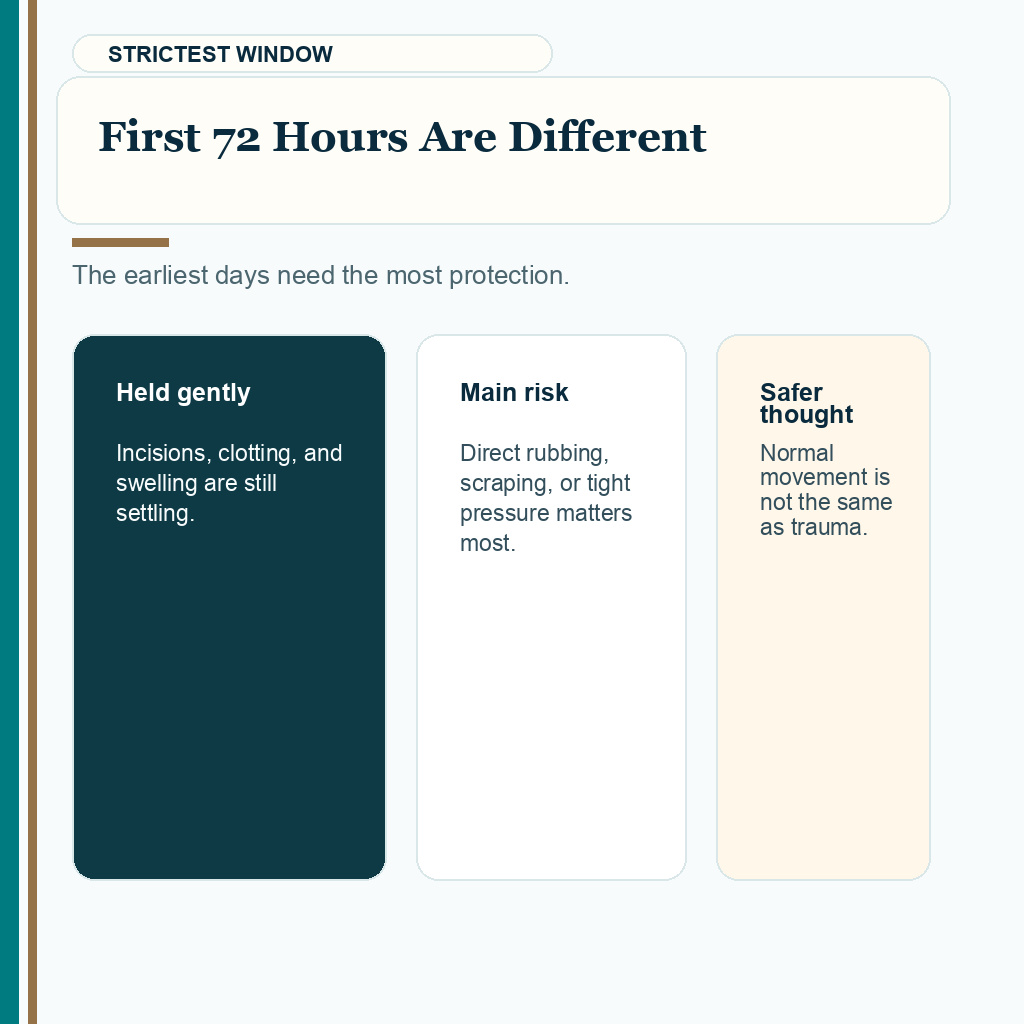
The first two or three days are different because the grafts have not yet had enough time to settle into a stronger healing environment. The recipient area is fresh, the skin channels are new, and the surface may still be sensitive from anesthesia, fluid, and small crusts.
In this period, a graft is at greatest risk from direct mechanical trauma. I mean rubbing with a towel, scraping with a fingernail, pressure from a tight hat, bumping the scalp against a hard surface, sleeping with friction on the recipient area, or trying to remove dried blood too aggressively.
Normal facial movement, a short walk, careful eating, or a gentle cough is very different from direct trauma. Patients often ask whether a sneeze can ruin the work. In most cases, a normal sneeze or cough is not the same as scraping the grafts. The concern is whether sneezing or coughing can make grafts come out.
How grafts become more secure after early healing
Around day 7 to day 10, the grafts are usually much more anchored. The skin has started to close around the follicular units, crusting is changing, and gentle washing becomes more effective. Many aftercare plans become more relaxed during this period, but only in a controlled way.
For practical decision making, day 10 is usually a turning point. By then, normal gentle washing and light contact are usually much safer than they were in the first few days. If the scalp still has heavy crusts, bleeding, unusual pain, spreading redness, or discharge, the calendar alone is not enough reassurance. After this point, the instructions are often protecting healing skin, crusts, and surface irritation, not only preventing graft movement.
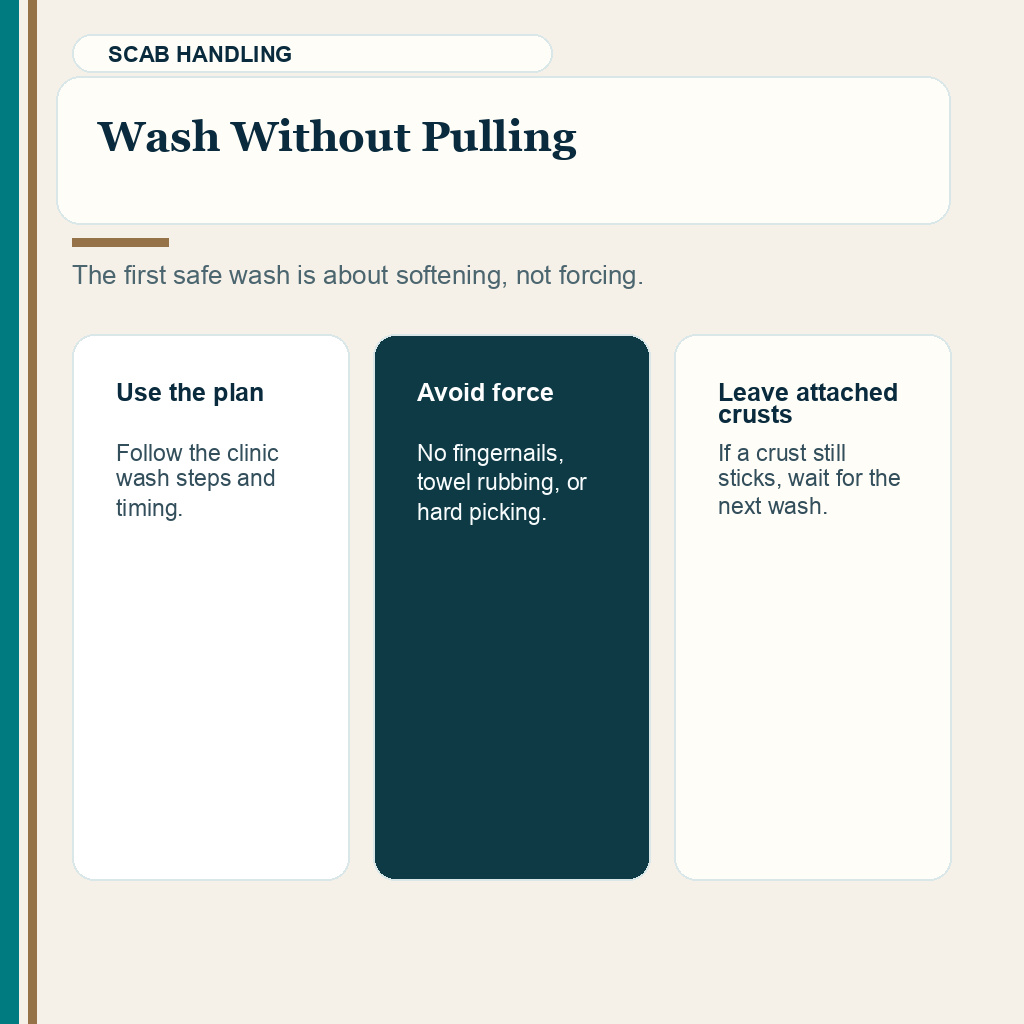
It is common to feel a strong urge to rush cleaning once you reach this stage. Do not turn day 10 into a pulling session. The aim is to loosen scabs gradually, not remove every crust by force. If a crust still feels attached after washing, leave it for the next instructed wash. For the broader washing timeline, follow the step by step pressure guidance in when you can wash your hair normally after a hair transplant.
The calendar should guide you, but the scalp still has the final word. Two people can both be on day 10 and still need different advice. Soft crusts on settled skin are not the same as heavy crusting, bleeding points, or irritated skin. The safer response is adjustment to the scalp in front of us, not giving everyone the exact same cleaning instruction.
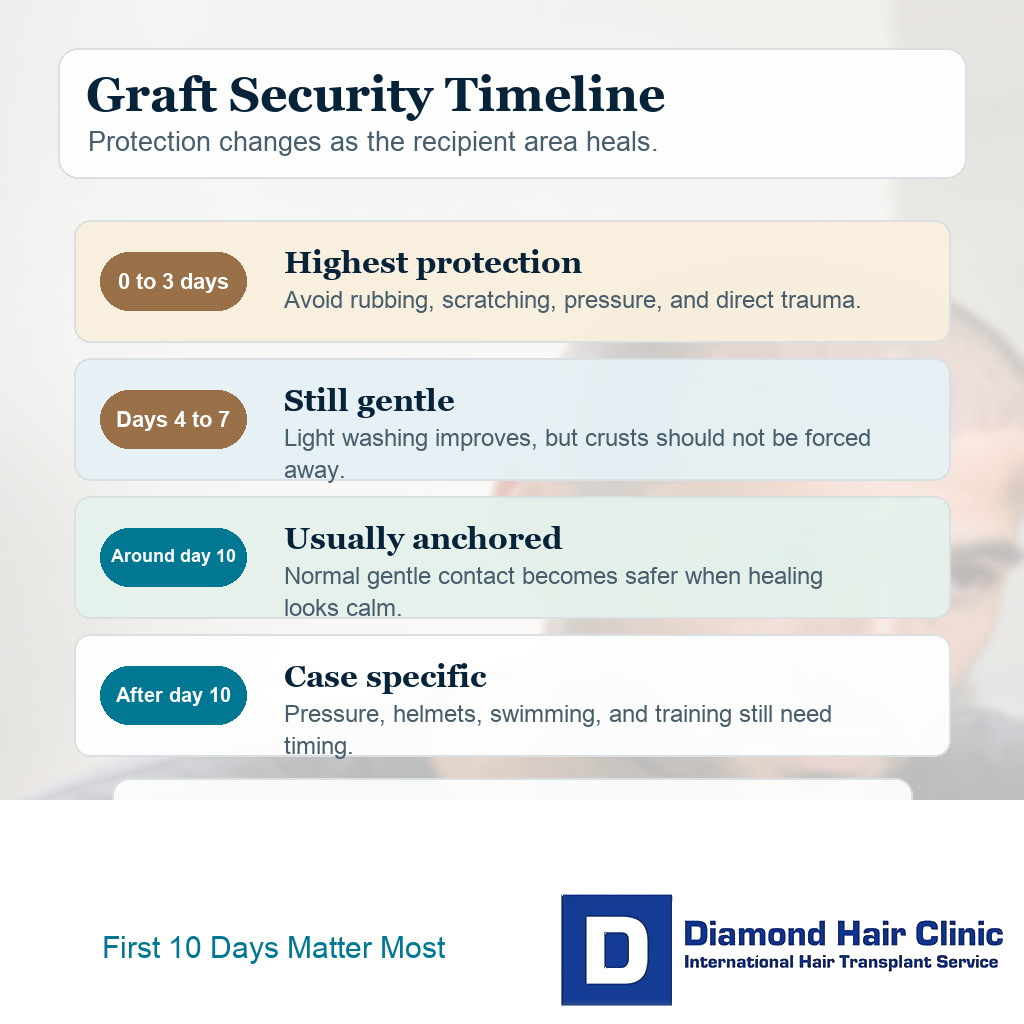
Graft security improves gradually, so the first days need the most careful protection.
The 10 graft security slides below separate timing, washing, scabs, accidental contact, pressure, warning signs, and safer next steps. Swipe sideways, use the arrows one slide at a time, or choose a number below the image.

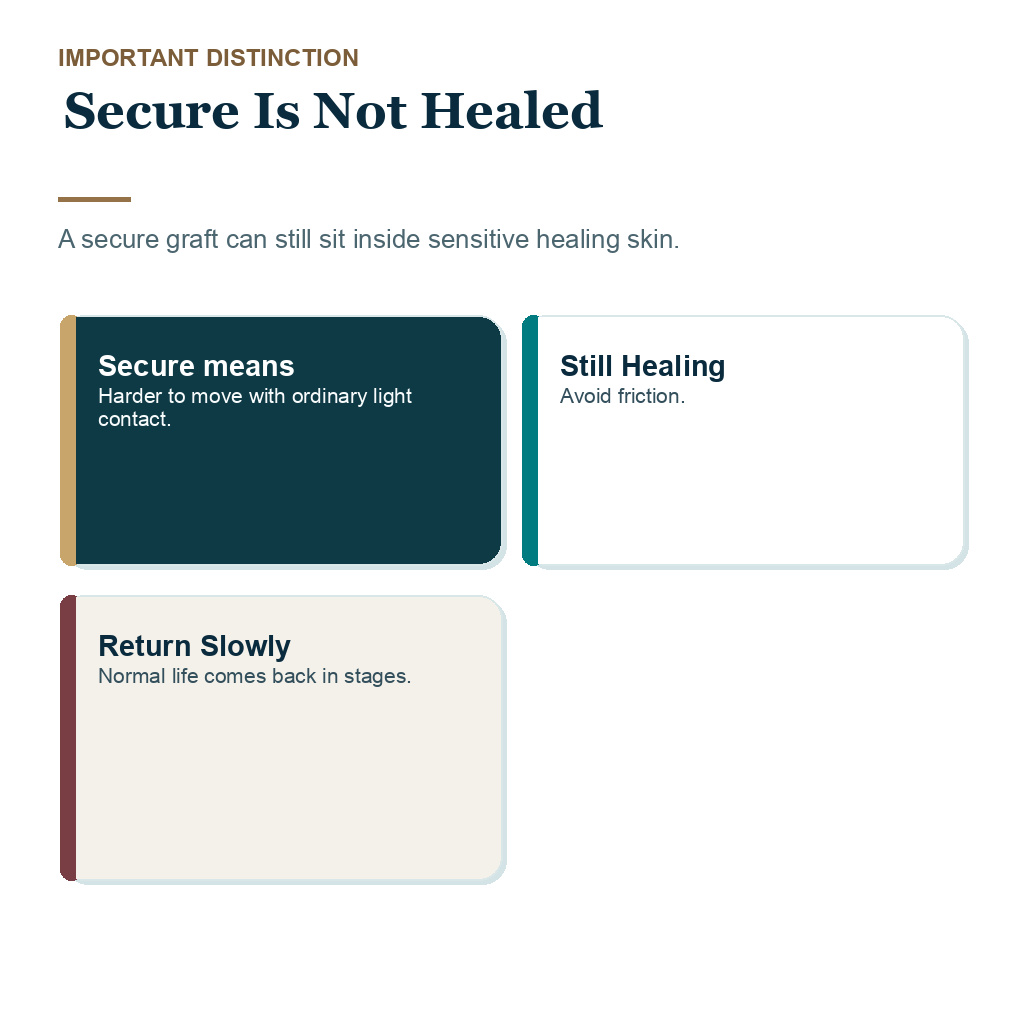


Secure does not mean fully healed
Secure means the grafts are much harder to dislodge with ordinary light contact. It does not mean the scalp has finished healing, and it does not mean the recipient area can tolerate rubbing, scratching, dirty water, strong shower pressure, tight pressure, or aggressive scab removal.
Some people hear that grafts are secure and think all restrictions are over. The graft may be anchored while the surface skin is still red, crusted, sensitive, or easily irritated. Return to normal life in stages, not all at once. A secure graft can still sit in a bumpy recipient area, so surface texture is a separate issue from dislodgement risk.
Graft security sits inside broader hair transplant aftercare. Skin healing, swelling control, washing, sun protection, and activity timing still matter after the grafts are harder to move.
Washing, scabs, and first shower anxiety
Washing done the right way should not make properly placed grafts fall out. Problems usually come from washing with too much force, using fingernails, rubbing with a towel, picking at crusts, or treating every scab as something that must be removed immediately.
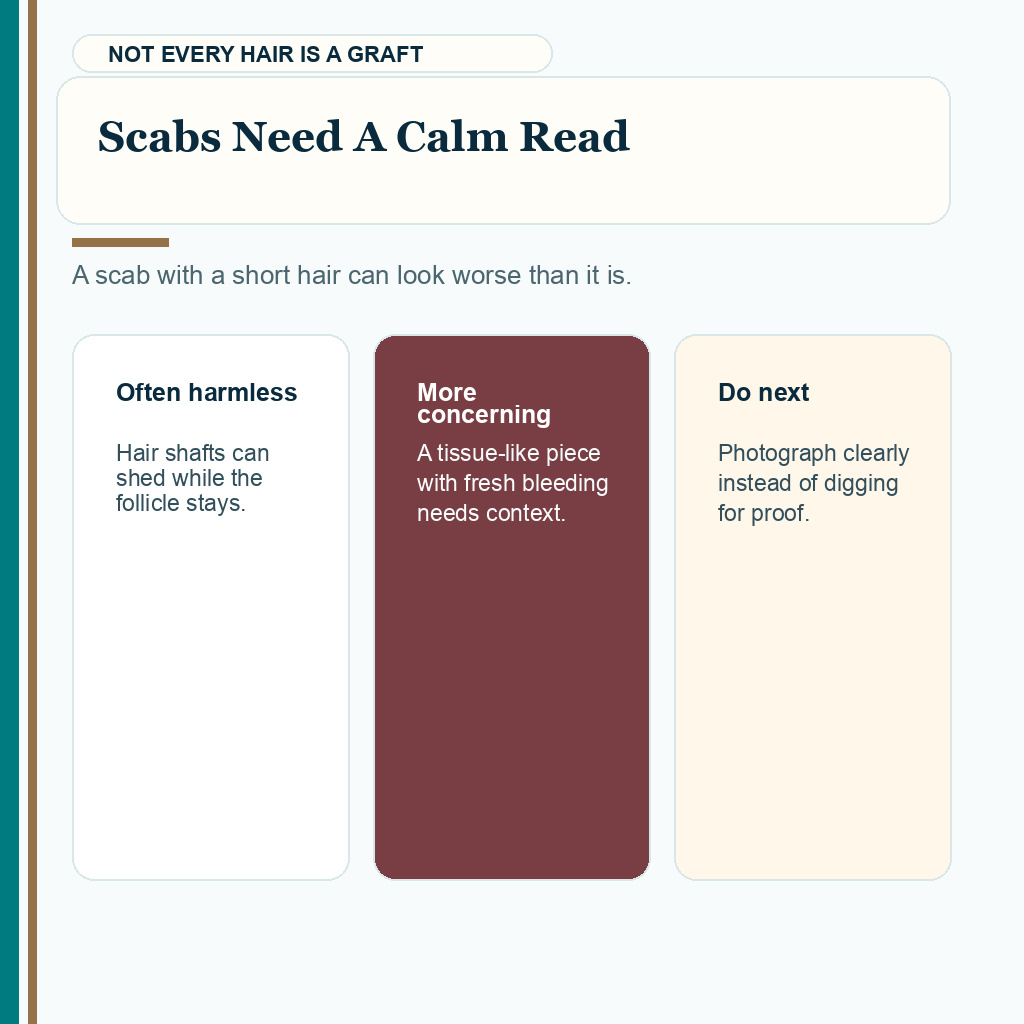
Scabs can be unsettling because they sometimes come away with tiny hairs. Often, the visible hair shaft can shed while the follicle remains under the skin. That is very different from losing an entire graft. When a scab comes away with hair, lost grafts when scabs came off is the more exact distinction to understand.
The first wash can also make the transplant look less dense because dried blood, crusting, and temporary surface texture change. That visual change can feel alarming, but it does not by itself mean grafts were lost. If the concern is mainly that the hair suddenly looks thinner after washing, treat that as a density and surface appearance question rather than assuming the grafts have come out.
Accidental touch, bump, or scratch
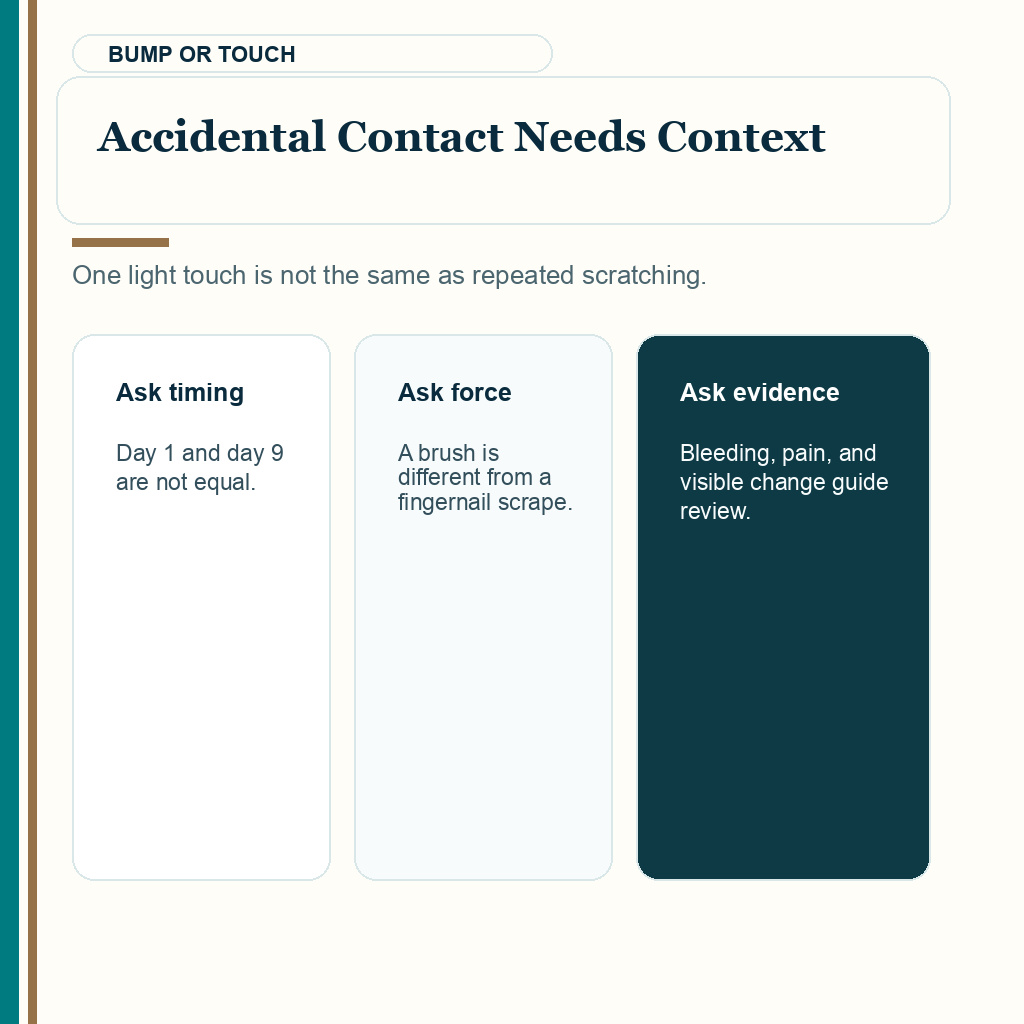
One accidental light touch during airport travel is not the same as repeated scratching or strong pressure. Timing matters. A light touch on day 9 is different from a fingernail scrape on day 1. A small bump or a vomiting episode that does not bleed is different from trauma that causes bleeding, missing crusts, and new pain.
If you accidentally touch the area, do not keep touching it to check whether the grafts are still there. That habit creates more risk than the first contact. Look for practical signs. Did it bleed? Was a graft visibly pulled out with tissue attached? Is there increasing pain or swelling? Did the contact happen during the first two or three days? When you contact the clinic, describe where the bump happened, whether there was bleeding or open skin, and what changed afterward.
For a direct head impact, focus on the force, timing, bleeding, pain, and what the recipient area looks like afterward. A stronger knock needs the more specific review in bumped your head after a hair transplant.
Hats, helmets, and exercise become safer gradually
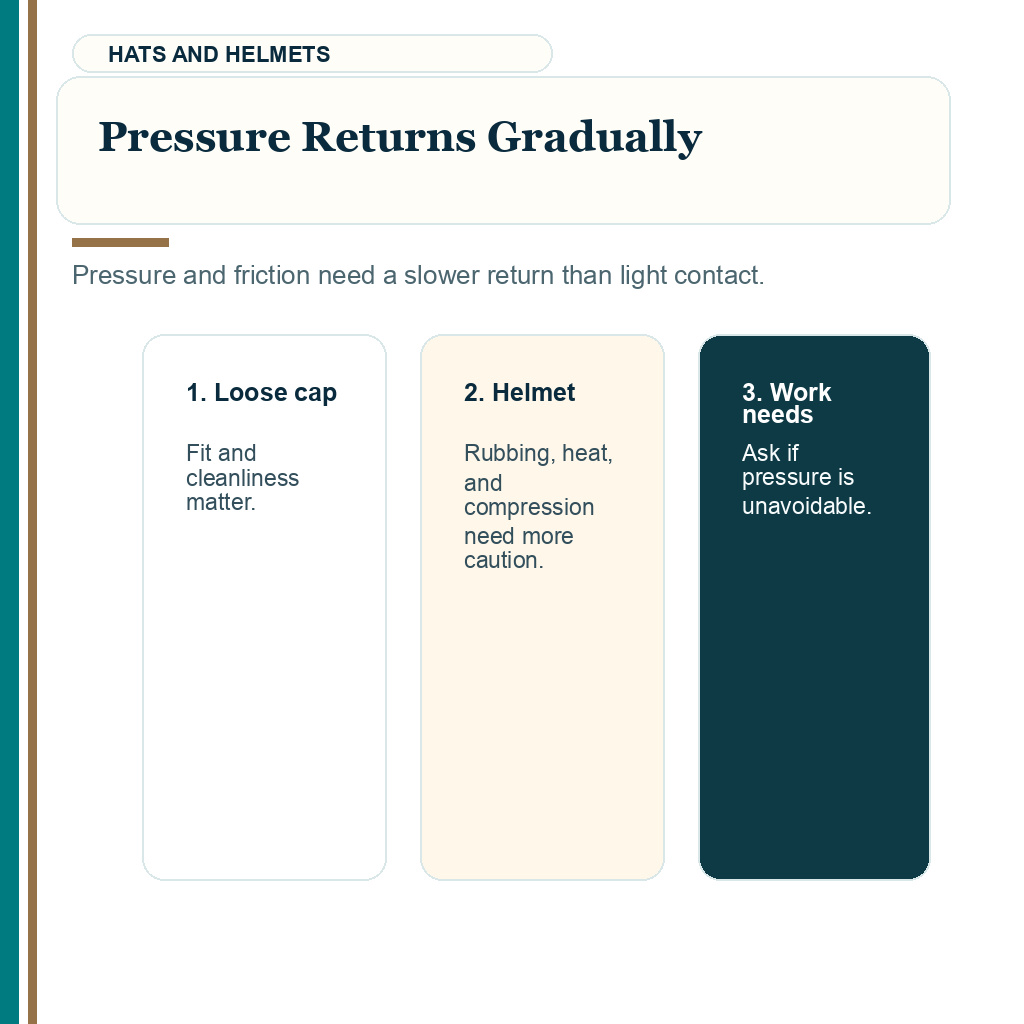
Light activity returns before pressure and friction become safe. A loose cap used carefully is not the same as a tight helmet. A short walk is not the same as heavy lifting, sweating heavily, or training in a way that makes you wipe the scalp repeatedly.
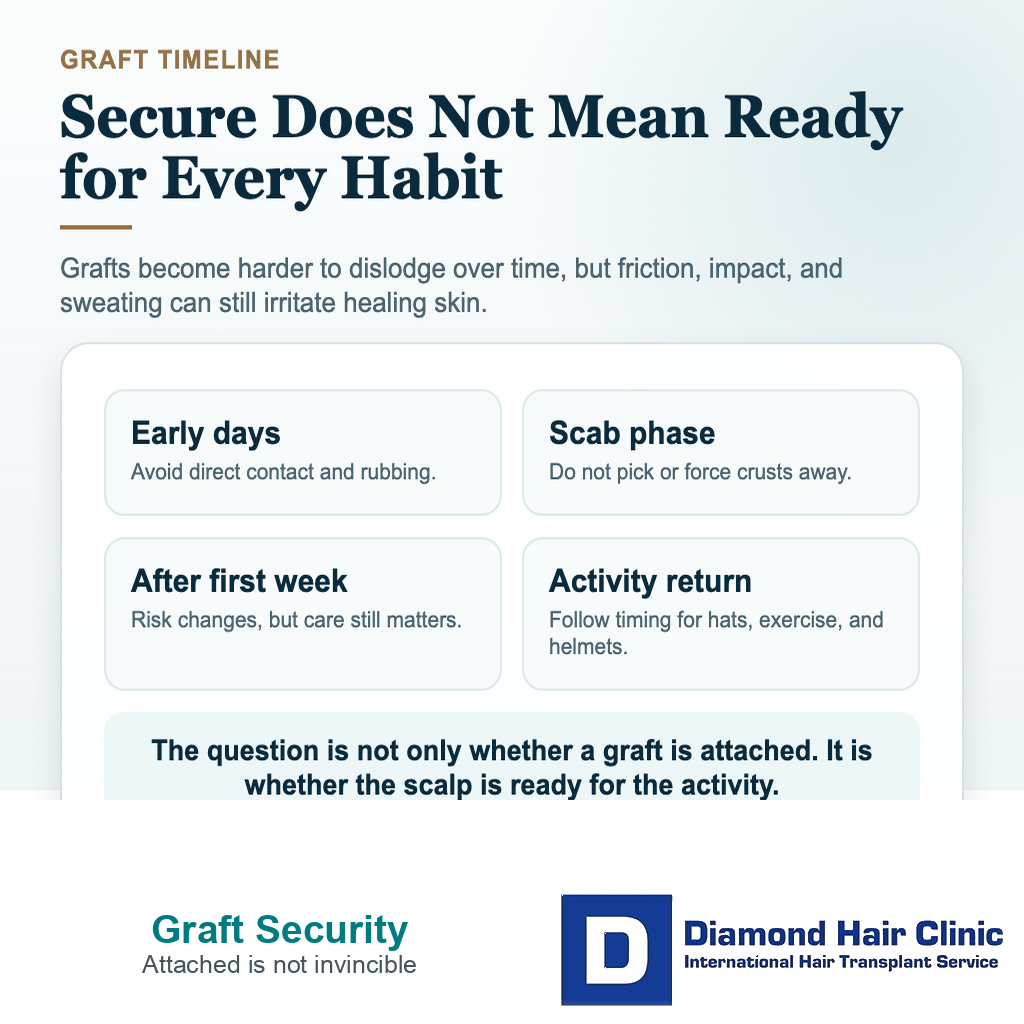
For hats, the main issue is friction and compression over the recipient area. A loose, clean hat at the right time is different from a tight cap pulled over fresh grafts. When you can wear a hat after a hair transplant depends on fit, cleanliness, timing, and how much the cap moves over the recipient area.
Helmets need more caution because they can press, rub, trap heat, and move over the scalp. Even when grafts are more secure, the skin may not be ready for that type of contact. If your work or transport depends on a helmet, read the more specific guidance on when you can wear a helmet after a hair transplant.
Exercise has a different risk pattern. It may increase sweating, swelling, accidental rubbing, and blood pressure in the early period. Gentle movement and proper training should be separated, and when you can exercise after a hair transplant sets the safer activity timeline.
Swimming should also wait longer than light contact because water exposure, towel friction, and infection risk are different issues from graft anchoring alone. Swimming after a hair transplant follows a separate timing decision.
Loose looking grafts are not always lost grafts
Appearance is a poor way to judge graft security, because appearance can mislead. Dry crusts can lift slightly. Short hair shafts can shed. The surface can look uneven after washing. Lighting can make the recipient area look patchy. None of these signs proves the follicle has been pulled out.
A true lost graft usually looks more like a small piece of tissue with bleeding from the recipient area, especially in the very early days. After a bump, write down how hard it was and whether bleeding followed before assuming a graft was lost. A dry scab with a hair shaft inside it is not always the same thing. This distinction matters because panic can lead to more touching, more washing, and more trauma.
Finding short hairs in a loose cap, pillow, or hand later in recovery is not proof that the grafts have been pulled out. After the early protection window, many visible hairs can shed while the follicle remains under the skin. The timing, force, bleeding, tissue, pain, and visible skin change matter before I call it graft loss.
The transplant also goes through a normal shedding phase later. Many transplanted hairs shed while the follicle remains in the scalp. Early appearance is therefore not a reliable final judgment of growth, density, or survival.
Another problem is comparison. One person may have tiny dry crusts. Another may have more redness. Another may shed visible hairs earlier. These differences can come from skin type, graft size, washing, density, hair caliber, and how the scalp reacts to surgery. A photo from someone else is not a medical standard for your own healing.
Warning signs after grafts should be secure
By the time grafts should be more secure, the scalp should usually be moving toward calmer healing. Mild redness, light itching, and crusting can still happen, but the direction should be improving rather than getting worse.
Spreading redness, increasing tenderness, pus, bad odor, worsening swelling, fever, or painful pimples deserve more serious attention. These signs are not mainly about graft security. They raise a different question about inflammation or infection, and they deserve proper review rather than internet guessing.
If your concern is redness, pimples, scabs, or whether healing looks infected, the more relevant page is when to worry about redness, scabs, or pimples after a hair transplant.
Clinic technique and aftercare instructions change risk
Graft security is not only about what you do after surgery. It also depends on how the surgery was planned and performed. Recipient area incisions need the right angle, depth, and fit. Grafts should not be crushed, overhandled, or placed in a way that creates unnecessary trauma to the skin.
Aftercare also needs to be clear. The instructions need to explain how to sleep, wash, spray if instructed, avoid friction, and recognize warning signs. Confusing instructions make people overcorrect in both directions. Some become too aggressive with cleaning, while others become so afraid that they leave heavy crusting longer than advised.
At Diamond Hair Clinic, the logic is conservative. The grafts should be protected when they are vulnerable, then cleaned and followed in a way that supports normal healing. Good surgery does not end when the grafts are placed. The first days still need disciplined handling.
The instruction itself matters. If the explanation is vague, you are left to fill the gaps. You may wash too hard because you think every scab is dangerous, or you may avoid washing because you think every drop of water can move a graft. Clear aftercare reduces both mistakes.
A clinic that takes follow up seriously will not only say that the grafts are safe. You should understand which type of contact is acceptable, which type is too early, and when a photo or review is needed. That is part of surgeon led follow up, not a cosmetic detail.
Protect grafts without testing them
Use the first 10 days as a protection window. Keep the recipient area free from rubbing, scratching, picking, tight pressure, and unnecessary touching. Follow the washing steps you were given. If something happens, judge it by timing, force, bleeding, pain, and visible change rather than anxiety alone.
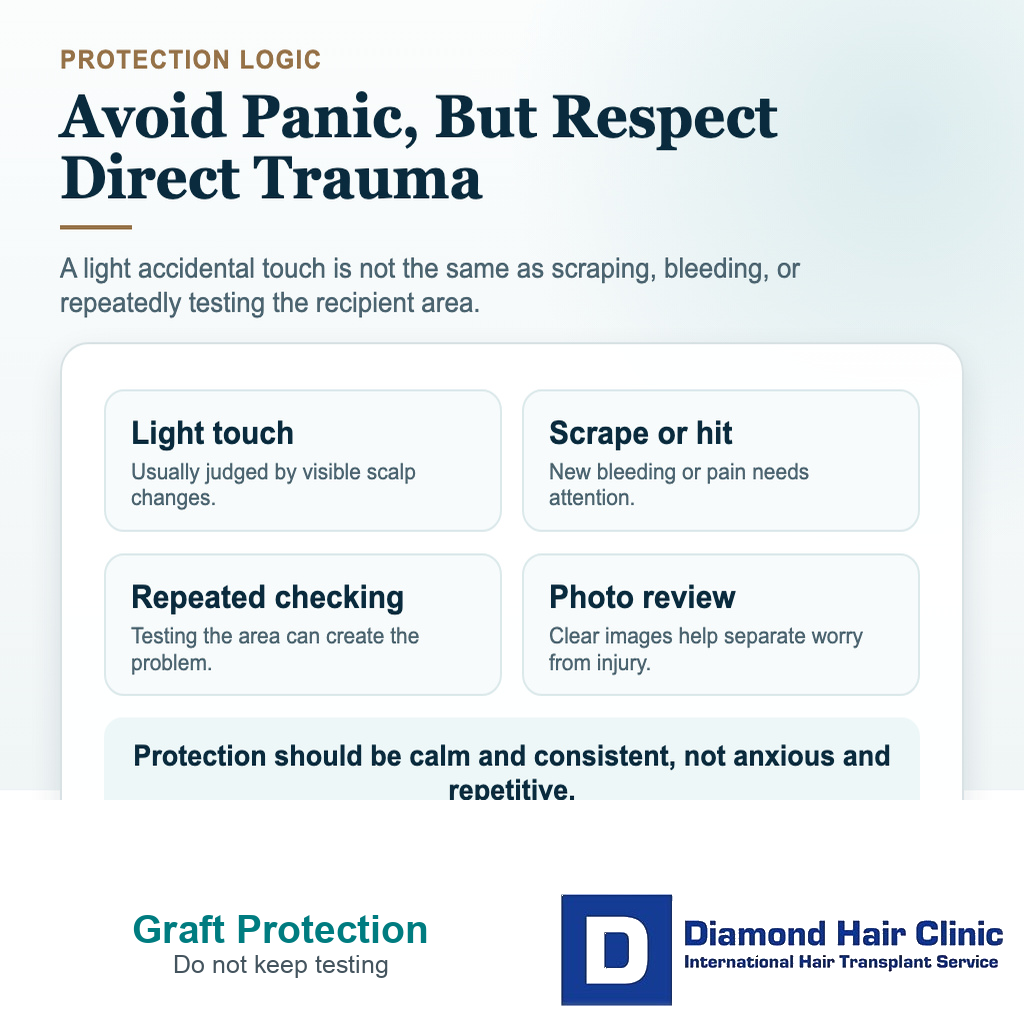
The better pattern is not checking the grafts every hour. It is understanding the risk, protecting the scalp without repeated testing, and asking for review when a real warning sign appears. Most small worries are manageable when they are handled early and sensibly.
Keep the plan practical. During the first few days, protect the grafts as if they can be moved by direct trauma. Around day 10, become more confident with gentle washing and normal light contact. For pressure, scratching, helmets, swimming, and heavy activity, wait for the specific timeline given for your case.
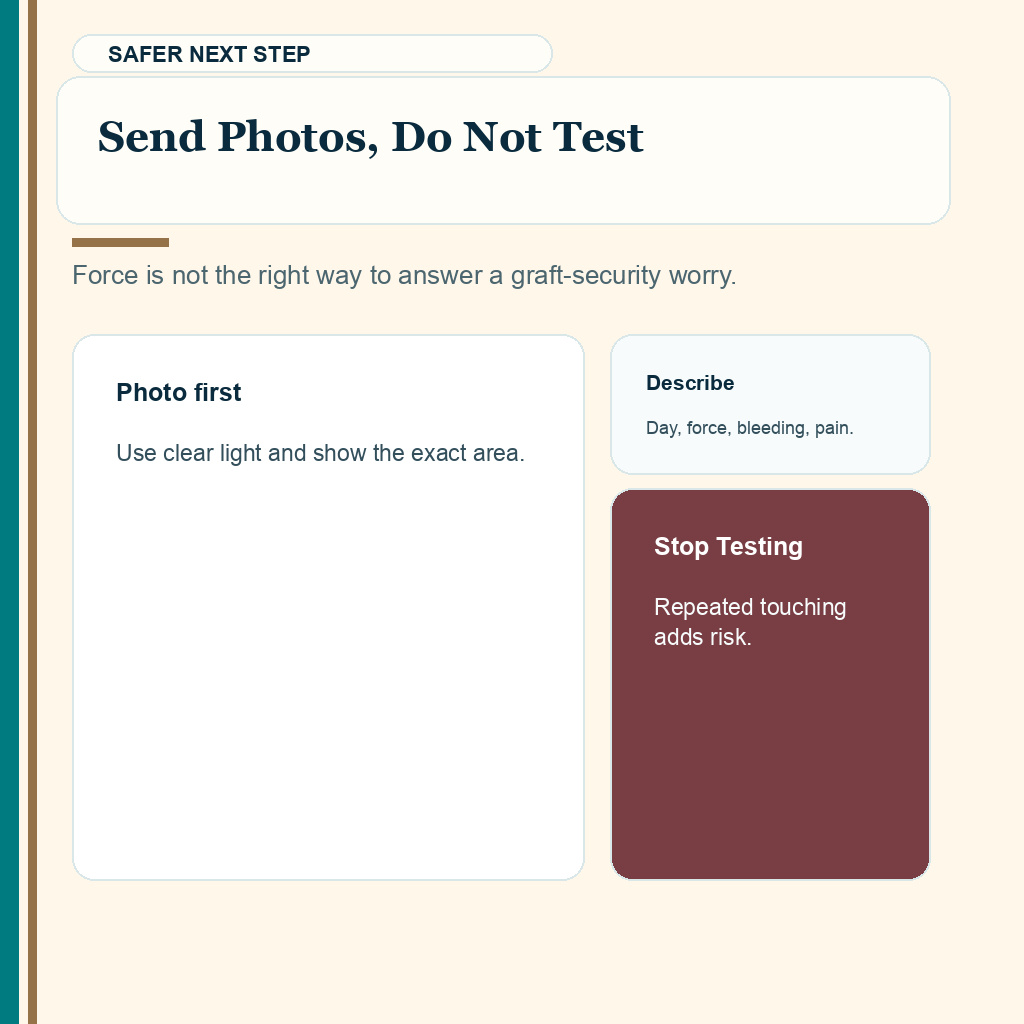
If you are not sure, do not use force to answer the question yourself. Send a clear photo, describe exactly what happened, and explain the day after surgery. A surgeon can usually separate a harmless scare from a real issue much better when the timing, contact, bleeding, and symptoms are clear.
Read this review excerpt
We also had a levelled conversation about my hairline and results I could expect based on my donor density area.